

But the true soul of French cinema, its revolutionary engine, is also a spirit of rebellion. It is the politique des auteurs, born in the 1950s on the pages of Cahiers du Cinéma. It is the story of young critics like François Truffaut and Jean-Luc Godard who, with tight budgets and handheld cameras, took to the streets of Paris to birth the Nouvelle Vague, a tidal wave that shattered conventions and redefined the language of cinema.
I. The Founding Fathers: Rigor and Poetry Before the Storm
L’Atalante (1934)

The only feature film by Jean Vigo, who died at just 29, it tells the story of Jean, a barge captain, and his young bride Juliette. Their life aboard the boat “L’Atalante,” along with the eccentric sailor Père Jules, is a microcosm of love, jealousy, and the desire for escape. The monotony of river navigation clashes with the seductive charm of Paris, testing their bond.
A masterpiece of poetic realism, L’Atalante is a film that seems to exist outside of time. Vigo blends the rawness of the boatmen’s daily life with flashes of pure surrealism, creating a unique cinematic language that would influence generations of directors. His ability to find magic in the mundane, to transform an ordinary love story into a dreamlike epic on the human condition, embodies the essence of auteur cinema: a worldview so personal it becomes universal.
A Man Escaped (1956)

Based on the true story of André Devigny, a member of the French Resistance, the film follows Lieutenant Fontaine, imprisoned by the Nazis in Lyon in 1943. With methodical patience and determination, Fontaine plans his escape, turning the humblest objects in his cell into tools of liberation. His endeavor is an exercise of will, faith, and ingenuity against an oppressive and dehumanizing system.
Robert Bresson doesn’t make films; he creates “cinematographs.” This work is the manifesto of his ascetic and rigorous style. Rejecting traditional acting in favor of inexpressive “models,” Bresson focuses the viewer’s attention on gestures, sounds, and details. The scraping of a spoon, the creak of a door, the rustle of a rope become the protagonists of an existential thriller. It is a cinema of subtraction that generates unbearable tension, an exploration of transcendence and grace through the pure materiality of action.

Le Samouraï (1967)

Jef Costello is a methodical and solitary hitman who lives by a strict code of honor, similar to that of a samurai. His hermetic world of precise rituals and impeccable alibis begins to crumble when, after a murder, a key witness fails to identify him. Hunted by both the police and his employers, Jef moves through a gray, stylized Paris, facing his destiny with icy impassivity.
Jean-Pierre Melville is the bridge between American noir and French existentialism. Le Samouraï is the pinnacle of his style: a cool, almost abstract minimalism where every shot is composed with geometric precision and every line of dialogue is reduced to its essence. The film is not a simple gangster movie, but a meditation on loneliness, on professionalism as a form of asceticism, and on death as the inevitable conclusion of a ritual. Alain Delon’s iconic performance defines an archetype that would influence cinema for decades.
II. The Nouvelle Vague Revolution: Cinema Takes to the Streets
The 400 Blows (1959)

Young Antoine Doinel is a misunderstood adolescent. Neglected by a selfish mother and a weak stepfather, he finds refuge only in friendship and his passion for Balzac and cinema. His constant escapes from a repressive school and a loveless home lead him down a path of petty crime, until the inevitable clash with the justice system, which confines him to a reformatory.
With his debut, François Truffaut not only kicked off the Nouvelle Vague but also created one of the most sincere and moving portraits of childhood ever made. Shot in an almost documentary style on the streets of Paris, the film captures the authenticity of youthful angst. The famous final shot, with Antoine stopping on the beach and looking into the camera, is a groundbreaking act that directly questions the viewer, a symbol of a cinema that no longer offers easy answers but asks universal questions about freedom and loneliness.
Breathless (1960)

Michel Poiccard, a small-time criminal who idolizes Humphrey Bogart, steals a car in Marseille and, during his escape, kills a policeman. In Paris, he tries to collect some money and convince Patricia, an American student selling the “New York Herald Tribune” on the Champs-Élysées, to flee with him to Italy. As the police close in, their relationship oscillates between love, betrayal, and existential disillusionment.
If The 400 Blows is the emotional manifesto of the Nouvelle Vague, Breathless is its stylistic one. Jean-Luc Godard deconstructs the rules of classic cinema with an iconoclastic and playful energy. His jump cuts, improvised dialogue, and constant winks to the audience are not mere affectations but a declaration of intent: cinema is a language to be reinvented, an intellectual game that exposes its own artifice to reflect on the very nature of representation.
A vision curated by a filmmaker, not an algorithm
In this video I explain our vision
Hiroshima mon amour (1959)

In Hiroshima, fourteen years after the atomic bomb, a French actress working on a film about peace has a brief but intense love affair with a Japanese architect. Their encounter becomes a pretext for a profound reflection on memory, trauma, and the impossibility of forgetting. The memory of Hiroshima’s collective tragedy intertwines with the woman’s personal, painful memory of a forbidden love in Nevers during the war.
A foundational work of the Rive Gauche group, more literary and formalist than the “young turks” of Cahiers du Cinéma, Alain Resnais’s film is a symphony on memory and oblivion. With a screenplay by Marguerite Duras, Resnais creates a non-linear narrative where past and present merge into a visual stream of consciousness. It is a cinema that abandons traditional plot to explore the labyrinths of the human psyche, demonstrating how individual and collective trauma are inextricably linked.
About Nice
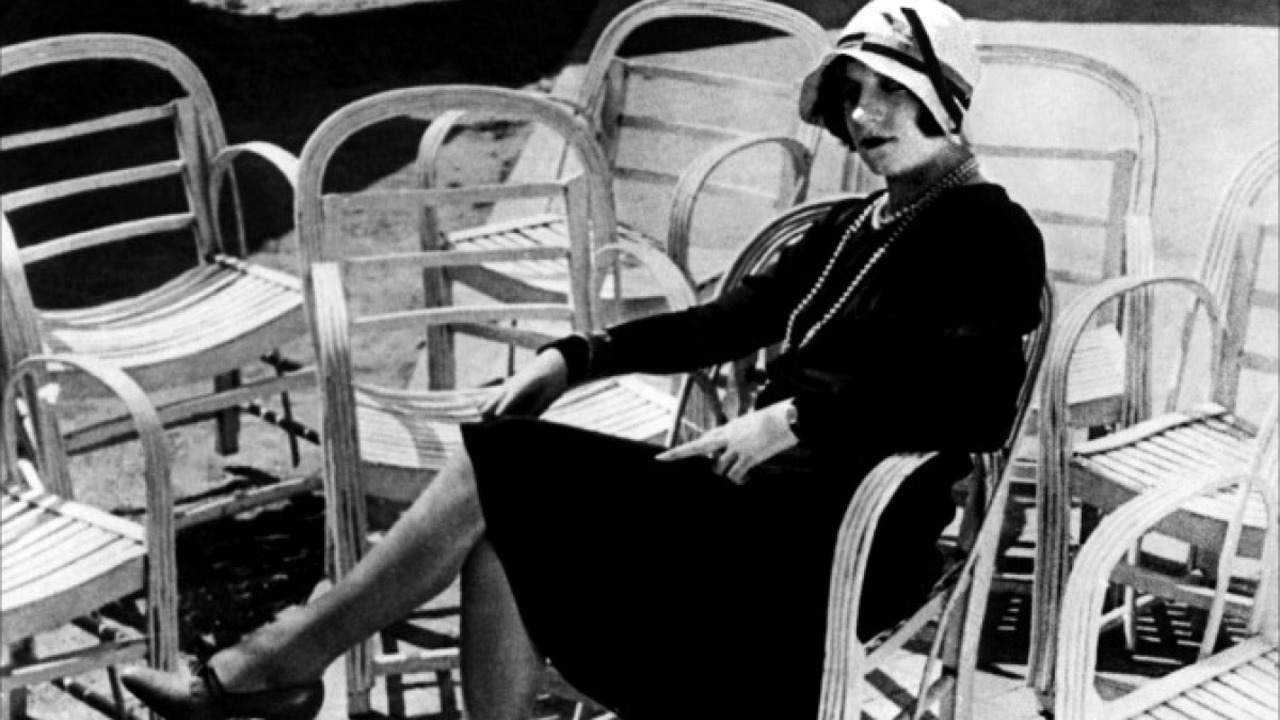
Documentary, by Jean Vigo, France, 1930.
With an old used movie camera bought with the money loaned by his wife's father, Jean Vigo shoots a documentary about Nice. Meeting Boris Kaufman changes the French director's initial project, which will be influenced by Dziga Vertov's operator. The nature and tourist locations of Nice: casinos, carnivals, beaches, bars with tables in the sun. Upper bourgeois Nice is compared with poor neighborhoods. There is no staging. Sometimes people filmed are secretly filmed: the idea of Vigo and Kaufman is to restore the maximum of realism by anticipating the rules of cinema-truth. The montage is inspired by Soviet theories and pursues free associations and symbolic meanings, with rapid rhythm and sudden slowdowns. Without Dialogues, inspired by The Man with the Camera, is an avant-garde film.
Without dialogue
Cléo from 5 to 7 (1962)

Cléo, a young and beautiful pop singer, is awaiting the results of a biopsy that could diagnose her with cancer. The film follows her for ninety minutes, in almost real time, as she wanders through Paris. She meets friends, lovers, consults a fortune teller, and observes the life flowing around her. Her existential anguish transforms her from a passive object of others’ gazes into an active subject of her own life.
Agnès Varda, the “grandmother of the Nouvelle Vague,” offers a exquisitely feminine and feminist perspective. Cléo from 5 to 7 is not just a psychological portrait but a profound reflection on time, mortality, and the construction of female identity. Varda uses the city of Paris not as a mere backdrop but as a mirror of her protagonist’s state of mind, mixing documentary style and fiction to create a work that questions the condition of women in a society that defines them primarily by their appearance.
Jules and Jim (1962)

In bohemian Paris before the Great War, the Austrian Jules and the Frenchman Jim are inseparable friends. Their friendship is tested when they both fall in love with the same woman, the free-spirited and capricious Catherine. Thus begins a love triangle that will last for twenty years, spanning war, marriages, betrayals, and reconciliations, in an impossible search for a balance between love, friendship, and freedom.
François Truffaut directs one of the most celebrated and poignant love stories in cinema history. With a dynamic and lyrical visual style, using tracking shots, freeze frames, and an omnipresent narrator, the film captures the “whirlwind of life” (le tourbillon de la vie) that engulfs the protagonists. It is a work that celebrates the joy of living and the utopia of a love free from conventions, while simultaneously showing its tragic impossibility, confirming the profound humanism of its author.
Contempt (1963)

Screenwriter Paul Javal is hired by an arrogant American producer, Jeremy Prokosch, to rework a film about the Odyssey directed by the legendary Fritz Lang. On set in Capri, the relationship between Paul and his wife Camille falls into crisis. A seemingly insignificant gesture by Paul triggers a deep and irrevocable contempt in Camille, marking the beginning of the painful disintegration of their marriage.
A meta-cinematic masterpiece by Jean-Luc Godard, Contempt is a film about cinema and, at the same time, one of the most lucid and heartbreaking analyses of the end of a love affair. Shot in dazzling Technicolor and accompanied by Georges Delerue’s famous score, the film contrasts the grandeur of classical myth (the Odyssey) with the pettiness of modern relationships, dominated by money and incommunicability. It is a work of stunning formal beauty and infinite sadness.
Les Cousins (1959)

Charles, a naive and studious boy from the provinces, moves to Paris to study law and lives in the apartment of his dissolute and cynical cousin, Paul. While Charles dedicates himself seriously to his studies, Paul indulges in a life of parties, seductions, and nihilism. Both fall in love with the same girl, Florence, but their different natures will lead them to tragically opposite fates.
With his second film, Claude Chabrol establishes himself as the most “Hitchcockian” of the Nouvelle Vague directors. Les Cousins is a work that, beneath the surface of a youth drama, hides a ruthless critique of the Parisian bourgeoisie, its moral decay, and its existential emptiness. Chabrol’s style is already mature: a precise and controlled direction that uses thriller elements to dissect power dynamics and the corruption of innocence.
Lightning part 1

Documentary, by Manuela Morgaine, France, 2013.
A film divided into two parts, a legend intertwining with a documentary across four seasons. This portrait unfolds like a cinematic kaleidoscope, zigzagging like the branching of lightning bolts. The narrative is set in different countries around the world and spans various centuries, simultaneously presented in both documentary and legendary forms. In the autumn segment, a lightning hunter races forth, embodying the Syrian lightning god, Baal. With visionary insight, Baal projects 25 years' worth of video archives onto lightning, unveiling the scientific keys to this remarkable yet devastating phenomenon. In winter, an exploration of melancholy, the final stage of depression, and how it can be overcome takes place. A psychiatrist personifies the enigmatic god Saturn, journeying from Africa to Syria to trace back to his origins and certain ancestral practices. Among these is a ritual practiced by women in the depths of Guinea Bissau, spinning dervishes, and a catfish that holds the secret of healing in the ancient city of Aleppo.
Running for nearly four hours, this documentary undoubtedly stands among the most original ever made, delivering an exceptional audiovisual experience that merges documentary and myth. For those who wish to rediscover, even symbolically, lost energies, watching this film divided into four parts is imperative. One of the most rare and magnificent cinematic creations. A film that truly shakes to the core and, after viewing, necessitates a thorough analysis of the experience.
LANGUAGE: French
SUBTITLES: English, Italian, German, Spanish, Portuguese
Belle de Jour (1967)

Séverine Serizy is the young and beautiful wife of a Parisian surgeon. Although she loves her husband, she is frigid with him but tormented by bold masochistic fantasies. To unleash her repressed desires, she begins working in a brothel during the afternoon hours, becoming “Belle de Jour.” Her double life proceeds smoothly until a young and possessive criminal falls in love with her.
Although Luis Buñuel is a master of Spanish surrealism, this French-produced film is a masterpiece of 1960s European auteur cinema. With impeccable formal elegance, Buñuel explores the hypocrisies and perversions hidden beneath the surface of respectable bourgeois society. The film masterfully blends dream and reality, leaving the viewer in a perpetual state of uncertainty and questioning the nature of desire, guilt, and repression.
III. Heretical Visions: Beyond the New Wave
Playtime (1967)

In a futuristic, cold, and impersonal Paris made of glass and steel, the paths of Monsieur Hulot and a group of American tourists continually cross without ever truly meeting. From the labyrinth of an airport to an exhibition of modern gadgets, to a luxury restaurant that literally collapses during its opening night, the film is a comic symphony on the dehumanization of modern life.
A monumental and almost insane work, Playtime is Jacques Tati’s masterpiece and one of the most original films ever made. Shot in 70mm on a huge, purpose-built city-set (“Tativille”), the film abandons traditional narrative for a visual and sonic exploration of space. Tati orchestrates a complex choreography of gags that unfold simultaneously in every corner of the frame, demanding an active and engaged gaze from the viewer. It is a sharp and amusing critique of homogenization and the loss of humanity.
The Mother and the Whore (1973)

Alexandre, a young unemployed intellectual, lives in an open relationship with Marie, an older woman who supports him. He spends his days in the cafés of Saint-Germain-des-Prés, talking incessantly about literature, cinema, and his love life. His routine is disrupted by his encounter with Veronika, a Polish nurse. A verbal and emotional ménage à trois develops among the three, a ruthless autopsy of feelings in the post-’68 era.
Jean Eustache’s cinematic testament, The Mother and the Whore is a sprawling (almost four hours) and radical work, composed almost entirely of dialogue. It is the definitive portrait of the disillusionment of a generation that dreamed of revolution and found itself grappling with emptiness. Shot in a raw and realistic black and white, the film is an act of extreme and painfully sincere cinema, a monument to the word as a tool for exploring the abyss of human relationships.
L’Argent (1983)

A counterfeit 500-franc note, circulated as a prank by two boys, triggers a tragic chain of events. When the note ends up in the hands of Yvon, an honest family man, his life is destroyed. Falsely accused, he loses his job, his family, and his freedom. Released from prison, his path leads him to a cold and ineluctable violence.
Robert Bresson’s final film, L’Argent is the summation of his style and worldview. Inspired by a Tolstoy story, the film is a ruthless critique of a materialistic society where money corrupts every human relationship. With his characteristic rigor, Bresson eliminates all psychologism, focusing on the causality of events and the physicality of gestures. It is a work of terrifying lucidity, an essay on evil, determinism, and the almost impossible search for grace in a world that has abandoned it.
Lightning part 2
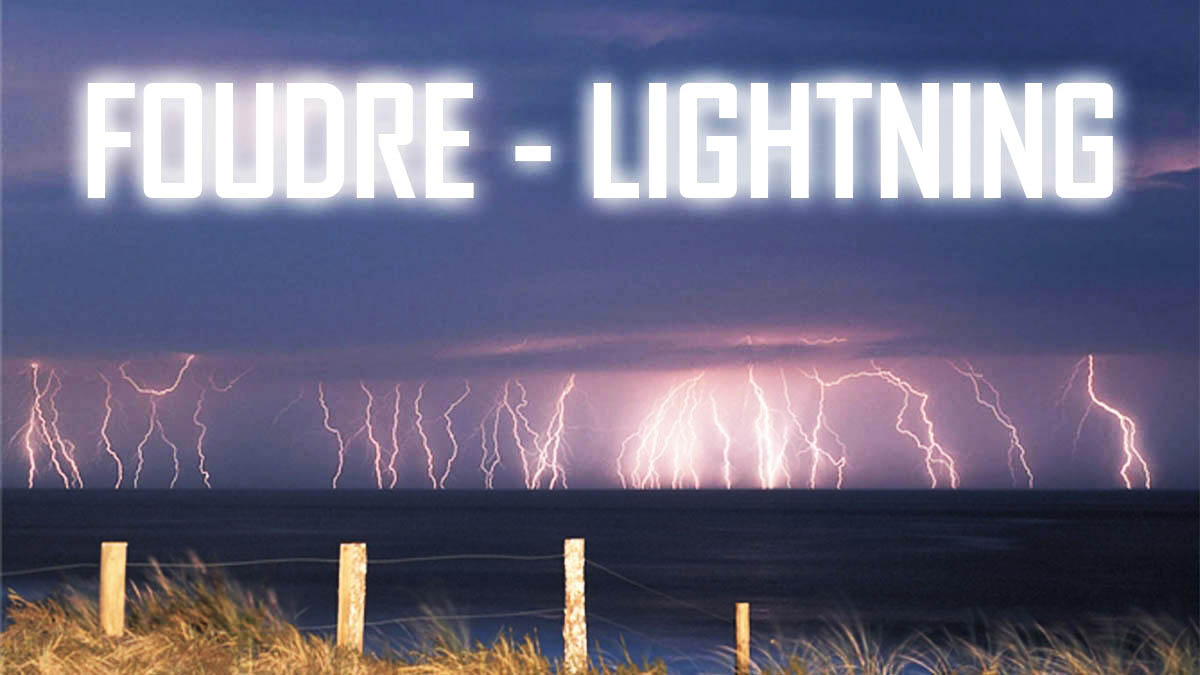
Documentary, directed by Manuela Morgaine, France, 2013.
This fresco is a cinema of zig-zags, akin to the branching of lightning bolts. It unfolds its subject across different countries of the world and over the span of several centuries, concurrently presented in both documentary and legendary forms. Spring brings back to life Syméon the stylite, a madman who lived atop his column for 40 years. Simeon was killed in Syria, in the Cham desert near Palmira. But he is also the one who scrutinizes the earth, recounting the true story of Aleppo soap, which is a cauldron brimming with mythology. Additionally, it delves into how lightning generates an aphrodisiac truffle called Kama once a year, in spring – a phenomenon known to exist as the "Vegetable of Allah" in the tales of One Thousand and One Nights. Summer stages, from Marivaux's "La dispute," the love at first sight between two creatures, Azor and Églé, isolated on an island called Sutra. On this paradisiacal island, they consume the Kama, the forbidden fruit, and then, consumed by love, they are banished. Finally branching out, Baal, Saturn, Simeon, the melancholic, and the downtrodden unite with the torn-apart lovers in the night lightning.
Running for almost four hours, this documentary is undoubtedly among the most original ever created, offering a fantastic auditory and visual experience that straddles the line between documentary and legend. For those who seek to rediscover, even symbolically, lost energies, watching this film divided into four parts is a must. One of the rarest and most magnificent cinematic artifacts. A film that truly shakes you to the core and demands introspection after viewing.
LANGUAGE: French
SUBTITLES: English, Italian, German, Spanish, Portuguese
Le Boucher (1970)

In a quiet village in the Périgord, Hélène, the new school headmistress, befriends Popaul, the local butcher. Both are lonely figures: she is marked by a past heartbreak, he is traumatized by his military experience in Algeria and Indochina. As their platonic relationship deepens, a series of brutal murders of young women shocks the community, and Hélène begins to suspect her only friend.
Claude Chabrol delivers one of his masterpieces, a psychological thriller of extraordinary finesse. Far from the genre’s stereotypes, the film builds suspense not on the killer’s identity but on the emotional tension between the two protagonists. Chabrol uses the placid beauty of the French countryside as a backdrop to explore the repressed violence lurking beneath the surface of normality, linking the butcher’s individual trauma to the collective, repressed trauma of colonial war.
IV. The Pop Aesthetics of Cinéma du Look: Style as Substance
Diva (1981)

Jules, a young Parisian postman, is obsessed with the American opera singer Cynthia Hawkins, who refuses to be recorded. During a concert, Jules secretly records her. Shortly after, he unwittingly comes into possession of a second cassette, a testimony that incriminates a corrupt police commissioner. Hunted by two ruthless cops and two mysterious Taiwanese men, Jules finds himself at the center of a postmodern intrigue.
Jean-Jacques Beineix’s film marks the birth of Cinéma du Look, a movement in the 1980s that reacted against the intellectual realism of the previous decade with a glossy, hyper-stylized aesthetic inspired by advertising and music videos. Diva is an elegant and cool thriller where the plot is a pretext for a visual symphony dominated by neon colors, reflective surfaces, and a cool atmosphere. It is the celebration of style as substance, a cinema that “thinks with its eyes.
Mauvais Sang (1986)

In a Paris oppressed by an anomalous heatwave, a new virus called STBO is spreading, killing those who make love without feeling. A group of aging gangsters hires Alex, a young and skilled magician, to steal the antidote. During the preparation for the heist, Alex falls in love with Anna, the young partner of his boss, risking his life and the mission.
Leos Carax, the enfant terrible of Cinéma du Look, creates a feverish and desperately romantic work. Mauvais Sang is a tribute to the Nouvelle Vague, filtered through a punk and sci-fi aesthetic. The film is a riot of visual inventions, culminating in the famous sequence of Denis Lavant running to the sound of David Bowie’s “Modern Love.” It is a cinema that expresses the urgency and melancholy of youth with a dazzling and poetic visual energy.
Betty Blue (37°2 le matin) (1986)

Zorg is a handyman living a quiet life in a beach bungalow. His existence is turned upside down by the arrival of Betty, a young, impulsive, passionate, and unpredictable woman. Convinced that Zorg is a writing genius, Betty dedicates herself body and soul to getting his manuscript published. Their intense and all-consuming love story, however, clashes with her growing and destructive mental instability.
A manifesto of 1980s amour fou, Jean-Jacques Beineix’s film is an incandescent melodrama, renowned for its saturated, sensual aesthetic and Béatrice Dalle’s explosive performance. Betty Blue captures the essence of a love that burns too quickly, an absolute feeling that cannot survive contact with reality. It is the pinnacle of Cinéma du Look, where stylistic exaggeration serves to express the intensity of otherwise ineffable emotions.
Love on the Run
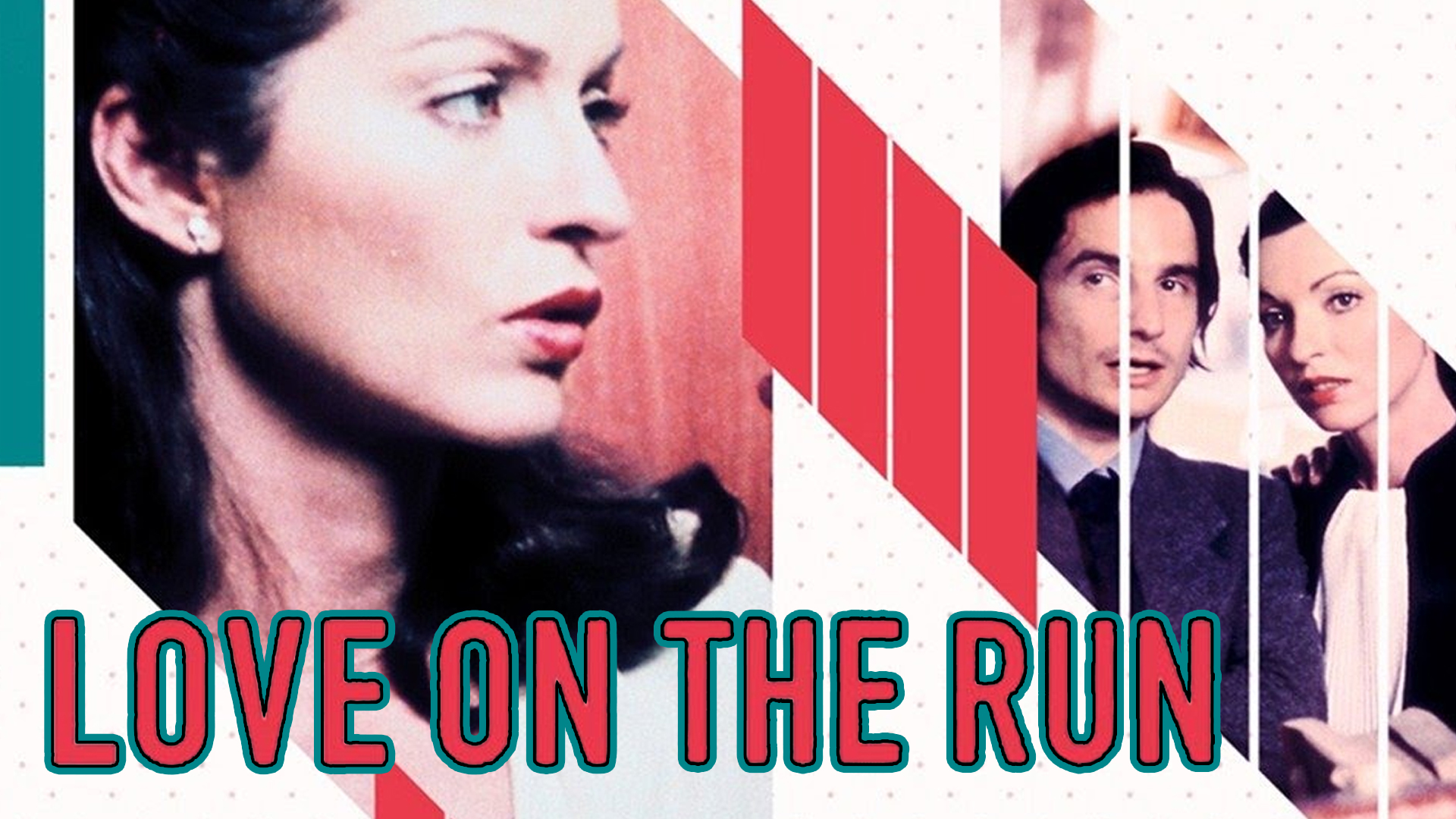
Comedy, romance, by Francois Truffaut, France, 1978.
After seven years Antoine and Christine divorce, while remaining good friends. Antoine is in a relationship with Liliane, friend of Christine, has published an autobiography about his loves and finds work as a proofreader and also begins a cheerful, if tumultuous relationship, with Sabine, a saleswoman in a record store.
It is the fifth and final film in the series of 'Antoine Doinel', which follows the life of the main character from childhood to adulthood. The film won the Jury Prize at that year's Cannes Film Festival. It is a significant representation of human relationships, an intelligent and ironic reflection on the themes of love, loss and personal growth. It is also an homage to French cinema of the 60s and 70s, a sort of synthesis of cinematic themes and styles that Truffaut had explored throughout his career. Léaud had played the character in all the films of the "Antoine Doinel" series and his performance in "Love on the Run" was considered one of the best of his career. "Love on the Run" was well received by critics and is considered one of Truffaut's best films.
LANGUAGE: french
SUBTITLES: english, italian
Nikita (1990)

Nikita, a young drug addict, is sentenced to life in prison after killing a policeman during a robbery. The secret service fakes her death and offers her an alternative: become an assassin for the state. After rigorous training, Nikita is transformed into a lethal and elegant spy. She tries to build a new life and a normal relationship, but her past and her “job” constantly return to haunt her.
With Nikita, Luc Besson merges the refined aesthetic of Cinéma du Look with the rhythm and spectacle of Hollywood action cinema, creating a hybrid of enormous international success. The film is a stylized and powerful thriller, but also a drama about the search for identity and the possibility of redemption. It defined a new model of action heroine, fragile and ruthless, and demonstrated French cinema’s ability to engage with popular genres in an authorial way.
The Lovers on the Bridge (1991)

On the Pont-Neuf in Paris, closed for restoration, live two homeless people: Alex, an alcoholic street performer, and Michèle, a painter who is losing her sight and has fled her bourgeois life. A mad, desperate, and violent love is born between them, lived on the margins of society. Their story unfolds amidst the fireworks of the bicentennial of the French Revolution, in an explosion of lyricism and squalor.
Leos Carax’s most ambitious and tormented work is the swan song of Cinéma du Look. With a troubled production and exorbitant costs, the film pushes the movement’s aesthetic to the extreme, creating a visual epic of breathtaking beauty. Carax transforms misery into spectacle, squalor into poetry, creating a hymn to absolute love, an amour fou that seeks salvation in art and passion, even when everything around seems to be collapsing.
V. Social Anger and Gazes on the Present (The ’90s)
Delicatessen (1991)

In an undefined, post-apocalyptic future, food is scarce. In a dilapidated apartment building, the butcher Clapet, who is also the landlord, has found a macabre solution: he lures new tenants to butcher them and sell their meat to the other residents. The arrival of Louison, a former clown in love with the butcher’s daughter, disrupts the community’s precarious balance, prompting a group of rebellious vegetarians to intervene.
Jean-Pierre Jeunet and Marc Caro create a surreal black comedy, a visually stunning work that mixes retro aesthetics with the grotesque. Behind the macabre humor and visual fantasy, Delicatessen is a powerful social allegory about survival, selfishness, and the necessity of rebellion in times of crisis. It is a microcosm that reflects the tensions of a society on the brink of collapse, a moral tale disguised as a cannibalistic fable.
Three Colors: Blue (1993)

After losing her husband, a famous composer, and her daughter in a car accident, Julie tries to erase all traces of her past. She gets rid of the house, destroys her husband’s last unfinished work, and moves into an anonymous apartment in Paris, determined to live a life of total emotional freedom. However, her connections to the world and to music resurface powerfully, forcing her to confront her grief.
The first chapter of Krzysztof Kieślowski’s trilogy dedicated to the values of the French flag (Liberty, Equality, Fraternity), Blue is a profound and poignant meditation on the concept of freedom. Far from any political rhetoric, Kieślowski explores inner freedom—from bonds, memories, and pain. Through masterful direction, which uses the color blue and music as narrative elements, and Juliette Binoche’s extraordinary performance, the film becomes a sensory and emotional experience of rare power.
Testament of Orpheus
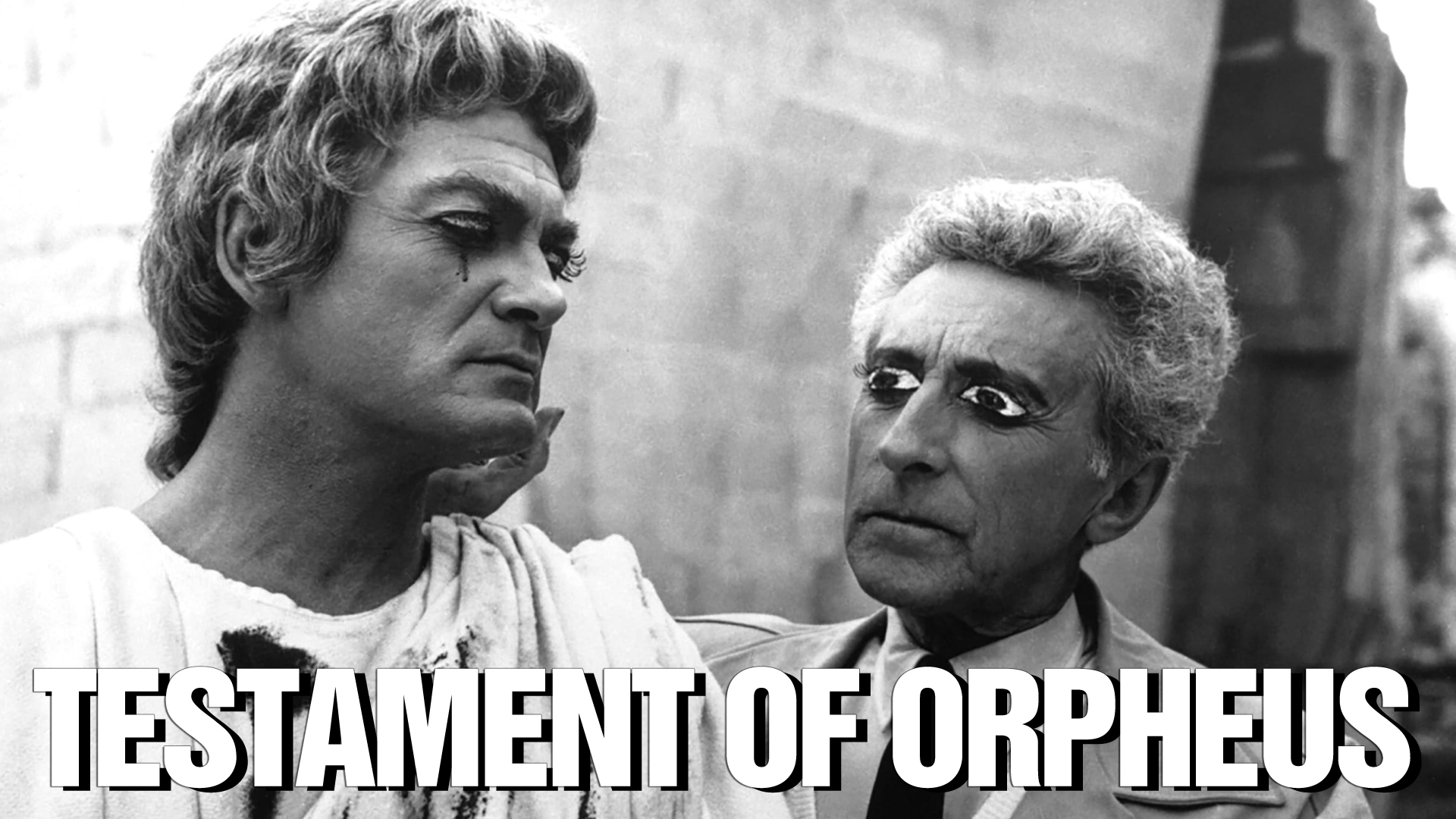
Drama film, by Jean Cocteu, France, 1960.
In his latest film, the legendary Jean Cocteau is a poet who travels through time in search of enlightenment. In a mysterious wasteland, he meets lost souls that result in his death and resurrection. With an exceptional cast including Pablo Picasso, Jean-Pierre Leáud, Lucia Bosè, Yul Brynner, Brigitte Bardot, Testament of Orpheus closes Cocteau's extraordinary research on the relationship between art and life.
LANGUAGE: french
SUBTITLES: english, italian
La Haine (1995)

In the Parisian banlieue, in the aftermath of a night of clashes with the police, three friends—Vinz (Jewish), Saïd (Arab), and Hubert (Black)—spend twenty-four hours in boredom, anger, and frustration. Tension is high: a friend of theirs is dying in the hospital, beaten by the police, and Vinz has found a gun lost by an officer during the riots, vowing to use it for revenge if his friend dies.
Mathieu Kassovitz’s film is a punch to the gut, a work that marked an entire generation and brought the reality of the French suburbs to light with unprecedented force. Shot in a raw and stylized black and white, La Haine is an urgent and powerful tale of marginalization, racism, and the vicious cycle of violence. The famous line “so far, so good” becomes the mantra of a society in freefall, unaware of the imminent and inevitable impact.
Irma Vep (1996)

René Vidal, a Nouvelle Vague director in the midst of a creative crisis, decides to remake the silent film classic Les Vampires. For the lead role of the latex-clad thief Irma Vep, he casts Hong Kong action star Maggie Cheung, who plays herself. On the chaotic set, the boundaries between fiction and reality, character and actress, begin to blur.
Olivier Assayas delivers an intelligent and ironic reflection on the state of cinema in the 1990s. Irma Vep is a film-essay that stages the crisis of French auteur cinema, its confrontation with Asian genre cinema, and its fascination with cultural globalization. It is a postmodern, fragmented, and energetic work that celebrates creative chaos and the magic of cinema, even when it seems on the verge of failure.
Beau Travail (1999)

In the Gulf of Djibouti, a platoon of the French Foreign Legion lives a routine of grueling training and almost choreographic rituals under the scorching sun. The group’s balance is fractured by the jealousy that Sergeant Major Galoup feels for Gilles Sentain, a young legionnaire admired by everyone, including the commander. This obsession will lead Galoup to an act of sabotage that will seal his fate.
Loosely inspired by Herman Melville’s “Billy Budd,” Claire Denis’s masterpiece is a hypnotic and sensual work that explores the male body, repressed desire, and power dynamics in a hyper-masculine context. Denis’s direction is elliptical and poetic, more interested in gestures, rituals, and landscapes than in traditional narrative. It is a physical, almost silent cinema that culminates in one of the most liberating and unforgettable final scenes in film history.
A Heart in Winter (1992)

Stéphane and Maxime are partners in a prestigious violin-making workshop. Maxime is outgoing and passionate, while Stéphane is a meticulous, reserved, and emotionally detached craftsman. When Maxime falls in love with Camille, a young and talented violinist, Stéphane finds himself drawn to her, but his inability to love leads him into a cruel game of seduction and rejection, with devastating consequences for all three.
Claude Sautet, a master of French intimate cinema, directs a psychological drama of rare finesse and complexity. Far from any sentimentality, the film is a chilling portrait of emotional paralysis, an exploration of the fear of living and loving. Supported by masterful performances from Daniel Auteuil, Emmanuelle Béart, and André Dussollier, A Heart in Winter is a work of sobriety and depth that leaves a lasting impression.
VI. The New Millennium: Intimacy, Extremism, and New Perspectives
Zero for Conduct
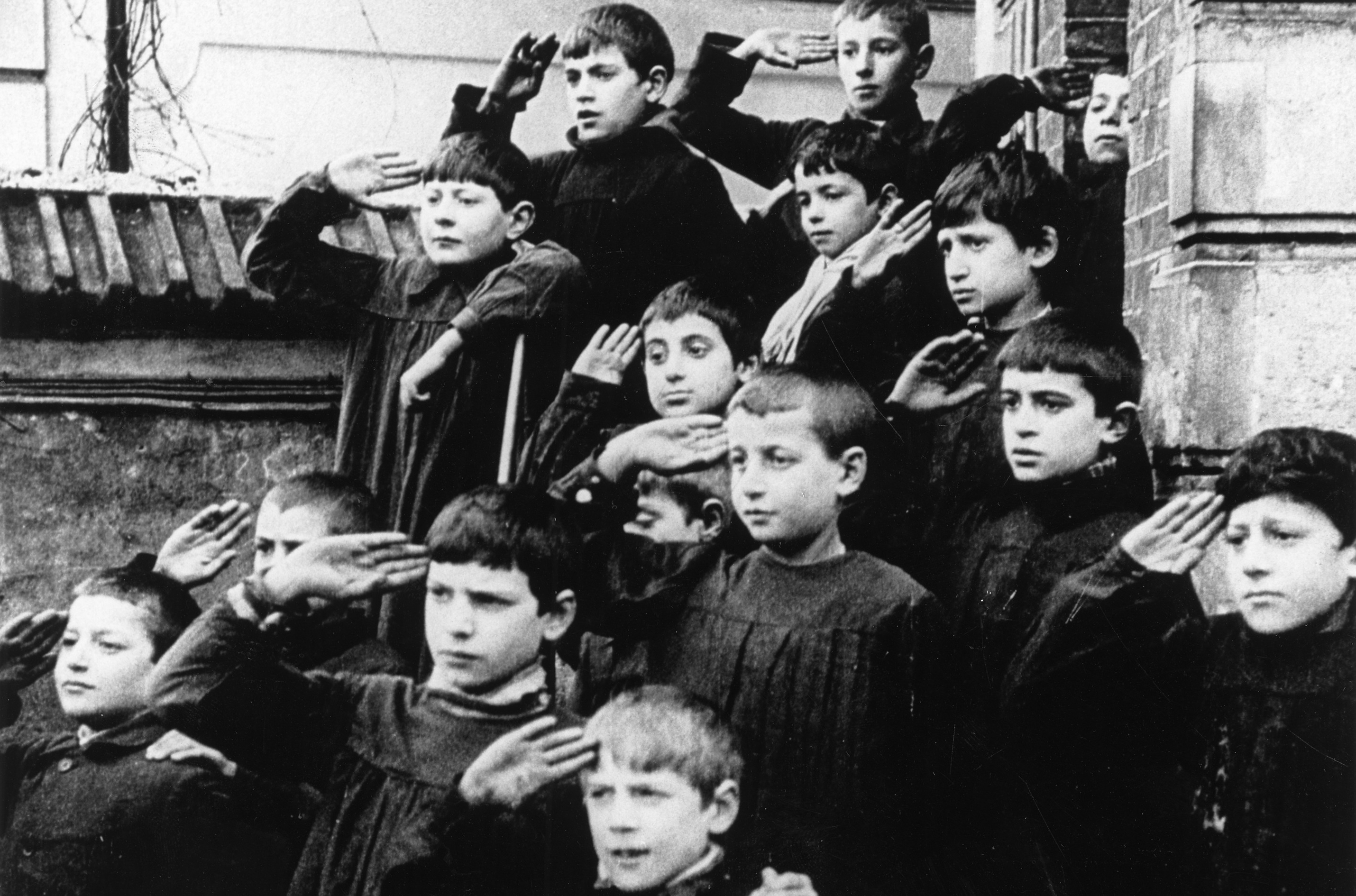
Comedy, by Jean Vigo, France, 1933.
The holidays are over and it's time for the kids to return to the terrible boarding school, run by obtuse and conformist tutors, unable to encourage the growth of any spirit of freedom and creativity. The only thing these austere professors are capable of is assigning a "zero" for conduct. But the boys decide to rebel with the complicity of the new supervisor, Huguet, different from all the others. Thus a real revolution is unleashed. Jean Vigo describes the children's yearning for freedom with audacity and a subversive spirit, with a ruthless critique of the scholastic institution, which closely resembles certain memorable sequences from Fellini's cinema. Perhaps the Italian filmmaker had seen the Vigo film? It seems very, very likely. The film was banned by French censorship and did not have a public screening until 1945.
Food for thought
The conditioning of the family, the school and the mass media are probably the main causes of the existential failure of millions of people. They are unidentified enemies, from which it is difficult to defend oneself, which cause the loss of self-esteem and the creativity necessary to achieve ambitious goals. Social, cultural and religious conditioning are a fundamental theme in the life of every human being, and one of the main topics of the filmographies of masters of cinema such as Fellini, Truffaut, and many others.
LANGUAGE: French
SUBTITLES: English, Spanish, German, Portuguese
Amélie (2001)

Amélie Poulain is a young waitress in Montmartre with a vivid imagination. After finding an old tin box full of childhood memories and returning it to its owner, she decides to dedicate her life to orchestrating small moments of happiness for the people around her. In her mission, however, she neglects her own happiness, until an encounter with the quirky Nino forces her to come out of her shell.
Jean-Pierre Jeunet’s film was a global cultural phenomenon, an explosion of optimism and visual fantasy. Its postcard-perfect Paris, hyper-saturated with color and populated by eccentric characters, defined an image of France for international audiences. While it represents an idealized and almost reactionary vision, it is also a work of extraordinary stylistic inventiveness, a hymn to the small joys of life that stood in stark contrast to the rawer, more political cinema emerging in the same years.
Under the Sand (2000)

Marie and Jean have been happily married for years. During a beach vacation, Jean mysteriously disappears while swimming. Unable to accept her loss, Marie returns to Paris and continues to live as if her husband were still with her, talking to him and feeling his presence. Her denial of reality isolates her from the world, until a new encounter forces her to confront her unresolved grief.
François Ozon creates a work of extraordinary sensitivity and psychological rigor. Guided by a monumental performance from Charlotte Rampling, the film explores the complex stages of grief and the defense mechanisms of the human mind. Ozon’s direction is elegant and measured, capable of making the invisible visible, of filming absence, and of creating an atmosphere suspended between reality and hallucination, without ever judging his protagonist.
Read My Lips (2001)

Carla is a nearly deaf secretary, exploited and ignored by her colleagues. Tired of her invisibility, she hires Paul, a rough but charming ex-convict, as an intern. An unlikely alliance forms between the two outcasts: she uses her lip-reading skills to help him pull off a heist against a gangster, while he offers her a chance at revenge and a more exciting life.
Jacques Audiard proves himself a master of genre-blending, creating a film that is at once a tense thriller, a social drama, and an atypical love story. Read My Lips is a powerful portrait of two marginalized characters who find a way to assert themselves, using their weaknesses as weapons. Audiard’s nervous and physical direction creates a compelling work that explores themes of power, communication, and social revenge.
Time Out (2001)

Vincent is fired from his consulting job but doesn’t have the courage to tell his family. He begins to construct a fictional life, spending his days in his car, pretending to go to non-existent meetings, and inventing a prestigious job at the United Nations in Geneva. To finance his lifestyle and maintain his elaborate lie, he becomes entangled in an international scam.
Inspired by a true story, Laurent Cantet’s film is a chilling and lucid critique of contemporary society, where an individual’s identity is defined almost exclusively by their job. With a sober, almost documentary-like style, Cantet explores the psychological pressure of the corporate world and the crisis of masculinity. It is a work that transforms a personal drama into a universal analysis of alienation and the need for social approval.
Irréversible (2002)
![Irréversible (2002) Bande Annonce VF [HD]](https://blog.indiecinema.co/wp-content/plugins/wp-youtube-lyte/lyteCache.php?origThumbUrl=https%3A%2F%2Fi.ytimg.com%2Fvi%2FJrMzJ80-fr0%2F0.jpg)
The film recounts a night of violence and revenge, but does so in reverse chronological order. It begins with the brutal punishment of the culprit in a gay club and rewinds the events, showing the victim’s boyfriend’s desperate search for the perpetrator, leading up to the central scene, an unbearable and lengthy rape sequence, and concluding with the moments of happiness that precede the tragedy.
The most controversial and radical work of the New French Extremity, Gaspar Noé’s film is a shocking cinematic experience. The reverse narrative is not a simple gimmick but a philosophical tool that forces the viewer to reflect on causality, fate, and the irreversible nature of time. With its swirling camera and explicit violence, Irréversible is a punch to the gut that questions the limits of representation and the responsibility of the gaze.
Caché (Hidden) (2005)

Georges and Anne, a bourgeois Parisian couple, begin to receive anonymous videotapes that film their house from the outside for hours. The videos are accompanied by disturbing drawings that seem to allude to a repressed episode from Georges’s childhood. The invisible threat brings latent tensions in the couple to the surface and forces Georges to confront a personal guilt that is intertwined with a historical guilt of France.
Michael Haneke directs a psychological thriller of glacial precision and coldness. The direction, composed of long, fixed shots that mimic the gaze of a surveillance camera, creates a constant sense of paranoia and unease. Caché is much more than a mystery: it is a powerful allegory about the repression of memory, both individual and collective, alluding to the 1961 massacre of Algerians in Paris and France’s colonial past. A masterpiece that reminds us that one can never escape one’s past.
The Taste of Others (2000)

Castella, a wealthy but uncultured industrialist, falls in love with Clara, an actress and English teacher who is part of a circle of intellectuals and artists who despise him. To win her over, Castella clumsily tries to enter her world, frequenting the theater and taking an interest in art. Meanwhile, the lives of his driver, his bodyguard, and a bartender intertwine, exploring cultural and social barriers.
Agnès Jaoui, also an actress and co-writer with her partner Jean-Pierre Bacri, directs an intelligent, witty, and deeply human ensemble comedy. The film astutely and without snobbery explores the theme of “taste” as a social marker, showing how cultural differences can be both an obstacle and an opportunity for enrichment. It is a work that, in stark contrast to the more extreme trends in French cinema of the period, celebrates the possibility of dialogue and mutual understanding.
Persepolis (2007)

Through black-and-white animation, Marjane Satrapi recounts her childhood and adolescence in Tehran during the Islamic Revolution. Raised in a progressive family, the rebellious young Marjane, a fan of punk rock, clashes with the restrictions of the new regime. Sent to Europe for her safety, she must face exile, loneliness, and the difficulty of finding her identity between two cultures.
Based on the autobiographical graphic novel of the same name, Persepolis is a powerful and moving work that succeeds in telling grand History through an intimate and personal perspective. The visual style, simple yet highly expressive, allows it to tackle complex themes such as war, repression, and identity with a perfect balance of drama, humor, and irony. It is a film that gives voice to a universal experience of exile and offers a view of Iran far from stereotypes.
The Class (Entre les murs) (2008)

The film documents a school year inside a middle school classroom in a multi-ethnic neighborhood of Paris. François, a French teacher, tries to engage his often difficult and provocative teenage students in an open and stimulating dialogue. The classroom discussions, conflicts, and small daily successes paint a realistic and complex portrait of the French education system and the challenges of integration.
Winner of the Palme d’Or at Cannes, Laurent Cantet’s film blurs the lines between fiction and documentary. Shot with non-professional actors playing versions of themselves, The Class has an extraordinary force of authenticity. The camera, always at the students’ level, captures the energy, tensions, and vitality of a microcosm that reflects the contradictions of contemporary French society. It is an engaged cinema that offers no solutions but stimulates deep reflection.
A Prophet (2009)

Malik El Djebena, a nineteen-year-old Franco-Arab, is sentenced to six years in prison. Illiterate and alone, he seems a predestined victim. Inside the prison, he is forced by the Corsican mafia boss to commit a murder. This act marks him forever, but it is also the beginning of his criminal education and his rise. By learning to read, write, and navigate between rival factions, Malik will build his own empire.
Jacques Audiard directs an epic and powerful prison movie, a criminal bildungsroman that is also a metaphor for contemporary France. With a realistic and brutal style, yet not without dreamlike moments, the film tells the story of an outcast’s emancipation, turning prison into his university. It is a complex work on power, identity, and the ability to survive and thrive in a hostile environment, a masterpiece of genre cinema with a deep social subtext.
Martyrs (2008)

Fifteen years after escaping a place where she was tortured, Lucie breaks into the home of a seemingly normal family and massacres them, convinced they were her tormentors. She calls for help from her friend Anna, who has always supported her. As Anna tries to clean up the crime scene, she discovers an even more terrifying truth that will drag her into an abyss of unimaginable suffering.
The extreme and unsurpassed pinnacle of the New French Extremity, Pascal Laugier’s film is a work that pushes horror beyond its limits. Its physical violence is almost unbearable, but never gratuitous. Martyrs is a deeply philosophical film that questions the meaning of pain, the nature of trauma, and the possibility of transcendence. It is an extreme, disturbing, and unforgettable cinematic experience that uses the genre to ask radical questions about the human condition.
VII. Contemporary Cinema: The Triumph of the Female Gaze and New Voices
Tomboy (2011)

Laure, a ten-year-old girl, moves with her family to a new neighborhood during the summer. With her short hair and tomboyish ways, she is mistaken for a boy by a peer, Lisa. Laure decides to play along and introduces herself to the group of friends as Michaël. Throughout the summer, she lives a new identity, exploring the freedom and complications that come with it.
Céline Sciamma tackles the delicate theme of childhood gender identity with extraordinary sensitivity and naturalism. Far from any thesis or drama, the film observes with tenderness and without judgment the games, discoveries, and fears of its young protagonist. Sciamma’s direction is intimate and precise, capable of capturing the subtlest nuances of childhood emotions, creating a luminous and profound work on the fluidity of identity and the construction of self.
Holy Motors (2012)

From dawn to dusk, Monsieur Oscar travels through Paris in a white limousine. During the day, he has a series of “appointments” that lead him to embody a succession of different characters: an elderly beggar, a hitman, a family man, a grotesque monster. Each performance immerses him completely in a new life, in an enigmatic journey through cinematic genres and the very nature of acting.
Leos Carax’s return to cinema after thirteen years is a mad, unclassifiable, and brilliant work. Holy Motors is a hymn to the act of performance, a reflection on the loss of authenticity in the digital age, and an elegy for the history of cinema. It is a film that constantly changes its skin, moving from drama to musical, from sci-fi to the grotesque, with absolute creative freedom. It is an overwhelming visual and conceptual experience, an act of love for the transformative power of the image.
Amour (2012)

Georges and Anne are a couple in their eighties, retired music teachers, cultured and still deeply in love. Their quiet life is shattered when Anne suffers a stroke that paralyzes half of her body. Georges takes care of her, but the illness progresses inexorably, testing their love in the face of suffering, physical decline, and the approach of death.
Winner of the Palme d’Or, Michael Haneke’s film is a work of almost unbearable lucidity and rigor. With his austere style and direction that observes without ever judging, Haneke addresses the theme of the end of life with brutal honesty, refusing all sentimentality. Amour is not a film about illness, but about love—a love put to the ultimate test by pain. It is a heartbreaking and profoundly human work, a masterpiece of rare emotional and intellectual power.
Blue Is the Warmest Colour (2013)

Adèle is a teenager discovering her desires. A chance encounter with Emma, a blue-haired art student older than her, changes her life. An all-consuming and passionate love story begins between them, accompanying Adèle on her journey of growth, from the end of high school to her first years as a teacher, through joy, pain, and self-discovery.
Abdellatif Kechiche directs a monumental and immersive work, a sentimental epic that follows its protagonist with almost physical closeness. Famous for its intense close-ups and explicit, prolonged sex scenes, the film captures the carnality and viscerality of first love like few others. Beyond the controversies, Blue Is the Warmest Colour is a powerful and realistic portrait of desire, passion, and the social differences that can crack even the strongest bond.
Elle (2016)

Michèle, the resolute head of a video game company, is raped in her home by a masked man. Instead of reporting the assault to the police, she reacts in an unexpected way: she barricades herself in her house, buys a hatchet, and begins a perverse and ambiguous game to uncover her attacker’s identity among the men around her, transforming trauma into a dangerous power dynamic.
Paul Verhoeven, a master of provocation, directs a bold and unsettling psychological thriller that completely subverts the conventions of the rape and revenge genre. Supported by a masterful and fearless performance from Isabelle Huppert, Elle is a complex, morally ambiguous film laced with black humor. It is an unconventional portrait of female resilience, exploring the gray areas of trauma, desire, and control.
120 BPM (Beats per Minute) (2017)

In the early 1990s in Paris, the AIDS epidemic is claiming victims amidst the general indifference of institutions and pharmaceutical companies. The film follows the actions of the activist group Act Up-Paris, chronicling their fiery meetings, spectacular protests, and the race against time to obtain treatment and visibility. Within the political battle, a love story blossoms between Nathan, a newcomer, and Sean, one of the most radical militants.
Robin Campillo creates a vibrant, political, and deeply moving work. The film reconstructs with extraordinary energy the urgency and vitality of a community fighting for its survival. Masterfully alternating between political debates, protest actions, and moments of intimacy and celebration, 120 BPM is a hymn to life, an ensemble story that celebrates solidarity, love, and anger as engines of change.
Portrait of a Lady on Fire (2019)

Brittany, late 18th century. The painter Marianne is hired to create the wedding portrait of Héloïse, a young woman fresh out of a convent and reluctant to marry. Since Héloïse refuses to pose, Marianne must observe her by day and paint her in secret. Between the two women, in almost total isolation, an intimacy of gazes, gestures, and unspoken words develops, transforming into an intense and fleeting love.
Céline Sciamma directs a masterpiece of rare beauty and intelligence, a film that theorizes and practices the concept of the “female gaze.” With a rigorous pictorial composition and extraordinarily fine writing, the film is a profound meditation on art, memory, and the nature of love. It is a love story told through the reciprocity of the gaze, a work that celebrates creative power and female solidarity in a world dominated by male rules.
Les Misérables (2019)

Stéphane has just moved to Paris and joins the anti-crime squad of Montfermeil, the same banlieue where Victor Hugo set part of “Les Misérables.” He finds himself patrolling the streets with two colleagues with brutal methods, in a neighborhood where tensions between different gangs and the police are always on the verge of exploding. An incident, filmed by a drone, will trigger an uncontrollable spiral of violence.
Twenty-five years after La Haine, Ladj Ly directs a new, powerful fresco of the French banlieues. Shot with the adrenaline-fueled style of an action thriller, the film is a work of shocking realism, showing from the inside the complex and violent dynamics of a territory abandoned by the state. It is a film that takes no sides, showing how everyone—cops and residents—are “miserable,” trapped in a system that only generates anger and revenge.
Titane (2021)

After a childhood car accident, Alexia has a titanium plate in her head and a morbid attraction to cars. As an adult, she is a dancer who performs at motor shows and a serial killer. On the run after a murder, she decides to change her identity, posing as Adrien, a boy who disappeared ten years earlier. She is “recognized” by the boy’s father, a lonely and desperate firefighter, with whom she forms a relationship as strange as it is tender.
Winner of the Palme d’Or, Julia Ducournau pushes French cinema into unexplored territories. Titane is an extreme work, a body horror that transforms into a family melodrama, a film that defies all genre labels. It is a shocking and surprisingly moving reflection on identity, the body, gender fluidity, and the possibility of finding love and family in the most unthinkable ways. An unforgettable visual and physical experience.
Petite Maman (2021)

Nelly, an eight-year-old girl, has just lost her beloved grandmother. While helping her parents empty her mother’s childhood home, she explores the surrounding woods, the same woods where her mother played as a child. There she meets a girl her age, Marion, who is building a treehouse. An immediate friendship forms between them, and Nelly soon realizes that this new friend is, in fact, her mother as a child.
With disarming delicacy and depth, Céline Sciamma creates a small cinematic gem. In just 72 minutes, the film explores universal themes such as grief, the mother-daughter relationship, and the mystery of childhood with the grace of a fairy tale. It is a work of only apparent simplicity, which through a touch of magical realism manages to build a bridge between generations, offering an emotional experience of rare purity and power.
Anatomy of a Fall (2023)

Sandra, a German writer, lives in an isolated chalet in the French Alps with her husband Samuel and their visually impaired son Daniel. When Samuel is found dead at the base of the chalet, the fall appears suspicious. Sandra becomes the main suspect and is tried for murder. The trial turns into a ruthless dissection of their relationship, where truth becomes an elusive and interpretable concept.
Palme d’Or winner at Cannes, Justine Triet’s film is a compelling legal drama that is also, and above all, the anatomy of a marital crisis. With a sharp script and extraordinarily intelligent dialogue, the film dismantles the narratives we construct in our private lives, showing how every relationship is a complex web of truth, fiction, resentment, and love. It is a work that questions the very nature of truth, leaving the viewer to render their own verdict.
Young & Beautiful (2013)

Isabelle is a seventeen-year-old Parisian student, beautiful and from a bourgeois family. After losing her virginity during a summer vacation, she decides, for no apparent economic or psychological reason, to start prostituting herself, meeting older men in hotel rooms. The film follows her through the four seasons, exploring her double life and her enigmatic search for self.
François Ozon tackles a risqué subject with his characteristic elegant and detached style. Young & Beautiful is not a film of social commentary, but an ambiguous and non-judgmental portrait of sexual awakening and the contradictions of adolescence. Ozon provides no easy answers, but merely observes his protagonist’s mysterious journey, creating a work that questions the viewer about female desire, the commodification of the body, and the inscrutability of human motivations.
Elevator to the Gallows (1958)

Julien Tavernier kills his boss, who is also his lover Florence’s husband. The crime seems perfect, but as he is about to leave the building, he realizes he has forgotten a piece of evidence and goes back, getting stuck in the elevator. Meanwhile, a young delinquent couple steals his car and, during their joyride, commits a murder, framing him for it. Florence, not seeing him arrive, wanders through a nocturnal and spectral Paris.
Louis Malle’s debut film, this work is a crucial bridge between classic film noir and the impending Nouvelle Vague. On one hand, it has the tense plot and fatalism of American noir. On the other, it anticipates the stylistic freedom of the new wave, especially in the famous sequences of Jeanne Moreau’s nocturnal wandering, accompanied by the legendary improvised soundtrack by Miles Davis. It is an existential thriller that captures the atmosphere of an entire era.
A vision curated by a filmmaker, not an algorithm
In this video I explain our vision

