
The Dinner Table That No Longer Speaks
You sit across from each other and the candles are lit because someone, at some point, decided that candles meant something. The food is good. The wine is open. And yet the silence between you has a texture now, something almost geological, laid down in strata over years until it became the table itself, the walls, the particular angle at which she holds her fork without knowing she holds it that way. You are not angry. That is the part no one warns you about. Anger would at least be a current, something moving between two points. This is something else entirely — a stillness that has stopped being peaceful and started being precise, the way a photograph is precise, fixed, unable to surprise you.

You know what she will say before she says it. Not because you are clever, but because the territory between you has been walked so many times that every path is worn down to bare stone. You finish each other’s sentences not from intimacy but from the same reason you know which step on the staircase creaks — pure repetition, the body’s memory substituting for presence. And somewhere across the table, she is doing the same thing to you, has been doing it for years, and neither of you has named it because naming it would mean looking at it directly, and looking at it directly would mean asking what it is.
This is the quiet at the center of Goethe’s great novel, published in 1809, the one he called his best book and the one his contemporaries found most disturbing. Not because it was scandalous — though it was — but because it described something people recognized in themselves without having language for it. The gravitational drift. The erosion that happens not through conflict but through the slow accumulation of familiarity, the way two people can become so thoroughly known to each other that they cease, in some essential way, to exist for each other as separate beings. Eduard and Charlotte in their estate, their life carefully arranged, their affection real and yet somehow completed, sealed, a system that has reached its equilibrium and stopped moving.
Goethe borrowed his central metaphor from chemistry, from the science of his era that described how certain elements, when brought into proximity, would abandon their existing bonds and form new ones — not through will, not through moral failure, but through a kind of molecular inevitability. Elective affinities, the chemists called it: the selective attraction that certain substances have for certain others, indifferent to the structures already in place. He took this idea and laid it across the architecture of human desire with a precision that has never quite been matched, because he understood something that most writers about love refuse to acknowledge — that the forces operating on us are not always chosen, not always conscious, and not always resistible.
What arrives at that dinner table, in the form of two guests, is not temptation in the moral sense. It is more disturbing than that. It is resonance. The Captain and Ottilie do not seduce Eduard and Charlotte away from each other. They simply enter the system and reveal what was already there, the latent energies that the closed circuit of marriage had suppressed without eliminating. Goethe knew, with the instinct of someone who had spent a lifetime studying both nature and himself, that desire does not originate in the new arrival. The new arrival only makes visible what was already present, sleeping, waiting for something to pull it into motion.
You reach for the wine. She is looking at her phone, briefly, then sets it down with the particular care of someone trying not to seem like they were looking at their phone. The candles have burned down a little. Outside, someone is arriving, though you do not know it yet.
Eve of the Irises
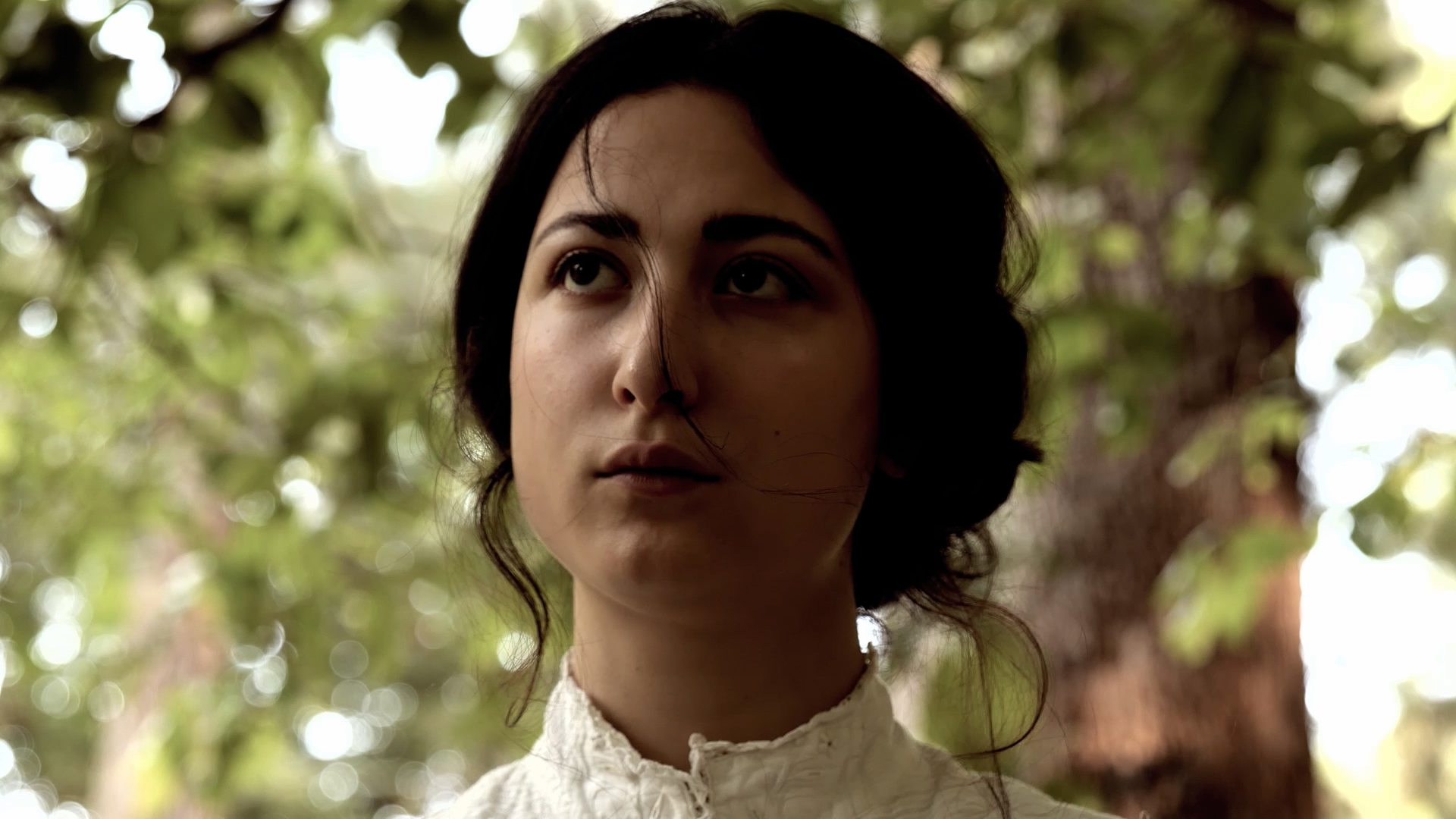
Documentary, by Isabel Russinova, Rodolfo Martinelli Carraresi, Italy, 2026
Eva of the Irises is a historical biographical docu-film about the scientist Eva Mameli Calvino, a botanist and pioneer of environmentalism in Italy, mother of the writer Italo, born in Sassari in 1886. The film, based on a multidisciplinary approach that combines several genres—such as theatre, documentary, cinema, and research—moves between memories, reflections on life, as well as the goals and missions the scholar still wished to achieve.
The multifaceted artistic sensibility of Isabel Russinova is expressed across many fields, from writing to acting, from directing to civic engagement, and finds one of its highest expressions in the docu-film Eva of the Irises, created with Rodolfo Martinelli Carraresi. The film blends scientific rigor and poetic refinement to portray the extraordinary figure of the botanist Eva Mameli Calvino, mother of Italo Calvino but above all an independent protagonist of 20th-century scientific culture. It is told through a combination of archival materials, interviews, and evocative staging capable of elegantly and profoundly conveying her intense human and professional story.
LANGUAGE: Italian
SUBTITLES: English, Spanish, French, Portuguese
What Goethe Saw in a Chemistry Textbook
There is a moment in the novel when one of the characters picks up a book — not a poem, not a confession, not a letter soaked in longing — but a scientific treatise. He reads aloud from it at the dinner table, to his wife and to the friend who has just arrived to complicate everything. He reads about how certain chemical substances, when introduced into a stable compound, will abandon their original bonds and recombine with the new element, not out of weakness or betrayal, but out of something that looks disturbingly like inevitability. The others listen. Nobody laughs. The air in the room changes.
This is what Goethe was doing in 1809 when he published Die Wahlverwandtschaften, a novel so strange in its architecture that its earliest readers could not agree on whether it was a moral warning, a scientific allegory, or an act of quiet devastation. He was already, by then, the most famous living writer in Europe. The Sorrows of Young Werther had been published thirty-five years earlier, in 1774, and had done what almost no book manages: it had altered the emotional grammar of an entire civilization. People dressed like Werther. They killed themselves quoting him. Goethe had lived long enough to be both celebrated and imprisoned by that early fire, and the man who wrote Elective Affinities was not the same fevered young author who had given Werther his pistol. He was sixty years old, a minister at the Weimar court, a serious student of botany and optics and geology, someone who had spent decades trying to understand the laws beneath appearances.
The term he borrowed — Wahlverwandtschaft, elective affinity — came directly from Torbern Bergman, the Swedish chemist whose 1775 treatise on chemical attractions, Disquisitio de attractionibus electivis, attempted to catalogue and systematize the ways in which substances bind, dissolve, and rebind. Bergman’s insight was precise and ruthless: when a third element enters a stable chemical compound, the bonds do not hold simply because they were formed first. The new element, if it has a stronger affinity with one of the original components, will displace the other. The original partner is released. Not chosen against. Simply released, as if the earlier bond had always been provisional, always waiting for the introduction that would reveal its true weight.
Goethe did not use this as a metaphor in the decorative sense — a pretty comparison between human feeling and laboratory behavior. He used it as a hypothesis. He was asking, with the full seriousness of a scientific mind, whether human desire operates by laws we have not yet had the courage to name. The philosopher Immanuel Kant, whose work Goethe knew intimately, had spent enormous energy arguing for the autonomy of the moral will, the idea that rational beings can and must choose their actions according to duty rather than inclination. Elective Affinities is, among other things, a quiet demolition of that position. Goethe was not interested in what people should do. He was interested in what they cannot help doing, and why.
What the novel proposes — not argues, proposes, the way a chemical experiment proposes a result — is that when Eduard and Charlotte and the Captain and Ottilie come together in that country house, something begins to happen that none of them initiated and none of them can fully stop. Not because they are weak. Not because they are sinful. But because the particular composition of those four personalities, introduced into proximity, generates an attraction that follows its own logic, indifferent to marriage contracts and moral intentions and the considerable intelligence of everyone involved. The freedom we believe we exercise in love may be something closer to the freedom of a molecule to choose which bond it forms: a freedom that exists only before the conditions are set, and not a moment after.

Four Bodies, Four Forces, One Estate
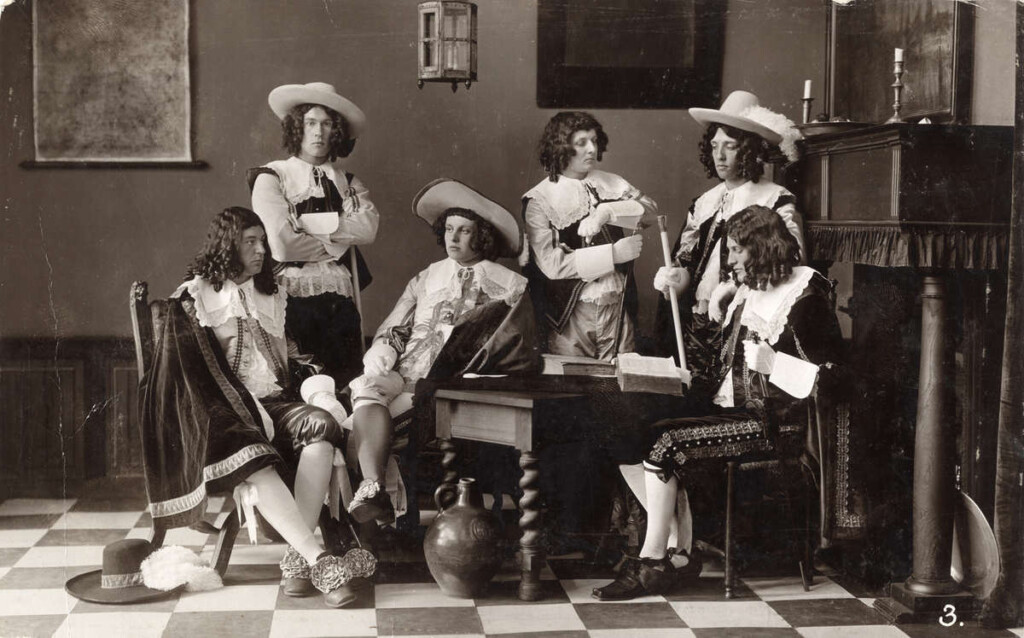
There is a moment at a dinner table — you have probably lived it without naming it — when you become aware that you are watching someone’s hands. Not their face, not what they are saying. Their hands. The way they reach for a glass, pause slightly before touching it, set it down with a care that seems private, almost ceremonial. And you understand, with the particular horror of self-knowledge, that this attention is not casual. It has been building for days, perhaps weeks, without your consent.
This is precisely the scene Goethe constructs when the Captain and Ottilie arrive at the estate. Not a thunderclap. Not a declaration. A table, four people, and the slow catastrophic reorientation of attention.
Eduard and Charlotte are not unhappy. This is the first and most important thing to understand about the novel’s architecture, because happiness is not a protection against chemical reaction — it is simply the stable state that exists before the reagents are introduced. They have built something deliberate and mature together: the estate managed with care, the gardens redesigned as a shared project, the evenings marked by reading aloud and quiet industry. Goethe gives us two people who have chosen each other thoughtfully, after long lives lived apart, after first marriages and disappointments and the kind of seasoning that makes one cautious about desire. Their union is not passion. It is something they believe to be superior to passion.
Then the Captain enters, and Eduard’s attention sharpens in a way that Charlotte notices before Eduard does. Not toward the Captain, but away from her. She begins to see, with the precision that long intimacy allows, the slight rotation of her husband’s focus — the way he leans into a conversation with his friend, the way an evening reorganizes itself around someone’s presence without anyone acknowledging that it has. Georg Simmel, writing in 1908 in his Soziologie, described this phenomenon as the geometry of social space: that proximity does not merely allow relationship, it produces it, chemically and inevitably, regardless of intention. Goethe understood this a century before Simmel named it.
Ottilie is quieter than the other three, younger, less formed. Charlotte has brought her from the boarding school almost as a project — the girl needs finishing, context, exposure to cultivated life. But something occurs the moment she is placed in that household’s gravitational field. She begins to orient. Not dramatically. She begins to carry things carefully. She begins to time her appearances. A woman watching from across a room sees a young person set a book down on a table, and registers — though she cannot yet say why it disturbs her — that the book has been placed where Eduard will reach for it.
This is how Goethe dismantles the liberal fantasy of the self-determining individual. His four characters are not making choices. They are undergoing reactions. The philosopher Baruch Spinoza, whose Ethics of 1677 Goethe had absorbed deeply enough to describe as formative, argued that what we call will is simply the name we give to a desire we do not fully understand. We do not choose our affinities. We discover, to our distress, that they have already chosen us.
What Goethe adds to Spinoza’s framework is the spatial dimension: it is the estate itself, the bounded enclosure, the shared table and shared garden and shared hours, that makes the reaction not just possible but unavoidable. Remove one of the four from the estate and the structure collapses into simple friendship or simple domesticity. Keep all four in proximity — keep them eating together, planning together, sitting in the same rooms through the long evenings of a country life with no distractions — and what Goethe calls elective affinity begins its quiet, irresistible work.
The Captain picks up a tool and begins to explain something about the land’s contours to Charlotte. She leans slightly forward.
Desire as Physics, Not Sin
There is a specific kind of exhaustion that comes not from doing something but from not doing it. You have felt it. The energy spent holding still, the calories burned in the act of remaining where you are, the strange fatigue of a day in which nothing happened and yet you return home hollowed out as if you had run for miles. That is not willpower. That is friction. That is what happens when a force meets an opposing force of equal or greater intensity, and the result is not peace but heat.
Goethe understood this before the vocabulary existed to describe it precisely. What he was gesturing toward in the novel’s central metaphor was not a romantic notion but a chemical one, drawn from the actual science of his era. He had read Torbern Bergman’s 1775 treatise on elective affinities in chemistry, which catalogued the ways certain substances abandon stable combinations when introduced to more powerfully attracting partners. The language was already material, already amoral. Carbon does not sin when it leaves one compound for another. It follows its nature. Goethe was asking, with the patience of someone who already knew the answer would be uncomfortable: what if human beings are carbon?
Spinoza had already cleared some of this ground. In the Ethics, published in 1677, he argued that every existing thing possesses conatus, a drive to persist in its own being, and that this drive is not a choice but the very definition of what it means to exist. To be is to tend toward continuation. Desire, in Spinoza’s framework, is not a deviation from reason but reason’s own expression at the level of the body. You do not decide to want. Wanting is what you are, prior to any decision you might make about it.
Schopenhauer, who read Goethe with the hunger of a man finding his own thoughts already written, extended this into something darker and more precise. In The World as Will and Representation, published in 1818, he argued that erotic attraction is the will-to-live using individual consciousness as its instrument. You believe you are choosing. The species is choosing through you. The feeling of being overwhelmed by desire for a specific person, that sense that this particular face, this particular voice, this particular gravity of someone’s presence, is irreplaceable and necessary, that feeling is not personal. It is biological inevitability wearing the costume of individuality. What you call your desire is the world’s blind forward pressure wearing your face.
Now think about what that means for the person who tries to resist. There is a man who has recognized what is happening to him and decided, with full moral clarity, that he will not act on it. He does not avoid the source of his attraction. He believes that avoidance would be weakness, that true discipline means proximity without surrender. So he stays close. He engineers reasons to remain near. He measures his own control with the obsessive attention of a scientist watching a reaction. And in watching it, he becomes its subject. The resistance is no longer separate from the desire. It has fused with it. Every act of restraint is also an act of attention, and every act of attention feeds the very thing he is trying to starve.
This is not a failure of character. This is physics. The energy you direct toward suppressing a force does not cancel it. It joins it. Freud would later call this the return of the repressed, but Goethe was already showing it in action half a century before Freud was born.
When you have felt pulled toward someone you should not want, you did not invent that pull. You did not choose the particular arrangement of someone’s qualities that undid your composure. The question worth sitting with is not whether you could have chosen differently. The question is what you thought that force was, and where you believed it came from.
The Marriage Plot as Social Architecture
You have seen them at dinner parties. They finish each other’s sentences, laugh at the right moments, touch each other’s arm with the practiced ease of a long rehearsal. They are, by every observable measure, happy. And yet something in the room shifts almost imperceptibly when they speak about each other — a fraction of a second too long before the smile arrives, a warmth so consistent it has lost the texture of feeling and acquired the smoothness of habit. You cannot name what is wrong. Neither can they.
This is not a failure of love. It is something more structurally interesting: the consequence of a historical experiment still too young to have found its stable form.
Lawrence Stone, in his monumental The Family, Sex and Marriage in England 1500-1800, published in 1977, traced with extraordinary granularity the gradual displacement of what he called the “Open Lineage Family” by the “Closed Domesticated Nuclear Family” — a shift across roughly two centuries in which marriage ceased to be primarily an economic and dynastic alliance and became, at least in aspiration, an emotional contract between choosing individuals. The timing matters enormously. By the time Goethe was writing Elective Affinities, completed in 1809, this transformation was barely two or three generations old in the European bourgeoisie. The idea that you married someone because you loved them, that love was the legitimate foundation and ongoing justification of the union, was not an ancient wisdom. It was a recent and radical proposition, and like all recent propositions, it carried within itself contradictions that the older system, for all its brutality, had at least the advantage of not creating.
The older arranged marriage was architecturally honest in a way that made it durable. It did not ask you to feel. It asked you to function. And because it asked only that, it could not disappoint you on the level of the soul. The companionate marriage, as Stone describes its emergence, made a promise of a completely different order — that two people would not only cohabit and cooperate but would remain, across decades and across change, emotionally sufficient to each other. This is the promise Edward and Charlotte are living out, or performing, in Goethe’s novel. Their estate is the physical embodiment of it: cultivated, ordered, beautiful. A life arranged to reflect the story they are telling themselves about who they are together.
Anthony Giddens, writing nearly two centuries after Goethe, gave this structure a name in The Transformation of Intimacy in 1992. The “pure relationship,” as Giddens defines it, is one entered into and maintained solely for what it delivers to those within it — it has no external anchor, no social necessity, no theological obligation that holds it in place from outside. It is, he argues, the logical endpoint of the democratization of personal life. But its very purity is its structural fragility. A relationship that exists only as long as it satisfies is, by definition, always contingent. It contains within itself a permanent exit clause, even when no one is moving toward the door.
What Goethe dramatizes so precisely is the moment when the performance of a pure relationship begins to substitute for the thing itself. There is a scene — two people at a table, in a house they have built together with genuine care — where the conversation flows, the gestures are kind, and you understand, watching them, that they have not asked each other a real question in years. Not because they are cruel or indifferent, but because the performance has become so fluent that interrupting it with actual feeling would feel like a violation. They have optimized the relationship until it no longer requires them to be present inside it.
This is what the companionate ideal, taken to its logical conclusion, produces in Goethe’s hands: not a union of two people, but a beautifully maintained theater of one.
A vision curated by a filmmaker, not an algorithm
In this video I explain our vision
Ottilie and the Violence of Innocence

There is a particular kind of person who never demands anything, never imposes, never raises their voice, and yet around whom everything quietly collapses. You have met this person. You know the specific quality of their silence — not empty but somehow total, like a room that absorbs sound. They do not seduce. They do not maneuver. They simply exist with a completeness that makes everyone near them feel, by contrast, fractured and restless and obscurely guilty for wanting things.
Ottilie is this person. She is seventeen, beautiful in the way that feels more like a natural phenomenon than an attribute, deeply devoted, incapable of deception, and she ruins everything she touches — not through any act of will but through the simple, catastrophic fact of being what she is. Goethe gives her qualities that read like spiritual virtues on the surface: receptivity, selflessness, an almost preternatural calm. He gives her a headache that vanishes only when Eduard is near. He gives her a handwriting that gradually becomes indistinguishable from Eduard’s own. He makes her, in other words, a perfect vessel — and then watches what happens when a perfect vessel enters a system of forces it cannot control and has not chosen.
Walter Benjamin understood this with unusual precision. In his 1922 essay on the novel, one of the most demanding pieces of literary criticism written in the twentieth century, he identified what Goethe was actually staging: not a moral drama about adultery and consequences, but a confrontation with what Benjamin called the mythic, the archaic stratum of existence that underlies and precedes all moral order. For Benjamin, Ottilie is not innocent in any Christian or ethical sense. She is pre-moral. She belongs to nature the way a tide belongs to the moon — not responsible, not culpable, but absolutely, devastatingly operative. Her purity is not a protection. It is a force.
This is what destabilizes. We carry a deep cultural assumption that innocence is safe — that the pure heart, the person without agenda, the one who asks for nothing, cannot be the source of destruction. Goethe systematically dismantles this assumption across four hundred pages. The infant who dies is an accident shaped by Ottilie’s distraction — a distraction that is itself a symptom of a desire she has never once acted upon. The child drowns not because anyone is wicked. It drowns because three people are in the grip of something older than their intentions.
There is a scene — a figure standing in a doorway, not entering, not speaking, simply present — that captures this precisely. The room reorganizes itself around her without her doing anything. Conversations shift direction. Men become aware of themselves in a new and uncomfortable way. Women watch their husbands watching her. And she is wholly unaware, or appears to be, which is itself part of the gravitational event. The stillness is not strategic. That is exactly the problem. Strategy can be resisted. This cannot.
Jung would have called it the anima made flesh — the projection screen for every unarticulated longing in the men around her. But that framing still assigns the power to the projectors, as though Ottilie were merely a blank surface. Goethe seems to be arguing something more disturbing: that certain forms of receptivity are themselves a kind of agency, that to be perfectly open is to become a conductor of forces that have nothing to do with your conscious wishes. Rousseau dreamed of natural goodness as innocence restored. Goethe looked at the same dream and saw the cliff edge.
Ottilie’s final silence — her voluntary muteness before her death, her refusal of food, her slow erasure of herself from the world — reads not as penance but as the only logical response to what she has discovered about her own existence. She does not die because she sinned.
The Child Who Drowns and What It Means
The infant has two faces. Not metaphorically — literally, in the logic of the novel, the child born to Eduard and Charlotte carries in its features the unmistakable traces of two people who were not its biological parents. The Captain’s strong brow. Ottilie’s dark eyes. A body that arrived in the world already haunted by desires its parents never acted upon, never consummated, never even fully acknowledged to themselves. Charlotte had been thinking of the Captain during conception. Eduard had been thinking of Ottilie. And the child bore the evidence.
Goethe was not writing fantasy. He was writing what he believed, or at least what he suspected with the seriousness of a man who had spent decades studying natural science alongside literature. The idea that maternal imagination could imprint itself on the developing child had circulated in European thought since antiquity, formalized in various ways through the early modern period, and Goethe absorbed it not as superstition but as an extension of his broader conviction that inner life and outer world are not separate systems. In the Naturphilosophie tradition he drew from, particularly through his engagement with Schelling’s work on the identity of nature and spirit, the boundary between psychic event and physical consequence was porous by design. What you truly desire — not what you perform desiring, but what moves in you at the level of involuntary attention — participates in shaping matter. The child is the proof.
And then the child drowns.
Ottilie is carrying him across the lake at night. She is distracted, exhausted, undone by the impossible position she occupies in this household she has come to love and destroy simultaneously. The boat rocks. She reaches. The infant slips. By the time she pulls him from the water, he is already gone, and she holds his small body with an expression of such devastated calm that everyone around her mistakes composure for innocence. She is not innocent. She knows exactly what she has done, even if her hands never chose it. The horror she carries afterward is not the clean horror of accident. It is the contaminated horror of causation without intention — the knowledge that her presence in this house, her love for Eduard, her very existence as the object of his desire, made this death possible. She did not drop the child. She became the conditions under which the child could be dropped.
There is a particular quality to grief that includes this kind of complicity. Most grief theory, from Freud’s 1917 essay “Mourning and Melancholia” forward, treats mourning as the psyche’s labor of detachment from a lost object. But what Goethe diagrams in Ottilie’s response to the infant’s death is something closer to what later thinkers would call traumatic guilt — not the guilt of action but the guilt of being the vector through which harm traveled. Judith Herman, writing in Trauma and Recovery in 1992, identified this specific combination as among the most psychologically annihilating: the grief of survivors who understand, correctly, that their existence was the necessary condition for someone else’s death, even when no act of will can be assigned.
Ottilie stops speaking after the drowning. She stops eating. Not dramatically, not as performance — she simply begins to withdraw from the metabolic contract with life, quietly and with complete certainty, as if a decision has been made at a level below decision. What she refuses is not punishment. She refuses continuation. The child’s drowning is the novel’s axis point not because it is tragic in the operatic sense, but because it reveals what the whole structure has been building toward: that desire already acted, long before any body moved. The consequences arrived precisely on schedule.
What We Call Freedom When We Cannot Bear the Alternative
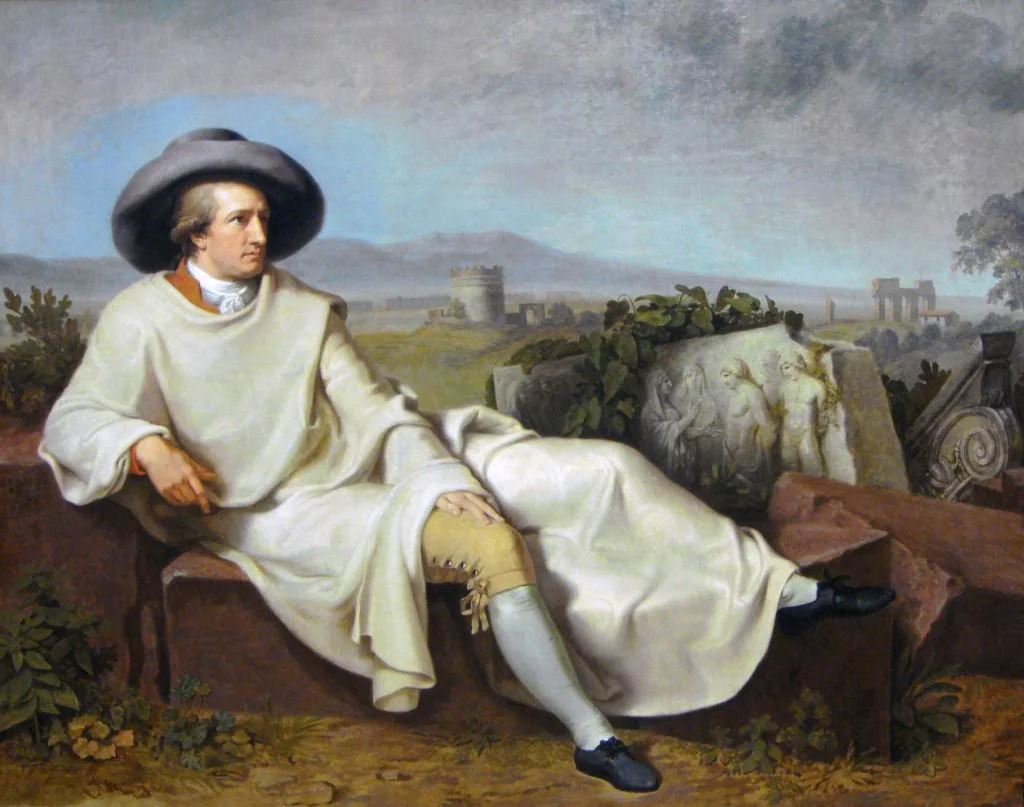
There is a moment when a person decides to stay. Not because anything has changed, not because the conversation that needed to happen finally happened, but because the alternative — leaving, choosing, admitting — would require them to look back at every preceding year and rename it. That renaming is the unbearable thing. Not the future. The past.
Christopher Bollas, writing in 1987 in The Shadow of the Object, gave a precise name to something most people spend their lives not quite articulating: the unthought known. It is the stratum of self-knowledge that exists before language reaches it, the things you have always known about yourself and your desires that you have never once allowed to surface into a speakable sentence. It is not repression in the classical sense. It is something quieter and more structural — a knowing that precedes the machinery of denial because it was never admitted into the machinery in the first place. You have always known. You simply never said it, even to yourself, and the not-saying has become the architecture of your days.
What Goethe understood, and what the novel’s four characters enact with the terrible precision of a controlled experiment, is that elective affinity is not a surprise. It is a recognition. When Eduard looks at Ottilie, he is not discovering something new. He is seeing, for the first time with clarity, something the body had registered long before consciousness consented to look. The scandal is not that desire arrives uninvited. The scandal is that it arrives and you realize it was never entirely absent, that it was embedded in the texture of daily life, in small distances and silences and the particular way attention moved in certain rooms.
Freud, in 1930, described civilization itself as this same mechanism extended to the collective scale. Culture, he argued in Civilization and Its Discontents, is not the transcendence of instinct but its organized suppression — a suppression that is never total, that leaves residue, that generates the very discontent it claims to manage. The renunciation demanded by social life does not extinguish what it forbids. It buries it at a depth where it continues to exert pressure, reshaping surface behavior in ways the person cannot easily account for. The language of duty, of commitment, of moral seriousness is not false. But it is also, always, partly a technology for making the suppressed weight bearable.
Which returns you to that moment of staying. There is a scene — a woman sitting at a table after a conversation that has said nothing and everything, the man she should leave visible through a window, the life she has constructed present in every object around her. She does not leave. The decision to stay is made in the body before the mind has finished its argument, and what consolidates it is not renewed love or clarity or even resignation. It is the arithmetic of sunk years. To leave now would be to retroactively indict every choice that led here. It would mean that she knew, earlier, and did not act. And that is the thing that cannot be thought all the way through — not because it is too painful, but because it would require her to become, in her own eyes, someone who lived inside an unthought known for decades and called it contentment.
This is what we mean when we say we choose. Not a free act launched from an open field of possibilities, but a movement constrained by everything we have already not-chosen, every recognition we have let sink back below the threshold of language. Goethe wrote in 1809, but the novel’s real subject is not a historical moment. It is this — the strange, half-lit territory where what we know about ourselves and what we are able to admit we know do not quite coincide, and where the gap between them is precisely the space in which most of a life is lived.
🌿 Goethe’s World: Nature, Desire, and Spirit
Goethe’s Elective Affinities weaves together chemistry, fate, and human passion into one of literature’s most philosophically dense novels. To fully grasp its depths, one must explore the broader constellation of ideas that shaped Goethe’s imagination — from his towering dramatic work to the natural philosophy that permeated his age. The articles below trace the intellectual and creative landscape surrounding this extraordinary novel.
Goethe’s Faust: Meaning and Analysis
Goethe's Faust stands as the monumental twin to Elective Affinities, sharing its obsession with desire, transgression, and the limits of human will. Both works circle the same Goethean abyss: what happens when the human spirit reaches beyond its natural boundaries. Reading Faust alongside Elective Affinities reveals how consistently Goethe interrogated the hidden forces that bind and destroy us.
GO TO THE SELECTION: Goethe’s Faust: Meaning and Analysis
Johann Wolfgang von Goethe: Life and Works
Johann Wolfgang von Goethe was not merely a poet but a scientist, philosopher, and cultural titan whose life spanned the Enlightenment and Romanticism. Understanding his biography is essential to appreciating how Elective Affinities emerged from his own turbulent emotional experiences and his lifelong fascination with natural laws. His work on color theory and morphology gives the novel’s chemical metaphors a depth that goes far beyond mere literary device.
GO TO THE SELECTION: Johann Wolfgang von Goethe: Life and Works
Alchemy in Literature: From Dante to Goethe
Alchemy in Literature traces the recurring presence of alchemical symbolism from Dante through Goethe, illuminating how transformation — the Great Work — became a dominant metaphor for spiritual and emotional change. Elective Affinities is saturated with this tradition, its characters functioning almost as chemical substances undergoing forced reactions. This article provides an invaluable key to decoding the esoteric undercurrents of Goethe’s novel.
GO TO THE SELECTION: Alchemy in Literature: From Dante to Goethe
Philosophy of Nature: From Aristotle to Today
Philosophy of Nature offers the broader intellectual framework within which Goethe developed his concept of elective affinities, borrowed from eighteenth-century chemistry and elevated into a metaphysical principle. From Aristotle’s teleology to Romantic Naturphilosophie, this article maps the tradition that convinced Goethe nature itself operates through forces resembling human longing. Understanding this philosophical lineage transforms the novel from a love story into a meditation on universal order.
GO TO THE SELECTION: Philosophy of Nature: From Aristotle to Today
Discover the Cinema of Ideas on Indiecinema
If Goethe’s exploration of hidden forces and human fate has stirred your imagination, Indiecinema invites you to continue the journey through independent and art-house cinema — a streaming space where films ask the same profound questions that great literature never stops posing.
👉 EXPLORE THE CATALOG: Watch Indie Films in Streaming
A vision curated by a filmmaker, not an algorithm
In this video I explain our vision

