
When we think of Halloween, our minds inevitably run to iconic images: the mask of Michael Myers in John Carpenter’s Halloween, or the lighter atmospheres of Hocus Pocus. The collective imagination is marked by masterpieces that have turned this night into a cinematic ritual, defining the holiday through frights, nostalgia, and tradition.

But the soul of Halloween, its most disturbing essence, is not just found in the slasher or the comedy. It is a time of year when the veil between worlds grows thin. It is the territory of folk horror, of psychological terror, and of the unsettling atmospheres that lurk in the shadows, far from the louder celebrations.
This guide celebrates the entire holiday. It is a journey that unites the great classics that defined the festive night with the darkest independent works. We will explore films that capture the spirit of Halloween not just through pumpkins and masks, but through a sense of primordial dread. Prepare for a journey into the dark side of All Hallows’ Eve.
🆕 New Halloween Movies: Best Recent Horror Films
Halloween isn’t just about nostalgia. The horror genre is experiencing a renaissance thanks to visionary directors blending classic terror with modern anxieties. Here are the newly released (or upcoming) titles perfect for All Hallows’ Eve, destined to become tomorrow’s classics.
Nosferatu (2025)

In 19th-century Germany, the mysterious Count Orlok (Bill Skarsgård) develops a terrifying obsession with Ellen Hutter (Lily-Rose Depp), the young wife of his real estate agent. As plague and shadows spread from Transylvania to the town of Wisborg, Ellen realizes she is the sole object of desire for an ancient creature bringing death and madness. In Nosferatu, the vampire is not a romantic seducer, but an entity of pure gothic horror.
Robert Eggers (The Witch, The Lighthouse) realizes his dream project: a philological and visually sumptuous remake of Murnau’s silent masterpiece. It is a film of funereal elegance, shot with manic attention to historical detail and an atmosphere of creeping dread. Skarsgård is unrecognizable and frightening. It is the perfect Halloween movie: gothic, dark, theatrical, and steeped in that ancient fear only great classics can evoke.

Presence (2025)

A family moves into a nice suburban home, but soon realizes they are not alone. The twist is that the “presence” is not just an entity moving objects: it is the film’s point of view itself. Everything we see on screen is viewed through the eyes (or perception) of the ghost inhabiting the house. The family lives out their dramas unaware of being watched by something constantly floating around them, judging them and interacting in increasingly invasive ways.
Steven Soderbergh signs a radical horror experiment. Shot entirely in POV with wide-angle lenses, Presence renews the haunted house genre by turning the viewer into the “monster.” It is not the usual spirit movie: it is a claustrophobic family drama where tension arises from the simple act of observing. An unsettling and technically virtuosic work playing with voyeurism and anxiety.
Heretic (2024)

Two young Mormon missionaries knock on the wrong door on a rainy afternoon. They are welcomed by Mr. Reed (Hugh Grant), a kind and cultured Englishman who invites them in to discuss theology. But once the door closes, the conversation turns into a deadly trap. Mr. Reed is not interested in salvation but wants to subject the girls’ faith to a series of sadistic and labyrinthine tests within his home, transformed into a machine of psychological torture.
Produced by A24, this is a tense and intelligent chamber horror. Hugh Grant, in an unprecedented psychopathic villain role, is terrifying in his manipulative charm. Heretic uses no monsters, but words and architecture to build fear. It is a film challenging religious dogmas and trust in others, perfect for those seeking cerebral horror that traps you with no way out.
Wolf Man (2025)

A man (Christopher Abbott) tries to protect his family from a lethal predator prowling the woods around their isolated home. But after being bitten during an attack, he begins to undergo a physical and mental transformation. As his body changes and his instincts become feral, the real threat to his wife and daughter is no longer outside the door, but inside the house, in the body of the husband who is losing his humanity.
Leigh Whannell (The Invisible Man) reimagines another classic Universal monster in a modern and claustrophobic key. It is not a period piece, but a psychological horror about primal instincts and domestic violence, metaphorized by lycanthropy. The practical transformation effects are visceral and painful. Wolf Man is a tense, dark, and brutal film that restores the werewolf’s nature as a tragic and frightening curse.
A vision curated by a filmmaker, not an algorithm
In this video I explain our vision
MaXXXine (2024)

Los Angeles, 1985. Maxine Minx, the sole survivor of the Texas farm massacre (seen in X), is now an adult film star trying to make it big in Hollywood. But as she shoots her first legitimate horror movie, a mysterious serial killer known as “The Night Stalker” begins killing people around her, threatening to reveal her bloody past. Maxine, who is not a victim but a ruthless “final girl,” decides not to run anymore.
Ti West closes his horror trilogy (X, Pearl) with a lavish homage to 80s style and music. MaXXXine is a neon giallo-slasher, full of style, graphic violence, and references to genre cinema (from Italian Giallo to B-movies). Mia Goth is iconic in the role of a woman willing to do anything to become a star. It is the perfect movie for Halloween night: fun, bloody, and visually spectacular.
A Page Of Madness
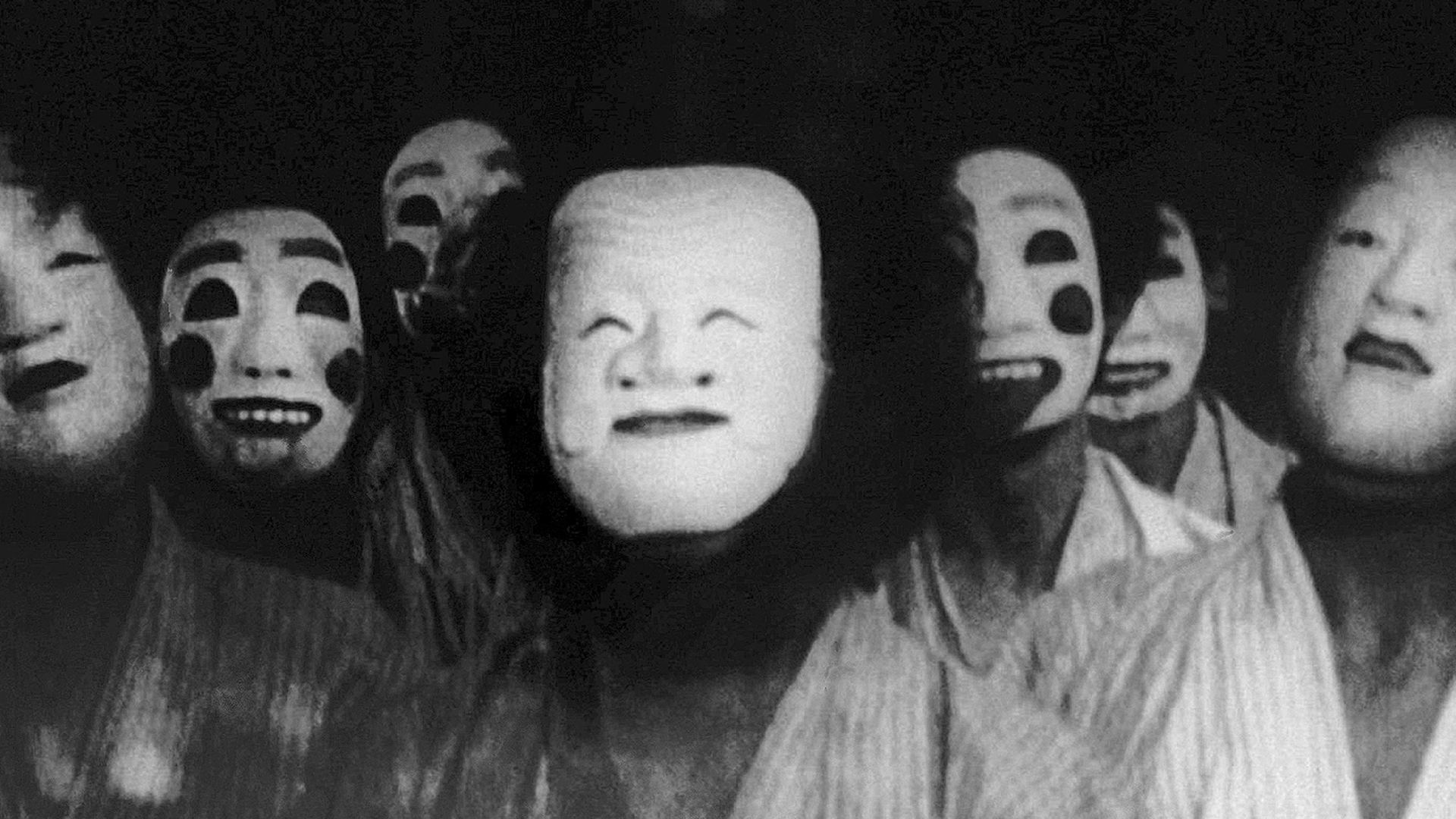
Drama, horror, by Teinosuke Kinugasa, Japan, 1926.
A page of madness is an independent film shot on a nearly non-existent budget and then lost for forty-five years. Fortunately the director rediscovered it in his archive in 1971. It is a film made by a group of Japanese avant-garde artists, the School of new perceptions. A movement that had as its objective to overcome the naturalistic representation. In a country asylum, in torrential rain, the caretaker meets patients with mental illness. The next day a young woman arrives who is surprised to find her father there who works as a caretaker. The woman's mother first went mad because of her husband when she was a sailor. The husband has decided to change jobs to stay close to his wife in the asylum and take care of her. Her daughter tells her father that she will marry soon, but the father is worried because he fears, according to popular rumors of the time, that the mother's mental illness will be inherited by her daughter. If the young husband and his family found out about his mother's madness, the marriage would fall apart. The caretaker tries to take care of his wife during her work as she gets beaten up by other inmates, but this interferes with her role and is scolded by the head of the asylum. Slowly the keeper loses contact with reality and its boundaries from the dream. He begins to daydream about winning the lottery when his daughter meets him again to tell him that his marriage is in trouble. The man thinks of taking his wife out of the asylum to hide her existence and solve every problem. Teinosuke Kinugasa is the director of some of the best Japanese films of the 1920s. A page of madness has been compared to the great German expressionist films. It is an experimental film, of extreme avant-garde, which seems to anticipate the atmospheres and themes that would have made David Lynch famous many years later. Nightmares, distortions, blurs, double exposures and photographic deformations: a film that explores the furthest boundaries of moving images. Then there are those masks set in an eternal succession of bars, locks and corridors that fuel the sense of fear and loss of the various protagonists to excess.Yasunari Kawabata, the writer of the story, won the Nobel Prize for literature in the 1968.
Without dialogue
What kind of Halloween Movie are you looking for?
There isn’t just one way to be scared. All Hallows’ Eve is a carnival of different monsters: from elegant vampires to rotting zombies, from haunted houses to pure splatter. To help you find the perfect movie for your night, we have divided our recommendations by “creature” and atmosphere. Click on the category that scares (or fascinates) you the most.
Cult Horror: Immortal Classics
Some movies never age; they only get more powerful with every viewing. Cult Horror is that realm of cinema inhabited by the masters who rewrote the rules of fear: John Carpenter, Dario Argento, Wes Craven. Works that might have been misunderstood upon release but are revered today as sacred texts. If Halloween for you means reverence for the classics and the auteur visions that defined the aesthetic of terror, this is your list.
👉 GO TO THE LIST: Best Cult Horror Movies
Witch Movies
Halloween is, by definition, the night of the witches. But forget the flying broomsticks of fairy tales: cinema has explored the figure of the witch as an icon of female power, rebellion, and contact with ancient, terrifying forces. From the historical trials of Salem to modern folk horror, this selection takes you into the heart of the coven, amidst spells, pacts with the devil, and the ancestral fear of magic.
👉 GO TO THE LIST: Best Witch Movies
Vampire Movies
There is no Halloween without the Prince of Darkness. The vampire is the most seductive and lethal creature of the gothic imagination. Whether it’s the aristocratic elegance of Dracula, the rock decadence of modern vampires, or the brutality of beastly bloodsuckers, these films celebrate immortality, blood, and the eros hiding in the dark. Perfect for a night of macabre elegance.
👉 GO TO THE LIST: Vampire Movies
Ghost Movies & Haunted Houses
On the night of October 31st, the veil between the living and the dead grows thin. It is the perfect time for Ghost Stories. From gothic classics with sheets and chains to modern tales of invisible presences and poltergeists haunting everyday life. If you seek a cold shiver down your spine and the unsettling atmosphere of a creaky old mansion, this is your list.
👉 GO TO THE LIST: Ghost Movies
Zombie Movies
“When there’s no more room in hell, the dead will walk the earth.” Halloween is also the celebration of bodies returning. Zombie cinema, invented by George Romero, combines pure horror with social critique. From slow, rotting corpses rising from graves to rabid, running infected, here you will find the apocalypse served cold.
👉 GO TO THE LIST: Zombie Movies to Watch
Gothic Movies
For those who prefer atmosphere over cheap scares. Gothic cinema is made of fog, crumbling castles, crypts, and cursed loves that defy death. It is the genre that best embodies the visual spirit of Halloween: dark, romantic, and decadent. A selection for those who want to get lost in an aesthetically beautiful nightmare.
👉 GO TO THE LIST: Gothic Movies
Horror Comedy (Funny Horror)
Halloween doesn’t have to be a trauma; it can be a party. Horror Comedy mixes blood with laughter, splatter with gags. From Gremlins destroying the town to Ghostbusters, these are the perfect movies for a Halloween party: cult works that entertain without giving up on monsters and creatures.
👉 GO TO THE LIST: Funny Horror Movies
Splatter Movies
If Halloween means buckets of blood to you, this is the right section. Splatter pushes graphic violence to the extreme, turning the human body into a battlefield. Not for the faint of stomach, this cinema celebrates excess, physical destruction, and the art of practical special effects.
👉 GO TO THE LIST: Splatter & Gore Movies
The Best Halloween Movies of All Time
True fear never ages. Before digital effects and cheap jump-scares, horror was built on shadows, gothic atmospheres, and monsters that became eternal icons. In this section, we travel back to the origins of All Hallows’ Eve: from German Expressionism to the Universal Monsters, up to the psychological masterpieces that forever defined the language of terror. Here are the films that invented the way we dream our nightmares today.
Kuroneko (1968)

“Kuroneko” (1968) is a Japanese film directed by Kaneto Shindo and is a remarkable masterpiece of Japanese horror with a gothic atmosphere and ghostly. The film is set in the Muromachi period of Japan, during a time of conflict and turmoil.
The plot focuses on two women, Yone and Shige, who are brutally raped and killed by a group of samurai during an assault on their isolated home. After their deaths, the women’s souls return as vengeful spirits known as “onryō,” eager for justice and revenge for the horror they suffered. Their souls wander in the dark of night, luring samurai to the underworld.
The film deeply explores the themes of revenge, redemption and the blurred line between the world of the living and the dead. Kaneto Shindō’s direction offers an eerie atmosphere through the effective use of black and white and the creation of gloomy and ghostly scenarios.
Kuroneko” is known for its gripping terror sequences and gripping storytelling, which is based on traditional Japanese myths and legends related to ghosts and revenge. The film is considered one of the great masterpieces of Japanese horror and offers a fascinating insight into the culture and popular beliefs of ancient Japan in relation to the supernatural worlds.
The Enchanting Ghost (1970)

“The Enchanting Ghost” is a chinese movie of 1970 directed by Ho Meng-Hua. However, it should be noted that “The Enchanting Ghost” is not exactly a horror film, but rather a romantic drama with supernatural and fantastic elements.
The story is based on a famous Chinese legend which tells of the tragic love between Liang Shan Bo and Zhu Ying Tai, two students who study together in male disguise. Eventually, their romance is revealed but due to unfavorable circumstances, they get separated. The supernatural part of the film revolves around the ghost of Zhu Ying Tai, who keeps trying to reconcile with Liang Shan Bo even after he dies.
While “The Enchanting Ghost” is not a horror film in the traditional sense, it does have fantasy and supernatural elements related to love and destiny. It is a cinematic interpretation of a well-known story in China, and is known for its romantic and dramatic dimension.
If you’re interested in tragic love stories with a supernatural twist, “The Enchanting Ghost” might be a movie to consider. However, it is important to note that the tone and genre of the film may differ from those typical of conventional horror films.
Halloween
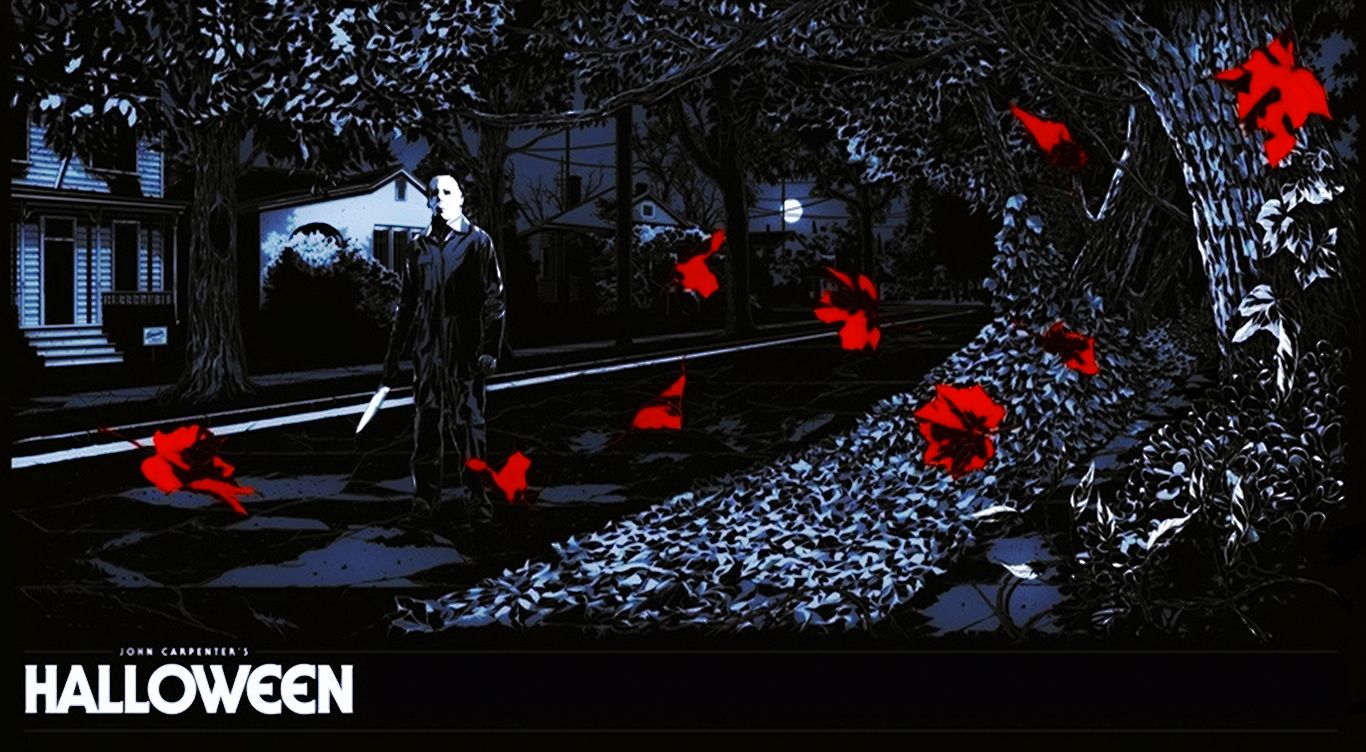
Horror, by John Carpenter, United States, 1978.
An independent film shot on a very small budget, it grossed over $ 80 million worldwide at the time. It is the most successful slasher movie and one of the 5 most profitable films in the history of cinema, which has become a cult with countless sequels and reboots. Carpenter describes the remote American province in an extraordinary way and raises the tension for over an hour, without anything happening, with a linear and effective direction, and with hypnotic music created by himself. A brilliant director who manages, with a few simple elements and a small production, to create a horror destined to remain in the worldwide cinematic imagination.
LANGUAGE: English
SUBTITLES: Spanish, French, German, Portuguese
The Devil’s Mirror (1972)
![The Devil's Mirror (1972) ORIGINAL TRAILER [HD]](https://blog.indiecinema.co/wp-content/plugins/wp-youtube-lyte/lyteCache.php?origThumbUrl=https%3A%2F%2Fi.ytimg.com%2Fvi%2FUmqStSfkgeo%2F0.jpg)
The Devil’s Mirror” is a 1972 Chinese film directed by Sun Chung. It’s a movie supernatural horror which mixes elements of mystery and fantasy. The plot is based on a traditional Chinese story.
The story revolves around a young woman named Su Huan-Erh who, after being kidnapped by bandits and then set free, discovers that she possesses a magical mirror that allows her to communicate with the dead. The mirror draws her into a dark, supernatural world where she faces evil forces and vengeful spirits. Throughout the film, mysteries and intrigues emerge leading to a haunting climax.
The film explores themes of revenge, mystery and the supernatural, typical of traditional Chinese tales. “The Devil’s Mirror” is known for its dark atmosphere and spectacular visuals that blend supernatural elements.
If you are interested in horror films with a fantasy twist and stories based on Chinese mythology and folklore, “The Devil’s Mirror” could be an intriguing choice for your Halloween movie marathon.
The Exorcist (1973)

The Exorcist” is a 1973 horror film directed by William Friedkin, based on the novel of the same name by William Peter Blatty. The film is known for being one of the most influential and terrifying horror films ever made and is considered a classic of the genre.
The plot follows the story of Regan MacNeil, a twelve-year-old girl played by Linda Blair, who begins to exhibit increasingly strange and violent behaviors. After exhausting all rational medical explanations, her mother, portrayed by Ellen Burstyn, turns to a priest, played by Max von Sydow, who believes the girl is possessed by the devil. Thus begins a harrowing battle for Regan’s soul and her redemption.
The Exorcist” is famous for its possession sequences and the use of cutting-edge special effects for the time, which contributed to creating one of the most eerie and terrifying atmospheres in cinema. The film tackles themes of faith, evil, and the conflict between the supernatural and the rational.
The film received widespread critical and commercial success upon its release and was nominated for ten Academy Awards, winning two. It is considered a masterpiece of horror and has had a lasting impact on popular culture, influencing numerous subsequent films in the genre. The Exorcist” is also known for its chilling sequences and Linda Blair’s extraordinary performance as Regan.
Black Magic (1975)

Black Magic” (also known as “Witch”) is a 1975 Chinese horror film directed by Ho Meng-Hua. It is a film that mixes elements of horror, dark magic and thriller.
The plot follows a man who, desperate to win back the love of a woman, turns to a witch practicing black magic. The witch uses magic to make the woman fall in love with him, but the consequences are dark and disturbing. The film explores themes of magic, possession and the conflict between good and evil.
Black Magic” is known for its disturbing sequences and use of supernatural elements. The film also tackles the dark side of magic and supernatural forces, with sometimes shocking and distressing results.
If you’re interested in movies that explore the world of black magic and the occult, “Black Magic” might be an intriguing choice for your must-see list on Halloween night. Please note that the film contains disturbing content and may not be to everyone’s taste.
The Oily Maniac (1976)

The Oily Maniac” is a 1976 Chinese horror film directed by Ho Meng-Hua. It is a distinctive example of the genre”exploitation” and Asian horror of that era.
The plot of the film revolves around a man, played by Danny Lee, who discovers that he has the power to transform himself into a supernatural being covered in oil. This transformation gives him superhuman strength and allows him to perform acts of vengeance against those who have exploited and abused him. However, his thirst for vengeance leads him down a dark and violent path.
“The Oily Maniac” is known for his transformation sequences, involving the use of a viscous oil-like fluid. The film also features elements of sex and violence, common in exploitation films of the time.
This film is considered an example of pulp cinema and represents the bold and often provocative approach typical of many exploitation films. If you are interested in exploitation films and works that challenge the boundaries of the genre, “The Oily Maniac” may attract your attention as a unique choice for Halloween viewing.
Night of the living dead
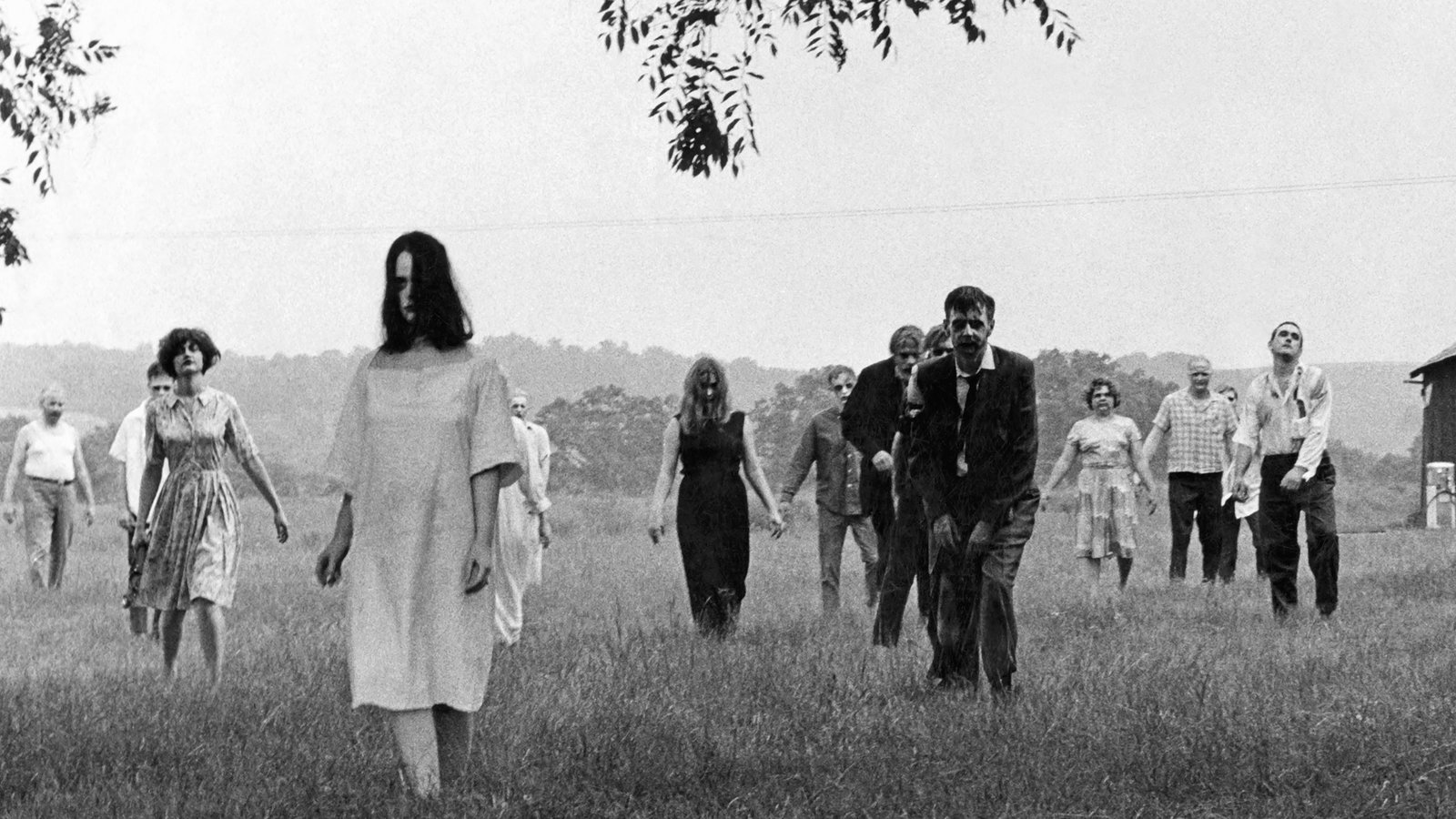
Horror, di George Romero, Stati Uniti, 1968.
One of the most profitable independent films of all time, it grossed around 250 times its budget. Inspired like other cult horror films by Richard Matheson's 1954 novel "I Am Legend". Shot as a "guerrilla film" with a cast and crew of friends and family and a budget of just $ 114,000, the film is the forerunner of the inexhaustible "zombie movie" genre.
LANGUAGE: english
Suspiria (1977)

“Suspiria” is a Italian horror movie of 1977 directed by Dario Argento. Set in a German dance school, the film follows the story of a young American dancer who moves there to study and soon finds herself embroiled in a series of disturbing and supernatural events.
Suspiria” has a gloomy atmosphere, a haunting soundtrack and visually intense sequences. Director Dario Argento is known for his distinctive visual style and his use of cinematic art to create tension and fear. The film is characterized by saturated and vibrant colors, as well as a narrative that mixes mystery and supernatural horror.
The murder sequences and suspenseful scenes in ‘Suspiria’ are particularly well curated, creating a constant feeling of unease and uncertainty. The film lends itself perfectly to viewing during the Halloween season, as it is able to convey a sense of dread and wonder in a gothic and supernatural context.
“Suspiria” is an excellent option for those who are looking for a witch movie intense and frightening, due to its combination of unique visual aesthetics and gripping storyline.
Eraserhead (1977)

“Eraserhead” is a one-of-a-kind cinematic work directed by David Lynch in 1977. This surreal and psychological film has earned a reputation for cult film thanks to its extraordinarily disturbing nature and its ability to defy traditional cinematic expectations.
The story follows protagonist Henry Spencer as he navigates through a surreal and haunting world. After the untimely and monstrous birth of his son, Henry finds himself trapped in a series of disturbing and bizarre events. The film explores themes of alienation, isolation and anxiety through dreamlike imagery and a haunting soundtrack.
The eerie and eerie atmosphere of “Eraserhead” makes it particularly suitable for viewing during Halloween or on occasions when you want to experience a different type of film than usual. Its somber aesthetic and visually stunning sequences place it among the must-see films for those seeking a mental and visual challenge.
David Lynch’s ability to create a cinematic world that defies reality and insinuates one’s deepest fears is evident in “Eraserhead.” The non-linear storyline and often disturbing imagery can capture viewers’ attention and generate a feeling of unease.
Friday the 13th (1980)

Friday the 13th” is a 1980 horror film directed by Sean S. Cunningham. The film is known for helping shape the slasher genre and for starting one of the most famous horror film franchises in cinema history.
The plot of the film revolves around Camp Crystal Lake, a summer camp that has been abandoned for years due to a series of mysterious murders. When the camp is reopened, a group of young counselors and campers begins working there to prepare it for reopening. However, they soon discover that they are being targeted by a mysterious killer who starts to murder them one by one.
“Friday the 13th” is known for its approach to the slasher genre, featuring brutal murder sequences and a mysterious killer figure, Jason Voorhees, who would become an icon of horror. The film established many of the genre’s conventions, such as the masked killer and the use of jump scares.
Despite a relatively low budget, “Friday the 13th” achieved surprising box office success and became a cult film in the horror genre. It spawned numerous sequels and spin-offs over the years and had a significant influence on popular culture. The film has become an important part of horror culture and introduced audiences to one of cinema’s most iconic villains, Jason Voorhees.
The Evil Dead (1981)

“The Evil Dead” is a film horror splatter of 1981 directed by Sam Raimi. This film is known for starting one of the most celebrated cult franchises in the horror genre and for being an example of how a small budget can be used creatively to create an intense cinematic experience.
The plot follows a group of five friends who travel to a secluded cabin in the woods for a weekend getaway. Inside the hut, they discover a book called the “Necronomicon Ex-Mortis”, along with a voice recording that contains cursed spells. In an attempt to translate the spells, the protagonists unwittingly awaken demonic forces that begin to torment them.
The film evolves into an increasingly chaotic and horrific series of events, with demonic possession, violence and visually harrowing sequences. Director Sam Raimi uses creative camera techniques, such as “malevolent force travel” that offers a haunting and sinister point of view from the demons that haunt them.
The Evil Dead” is known for its unique visual style, which combines elements of horror with moments of dark humor. Initially, the film was met with mixed reactions, but over the years it has gained a solid fan base due to its originality and innovative approach to the horror genre.
The popularity of “The House” has led to several sequels and remakes, including “Evil Dead II“, “Army of Darkness”, and a reboot called simply “Evil Dead . The series is known for its blend of horror, black comedy and iconic scenes that influenced genre cinema and continue to be celebrated by horror fans.
Silent night, bloody night
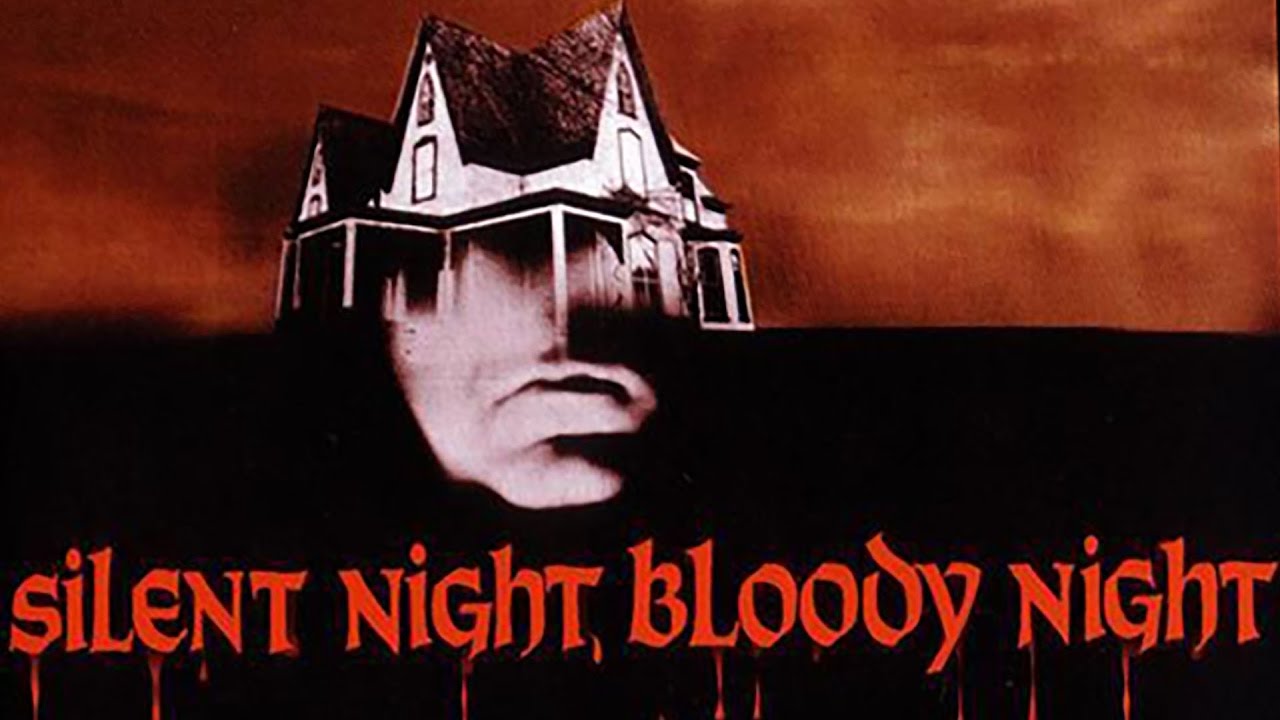
Horror, by Theodore Gershuny, United States, 1972.
1972 American Slasher, is a forerunner horror genre several years before Carpenter's Halloween, with a complex script and first person shooting of the killer, which inspired many subsequent films. Its originality and its narration are what manage to make it a small and little known pearl of the genre. A series of murders in a small New England town on Christmas Eve after a man inherits a family estate that was once a madhouse. Many of the cast and crew members were former Warhol superstars: Mary Woronov, Ondine, Candy Darling, Kristen Steen, Tally Brown, Lewis Love, director Jack Smith, and graduate Susan Rothenberg.
LANGUAGE: english
SUBTITLES: italian, french, spanish
A Nightmare on Elm Street (1984)

“A Nightmare on Elm Street” is a 1984 horror film about a serial killer directed by Wes Craven. The film is known for introducing one of the most iconic villains in the horror genre, Freddy Krueger, portrayed by Robert Englund.
The plot follows a group of teenagers living in a quiet suburban town who share a nightmare in which they are pursued by a man with a glove equipped with sharp blades, Freddy Krueger. However, they discover that Freddy is much more than just a nightmare; he is a vengeful spirit of a convicted murderer who has returned from beyond the grave to torment them in their dreams. If they die in their dreams, they also die in reality.
A Nightmare on Elm Street” is renowned for its blend of supernatural horror and slasher elements, featuring frightening scenes and creative deaths. The character of Freddy Krueger has become an icon of horror, thanks to his unique appearance, sadistic personality, and tendency to deliver humorous one-liners while dispatching his victims.
The film has spawned a series of sequels, prequels, and remakes over the years, as well as deeply influencing the horror genre. It is considered a classic of horror cinema and has captivated audiences with its unsettling premise and memorable antagonist.
The Ghost Story (1987)
![A Chinese Ghost Story (1987) Original Trailer [FHD]](https://blog.indiecinema.co/wp-content/plugins/wp-youtube-lyte/lyteCache.php?origThumbUrl=https%3A%2F%2Fi.ytimg.com%2Fvi%2Fe0dpajscuPo%2F0.jpg)
“The Ghost Story” (also known as “A Chinese Ghost Story”) is a 1987 Chinese film directed by Ching Siu-tung. It is a film belonging to fantasy genre and and horror, based on a novel by Pu Songling. This movie is very well known for its romantic and supernatural story.
The plot follows a young wanderer named Ning, played by Leslie Cheung, who finds himself seeking shelter in an inn during a storm. Here he meets a mysterious woman named Nie Xiaoqian, played by Joey Wong, who seems to have a dark secret. As time passes, Ning discovers that Nie is a ghost trapped in the world of the living due to tragic events. Despite the difficulties, the two fall in love, but face supernatural challenges and dark forces that try to keep them apart.
The film is known for its use of spectacular special effects for its time and for its combination of romantic and supernatural elements. “The Ghost Story” has become a classic and has inspired numerous adaptations and sequels over the years.
If you’re interested in romantic movies with supernatural elements and mysterious atmospheres, you might like “The Ghost Story” as part of your Halloween vision.
Donnie Darko (2001)
![Donnie Darko - TRAILER (2001) [HD]](https://blog.indiecinema.co/wp-content/plugins/wp-youtube-lyte/lyteCache.php?origThumbUrl=https%3A%2F%2Fi.ytimg.com%2Fvi%2FZZyBaFYFySk%2F0.jpg)
On October 2, 1988, teenager Donald “Donnie” Darko sleepwalks outside, led by a strange voice. Once outside, he meets a being dressed as a bunny who introduces himself as “Frank” and tells Donnie, precisely, that the world will end in 28 days, 6 hours, 42 minutes and 12 seconds.
Donnie wakes up the next morning on a neighborhood golf course and also returns home to find that a jet engine has actually collapsed right in his bedroom. His older sister Elizabeth tells him that detectives don’t know the cause of the crash.
This arthouse film set on Halloween night deals with deep and existential themes such as destiny and predestination. Disillusioned teenager Donnie (a dazzling Jake Gyllenhaal) is plagued by visions of a man in a big bunny suit.
We spend the film uncertain whether Donnie’s strange populated world is an element of something wrong with his mind or a larger, dangerous vision for the world. Definitely the more cerebral pick of Halloween, Donnie Darko is sure to leave you wondering about many of life’s great secrets.
Martyrs (2008)

Martyrs‘ is an extremely intense and controversial 2008 horror film directed byPascal Laugier. This film is known for its grittiness and brutality, and is undoubtedly a bold and provocative choice for a Halloween viewing or for anyone looking for an extremely disturbing cinematic experience.
The plot follows two young women, Lucie and Anna. The story begins with Lucie, a girl who was tortured and abused at a young age by unknown people. Years later, Lucie finds the family supposedly responsible for her suffering and commits an act of violence against them.
Lucie believes that the people who tortured her are part of a group of religious fanatics who believe that through extreme pain and physical suffering it is possible to achieve a direct connection with God and discover the secrets of the afterlife.
Over the course of events, the film explores themes of pain, suffering and the effect of abuse on the victims.
“Martyrs” is known for its violent sequences and tense, emotionally charged atmosphere. Director Pascal Laugier has created a film that pushes viewers to the limit, both in terms of tension and reflection on the depths of human darkness.
The Terror
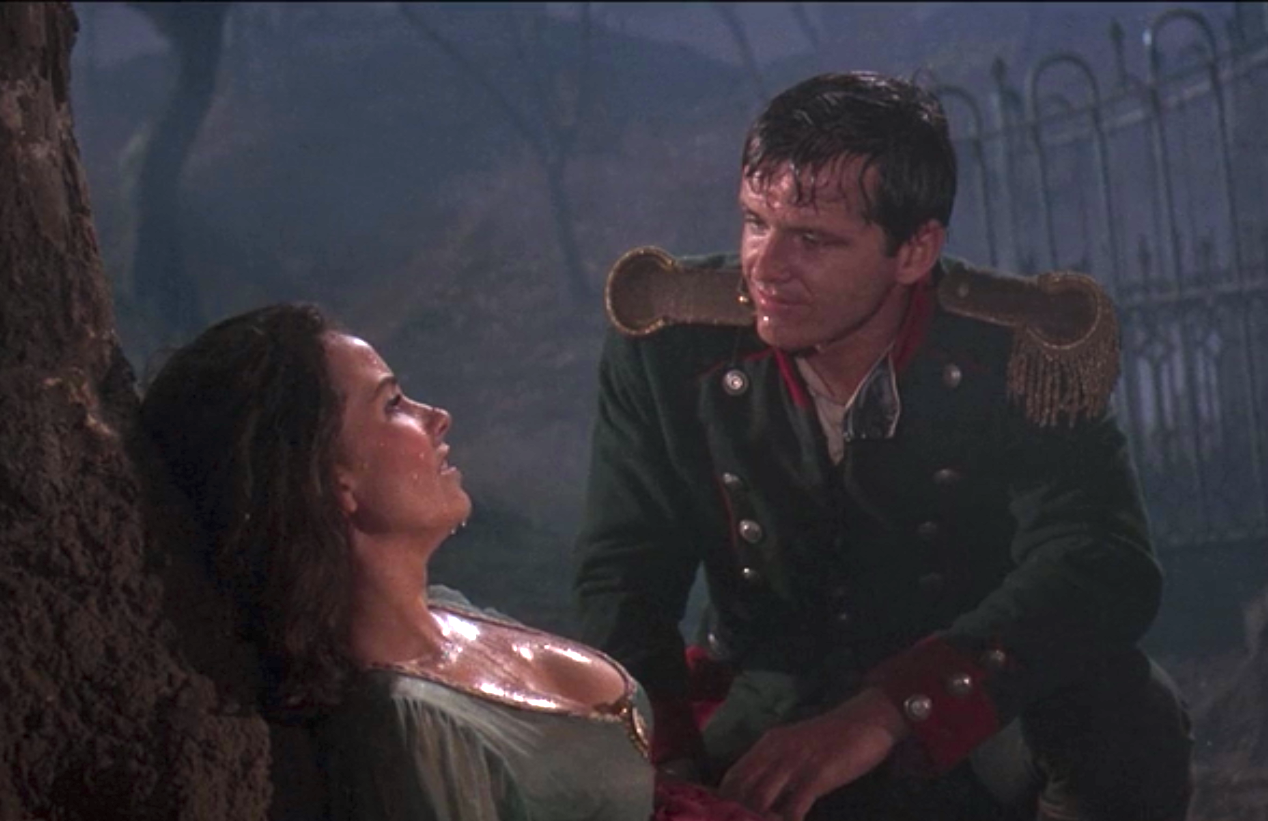
Horror, by Roger Corman, United States, 1963.
Lieutenant Duvalier (Jack Nicholson), a French soldier, loses contact with his unit and is forced to wander alone near the Baltic Sea. While searching for his regiment, he spots Helene (Sandra Knight), a mysterious beauty, walking alone. Enchanted, Duvalier begins to follow her, but she vanishes. He later joins her and follows her into a castle, where he meets the bizarre Baron Von Leppe (Boris Karloff), finds signs of witchcraft and uncovers the shocking truth about Helene. Made at a low cost within a few days by Roger Corman taking advantage of used sets and the still active contract with Karloff (he had finished the previous film early), The Terror also has some sequences shot by young directors who worked at the production factory. Corman who would become highly talented filmmakers: Francis Ford Coppola, Monte Hellman. The final scenes were instead shot by Jack Nicholson and Jack Hill.
Food for thought
All religions, with different terms, tell of the existence of "black magicians" able to take control of a body without the owner's knowledge. Black magicians use their powers for selfish ends, for revenge and other evil purposes. The phenomenon is described in various texts in a rather scientific way: it occurs by detaching the etheric bridge, which connects the physical body of the individual with the higher bodies, by attaching one's own to it. A mechanism similar to that which occurs in hypnosis and total anesthesia. The subject, however, must be attackable: his will must be fragile, his lifestyle and his balance must be precarious. If these conditions are not met, the black magician cannot take possession of him.
LANGUAGE: English
SUBTITLES: Spanish, French, German, Portuguese
Babadook (2014)

The Babadook” is a 2014 Australian-Canadian psychological horror film written and directed by Jennifer Kent. The film gained critical acclaim for its unsettling atmosphere and psychological depth.
The plot revolves around Amelia, a single mother played by Essie Davis, who is struggling to cope with the death of her husband and the difficult behavior of her young son, Samuel, portrayed by Noah Wiseman. Samuel becomes convinced that a sinister, supernatural entity known as the Babadook is haunting their home. As their lives spiral into terror and paranoia, Amelia begins to question her own sanity.
The Babadook” is celebrated for its psychological tension and its exploration of grief, trauma, and the complex mother-son relationship. The titular Babadook, a malevolent presence from a mysterious children’s book, becomes a symbol of the family’s emotional turmoil.
The film was lauded for its exceptional performances, particularly by Essie Davis, and for its chilling and thought-provoking narrative. “The Babadook” is often regarded as one of the standout horror films of the 2010s and has earned a reputation for its thought-provoking and unsettling approach to the genre.
Get Out (2017)

Get Out” is a 2017 American horror film written and directed by Jordan Peele. The film is notable for its blend of horror and social commentary, tackling issues of race and identity in a gripping and thought-provoking manner.
The plot follows Chris Washington, portrayed by Daniel Kaluuya, a Black man who visits the family estate of his white girlfriend, Rose Armitage, played by Allison Williams. As the weekend unfolds, Chris begins to notice strange and unsettling behavior from the Armitage family and their predominantly white friends. He soon discovers a horrifying secret that puts his life in danger.
“Get Out” delves into themes of racism, cultural appropriation, and the exploitation of Black bodies, all within the framework of a suspenseful and increasingly terrifying horror narrative. Jordan Peele’s direction and screenplay were widely praised for their originality and depth.
The film was both a critical and commercial success and received numerous awards and nominations, including an Academy Award for Best Original Screenplay for Jordan Peele. Get Out” has been celebrated for its social relevance and its ability to spark conversations about race and privilege in America while also delivering a suspenseful and unnerving horror experience.
Hereditary (2018)

Hereditary” is a 2018 American supernatural horror film written and directed by Ari Aster. The film is known for its unsettling atmosphere, disturbing imagery, and its exploration of themes related to grief and family trauma.
The plot follows the Graham family, particularly Annie, played by Toni Collette, who is dealing with the recent death of her secretive and estranged mother. As the family members begin to experience bizarre and terrifying events, they uncover dark and disturbing secrets about their ancestry and the supernatural forces that seem to be at play.
“Hereditary” is praised for its slow-burning and psychologically disturbing storytelling. It delves into themes of grief, mental illness, and the ways in which trauma can be passed down through generations. The film’s disturbing and graphic imagery has also left a lasting impression on viewers.
Toni Collette’s performance in the film was widely acclaimed, and the movie has been recognized as a standout in contemporary horror cinema. It has been considered one of the most chilling and thought-provoking horror films of recent years and has garnered a dedicated following among horror enthusiasts.
Incident in a Ghostland (2018)

“Incident in a Ghostland” is a 2018 horror film directed by Pascal Laugier. This film is known for its scary approach and engaging storyline, which could make it a suitable choice for viewing during Halloween or for those looking for an intense horror experience.
The storyline follows two teenage sisters who inherit a house from a distant aunt. However, after a violent intrusion by intruders, their lives take a dark and disturbing turn. The story jumps between past and present, exploring the traumatic effects of the events on the sisters‘ psyches.
“Incident in a Ghostland” is notable for its claustrophobic atmosphere and scary sequences involving the supernatural and psychological horror. Director Pascal Laugier is known for his provocative and intense horror films, and ‘A Doll’s House‘ is no exception.
Midsommar (2019)

Midsommar” is a 2019 folk horror film written and directed by Ari Aster. The film is known for its unsettling and surreal atmosphere, as well as its exploration of themes related to grief, relationships, and cultural traditions.
The plot follows a group of friends who travel to a remote village in Sweden to attend a rare midsummer festival that only occurs once every ninety years. What starts as an idyllic and communal celebration quickly takes a dark and disturbing turn as the visitors become entangled in the village’s increasingly bizarre and ritualistic customs.
Midsommar” is celebrated for its unique blend of horror and drama, as well as its visually stunning and symbolic cinematography. It delves into themes of grief and trauma, the dynamics of toxic relationships, and the clash of modernity with ancient traditions.
Florence Pugh’s performance as the grieving protagonist, Dani, received widespread acclaim, and the film’s eerie and immersive atmosphere has left a lasting impact on viewers. “Midsommar” is often regarded as one of the most original and thought-provoking horror films of the 2010s and has sparked discussions about its deeper meanings and symbolism.
Goodnight Mommy (Ich seh, Ich seh)
![ICH SEH, ICH SEH Trailer [2015] (GOODNIGHT MOMMY)](https://blog.indiecinema.co/wp-content/plugins/wp-youtube-lyte/lyteCache.php?origThumbUrl=https%3A%2F%2Fi.ytimg.com%2Fvi%2FZMHo7A-sVQc%2F0.jpg)
The Austrian cinema of Veronika Franz and Severin Fiala delivers a cold, surgical work on the horror of identity and the fragility of perception. Goodnight Mommy explores the Freudian concept of the “uncanny” (das Unheimliche)—the terror that arises when the familiar suddenly becomes strange. The premise is disarmingly simple: two twins, Elias and Lukas, await their mother’s return to their isolated country house. When she comes back, her face completely bandaged after cosmetic surgery, the boys begin to doubt that she is their real mother. Her behavior has changed: she is cold, distant, imposes strict rules, and seems to favor one son over the other.
This premise triggers a descent into paranoia and cruelty, seen entirely through the children’s eyes. The film’s aesthetic, clean, modernist, and almost aseptic, amplifies the sense of unease, transforming the home from a nest into a psychological prison. The viewer is forced to share the children’s doubts, to scrutinize the woman’s every gesture in search of confirmation of her monstrosity. But the film executes a devastating perspective shift with its final twist: Lukas, one of the twins, does not exist. He is a hallucination, a product of Elias’s mind to cope with an unspeakable trauma, the accidental death of his brother. This revelation reprograms the entire narrative. The mother is not a monstrous impostor; she is a woman shattered by grief, trying to deal with her own pain and the psychosis of her surviving son. Her coldness is not malice, but the symptom of unbearable suffering. The bandages on her face become not just a physical mask, but an emotional one, hiding wounds too deep to be shown. Goodnight Mommy is a chilling exploration of how grief can shatter reality, proving that the most terrifying metamorphosis is not that of the body, but that of the mind.
The Lodge

Following in the footsteps of Goodnight Mommy, directors Veronika Franz and Severin Fiala continue their investigation into trauma and family disintegration with The Lodge, a film that explores the cyclical and contagious nature of pain. The work is a brutal examination of religious trauma, set in a snowy landscape that mirrors the emotional frost of its characters. The protagonist, Grace, is the sole survivor of a mass suicide by an extremist Christian cult. Years later, in an attempt to build a new life, she finds herself isolated in a remote mountain lodge with her fiancé’s two children, Aidan and Mia, who are hostile and traumatized themselves by their mother’s recent suicide.
The film stages a cruel psychological war. The children, unable to process their own grief and blaming Grace for the end of their parents’ marriage, decide to exploit her traumatic past. Through a series of meticulously orchestrated manipulations, they make her believe they are trapped in a kind of purgatory, a limbo between life and death. Instead of seeking empathy in a figure who, like them, knows loss, the children choose to weaponize her own pain against her, triggering a devastating chain reaction. The Lodge demonstrates with ruthless clarity how unprocessed trauma does not disappear, but perpetuates itself. Ignoring or exploiting the suffering of others only fuels a cycle of violence. The isolation of the lodge, enveloped in a snowstorm that erases all contact with the outside world, becomes the perfect metaphor for the psychological prison in which the characters are confined. The ending is as inevitable as it is chilling: Grace, pushed beyond the brink of sanity, does not break, but regresses. She fully embraces the fanatical ideology of the cult she fled, replicating its rituals and inflicting on the children the same horror she herself had endured. It is a terrible warning about the consequences of a lack of compassion and the ability of pain to turn victims into perpetrators.
A Ghost Story

Far from conventional horror, David Lowery’s A Ghost Story is a visual elegy, a poetic and heart-wrenching meditation on grief, time, and memory. The film defies genre expectations, using the almost childlike image of a ghost covered in a white sheet to explore a deep and universal existential terror. The story follows a man, C, who after a sudden death returns to the house he shared with his wife, M, as a silent specter, condemned to watch time flow by without him.
The film’s genius lies in its ability to convey immense loneliness and a poignant longing through a protagonist devoid of expression. The ghost becomes a vessel for the viewer’s sorrow, a symbol of our deepest fear: being forgotten. The narrative is not linear; the ghost is untethered from time, able to travel into the past and a distant future, witnessing life go on, generations pass, and the slow erasure of his own existence. This fragmented temporal structure beautifully represents how memory and loss persist, floating through the ages. One of the most discussed scenes, where M eats almost an entire pie in a single, long take, is not an exercise in slowness for its own sake, but a raw and honest depiction of acute grief. It is a moment of pure physical and emotional suffering, where time stretches to become unbearable, just as it does in the early stages of mourning. A Ghost Story transcends horror to become a philosophical reflection on impermanence, on the love that binds souls beyond death, and on the desperate search for meaning in a universe that seems destined to forget us. It is a unique Halloween experience, one that frightens not with monsters, but with the deafening silence of eternity.
The Witch

A seminal work of contemporary folk horror, Robert Eggers‘ The Witch is an “inherited nightmare,” a meticulous and terrifying immersion into the religious paranoia of 17th-century Puritan New England. The film masterfully blends rigorous historical accuracy with a sense of creeping supernatural dread, creating an atmosphere where the religious hysteria of the protagonist family is as frightening as the real, malevolent witch who inhabits the surrounding woods. The story of a family exiled from their community for an excess of religious zeal is, from the outset, a critique of patriarchal oppression and the pride that leads to ruin.
The film does not stage a simple battle between Good and Evil, but rather the failure of a specific, rigid interpretation of Christianity. Despite fervent prayers, God remains absent, silent, unable to offer protection from hunger, loss, and the assault of an ancient, primordial evil. The Calvinist doctrine of predestination, which the father William instills in his son, generates a profound spiritual anxiety, a world where salvation is not guaranteed. Into this void of faith and hope steps the Devil, who, through the black goat Black Phillip, makes a direct and tangible offer: power, freedom, and pleasure. The final choice of Thomasin, the eldest daughter, to “live deliciously” and join the coven is not a simple fall into damnation, but an act of liberation. Trapped by the oppressive piety of her family and unjustly blamed for every misfortune, Thomasin rejects a faith that has offered her only shame and punishment, to embrace a power that restores her autonomy. The film suggests that when institutionalized religion becomes merely a tool of control and repression, it loses its strength and leaves the field open to older, more carnal forces rooted in the land itself.
The Wailing

Na Hong-jin’s South Korean horror epic, The Wailing, is a monumental and complex work, a labyrinth of genres that blends police thriller, family drama, and supernatural folk horror into a uniquely powerful and ambiguous whole. The plot follows the escalation of hysteria in a quiet rural village after the arrival of a mysterious Japanese stranger, an event that unleashes a series of brutal and inexplicable deaths. This premise draws on the historical tensions between Korea and Japan, using xenophobia as a catalyst for the paranoia that pervades the film.
The beating heart of The Wailing is the conflict between faith and doubt. The protagonist, police officer Jong-goo, finds himself caught in a crossfire of conflicting spiritual forces. To save his daughter, who is possessed by an evil spirit, he must decide whom to trust: a Christian deacon, whose faith seems powerless; a traditional Korean shaman, whose intentions are dark and shifting; or a mysterious woman in white, who appears as a protective ghost. The film’s genius lies in its refusal to provide easy answers. The viewer, like Jong-goo, is forced to navigate a sea of uncertainty, never knowing for sure if the stranger is a demon, if the shaman is helping or harming, or if the woman is a guardian angel or a deceitful entity. The true horror of The Wailing is not the demon itself, but the paralysis that comes from doubt. In a world where both blind faith and total suspicion lead to damnation, choice becomes impossible and tragedy inevitable. It is a work that leaves the viewer questioning long after, proving that the deepest fear is the one born from the inability to distinguish good from evil.
Apostle

Director Gareth Evans, known for his mastery of action cinema with The Raid series, ventures into folk horror with Apostle, a brutal and visceral work that injects the genre with an almost unbearable dose of physical violence. The film combines the slow-building tension typical of cult stories with scenes of torture and gore that leave no escape for the viewer. The plot follows Thomas, a tormented man who infiltrates a remote cult on a Welsh island to rescue his kidnapped sister.
Apostle is a fierce critique of religious fanaticism and the corruption of power. The cult, led by the prophet Malcolm, worships a nature deity that keeps the island fertile. However, theirs is not a pure faith, but a relationship of exploitation: the goddess is seen as a machine to be fed with blood sacrifices in exchange for prosperity. This perversion of spirituality is the source of all violence in the film. Evans shows how an environment founded on fear and blind obedience to a leader allows even more ruthless figures to take control, unleashing a spiral of atrocities. The protagonist, a former missionary who lost his faith due to the violence he suffered, embodies the film’s message: it is not an attack on spirituality itself, but on the corrupt institutions that manipulate it for their own ends. Thomas’s destruction of the cult becomes an act of purification, a way to reclaim a form of authentic belief by destroying its perverse version. It is a folk horror that is not content to unsettle, but aims to shake and shock.
Lamb

This unique Icelandic fable, directed by Valdimar Jóhannsson, is a touching and profoundly strange exploration of grief, parenthood, and the blurred line between humanity and nature. Lamb tells the story of María and Ingvar, a couple of sheep farmers living in almost total isolation, still marked by a past tragedy. Their lives are turned upside down when one of their sheep gives birth to a hybrid creature: a baby girl with the head of a lamb. They decide to adopt her, naming her Ada, in a desperate attempt to fill the void left by their loss.
The film’s horror is not made of jump scares, but of a creeping, atmospheric unease. It arises from the silent “wrongness” of this new family, a happiness built on a violation of natural laws. The constant, mute presence of Ada’s biological mother, a ewe that stubbornly lingers around the house, is a constant reminder of this transgression. The Icelandic landscape, vast, barren, and majestic, is not just a backdrop but a character in itself, contributing to a sense of mythic and primordial terror. The ending, as shocking as it is inevitable, serves as a grim warning: nature can be nurtured, but not possessed. Attempting to bend it to one’s desires, to appropriate it to heal one’s wounds, leads to inevitable and terrible consequences. Lamb is a modern fable about human hubris and the price paid when one tries to rewrite the natural order of things.
Hagazussa

Hagazussa is a psychedelic and disturbing immersion into the darkest heart of Alpine folk horror. Set in the 15th century, Lukas Feigelfeld’s film is a sensory experience that drags the viewer into an abyss of isolation, superstition, and madness. The narrative follows Albrun, a young woman ostracized by her rural community, which considers her a witch just like her mother before her. The film moves at a slow, contemplative pace, relying on sparse dialogue and powerful photography that captures the desolate and menacing beauty of the Alps.
The strength of Hagazussa lies in its profound ambiguity. Is Albrun truly a witch in contact with ancient, pagan forces, or is she simply a victim? A woman whose psyche has been eroded and destroyed by years of trauma, ostracism, and abuse? The director leaves the question open, forcing the viewer to question the nature of evil. The events of the film can be read as supernatural manifestations or as the delusions of a fractured mind. The use of hallucinogenic mushrooms, repressed sexuality, and explosive violence merge into a nightmarish tapestry where reality and hallucination become indistinguishable. It is a difficult and uncompromising work, a journey into the mind of a woman who, finding no place in the world of men, seeks refuge in a world of darkness, whether real or imagined.
Saint Maud

Saint Maud is a chilling descent into the psyche of a woman teetering between religious fervor and mental collapse. Rose Glass’s debut feature is a powerful character study that explores themes of faith, loneliness, and trauma through the lens of body horror. The protagonist, Maud, is a nurse recently converted to Catholicism, working as a caregiver for Amanda, a terminally ill dancer and choreographer. Maud becomes convinced she has a divine mission: to save Amanda’s soul before death claims her.
The film maintains a constant tension through the ambiguity of Maud’s mystical experiences. Are her conversations with God and the physical ecstasies she feels real manifestations of the divine, or are they hallucinations produced by a mind severely disturbed by past trauma? The answer is never clear. The true driving force of her “holy calling” seems to be a deep and desperate loneliness. In a world that has hurt and isolated her, faith offers her a purpose, a sense of importance. Maud’s body becomes the battlefield of her faith. The acts of self-harm—nails in her shoes, burns—are not just expressions of masochistic devotion, but the physical manifestation of her inner torment. The body horror in Saint Maud is intimate and psychological. The final shot is one of the most devastating in recent horror cinema: for a moment, we see Maud transfigured, enveloped in an angelic aura as she immolates herself on the beach, just as she had imagined. An instant later, the camera reveals the raw, horrific reality: a woman burning alive, whose screams of agony are the only, terrible truth. It is the tragic epilogue of a faith that, disconnected from reality, leads not to salvation, but to self-destruction.
A Dark Song

A Dark Song stands out in the occult horror landscape for its rigorous, almost documentary-like approach to magical ritual. Liam Gavin’s film treats magic not as a fantastical device, but as an exhausting process, a test of physical and psychological endurance. The narrative is an intense metaphor for the work of grief, a painful journey toward acceptance. The protagonist, Sophia, a mother devastated by the loss of her son, rents an isolated house in Wales and hires Joseph, a gruff and pragmatic occultist, to guide her through a complex and lengthy ritual of angelic magic.
The film demystifies the occult, presenting it as a craft, a “blue-collar job” of the spirit. There are no easy spells or immediate summonings. The ritual requires months of isolation, sleep deprivation, fasting, humiliation, and iron discipline. This arduous process mirrors the stages of grief: Sophia begins her journey driven by a desire for revenge against her son’s murderers, but the ritual forces her to confront her pain, her anger, and her despair. Her inner transformation is the true goal; whether the events are supernatural or the result of a psychotic break induced by isolation and stress is almost secondary. The film’s climax is not the summoning of a terrifying power, but a moment of profound catharsis. When Sophia finally stands before the entity she has sought, her request is no longer for revenge, but for forgiveness. A Dark Song is a unique work that uses the structure of a horror film to tell a story of spiritual healing, proving that the most difficult path is not to summon angels, but to face one’s own inner demons.
The Blackcoat’s Daughter

Osgood Perkins‘ directorial debut, The Blackcoat’s Daughter (also known as February), is a masterpiece of atmosphere and psychological terror. The film is an exercise in pure “dread,” a creeping sense of anguish that builds slowly, scene by scene, through oppressive silences and a cold, desolate cinematography. The narrative, fragmented across different timelines, explores the devastating effects of loneliness and abandonment through the lens of a possession film.
The story is set in a Catholic boarding school during the winter holidays, where two students, Kat and Rose, are left behind. Kat, the younger and more vulnerable, is tormented by visions and a sense of total abandonment. The film suggests that her “possession” is not a random demonic invasion, but a direct consequence of her isolation. In a void of affection and human connection—her parents don’t arrive, her peers ignore her—a dark presence becomes the only entity that “speaks” to her, the only form of companionship she has left. The demon is not an aggressor, but a perverse substitute for love. The film’s stroke of genius lies in its editing and the final revelation, which connects the story of the two girls to that of a third young woman, Joan, on the run. When the timelines converge, we understand that the story is a tragic circle of trauma. The violence is not an end in itself, but the desperate result of a desire to recreate the only connection ever felt, even if that connection was with evil itself. It is a film that gets under your skin and stays there, a dark and melancholic tale of how loneliness can be the most terrifying of demons.
Raw (Grave)

Julia Ducournau’s cinema is a cinema of the body, and Raw is her most powerful and visceral statement of intent. The film is a shocking and provocative coming-of-age story that uses cannibalism as a bold and carnal metaphor for sexual awakening and the discovery of one’s identity. The protagonist, Justine, is a young veterinary student, raised in a family of staunch vegetarians. Her orderly and repressed life is turned upside down when, during a brutal hazing ritual, she is forced to eat a raw rabbit kidney.
This first taste of forbidden flesh awakens in her a primordial and unstoppable hunger, an inherited drive that manifests as an insatiable desire for human flesh. Ducournau inextricably links this new hunger to the discovery of sexuality. The film literally interprets the idea of philosopher Georges Bataille that “a kiss is the beginning of cannibalism.” Erotic desire and cannibalistic hunger become two sides of the same coin, a drive to consume and be consumed. Raw is a transgressive exploration of female desire, rejecting conventional representations to embrace a monstrous and ravenous femininity. It challenges patriarchal norms and the very boundaries between human and animal, civilization and instinct. It is not a film for the faint of heart, but its violence is never gratuitous. It is an intelligent, bold, and deeply physical work that uses horror to explore the most uncomfortable truths about the nature of desire.
Possessor

Following in his father’s footsteps, Brandon Cronenberg proves to be a master of cerebral and body horror with Possessor, a sci-fi thriller that explores the vertigo of identity in a technologically advanced world. The film is a chilling reflection on the fragility of the self and the violence inherent in the loss of one’s consciousness. The protagonist, Tasya Voss, is an elite assassin working for a secret organization. Using brain-implant technology, she is able to “possess” the bodies of other people to commit contract killings.
The process, however, is not without consequences. Each “possession” leaves its mark, eroding her own identity and confusing her memories with those of her hosts. The film, while featuring graphic and brutal body horror scenes, is primarily an investigation into the “horrors of the mind.” The true arena of violence is not the body, but consciousness. When an operation goes wrong, Voss finds herself trapped in the mind of her host, Colin, initiating a fierce battle for control. This internal struggle is the perfect metaphor for the film’s identity crisis: who are we when our minds can be invaded and our will suppressed? Possessor asks unsettling questions about the nature of the self, authenticity, and personal agency in an era where technology threatens to dissolve the very boundaries of our individuality. It is a cold, precise, and deeply disturbing work of science fiction.
Get Out

Jordan Peele’s directorial debut, Get Out, redefined social horror for the 21st century. It is a seminal work that intelligently and wittily uses the mechanisms of thriller and horror to unmask the insidious nature of liberal racism in “post-racial” America. The film follows Chris, a young African American photographer, as he goes to meet the parents of his white girlfriend, Rose. The warm and progressive welcome from the Armitage family conceals a monstrous reality: a plot to appropriate Black bodies.
The terror in Get Out does not arise from the explicit violence of white supremacists, but from the polite, smiling microaggressions of the white elite. The compliments on Chris’s “genetic makeup,” the constant mentions of Jesse Owens or Tiger Woods, and the reassurance from Rose’s father that he “would have voted for Obama a third time” are the benevolent facade of an ideology that objectifies and fetishizes “Blackness” without recognizing its humanity. The film’s villains do not hate Black people; they desire them, envy them, want to possess their perceived qualities—physical strength, creativity, “coolness”—while discarding their consciousness. The “Sunken Place” is one of the most powerful visual metaphors in recent cinema. It represents the state of marginalization and powerlessness of people of color in a systematically racist society: a prison of consciousness where one can see and feel oppression but is unable to react or make one’s voice heard. Get Out is a masterpiece of satire and suspense that demonstrates how the most frightening horror is not that of monsters, but that hidden behind forced smiles and good intentions.
It Follows

David Robert Mitchell’s It Follows is a masterfully constructed allegory, a horror film that captures a whole range of contemporary anxieties. Its premise is as simple as it is brilliant: a supernatural entity, slow but relentless, pursues its victim and can only be passed on through sexual intercourse. This “curse” creates an atmosphere of constant paranoia, where any person in the distance, any slowly walking figure, could be the personification of death.
The film lends itself to multiple readings, and its strength lies precisely in this polysemy. The most immediate interpretation is that of a sexually transmitted disease, with the shame and fear of contagion it entails. But the allegory extends far beyond that. It can be read as a critique of “rape culture,” where intimacy is perpetually threatened by violence and violation. Or, in a more existential key, the entity represents the inevitable march of time, the end of childhood innocence, and the inexorable arrival of the responsibilities and mortality of adulthood. Mitchell wraps these fears in a dreamlike and timeless aesthetic. The film mixes elements of the ’80s (televisions, cars) with a modern sensibility, creating a suspended universe, a “non-place” where the anxieties of youth become universal and timeless. It Follows is a waking nightmare, a film that manages to be terrifying not with speed, but with the inexorable certainty of its pace.
Under the Skin

Jonathan Glazer’s science fiction masterpiece, Under the Skin, is a hypnotic and profoundly alienating cinematic experience. The film forces us to adopt the perspective of an extraterrestrial creature, played by a Scarlett Johansson almost unrecognizable in her vacuity, as she roams Scotland in search of human prey. The first part of the film is a chilling reversal of gender roles: the seductress is the predator, and the men who follow her, driven by desire, are lured into a black, liquid void where their bodies are literally consumed from the inside. It is a powerful metaphor for objectification, seen from a non-human perspective.
However, the film evolves. The entity begins a slow and confusing process of “humanization.” The encounter with a disfigured man, whom she chooses to free rather than consume, marks a turning point. From a ruthless hunter, she becomes a curious and vulnerable observer, trying to understand the oddities of human existence: the taste of food, the warmth of kindness, the complexity of intimacy. Glazer uses an almost documentary-style direction, with hidden cameras to capture the reactions of real, unsuspecting men, blurring the lines between fiction and reality. The result is a work that makes us see our world with new eyes, making the familiar profoundly strange. Under the Skin is a philosophical inquiry into empathy, identity, and what it means to be human, a visual and auditory experience that gets under your skin and leaves a lasting unease.
Censor

Prano Bailey-Bond’s debut, Censor, is a stylized and psychological dive into the collective hysteria that surrounded the “video nasties” in 1980s Britain. The film is both an affectionate and critical homage to an era when low-budget horror was considered a threat to the nation’s moral fiber. The protagonist, Enid, is a meticulous and repressed film censor whose job is to watch hours of graphic violence to “protect” the public. Her orderly life begins to unravel when a horror film seems to contain disturbing parallels to the unsolved disappearance of her sister, which occurred during their childhood.
The film poses a central and provocative question: if these images are so harmful to the average viewer, what impact do they have on those who are forced to watch them for a living? For Enid, the descent into the sordid and violent world she is supposed to regulate becomes a perverse form of therapy. The line between her reality and the fiction of the films begins to blur, and she embarks on an obsessive search for the truth that leads her to confront the trauma she has repressed her entire life. Bailey-Bond masterfully recreates the aesthetic of the era’s horror films, with its saturated colors, film grain, and dreamlike atmospheres, but uses this style not for mere nostalgia, but to explore timeless themes such as grief, memory, and the dangers of repression, both on a personal and social level. Censor is an intelligent work that uses the history of the genre to reflect on the power of art to bring our deepest fears to light.
The Invitation

Karyn Kusama’s psychological thriller, The Invitation, is a masterful exercise in slow-burn tension. The film is a harrowing investigation into paranoia, grief, and social pressure, set almost entirely during a dinner party among friends. The protagonist, Will, is invited to the home of his ex-wife, Eden, the same house where their son tragically died years before. The atmosphere is charged with unspoken pain and an awkward cordiality.
The film’s genius lies in keeping the viewer in a constant state of uncertainty. Are Will’s suspicions about the intentions of Eden and her new husband founded, or are they simply the product of unprocessed grief? Kusama skillfully plays with this ambiguity. Every strange behavior from the hosts, every overly insistent smile, every locked door can be interpreted in two ways: as a sign of a real threat or as the paranoid projection of a traumatized man. The film exploits the social conventions of politeness to amplify the terror. The characters ignore warning signs to avoid creating embarrassment, and Will is constantly questioned, “gaslit” until he doubts his own sanity. The tension builds to an almost unbearable level, until a final revelation that is as shocking as it is cathartic. The film’s last shot is a masterstroke: it expands the horror from a single house to an entire community, confirming that Will’s paranoia was not madness, but a chillingly rational response to an insidious evil hiding in plain sight.
It Comes at Night
Trey Edward Shults‘ It Comes at Night is a film about invisible horror, a work that demonstrates how the most terrifying threat is not an external monster, but the fear and paranoia that corrode humanity from within. Set in a post-apocalyptic world devastated by a contagious disease, the film focuses on two families trying to survive together in an isolated house in the woods. The fragile alliance between them is constantly threatened by mistrust and suspicion.
The title itself is a brilliant form of misdirection. The viewer expects to see a creature, a “something” that comes at night. But the film constantly denies this expectation. The horror never fully manifests; it remains an abstract entity, a presence suggested by noises in the woods, by young Travis’s nightmares, and by the strict rules imposed by his father to protect the family. Shults understands that the unknown is far more frightening than any concrete monster. By refusing to show the source of the contagion or what lurks among the trees, the film forces the audience into the same state of paranoid uncertainty as the characters. The “it” of the title is not a creature, but the grief, suspicion, despair, and darkness that reside in the human heart when civilization collapses. The tragic and brutal ending is not caused by an external attack, but by the implosion of trust and empathy. It is the demonstration that, in the face of existential fear, our own worst enemy is ourselves.
The Endless

The directing duo of Justin Benson and Aaron Moorhead gives us The Endless, a work that uniquely and fascinatingly blends Lovecraftian cosmic horror with an intimate and personal drama. The film follows two brothers, Justin and Aaron, who years after escaping what they believed to be a “UFO doomsday cult,” decide to return for a brief visit. They discover a much stranger and more terrifying truth: a mysterious and invisible entity has trapped the camp’s inhabitants in a series of endless time loops.
The film’s horror is not physical, but conceptual. It is the terror of confronting an incomprehensible force, an almost divine entity whose motivations and nature are beyond human understanding, a purely Lovecraftian concept that leads to madness. However, Benson and Moorhead anchor this cosmic horror to a deeply human story. The time loops are not just a sci-fi mechanism, but a powerful metaphor for being trapped in the past, unable to overcome one’s traumas and relational dynamics. The two brothers‘ struggle to escape the entity is also a struggle to break free from their co-dependent relationship and the wounds of the past. The Endless is an intelligent and ambitious film that explores the choice between a safe, repetitive prison and an unknown, frightening future, proving that the most effective horror is that which speaks as much about the universe as it does about the human soul.
Coherence

Made on a shoestring budget and largely based on improvisation, James Ward Byrkit’s Coherence is a sci-fi thriller of astonishing conceptual brilliance. The film is a psychological puzzle that demonstrates how the most effective horror needs no monsters or special effects, but only a powerful idea and the terrifying implications of quantum physics. The premise is simple: during a dinner party among friends, the passage of a comet causes a strange blackout. Soon, the group realizes that the comet has fractured reality, creating an infinite number of parallel universes that momentarily intersect.
The terror in Coherence arises from the philosophical vertigo of its premise. Personal identity dissolves: the person you are talking to might not be “your” version of that person. Trust collapses, replaced by a growing paranoia. Every decision has potentially catastrophic consequences, as it could trap you in a reality that is not your own. The film is a thought experiment taken to its extreme and most frightening conclusions. The house becomes a laboratory where human relationships disintegrate in the face of the incomprehensible. It is a work that rewards the viewer’s attention, an intricate puzzle that explores the fear of losing one’s self and the discovery that the darkest versions of ourselves might be just a step away, in another room, in another reality.
The House of the Devil

Ti West’s The House of the Devil is a love letter to the horror cinema of the ’70s and ’80s, a meticulous and extraordinarily effective homage to an era when suspense was worth more than shock. The film is an almost perfect reconstruction of the style and atmosphere of slow-burn thrillers, particularly those related to the “Satanic Panic” phenomenon that swept America in those years. The plot follows a college student who, desperately short on cash, accepts a babysitting job in an isolated house during a lunar eclipse.
West does not simply quote the past; he resurrects it. Every detail is perfectly curated to recreate the aesthetic of the era: the grainy photography shot on 16mm, the deliberate and slow use of the zoom, the yellow font of the opening credits, the costumes, the hairstyles, and the soundtrack. But the greatest homage is to the pacing. The film takes its time, building an almost unbearable tension through anticipation. For much of its runtime, almost nothing explicitly scary happens. The horror lurks in the details: a strange conversation, a house that is too quiet, the feeling that something is terribly wrong. When the violence finally erupts in the climax, it is all the more shocking because it comes after an hour of creeping dread. The House of the Devil is not a mere exercise in style; it is a demonstration that atmosphere and anticipation can be far more terrifying than any jump scare, a reminder of how horror was made before it was dominated by gore and frantic pacing.
Let the Right One In

Tomas Alfredson’s Swedish masterpiece, Let the Right One In, is a lyrical and melancholic deconstruction of the vampire myth. The film strips the figure of the undead of all gothic romanticism to reveal its core of deep and painful loneliness. Set in a desolate Stockholm suburb in the 1980s, the film tells the story of Oskar, a frail and bullied twelve-year-old, and his encounter with Eli, a creature apparently his age who turns out to be an ancient vampire, forever trapped in a child’s body.
Their relationship is the beating heart of the film: a tender and sad love story between two outcasts, two lonely souls who find comfort in each other in a cold and hostile world. The snowy and gloomy landscape of the Swedish winter is the perfect mirror of the emotional frost that surrounds the characters. Alfredson uses the classic rules of vampirism in a metaphorical and powerful way. Eli’s need to be “invited” to enter a house becomes a symbol of the vulnerability and trust necessary to build any human bond. The act of inviting someone into one’s life is a risk, an opening that can lead to both salvation and destruction. Let the Right One In reinvents the vampire not as a seductive predator, but as a tragic figure, whose immortality is not a gift, but a condemnation to an eternity of isolation. It is a film that combines horror and tenderness in an unforgettable way, proving that even the darkest stories can contain a fragile spark of human warmth.
Green Room

Jeremy Saulnier’s Green Room is an assault on the nerves, a “siege thriller” of brutal and ruthless efficiency. The film is a visceral and uncompromising experience that throws an unlucky punk band, The Ain’t Rights, into the lion’s den: a neo-Nazi skinhead bar in a remote part of Oregon. After witnessing a murder, the band barricades themselves in the venue’s “green room,” beginning a desperate fight for survival.
What elevates Green Room above a simple exercise in violence is its raw realism and its total lack of heroism. The characters are not action heroes; they are ordinary, terrified people who make imperfect and often wrong decisions under unimaginable pressure. The violence is sudden, clumsy, and terrifyingly real. Saulnier does not aestheticize it; he shows it in its unpleasant and painful consequences, focusing on the physical and psychological impact on the characters. The cast is exceptional, but it is Patrick Stewart who steals the show in a role that completely subverts his public image. His Darcy, the leader of the neo-Nazis, is not a screaming fanatic, but a calm, pragmatic, and methodical man. His cold and calculating ruthlessness is what makes him so terrifying. He is a man who treats violence as a logistical problem to be solved with maximum efficiency. Green Room is a work of pure tension, a punch to the gut that leaves you breathless, a cinematic experience that makes the viewer feel trapped in the room with the protagonists, right up to its bloody epilogue.
Kill List

Ben Wheatley’s cinema is unpredictable and bold, and Kill List is perhaps his most disorienting and shocking work. The film is a genre hybrid that begins as a raw family drama and a hitman thriller, only to plunge into an abyss of pagan folk horror and existential paranoia. The narrative follows Jay, a former soldier turned hitman, still traumatized by a failed mission in Kiev. Pressed by financial problems and a tense marital relationship, he accepts a new “job”: a list of three people to eliminate.
Wheatley orchestrates a masterful and destabilizing tonal shift. The first part of the film is rooted in an almost documentary-like realism, with improvised dialogue and an oppressive depiction of domestic tension. As Jay and his partner Gal proceed with the murders, elements of strangeness begin to creep into the narrative. The victims seem to know their fate, thanking Jay before they die. The violence becomes increasingly brutal and senseless. The final act abandons all pretense of realism and dives into a ritualistic nightmare. Jay finds himself hunted by a masked cult in a forest, in a sequence that evokes The Wicker Man on steroids. The ending is one of the most nihilistic and devastating in modern horror cinema, a twist that offers no explanation or catarsis, but only a sense of total and inescapable horror. Kill List is a cinematic experience that pulls the rug out from under the viewer’s feet, a journey into the black heart of human darkness that leaves an indelible mark.
Insights

Halloween it is an ancient festival which celebrates the end of summer and the beginning of winter, linked to the cycle of the seasons and to the agricultural harvest. Some have associated it with the ritual festivals of ancient Rome dedicated to the Goddess of fruits and seeds Pomona, or with the anniversary of the dead which was called Parentalia. But the most frequent association of its origin is that linked to the Celtic festival of Samhain, originally from ancient Ireland. According to this ancient medieval tradition, on Halloween it is possible to enter into communication with the souls of the dead, and this over time has created the traditional association of Halloween with macabre masks and supernatural.
The word Halloween, which originally meant “night of all holy spirits” in a Scottish variant, probably comes from the story of Jack o’ Lantern. Jack was a cunning drunken blacksmith who managed to keep the devil from taking his soul while alive. When he died he was rejected by both heaven and hell, and was condemned by Satan to wander the world in the dim light of a hollowed-out lantern: to hallow in English means to dig.
Around the year 840 the pope replaced the pagan feast with an official recurrence of the Christian calendar, the feast of All Saints on November 1st. But the Halloween tradition revived in the United States thanks to Irish immigrants from the mid-nineteenth century. In the last years of the twentieth century the party lost its original meaning and was transformed in Anglo-Saxon countries into a consumerist costume party.
Halloween Costumes
Throughout the Halloween holiday, there is the custom of using costumes that could be defined as carnivalesque, but which differ from them in a significant tendency towards the macabre and monstrous, a custom deeply rooted in English-speaking nations. The first time costumes were used was on the night of October 31, 1585 in Scotland. The practice of wearing monstrous costumes on Halloween night derives from the belief that, on the night of October 31st, numerous supernatural beings and the souls of the dead have the ability to walk the Earth among the living.
In North America this practice is first recorded in 1911, when a newspaper in Kingston, Ontario, published an article in which it cited some children who had walked in disguise through the streets of the city. In the early years of the twentieth century, the practice of cross-dressing was almost nonexistent among adults. The costumes were made at home and the makeup remained in the Gothic style.
Beginning in the 1930s, some American companies began to produce Halloween costumes on a commercial scale, which began to be purchased in grocery stores and children’s stores. The most used characters were vampires, zombies, monsters, skeletons, witches and ghosts. Over the years, these characters have been joined by superheroes and aliens. Among adults there was a fashion for wearing erotic and skimpy costumes.
Halloween from a Spiritual Point of View
The spiritual meaning of Halloween revolves around death, spirits, witchcraft, violence, devils and evil. In response to the holiday’s growing appeal, some religious fundamentalists and conservative evangelical churches have resorted to handouts and comic books to turn Halloween into an evangelical occasion. The Christian world opposes Halloween celebrations, believing that paganism, the occult, cultural phenomena and associated practices are incompatible with the Christian faith.
Some Christians, especially the descendants of the Celtic individuals, from whom Halloween derives, do not attach an unfavorable meaning to it, seeing it simply as a non-religious celebration committed to commemorating “imaginary ghosts” and obtaining sugary foods. For these Christians, Halloween poses no danger to the spiritual life of children: death and the beliefs of Celtic ancestors can be a legitimate life lesson and a part of their parishioners’ cultural heritage. In the Catholic Church of the United States there are those who think that Halloween has a connection with Christianity.
Father Gabriele Amorth, exorcist of the Catholic diocese of Rome, said that “commemorating Halloween is offering a hosanna to the devil. Who, if loved, even if only for one night, believes he can claim rights over the person. The Archdiocese of Boston actually threw a party to trace Halloween back to its Christian roots as an event on the night before All Hallows or All Hallows Eve.
A vision curated by a filmmaker, not an algorithm
In this video I explain our vision

