
The River You Cannot Step Into Twice
You are sitting on a platform bench and the train is eleven minutes away. You know this because the board says so, and you keep looking at it, and every time you look the number has barely moved. Seven minutes. Still seven minutes. The air is stale and the fluorescent light above you hums with a frequency that seems designed specifically to make human beings aware of their own mortality. You shift your weight. You check your phone. You look at the board again. Six minutes. The thought arrives, unbidden and slightly absurd: time has stopped. Not slowed. Stopped. As if the universe has jammed.

Then something else. A few days later, maybe a week, you are somewhere that has music in it — real music, the kind that pulls rather than pushes — and you surface from it to discover that ninety minutes have passed in what felt, genuinely and without exaggeration, like fifteen. You were not unconscious. You were intensely present. You followed every phrase, every shift, every silence between notes. And yet the clock did not care. It moved at its usual mechanical pace, indifferent to the fact that you were living at a completely different speed.
These two experiences seem like small personal anomalies, quirks of attention or mood. But they are pointing at something much larger than your impatience on a train platform or your susceptibility to music. They are pointing at a fundamental fracture in the way we think about time itself — a fracture that Western philosophy and science had, for centuries, quietly agreed to ignore.
The dominant tradition insisted that time is a line. A measurable, uniform succession of identical units, each one following the other with the indifference of a metronome. Newton formalized this in 1687 in the Principia Mathematica, declaring that absolute time flows equably without relation to anything external. The clock, in other words, tells the truth. What you feel on the platform or inside the music is just a distortion, a psychological error, a subjective noise layered over objective reality. The real time is the one the machine measures. Your inner experience is the imprecise one.
This is not a neutral scientific claim. It is a philosophical move with enormous consequences. It says that your living, feeling, remembering, anticipating self is less real than a pendulum. It says that the richest dimension of your conscious experience — the texture of time as you actually inhabit it — is a kind of illusion to be corrected, not a truth to be investigated. And it says this so quietly, with such institutional confidence, that most people never notice they have accepted it.
There is a name for what you experience in the gap between those eleven minutes on the platform and the ninety minutes that vanished inside the music. It is not a poetic metaphor or a psychological footnote. It is, in the view of one of the most penetrating thinkers of the late nineteenth and early twentieth century, the most fundamental thing there is. It is duration. Not time as measured, but time as lived. Not the container in which events occur, but the continuous, indivisible, ceaselessly changing flow of consciousness itself — a flow that cannot be cut into units without being destroyed, the way a melody is destroyed if you reduce it to its individual notes held separately in a vacuum.
The thinker who made this argument did not do so from the comfortable altitude of abstraction. He began precisely where you are: with the felt difference between waiting and being absorbed, between time that drags and time that carries you. He started from the body’s knowledge before the mind’s vocabulary. He started from the platform, the music, the gap between them that official philosophy had spent two hundred years pretending was not there.
Trench

Thriller, Mystery, by Serge Turgeon, Italy, 2023.
In Venice, an art historian realizes that her brilliant mind will not be enough to solve the mystery surrounding the disappearance of an unknown woman. In addition to regaining trust in her intuition and her heart, she will need the help of a series of colorful characters from her community.
The idea behind Trench is to tell, through a detective story, the journey of an intellectual woman who suffered while growing up in a working-class district of Venice, where she never felt truly valued. In order to solve a mystery, she must face danger and rely on the help of the “non-intellectual” members of her community, rediscovering along the way her resourcefulness, her Venetian identity, and her true self.
LANGUAGE: Italian
SUBTITLES: English, Spanish, French, German, Portuguese
A Mind Born at the Crossroads of Two Worlds
He was born in Paris on the eighteenth of October, 1859, the same year Darwin published the work that would restructure the entire Western imagination of time, life, and change. The coincidence is not trivial. The world Henri Bergson entered was one convulsed by the question of what living things actually are, whether they can be reduced to mechanisms, whether the arrow of history points somewhere or simply falls. He entered it with a peculiar inheritance strapped to both shoulders: a father who was a Polish-Jewish musician of considerable gifts, a mother who was Anglo-Irish and brought with her the cultural codes of a Britain already deep in the industrializing dream of measurable progress. Two worlds, two rhythms, two ways of standing in front of reality. He was, from the beginning, a man built at a seam.
What followed in his education was, by any external measure, a story of pure triumph. At the Concours Général, the fiercely competitive national examination that France uses to identify its most promising young minds, Bergson won the Prix d’honneur in mathematics. He was not merely good at it. He was the kind of student who makes mathematics feel inevitable, whose solutions carry the particular elegance that suggests the problem was always waiting to be solved exactly this way. His teachers expected him to continue along that line. The grandes écoles were opening their doors. A career of formal, rigorous, quantitative thought lay ahead with the logic of a geometric proof.
And yet something was already wrong, or rather something was already awake in him that the mathematics could not satisfy and could not silence. You know this sensation, perhaps, from your own life: the moment when a system you have mastered begins to feel like a beautiful cage, when the very precision of your tools starts to seem like evidence of what they cannot reach. Bergson described later, with characteristic honesty, how the more deeply he moved into the world of mathematical physics, the more he felt that something essential about experience was being systematically excluded. Not ignored, not forgotten, but structurally expelled. The equations worked. The predictions held. And yet time, as he actually lived it, moving through an afternoon, sitting with a feeling that grew and changed and could not be pinned to a clock, bore almost no resemblance to the time that appeared in the formulas.
This is not a philosophical abstraction. It is a precise biographical fact. The young Bergson sat with the equations that governed motion and duration and found them, for all their power, to be descriptions of something that had already stopped moving. The philosopher William James, who would later become Bergson’s closest intellectual ally across the Atlantic and whose Principles of Psychology appeared in 1890 just as Bergson was publishing his own doctoral thesis, spoke of consciousness as a stream, something that flows and cannot be stepped into twice at the same point. Bergson arrived at a structurally identical intuition from the opposite direction: not from psychology but from mathematics, from the inside of the very system that seemed to deny the stream’s existence.
His biography is not the backdrop to his philosophy. It is its first argument. A man who carries two cultures and belongs completely to neither already knows, in his body, that identity is not a fixed point but a movement. A mathematician who feels the inadequacy of mathematics from within has already begun to think durationally, already suspects that the map is not the territory, that to measure something is also, necessarily, to falsify it in some intimate and consequential way. By the time Bergson enrolled at the École Normale Supérieure in 1878, the intellectual problem that would define his entire life was already alive in him, unnamed but insistent, the way a question sometimes arrives years before you find the language to ask it.

The Clock on the Wall Is Lying to You
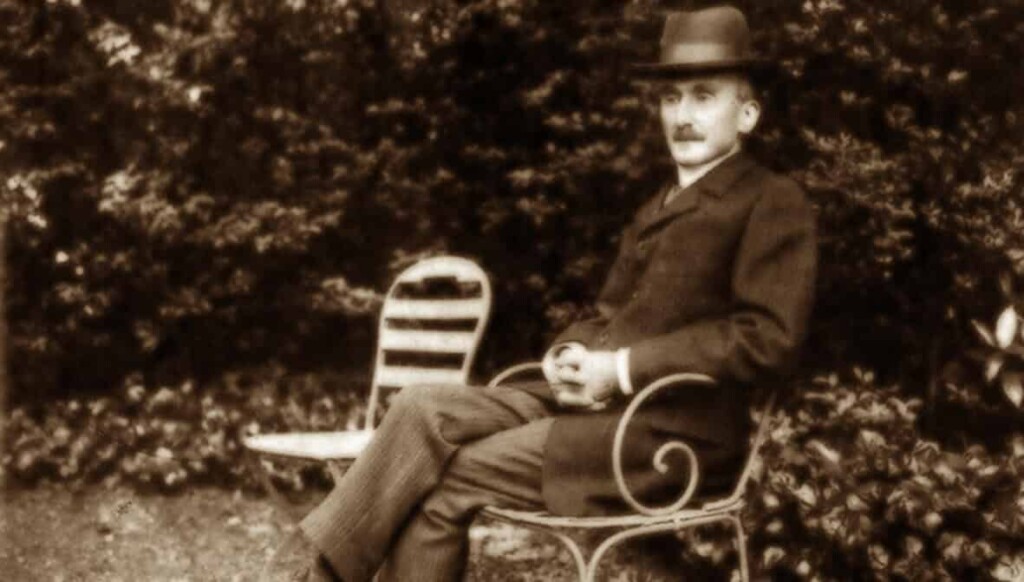
There is a specific kind of afternoon that you have lived at least once, probably more times than you can count. The hours do not pass — they accumulate, layer upon layer, like sediment at the bottom of something very deep. You look at the clock, and the hands confirm that forty minutes have elapsed. Forty minutes. But the weight of that interval, its interior volume, belongs to a completely different order of measurement. Something has happened inside that duration — a loss, a waiting, a revelation — and the clock on the wall, with its steady mechanical indifference, has simply nothing to say about it.
This is precisely where Henri Bergson planted his first great philosophical rupture, in the Essai sur les données immédiates de la conscience, published in 1889 when he was barely thirty years old. The thesis, seemingly simple but devastatingly precise, is this: we have confused two radically different things by using the same word for both. We call “time” the homogeneous, divisible, measurable sequence of identical units that clocks register. And we also call “time” the actual lived experience of duration — what Bergson named durée — which is none of those things. It is not homogeneous. It cannot be divided without being destroyed. It cannot be measured without being falsified.
The confusion was not innocent. Bergson traced it to the way scientific thought, which had achieved extraordinary success in mastering space, quietly colonized the domain of inner life. When you represent time as a line, as a sequence of points laid out before you like a ruler, you have already smuggled in a spatial metaphor. You have translated duration into extension, and in doing so you have lost the very thing that makes time what it is: its qualitative character, its irreversibility, the way each moment enfolds all the moments that preceded it.
There is a man who sits in a room after receiving news that someone he loved is gone. He is not processing a measurable interval. He is living inside something that has no edges. A single sentence spoken to him by a stranger in a corridor — banal, almost administrative — opens a fissure through which years fall. The words reach him slowly, the way certain sounds travel through water, arriving distorted by depth. What the clock registers as three minutes, consciousness experiences as a geological epoch, strata of memory pressing upward through the present. This is durée. This is what Bergson meant when he insisted that psychological states do not succeed one another like beads on a string — they interpenetrate, they melt into one another, they carry their entire history inside them.
The philosopher William James, working in near-parallel across the Atlantic in those same years, arrived at a similar intuition with his concept of the “stream of consciousness,” though where James remained largely descriptive, Bergson pressed toward something more radical: the claim that space-time, the time of physics and clocks and calendars, is not a discovery about reality but a practical construction, a useful fiction that intelligence builds in order to act upon the world. It serves navigation. It coordinates trains. It does not touch what actually happens inside a human being living through a moment of extremity.
And here is what makes this so viscerally recognizable: you have always known this. You have known it every time five years felt shorter than a single terrible week. Every time you returned to a place from your childhood and found that the distances had shrunk, but the weight of what happened there had only grown denser, more pressurized, more present than anything registered on any calendar. The clock on the wall was not lying through malice. It was simply measuring the wrong thing all along, and calling it the only thing.
Bergson did not offer this as consolation. He offered it as diagnosis.
Matter, Memory, and the Ghost in the Machine
You are walking through a city you have not visited in eleven years. Nothing dramatic happens. A specific angle of afternoon light falls across wet pavement, and before you have formed a single conscious thought, you are six years old again, standing in a kitchen that no longer exists, smelling something that no one is cooking. The memory does not arrive like a file retrieved from storage. It arrives like weather. It was already inside you, fully formed, waiting for a key you did not know you were carrying.
This is not a poetic metaphor. This is the central problem of a book published in 1896 that most people who discuss the mind have never seriously read. Matière et mémoire is Bergson’s most technically demanding and philosophically explosive work, and its central argument is one that the dominant tradition has spent over a century refusing to absorb: the brain does not produce memory. It does not produce consciousness. It filters them.
The distinction is not semantic. The entire architecture of modern cognitive science, neurology, and artificial intelligence rests on the premise that mental states are generated by neural states, that consciousness is what the brain does when it processes information, that memory is stored in synaptic configurations the way data is stored on a drive. Bergson looked at the clinical evidence available to him in the late nineteenth century, the aphasia studies, the localization debates, the cases of selective memory loss that could not be explained by a simple storage model, and arrived at the opposite conclusion. Lesions of the brain, he argued, do not destroy memories. They destroy the capacity to retrieve them, to actualize them, to bring them into contact with the present moment and its demands. The memories themselves persist elsewhere. The brain is not the library. It is the librarian, and a very specialized one at that, whose job is not to preserve the past but to keep most of it from flooding the present.
This is the image Bergson calls the cone of memory, a geometry of time in which the totality of your past exists simultaneously, preserved in its entirety, pressing against the narrow point of the present. What the brain does is select. It narrows. It filters the virtual into the actual, choosing from the infinite reservoir of what has been only what is useful for action right now. Perception is not reception. It is subtraction.
António Damásio, working nearly a century later with tools Bergson could not have imagined, arrived at a convergent intuition from an entirely different direction. His research on patients with damage to the ventromedial prefrontal cortex, detailed in Descartes’ Error published in 1994, demonstrated that consciousness is not a product of localized neural computation but emerges from the continuous loop between brain, body, and environment. The self, for Damásio, is not housed anywhere. It is a process, a narrative the organism constructs moment by moment to orient itself in time. He did not cite Bergson as his inspiration, but the structural resemblance is not coincidental. It is what happens when rigorous inquiry, freed from the Cartesian prejudice, follows the evidence where it leads.
The Cartesian tradition, stretching from the separation of res cogitans and res extensa in the Meditations of 1641 through to contemporary computationalism, insists that the mind is a thing that operates on matter. Bergson’s reversal is complete: matter is what the mind uses to act, and consciousness is not inside the brain any more than music is inside the radio. Smashing the radio stops the music from reaching you. It does not destroy the signal. You felt this the moment that afternoon light hit the wet pavement and returned you somewhere the machine had no record of sending you.
The Creative Explosion: L’Évolution créatrice and the Élan Vital
There is a moment — you may have lived it, or watched it in someone you thought you knew completely — when the body does something it was not supposed to do. The doctors had been precise, the prognosis measured and credentialed, the trajectory mapped with the confident geometry of modern medicine. And then the wound closed faster than tissue mechanics allowed. The mind, pronounced diminished past recovery, began reconstructing itself along pathways that the original architecture had never contained. Not a miracle in any supernatural sense. Something stranger: life refusing the coordinates assigned to it.
This is the thing Bergson was pointing at in 1907 when he published L’Évolution créatrice, the book that brought him international celebrity and eventually contributed to his Nobel Prize in Literature in 1927. The élan vital — that phrase which has been so eagerly misread as mystical fog, as pre-scientific romanticism, as the kind of vitalism that serious thinkers were supposed to have abandoned — was never a ghost in the machine. It was a philosophical provocation aimed with surgical precision at two targets: the Darwinian mechanism that reduced evolution to blind selection acting on random variation, and the Spencerian determinism that treated life as a process whose outcomes could in principle be calculated if only you had enough data and enough time.
Spencer had argued, with the systematic confidence of a man who confused comprehensiveness with depth, that evolution was the progressive movement from homogeneity to heterogeneity, from incoherence to coherence, and that this movement obeyed laws as reliable as Newton’s. Bergson looked at this and saw a conjuring trick. Spencer had taken the results of evolutionary processes and worked backwards, constructing a logic of necessity from what was in reality a cascade of inventions. You cannot deduce the vertebrate eye from the chemistry of early oceans. You cannot derive jazz from the physics of vibrating strings. The conclusion does not live inside the premises. It erupts from them.
What Bergson called the élan vital was his name for this eruption — the continuous creative pressure through which life generates genuine novelty rather than merely rearranging pre-existing elements. He was not claiming a separate vital substance, some non-physical fluid pulsing through organisms. He was making a claim about time and creativity: that biological evolution, like consciousness itself, operates through duration, through a past that is preserved and a future that is genuinely open. The intellect, he argued, is magnificently equipped to analyze matter, to decompose and recompose, to calculate trajectories. But it encounters life and immediately begins falsifying it, because life’s defining characteristic is that it cannot be fully captured by any snapshot, any spatial diagram, any formula that treats the future as the logical extension of the present.
The vindication came from a direction Bergson could not have anticipated. Ilya Prigogine, working through the second half of the twentieth century on what he called dissipative structures — thermodynamic systems that maintain themselves far from equilibrium by continuously processing energy and matter from their environment — arrived at conclusions that read like a translation of Bergson’s intuitions into the language of chemistry and physics. Prigogine’s Nobel Prize in Chemistry came in 1977, seventy years after L’Évolution créatrice, and his central argument was that in complex open systems, irreversibility is not a defect to be apologized for but the very source of structure and creativity. Order does not emerge despite the arrow of time; it emerges because of it. Complexity theory, emergence, the behavior of living systems at the edge of chaos — all of this belongs to an intellectual terrain that Bergson had mapped philosophically before the instruments existed to measure it empirically.
The man who heals against prognosis, the mind that rewrites its own architecture past the point where rewriting seemed available — they were never anomalies. They were always the rule, seen clearly enough.
A vision curated by a filmmaker, not an algorithm
In this video I explain our vision
The Philosopher Who Stopped a War and Won a Prize He Could Not Accept

There is a particular kind of courage that does not announce itself. It does not arrive with flags or declarations. It arrives in a cold morning, in a body already weakened by years of illness, standing in a line it did not have to stand in.
In 1917, Bergson was nearly sixty years old and already a figure of international renown — his lectures at the Collège de France had drawn crowds that spilled into the street, something that had not happened since the days of Michelet. The French government sent him to Washington not because he was a diplomat but precisely because he was not one. He was a philosopher whose name meant something in American drawing rooms and university halls. Woodrow Wilson received him. The conversations that followed — their precise content still partially obscured by the discretion of the time — contributed to the architecture of a decision that would reshape the twentieth century. The United States entered the war in April 1917. Bergson had traveled there twice that year. Those who study the diplomatic cables of the period do not speak of causation lightly, but they do not dismiss the connection either. A philosopher had helped move a nation.
This is not the biography of ideas remaining safely inside books. This is what happens when a mind that has spent decades thinking about time, about the irreversibility of duration, about the weight of each singular moment, is placed inside history at precisely the moment history requires exactly that kind of thinking. Bergson understood that you cannot reverse what has been lived. He also understood, with the particular lucidity of someone who had theorized it, that the present moment always contains more than it appears to contain — that it is dense with what is about to become irreversible.
In 1927, the Swedish Academy awarded him the Nobel Prize in Literature. Not in philosophy — there is no such category — but the citation made clear that the prize was given for the philosophical work itself, for the prose of Creative Evolution and Matter and Memory, for a way of writing thought that had no clear precedent. He was the only philosopher to receive it on those terms. He could not travel to Stockholm to accept it in person. His arthritis, which had been advancing for years with the same quiet relentlessness he had attributed to duration itself, made the journey impossible. He sent a letter.
What came next belongs to a different register of biography entirely. As the 1930s darkened across Europe, Bergson — born in Paris in 1859 to a Polish Jewish father and an English Jewish mother, raised in a household where Jewish identity was present but not loudly asserted — began to move, slowly and then with increasing deliberateness, toward a public identification with Judaism. He had spent decades moving intellectually toward Catholicism, had found in the mystical traditions of Christianity something that resonated with his philosophy of vital impulse and open morality. But he did not convert. He wrote in his testament that he had renounced the act because he did not want to appear to be abandoning those who were now being persecuted.
When the Vichy government enacted its racial statutes in 1940, stripping Jewish citizens of their rights, Bergson was over eighty years old and barely able to move. He was offered an exemption. He refused it. He walked — or was helped to walk — to register himself as a Jew under the laws designed to humiliate and ultimately destroy people like him. He died on January 4, 1941, in occupied Paris, of bronchitis contracted while standing in that line.
There is a philosophy of time that remains abstract until the man who wrote it refuses an exemption in winter. Then it becomes something else entirely. Then you understand that duration, for Bergson, was never a theory.
Laughter, Society, and the Trap of the Mechanical
There is something you recognize immediately when you watch someone perform a role they have outgrown. The gestures are technically correct. The words arrive in the right sequence. And yet something in the room contracts, slightly, because everyone present can sense that the person speaking is no longer quite there — that what you are witnessing is a mechanism running on stored momentum, a clockwork figure executing a program written years ago for a self that no longer exists. You do not laugh openly. But something close to laughter moves through you, involuntary and a little cruel.
This is precisely where Bergson begins, in 1900, with Le Rire. Not with jokes. Not with wit. With the discomfort that precedes the laugh and survives it. His thesis is structural rather than comic: we laugh, he argues, whenever we perceive life imitating mechanism. Whenever the flexible, adaptive, continuous movement of living intelligence stiffens into repetition. The man who falls because he cannot stop walking. The bureaucrat who applies the rule to the case that the rule was never designed for. The social performer who has become so expert at being themselves that they have hollowed out the interior the performance was supposed to express.
Think of a man at a dinner table, surrounded by people who have known him for twenty years under a specific name and a specific set of attributes — the skeptic, the wit, the one who never shows sentiment — executing this personality with such practiced fluency that he can no longer locate the moment it became a costume. He tries, occasionally, to say something unscripted. The words don’t come. What comes instead is the habitual gesture, the deflecting remark, the recognizable inflection that makes the room relax because he has behaved as expected. The laughter his predictability generates is gentle, affectionate even. But Bergson’s point is that it functions as correction. Society laughs at the mechanical, he writes, because inflexibility is a social danger. The laugh is a signal: adapt or be excluded.
Erving Goffman, writing half a century later in The Presentation of Self in Everyday Life, arrives at adjacent territory through a different entrance. His dramaturgical sociology sees all social interaction as performance — front stage, back stage, impression management, the calculated presentation of a self constructed for an audience. What Goffman maps empirically, Bergson had already intuited philosophically: the self that appears in social space is always, to some degree, a fixed text being read aloud. The danger Bergson saw in the comic figure — the man who has become a function rather than a person — is precisely the condition Goffman describes as the universal human predicament, not as pathology but as structure.
Pierre Bourdieu deepens the wound with his concept of habitus, developed across La Distinction in 1979 and refined throughout his later work. Habitus is the internalized system of dispositions that generates behavior without conscious deliberation — class, education, family, history crystallized into reflex. It is not quite automatism and not quite freedom. It is the body executing a social script it has absorbed so thoroughly that it experiences the script as instinct. The working-class child who flinches in the museum not because anyone has told him he does not belong, but because something in his posture already knows. The executive who reads the room before the room has spoken. These are not characters failing to be alive. They are subjects so thoroughly shaped by their formation that their spontaneity itself is structured.
Bergson’s comic mechanical encrusted upon the living is not, then, a theory of jokes. It is a diagnostic instrument for something that runs underneath all social life — the slow calcification of the living into the legible, the gradual replacement of presence with pattern. And the laugh that erupts when we recognize it in another person is also, though we rarely permit ourselves this, the laugh we almost produce when we catch ourselves doing precisely the same thing.
What Bergson Saw That We Keep Forgetting
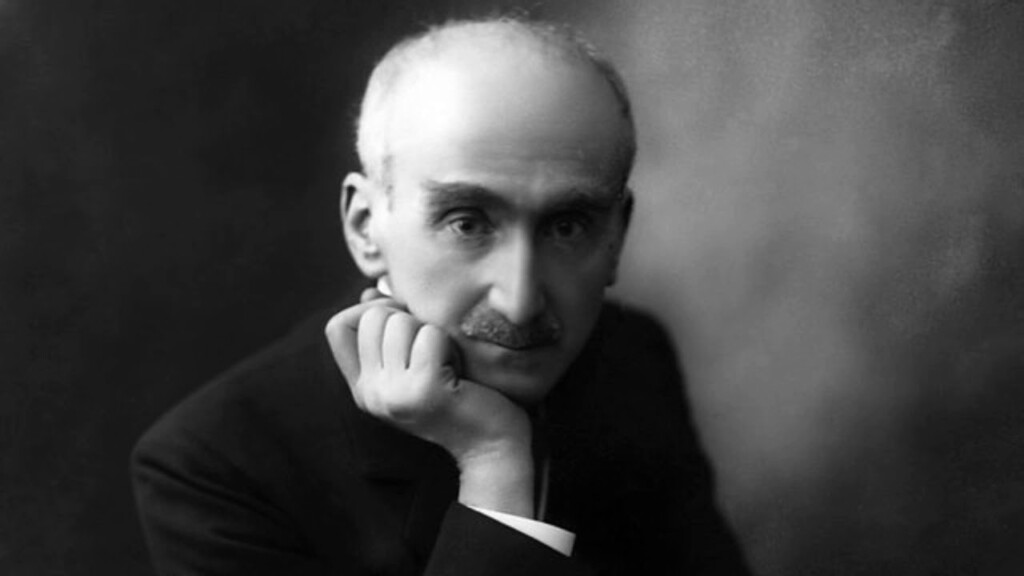
There is a moment, somewhere between waking and full consciousness, when you lie still and feel time moving through you rather than past you. Not the clock on the wall, not the calendar obligation waiting on your phone, but something older and stranger — the sense that you are not in time the way a coin is in a pocket, but that time is somehow in you, constituting you, making you precisely what you are and nothing else. Bergson spent an entire intellectual life trying to articulate that sensation, and the tragedy of his legacy is not that he failed, but that he succeeded well enough to make the culture deeply uncomfortable, and so the culture found ways to set him aside.
Gilles Deleuze retrieved him from that comfortable obscurity in 1966 with a book of radical philosophical reconstruction, arguing that Bergson had not been refuted by the twentieth century but simply misread — that his distinction between duration and spatialized time was not a sentimental protest against science but a precise ontological claim about the nature of difference itself. For Deleuze, Bergson’s durée was the very structure of becoming, the ground from which any genuinely new thing could emerge. Difference, in this reading, is not a gap between two fixed states but the living tissue of reality. This was not nostalgia dressed in philosophical language. It was a direct challenge to any model of mind or world that reduces process to states, movement to positions, life to a series of frozen frames.
The challenge became sharper, not duller, as the century advanced. When quantum mechanics revealed that physical reality at its most fundamental level refuses to yield determinate values until measured, refuses to be a fixed thing waiting to be described, Bergson’s insistence that movement is irreducible to positions acquired an unexpected scientific resonance. Werner Heisenberg’s uncertainty principle, formulated in 1927, the same year Bergson received the Nobel Prize in Literature, was not Bergsonian philosophy, but the structural similarity was unsettling to anyone paying attention: reality, even physical reality, resists the absolute arrest that measurement implies.
Now the challenge arrives in its sharpest contemporary form. The dominant assumption behind artificial intelligence and computational models of cognition is that consciousness is, at bottom, information processing — that thought can be fully described as a set of operations on symbolic states, that what it feels like to be you can in principle be reconstructed from the right arrangement of data. Bergson would have recognized this immediately as the ancient error wearing new circuitry. To model consciousness as computation is to spatialize it, to convert the continuous flowing plurality of lived experience into a sequence of discrete, reversible operations. A computation can be run forwards and backwards with equal validity. Duration cannot. The irreversibility of lived time is not a defect in our measuring instruments; it is the very thing that makes experience experience rather than mere information.
What you felt when someone you loved died was not a state that could in principle be replayed, restored, or recalculated. It moved through you once, unrepeatable, and left you different in a way that no external record captures, because the difference was not in the data but in the duration, in the lived thickness of that specific passage of time that you were. This is what Bergson saw, stated with remarkable precision in his 1889 doctoral thesis and never stopped defending through decades of institutional resistance, popular fame, political catastrophe, and the slow erosion of his health in occupied Paris.
Whether any system that measures time can ever touch what it means to live it remains the question he handed forward, not as a defeat but as the most honest recognition of where philosophy must hold its boundary, standing at the edge of what can be said and looking out at what can only be undergone.
🌊 Time, Consciousness, and the Flow of Thought
Henri Bergson’s philosophy of duration, intuition, and vital impulse connects deeply with broader inquiries into consciousness, memory, and the nature of lived experience. These related articles trace the intellectual currents that flow alongside and through Bergson’s thought, from the stream of consciousness to the philosophy of memory.
William James and Consciousness: The Stream of Thought
William James, Bergson’s contemporary and intellectual ally, developed the concept of the ‘stream of thought’ to describe consciousness as a continuous, ever-flowing river rather than a sequence of discrete states. His radical empiricism and Bergson’s philosophy of duration share a profound rejection of static, analytical models of the mind. Together, James and Bergson reshaped how the twentieth century understood inner life and subjective time.
GO TO THE SELECTION: William James and Consciousness: The Stream of Thought
Stream of Consciousness in Literature and Cinema
The literary and cinematic technique known as stream of consciousness drew directly from the philosophical ferment generated by Bergson and James, translating their ideas about inner time into narrative form. Writers like Woolf and Joyce and filmmakers alike sought to render the unbroken flux of mental experience on the page and screen. This article explores how a philosophical concept became one of the most revolutionary aesthetic tools of the modern era.
GO TO THE SELECTION: Stream of Consciousness in Literature and Cinema
Paul Ricœur: Life and Philosophy of Memory
Paul Ricœur‘s philosophy of memory engages directly with the Bergsonian legacy, interrogating how human beings narrate, preserve, and transform their past through time. Ricœur’s work on narrative identity and the phenomenology of memory extends and critically reworks Bergson’s distinction between pure memory and habit. Understanding Ricœur illuminates how Bergson’s intuitions about duration continue to shape contemporary philosophy of mind and history.
GO TO THE SELECTION: Paul Ricœur: Life and Philosophy of Memory
Phenomenology of Nature: Husserl and Merleau-Ponty
The phenomenology of nature as developed by Husserl and Merleau-Ponty stands in close dialogue with Bergson’s insistence on the primacy of lived, embodied experience over abstract scientific representation. Merleau-Ponty in particular absorbed and transformed Bergsonian intuitions about perception and the body’s engagement with the world. This article traces the rich philosophical conversation between phenomenology and the vitalist tradition that Bergson helped inaugurate.
GO TO THE SELECTION: Phenomenology of Nature: Husserl and Merleau-Ponty
Discover Independent Cinema on Indiecinema
If Bergson’s ideas about duration, intuition, and the flow of inner life have stirred something in you, cinema can be a powerful way to continue that exploration. On Indiecinema you will find a curated selection of independent and art-house films that engage with consciousness, time, and the deeper currents of human experience. Come and discover a cinema that thinks, feels, and endures.
👉 EXPLORE THE CATALOG: Watch Indie Films in Streaming
A vision curated by a filmmaker, not an algorithm
In this video I explain our vision

