
The Body That Remembers Before the Mind Does
You are standing in a narrow hallway, the wallpaper peeling at the seams, and a man is shouting at you — not with words that carry specific meaning but with a volume that lands somewhere behind your sternum, in the place where fear has always lived without permission. You do not know why your hands are shaking. The argument is about something small, a door left open, a dish unwashed, and yet your body is responding as though the stakes are total, as though the outcome of this particular Tuesday evening will determine something irreversible about whether you are allowed to exist. You have felt this before, in the same hallway, with different people. You will feel it again.

What Irish cinema has understood, with a precision that academic historiography still struggles to match, is that the transmission of violence between generations does not travel primarily through language or ideology or even memory in any conscious sense. It travels through the body. It is somatic before it is symbolic. When filmmakers working out of Ireland — across the full range of its fractured geography, North and South, diaspora and homeland — return again and again to scenes of physical eruption that seem disproportionate to their immediate causes, they are not being melodramatic. They are being accurate.
The neurobiologist Bessel van der Kolk published “The Body Keeps the Score” in 2014, and within its pages he documented what trauma therapists had been observing clinically for decades: that traumatic experience does not consolidate into narrative the way ordinary memory does. Instead it fragments, it lodges in the nervous system as sensation, it resurfaces not as recollection but as physiological event. A raised voice at the wrong pitch. A particular quality of silence after a door slams. The body responds before the mind has had time to ask what is happening, because the body has been here before, even when the person inhabiting it has not.
Ireland’s history offers a case study in exactly the kind of multigenerational wound that produces this somatic inheritance at a civilizational scale. The Famine years between 1845 and 1852 killed approximately one million people and drove another million into emigration within a single decade, collapsing a population of eight million to barely six by 1851. But the violence did not end with the return of adequate harvests. The War of Independence, the Civil War that followed it in 1922 and 1923, the decades of political and paramilitary conflict in the North — these were not isolated episodes but phases of a continuous pressure applied to a people who were simultaneously being told, by Church and State in remarkable coordination, that suffering was spiritually productive, that silence was dignity, that the interior life was a private matter best kept from public expression. The result was a culture that became extraordinarily skilled at not saying what it knew.
Cinema, when it finally emerged from Ireland with genuine creative authority rather than as an export product for romantic consumption abroad, became the place where the unsaid could be shown rather than spoken. Not because the medium is inherently more honest than language, but because images and bodies onscreen operate at a register below the censorship of articulation. You can watch a father’s hand move toward a child’s shoulder and know, before any dialogue confirms it, whether that touch carries tenderness or the residue of something it has never been given a name. The face of an actor can hold decades of history in its muscle tension, in the particular way a jaw locks when a certain subject approaches the surface of conversation, in the involuntary stillness that descends when a question gets too close to the truth.
This is not metaphor. This is the actual mechanism by which Irish cinema has done its most significant cultural work — not by depicting history, but by showing you the way history feels from the inside, in a body that did not choose to carry it.
Urban Traffik
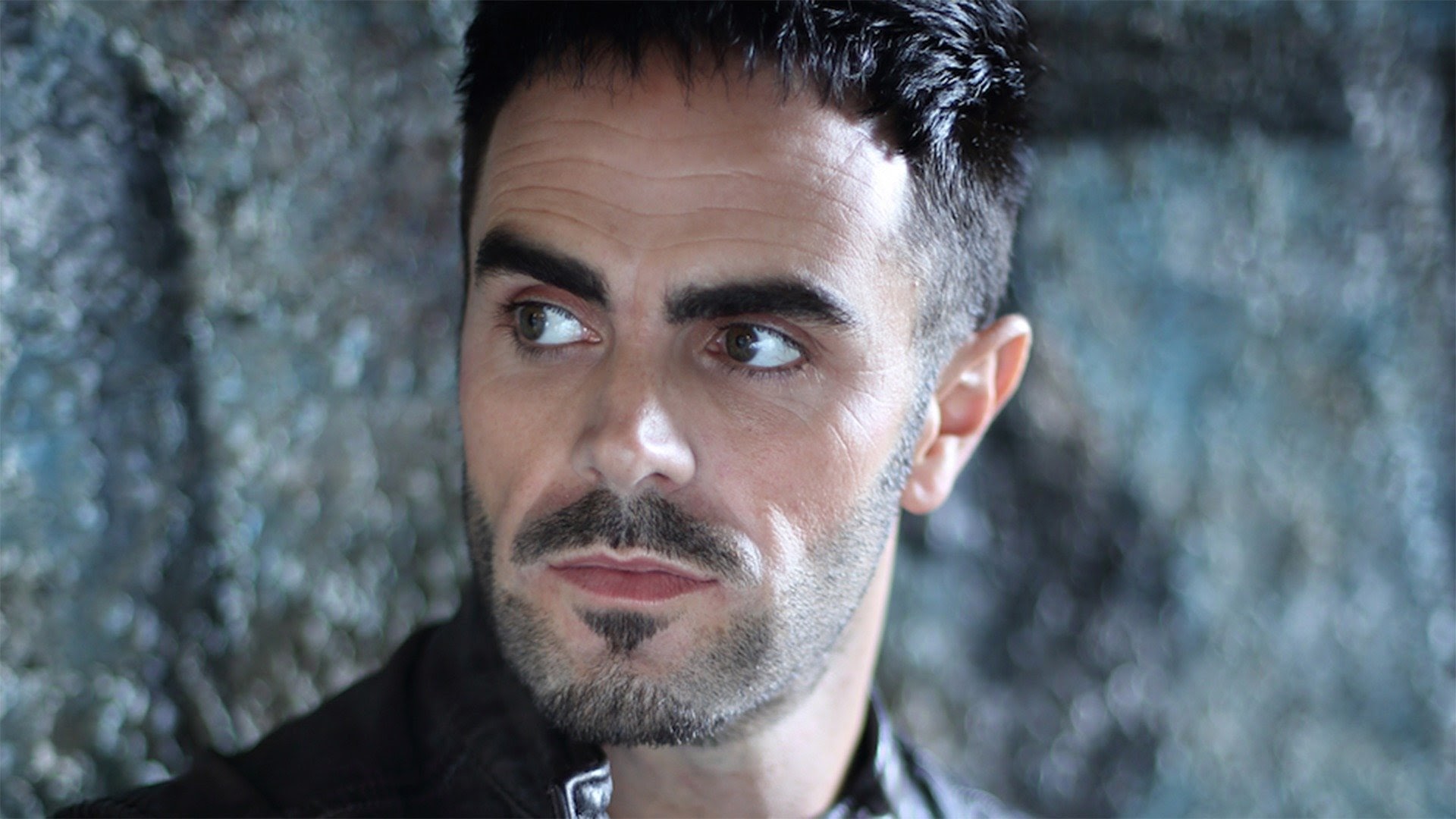
Thriller, by Jason Figgis, United States, 2017.
In the heart of a dark and hidden Dublin, Adam appears to be a kind-hearted man when he offers shelter to Sue, a lonely and vulnerable young woman who has just arrived in the city. The reality, however, is far more tragic: Adam serves as bait for a ruthless human trafficking ring led by the cold and calculating Dan and managed by his partner, Alex. Their chilling scheme is simple: lure defenseless young women and sell them into the international sex trade. But this seemingly perfect criminal enterprise is about to unravel. As disturbing family secrets linking Dan to Adam's sister come to light, and Adam desperately tries to break free from a brutal world he can no longer endure, the lives of everyone involved spiral into uncontrollable violence.
Directed by acclaimed independent filmmaker Jason Figgis, Urban Traffik leaves horror behind to embrace the raw, tense, and hyper-realistic territory of urban crime drama, recalling the visceral intensity of British cult films such as London to Brighton. The film's greatest strength lies in its outstanding performances: thanks to its razor-sharp screenplay, the cast succeeds in making viewers empathize even with its darkest and most morally ambiguous characters. Visually, the film is a noir gem. Alan Rogers' striking cinematography captures Dublin's hidden and ghostly side, transforming neglected alleyways and bare interiors into landscapes of palpable despair. Avoiding easy moralizing, Urban Traffik offers a hypnotic, intimate, and uncompromising look at the inner workings of organized crime.
LANGUAGE: English
SUBTITLES: Spanish, French, German, Portuguese
A Nation Assembled from Its Wounds
You are sitting in a darkened room somewhere in Dublin or Cork or a small town whose name sounds like weather, and the screen in front of you is showing you something you already know how to feel before the first image appears. The emotion arrives ahead of the story, which means the story is not doing the work — the myth is.
Benedict Anderson argued in Imagined Communities, published in 1983, that nations are not discovered but manufactured, assembled from shared fictions circulated through print capitalism, newspapers, novels, the synchronized experience of reading the same words at the same moment across dispersed populations. The nation, in his formulation, is a community of people who will never meet each other but who share a grammar of belonging, a set of emotional references that function like a secret handshake between strangers. What Anderson could not have fully anticipated was the degree to which cinema would inherit this function and intensify it, replacing the newspaper page with the flickering wound.
In Ireland, that wound was given a precise date. The Easter Rising of 1916 was a military failure by almost every tactical measure — a small insurgency crushed within a week, its leaders executed in Kilmainham Gaol between May 3rd and May 12th of that year. Patrick Pearse, James Connolly, Thomas Clarke, and thirteen others were shot, and the historical consensus is that their deaths transformed what had been a largely unpopular rebellion into a martyrological engine. The British firing squads did not suppress the revolution; they gave it a liturgy. From that moment, Irish national identity acquired a specific emotional grammar in which suffering and sacrifice were not merely historical events but proof of authenticity, evidence that belonging was real because it had cost something irreplaceable.
This grammar embedded itself deep in the tissue of Irish cultural production before cinema even arrived as a dominant form. W.B. Yeats understood exactly what was happening when he wrote “A terrible beauty is born” in September 1916 — not a celebration but an anxiety, a recognition that the dead had been converted into symbols and that symbols, unlike people, do not argue back or change their minds. The martyrological framework required fixed figures, men frozen at the moment of maximum sacrifice, and the culture obliged by constructing an iconography of noble suffering that would prove extraordinarily difficult to challenge or revise without appearing to dishonor the dead.
When Irish cinema began to find its voice in the latter decades of the twentieth century — through filmmakers working in the shadow of the Troubles, the hunger strikes of 1981, the ongoing constitutional question of partition — it inherited this entire apparatus without necessarily choosing to. The emotional vocabulary was already installed. A certain kind of story about Ireland carried within it an implicit instruction manual: here is the suffering, here is the betrayal, here is the figure who dies before the liberation he fought for can be corrupted by its own success. The audience knew how to respond because the response had been rehearsed across a century of poetry, theater, song, and political speech.
What this inheritance produced was not simply a set of recurring themes but a structural pressure on narrative itself. Stories organized around martyrdom tend toward a specific architecture — the inevitable ending known in advance, the beauty of the irreversible, the catharsis that requires no transformation of the living because the dead have already completed the necessary act. Cinema absorbed this architecture and called it authenticity, called it Irishness, when what it was, more precisely, was a nation’s inability to mourn its own founding violence without simultaneously eroticizing it, without finding in the image of the executed man something that felt uncomfortably close to desire.

When the Gun Becomes a Mirror
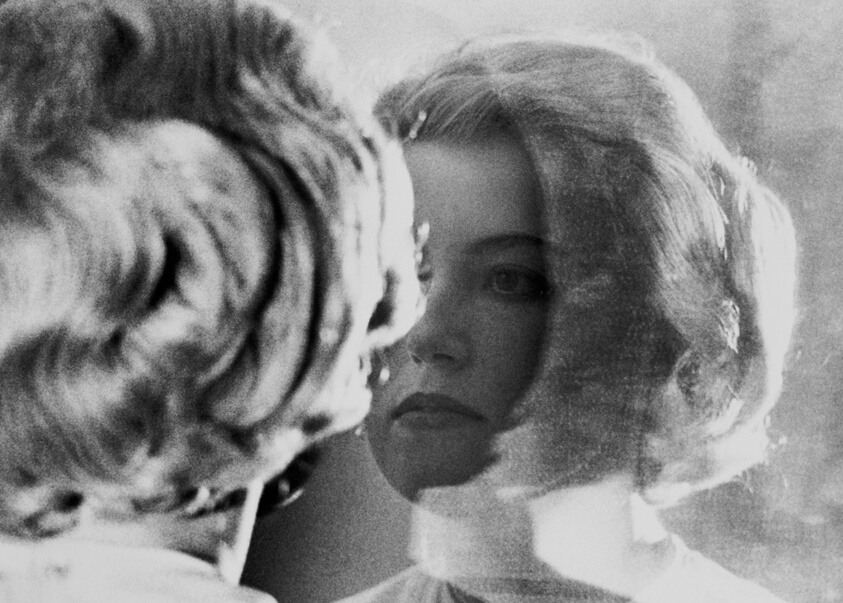
You are sitting in a darkened room watching a young man clean a rifle with the same careful tenderness another man might use to bathe a child, and you understand without anyone telling you that this is not a scene about violence. It is a scene about inheritance.
Irish cinema discovered something in the 1990s that political science had been circling for decades without naming cleanly: that the gun in the Irish Republican tradition was never purely instrumental. It was ontological. It answered the question of who you were before it answered any question about what you intended to do. The weapon did not give a man purpose — it gave him coordinates. It told him where he stood in a lineage that ran backward through 1916, through the Famine, through centuries of dispossession that had made survival itself feel like a form of insurgency. When filmmakers began seriously interrogating this inheritance rather than simply dramatizing it, they found that the IRA figure resisted being read as either hero or monster because he was primarily functioning as a mirror — reflecting back a version of Irish masculine identity that the audience had been taught to recognize as noble long before they had the critical language to question it.
Neil Jordan‘s work in this period, particularly the emotional architecture he constructed around characters torn between personal loyalty and political violence, exposed how belonging operated inside paramilitary structures with the same psychological grammar as family. The cell replaced the household. The oath replaced the baptism. The safe house replaced the hearth. What looked like radicalization from the outside looked, from the inside of these narratives, indistinguishable from love — the particular suffocating love of a community that has survived by closing ranks until closing ranks became its own kind of violence against those within it.
The masculinity encoded in this archetype was never incidentally gendered. It was specifically constructed against vulnerability, against hesitation, against the body’s ordinary desire to flee danger. Erving Goffman’s work on stigma and identity performance, developed across his writing in the 1950s and 1960s, argued that individuals in socially marginal groups perform heightened versions of dominant identity codes as a way of demanding recognition they cannot access through institutional channels. The IRA man in Irish film performs a hyper-coherent masculinity — calm under pressure, emotionally sealed, capable of sacrifice — precisely because the Irish Catholic male had been structurally denied the markers of legitimate civic manhood under British administrative law for generations. The gun was a credential.
What made the cinema of this era genuinely uncomfortable rather than merely grim was its refusal to detach moral legitimacy from this performance. Audiences were consistently placed in positions where they understood the logic of violence without endorsing it, which is a far more destabilizing experience than simple condemnation or simple celebration. A character could be shown executing someone in cold blood and the film would not cut away to reassure you about your own clean hands. You had followed his reasoning. You had sat inside his justification long enough to feel its internal coherence. The discomfort was not that you had been tricked into sympathizing with a killer. The discomfort was that the sympathy required no trick at all.
By the early 2000s, as the peace process reshaped the political landscape following the 1998 Good Friday Agreement, a new pressure entered these narratives: the question of what the armed man becomes when the war is declared officially over. If the gun was identity, decommissioning was not merely disarmament. It was a demand for selfhood to be surrendered without replacement, an instruction to become legible within a civic framework that had never been built to hold the particular grief of people who had organized their entire inner lives around a conflict now reclassified as historical.
Cathnafola - A Paranormal Investigation
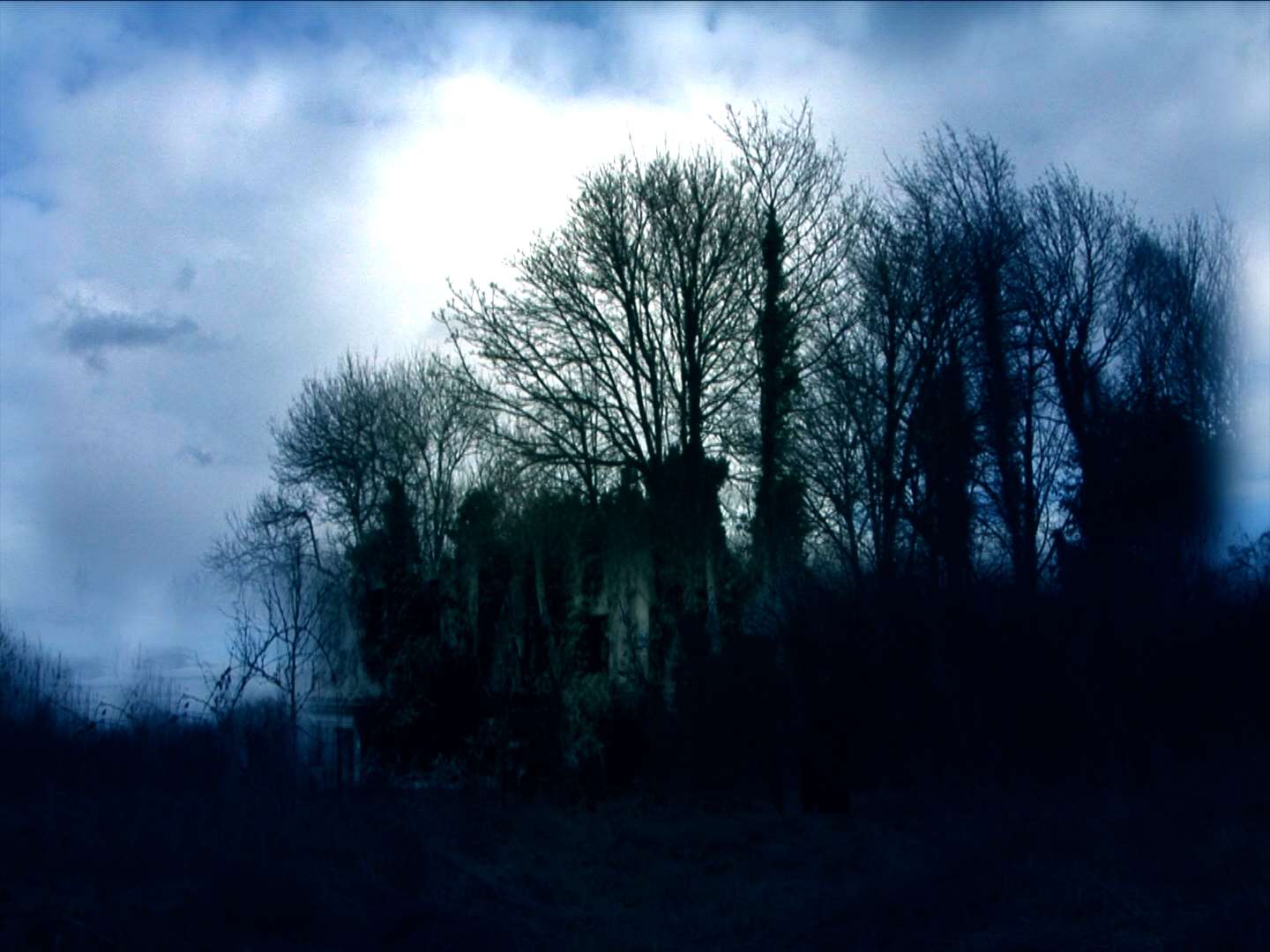
Documentary, horror, by Jason Figgis, USA, 2014.
In "Cathnafola", everything begins when renowned paranormal investigator Chris Halton of Haunted Earth UK receives footage filmed by three teenagers at the ruins of Cathnafola House in Ireland. Determined to unearth the truth behind the location’s bloody past, Halton embarks on a nighttime exploration of the infamous ruins—and soon uncovers terrifying and disturbing revelations.
LANGUAGE: English
SUBTITLES: Spanish, French, German, Portuguese
The Trouble with Innocence
You are standing in a kitchen that smells of boiled cabbage and something older, something that has seeped into the plaster over decades, and the woman at the sink is not looking at you but you feel her awareness of you like a physical pressure on the back of your neck. She knows what you have done. She does not ask. Her silence is not forgiveness and it is not accusation — it is a third thing for which English may not have the precise word, though Irish does, that quality of knowing-without-speaking that functions as its own form of verdict. This is the scene Irish cinema returns to compulsively: the civilian witness, usually female, usually domestic, whose gaze does not judge so much as it registers, and whose registration is somehow more damning than any tribunal.
The structural logic here deserves examination rather than sentiment. When a narrative places an armed figure beside an unarmed one, it is not simply representing a social reality — it is engineering a moral geometry. The unarmed body becomes a measuring instrument. Innocence, in this framework, is not a psychological state but a narrative technology, deployed to calibrate the viewer’s relationship to violence without requiring the narrative itself to take a position. The child who witnesses a shooting does not need to say anything. The mere fact of their presence performs the condemnation the screenplay refuses to articulate directly. This is filmmaking that outsources its ethics to casting decisions.
What makes this technique particularly worth interrogating is how effectively it forecloses political thought by substituting emotional response. The French sociologist Luc Boltanski, in his 1999 work Distant Suffering, identified the structural problem of what he called the politics of pity: when suffering is represented through the lens of the innocent bystander, it transforms political conflict into a humanitarian tableau, stripping causality from the image and replacing it with pure affect. The viewer weeps, or feels the cold weight of guilt, but the conditions that produced the violence remain unexamined, because the emotional transaction has already been completed before the intellect can engage. Irish cinema inherited this problem from a longer tradition of representing the Troubles — the widow, the grieving mother, the child with the wide eyes at the window — and rather than interrogating that inheritance, it deepened it.
There is something specifically dishonest about using civilian grief as a device to manufacture viewer complicity when that complicity then stands in for analysis. Complicity is not the same as understanding. Feeling responsible is not the same as knowing what you are responsible for or why the conditions existed that made someone choose violence as a vocabulary. The guilt the viewer carries out of the cinema is clean, portable, and ultimately useless — it asks nothing structural of them, only that they feel bad in a way that confirms their own fundamental decency by contrast. This is the trap: the civilian gaze, as deployed in film after film, does not destabilize the viewer’s political assumptions but actually reinforces their sense of moral superiority over the men with guns, which is precisely the condition that makes genuine political engagement impossible.
What gets erased in this operation is the texture of actual civilian experience during the conflict period — the way in which many civilians were not passive witnesses but active participants in networks of protection, information, and silence that made armed resistance materially possible. The 1981 hunger strikes, for instance, produced a civilian mobilization that cannot be reduced to grief or victimhood, yet the dominant cinematic vocabulary has almost no register for civilian agency that is not also either complicity or innocence, as though the only two positions available to those without weapons are guilt and purity, and the space between them — where actual political history was made — remains cinematically unoccupied.
What the Troubles Could Not Say
You are sitting in a room where everyone knows what happened and no one will say it. The year is 1981, ten hunger strikers are dead, and the television news is running footage of burning vehicles on the Falls Road while a presenter explains, with extraordinary composure, that the situation remains fluid. You watch the careful distance between the image and the word, and you understand, without being able to name it, that you are witnessing a formal agreement — a social contract written in omission.
Slavoj Žižek, in The Sublime Object of Ideology published in 1989, argued that ideological fantasy does not operate by making people believe false things but by structuring what they are permitted to see as real. The fantasy is not in the content; it is in the frame that decides which content can be acknowledged at all. Three decades of conflict in the north of Ireland produced exactly this kind of structuring absence — a publicly maintained fiction that what was visible could not quite be named, and what was named could not quite be shown. Cinema, which lives precisely in the gap between image and language, became the natural habitat of this prohibition.
The result was a cinematic grammar built on displacement. Directors working in and around the Troubles developed an almost reflexive tendency to move the camera sideways at the moment of maximum intensity — to cut away not from squeamishness but from something closer to cultural necessity. Landscape absorbed what faces could not express. The wet fields of Armagh and the grey housing estates of West Belfast became psychological containers, holding grief and rage in their textures because the human figures moving through them were not permitted to hold it openly. This is not mere aesthetic choice. It is documentary evidence of a culture that had legislated its own emotional vocabulary into near-silence.
Paul Virilio, in War and Cinema from 1984, traced the structural kinship between military logistics and the technology of the moving image, arguing that both are fundamentally machines for controlling what can be perceived and at what speed. The camera does not simply record war; it produces the conditions under which war becomes legible or illegible to those who did not fight it. In the Irish context this insight cuts with particular sharpness, because the British government’s broadcasting restrictions of 1988 — which prohibited direct transmission of voices belonging to members of proscribed organizations — created a literal, juridical version of what Virilio described as the politics of perception. Actors read transcripts on screen while the actual speakers’ mouths moved silently behind them. The image was present. The voice was absent. The gap between them was the conflict itself, rendered visible by the effort to suppress it.
What this produced in cinema was not silence but a weaponized version of silence — quiet used as pressure rather than absence. The most devastating sequences in films emerging from this tradition are frequently the ones where nothing is said about the central wound, where characters move around a fact the way water moves around stone. Grief is conveyed through the arrangement of furniture in a kitchen, through the way a woman holds a cup she is not drinking from, through a door left slightly open when it should be closed. This is not symbolism in the literary sense; it is the natural syntax of a community that had learned to communicate in the registers that official culture could not reach or prohibit.
The prohibition itself was generative. When direct language is cut off, meaning migrates into texture, rhythm, and composition — into the parts of cinema that criticism struggles to paraphrase because they resist being converted back into statement. Thirty years of cultural censorship, formal and informal, produced filmmakers who were extraordinarily fluent in the unstateable, who understood instinctively that the camera could say in half a second of held landscape what no actor could be permitted to say.
A vision curated by a filmmaker, not an algorithm
In this video I explain our vision
The Protestant Wall and the Catholic Eye

You watch a film about the north of Ireland and you already know, before the first frame, whose eyes you are borrowing. The camera will find its sympathy in a particular kitchen, a particular accent, a particular silence weighted with a particular grief. You do not notice this because it feels like neutrality. That is the mechanism.
Irish cinema, particularly in its treatment of the Troubles and its aftermath, has built a systematic grammar of interiority in which the Catholic nationalist experience is rendered as depth and the Unionist or Protestant experience is rendered as surface. This is not a minor aesthetic preference. It is a structural epistemological claim, disguised as storytelling. The films that shaped international perception of the conflict across the 1990s and 2000s gave audiences access to the dreams, the childhoods, the sexual lives, the theological anxieties of one community, while the other community was translated almost exclusively through its institutional forms: the police baton, the loyalist mural, the marching band. One community was shown from the inside. The other was shown from the outside looking threatening. This asymmetry produces a viewer who has, by the end of the film, a theory of one kind of Irish person and no theory at all of the other.
The philosopher Charles Taylor, in his 1994 work on multiculturalism and recognition, argued that the failure to recognize a group’s interiority is not a passive omission but a form of active harm, a misrecognition that can distort identity from the outside in. What Irish cinema performed, repeatedly and without apparent awareness, was precisely this: it produced Unionist and Protestant characters who had no interior weather. They were not evil in the operatic sense. They were simply opaque. They occupied the frame as obstacles or forces rather than as people negotiating their own inherited terror, their own relationship to a history that told them a different story about who was legitimate. The loyalist worker in Belfast who feared a united Ireland was not given the cinematographic apparatus of memory, of dream, of contradiction. He was given a uniform, a wall, a posture.
This matters beyond representation politics because it reproduces, in the viewer’s nervous system, the very territorial logic the conflict was built on. To render one community as interiority and another as exteriority is to make a claim about who owns the land of feeling, who has the right to be understood on their own terms. The camera, in this sense, is never neutral. It is always drawing a border. And the border that Irish cinema drew, decade after decade, was a border that placed Protestant Unionist experience outside the zone of the legible, outside the territory where human complexity is allowed to live.
What makes this particularly treacherous is that many of these films were genuinely compassionate, genuinely skilled, genuinely committed to exposing injustice. The intent was not sectarian in any conscious sense. But sociologist Michael Billig, in his 1995 study of what he called banal nationalism, demonstrated that the most durable ideological work is done not by propaganda but by the ordinary, the unremarked, the taken-for-granted background hum of whose story is worth telling. The nationalist Catholic frame in Irish cinema was never announced as such. It simply presented itself as the human frame, as the empathetic default, as the obvious place to stand when you wanted to understand the conflict. That presumed universality is the tell.
A Protestant teenager in Derry in 1982 was also a person with a body, a mother, a fear of death, a confusion about why the world was arranged the way it was. The cinema did not go looking for her. And when a cinema does not go looking for someone across forty years of production, that absence stops being an accident and starts being a position.
Gender as the Unmarked Casualty
You have watched a film about the Troubles, or the Land War, or the slow interior collapse of a republican household, and somewhere in the background a woman is ironing. She is not ironing because anyone thought carefully about her. She is ironing because the scene needed texture, and grief needed a body to move through that wasn’t holding a weapon.
The exclusion of women from the subject position of Irish political cinema is not an accident of taste. It is the formal echo of a constitutional arrangement. When the Irish Free State ratified Bunreacht na hÉireann in 1937, Article 41.2 did not merely sentimentalize the domestic sphere — it juridically consecrated woman’s place within it, declaring that her life within the home gave the state something it required for its own coherence. The nation, in other words, needed her stationary. What cinema inherited from this was not a simple misogyny but something more architecturally precise: a grammar in which the female figure stabilizes the frame while the male figure tears through it. She is the ground against which rupture becomes legible.
The philosopher Adriana Cavarero, in her 2000 work Relating Narratives, argued that what is denied to certain subjects is not experience but the right to narrate their own experience — to be the one who tells rather than the one who is told about. Irish political cinema exercises exactly this denial with a consistency that looks, from a sufficient distance, like ideology rather than choice. Women appear in these films as mothers of the disappeared, wives of the interned, daughters who open doors onto violence they did not author. Their suffering is real within the diegesis, sometimes devastating, but it is always suffering in relation to a male political event. The camera never asks what it cost them to hold the architecture of ordinary life together while the architecture of ordinary life was the thing being used against them.
What makes this particularly durable is that it masquerades as tribute. To show a woman enduring is, within the emotional logic of these films, to honor her. The implicit argument is that her stillness is heroism, that her absorption of grief is a form of strength. But endurance is only heroism when the person enduring has chosen the terms of their exposure to harm. What Irish political cinema consistently refuses to investigate is the violence that was not political in the recognized sense — the coercions that occurred inside the republican household, the sexual economies of nationalist movements, the way women were recruited into a cause that would, upon victory, redistribute them back into silence. The 1983 abortion referendum, in which the state inserted a constitutional prohibition that would govern women’s bodies for thirty-five years, passed four years before the formal end of the Anglo-Irish Agreement era. No one made that film with the same gravity they brought to the gunman in the rain.
Angela Bourke’s 1999 study of the Bridget Cleary case excavated an 1895 murder — a husband who burned his wife alive on the suspicion she had been replaced by a fairy — and found inside it a cultural logic that used supernatural narrative to absorb what could not be named as domestic control. The body of the woman became a site where other anxieties were administered. What changes between 1895 and the contemporary Irish film canon is mostly the sophistication of the displacement mechanism. The woman is no longer accused of enchantment; she is simply rendered peripheral, functional, grieving. Her interiority is not hostile territory — it is simply uncharted, which amounts to the same erasure delivered at a lower temperature.
The question that no director in this tradition has yet answered honestly is whether the violence they are depicting could have been sustained without her cooperation, and whether that cooperation was ever actually free.
The Peace Process as Narrative Crisis
You are sitting in a cinema in Dublin in 1999, watching a film about the Troubles, and something feels faintly wrong — not with the film, but with the feeling the film is trying to produce in you. The grief is there, the sacrifice is there, the familiar grammar of occupied streets and whispered allegiances is technically intact, but the moral urgency has gone slightly cold, like a sermon delivered after the war is already over.
The Good Friday Agreement did not merely end a political conflict. It performed something far more disorienting: it removed the conditions under which Irish cultural identity had learned to recognize itself. For decades, the Troubles had functioned as what the sociologist Zygmunt Bauman, in his 1992 work Mortality, Immortality and Other Life Strategies, identified as a “mortality project” — a collective framework through which a community converts its suffering into meaning, its dead into argument. Strip away the conflict and you do not liberate the culture. You strand it.
Irish cinema had built a remarkably coherent identity grammar around victimhood that was simultaneously genuine and structurally convenient. The British soldier, the loyalist threat, the informer, the betrayed republican — these were not mere characters. They were load-bearing pillars of a narrative architecture that told Irish audiences exactly where they stood in moral history. After 1998, those pillars remained standing in film after film, but the building they supported had quietly been vacated.
What makes this historically strange is the speed of the collapse. Post-conflict societies usually take generations to exhaust their martyrdom logic — post-World War II French cinema did not finish processing the Occupation until the late 1960s, and even then only through directors willing to rupture the Resistance mythology rather than honor it. Ireland compressed that process violently, partly because the Celtic Tiger economic boom of the 1990s introduced a competing national narrative with entirely different heroes: entrepreneurs, developers, citizens of a newly cosmopolitan Europe. The country was being asked to grieve and celebrate simultaneously, and cinema, which requires a stable emotional contract with its audience, could not hold both registers at once.
The vacuum this created was not empty. Vacuums never are. Into the space previously occupied by colonial resistance moved something more uncomfortable — questions about what Irish society had done with its own children, its own women, its own poor, when no foreign enemy was available to absorb the blame. Films began surfacing stories of Magdalene laundries, industrial school abuse, systemic church violence — not as metaphors for British occupation but as evidence of a brutality entirely domestic in origin. This was a different kind of cinema, one that could not console itself with the purity of the oppressed, because the oppressor now wore a familiar face and spoke with the same accent.
The philosopher Paul Ricoeur, in his 2000 work Memory, History, Forgetting, argued that communities use narrative to manage what he called “the burden of the past” — but he noted that the most destabilizing historical moment is not trauma itself but the point at which the narrative that contained the trauma loses its credibility. Irish cinema after the Agreement entered precisely that moment. The stories that had given suffering its meaning were no longer structurally honest, and the new stories required a willingness to become the villain of your own history.
What emerges in that confrontation is neither resolution nor catharsis but something closer to what remains when a culture is finally forced to look at itself without the organizing mercy of an enemy — a cinema that is rawer, less certain of its own sympathies, and far more honest about the violence a society can commit against itself while calling it tradition, faith, or simply the way things were done here.
🍀 Roots, Masks, and Wounds: Ireland on Screen
Contemporary Irish cinema is a landscape haunted by memory, fractured identities, and the slow violence of history. To fully understand what these films are reaching for, it helps to explore the cultural and literary currents that run beneath them — from the Irish literary tradition to the universal grammar of betrayal and persona.
Contemporary Ireland in Culture and Literature
Contemporary Ireland is not simply a geographic location but a psychic terrain shaped by colonialism, religious trauma, and the tensions between tradition and modernity. This article traces how Irish culture and literature have processed these forces, offering essential context for the themes that Irish cinema returns to again and again. Understanding this backdrop makes the violence and identity crises on screen feel not only inevitable but deeply rooted.
GO TO THE SELECTION: Contemporary Ireland in Culture and Literature
Betrayal as a Theme in World Literature
Betrayal is one of the oldest engines of narrative, and in Irish cinema it takes on a particularly charged dimension — between communities, generations, and the self. This article examines how world literature has used the act of betrayal as a lens to expose the fault lines within societies and intimate bonds alike. The Irish screen tradition draws heavily on this grammar, turning every act of treachery into a political and existential statement.
GO TO THE SELECTION: Betrayal as a Theme in World Literature
The Masks We Wear: Identity and Fiction in Everyday Life
Identity in Irish film is rarely stable — characters wear masks not out of deception but out of survival, caught between who they were told to be and who they are becoming. This article explores how the performance of identity operates in everyday social life, drawing on sociology and psychology to reveal how deeply constructed the self truly is. For viewers of contemporary Irish cinema, this framework illuminates why so many of its characters seem to be dissolving at the edges.
GO TO THE SELECTION: The Masks We Wear: Identity and Fiction in Everyday Life
Jung and the Persona: The Mask That Becomes a Face
Jung’s concept of the persona — the social mask we craft to meet the world’s expectations — resonates powerfully with the identity struggles staged in Irish cinema. This article delves into how the persona can harden into a cage, trapping individuals inside roles defined by family, religion, or nation. When that mask finally slips on screen, what we witness is not chaos but the terrifying possibility of a truer self emerging.
GO TO THE SELECTION: Jung and the Persona: The Mask That Becomes a Face
Discover the Cinema That Dares to Tell the Truth
If these themes have stirred something in you, Indiecinema is where you can follow them further — a streaming platform dedicated to independent and auteur cinema from Ireland and beyond. Here, violence is never gratuitous and identity is never simple; every film is an invitation to look harder at the world and at yourself.
👉 EXPLORE THE CATALOG: Watch Indie Films in Streaming
A vision curated by a filmmaker, not an algorithm
In this video I explain our vision

