
The Weight of the Threshold
You are standing in a city that does not entirely recognize itself. The streets of Dublin’s inner north side carry the architectural memory of Georgian poverty and revolutionary aspiration in equal measure, the brick façades still bearing the watermarks of a century that believed suffering was a form of holiness. But the coffee is Guatemalan single-origin, the couple arguing at the corner table are speaking a language that might be Portuguese or might be Brazilian Portuguese, and the playlist threading through the noise is something algorithmically assembled in a server room in California. You are not a tourist. You have a grandmother buried in Glasnevin, or you have a phone number that still begins with the country code you memorized at seven years old, or you have simply lived here long enough to remember when this street meant something entirely different, something narrower and more certain. And yet the ground under your feet keeps refusing to be what your memory insists it was.

This is not nostalgia. Nostalgia is a manageable ache, a selective reconstruction that flatters the past and leaves the present livable. What happens in contemporary Ireland is structurally different — a collision between a culture that defined itself for over a century through deprivation, resistance, and spiritual endurance, and a present that arrived with indecent speed, carrying prosperity, pluralism, and a generation that has no personal memory of the thing the nation was supposed to be protecting. The Irish literary tradition, from Synge through O’Casey, through the long difficult decades of Beckett’s silence-as-speech, was built on the assumption that Irishness was a wound that could be made into art. The question the culture is now being forced to ask, without quite being able to form the words, is what happens to that art when the wound begins, however unevenly, however incompletely, to close.
The numbers are not metaphors. Between 1996 and 2006, the Irish economy grew at rates that had no precedent in modern European history, with GDP expanding by over ninety percent across that decade, transforming a country that had exported its young in grief and necessity since the Famine into a net receiver of immigration for the first time in its recorded experience. By 2004, workers arriving from Poland, Latvia, and Lithuania were reshaping the demographics of towns that had not changed their social composition in living memory. The 2011 census recorded over one hundred and eighty nationalities present on the island. None of the cultural frameworks the country had built were designed to process this. The Church had spent a century positioning itself as the guardian of Irish identity, a conflation that Roy Foster examined with forensic precision in Modern Ireland: 1600-1972, showing how the post-independence state had essentially outsourced its moral architecture to an institution whose authority rested on exactly the kind of continuity and exclusivity that mass immigration structurally dissolves.
There is a particular kind of vertigo that comes not from losing your footing but from discovering that the ground was never fixed in the first place. The rural west, for generations the imagined repository of authentic Irishness — the place that Patrick Pearse mythologized in his essays as the spiritual core of the nation, the Irish-speaking communities whose very existence was held up as proof that something essential had survived colonization — is now a landscape where the same economic forces that built glass-fronted tech campuses in Dublin have carved through agricultural communities and left behind a combination of holiday homes, creaking infrastructure, and a Gaeltacht that the 2022 census suggested was shrinking faster than any policy intervention had managed to address. The language itself, the one declared first official language of the state in 1937, spoken natively by somewhere between twenty and thirty thousand people depending on how strictly you define daily use, persists as both a living thing and a political symbol, which is to say it lives under a pressure that most living things cannot indefinitely sustain.
Children Of A Darker Dawn
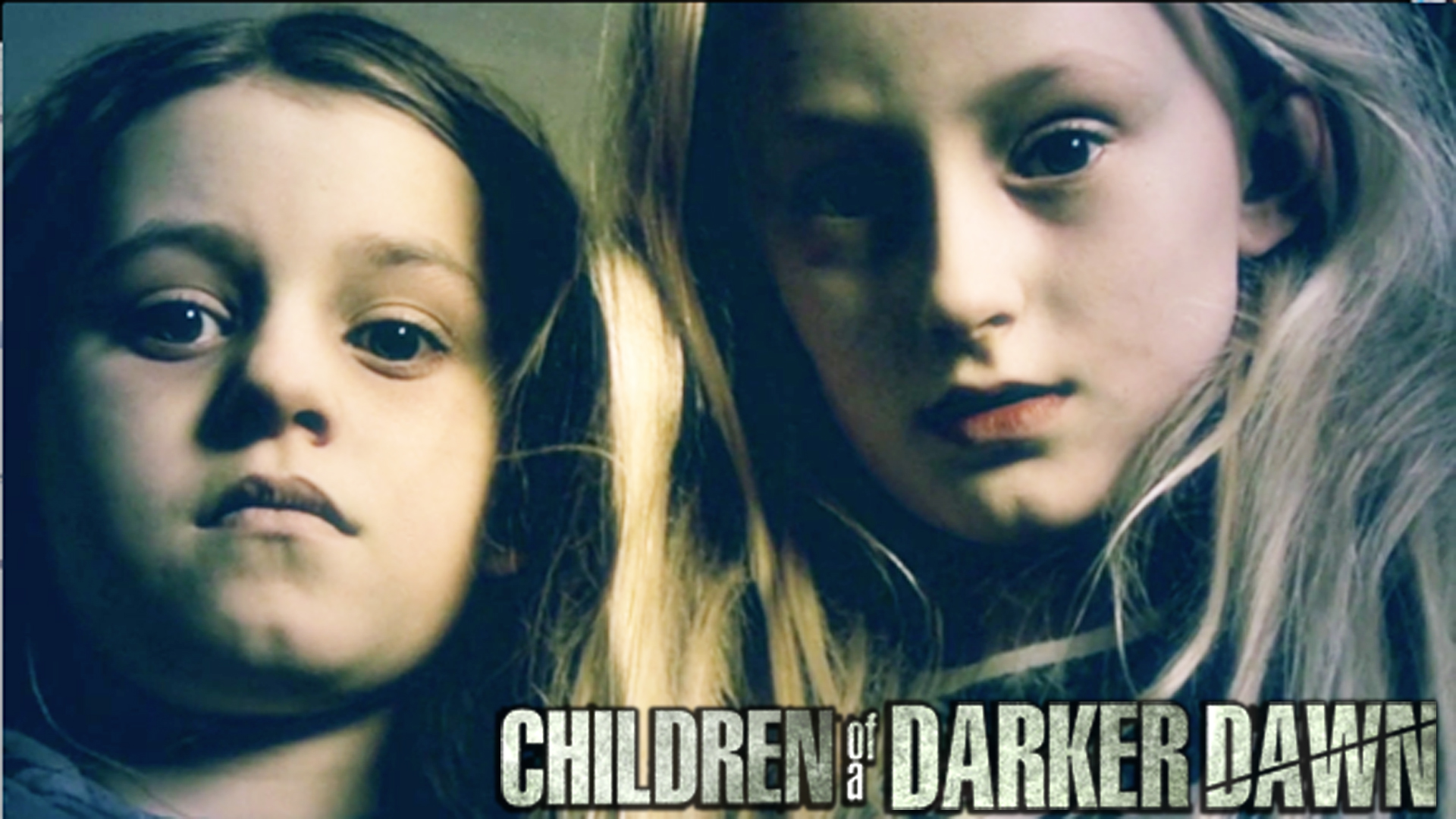
Drama, horror, sci-fi, by Jason Figgis, United States, 2012.
In a post-apocalyptic Ireland, a pandemic has wiped out the adult population, struck down by a mutant strain of flu that turns them paranoid and violent before killing them. Nine months later, the surviving children wander through abandoned buildings in search of food and shelter. Among them are Evie and her younger sister Fran, trying to survive while avoiding potentially dangerous groups of kids. Their only comfort is The Railway Children, the book their mother used to read to them. The arrival of Alice, a girl who has escaped from a gang led by her sister Kate, changes their path. After being betrayed by the gang, Evie decides to confront them, triggering a series of events that will lead to tensions and conflicts within the group.
The film, directed by Jason Figgis with limited resources but great sensitivity, is a post-apocalyptic drama that goes beyond horror, focusing on grief and the emotional fragility of its characters. The tone is somber, marked by melancholy, disturbing flashbacks, and unstable relationships. Though it recalls films like 28 Days Later, The Road, or Lord of the Flies, Children of a Darker Dawn finds its own voice through strong character development and powerful performances from its young cast.
LANGUAGE: English
SUBTITLES: Spanish, French, German, Portuguese
The Myth That Built the Room
You have probably read a poem that made you feel Irish in a way you had never quite felt before, and the feeling was so clean, so inevitable, that it never occurred to you to ask who built the room you were standing in when you felt it.
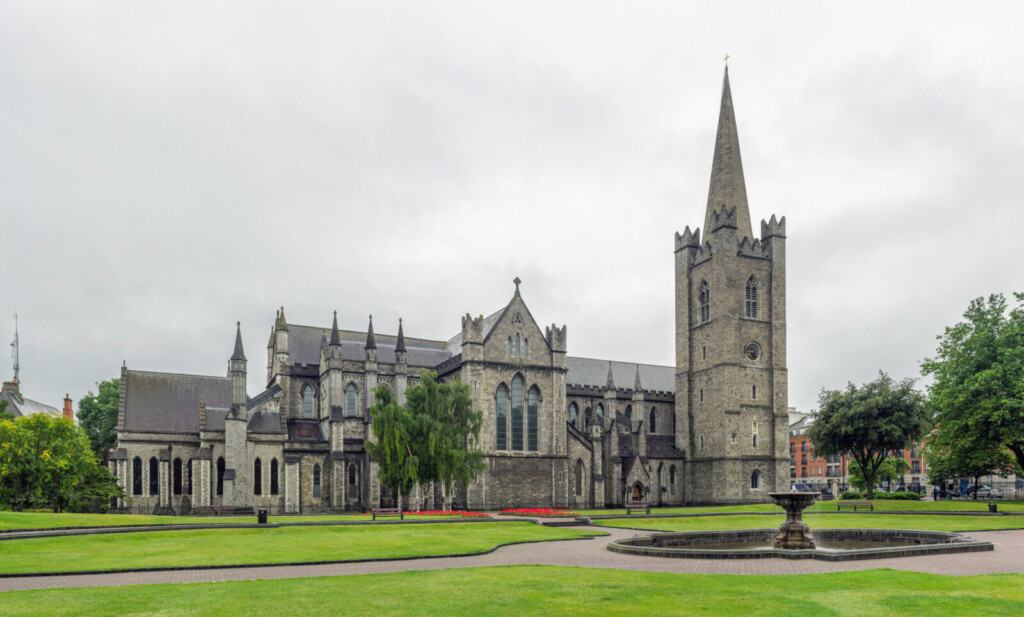
The Irish Literary Revival did not emerge from the soil the way its architects insisted it had. It was an act of deliberate, sophisticated construction carried out largely by figures who were Anglo-Irish, Protestant, and deeply anxious about their own cultural legitimacy at a historical moment when the ground beneath their class was visibly shifting. When William Butler Yeats co-founded the Abbey Theatre in 1904 alongside Lady Augusta Gregory and John Millington Synge, the explicit ambition was to give Ireland a national literature — but the Ireland being given a literature was partly imagined, partly excavated from Gaelic mythology, and partly assembled from the romantic projections of people who had more access to London literary salons than to the rural cottages they were mythologizing. The peasant in the west became a vessel for authenticity that the Revival’s architects could not locate in themselves. This is not a criticism borrowed from outside; it is the internal logic of the project’s own contradictions.
What Yeats understood with extraordinary instinct — and what makes him genuinely dangerous as a cultural ancestor — is that mythology does not persuade. It inhabits. His 1893 collection “The Celtic Twilight” was not an argument for Irish identity but an atmospheric installation of it, a curated dreamscape that trained the reader’s nervous system to associate Irishness with ancient spiritual depth, heroic melancholy, and a relationship to the land that was almost metaphysical. The effect was not information but orientation. People did not read Yeats and decide to feel Irish; they read him and discovered that they already were, which is precisely the mechanism that makes a constructed mythology invisible as construction.
The Abbey’s riots over Synge’s “The Playboy of the Western World” in 1907 are usually read as evidence of nationalist sensitivity — audiences enraged by the representation of Irish peasants as morally compromised. But look more carefully at what the outrage actually confirms: the audience already accepted the Abbey’s authority to define what Irish culture should look like, and their protest was a demand that it conform to the heroic image the Revival itself had licensed them to expect. The rioters were not rejecting the Revival’s framework; they were operating entirely within it, policing its edges. The room had already been built. The argument was only about the furniture.
Contemporary Irish writers who set out to dismantle that room — who write about suburban Dublin mortgage anxiety, about the Church’s institutional violence, about emigration as economic ejection rather than romantic exile — frequently find themselves praised in terms that quietly reassimilate their work into the national-character tradition. The writer becomes a new kind of truth-teller, courageously revealing the real Ireland beneath the myth, which is itself a mythological role with a very long tenure in Irish cultural self-understanding. The dissenter as authentic voice is a figure Yeats would have recognized immediately; he invented several versions of it.
This is what makes the Revival’s architecture so persistent: it did not only produce images of Irishness, it produced the positions from which Irishness gets narrated — the insider who speaks from the land, the exile who speaks from longing, the rebel who speaks from rupture. These are not neutral narrative stances. They are load-bearing walls, and the writers who believe they are most thoroughly escaping the Revival are often the ones leaning hardest against them, which is another way of confirming that the walls hold.

After the Plaster Saints
You are sitting across from someone who has just told you they no longer believe, and you notice, before they finish the sentence, that they are still speaking in the cadences of a sermon.
The Ferns Report, published in 2005, documented decades of clerical sexual abuse in the Diocese of Ferns with a forensic precision that made denial structurally impossible. Four years later, the Ryan Report extended that reckoning across the industrial school system, cataloguing abuse spanning most of the twentieth century in institutions that had operated with state sanction and near-total impunity. The numbers were not metaphors: over 35,000 children passed through reformatories and industrial schools where beatings, rape, and systematic humiliation were routine instruments of order. These documents did not simply indict a church. They exposed the entire architecture of consent that Irish civil society had constructed around clerical authority — the willingness of parents, judges, doctors, and politicians to look away, to defer, to translate institutional violence into the language of moral formation.
What followed culturally was not liberation. Liberation would have required a new imaginative vocabulary, a way of inhabiting the present without the past as its organizing principle. What Irish culture produced instead was an extraordinary refinement of wound-as-inheritance, a grammar in which suffering became the primary credential for seriousness. Anne Enright’s The Gathering, which won the Booker Prize in 2007, performs this with devastating intelligence: grief is not resolved but architecturally sustained, the narrator circling a brother’s suicide and the abuse that preceded it in sentences that refuse consolation as a matter of formal principle. The novel’s achievement is real, but so is its dependency — the sacred has not been dismantled so much as relocated, from the altar to the autopsy table.
John Banville, writing under his own name rather than the Benjamin Black pseudonym he used for crime fiction, has spent decades constructing prose of such deliberate, almost ceremonial beauty that the act of witnessing becomes its own form of absolution. In The Sea, published in 2005, memory functions as a liturgy — repetitive, incantatory, organized around loss with the same structural devotion that the mass organized around sacrifice. This is not a criticism of the work’s quality. It is an observation about the cultural position the work occupies: the writer as secular priest, trauma as the host, the reader as communicant who leaves the text not challenged but shriven.
Philip Rieff, writing in The Triumph of the Therapeutic in 1966, argued that Western culture was undergoing a fundamental transformation from religious to psychological modes of selfhood, from communities organized around shared demands to individuals organized around personal need. What Ireland experienced after 2005 and 2009 was a compressed, accelerated version of this transition, complicated by the fact that the institution being dismantled had been far more total in its social reach than anything Rieff had in mind. The Irish Catholic Church had not merely provided spiritual direction; it had run the hospitals, the schools, the adoption agencies, the Magdalene laundries. When its authority collapsed, the vacuum was enormous, and culture rushed to fill it with precisely the tools the church had trained people to use: confession, witness, the performance of contrition, the seeking of absolution through narrative.
The trap is almost elegant in its design. A writer who does not engage with the wound risks appearing to deny it. A writer who engages with it too fluently risks aestheticizing it, turning mass institutional harm into personal lyric. The space between those two failures is narrow, and the cultural pressure in post-Report Ireland has consistently pushed writers toward the second error rather than the first, because the second error is publishable, prize-winning, and legible to an international audience hungry for an Ireland that confirms what it already suspects — that the island was always secretly tragic, secretly broken.
Cathnafola - A Paranormal Investigation
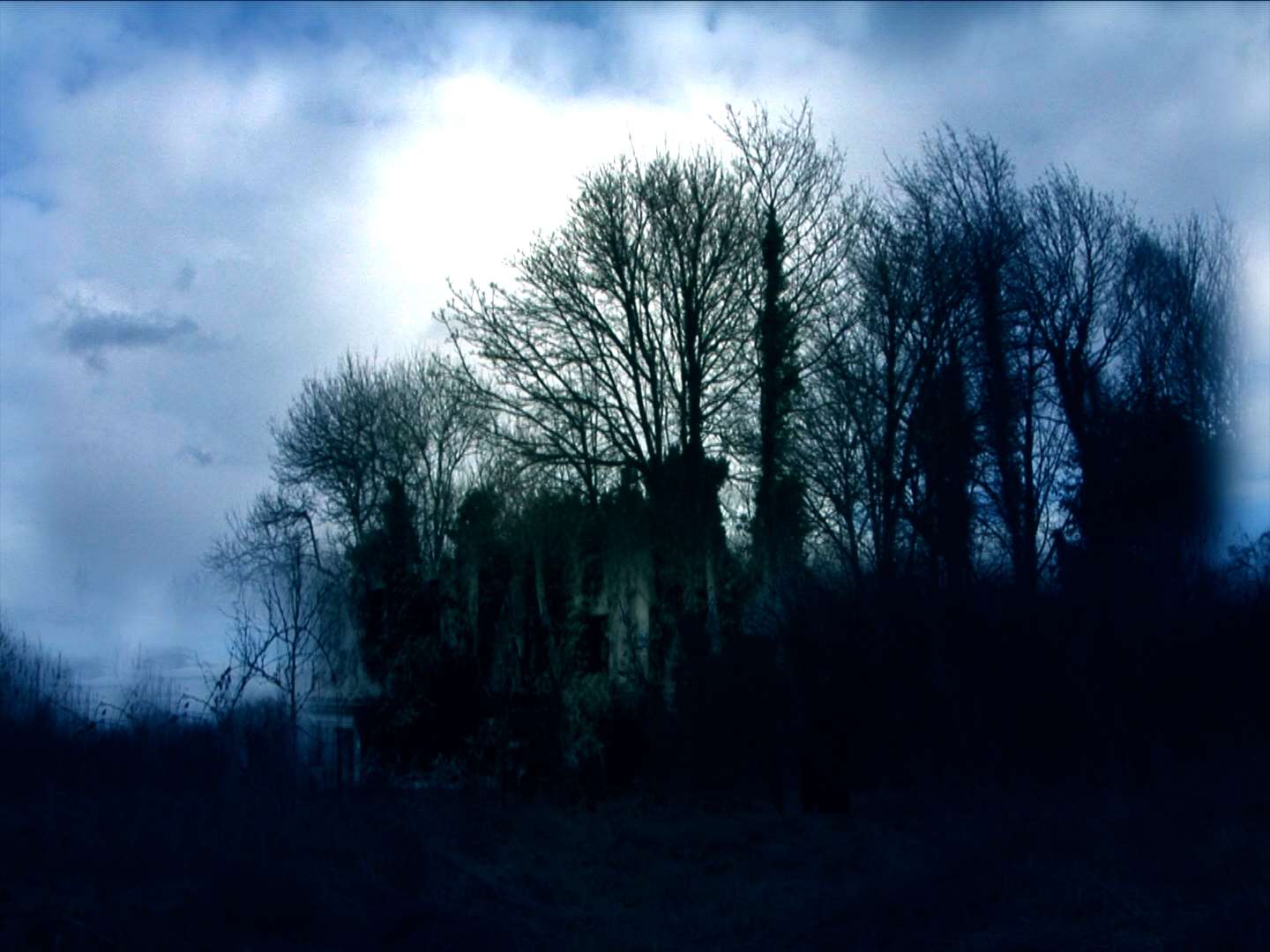
Documentary, horror, by Jason Figgis, USA, 2014.
In "Cathnafola", everything begins when renowned paranormal investigator Chris Halton of Haunted Earth UK receives footage filmed by three teenagers at the ruins of Cathnafola House in Ireland. Determined to unearth the truth behind the location’s bloody past, Halton embarks on a nighttime exploration of the infamous ruins—and soon uncovers terrifying and disturbing revelations.
LANGUAGE: English
SUBTITLES: Spanish, French, German, Portuguese
The Economy as Narrator
You are standing in a shopping centre in Dundrum in 2004, and the weight of the marble flooring beneath your feet feels like a theological argument. Not a metaphor — an argument, pressed into architecture, insisting that abundance is its own justification, that the act of spending is the act of belonging. Around you, people move with a specific kind of purposefulness that has nothing to do with need and everything to do with proof. Proof of arrival. Proof that the long, humiliated story of Irish poverty has finally, irrevocably, ended.
The Celtic Tiger did not simply generate wealth. Between 1995 and 2007, Ireland’s GDP growth averaged close to seven percent annually, and in certain years pushed past ten. Foreign direct investment flooded in, largely American, largely pharmaceutical and technology, attracted by a corporate tax rate fixed at twelve and a half percent — a figure that functioned as both economic policy and national identity claim. What it built, materially, was real: motorways, glass-fronted offices, property portfolios, holidays to Barcelona and New York. What it built psychologically was far more consequential and far less examined, which is the sociologist Tom Inglis’s central preoccupation in his 2008 study Global Ireland: Same Difference. Inglis argues that Irish modernity did not displace the deep grammar of Catholic social life so much as it reassigned that grammar to new objects. The hunger for moral legibility — for being seen to live correctly — migrated wholesale into the register of consumption and economic performance. You no longer demonstrated your worth through Mass attendance and public piety. You demonstrated it through the postcode of your house, the marque of your car, the school fees you could sustain.
What this meant, structurally, is that the engine of social shame was never dismantled. It was simply refuelled. The mechanisms that had once compelled conformity to Church teaching — the surveillance of neighbours, the terror of communal judgment, the performance of respectability as a survival strategy — these continued operating beneath the new secular surface. Inglis draws on Erving Goffman’s earlier work on stigma and social performance to illuminate how identity in Ireland has historically been staged for an audience that is never entirely absent, never entirely imaginary. The Tiger years did not liberate people from that audience. They changed the costume required to perform for it.
The crash, when it came, was not merely financial. The bank guarantee of September 2008, in which the Irish state assumed liability for the debts of six private institutions — a decision that eventually cost the country approximately sixty-four billion euros, roughly a third of annual GDP — exposed something that the boom had successfully obscured: that the entire narrative of national transformation had been leveraged, in the most literal sense, against a future that was never guaranteed. What collapsed was not only credit. What collapsed was the story Ireland had been telling itself about what it had become. And into that narrative vacuum rushed something familiar and unprocessed — the same vertigo that had followed every previous rupture in Irish collective identity, from the Famine’s demographic annihilation to the slow suffocation of de Valera’s isolationist republic.
The austerity years that followed 2008 produced a literature of disillusionment that sometimes mistook its target. Novelists and journalists catalogued the corruption, the hubris, the regulatory failures, the cronyism that had allowed Anglo Irish Bank to hollow itself out while regulators looked carefully at other things. This was accurate but insufficient, because corruption is a symptom, not a structure. What the boom and its collapse together revealed was something more foundational: that a society can change its gods without changing its relationship to worship, can trade one form of coercive belonging for another without ever pausing to ask whether the compulsion to belong on those terms is itself the wound.
Language as Haunted House
You open a book by a living Irish writer and something catches before the first sentence is finished — not a stumble exactly, but a friction, the sensation of language doing double work, carrying more than its surface meaning, as though the words were grown in one climate and transplanted into another where they root differently, throw different shadows.
This is not a metaphor for discomfort. It is a structural condition that has been building since the nineteenth century’s deliberate dismantling of Irish as a daily tongue, accelerated through famine, emigration, and colonial administration until English became not an acquisition but an inheritance — and inheritances, as any lawyer or psychoanalyst will confirm, are never neutral transfers. Brian Friel understood this mechanism with the precision of a diagnostician when he staged, in 1980, a hedge school in County Donegal caught in the moment of British cartographic survey, the moment when Gaelic place names were anglicised into administrative convenience. The catastrophe in Translations is not merely linguistic; it is ontological. When Baile Beag becomes Ballybeg, the land itself loses a memory it cannot recover by simply reverting the spelling. Friel’s genius was to show that translation is always already a kind of violence that wears the face of practical necessity.
Declan Kiberd, writing fifteen years later in Inventing Ireland, pressed this wound further by arguing that the Irish did not simply lose a language — they were conscripted into performing Irishness through the very instrument of their colonisation, English, which became paradoxically the medium through which resistance, literature, and national imagination had to express themselves. This created a writer who inhabits the language of the oppressor the way a survivor might inhabit a house where something terrible happened: you learn every room, you know where the light falls in the afternoon, you make it yours with extraordinary intimacy, and it remains a crime scene beneath the rugs. The colonial subject’s relationship to English, Kiberd argued, produced not deprivation but a strange, productive deformation — a pressure that forced literary creativity into unusual shapes precisely because the writers could never take the language entirely for granted.
Contemporary Irish writers carry this structural estrangement without necessarily naming it, often without consciously theorising it. Colm Tóibín writes about silence and withheld grief in prose of such deliberate plainness that the restraint itself becomes the subject. Anne Enright constructs sentences that seem straightforward until a clause turns back and undoes what the previous clause established, as if meaning cannot be trusted to stay where you placed it. Eimear McBride fractures syntax in A Girl Is a Half-formed Thing, published in 2013 after nine years of rejections, into something that precedes coherent language — thought before it is socialised into acceptable grammar, experience before it learns to be polite about itself. These are not stylistic choices made in aesthetic isolation. They are responses, conscious or not, to writing in a language that arrived historically as an administrative replacement for something else.
What makes the contemporary Irish literary situation distinct from postcolonial equivalents elsewhere is the particular doubling of loss and mastery. The language in which Joyce dismantled the English novel, in which Beckett stripped prose to its stammering residue, is the same language in which Irish writers today are considered among its most fluent and inventive practitioners. There is something almost vertiginous about this — fluency as a form of complicated triumph, mastery as the endpoint of a dispossession that should by rights have produced only silence. Instead it produced a literature that uses English the way a locksmith uses the tools of the trade: with total expertise, and with the knowledge that the lock was never originally yours to open.
A vision curated by a filmmaker, not an algorithm
In this video I explain our vision
The Second Scene: Elsewhere and Belonging

She is standing in a kitchen in Boston, or maybe it is Toronto, and she is making soda bread because her mother made it, and because the smell of it is the closest she can get to something she cannot name. The people she works with have asked her where she is from, and she has given them the answer that works best in that particular room — enough Irishness to be interesting, not so much that she becomes a caricature of rain and rebel songs. She has learned to calibrate herself. She does not experience this as a loss. She experiences it as fluency.
What she is performing, without knowing it, is the culmination of a structure that was built long before she was born. Ireland did not simply produce emigrants the way other countries do, as an overflow of surplus population seeking better wages. It produced departure as a cultural logic, as a grammar of selfhood. By 1900, more Irish-born people lived outside Ireland than within it. The Famine of the 1840s killed approximately one million and displaced another million within a decade, but the departure did not stop when the hunger ended. It continued, generation after generation, as though leaving had become the thing the culture knew how to do best. Fintan O’Toole, in his 1994 study Black Hole, Green Card, argued that Ireland had developed what he called a culture of departure, a condition in which emigration was not understood as exile but as an ordinary life event, almost a rite of passage — and that this normalization made it extraordinarily difficult for Irish identity to ever fully anchor itself to a single place.
The woman in the kitchen is not homesick in any simple sense. She holds two incompatible truths at once without apparent distress: that Ireland is home and that she left it willingly, that she belongs there and that she would not go back, that the bread she is making is an act of memory and also a kind of theater. This doubleness is not a psychological disorder. It is the precise emotional signature of a culture that has never been able to afford the luxury of rooted certainty. Sociologist Mary Corcoran, studying Irish immigrant communities in New York through the 1990s, found that second-generation Irish-Americans often identified more intensely with Irishness than their parents did — not because they were more Irish in any recoverable sense, but because distance had allowed identity to crystallize into something portable, clean, and emotionally manageable in ways that proximity rarely permits.
There is a violence in that crystallization that tends to go unremarked. What gets solidified in the diaspora is always a selective Ireland — the music, the wit, the capacity for grief aestheticized into something bearable. What gets left behind is the actual texture of the place: its sullenness, its claustrophobia, its historical talent for turning on its own people. The Ireland that Irish-America mourns and celebrates is not the Ireland that drove people out. It is a reconstruction built in the gap between departure and the impossibility of return, and it functions not as memory but as consolation — which is a different thing entirely, with entirely different political consequences.
This is why nativist readings of Irish culture are structurally incoherent, not merely politically objectionable. The idea of a pure, rooted, essential Irishness cannot survive contact with the basic demographic reality of what Ireland has always been: a country that exported its people so consistently that its very identity formed in transit, in translation, in the space between one shore and another. The woman with the bread is not a diaspora version of some more authentic original. She is the argument, made flesh, that there was never a stable center from which anyone departed — only the perpetual motion of leaving, and the stories people tell themselves about what they left.
The New Iconography and Its Concealed Debts
You have read Sally Rooney the way a previous generation read the papal visit of 1979 — as proof that something real was happening here, that Ireland had finally arrived at the place where the world’s attention confirmed its own existence.
The comparison is not cheap. Both events produced a peculiar effect: not joy exactly, but relief. The relief of external validation arriving to settle an internal argument that no one could win from the inside. Rooney’s novels, beginning with Conversations with Friends in 2017 and accelerating with Normal People in 2018, became not merely books but a kind of cultural ratification, translated into forty languages, adapted, discussed in newspapers that would never have assigned column inches to Irish literary fiction in any previous decade. The numbers are real: Normal People sold over a million copies in the United Kingdom alone within two years of publication. And Ireland watched this happen with a pride that deserves to be examined rather than celebrated.
Pierre Bourdieu, in The Field of Cultural Production published in 1993, mapped the economy beneath the economy of art, the system by which symbolic capital accumulates and converts into social power without ever appearing to do so. The key mechanism is misrecognition: the participants in the cultural field must believe they are operating outside economic logic precisely so that the economic logic can function undisturbed. What Ireland performed in its reception of international literary acclaim was a collective act of misrecognition on a national scale. The anxiety about cultural legitimacy, rooted in centuries of colonial subordination and post-independence provincialism, was not dissolved by Rooney’s success. It was metabolized into a new form of the same hunger, dressed now in the language of literary prestige and global circulation rather than in the older language of religious authority or nationalist mythology.
What makes this worth pressing on is not the quality of the fiction, which is a separate question entirely, but the function assigned to it by the culture that produced it. A nation that spent the better part of the twentieth century defining itself through Catholic moral architecture and an agrarian romantic ideal had, by the 2010s, replaced those structuring fictions with a new set: progressive, urban, sexually frank, European in sensibility. The iconography changed. The need for iconography did not. Rooney’s characters, with their Marxist frameworks and their articulate sexual negotiations and their Dublin apartments, became the new carriers of a story Ireland wanted to tell itself about what it had become, which meant they were doing the same ideological work as the earlier stories, only in more sophisticated clothes.
The global appetite for contemporary Irish fiction is, from London and New York, partly a post-Brexit nostalgia for a certain kind of Anglophone literary intimacy that no longer feels politically safe when sourced from England itself. Ireland functions as a usefully unthreatening repository of English-language literary seriousness, cosmopolitan but not metropolitan, political but not abrasive. The Irish writer traveling through international literary circuits carries a symbolic passport whose value was issued by someone else’s anxieties and someone else’s cultural markets. That the writer is often genuinely talented does not alter the structure of the exchange.
What gets concealed inside this arrangement is the continuity. The Irish cultural imagination, from the Revival through the Emergency through the Celtic Tiger and into the literary present, has returned repeatedly to the same unresolved core: the question of whether Irish selfhood requires external recognition to become real. Yeats needed London to validate his Irishness before he could weaponize it. The pattern was not broken by independence, nor by prosperity, nor by the social liberalizations of the referendum years. Each generation finds a new medium through which to perform the old petition, and each time the performance is mistaken for its own resolution, the structure that generates the need is left entirely intact.
What the Stage Cannot Hold
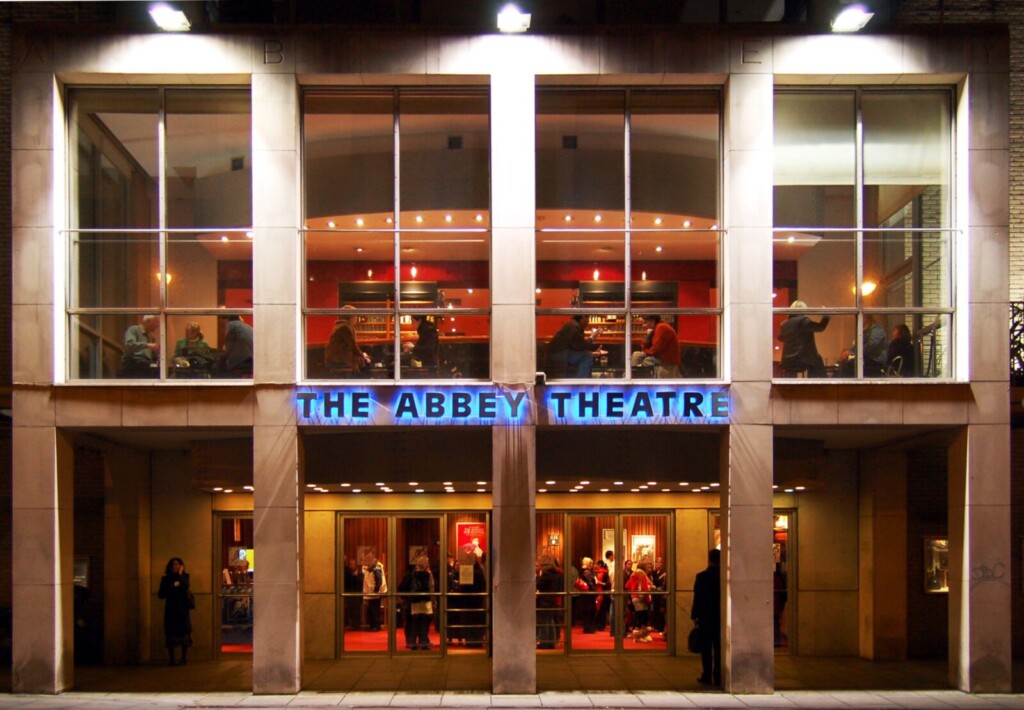
You are standing in a small theater in Dublin — not the Abbey, not anywhere with a name that carries weight — and the person on stage is telling a story about their grandmother’s caravan, the one confiscated by a local council in 1963, and somewhere in the third minute you realize you have no framework for what you are witnessing, because the grief is not metaphorical, the displacement is not a symbol, and the stage itself seems like the wrong technology for what is being transmitted.
The Traveller community in Ireland represents approximately 30,000 people, and they have been systematically excluded not only from land and legal protection but from the very narratives that Irish culture constructed to mourn dispossession. The Famine memory, the colonial wound, the emigrant’s sorrow — all of these were encoded as settled-people stories, structured around the loss of a fixed place, a hearth, a parish. Pavee Point, founded in 1985, began documenting what the literary tradition had quietly omitted: that there is a form of Irish suffering which does not fit the grammar of return, because the Traveller relationship to land was never organized around ownership or fixity in the first place. When Michael McDonagh or Nan Joyce wrote, they were not simply adding a voice to an existing chorus — they were revealing that the chorus had been built on a specific architecture of belonging that pre-emptively excluded them.
Queer Irish writing performed a similar excavation, but along a different fault line. The criminalization of homosexuality was not repealed in Ireland until 1993 — four years after the Berlin Wall fell, a detail that lands harder the longer you sit with it. What emerged in the decades after was not a literature of celebration so much as a literature of retroactive survival, writers like Colm Tóibín mapping the interior cost of decades spent constructing a self in secret, not as trauma narrative but as a phenomenology of concealment, the way the hidden life develops its own textures, its own strange competencies. His 1999 novel The Blackwater Lightship does not argue for anything — it simply renders visible the particular loneliness of a man whose dying has to be explained to a family that never knew the life he was living.
Post-migration Irish identity fractures the frame in yet another direction, because it introduces a question the culture has not yet metabolized: what does Irishness mean when it is not inherited but chosen, assembled, lived from the outside in. The writer Melatu Uche Okorie, who spent years in the Irish direct provision system before publishing This Hostel Life in 2018, produced something that the existing traditions of Irish writing — Revival, Modernist, post-colonial — had no pre-existing shelf for. Her prose does not request inclusion in Irishness; it simply occupies a space and speaks from it, which is a more destabilizing gesture than any formal argument for belonging could be.
What each of these territories shares is a refusal to be legible on the terms the culture prepared. They are not correctives to the mainstream tradition; they are not supplements filling gaps. They operate according to logics that expose how much any framework — national, literary, post-colonial, even counter-cultural — depends on invisible exclusions to achieve its coherence. Every time Irish culture has constructed a new story of itself, whether around language, faith, colonial memory, or the market, it has done so by quietly deciding who counts as the subject of that story and who remains the unnamed condition that makes the story possible.
The question that remains open, and that no critical apparatus currently available can close, is whether a culture can genuinely reckon with the people it needed to exclude in order to recognize itself — or whether recognition, by its very nature, always arrives too late to be anything other than a monument to the exclusion it names.
🍀 Islands of Words: Ireland and Its Literary Echoes
Contemporary Ireland in culture and literature sits at a crossroads of tradition and rupture, where the weight of colonial history meets a restless modern identity. These related articles explore the literary, philosophical, and cultural threads that weave through Irish experience and its broader context in world literature and thought.
Sheridan Le Fanu: Irish Gothic and Domestic Horror
Sheridan Le Fanu stands as one of the foundational voices of Irish Gothic, transforming domestic spaces into arenas of dread and psychological unease. His work anticipates the tensions of Irish identity caught between the Protestant Ascendancy and a Catholic majority, making his horror deeply political as well as supernatural. Reading Le Fanu is to understand how Ireland’s fractured history finds its most chilling expression in literary form.
GO TO THE SELECTION: Sheridan Le Fanu: Irish Gothic and Domestic Horror
Poetry as Revolt: Voices That Power Did Not Want to Hear
Poetry has long served as a weapon for the silenced and the colonized, and Ireland’s literary tradition is inseparable from this history of verse as defiance. From the ballads of rebellion to the modernist experiments of Yeats and Heaney, Irish poets have consistently used language to resist erasure and assert cultural survival. This article explores how poetic revolt becomes an act of collective memory and national identity.
GO TO THE SELECTION: Poetry as Revolt: Voices That Power Did Not Want to Hear
Samuel Beckett: Life and Works
Samuel Beckett, born in Dublin, carried the scars of Irishness into a radically international and existentially stripped-down body of work. His theater and prose dismantle language itself, turning the Irish experience of displacement and absurdity into a universal meditation on waiting, loss, and endurance. Understanding Beckett means understanding how Ireland shaped a mind that would go on to question the very foundations of human expression.
GO TO THE SELECTION: Samuel Beckett: Life and Works
Annie Ernaux: Life and Works
Annie Ernaux‘s unflinching excavation of class, memory, and cultural identity offers a powerful comparative lens through which to read Irish contemporary literature’s own preoccupations with shame, belonging, and social transformation. Like many Irish writers, Ernaux confronts the silence imposed by class mobility and the violence of cultural assimilation. Her work resonates deeply with Ireland’s ongoing reckoning with its past and its rapidly changing present.
GO TO THE SELECTION: Annie Ernaux: Life and Works
Discover the Cinema That Speaks These Stories
If these literary and cultural worlds have stirred something in you, Indiecinema is where those stories come alive on screen. Explore independent films that dare to confront identity, history, and the human condition with the same courage found in the greatest literature. Stream the cinema that matters, only on Indiecinema.
👉 EXPLORE THE CATALOG: Watch Indie Films in Streaming
A vision curated by a filmmaker, not an algorithm
In this video I explain our vision

