
The Weight Before the Act
You are lying in the dark and you are not sleeping. The room is the same room it was three hours ago, the ceiling has not changed, the temperature is the same, and yet something has started again — that particular reel, that specific sequence of words you said or did not say, the moment you chose or failed to choose, playing now with a fidelity that your waking mind could never voluntarily produce. It is not the act itself that replays. It is the instant just before, when you could still have gone another way. The guilt lives there, in that corridor of possible worlds you did not enter, and it will run the tape until the body finally surrenders to exhaustion. Not because you have learned anything. Not because any reckoning has occurred. Simply because the mechanism demands it.

This is the first thing to understand about guilt, and it is the thing most systematically obscured by every moral and religious framework that has claimed to explain it: guilt does not wait for a verdict. It does not require a jury, a confession, a priest, or even a victim. It precedes all of those structures by hours or years, operating in a register that is entirely its own, governed by a logic that has almost nothing to do with whether you actually did something wrong. Sigmund Freud observed in Civilization and Its Discontents, published in 1930, that the sense of guilt is the most important problem in the evolution of culture, and he was specific about why: the feeling intensifies precisely when a person behaves well, because the moral agency that produces the feeling is the same agency that punishes even the desire to transgress, whether or not transgression occurred. The tribunal is interior, and it is not interested in acquittal.
What makes this machinery so difficult to dismantle is that it masquerades as conscience. The two feel identical from the inside — that same heaviness, that same rehearsal, that same contraction in the chest. But conscience is oriented toward the world, toward repairing something, toward the other person. Guilt, in its chronic form, is entirely self-referential. It circles back not to the harm done but to the image of the self as someone who could do such harm. The philosopher Bernard Williams drew this distinction with clinical precision in Shame and Necessity in 1993, arguing that guilt characteristically involves the thought that one owes reparation, while a certain pathological variant abandons reparation entirely and becomes a permanent verdict against the self — not a call to action but a form of punishment mistaken for reflection.
The cultural architecture that surrounds guilt has always understood, at some level, that this mechanism is powerful enough to require institutionalization. Every major civilization has built elaborate systems to contain, direct, and harvest it. The Catholic sacrament of confession, formalized through the Fourth Lateran Council in 1215, did not invent guilt — it recognized that guilt was already there, ambient, ungoverned, and that an institution capable of offering structured release would hold enormous power over those who needed it. The confessional box is not a place of judgment. It is a pressure valve for a feeling that would otherwise have nowhere to go.
And here is what that history reveals: the societies most invested in managing guilt have never been interested in eliminating it. They have been interested in managing its direction — toward compliance, toward dependence, toward the reproduction of the social order. The guilt you feel in the dark at two in the morning did not arrive from nowhere. It was cultivated. The specific contours of what triggers it, what it attaches to, how long it runs, and whether it ever resolves — these are not natural features of the human psyche. They are the residue of systems that needed you to feel exactly this way, at exactly this hour, about exactly these things.
The Red House

Thriller, noir, by Delmer Daves, United States, 1947.
A young girl named Meg lives with her adoptive brother Pete and her elderly father on an isolated farm. The house is surrounded by woodland and seemingly inaccessible land known as 'The Red House'. The house is shrouded in mystery and local legends, and her presence casts an ominous shadow over the lives of Meg and her family. When Meg starts attending school, she falls in love with Nath, one of her classmates. Tensions mount when Nath decides to explore the grounds of the Red House and tries to uncover the secrets hidden within. This provokes the worried and intimidating reaction of Meg's father and Pete, who seem to want to hide something obscure related to the Red House.
The Red House is a psychological thriller that explores the buried secrets of the family's past and their impact on the present. The gloomy and claustrophobic atmosphere of the story creates a feeling of suspense and mystery. As the story unfolds, the secrets of the Red House and its connections to the family emerge, leading to shocking revelations and a tense climax. The film that mixes elements of noir and suspense with elements of family drama. It is known for its evocative cinematography and the intense performances of the cast and explores themes such as guilt, secrecy and redemption, with a psychological look at complex family dynamics. It is a lesser-known work of the psychological thriller genre that has become a cult movie over the years for its gripping storyline and intense performances.
LANGUAGE: English
SUBTITLES: Spanish, French, German, Portuguese
Guilt as Socially Engineered Interiority
You are sitting across from someone you love when the familiar weight settles in your chest — not because you have done anything wrong in the last hour, but because you exist in a particular way, take up a particular kind of space, want things that were never quite permitted. The feeling arrives without a specific crime attached to it. That is the first clue that guilt, as most people experience it, has almost nothing to do with wrongdoing.
Émile Durkheim spent the better part of the 1890s arguing that what feels most intimate and personal about human beings — their moral sensations, their sense of transgression, their interior reckoning — is in fact the sediment of collective life. In “The Division of Labour in Society” published in 1893, he demonstrated that the conscience collective, the shared moral consciousness of a group, does not hover above individuals as an external code they may choose to obey or ignore. It inhabits them. It speaks in the first person. The social becomes psychological through a process so gradual and so total that the original transaction is erased. By the time a person feels guilty, they have already forgotten that the standard against which they are measuring themselves was constructed by people with interests, by institutions with agendas, by communities that needed certain behaviors suppressed in order to maintain their particular shape of order.
Norbert Elias tracked exactly how this internalization happened across historical time. His 1939 study “The Civilizing Process” reconstructed centuries of behavioral manuals, court etiquette guides, and pedagogical texts to show that what Europeans began calling civilized conduct was, at its origin, a set of external compulsions imposed by increasingly centralized states. The management of bodily functions, the suppression of visible aggression, the performance of deference — these were first enforced through social shame, through public humiliation, through the very real threat of exclusion or violence. Then something more efficient happened. The enforcement moved inward. By the modern period, Elias argued, the coercion no longer needed to come from outside because it had been successfully installed as a psychic structure. The courtroom, which had once been a literal place where a community gathered to judge conduct, became a permanent room inside the self, always in session, always staffed, never adjourning.
What makes this particularly disorienting is the phenomenological authenticity of the experience. The guilt a person feels is real — the constriction in the throat, the cycling of accusatory thought, the impulse to confess or atone. None of that is performed or fabricated. But the reality of the sensation does not confirm the legitimacy of the verdict being delivered. A machine that runs perfectly is not therefore running toward a justified end. The fact that the inner courtroom is loud and convincing and capable of producing genuine suffering only tells you how well the mechanism was installed, not whether the charges it prosecutes reflect anything morally coherent.
There is a specific historical moment worth naming here. Between roughly the sixteenth and eighteenth centuries in Western Europe, the Protestant Reformation and the subsequent Catholic Counter-Reformation produced competing but structurally identical demands for perpetual interior scrutiny. Whether it was Calvinist examination of conscience for signs of election or Jesuit techniques of spiritual exercises, the technologies converged on the same target: the construction of a self that would surveil itself without rest. Max Weber noted in 1905 that this produced an unprecedented psychological type — one who experienced ordinary existence as a continuous moral audit. The guilt that floods modern secular people who have never entered a church in their lives is, in part, the inheritance of that audit, running now on entirely different software but preserving the same architectural demand that the self must always be found wanting.
The inner courtroom does not prosecute the same offenses in every culture, every class, every gender — and that variation is precisely where the machinery becomes visible.

The Church's Productive Invention

You have confessed something you did not fully believe was wrong, and felt better afterward — not because you resolved anything, but because the act of speaking it aloud to an authority transferred the weight somewhere else. That transfer was not a personal weakness. It was centuries of institutional engineering operating exactly as designed.
In 1215, the Fourth Lateran Council issued Canon 21, known by its opening words as Omnis utriusque sexus, mandating annual auricular confession for every Christian who had reached the age of reason. Before that decree, confession had been sporadic, public, and largely voluntary. After it, self-accusation became a yearly sacrament, a civic duty dressed in theological clothing. What the Council achieved was not the deepening of Christian interiority — that had been developing since Augustine’s Confessions in the late fourth century — but its bureaucratization. Guilt was no longer a personal reckoning with God. It was a scheduled appointment with ecclesiastical infrastructure.
Michel Foucault, tracing this arc in his 1976 La Volonté de savoir, identified the confessional not as a site of liberation but of productive subjection: the penitent learns to excavate themselves in terms the institution has already provided, producing a self that can be known, classified, and managed. The important inversion Foucault identified is this — the one who speaks does not gain power through speech. Power flows toward the one who listens, who has the authority to determine whether the excavation was thorough enough, whether the remorse was genuine, whether absolution is warranted. The guilty conscience became, under this arrangement, not evidence of a disordered psyche but proof of a functioning spiritual organism. To feel guilty was to be working correctly. To feel no guilt was the real pathology, the mark of the hardened sinner.
This inverted the entire phenomenology of moral pain. Before the institutionalization of confession, guilt in the Greco-Roman world was primarily social — the sting of being seen to have violated a shared standard, what Bernard Williams would later call in Shame and Necessity, published in 1993, the logic of the “agent-regret” tied to the eyes of others. Medieval Catholic guilt turned inward and privatized it, but only to route it back outward through the priest’s ear. The interior was colonized precisely so it could be externally administered. Aquinas in the Summa Theologiae argued that contrition, the interior act of the will, was the soul of penance, but the body of penance required confession to a priest with the power of the keys. The inner wound and the institutional remedy were co-produced, mutually dependent, impossible to separate.
What this system built, at scale, over three centuries of enforcement, was a population habituated to periodic self-indictment as a condition of social belonging. The annual confession was not incidental to parish life — it was the entry point to Easter communion, and excommunication for failure to comply meant exclusion from the sacramental economy that governed inheritance, marriage, burial, and community standing. Guilt was the currency, and the Church controlled the mint. Historians of medieval religiosity like Jean Delumeau, in his 1983 Le Péché et la peur, documented the quantitative explosion of penitential manuals, the proliferation of increasingly granular categories of sin, the extension of moral jurisdiction into thought, desire, and intention — the realm that Augustine had already made visible but that the post-Lateran Church now mapped with administrative precision.
The legacy is not confined to those who still practice the sacrament. The structure — periodic self-examination before an authority, confession of inadequacy as the price of readmission to the group, the experienced relief of having been heard and conditionally forgiven — migrated intact into secular institutions that would never describe themselves as theological.
Freud's Structural Trap
You have followed every rule you were ever taught, and still the sentence forms itself somewhere behind your sternum: you should have done better. Not because you failed. Because you succeeded, and the standard moved.
Sigmund Freud spent the final decade of his intellectual life not mapping desire but tracing the invisible architecture of self-punishment, and what he found in 1930 was almost too uncomfortable to publish cleanly. In “Civilization and Its Discontents,” he argued that the price of living in organized human society was not merely repression of drives but the permanent installation of an internal aggressor — a structure he called the superego, built from the redirected hostility that could not be unleashed outward. The mechanism is precise and brutal: the aggressive energy a child cannot direct at the authority that restrains it gets turned inward, becomes the voice that judges, and feeds on every renunciation the person makes. Every act of moral discipline does not quiet this internal prosecutor. It arms him further.
What Freud identified was a paradox so structurally clean it reads almost like a theorem: the more virtuous the individual becomes, the more severe the conscience grows. He documented this not as theory but as clinical observation — his most morally scrupulous patients were not the peaceful ones. They were the ones who could not sleep. The saint generates more guilt than the brute, not because the saint sins more, but because each act of goodness raises the threshold against which the next impulse is measured. The superego does not reward compliance. It escalates demands in direct proportion to the compliance it receives. Renunciation does not satisfy the internal judge — it proves to him that still more renunciation is possible.
This demolishes one of the most deeply held assumptions in how Western culture frames psychological health: that guilt, properly responded to, resolves. That if you take it seriously enough, apologize sincerely enough, make the necessary changes, the weight lifts. Freud’s structural analysis suggests the opposite — that the guilt does not dissolve through moral seriousness but grows more articulate, more precise, more embedded in identity the more seriously you treat it. The person who dismisses guilt quickly, moves on without ceremony, redirects attention — they often feel less of it. The person who gives it full moral attention, who regards guilt as a signal worth honoring, is the one who ends up most thoroughly colonized by it.
The sociologist Norbert Elias, writing in “The Civilizing Process” in 1939, tracked something adjacent and equally disturbing: as European societies refined their behavioral codes across the sixteenth through nineteenth centuries, the locus of social control migrated inward. External shame, enforced by witnesses and communal surveillance, gradually gave way to internal self-monitoring. The embarrassment you once felt because others saw you became the disgust you feel when alone, unobserved, in a room with only your own memory for company. Elias read this as a civilizational achievement. What neither he nor most readers wanted to acknowledge was the cost embedded in that achievement — that internalizing the gaze does not make it gentler, and a courtier who has permanently installed a watching audience inside his own nervous system has not escaped judgment, he has privatized it.
The trap Freud identified is not historical. It lives in the particular grammar of how contemporary people talk about self-improvement, therapy, moral accountability. A culture that prizes introspection as the highest form of seriousness is a culture that has built the superego an exceptionally well-lit workspace. Every tool designed to help you understand your interior becomes another instrument the internal aggressor can use with greater precision. The more language you have for your failures, the more exactly they can be named, catalogued, returned to at three in the morning with forensic clarity.
Which raises the question no self-help framework will touch: whether some people suffer not from insufficient self-examination, but from having made it a discipline.
The Asymmetry of Reparation
You watch her reorganize the same drawer for the third time this week. She brought flowers on Monday, cooked an elaborate meal on Wednesday, and now her hands are moving objects that don’t need moving, filling a silence that her apologies already filled twice over. The person she wronged accepted the first apology. That acceptance changed nothing in her. The drawer gets reorganized.
What she is enacting is not restitution. Restitution has a logic: you broke something, you replace it, the ledger closes. What she is performing belongs to an entirely different economy, one in which the debt is never denominated in the currency of the harm actually caused. The philosopher Bernard Williams made a distinction in 1981, in his Moral Luck, between agent-regret and moral guilt proper — noting that what we feel after causing harm is frequently disproportionate to the causal weight of our agency, as though the emotional accounting system runs on a different arithmetic than the ethical one. The drawer she reorganizes is proof of that miscalculation operating in real time.
The disproportion becomes intelligible only when you locate what is actually wounded. It is not the relationship — which has been, at least formally, repaired. It is the internal portrait she has carried of herself as a person who does not do that particular kind of thing. Every act of compensation is aimed not at the person she harmed but at the image inside her own skull, and that image cannot receive flowers or cooked meals. It has no hands to accept them. The external world of reparation and the internal world of self-concept operate on separate tracks, and guilt is precisely the experience of that track divergence.
Sociologist Thomas Scheff spent decades studying shame and guilt dynamics, and in his 1990 work Microsociology described guilt as a recursive loop triggered not by harm itself but by the recognition of a violated self-standard. The severity of the loop correlates not with objective damage but with how central the violated standard is to the person’s identity architecture. Someone who considers themselves fundamentally honest will suffer more from a single small lie than a habitual liar suffers from a significant fraud. The harm scales downward as the self-investment scales upward — which is why guilt so frequently appears most violent in precisely the people who have caused least damage, and most absent in those who have caused most.
This produces a dark irony that the culture of apology entirely refuses to acknowledge: the performance of reparation is, at its structural core, a self-directed act. The person making amends is engaged in a project of self-restoration that uses the wronged party as material. Every repeated apology, every unrequested compensatory gesture, every reorganized drawer places the burden of witnessing on the very person who was already burdened once. The wronged person becomes a mirror held up to someone else’s damaged self-image, required to reflect back absolution rather than permitted to simply move on. What presents itself as moral sensitivity is frequently a sophisticated mechanism of self-absorption.
Augustine understood something adjacent to this in the Confessions, written around 397 CE, when he described the soul that circles its own wound compulsively — not because circling heals, but because the wound has become the most vivid proof of the soul’s own depth and seriousness. To stop grieving the wrong, in this structure, would be to relinquish a certain proof of one’s own moral substance. The guilt becomes evidence. And evidence, unlike flowers or reorganized drawers, is never something you simply hand back to someone else and walk away from.
Which raises a question that reparation’s entire theater is designed to prevent you from asking: whether the proportionality of guilt to harm has ever actually been the point, or whether guilt was always, from the beginning, a story the self tells about itself using other people’s pain as its raw material.
A vision curated by a filmmaker, not an algorithm
In this video I explain our vision
Survivor Guilt and the Violence of Arbitrariness

You are standing on a platform after the train has already left, and the only reason you are standing there instead of sitting inside that departing car is something as thin as a missed alarm, a delayed conversation, a shoelace that came undone at precisely the wrong moment. The people on that train will not come back. And you, uninjured and unimplicated, will spend years constructing reasons why you deserved to be among them.
This is not a metaphor. Survivors of mass disasters, combat, genocide, and accident consistently report guilt as their dominant psychological residue, and clinical literature on post-traumatic stress has documented this phenomenon with uncomfortable precision. What makes it philosophically disturbing is not its intensity but its object: these people did nothing. The guilt is structurally baseless, and yet it functions with the full weight of a verdict. Robert Jay Lifton, who spent decades interviewing Hiroshima survivors for his 1967 study “Death in Life,” found that the hibakusha, the explosion-affected people, experienced profound shame at their own survival. Their phrase for it translated roughly as “the burden of the living.” They had not chosen to live. The bomb had not consulted their moral records. And still the psyche moved with mechanical urgency to locate blame somewhere within the self.
Primo Levi named the mechanism with a precision that clinical language rarely achieves. In his final book, published the year before his death, he described what he called the “gray zone,” the morally contaminated space where the straightforward categories of perpetrator and victim dissolve under extreme pressure. But what disturbed him most was not the behavior of the perpetrators — that, he felt, could at least be understood through the logic of power — but the guilt of those who survived without having compromised themselves at all. He wrote that the best had died first, not as moral judgment but as statistical observation: the more ruthless, the more adaptive, the more willing to bend had disproportionately survived, while the gentle, the principled, the generous had disproportionately perished. Survival therefore felt, to the survivor, like evidence of their own moral deficiency. The arbitrariness of death had been retroactively converted into a referendum on character.
What this reveals about guilt as a psychological function goes well beyond the clinical. The mind cannot tolerate randomness at existential scale. A universe in which you live because a guard turned left instead of right, because the quota was already full, because your number was called one day too late — that universe is genuinely unbearable, not because it is cruel but because it is indifferent. Cruelty at least implies a relationship. Indifference annihilates meaning entirely. Guilt, in this context, is not an ethical response. It is a cosmological repair. If I feel guilty, then my survival meant something. If I am responsible for others’ deaths, then their deaths were not pointless. The suffering gets retrofitted with causality, and causality, however agonizing, is infinitely preferable to the void.
Research published in the Journal of Traumatic Stress across the 1990s and into the 2000s consistently found that survivor guilt correlated not with actual harmful actions taken during the traumatic event but with perceived randomness of the outcome — the more arbitrary the survival, the more intense the guilt. Interventions that reduced guilt by establishing the survivor’s actual lack of agency frequently produced a secondary crisis: the removal of guilt did not bring relief but a sudden confrontation with meaninglessness that many survivors found more destabilizing than the guilt itself. The guilt had been doing structural work. It was holding the narrative together.
There is something almost architectural in this. The self erects guilt the way a damaged building might be held upright by a single interior wall that was never meant to bear load. Remove it carefully, clinically, correctly, and the whole structure shudders.
The Cultural Calibration of the Guilty Self
You grew up being told that the voice inside your head — the one that indicts you at three in the morning — was simply the voice of conscience. Universal. Biological. The mark of a moral species. What nobody mentioned is that the specific frequency of that voice, its vocabulary, its targets, its relationship to the body, was assembled for you by a civilization with a particular history and a set of institutional interests that had nothing to do with your individual soul.
Ruth Benedict, writing in 1946 in “The Chrysanthemum and the Sword,” drew a line that has since been debated, refined, and partially dismantled, but that still cuts: she separated cultures organized around guilt, where transgression generates internal condemnation regardless of whether anyone witnesses the act, from cultures organized around shame, where the regulatory force is social visibility, the eyes of others, the loss of face. Her framework was shaped by wartime necessity and carried the distortions of its moment — she never visited Japan, worked from interviews with Japanese Americans, and her binaries have since been criticized as too clean, too convenient for a Cold War order that needed to render non-Western interiority legible and manageable. But the observation that different societies route moral injury through different psychological channels remains one of the more honest things social science produced in the twentieth century.
What contemporary cross-cultural psychology has done — through researchers like Batja Mesquita, whose 2021 work “Between Us” systematically dismantled the assumption that emotions are universal events happening inside individuals — is to show that guilt in the Western Protestant sense is not a neutral description of human moral experience but a highly specific construction. It locates the source of wrongdoing inside the self, presumes a relatively stable, bounded individual who can be the coherent author of an act, and demands a form of internal reckoning that is fundamentally private, conducted in the theater of the self before an internalized audience that is part judge and part God. This architecture did not emerge from nature. It emerged from a specific theological lineage — Augustinian introspection, Lutheran conscience, the Calvinist ledger of the soul — and was then exported through colonial education systems, missionary networks, and the global dissemination of psychoanalytic concepts that arrived in the twentieth century carrying Western interiority as their silent default.
The consequences were not abstract. When Western psychological frameworks were institutionalized in colonial schools across sub-Saharan Africa, Southeast Asia, and Latin America during the nineteenth and early twentieth centuries, they carried embedded assumptions about what it meant to be a self responsible for its own interior states. Communities that had organized moral reckoning through relational restoration — what mattered was repairing the social fabric, not adjudicating the purity of an individual’s inner life — were handed a model in which the self was the primary unit of moral accounting. The damage was specific and measurable: not in the language of cultural loss, which risks its own romanticism, but in the clinical record. Rates of what Western psychiatry classifies as guilt-based depression, dissociative shame responses, and chronic self-condemnation map unevenly across the globe in ways that correlate not with poverty or trauma alone, but with depth of exposure to Western introspective models.
What makes this particularly difficult to see from inside the culture that produced it is that guilt, as the West constructs it, feels self-evidently moral. It feels like the sensation of taking responsibility, of being serious, of mattering enough to be judged. The person who does not experience guilt in this form — who resolves transgression communally, relationally, through gesture and repair rather than internal prosecution — can look, from within the Western frame, like someone morally underdeveloped, lacking the capacity for true conscience. That this perception itself functions as a civilizational weapon is something the history of psychology has been extraordinarily slow to reckon with.
Guilt Without an Object
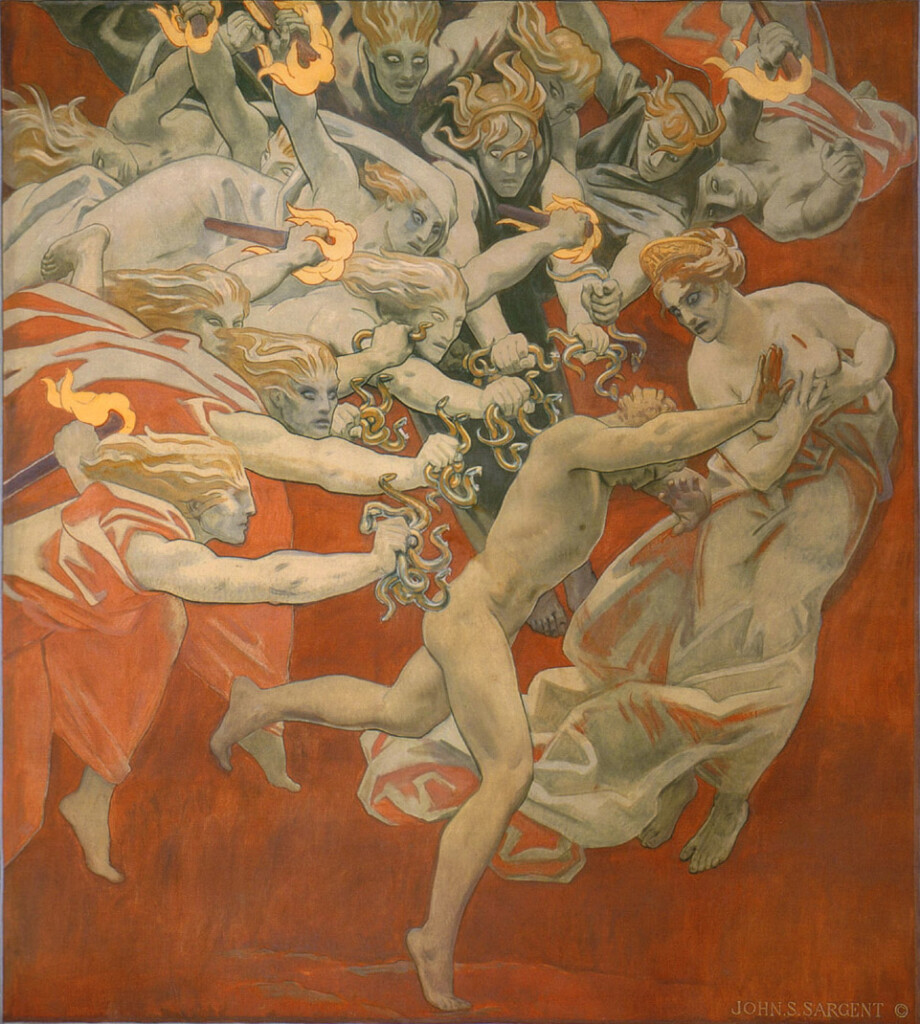
You wake at three in the morning and you are guilty. Not of anything. Not toward anyone. The feeling has no address, no timestamp, no face waiting on the other side of it. You run the inventory anyway — conversations replayed, decisions audited, people catalogued — and nothing comes up as the source. The guilt precedes the search. It was already there before you started looking, which means the looking was never going to find it.
This particular texture of guilt has been largely abandoned by psychology, which requires an object, a behavior, a measurable deviation from a standard. The clinical tradition needs guilt to point at something so it can be dismantled, processed, resolved. But the guilt that arrives without a warrant does not submit to that procedure. It is not a symptom of something that happened. It is a condition of being someone who happens.
Martin Heidegger, in Being and Time published in 1927, proposed that guilt in its deepest form is not a response to wrongdoing but a structural feature of existence. His term was Schuld, which carries both guilt and debt in German, and he argued that a human being is constituted by it before any act takes place. The reason is precise: to exist as a self is to have been thrown into a particular life — this body, this language, this century — without having chosen the ground you stand on, and then to be forced nonetheless to choose, constantly, from within that unchosen position. Every choice enacts one possibility and annihilates all the others. The person you became foreclosed the people you could have been. Not through failure or cowardice, but through the sheer arithmetic of existing in time, where paths diverge and do not reconverge.
What makes this unbearable to sit with is not the scale of what was lost but its invisibility. The unchosen lives do not leave ruins. They leave nothing — no record, no ghost, no counterfactual you can visit and mourn. The guilt has no grave to stand at. It accumulates precisely because there is no way to pay it down, no restitution that would close the account, because the debt is not to any person but to the totality of what existence required you to abandon simply by being what you are.
This is why certain people feel most guilty during periods of apparent success. The promotion, the relationship, the achievement — each arrival point is also a confirmation of selection, a hardening of the particular self against all other possible selves. The guilt intensifies not because something went wrong but because something went definitively, irreversibly right, and the cost of that rightness only becomes visible once the door has fully closed.
Religious traditions have long sensed this without quite naming it. Original sin, read through this lens, is not a story about a garden and a specific transgression. It is a mythological encoding of the intuition that arriving in a life is itself a kind of trespass — that consciousness brings with it a debt that predates conduct. The confession booth was never really built for the sins people remember. It was built for the ones they cannot locate, the weight that has no inventory, the feeling that something fundamental is owed and cannot be repaid through any particular act of contrition.
What remains is the question of what a person does with a guilt that cannot be discharged. Not how to eliminate it, because Heidegger’s framing suggests that would require ceasing to exist as a choosing being, which is not a therapeutic option. But whether the guilt can be inhabited rather than fled — whether the weight of all the unchosen paths can become something other than a sentence, whether it can be recognized as the specific gravity of a life that was, against all odds, actually lived.
🕳️ The Labyrinth Within: Guilt, Conscience, and Hidden Wounds
Guilt is rarely a simple emotion — it is a structure, a prison built from memory, moral judgment, and unresolved desire. The articles gathered here explore the psychological, philosophical, and existential dimensions of inner torment, tracing the invisible threads that connect guilt to identity, betrayal, and the burden of the past.
Søren Kierkegaard and the agony of moral choices
Søren Kierkegaard understood better than almost any thinker that the moral life is not a path of certainty but a theater of anguish. His exploration of the agony of choice reveals how guilt is born not only from wrong actions, but from the very act of choosing — and from the weight of all the roads not taken. For Kierkegaard, conscience is the wound that never fully closes.
GO TO THE SELECTION: Søren Kierkegaard and the agony of moral choices
The weight of the psychological past and the process of trauma liberation
The psychological past does not merely linger — it actively shapes the present, distorting perception and poisoning relationships in ways we rarely recognize. This article examines how unprocessed trauma accumulates into a kind of inner gravity, pulling individuals back toward suffering even when escape seems possible. The process of liberation is not forgetting, but learning to carry memory without being crushed by it.
GO TO THE SELECTION: The weight of the psychological past and the process of trauma liberation
Unresolved Conflicts: When Resentment Becomes a Prison
Resentment and guilt are often two faces of the same unresolved conflict, feeding each other in a cycle that transforms the past into a permanent prison. This article investigates how unexpressed anger and unacknowledged wrongdoing calcify into emotional paralysis, making honest confrontation with others — and with oneself — increasingly impossible. Breaking free requires not resolution, but the courage to look directly at what has been buried.
GO TO THE SELECTION: Unresolved Conflicts: When Resentment Becomes a Prison
Overcoming trauma to live the present
Trauma leaves its marks precisely because it resists integration, forcing the mind into endless loops of reliving rather than living. This article explores the difficult and nonlinear process of overcoming trauma, arguing that presence is not a passive state but an active, daily reclamation of the self from the past. Guilt, in this framework, is often the last fortress trauma erects before it finally surrenders.
GO TO THE SELECTION: Overcoming trauma to live the present
Discover Cinema That Dares to Look Inward
If these themes resonate with you, Indiecinema is the streaming platform where cinema becomes a mirror for the deepest questions of the human soul. Explore our curated selection of independent films that confront guilt, trauma, memory, and moral complexity with honesty and artistic courage. Join us — and let the films you watch change the way you see yourself.
👉 EXPLORE THE CATALOG: Watch Indie Films in Streaming
A vision curated by a filmmaker, not an algorithm
In this video I explain our vision

