
The Performance Before the Mirror
You are standing in front of the mirror, adjusting something — a collar, a posture, an expression — and for a fraction of a second the face looking back at you is not quite yours. Not wrong, exactly. Not foreign. But there is a lag, a hairline delay between the movement you initiated and the reflection that returns it, and in that gap something strange lives. You have been preparing for something: an interview, a dinner with people you need to impress, a meeting where you will be evaluated. You have been rehearsing, not lines necessarily, but a version of yourself — a tone of voice slightly more assured than your resting one, a posture that broadcasts competence or warmth or seriousness depending on what the room will demand. And then the mirror gives you back the finished product, and you feel, for just a moment, that you are looking at someone performing you rather than being you. Most people blink and move on. The collar is straight. The cab is waiting.

Carl Gustav Jung spent the better part of his career refusing to let that blink happen so quickly. In his 1928 essay “The Relations Between the Ego and the Unconscious,” he introduced the concept of the persona with a precision that most of his later popularizers have blurred beyond recognition. The word itself is not a metaphor he invented — it is the Latin term for the mask worn by actors in ancient theater, the acoustic device through which the voice was projected, per sonare, to sound through. Jung’s choice of etymology was not decorative. He meant it structurally: the persona is the functional interface between the inner life of a person and the social world that demands legibility. It is not a lie. It is not even, in most cases, a distortion. It is a necessary compression — the way a vast electrical system gets stepped down to a voltage that domestic wiring can handle without catching fire.
What makes Jung’s formulation genuinely unsettling, and what the self-help industry has consistently domesticated into something harmless, is his insistence that the persona becomes pathological not when it is false but when it is successful. The mask that fits perfectly, that earns consistent social reward, that generates approval and recognition and the warm friction of belonging — that mask is the dangerous one. By the time a person has spent twenty years being reliably competent, reliably warm, reliably whatever the role requires, the membrane between the mask and the face beneath it has thinned to the point of translucence. The person no longer puts the mask on. They wake up wearing it.
There is a sociological dimension to this that neither Jung nor his followers pursued with sufficient rigor, and that Erving Goffman would approach from an entirely different angle in 1959 with “The Presentation of Self in Everyday Life” — a work that mapped the theatrical architecture of social interaction with anthropological coldness. Goffman’s dramaturgy showed that social life is structurally performative, that front-stage and back-stage behaviors are not a deviation from authentic selfhood but the very medium through which social reality is constituted. This should have been liberating. Instead it produces, in most people who genuinely absorb it, a low-grade vertigo: if the performance is the only available reality, then the question of what lies behind it becomes not merely unanswerable but potentially meaningless.
Jung would not have accepted that conclusion. He insisted on a behind, a depth, a something that the persona both expresses and conceals. But the insistence itself carries a warning that the mirror moment encodes in miniature: the more convinced you are that you know who lives behind the mask, the less likely it is that you have ever seriously looked.
Arte

Drama, thriller, by Stefano Scala, Simone Arcidiacono, Italy, 2023.
In a secret and fascinating world, four people meet every week at the mysterious "The Circle" for a gripping game, knowing nothing about each other. However, fate has a different plan for them. As the game progresses, their lives begin to intertwine in unpredictable ways. The boundaries between the game and reality start to blur, revealing buried secrets and creating unthinkable connections. In the heart of "The Circle," the masks fall, and the players' lives will be forever changed.
LANGUAGE: Italian
SUBTITLES: English, Spanish, French, German Portuguese
Jung's Anatomy of the Social Mask
You are at a dinner party, and someone asks what you do for a living. Before you have finished the thought, something else has already answered — something practiced, smooth, calibrated to the room. The response comes out shaped like you, sounds like your voice, uses your specific humor, and yet there is a half-second delay between the question and the performance during which you, whoever that actually is, were nowhere to be found.
Carl Gustav Jung spent the better part of a decade trying to name that delay. What he eventually produced was not a diagnosis but an anatomical description: the persona, from the Latin word for the masks worn by actors in classical theater, the object through which sound passed and character was announced to an audience that needed legibility before it could grant meaning. In Psychological Types, published in 1921, Jung formalized what he had been circling since his break with Freud — the idea that the psyche is not a single unified speaker but a parliament of competing functions, and that what gets sent out to negotiate with the social world is a delegate, not the parliament itself. The persona was that delegate: constructed, functional, absolutely necessary, and structurally incapable of telling the whole truth.
The 1928 essay “The Relations Between the Ego and the Unconscious” made the stakes explicit. There Jung argued that the persona is not a lie, not pathology, not something to be cured — it is the inevitable product of the friction between an individual psyche and the collective demands of the social order. Every profession, every family role, every institutional affiliation generates its own requirements of legibility, and the psyche responds by constructing a functional surface. A doctor must perform doctorness. A father must project fatherness. A revolutionary must emit revolutionary coherence. The persona does not falsify identity; it translates it into a currency the collective can spend.
What makes this anatomical rather than merely descriptive is Jung’s insistence that the persona develops its own musculature. The more it is used, the more structurally autonomous it becomes, until the individual begins to mistake the mask for the face underneath — what Jung called identification with the persona. At that point, the individual does not wear the role; the role wears the individual, who has quietly vacated the premises. The social machine is satisfied. The cost is interior and invisible.
Jung was not writing from comfortable theoretical distance. His rupture with Sigmund Freud between 1912 and 1913 — precipitated by the publication of Symbols of Transformation and the irreconcilable intellectual differences it exposed — had cost him his position within the psychoanalytic institution, his professional network, and the implicit guarantee of scientific respectability that came with Freud’s endorsement. What followed was the period Jung himself called his confrontation with the unconscious, roughly 1913 to 1917, during which he recorded hallucinatory visions in what became the Red Book, a document kept private for nearly a century and not published until 2009. The man theorizing the persona was simultaneously a man who had lost the institutional one — who had watched a carefully constructed scientific identity dissolve overnight and been forced to ask what, if anything, remained beneath it.
This is not biographical decoration. It means the concept arrived already stress-tested. Jung was not describing the persona from inside the safety of a functioning social mask; he was describing it from the position of someone who had watched one collapse and survived the wreckage long enough to ask structural questions about what the wreckage had been made of. When he wrote that inflation of the persona leads to a progressive alienation from the self, he was writing as someone who had felt the structural consequences of institutional identity and then spent years mapping the interior territory that such identities systematically cover.
The anatomy he produced was therefore not neutral. It carried the memory of what it costs to confuse the delegate with the parliament.

Rome Did Not Invent the Self

You have been performing yourself for longer than you know. Not performing in the sense of faking — that distinction, it turns out, is far more unstable than you were taught — but performing in the sense that every word you choose in a job interview, every register shift when you speak to your mother versus your boss versus a stranger at a bus stop, every careful arrangement of your face in a moment of unexpected grief, belongs to a practice so ancient that calling it psychology is almost an insult to its depth. Jung borrowed a word for it, but the word already carried centuries of weight before he arrived.
The Latin persona named something precise and technical in Roman theater: the mask worn by an actor to project a character across the open air of an amphitheater. Per and sonare — to sound through. The mask was not concealment. It was amplification. It channeled a voice, stabilized an identity for the audience, made legible what would otherwise be ambiguous flesh. Seneca, writing in the first century CE, understood that the persona of a man on stage and the persona of a man in the forum were governed by identical mechanics: you adopted a face, and the face made you comprehensible to others. The distinction between the actor and the citizen was not that one performed and the other simply was. It was that the citizen had forgotten he was performing.
Push further back and the Greek word prosopon precedes the Latin by several centuries, appearing in Aeschylus and functioning as both the literal mask of tragedy and the turned face — pros, toward, ops, eye — the face presented toward another’s gaze. What the Greeks encoded in a single syllable was a relational theory of identity: you did not have a face in isolation. Your face existed in the act of being seen. This is not a metaphor. It is an ontological claim, and it predates Descartes’ interior cogito by roughly two thousand years, which means the famous Cartesian move — founding selfhood in a private, unwitnessed thought — was not a discovery but a rupture, a violent redirection of the entire conceptual river.
The philosopher Charles Taylor, in Sources of the Self published in 1989, traced what he called the inwardness of modern identity to a very specific and dateable set of intellectual maneuvers, Augustine’s turn toward inner experience in the fourth century among them, and argued that the sense of a bounded, deep, authentic interior self is not a natural feature of human consciousness but a cultural artifact produced under particular historical conditions. What Taylor demonstrated across nearly six hundred pages of philosophical history is that the people who built the Parthenon and wrote the Iliad did not experience themselves the way you experience yourself when you lie awake at three in the morning convinced that somewhere beneath all your social roles there is a true self waiting to be excavated. That conviction has a birthday. It was not always there.
This is the unsettling mechanics beneath the etymology: if the mask came first — if prosopon and persona name practices older than the concept of an interior self — then the modern question of whether you are being authentic or performing is not a timeless human dilemma. It is a question that could only be formulated after a very particular story about interiority was already in place, a story recent enough that literate cultures existed entirely without it. The ancient Roman senator performing gravitas in the Senate was not hiding something. He was constituting something. The performance was not layered over a self — it was, for him, the operative form of selfhood, public, legible, and defined entirely by the gaze of the civic audience.
Which means the anxiety you feel about whether your professional face is the real you is an anxiety that would have made no sense to Cicero, and would have made perfect sense to no one before a very specific philosophical rupture decided that sense lived inside, sealed off from the theater of others’ eyes.
When the Mask Fuses with the Flesh
You already know the moment when the costume stops feeling like a costume. It happens somewhere between the third year of wearing it and the morning you cannot remember what you wanted before it was given to you — not as a crisis, not as a revelation, but as a quiet arithmetic: the before simply goes missing, and you do not notice the subtraction because the remaining quantity feels complete.
Carl Jung named this collapse with the clinical precision of someone who had watched it happen too many times to be surprised: inflation of the persona, the condition in which the social mask ceases to function as a mediating instrument and becomes instead the totality of a self. The person does not wear the role; the role wears the person, filling every interior room until there is no space left that does not carry its color. What Jung identified in his 1928 essay “The Relations Between the Ego and the Unconscious” was not a metaphor for inauthenticity but a structural catastrophe — the ego, instead of managing the persona as one tool among many, dissolves into it, and the psyche loses the very organ it would need to recognize the loss.
Erving Goffman arrived at the same territory from the opposite direction in 1959, not through clinical observation but through the meticulous ethnography of ordinary interaction. In “The Presentation of Self in Everyday Life,” he mapped with almost uncomfortable patience the ways in which every social encounter is a staged performance — backstage regions where roles are rehearsed, front stages where they are executed, props selected with unconscious precision, cues read and delivered with the fluency of actors who have forgotten they are acting. His data came from hotel staff, medical wards, Scottish island communities, sales floors. What he found was not deception but something more unsettling: sincerity, the performer who has rehearsed so thoroughly that the performance has become indistinguishable from conviction.
What Goffman could observe sociologically, institutions had already engineered operationally. The corporation that gives you a title, an office with a particular view, a vocabulary of quarterly objectives and stakeholder value, is not merely organizing labor — it is constructing an identity architecture designed to make the role feel like the self. The military strips the recruit of clothing, name, hair, and sleep, then returns them in uniform, and calls the result transformation, when it is actually replacement. The church that promotes its most devoted functionary to priest is simultaneously selecting for the person most willing to let the collar answer questions the person once carried alone. These are not accidents of institutional psychology; they are the functional mechanism. An employee who identifies completely with their role requires no surveillance. A soldier who is his rank needs no ideology explained to him. The fusion is the technology.
There is a particular dignity that institutions award to this state — they call it integrity, or professionalism, or vocation — and the word functions as the final seal. Once you have been told that your seamless performance of a role is evidence of your character, the last available critical distance collapses. The mask is not simply fused with the face; it has been awarded a certificate of authenticity. And the crueler irony is that the certificate is not fraudulent. The person who has become their function is, in the most measurable sense, reliable, consistent, legible — all the things that social systems require and reward. The pathology produces its own evidence of health.
Jung’s concern was not moral but structural: a psyche without interior remainder cannot metabolize experience, cannot integrate shadow material, cannot tolerate the ambiguity that genuine encounter with another person requires. The inflated persona does not simply limit the individual — it makes genuine relationship impossible, because there is no one behind the face to receive what the other person is actually offering.
The Productive Lie of Professional Identity
You rehearsed your job title before the dinner party, the way an actor runs lines before the curtain rises, and by the time someone actually asked, the answer arrived so smoothly it no longer felt like a performance.
The mechanism behind that rehearsal is older than LinkedIn and considerably more institutional than it appears. When the British Medical Act of 1858 created the General Medical Council and established a formal register of licensed practitioners, it did something more consequential than regulate quackery. It made professional certification the primary grammar through which a person could be known by strangers, and strangers, in an urbanizing industrial economy, were increasingly everyone. The physician did not simply practice medicine; he became, ontologically, a physician. The license was not evidence of competence so much as it was a new kind of identity document, one that the emerging middle class could read at a glance and trust not because they understood its contents but because an institution had underwritten it. Max Weber, writing in Economy and Society between 1911 and 1914, identified this as the central mechanism of bureaucratic rationalization: the replacement of personal authority, which requires direct knowledge of a person, with positional authority, which requires only knowledge of a role. The role becomes legible; the person beneath it becomes, in administrative terms, irrelevant.
The scale of this shift across post-industrial Europe between 1850 and 1910 is difficult to overstate. Occupational census categories multiplied in Britain from a few dozen broad designations in 1841 to over three hundred distinct entries by 1901. In Germany, the Berufsstand — the occupational estate — became a recognized social formation with its own political weight, insurance structures, and associational culture. What had been a livelihood became a station, and what had been a station became a self. The sociologist Richard Sennett, in The Fall of Public Man published in 1977, traced how this process drained public life of personality in the older, theatrical sense: the nineteenth-century bourgeois street had once been a space for performance and role-play among strangers, but the rise of occupational identity transformed public self-presentation into something more rigid and less playful, a declaration rather than an improvisation.
The psychic cost of that rigidity was not incidental. It was structural. A system that rewards persona-inflation — that grants status, credit, romantic interest, and social access in proportion to the impressiveness of the professional label — does not merely encourage people to overstate their credentials. It trains them to inhabit those credentials as though the credential were the organism and the organism merely the credential’s host. By the time the first edition of the Diagnostic and Statistical Manual appeared in 1952, American psychiatry was already documenting, under various labels, the anxiety produced not by failure but by the terror of being found out, of someone seeing behind the certificate to whatever was assembled there before any institution had gotten to it.
The LinkedIn economy of the 2010s did not invent this anxiety; it merely gamified it and made its operations transparent enough to be briefly embarrassing before becoming normalized. Endorsement counts, recommendation text written in the third person by the subject themselves, the careful sequencing of roles to suggest an upward arc even when the actual career had been lateral or chaotic — these are not pathologies of a particular generation but the logical extension of a credentialing logic that had been running for a century and a half. What changed was the interface: the Victorian physician displayed his certificate in a mahogany frame behind the consulting desk, and the user of a professional networking platform displays their accumulated endorsements in a browser tab, but both are engaged in the same act of making the persona visible enough to do the social labor that the self, left unbranded, apparently cannot.
A vision curated by a filmmaker, not an algorithm
In this video I explain our vision
The Shadow Underneath the Polished Surface

You have rehearsed the composed version of yourself so thoroughly that you no longer notice the rehearsal. The voice you use in meetings, the posture you hold at dinner tables where professional stakes feel ambient in the air, the particular cadence of measured calm you deploy when someone challenges you publicly — these have become automatic, which is precisely what makes them invisible to you while remaining entirely visible to everyone who knows you well enough to sense the gap.
Jung understood that gap not as a personal failure but as a structural inevitability. The persona, built through relentless social selection — reward this behavior, suppress that one, perform legibility for your tribe — functions by exclusion. Every quality you exile from the acceptable face of yourself does not dissolve. It consolidates. It accumulates pressure in the psychic basement Jung named the shadow: not a dramatic repository of evil, but the precise negative image of your public self, carrying everything your persona required you to disown. The more polished the surface, the denser the material beneath it. This is not metaphor. It is the operational logic of a system under load.
Robert Louis Stevenson published his short novel in 1886, and its timing was not incidental. Victorian professional identity had, by the mid-1880s, reached a codification so rigid that entire industries of etiquette, dress code, and occupational demarcation existed solely to manage how a man of standing presented himself across differentiated social contexts. The gentleman-physician, the barrister, the clergyman: these were not merely jobs but total identity architectures, demanding continuous performance across decades. Stevenson’s doctor did not discover a monster lurking beneath civilized decency. He discovered that civilized decency had been manufacturing the monster all along, that every suppressed impulse had been quietly granted mass and velocity in the dark. The cultural resonance of that story was not horror — it was recognition. Readers in 1886 understood immediately, viscerally, what the chemistry was doing, because they had been doing it to themselves every morning when they dressed.
The clinical literature on dissociation caught up to this dynamic more slowly, but it arrived at the same architecture from a different direction. Pierre Janet, working in Paris in the 1890s with patients whose psychological coherence had fractured under sustained social and emotional pressure, documented how psychic material excluded from conscious self-presentation does not remain inert. It organizes. It develops its own logic, its own emotional grammar, capable of erupting into behavior the conscious self experiences as alien, as not-me, precisely because the conscious self has worked so hard to make it not-me. The therapeutic puzzle was never where the darkness came from. It was always that the patient had built their normal self so well that the abnormal had nowhere to go but underground.
What clinicians observed in dissociative presentations and what Jung theorized as shadow dynamics are two faces of the same pressure gradient: the persona as a high-pressure zone that generates its own corresponding low-pressure zone, and material flows between them when the seal breaks. The breakdown is not random. It targets the exact inverse of the constructed identity — the controlled person becomes chaotically impulsive, the generous person discovers sudden cruelty, the professionally competent person makes a catastrophically stupid error in precisely the domain where their identity was most invested. This is not contradiction. It is hydraulics.
What makes this genuinely unsettling is that the shadow does not wait for catastrophic collapse to make itself known. It leaks. It surfaces in disproportionate reactions, in the irritation you feel toward people who display qualities you have forbidden yourself, in the fantasies that embarrass you not because they are foreign but because they are recognizable, because some part of you knows exactly where they came from and how long they have been waiting.
The Second Scene: A Man Who Forgot He Was Acting
He has the corner office with the view that took twenty-two years to earn. The title on the door is the one he named, silently, at thirty-one, standing in a parking garage after a meeting in which he said nothing he believed. The children are educated, the mortgage is retired, and his colleagues describe him with the particular warmth reserved for people no one actually knows. On a Tuesday evening in November he sits in a chair that cost more than his first car and realizes he cannot decide what to have for dinner — not because he is tired, but because he has no idea what he wants.
This is not a crisis in the clinical sense. He is not suffering in any way a physician could measure or a pharmaceutical could address. He is, by every metric his culture equipped him to apply, a success. What is missing is not happiness, which is a vague enough category that it can always be deferred. What is missing is simpler and more devastating: there is no interior voice that has an opinion. He reaches for a preference — a food, a film, a destination, a belief he holds privately — and finds the gesture ending in air. He has opinions in meetings. He has tastes at dinner parties. He has convictions in performance reviews. But alone, in the silence of a room that belongs entirely to him, the signal is gone.
Carl Jung described the persona in 1928, in “The Relations Between the Ego and the Unconscious,” as a functional system of adaptation — not a deception but a necessary instrument, the face turned toward the social world. What he also said, with the precision of someone who had watched it happen in consulting rooms for decades, is that the danger was not wearing the mask but forgetting the distinction between the mask and the face beneath it. He called this identification with the persona, and he noted that it occurred most completely in people who had achieved precisely what they set out to achieve — because the project left no remainder, no friction, no internal dissent to remind them they existed separately from their function.
What the psychological literature consistently underweights is the role of time in this erasure. It does not happen at once. It happens across fifteen thousand small negotiations in which authenticity is traded for effectiveness, across the accumulation of rooms where it was simply easier to be the role than to be the person. Philip Zimbardo’s Stanford prison experiment of 1971 — terminated after six days because participants could no longer separate themselves from assigned identities — compressed into a week what ordinary professional life distributes across decades, making the mechanism invisible precisely because it is gradual. The man in the chair did not decide to disappear. He decided, thousands of times, to show up correctly.
Sociology names the infrastructure that makes this so efficient. Erving Goffman, in “The Presentation of Self in Everyday Life” published in 1959, laid out the dramaturgy of social interaction with a precision that should have been disturbing but was instead absorbed as description rather than warning: every social setting is a stage, every entrance a performance, every audience a constraint on what the performer is permitted to feel in public. What Goffman did not quite confront is what happens when the backstage — the private region where the performer recovers their actual self — gradually contracts until it occupies the area of a Tuesday evening chair and still yields nothing. The backstage is supposed to be where the mask comes off. But if the mask has been worn long enough, the act of removal no longer reveals a face; it reveals the interior surface of the mask, which has, over time, been pressed so firmly against the skin that it carries the same contours, the same lines, the same expressions that once belonged only to performance.
Authenticity as Another Costume
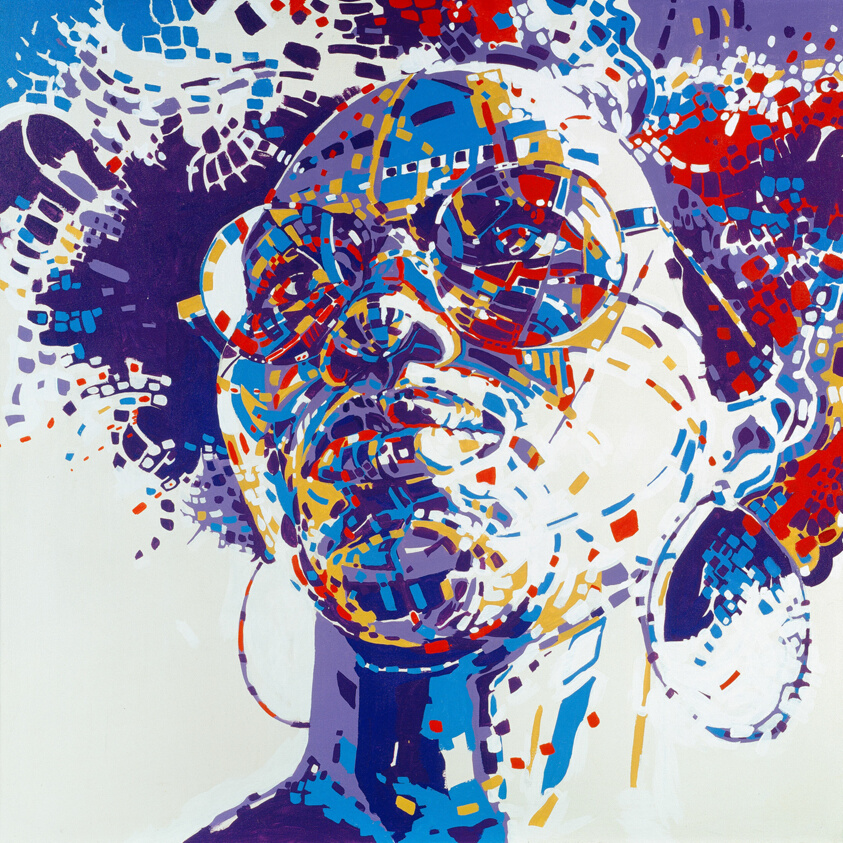
You have probably felt it — the specific relief of deciding to stop performing, to finally say what you mean, to walk into a room as yourself rather than as the version of yourself the room expects. That feeling is real. The problem is that it has a script.
Rousseau believed that civilization was the disease and natural feeling was the cure. In Émile, published in 1762, he constructed an entire pedagogical system on the premise that the authentic self exists prior to society and must be protected from social corruption. It was a beautiful idea, and it was wrong in a way that has taken centuries to fully appreciate. The self Rousseau wanted to protect was not a natural fact waiting to be uncovered — it was itself a product of a particular historical moment, a reaction to Versailles, to the aristocratic performance culture he despised, to his own tortured biography. His sincerity was the most elaborate costume of the Enlightenment.
What Rousseau seeded grew into something that now saturates every corner of Western culture: the moral elevation of transparency, the belief that what is hidden is suspect and what is revealed is trustworthy. By the time the 20th century produced its particular version of this idea — through humanistic psychology, through Abraham Maslow’s hierarchy that placed self-actualization at its summit, through Carl Rogers‘ insistence in On Becoming a Person that the therapeutic goal is congruence between inner experience and outward expression — authenticity had become not just a value but a commandment. You must be real. You owe others your genuine self. Hiding is a form of violence.
The therapy-speak of the 21st century carried this commandment into every intimate relationship and every workplace. Vulnerability became a leadership strategy. Showing up as your true self became a LinkedIn imperative. Brené Brown’s research on shame and vulnerability, however genuinely grounded in data from her years of qualitative interviews, was metabolized by popular culture into something she herself warned against: a performance of openness, a competitive display of emotional exposure, where the person who reveals the most wins the most trust. The wound became the credential.
What nobody in this tradition adequately confronted is that the demand for authenticity is issued socially. Someone is asking you to be authentic. There is an audience for your realness. There are aesthetic norms governing what counts as genuine — the unpolished sentence, the visible effort, the catch in the voice, the admission of struggle — and those norms are as codified as a court etiquette manual from the reign of Louis XIV. Erving Goffman understood this in The Presentation of Self in Everyday Life, published in 1959, when he observed that backstage behavior is not the absence of performance but a different stage with a different set of expectations. The green room has its own costume department.
This is the trap inside the trap. You escape the persona by constructing an anti-persona, and the anti-persona has its own wardrobe, its own audience, its own moment of applause — the nod of recognition from someone who says yes, that is the real you. But who authorized that person to know? And what are they responding to if not another surface, another arrangement of signals that your culture has agreed to call authentic? The person who performs suffering authentically is still performing. The person who refuses to perform at all is performing refusal.
Jung spent the last decades of his life in a stone tower he built with his own hands at Bollingen, carving inscriptions into the walls, cooking over an open fire, refusing electricity. He called it his encounter with the self. It was also one of the most theatrical gestures of the 20th century — and perhaps he knew it, because he wrote about it with too much care, too much deliberation, for a man who was simply living and not also watching himself live.
🎭 The Many Faces We Wear: Identity and Its Shadows
Jung’s concept of the Persona reveals how the masks we build to face the world can gradually fuse with our deepest sense of self, blurring the boundary between performance and being. These articles explore the same uncanny territory — where identity fractures, multiplies, or hides behind the faces we present to others.
Pirandello’s One Nobody and One Hundred Thousand: Analysis
Pirandello’s One Nobody and One Hundred Thousand is one of literature’s most devastating explorations of selfhood’s illusion, following a man who discovers he has no fixed identity but only the changing reflections in others’ eyes. The novel resonates deeply with Jung’s Persona theory, as both works ask the same terrifying question: if the mask is all others see, does the face beneath still exist? Pirandello transforms this philosophical crisis into a narrative of dissolution that feels as urgent today as it did in the twentieth century.
GO TO THE SELECTION: Pirandello’s One Nobody and One Hundred Thousand: Analysis
Pessoa’s Heteronyms: Analysis
Pessoa's heteronyms — Alberto Caeiro, Ricardo Reis, Álvaro de Campos — are not mere pen names but fully inhabited alter egos, each with distinct biographies, philosophies, and poetic voices. This radical multiplication of the self mirrors Jung’s insight that the Persona is never singular, but a wardrobe of masks worn in different contexts. Pessoa’s literary experiment transforms the Jungian problem of identity into an almost joyful fragmentation, suggesting that wearing many faces might be not a pathology but a form of freedom.
GO TO THE SELECTION: Pessoa’s Heteronyms: Analysis
The Strange Case of Dr Jekyll and Mr Hyde: Analysis
Stevenson’s The Strange Case of Dr Jekyll and Mr Hyde dramatizes with gothic intensity the war between the socially acceptable Persona and the repressed Shadow that Jung would later theorize as the dark twin of consciousness. Jekyll’s experiment is essentially an attempt to surgically separate the mask from what lies beneath, with catastrophic consequences that confirm the Jungian warning: what is suppressed returns with greater force. The novella remains the most visceral literary map of the psyche’s hidden architecture.
GO TO THE SELECTION: The Strange Case of Dr Jekyll and Mr Hyde: Analysis
Jung’s Red Book: Analysis
Jung's Red Book is the extraordinary private record of the author’s own confrontation with the unconscious, a visual and textual journey into the depths that gave birth to his entire theoretical system, including the concept of the Persona. In its illuminated pages, Jung stages dialogues with inner figures that are simultaneously masks and revelations, demonstrating that individuation requires the courage to look behind every face one wears. Reading the Red Book alongside the theory of the Persona transforms both documents into two sides of the same confession.
GO TO THE SELECTION: Jung’s Red Book: Analysis
Discover the Cinema of Inner Worlds on Indiecinema
If these themes of identity, masks, and the hidden self have stirred something in you, Indiecinema is the streaming platform where independent cinema dares to explore exactly these depths — films that do not flinch from the shadow, the double, and the face beneath the face. Explore our curated selection and let independent film take you where mainstream cinema rarely ventures.
👉 EXPLORE THE CATALOG: Watch Indie Films in Streaming
A vision curated by a filmmaker, not an algorithm
In this video I explain our vision

