
The Road as American Scripture
You find the book on a shelf that doesn’t belong to you — a friend’s apartment, a hostel common room, a dead relative’s study — and something in the spine, the worn paper smell, the sheer physical thinness of it relative to its reputation, makes you open it before you have decided to. The first paragraph hits you at a register below argument. It isn’t that Sal Paradise tells you something you didn’t know; it’s that he moves the way you move inside your own skull, that restless lateral shimmy of attention that your teachers always called a problem and that this book is suddenly calling a gift, a destiny, a compass. You read standing up. You forget you are standing. By the time you sit down you have already been converted, and you do not know to what.

This is the precise mechanism Jack Kerouac engineered, whether by intention or by the accident of his own neurological weather. Published in September 1957 by Viking Press after years of rejection, On the Road arrived into a cultural moment so tightly wound with postwar conformity that any book smelling of gasoline and improvisation was going to be received not as literature but as instruction. Gilbert Millstein’s review in The New York Times called it “the most beautifully executed, the clearest and the most important utterance” of the Beat Generation — a sentence that did the peculiar damage of handing readers a permission slip before they had read a word. The book was already a verdict before it was a text.
What made it dangerous was not its content but its form. Kerouac’s so-called spontaneous prose, theorized in his 1958 essay “Essentials of Spontaneous Prose,” was constructed as a kind of sacred rejection of revision — prose as breath, as jazz, as the unmediated outpouring of an authentic self. The theological ambition embedded in that premise is enormous. When you tell a reader that the prose they are absorbing was not crafted but exhaled, you are telling them that what they are reading is not art but truth, not a made thing but a found one, the way a prophet finds a burning bush he did not plant. Kerouac borrowed this aura from the bebop musicians he worshipped, from Charlie Parker‘s improvisational ferocity, from a fantasy of Black artistic spontaneity that he consumed without examining who paid for it or what it cost.
What the myth of the scroll obscures is that the famous continuous manuscript — allegedly typed on a 120-foot roll of teletype paper in three weeks in April 1951 — was preceded by years of conventional drafts, notebooks, and letters. The roll itself was assembled from taped-together sheets. The spontaneity was a performance of spontaneity, which is a different and far more interesting thing, but one that the legend could not afford to admit. A scripture cannot have a second draft. And On the Road was being received as scripture, as the American road itself compressed into language and handed back to young people who had not yet been anywhere but who recognized the hunger, which is the oldest trick a book can play.
The deeper trap is that the book did not describe an America that existed and invite you to witness it. It described an America that needed to be performed, and handed you the script. The freedom Kerouac depicted was not freedom from the social order but a highly specific choreography of restlessness — white, male, straight in its anxieties if not always in its acts, dependent on the labor of women left in doorways and the tolerance of Black communities treated as spiritual ATMs. Millions of readers in the decades after 1957 took this choreography as the shape of authentic selfhood, the natural form that liberation takes when it finally gets out of the house. They were not wrong to feel the pull. They were wrong to believe the pull had no architecture.
Along For The Ride
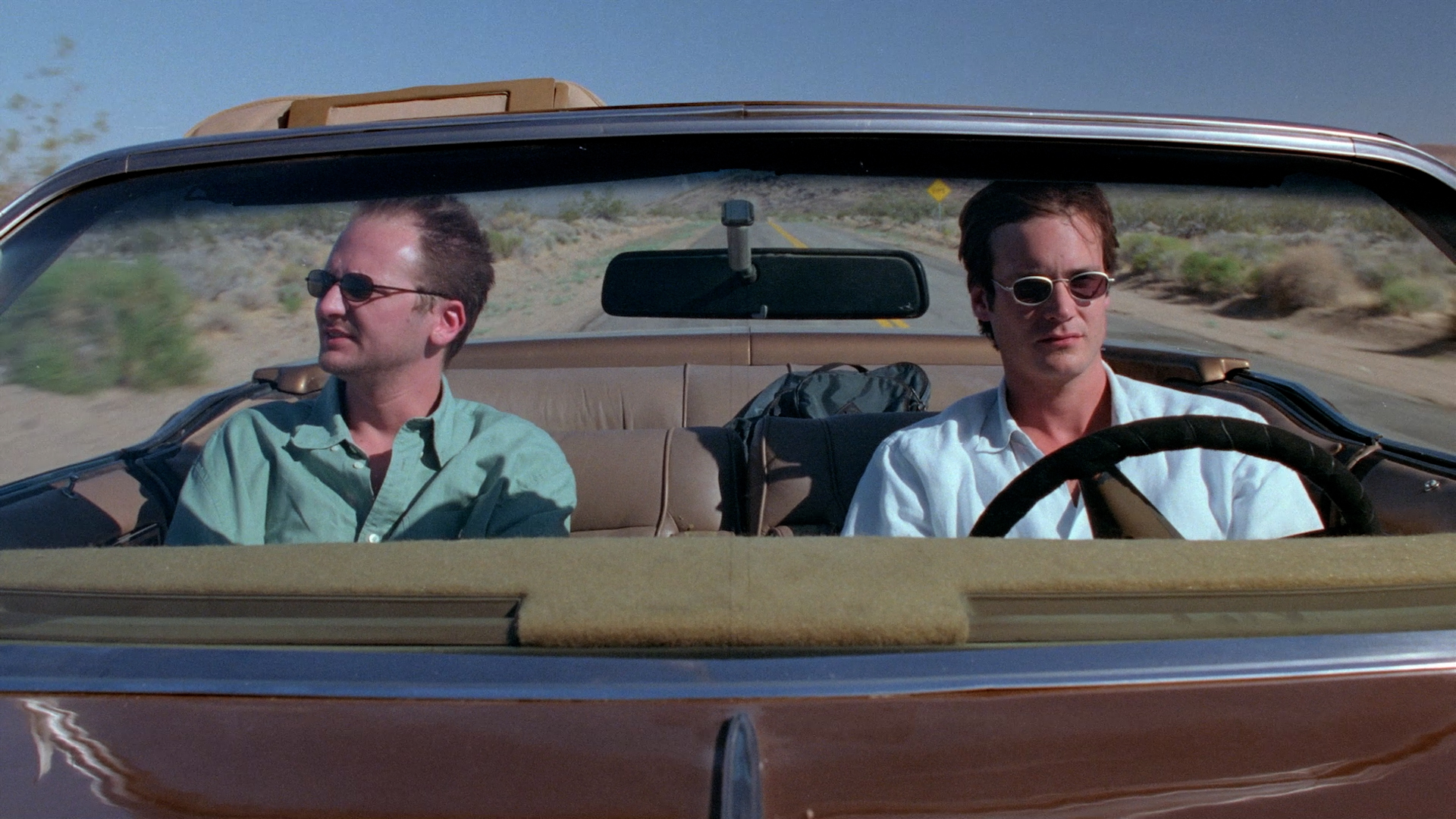
Drama, Comedy, by Bryan Simon, USA, 2001.
Two brothers, Terry (Randy Batinkoff) and Vance (Dylan Haggerty), embark on a journey into the desert with the body of their recently deceased father. Their goal is to find a burial site for him, but along the way unresolved family conflicts resurface. Terry, a successful former baseball player, has always exerted a dominant influence on the younger Vance, a humble mailman. Both carry within themselves the burden of a complicated relationship with their father, Jake (J.E. Freeman), a former professional player obsessed with sports. Even after his death, Jake appears to his children in dream sequences, but instead of offering wise advice, he continues to be distant and authoritarian. The journey thus becomes not only a physical but an emotional journey, in which the two brothers confront their mutual grudges and the emotional legacy of their father.
The film, directed by Bryan Simon with a budget of 150,000 dollars, was shot in extreme weather conditions, with a screenplay adapted by Jim Moores from a work by Randall Wheatley. The film also explores the role of sport as a vehicle for communication between father and son. For many men, expressing feelings is difficult, while talking about sport is a natural and shared language. "Along for the Ride" addresses these issues with sensitivity and realism, resulting in a touching work for those who have experienced similar family dynamics. An indie not to be missed for lovers of quality independent cinema.
LANGUAGE: English
SUBTITLES: Spanish, French, German, Portuguese
Kerouac's Biography as Manufactured Myth
You have probably heard the story about the scroll. Everyone has. The image is too perfect to resist: Jack Kerouac, fueled by Benzedrine and coffee, feeding a 120-foot roll of teletype paper into his typewriter and producing a masterpiece in three weeks of April 1951, the whole book erupting from him like a confession that could not be interrupted by something as pedestrian as changing a page. The story travels well because it confirms what we need to believe about genius — that it arrives whole, unbidden, savage, and free of revision. What the story quietly omits is that Kerouac had been drafting versions of the same material since at least 1948, accumulating notebooks, false starts, and abandoned manuscripts across three years of very deliberate literary labor. The scroll was not a beginning. It was a culmination dressed up as an explosion.
This is the first mechanism of the Kerouac myth: compress the work, erase the patience, and present the artifact as proof of a life lived without hesitation. It is a useful fiction because it makes the book feel like pure velocity, which is what the culture wanted it to be. But Roland Barthes, writing in Mythologies in 1957, described exactly this kind of operation — the way a society takes something historical, something made, something produced through real human effort, and drains it of its history until it appears natural, inevitable, and beyond question. The scroll became a relic not because it documented speed but because the idea of speed served a larger cultural appetite. And Kerouac, who understood very well what was being done with his image, was in some respects powerless to correct it, and in other respects unwilling to try.
What no myth about him can easily accommodate is the man’s actual inner life. Kerouac was a devout Roman Catholic who prayed, who carried guilt about his sexuality, who felt the weight of his Breton-French heritage from Lowell, Massachusetts as something almost ancestral and inescapable. He was not rebelling against America in any political sense. He was, if anything, politically conservative — a fact that became explosive when William F. Buckley Jr. invited him onto Firing Line in 1968, and Kerouac, drunk and belligerent, expressed views on Vietnam and on the counterculture that horrified the very generation that had canonized him. The young people who had taken On the Road as their secular scripture were bewildered to find that their prophet had not been following them at all. He had been watching them with something closer to contempt.
He had also been living, for most of his adult life, with his mother. Gabrielle Kerouac — Mémère, as he called her — was the fixed point around which all that celebrated motion orbited. When the road ended, as it always did, there was a house, and in the house there was a woman cooking, and the man who had supposedly dissolved the boundary between self and horizon came home, let her take care of him, and wrote in the domestic quiet she provided. Allen Ginsberg recognized this long before it became comfortable to say so, and the tension between the myth of rootlessness and the reality of that maternal dependency runs through the biographical record like a crack in a foundation that everyone agreed not to look at too closely.
What this dependency reveals is not weakness in any simple sense, but something more structurally interesting: the freedom Kerouac described required an invisible infrastructure of stability that he could neither abandon nor publicly acknowledge without destroying the brand of himself that his publishers, his readers, and his culture had decided to consume. The beatnik needed a home base precisely because the road, as he wrote it, was always a performance of departure rather than an actual condition of being.

Freedom as a Product, Not a Condition
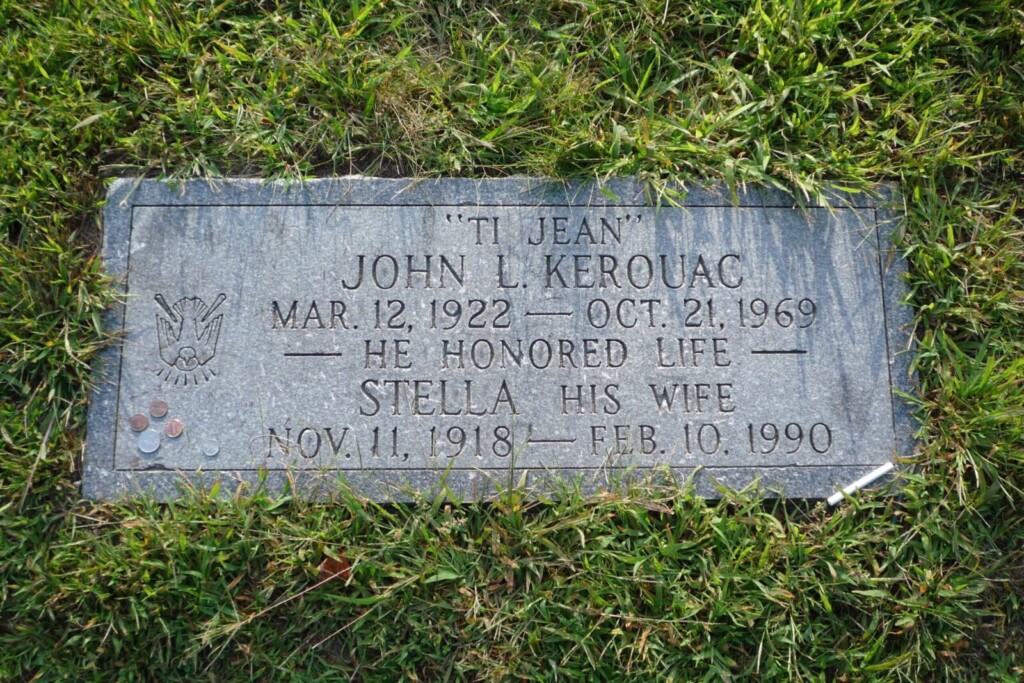
You have held the book in your hands and felt something that was not quite yours — a borrowed urgency, a restlessness that arrived pre-packaged, spine already cracked by ten thousand readers before you who all believed they were the first to feel it.
That sensation has a structure, and Guy Debord mapped it with surgical precision in 1967. In The Society of the Spectacle, he argued that modern capitalism had evolved beyond the simple theft of labor into something far more intimate: the colonization of lived experience itself. The spectacle does not merely sell you objects. It sells you back the image of your own desire, reflected in a commodity mirror so polished you mistake the reflection for your face. What matters here is not the philosophical abstraction but the specific machinery of conversion — how a gesture of refusal becomes, almost instantly, the next product category. Debord published his analysis the same year that Kerouac, already dissolving into alcoholism and public embarrassment, was being repositioned by publishers not as a cautionary figure but as a brand asset, his early wildness retrospectively curated into something safe enough to shelve in airport bookstores.
The American road was always, in part, a market. The interstate highway system, authorized under Eisenhower in 1956, was sold to the public simultaneously as military infrastructure and as a democratic right of movement — freedom legislated into asphalt, underwritten by the oil and automobile industries. By 1960, General Motors was spending more than a billion dollars annually on advertising, and a significant portion of that budget was devoted to imagery of open roads and lone drivers, horizons without consequence. The mythology that Kerouac channeled from genuine postwar disorientation was re-channeled almost immediately through a corporate amplifier, stripped of its economic desperation, its racial complexity, its genuine bodily risk, and repackaged as aspiration. What had been Neal Cassady’s actual hunger — the hunger of a man born in a Denver flophouse in 1926, raised partly on skid row, shaped by a father who was a genuine vagrant rather than a romantic one — became a style available for purchase.
The manuscript itself completes this arc with an almost obscene neatness. Kerouac typed the famous scroll in April 1951, feeding a continuous roll of architectural drafting paper through his typewriter so the momentum would not be broken by page changes — the physical object was meant to embody the urgency it described, form and content fused. By 1969, the scroll had become a conversation piece, passed between hands with the reverent caution of a relic. When it was sold at auction in 2001 for 2.43 million dollars — purchased by Jim Irsay, the Indianapolis Colts owner, as an addition to his collection of American cultural artifacts — the transaction revealed exactly what Debord had predicted: the revolutionary gesture, once it acquires sufficient cultural prestige, is not destroyed by capitalism but enshrined by it. The scroll spent years touring in a climate-controlled case, displayed behind glass so that people could stand close to the original urgency without any risk of contamination by it.
What the viewers were paying to witness was not freedom but the image of freedom at a safe and non-replicable distance. This is the mechanism Debord called recuperation — the process by which any authentic challenge to the social order is absorbed, aestheticized, and resold as evidence that the system is capacious enough to contain even its own critique. The reader who buys the paperback, the collector who pays seven figures for the scroll, and the tourist who photographs themselves on Route 66 are all participating in the same transaction, differing only in price point. Authenticity, once it becomes legible as authenticity, has already ceased to function as such — it has become a genre, with its own conventions, its own gatekeepers, its own hierarchy of who is performing it correctly.
The Invisible Passengers
She is standing in the doorway when the car pulls away. You do not see her face for long — just long enough to register that she was there, that the kitchen behind her is still warm from breakfast, that she has a child on her hip whose name the narrative never bothers to learn. Then the road opens up and the camera of the prose swings forward, because that is where the story lives, out there, in the acceleration, in the blur of telephone poles and the devotional hum of the engine. She dissolves. She was never the point.
This is not an accident of craft. It is a structural decision embedded so deeply in the mythology of the American journey that it has become invisible, mistaken for neutral storytelling rather than recognized as a philosophical position about whose interiority counts. Dean Moriarty abandons women across the continent with the serial efficiency of a traveling salesman — Marylou in San Francisco, Camille in Denver, children scattered like rest-stop receipts — and the novel processes none of it as loss, only as the necessary friction of a man in motion. The word “necessary” is doing enormous ideological work there, more than most readers ever pause to excavate.
bell hooks, writing in Black Looks in 1992, identified something precise and damaging in the Beat romanticization of freedom: that it depended, structurally, on a population of people rendered voiceless so that the speaking subject could feel unencumbered. Her argument was not simply that Kerouac ignored women, which would be a complaint about manners. It was that the entire aesthetic architecture of spontaneous flight required, as its invisible foundation, figures who stayed — who absorbed consequence, who raised the children, who kept an address. The romanticism of rootlessness is only available to those who can afford to have no roots, which is to say, to those whose roots are tended by someone else at no acknowledged cost.
What makes this extraction particularly durable is that it wears the costume of liberation. The man on the road is not understood as someone fleeing responsibility; he is understood as someone pursuing authenticity. The distinction is cultural, not moral, and it has been maintained with remarkable discipline across a century of American storytelling. John Steinbeck‘s men walk west while women wait or die or disappear from the frame. The cowboy rides out of town and the town, meaning the women and the children and the labor of everyday life, is what he is heroically escaping. By the time Kerouac inherits this tradition in 1957, it is so sedimented that he does not need to justify it. It simply is the shape of the story.
The sociologist Arlie Hochschild spent years documenting what she called the “second shift” — the unpaid domestic labor performed overwhelmingly by women that makes possible the public and mobile lives of men — and her 1989 study of that name revealed something that the road novel genre had been obscuring for generations: that freedom is not produced in a vacuum. Every hour Dean Moriarty spends in ecstatic motion across the American interior corresponds to an uncounted hour that someone else spends stationary, managing the consequences of his passage. The jazz he reveres, the diners he haunts, the gas station attendants he charms — these are not scenery. They are the labor of people for whom the road is not a spiritual option.
There is also the question of what the road costs the land itself, the communities it passes through rather than stops in, the people who are briefly aestheticized — the Mexican farmworkers Sal encounters in the cotton fields of California, luminous and suffering and immediately left behind — and then abandoned to their actual conditions the moment they cease to serve the narrator’s hunger for feeling alive.
Whiteness at the Wheel
You are driving through Denver at two in the morning and the neighborhood shifts — the streets get looser, the music leaks from doorways, the light changes color — and you feel, for the first time all night, that you have arrived somewhere real. That sensation, that specific gravitational pull toward a world you will leave by morning, is not incidental to the American road narrative. It is the engine.
Kerouac’s prose in On the Road reaches its most ecstatic pitch precisely when Sal Paradise moves through Black Denver, through Mexican border towns, through the jazz clubs where men like George Shearing — cited by name in the novel — play until the room loses its walls. The language accelerates. The sentences catch fire. And the communities that generate this fire remain, throughout, atmospheric. They are weather. They are not people with addresses, with debts, with children who will inherit what Sal passes through without consequence.
Toni Morrison, writing in Playing in the Dark in 1992, named this architecture with a precision that still embarrasses the canon. She argued that American literary whiteness does not exist in isolation — it constructs itself, defines its interiority, measures its freedom, by choreographing an intimate and exploitative proximity to Blackness. The white literary imagination, she wrote, uses the Africanist presence as a canvas on which to project its own longings and terrors, its own appetite for authenticity, without ever being required to render that presence as fully human. What Morrison described as a critical process in Hawthorne and Poe is not a historical artifact. It is operative and visible in Kerouac’s 1957 novel with an almost diagrammatic clarity.
Sal does not want to be Black. He wants what he imagines Blackness contains: an escape from the administered, scheduled, guilt-laden whiteness he was born into. He wants the permission he projects onto those bodies — permission to move without planning, to feel without irony, to exist at full volume. The desire is real. The poverty of its object is the point. He is not seeing people. He is seeing a solution to his own problem, and the solution requires that the people remain scenery.
This is not a failure of personal character that a better upbringing might have corrected. It is structural. The American road myth was never designed for lateral movement between equals — it was designed for vertical flight from one kind of whiteness toward a fantasized freedom that could only be located somewhere else, in someone else’s life. John Steinbeck understood geographic dispossession in The Grapes of Wrath in 1939, but even there the suffering body is white, the migrant is the protagonist, and the dignity being fought for is legible within dominant culture. What happens when the body being borrowed for authenticity is not even granted the status of migrant — when it is simply ambient, local color, the human furniture of someone else’s becoming?
The Mexican section of On the Road is perhaps the most unguarded moment in this regard. Sal crosses the border and immediately enters a register of almost colonial reverie — poverty read as simplicity, hardship read as closeness to the earth, indigenous faces read as timeless. Terry, the Mexican woman he briefly loves, is rendered with tenderness and total opacity. We never know what she wants. We know what she makes Sal feel. That is the entire transaction, and it is conducted with the full confidence of someone who has never been asked to consider that the exchange might not be equal.
What gets protected by this structure is not just white innocence — it is white motion. The ability to pass through, to be changed, to collect an experience and carry it back into a life the Other cannot follow you into, is itself a form of property. Sal can leave. That is the whole story.
A vision curated by a filmmaker, not an algorithm
In this video I explain our vision
Movement Without Arrival as Spiritual Evasion

You arrive somewhere after days of driving and the first thing you feel, before hunger or exhaustion, is a faint but unmistakable dread. The destination has materialized. It is solid and indifferent and it asks nothing of you, which is precisely the problem — because a place that asks nothing of you hands you back entirely to yourself, and that is the confrontation you have been burning gasoline to postpone.
Søren Kierkegaard mapped this condition with surgical precision in Either/Or, published in 1843, long before the automobile existed and long before anyone thought to call restlessness a philosophy. He described what he called the aesthetic stage of existence: a mode of being organized entirely around sensation, novelty, and the avoidance of the moment when a person must choose not just what to do next but who, irrevocably, they are. The aesthetic man — and Kierkegaard meant this as a diagnosis, not a celebration — moves between experiences the way a hand moves between flames, never holding still long enough to be burned into shape. He is not seeking. He is evading the necessity of becoming.
Sal Paradise and Dean Moriarty have been received by generations of readers as seekers, as men in furious pursuit of something authentic that their culture denied them. But Kierkegaard’s framework reveals a different structure entirely. Their movement has no teleology. There is no object of desire that could, if reached, satisfy them — not because desire is inherently infinite, but because the reaching is not actually directed at any object. The road itself is the object. Velocity is the answer to a question they have trained themselves never to finish asking. Every city they arrive at is abandoned before it can become a place they actually inhabit, because inhabitation requires the kind of sustained presence that would force a reckoning with what they are, separately from where they are going.
What makes this particularly difficult to see clearly is that the aesthetic mode, in Kierkegaard’s description, generates its own convincing rhetoric of depth. The aesthetic man does not experience himself as someone avoiding commitment — he experiences himself as someone too alive for ordinary commitment, too sensitive for the sedentary, too honest for the compromises that settled life demands. This is the self-narrative that makes the road novel as a genre so seductive and so dangerous. It aestheticizes the very mechanism by which the self refuses to consolidate. It makes evasion look like courage and makes stillness look like defeat.
Dean Moriarty cannot stay because staying would require him to be accountable to the people who have seen him across time — to women who have borne his children, to friends who have catalogued his broken promises. Accountability is precisely the mechanism through which identity is constructed under pressure, shaped by consequence rather than by performance. Kierkegaard understood that the self is not found through introspection in motion but through the willingness to be held, to be known sequentially by the same witnesses, to allow others to become the memory your behavior cannot escape. The road eliminates witnesses by design.
There is a sociological dimension to this that the romanticism of the Beat narrative actively suppresses. When Dean abandons Sal in Mexico, sick and feverish at the end of the novel’s final journey, the gesture is usually read as a betrayal that reveals something true about Dean’s nature. But it is not a revelation — it is simply the logical conclusion of a structure that was always present. The aesthetic self cannot sustain care because care requires the future to matter, requires tomorrow’s suffering of another person to register as a claim on today’s decisions. The accelerating self has no tomorrow that isn’t another form of now.
Kierkegaard’s name for what lies beyond the aesthetic stage was not enlightenment or transcendence but simply the ethical — the willingness to bind oneself to consequences, to let the gravity of other people’s reality slow you down into something that resembles a human being with a continuous interior life rather than a sequence of vivid impressions.
The Highway Industrial Complex
You are driving and you feel free, and that feeling is not an accident — it was designed for you, calibrated to arrive at precisely that emotional register, by people who needed you to feel it in order to move capital across a continent.
The Federal Aid Highway Act of 1956 was signed by Dwight Eisenhower not as a gift to the restless American soul but as a military logistics solution. Forty-one thousand miles of interstate highway, funded by the federal government at ninety percent, the largest public works project in human history at that point — and its explicit justification in the congressional record was the need to evacuate cities in the event of nuclear attack and to mobilize armored divisions across domestic terrain. The engineers who graded those roads were thinking about Soviet tank columns in Eastern Europe, not about a generation of young men who wanted to disappear into the plains of Nebraska. The fact that those young men arrived on those roads within a decade and experienced them as liberation is one of the more elegant ironies the Cold War produced.
Kerouac finished the original scroll draft of On the Road in 1951, five years before the Interstate Highway System existed in its modern form. What he was driving on were older federal routes, two-lane state roads, the patchwork infrastructure of the New Deal era. But when Viking published the novel in 1957, the new highway system was already being poured, and the mythology of the road fused seamlessly with the new concrete — as though the interstates had always been there, as though they were a natural feature of the landscape rather than a political decision. The timing was not coincidence. It was the moment when state infrastructure and cultural mythology found each other and shook hands.
What disappeared in that handshake was the history of how the road came to dominate. Between 1930 and 1970, American rail networks were systematically dismantled — routes abandoned, urban streetcar systems torn out, regional lines allowed to decay — and the political economy behind that dismantling runs directly through General Motors, Firestone Tire, Standard Oil, and Phillips Petroleum, corporations that formed National City Lines in 1936 and began acquiring and liquidating electric transit systems in cities across the country. By the time federal antitrust action came in 1949, forty-five cities had lost their rail infrastructure. The conviction produced fines of five thousand dollars per company and one dollar per individual defendant. The automobile had not won a fair competition against the train. It had won a legal proceeding in which the penalty for market manipulation was less than the cost of a used car.
What this means for every invocation of American freedom-through-driving is that the freedom was not discovered — it was the residue of a corporate strategy that eliminated the alternatives. When Kerouac’s Sal Paradise feels the continent opening in front of him, when any American feels that specific exhilaration of the on-ramp and the open lane, they are experiencing a sensation that was architecturally constructed by removing every other option and then pouring four hundred thousand miles of asphalt over the absence. The philosopher Ivan Illich argued in Tools for Conviviality in 1973 that beyond a certain threshold, a tool begins to dominate the society it was meant to serve, that the car had long since crossed that line and was now producing the distances it claimed to overcome. Americans drive because everything they need has been placed too far away to reach any other way.
The oil companies understood this before anyone used the word infrastructure as a political concept. Dependency, once built into the physical layout of a country, does not need to be enforced. It enforces itself through the simple geometry of where the grocery store is and where you are standing.
What the Longing Actually Costs
You have been on the road long enough that coming home feels like surrender. The bags are still half-unpacked, deliberately, because to fully unpack them would be to admit that somewhere, something is waiting to be settled.
This is not a personal failure. It is a cultural posture so deeply internalized that it no longer registers as a choice. Zygmunt Bauman, writing in Liquid Modernity in 2000, identified something that most people in the Western world were living without quite being able to name: that late modernity had restructured virtue around the capacity to remain unattached. The highest social praise had migrated from words like loyal, rooted, and enduring toward words like flexible, mobile, and adaptable. What sounds like freedom is, in Bauman’s diagnosis, something closer to a structural incapacity — not the freedom to move, but the compulsion to, because anything that stays still long enough to be held accountable becomes a liability. The self in liquid modernity is a permanent start-up, perpetually pre-launch, forever in beta, never shipping.
What this costs is not immediately visible because the cost accumulates slowly, the way debt does when you only check the balance in round numbers. Attachment — to a place, to a particular set of faces, to the specific weight of a commitment you have no legal right to abandon — is not a limitation on the self. It is the substrate through which the self becomes coherent over time. The philosopher Charles Taylor argued in Sources of the Self in 1989 that identity is not something a person discovers by moving through space but something that emerges through orientation within a moral framework, which requires duration and friction and the kind of consequence that only comes from staying. None of that is available to a consciousness that has learned to treat departure as the highest form of authenticity.
The damage is clinical as well as philosophical. Attachment theory, which John Bowlby developed across his three-volume work between 1969 and 1980, was initially about infants and their caregivers, but the underlying mechanism — that the human nervous system requires a stable base from which to explore and to which it can return — does not disappear at adulthood. It gets sublimated, romanticized, and eventually mistaken for weakness. The person who cannot stop moving is not free; they are dysregulated. The hunger they keep feeding with new horizons is not for experience but for something that experience alone cannot provide, and the tragedy is that the culture has no language for that distinction. It only has the language of motion.
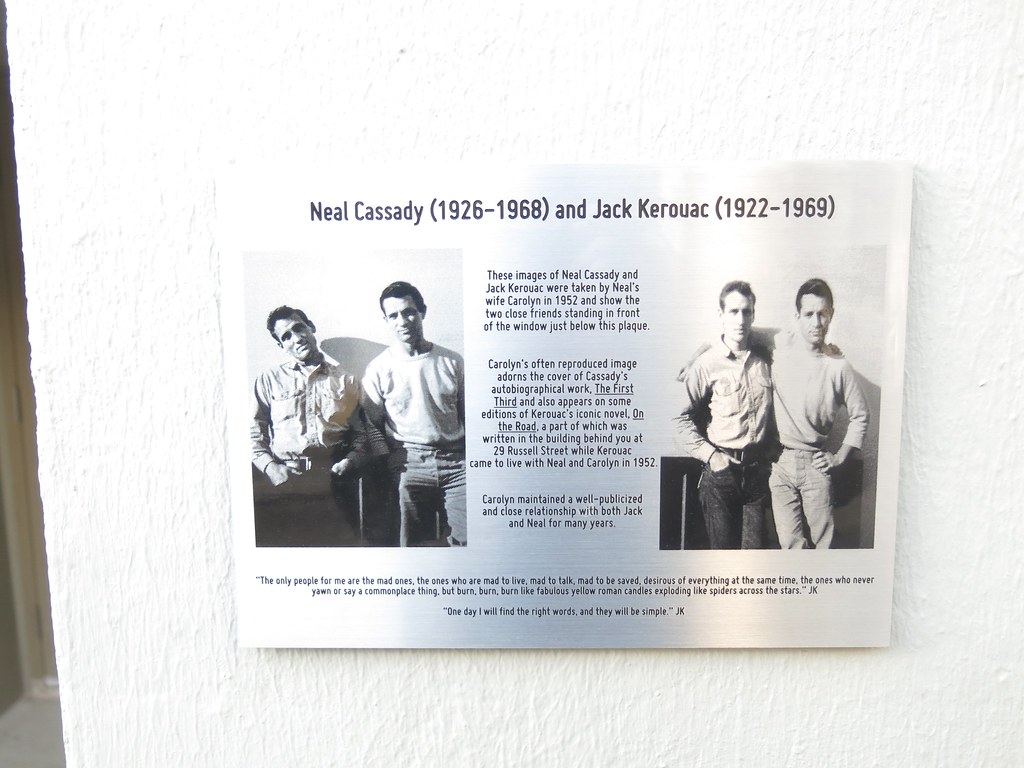
Kerouac himself died in 1969, at forty-seven, in his mother’s house in St. Petersburg, Florida, his liver destroyed, his celebrity curdled into something unrecognizable, surrounded by people who did not much understand what he had become or what he had been asking for all along. The book that made him the prophet of American restlessness was written in three weeks on a single scroll of paper taped together, which means it was not even, at the level of its own composition, a journey. It was a sustained act of stillness in which movement was the subject. The irony is too structural to be accidental: the manifesto of perpetual departure was produced by a man who sat down and did not get up.
What a culture loses when it enshrines that manifesto is not the ability to move, which it retains in abundance, but the ability to receive — to let a place mark you, to let a relationship accumulate weight, to let the ordinary duration of an unchanged life become the material from which meaning is made rather than the condition from which it must be escaped. The road is real. The cost of making it sacred is that everything it leads away from is quietly, systematically devalued until the only direction that feels like living is forward, and forward, and forward, until you can no longer remember what you were trying to outrun or whether it was ever actually behind you at all.
🛣️ Roads, Rebels & the American Soul
Jack Kerouac’s On the Road is more than a novel — it is a restless hymn to freedom, identity, and the hunger for experience that defines the American spirit. The journey it traces cuts through literature, philosophy, and culture, touching themes that resonate far beyond the open highway. These related articles open doors into the intellectual landscape that surrounds and illuminates Kerouac’s legendary odyssey.
The Journey as Metaphor in Literature
The journey as literary metaphor stretches from Homer to Kerouac, encoding in movement the deepest human longing for transformation and self-discovery. This article explores how the act of traveling — physical, spiritual, or psychological — has functioned across centuries as the central architecture of meaning in world literature. Understanding this tradition places Kerouac’s restless prose within a vast and ancient conversation about what it means to be alive and in motion.
GO TO THE SELECTION: The Journey as Metaphor in Literature
American Transcendentalism: History and Thought
American Transcendentalism is the philosophical soil from which Kerouac and the Beat Generation drew their most essential nourishment — the belief in individual experience, nature, and spiritual self-reliance over conformity and materialism. Emerson, Thoreau, and Whitman mapped an inner America long before Kerouac mapped its highways, and their ideas pulse beneath every page of On the Road. This article traces the history and thought of a movement that remains the beating heart of American literary rebellion.
GO TO THE SELECTION: American Transcendentalism: History and Thought
Masterpieces of Rebellion and Counterculture Cinema
Kerouac’s world did not exist only on the page — it spilled into cinema, inspiring a wave of films that embodied the same defiant energy, improvisational spirit, and hunger for authenticity. This curated exploration of counterculture and rebellion in cinema reveals how the Beat sensibility translated into a visual language of freedom that continues to influence independent filmmakers today. From road movies to experimental narratives, these films carry the torch that Kerouac lit in 1957.
GO TO THE SELECTION: Masterpieces of Rebellion and Counterculture Cinema
Ralph Waldo Emerson: Life and Works
Ralph Waldo Emerson stands as the great forefather of American spiritual individualism, a philosopher who insisted that the soul must trust itself above all institutions and inherited wisdom. His essays on self-reliance, nature, and the over-soul echo through Kerouac’s vision of the road as a sacred space of personal revelation. This article examines Emerson’s life and thought, revealing the deep roots of a distinctly American tradition of intellectual and spiritual wandering.
GO TO THE SELECTION: Ralph Waldo Emerson: Life and Works
Discover the Cinema of the Open Road on Indiecinema
If Kerouac’s journey has stirred something in you, Indiecinema is the streaming destination where that restless spirit finds its visual counterpart. Explore a curated world of independent and avant-garde films that dare to ask the same questions Kerouac asked on the highway — about freedom, identity, and what lies beyond the horizon.
👉 EXPLORE THE CATALOG: Watch Indie Films in Streaming
A vision curated by a filmmaker, not an algorithm
In this video I explain our vision

