
The Village That Stopped Existing
You have been there. Not necessarily in Mexico, not necessarily in a village with a name that sounds like dried earth — but you have been in a place that used to be full and is now hollow, and you walked through it trying to decide whether the emptiness was in the place or in you. The houses still standing. The doors that open onto nothing particular. The sound your own footsteps make when there is no other sound to compete with them. You expected to feel nostalgia and instead felt something closer to vertigo, because the place did not miss you back. It simply continued not existing, with the same patience it had always applied to the task.

This is not a metaphor. This is the ground condition of an entire literary world.
Juan Nepomuceno Carlos Pérez Rulfo Vizcaíno was born in 1917 in the state of Jalisco, in western Mexico, in a region where the twentieth century arrived not as progress but as catastrophe. By the time he was old enough to understand geography, the landscape he had been born into was already beginning its long process of erasure. His father was killed when Juan was six. His mother died when he was ten. He was sent to an orphanage in Guadalajara, which is to say that loss was not an abstraction he encountered in books — it was the administrative fact of his childhood, the institutional form his grief was made to take. But the deeper wound, the one that would saturate every sentence he ever wrote, was not personal. It was geological. It was the Cristero War.
Between 1926 and 1929, the Mexican government of Plutarco Elías Calles moved to suppress the Catholic Church with a severity that turned entire regions into killing fields. The Cristero rebellion — named for the cry of the fighters, Viva Cristo Rey — was the armed response of Catholic peasants who refused to surrender their faith to a secular state that had decided faith was a political inconvenience. The conflict killed somewhere between 70,000 and 90,000 people in direct combat, but the real demographic devastation was broader and slower and more total. In Jalisco and the surrounding states of the region known as Los Altos, the population did not simply decrease — it collapsed. Villages were abandoned. Entire communities emigrated to the United States. Priests were executed, churches were shuttered, and the social fabric that had organized rural life for centuries was torn in a way that no subsequent peace could fully repair.
The historian Jean Meyer, who devoted years to reconstructing this conflict in his foundational three-volume study published in the early 1970s, estimated that some regions of Jalisco lost nearly a third of their population within a few years. Not to a plague. Not to a flood. To ideology, to rifles, to the particular Mexican variety of modernity that arrives burning things down in the name of the future.
Rulfo grew up inside the aftermath. He grew up among people who had survived something that the official history of Mexico preferred not to discuss too loudly, in villages where the dead outnumbered the living not as a figure of speech but as a demographic reality. This is what it means to say that his literary world grew from biographical soil — not that he wrote autobiography, but that the earth itself was already the text. The silence he would later construct on the page was not invented. It was remembered. It was the silence of Apulco, of San Gabriel, of the dust roads connecting settlements that were becoming ruins before anyone had officially declared them abandoned.
When you walk through a place like that, you do not feel like a visitor. You feel like evidence.
Don Barry: A Quixotic Exploration
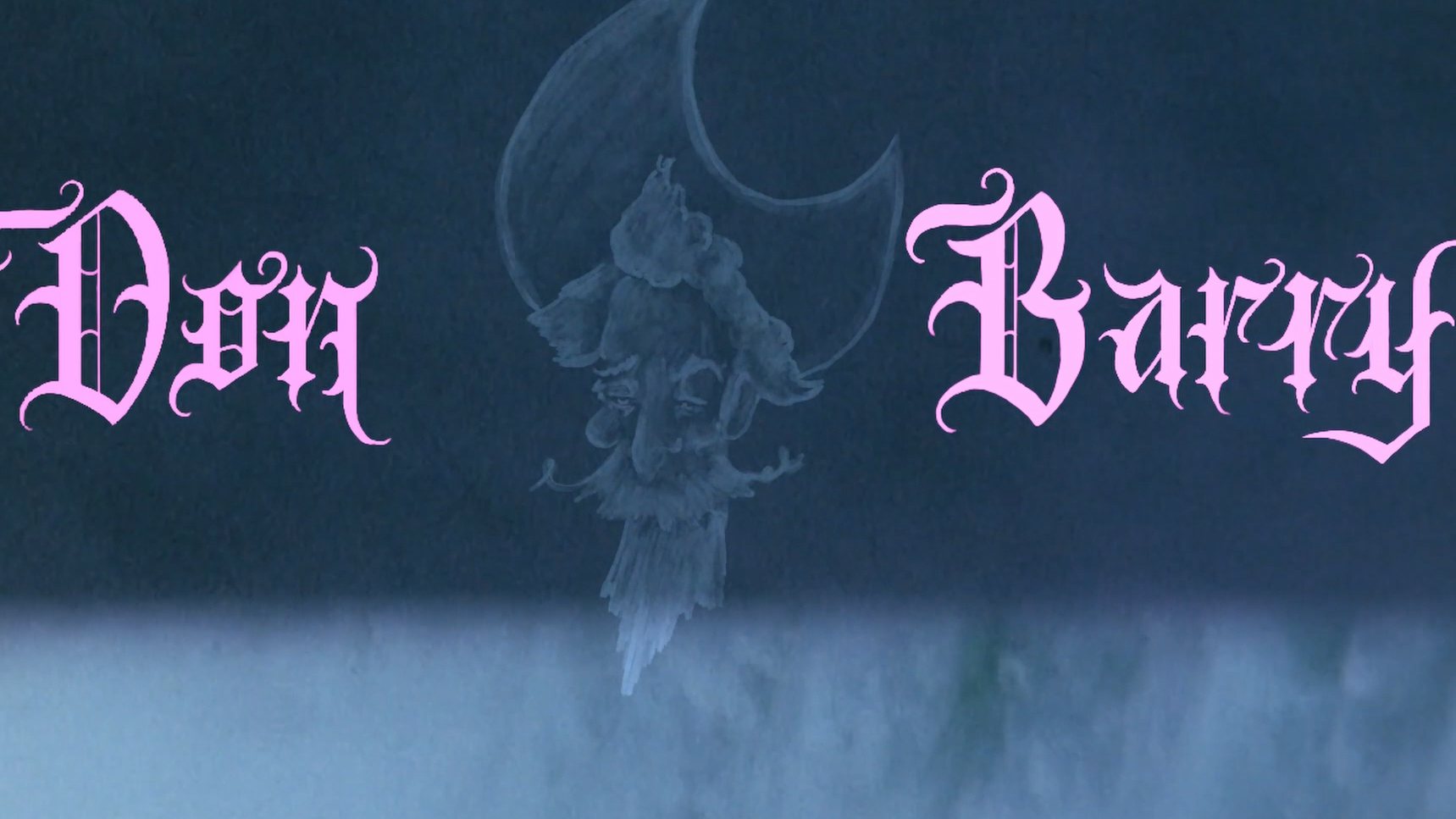
Docufiction, Experimental, by Paul Smart, Mexico, 2026.
Don Barry: A Quixotic Exploration is a debut feature that places the biography of an eighty-year-old experimental filmmaker and artist, Barry Gerson, within the metanarrative of Miguel de Cervantes’ Don Quixote. Don Barry was filmed in the city of Guanajuato during the 51st edition of the Cervantino Festival, as well as during the vibrant Day of the Dead celebrations held in the city’s UNESCO-listed tunnels. The film honors the director’s long friendship with artist Barry Gerson, drawing inspiration from Cervantes’ Don Quixote. Paul Smart’s directorial choices create something new that celebrates life and goes beyond conventional storytelling. A search for magic in our real lives. A moving film about the meaning of life, art, and death. Not to be missed.
Paul Smart is a proud outsider filmmaker with a long history of film screenings. In the 1980s, he emerged in New York’s vibrant youth art scene, working in theater production and later filmmaking, before retreating to rural upstate New York, in the Catskill Mountains, where he made a living writing and screening independent films in old parish halls for rural audiences, many of whom had never seen a film.
LANGUAGE: English
SUBTITLES: Spanish, French, German, Portuguese
A Childhood Made of Absences
There is a particular quality of stillness that belongs only to houses that have been emptied by death. Not abandoned houses, which carry the drama of rupture, but houses where people still move through the rooms, still set plates on the table, still lower their voices without quite knowing why. You know this stillness if you have ever been a child in one of those houses. The air has a density to it, a weight that has nothing to do with silence and everything to do with the fact that someone is no longer breathing it.
Juan Nepomuceno Carlos Pérez Rulfo Vizcaíno was born in 1917 in Sayula, in the state of Jalisco, a region that had already learned to wear grief like a second skin. By the time he was seven, his father had been killed — shot, in the casual, administrative way that men were killed during the years following the Revolution, when Jalisco was bleeding through the Cristero War and murder had become a form of local governance. By ten, his mother was dead too. He was sent first to relatives, then to an orphanage in Guadalajara run by the Josephine fathers, a place where the architecture of institutional care replaced the architecture of family without anyone pretending the substitution was equivalent.
What interests us here is not the sequence of events but what they do to a mind still in the process of forming its fundamental categories. Freud, in his 1917 essay “Mourning and Melancholia,” drew a distinction that has never been improved upon: mourning is the work the psyche does to detach itself from a lost object, to test reality against desire until desire finally relents and the world reopens. Melancholia is what happens when that work cannot be completed — when the loss is too early, too total, too structurally woven into the person’s sense of self for detachment to be possible. In melancholia, the lost object is not relinquished. It is incorporated. The ego identifies with what it cannot let go, and this identification becomes, in Freud’s precise language, “an open wound” that drains energy not outward toward the world but inward, endlessly, toward an absence that refuses to be sealed.
Rulfo did not mourn his childhood in any conventional sense. He carried it intact, unprocessed, the way a stone carries the shape of the water that once flowed over it. And there is a scene — not from any story but from a life, from the specific geography of loss — of a child standing at the threshold of a house that has been cleared of its inhabitants. He neither enters nor leaves. The door frame holds him in a posture that is neither arrival nor departure. Behind him, the road continues in both directions with equal indifference. Before him, the interior holds its darkness with a patience that is almost aggressive. He is suspended in a present tense that does not function as present tense because the present, for him, has already been colonized by the past. Time in that doorway does not move forward. It accumulates.
This is precisely the temporal grammar that would define everything Rulfo wrote. His prose does not narrate past events from the safety of a present moment. It inhabits a kind of permanent liminal time where the dead have not finished dying and the living have not quite begun to live. The orphanage in Guadalajara, the years of institutional corridors and enforced communal eating and the particular loneliness of children surrounded by other lonely children — none of this produced in him a desire for warmth or resolution. It produced instead an extraordinary sensitivity to thresholds, to the precise texture of waiting, to the way a voice sounds when it speaks from a place that no longer exists.
The wound, as Freud understood, does not close. It becomes a way of seeing.

Pedro Páramo and the Grammar of the Dead
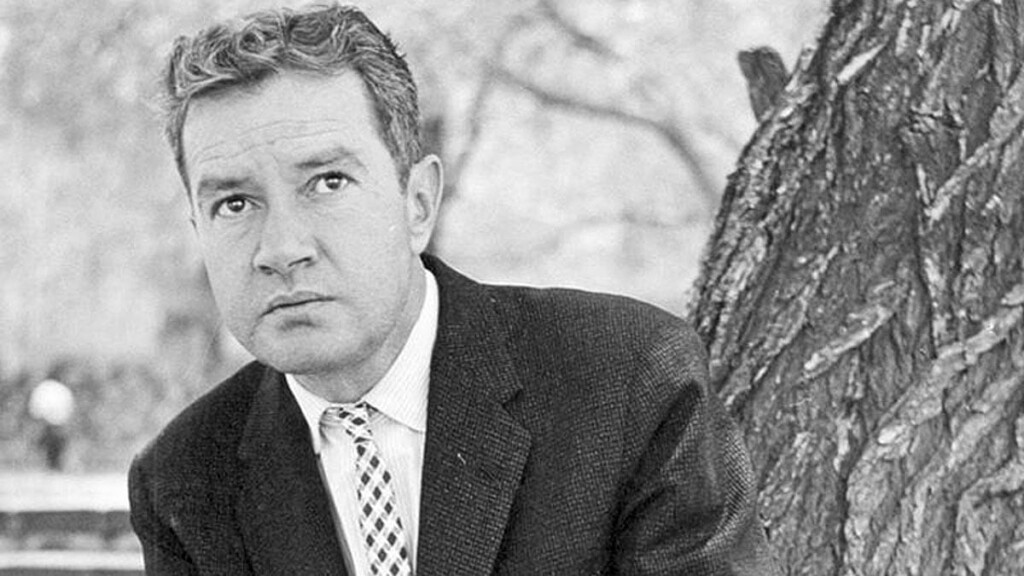
There is a moment, somewhere around the middle of the novel, when you stop and go back. Not because you missed something, but because you sense, with a cold clarity that arrives before the understanding does, that no one in these pages is alive. You have been reading dialogue, interior monologue, the movement of bodies through a landscape of dust and heat, and you believed it all, the way you believe in a dream until the logic of waking reasserts itself. But here the logic never reasserts itself. The dead speak. The dead remember. The dead argue with each other in the darkness of their graves, and the revelation, when it finally settles, changes absolutely nothing about the texture of what you have been reading, because Rulfo had written the living and the dead in precisely the same register all along.
This is not a trick. It is a thesis.
Pedro Páramo was published in 1955 by the Fondo de Cultura Económica, and its initial reception was, by most accounts, bewildered. The novel sold modestly, confused reviewers, and sat at the margins of the Mexican literary conversation for years. It was short — barely a hundred pages — and structurally unlike anything the tradition had prepared readers to absorb. What looked like fragmentation was actually a temporal architecture of extraordinary precision, and what looked like folklore was something far more corrosive. It took time for the culture to catch up, and by the time it did, the novel had quietly become one of the foundational texts of the Spanish-language twentieth century. Gabriel García Márquez would later say that he had memorized it entirely, that he could recite it from beginning to end, that it was the book that taught him what a novel could do. That kind of devotion is not admiration. That is a writer recognizing the grammar they had been trying to speak before they found it written down.
What Rulfo was doing has been persistently mislabeled. The term magical realism arrived and attached itself to his work like a comfortable misreading, flattening the structural radicalism into a question of style, of local color, of Latin American exoticism that European and North American readers could consume at a safe distance. But the dead of Comala are not magical. They are a political fact. They are the accumulated historical cost of Mexican modernity — the hacienda system, the Cristero War, the cycles of cacique violence that structured rural life for generations — compressed into a form that refuses to let the living separate themselves from what produced them. The novel does not ask you to believe in ghosts. It insists that you have never stopped living among them.
Walter Benjamin, writing his theses on the philosophy of history in 1940, just months before his death at the Spanish border, proposed the concept of Jetztzeit: the now-time, the moment in which the past erupts into the present not as sequence but as collision, as shock, as the recognition that history is not behind you but constitutive of the ground you stand on. Benjamin was writing against the progressivist fantasy of historical time as a straight line moving confidently forward. Rulfo, whether or not he had read a word of Benjamin, built a novel that enacts this exactly. In Comala, time does not move. It accumulates. The violence of Pedro Páramo the cacique is not historical context for the story — it is the story, still happening, still organizing the landscape, still speaking through the throats of people who died decades before the narrative begins. Juan Preciado arrives looking for his father and finds instead the structure that made his father possible, which is also the structure that made him.
The dead do not haunt Comala. They are its only permanent residents. The haunting, if there is one, goes in the other direction.
The Sands
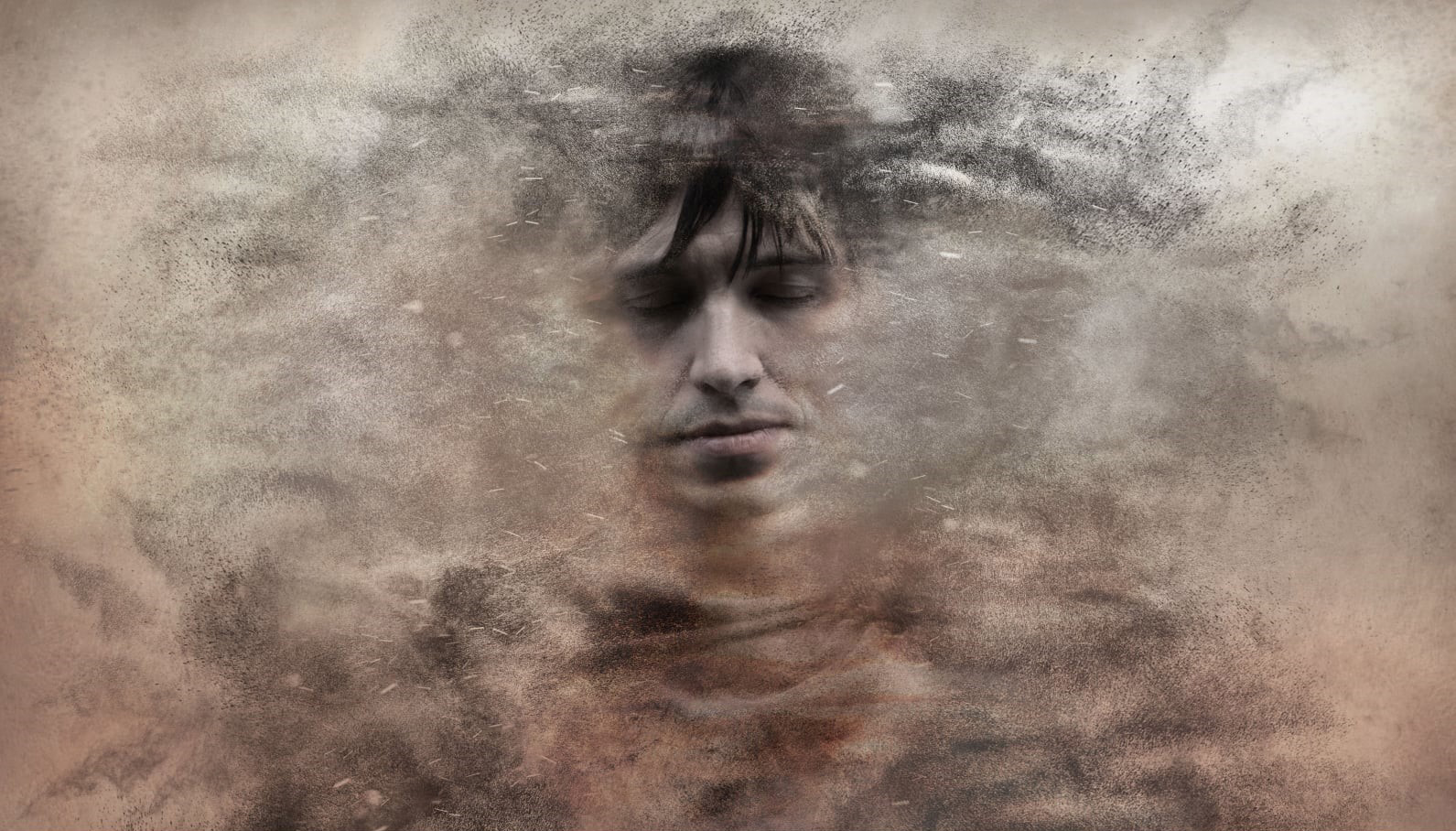
Science fiction, by Noah Paganotto, Argentina, 2022.
In an undetermined location on planet Earth, in an unknown time, Zoilo lives with his family in a wasteland surrounded by ruins. They live uprooted, without mothers, knowing that pregnancy for women is synonymous with death. For them there is only one collective routine; keep the fire alive. Only Zoilo escapes this logic, observing, intrigued, details that others do not see and therefore do not appreciate. Zoilo's personal search for answers will increase the differences with his relatives, increasingly revealing an empty world of interiority.
Avant-garde film that burns slowly in the first part and then reveals in the second the profound conflicts of a family prisoner of archaic beliefs. It is a dystopian and visionary work, with wonderful photography and images of rare power that allow us to grasp the depth of the story and its poetic potential. The faces of the actors, especially the protagonist boy, are perfect. The Sands metaphorically represents the world we live in: an alienated society, where what keeps us alive is demonized and blamed for death. In opposition to the fast pace of the typical mainstream film, The Sands is a meditative journey into the depths of images. The film was shot in natural environments in the city of Necochea, Buenos Aires province, Argentina.
LANGUAGE: Spanish
SUBTITLES: English, Spanish, French, German, Portuguese
El Llano en llamas and the Violence Beneath the Surface

There is a man riding through a landscape that has forgotten how to be green. The horse beneath him moves without urgency, as though it too has accepted that arriving somewhere changes nothing. The man carries a rifle across his knees not because he expects to use it but because his hands require an object to hold, something between them and the air that asks nothing back. He is returning from something or toward something, and the distinction has collapsed. You watch him and you understand, with the particular dread of recognition, that he does not know whether he is a soldier or a criminal, whether the men he killed were enemies of the state or simply men who were standing in the wrong valley when the horses came through.
This is the world Juan Rulfo assembled in El Llano en llamas, published in 1953, seventeen stories that refuse the consolations of the corrido tradition, refuse the revolutionary mural’s triumphant browns and reds, refuse the idea that rural Mexico had ever been redeemed by anything. The collection arrived in a country still performing its nationalist mythology, still insisting that the Revolution had produced a people, a dignity, a future. Rulfo looked at the same countryside and saw men who had been broken so thoroughly that they no longer remembered the breaking.
Norbert Elias, writing in 1939 in The Civilizing Process, traced how state formation gradually transfers the monopoly on violence from individual bodies to central institutions, and in doing so drives aggression inward, forces it underground, converts it into internal compulsion, guilt, shame, the psychic residue of actions that history commanded and then disowned. What Elias described in the context of European feudal-to-modern transitions finds its dark mirror in post-revolutionary Mexico, where the state had nominally pacified the countryside while leaving its inhabitants with the accumulated damage of three decades of cyclical warfare, dispossession, and counter-reform. The men in Rulfo’s stories are not villains. They are the outcome of a process that never asked their consent and never offered its accounting.
In one story the narrator describes participating in something that reads as massacre and as duty simultaneously, the two registers bleeding into each other until neither word holds. In another, a man awaits execution with the patient indifference of someone who long ago transferred the agency of his fate to forces he cannot name. The violence in these pages is never spectacular. It is administered the way weather is administered, as a condition of existence rather than a rupture in it. This is what makes it so difficult to hold, and so precise.
The prose itself is doing political work here, and it is worth being exact about how. Rulfo strips his sentences until they cannot contain any rhetoric. There is no elevation, no call to witness, none of the moral scaffolding that allows a reader to locate themselves safely outside the events. The arid style — subject, verb, the barest predicate, silence — replicates the landscape’s refusal to provide cover. Gabriel Zaid, writing about Mexican literary culture, noted that Rulfo understood silence as something that had been earned through too much speech, the decades of revolutionary proclamation having exhausted the language’s capacity to mean what it said. What remains after that exhaustion is a prose that trusts the image absolutely and the interpretation not at all.
The rider on the scorched plain does not explain himself to you. He passes. The dust settles. Somewhere behind him there is a village that may or may not still be there, populated by people who have learned to measure their survival in units of endurance so small they no longer register as survival at all. Rulfo gives you the dust. He gives you the horse’s unhurried hooves. He leaves you to understand that what was done here was legal, in every sense that law had ever meant in this country, and that this is precisely the problem.
The Silence That Speaks: Rulfo’s Prose Style as Philosophical Method
There is a moment — you have lived it — when someone across a table from you speaks at length, filling the air with explanations and justifications and small verbal evasions, and you understand with absolute certainty that the truth of the situation lives entirely in what they are not saying. Their silence, beneath all those words, has a specific weight. It presses down on the tablecloth, on the cutlery, on the space between your hands. The speaking is almost irrelevant. What is real is the architecture of avoidance, the precise shape carved out by everything withheld.
This is where Rulfo lives as a writer. Not in the sparse sentences themselves, but in what those sentences are built around. His minimalism is routinely described as if it were an aesthetic preference, a stylistic signature, as though he had simply chosen brevity the way another writer might choose ornamentation. But that reading misses the structural logic entirely. The economy of his prose is not restraint. It is a philosophical position about the nature of reality itself — specifically, about which layer of reality language is actually capable of touching.
Wittgenstein, in the Tractatus Logico-Philosophicus of 1921, arrived at his famous terminal proposition after constructing an entire theory of language as logical picture: whereof one cannot speak, thereof one must be silent. It was meant as a boundary, a prohibition. What lies beyond logical representation must be surrendered to wordlessness. But Rulfo, whether consciously or through some deeper instinctive knowledge of what literature can do, performs something far more radical with the same boundary. He does not stop at the edge of the unspeakable. He builds his fiction around it. He writes in such a way that the silence becomes structurally load-bearing, that the unspoken does not disappear behind the words but becomes present through them, the way the shape of an absence can be more vivid than any presence.
Read a page of Pedro Páramo. The sentences are short, the vocabulary stripped, the syntax deceptively simple. But the emotional weight is enormous, almost suffocating, and it accumulates not from what is described but from what the description refuses to complete. A man remembers a woman. A woman carries a grief that has no name in the text. The dead speak but do not explain. Rulfo understood — and this is the epistemological claim at the core of his method — that the most real things in human experience are precisely the ones that cannot survive direct articulation. Grief at that depth. Abandonment that old. Guilt that has calcified over decades into something indistinguishable from identity. These cannot be stated. They can only be indicated, circled, approached from the side.
He described his own writing process in interviews with a consistency that feels less like anecdote and more like testimony. He said he wrote by listening. Not by inventing, not by constructing, but by listening to voices — the voices of the dead of his region, the dead of Jalisco, the dead of that particular Mexican earth that had swallowed so many bodies through revolution and reprisal and simple neglect. He walked in the landscape of his childhood and he heard them. This is not mysticism, or not only mysticism. It is a description of what happens when a writer subordinates the self entirely to what the material already knows. The voice that speaks from the silence knows more than the voice that decides what to say.
Think again of the person sitting across from you at that table. Their silence carries a whole life that cannot be confessed, not because they lack the words, but because the experience itself exceeds the grammar of confession. Rulfo found a form capacious enough to hold that excess. Not by expanding language outward, but by hollowing it, until what remains is precisely the shape of what language cannot hold.
A vision curated by a filmmaker, not an algorithm
In this video I explain our vision
The Photograph and the Unfinished Novel
There is a photograph he took somewhere in Oaxaca, sometime in the 1950s, of a doorway with no door. Just the frame standing in rubble, the threshold intact while everything around it has collapsed. You look at it and feel, before any conscious thought arrives, that this is not documentation. This is not a record of what was there. This is an act of mourning dressed in the grammar of observation.
Rulfo carried a camera the way other men carry a wound — habitually, necessarily, without always knowing why. His photographic archive runs to thousands of images: faces of campesinos weathered into something beyond age, roads disappearing into dust, churches half-swallowed by earth, children standing in doorways of houses that seem to be slowly returning to the landscape. Taken together they form something that resists the word collection. They are more like a sustained act of listening to what no longer speaks.
Susan Sontag argued in 1977 that photographs are not documents but elegies. To photograph something, she wrote, is to participate in its mortality, to acknowledge by the very act of framing it that it will be gone, that it is already, in some sense, going. The photograph does not preserve. It certifies the loss in advance. When you understand this, Rulfo’s camera work and his literary work cease to be parallel projects and reveal themselves as the same project conducted in two different materials. Pedro Páramo is not a novel illustrated by photographs. The photographs are not a visual companion to the fiction. They are the same gesture — the same reaching toward something that recedes at the speed of the reaching.
His literary silence after 1955 has been discussed so many times it has become almost mythological, a convenient drama of the artist who fell mute after touching something too bright. But the photographs continued. He kept taking them for decades. Which means the silence was not a silence at all — it was a migration. The articulation moved from one register to another, from words to light, from sentences to the geometry of shadow on a wall.
And then there was La cordillera. He spoke of it for years, across interviews spanning the 1960s, the 1970s, into the 1980s — a novel in progress, a novel nearly finished, a novel that existed in fragments he was still assembling. Journalists asked. Readers waited. He described it variously as a story about the conquest, about memory, about the mountains of Mexico as a kind of character in themselves. No one who heard him speak of it doubted its existence. There were pages. There were drafts. There was something real in those hands.
What he could never do was release it. There is a man in a courtyard at dusk, feeding pages into a small fire. The flames do not consume failure — this is what you understand watching him. The failure would be bearable, would in fact be a kind of resolution. What burns instead are pages that were too true, too accurately aimed at something that cannot survive being named publicly. The manuscript knew too much about the wound, and the wound was still open. Releasing it into the world would have meant releasing the world into it.
Walter Benjamin wrote that there is a kind of knowledge that can only be preserved by being withheld — that transmission sometimes requires the refusal to transmit. Rulfo seems to have understood this instinctively. La cordillera exists now only in rumors, in fragments scholars have pieced together from archives, in the shape of an absence that has its own peculiar density. Like the doorway with no door. The frame is still there. You can see exactly where the threshold was. You can feel the dimensions of what once passed through it, or what almost did, or what stood at the edge of passing through and chose instead to remain on the other side, in the dark, intact.
Latin America Reading Itself Through Rulfo
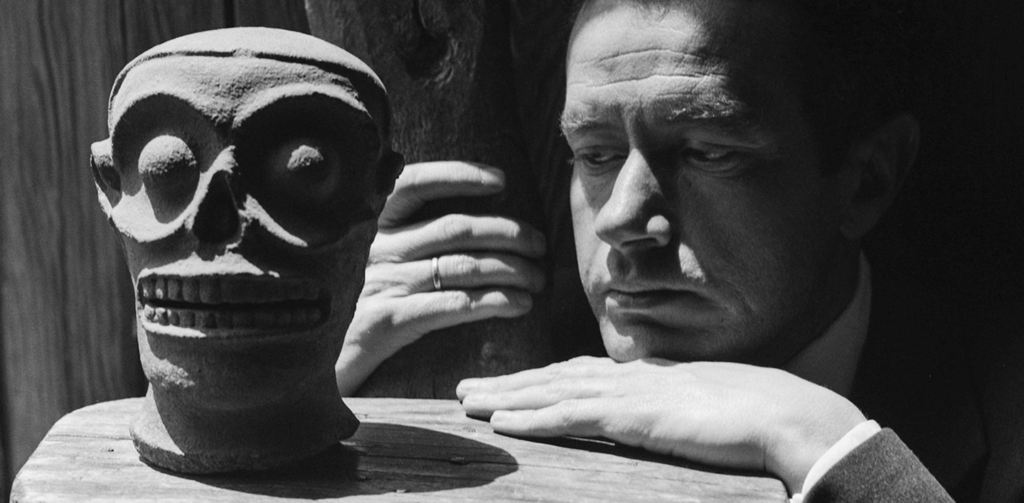
There is a particular kind of paralysis that strikes the most gifted students, not the mediocre ones. The mediocre absorb their influences comfortably, digest them, move on. But the truly gifted feel the weight of what came before as something close to a physical obstruction, a door that will not open because someone extraordinary is standing on the other side of it, not menacing, just present, immovably present. Harold Bloom understood this when he published The Anxiety of Influence in 1973, arguing that strong poets do not inherit their precursors so much as they wrestle them into submission, misread them deliberately, distort them creatively, in order to clear enough psychic space to exist at all. What Bloom mapped as an Oedipal drama of literary history found, in the decades following the publication of Pedro Páramo in 1955 and El Llano en llamas in 1953, its most concentrated and consequential theater anywhere in the twentieth century world.
Gabriel García Márquez claimed he could recite Pedro Páramo from memory. He said this more than once, in different interviews, across different decades, and the repetition itself tells you something. This is not the behavior of a writer who has processed an influence and filed it away. This is the behavior of someone who has been haunted, who keeps returning to the source not out of admiration alone but out of something more compulsive, more structurally necessary. Julio Cortázar, whose formal radicalism seemed to point in entirely opposite directions from Rulfo’s stripped austerity, nevertheless circled the same problem: how to render a reality that refuses the categories imported from European realism without collapsing into pure fantasy. Carlos Fuentes, Juan Carlos Onetti, José Donoso — all of them, in their different registers and geographies, had to reckon with the fact that a man from Jalisco had already done something to the Spanish-language novel that could not be undone.
Think of a young filmmaker who has watched an older master’s film so many times the print in his memory has worn thin and bright in equal measure. He sits in the dark before his own blank project, and every image he reaches for has been colonized. Not because the older master was careless with his territory, but precisely because he was so exact, so economical, so total, that there seems to be nothing left unclaimed. The young filmmaker does not begin until he understands what he is afraid of copying. The moment of clarity, when it comes, is not liberation from the influence but a recognition of how to transform the fear itself into material. This is what Bloom means by creative misreading. It is not theft and it is not homage. It is survival.
Pedro Páramo has been translated into more than forty languages. The number is staggering for a book of less than 130 pages, a book that on first publication in Mexico sold so poorly that Rulfo himself reportedly bought copies from bookstore bins to give to friends. And yet Rulfo, in those rare and increasingly sparse interviews he granted after his silence became his most discussed characteristic, suggested the novel remained unfinished in his own mind. Not flawed, exactly, but incomplete in a way he could not resolve and eventually stopped trying to resolve. This is not false modesty. It is something more disquieting: the possibility that the very quality that made the book seismically influential — its radical incompleteness, its refusal to close, its dead who cannot stop speaking precisely because they have nothing left to say — was not a formal achievement Rulfo consciously designed but a wound he could never fully dress.
The Boom generation did not build on this wound. They had to tear the scar tissue open again each time, in their own bodies, because the alternative was to write as though it did not exist, which was no longer possible for anyone paying honest attention.
The Man Who Stopped Writing and What That Means
There is a man sitting at a desk. The lamp is on. The pen is in his hand. He is not weeping, not staring at the ceiling with the theatrical anguish of the blocked artist. He is simply looking at the page, and the page is white, and there is something in his posture that is not defeat — it is closer to reverence, the kind you would show entering a place where something irreversible happened. You recognize that stillness. You have felt it yourself, perhaps, standing at the threshold of a room where someone died, aware that whatever you say next will be either true or a violation.
Juan Rulfo published Pedro Páramo in 1955. He lived until 1986. That is thirty-one years of near-silence on the fiction that had made him one of the most consequential writers of the twentieth century. Thirty-one years during which the explanations accumulated around him like weather — perfectionism, alcoholism, writer’s block, the impossibility of surpassing oneself. Gabriel García Márquez, who credited Pedro Páramo as a foundational rupture in his own imagination, reportedly said he could recite the novel from memory, that he had read it so many times it had become structural to his thinking. And yet the man who wrote it spent three decades producing almost nothing new, photographing landscapes, giving occasional lectures, holding a quiet administrative post at the Instituto Nacional Indigenista. The world waited. He did not arrive.
Elias Canetti, writing in The Human Province in 1973, meditates on the relationship between silence and moral integrity with an urgency that the literary world has largely failed to apply to Rulfo. Canetti understood silence not as absence but as a form of witness, a refusal to dilute what has already been said by adding to it carelessly. He wrote about the dead as presences that language can either honor or betray, and he understood that certain truths, once spoken, create an obligation — not to speak more, but to stop. For Canetti, who spent decades working on a single book about crowds and power, the silence between works was not empty time but a kind of custody.
Rulfo had written about the dead. Not metaphorically. He had written about the specific dead of the Cristero War, about villages emptied by violence and drought and the particular Mexican silence that follows massacre. He had given them voices that did not console, did not redeem, did not resolve into meaning. He had let them speak as the dead actually speak — in fragments, in repetitions, in sentences that trail off because death interrupted them mid-thought. To write more fiction after that would have required him to enter the same territory again, and perhaps he understood, with a precision that no literary theory can quite reach, that entering it again would have been tourism. The first time you witness something, you carry it. The second time, you perform it.
There is a form of moral seriousness that is indistinguishable from silence, and the literary world, which requires productivity as proof of relevance, has never known what to do with it. We pathologize the writer who stops. We search for trauma, for dysfunction, for the wound that cauterized the voice. But what if the silence is the most disciplined thing a writer can do? What if Rulfo, looking at that white page with something closer to respect than anguish, had simply understood that the dead of Jalisco did not need more words — that they needed the words he had already given them to be enough, to remain undiluted, to stand without being crowded by revision or sequel or explanation?
The question that remains, and that no biography has answered, is whether we even have the framework to recognize that kind of stopping as an act of integrity rather than failure, or whether our hunger for more always mistakes silence for defeat.
🌀 Voices from the Labyrinth of Memory and Identity
Juan Rulfo’s haunting prose, suspended between the living and the dead, echoes across centuries of literary imagination. These related articles trace the threads that connect his mythic vision to other great labyrinths of language, spirit, and cultural identity.
Miguel de Cervantes: Life and Works
Like Rulfo, Miguel de Cervantes reshaped an entire literary tradition by turning inward, questioning the boundary between illusion and reality. His monumental life and works reveal how a single author can become the founding myth of an entire language’s self-understanding. Exploring Cervantes opens a doorway into the same existential territory that Rulfo would reimagine four centuries later in the dust of Comala.
GO TO THE SELECTION: Miguel de Cervantes: Life and Works
Don Quixote: Meaning and Analysis
Don Quixote stands as one of the great wanderers of world literature, a figure lost in a reality that refuses to match his inner vision — much like the souls drifting through Rulfo’s Pedro Páramo. This analysis of Cervantes’ masterpiece illuminates how narrative form itself can become a mirror of madness, desire, and the impossibility of return. Reading it alongside Rulfo deepens the understanding of how Latin American fiction inherited and transformed the Spanish literary soul.
GO TO THE SELECTION: Don Quixote: Meaning and Analysis
The Spanish Picaresque Novel: History and Meaning
The Spanish picaresque novel forged a tradition of marginal, wandering protagonists navigating corrupt social landscapes — a legacy that quietly shaped Latin American narrative from the colonial era onward. Understanding its history and meaning reveals the deep roots of the antihero and the fragmented, episodic storytelling that Rulfo would later push to its most lyrical extreme. Rulfo’s characters, stripped of illusion, carry within them the ghostly memory of these early picaresque wanderers.
GO TO THE SELECTION: The Spanish Picaresque Novel: History and Meaning
Alchemy in Literature: From Dante to Goethe
Alchemy in literature, from Dante to Goethe, traces how the transformative symbolism of the Great Work became a metaphor for the inner journey of the writer and the text itself. Rulfo’s fiction — with its descent into death, silence, and the impossibility of resurrection — resonates powerfully with the alchemical archetype of nigredo, the dark dissolution before any rebirth. This article offers a surprising and illuminating lens through which to read the symbolic depths of Rulfo’s compressed, incandescent prose.
GO TO THE SELECTION: Alchemy in Literature: From Dante to Goethe
Discover the Cinema That Dares to Tell These Stories
If these literary and cultural labyrinths stir something in you, Indiecinema is the streaming space where that restlessness finds its visual form. Explore independent films that carry the same spirit of depth, myth, and uncompromising vision that defines authors like Rulfo — stories that dare to go where mainstream cinema never ventures.
👉 EXPLORE THE CATALOG: Watch Indie Films in Streaming
A vision curated by a filmmaker, not an algorithm
In this video I explain our vision

