
The Man Who Watched the Market Devour a Village
You are standing in a town that no longer knows what it is. The year is 1820, somewhere in the textile belt of northern England, and the streets smell of coal smoke and wet wool and something harder to name — a kind of social bewilderment, as though the people moving through the lanes have forgotten the grammar of how to be neighbors. The woman who used to leave bread at your door when your child was sick now watches you from across the mill yard with eyes that calculate. She is not cruel. She is simply competing. The wage system has arrived, and with it a new anthropology: you are no longer a member of something. You are a unit of labor, priced by the hour, replaceable by Thursday. The common land where families grazed animals for three hundred years has been enclosed, surveyed, and sold. The parish mechanisms that once caught the falling — the grain reserves, the mutual obligations, the customary rights — have been dissolved in favor of a market that promises efficiency and delivers exposure. Children work fourteen-hour shifts not because their parents are monsters but because hunger is no longer a community problem. It is now a personal failure.

What was destroyed in those decades was not merely an economic arrangement. It was an entire architecture of human interdependence, one that had been embedded so deeply in ritual, in seasonal rhythm, in the obligations of lord to tenant and guild to apprentice, that people had never needed to articulate it. It existed the way breathing exists — below the level of conscious defense. And so when it was removed, the people caught inside the removal could not name what they had lost. They only knew that something which had once held them was no longer there, and the fall felt like their own fault.
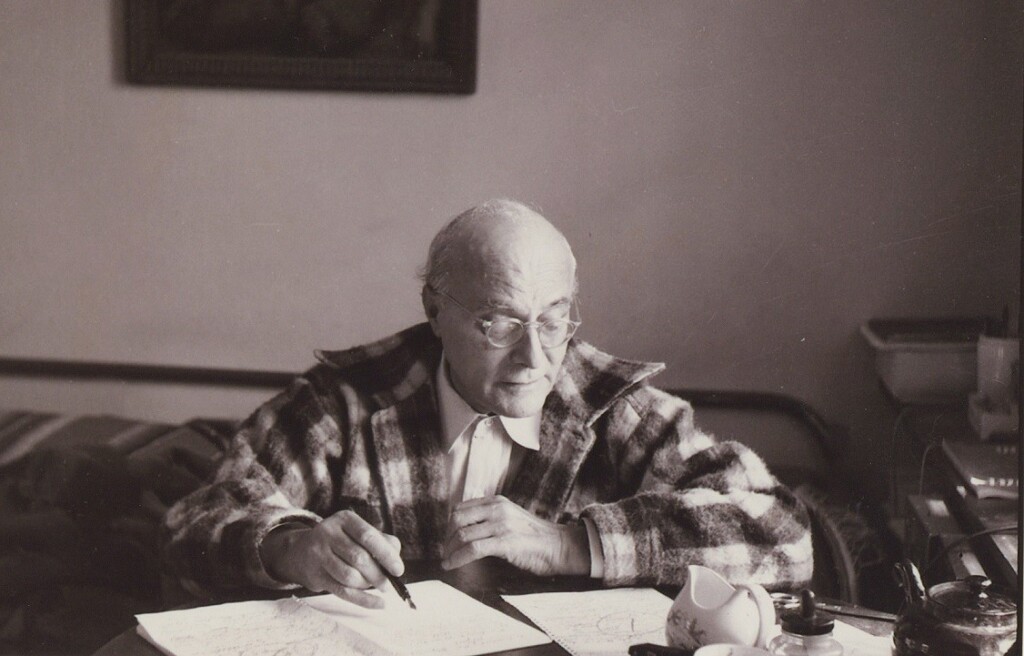
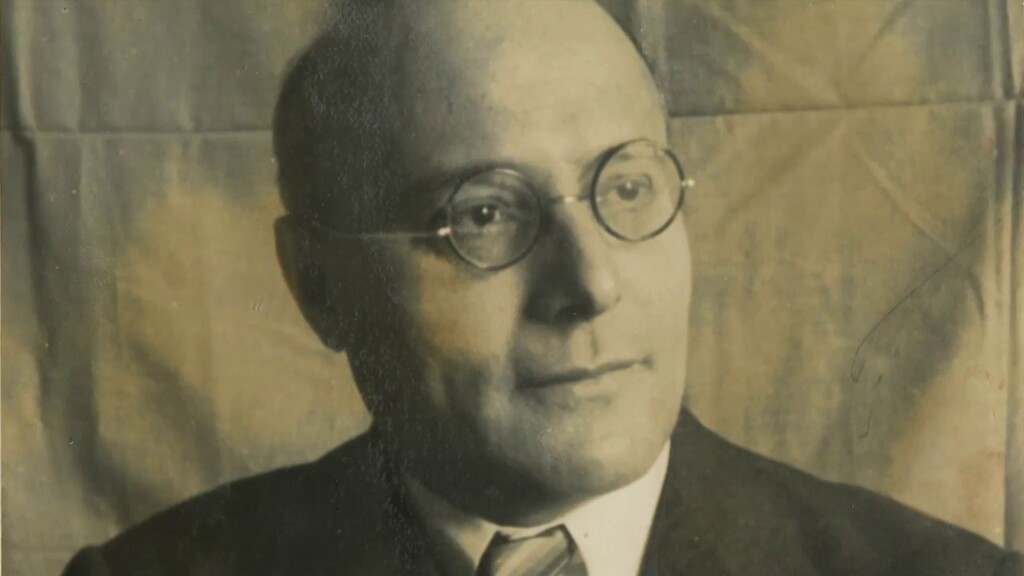
Karl Polanyi spent the better part of his intellectual life trying to give that loss a name. Born in Vienna in 1886 into a family of restless, cosmopolitan Jewish intellectuals — his mother ran a salon that gathered some of the most agitated minds of Central Europe — he grew up inside the contradictions that would eventually produce his masterwork. He watched the Austro-Hungarian Empire dissolve. He watched the socialist movements of Budapest in 1919 collapse under violent counterrevolution. He moved to Vienna and edited the financial pages of Der Österreichische Volkswirt through the 1920s, which meant he had a front-row seat to the slow-motion catastrophe of interwar European capitalism — the inflation, the austerity, the political extremism that economic disintegration feeds like oxygen feeds fire. By the time he arrived in England in the 1930s and began the research that would become The Great Transformation, published in 1944, he was not theorizing from a library. He was diagnosing from autopsy.
The argument he built was surgical and, at the time, almost heretical. He did not accept the founding myth of modern economics — that markets are natural, that the human impulse to truck and barter is primordial, that the self-regulating market simply needed to be freed from the interference of tradition and politics to function as it was always meant to function. Drawing on the anthropological work of Bronisław Malinowski and Richard Thurnwald, who had documented the economic life of non-Western societies in the early twentieth century, Polanyi showed that in virtually every human society before the nineteenth century, economic exchange had been embedded inside social relations, not the other way around. People traded within structures of reciprocity and redistribution — not because they were irrational or pre-modern, but because the subordination of social life to market logic would have been recognized instantly as a form of collective suicide. The market society of industrial England was not the natural destination of human history. It was a sudden, violent, and deliberately engineered rupture — an experiment imposed on living people who had no say in the terms.
Crazy World

Drama, thriller, by Fabio Del Greco, Italy, 2010.
Luca is poor and works, precariously, as a waiter. He lives a problematic relationship with his girlfriend, and his life is full of doubts. One day Luca meets Chiara, a friend who had studied philosophy with him at university. She has realized her dream of opening a night and is now well-off. Luca leaves everything behind and starts a relationship with Chiara. He manages the nightclub with her and, thanks to the cocaine and call girls sold to politicians, he gets out of his hard economic situation. But Chiara does not manage to obtain the contract for an old furnace, so she blackmails Saverio, a member of the Parliament. Chiara owns a video in which Saverio has sexual intercourse with a transsexual.
LANGUAGE: Italian
SUBTITLES: English, French, Spanish, German, Dutch, Portuguese.
Budapest, Vienna, and the Education of a Dissident Mind
You are fifteen years old in Budapest in 1901, and the city around you is performing modernity at a pitch so intense it reads like fever. The coffeehouses are running all night. The newspapers are multiplying. The Jews have been legally emancipated for three decades, and a generation of brilliant, hungry minds — many of them from exactly the kind of assimilated, educated Jewish family that the Polányis represented — are pouring into philosophy, medicine, literature, economics, convinced that reason and reform might finally be the same project. Karl Polanyi grew up inside that conviction before he grew up enough to doubt it.
His mother, Cecile Wohl, ran a salon. His father, Mihály Pollacsek, was an engineer and entrepreneur who built railway lines and then watched his business collapse, dying in poverty when Karl was still young. That trajectory — the infrastructure of progress, the personal ruin — lodged itself somewhere in the son’s nervous system long before he had theoretical language to describe it. What markets do to people is not an abstract question if you have watched what they did to your father.
The Galileo Circle, which Polanyi helped found in 1908, was not simply a student debating club, though it was that too. It was a place where positivism, socialism, and philosophical radicalism competed openly, where György Lukács argued with Ervin Szabó, where the question of whether science or class consciousness would liberate humanity was treated as urgent, not academic. Polanyi moved through it with the particular kind of intensity that belongs to people who have not yet learned to protect themselves from ideas. He absorbed Proudhon’s associationism, Robert Owen‘s cooperative experiments, the ethical socialism of the English Fabians — not as a catalogue of positions, but as a live argument about whether human beings could organize themselves without surrendering to the logic of self-interest.
Then the argument stopped being theoretical. The First World War conscripted him into the Austro-Hungarian cavalry. He served on the Russian front, was wounded, watched an empire dissolve into its own contradictions. By 1918, the Habsburg order that had shaped every institution of his education simply ceased to exist. Béla Kun’s short-lived Hungarian Soviet Republic rose and fell in 1919, repressed by Miklós Horthy’s counterrevolution with a violence that made clear, once and for all, that the European liberal promise had a ceiling — and that ceiling was low, and it was patrolled.
Polanyi left for Vienna, and in doing so joined one of the strangest and most fertile intellectual communities of the twentieth century. Red Vienna — the socialist municipal government that ran the Austrian capital from 1919 to 1934 — was building public housing, funding adult education, reorganizing healthcare, attempting to demonstrate that a city could be administered according to different values than profit. Polanyi worked as a senior editor at Der Österreichische Volkswirt, one of the most respected economic journals in Central Europe, writing with analytical precision about economic crises, currency collapses, the structural pathologies of postwar capitalism. He was not theorizing from a distance. He was watching Weimar Germany hemorrhage, watching the gold standard distort whole national economies, watching democratic institutions buckle under pressures they were never designed to withstand.
It was also in Vienna that he encountered Ludwig von Mises, whose 1920 argument — that rational economic calculation was impossible under socialism because only market prices could aggregate dispersed information — became, for Polanyi, a challenge precise enough to demand a lifetime’s answer. Not because Mises was right, but because the argument had to be met at its own level of rigor, which meant that the entire apparatus of liberal economic thought required excavation, not refutation. The machinery had to be traced back to its origins before it could be judged. And that tracing would take him somewhere neither Vienna nor Budapest had prepared him to go.

The Great Transformation and the Double Movement
You are reading the annual report of a company that does not exist yet. The numbers are real, the projections are confident, and somewhere between the third and fourth paragraph you realize that the document is describing the world you already live in as though it were a future achievement — as though the market had always been a destination rather than a construction site covered in blood and eviction notices.
Karl Polanyi published his central argument in 1944, at the exact moment when the machinery he was describing had just finished tearing Europe apart for the second time in thirty years. The Great Transformation was not written as prophecy. It was written as diagnosis, and its most unsettling claim was not about capitalism in the abstract but about origins — specifically, the origins of the lie told to justify everything that followed. The self-regulating market, Polanyi argued, was not discovered the way one discovers a coastline or a law of physics. It was built. Deliberately, violently, and against the accumulated grain of every prior human society on record.
Before the nineteenth century, markets existed everywhere — in medieval Europe, in ancient Mesopotamia, across the trading networks of West Africa and the Song dynasty. But they were embedded within social life, hemmed in by custom, obligation, religious prohibition, and political authority. They served society. What happened in England between roughly 1795 and 1834 was categorically different: for the first time in human history, land, labor, and money were treated as commodities — as things produced for sale — even though none of them actually were. Labor is human life. Land is nature. Money is a social instrument. To pretend otherwise required not philosophical persuasion but institutional force: the enclosures, the Poor Law Amendment Act of 1834, the dismantling of the Speenhamland system that had partially insulated rural workers from pure market wages. These were not market outcomes. They were political decisions made by identifiable people in identifiable rooms, using state power to create the conditions under which a market could appear to be self-regulating.
The elegance and the brutality of this observation is that it collapses the foundational myth of liberal economics — the idea that the market is the natural state of human affairs and that social protection is the artificial interference. Polanyi inverts the causality entirely. The market required constant, aggressive, historically unprecedented intervention to exist at all. The so-called natural order was the constructed one. And the social protections that followed — trade unions, factory legislation, public health acts, minimum wage laws — were not distortions of a natural system but the entirely predictable human response to being fed into one.
This is the double movement, and it operates with something close to mechanical regularity across the nineteenth century. Every expansion of the market principle generates a counter-movement of self-protection from the very society the market is consuming. The Anti-Corn Law League advances; the Chartists mobilize. Free trade spreads across European economies in the 1860s; by the 1880s, Bismarck is introducing social insurance in Germany and protectionist tariffs are returning everywhere. The movement and the counter-movement are not opposites in a dialectic that resolves. They are simultaneous, locked, and the tension between them is not an accident of politics but the structural condition of market society itself.
What makes this more than historical observation is the question it forces about agency. The counter-movement is not organized by any single ideology or class. It assembles from farmers defending land values, workers defending wage floors, communities defending the coherence of their social fabric — interests that have nothing obvious in common except the threat posed to each of them by the same abstraction. The market does not have enemies. It produces them, continuously, out of the substance of ordinary life, and they arrive without having read the same books or attended the same meetings, driven by something older than political theory and far less patient than reform.
Land, Labor, Money: The Three Fictitious Commodities
You are standing in a job interview, being asked to price yourself. Not your time, not your skills in any rounded sense — yourself, distilled into a number you must name before the other person does, because whoever speaks first loses. The entire ritual depends on a fiction so total that no one in the room is allowed to acknowledge it: that you, a person with a history and a body and a set of needs that predate this conversation by decades, are a thing that was made in order to be sold.
Karl Polanyi’s entire argument in The Great Transformation, published in 1944, pivots on the recognition that this fiction is not merely uncomfortable but structurally catastrophic. He identified three things that market society treats as commodities — land, labor, and money — and argued with surgical precision that none of them meet the actual definition of a commodity, which is something produced for sale. Labor is human activity inseparable from life itself; land is another name for nature; money is a token of purchasing power that emerges from social and political arrangements. None of these were manufactured by anyone to be exchanged. The market did not produce them. It merely claimed them.
The violence of that claim is not metaphorical. When labor becomes a commodity subject to the full pressure of supply and demand, the human beings attached to that labor are treated as inputs to be cheapened when cheaper substitutes appear, discarded when demand contracts, and repriced upward only under conditions of artificial scarcity. The nineteenth-century factory towns of Manchester and Leeds were not accidents of industrialization — they were the logical output of a system that had agreed, tacitly and with enormous ideological effort, to forget that workers were not widgets. Friedrich Engels documented this in 1845 with The Condition of the Working Class in England, cataloguing cholera rates, life expectancies, and the geography of slum construction with the precision of a man who wanted the numbers to be impossible to dismiss. The numbers were dismissed anyway, because the fiction was too economically useful to surrender.
Land submitted to the same logic generates a different but equally traceable wreckage. When soil, forests, watersheds, and coastlines are treated as factors of production — things to be bought, exploited, and discarded when their yields decline — the destruction is externalized onto everyone who did not participate in the transaction. The enclosures of common land in England, accelerating through the sixteenth and seventeenth centuries and largely complete by the early nineteenth, did not just relocate peasants into cities. They severed a set of relationships between people and place that had organized subsistence, custom, and identity for generations, converting what had been a commons into a balance-sheet entry. Oliver Goldsmith elegized the process in The Deserted Village in 1770, and his lament was treated as sentimentality — which is always what market rationality calls attachment to things it needs to destroy.
Money as fictitious commodity introduces the most dizzying instability of all, because money is the medium through which the other two fictions operate, and when it behaves like a commodity subject to speculation and hoarding, the entire architecture of production and exchange can be destabilized by decisions made in rooms that have no visible connection to the fields or the factories. The financial crises of the 1870s, the deflation that crushed agricultural economies in the 1880s and 1890s, the collapse of 1929 — these were not random catastrophes. They were the periodic convulsions of a system built on the pretense that purchasing power is a thing that exists independently of political decision and social trust.
What Polanyi saw that most of his contemporaries could not is that society does not simply absorb these fictions. It pushes back. The labor movement, environmental regulation, central banking — these were not ideological impositions on a natural market order. They were the self-protective reflexes of a civilization that had been promised freedom and received exposure instead.
What Aristotle Knew That Adam Smith Forgot
You are standing in a marketplace in fourth-century Athens, and the man selling you grain is not, in any meaningful sense, trying to maximize his utility. He is embedded in a web of obligations — to his household, to his neighbors, to the civic order that makes the exchange possible in the first place. The transaction is not the point. The relationship is.
Aristotle saw this with the kind of clarity that only becomes visible to us now as a reproach. In the Politics and the Nicomachean Ethics, he drew a line that modern economics has spent two centuries pretending does not exist: the line between oikonomia, the management of the household toward sufficiency, and chrematistike, the art of acquisition without limit. The first was natural and bounded; the second was a perversion, a means mistaken for an end. What troubled Aristotle was not commerce itself but the psychic disorder of a person who could no longer distinguish between having enough and having more. He was diagnosing, in 350 BCE, the precise pathology that would become the founding virtue of market civilization.
Polanyi understood that Aristotle’s distinction was not merely philosophical decoration but a description of how most human communities had actually organized their economic lives. In Trade and Market in the Early Empires, which Polanyi co-edited in 1957, the ethnographic and historical record was assembled to make a single devastating argument: the self-regulating market was not the natural expression of human nature but an institutional novelty, invented in a specific historical moment and requiring constant political maintenance to survive. The evidence stretched from ancient Mesopotamia to pre-colonial West Africa — everywhere, exchange was subordinated to social purpose, not the other way around.
The anthropology that had to be quietly buried to make the market ideology coherent was extensive. Bronisław Malinowski’s 1922 work on the Trobriand Islands had already documented the kula ring, a system of ceremonial exchange spanning hundreds of miles of open ocean, in which the point was explicitly not to accumulate but to bind communities together through the movement of objects that carried social meaning. Marcel Mauss, writing his essay on the gift in 1925, had shown that what looked like generosity in archaic societies was actually an intricate system of obligation, counter-obligation, and delayed reciprocity — a form of economic life in which the social bond was the currency. Neither Malinowski nor Mauss was describing exotic exceptions. They were describing the default condition of human economic behavior across most of recorded history.
What Adam Smith performed, and what his successors formalized into mathematical doctrine, was the elevation of one particular motive — the desire for individual gain — into a universal anthropological constant. The famous passage in The Wealth of Nations about the brewer and the baker, published in 1776, is so familiar that its strangeness has become invisible: Smith argued that we do not appeal to the humanity of those who feed us but to their self-interest, and that this is not a defect but the very engine of social provision. This was presented as a discovery about human nature. It was, in fact, a prescription — a declaration that one slice of human motivation should be institutionally amplified until it crowded out the rest.
Polanyi’s point was not sentimental. He was not longing for a village commons or a potlatch. He was noting that the decision to treat self-interest as bedrock rather than as one human tendency among many required the systematic dismantling of every social institution that expressed a different logic. Guilds, commons, parish relief, customary pricing — these were not inefficiencies to be overcome. They were the architecture through which societies had historically prevented the market motive from becoming totalizing. Their destruction was not progress discovering an underlying truth about human nature. It was an operation performed on human nature, with consequences that no one had been asked to vote on.
A vision curated by a filmmaker, not an algorithm
In this video I explain our vision
Fascism as Market Failure, Not as Aberration

You are walking through a city you have lived in your whole life and you notice, without being able to name exactly when it happened, that the butcher is gone, the tailor is gone, the neighbor who used to argue with your grandfather about local politics is gone — not dead, simply dispersed, atomized, relocated by forces that operate at a scale no individual can resist or even fully perceive. The texture of mutual obligation has been replaced by a surface that looks like freedom because it offers choices, but choices that require no one to know your name.
Karl Polanyi spent years inside the wreckage of interwar Europe trying to understand why liberal civilization had not merely failed but had devoured itself, and his answer was structural rather than moral: fascism was not a virus that infected an otherwise healthy body, not a collective madness, not the result of a single deranged individual or a defeated nation’s wounded pride. It was what happened when the self-regulating market was pushed too far and too fast, when the commodification of land, labor, and money tore apart the social fabric before any protective countermovement could stabilize the damage. The violence that followed was not irrational. It was the political form that fills the vacuum left by disembedded economies.
The liberal account of the 1930s has always preferred the language of aberration — Hitler as historical accident, Mussolini as opportunist, fascism as a temporary madness corrected by Allied victory. This framing is extraordinarily convenient because it insulates the economic model itself from any causal responsibility. Polanyi’s work, published in 1944, refused that comfort with surgical coldness. He traced the collapse of the gold standard, the unemployment that tore through industrial populations in the late 1920s and early 1930s — in Germany alone, over six million registered unemployed by 1932 — and argued that these numbers were not background context for political extremism but its primary engine. When markets fail to protect people, people stop believing in the institutions that promised protection without delivering it. What rushes in is not simply anger but a demand for re-embedding, for belonging, for some form of social tissue to replace what the market dissolved. Fascism offered that re-embedding, grotesquely, through ethnicity and state violence, but it was re-embedding nonetheless.
What makes this argument genuinely destabilizing is not its historical claim but its structural one. Polanyi was not arguing that markets are evil or that capitalism always produces fascism. He was arguing that a specific configuration — the utopian insistence on treating the market as self-sufficient and self-correcting, the deliberate dismantling of protective institutions in the name of efficiency, the subordination of social life to economic logic — generates a predictable counter-pressure. Societies do not passively accept their own dissolution. They resist, and the political form of that resistance depends entirely on what organizational forces are available to capture the energy of desperation. In the 1930s, across much of Europe, it was the far right that moved fastest.
The sociologist Wolfgang Streeck, in his 2016 analysis of late capitalism’s crisis trajectory, effectively extended this logic into the present without needing to rename it: the slow erosion of democratic legitimacy through decades of market-driven austerity, the delegitimation of collective bargaining, the transfer of decision-making from elected bodies to technocratic institutions insulated from popular pressure — these are not neutral reforms. They are the conditions Polanyi described, operating at a slower tempo but accumulating toward the same fracture point. When people are told repeatedly that there is no alternative, they eventually find an alternative that the architects of that phrase find unacceptable.
The question Polanyi leaves open — and it is not a comfortable question to sit with — is whether the protective countermovement that emerges to fill social wreckage has any predetermined political valence at all, or whether that is entirely a matter of which forces happen to be organized when the breaking point arrives.
Columbia, Dahomey, and the Archaeology of Economic Life
You are standing in a lecture hall at Columbia University sometime in the early 1950s, and the man at the front is not talking about capitalism or socialism in any recognizable sense. He is talking about Dahomey. He is talking about the ancient port cities of the Near East, about redistributive palace economies in Mesopotamia three thousand years before the first stock exchange. The students are confused in the most productive way possible — the kind of confusion that precedes a permanent rearrangement of what one takes to be obvious.
Karl Polanyi arrived at Columbia in 1947, after years of adult education work in Britain and his wartime exile in Vermont with his wife Ilona Duczynska. He was in his sixties, and instead of slowing down he turned toward the deepest possible version of the question he had spent his life circling: not whether markets could be controlled or reformed, but whether they had ever been the natural form of human economic life in the first place. The answer he built, collaboratively, with a group of scholars that included Conrad Arensberg and Harry Pearson, was published in 1957 as Trade and Market in the Early Empires. It was not a book anyone could comfortably shelve next to standard economics textbooks, because it refused the foundational premise those textbooks shared.
That premise — so embedded it rarely requires stating — is that human beings are fundamentally driven by the desire to truck, barter, and exchange, as Adam Smith put it in 1776, and that markets emerge naturally from this disposition wherever conditions allow. Polanyi spent the last decade of his scholarly life systematically dismantling this as a historical claim. Drawing on archaeological records, ancient Near Eastern administrative tablets, and ethnographic material from West Africa, he and his collaborators demonstrated that what economists call the market — a self-regulating price mechanism driven by supply and demand — had not existed in any meaningful institutional form for the overwhelming majority of human history. What had existed instead were two quite different systems: redistribution, in which goods flowed toward a central authority and were then allocated outward, as in the great palace economies of Sumer and Egypt; and reciprocity, in which exchange was embedded in social obligation, kinship, and ritual, as documented in detail across countless pre-modern societies.
The Dahomean material was particularly striking in this regard. The kingdom of Dahomey in West Africa had an elaborate system of administered trade, with ports of entry called ports of trade — a concept Polanyi developed carefully — where foreign merchants could exchange goods under state supervision without those exchanges setting prices in any generalizable market sense. Anne Bailey and other scholars later pushed back on some of the specifics, but the structural argument held: here was a society with high-volume, long-distance trade and no market in the economist’s sense, because the two things are not the same thing and never were.
The intellectual stakes of this distinction were enormous and remain largely unacknowledged in public discourse. If markets are not natural but historical — if they emerged in their modern form only in the nineteenth century under very specific political conditions, as Polanyi had argued in his earlier major work — then the contemporary assumption that deregulated exchange simply releases human nature from artificial constraint is not an insight but an anachronism dressed as intuition. Every policy argument premised on the market as a default state, as the thing you get when you stop interfering, depends on a historical claim that the archaeological record refuses to support.
Polanyi never completed what he considered his most ambitious project, a full study of the ancient Greek economy that would have extended this analysis into the classical world. He died in 1964 in Pickering, Ontario. The manuscript fragments and the question they were reaching toward remained open, which may be the most honest form a certain kind of intellectual project can take — one whose conclusions would have required history itself to sit still long enough to be finished.
The Trap of Economic Naturalism
You are standing in a supermarket at eleven on a Tuesday night, scanning rows of identical yogurt containers, each priced to the cent, each promising something slightly different from the one beside it, and it does not occur to you — it cannot occur to you, structurally — that the entire choreography surrounding you was invented. Not discovered. Not revealed by the slow patient work of economic science. Invented, over roughly two centuries, by a specific class of people with specific interests, and then gradually naturalized into the background noise of what counts as reality.
This is the trap Polanyi spent his intellectual life trying to name. The danger was never that market society would declare itself the only possibility. Declarations invite refutation. The danger was subtler: that market logic would seep so thoroughly into the categories through which people perceive and reason that the question of alternatives would cease to form in the mind at all. Not forbidden. Not answered and dismissed. Simply unasked, because the cognitive architecture required to generate the question had been quietly dismantled.
When Polanyi published The Great Transformation in 1944, he was not writing economic history as a neutral account of what happened. He was performing an act of defamiliarization, using history as a scalpel to cut open what his contemporaries experienced as natural. His central move was to demonstrate that the self-regulating market was not an evolved feature of human societies but a constructed institution, assembled deliberately in nineteenth-century England through the Poor Law Amendment Act of 1834, the repeal of the Speenhamland system, and a series of legislative decisions that forcibly separated people from their land, their communities, and their customary protections. The violence was not incidental. It was the mechanism. Human beings do not spontaneously organize themselves around the price signal; they have to be made to do so, often against their own resistance, and the making requires the systematic destruction of every social arrangement that offered an alternative buffer.
What makes this more than historical grievance is what it reveals about the present tense. The anthropological record Polanyi assembled, drawing on Bronisław Malinowski’s work on the Trobriand Islands and Marcel Mauss’s 1925 essay on the gift, showed that across an enormous range of human societies, economic activity was embedded in social relations — governed by reciprocity, redistribution, and householding rather than by the market principle. People provisioned themselves through webs of obligation, kinship, and communal ritual. The market existed in those societies, but it was contained, peripheral, subject to the larger social fabric. What the nineteenth century accomplished was the inversion of this relationship: the social fabric was made subject to the market. And once that inversion was complete, the memory of the prior arrangement began to fade from living consciousness, replaced by the sensation that competition and price were simply how human beings are.
The philosopher Charles Taylor, writing in Sources of the Self in 1989, described how moral frameworks operate not as explicit beliefs but as background conditions of intelligibility — the things that must be true for any particular thought to be thinkable at all. What Polanyi was diagnosing, before Taylor had the language for it, was the capture of the background. When the market becomes a background condition rather than a foreground institution, criticizing it feels not merely difficult but slightly incoherent, like arguing against weather. The very sophistication with which people defend economic arrangements is often evidence not of their freedom but of how completely the frame has been internalized.
There is something deeply unsettling in the realization that the most effective form of social control is not the one that punishes dissent but the one that makes dissent feel like confusion — a personal failure of understanding rather than a legitimate response to a constructed world. Polanyi’s work does not offer an exit from this condition, but it does something arguably more important: it makes the walls visible.
🏛️ Economy, Society, and the Embedded Market
Karl Polanyi’s thought sits at the crossroads of economics, anthropology, and political theory, questioning the myth of the self-regulating market and its devastating effects on human communities. The articles below trace the intellectual landscape closest to his legacy, from the sociology of community bonds to the critique of capitalist modernity.
Michael Polanyi: Life and Works
Michael Polanyi, Karl’s younger brother, developed a philosophy of science centered on tacit knowledge and personal commitment, offering a complementary yet distinct vision of how human beings navigate social and epistemic institutions. Where Karl interrogated the economy as an embedded social process, Michael interrogated knowledge itself as something irreducibly personal and communal. Together, the two brothers represent one of the most remarkable intellectual families of the twentieth century.
GO TO THE SELECTION: Michael Polanyi: Life and Works
Ferdinand Tönnies: Life and Works
Ferdinand Tönnies drew a foundational distinction between Gemeinschaft, the organic community of shared bonds, and Gesellschaft, the impersonal society of contractual relations — a tension that lies at the very heart of Polanyi’s critique of market civilization. His typology influenced generations of sociologists grappling with the social costs of modernization and industrialization. Reading Tönnies alongside Polanyi illuminates why the ‘great transformation’ was experienced as a profound rupture in collective life.
GO TO THE SELECTION: Ferdinand Tönnies: Life and Works
Karl Marx and Alienation: Economic and Philosophical Manuscripts
Karl Marx’s analysis of alienation in the Economic and Philosophical Manuscripts provided one of the essential intellectual foundations upon which thinkers like Polanyi would later build their critiques of capitalism’s disembedding of labor from social meaning. Marx saw the worker estranged from the product of their labor, from the act of production, and ultimately from their own human nature. Polanyi extended this diagnosis into a systemic account of how market society fictitiously transforms land, labor, and money into commodities.
GO TO THE SELECTION: Karl Marx and Alienation: Economic and Philosophical Manuscripts
Max Weber: Life and Works
Max Weber‘s explorations of rationalization, bureaucracy, and the Protestant ethic offer an indispensable counterpoint to Polanyi’s institutional approach to the economy. Weber’s concern with the ‘iron cage’ of modern capitalism resonates deeply with Polanyi’s alarm at the market’s colonization of social life. Both thinkers shared a historical sensibility that refused to treat economic arrangements as natural or inevitable, insisting instead on their deeply contingent and culturally embedded character.
GO TO THE SELECTION: Max Weber: Life and Works
Discover the Cinema of Ideas on Indiecinema
If these intellectual journeys through economy, community, and social critique have stirred your curiosity, Indiecinema’s streaming platform offers a carefully curated selection of independent and documentary films that bring these very themes to life on screen. From films interrogating the violence of market society to portraits of thinkers who dared to imagine alternatives, Indiecinema is the space where ideas meet moving images. Explore the catalog and let independent cinema deepen your thinking.
👉 EXPLORE THE CATALOG: Watch Indie Films in Streaming
A vision curated by a filmmaker, not an algorithm
In this video I explain our vision

