
The Unspoken Inheritance
You are standing at the edge of something that requires words, and you have none. Not because you are stupid, not because you do not feel the weight of the moment pressing against your sternum like a hand — you feel it precisely, with a granularity that would surprise anyone who has ever called you closed off. Your father is in a hospital bed and the machines are making sounds you will remember for years, and he is looking at you with eyes that are asking a question you both understand perfectly, and you open your mouth and what comes out is something about the drive over, about the parking, about whether the nurses have been attentive. He nods. You nod. The question retreats back behind his eyes. You sit down in the plastic chair and you look at the wall and somewhere inside you a door closes so quietly it makes no sound at all.

This is not a failure of love. That distinction matters more than almost anything else that will be said here, because the cultural story told about men and emotional silence almost always mistakes the symptom for the cause. The silence is not where the problem originates — it is where the problem arrives, after traveling a very long distance through territory most people never bother to map. The sociologist Arlie Hochschild, in her 1983 work “The Managed Heart,” introduced the concept of emotional labor as something performed for wages, a management of feeling required to sustain a professional face. What she did not fully pursue — and what subsequent decades of research have had to excavate separately — is the degree to which emotional labor in men operates not in the marketplace but in the developmental years before any marketplace exists, shaping the architecture of expression itself before a man ever earns his first dollar or loses his first relationship to silence.
The inheritance begins earlier than memory. Developmental psychologist Judy Chu, in her 2014 study “When Boys Become Boys,” tracked young males between ages four and six and found something that dismantled the comfortable assumption that boys are simply wired for emotional reticence. At four, they were emotionally articulate, relationally sophisticated, quick to name hurt and longing and confusion with an ease that would be called emotionally intelligent in any adult. By the time they reached the social architecture of early schooling, they had learned — with a speed that was almost violent — to compress, deflect, and route their emotional lives underground. The compression was not natural. It was instructed. Not always with words.
It was instructed by the slight pause before a father answered a question about sadness. By the laugh track that ran over a boy’s tears in every piece of media he consumed. By the subtle recalibration in a room full of men when one of them got too specific about pain. By 1976, the psychologist Sidney Jourard had already documented what he called the “lethal aspects of the male role” — noting that men’s inability to engage in self-disclosure was statistically correlated with reduced immune function, shorter lifespans, and a cascade of psychosomatic illness. The body, it turns out, does not simply absorb what the voice refuses to carry. It converts it.
What makes this inheritance so durable is that it does not announce itself as ideology. It presents itself as nature. The boy who learns to fall silent at the precise moment when speech would cost him something in the social economy of masculinity does not experience this as an act of conformity — he experiences it as an act of strength, which is to say he experiences ideology as identity, which is the only condition under which ideology becomes truly inescapable. And so the inheritance passes, not from hand to hand, but from silence to silence, each generation mistaking the wound for the shape of the man.
Along For The Ride

Drama, Comedy, by Bryan Simon, USA, 2001.
Two brothers, Terry (Randy Batinkoff) and Vance (Dylan Haggerty), embark on a journey into the desert with the body of their recently deceased father. Their goal is to find a burial site for him, but along the way unresolved family conflicts resurface. Terry, a successful former baseball player, has always exerted a dominant influence on the younger Vance, a humble mailman. Both carry within themselves the burden of a complicated relationship with their father, Jake (J.E. Freeman), a former professional player obsessed with sports. Even after his death, Jake appears to his children in dream sequences, but instead of offering wise advice, he continues to be distant and authoritarian. The journey thus becomes not only a physical but an emotional journey, in which the two brothers confront their mutual grudges and the emotional legacy of their father.
The film, directed by Bryan Simon with a budget of 150,000 dollars, was shot in extreme weather conditions, with a screenplay adapted by Jim Moores from a work by Randall Wheatley. The film also explores the role of sport as a vehicle for communication between father and son. For many men, expressing feelings is difficult, while talking about sport is a natural and shared language. "Along for the Ride" addresses these issues with sensitivity and realism, resulting in a touching work for those who have experienced similar family dynamics. An indie not to be missed for lovers of quality independent cinema.
LANGUAGE: English
SUBTITLES: Spanish, French, German, Portuguese
How Silence Was Manufactured
You are sitting across from your father at a table that has hosted a thousand meals, and you realize, somewhere around the third cup of coffee, that you have never once heard him describe what he actually feels. Not because he lacks the capacity. Because somewhere, long before you were born, someone decided that capacity was a liability.
The silence your father performs is not ancient. It has a birthday. Historians of masculinity, including Anthony Fletcher in his 1995 work Gender, Sex and Subordination in England, trace the decisive rupture to roughly the mid-eighteenth century, when emotional expressiveness in men began its long, systematic reclassification from virtue to weakness. Before this, male friendship in the European tradition was saturated with what we would now read as emotional intensity. Men wrote letters to one another about longing, grief, and tenderness without apparent anxiety. The stoic mask was not yet mandatory. What made it mandatory was not biology or ancient custom but something far more terrestrial: the reorganization of labor.
The Industrial Revolution did not simply move men from fields to factories. It restructured the very moral architecture around which male identity was permitted to form. By the 1820s and 1830s in England, the emerging bourgeois class needed a new kind of man — one whose inner life was subordinated to productive output, whose reliability could be measured in hours worked rather than bonds maintained. Sentiment became economically inconvenient. Sociologist Michael Kimmel, in Manhood in America published in 1996, documents how the “self-made man” archetype that crystallized in antebellum America was explicitly built against emotional availability — a man who mastered his feelings was a man who could master markets, territories, bodies of labor.
What is rarely acknowledged is how thoroughly this transformation was enforced through institutions rather than individuals. The Victorian public school system in Britain, for instance, was explicitly designed to extinguish what its architects called “morbid sensibility.” Boarding schools separated boys from their mothers at ages as young as seven or eight and subjected them to environments where emotional expression was met with social violence. The anthropologist Geoffrey Gorer, writing in 1955, described the result as a culturally produced emotional numbness that several generations of British men then exported to their children as though it were natural inheritance. The machinery was institutional; the wound was intimate.
Simultaneously, the emerging psychiatric profession began drawing firm diagnostic lines between acceptable male composure and pathological excess. The male hysteric, documented briefly in the 1880s by Jean-Martin Charcot in Paris, was almost immediately marginalized from mainstream medical discourse — his existence too threatening to the conceptual architecture that required women to be emotionally volatile and men to be emotionally stable. By the time Freud’s ideas entered popular culture in the early twentieth century, the framework was already set: male emotion was either repressed (and therefore productive of neurosis) or controlled (and therefore productive of civilization). There was no third category for emotion freely expressed and socially integrated.
The First World War delivered the final codification. Men who wept after witnessing mass death were diagnosed with “shell shock” and treated as aberrations requiring correction rather than human beings responding appropriately to horror. The military and medical establishments that handled these men produced protocols that would shape psychological treatment of male distress for decades — protocols built not on what men needed but on what the war machine required them to return to. W.H.R. Rivers, the psychiatrist who treated Siegfried Sassoon at Craiglockhart in 1917, understood this contradiction acutely, recognizing that the cure he was administering was also a reinsertion into the very condition that had produced the wound.
What was manufactured across those two centuries was not strength. It was a particular form of trained dissociation, encoded so deeply into social expectation that the men who carry it today experience it not as a historical imposition but as the simple fact of who they are.

The Vocabulary That Was Never Given
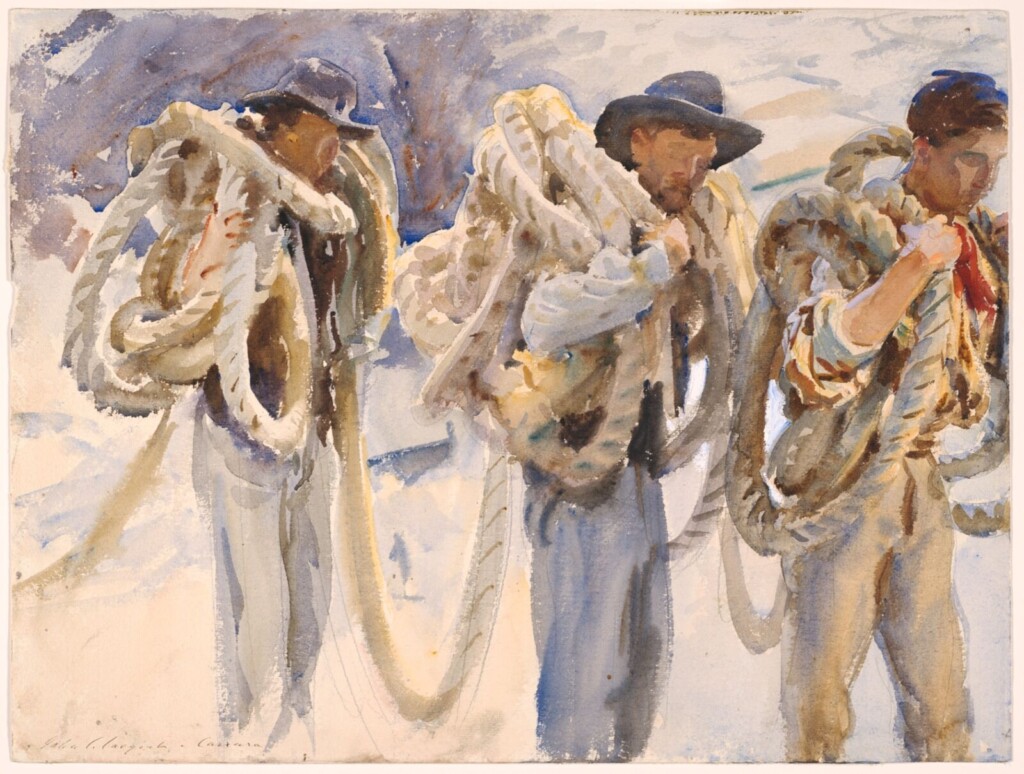
You learned the names of tools before you learned the names of feelings. By the time you were seven, you could distinguish a wrench from a socket set, identify a Phillips head on sight, name the difference between cement and concrete — and you had, at most, three words for what happened inside you: good, bad, mad. The vocabulary was not withheld through cruelty. It was withheld through architecture.
Psycholinguist Lev Vygotsky argued in his 1934 work “Thinking and Speech” that language does not merely describe inner experience — it constitutes it. A child without the word “melancholy” does not experience melancholy in a diminished way; in a structurally real sense, that emotional texture does not yet exist for them as a discrete, navigable state. They feel something, yes, but it remains undifferentiated, a weather system without a forecast. When developmental researchers in the 1990s began mapping what they called “emotion coaching” — the practice of parents naming and validating children’s affective states — they found that children whose caregivers consistently labeled emotions showed measurably better emotional regulation, stronger peer relationships, and lower cortisol responses to stress. The research was not controversial. What was quietly overlooked was its gendered distribution: boys were coached in emotional vocabulary at dramatically lower rates than girls, not because their nervous systems requested less, but because the adults around them had been shaped by the same architecture and were simply passing the blueprint forward.
The linguist Deborah Tannen, in her 1990 study “You Just Don’t Understand,” mapped a communicative split that was real but widely misread. Her findings were absorbed into popular culture as evidence of innate difference — men communicate for status, women for connection, and the two are simply wired differently. But Tannen’s actual argument was about socialization patterns and divergent speech communities, not biology. The misreading was almost too convenient: if the gap is biological, no one is responsible. If it is taught, someone has to answer for the teaching. The biological explanation became socially preferable precisely because it absolved the institution of the family, the school, the locker room, the workplace — every environment that had consistently interrupted a boy mid-sentence when his sentence was reaching toward something tender.
By adolescence, the interruption does not need to come from outside anymore. It has been internalized so completely that the boy — now performing a version of himself for a social audience he can no longer locate — edits himself before he speaks, before he even fully forms the thought. Psychologist Ronald Levant, who developed the concept of “normative male alexithymia” in the 1990s, was careful to use the word normative rather than pathological. He was pointing at something the culture had manufactured at scale: a functional difficulty in identifying and expressing emotional states that was not a disorder but a predictable outcome of a particular developmental environment. Alexithymia as a clinical condition affects roughly ten percent of the general population. Levant’s research suggested that subclinical versions of the same emotional muting were operating in a far broader cohort of men — not broken men, not traumatized men, but men who had been systematically under-equipped.
The under-equipment is structural in one more way that rarely gets named: it is self-concealing. A man who lacks the vocabulary to articulate loneliness cannot easily tell you he is missing something, because the description of the absence requires the very tool that is absent. He knows something is wrong the way you know a room is missing furniture you have never seen — by a vague spatial wrongness, an echo where something should absorb sound. He reaches for a word and finds the categories collapse into each other: tired, frustrated, fine. The language was never given, and without it, the experience remains in a kind of pre-verbal suspension, felt but unnamed, present but structurally unreachable.
Friendship as a Vanishing Form
You have probably never touched your closest male friend the way men in 1870 touched theirs — not sexually, but with a physical ease that your body has been trained to read as threatening. Letters between men in the mid-nineteenth century, preserved in archives that historians like E. Anthony Rotundo spent decades excavating for his 1993 study “American Manhood,” describe sleeping in the same bed without anxiety, holding hands in public without explanation, writing to each other with a directness of longing that contemporary men reserve, if they use it at all, for romantic partners. These were not marginal figures or bohemian outliers. They were lawyers, merchants, soldiers — men whose masculinity was entirely unquestioned by their social world, precisely because the category of “homosexuality” as a distinct human identity did not yet exist to contaminate the space between them.
The word itself was coined in 1869 by Karl-Maria Kertbeny, an Austro-Hungarian writer attempting to argue against sodomy laws — and the invention of the word created, more than it described, a new kind of social fear. Once there was a name for a type of person, rather than merely a category of act, proximity between men became evidence. Touch became suspect. Tenderness became a symptom. Michel Foucault traced this transformation in the first volume of “The History of Sexuality” in 1976, arguing that the nineteenth century did not simply regulate sexuality — it produced it as a domain of surveillance, turning ordinary human behavior into confessions waiting to be extracted. What had been a gesture became a diagnosis.
This coincided with something that had nothing to do with desire and everything to do with production. Industrialization pulled men out of small communities where relationships had accumulated over lifetimes and dropped them into factories, offices, and urban anonymity where relationships had to be built fast and kept shallow. Sociologist Robert Putnam, writing in “Bowling Alone” in 2000, documented the long collapse of civic association and social trust in American life across the twentieth century, but the structural roots reach back further — to the moment when men’s lives became organized around economic competition rather than communal interdependence. Intimacy requires time, repetition, and the absence of rivalry. Industrial capitalism systematically dismantled all three inside male social life.
What replaced emotional friendship was loyalty to role. Men learned to bond around shared tasks, shared enemies, shared silence — forms of connection that produce cohesion without vulnerability. The foxhole, the factory floor, the locker room: all are spaces where men can be together without being known. The feeling of brotherhood these environments generate is real, and many men describe it as the closest thing to love they have experienced outside their families, but it is a love that cannot speak its own name for entirely different reasons than the ones Oscar Wilde was prosecuted for in 1895. It cannot speak because the vocabulary was never given, and the silence was passed down as if it were dignity.
There is a particular cruelty in the fact that the very generation of men who dismantled intimate male friendship — the late Victorian and Edwardian fathers who absorbed the new terror of homosexuality and reorganized their emotional lives around it — also produced the soldiers of the First World War, men who went into trenches and wrote letters home saturated with grief and tenderness and something very close to love for the men beside them. Wilfred Owen‘s poetry from 1917 and 1918 is almost incomprehensible without understanding that he was writing inside a total contradiction: a culture that had just outlawed the emotional language he needed to describe what he was living through, from men who had been stripped of the very friendships that might have prepared them to survive what they were being asked to endure.
The Performance of Toughness as Survival Strategy
You are in a meeting room with nine other people, and someone across the table says something that lands like a fist in your chest — a dismissal of something you built, something you believed in — and you watch yourself from a slight distance as your face does exactly nothing. Not because you feel nothing. Because you learned, years ago, that the face that does nothing is the face that survives. You exhale quietly through your nose. You wait. You speak in a measured tone about resource allocation. The meeting ends and you drive home and somewhere on the highway the thing you compressed back into your body starts to hum at a frequency you cannot name.
This is not weakness disguised as strength. It is something more precise and more troubling: a rational response to an environment that genuinely punished the alternative. Arlie Hochschild, in her 1983 study The Managed Heart, introduced the concept of emotional labor — the work of inducing or suppressing feeling to sustain the outward display a situation requires. She developed this framework largely through the lens of service workers, particularly women in feminized professions, but the architecture of her argument opens onto something she did not fully excavate: the particular emotional management demanded of men inside institutions where power circulates, where the display of vulnerability is read not as honesty but as a liability to be exploited. The managed heart, in this context, is not performing care. It is performing invulnerability. And it does so because invulnerability has historically produced outcomes.
The historical record is blunt about this. Sociologist Michael Kimmel documented in Manhood in America, published in 1996, how the nineteenth-century shift from agrarian to market economies produced a new masculine ideal built entirely on external validation — on success, competition, and the suppression of anything that could be read as softness by rivals. Before industrialization, manhood was largely confirmed within a community that knew you over time. After it, you faced strangers, and strangers could not be trusted with the interior self. The poker face became professional infrastructure. Emotional opacity was not a cultural accident — it was adaptive technology for navigating anonymous market relations where exposure meant disadvantage.
What gets inherited across generations is not the original threat but the behavioral pattern that responded to it. The men who learned to compress themselves in the hierarchies of factory floors, boardrooms, and military structures passed on not a philosophy but a reflex. Their sons absorbed the reflex without inheriting the context that made it logical, which meant they carried a survival strategy into situations that no longer required surviving in that particular way — into marriages, into friendships, into their own children’s bedrooms at night — and the strategy kept firing anyway, because the body does not distinguish between the boardroom and the living room once the pattern is sufficiently grooved.
Research by psychologist Ronald Levant at the University of Akron identified a syndrome he called normative male alexithymia — not a clinical disorder but a culturally induced difficulty in identifying and articulating emotional states. The data he gathered across multiple studies in the 1990s and early 2000s suggested that a significant proportion of men genuinely struggle to locate what they are feeling, not because they are emotionally absent but because the lexicon was never developed, because the early instruction was always to move through the feeling rather than into it. The compression becomes cognitive. The unavailability is not strategic anymore — it is structural.
And here is where the performance stops being a performance in any theatrical sense and becomes something closer to an identity, indistinguishable from the self that wears it. The man who has successfully managed his emotional display for three decades does not experience himself as performing. He experiences himself as simply being the kind of man who handles things.
A vision curated by a filmmaker, not an algorithm
In this video I explain our vision
What the Body Keeps Instead

You are sitting in a waiting room when the doctor tells you that the stress has been “building for years.” You nod. You understand the clinical language. What you do not say, what the doctor does not ask, is what exactly was building and where it was supposed to go instead.
The body is not a passive container. It is an archive with its own filing system, and it stores what the mouth was never permitted to release. Bessel van der Kolk’s research, consolidated in his 2014 clinical compendium on trauma and the nervous system, demonstrated through decades of somatic work that unexpressed emotional states do not dissolve — they migrate. They relocate into tissue, into muscle tension, into the hyperactivated stress-response pathways of the autonomic nervous system. The body remembers with a fidelity that the conscious mind refuses to match. For men socialized under the specific prohibition against emotional disclosure, this migration is not metaphorical. It is measurable.
The data has been accumulating since at least the 1970s, when James Pennebaker began his landmark studies on expressive writing and physical health, showing that individuals who articulated emotional experience — even privately, even on paper — displayed measurable improvements in immune function, fewer physician visits, and lower rates of chronic inflammatory markers. The inverse was equally documented: men who reported consistent emotional suppression showed statistically elevated cortisol levels and accelerated cardiovascular deterioration. By 2000, the epidemiological pattern was difficult to ignore. Men die, on average, five to seven years earlier than women in most Western nations, and the gap widens precisely in the socioeconomic strata where emotional stoicism carries the most cultural prestige.
What medicine tends to frame as individual pathology — the heart attack at fifty-three, the autoimmune flare-up that appears without obvious cause, the chronic back pain that resists every structural explanation — often carries the residue of what psychoanalyst Joyce McDougall called “psychosomatic theater” in her 1989 work on the body as symptomatic stage. The organism performs what the psyche cannot narrate. And the performance is not symbolic in any loose poetic sense. It is physiological. The vagus nerve, the fascia network, the inflammatory cascade — these systems respond to emotional suppression as they would to any sustained threat, because the nervous system does not distinguish between a predator and a feeling that has nowhere to go.
Aggression operates through the same rerouting. When emotional material cannot move vertically — from interior experience into language — it moves laterally into behavior. The clinical literature on male anger, including Ronald Potter-Efron’s work on shame-based rage from the mid-1990s, consistently identifies aggression not as a primary emotion but as a secondary one: the socially legible face that grief, humiliation, and fear wear when their own faces are forbidden. The man who breaks furniture is not expressing too much. He is expressing the only thing that has been granted permission to move through his body without requiring justification or apology.
What makes this architecture particularly durable is that it is self-reinforcing. The man who does not speak of his interior life becomes, over time, genuinely less capable of accessing it — not because the emotions are gone, but because the neural pathways that connect visceral sensation to linguistic representation atrophy from disuse. Antonio Damasio’s work on somatic markers, developed across the 1990s and formalized in his study of emotion and decision-making published in 1994, showed that the capacity to feel and the capacity to name feeling are not separate faculties. They are co-dependent. Suppress the naming long enough, and the feeling becomes inaccessible not as a matter of will but as a matter of neurology.
The body then becomes the only voice left, and it speaks in a register that the culture treats as purely mechanical — as something to be repaired rather than interpreted.
The Myth of the Self-Sufficient Man
You have probably never questioned why the word “needy” lands like an insult when applied to a man, why it carries a specific kind of shame that the word “hungry” or “tired” does not. The feeling is immediate and visceral: something has gone wrong, a boundary has been crossed, a man has revealed too much of his machinery. What you are responding to is not a personality flaw but an ideological verdict centuries in the making.
René Descartes, writing in the 1640s, did not set out to design a template for masculinity. His project was epistemological — to locate a foundation of knowledge that could not be doubted. But the figure he constructed in the Meditations, the solitary reasoner sealed inside his own mind, achieving certainty through radical isolation from other minds, from sensation, from bodily need, became something more than a philosophical method. It became a social ideal. The autonomous rational subject who requires nothing from outside himself to arrive at truth slipped quietly from metaphysics into moral instruction, and eventually into the unwritten behavioral code for what it meant to be a credible adult male in Western society.
John Locke carried this architecture into political theory, and by the time Adam Smith published The Wealth of Nations in 1776, the self-sufficient individual had been granted economic legitimacy. The market’s invisible hand required, as its basic unit, a man who pursued his own interest independently, rationally, without the distorting interference of emotional entanglement. Dependence, in this framework, was not merely unfortunate — it was a market inefficiency. To need others was to be vulnerable to their fluctuations, and vulnerability was precisely what a rational economic actor was designed to eliminate.
The twentieth century did not invent this logic but it industrialized it. The assembly line required men who could show up, perform, and leave their interior lives at the door. Fordism, in its organizational ambition, turned emotional containment into a form of professional virtue. A man who kept his suffering private was not repressing himself — he was being a good worker. The therapeutic language we now use to describe that compression did not yet exist, and so the compression felt like character rather than damage.
What made this ideology particularly durable was its ability to disguise dependence rather than eliminate it. Men in the twentieth century were profoundly dependent — on wives for emotional labor, on institutions for identity, on hierarchies for meaning — but the dependence was structured so that it did not register as such. A man who could not cook, could not name his own feelings, could not sustain a friendship outside of his marriage, was not considered dependent; he was considered normal. The fiction of self-sufficiency was maintained precisely by outsourcing every form of relational need to women and calling the transaction something else: domesticity, support, a good home.
Sociologist Arlie Hochschild documented this in The Managed Heart in 1983, tracing how emotional labor became feminized and then rendered invisible — not because women were naturally more suited to it, but because the economy required that it cost nothing. When you make care free, you make the person who receives it appear not to need it. The self-sufficient man was, in this sense, a balance sheet trick: his needs were real, his dependence was total, but both were entered under someone else’s name.
What collapses when that accounting is exposed is not the man but the ideology that was doing the accounting. The desire to be known by another person, to be held in someone else’s attention, to matter to a specific face in a specific room — these are not symptoms of inadequacy. They are the actual content of a human life, and the system that taught men to be ashamed of them was never interested in their flourishing.
What Communication Would Actually Require
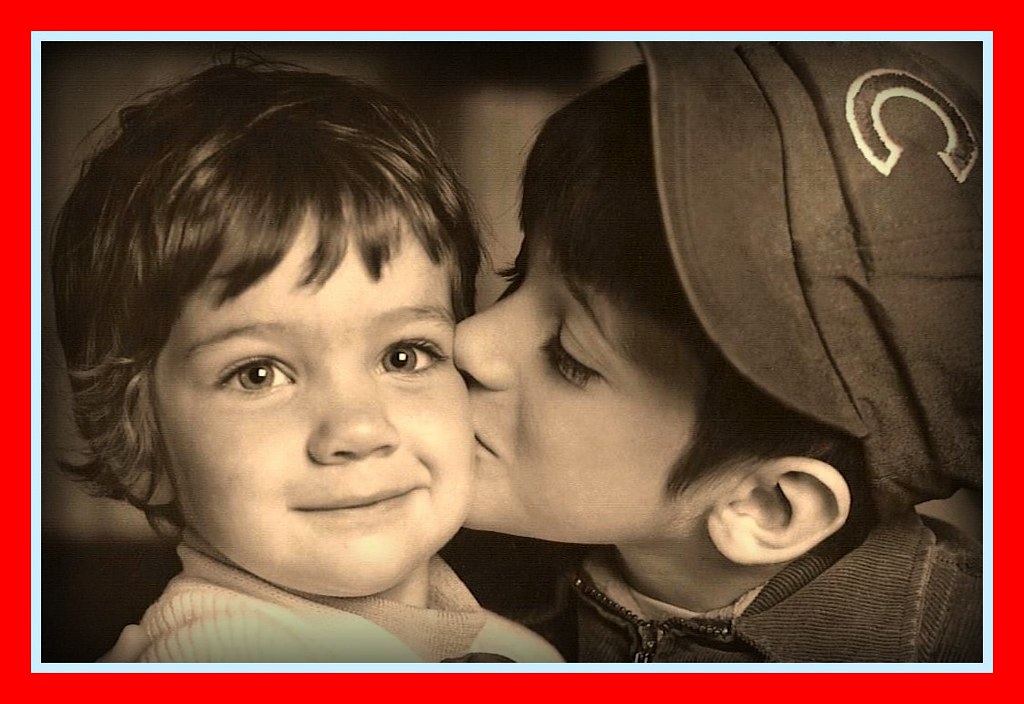
You are sitting across from someone you have known for fifteen years, and for the first time in all that time, you have no idea what to say that isn’t performance. Not silence born of comfort, but silence born of the terrifying recognition that everything you might offer — the joke, the advice, the pivot to logistics — would be a form of disappearance. What authentic communication would actually require in that moment is not a new vocabulary. It is the willingness to remain present inside your own incompleteness while another person watches.
This is precisely what most social architecture is designed to prevent. Erving Goffman spent the better part of his career, from “The Presentation of Self in Everyday Life” in 1959 onward, demonstrating that social interaction is fundamentally a staging operation — a continuous management of impressions designed to protect what he called the “virtual self” projected to others. The problem is not that men are uniquely bad at this or uniquely trapped by it. The problem is that for men, the cost of breaking from the performance is calculated in currencies that are genuinely devastating: lost credibility, revised status, the subtle but immediate renegotiation of where you stand in every relationship you have built. The withdrawal of respect is not metaphorical. It happens in rooms, in the small recalibrations of how people address you, in who stops returning calls.
What this means is that the obstacle to emotional communication between men is not primarily psychological. It is structural in the most literal sense: the penalties are real, distributed socially, and often administered by the very people a man might most want to be honest with. Brené Brown’s research on vulnerability, documented across “Daring Greatly” and subsequent work, consistently found that men reported shame most acutely around the perception of weakness — and that this shame was reinforced not only by other men but by intimate partners, by employers, by the entire lattice of daily social judgment. The man who breaks open in front of his peers does not simply feel exposed. He watches, in real time, how the people around him decide what to do with the information.
There is a particular cruelty in the fact that intimacy itself becomes evidence of incompleteness. In most relational frameworks men inherit, to need something from another person — to be genuinely uncertain, to say “I don’t know what I’m doing” — is to fail at the basic contract of masculine selfhood, which demands the appearance of sufficiency. The philosopher Charles Taylor, in “The Ethics of Authenticity” published in 1991, argued that modern identity is caught between the demand for genuine self-expression and the social horizons that make any selfhood intelligible to others. For men specifically, those horizons have been drawn so narrowly that the most authentic expression — radical, unfinished, reaching — falls outside the frame entirely.
Which is why technique is beside the point. Workshops on emotional literacy, frameworks for “healthy masculinity,” communication strategies borrowed from therapeutic models — all of these presuppose that the barrier is a skill deficit. But a man who has never been taught to name his interior states is not primarily suffering from a lack of words. He is living inside a system of incentives that has made legibility feel like surrender. To be known is to be assessed. To be assessed is to be found wanting. That chain of logic is not irrational. It is an accurate reading of most social environments as they actually function.
What would change this is not instruction but consequence revision — the slow, grinding historical work of making incompleteness something other than disqualifying. That work has barely begun, and it will not be finished by any single generation willing to try harder, feel more, or speak with greater courage than the structures around them were built to allow.
🧠 The Inner Walls Men Build Around Themselves
Emotional communication between men is one of the most complex and underexplored territories of contemporary psychology. Cultural conditioning, social masks, and fear of vulnerability create invisible barriers that isolate men from themselves and others. These articles trace the philosophical, psychological, and cultural roots of that silence.
Loneliness in Contemporary Society
Loneliness in contemporary society is not merely the absence of others but often the result of an inability to articulate inner experience. For men especially, socialized to suppress emotional language, this loneliness becomes a structural condition rather than a circumstantial one. This article explores how modern culture manufactures isolation even in the midst of connection.
GO TO THE SELECTION: Loneliness in Contemporary Society
The Masks We Wear: Identity and Fiction in Everyday Life
The masks we wear in everyday life are rarely chosen consciously — they are shaped by expectation, fear, and repetition until they fuse with the face beneath. For men, the performance of stoicism and strength becomes a prison that makes authentic emotional exchange nearly impossible. This article examines how identity and fiction blur in the theater of daily life.
GO TO THE SELECTION: The Masks We Wear: Identity and Fiction in Everyday Life
Jung and the Persona: The Mask That Becomes a Face
Jung’s concept of the Persona reveals how the social face we present to the world can gradually eclipse the authentic self underneath. When men adopt a rigid persona of emotional invulnerability, the shadow — all that is repressed and unexpressed — grows correspondingly powerful. This article offers a deep psychological reading of how the mask becomes the man.
GO TO THE SELECTION: Jung and the Persona: The Mask That Becomes a Face
Affective Manipulation in Psychology
Affective manipulation often thrives precisely where emotional communication is absent or distorted. Understanding the psychological mechanisms behind manipulation helps reveal how unspoken needs, denied vulnerabilities, and suppressed emotions can be weaponized in intimate relationships. This article provides essential tools for recognizing and dismantling these invisible dynamics.
GO TO THE SELECTION: Affective Manipulation in Psychology
Discover the Cinema That Speaks What Words Cannot
Indiecinema streaming is the place where emotional truth finds its most courageous form — in independent films that dare to explore what men rarely say out loud. Discover a curated world of cinema that goes beneath the surface, beyond the mask, and into the heart of human experience. Join us and let the screen speak what silence cannot.
👉 EXPLORE THE CATALOG: Watch Indie Films in Streaming
A vision curated by a filmmaker, not an algorithm
In this video I explain our vision

