
The Alarm Clock and the Loop
The alarm goes off at 6:47 and for a moment — that precise, brutal moment before consciousness fully assembles itself — you do not know what day it is, what year it is, or whether you have already lived this exact sequence before. Then the smell of coffee reaches you, the particular gray of the window, the sound of the same traffic building on the same street below, and something in you relaxes into recognition. Monday. Again. The body knows before the mind does, and what it knows is not just the schedule but the shape of the day, its emotional weather, the small rituals that must be performed in the correct order or something undefined but significant will feel wrong for hours.

You have made this coffee ten thousand times. The gesture is so rehearsed it has become something closer to ceremony than habit. And yet ceremony is precisely what it is — a repetition so faithful to itself that it has acquired a weight no single performance could justify. This is the first thing worth sitting with, before any theory or framework arrives to explain it away: the fact that repetition, in the most ordinary morning of your life, does not feel like mere mechanism. It feels like something is being maintained. Like a fire that must not go out.
There is a man standing at an iron sink, washing the same mug every morning for forty years, in a house that has slowly emptied of everyone who once lived in it. The ritual has survived the departure of children, the death of a wife, the shrinking of the world down to these rooms. He does not wash the mug because it needs washing. He washes it because the washing is now the point. The gesture contains everything that is no longer there, holds it in suspension, prevents the full collapse of meaning that would follow if he simply stopped. Outside, the same birds arrive at the same fence post at the same hour, and he notices them the way you notice a heartbeat — not with attention but with the cellular relief that something continues.
This is not nostalgia. It is something older and less sentimental. It is the recognition, acted out daily in kitchens and commutes and bedside routines, that time without structure is not freedom but dissolution. That the loop, however suffocating it sometimes feels, is also the thing that holds you inside a self coherent enough to function.
And yet you have felt the other side of it too. The Monday that arrives and finds you staring at the coffee as if seeing it for the first time — not with wonder but with a kind of horror. The déjà vu so total it stops being metaphor and becomes an actual question: is anything being built here, or is this just the same ground being walked over and over until it becomes a trench? The repetition that was comfort has curdled into something that resembles a loop in the mechanical sense — pointless, entrapping, a closed circuit that produces nothing and goes nowhere.
Both experiences are real. Both happen in the same kitchen, sometimes within the same week. The question they raise together is one that most modern thought has preferred to answer quickly and reassuringly — with talk of routine optimization, with the neuroscience of habit formation, with productivity frameworks that promise to make the repetition purposeful by making it efficient. But the question is not really about efficiency. It is about whether repetition itself carries meaning, whether the return to the same point in time is merely biological or whether it touches something that cultures have always, in every geography and every century, treated as sacred territory. Whether the loop is a prison or a portal depends entirely on what you believe is happening inside it.
Venetian Arcanum
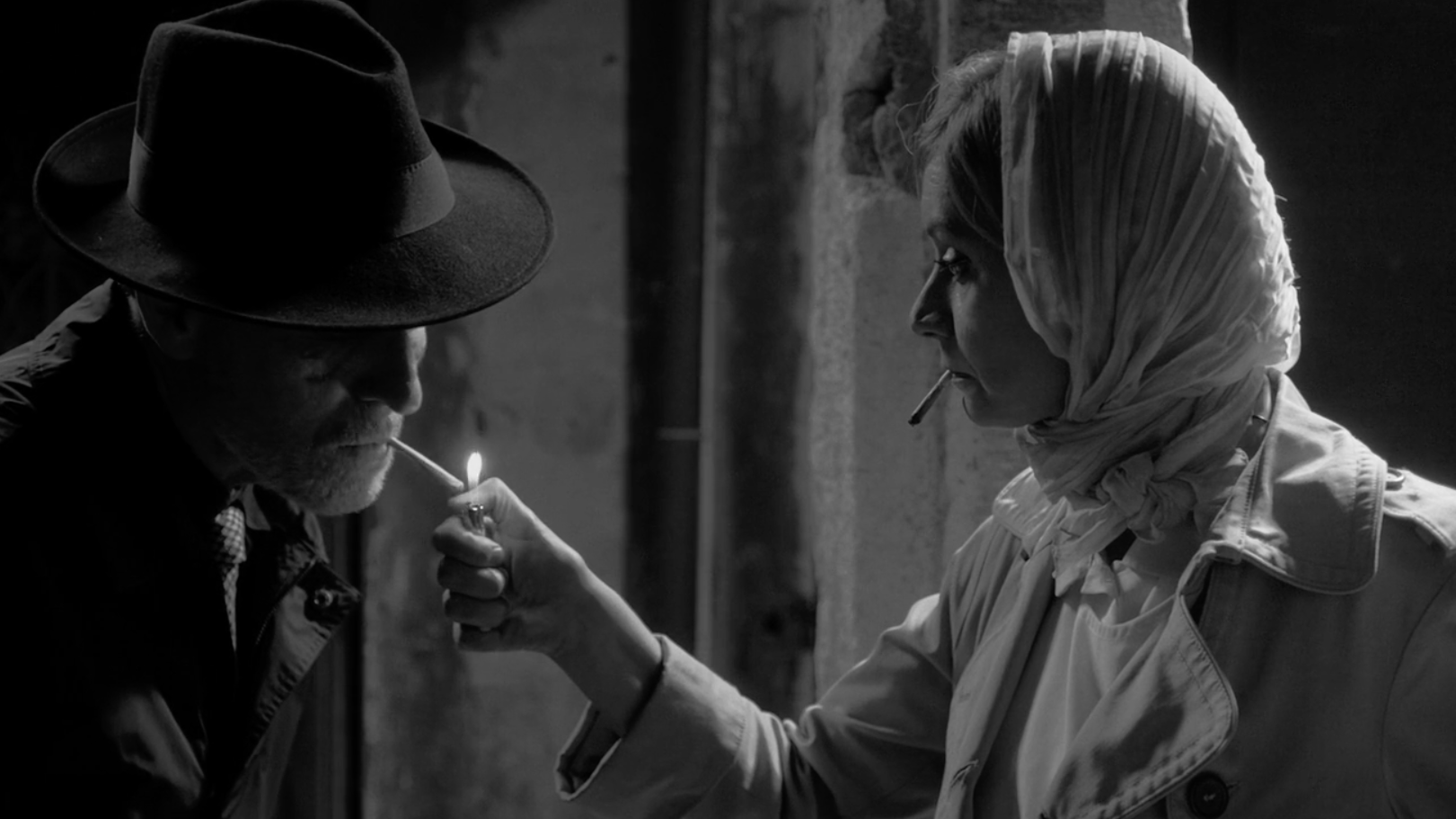
Thriller, by Serge Turgeon, Italy, 2025.
In Venice, a mysterious presence appears once every century or two, haunting the canals and hidden corners of the city. Driven by a sense of destiny, a woman decides to search for it. Following its elusive traces, she is drawn deeper and deeper into the city’s arcane secrets. Reality and myth begin to blur, and Venice itself transforms into a labyrinth of dangers.
LANGUAGE: Italian
SUBTITLES: English
Eliade’s Central Obsession: The Abolition of Time
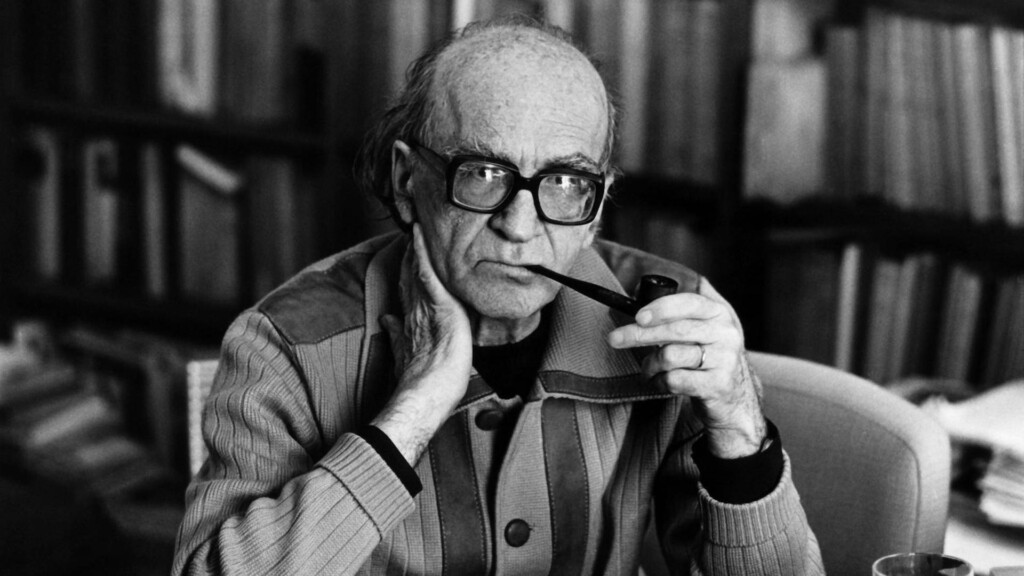
There is a man sitting in a library in Chicago, surrounded by index cards and the smell of old paper, and he is trying to solve a problem that most of his colleagues do not even recognize as a problem. He is in his sixties now, white-haired, slightly formal in the European manner, and he has been working on this same obsession for forty years. The obsession is not scholarly in the way that word usually functions as a polite diminishment. It is existential. It is the kind of obsession that comes from having felt something terrifying and then spending a lifetime trying to name it precisely enough to make it stop being terrifying.
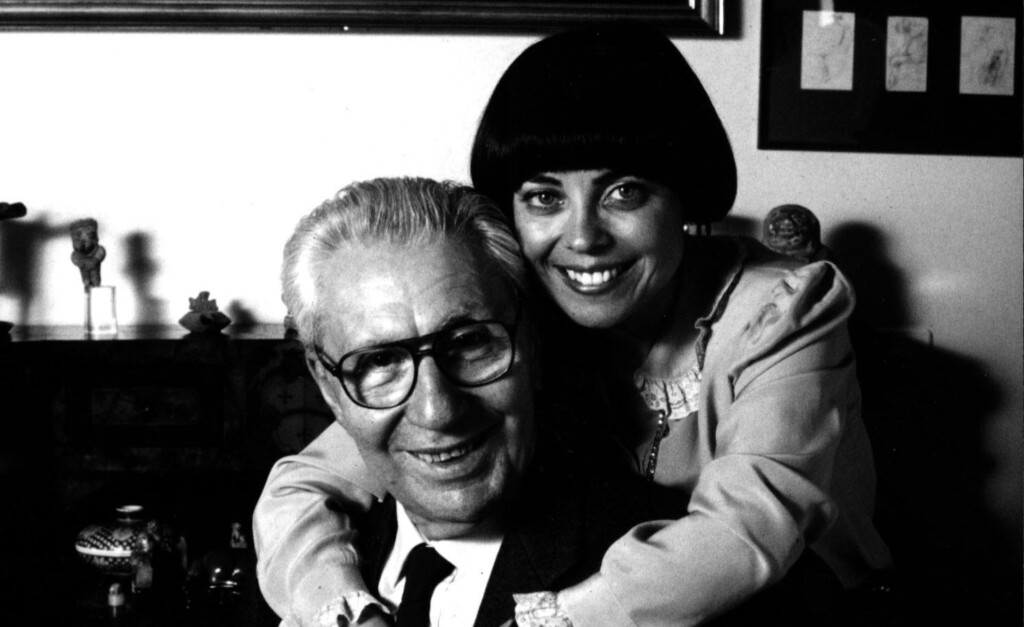
Mircea Eliade was born in Bucharest in 1907 into a Romania that was itself caught between worlds, between the Orthodox mystical substrate of its peasant culture and the aggressive modernization being imported wholesale from Western Europe. He was a prodigy in the way that certain Romanian intellectuals of that generation were prodigies, voracious and almost alarmingly productive, publishing essays and fiction and philosophical fragments while still a teenager. But the event that cracked him open intellectually was his time in India, from 1928 to 1931, studying Sanskrit and yoga under the philosopher Surendranath Dasgupta at the University of Calcutta. He was twenty-one when he arrived and twenty-four when he left, and something had permanently shifted in his understanding of what time was and what human beings needed it to be.
What he brought back from India was not a romantic conversion or an Orientalist fantasy, though his critics would later accuse him of both. He brought back a question. The question was this: what do people do with the terror of history? Not the abstract philosophical problem of temporality, but the lived, embodied horror of finding yourself inside an irreversible sequence of events, a sequence in which catastrophe accumulates and nothing is ever truly undone. In India he had encountered traditions that had developed what he would call, in The Myth of the Eternal Return, published in 1949, an ontology built around the abolition of profane time. The ritual, the festival, the sacred act, all of these were technologies for collapsing the distance between the present moment and the originary moment of creation, so that the person performing the ritual was not merely commemorating something that had happened long ago but was actually, ontologically, back at the beginning. Time did not accumulate. It reset.
This idea struck Eliade not as exotic but as the most natural thing in the world, the articulation of something he felt humanity had always known and that modernity had catastrophically dismantled. The Romanian peasant culture he grew up adjacent to still carried traces of this cyclical relationship with time, in the great agricultural festivals, in the folk songs that scholars like Lucian Blaga had already begun analyzing as expressions of a specifically Carpathian metaphysical sensibility. But the modern educated European, Eliade believed, had been stripped of these technologies and left naked before history, which is to say left naked before the awareness that everything passes, nothing returns, and suffering accumulates without cosmic redemption.
The darkness in his biography that cannot be sidestepped is this: during the 1930s, Eliade had associations with the Legion of the Archangel Michael, the Romanian fascist movement, and his writings from that period contain strains of nationalist mysticism that would follow him for the rest of his career. His defenders argue that the relationship was complicated, that he drifted away, that his later work shows no trace of it. His critics argue that the very structure of his thinking, its nostalgia for cyclical order, its valorization of archaic consciousness, its deep suspicion of historical progress, was shaped by those compromises in ways that never fully resolved. Both are probably right, which is the particular discomfort of genuinely serious thinkers who get something dangerously true mixed up with something that can be used for terrible purposes.

Sacred Time as Survival Technology
There is a man in a hospital corridor who touches the wall three times before he enters any room. Left hand, flat palm, three slow contacts with the painted concrete. He does this before the consultation, before the scrub room, before he steps through the door where someone’s open chest is waiting for him. Nobody has told him to do this. He cannot fully explain it. If you asked him, he would say something vague about focus, about clearing his head. But what he is actually doing is far older and far more precise than any clinical vocabulary can contain.
Eliade would recognize this immediately. Not as superstition, not as neurosis, but as the fundamental cognitive technology that human beings have used to survive the unbearable weight of linear time. In “The Sacred and the Profane,” published in 1957, Eliade draws a distinction that most secular readers dismiss too quickly: sacred time is not simply time set apart for religious purposes. It is a different category of experience altogether. Profane time moves forward, accumulates, degrades. It is the time of aging, of forgetting, of consequence. Sacred time, by contrast, is reversible. It loops. It returns always to its origin point, to what Eliade calls in illo tempore — in that time, the founding moment, the mythic now that exists outside the flow of ordinary duration.
The ritual does not commemorate the origin. It collapses into it. When an ancient priest performed a sacrifice, he was not remembering a divine act from the past. He was, in the architecture of his experience, becoming the god who performed that act at the beginning of time. The repetition was not a copy. It was a re-entry. This is the difference that secular modernity has almost entirely lost the capacity to understand, and that loss is not without cost.
What the surgeon is doing in that corridor is structurally identical. The sequence of touches does not protect him through any physical mechanism. It protects him by suspending him momentarily outside ordinary time — outside the accumulation of previous failures, the anxiety about this specific body on this specific table, the statistical noise of mortality. The ritual creates a pocket of in illo tempore, a moment that is always the first moment, always clean, always sufficient. Peter Levine, whose work on trauma and the nervous system has reshaped somatic psychology over the past four decades, describes how repetitive physical sequences serve as anchoring mechanisms for the autonomic nervous system, interrupting the cascade of threat-response that chronic uncertainty produces in the body. He does not use Eliade’s language. He does not need to. The neurological observation and the phenomenological one are describing the same event from opposite ends.
What modern psychology calls anxiety regulation, Eliade was mapping as cosmological architecture. The compulsive repetition that cognitive behavioral therapy identifies as a symptom to be extinguished may in many cases be an atrophied form of something that once organized entire civilizations. The obsessive checking, the fixed sequences, the inability to begin without completing a precise gesture — these are not malfunctions. They are archaic technologies running on outdated hardware, signaling a need that the culture no longer knows how to name.
The tragedy is not that people still perform these rituals. The tragedy is that they perform them without a mythology large enough to hold them. The surgeon touches the wall and feels briefly steadied, then immediately embarrassed. He has the mechanism but not the cosmology. He has the gesture without the story that would tell him what the gesture means and why it is, despite everything, completely rational. He stands in the corridor between two kinds of time, belonging fully to neither, which is perhaps the most precise description of what it means to be alive in this particular historical moment — caught between a profane temporality that offers no shelter and a sacred one you can still feel in your hands but can no longer quite believe.
I Am Nothing
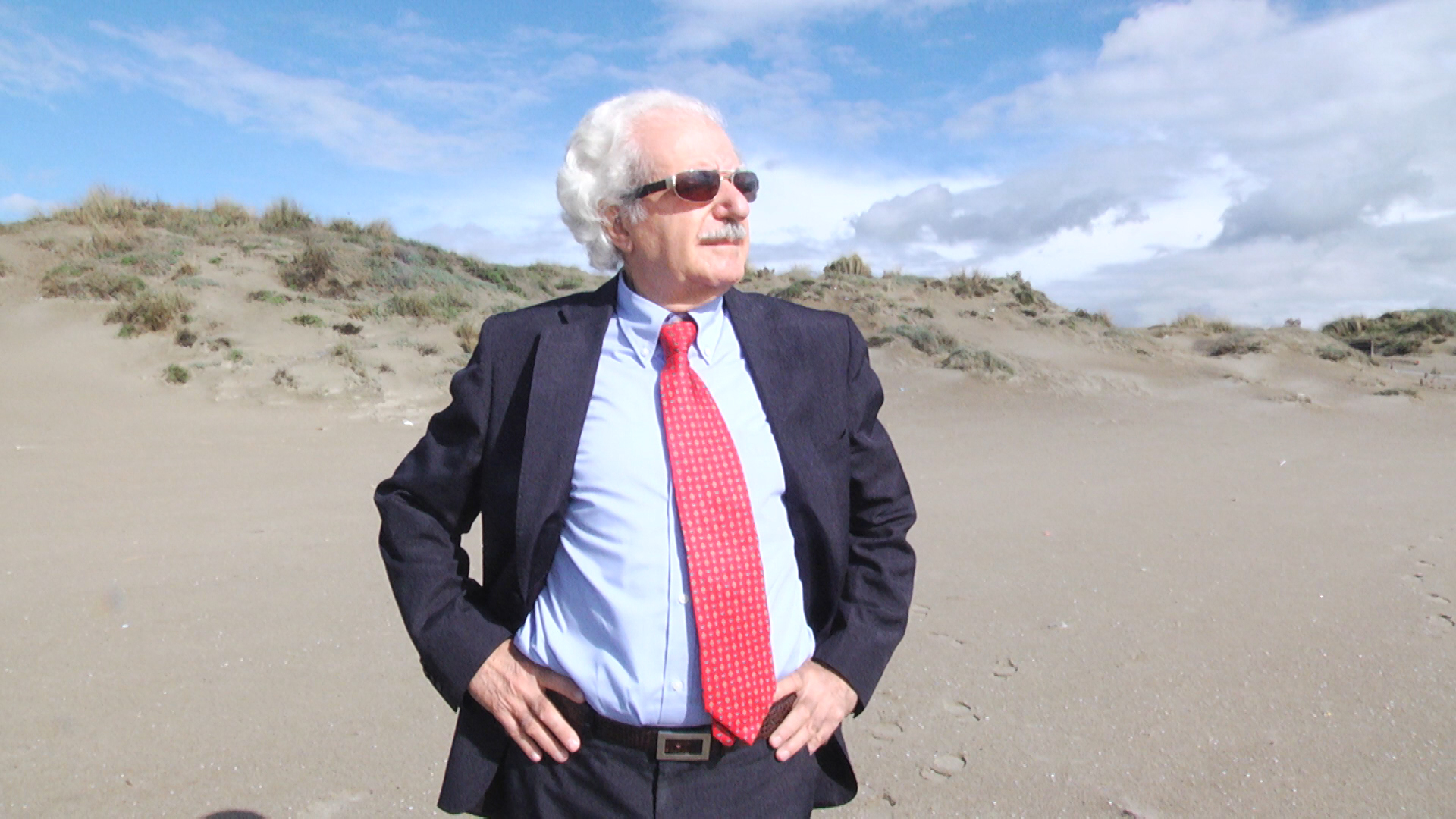
Drama, thriller, by Fabio Del Greco, Italy, 2015.
The story revolves around Vasco, a Roman builder who, at the age of 74, enjoys a life of absolute comfort. His human parable takes a dramatic turn when a mysterious encounter leads him to an ambush. Having survived, but marked by a long coma, Vasco wakes up with a new sensitivity, developing an intimate and poetic bond with nature. This new relationship with the world around him leads him to deeply explore himself, in an internal and external journey. through Italy, the United States and India, in search of a higher meaning and a cure. In parallel, the threat of a planetary cataclysm adds an epic dimension to the story.
I Am Nothing explores universal themes such as time, memory, oblivion and the connection with nature. Fabio Del Greco creates an existential drama full of food for thought. The director skillfully combines different visual materials, mixing archive images with nature photographs and dreamlike visions. This visual experimentation translates into an editing that captures the viewer's attention, guiding him through a cycle of creation and destruction. The sequences that alternate the buildings, Vasco's pride, with Indian landfills and natural landscapes create a hypnotic rhythm, underlining the beauty and fragility of life. Vasco's existential journey is a hymn to transformation and rebirth. The evolution of the protagonist, from unbridled luxury to the rediscovery of purity, represents a powerful metaphor on the meaning of life and the need to reconnect with authentic values. Io sono nulla stands out for its ability to combine introspection and visual experimentation, offering a suggestive and engaging narration. It is a film that invites us to reflect on the human condition, on our relationship with power and nature, and on the possibility of finding ourselves through change. A work that leaves its mark and lends itself to multiple readings.
LANGUAGE: Italian
SUBTITLES: English, Spanish, French, German, Portuguese
The Eternal Return Is Not Nietzsche’s
She plays it again. The same sentence, the same pause before the word “come,” the same faint sound of a chair scraping the kitchen floor in the background. She has listened to this cassette tape so many times that the magnetic ribbon has begun to thin, the voice acquiring a faint warp at exactly the moment it matters most. She is not trying to solve anything. She is not in grief therapy, not working through stages, not moving toward acceptance. She is doing something older and more precise: she is returning. Each rewind is a small ritual. Each replay is an attempt to collapse the distance between now and then, to make the moment of her mother’s voice not a past event but a present fact. She does not want to remember. She wants to inhabit.
This is not Nietzsche. It is important to say this clearly, because the confusion between the two thinkers on this single concept has produced a century of misreading, and the misreading matters because it flattens something real into something merely intellectual.
Nietzsche’s eternal return, the thought experiment he plants like a bomb in The Gay Science in 1882, is not a description of how anyone actually lives. It is a test, almost a torture device. Imagine, he says, that every moment of your life will recur infinitely, exactly as it was, and will go on recurring forever. Could you bear that? Would you live differently if you knew this? The eternal return in Nietzsche is a hammer held over your present choices. It is designed to produce a particular response: either the crushing weight of nihilism or the ecstatic affirmation he calls amor fati, the love of fate. You are meant to say yes to your life so completely that you would choose every second of it again. It is a philosophy of intensity directed entirely toward the future. The arrow of time does not disappear in Nietzsche. It becomes unbearably sharp.
Eliade’s eternal return has nothing to do with this. It is not a hypothesis. It is not an ethical provocation. It is a phenomenological description of how consciousness was actually organized across vast stretches of human prehistory. When Eliade publishes The Myth of the Eternal Return in 1949, he is not proposing a philosophy. He is reporting an anthropological structure. For archaic humans, every meaningful act was meaningful precisely because it repeated a primordial act performed by gods or ancestors at the beginning of the world. The harvest is not just a harvest. It is the repetition of the first harvest, the one that happened in illo tempore, in that foundational time before history began. The ritual is not symbolic. It is ontologically effective: it makes the thing real by anchoring it to its sacred origin.
Where Nietzsche asks you to will the return, Eliade observes that archaic humans never left. They were not choosing to return to origins. They were constitutively oriented toward them. Linear time, the time of history, of progress, of irreversible sequence, is not the natural condition of human consciousness. It is an acquisition, a cultural and theological achievement, something that required the Hebrew insistence on a God who acts in history, and later the Christian arrow toward salvation, to install in human awareness. Eliade is not nostalgic for the archaic. He is precise about what was lost when history was invented as a category.
The woman with the cassette tape is not performing a philosophical experiment. She is not testing whether she loves her fate. She is doing something Nietzsche could not account for: she is refusing, with her entire nervous system, to let the past become past. She is practicing, without knowing it, the oldest form of time management humanity ever developed. The sacred, Eliade writes, is the real. And the real, for the archaic mind, only existed in repetition.
The Trap Inside the Comfort
There is a village square somewhere in Eastern Europe, late summer, the kind of evening that smells of woodsmoke and fermented fruit. The women move in one direction around the fire, the men in another. The oldest man in the community stands at the center and speaks words that nobody fully understands anymore — the language is archaic, half-ritual, half-forgotten — and yet everyone performs their role with the precision of people who have rehearsed this since before memory. A young woman who married into the village two years ago steps slightly out of formation, not from rebellion but from simple confusion about the choreography. The look she receives from the women nearest her is not angry. It is something colder than anger. It is the look that says: this is how it has always been done, and your confusion is a kind of blasphemy.
That look is the political unconscious of the eternal return.
Eliade spent decades constructing a framework in which the repetition of origin was the supreme human act — the gesture by which chaos was defeated and meaning was restored. But there is a structural problem embedded in that construction that he never fully confronted, and that his admirers have too often glossed over with the soft light of comparative religion. When you consecrate the present by rooting it in a sacred origin, you are not only providing comfort to the frightened human animal. You are also making the existing order of things untouchable. You are dressing the current arrangement of power in the garments of the immemorial.
Hannah Arendt saw this mechanism with brutal clarity. In Between Past and Future, published in 1961, she argued that tradition — genuine tradition, the kind that carries accumulated human experience — had already been broken by modernity, and that the danger lay not in acknowledging that break but in pretending it had not occurred. The pretense of continuity, she wrote, conceals rather than transmits. It uses the authority of the past as a weapon against critical thought in the present, transforming what were once living questions into frozen answers. The past ceases to be a source of illumination and becomes instead a mechanism of closure. What looks like heritage is often, she suggests, a sophisticated form of coercion.
The choreography around the fire is exactly that. Nobody chose it. Nobody voted on which direction the women would walk. The arrangement simply arrived, wrapped in the unquestionable authority of always. And because it has always been this way, the question of whether it should be this way becomes almost literally unspeakable — not prohibited by law, but dissolved by the sacred logic of origin.
This is where Eliade’s biography becomes impossible to separate from his philosophy, and where the discomfort sharpens into something that cannot be aestheticized away. In the 1930s, Eliade was not merely a young Romanian intellectual attracted to mysticism and folklore. He was a fellow traveler and at times an active sympathizer of the Legion of the Archangel Michael, the Romanian fascist movement that combined Orthodox Christian mysticism with virulent antisemitism and ethnic nationalism. His articles from that period, published in Romanian newspapers, speak of national spiritual regeneration, of the necessity of returning to an authentic Romanianism, of a people that must rediscover its primordial essence in order to survive the corruptions of modernity.
The language is Eliadean before Eliade fully became Eliade. The sacred origin, the fall into profane history, the redemptive return — all of it is there, but applied not to the universal human condition but to a specific ethnic body, a specific political project, a specific set of enemies whose presence was defined as the very pollution from which the return must rescue the nation. The mythology of return did not merely tolerate this politics. It provided its deepest grammar.
A vision curated by a filmmaker, not an algorithm
In this video I explain our vision
Modernity’s Failed Substitutes

There is a man sitting in front of three monitors at two in the morning, his face lit blue-white by cascading numbers, his eyes moving across the data with the focused, almost devotional attention of someone reading a sacred text. He is not gambling. He is not even, in his own understanding, speculating. He is reading. He is looking for the pattern that will finally explain what has happened and predict what will come, that will transform the terrifying randomness of events into something structured, something that obeys a logic he can master. The numbers scroll upward and downward and he tracks them the way a priest once tracked the movement of stars, the flight of birds, the color of entrails — searching in the visible for the grammar of the invisible, seeking in contingency the hidden shape of necessity.
Eliade called it the terror of history. In The Sacred and the Profane, published in 1957, he gave the concept its clearest articulation: the modern Western subject, having dismantled or abandoned the cosmological frameworks that once gave repetition its redemptive meaning, finds himself exposed to historical time in its raw, unrepeatable, irreversible form. Events no longer rhyme with archetypes. Suffering no longer initiates. Time no longer circles back toward origin. It only accumulates, indifferently, and the weight of that accumulation — of wars, crises, collapses, atrocities that lead nowhere — becomes genuinely unbearable without some structure capable of absorbing it. The archaic solution was ritual return: you reenacted the cosmogony, you abolished duration, you began again. The modern solution, Eliade argued, was the ideological narrative — and it was a fragile, desperate, ultimately insufficient replacement.
Revolutionary politics was the most explicit attempt. The logic of the revolution functions precisely as a secular myth of regeneration: a corrupt age is abolished, a new world is inaugurated, historical time is reset at year zero. The violence is not regrettable waste but necessary sacrifice — ritual destruction clearing the ground for a new creation. The Marxist teleology, as Eliade read it, was a thoroughly mythologized structure wearing the costume of historical materialism. The proletariat is the messianic people, the classless society is paradise restored, the revolution is the event that ruptures profane time and opens sacred time. Strip away the vocabulary and the bones are identical to any millennial myth from the ancient Near East.
The progress narrative performs the same function less dramatically, distributing the redemption across decades and centuries rather than concentrating it in a singular rupture. Innovation becomes its liturgical form — the new product, the new platform, the new breakthrough — each release performing the ritual function of demonstrating that movement is still happening, that history is still going somewhere, that the accumulation of the past is being transfigured into a future worth living toward. Reinhart Koselleck, whose masterwork Futures Past appeared in German in 1979, described this as the widening gap between the space of experience and the horizon of expectation — the modern condition in which the past ceases to teach and the future is projected ever further as the site of meaning that the present cannot provide. What Koselleck mapped structurally, Eliade had already diagnosed spiritually: when the eternal return is foreclosed, expectation becomes the last available container for sacred time, and the horizon of the future becomes the only remaining altar.
But the man at the monitors cannot wait for the horizon. He needs the pattern now, tonight, before the markets open. And so he reads the numbers the way auguries were once read — not because he is irrational, but because the need the auguries once answered has not disappeared with the auguries themselves. The terror of history does not care whether you believe in mythology. It arrives regardless, in the form of irreversible time, and something in you reaches, automatically, for a sign.
What the Body Remembers That the Mind Denies
There is a specific way you move when you are most afraid. Not the theatrical freezing of visible panic, but something quieter and older — a habitual sequence of small gestures so practiced that the hands complete them before the mind has fully registered the fear. You make the coffee the way your mother made it. You fold the blanket along the same crease. You stand at the window with your weight shifted to the left, exactly as someone else stood before you, in another house, before you were born. Eliade understood this with a precision that neither his admirers nor his critics have fully acknowledged. He never said myth was a belief system, a set of propositions held consciously against contrary evidence. He said it was enacted. Performed. Inhabited. The body is the first archive and the last temple, and it does not distinguish between sacred time and profane time because it has never agreed to the distinction in the first place.
Maurice Merleau-Ponty spent most of his philosophical life — from the Phenomenology of Perception in 1945 through the unfinished manuscripts collected in The Visible and the Invisible — trying to articulate what it means that the body is not an instrument the mind drives but a way of being already in the world before thought arrives. The body has its own intentionality, its own memory, its own sense of where home is. When Merleau-Ponty writes about the phantom limb — the patient who continues to reach for objects with an arm that no longer exists — he is not describing pathology. He is describing the structure of all human memory. We reach continuously toward what has been amputated. The gesture precedes the reckoning.
Pierre Nora, writing in the 1980s and assembling the monumental Lieux de mémoire project across seven volumes published between 1984 and 1992, argued that modernity had dismantled the living environments of memory — the communities, rituals, and landscapes where the past was not recalled but simply inhabited — and replaced them with commemorative sites, archives, official monuments: places where memory goes when it has nowhere else to live. What Nora was tracking, without quite naming it this way, was the privatization of the eternal return. The collective ritual had been broken. But the body kept performing it in smaller theaters. The cemetery visit, the family recipe, the way you can reconstruct an entire lost world from the weight of a specific spoon in your hand.
There is a man who spends years rebuilding a house that was burned to the ground. Not to live in it. The finished house would be of no use to him; he has another life, another country, children who will never see this place. He works board by board, measuring not from blueprints but from memory — the height of a windowsill his hand remembers from childhood, the angle of a staircase his legs remember climbing in the dark. The neighbors think he is mad, or sentimental, or both. But what he is actually doing is something Eliade would have recognized immediately. He is performing the cosmogony. He is re-enacting the original act of creation so that the destruction, which happened in profane time — in linear, irreversible, historical time — can be symbolically annulled. The house, once rebuilt, will stand as proof that it was never really destroyed, because the gesture of its making has been repeated. He is not building a house. He is building the argument that time can be folded.
This is not nostalgia. Nostalgia is the sorrow of knowing you cannot return. What Eliade described, and what Merleau-Ponty grounded in the flesh, is the absolute refusal of that knowledge — not repression, but a deeper competence of the body that operates below the jurisdiction of the mind’s concessions to irreversibility.
The Myth That Watches You Read This
So here you are, reading. Not passively receiving, but performing something — returning, tracing, circling back over a sentence that almost landed but not quite, the way you might press a bruise to confirm it still hurts. There is a gesture in the act of reading itself that Eliade spent his entire intellectual life trying to name, and it is not the gesture of acquisition. It is the gesture of return.
Ask yourself honestly what you were looking for when you began this. Not the answer you would give aloud — the real one, the one that hums beneath the socially acceptable curiosity of someone who reads serious articles. Were you looking for confirmation that time is meaningful? Were you hoping to find, somewhere in the argument, a structure that would make your own repetitions feel necessary rather than compulsive? Were you, in some precise and unacknowledged way, trying to touch something you already knew, to make contact with it again as if for the first time?
This is not a rhetorical trap. It is the actual mechanism Eliade described. In “The Myth of the Eternal Return,” published in 1949 after years of exile and displacement, he argued that the archaic ontology — the cosmological structure that makes profane time bearable by anchoring it to sacred time — does not disappear when modern consciousness decides it has outgrown ritual. It migrates. It finds new vessels. The compulsion to periodize your life, to speak of phases and chapters and turning points, to locate the moment things went wrong or right, is not a rational historical analysis of a self. It is myth-making wearing the clothing of introspection.
Paul Ricoeur, who spent three volumes of “Time and Narrative” in the 1980s wrestling with precisely this problem, argued that narrative identity is not something we have but something we perform continuously — that the self is not a substance but a story told in the present tense about a past that keeps being revised. What Ricoeur called “narrative identity” and what Eliade called “cosmogonic myth” are pointing at the same structural gravity. The pull toward an originary moment. The need to make the beginning sacred so that everything following it carries weight.
You have a founding myth of yourself. You may call it formative experience, or trauma, or the summer everything changed, or the relationship that showed you who you really were. These are not memories. They are cosmogonies. They are the personal in illo tempore — the original time to which all your subsequent experiences secretly refer, the axis around which your identity performs its orbit. And each time you revisit that origin, even now, even in the sideways act of reading about someone else’s ideas, you are not moving forward. You are making the circle sacred by walking it again.
The loop that feels like progress is the most seductive feature of the myth. Because from the inside, repetition and evolution are phenomenologically indistinguishable. You cannot tell, while you are living it, whether you are returning or arriving. The man who leaves a city to find himself and then returns changed cannot say with certainty whether the change is real or whether the myth needed him to believe it was. He felt the transformation. He narrated it. He integrated the departure and the return into a story with an arc. But the arc, as Mircea Eliade knew, is a circle seen from one angle only.
And now notice that you have already scrolled back, or wanted to, to the sentence that did not quite resolve — the one that felt like it contained something you almost grasped. That wanting is not intellectual curiosity. It is the oldest human gesture there is: the return to the sacred center, the touching of the beginning, the refusal to let time be merely time, performed not in a temple or at a threshold or beneath a ceremonial sky, but here, in the rhythm of your own attention, in the quiet and relentless liturgy of a mind that cannot stop circling what it most needs to believe is real.
🌀 Myth, Memory, and the Sacred Return
Mircea Eliade’s vision of cyclical time and sacred cosmos resonates deeply with questions of myth, memory, and the eternal structures underlying human experience. These related articles explore the philosophical and spiritual currents that converge with Eliade’s thought on the eternal return.
Jan Assmann and Cultural Memory
Jan Assmann‘s theory of cultural memory explores how societies preserve and transmit foundational myths across generations, establishing a collective identity rooted in recurring narrative patterns. His work reveals how sacred stories function as anchors in time, much as Eliade understood myth to be a return to origins. Assmann’s framework offers a compelling complement to Eliade’s idea that mythic time is never truly lost, only ritually re-enacted.
GO TO THE SELECTION: Jan Assmann and Cultural Memory
Pierre Nora and the Sites of Memory
Pierre Nora‘s concept of ‘lieux de mémoire’ investigates how modern societies construct symbolic sites to compensate for the loss of living memory and organic tradition. This inquiry mirrors Eliade’s concern with the desacralization of time in the modern world, where cyclical mythic experience has been replaced by linear, historical consciousness. Exploring Nora alongside Eliade illuminates how the hunger for sacred recurrence manifests even in secular cultural practices.
GO TO THE SELECTION: Pierre Nora and the Sites of Memory
Meister Eckhart: Life and Mystical Philosophy
Meister Eckhart‘s mystical philosophy centers on the soul’s return to its divine origin, a movement of eternal self-renewal that resonates powerfully with Eliade’s notion of the eternal return to a primordial sacred moment. For Eckhart, the ground of the soul is timeless and participates in a perpetual creative act beyond history. This mystical vision shares with Eliade’s work a deep suspicion of profane, linear time and a longing for participation in the eternal now.
GO TO THE SELECTION: Meister Eckhart: Life and Mystical Philosophy
Spiritual Alchemy: Inner Transformation and Symbolism
Spiritual alchemy represents one of the great Western traditions of inner transformation through symbolic death, dissolution, and rebirth, a process that maps directly onto Eliade’s understanding of initiation and the regeneration of time. The alchemical Great Work re-enacts cosmogony within the practitioner, collapsing ordinary time into sacred time. Eliade himself wrote extensively on alchemy as a spiritual technology, making this article an essential companion for understanding his broader mythological vision.
GO TO THE SELECTION: Spiritual Alchemy: Inner Transformation and Symbolism
Explore the Mythic Depths of Independent Cinema
If these themes of eternal return, sacred time, and mythic consciousness have stirred something within you, independent cinema offers some of the most profound visual explorations of these very questions. On Indiecinema streaming you will find films that dare to look beyond the surface of modern life and touch the archaic layers of human experience. Discover a curated world of visionary independent films waiting to take you on a journey through myth, spirit, and the depths of the psyche.
👉 EXPLORE THE CATALOG: Watch Indie Films in Streaming
A vision curated by a filmmaker, not an algorithm
In this video I explain our vision

