
The Shelf You Never Touch
There is a book on the shelf you have never opened. You know it is there. You have known it is there for years, possibly decades, and you have reached past it dozens of times to pull out something safer, something that would not require you to explain yourself afterward. It is not that the book frightens you in any rational sense. You are an adult. You understand that paper cannot hurt you. And yet your hand stops just short of the spine, every single time, as if the air around it has a slightly different texture. As if opening it constitutes some kind of declaration.

This is not a metaphor. This is a physical experience that millions of readers have had and almost none of them have named precisely, because naming it would require admitting that they still believe, somewhere beneath the rational crust, that knowledge has consequences. That certain doors, once opened, do not close the same way. The Enlightenment spent three centuries trying to kill this feeling, and it failed. It failed because the feeling is not superstition. It is memory. The species remembers when the wrong text, in the wrong hands, at the wrong moment, ended a life or a civilization. The body has not forgotten, even when the mind insists it has.
H.P. Lovecraft understood this with a precision that bordered on the pathological. When he invented the Necronomicon, somewhere around 1921, as a prop in his story “The Hound” and then elaborated it obsessively across decades of fiction, he was not simply constructing a fictional bibliography for narrative convenience. He was manufacturing a cultural object designed to produce exactly that hesitation, that involuntary pause before the spine. He gave it a name that sounds like Latin but isn’t quite, a title that most readers cannot translate with confidence — and that uncertainty is the point. The philosopher Ernst Cassirer, writing in The Philosophy of Symbolic Forms in 1923, observed that the power of mythic language lies precisely in its resistance to transparent meaning. The name that cannot be fully decoded retains its force. The name that explains itself completely loses its weight. Lovecraft knew this instinctively, perhaps before he had the theoretical vocabulary to articulate it.
What Lovecraft created was not a book but the idea of a book so perfectly calibrated to the Western unconscious that it eventually escaped its fictional origins entirely. By the mid-twentieth century, readers were writing to libraries requesting copies. Aleister Crowley‘s followers debated its relationship to actual occult texts. Publishers began producing “real” editions, some serious in their mystical intent, some nakedly commercial, and the distinction between them grew increasingly difficult to maintain. Jorge Luis Borges, who understood better than anyone the way imaginary books colonize reality, noted in his essay on the subject that a sufficiently convincing fictional text eventually becomes indistinguishable from a lost one. The Necronomicon did not merely follow this pattern. It perfected it.
But the more unsettling question is not why people believed in a fictional grimoire. It is why the fictional grimoire produced the same psychological response as a real one. Why you feel, standing in front of that shelf, as though the book is aware of you. As though picking it up initiates something rather than simply informs you. Foucault, in The Order of Things published in 1966, described certain texts as capable of restructuring the epistemic ground beneath the reader’s feet, altering not just what you know but the framework through which knowing is possible. Lovecraft, with none of Foucault’s theoretical apparatus and a great deal more nightmarish intuition, built exactly that kind of object and placed it at the center of his mythology.
The shelf exists. The hesitation exists. The feeling of being watched by something that should not have eyes is as old as literacy itself, and Lovecraft did not invent it.
He just gave it a name you cannot quite pronounce.
A Book That Was Never Written
It began with a name written in a letter. Not a manifesto, not a grand announcement of literary invention — just a casual mention, in 1922, of a mad Arab named Abdul Alhazred who had composed, somewhere in the eighth century, a volume of such corrosive knowledge that merely possessing it was understood to accelerate the dissolution of one’s sanity. Lovecraft dropped this detail the way you might mention a neighbor’s odd habit, as though the information were already common knowledge, already circulating in some stratum of shared cultural memory that his readers simply hadn’t accessed yet. That was the first and most consequential lie: not the book itself, but the tone in which it was introduced.
What followed was a construction of false history so methodically layered that it operates today with the structural authority of actual scholarship. Lovecraft invented a Latin translation allegedly completed in 1228 by Olaus Wormius, a name chosen with deliberate plausibility — there was a real Danish antiquarian named Ole Worm, born in 1588, just far enough from the fictional date to create productive confusion. He invented a Greek edition, a suppressed printing, a papal condemnation. He wrote, in 1927, a brief “History of the Necronomicon” — a document that reads exactly like the kind of dry bibliographic note you find in the back pages of academic catalogues, all precision and tedium and the implicit authority of the footnote. It was never published in his lifetime. It circulated among correspondents the way rumors do, gaining weight precisely because it was not offered as entertainment.
The invented author, Abdul Alhazred, is himself a study in orientalist projection so naked it almost becomes its own critique. The name — which Lovecraft claimed he had invented as a child — functions less as a character than as a cultural placeholder, the exotic and unknowable East collapsed into a single body driven mad by what it had seen. Jorge Luis Borges, who understood better than almost anyone the epistemological violence of the imaginary library, wrote in “Tlön, Uqbar, Orbis Tertius” about the way invented encyclopedias eventually colonize reality, their invented facts migrating into legitimate reference works, their false geography reshaping how people understand actual space. Borges published that story in 1940. Lovecraft had been dead for three years. The conversation they were having, across languages and without awareness of each other, concerned the same thing: what happens when a text without origin generates a world with consequences.
What happened, in the Necronomicon’s case, is that the consequences became juridical. People attempted to sell copies. Others cited it in legal documents. In the 1970s and 1980s, multiple publishers released books marketed as the actual Necronomicon — the most famous, published in 1977 by Avon Books under the editorial name “Simon,” sold hundreds of thousands of copies and is still in print. None of this would be remarkable except for the specific texture of the belief involved. Readers did not purchase these volumes as fiction. They purchased them as recovered knowledge, which means they were not reading Lovecraft’s invention but responding to the dread he had encoded into its bibliographic skeleton. The horror was never in the text. It was in the apparatus around the text, the false citations, the invented suppressions, the suggestion that certain libraries had locked certain books away for reasons they would not specify.
This is the question that doesn’t resolve cleanly. A real book, containing real information about real historical atrocities, rarely produces in its reader the specific vertigo that Lovecraft’s invented one does. The Malleus Maleficarum exists. The protocols of extermination are documented. And yet something about the structure of a text that cannot be located, whose original language no one speaks, whose author went mad before completing it — something about that architecture touches a nerve that verified horror does not always reach.

The Architect of Cosmic Indifference
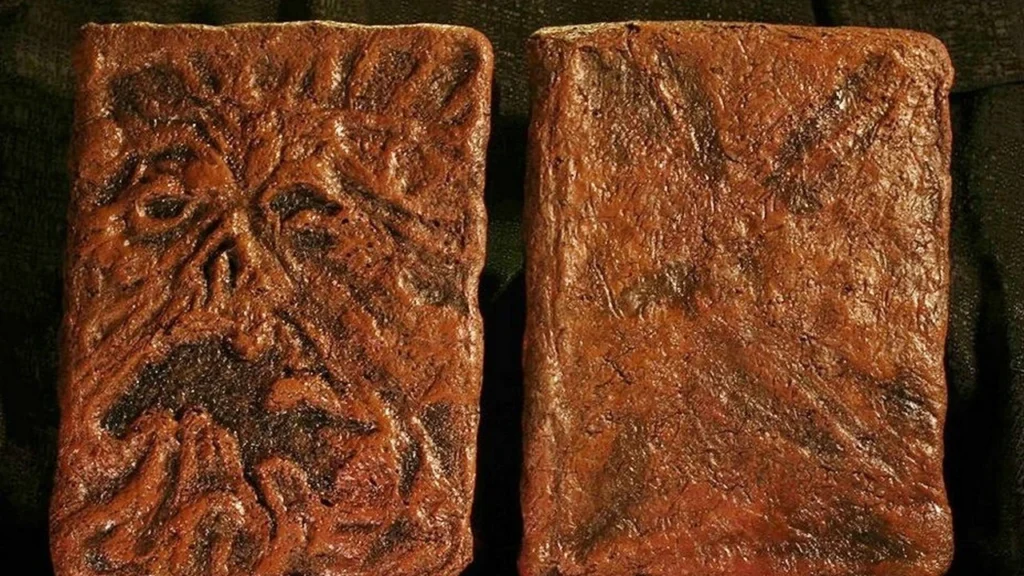
There is a moment when you look up at the night sky long enough that something shifts. Not the poetic shift of feeling small and humbled, the kind that resolves into wonder and a warm sense of cosmic belonging. Something colder. The stars do not look back. They do not even register the direction of your gaze. The universe is not watching you fail or succeed, grieve or celebrate. It is not watching at all. Most people flinch away from that realization within seconds, reaching for the nearest warm thought to cover it over. Lovecraft sat inside it for decades and built a theology from what he found there.
He called it cosmicism, and it was not a literary device. It was a genuine philosophical position, worked out over years of correspondence and essay writing, most lucidly in his 1927 essay “Notes on Writing Weird Fiction” and throughout the approximately one hundred thousand letters he produced in his lifetime. The central proposition was simple and devastating: humanity occupies no privileged position in the universe, and the universe operates entirely without reference to human meaning, human suffering, or human survival. There is no narrative arc bending toward justice. There is no audience for our drama. Friedrich Nietzsche had already cracked open this void in the 1880s when he wrote in “The Gay Science” that the death of God was not a liberation but a catastrophe of orientation, that we had unchained the earth from its sun and were now falling in all directions at once. Lovecraft took that fall seriously and refused the various ropes Nietzsche’s successors threw down to stop it.
What Lovecraft absorbed with perhaps greater precision was Ernst Haeckel’s materialist cosmology, the vision articulated in “The Riddle of the Universe” published in 1899, which sold over four hundred thousand copies in its first decade alone. Haeckel’s monism collapsed the distinction between matter and spirit entirely, leaving a universe that was magnificently coherent and utterly without care for the organisms temporarily assembled within it. Life was a local phenomenon. Consciousness was a local phenomenon. The universe predated both by billions of years and would outlast them by billions more. Lovecraft read this not as liberation, as many scientific materialists preferred to frame it, but as the most terrifying truth available to the modern mind.
The entities he constructed were not evil in any theological sense. Cthulhu does not hate you. Azathoth, the blind idiot god at the center of ultimate chaos, piping ceaselessly on its flute while the other gods dance, does not even perceive you. What makes Azathoth so precisely calibrated as a horror is that it is the most honest portrait of the universe’s relationship to human consciousness ever rendered in mythological form. It is not a monster in any traditional sense. It is indifference given a shape large enough to be perceived, and then immediately made visible in its absolute unseeing.
This is where Lovecraft was doing something philosophically serious beneath the purple prose and the tentacles. He was translating a genuine epistemological terror into mythological form because myth is how the human nervous system processes what pure abstraction cannot hold. You can read Haeckel and nod and continue your day. But encounter the right image, feel the right vertigo in the right prose, and the knowledge migrates from the intellectual register into the visceral one. That migration was Lovecraft’s actual project. The horror was never meant to frighten you away from the truth. It was meant to make you feel a truth you already intellectually accepted but had never actually inhabited.
The universe does not know your name. It never learned it. And somewhere in the architecture of your daily life, in the routines and the relationships and the careful constructions of meaning, you have always known this, and looked away before it could finish the sentence.
Cthulhu Rises From Real Nightmares
You have stood at the edge of something and felt your categories dissolve. Not metaphorically — literally felt the architecture of how you parse the world begin to slide, the way a man watching the ocean at night suddenly loses the boundary between water and sky and his own body, and for a moment cannot locate himself in the arrangement of things. That moment of vertigo is not poetic license. It is the precise psychological territory that the Cthulhu Mythos was built to inhabit.
The system Lovecraft constructed across stories written between 1917 and his death in 1937 is not a collection of monsters. It is a cosmology — a complete ontological framework in which humanity occupies no privileged position whatsoever. At its center lies the entity known as Cthulhu, a being of such incomprehensible scale that it rests dormant beneath the Pacific Ocean in a sunken city called R’lyeh, dreaming thoughts that leak into the sleeping minds of sensitive humans across the globe. Around it cluster the Great Old Ones, the Outer Gods, the shoggoths and deep ones and night-gaunts — not evil in any moral sense, but indifferent in the way gravity is indifferent, in the way the cosmos is indifferent, which is to say completely and without remedy.
What the Mythos does, structurally, is engineer encounters with this indifference. A man walks into a New England library and finds a text that should not exist. He reads only a paragraph before his hands begin to shake — not because the words are violent but because the geometry they describe is correct, and he can feel that it is correct, and the correctness of it means that everything he has organized his life around is a provincial fiction maintained by the narrowness of human perception. He closes the book. He does not sleep that night. Within weeks he is institutional. The knowledge did not drive him mad — the contact did. The moment of recognition did.
William James, in “The Varieties of Religious Experience” published in 1902, described what he called the noetic quality of mystical states: the sensation that one has received genuine knowledge, knowledge of a different and superior order to ordinary rational cognition, knowledge that cannot be articulated but cannot be doubted. James was writing about ecstasy and illumination, but the mechanism he identified is neutral. It does not distinguish between transcendence upward and transcendence downward into horror. What fractures the self is not the content of the revelation but the force of the encounter with something that exceeds the self’s capacity to contain it.
The Mythos geography of madness follows this logic precisely. R’lyeh is described in Lovecraft’s prose as a place where angles behave incorrectly — where what appears convex is concave, where space does not resolve the way a trained human mind insists it must. The sailors who reach it do not go mad because they see something ugly. They go mad because they see something that should be impossible and is not. Their madness is epistemological. The instrument they have always used to measure reality — rational consciousness, Cartesian geometry, the grid of cause and effect — is revealed in that moment to be a local instrument, calibrated for a small range of phenomena, catastrophically inadequate for what actually exists.
This is the terror that no amount of special effects has ever fully captured, because it cannot be visualized — it can only be experienced as a collapse of the faculty doing the seeing. A woman stands before something ancient and enormous and the thought that arrives, arriving with the force of absolute certainty, is not that she is in danger but that she has never been real in the way she imagined. That the self she has carried her entire life is a thin story told by a nervous system evolved for grasslands and social hierarchies, encountering for the first and last time the actual scale of what exists.
The Racism Buried in the Void
There is a moment in the story of Innsmouth — that rotting coastal town, that place of miscegenation and corruption — where the horror is not the fish-creatures themselves but the realization that you might be one of them. That the taint runs in your blood. That your grandmother’s strange eyes, your own slightly too-wide jaw, mark you as already fallen, already impure, already other than human. The dread Lovecraft constructs here is not cosmic. It is genealogical. It is the specific, historically legible panic of a white man terrified that racial boundaries are permeable, that contamination travels through generations, that the body carries evidence of what the mind refuses to know.
This is not interpretation. This is the documented record of a man who wrote, in a poem composed around 1912, lines so explicit in their dehumanization of Black people that his contemporary defenders still struggle to quote them without flinching. Who wrote to his friend James F. Morton in 1933 that Hitler’s racial policies, while perhaps excessive in method, addressed a real biological problem. Who described the immigrant populations of New York — the city where he lived and which he claimed to love — as a “nightmare of abnormal content” filling him with “the most poignant distress.” These are not private lapses corrected by public generosity. They are the structural grammar of his imagination.
Toni Morrison, in her 1992 work “Playing in the Dark: Whiteness and the Literary Imagination,” argued that American literature cannot be read without attending to what she called the Africanist presence — the dark, shadowy figure against which white identity defines and perpetuates itself. Morrison’s point was not that racist authors fail to produce meaningful work, but that the meaning of that work is inseparable from the architecture of racial terror that sustains it. The monsters, the voids, the nameless corruptions in American gothic writing are never simply metaphors. They carry the weight of a specific historical relationship between bodies, and they reproduce that relationship even when no one in the room acknowledges it.
The Deep Ones of Innsmouth reproduce that relationship with extraordinary precision. They breed with humans. They pull the pure toward the impure. They represent a biological destiny that cannot be escaped once the mixing has occurred. The horror of the Innsmouth look — those flat eyes, that mottled skin — is the horror of the mulatto figure as it appeared in nineteenth-century pseudo-scientific racism: the hybrid as aberration, the mixed body as proof of degeneration. Lovecraft did not invent this iconography. He inherited it, believed it, and encoded it into mythology.
Hannah Arendt, writing in “The Origins of Totalitarianism” in 1951, traced how the fear of racial contamination generates monsters precisely because it cannot be contained within rational political discourse. When fear of the Other cannot be expressed as policy — or when policy has not yet caught up with the fear — it migrates into myth. It becomes cosmic. It becomes ancient and inevitable and larger than any single human decision. This is what Lovecraft accomplished architecturally: he took the contingent, historical, legally constructed terror of racial mixing and translated it into something that felt eternal, pre-human, written into the structure of reality itself. The indifference of the universe becomes the alibi for a very particular human cruelty.
To read the Mythos without this is not to read it neutrally. It is to perform a selective blindness that protects the pleasure of the text at the cost of what the text actually does. The void in Lovecraft is not empty. It is full of something he named repeatedly and precisely in his letters, his poems, his private correspondence — and then dressed in the language of the infinite so that it could feel like philosophy rather than what it was.
A vision curated by a filmmaker, not an algorithm
In this video I explain our vision
When the Hoax Becomes Holy

There is a particular kind of desperation in the act of searching for a book that does not exist. You have felt it, perhaps — not for this book specifically, but for the sensation it promises: a text that explains the thing underneath the thing, the mechanism behind the visible world’s facade, the password to whatever room everyone else seems to be locked out of. The hunger is real even when the object is invented. And here is where something genuinely strange happened in history, something that Lovecraft himself, dead since 1937, could never have anticipated and would likely have found both flattering and horrifying in equal measure.
By the mid-1970s, the fictional Necronomicon had acquired a bibliographic gravity that began bending reality toward it. Occult shops received requests for it. Librarians were asked to order it through interlibrary loan. Letters arrived at university special collections departments inquiring about restricted access to a manuscript that had never been written. The absence of the object produced the outline of the object, and nature — or at least human desire — abhors that particular vacuum. Then in 1977, a text appeared under that title, attributed to a translator identified only as Simon, published initially in a limited edition of 666 copies before finding mass distribution. It would eventually sell over 800,000 copies. It became, by any commercial measure, one of the most successful occult texts of the twentieth century.
Jean Baudrillard, writing in Simulacra and Simulation in 1981, described the simulacrum not as a copy of something real but as a sign that precedes and generates the real — a model for which no original ever existed. The map, in his famous inversion of Borges, comes before the territory and eventually replaces it. What happened to the Necronomicon is the purest illustration of this process that twentieth-century culture produced outside of advertising. Lovecraft’s repeated, detailed, affectionate citations of a nonexistent book created the cultural infrastructure for that book’s eventual existence. The references accumulated enough specificity that they generated credibility, and credibility, in matters of sacred authority, is functionally indistinguishable from authenticity.
The Simon Necronomicon itself is a fascinating object precisely because it makes no serious attempt to be what it claims. Its actual content draws heavily from genuine Sumerian and Babylonian sources — the Enuma Elish, texts related to the god Marduk, authentic cuneiform traditions — assembled with reasonable competence and then dressed in Lovecraftian nomenclature. Cthulhu appears. Azathoth appears. The fictional geography of the mythos provides the frame for material that predates Lovecraft by four thousand years. It is a palimpsest in reverse: older writing placed beneath newer fiction rather than the other way around. And yet practitioners of various left-hand path traditions adopted it as a working grimoire. Rituals were performed with it. Experiences were reported. Whatever those experiences were or were not, they were not nothing.
This is the part that resists comfortable dismissal. The sociologist Émile Durkheim, in The Elementary Forms of Religious Life, argued that the sacred is not a property of objects but a quality projected onto them by collective investment — that what makes something holy is precisely the fact that a community treats it as holy, invests it with protective awe, and organizes behavior around it. By that definition, and Durkheim’s definition has never been seriously refuted at the functional level, the Simon Necronomicon achieved genuine sacred status within certain communities regardless of its origin. The fabricated text accumulated more ontological weight than the authentic Sumerian sources it quietly plagiarized, because no one was building a ritual life around the Enuma Elish in 1978. The forgery worked. The real thing sat in academic editions unread.
The Mythos After Lovecraft
What happens to a mythology when its creator dies but its terror does not? Lovecraft collapsed in Providence in March 1937, leaving behind not just a body of work but an entire cosmological architecture that other hands immediately began to inhabit, renovate, and in some cases quietly demolish from the inside.
August Derleth moved in first and most consequentially, imposing a Christian dualist framework onto structures that had been designed specifically to resist moral order. Where Lovecraft’s cosmos was indifferent, Derleth made it oppositional — good entities, elder gods, a kind of cosmic struggle that transforms the mythos into something almost reassuringly familiar. The horror becomes manageable because it has been made legible, mapped onto the oldest narrative grammar available. What Derleth produced was more comfortable but fundamentally less honest, a renovation that patched the cracks through which the original dread had seeped. He published the first Arkham House collections beginning in 1939, canonizing and simultaneously domesticating the material, giving institutional form to something that had thrived precisely in its instability.
Ramsey Campbell came differently, absorbing the Lovecraftian atmosphere as a teenager in Liverpool and then doing something more interesting than imitation: he transplanted the existential dislocation into landscapes that were recognizably, unglamorously British. His Severn Valley cycle moved the alien horror into urban decay and mundane anxiety, severing the mythos from its American geography and from the specific demographic panic encoded in the original. What Campbell demonstrated, almost inadvertently, was that the formal machinery of cosmic horror — the incomprehensible, the vertiginous, the dissolution of the self before something vaster — could function independently of its original ideological content. The engine could be separated from the fuel that had powered it.
Thomas Ligotti pushed further still, stripping away narrative reassurance entirely and arriving at something philosophically coherent in a way Lovecraft perhaps only gestured toward. Ligotti’s horror is not about tentacled invaders but about consciousness itself as a malfunction, existence as a condition that cannot be justified or survived with dignity intact. He arrives at the same cosmic pessimism through a different door, one unmarked by the specific anxieties about race and immigration that had disfigured the original architecture. The question his work raises implicitly is whether the terror was ever really about the Other or always about selfhood confronting its own contingency.
Then came the tabletop game, first published in 1981, which transformed the mythos into a collaborative system of investigation and inevitable doom, and which introduced Cthulhu to millions who had never read a word of Lovecraft. The game’s genius was structural: it made the reader a participant in the dread, gave mechanical form to the erosion of sanity. By the time the internet arrived and Cthulhu became a meme — the joke candidate for elections, the plush toy, the coffee mug — something genuinely strange had occurred. The most virulent symbol of xenophobic cosmological panic had been domesticated into ironic merchandise, its edges filed smooth by affection.
This is where the question becomes uncomfortable. There is a position that says reclamation is possible, that marginalized writers taking the tentacles and redirecting them — making Cthulhu a symbol of queer monstrosity, of colonial resistance, of the revenge of the othered — constitutes a genuine inversion of the original logic. There is another position, articulated with uncomfortable precision by critics like Matt Ruff in his structural critique through fiction, that says the ideology is not incidental but load-bearing: that you cannot redecorate a house without acknowledging what was used to build its foundations. The horror may be separable from the hate, the argument goes, but the act of separation requires naming what you are separating from, not simply appropriating the aesthetic and hoping the provenance disappears through use.
What the Void Actually Reflects
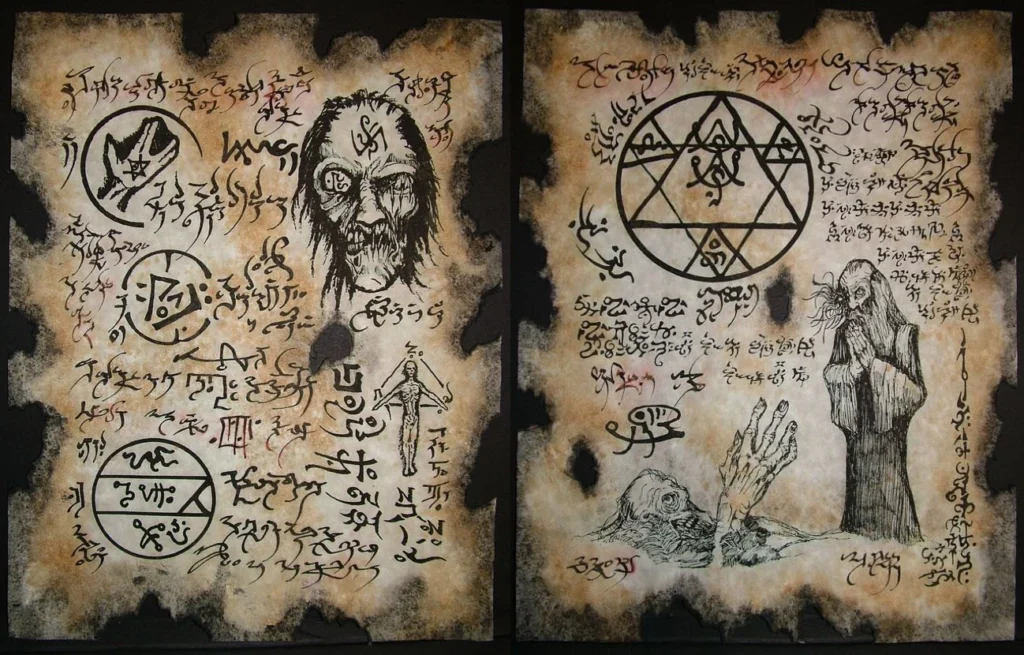
You felt it again recently, didn’t you. That particular stillness that falls when you’re alone in a house at night and something shifts — not a sound exactly, more an absence of the right sound — and for a fraction of a second you are entirely convinced that the darkness on the other side of the door is not empty. It lasts less than a heartbeat. Then reason reassembles itself and you move on. But the feeling was real, and it knew something about you that your daylight self prefers not to examine.
That dread has a name in the Mythos, and it is called cosmic indifference. The idea that the universe contains forces so vast and so ancient that human existence registers to them the way a mayfly registers to a glacier. Lovecraft spent his entire creative life constructing elaborate theological architecture around this sensation, giving it tentacles and geometries and forbidden syllables, and generations of readers have accepted the architecture as the thing itself. But the architecture is not the dread. The architecture is what a very specific, very frightened man built to house a dread that had a much more local and much more embarrassing source.
Carl Jung wrote in 1951, in Aion, that the shadow is not merely the repository of personal inadequacies but the sum of everything the conscious self refuses to acknowledge as its own. The shadow does not disappear when you refuse it. It grows heavier, and it begins to speak in distorted forms — through projection, through disgust, through the particular vehemence you reserve for things that feel obscurely familiar. Jung’s insight was not that we fear the unknown. It was that we fear the known thing we have declared unknown so that we do not have to claim it.
Lovecraft’s void, looked at plainly, is not a metaphysical condition. It is the historical anxiety of a man born in 1890 into a world that had already decided to move past him before he had fully arrived in it. The great migrations reshaping American cities in the early twentieth century, the collapse of the Anglo-Saxon Protestant cultural monopoly, the entry of women into public life, the new sciences dissolving the stable edges of matter and time — all of this was happening to him, around him, through him, and he had no language for his terror except the language of monsters. The geometry that could not be looked at directly was miscegenation. The colour out of space was modernity itself. The entity that erased individual significance was the democratic crowd, which did not organize itself according to his preferred hierarchies.
This does not diminish the literary power of what he made. A man stands before a mirror cracked by grief and the distortion still produces something worth studying. A character retreats into an ancestral house as the village outside changes, locks every door, and begins to hear sounds in the walls that grow louder the more he refuses to open the windows — and the terror he feels is entirely genuine, entirely felt, entirely communicable across a century. The horror is not false because its source is personal rather than cosmic. It is simply more honest than the cosmic framing admits.
Which returns you to the question your own nervous system was asking in that hallway, in that moment of stillness. What exactly were you afraid of? Not the void. Not indifferent gods. Something closer. Something that knows the specific shape of your particular life and where its edges are soft. Jung’s shadow does not announce itself. It waits in the architecture you have built to keep it quiet, in the theology you have constructed to make your private fear feel like a universal one, in the very grandeur of the explanation — ancient, vast, inhuman — which is always, when you trace it back far enough, a man standing in a changed world, unable to say simply that he was afraid of being left behind.
🐙 The Abyss Beyond: Myth, Occult and Cosmic Dread
Lovecraft’s Necronomicon and the Cthulhu Mythos did not emerge from a vacuum — they grew from a dark soil of occult traditions, esoteric grimoires, hermetic philosophy, and the ancient human terror of forces beyond comprehension. These related articles trace the intellectual and spiritual underground that feeds the Mythos, from alchemy and hermeticism to the mystical lineages that shaped Western esotericism.
The Corpus Hermeticum: Guide to Esoteric Reading
The Corpus Hermeticum is one of the foundational texts of Western esoteric thought, a collection of dialogues attributed to the mythical Hermes Trismegistus that blends Egyptian, Greek, and Gnostic wisdom into a vision of hidden cosmic truths. Lovecraft’s Necronomicon clearly echoes this tradition of the forbidden sacred text — a grimoire whose mere reading risks the reader’s sanity. Understanding the Corpus Hermeticum illuminates how deeply Lovecraft drew from real occult literary traditions to construct his fictional mythos.
GO TO THE SELECTION: The Corpus Hermeticum: Guide to Esoteric Reading
The Philosopher’s Stone: Esoteric Meaning
The Philosopher’s Stone in esoteric alchemy represents the ultimate secret of matter and spirit — a transmutational knowledge so powerful it was encoded in symbols and allegories to keep it from the uninitiated. This obsession with hidden, dangerous knowledge directly parallels the Necronomicon’s role in Lovecraft’s mythos as a text capable of unlocking realities mankind was never meant to perceive. Tracing the Philosopher’s Stone through Western occultism reveals the deep archetype of the forbidden book of ultimate power.
GO TO THE SELECTION: The Philosopher’s Stone: Esoteric Meaning
Helena Blavatsky and Theosophy: the Woman Who Revolutionized Esoteric Thought
Helena Blavatsky and the Theosophical movement she founded introduced millions of Westerners to the idea that secret cosmic hierarchies, ancient hidden masters, and pre-human civilizations shaped the destiny of humanity — ideas that resonate powerfully with Lovecraft’s Elder Gods and the deep history of the Cthulhu Mythos. Blavatsky’s concept of root races and sunken continents like Lemuria and Atlantis directly prefigure Lovecraft’s R’lyeh and the prehistoric alien civilizations of his fiction. Exploring Theosophy is essential for understanding the esoteric atmosphere from which Lovecraft’s imagination drew its darkest nourishment.
GO TO THE SELECTION: Helena Blavatsky and Theosophy: the Woman Who Revolutionized Esoteric Thought
Aleister Crowley: the Great Beast and the Religion of Will
Aleister Crowley, the self-proclaimed Great Beast 666, spent his life invoking entities, writing occult grimoires, and deliberately transgressing every boundary of conventional religion and morality — making him a real-life figure who could have stepped from the pages of a Lovecraft story. His Thelemic religion, with its rituals designed to contact trans-human intelligences, shares an uncanny structural resemblance to the cults that worship the Great Old Ones in the Cthulhu Mythos. Crowley’s influence on twentieth-century occultism provides crucial cultural context for understanding why Lovecraft’s fictional forbidden knowledge felt so disturbingly plausible to his readers.
GO TO THE SELECTION: Aleister Crowley: the Great Beast and the Religion of Will
Explore the Darkness on Indiecinema
If the cosmic dread of Lovecraft’s Mythos and the mysteries of forbidden knowledge have stirred something deep within you, Indiecinema’s streaming platform offers a curated selection of independent and avant-garde films that dare to explore the unknown, the esoteric, and the edges of human consciousness. Discover cinema that, like the Necronomicon itself, opens doors better left unopened — join Indiecinema and venture beyond the veil.
👉 EXPLORE THE CATALOG: Watch Indie Films in Streaming
A vision curated by a filmmaker, not an algorithm
In this video I explain our vision

