
The Cigarette and the Refusal
He puts two cigarettes in his mouth at once, lights them both with a single match, and hands one to the woman beside him without a word of explanation. She takes it. Neither of them looks at the camera, and neither of them needs to. The gesture does the work that an entire monologue could not: it says that he has already decided what he wants, that he has decided it silently, and that he expects her to understand without being told. Bette Davis, playing Charlotte Vale in Now, Voyager, receives that cigarette like a woman receiving a verdict. Paul Henreid, playing Jerry Durrance, delivers it like a man who has made peace with the fact that he cannot have what he wants and intends to give her the closest available substitute. The scene runs perhaps ninety seconds. It has outlived nearly everything else in the picture, including, for many viewers, the plot.

What makes the moment strange, on reflection, is how little it actually contains. There is no declaration of love. There is no touch beyond the brief transfer of a cigarette from one hand to another. Irving Rapper, directing from Casey Robinson‘s screenplay, gives Henreid almost nothing to do except strike a match, and yet the gesture became so widely imitated, so thoroughly absorbed into the visual vocabulary of romantic longing, that by the 1950s it had turned into shorthand, then cliché, then a kind of cultural furniture that nightclub singers and cigarette advertisers borrowed without needing to credit its origin. Something in that small mechanical action had tapped a nerve that dialogue could not reach, and the nerve was not about desire fulfilled. It was about desire deliberately, visibly withheld.
This is the paradox worth sitting inside for a moment. American cinema of the early 1940s was not short on men who got what they wanted. The gangster got the money before the bullet found him. The detective got the confession. The soldier, in the increasing tide of pictures responding to a nation now at war since December 1941, got the girl in the last reel as compensation for the front he was about to face. Henreid’s Jerry Durrance gets nothing of the kind. He is already married, unhappily, to a woman who will not release him, and the Production Code of 1930, enforced with real teeth by Joseph Breen‘s office throughout the decade, made certain that no amount of longing between him and Charlotte could resolve itself in the way longing usually resolves in a Hollywood picture. The film’s famous closing line, don’t let’s ask for the moon, we have the stars, is not a compromise dressed up as a victory. It is a surrender dressed up as a philosophy, and audiences in 1942, filling theaters at a rate that made Now, Voyager one of Warner Bros.’ top grossers of the year, apparently wanted that surrender articulated with dignity rather than concealed.
There is a reason renunciation lands harder than consummation, and it has to do with what the historian Peter Gay, writing on the bourgeois experience, called the discipline of desire, the entire nineteenth-century machinery by which longing was cultivated precisely by being denied its object. Henreid did not invent that machinery. He simply understood, perhaps instinctively, perhaps through the accumulated discipline of a stage career built on restraint, that a man defined by what he refuses to take generates more erotic charge than a man who simply takes. The two cigarettes lit from one match are not a seduction. They are a eulogy for a seduction that both parties already know cannot happen, performed anyway, in public, with cigarettes standing in for everything else.
The Architecture of the Second Man
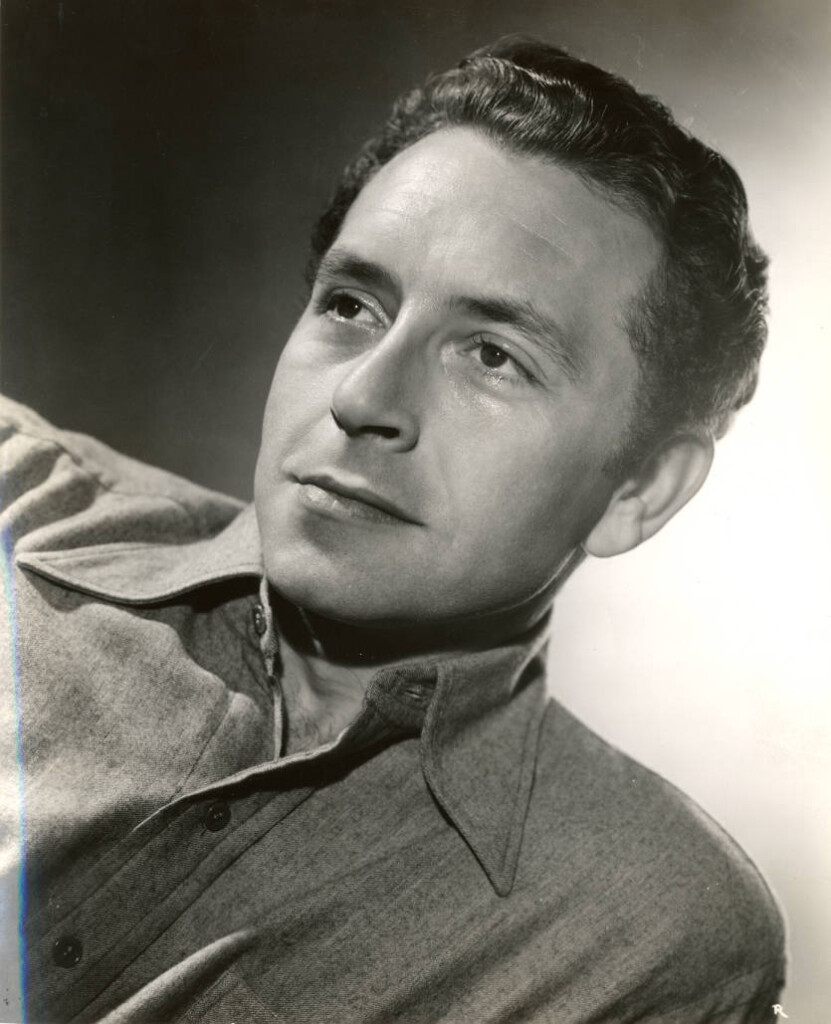
There is a moment, easy to miss on a first viewing, when Victor Laszlo thanks Rick Blaine for saving his life and Rick simply looks away. No handshake lingers, no gratitude is milked for warmth. The scene exists to establish a debt that will never be collected in the currency the audience expects, and Paul Henreid plays it with the stiffness of a man who has already calculated that graciousness is his only permissible register. He cannot flirt, cannot brood, cannot punch anyone. He can only be correct, endlessly, and correctness, it turns out, is one of the hardest things to make watchable.
Hollywood in the studio era did not invent the romantic triangle, but it industrialized it, and by the early 1940s the role of the husband, the fiancé, the man legally or morally entitled to the woman, had calcified into something close to a technical specification. Casey Robinson, one of the writers who reworked the Casablanca screenplay from the unproduced play Everybody Comes to Rick’s, understood that Laszlo could not be permitted a single unguarded human failing, because the entire moral architecture of the picture depended on Ilsa’s choice looking like sacrifice rather than preference. If Laszlo were dull, cruel, weak, or even mildly annoying, her return to him would read as duty rather than virtue, and the Production Code Administration, which had been enforcing Joseph Breen’s office guidelines since 1934, had no mechanism for rewarding infidelity dressed as tragedy. The other man had to be flawless precisely because his flawlessness was the mechanism that made abandonment noble instead of merely sad.
This is a strange kind of authorship to hand an actor: write me a man so good that losing him will hurt, and so restrained that his goodness never curdles into the smugness that would make his loss a relief. Henreid, an Austrian stage actor who had fled the Anschluss and arrived in America with a genuine history of anti-fascist conviction, brought something the script alone could not manufacture, a lived weariness that read as authority rather than performance. He was not simulating a resistance leader’s exhaustion; he had watched his own country absorbed by the thing Laszlo was fighting, and the camera, whatever else it does badly, tends to register the difference between an actor imagining danger and one who has priced it.
The genius of the construction, if genius is the word, lies in how little Laszlo is permitted to want anything for himself on screen. Every desire he expresses is displaced onto the cause, onto the other prisoners, onto Ilsa’s safety rather than his own claim on her. Compare this to Rick, who wants Ilsa nakedly, selfishly, in a way the audience is invited to find romantic precisely because it is unreasonable. Laszlo’s love, by contrast, must be presented as an extension of principle, which means the film asks Henreid to perform desire as duty, a much colder note to hit convincingly, and one that leaves almost no room for the actor to generate heat through spontaneity. Where Bogart gets to be reactive, wounded, sardonic, Henreid is required to be steady in every single frame, and steadiness, dramatically speaking, is a near occupational hazard for disappearing into the wallpaper.
That he does not disappear, that audiences for eight decades have continued to find Laszlo oddly moving rather than simply serviceable, suggests the studio system’s cynicism about the second man was incomplete. It built him to lose gracefully, to function as a moral counterweight that made the protagonist’s transgression forgivable by comparison, and yet the actual experience of watching him strain against those limits, watching restraint itself become a kind of visible labor, produces an emotional residue the screenplay never intended to budget for.

Exile as Biography and as Role
He arrives in a Los Angeles studio commissary in 1942 wearing a suit cut by a Viennese tailor who no longer has a shop to cut suits in, and the men around him, producers and grips and contract players, hear the accent and read it as European sophistication, as a kind of manufactured old-world polish they can sell to American audiences hungry for continental glamour. What they do not hear, what the accent does not disclose because accents never disclose the specific weight of what produced them, is that the man carrying it has already lost a country. Paul Henreid was born Paul Georg Julius Freiherr von Hernried in Trieste in 1908, into an Austro-Hungarian world that would not survive his adolescence, and by the time he was acting in Vienna in the 1930s he belonged to a culture that was already being dismantled around him by forces he had the clarity, unlike many of his colleagues, to name early and refuse. He would not work with the Nazi-controlled Austrian theater apparatus after 1935. When the Anschluss came in March of 1938 and Austria ceased to exist as a sovereign entity, absorbed overnight into the German Reich to the sound of cheering crowds in the Heldenplatz that newsreel cameras captured with an enthusiasm history has never fully forgiven, Henreid was not a bystander to an abstraction. He was a man whose citizenship evaporated, whose professional world was reorganized along racial and political lines, whose only rational move was to leave, first for England, and eventually, like so many others funneled through the same narrow channels of visa and sponsorship and luck, for the United States.
The sociologist and philosopher Alfred Schütz, himself a Viennese refugee of that same displacement, wrote in his 1944 essay on the stranger that the migrant’s tragedy is not simply relocation but the collapse of what he called the taken-for-granted world, the entire unexamined scaffolding of assumptions that lets a person move through daily life without translating it first. Henreid stepped off that scaffolding permanently. Every gesture in America required a kind of conscious performance that a native performs unconsciously. This is not incidental to his acting; it is the raw material of it. When he plays men who carry the past like a wound they have learned to hold without flinching, he is not accessing craft alone. He is accessing a body that has already done the specific labor of losing a homeland and reconstructing a self on foreign ground, the labor Schütz described as the stranger’s perpetual crisis of interpretation, where nothing can be assumed and everything must be actively read.
Then the loss repeats, differently, on American soil. In the early 1940s Henreid had supported war-relief causes and refugee organizations that were entirely mainstream at the time, unremarkable acts of solidarity among a community of exiles helping other exiles. By the early 1950s, in the climate manufactured by the House Un-American Activities Committee and amplified by the private blacklisting apparatus of Red Channels, published in 1950, that same record was recast as suspicion. Henreid found himself gray-listed, his name circulating in the whisper networks that determined who got hired, his career slowing at precisely the moment his contemporaries assumed he had become a fixture of the industry. The historian Larry Ceplair, writing on the blacklist era with Steven Englund in their 1980 study of the Hollywood inquisition, documents how this mechanism worked less through formal accusation than through accumulated rumor, an economy of fear where studios simply stopped calling rather than risk controversy. Henreid experienced, for the second time in fifteen years, the specific sensation of belonging revoked without explanation, of a professional and social world reorganizing itself to exclude him according to rules he had not agreed to and could not appeal. He had already lived the template. He simply had not expected America to offer its own version of it.
The Psychology of Wanting the Man Who Walks Away

You watch the train pull out, the platform empty of steam and certainty, and something in you settles rather than breaks. This is the peculiar arithmetic of the walk-away man: his absence produces more feeling than his presence ever could, and audiences have known this since long before anyone put it on film. Denis de Rougemont, writing in Love in the Western World in 1939, traced this arithmetic back to the troubadours of twelfth-century Occitania, who invented a poetry of love that required the beloved to remain unattainable. Tristan does not want Iseult so much as he wants the obstacle that keeps them apart, de Rougemont argued, because passion, in its etymological root of suffering, feeds on distance the way a fire feeds on the gap between fuel and flame. Remove the obstacle and you remove the passion. Marry Tristan to Iseult without complication and the story dies of contentment. What looks like tragedy in these narratives is in fact the engine room of desire, and the man who boards the plane or the train is simply performing, for a modern audience raised on the same grammar, the function the sword once performed when the lovers laid it between them in the forest.
Psychoanalysis arrived at a compatible answer from a different direction. Jacques Lacan proposed that desire is structured around lack, that we do not desire objects so much as we desire the gap that the object promises to fill and never does; the moment the gap closes, desire has nowhere left to live. This is not cynicism about love but a description of its machinery, and it explains why the woman standing on the tarmac in 1942, watching her married lover walk toward a plane rather than toward her, is not being cheated of a happy ending so much as she is being handed the only ending that could preserve what she felt in the first place. Had he stayed, had the marriage dissolved and the apartment been shared and the years accumulated into grocery lists and dental appointments, the feeling itself would have been asked to do something it was never built to do, which is survive ordinary time.
There is a reason this figure recurs with such precision in the cultural moment of the nineteen forties, a decade when a great many real men were, in fact, leaving, called away by war rather than by principle, and audiences sat in darkened theaters absorbing a fiction that rhymed uncomfortably with their own kitchens and their own empty halves of the bed. The antihero who renounces was not only a romantic archetype but a psychological accommodation, a way of dignifying an absence that millions were already living through, transforming abandonment into nobility because the alternative was simply to sit with the abandonment as loss. Erich Fromm, in The Art of Loving in 1956, warned that modern audiences confuse the intensity of falling in love with the discipline of loving, mistaking the first for the whole of the phenomenon; the man who walks away offers a culture permission to keep living inside the falling, forever, without ever being asked to demonstrate the discipline.
What audiences eroticize in restraint, then, is not the man himself but the state he leaves them in, a suspended animation in which longing has replaced negotiation, in which the beloved never has to be discovered snoring, never has to be seen failing at money or fidelity or patience, because the story ends before the next scene could introduce those facts. The obstruction is not the tragedy of the romance. The obstruction is the last mercy the story extends before reality would have been obligated to arrive.
The Antihero as Cultural Mirror and Trap
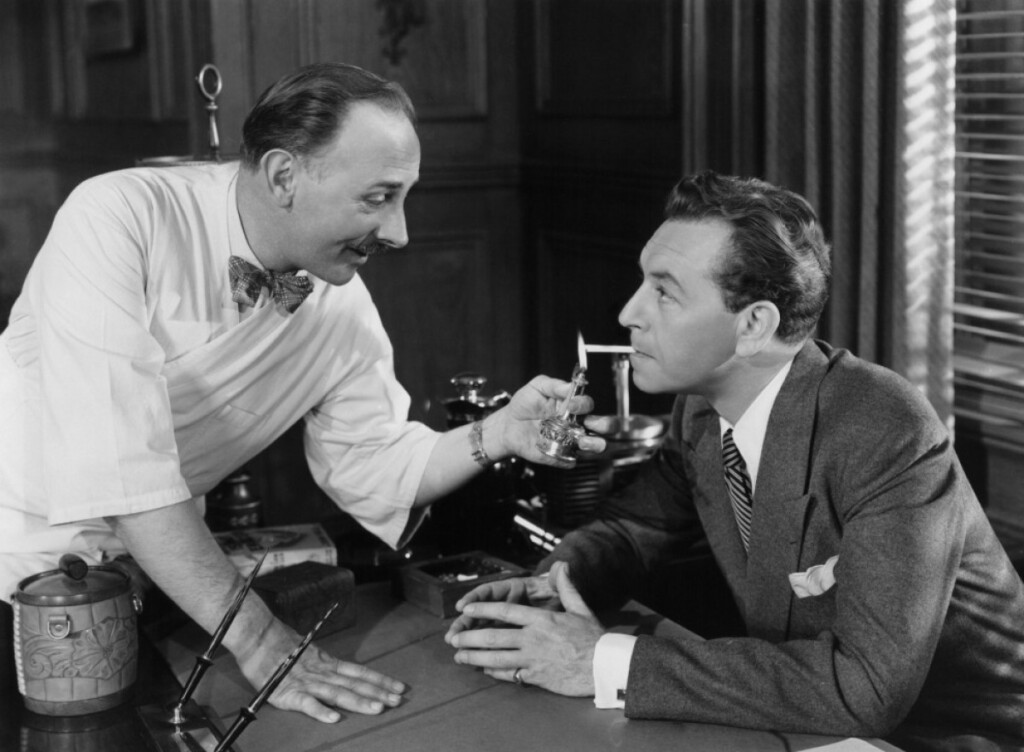
You watch the final scene again, the one where he walks away, coat collar up, cigarette unlit for once, and you feel the swell in your chest that you have felt a hundred times before in a hundred other darkened rooms, and you mistake it, as you always do, for the recognition of something noble. It isn’t. It’s the recognition of a pattern you were taught to crave before you could speak, a pattern in which the man who wants and does not take becomes, through the alchemy of narrative framing alone, more admirable than the man who wants and does. Nobody sat you down and explained the mechanism. Nobody had to. It arrived through repetition, through decades of scripts in which withdrawal was scored with strings and consummation was scored with irony or punishment, until the nervous system did what nervous systems do and started treating renunciation as a taste, the way a person raised on bitter coffee stops noticing the bitterness and starts calling it flavor.
This is the trap, and it is worth naming plainly rather than admiring from a safe critical distance. The romantic antihero, the version epitomized by Henreid’s Jerry Durrance and by every actor who inherited that particular register of restraint, functions as a kind of moral laundering scheme for an audience that wants the frisson of transgressive desire without having to metabolize the guilt of transgression itself. The character gets to want the married woman, the forbidden thing, the impossible object, and then gets absolved by the screenplay’s insistence that he never actually took it. The audience gets to want it too, vicariously, and receive the same absolution on credit. Everyone leaves the theater feeling deepened rather than implicated. That is the transaction, and it has been running, largely unexamined, since at least the era when the Production Code made outright consummation impossible to film and so forced an entire industry to discover, almost by accident, that denial photographs as more soulful than satisfaction. The censors thought they were preventing something. They were manufacturing an aesthetic.
What the aesthetic teaches, over the long accumulation of viewings, is a confusion between two things that have no logical relationship to each other: the depth of a feeling and the refusal to act on it. There is no philosophical law, no psychological finding, nothing in the actual literature on attachment or desire, that says restraint proves intensity. Erich Fromm spent a good portion of The Art of Loving, published in 1956, arguing almost the opposite, that love is a practice, an active orientation toward another person’s growth, not a private ache nursed in isolation and mistaken for devotion because it hurts. But the culture that raised most of us on this archetype did not absorb Fromm. It absorbed the coat collar, the wet tarmac, the plane engines drowning out the confession. It absorbed the idea that suffering nobly for love is itself a form of loving well, when in fact it can just as easily be a form of cowardice wearing a very good coat.
And here the mirror turns uncomfortably toward the viewer rather than the screen. Why does this particular fantasy hold? Why do so many people, across generations, across genders, keep choosing the ache over the arrival, keep finding the man who leaves more magnetic than the man who stays and does the unglamorous work of being present? Is it that renunciation asks nothing of us, demands no risk, no ordinary Tuesday-morning maintenance of an actual relationship, and so lets us keep the fantasy pristine, untested, permanently perfect because permanently unlived? Is the taste for the romantic antihero, in the end, less a taste for him at all than a taste for the version of ourselves that never has to find out what we would do if he stayed?
A vision curated by a filmmaker, not an algorithm
In this video I explain our vision
🎭 Golden Age Icons and Hollywood's Shadowed Charm
Paul Henreid’s magnetic screen presence belongs to a broader constellation of classic Hollywood figures who redefined charisma, morality, and stardom during cinema’s golden era. These related profiles explore the actors, codes, and industry forces that shaped the romantic antihero archetype Henreid embodied so memorably.
Humphrey Bogart and the face of American cinema
Humphrey Bogart, much like Henreid, mastered the art of world-weary charm wrapped in moral ambiguity, becoming the definitive face of American cinema’s conflicted heroes. His performances often blurred the line between cynicism and hidden nobility, a tension that also defines Henreid’s most iconic roles. Exploring Bogart’s legacy offers essential context for understanding the antihero’s rise in classic Hollywood.
GO TO THE SELECTION: Humphrey Bogart and the face of American cinema
Kim Novak and the allure of classic American cinema
Kim Novak represents another facet of classic American cinema’s fascination with allure and mystery, qualities that also made Henreid such a captivating screen presence. Her career reflects the era’s obsession with romantic tension and enigmatic star personas. This connection illuminates how Golden Age Hollywood cultivated icons whose appeal rested on ambiguity and longing.
GO TO THE SELECTION: Kim Novak and the allure of classic American cinema
The Hays Code: history and censorship in American cinema
The Hays Code fundamentally shaped how romance, morality, and antiheroic behavior could be portrayed on screen, directly influencing the kind of restrained yet smoldering performances Henreid delivered. Understanding this censorship framework reveals why actors of his generation relied so heavily on subtext and suggestion. It’s a crucial piece of context for appreciating the coded sensuality of the era’s romantic leads.
GO TO THE SELECTION: The Hays Code: history and censorship in American cinema
Edward G. Robinson and classic American cinema
Edward G. Robinson, alongside Henreid, helped define the moral complexity of classic Hollywood’s leading men, often portraying characters caught between virtue and vice. His body of work parallels the exploration of flawed, magnetic protagonists that made antiheroes so compelling to audiences. Together their careers trace the evolution of morally ambiguous stardom in the studio system.
GO TO THE SELECTION: Edward G. Robinson and classic American cinema
🎬 Discover More Timeless Cinema
If the romantic antiheroes of Hollywood’s golden era captivate you, Indiecinema offers a curated selection of independent films that carry forward this same spirit of complex, unforgettable characters. Stream stories that dare to explore the shadows between virtue and desire, only on Indiecinema.
👉 EXPLORE THE CATALOG: Watch Indie Films in Streaming
A vision curated by a filmmaker, not an algorithm
In this video I explain our vision

