
The Dinner Table You Never Left
You are at a dinner table you have attended a hundred times, in a hundred different rooms, with a hundred different names around it, and you are performing. Not lying, exactly — the words coming out of your mouth are technically true — but you are editing in real time, selecting which version of yourself to present the way a card player selects which hand to show. You laugh at the right moments. You ask questions whose answers you do not care about. You position your ambitions as interests, your hunger as curiosity, your calculations as enthusiasm. Everyone at the table is doing the same thing, and everyone at the table knows everyone else is doing the same thing, and this shared knowledge is never, under any circumstances, acknowledged. That is the contract. That is the room.

Honoré de Balzac understood this room so precisely that in 1835 he built an entire civilization inside it. Père Goriot is not simply a novel about Paris. It is an anatomy of a particular human technology: the performance of social identity as a survival mechanism, deployed with such consistency that the performer eventually forgets there was ever anything else underneath. The boarding house of Madame Vauquer, with its rancid smells and its hierarchy of poverty, is not a setting. It is a mirror. Every resident has come there from somewhere else, carrying the wreckage of a self that failed to make the cut, and every one of them is quietly plotting their return to legibility — to being recognized, to mattering, to having a seat at a table where the conversation is worth performing for.
Rastignac arrives in Paris from the provinces in 1819 with two hundred francs, a law degree he will never use, and the specific, ferocious ambition of a young man who has seen enough of the world to know he wants more of it but not yet enough to know what it will cost. Balzac was twenty-six when he began drafting the first sketches of the Comédie Humaine, and the portrait of Rastignac carries the autobiographical current of a man who had himself clawed at the edges of Parisian society with ink-stained hands and a mountain of debt. By the time the novel was finished, Balzac owed creditors the equivalent of what a working-class family might earn across a decade. He knew the arithmetic of ambition from the inside of the loss column.
What makes Rastignac devastating rather than merely sympathetic is that he is not naive. The classic reading of the novel casts him as an innocent corrupted by the city, a pastoral soul devoured by metropolitan machinery — but Balzac is far too honest for that consoling structure. Rastignac understands the game before anyone explains it to him. What he lacks is not knowledge but permission: the internal authorization to become the thing he already wants to be. The education he receives at Madame Vauquer’s table is not an education in ruthlessness. It is an education in admitting what was always already there.
This is the trap that Balzac sets for the reader, and it is a trap with real teeth. Because the reader at the dinner table — the one editing themselves in real time, selecting the right hand, laughing at the right moments — is not horrified by Rastignac. They recognize him. The recognition arrives before the judgment, which means the judgment, when it comes, lands somewhere uncomfortable: not at the character on the page but at the person holding the book. Balzac knew this. He structured his realism not as documentation but as implication. The Comédie Humaine, all ninety-one completed novels and stories, functions as a single enormous indictment that never names its defendant, because the defendant is expected to recognize themselves without being told.
Altin in the City

Drama, thriller, by Fabio Del Greco, Italy 2017.
Altin, aspiring Albanian writer arrived in Italy aboard a large ferry in the 90‘s, works in a butcher shop when he’s selected to audition for a reality of writers and finally sees a chance to be successful with his book “the journey of Ismail.” Unfortunately, this is the begin of the adventures which will lead him to learn about revenge, loneliness and extreme poverty, to the dark side of wealth and success.
The theme of Altin in the City should not lead to the assumption that it is merely the story of a young immigrant trying to integrate. In reality, it is a tale where greed, thirst for power and success, cynicism, and ambition intertwine, creating a sort of modern-day Faust and a new "pact with the devil" belonging to the 22nd century, which we could summarize as: show business. The reality show becomes the Mecca, the keystone, and the springboard for those who wish to achieve success without effort. Del Greco presents this world with subtle irony, characterized by kitsch nuances and parodic tones. However, success without effort comes at a price: Altin has sold his soul to the devil and, from being an easy prey of television showbiz, will soon become a victim of himself.
LANGUAGE: Italian
SUBTITLES: English, French, Spanish, German.
Rastignac at the Edge of Paris
You have stood somewhere high and looked down on something you wanted, and for one suspended moment you told yourself the wanting itself was enough to justify what would come next. Rastignac stands at the edge of Père-Lachaise in 1835 — or rather, Balzac places him there, which amounts to the same thing, since Balzac understood that certain gestures only become real once they have been written — and he looks out over Paris spreading below him in the last light, and he says, quietly, to no one, “À nous deux maintenant.” Between us now. A challenge issued to a city that cannot hear him, by a young man who has just watched the only person who genuinely loved him lowered into the ground by strangers because his daughters, who owed him everything, could not interrupt their evening arrangements to attend.
What literary criticism has consistently misread in this moment is the emotional register. It is not grief transmuted into ambition, not the romantic defiance of a wounded hero. It is colder than that, and more precise. Rastignac has just completed an education that no university delivers: he has watched how social machinery actually operates, what it rewards, what it discards, and where its internal logic leads when followed to its terminus. Père Goriot — a man who turned paternal devotion into a form of self-annihilation, who liquefied his fortune into the gowns and gambling debts of daughters who received his sacrifices the way the wealthy receive all gifts, as a confirmation of their due — died in a rented room, delirious and abandoned, while his children danced in salons he had bankrupted himself to furnish. Rastignac organized the funeral. He borrowed twenty francs for the grave.
Pierre Bourdieu spent decades anatomizing what he called the field of social positions, the structured space in which agents compete not merely for money but for the symbolic capital that converts into deference, access, and the right to be taken seriously. His 1979 work La Distinction demonstrated with sociological precision what Balzac had already dramatized with novelistic ferocity forty-four years earlier: that the rules governing social ascent are never stated because stating them would expose their arbitrariness. The unspoken code is the point. It functions as a filter, admitting those who already know it by birth and repelling those who must learn it consciously, because conscious learning always leaves a residue of effort that the truly initiated never display.
Rastignac has spent the novel learning the code, and the lesson has cost him his illusions one by one, which is a different thing from losing his innocence. Innocence is passive; illusions are active structures, frameworks through which a person organizes expectation. When they dissolve, something must fill the resulting space, and what fills it for Rastignac is not cynicism — cynicism is another illusion, the illusion of having seen through everything — but a tactical lucidity about the precise nature of the game he is entering. He does not yet know whether he will win. He knows the game exists, knows its rules are enforced selectively and its rewards distributed according to a logic that has nothing to do with merit or virtue, and he decides, standing above the grave of a man who believed in love as an organizing principle and was destroyed by that belief, that he will play.
This is the moment that makes readers uncomfortable in ways they rarely articulate, because Rastignac is not a villain. He is not even particularly ruthless by the standards of the world Balzac describes. He is simply someone who has stopped lying to himself about the structure he inhabits, and the decision to stop lying — to look at the social contract without the softening gauze of idealism — feels in that moment indistinguishable from a kind of corruption.

What Balzac Actually Understood About Money
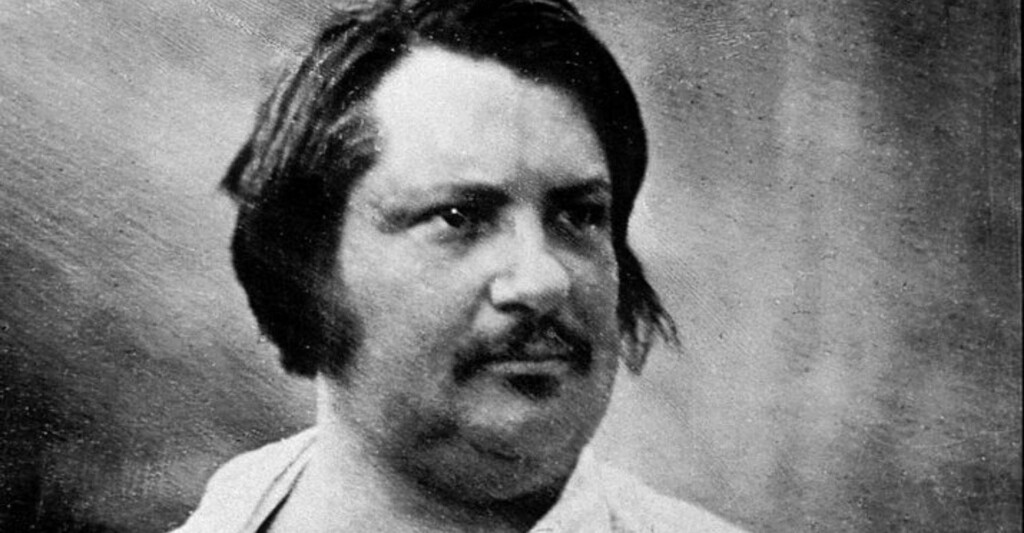
You are sitting across from someone who has just declared bankruptcy for the third time, and they are explaining to you, with terrifying precision, exactly how money works. Not how it is supposed to work. How it actually works, in the body, in the chest, in the sleepless arithmetic of four in the morning. This is the only reliable epistemology of debt: you do not understand it until it owns you.
By 1836, Honoré de Balzac owed somewhere north of a million francs. The number is almost theatrical, except that it wasn’t. It was made of printers’ bills, bad speculative investments in Sardinian silver mines, a publishing house he ran into the ground, advances he had already spent before the manuscripts existed, furniture purchased on credit for apartments he rented to impress women who were not impressed. He wrote in the pre-dawn dark not because he was a romantic figure of artistic suffering but because creditors could not knock on a door before sunrise. La Comédie Humaine, that cathedral of ninety-odd novels and stories cataloguing every social stratum of post-Napoleonic France, was not sociological observation conducted from a safe analytical distance. It was a man describing the ocean because he was already drowning in it.
This biographical fact changes everything about how to read the scene in Père Goriot where the old man melts down his last silver. Goriot is not performing poverty for the reader’s sympathy. He is conducting a ritual. He liquefies the objects that once marked his bourgeois respectability — the flatware, the serving dishes, the physical evidence that he had been someone — and converts them back into currency to send to daughters who will not visit him while he is dying. The metal loses its form and becomes pure exchangeability. What is destroyed in that crucible is not just silver. It is the entire fiction that objects confer identity.
Karl Marx, writing Capital in 1867, roughly three decades after Balzac had already dramatized its central mechanics, described commodity fetishism as the process by which social relations between people become displaced onto relations between things. Objects absorb the human labor and human desire that produced them, and then they turn around and appear autonomous, as if their value were intrinsic rather than constructed through exploitation and longing. The fetish is the object that has forgotten it was made by someone. Goriot’s silver is exactly this: it accumulated its social meaning over decades of his daughters’ upward mobility, of dinner parties and dowries and the elaborate theater of bourgeois belonging. When he melts it, he is not simply spending his last asset. He is watching the fetish die without being freed from it, because the money it becomes will only reconstitute the same structure of desire one address further up the social ladder.
What Balzac grasped that no economist of his era could articulate is that money is not a neutral medium of exchange. It is a transformer of persons. Goriot does not give his daughters money. He gives them himself, converted. This is why the novel refuses to frame his sacrifice as tragic in any redemptive sense — there is no lesson delivered, no moral accounting that restores dignity to the gesture. The daughters are not monsters because they take without giving back. They are simply operating correctly within the system their father built for them, a system in which a person’s value is always and only their convertibility.
Rastignac watches all of this from the cheap room above, and the education he receives is not about the cruelty of the rich. It is about the infrastructure that makes cruelty invisible, that reclassifies it as ambition, as practicality, as the natural order of talent rising and sentiment being left behind. He sees Goriot die without understanding that what he is witnessing is a diagram of the life he has already chosen to begin.
The Father as Sacrificial Economy
You have given everything to someone who never asked for it, and you have done this so many times, in so many forms, that the giving has become your entire identity. There is nothing left of you that was not first offered up. This is not love. This is something far more structurally violent, and Balzac understood it with the precision of a forensic accountant.
Père Goriot does not simply love his daughters. He converts himself into currency. When we first encounter him in the Maison Vauquer, he is already a reduced figure, literally shrinking across the years of the novel — moving from the best room on the first floor down through progressively cheaper accommodations as his money flows outward toward Anastasie and Delphine. Balzac renders this descent with almost cruel arithmetic: Goriot arrives in 1813 paying twelve hundred francs a year for his lodging, and by the time Rastignac meets him he is paying forty-five. The body follows the ledger. His clothes deteriorate, his silverware disappears piece by piece, his face hollows. He is not being consumed by grief. He is being liquidated.
Marcel Mauss, writing in 1925 in his Essai sur le don, identified something that most accounts of generosity prefer to ignore: the gift is never free. Every act of giving produces an obligation in the recipient, a debt that must be honored or suffered. Societies organized around gift exchange — the potlatch of the Kwakwaka’wakw people of the Pacific Northwest, the ceremonial feasts Mauss documented across Polynesia and Melanesia — understood this with complete transparency. The giver who gives without expecting return is not performing an act of generosity. He is performing an act of annihilation: annihilating the recipient’s autonomy, yes, but also, in the particular pathology that Goriot enacts, annihilating himself. Because a gift that produces no counter-gift collapses the entire circuit. The giver is left exposed, unrecompensed, finally invisible.
What makes Goriot’s sacrifice specifically capitalist rather than simply parental is the logic of investment and return that saturates every gesture. He is a former vermicelli manufacturer who made his fortune during the Revolutionary period by understanding scarcity, by hoarding grain and pasta when others went hungry. He knows exactly what commodities are worth. When he converts his pasta fortune into dowries, into gowns, into the maintenance of his daughters’ positions in Faubourg Saint-Germain society, he is not abandoning the market — he is relocating himself within it. His daughters become his portfolio. Their prestige is his return on investment, displaced into a register he cannot openly claim.
This is the trap that Balzac springs with extraordinary coldness: Goriot cannot collect the dividend. The social logic that makes his daughters valuable — their aristocratic marriages, their salons, their names — depends entirely on their distance from a bourgeois father who smells of commerce. He has funded a world that structurally excludes him. The gift has purchased his own erasure. When he appears at Delphine’s social events, she is embarrassed. When he dies, neither daughter comes to the deathbed. The final scene of his death is attended only by Rastignac and the medical student Bianchon, two young men with no obligation to him whatsoever, while his daughters are at their respective balls.
There is a specific horror in this that exceeds ordinary paternal tragedy. Goriot does not die betrayed. He dies in the logical conclusion of a transaction he designed. He raised daughters to succeed in a society that despises origins, then financed their entry into that society, then expected — somehow, against all structural evidence — that love would survive the economics. It did not. It could not. The market he served all his life simply processed him, extracted the value, and discarded the remainder.
The question Balzac leaves hanging over the corpse is not whether the daughters are monsters. It is whether the man who trained them to think in terms of position, advantage, and appearance had any right to expect something other than position, advantage, and appearance in return.
The Boarding House as Total Institution
You know the smell before you understand it — damp wool, boiled cabbage, a faint sweetness of rot that has been present so long the residents have stopped registering it as a smell at all. It has become, instead, an atmosphere. A condition. The Maison Vauquer on the rue Neuve-Sainte-Geneviève operates on exactly this principle: the longer you stay, the less you notice what it costs you to stay there. Balzac describes it in 1835 with the precision of a naturalist cataloguing a habitat, noting how the dining room’s greasy wainscoting and the landlady’s quilted petticoat seem to belong to the same organism, how the furniture and the woman who owns it have grown to resemble each other through proximity alone. This is not metaphor. It is a sociological diagnosis delivered before sociology existed as a discipline.
Erving Goffman, writing in Asylums in 1961, introduced the concept of the total institution — a place that manages its inhabitants by dismantling the boundary between private self and institutional role. Prisons, psychiatric wards, military barracks: spaces where the organization of time, space, and social exchange is so complete that identity itself becomes a function of position within the structure. What makes Goffman’s framework unsettling is not that it describes extreme or exceptional environments. It is that once you have read it, you begin to recognize the logic everywhere — in offices, in families, in any arrangement where departure is theoretically possible but practically catastrophic. The Maison Vauquer is not a prison. No one is locked in. And yet every character in it is profoundly, structurally trapped, because the rent they pay does not merely purchase lodging. It purchases a rank, a legibility, a place in the social taxonomy that the house itself administers.
Madame Vauquer charges differently for different floors, and this vertical economy is not incidental. The higher the room, the cheaper and the worse; the lower, the more expensive and the more bearable. Goriot himself migrates downward through this hierarchy over the course of the novel — beginning in relative comfort on the first floor, descending to a room that costs forty-five francs a month, then lower still, each descent registered by the other boarders with the communal cruelty of people who need someone to be beneath them. His fall is watched, narrated, and in a quiet way administered by the house’s social logic. The surveillance is not conducted by any single figure of authority. It is distributed, horizontal, constant. Every resident watches every other resident for signs of weakness, pretension, or concealed wealth, because in a closed system with scarce prestige, someone else’s elevation is necessarily someone else’s diminishment.
Rastignac enters this system with ambition so naked it functions almost as innocence. He has not yet learned to hide what he wants, and the boarding house teaches him — not through instruction but through the pressure of being perpetually visible to people who have every reason to read him accurately. Vautrin, who occupies a room at the Maison Vauquer and whose name conceals a history that will eventually rupture the novel’s surface, watches Rastignac with the patience of someone who has already mapped the young man’s future and is simply waiting for the young man to catch up. Power in this space does not announce itself. It observes.
What the Maison Vauquer strips from its inhabitants is not comfort or even dignity in the conventional sense. What it strips is the fiction of interiority — the belief that you have an inner life that exceeds your function in the room. Balzac understood, perhaps more clearly than any novelist before him, that ambition does not emerge despite environments like this one. It is produced by them, secreted by the organism in response to the conditions, the way the body generates fever not as a malfunction but as the only available form of fight.
A vision curated by a filmmaker, not an algorithm
In this video I explain our vision
Vautrin’s Offer and the Truth Nobody Refuses

You are sitting across from someone who is telling you the truth, and you know it, and that is precisely why you want him arrested.
Vautrin does not tempt Rastignac with fantasy. He tempts him with accuracy. The proposition he lays out in the Maison Vauquer — that every great fortune conceals a forgotten crime, that the distance between a celebrated banker and a convicted thief is not moral but merely temporal — is not the seduction of a corrupted mind. It is a structural analysis delivered by someone who has simply refused to pretend otherwise. What Balzac understood, writing in 1835, is that the most dangerous figure in any social order is not the criminal but the honest one: the person who names the mechanism everyone else has agreed to leave unnamed.
Pierre Bourdieu, working a century and a half later on entirely different material, arrived at the same architecture. In his 1992 study of the literary field, he identified what he called symbolic violence — the process by which domination reproduces itself not through force but through the consent of the dominated, who come to experience the rules of the game as natural, neutral, even just. The crucial word is misrecognition. The system does not merely hide its origins; it requires that its participants actively forget them, and rewards that forgetting with membership. To be accepted into legitimate society is to demonstrate, above all, that you are no longer asking certain questions. Rastignac’s education in the Faubourg Saint-Germain is precisely this: a long, elegant training in productive amnesia.
What makes Vautrin’s offer genuinely destabilizing is not its cynicism but its clarity. He tells Rastignac that the law itself is a latecomer — that property, inheritance, and title were all established before any legal framework existed to legitimize them, and that the legal framework was constructed afterward specifically to protect what had already been seized. This is not far from what the historian Fernand Braudel documented across three volumes of Civilization and Capitalism between 1979 and 1984: that the great merchant fortunes of early modern Europe were built on monopoly, coercion, and the strategic manipulation of scarcity, and that the moral vocabulary of the market — fairness, competition, merit — was layered over these foundations only once the foundations were secure enough not to need examining.
The social contract, in this reading, is not an agreement among equals. It is a document signed after the theft has already occurred, by people who were not present at the theft, in language that makes the theft invisible. Vautrin is not outside this contract — he is simply its most lucid reader. And Rastignac’s revulsion is not moral; it is the revulsion of someone who has already intuited that Vautrin is right and cannot afford to admit it, because admission would collapse the very aspiration that keeps him moving.
There is something almost clinical in the way Balzac constructs this scene: the criminal speaks in the grammar of a social theorist, and the ambitious young man listens with the body language of someone receiving a diagnosis he will immediately disavow. The performance of outrage is itself a social act, a way of demonstrating to any potential witness — and to oneself — that one belongs to the side that does not say these things aloud. Bourdieu would call this the practical sense, the embodied knowledge of how to navigate a field without ever articulating its rules. Rastignac already possesses it. Vautrin is merely its mirror.
The offer is refused. The refusal changes nothing about its truth. What it changes is Rastignac’s relationship to his own future: from this point forward, every step he takes toward success is a step taken in the full, suppressed knowledge of what success requires, and who has always already paid for it before him.
The Daughters Who Knew Exactly What They Were Doing
You are watching a man sell his last silver dish to pay a debt his daughter incurred at a card table she was not supposed to be sitting at, in a house she was not supposed to own, beside a man who was not supposed to be her lover. The dish goes for almost nothing. Goriot holds the money with the tenderness of someone handing over a child. He does not ask why. He never asks why.
Every reading of Anastasie and Delphine that calls them cold, parasitic, monstrous — every one of those readings stops exactly where it should begin. It stops at the feeling of the scene and refuses to enter the structure beneath it. What the Napoleonic Code of 1804 established, with the calm administrative precision of a document that would govern French civil life for generations, was the complete legal nonexistence of married women. A wife could not sign a contract, initiate a lawsuit, open a bank account, or dispose of property without her husband’s authorization. She was, in the language of Article 213, obligated to obey. She was not a citizen in the full sense. She was a dependent with a domestic title.
Anastasie married the Comte de Restaud and Delphine married the banker Nucingen. These were not romantic failures. These were the two moves available to women of their social position: marry upward or dissolve into the pension on the Rue Neuve-Sainte-Geneviève. The money Goriot gave them as dowry was not a gift received with ingratitude — it was the only form of capital they were legally permitted to carry into a world that would otherwise strip them of everything. Once inside those marriages, the capital became their husbands’. The women themselves became their husbands’. Every debt Anastasie ran up at that card table was a negotiation conducted in the only currency she could still generate: charm, access, the leverage of being desired by men with money. This is not depravity. This is arbitrage under conditions of structural dispossession.
Simone de Beauvoir, in 1949, described marriage under patriarchal law not as a relationship but as a career imposed by necessity, the only socially legible form of female survival. What she was describing had been the legal reality in France for a century and a half before she named it. Balzac knew this. He wrote Delphine’s dependence on Nucingen with the precision of someone documenting a financial instrument — she cannot leave, cannot access funds, cannot act without the approval of a man who holds her legal existence in his portfolio alongside his bonds and his losses. Her pursuit of Rastignac is not vanity. It is the acquisition of an ally inside a system where allies are the only form of power available.
The cruelty imputed to these women is the cruelty of the structurally powerless being blamed for the shape of their cage. Goriot’s suffering is real and it is devastating, but it exists inside the same architecture that produced his daughters’ abandonment. He gave them to a system that consumed parental sacrifice as a matter of course and offered nothing in return. The marriages he financed required them to perform loyalty upward — to husbands, to social rank, to the logic of the Faubourg Saint-Germain — and any lateral loyalty to a father from the merchant class was a social liability they could not afford to carry publicly. To be seen loving Goriot was to be seen as the noodle-maker’s daughter. In a world where identity is entirely a function of affiliation, that visibility was existential risk.
Balzac does not exonerate them. But he also does not simplify them, which is the harder and more honest thing. What he renders, with the density of someone who himself knew ruin, is two women making the only rational calculations available inside a legal order that had already decided they were not fully persons — and a father who loved them so completely he never once looked at the order itself.
Ambition as the Last Secular Religion
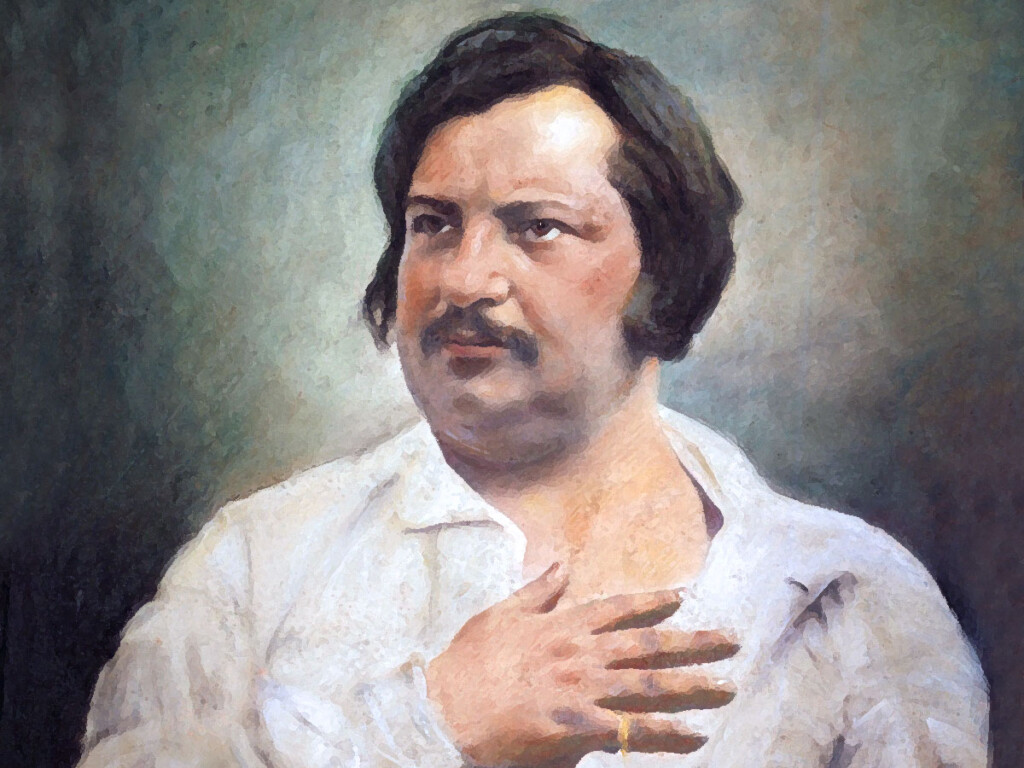
You are sitting in a job interview and someone asks you where you see yourself in five years, and you understand immediately, without being told, that the honest answer — nowhere in particular, I want to live well and sleep soundly — will end the conversation before it begins. So you invent a trajectory. You describe an ascent. You perform ambition as though it were a personality trait you were born with rather than a costume the room requires you to wear.
What Balzac mapped in 1835 was not the psychology of exceptional men but the grammar of an entire civilization beginning to speak a new language. Rastignac is not a villain or a hero; he is a diagnostic instrument. The novel’s real argument is structural: once a society dismantles inherited rank as its organizing principle, it does not produce equality — it produces a permanent, anxious competition in which every position must be earned and re-earned, and in which the self becomes inseparable from its own advancement. The old aristocratic order was cruel and unjust, but it gave people a place. The new order gave them a race.
Tocqueville, writing five years after Balzac, watching the American democratic experiment with the clinical fascination of a man dissecting something still alive, identified the specific pathology this produces. In Democracy in America, he noted that equality of condition does not quiet desire — it inflames it. When ranks are fixed, a peasant does not envy a lord because the distance is cosmological, not personal. But when the principle of equality is declared, every gap between where you are and where another person stands becomes an accusation. The mediocre outcome is no longer fate; it is failure. Tocqueville called this restlessness inquiétude — a word that means not quite anxiety and not quite dissatisfaction but something that lives between them, a low-frequency hum that democratic citizens carry in their chests without ever naming it. The man who achieves something immediately looks above him and feels the achievement dissolve.
This is not a character flaw that better therapy could correct. It is the logical output of a system that replaced divine order with meritocratic promise and then declined to honor the promise consistently. The sociologist Pierre Bourdieu spent most of his career — from Distinction in 1979 through The State Nobility in 1989 — demonstrating that what passes for merit is largely the laundering of inherited capital into the appearance of individual talent. The child who arrives at the elite institution already fluent in the cultural codes, already comfortable in the rooms, already knowing which fork to use and which references to make, is not more talented than the child who arrives without those things. She is more prepared, which is a different matter entirely, and the system rewards preparation by calling it merit, which allows inheritance to speak in the voice of justice.
What makes this particular deception so durable is that it requires the participation of those it disadvantages. The person who fails to rise must believe, at least partially, that the failure is his own — otherwise the entire architecture collapses. Ambition is the mechanism by which this belief is maintained. To be ambitious is to accept the terms of the competition, and to accept the terms is to grant legitimacy to the outcome. The young man who arrives in Paris from the provinces and burns with hunger for recognition is not rebelling against the system; he is its most faithful servant, because he is volunteering his own desire as fuel for a machine that will decide, without consulting him, whether that desire counts as virtue or as presumption depending entirely on whether he wins.
What Balzac knew, and what the century and a half since him has only made more intricate and harder to exit, is that the story a society tells about how people rise and the actual mechanisms by which they rise are two different stories, and the distance between them is where most lives are quietly spent.
🏛️ Ambition, Society, and the Hunger for Power
Balzac’s Père Goriot is a relentless study of ambition, social climbing, and the brutal machinery of a society that rewards ruthlessness. These articles explore the same forces — the drive for status, the corruption of ideals, and the moral costs of desire — that animate Rastignac’s fateful choice atop Père Lachaise.
Bourdieu’s Distinction: Taste and Social Class
Bourdieu’s concept of distinction reveals how taste and cultural capital function as weapons in the class war, much as Rastignac learns to wield manners and connections in Balzac’s Paris. Social climbing is never simply about money — it is about acquiring the invisible codes that mark belonging. Père Goriot dramatizes precisely the mechanisms Bourdieu would later theorize with sociological precision.
GO TO THE SELECTION: Bourdieu’s Distinction: Taste and Social Class
Karl Marx and Alienation: Economic and Philosophical Manuscripts
Marx’s analysis of alienation in the Economic and Philosophical Manuscripts exposes how the pursuit of wealth estranges human beings from their own nature, their labor, and each other. In Père Goriot, Goriot himself is the grotesque emblem of this alienation — a man who has dissolved his entire being into money and the social ambitions of his daughters. Balzac and Marx, contemporaries in spirit, diagnosed the same wounded humanity beneath the glittering surface of bourgeois society.
GO TO THE SELECTION: Karl Marx and Alienation: Economic and Philosophical Manuscripts
Weber’s The Protestant Ethic: Analysis
Weber’s Protestant Ethic traces the deep cultural roots of the capitalist spirit, arguing that the relentless accumulation of wealth became a moral calling stripped of any transcendent meaning. Balzac’s world is one where this calling has fully secularized into naked ambition and social performance. Reading Weber alongside Père Goriot illuminates why Rastignac’s hunger feels both inevitable and spiritually hollow.
GO TO THE SELECTION: Weber’s The Protestant Ethic: Analysis
Veblen’s The Theory of the Leisure Class: Analysis
Veblen’s Theory of the Leisure Class dissects the rituals of conspicuous consumption and status display that govern elite society — rituals Balzac depicted with savage irony in the salons of the Faubourg Saint-Germain. Veblen shows that wealth is never merely economic but always a theater of power and distinction. Père Goriot remains one of literature’s finest dramatizations of exactly this social spectacle.
GO TO THE SELECTION: Veblen’s The Theory of the Leisure Class: Analysis
Discover Cinema That Dares to Tell the Truth About Power
If Balzac’s unflinching portrait of ambition and social hunger speaks to you, Indiecinema’s streaming catalog gathers independent films that share the same fearless gaze — stories about desire, class, and the human cost of wanting more. Explore films that go where mainstream cinema rarely dares, and find the screen counterpart to the great novels that changed how we see the world.
👉 EXPLORE THE CATALOG: Watch Indie Films in Streaming
A vision curated by a filmmaker, not an algorithm
In this video I explain our vision

