
The Body as Political Territory
You are sitting in a clinic waiting room, filling out a form that asks questions no form has any right to ask. Marital status. Number of previous pregnancies. Reason for visit. The pen moves across the paper and somewhere in the bureaucratic machinery around you, a file opens. A category is assigned. You have not yet spoken to a doctor, and already you have been processed — sorted into a grid whose architecture you did not design and were never asked to approve. This is not a modern aberration. This is the system working exactly as intended.

The persistent myth is that reproductive control is a question of morality — that debates about contraception, abortion, sterilization, and fertility have always been animated by genuine concern for human life or divine law. The historical record refuses this. When the Roman jurist Ulpian codified the legal status of the fetus in the second century CE, his primary concern was inheritance law. A posthumous child could disrupt an estate. The fetus mattered because property mattered, and the body carrying it was the legal vessel through which wealth either passed cleanly or fractured into dispute. Morality was the vocabulary. Property was the grammar.
This logic did not soften with time. In seventeenth-century England, the regulation of illegitimate births through the Poor Laws was explicitly designed to manage labor costs and parish expenditures, not to protect children or mothers. A bastard child represented a financial liability to the local community. The woman’s body became a site of economic accounting. Keith Wrightson’s work on English social history makes clear that the criminalization of bastardy in this period tracked almost perfectly with anxieties about poor relief spending — the moral panic was a fiscal panic wearing a clerical collar.
What changes across centuries is not the underlying mechanism but the institutional costume it wears. The nineteenth century replaced the parish overseer with the physician. The medicalization of reproduction, which historians like Barbara Duden have traced with forensic precision, transferred authority over the female body from the church and the local magistrate to the emerging professional class of men with stethoscopes and newly minted degrees. Duden’s “The Woman Beneath the Skin,” published in 1991, documents how the very concept of the interior female body as a medical object was constructed during this period — not discovered, constructed. Before this, women’s bodily knowledge was largely self-referential and communal. After it, that knowledge became professionally inadmissible.
The industrial revolution did not merely change where people worked. It changed what bodies were for. A factory system that ran on cheap, renewable labor needed a steady population of workers, which meant that the reproductive capacity of working-class women became, in the most literal sense, a means of production. The pro-natalist campaigns that swept across Europe in the late nineteenth and early twentieth centuries — France after the losses of 1870, Germany constructing its demographic ambitions, England anxious about imperial manpower — were not sentimental. They were logistical. The woman who failed to reproduce sufficiently was failing the state in the same register as the worker who failed to meet his quota.
What gets called reproductive freedom in contemporary political discourse tends to be measured against this backdrop as a rupture, a liberation, a finally-won right. But the rupture is much shallower than it appears. The structures beneath it — the ones that determine who reproduces under what conditions, who is encouraged to multiply and who is quietly or not so quietly discouraged — have not dissolved. They have been redecorated. The clinic form with its intrusive questions is not a vestige of an older system. It is the older system, updated, digitized, and handed back to you with a polite smile and a number to take to the reception desk.
The Sands

Science fiction, by Noah Paganotto, Argentina, 2022.
In an undetermined location on planet Earth, in an unknown time, Zoilo lives with his family in a wasteland surrounded by ruins. They live uprooted, without mothers, knowing that pregnancy for women is synonymous with death. For them there is only one collective routine; keep the fire alive. Only Zoilo escapes this logic, observing, intrigued, details that others do not see and therefore do not appreciate. Zoilo's personal search for answers will increase the differences with his relatives, increasingly revealing an empty world of interiority.
Avant-garde film that burns slowly in the first part and then reveals in the second the profound conflicts of a family prisoner of archaic beliefs. It is a dystopian and visionary work, with wonderful photography and images of rare power that allow us to grasp the depth of the story and its poetic potential. The faces of the actors, especially the protagonist boy, are perfect. The Sands metaphorically represents the world we live in: an alienated society, where what keeps us alive is demonized and blamed for death. In opposition to the fast pace of the typical mainstream film, The Sands is a meditative journey into the depths of images. The film was shot in natural environments in the city of Necochea, Buenos Aires province, Argentina.
LANGUAGE: Spanish
SUBTITLES: English, Spanish, French, German, Portuguese
Eugenics, Demography, and the State’s Arithmetic
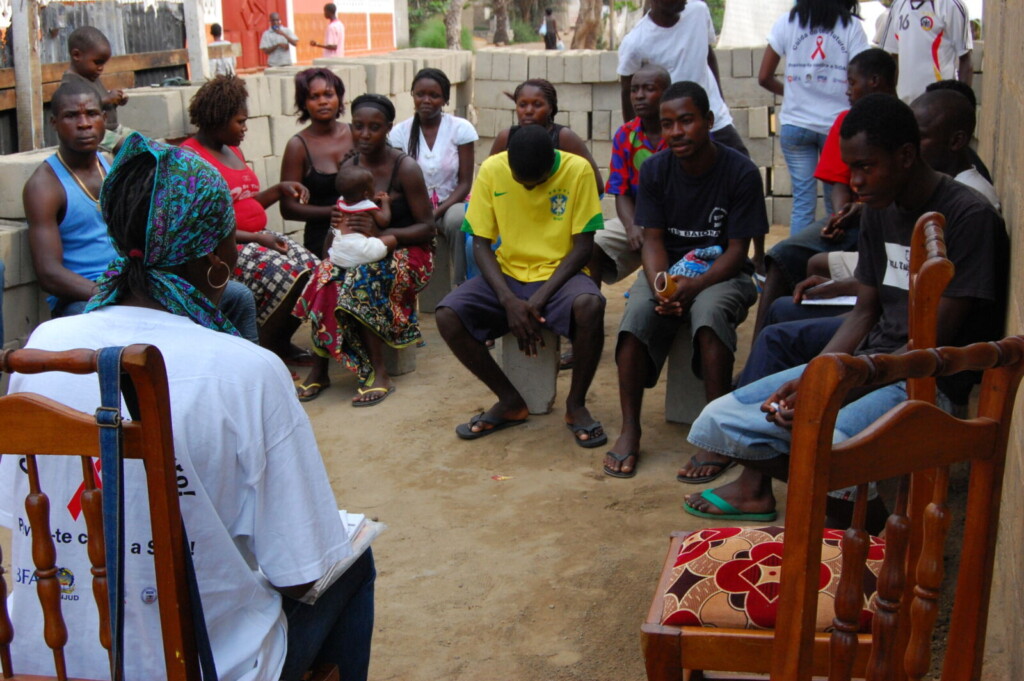
You are handed a census form in 1927, somewhere in rural Virginia, and the woman filling it out across the table from you has already been told, by a doctor she has never met, that her children would be a burden to the republic. She does not yet know that the Supreme Court of the United States will, that same year, agree with him.
Francis Galton coined the word “eugenics” in 1883, but the architecture was already standing in Hereditary Genius, published fourteen years earlier, where he argued with the confidence of a man who had never doubted his own inheritance that intelligence, moral character, and civic virtue descended through bloodlines the way property descended through wills. What made Galton dangerous was not the crudeness of his racism but its statistical veneer — he was a pioneer of correlation coefficients, and he used the grammar of science to say what aristocracies had always felt. When measurement entered the picture, sentiment became policy.
Indiana passed the first compulsory sterilization law in 1907. By the time Buck v. Bell was decided in 1927, with Oliver Wendell Holmes writing that “three generations of imbeciles are enough,” over thirty American states had passed similar legislation. The total number of forced sterilizations documented in the United States between that year and the early 1970s exceeds sixty thousand, concentrated overwhelmingly among poor white women in Appalachia, Black women in the South, Indigenous women in federally administered hospitals, and immigrants whose native languages were mistaken for cognitive deficiency on hastily translated IQ tests. The machinery was never really about genetics. It was about deciding whose reproduction counted as reproduction and whose counted as contamination.
The Nazi Erbgesundheitsgesetz of 1933 — the Law for the Prevention of Hereditarily Diseased Offspring — was drafted with explicit reference to American precedents. Nazi legal scholars cited California’s sterilization program approvingly. This is not a footnote; it is the central fact. The horror of the German program, which forcibly sterilized an estimated four hundred thousand people before the war had even begun, did not emerge from an alien ideology imported from outside Western civilization. It was an acceleration of a logic that democratic republics had already institutionalized and the Supreme Court had already blessed.
What happened after 1945 was not the abandonment of demographic arithmetic but its rebranding. The Cold War produced a new anxiety: overpopulation in the Global South, framed by figures like Paul Ehrlich, whose 1968 book The Population Bomb sold three million copies and described human fertility in formerly colonized nations as an existential threat to planetary stability. The language shifted from racial hygiene to resource management, from fitness to sustainability, but the populations targeted for fertility reduction remained, with striking consistency, the same ones that had always been targeted. USAID programs, World Bank conditional loans, and international family planning initiatives in the 1960s and 1970s applied demographic pressure on India, Bangladesh, and various Latin American nations in ways that ranged from aggressive contraceptive campaigns to documented coercive sterilization, particularly during Indira Gandhi’s Emergency period between 1975 and 1977, when approximately eight million sterilizations were performed, many of them on men from lower castes under bureaucratic duress.
The inversion of this logic operates just as coercively. When Hungary’s Viktor Orbán offers tax exemptions to women who bear four or more children, or when French demographers speak with quiet urgency about le renouvellement de la population, the arithmetic has simply changed sign. The nation is no longer threatened by too many of the wrong people being born; it is threatened by too few of the right ones. But “right” is still doing enormous work in that sentence, still pointing somewhere specific, still carrying the residue of every decision about whose fertility has historically been treated as a gift to civilization and whose has been treated as a problem requiring a solution.

Feminist Theory's Unresolved Contradiction
You have probably never once questioned whether your reproductive decisions were truly yours. The paperwork felt yours. The appointment was yours. The pharmacist handed something to you, specifically, with your name on the label. And yet the entire architecture of that moment — the insurance coverage or its absence, the clinic’s distance from your home, the employer whose schedule you could or could not rearrange, the partner whose reaction you were already calculating — was built long before you walked through the door.
Shulamith Firestone understood in 1970 that the problem was not merely political but biological and economic in its foundations. In “The Dialectic of Sex,” she argued that women’s oppression was rooted in the biological fact of reproduction itself, and that true liberation would require wresting control of reproduction away from nature through technology — artificial wombs, collective child-rearing, the dissolution of the family unit as an economic structure. It was a radical demand because it recognized that “choice” operating inside an unchanged material world was not freedom but administration. Firestone was not offering women a seat at the table. She was questioning whether the table should exist.
What followed instead was a rights framework that kept the table and rearranged the seating. The language of bodily autonomy became the dominant idiom of feminist reproductive politics through the 1970s and 1980s, enshrined in legal battles and activist campaigns that were real, hard-won, and consequential. But a right exercised within a coercive system is not the same as a right exercised freely. The coercion does not disappear because it is structural rather than explicit. It relocates into the infrastructure of access.
The data are not ambiguous on this point. In the United States, women living below the federal poverty line are more than five times as likely to have an unintended pregnancy as women at the highest income levels, and they are also more likely to continue those pregnancies against their stated wishes — not because they want to, but because the Hyde Amendment, enacted in 1976, prohibits federal Medicaid funding for abortion in nearly all circumstances, and Medicaid is the coverage they carry. Globally, the picture compresses further: the World Health Organization estimated in 2017 that approximately 45 percent of all abortions worldwide are unsafe, and the geographic distribution of unsafe procedures maps almost perfectly onto maps of poverty and structural healthcare exclusion. Choice, in this distribution, is a commodity.
Assisted reproduction reveals the same asymmetry from the other direction. In vitro fertilization in the United States costs between fifteen and thirty thousand dollars per cycle, with no federal insurance mandate covering it, meaning that the technology most loudly celebrated as expanding reproductive freedom is structurally reserved for women who can afford to repeat expensive procedures multiple times. Meanwhile, sterilization — historically deployed as a tool of coercive eugenics against poor women and women of color through programs that operated openly in the United States as late as the 1970s, including the federally funded sterilization of thousands of Native American women documented by the Government Accountability Office in 1976 — has now become, in a perverse inversion, one of the most financially accessible permanent contraceptive options for low-income women who lack coverage for reversible methods. The freedom to prevent pregnancy and the freedom to achieve it are not symmetrically distributed. They follow income. They follow race. They follow zip code.
This is the contradiction that liberal feminist discourse has never fully absorbed: that the category of “reproductive choice” was built to describe an individual act while the conditions governing that act are collective, historical, and arranged by forces that have no interest in equalizing access to the choice they celebrate.
Technology as Liberation and New Capture

You are sitting in a waiting room that smells of antiseptic and quiet money, holding a manila folder of your own bloodwork, your hormone levels, your follicle counts — your body translated into a spreadsheet someone else will interpret for you. The consultation has not yet begun, but the decision has already been partially made: made by the insurance category you fall into, by the clinic’s success-rate metrics, by the particular configuration of desire and income that brought you here rather than somewhere else or nowhere at all.
When Louise Brown was born in Oldham, England, on July 25, 1978, the headline consensus was liberation — nature overruled, destiny rewritten, the tyranny of the fallopian tube finally broken. Robert Edwards and Patrick Steptoe had done what theologians had spent centuries insisting was not humanity’s to do, and the world largely celebrated. What the celebration missed, or chose not to examine, is that the transfer of reproductive authority from the body to the clinic is not the abolition of control but its relocation. Michel Foucault argued in The History of Sexuality, published in its first volume just two years before Brown’s birth, that power over life had ceased to operate primarily through sovereign prohibition — the right to kill — and had reorganized itself as a positive, productive force managing populations, optimizing bodies, administering fertility and mortality as governable variables. The clinic, in this framework, is not the enemy of the church that preceded it; it is its more efficient successor, speaking the same sentence in a different grammar.
What IVF introduced was not freedom from reproductive normativity but a dramatically expanded surface area for its enforcement. By 1990, the UK’s Human Fertilisation and Embryology Act had established which embryos could legally be created, which could be implanted, which could be researched upon, and crucially, which categories of person were eligible to use these technologies at all — decisions made not by patients but by a regulatory body whose composition reflected the professional and cultural assumptions of a very specific social stratum. The technology promised to democratize reproduction and instead produced a tiered market: by 2023, a single IVF cycle in the United States cost between fifteen and thirty thousand dollars out of pocket, placing it structurally beyond reach for the majority of people who might want it, while simultaneously generating a global industry exceeding twenty-five billion dollars annually.
Gestational surrogacy extended this logic into territory that exposed the contradiction with particular sharpness. The arrangement — one body growing a child for another party’s legal and social parenthood — was framed in its commercial form as an exercise of bodily autonomy and contract freedom. What the contract obscures is the demographic almost invariably the same on both sides: the carrying person is economically precarious, often in a country with weak labor protections for surrogates, while the commissioning party holds the economic and legal leverage. India’s surrogacy industry, before the government restricted it in 2015 and then further in 2021, was generating roughly two billion dollars per year and drawing Western clients specifically because Indian women could be contracted at a fraction of the cost of American or European ones. The geography of that transaction is not incidental to its ethics; it is its ethics.
Preimplantation genetic diagnosis, routinely offered alongside IVF since the early 1990s, added another dimension that the liberation narrative cannot comfortably absorb. The ability to screen embryos for chromosomal abnormalities, hereditary diseases, and increasingly for carrier status across hundreds of conditions does not simply remove suffering from the world — it encodes a judgment about which kinds of future persons are worth bringing into it, and that judgment is made inside a medical consultation shaped by actuarial risk models, liability frameworks, and the unstated assumption that disability represents a problem to be solved rather than a form of human variation with its own claims on existence.
The Invisible Grammar of Reproductive Norms

She is thirty-four, sitting across from a reproductive endocrinologist in a room that smells of recycled air and institutional carpet. She has brought her partner, her insurance documents, and a carefully rehearsed account of why now is the right time. The doctor nods at intervals, types without looking up, and somewhere in the middle of the consultation asks, almost as an aside, whether they have considered that her age places her in a statistically elevated risk bracket. The question is clinical, bloodless, and entirely devastating, not because it is wrong, but because it arrives wrapped in the authority of medicine while carrying inside it every cultural assumption about when a woman should have already done this, with whom, and under what economic conditions. She had believed, walking in, that this was her decision. She walks out understanding, without being able to say it clearly, that her decision had a grammar she had never been taught to read.
Adrienne Rich understood this grammar with a precision that most of her contemporaries found uncomfortable. In Of Woman Born, published in 1976, she drew a distinction that still cuts: motherhood as institution is not the same thing as motherhood as experience. The institution is the scaffolding of law, medicine, religion, and economics that determines what counts as a legitimate birth, a legitimate mother, a legitimate family. The experience is something else entirely, raw and specific and irreducible to policy. What Rich exposed is that the institution does not merely regulate reproduction from the outside, like a fence around a field. It operates from inside the desire itself, shaping what a woman learns to want before she is old enough to question whether the wanting is her own. The longing for a child at a particular age, with a particular kind of partner, in a particular kind of home, arrives already pre-formatted by a normative grid so pervasive it feels like nature.
That grid has coordinates. Timing is one: the demographic panic around the so-called biological clock intensified dramatically in the early 1980s following a widely cited but methodologically thin study published in 1982 in the European Journal of Obstetrics and Gynecology, which suggested sharp fertility decline after thirty. The study drew on birth records from eighteenth-century France, a population nutritionally and medically incomparable to contemporary women, yet its conclusions entered public discourse as biological fact and quietly restructured the emotional architecture of an entire generation’s reproductive urgency. Partnership status is another coordinate: in most Western legal systems well into the late twentieth century, assisted reproduction was formally or informally restricted to married heterosexual couples, encoding a particular family form as the only container deemed fit for new life. Economic readiness is a third, functioning not as an explicit rule but as a constant ambient pressure, the unspoken requirement that one must be financially stable before daring to reproduce, a requirement applied with extraordinary asymmetry depending on class and race.
National belonging sits underneath all of it. Pronatalist policies in France, Hungary, and Israel have consistently framed reproduction as a civic duty to the ethnic or national collective, while immigration enforcement in the United States has for decades separated parents from children at borders, making the legal status of a body the precondition for the legal protection of its reproductive life. The grammar is not universal. It is geopolitical.
What remains genuinely unresolved is whether any reproductive act can be said to exist outside this grammar at all, not in a defeatist sense, but in a precise philosophical one. If desire itself is shaped by the institutions that predate us, then the felt intimacy of a reproductive choice, the sense that this is mine, this comes from somewhere unreachable by policy or norm, may be the most sophisticated product of the very system it believes itself to be escaping.
A vision curated by a filmmaker, not an algorithm
In this video I explain our vision
⚖️ Bodies, Power, and the Politics of Control
Reproductive control has never existed in isolation — it is woven into the same structures that police gender, punish difference, and manufacture social enemies. These articles trace the historical and ideological threads that connect the domination of bodies to the domination of minds, from witch trials to feminist resistance.
Witch hunts as an archetype of gender control
The systematic persecution of women accused of witchcraft was never merely a religious phenomenon — it was a calculated mechanism for disciplining female autonomy and suppressing any power that existed outside patriarchal structures. Understanding this archetype is essential to recognizing how reproductive and bodily control has been enforced across centuries. The witch hunt remains one of history’s most instructive templates for state-sanctioned gender violence.
GO TO THE SELECTION: Witch hunts as an archetype of gender control
The dilemma of motherhood between choice and destiny
Few tensions in women’s lives carry as much historical and political weight as the question of whether motherhood is freely chosen or culturally imposed. This article explores how reproductive identity has been shaped by social expectation, religious doctrine, and legal constraint across different eras. The apparent intimacy of the choice reveals, on closer inspection, a deeply public and contested terrain.
GO TO THE SELECTION: The dilemma of motherhood between choice and destiny
Gender Equality: History and Current State in the World
The global struggle for gender equality is inseparable from the fight for reproductive autonomy, since control over the body has always been central to the subordination of women in both public and private life. This article maps the historical milestones and ongoing failures in achieving genuine parity across legal, social, and economic dimensions. Without bodily sovereignty, formal equality remains incomplete.
GO TO THE SELECTION: Gender Equality: History and Current State in the World
Wollstonecraft’s A Vindication of the Rights of Woman
Mary Wollstonecraft’s foundational 1792 text laid the intellectual groundwork for linking women’s rational agency to the right to govern their own lives, including their reproductive futures. Her critique of a society that reduced women to ornamental objects or breeding vessels was radical in its time and remains urgently relevant. Revisiting her argument today illuminates how little has changed in the deeper logic of patriarchal control.
GO TO THE SELECTION: Wollstonecraft’s A Vindication of the Rights of Woman
Discover Independent Cinema on Indiecinema
If these themes stir something in you — the weight of history, the politics of the body, the quiet resistance of those who refused — then independent cinema is your natural next destination. On Indiecinema you will find films that dare to tell these stories without compromise, without filters, and without asking permission. Come explore a streaming space built for those who want cinema that means something.
👉 EXPLORE THE CATALOG: Watch Indie Films in Streaming
A vision curated by a filmmaker, not an algorithm
In this video I explain our vision

