
The Density Paradox
You are pressed against a stranger’s shoulder on the 6 train at rush hour, close enough to smell the coffee on his breath, close enough to read the text message glowing on his phone, and you have never felt more alone in your life. His elbow finds a place against your ribs and stays there for three stops, an intimacy no lover has earned, and neither of you looks up. Forty bodies in a steel container hurtling under Manhattan, each one radiating heat into the recycled air, and the only agreement everyone has silently signed is that none of this counts. It does not count as contact. It does not count as presence. You could slide to the floor and it would take a full stop, maybe two, before anyone registered that something had changed in the arrangement of bodies. This is not an accident of bad city planning. This is the design working exactly as intended.

Georg Simmel saw this coming in 1903, standing in a Berlin that was still learning what it meant to hold two million people inside a single administrative boundary, and he wrote it down in an essay called “Die Großstädte und das Geistesleben,” the metropolis and mental life, delivered first as a lecture and then folded into a broader exhibition on German cities. Simmel was not interested in complaining about noise or dirt. He was interested in the nervous system. He argued that the villager and the city dweller are not the same psychological animal, because the village exposes a person to a slow, rhythmic, predictable sequence of stimuli, while the city delivers a relentless bombardment of sensory shocks, one after another, faces and signs and vehicles and transactions, none of them repeating, none of them allowing the mind time to absorb before the next arrives. The human nervous apparatus, he wrote, has a limited capacity for differentiated response, and when that capacity is overwhelmed, it does what any overloaded system does. It shuts parts of itself down.
He called the resulting posture the blasé attitude, and it is worth sitting with how clinical that phrase actually is, because it sounds like a mood and it is actually a diagnosis. The blasé person, in Simmel’s account, has not become shallow by choice or by moral failing. He has become blunted as a survival mechanism, the way a hand develops a callus against friction it cannot avoid. Every stimulus in the metropolis makes a claim on your attention and your feeling, and if you honored each claim with the emotional response it would receive in a village, where a stranger’s face might be the only new face you see in a month, you would be annihilated within a week. So the mind negotiates a treaty with the environment. It agrees to register the presence of things without registering their meaning. Colors blur into a general gray. Faces become instances of a category rather than singular events. The elbow against your ribs becomes furniture.
What makes this a paradox rather than simply a hazard is that the density is real and the withdrawal is also real, operating simultaneously, each one intensifying the other. You are objectively surrounded. The apartment building stacks three hundred lives within shouting distance of your own bed, separated by drywall thin enough to carry the sound of someone else’s argument, someone else’s television, someone else’s late-night footsteps overhead. Proximity has never been higher in the history of the species. And yet the very mechanism that allows you to tolerate that proximity without going mad is the same mechanism that prevents you from turning it into anything resembling a bond. Simmel understood that the closeness of the city was not the opposite of loneliness but its precondition, that you cannot manufacture the blasé shield without also manufacturing the isolation it protects against, because a nervous system trained to filter out is not a nervous system that can suddenly open on command when the person you filtered out turns out to be worth knowing.
The Architecture of Avoidance
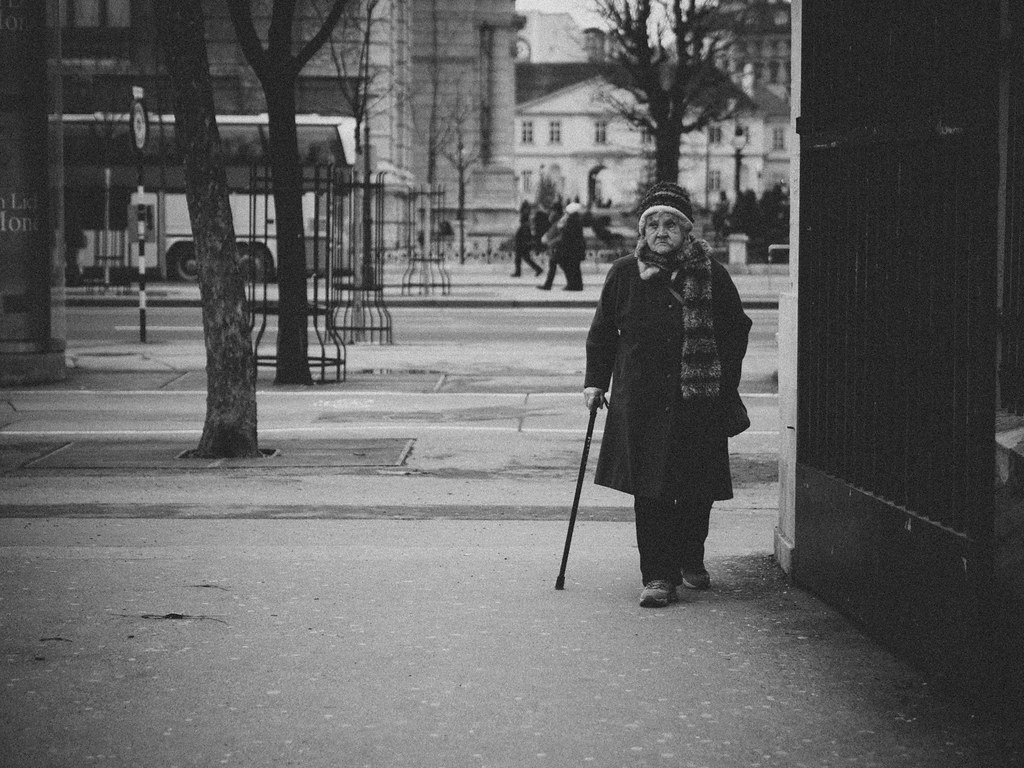
You press the button, the doors close, and for eleven seconds you study the ceiling of the elevator with the concentration of someone reading scripture, because the alternative is to look at the stranger beside you and risk the catastrophe of a shared glance. Nothing happens in those eleven seconds. That is precisely the point. The elevator, like almost everything else built after 1960, has been engineered so that nothing happens, and you arrive at your floor having successfully avoided the small, unbearable tax of being seen by another person.
No one voted for this. No referendum decided that human beings should stop bumping into each other, and yet the built environment of the last seventy years has moved with the quiet consistency of an ideology, and the ideology is this: friction is a defect to be engineered out. The urbanist Jane Jacobs, writing in 1961 in The Death and Life of Great American Cities, described the sidewalk ballet of Hudson Street, the shopkeepers and stoop-sitters and delivery boys whose overlapping presence produced what she called eyes on the street, a form of safety and familiarity that nobody scheduled and nobody paid for. That ballet required narrow sidewalks, mixed use, slow traffic, buildings that opened outward instead of retreating into towers with lobbies manned by intercoms. Almost none of what Jacobs described survived the decades that followed, not because people stopped wanting it but because it was catastrophically inefficient, and efficiency became the only value the twentieth century knew how to measure.
The private automobile did more to dissolve incidental contact than any single technology in human history, and it did so by promising something that sounded, at the time, like liberation. You no longer had to wait at a bus stop beside a man who smelled of tobacco, no longer had to make small talk with a fellow passenger on the tram, no longer had to walk past the same faces on the same corner at the same hour until those faces became, without anyone intending it, a form of low-grade companionship. The sociologist Ray Oldenburg, in The Great Good Place in 1989, gave a name to the cafés and barbershops and taverns that had once absorbed this incidental contact, calling them third places, distinct from home and work, and he noted with something close to alarm that American suburbs, built entirely around the automobile, had almost none of them left standing.
Every subsequent innovation has followed the same logic with increasing precision. The food delivery application removes the need to speak to a waiter, or a shopkeeper, or the man at the corner store who once might have asked how your mother was recovering from surgery because he happened to remember she’d had one. The noise-canceling headphone removes the ambient sound of the city itself, the coughs and arguments and fragments of other lives that used to leak into your ears whether you wanted them or not, forcing a kind of unchosen awareness of the species you belonged to. Even the doorman, once a figure who might exchange twenty words with you on a bad day, has in many buildings been replaced by a keypad, and the keypad has no opinion about your bad day at all.
What gets lost in each of these substitutions is never named on the packaging, because it was never a service anyone was purchasing on purpose. Sociologist Mark Granovetter, in a 1973 paper that became one of the most cited in the discipline, called these unchosen contacts weak ties, and demonstrated that they carried more information, more opportunity, and more integration into a social fabric than the strong ties of family and close friendship ever could, precisely because they crossed boundaries that intimacy never bothers to cross. A city engineered for frictionlessness is a city that has quietly optimized itself against the very mechanism that once, without asking permission, made strangers into neighbors.

The Historical Falsehood of Community
Someone tells you, over coffee that has gone cold because the conversation kept slipping toward something too raw to abandon, that their grandmother’s village had no locks on the doors. This is offered as evidence of a lost paradise, a time before the isolation you now live inside. Nobody locked anything, she says, because everyone knew everyone. What she does not say, because she has never had to think about it, is that everyone also watched everyone, judged everyone, and made sure everyone stayed exactly where they were supposed to stay. The unlocked door was not trust. It was surveillance so total that theft became unnecessary, because there was nowhere to hide the stolen thing, and nowhere to hide yourself either.
Ferdinand Tönnies gave this a name in 1887, in a book almost nobody outside sociology departments reads anymore, distinguishing Gemeinschaft from Gesellschaft, community from society, the organic bonds of blood and soil from the contractual, impersonal ties of urban life. The distinction became a kind of intellectual scaffolding for a hundred years of nostalgia, cited endlessly to explain what modern life had supposedly destroyed. But Tönnies himself was more careful than his inheritors. He was not writing an elegy. He was writing a typology, and typologies are not verdicts. Gemeinschaft, in his own account, was saturated with obligation, hierarchy, and a suffocating sameness that made deviation nearly unlivable. The community you imagine when you say the word community was never simply warm. It was warm the way a hand around your throat is warm.
Historians who have actually gone into the parish records, the court documents, the diaries of people who lived in these villages before industrialization scattered them into cities, describe something considerably less tender than the postcard version. Alan Macfarlane‘s work on English individualism found that the mythic extended peasant family, all generations under one roof, bound by unbreakable loyalty, barely existed in the historical record he examined; nuclear households were common in England as early as the thirteenth century, and the emotional temperature of village life was frequently cold, litigious, and transactional. Keith Thomas, in his study of witchcraft and its decline, documented how accusations of witchcraft functioned as a mechanism for punishing women who violated the community’s expectations, women who were too old, too poor, too unmarried, too outspoken to be tolerated. Between roughly 1450 and 1750, tens of thousands of people, overwhelmingly women, were executed across Europe for the crime of not fitting in. This was not the failure of community. This was community working exactly as designed, policing its boundaries with fire.
The village did not simply lack privacy. It actively punished the desire for it. Anyone who wanted solitude, who wanted to think differently, worship differently, love differently, was treated not as an individual exercising a preference but as a threat to the collective organism. Emile Durkheim, writing at nearly the same historical moment as Tönnies, understood suicide itself as a social fact, and in his 1897 study he found that overly integrated communities, what he called fatalistic and excessively regulated environments, produced their own despair, distinct from but no less lethal than the anomic despair of modern disconnection. There was never a golden mean where belonging came without cost. There was only a shift in which costs a given arrangement demanded of you.
What is actually being mourned, then, when someone speaks of the unlocked door, is not a real historical condition but a fantasy assembled retroactively out of the specific deprivations of the present. The loneliness of the city creates a hunger, and that hunger reaches backward for an image to blame itself on, and the image it finds is a village that, if you were the wrong kind of person in it, the unmarried woman, the disabled child, the man who loved men, would have been its own particular hell, just one with better lighting and worse locks.
The Performance of Connection

You check the phone forty-three times before noon, though you would never call it checking, you would call it living, staying connected, being present in the only way presence is still measured, and yet each glance leaves you thinner somehow, less accounted for, as if the self you are broadcasting has quietly replaced the self that woke up sweating at four in the morning for no reason you could name to anyone, least of all to the three hundred people who saw you smiling in front of a plate of food you barely tasted.
Erving Goffman, writing in 1959 in a book about ordinary bars and offices and dinner parties, gave us the vocabulary for this before there was any technology to make it total. He described the front stage, where we perform a version of ourselves calibrated to audience and occasion, and the back stage, where the performance drops and the sweat shows and the mask sits on the dresser. Goffman never imagined that the back stage would be sold off, subdivided, and rented out to the very audience it was meant to exclude. He assumed a person could still go home. The architecture he described depended on walls that closed. What he could not have anticipated was a stage that follows you into the bathroom, into the bed, into the three a.m. hour that used to belong to no one but the person suffering through it.
The profile is not a mask in the old sense, because a mask still implies a face underneath it that the wearer knows intimately. What happens instead is closer to a slow substitution, where the curated feed becomes the reference point even for the person who curated it, so that you check your own life against your own performance of your life and find the original wanting. Sherry Turkle, who spent decades at MIT watching people negotiate their devices, wrote in 2011 that we expect more from technology and less from each other, and the sentence sounds tidy until you notice how it indicts something nobody wants to admit, which is that other people had become exhausting precisely because they could disappoint, contradict, need something back. A screen offers contact without the tax of reciprocity. You can love an image of a person at the exact intensity you choose, for the exact duration you choose, and close the application when the cost of feeling exceeds the budget you brought to it.
What gets called connection in this economy is closer to surveillance performed mutually and by consent, a continuous audit where everyone is both the watcher and the watched, refining their footage in real time. The vulnerability that used to be the price of intimacy, the stutter, the badly timed joke, the confession that comes out wrong and has to be repaired in the other person’s actual presence, has been engineered out of the transaction. Nothing is unscripted because everything can be deleted before it is seen, and a self that can always retract its worst moments never has to develop the muscle that metabolizes them. Turkle’s later research, gathered in a book from 2015 built on interviews with teenagers who described texting as safer than talking because a text can be edited and a voice cannot, points to something that looks like protection and functions like atrophy. The capacity to sit inside another person’s unmoderated reaction, to tolerate the silence after a joke that fails, is not innate. It is trained, the way a limb is trained, through repeated unprotected exposure, and an entire generation is arriving at adulthood having trained it least of all in the domain where it matters most.
The loneliness that results does not look like the isolation of an earlier century. It arrives dressed as its opposite, backed by data, provable in numbers of followers, streaks maintained, messages answered within the minute. A person can be handled by hundreds of people daily and touched by none of them, can be visible around the clock and unwitnessed in any way that costs the witness something. The city outside the window fills with others performing the identical maneuver, each one legible from a distance and sealed at close range, walking past each other with the specific fluency of people who have perfected being seen and forgotten how to be found.
The Economics of Solitude
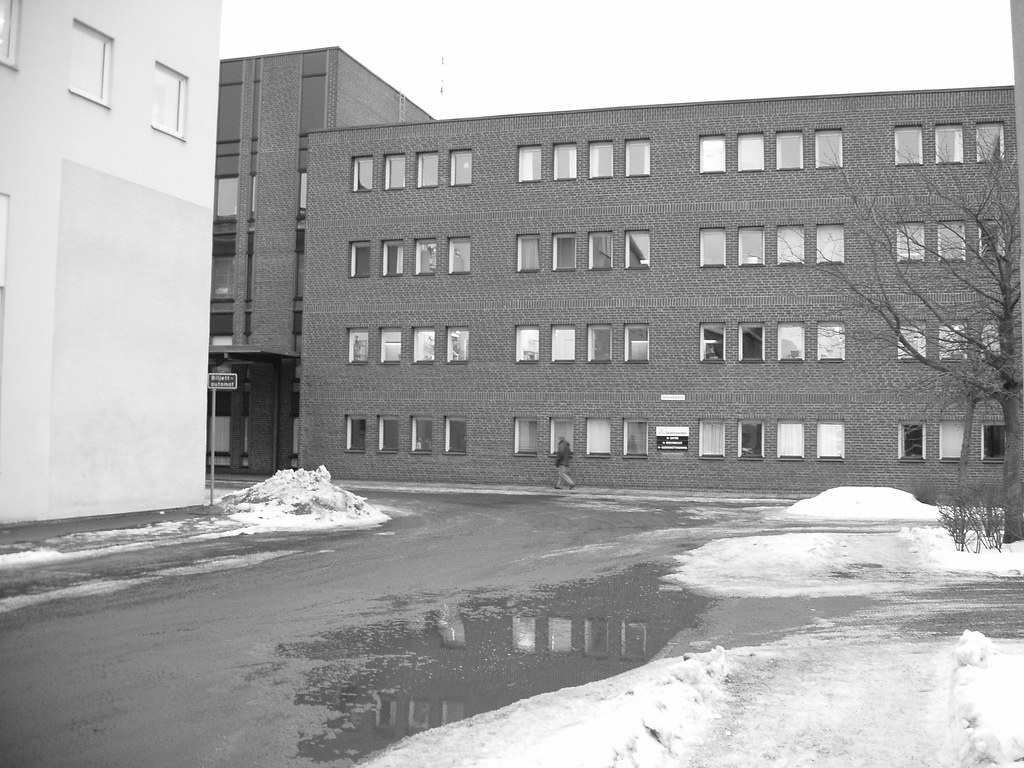
You open the app while sitting at a bar alone, the second drink half finished, and you swipe past forty faces in the time it takes to feel nothing at all, and somewhere in that gesture is the entire economy of the twenty-first century: the transformation of a hunger into a market. Nobody forced this hunger into being. It was already there, structural, built into the architecture of cities designed for efficiency rather than encounter, and someone simply noticed that hunger could be fed a coin at a time.
Eva Illouz, in Cold Intimacies, published in 2007, described how capitalism did not merely commodify emotion from the outside but restructured the emotional interior itself, so that people learned to relate to their own feelings the way a manager relates to a portfolio, calculating, optimizing, seeking return on investment. Dating apps are the purest expression of this logic. Tinder launched in 2012, and within a decade the global dating app market was valued at over eight billion dollars, a figure that only makes sense if you accept that what is being sold is not a match but the feeling of proximity to the possibility of one. The product is not love. The product is the interface between your isolation and someone else’s, monetized at every swipe, every boost, every algorithmic nudge toward continued engagement rather than resolution. A successful match, after all, is a lost customer.
Co-living spaces extend the same logic into architecture. Companies like WeLive and Common promised community as an amenity, communal kitchens and scheduled events bundled into the rent, as though proximity could be engineered the way plumbing is engineered. Sherry Turkle, in Alone Together, published in 2011, observed that we expect more from technology and less from each other, and co-living is the spatial analogue of that expectation: buildings that simulate the conditions of a village while explicitly monetizing what a village once provided for free, through obligation, through the simple fact of not being able to leave. The old neighborhood bound you to people you had not chosen and could not easily escape, and that friction, unpleasant as it often was, produced something durable. The new co-living tower binds you to no one. You can cancel your membership.
Subscription communities push this further still, into services like Patreon fan circles or paid Discord servers or wellness memberships promising belonging for a monthly fee, and what they reveal is that connection has become legible to capital only once it can be metered. Zygmunt Bauman, writing on liquid modernity in his 1999 study of the same name, argued that late modern relationships had become provisional, entered into with an exit already anticipated, and the subscription model formalizes this provisionality into a business plan. You do not join a community. You rent access to one, renewable at will, terminable without explanation, and the terms of service replace the unspoken obligations that once held groups together.
What gets lost in this transaction is not merely money but the premise that connection was ever supposed to be free, in the sense of unencumbered, in the sense of arising from shared conditions rather than shared purchase. Robert Putnam, in Bowling Alone, published in 2000, tracked the decline of civic associations, bowling leagues, union halls, church suppers, and warned that social capital was depleting across America, but he could not have fully anticipated that the vacuum would be filled not by a revival of those institutions but by their replacement with paid substitutes, each one promising to solve, individually and for a fee, what had always been a collective failure. The loneliness epidemic, if that is what it is, gets treated the way private equity treats a failing public utility: not as a reason to rebuild the commons but as an opportunity, and every app, every co-living lease, every membership tier converts a structural absence into a personal problem, one that only you are responsible for solving, one subscription at a time. The bar closes. The app stays open all night, ready to sell you tomorrow what it never intended to deliver today.
A vision curated by a filmmaker, not an algorithm
In this video I explain our vision
🏙️ Lost in the Crowd: Faces of Urban Solitude
The modern city promises connection but often delivers isolation, turning crowded streets into labyrinths of invisible loneliness. These articles explore how urban life shapes our inner emptiness and the fragile bonds we struggle to maintain within it.
Loneliness in Contemporary Society
This piece examines how contemporary society, despite its hyperconnectivity, generates unprecedented forms of solitude among city dwellers. It traces the psychological and cultural roots of a loneliness that thrives precisely where human density is highest, exposing the paradox at the heart of urban existence.
GO TO THE SELECTION: Loneliness in Contemporary Society
Franz Kafka and Urban Alienation
Kafka’s fiction remains one of the most powerful lenses through which to understand the alienation produced by modern urban bureaucracy and anonymity. This article shows how his nightmarish cityscapes anticipated the disorientation many still feel navigating impersonal metropolitan systems today.
GO TO THE SELECTION: Franz Kafka and Urban Alienation
Georg Simmel and the Metropolis: The Metropolis and Mental Life
Georg Simmel’s classic analysis of the metropolis reveals how city life forces individuals into a defensive, blasé indifference as a survival mechanism against constant overstimulation. This foundational sociological text helps explain why urban environments, for all their vibrancy, often breed emotional distance between people.
GO TO THE SELECTION: Georg Simmel and the Metropolis: The Metropolis and Mental Life
The psychological effects of social isolation in peripheral contexts
Focusing on peripheral and marginalized urban contexts, this article investigates the psychological toll of isolation on those living at the edges of the city’s social fabric. It highlights how spatial and social exclusion compound each other, deepening the sense of being unseen within the urban maze.
GO TO THE SELECTION: The psychological effects of social isolation in peripheral contexts
🎬 Discover Independent Cinema on Indiecinema
If these reflections on urban loneliness resonate with you, explore how independent filmmakers have captured this same solitude on screen. Dive into Indiecinema’s curated streaming selection for stories that illuminate the hidden lives within the modern city.
👉 EXPLORE THE CATALOG: Watch Indie Films in Streaming
A vision curated by a filmmaker, not an algorithm
In this video I explain our vision

