
The Silence Between Two Bodies in the Same Bed
You are lying next to someone who loves you. You know this because they said it three hours ago, because they reached for your hand during dinner, because their body is now close enough that you can feel the ambient warmth coming off their skin. And yet something in your chest is doing what it always does at this hour — contracting around a silence that has no name and no obvious cause, a silence that has nothing to do with the absence of sound. They are breathing. You are breathing. The room holds both of you with perfect indifference. And you have never felt more alone in your life.

This is not the loneliness of the abandoned. It carries no clean narrative, no villain, no moment of rupture you can point to and say: there, that is where it began. It is something far more disorienting — the loneliness that lives inside intimacy itself, that feeds quietly on proximity, that grows most acute precisely when another person is present and accounted for. Sociologists have a term for the outer phenomenon — social isolation — but this is its uncanny twin, the one that does not show up in population surveys because it leaves no visible trace. You share a bed, a lease, a last name in some cases. By every measurable metric, you are not alone. And yet.
The philosopher Emmanuel Levinas spent much of his career arguing that the face of the other — the literal, encountered face — constitutes an ethical demand, a call that pulls you out of your own interiority and forces you into genuine contact. His 1961 work Totality and Infinity builds the entire architecture of human ethics on this encounter, on the irreducible moment when one consciousness truly registers another as a consciousness and not merely as an object in its world. What he could not fully account for, or perhaps chose not to, is the frequency with which two people can share a bed for a decade and never once make that encounter happen. You can look at someone every morning for years and never truly be looked at in return. The face is present. The demand goes unheard.
What makes this particular loneliness so corrosive is not its intensity but its illegibility. When you are alone in a room, the condition has a kind of clarity — you feel the lack, you locate its source, you can even romanticize it if you are inclined toward solitude. But when the person who is supposed to be your witness is lying three inches away, scrolling through something on their phone or simply staring at the ceiling with whatever private weather moves through them, the loneliness becomes a verdict without a trial. It implies something. It suggests that even now, even here, even with this person who chose you and continues choosing you in the small logistical ways that constitute a shared life, you remain fundamentally unreachable.
The psychologist John Cacioppo, whose landmark research into loneliness culminated in his 2008 book Loneliness: Human Nature and the Need for Social Connection, demonstrated through neurological and behavioral data that the pain of loneliness activates the same threat-response systems as physical pain. The body does not distinguish cleanly between the wound of isolation and the wound of a cut. What his data could not capture was the particular neurological weather of lying beside a person you love and feeling the threat response fire anyway — the brain scanning for danger, finding the gap between presence and contact, and treating that gap as an emergency no amount of reassurance can fully resolve.
Because the gap is real. It is not a cognitive distortion or a symptom of attachment disorder, though it can become tangled with both. It is the space between two subjectivities that no amount of physical closeness can close — the space that every human being carries inside them like a room no one else can enter, and that becomes most visible, most unbearable, at exactly the moment when someone else is near enough to touch.
Redemption

Drama, by Maria Martinelli, Italy, 2023.
Hanna meets her lover in an isolated place, a refuge in the mountains. The present and the past intertwine in search of a possible redemption, while the choices to be made, such as that of a child on the way, can no longer wait. In that place, together and isolated, shreds of their past life appear in the room and seem to dance with their present life. An enigmatic mirror of their lives lived with other people, at other ages. In those fragments we see missed appointments, broken hopes, pieces of life like a cell phone ringing and no one answering and like in a puzzle, which slowly comes together, we sense something that unites their lives.
Is there a truth that we tell ourselves to others? Redemption is the story of a woman, of the complex life that she finds herself facing, of the moral choices that follow one another in her life. In romantic encounters we don't always talk about our experiences and perhaps loving each other refers exactly to this instinctive peculiarity, to the attempt to reconstruct an existence beyond our own past, which sometimes we even hide ourselves. But the past is often a threshold that we must cross if we want to start living in the present again.
LANGUAGE: Italian
SUBTITLES: English, Spanish, French, German, Portuguese
How Romantic Love Was Invented to Carry What Community Once Held
You marry someone and, without quite realizing it, hand them a bill that an entire village once split.
For most of recorded history, the emotional labor of keeping a human being psychologically intact was distributed across structures that had nothing to do with romantic attachment. The parish absorbed existential dread. The guild provided identity and occupational brotherhood. Kinship networks — aunts, cousins, neighbors who had known your grandmother — held the continuity of self across time. The village gossip, for all her cruelty, was also a form of witness: someone was tracking your existence. When historians like Stephanie Coontz, in her 2005 work Marriage, a History, excavated the actual function of premodern unions, what emerged was not romance but logistics — land transfer, labor alliance, reproductive contract. Love, if it appeared, arrived after the arrangement, not as its cause. The couple was never designed to be a universe. It was a node in a web.
The web began tearing somewhere around the Industrial Revolution, not all at once, but through a series of relocations — physical, economic, spiritual — that severed the old ligaments of communal life. Families moved from agrarian villages to industrial cities. The parish lost its gravitational authority as urbanization disaggregated neighborhoods into collections of strangers. Max Weber, writing at the turn of the twentieth century, called this disenchantment: the process by which the sacred canopy that once gave collective life its meaning was punctured by rationalization, bureaucracy, and market logic. What Weber did not fully predict — though his sociology implied it — was that the emotional residue of all those dissolved structures would have to go somewhere. It did not evaporate. It condensed, under pressure, into the couple.
By the mid-twentieth century, the romantic partner had been assigned a portfolio of responsibilities that would have seemed pathological to a medieval peasant: best friend, sexual companion, intellectual equal, emotional therapist, co-parent, financial collaborator, and primary witness to one’s inner life. The sociologist Anthony Giddens, in The Transformation of Intimacy published in 1992, identified this as the rise of the pure relationship — a bond justified entirely by emotional satisfaction, dissolving the moment it fails to deliver it. What Giddens framed as liberation was simultaneously a catastrophic concentration of need. The relationship became the last institution standing between the self and total isolation, which means every minor disappointment inside it now carries the weight of an existential threat.
This is why a forgotten anniversary can feel like abandonment, why a partner’s distracted silence at dinner can register as evidence that one’s life is fundamentally unwatched. The nervous system is not reacting to the dinner. It is reacting to the ghost of every dissolved community that was supposed to catch you before the fall. The couple did not cause this hunger. It merely agreed, usually without knowing it, to be its sole feeding point.
What makes this arrangement so difficult to see clearly is that it arrived dressed as progress — as the triumph of feeling over obligation, of chosen bonds over inherited ones. And in certain ways it was. The freedom to leave a loveless contract, to refuse an arranged paternalism, was genuine and hard-won. But the rhetoric of romantic liberation obscured the structural cost: that in dismantling the old containers of belonging, modern culture built exactly one replacement and called it love. The philosopher Alain Badiou, in In Praise of Love, argued that love has been simultaneously elevated to the sacred and threatened by a consumerist logic that demands it remain perpetually comfortable. What neither he nor most romantic idealists fully account for is that the discomfort inside modern couplehood is not a malfunction.
It is the sound of two people trying to be a village.

The Ontological Ambush of 'The One'
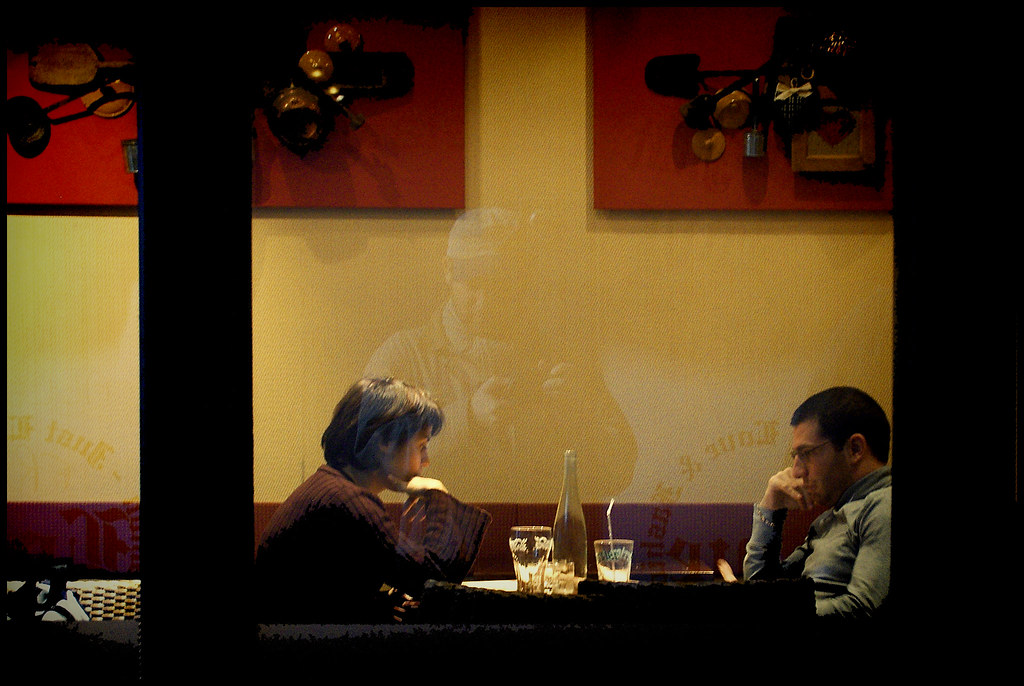
You chose this person. You were certain — the kind of certain that feels like recognition rather than decision, like remembering something you never actually knew. That certainty is not yours. It was placed inside you long before you met anyone.
Aristophanes, drunk at Agathon’s dinner party around 385 BCE, told a story that Western culture has never fully recovered from. In Plato’s Symposium, he describes humans as originally spherical creatures, doubled beings of tremendous power, whom Zeus split apart in punishment. Love, in this account, is the compulsive search for the other half — the literal missing piece of a self that was once whole. The story is presented as comedy, as myth, as one voice among several in a philosophical dialogue that Plato himself populated with contradictory perspectives. And yet this single speech — not Socrates’ speech, not Diotima’s ladder of transcendence — is the one that lodged deepest into the cultural nervous system. By the time German Romanticism metabolized it through Novalis, Schlegel, and the poetry of Heinrich Heine in the early nineteenth century, the comedic parable had been surgically extracted from its philosophical context and sutured into the new religion of the couple. What had been a joke about human hubris became a metaphysical promise.
The Romantic transformation of Aristophanes was not innocent. It served a specific historical function. As industrialization dissolved extended family networks and urbanization stripped individuals from ancestral communities, the dyadic couple was quietly asked to absorb every human need that an entire village had previously distributed across dozens of relationships. The sociologist Anthony Giddens, writing in The Transformation of Intimacy in 1992, called the result the “pure relationship” — a bond justified only by its own emotional yield, sustained only as long as it satisfies, and therefore structurally precarious in a way no pre-modern bond could have been. What Giddens observed economically and sociologically had its emotional engine in exactly this Romantic ideology: the idea that one person, the right person, would make you whole.
The demand is structurally impossible not because love is weak but because the roles it is asked to fill are contradictory at their foundations. You want your partner to be a mirror — someone who sees and reflects who you are with perfect accuracy. But you also want them to be a genuine stranger, a being of irreducible otherness who surprises and challenges you, who cannot be fully known, who keeps the world from collapsing into the closed circuit of your own mind. You want them to be home — safety, constancy, the end of searching. And simultaneously you want them to be horizon — the person through whom life remains open, possible, unfinished. A mirror and a stranger cannot coexist in the same person without tearing. Home and horizon are geometrically opposed. The loneliness that settles into long relationships is often nothing more than the precise shape of this impossibility making itself felt.
Esther Perel, whose clinical work across more than three decades with couples in crisis is documented in Mating in Captivity published in 2006, frames the conflict as one between security and desire — two forces that do not merely compete but actively extinguish each other. The more successfully a partnership becomes home, the more thoroughly it destroys the erotic distance that made the other person feel like horizon. Couples do not fail at love. They succeed at one of its demands so completely that the other demand starves.
What no one tells you is that the loneliness you feel beside a person you genuinely love might not be a symptom of a failing relationship. It might be the first honest perception you have ever had about what a relationship actually is — a structure that was always slightly too small for everything it was asked to contain, built on a blueprint drawn by a comedian in ancient Athens whose punchline we forgot to read to the end.
Hope in Vein
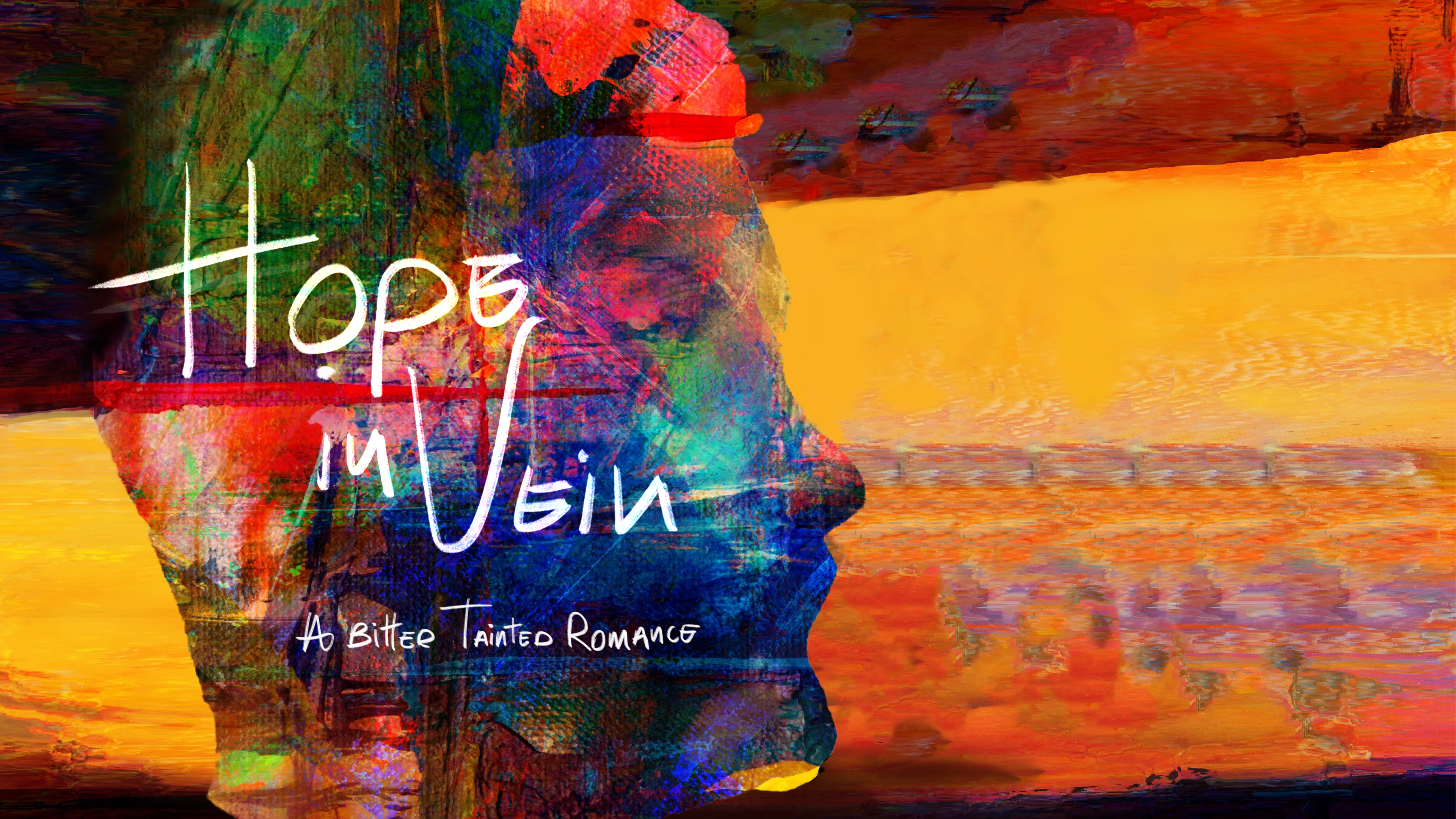
Drama, romantic, by Marc-Antoine Turcotte, Canada, 2022.
The film follows the journey of Matt Davis (Joshua Bilbao), a young man dealing with the profound stigma associated with living with HIV after contracting the virus from his longtime partner. “Hope in Vein” delves into the layers of emotions and challenges that emerge following Matt's diagnosis, highlighting the social and physical repercussions he encounters as he navigates his new condition. Seamlessly weaving together the complexities of Matt's experiences, the film offers viewers an intimate and touching perspective.
“I had heard about it; distant stories of anguish. It seemed that medical discoveries had faded the discussion. You will soon find that stigma continues to affect progress. Every experience is different, yet we can all feel the same contamination," says director Turcotte. "I approached this film with the desire to open up the conversation and lighten it up a little." Through the disparate obstacles that constantly remind Matt of stigma she faces, Hope in Vein explores the theme of forgiveness as a powerful channel for rekindling hope. With a talented cast and a heartfelt script, the film presents a compelling narrative that will leave audiences captivated and inspired.
LANGUAGE: English
SUBTITLES: Spanish, French, German, Portuguese
Loneliness as Diagnostic Signal, Not Emotional Failure
You have been sitting next to the same person for eleven years, and tonight, watching them scroll through something on their phone, you feel a cold that has nothing to do with the temperature in the room. You don’t name it. You reach for your own phone instead.
John Cacioppo spent the better part of two decades mapping what that cold actually is, biologically. His longitudinal studies, published across the 2000s in journals including Psychological Science and culminating in his 2008 book Loneliness: Human Nature and the Social Need for Connection, co-authored with William Patrick, produced a finding that most people are not prepared to receive: loneliness is not an emotional state but a biological alarm. It operates the way pain does. It does not mean something is broken inside you. It means the system is working exactly as designed, registering a gap between the social connection you need and the social connection you are actually receiving.
The distinction matters enormously, because pain interpreted as personal failure is pain that cannot be addressed honestly. When you mistake a signal for a verdict, you stop listening to what the signal is actually telling you. You begin managing the shame of feeling lonely rather than investigating the gap that triggered the alarm. This is not a private psychological quirk. It is a culturally installed response, and it arrives specifically at the moment when the loneliness is most inconvenient to acknowledge — inside a committed relationship, in a shared bed, in a house full of someone else’s presence.
Cacioppo’s research found that chronically lonely people show measurably elevated cortisol levels, disrupted sleep architecture, and accelerated inflammatory responses linked to cardiovascular disease. The body does not distinguish between physical isolation and perceived social disconnection. A person sleeping beside their partner every night, sharing meals, sharing a mortgage, can register at the cellular level as isolated, because the nervous system is not counting bodies in the room. It is measuring something more granular: the degree to which you feel known, legible, and safe within your social environment. Quantity of contact is irrelevant. The system runs on quality of signal.
This is where modern intimate relationships produce a particular cruelty. They generate enormous quantities of proximity while systematically starving the nervous system of the specific signal it requires. Two people who have learned to avoid conflict, who have substituted routine for genuine contact, who communicate in the compressed shorthand of a shared domestic life, can spend sixteen hours a day together and provide each other almost nothing the alarm system recognizes as connection. The alarm keeps firing. Both people keep interpreting it as evidence of their own emotional inadequacy, or as proof that their partner is insufficient, rather than as accurate information about the actual quality of their contact.
The neuroscientist Louis Cozolino, in The Neuroscience of Human Relationships published in 2006, documented how the brain’s social architecture — built around attunement, co-regulation, and mutual recognition — requires active engagement to remain functional. These are not metaphors. The orbitofrontal cortex and the anterior cingulate cortex, both central to social processing, respond to perceived exclusion with the same neural signatures as physical pain. When the brain detects that it is not being seen by someone who is supposed to see it, it produces an experience indistinguishable from threat. Proximity without recognition does not satisfy this system. It may, in fact, intensify the signal, because the gap is now impossible to explain away by circumstance.
What this means is that loneliness inside a relationship is not a sign that the relationship has failed. It is a sign that the relationship has drifted into a configuration the nervous system cannot metabolize as connection, and the nervous system is reporting this with the only tool it has: an ache that feels like a personal indictment but is actually something far more impersonal, far more precise, and far more worth taking seriously than the shame we reach for to cover it.
The Performance of Coupledom and Its Internal Audience
You post the photo before you have even finished the meal. Not because the food is beautiful, though it is, but because the proof needs to exist before the evening ends — before the ordinary friction of the drive home or the silence that follows dessert can revise the emotional record. The caption is already composed in your head before the shutter closes. And your partner smiles for it, naturally, without being asked, because they have learned the same grammar you have.
Erving Goffman argued in The Presentation of Self in Everyday Life, published in 1959, that all social interaction is performance — that we manage impressions constantly, staging ourselves for audiences we may not even consciously register. What he could not have fully anticipated was the degree to which the audience would eventually move inside the relationship itself, setting up permanent residence in the living room, at the breakfast table, in bed. The external gaze has been so thoroughly internalized that couples now perform for each other in the same register they once performed for strangers — with the same managed spontaneity, the same curated vulnerability, the same precisely calibrated tenderness deployed at moments when it will read well.
Shared calendars, couple accounts, joint announcements for engagements and anniversaries and the first ultrasound — each ritual sends a signal outward, but the act of sending it reshapes what is being signaled. Sociologist David Grazian, writing on authenticity in social performance, noted that the performance does not simply represent an underlying reality; it gradually constitutes it. The couple who posts consistently about gratitude begins to organize their emotional experience around what is postable. The couple who performs stability at the family dinner table eventually loses access to the instability they were hiding, not because it disappears but because they have practiced its concealment until concealment becomes the only fluent language they share.
This is not hypocrisy in any simple moral sense. It is something more structurally strange: a feedback loop in which the audience’s expectations, real or imagined, begin to author the relationship from the inside. The partner stops being encountered as a full person — unpredictable, contradictory, privately struggling — and starts being encountered as a co-star whose lines must roughly match yours for the scene to hold together. You stop being curious about who they actually are at three in the morning when they cannot sleep, because that version of them does not appear in the story you have both agreed to tell.
Psychoanalyst Christopher Bollas introduced the concept of the unthought known — the vast territory of experience we carry in our bodies and behaviors but have never brought into language or conscious recognition. What the performance of coupledom does, at its most insidious, is make that territory inaccessible not through repression but through replacement. The unspoken difficulty does not go underground; it simply gets overwritten by the cleaner narrative that runs alongside it, accumulating likes and congratulations and the warm approval of people who are themselves performing the same thing from a different angle.
By the time a couple appears at a therapist’s office, they often report a peculiar symptom: they feel they know each other completely and yet cannot locate each other at all. Every gesture is legible, every preference catalogued, every story already told in its approved version. What has been lost is not information about the other person but the capacity to be surprised by them — which is to say, the capacity to encounter them as genuinely other, as someone whose interior life does not resolve neatly into the role they have been cast in. The loneliness that follows is not the loneliness of absence. It is the loneliness of total visibility that somehow obscures everything that matters, of being known only by your most photogenic angle while the rest of you waits in the dark for a question that no longer comes.
A vision curated by a filmmaker, not an algorithm
In this video I explain our vision
When Therapy Becomes a Third Language Neither Speaks Natively

You sit across from someone you have shared a bed with for six years, and a third person in the room asks you both to use “I feel” statements. You comply. You say “I feel unheard when you look at your phone during dinner,” and something in the sentence feels both accurate and borrowed, like wearing someone else’s prescription glasses — the world sharpens slightly but the correction was never calibrated for your particular vision.
Couples therapy as a widespread cultural practice is remarkably recent. Before the 1970s, marital counseling was largely the province of clergy and social workers operating within frameworks of duty and institutional preservation. The transformation came fast: by 1980, therapists trained in systems theory, attachment research, and the nascent vocabulary of emotional intelligence had produced a new grammar for intimate failure. John Gottman’s laboratory observations in the 1990s, tracking physiological stress responses during conflict in his famous “love lab” at the University of Washington, gave the field empirical credibility. Gary Chapman‘s 1992 book on love languages sold over twenty million copies. Attachment theory, originally developed by John Bowlby in the 1960s to describe infant-caregiver bonds, migrated wholesale into adult romantic frameworks, giving ordinary people clinical categories — anxious, avoidant, disorganized — that once lived only in research literature.
What happened next was not necessarily healing. It was, in many cases, the acquisition of a shared dialect.
Two people who could not previously name their dynamic can now name it with precision. She is anxious-attached; he is avoidant. His “love language” is acts of service; hers is words of affirmation. They know these things. They can discuss them calmly, in session and outside it, using terms that carry the weight of scientific legitimacy. And yet the estrangement persists — sometimes more quietly, more politely, more thoroughly insulated from challenge. The vocabulary has given the distance a respectable address.
This is not a critique of therapy itself, which can and does produce genuine transformation. The critique lands somewhere more specific: on the way therapeutic language, once extracted from the clinical relationship and circulated as cultural currency, becomes available for performance. Sociologist Eva Illouz documented this drift in her 2007 work “Cold Intimacies,” arguing that emotional capitalism had turned the self into a product to be optimized, and therapy-speak into a mode of social presentation rather than genuine excavation. When two people both arrive fluent in the same framework, they can enact understanding without achieving it — they can validate each other’s “narrative” without ever being genuinely moved by each other’s reality.
There is a particular cruelty in this, because the illusion it produces is more convincing than simple silence. Silence, at least, is legible. You can feel the gap when no one is talking. But when both people speak fluently about “emotional availability” and “bids for connection,” the gap becomes invisible, upholstered in mutual competence. The couple leaves therapy feeling they have “done the work,” which is itself a phrase worth examining — work implies effort applied toward a result, but the result here is often not closeness, only a more articulate account of why closeness has not arrived.
Bowlby himself never imagined his framework would become a personality typing system deployed on first dates and used to explain why someone “can’t commit.” The distance between clinical observation and cultural adoption is always where the distortion enters. A concept built to describe developmental trauma in infancy, repackaged as a self-help identity, offers the comfort of explanation where what might actually be needed is the discomfort of encounter — the kind that cannot be mediated by a shared vocabulary, that requires sitting in the unresolvable particularity of another person without the relief of a category that makes them legible.
The deepest loneliness in a couple may not be the kind that therapy fails to treat, but the kind it accidentally teaches them to narrate so fluently that they stop noticing it as a wound.
The Loneliness That Survives Separation
You finally have the apartment to yourself. The other person’s things are gone — the shelf gap where their books were, the bathroom counter with its sudden geometry of empty space. You expected relief, or grief, or the clean ache of something finished. What arrives instead is a silence you recognize. Not the silence of absence, but the one that was always there underneath the noise of two people coexisting, the one you blamed on them, on the dynamic, on the particular failure of that particular love.
What this moment exposes, with a precision no argument or therapy session managed, is that the loneliness was never housed in the relationship. The relationship was housing it. There is a difference that most people never stop long enough to feel, because the act of ending one partnership and beginning another keeps the container full, keeps the structural question permanently deferred. Philosopher Gillian Rose, writing in “Love’s Work” in 1995, described love not as consolation but as the willingness to remain exposed to what cannot be resolved — and the culture’s compulsive recycling of romantic partners is precisely the mechanism by which that exposure is indefinitely postponed. The newly single person scrolling dating applications three weeks after a breakup is not evidence of resilience. It is evidence of how unbearable the original question turns out to be when there is no longer another person to absorb it.
John Cacioppo, whose twenty years of neuroscientific research on loneliness culminated in “Loneliness: Human Nature and the Social Need for Connection” in 2008, demonstrated that chronic loneliness operates beneath conscious awareness as a persistent threat signal — the nervous system reading social disconnection the way it reads physical danger. What his data could not fully account for is the person who scores high on every measure of social integration, who is partnered, embedded in community, professionally visible, and still carries that signal. The threat the nervous system is detecting in those cases is not the absence of others. It is something more interior and less fixable than proximity can address.
Sociologist Zygmunt Bauman, in “Liquid Love” published in 2003, argued that contemporary relationships are structured around the terror of permanent binding — people want connection but insist on the emergency exit, constructing intimacy as a temporary lease rather than a deed. The couple form, under these conditions, becomes a technology for simulating depth while preserving the option of surface. But Bauman’s critique, incisive as it is, still assumes the problem is relational architecture. It does not account for the person who committed fully, who chose depth without the exit strategy, and still found the loneliness waiting on the other side of the door when commitment finally ran out of room to expand into.
There is a category of aloneness that predates every relationship a person has ever entered, that was already formed before the first adolescent attachment, rooted in something closer to what D.W. Winnicott identified in 1958 in his paper “The Capacity to be Alone” — the paradox that genuine solitude, the kind that does not collapse into dread, can only be developed in the presence of a reliable other during early development. When that developmental window closes without the necessary conditions having been met, what remains is not simply the absence of a skill. It is a wound that relationship after relationship attempts to close from the outside, applying pressure without ever reaching the interior tissue.
The empty apartment does not create this recognition so much as remove the last available distraction from it. Every previous arrangement — the shared meals, the negotiated silences, the body beside you in the dark — was also, among other things, a form of elaborate noise. Not maliciously. Not even consciously. Simply because two people building a life together generate enough texture and friction and demand to keep the older question from surfacing with any consistency.
What the empty apartment forces is the confrontation with the fact that no subsequent arrangement will resolve what this one could not, unless something prior to arrangement itself is examined.
Togetherness as a Cultural Demand That Outlaws Solitude

You are sitting across from someone you chose, someone who chose you back, and the silence between you feels like an accusation. Not because either of you has done something wrong, but because the silence was never supposed to be there — the contract you both signed, somewhere beneath the level of language, promised that togetherness would fill every gap, that proximity would be indistinguishable from connection.
Western modernity did not invent coupledom, but it perfected its ideological function. Michel Foucault‘s later lectures at the Collège de France, particularly his work on the “care of the self” in antiquity, traced how ancient cultures maintained a productive relationship between the individual and solitude — not as withdrawal, but as a technology of self-knowledge. What the nineteenth century gradually accomplished was the dismantling of that tradition and its replacement with a model in which the self is only legible through its attachment to another. The unmarried Victorian professional was not simply alone; he was socially incomplete. The spinster was not simply solitary; she was a failed woman. These were not casual prejudices. They were load-bearing walls in an entire architecture of normality.
Sociologist Anthony Giddens, writing in The Transformation of Intimacy in 1992, identified the “pure relationship” as the dominant modern ideal — a bond sustained solely by mutual satisfaction, constantly renegotiated, theoretically chosen every day. What he did not press hard enough is the coercive underside of that ideal: a relationship that must be chosen daily becomes a relationship that must be performed daily, and performance leaves no room for the kind of withdrawal that actual selfhood requires. The couple becomes a full-time exhibition. Solitude, inside that frame, reads not as health but as symptom — evidence of emotional unavailability, of attachment wounds, of a partner who is “checked out.” The clinical vocabulary of contemporary psychology has been extraordinarily efficient at pathologizing the desire to be unreachable.
The numbers reflect the pressure with brutal clarity. A 2019 survey conducted by the health insurer Cigna found that nearly 61 percent of American adults reported feeling lonely, with the highest rates not among those living alone but among those in relationships they described as unsatisfying. Loneliness, in other words, is not the product of physical isolation. It is the product of a gap between what presence is supposed to deliver and what it actually can. That gap is engineered, in part, by a cultural system that never allowed people to develop a functioning relationship with their own solitude before demanding they surrender it to coupledom.
What gets called loneliness inside a relationship is sometimes grief — the grief of a person who was never taught that being alone with oneself is not a problem to be solved. Philosopher Paul Tillich, in The Courage to Be published in 1952, distinguished between loneliness as the pain of unwanted isolation and solitude as the deliberate embrace of one’s own being. That distinction carries enormous weight, because a person who has never been permitted genuine solitude will experience any moment of interior separateness — even in a loving relationship, even in the same bed — as a sign that something is broken. The sensation is real. The diagnosis is wrong.
The loneliness that haunts modern couples is not a failure of love. It is the shadow cast by a culture that made aloneness pathological and togetherness mandatory, then handed two people the impossible task of curing in each other what was never, in fact, a disease. When solitude has no legitimate existence of its own — no protected hours, no social permission, no philosophical dignity — it does not disappear. It goes underground, and it resurfaces inside the relationship as a nameless ache that neither partner can locate or repair, because neither of them was ever told it had a name, or that it belonged, from the very beginning, to them alone.
💔 When Two Is the Loneliest Number
Sharing a life with someone does not always mean sharing a soul. The loneliness that grows inside a relationship is one of the most paradoxical and underexplored forms of human suffering, rooted in disconnection, unspoken needs, and the slow erosion of intimacy. These articles explore the psychological, philosophical, and social landscapes that illuminate why couples can feel so profoundly alone together.
Loneliness in Contemporary Society
Loneliness in contemporary society has evolved beyond solitude into a collective condition that infiltrates even the most intimate bonds. This article examines how modern structures of life — fragmented, accelerated, and digitally mediated — make genuine emotional connection increasingly elusive. Understanding this broader social context is essential to grasping why loneliness thrives precisely within relationships.
GO TO THE SELECTION: Loneliness in Contemporary Society
Fromm’s The Art of Loving: Analysis
Erich Fromm‘s landmark work argues that love is not a feeling to be passively received but an active art demanding knowledge, effort, and courage. When couples stop practicing this art, emotional distance fills the space where intimacy once lived. This analysis of Fromm’s text cuts to the heart of why so many relationships become cages of quiet disconnection.
GO TO THE SELECTION: Fromm’s The Art of Loving: Analysis
Love in Philosophy: From Plato to Fromm
From Plato’s myth of the divided soul searching for its other half to Fromm’s ethics of mature love, philosophy has long wrestled with what it truly means to love another person. This article traces the intellectual history of love and reveals how philosophical insight can help us understand the gap between the love we idealize and the love we actually live. It is essential reading for anyone reflecting on why closeness can feel so unreachable.
GO TO THE SELECTION: Love in Philosophy: From Plato to Fromm
The psychological effects of social isolation in peripheral contexts
Social isolation does not only affect those who live alone — it seeps into the daily reality of people embedded in peripheral or emotionally impoverished environments, including intimate partnerships. This article investigates the psychological toll of isolation in contexts where community and meaningful exchange have quietly collapsed. Its findings resonate deeply with the inner world of those who feel invisible even beside the person they love.
GO TO THE SELECTION: The psychological effects of social isolation in peripheral contexts
Discover the Cinema of Human Intimacy on Indiecinema
The loneliness of couples and the invisible wounds of love have inspired some of the most powerful and truthful films ever made. On Indiecinema, our independent streaming platform, you will find a carefully curated selection of films that dare to look honestly at what happens between two people when words run out. Explore our catalog and let cinema illuminate what is hardest to say.
👉 EXPLORE THE CATALOG: Watch Indie Films in Streaming
A vision curated by a filmmaker, not an algorithm
In this video I explain our vision

