
The Manufactured Self and Its Discontents
You have been walking for three hours before you notice that no one has looked at you all morning. Not a glance, not a nod, not the automatic recalibration that happens when another human face enters your field of vision. The trail bends along a ridge above a valley still holding its night fog, and there is a specific quality to the silence here that has nothing to do with the absence of noise. Birds call. Wind moves through larch needles with a sound like static settling. What is missing is the ambient hum you never notice until it stops: the hum of being perceived. You sit on a rock and realize, with something close to vertigo, that you do not know what expression is on your face, because for the first time in longer than you can remember, it does not matter. There is no one to arrange it for.

This disorientation is not incidental. It points to something structural about how a self gets built in the first place, and how rarely it is ever tested outside the conditions of its construction. Erving Goffman, writing in 1956 in The Presentation of Self in Everyday Life, described social existence as a continuous theatrical performance, front stage and back stage, where the individual manages impressions the way an actor manages a role, adjusting tone, posture, and disclosure according to audience. Goffman was not being cynical. He was describing a mechanical fact: there is no neutral, unperformed version of you sitting behind the performance, waiting to be revealed once the curtain drops. The performance is not covering the self. In Goffman’s account, the performance is substantially how the self gets made, moment to moment, in front of other people who are simultaneously performing back at you.
Charles Horton Cooley had already given this idea a sharper, more intimate mechanism half a century earlier. In Human Nature and the Social Order, published in 1902, Cooley proposed the looking-glass self, the notion that a person’s sense of who they are is assembled almost entirely from imagining how they appear to others, how those others judge that appearance, and how that imagined judgment then produces feeling, usually pride or shame. Notice the structure of that loop. It does not require another person to actually judge you. It requires only your imagination of their judgment. Which means the self, on Cooley’s account, is not simply shaped by society in some vague background sense. It is built out of a hall of mirrors that a person carries internally, arranging and rearranging itself according to imagined observers who may not even be paying attention, may not even be present, may in some cases be dead.
Put these two accounts together and something uncomfortable emerges. The self that walks into a boardroom, a family dinner, a first date, a group chat, is not a fixed entity occasionally adjusting its presentation for context. It is closer to a standing wave, a pattern that exists only because of continuous interference between imagined observers and reflexive self-monitoring, sustained the way a flame is sustained, by ongoing input, not by some stable substance underneath. Remove the audience, real or imagined, and there is no guarantee that anything recognizable remains standing. This is not a metaphor invoked for dramatic effect. It is closer to a literal description of what happens to a person stripped of mirrors, cameras, colleagues, and the low continuous static of other minds registering their existence, which is precisely the condition produced by a forest trail at dawn, or a shoreline before anyone else is awake, or a mountain silence thick enough to make a person hear their own pulse and wonder, with a kind of low-grade panic, who exactly is doing the wondering.
Solitude as a Historical Anomaly
A woman moves into a small cabin at the edge of a pond in Massachusetts in the summer of 1845, carrying almost nothing, and stays for two years, two months, and two days, though history will remember her as a man because Henry David Thoreau made the experiment famous under his own name, publishing the account in 1854 as a book that would be dismissed by many contemporaries as the indulgence of an eccentric who had simply refused to get a job. The reaction Thoreau received from his Concord neighbors is instructive: not admiration, not curiosity, but a kind of social alarm. He was regarded as shirking obligation, as failing the basic contract of participation that a community expects from its members. This suspicion did not originate with nineteenth-century New England. It runs much deeper, and it reveals something uncomfortable about how societies have always treated the person who steps outside the visible network of others.
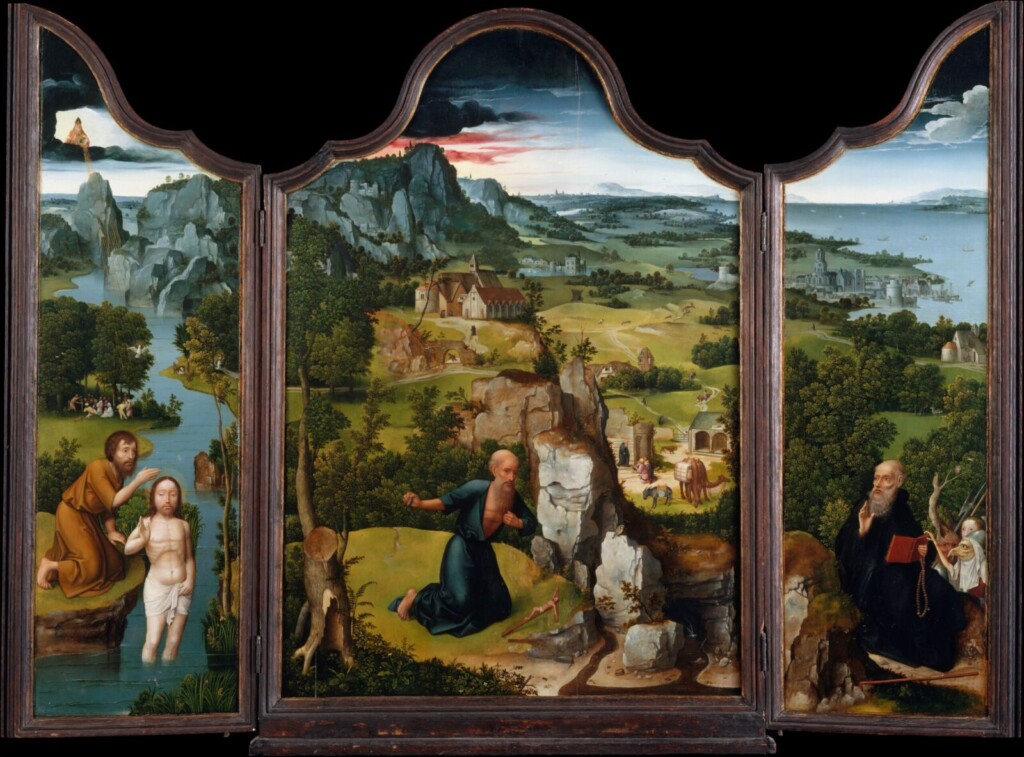
Centuries before Walden Pond, the Egyptian and Syrian deserts filled with men and women who deliberately removed themselves from the cities of late antiquity, the eremitic tradition that produced figures like Anthony of Egypt, whose withdrawal into the wilderness around 270 AD became the founding legend of Christian monasticism as recorded by Athanasius in his Life of Antony. What is striking about these accounts is not the piety but the violence of the internal confrontation they describe. Antony did not find peace in the desert. He found demons, hallucinations, temptations that took the shape of his own appetites and fears. The solitude was not a retreat into calm; it was an unshielded exposure to whatever the self actually contains once the noise of other people stops covering it up. And yet even as this tradition was canonized, it was also contained, institutionalized, watched over by a Church that understood the eremitic impulse as something requiring supervision, because a person alone with unmediated thought was a person who might arrive at unauthorized conclusions.
The suspicion of solitude reappears in nearly every century with different vocabulary. In medieval and early modern Europe, the person who preferred isolation risked accusations of melancholy, a medical category described by Robert Burton in his 1621 compendium The Anatomy of Melancholy, where excessive solitary thinking was catalogued as a pathology requiring intervention, bleeding, diet, distraction, company. By the twentieth century, the vocabulary had shifted again, this time into the language of psychiatry, where prolonged solitude could be read as symptomatic of schizoid withdrawal or depressive isolation, categories that entered diagnostic manuals and clinical training. Across three entirely different explanatory systems, theological, humoral, psychiatric, the same underlying verdict persists: a person who wants to be alone for extended periods is a person something has gone wrong with.
What makes the present moment different is not that this suspicion has disappeared, but that the material conditions making solitude difficult to achieve have intensified to a degree no earlier century could have engineered. The hermit in the desert still had to walk somewhere, still occupied physical distance measured in days on foot. The contemporary person carries a device that erases that distance entirely, a smartphone checked on average, according to research from dscout and later replicated by numerous mobile analytics firms, somewhere between 80 and 150 times a day, each check a small act of re-tethering to the network of others, a reflexive refusal of the very unmediated exposure that Antony endured in his cave. The infrastructure of constant contact has been built not maliciously but incrementally, each notification, each app, each platform justified by its individual convenience, and the cumulative result is an environment where the conditions Thoreau traveled two miles outside town to construct artificially would now require something closer to willful sabotage of one’s own tools to replicate. Solitude has not become impossible. It has become something that must be manufactured against the grain of every design choice surrounding modern attention, which raises the question of what exactly is being protected by making self-confrontation this difficult to arrange.

Nature as a Mirror Without Flattery
You stand at the edge of a scree slope in the high country, wind coming off the ridge with enough force to push your jacket flat against your ribs, and there is no one to see whether you flinch. This is the detail that gets skipped over in most accounts of wilderness retreat: the mountain is not watching you be brave. It does not register your composure, has no memory for your poise, offers no witness function whatsoever. And so the part of you that has been performing selfhood since roughly the age of four, calibrating expressions for an audience that is sometimes real and sometimes only imagined, finds itself suddenly unemployed.
This is worth separating from the more common idea of nature as backdrop, because the backdrop version of nature is still, secretly, a stage. A sunset behind a person taking a photograph of themselves is still organized around the human figure; the landscape has been conscripted into the economy of self-presentation. John Muir, writing in the 1870s and 1880s from the Sierra Nevada, was allergic to this conscription. In his journals, later assembled into “My First Summer in the Sierra” (1911), he describes glaciers, storms, and the anatomy of a single pine needle with an attention that has nothing to do with how any of it might reflect on him. He climbed a hundred-foot Douglas spruce during a windstorm in 1874 simply to feel what the tree felt, an episode he recounts with the plain astonishment of a man who has stopped narrating himself to an invisible jury. Muir’s mountains do not flatter him. They nearly kill him on several occasions, and he writes about that indifference not as cruelty but as a kind of honesty he could not locate anywhere else.
The Norwegian philosopher Arne Naess pushed this further into a formal register in the early 1970s, coining the term deep ecology in a 1973 paper to distinguish it from what he called shallow ecology, the reformist concern with pollution and resource management that still keeps the human being at the center of the moral universe. Naess wanted something more disorienting: an ecological self, a notion he developed through the 1980s, in which the boundary between the individual organism and its surroundings becomes far less stable than ordinary language admits. He spent long stretches at his hut in Tvergastein, above the tree line in the Hallingskarvet mountains, precisely because the identification he was after could not be produced through argument alone. It required duration, cold, hunger, and the specific psychological event of realizing that the landscape had no interest in his opinion of himself.
What collapses, in that realization, is not merely vanity but the entire machinery of self-monitoring that most people mistake for identity. Social life trains a person to manage impression before impulse even finishes forming; the impulse gets edited on its way to the surface, sometimes so quickly the editing feels like the impulse itself. Remove the audience and the editing has nowhere to attach. What surfaces instead is closer to what Freud, in a different vocabulary, located beneath the ego’s diplomatic function, though here there is no analyst’s couch, only granite and weather. Fear arrives unfiltered, because there is no one to perform courage for. Boredom arrives unfiltered too, and it turns out to be far more intolerable than fear, because boredom has no plot, nothing to survive, nothing to later describe as an ordeal.
The mirror metaphor breaks down eventually, because a mirror still returns your own image intact, flattened but recognizable. What the indifferent forest or the wind-scoured ridge gives back is not an image at all. It gives back nothing, and the nothing is precisely what forces the retreat inward, since there is no outward surface left to bounce off.
The Second Scene: Disorientation as Threshold

The trail marker disappears somewhere around the third hour, and she stops pretending she knows which fork she took. The light through the canopy has gone flat and directionless, the way it does in the hour before a mountain afternoon turns to weather. Her phone shows no signal, just a small ironic icon indicating its own uselessness. She has, until this moment, been a person with a plan: a loop trail, four hours, back at the car before the ridge clouds roll in. Now she is a body standing in wet leaves, and the plan has evaporated along with the certainty that produced it. What is left is not fear exactly, not yet. It is something stranger — a kind of ontological stutter, as if the story she has been narrating about herself, competent, prepared, in control, has been interrupted mid-sentence and nothing has arrived to finish it.
This is the moment that matters, and it has almost nothing to do with trees. It has to do with the sudden, humiliating discovery that the self she carries around, the one with a résumé and opinions and a way of laughing at parties, was never as solid as it felt. Martin Heidegger, writing in Being and Time in 1927, gave this condition a name that sounds clinical in translation but is anything but: Geworfenheit, thrownness. To be thrown is to find oneself already in a situation one did not choose and cannot fully account for, without a manual, without a prior self that could have prepared for it. Heidegger was not talking about hiking trails. He was describing the basic condition of existing at all — the fact that consciousness wakes up already in a body, already in a century, already speaking a language it did not invent, already surrounded by a world that asks nothing about consent. But the forest at dusk makes this abstraction unbearably literal. There is no metaphor left to hide behind. The body is thrown, right now, into wet leaves and diminishing light, and the mind that usually narrates its way around this fact has nothing to narrate with.
What collapses first is not courage. It is chronology. The stories people tell about themselves are almost always temporal — I was the kind of child who, I went through a phase where, ever since college I’ve been someone who. Disorientation breaks the sentence structure of identity because it removes the reliable ground of before and after. There is only now, and now offers no evidence of who you are, only what your legs will do next. Simone de Beauvoir, in The Ethics of Ambiguity published in 1947, insisted that human existence is not a fixed essence discovered once and carried forward but something continuously enacted, chosen again in each situation — and a body lost on a mountainside is choosing itself again, without a script, in real time. This is not liberation in the way retreats advertise it. It is closer to demolition. The self as CV, the self as anecdote, the self as the thing you’d say if someone asked you to describe yourself at a dinner party — all of it goes quiet, because none of it can locate true north.
What replaces it is not wisdom. It is attention, sharpened to a point that has nothing sentimental about it. Which slope faces west. Whether that sound was water. How much daylight remains, measured not in the abstraction of clock time but in the very old animal calculation of light against horizon. The philosopher doesn’t survive the mountain; the organism does, and the organism has never read Heidegger, has no interest in essays, wants only orientation, in the oldest sense of that word — knowing where the east is, literally, before it can mean anything else.
What Remains After the Story Breaks
You come down from the mountain, or out of the woods, or off the long silent road, and someone asks how it was, and you open your mouth to answer, and nothing arrives. Not because the experience was empty but because the machinery that converts experience into an answer has gone quiet for a moment, and in that gap you feel something like panic mixed with relief, as if you have been caught without your passport at a border you didn’t know existed.
Mihaly Csikszentmihalyi spent decades at the University of Chicago asking people to report, via pagers that buzzed at random intervals, what they were doing and feeling in the actual instant of their lives, and the data that became Flow in 1990 kept pointing to the same paradox: the moments people rated as most satisfying were the ones in which they reported the least self-consciousness, the least sense of being a self at all. Climbers, surgeons, chess players, rock musicians, all describing a state where the narrating voice simply stops narrating. The self that ordinarily sits in the control room, curating, comparing, worrying about how it looks from the outside, goes dark, and what’s left is only the task, the rock face, the note, the next move. Csikszentmihalyi didn’t claim this dissolution revealed some deeper personality underneath. He was more careful than that. He suggested that the sense of self is itself a kind of psychic overhead, a tax paid for social functioning, and that flow is what happens when you stop paying it, not when you finally see the truth you were built to hide.
That distinction matters more than it first appears to, because the whole appeal of solitude in nature rests on the opposite assumption, that stripping away noise reveals a face underneath the mask. But ego dissolution, whether achieved through exhaustion, fasting, altitude, or simple prolonged aloneness, doesn’t obviously produce a face. Neuroscientific work on the default mode network, the brain system active during self-referential thought, mind-wandering, and autobiographical memory, has found that this network quiets during deep absorption and during certain meditative and psychedelic states studied by researchers like Robin Carhart-Harris at Imperial College London. What gets reported afterward is not a discovery of hidden content but frequently a kind of blankness, a sense of boundarylessness, which the person then has to translate back into language, and language is exactly the narrative apparatus that just went offline. So the story you tell about your own dissolution is manufactured after the fact, by the very self that supposedly dissolved, using the only tools it has, which are the tools of story.
This is where the whole enterprise gets uncomfortable to look at directly. If what remains after the ego quiets is not a truer self but simply an absence, then the account you bring back from the wilderness, the one about finally knowing who you are, is itself a fresh composition, written by the returning narrator using the silence as raw material. It’s not necessarily false. It might be a better story, a kinder one, one that serves you more honestly than the story you left behind in the city. But better is not the same as true, and the distinction between a self you’ve uncovered and a self you’ve simply drafted anew may not be one the mind is equipped to make from the inside. Jean-Paul Sartre argued in Being and Nothingness that consciousness has no fixed essence to discover in the first place, that the self is a project perpetually under construction rather than a buried object waiting for excavation, and if he’s right, then the solitary walker in the forest isn’t digging. She’s building, again, in a quieter room, with different materials, and calling the new architecture a homecoming because homecoming is the only word that makes the exhaustion feel worth it. Whether that word is earned or simply necessary is not a question solitude answers. It’s the question solitude leaves you standing in front of, alone, again, still asking.
A vision curated by a filmmaker, not an algorithm
In this video I explain our vision
🌲 Wandering Inward: Nature as the Path to Self
True self-discovery often begins when we strip away the noise of society and step into silence, whether in a forest, a desert, or the depths of our own mind. These stories and reflections explore how solitude and the natural world become mirrors for the soul, revealing who we truly are beneath the layers we accumulate.
Thoreau’s Walden: Meaning and Analysis
Henry David Thoreau‘s ‘Walden’ remains the quintessential text on retreating into nature to strip life down to its essentials. His experiment in solitude at Walden Pond continues to inspire anyone seeking clarity away from society’s distractions, offering a timeless blueprint for intentional living.
GO TO THE SELECTION: Thoreau’s Walden: Meaning and Analysis
Henry David Thoreau: Life and Works
Thoreau’s life itself was an act of philosophical rebellion, choosing simplicity and direct contact with nature over conventional ambition. Understanding his biography deepens the meaning behind his most famous experiment, showing how personal conviction can shape an entire way of seeing the world.
GO TO THE SELECTION: Henry David Thoreau: Life and Works
American Transcendentalism: History and Thought
American Transcendentalism placed nature at the center of spiritual and personal growth, arguing that truth is found not in institutions but in solitary communion with the natural world. This movement’s ideas still resonate for anyone drawn to the idea that the wilderness holds answers the city cannot offer.
GO TO THE SELECTION: American Transcendentalism: History and Thought
The American Desert as Landscape of the Soul
The American desert has long served as a powerful symbolic landscape for inner searching, its vast emptiness mirroring the psychological journey toward self-understanding. Stripped of distraction, characters confronting this terrain often find themselves face to face with their deepest truths.
GO TO THE SELECTION: The American Desert as Landscape of the Soul
🎬 Continue the Journey with Indiecinema
If these themes of solitude, nature, and inner transformation resonate with you, Indiecinema offers a curated selection of independent films that explore the quiet, profound journeys of self-discovery. Dive into our streaming library and find stories that mirror your own search for meaning.
👉 EXPLORE THE CATALOG: Watch Indie Films in Streaming
A vision curated by a filmmaker, not an algorithm
In this video I explain our vision

