
The Man Who Walked Out
You know the feeling. It arrives without warning, usually mid-morning on a Tuesday, somewhere between the second meeting that could have been an email and the notification you didn’t ask for and can’t seem to stop. It is not depression, exactly. It is not burnout in the clinical sense. It is something older and stranger — a sudden, almost physical awareness that the life you are living and the life you were meant to live have drifted apart like two ships that stopped signaling each other years ago. You stand at the coffee machine, or in the elevator, or at the crosswalk with the light about to change, and for a fraction of a second you think: what if I just didn’t go back? What if I kept walking?

Almost everyone has had this thought. Almost no one admits it. And almost no one, in the entire recorded history of Western civilization, actually did it with the deliberateness, the intellectual rigor, and the radical clarity of a young man in Massachusetts who, on the fourth of July, 1845, picked up his axe, walked into the woods near a glacial pond called Walden, and started building a house.
His name was Henry David Thoreau, and he was twenty-seven years old, and he was not escaping. That distinction matters enormously, and it is one that is almost universally misunderstood about him, even by the people who invoke his name most loudly. Escape implies there is something wrong with you, something weak, something that cannot cope. What Thoreau was doing was the opposite of escape. He was advancing. He was pressing his face so close to the actual texture of existence that the decorative layer — the social performance, the inherited obligation, the noise mistaken for meaning — simply fell away.
The philosopher Albert Borgmann, writing about technology and the character of contemporary life in his 1984 work “Technology and the Character of Contemporary Life,” described what he called the “device paradigm” — the way modern devices conceal their own workings and deliver commodities that replace genuine engagement with the world. You don’t make fire anymore; you adjust a thermostat. You don’t navigate; you follow a voice. The thing that is lost in each transaction is not convenience but contact. Borgmann was writing in the 1980s. Thoreau was diagnosing the same illness in the 1840s, before electricity, before the telephone, in a world that would look, to our eyes, almost incomprehensibly simple. Which tells you something important about where the disease actually lives. It does not live in your devices. It lives in the orientation of the self toward the world.
There is a moment — recorded not in any biography but in the deep memory of anyone who has ever tried to simplify their life even briefly — when the silence becomes audible. You go somewhere without a signal, or you wake before anyone else, or you sit in a room with no screen and no agenda, and something shifts. Not dramatically. Not with music. But there is a quality of presence that arrives, almost shyly, as if it has been waiting outside the door this whole time and was not sure it was welcome. That is the quality Thoreau spent his entire adult life trying to name, to defend, and to make philosophically serious.
He was not a hermit, though he is often called one. He walked to his mother’s house for dinner. He had conversations, arguments, friendships, a complicated and tender relationship with Ralph Waldo Emerson that would eventually corrode under the weight of mutual disappointment. He lived at Walden Pond for two years, two months, and two days — not forever. He was not renouncing the world. He was conducting an experiment on himself, with the discipline of a scientist and the hunger of a man who suspects that almost everything he has been taught about how to live is wrong.
Eve of the Irises
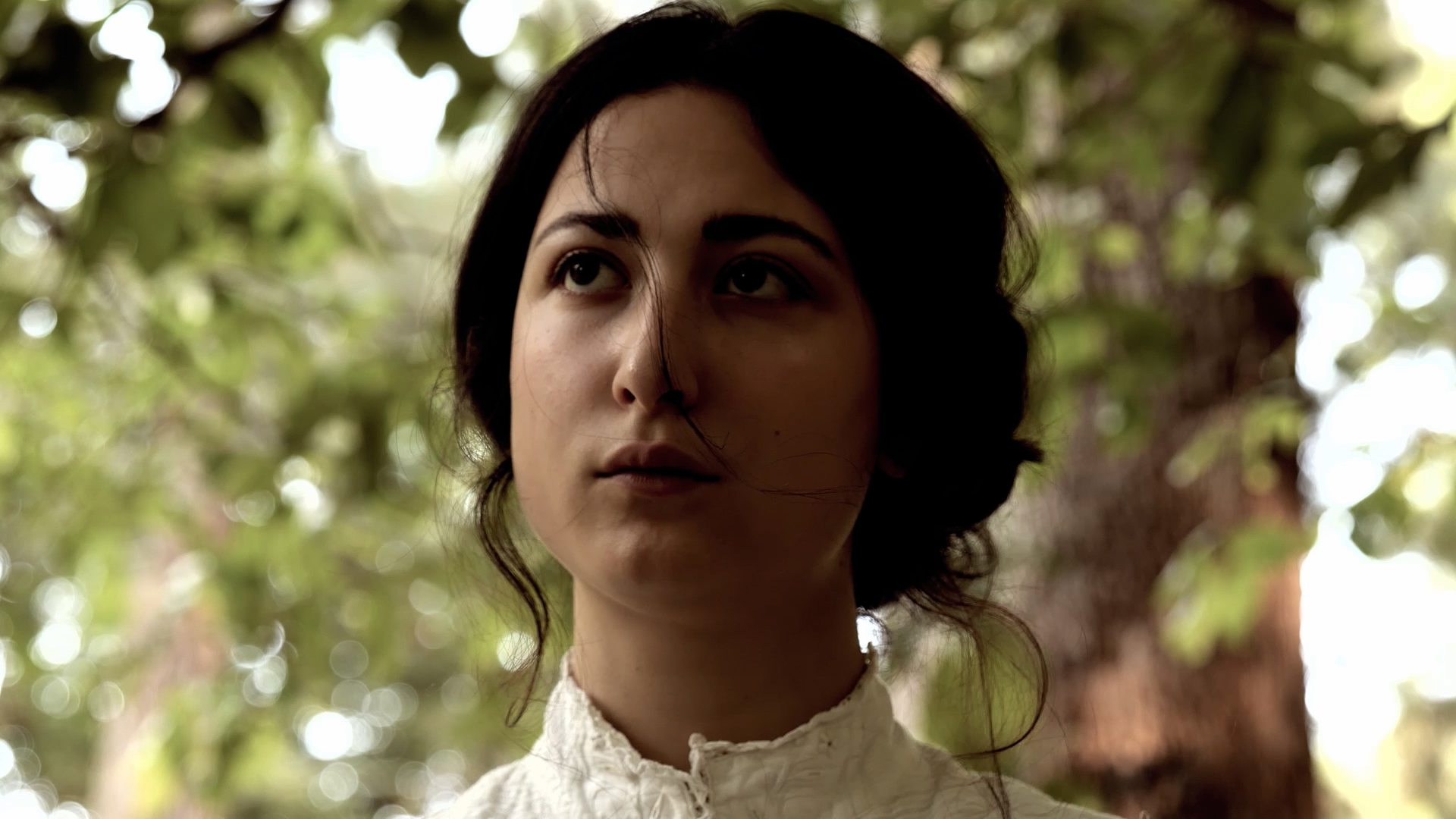
Documentary, by Isabel Russinova, Rodolfo Martinelli Carraresi, Italy, 2026
Eva of the Irises is a historical biographical docu-film about the scientist Eva Mameli Calvino, a botanist and pioneer of environmentalism in Italy, mother of the writer Italo, born in Sassari in 1886. The film, based on a multidisciplinary approach that combines several genres—such as theatre, documentary, cinema, and research—moves between memories, reflections on life, as well as the goals and missions the scholar still wished to achieve.
The multifaceted artistic sensibility of Isabel Russinova is expressed across many fields, from writing to acting, from directing to civic engagement, and finds one of its highest expressions in the docu-film Eva of the Irises, created with Rodolfo Martinelli Carraresi. The film blends scientific rigor and poetic refinement to portray the extraordinary figure of the botanist Eva Mameli Calvino, mother of Italo Calvino but above all an independent protagonist of 20th-century scientific culture. It is told through a combination of archival materials, interviews, and evocative staging capable of elegantly and profoundly conveying her intense human and professional story.
LANGUAGE: Italian
SUBTITLES: English, Spanish, French, Portuguese
Concord as a Trap, Not a Setting
Concord in the 1840s had the particular cruelty of places that believe themselves enlightened. It was a town of white clapboard houses and elm-lined roads, close enough to Boston to feel cosmopolitan, small enough that everyone knew exactly what you had failed to become. You did not need iron bars in a place like that. You needed only the accumulated weight of neighbors who remembered your father, who knew your mother ran a boarding house, who watched you return from Harvard in 1837 without a clear profession and with ideas that made polite conversation difficult.
Henry David Thoreau was born there on July 12, 1817, and he would die there forty-four years later, having barely left. That geographic fact is usually presented as a choice, even as a virtue — the man who found the universe in a small pond, who proved that depth could substitute for distance. But geography in Concord was also social architecture. To stay was not simply to choose rootedness. It was to remain permanently legible to a community that had already written your story before you had lived it.
The Transcendentalist circle that gathered around Ralph Waldo Emerson offered what looked like liberation and operated with many of the mechanics of a court. Emerson himself was fifteen years older than Thoreau, already famous by the time Thoreau graduated from Harvard, already the gravitational center around which younger minds arranged themselves. His 1836 essay Nature had set the terms of the conversation, and his Divinity School Address two years later had scandalized Boston sufficiently to make him the most interesting man in New England. When Thoreau entered his orbit, he entered something with genuine intellectual electricity and genuine hierarchical weight. He lived in Emerson’s house for two years, first between 1841 and 1843, performing odd jobs as a kind of live-in handyman-philosopher. The arrangement was generous and it was also, inescapably, one of subordination.
What the Transcendentalists shared was a belief in the individual’s direct access to truth, unmediated by institution or tradition. What they practiced, as any intellectual community practices, was a highly mediated set of social expectations about what kinds of truth were worth pursuing, how they should be expressed, who had the standing to express them. Emerson admired Thoreau. He also, in ways that were probably invisible to him and devastating to Thoreau, consistently measured him against a standard Thoreau could never quite meet — the standard of Emerson himself. In the eulogy he delivered after Thoreau’s death in 1862, Emerson praised his friend’s character while expressing disappointment that he had not written a great work of systematic philosophy, had not, in Emerson’s formulation, led an army. The condescension was affectionate. It was still condescension.
The sociologist Erving Goffman, writing more than a century later in The Presentation of Self in Everyday Life, described how social settings enforce identity through continuous performance and surveillance. Concord was precisely such a setting — a stage where the performance never ended, where the audience never left, where the roles assigned in childhood had a way of following a person into adulthood with the stubbornness of a shadow. The pencil-maker’s son. The Harvard graduate who never quite capitalized on it. The man who surveyed other people’s land for income while writing in his journals about freedom.
That journal, begun at Emerson’s suggestion in 1837, would eventually run to nearly two million words. Two million words produced in a town where everyone could see you walking to the post office, where your eccentricities were noted and filed, where the distance between private thought and public expectation was never more than a short walk down a elm-shaded road. The journal was not escape. It was the proof that no complete escape was available, and that he kept writing anyway.

Walden Pond: The Experiment Nobody Wanted to Understand
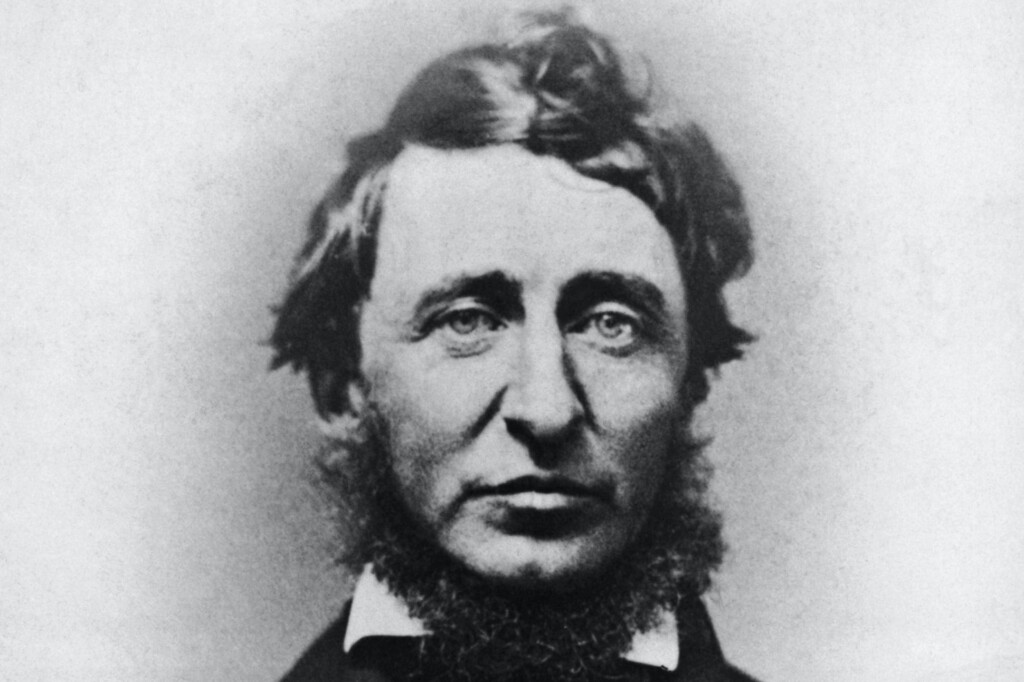
You already know the version of this story. The cabin in the woods, the man alone with his thoughts, the noble simplicity of chopping your own wood and watching the seasons turn. It is one of the most successfully domesticated rebellions in American cultural history, a genuinely radical act that two centuries of repetition have transformed into a calendar image, something to admire the way you admire a painting of a storm from inside a warm room.
But consider what actually happened. On the fourth of July, 1845 — and the date was not carelessness, it was argument — Thoreau moved into a ten-by-fifteen-foot cabin he had built himself on land owned by Emerson near Walden Pond in Concord, Massachusetts. He stayed for two years, two months, and two days. The Independence Day timing was a deliberate provocation aimed at a nation busy congratulating itself on freedoms it had not examined, a country in which slavery was still legal and expansion was still called destiny. He was not retreating from society. He was constructing a laboratory to dissect it.
Think of a man who one day empties his apartment of everything he owns that he did not choose consciously, who sits in the resulting silence and realizes that the silence is not empty but full — full of questions he had been successfully avoiding through the noise of acquisition. That quality of attention, that almost violent stripping away, is what Walden actually describes. Not pastoral contentment. Forensic inquiry.
The economics alone are sufficiently disturbing to make most readers skim past them. Thoreau calculated his cost of living at Walden with the precision of an auditor. He spent twenty-eight dollars and twelve and a half cents building the cabin. His food costs for eight months ran to slightly over eight dollars. He worked approximately six weeks per year to cover all his expenses and devoted the remaining time to what he called his real work: observation, writing, thinking. His conclusion, delivered without sentimentality, was that most men spend the majority of their lives paying for a comfort they are too exhausted to enjoy. “The mass of men lead lives of quiet desperation,” he wrote in the opening pages of Walden, published in 1854 after years of revision. That sentence has been quoted so often it has lost its edge. Read it slowly. He is not describing someone else.
There is a particular kind of solitude that is not peaceful at all, where a man reduced to his own company discovers that what he thought was his personality is mostly composed of other people’s expectations. A figure sits in a single room, having renounced everything that was supposed to constitute a meaningful life, and finds not emptiness but a terrifying clarity about what he actually wanted versus what he had been performing. That stripping of performance, that confrontation with the self beneath the social costume, is the actual experiment Thoreau was conducting. Not can a man live simply in nature. But can a man tolerate looking directly at what he is.
The psychoanalyst Donald Winnicott, writing a century later, would identify the capacity to be alone as one of the most sophisticated emotional achievements a person can develop, paradoxically requiring, in its formation, the presence of another. Thoreau at Walden was not sealed off from the world. He walked into Concord regularly. His mother did his laundry. He had visitors. The experiment was never about physical isolation. It was about cognitive sovereignty, the radical act of refusing to let the rhythm of commerce dictate the rhythm of consciousness.
Which is precisely why almost nobody wanted to understand it correctly. Understanding it correctly would require admitting that your busyness is not a condition imposed upon you, but a choice you renew every morning before you have even finished your first cup of coffee.
I Am Nothing
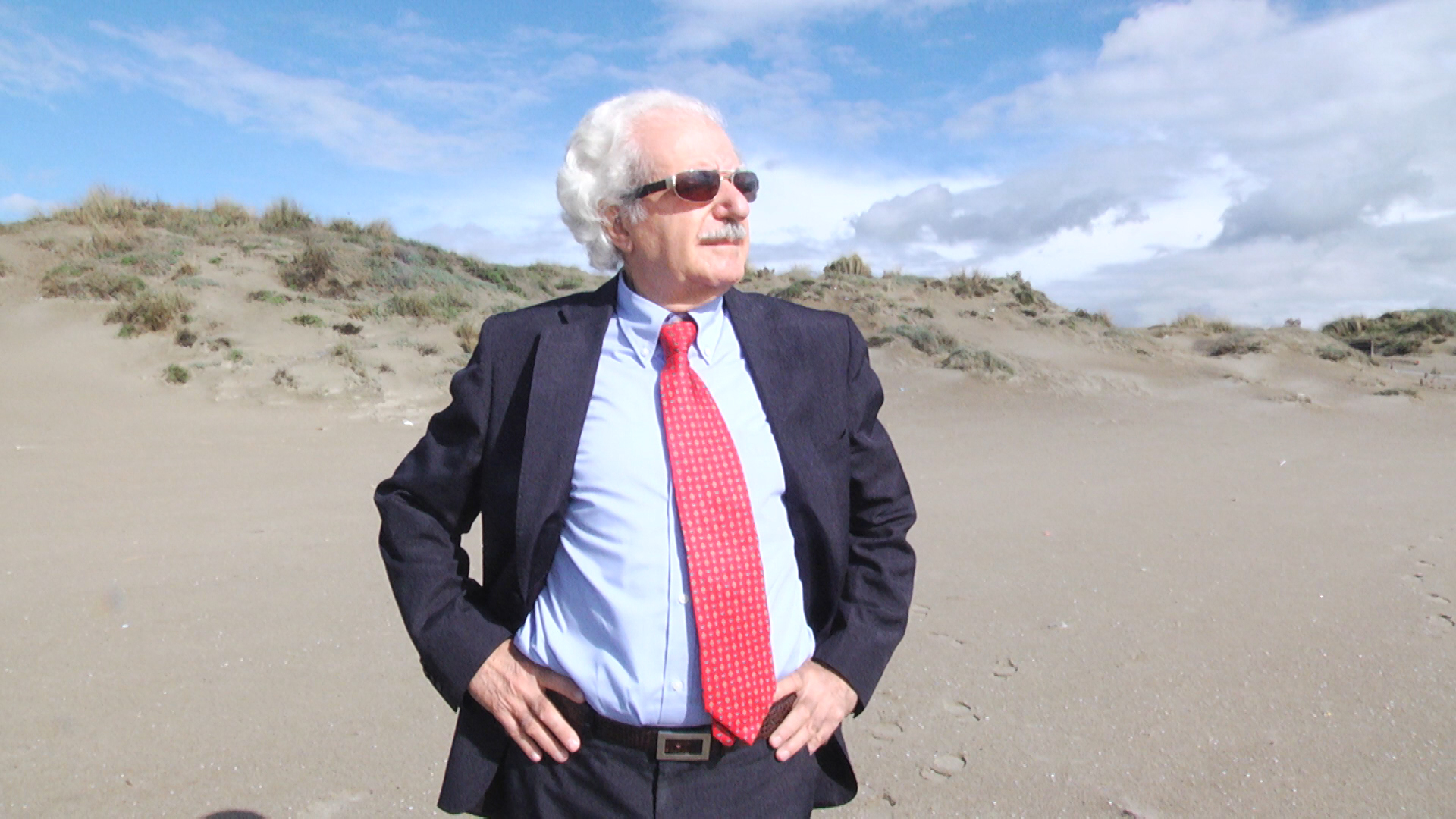
Drama, thriller, by Fabio Del Greco, Italy, 2015.
The story revolves around Vasco, a Roman builder who, at the age of 74, enjoys a life of absolute comfort. His human parable takes a dramatic turn when a mysterious encounter leads him to an ambush. Having survived, but marked by a long coma, Vasco wakes up with a new sensitivity, developing an intimate and poetic bond with nature. This new relationship with the world around him leads him to deeply explore himself, in an internal and external journey. through Italy, the United States and India, in search of a higher meaning and a cure. In parallel, the threat of a planetary cataclysm adds an epic dimension to the story.
I Am Nothing explores universal themes such as time, memory, oblivion and the connection with nature. Fabio Del Greco creates an existential drama full of food for thought. The director skillfully combines different visual materials, mixing archive images with nature photographs and dreamlike visions. This visual experimentation translates into an editing that captures the viewer's attention, guiding him through a cycle of creation and destruction. The sequences that alternate the buildings, Vasco's pride, with Indian landfills and natural landscapes create a hypnotic rhythm, underlining the beauty and fragility of life. Vasco's existential journey is a hymn to transformation and rebirth. The evolution of the protagonist, from unbridled luxury to the rediscovery of purity, represents a powerful metaphor on the meaning of life and the need to reconnect with authentic values. Io sono nulla stands out for its ability to combine introspection and visual experimentation, offering a suggestive and engaging narration. It is a film that invites us to reflect on the human condition, on our relationship with power and nature, and on the possibility of finding ourselves through change. A work that leaves its mark and lends itself to multiple readings.
LANGUAGE: Italian
SUBTITLES: English, Spanish, French, German, Portuguese
Civil Disobedience and the Night in Jail
It is the summer of 1846, and a man walks into Concord to pick up a mended shoe from the cobbler. He is arrested before he reaches the shop. The constable, Sam Staples, is almost apologetic about it — they know each other, this is a small town, and the matter is simple: six years of unpaid poll taxes, a deliberate refusal, not an oversight. The man is placed in a cell and Staples, by some accounts, even offers to pay the debt himself. The offer is declined. The man will sleep here tonight.
What happens inside that cell is not dramatic in the way we have been trained to expect drama. There is no breaking point, no epiphany delivered in chiaroscuro light. There is instead something stranger and more durable: the sudden, almost geometrical clarity that comes when the distance between a man and his government becomes a physical fact. The wall is not a metaphor. The lock is not a symbol. The state has made itself tactile, and in doing so, it has revealed itself completely. You have seen something like this — a moment when an institution stops pretending to be reasonable and simply shows you what it is, the machinery behind the courtesy, the coercion beneath the contract.
Thoreau published his account three years later, in 1849, first as a lecture titled “Resistance to Civil Government,” later collected under the name most history knows it by. The essay is not long. It does not need to be. Its central proposition is almost surgical: that the individual conscience is the only legitimate sovereign, and that any law which requires you to be an agent of injustice — any law that makes you complicit in slavery, in war, in the violent extension of a nation’s appetite — is not a law you are obligated to obey. He wrote it at a moment when the Mexican-American War was consuming American lives and territory, when the machinery of slavery was constitutionally protected, when the majority had voted and the majority was wrong. “The only obligation which I have a right to assume,” he wrote, “is to do at any time what I think right.”
This is not anarchism, though it has been misread that way. It is something more precise and more uncomfortable: the insistence that moral clarity precedes political loyalty. Hannah Arendt, writing more than a century later in her 1972 essay “Civil Disobedience,” would note that Thoreau’s position was philosophically distinct from later traditions of collective resistance — that for Thoreau, the act was almost private, a matter of keeping one’s own hands clean. She was not entirely wrong, but she may have underestimated what a clean pair of hands can teach a watching world.
Because the genealogy is real and it is staggering. Mohandas Gandhi read that essay in South Africa in the early 1900s and credited it directly with shaping the concept of satyagraha — truth-force, the disciplined refusal to cooperate with injustice. Gandhi would go on to lead a movement that ended the British Empire’s grip on India. Martin Luther King Jr. read Gandhi, and read Thoreau directly, and wrote in his 1963 “Letter from Birmingham Jail” — itself composed in a cell, itself addressed to men who preferred order to justice — that one has a moral responsibility to disobey unjust laws. The cell in Concord, the cell in Birmingham: the geometry is exact.
There is a particular kind of man who, placed inside a system’s most honest room — the room where it stops explaining itself and simply confines you — does not rage or collapse but instead begins, with terrible patience, to think. The night passes. Someone pays the tax anonymously, probably his aunt, and he is released the next morning, reportedly irritated at being let out before he was ready. He goes and finds his shoe.
Walden the Book vs. Walden the Brand
You have probably seen the quote somewhere — on a linen tote bag, a minimalist Instagram grid, a productivity newsletter promising to help you “live deliberately.” The words are Thoreau’s. The sentiment has been surgically removed.
Walden appeared in August 1854 to a reception that can only be described as polite indifference. It sold modestly, was reviewed with mild curiosity, and then receded. For decades it sat at the margins of American letters, occasionally cited, rarely understood as the destabilizing document it actually was. The book’s rehabilitation into cultural prominence came slowly, then all at once, and somewhere in that process something essential was inverted. What arrived on the shores of the twentieth century was not Thoreau’s argument but Thoreau’s aesthetic — the cabin, the pond, the noble solitude — stripped of the philosophical corrosion that made those images dangerous in the first place.
What Thoreau actually wrote was an attack. Not a retreat. The two years he spent at Walden Pond beginning in July 1845 were not a withdrawal from society into peace but an experiment in radical exposure — he wanted to see what happened when you removed the noise and looked directly at the machinery underneath. What he found was that most people were conducting lives of, as he put it, “quiet desperation,” not because of bad luck or personal failure but because the entire economic and social architecture of American life was designed to keep them exactly there, too tired and too indebted to ask the question that mattered. That is not a wellness message. That is an indictment.
Guy Debord, writing in 1967 in “The Society of the Spectacle,” described a world in which authentic social life had been replaced by its representation — where experience had become a collection of images to be consumed rather than a reality to be inhabited. What he could not have anticipated, though his framework predicts it perfectly, is that critique itself would become spectacle. That the very gesture of refusal — the cabin, the morning swim, the deliberate simplicity — would be packaged and sold as a lifestyle identity, available for purchase in the form of artisanal goods, digital detox retreats, and guided journals titled after his chapters.
This is not an accident of misreading. It is the digestive system of consumer culture functioning exactly as designed. Herbert Marcuse had already identified this mechanism in “One-Dimensional Man” in 1964, describing how advanced industrial society absorbs its opposition by converting radical content into commodity form, defusing it in the very act of distributing it. Thoreau becomes safe the moment he becomes aspirational. Once the cabin is a mood board, the argument inside it cannot reach you.
And the argument was specific. Thoreau was not recommending that everyone move to a pond. He said so himself, almost impatiently, in the book’s opening pages. He was demonstrating a method of interrogation, a way of pressing on the assumptions you have never examined because everyone around you shares them. The bean field was not metaphor for organic living. It was a ledger — he kept actual accounts, recorded actual costs, measured actual hours — designed to show that the economy of his neighbors was a form of slow self-erasure they had accepted as normal. The numbers were the point. The clarity was the threat.
What the brand version requires is that you keep the image and discard the arithmetic. Keep the solitude but make it photogenic. Keep the simplicity but sell it at a premium. The transformation is so complete that people now consume Thoreau-as-product as a way of soothing the exact anxiety his text was written to provoke — the anxiety that the life you are living was never really chosen, that the busyness is a kind of cage, that underneath the schedule and the obligations there is a question you have been successfully avoiding for years.
The Lost Poet
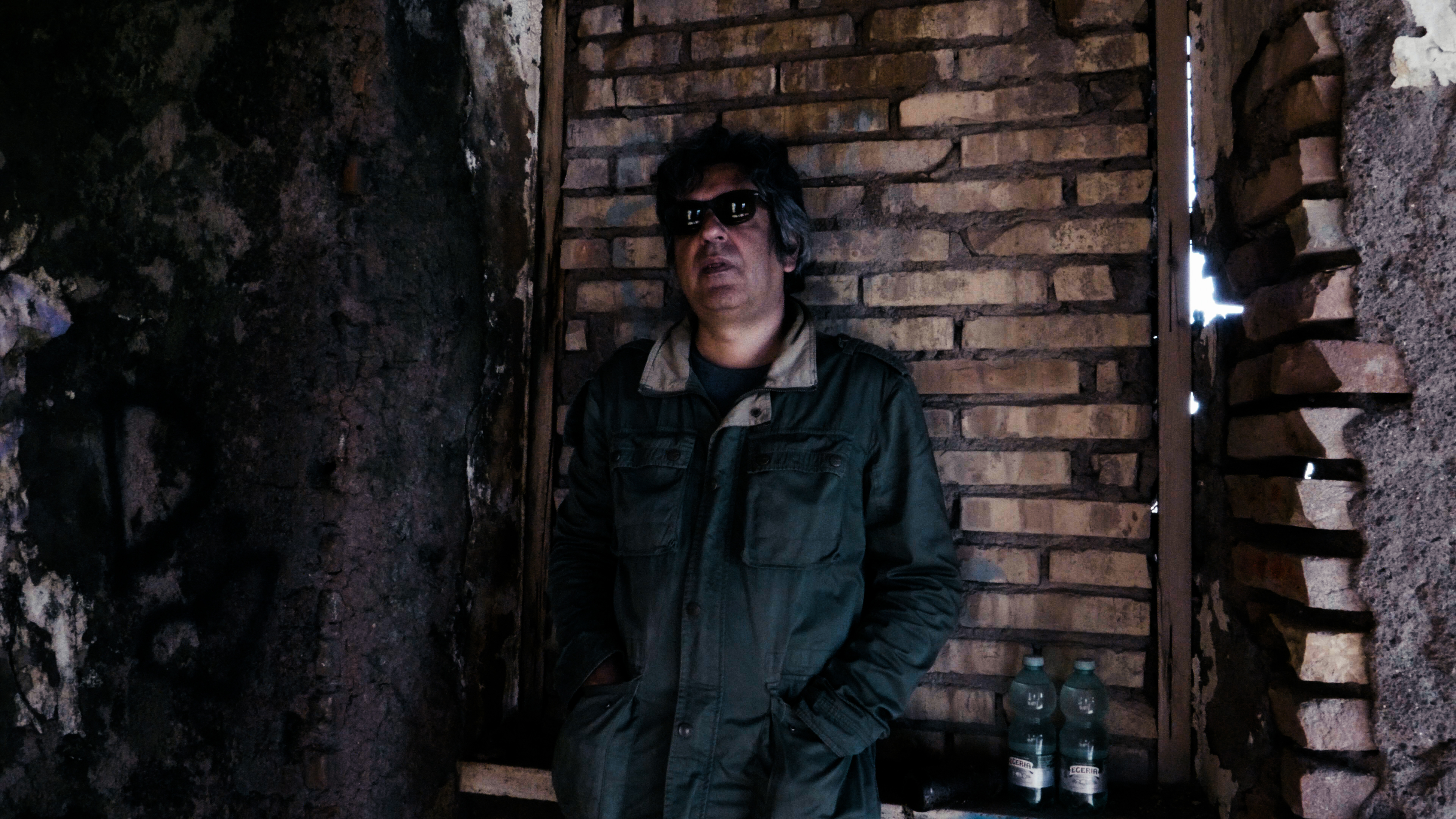
Drama, by Fabio Del Greco, Italy, 2024.
Dante Mezzadri wants to see an old friend, nicknamed the Iguana, whom he has lost sight of for many years, and who has managed to turn their shared youthful passion for poetry into a job, becoming a famous writer and poet. The man escapes from his bourgeois life and his wife to live homeless on the Roman coast, printing and trying to sell his poetry collections. At night he sleeps in a park of old carnival floats, inside a papier-mâché tank, and waits for the opportunity to meet his old friend, who however never shows up for appointments in the places they frequented when they were young, now in ruins. Dante's poetry books do not interest anyone and to support himself he is forced to "change product": he starts selling the infamous "cannibal pill" on behalf of young drug dealers, a new drug that sells like hot cakes and causes sensory and consumerist ecstasy. However, he realizes that this powerful drug is very dangerous for those who take it, he comes into conflict with his ethical conscience and throws all the pills into the sea. However, the dealers want to collect their money.
Shot over a period of 2 years, the film is a reflection on the cultural and artistic rubble of the society in which the protagonist lives, in an increasingly mechanized, consumerist and arid world. Dante Mezzadri is yet another human being who has renounced his inspiration and his creativity, but unlike many he is not willing to give his life to a system that distances him from his true identity. The physical world around him, however, seems constructed in such a way that it seems impossible to escape from this "invisible cage". The enthusiasm of the people he meets is ignited only by sensory gratification, by unreal visions of personal affirmation and success, by "metaverses" that offer an escape into an illusory and destructive reality. The poet's house on the coast, where he met with his friends as a young man, is just a pile of abandoned rubble. What happened to all those who wanted to become poets and ended up becoming something else? Are there internal forces with which that house can be "rebuilt"?
LANGUAGE: Italian
SUBTITLES: English, Spanish, French, German, Portuguese
A vision curated by a filmmaker, not an algorithm
In this video I explain our vision
The Pencil Factory and the Poet: The Double Life Nobody Mentions

There is something quietly brutal about the image of him bent over a workbench, mixing graphite and clay, testing the hardness of leads against paper, supervising the kiln temperatures, writing orders in the ledger. Not a poet in a garret. Not a sage in a forest. A manufacturer, with ink-stained hands and sawdust on his boots, running quality checks so that John Thoreau and Company could compete with the imported German pencils that dominated the American market in the 1840s. He solved the problem, incidentally. He figured out that a higher ratio of clay to graphite, fired at greater heat, produced a harder, cleaner line. He made his family’s pencils the best in the country. Then he largely stopped making them, because he found the work beneath the life he was trying to build. This is a detail most admirers prefer to leave in the footnotes.
The double life runs deeper than the factory. For years, Thoreau worked as a land surveyor, walking other people’s property with a compass and a chain, measuring boundaries, fixing legal limits, helping establish precisely who owned what and where their dominion ended. The man who wrote that the earth belongs to no one, that ownership is a fiction we impose on something that preceded us by geological epochs, spent significant portions of his adult life doing the paperwork that made ownership official, exact, and enforceable. He surveyed the lots. He drew the maps. He handed the documents to men who then fenced the land, taxed it, sold it, subdivided it. The irony is not incidental. It is structural.
Erik Erikson, in his 1968 work Identity: Youth and Crisis, described what he called the problem of role confusion — the psychological fracture that opens when the identity a person performs publicly diverges from the inner conviction they carry privately. Erikson was writing about adolescence, but the fracture he describes has no age limit. You can watch it operate in a man who surveys property by day and writes about the illegitimacy of property by night, who manufactures goods for the market while insisting the market is a spiritual catastrophe. The fracture does not necessarily indicate hypocrisy. It may indicate something more uncomfortable: that integrity, as a total condition, as a seamless unity between belief and action, is not available inside a system that has already colonized every available hour and resource.
There is a version of this fracture that appears in the story of a man living in two apartments simultaneously — one for his family, one for another life entirely — traveling between them on the same subway line, carrying the same briefcase, becoming a different person at each door without ever acknowledging the cost of the transit. The horror of that situation is not the deception of others. It is the self-division that eventually becomes the only self there is. Thoreau’s version was less melodramatic but no less real. He went to Walden for two years, two months, and two days — from July 4, 1845 to September 6, 1847 — and then he came back. He came back and went to work.
He died of tuberculosis on May 6, 1862, at forty-four years old, the same disease that had taken his brother John a decade earlier. His last months were spent revising manuscripts, answering letters, receiving visitors. Someone asked him near the end whether he had made his peace with God. He reportedly answered that he was not aware they had quarreled. The composure reads as either genuine equanimity or the final performance of a man who had been performing since the day he walked back out of the woods and picked up his surveyor’s chain. Which of those two it was may be precisely the question he left unanswered, the one he carried all the way to the boundary line between whatever he believed and whatever he actually managed to live.
What Thoreau Actually Said vs. What We Need Him to Have Said
There is a version of Thoreau that circulates on motivational posters, in graduation speeches, in the opening pages of lifestyle manifestos about minimalism and intentional living. He is serene there, bearded, solitary, wise. He has been sanded down to a surface smooth enough to inspire without disturbing. And the real man, the one who actually existed, would have found this transformation both familiar and contemptible — because it is precisely the kind of social performance he claimed to be dismantling.
The facts that get quietly omitted are not minor biographical footnotes. They are structural. While Thoreau lived at Walden Pond writing about self-sufficiency and the dignity of manual labor, his mother and sister brought him meals regularly, did his laundry, and kept him supplied with the domestic infrastructure he never acknowledged in his prose. The cabin was two miles from his family home. He visited Concord often. The solitude he described was partly a literary construction, and the independence he preached rested, as it so often does when preached by men of that era, on the invisible labor of women who appear nowhere in the philosophy.
Then there is the question of the Irish. The immigrants building the railroad near Walden, the men doing the brutal physical work that Thoreau observed and occasionally aestheticized, were not treated by him as fellow seekers of the simple life. His journals contain passages of frank contempt, ethnic caricature dressed up as social observation. He described Irish poverty not as systemic but as moral, as a failure of character, as evidence that certain people lacked the inner resources to live deliberately. This is not a peripheral detail. It sits at the very center of his philosophy of self-reliance, because it reveals what that philosophy was silently assuming: that the capacity for deliberate living was distributed unequally, and that the distribution followed lines he never examined.
Walter Benjamin wrote about the dialectical image as the moment when past and present collide in a flash that illuminates both, not to reconcile them but to make their tension visible and productive. Reading Thoreau dialectically means refusing to let the inspiring passages absorb the damning ones. It means sitting with both simultaneously, feeling the contradiction without resolving it into a lesson. The man who wrote with genuine precision about the sound of ice cracking on a winter pond also wrote with genuine cruelty about the people whose labor made his contemplative leisure structurally possible. You do not get to keep only one of these.
Hannah Arendt argued in her 1971 essay “Thinking and Moral Considerations” that the activity of thinking — real thinking, as opposed to the accumulation of opinions — is inherently disruptive. It dissolves fixed categories. It makes comfortable ground unstable. A thinker who has been made comfortable, who has been installed in the canon as a source of reassurance, has been robbed of the very quality that made them worth reading. The Thoreau on the motivational poster is not a thinker. He is a sedative.
To restore the difficulty is not to cancel him. Cancellation is just another form of simplification, the negative image of hagiography, equally flat. The point is to encounter someone who was genuinely intelligent and genuinely limited in the same breath, whose limitations were not accidental but were woven into the fabric of his intelligence, shaped by the same cultural logic he was trying to escape and could not fully see.
He sat by a pond and listened hard and wrote down what he heard with unusual precision. He also could not see the Irish navvy twenty yards away as a full human being capable of the same quality of attention. Both of these things are true. The question is not which one cancels the other. The question is what kind of reader you become when you hold them both without flinching.
Mystery of an Employee

Drama, thriller, by Fabio Del Greco, Italy, 2019.
Someone wants to control the life of the employee Giuseppe Russo: the products he buys, his political and religious faith, his private life, even his dreams. But he will do anything to escape control and find his true self. Giuseppe is a man of around 45, married, with a stable job and a home of his own. His life flows seemingly peacefully when he meets a mysterious tramp who gives him some old VHS video cassettes. Giuseppe begins to see video tapes in which he is filmed in some moments of his life since he was a child, then as a teenager and as a young man. Who shot those videos that he remembers nothing about? Giuseppe has the strange sensation of being constantly observed and begins to investigate what is happening. Through his investigation of him, he begins to rediscover his true identity and become aware of who he truly is.
Employee's Mystery is a film that highlights the danger of social control and shows a society where everyone is constantly monitored and conditioned in their deepest selves. The film is also an analysis of human nature and identity. Fabio Del Greco, who plays Giuseppe, gives an engaging performance. Equally good is Chiara Pavoni, in the role of Giada Rubin and Roberto Pensa in the role of the tramp. Employee's Mystery is a film that addresses important themes in an original way, a psychological thriller that keeps the viewer glued to the screen until the end: a metaphor for contemporary society, in which people are increasingly monitored and conditioned by the media and technologies . It is a courageous and provocative work, which addresses important themes in an original way.
LANGUAGE: Italian
SUBTITLES: English, Spanish, French, German, Portuguese
The Unfinished Walk
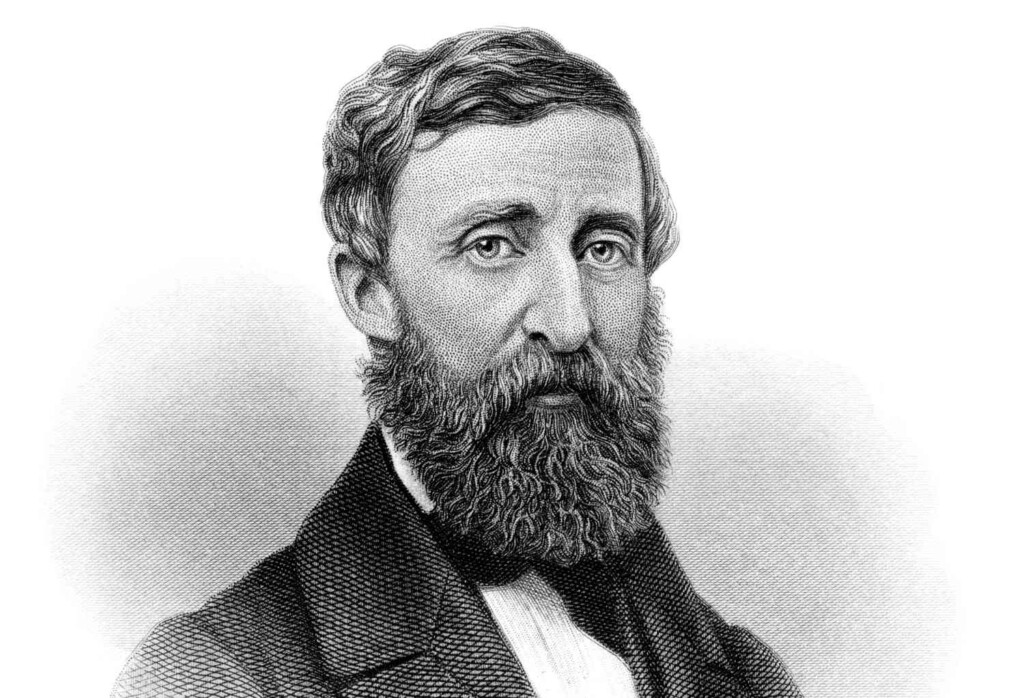
There is a particular kind of walker you recognize immediately, not by their speed or their destination, but by the quality of their attention. They move through a landscape the way water moves through rock — not conquering it, not mapping it, but wearing it slowly into something new. You have seen this person. You may have been this person, once, before the world taught you that movement without arrival is a form of failure.
Thoreau published almost nothing in the final years of his life. The tuberculosis that had shadowed his family — it had already taken his brother John — was taking him too, quietly, the way all truly serious things arrive. He died in May 1862 at the age of forty-four, and among the manuscripts left behind was the text of a lecture he had been refining for nearly a decade, a meditation on walking that was published posthumously in the Atlantic Monthly just months after his death. He called it “Walking,” and it is perhaps the strangest inheritance he left, because it does not argue for anything so much as it enacts something. It moves the way he moved. It refuses to arrive.
The essay opens with a declaration that has the rhythm of a manifesto but the heart of a confession: he wishes to speak a word for Nature, for absolute freedom and wildness. The word “sauntering” — which he traces, with characteristic etymological pleasure, to pilgrims who wandered toward the Holy Land, à la Sainte Terre — becomes in his hands not a leisure activity but a philosophical posture. To saunter is to refuse the tyranny of the straight line. It is to acknowledge that the most important things happen in the peripheral vision of your life, not in its stated objectives.
There is a man who walks every evening through the same neighborhood he has walked for thirty years. His wife has died, his children have moved to cities whose names he only half-recognizes, and the world he understood has been replaced by a faster, louder version of itself. But he walks. Not to remember. Not to grieve. He walks because the act itself is the last thing that still feels like him, like something that cannot be scheduled, optimized, or explained to anyone who asks what he is doing. He is doing nothing that can be named. That is precisely the point.
This is what Thoreau understood that the reformers, the transcendentalists, the political theorists, and the naturalists of his century did not quite grasp — that the most radical act available to a human being is not to change the world but to refuse to be fully legible to it. Ralph Waldo Emerson, who loved him and eulogized him and quietly never understood him, once expressed frustration that Thoreau had not become a greater engineer of civilization. But Thoreau was not interested in engineering. He was interested in remaining partially wild, partially opaque, partially unfinished — the way all living things are unfinished until the moment they stop.
The philosopher Maurice Merleau-Ponty spent decades arguing that consciousness is not a thing that happens inside the skull but a relationship between a body and a world, that perception is always already in motion, always already in contact with something larger than the self. He never cited Thoreau. He did not need to. They were describing the same phenomenon from different angles: the truth that a person walking through a landscape is not a subject moving through an object, but a conversation between two forms of becoming.
Thoreau’s real legacy is not Walden, not civil disobedience, not even the cabin by the pond. It is the posture of the unfinished walker, the one who turns toward the woods not because they have found the answer but because they have learned, at last, to love the question more than the ground it stands on.
🌿 Solitude, Nature, and the Examined Life
Henry David Thoreau’s legacy reaches far beyond Walden Pond, touching every soul who has dared to question convention, seek meaning in simplicity, and live deliberately. These articles explore the lives and ideas of thinkers and writers who, like Thoreau, confronted existence with radical honesty and philosophical courage.
Epicurus: Life and Philosophy
Epicurus built a philosophy of simple living, friendship, and withdrawal from the noise of public life — values that resonate deeply with Thoreau’s own retreat to Walden Pond. Both thinkers believed that true freedom begins when we learn to distinguish genuine needs from false desires. Exploring Epicurus offers a profound ancient counterpart to Thoreau’s nineteenth-century experiment in voluntary simplicity.
GO TO THE SELECTION: Epicurus: Life and Philosophy
Montaigne: Life and Essays
Montaigne invented the essay as a form of radical self-examination, turning the act of writing into a lifelong conversation with oneself — much as Thoreau did in his journals and in Walden. Both men distrusted institutional authority and instead trusted direct experience and inner observation as the highest sources of truth. Reading Montaigne alongside Thoreau reveals a centuries-long tradition of philosophical dissent rooted in honest, personal reflection.
GO TO THE SELECTION: Montaigne: Life and Essays
Albert Camus: Life and Philosophical Thought
Albert Camus confronted the absurdity of modern existence with the same unflinching gaze that Thoreau directed at the complacency of nineteenth-century American society. Both writers refused easy consolations and demanded that their readers face the conditions of their own lives with clarity and courage. This article on Camus’s life and thought provides essential context for understanding the existential undercurrents that run through Thoreau’s own work.
GO TO THE SELECTION: Albert Camus: Life and Philosophical Thought
Hannah Arendt: the Philosopher Who Unmasked the Banality of Evil
Hannah Arendt‘s philosophical project centered on reclaiming authentic thinking and moral responsibility in a world increasingly dominated by conformity and thoughtlessness — a concern Thoreau anticipated with Civil Disobedience and Walden. Her insistence that individuals must think for themselves, even against the tide of society, echoes Thoreau’s famous declaration that the only obligation one has is to do what one thinks is right. Together, their works form a powerful tradition of civic and philosophical independence.
GO TO THE SELECTION: Hannah Arendt: the Philosopher Who Unmasked the Banality of Evil
Discover the Cinema of Ideas on Indiecinema
If these explorations of thought, nature, and the examined life have stirred something in you, Indiecinema is the streaming platform where ideas continue on screen. Discover independent films, documentaries, and visionary works that carry the same spirit of freedom and depth you find in Thoreau’s pages.
👉 EXPLORE THE CATALOG: Watch Indie Films in Streaming
A vision curated by a filmmaker, not an algorithm
In this video I explain our vision

