
The Body Before the Concept
You wake up on a Tuesday and realize no one will notice whether you existed today. Not in the tragic, cinematic sense — no dramatic absence, no one waiting by the phone. Just the flat, administrative fact of it: the street outside your window moves without you in it, the buses run on schedule, the neighbor you have seen forty times has never learned your name and never will. You are not invisible because something went wrong. You are invisible because the system that generates visibility — employment nodes, institutional affiliations, dense social networks, the sheer proximity of people who share your reference points — was never built to reach where you are.

Peripheral contexts do not announce themselves as such. They do not come with warning signs or sociological labels. They are simply places where the infrastructure of belonging has thin walls: small post-industrial towns that lost their economic rationale in the 1980s and never recovered a new one, outer suburbs designed for car transit rather than human encounter, rural zones where the last community anchor — a school, a church, a factory — closed and was not replaced. In France alone, the geographer Christophe Guilluy documented in 2014 what he called “la France périphérique,” a geographic and social category containing roughly sixty percent of the national population yet systematically absent from the cultural and political imagination of the country’s metropolitan centers. The number is not rhetorical. It means that the dominant narrative of what a modern life looks and feels like is constructed by and for a minority, while the majority lives in a kind of experiential silence that is never named because naming it would require the center to acknowledge its own parochialism.
What the body registers before the mind theorizes is not loneliness in the ordinary sense. Loneliness, as most people understand it, presupposes a self that wants connection and fails to find it. What peripheral isolation produces is something more structurally insidious: the slow erosion of the sense that your inner life has any external relevance at all. The neuroscientist John Cacioppo, whose twenty years of research on loneliness culminated in his 2008 book with William Patrick, demonstrated that chronic social isolation activates the same threat-detection circuits as physical pain — the anterior cingulate cortex lights up identically whether you are being excluded or struck. But Cacioppo was working largely with populations where isolation was a deviation from an available norm. Peripheral isolation is not a deviation. It is the norm itself, which means the body never gets the signal that something can be corrected, because nothing is broken in the way that broken things get fixed.
The texture of this is specific and deserves precision. It is not depression, though it can produce depression. It is not introversion, though it is frequently misread as a personal temperamental preference. It is the experience of speaking and not generating echo — not because you spoke poorly, but because the acoustic architecture of the place you inhabit was never designed to carry your frequency. You can be articulate, curious, socially skilled, and still find that every gesture toward connection dissipates before it lands, not from rejection but from structural indifference. The social fabric is simply too thin and too exhausted to hold the weight of new attachment. People around you are managing their own contraction, their own quiet administration of diminished expectations, and there is an unspoken collective agreement not to press too hard on any surface that might give way.
What the theory will eventually say about this — and theory will say a great deal — cannot begin here, because beginning with theory would allow the reader to process this as information rather than recognition. The point is not to explain peripheral isolation but to make the body remember what it already knows about walls that have no doors marked exit.
Ancestral

Documentary, by Lumar Brothers, Italy, 2023.
“Ancestral: Life and Art of Massinissa Askeur” is a documentary that explores the life and art of Algerian painter Massinissa Askeur. The film follows Askeur on his creative journey, showing his artistic process and his commitment to the preservation of Berber culture and tradition. Through interviews with Askeur, his family, friends and testimonies from people who knew him on a personal, professional and artistic level, the documentary tells the story of his past and his deep connection to his Berber roots. Askeur displays his art, from canvases to sculptures, which are inspired by the shapes and symbols of Berber culture, representing his search for a connection between the past and the present.
The documentary also explores the challenges Askeur faced throughout his life, including racial discrimination, poverty and the difficulty of making his art known outside of Algeria. However, despite these difficulties, Askeur continues to create and promote his art as a form of cultural resistance and celebration of his ancestral heritage. A vision far from art as a commercial product and very close, instead, to the exploration of the depths of one's own soul and the soul of the world. Massinissa's mission is to leave a testimony of his time to future generations.
LANGUAGE: Italian
SUBTITLES: English, Spanish, French, German, Portuguese
Periphery as Produced Condition
You grew up knowing, without anyone ever telling you, that the edge of the map was where you were supposed to stay. Not because someone drew a line and pointed, but because the roads curved away from you, the buses stopped running at ten, and the nearest place that stocked fresh vegetables was forty minutes by foot from the building where you slept. The geography felt natural, the way gravity feels natural — until you understand that someone engineered the fall.
Henri Lefebvre argued in La Production de l’espace, published in 1974, that space is not a neutral container in which social life happens to occur. It is itself produced, shaped by decisions that carry ideological weight even when they are dressed in the language of urban planning and technical efficiency. Space is a social product, which means every suburb, every peripheral housing block, every poorly lit transit corridor represents a choice made by someone who did not live there. The abstraction becomes unbearable when you understand that Lefebvre was not writing theory for theory’s sake — he was watching a transformation happen in real time, across the French landscape, during the two decades that would permanently restructure how poverty was distributed in space.
Between 1960 and 1975, France built approximately 2.2 million units of what was officially called habitation à loyer modéré — affordable rental housing — through a policy framework that was, in its stated intentions, genuinely egalitarian. The grands ensembles rose at the edges of Paris, Lyon, Marseille, and dozens of smaller cities, concrete towers organized around the logic of density and cost efficiency rather than any coherent vision of social life. Architects were given briefs about square meters per inhabitant, load-bearing ratios, proximity to industrial zones where workers were expected to commute. Nobody wrote briefs about what happens when a community has no third spaces, no public squares, no informal infrastructure of encounter. These were not oversights. They were the residue of a planning culture that had already decided who would live there and what those lives were expected to need.
Robert Castel, in Les Métamorphoses de la question sociale published in 1995, traced the long history of what he called disaffiliation — the gradual erosion of the social ties and institutional protections that anchor an individual to collective life. His insight was that this erosion is not random. It follows the fault lines of class, employment insecurity, and spatial segregation, accumulating in zones where the density of vulnerability becomes self-reinforcing. When industrial employment began collapsing in France in the mid-1970s, the populations concentrated in peripheral housing estates were simultaneously losing their economic function and their symbolic legibility within the national narrative. They had been placed at the edge of the city to serve production; when production moved or mechanized, the edge remained but the rationale evaporated.
What Castel named and Lefebvre anticipated is a mechanism that operates beneath the threshold of individual psychology but produces intensely personal suffering. A person does not wake up and feel disaffiliated as a concept. They feel it as the specific texture of a Tuesday afternoon with nowhere to go and no one expecting them, as the particular embarrassment of giving an address that causes people to pause, as the knowledge that the postal code printed on their identity documents precedes every other fact about them in the mind of whoever reads it. The isolation is not incidental to the place — it was, in the most precise sense, planned into the place, embedded in the distance between buildings, in the absence of mixed-use zoning, in the political decision to concentrate families with precarious employment in zones that would remain administratively distinct from the city they surrounded.
The psychological damage of this isolation cannot be fully understood by looking inward at the individual, because the wound was administered from the outside and at a scale that required institutional coordination to achieve.

The Neuroscience of Chronic Exclusion
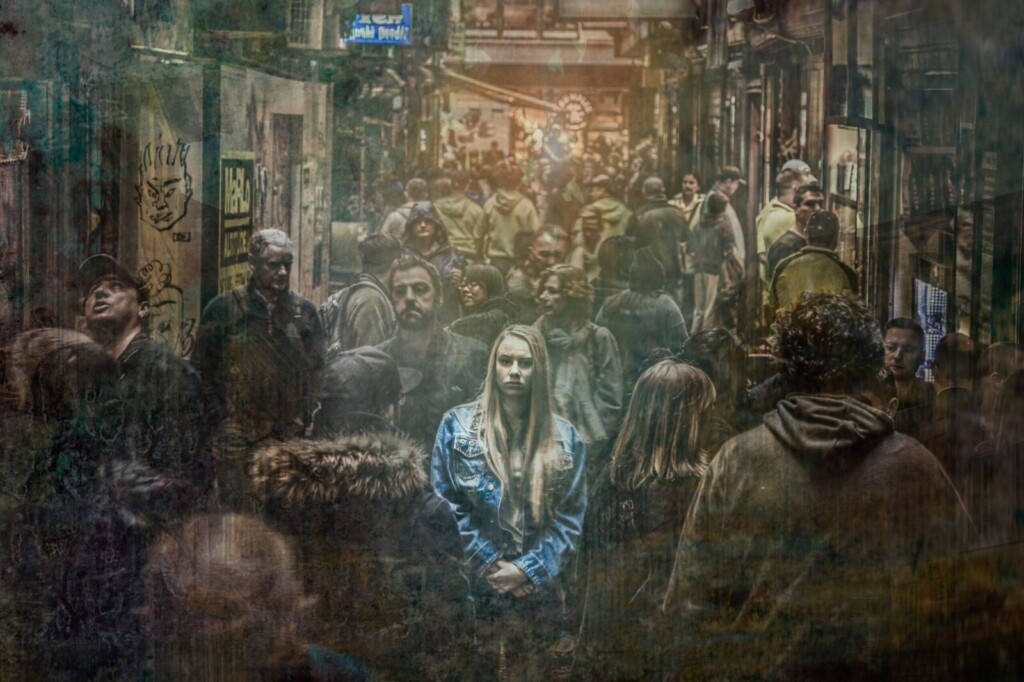
You stop trusting your own read of a room. Not because you’ve lost your judgment, but because your nervous system has been trained, across months or years of peripheral existence, to treat other people as probable threats before it allows itself to treat them as possible allies. This is not a metaphor for social anxiety. It is a measurable neurological event, visible in cortisol curves and amygdala response times, documented across longitudinal cohorts that span nearly two decades of data.
John Cacioppo spent much of his career at the University of Chicago demonstrating that loneliness is not a feeling in the sentimental sense — it is a biological state with the same evolutionary architecture as hunger or pain. His 2008 findings, published with William Patrick in “Loneliness: Human Nature and the Need for Social Connection,” established something that most social science had treated as self-evident but had never actually measured: that chronic social exclusion dysregulates the hypothalamic-pituitary-adrenal axis in ways that are cumulative and, beyond a certain threshold, self-reinforcing. The body of a person who has been structurally isolated for eighteen months produces cortisol spikes in social situations that a person embedded in a functioning community simply does not. This is not a personality deficiency. It is a physiological adaptation to a specific environment, and it persists long after the environment changes.
What this means in practice is a loop that Cacioppo described as hypervigilance feedback: the isolated person enters a social encounter already primed for rejection, reads ambiguous signals — a delayed response, a neutral facial expression, a conversation that moves on without them — as confirmation of threat, and exits the encounter more convinced than before that the social world is hostile territory. The brain does not learn from contradiction. It learns from pattern. And when the pattern it has internalized is one of chronic exclusion, it filters incoming data to protect that internalized model. The vigilance that was once adaptive becomes the primary obstacle to re-entry.
This is where the structural dimension becomes impossible to separate from the neurological one. Peripheral contexts — rural depopulation zones, post-industrial towns where the social fabric collapsed along with the economic one, urban pockets where density masks radical disconnection — do not produce isolated individuals randomly. They produce isolated individuals systematically, across whole generations, in the same postcodes, with the same school dropout rates and the same cortisol profiles. When Cacioppo’s research measured the difference in immune function between lonely and non-lonely subjects, it found that the former showed elevated expression of pro-inflammatory genes, a finding that connects social exclusion directly to accelerated biological aging. The periphery is not merely a geographical designation. It is a chronic physiological condition passed down through the accumulated stress of communities that have been disinvested, depopulated, and rendered invisible by the administrative categories that purport to describe them.
Re-entry, under these conditions, is not a matter of willingness or motivation. A person whose threat-detection system has been recalibrated by years of structural exclusion faces a social encounter the way a body with a compromised immune system faces an infection — not from a position of neutrality, but from one of prior depletion. The cognitive behavioral frameworks that dominate public health responses to social isolation consistently underestimate this gap. They assume a subject who wants to reconnect and merely lacks the skills or opportunity. Cacioppo’s data suggests something far more intractable: a subject who wants to reconnect but whose nervous system has already made a different decision, one that operates below the threshold of conscious intention, and that grows harder to override the longer the exclusion has lasted.
There is a point — not metaphorical, measurable in months — at which the body begins defending the isolation it learned inside.
When Community Becomes Surveillance
You move back to the place you were born — the small town, the rural parish, the outer suburb that barely registers on any map — because the city finally broke something in you, or simply because you ran out of money, and for the first week the silence feels like mercy. Then the silence starts to have eyes.
This is the structural cruelty that Erving Goffman mapped with almost surgical patience in Stigma: Notes on the Management of Spoiled Identity, published in 1963. Goffman was not primarily interested in what dominant society does to its outcasts. He was interested in what happens when stigmatized individuals gather among themselves — when the margin forms its own interior. His finding was not reassuring. Peripheral communities do not simply invert the gaze of the center; they replicate it, often with greater intensity, because the stakes of belonging are existentially higher when there is nowhere left to fall.
The logic is not malicious. It is architectural. When a community has been systematically devalued by the surrounding culture — economically abandoned, culturally condescended to, politically invisible — its internal coherence becomes the only available form of dignity. The price of that coherence is conformity. Deviation is not merely annoying; it is threatening, because every visible irregularity risks confirming the contemptuous narrative the dominant culture has already authored about the group. The eccentric in a prosperous neighborhood is a character. The eccentric in a depressed peripheral town is evidence.
What this produces psychologically is a specific form of double bind that clinical language struggles to name precisely. The individual in a tight-knit peripheral community cannot turn toward the center for validation — they have already been refused, or they have refused the center on terms they consider principled — but they also cannot afford to diverge from the community’s internal norms without triggering a monitoring gaze that operates without institutions, without formal procedures, through gossip, through silence at a counter, through the particular way a neighbor’s greeting shortens by half a syllable. Robert Putnam‘s distinction in Bowling Alone between bridging capital and bonding capital is relevant here: communities under structural stress over-invest in bonding capital, tightening internal solidarity at the direct expense of tolerance for internal difference. The data Putnam assembled across American communities in the late 1990s showed that high-bonding, low-bridging environments correlate with measurable decreases in individual trust and civic generosity, even among members who nominally belong.
The person who returns, or who never left, or who came from elsewhere and settled at the margin, quickly learns to read the granular semiotics of local approval. They modulate their speech, their opinions, their visible choices. They do not do this because they are cowardly. They do it because the alternative — being seen, being discussed, being categorized by the community’s own internal system of social credit — carries real material consequences in contexts where everyone knows your employer, your landlord, your family’s history, your father’s debts. Michel Foucault‘s panopticon was a prison design that became a theory of power: when you cannot determine whether you are being watched, you watch yourself. In peripheral communities, the panopticon has no tower. It is distributed across every porch, every shared fence, every Wednesday morning at the only open café.
The psychological result is not simple conformity. It is something more corrosive — a learned opacity, a habitual self-editing so thorough it eventually becomes indistinguishable from authentic preference. People stop knowing which of their choices are theirs. The sociologist Richard Sennett, writing in The Corrosion of Character in 1998, described how the erosion of stable long-term social environments produces a kind of narrative incoherence in the self, an inability to construct a continuous identity across time. In peripheral communities under surveillance from within, this incoherence arrives not from too much change but from too much stillness, from the frozen pressure of a gaze that never quite lifts and never quite lets go.
The Myth of Resilience as Social Anesthetic
You learn to call it strength. Someone in your family — a grandmother, an uncle, the neighbor who never complained — becomes the proof that hardship does not break people, that the place you come from forged something in you that softer lives could never produce. The story is told so many times it calcifies into identity. And the moment it becomes identity, it becomes very difficult to examine what it cost.
Didier Eribon spent decades constructing an intellectual life in Paris before returning to Reims to sit beside his dying father — a man he had never loved, from a world he had fled. What Retour à Reims, published in 2009, does with unusual precision is trace how the working-class subject learns to narrate deprivation as character. The shame of poverty, of limited schooling, of bodies that labored visibly and aged early, does not disappear when it is reframed as resilience. It goes underground. It becomes a private ledger of what was survived, carried with a pride that conceals, with extraordinary efficiency, the fact that survival should never have been required in the first place.
The cultural function of resilience discourse is not to honor those who endure. It is to exempt the structures that produced the endurance from scrutiny. When a peripheral community is described as resilient — by journalists, by development agencies, by well-meaning urban professionals who visit and are moved — the implicit argument is that the community has already metabolized its wound. The wound is therefore closed. No further intervention is politically urgent. Resilience, in this grammar, is not a description of psychological fact. It is a verdict on a legal case that was never properly heard.
The social psychologist Martin Seligman, whose work in the 1970s on learned helplessness originally mapped how repeated exposure to uncontrollable harm produces not adaptation but collapse, would later pivot toward positive psychology and the science of flourishing — a pivot that many of his critics read as culturally convenient. By the time his 1998 American Psychological Association presidential address reframed suffering as latent strength, the political climate was already hostile to structural explanations of distress. The individual’s capacity to recover had become, again, the dominant frame. What gets lost in that frame is Seligman’s own earlier finding: that helplessness is learned specifically when the environment provides no reliable signal that action produces outcome. Peripheral communities do not lack resilience. They have learned, with devastating accuracy, that the connection between effort and result is broken.
What fills that broken connection is often a fierce local mythology of toughness — expressed in regional humor, in the contempt for outsiders who cannot handle difficulty, in the valorization of silence over complaint. Pierre Bourdieu observed in La Misère du monde, the 1993 collective study of social suffering across France, that the most reliable sign of structural violence is when its victims describe their own condition using the language of individual inadequacy or individual triumph. The person who says “we didn’t have much but we managed” is not lying. They are speaking a truth that has been systematically stripped of its political charge before it could reach the open air.
The psychological toll of this stripping is specific and underdiagnosed. It produces people who are genuinely unable to formulate a complaint — not because they have nothing to complain about, but because the only available emotional language converts complaint into weakness and endurance into virtue. Therapy in these contexts often stalls not because the person is resistant, but because the entire architecture of self-narration has been built to foreclose precisely the kind of articulation that therapy requires. The clinician asks what you felt. The patient describes what they did.
A vision curated by a filmmaker, not an algorithm
In this video I explain our vision
Language Deprivation and the Cognitive Shrinking of Possibility

You grow up in a house where problems are named by their symptoms, never their structures. The roof leaks, not because the landlord violates a housing ordinance, but because it leaks. The money runs out, not because of wage stagnation indexed against inflation since 1973, but because it runs out. The world arrives to you already pre-digested into a grammar of surfaces, and you absorb it without knowing you are being shaped by an architecture of language that forecloses entire categories of thought before you ever attempt them.
Basil Bernstein spent decades mapping this architecture. His research, consolidated across three volumes of Class, Codes and Control published between 1971 and 1975, identified two dominant modes of linguistic organization: restricted codes, which rely on context-dependent, implicit, and locally shared meaning, and elaborated codes, which build explicit, context-independent propositions capable of operating across unfamiliar social terrain. He was careful to say that neither code was cognitively inferior — the restricted code carries sophistication, nuance, and a density of social meaning that the elaborated code can never replicate. But the institutions that gatekeep possibility — schools, courts, hospitals, bureaucracies — operate exclusively in elaborated code. The person who cannot navigate that register does not merely struggle to articulate; they struggle to conceive. The concepts encoded in elaborated discourse are not simply different words for the same ideas. They are different ideas. Without access to that vocabulary, entire domains of causality, rights, and systemic analysis remain literally unthinkable.
This is where isolation does something far more insidious than loneliness. Social isolation in peripheral contexts is also, always, isolation from the networks through which language circulates and transforms. Language does not evolve in individuals; it evolves in contact. It sharpens through disagreement, through exposure to registers that defamiliarize what seemed obvious, through the friction of having to explain yourself to someone whose assumptions do not match yours. When that friction disappears — when everyone around you shares the same grammar of surfaces — language stops expanding and begins to contract around the familiar. The imaginable shrinks with it, quietly, without announcement, in the same way a muscle atrophies not through injury but through disuse.
Pierre Bourdieu named what Bernstein mapped sociologically. Linguistic capital, as he developed it in Language and Symbolic Power in 1991, is not a neutral resource. It accumulates in those who move through the dominant discourse networks — who attend the right institutions, who speak before audiences that confer authority, who learn that their manner of speaking is treated as natural rather than regional, as intelligent rather than local. The person formed in peripheral isolation carries a different accent, not merely phonetically but epistemologically. They speak in ways that signal their distance from the center, and that signal is read — by employers, by officials, by doctors explaining diagnoses — as a reduction in credibility, in complexity, in the capacity for abstract thought. What began as geographic and social isolation becomes encoded in the body as a form of self-censorship: you learn which rooms your language can enter and which it cannot, and eventually you stop imagining yourself in the rooms that were never open.
What makes this particularly difficult to see from the inside is that the person living it does not experience a lack. They experience a world that simply has the contours it has, bounded where it is bounded, ending where it ends. There is no felt awareness of the concepts that were never transmitted, the causal chains never articulated, the systemic analyses never modeled in conversation around the table where they ate as children. Epistemological deprivation does not announce itself as deprivation. It announces itself as the way things are, as common sense, as realism — and nothing is more difficult to dislodge than a limitation that presents itself as the shape of reality rather than as one socially produced version of it.
The Second Scene: Recognition Without Rescue
She has read the same paragraph four times. Not because the words are difficult but because something in them has stopped her breathing in a way she cannot immediately account for. The book is a library copy, its spine cracked from other hands, and she is sitting in the only heated room of a housing estate in a post-industrial town in the north of England where the last textile mill closed in 1987 and where the word “community” now appears almost exclusively on municipal signage. The paragraph describes a person who has learned to perform emotional legibility for others while experiencing their inner life as entirely untranslatable. She reads it again. It is not that she feels understood. It is that she feels caught.
What happens in this moment is not what the culture of self-help and therapeutic discourse promises. Recognition of this kind — sudden, uninvited, almost violent in its precision — does not produce relief. It produces a specific species of vertigo that the sociologist Erving Goffman, writing in “The Presentation of Self in Everyday Life” in 1959, would have understood as the destabilization of a performance one has forgotten one was giving. When the mask is named, the face beneath it does not simply breathe freely. It panics, because it no longer knows whether it exists independently of the mask at all, or whether it has been slowly, over years, replaced by it.
The peripheral context matters here in ways that urban frameworks consistently fail to account for. In geographically and economically marginal environments, the absence of a sustaining social mirror — the kind provided by dense networks of peers, cultural institutions, professional communities — means that identity tends to be constructed not through reflection but through function. You are what you do for others, what you manage not to need, what you cost the people around you. Psychologists studying rural and post-industrial populations have documented this with some consistency: the tendency toward what researchers call “self-erasure under social scarcity,” a process by which individuals suppress inner complexity in direct proportion to the perceived emotional bandwidth of those around them. The recognition scene breaks this economy open without offering any alternative currency.
This is where the dominant narrative of therapeutic culture fails most completely. It assumes that to see oneself clearly is already the beginning of change, that naming the condition initiates the cure. But for someone whose isolation has been produced not by personal failure but by structural abandonment — by the disappearance of industries, the withdrawal of public services, the slow demographic evacuation of a place — there is no therapy that addresses the cause. The individual insight arrives without any corresponding change in material reality. The book is returned to the library. The heated room remains the only heated room. The estate does not reorganize itself around her newly legible interior life.
What lingers instead is a crueler awareness, the one that György Lukács described in a different context as “transcendental homelessness”: the condition of knowing, with sudden clarity, that you do not belong to the world as it has been arranged, without possessing any map toward a world arranged differently. The woman on the estate has not been rescued by recognition. She has been made more precisely conscious of the distance between what she is and what the structures around her can hold. This is not a psychological failure. It is the accurate perception of a structural fact, and accuracy of this kind, when it arrives without any accompanying possibility of action, functions less like insight and less like liberation and more like a door opened onto a room with no floor.
The cruelest trick of self-recognition in conditions of genuine isolation is that it tends to arrive alone, without witness, and therefore without the social scaffolding that might transform private perception into shared meaning.
Desire Redirected by Scarcity of Exit
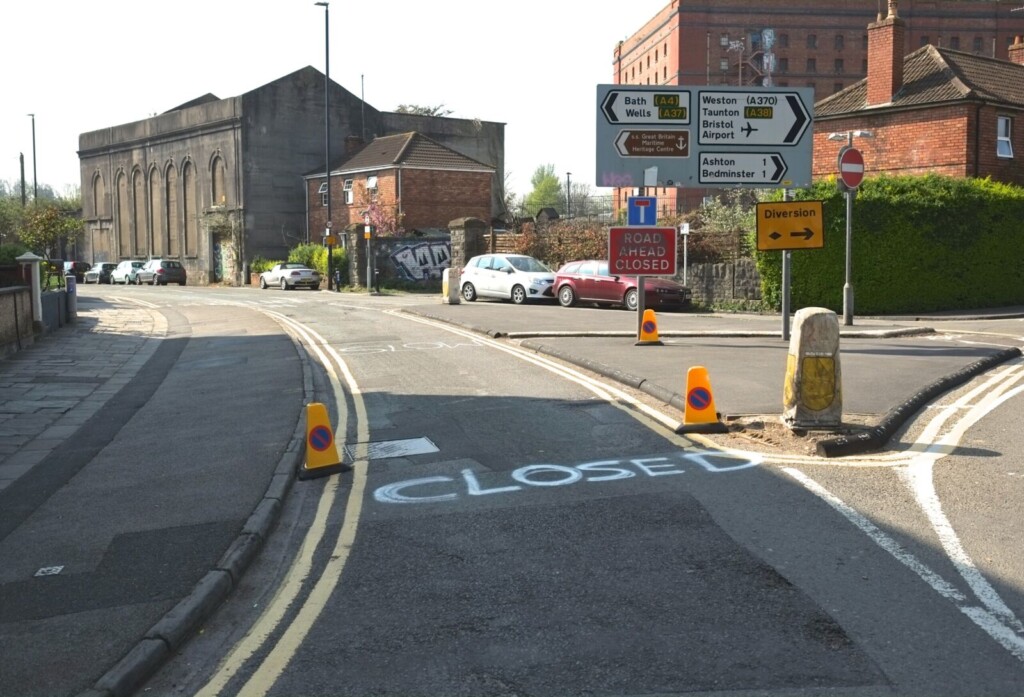
You have rehearsed the escape so many times in your mind that the rehearsal has become the destination. The map exists only in your head, drawn and redrawn over years of sleepless nights, and at some point you stopped noticing that the map had replaced the territory entirely, that the dreaming of departure had quietly become a substitute for departure itself.
AbdouMaliq Simone, writing on African urban peripheries in works like “For the City Yet to Come,” published in 2004, described something that most urban theory had systematically ignored: the way people in structurally abandoned spaces do not simply wait for resources to arrive but develop entire economies of anticipation, elaborate social architectures built around possibilities that the structure itself has foreclosed. What looked from the outside like passivity or stagnation was in fact a sophisticated adaptation to a condition in which desire itself had been quietly rerouted. The people Simone studied were not failing to want the right things. They were wanting precisely what the environment had made it possible to want without the catastrophic expense of wanting what was genuinely out of reach.
This is not a metaphor for resignation. It is a description of a psychological mechanism so efficient and so invisible that the person inside it cannot see its edges. Frantz Fanon, decades earlier in “The Wretched of the Earth,” argued that colonial structures do not merely suppress the colonized subject’s ambitions from the outside but infiltrate the interior of desire itself, producing subjects who police their own aspirations before any external authority needs to intervene. The violence of the periphery, Fanon understood, is not only what it takes away but what it teaches you not to ask for. By the time the lesson is complete, the prohibition has become invisible because it has become indistinguishable from preference.
What the neuroscience of reward systems adds to this is both confirming and disturbing. Dopaminergic pathways, those circuits governing anticipation and motivation, calibrate themselves over time to the realistic probability of reward. In environments where certain outcomes are structurally improbable, the brain stops generating the motivational charge toward them. This is not laziness or defeatism as a character trait. It is the nervous system doing exactly what it evolved to do: conserving metabolic energy by ceasing to pursue what experience has coded as unattainable. The tragedy is that this adaptation, entirely rational at the neurological level, is then read socially as evidence of the very inadequacy that produced the conditions in the first place.
Whole communities in post-industrial peripheral regions across the American Midwest, the French banlieues, the post-Soviet hinterlands of Eastern Europe, have been studied through the lens of what researchers call “aspiration gaps,” the measurable distance between what young people in those zones express as desired futures and what young people in resource-dense urban centers express. The gap is real. What the data rarely captures is that the gap is not a symptom of impoverished imagination but of imagination that has been educated by structural reality over generations. Children do not merely inherit poverty or unemployment. They inherit a calibrated sense of what is theirs to want.
The cruelest dimension of this is that the moment a peripheral subject does articulate a desire that exceeds what the structure has silently assigned them, the social environment closest to them often responds not with support but with a particular kind of anxiety that presents itself as concern. The person who reaches beyond the assigned perimeter of aspiration is not simply an individual making a choice. They are, by that act, exposing the adaptation of everyone around them for what it is, a coping mechanism mistaken for identity, a wound that learned to call itself a preference, a horizon that contracted so gradually that no one remembers when it stopped being the sky.
🌑 When Solitude Becomes a Labyrinth of the Mind
Social isolation in peripheral contexts is not merely a physical condition — it is a psychological architecture that reshapes identity, memory, and perception of the self. These articles explore the invisible walls that form when human beings are cut off from community, belonging, and recognition.
Loneliness in Contemporary Society
Loneliness in contemporary society has become one of the defining pathologies of our time, reaching beyond solitude into a structural disconnection from meaning and others. This article examines how modern configurations of work, urbanization, and digital interaction paradoxically deepen isolation rather than dissolve it. Understanding loneliness as a systemic condition is essential to grasping the psychological damage inflicted on those living at society’s margins.
GO TO THE SELECTION: Loneliness in Contemporary Society
The Pandemic and the Elderly: Isolation and Loneliness
The pandemic exposed with brutal clarity what peripheral and elderly populations had long endured in silence: forced separation from the social fabric that sustains psychological health. This article analyzes how institutional isolation amplified pre-existing vulnerabilities, producing grief, disorientation, and cognitive decline in those already living on the edges of community life. The experience of pandemic isolation offers a stark mirror for understanding what prolonged peripheral exclusion does to the human psyche.
GO TO THE SELECTION: The Pandemic and the Elderly: Isolation and Loneliness
Georg Simmel and the Metropolis: The Metropolis and Mental Life
Georg Simmel‘s foundational essay on the metropolis revealed how urban density paradoxically generates emotional withdrawal and psychological armor as survival strategies. His analysis of the blasé attitude — the numbness cultivated to cope with overstimulation — maps directly onto the alienation experienced in peripheral contexts, where under-stimulation and invisibility produce an equally devastating psychic numbness. Simmel understood that the city’s edges are as psychologically treacherous as its overwhelming center.
GO TO THE SELECTION: Georg Simmel and the Metropolis: The Metropolis and Mental Life
Existential Emptiness: When Life Loses Meaning
Existential emptiness arises precisely when a person’s environment fails to provide the relational and symbolic nourishment necessary for a coherent sense of self. This article traces the philosophical and psychological dimensions of a life that has lost its anchor in meaning, a condition acutely familiar to those inhabiting peripheral social contexts where recognition and participation are systematically denied. The void is not merely personal — it is a symptom written by geography, class, and exclusion.
GO TO THE SELECTION: Existential Emptiness: When Life Loses Meaning
Discover Cinema That Dares to Look Into the Dark
On Indiecinema you will find independent films that confront isolation, marginality, and the invisible wounds of peripheral lives — stories that mainstream cinema rarely has the courage to tell. Explore our streaming catalog and let independent cinema illuminate the psychological landscapes that statistics leave in silence.
👉 EXPLORE THE CATALOG: Watch Indie Films in Streaming
A vision curated by a filmmaker, not an algorithm
In this video I explain our vision

