
The Stranger Who Speaks Your Language
There is a specific unease that arrives when someone speaks your language without flaw — the rhythm correct, the idioms precise, the hesitations landing in exactly the right places — and yet something in you resists, pulls back, recognizes an elsewhere you cannot locate or name. It is not accent. It is not vocabulary. It is something prior to both, something closer to the grain of a voice that has learned the river without having been born near it. You listen, and you hear fluency, and beneath the fluency you hear distance, and the distance unsettles you more than a foreign tongue ever could, because a foreign tongue announces its difference openly and asks nothing of you. This voice asks everything. It asks you to treat it as your own.

Tzvetan Todorov arrived in Paris in 1963 at the age of twenty-three carrying a one-way exit permit issued by the Bulgarian communist authorities — a document that was less a permission than an expulsion, a bureaucratic way of saying that a door would close behind him and the closing would be permanent. He had studied philology in Sofia, had read voraciously in a country where certain readings were themselves acts of quiet sedition, and he came with the particular intellectual hunger of someone who had been formed by a tradition that the West had barely registered. He was not a refugee in the dramatic sense. He was something more disorienting: a voluntary exile who had left voluntarily because staying had ceased to be a real option, and who would spend the following decades building one of the most significant bodies of humanist thought in the twentieth century in a language that was never his mother tongue.
Roland Barthes helped him almost immediately. The French structuralist recognized something in the young Bulgarian that the Parisian intellectual world had not yet learned to see in itself — a methodological rigor combined with a sensitivity to the human weight of literary forms. By the late 1960s Todorov had already produced foundational work in narratology, coining the term itself and transforming the study of how stories are structured into a legitimate theoretical discipline. His 1969 Grammaire du Décaméron treated narrative not as decoration but as grammar, as deep structure, as something that revealed the cognitive architecture of culture itself. He was twenty-nine years old. He was writing in his second language. He was explaining French literature to the French.
This is not incidental. The outsider who masters the canon of a culture he was not born into does not simply join that culture. He sees it differently, which means he sees it more completely, which means he sees it in ways that disturb the natives who have been too close to see it at all. Georg Simmel wrote in 1908 about the figure of the stranger as someone who brings qualities into the group that cannot originate from the group itself — the stranger is near and far simultaneously, and this double position produces a form of objectivity that familiarity systematically destroys. Todorov was living Simmel’s category while simultaneously transcending it, because he was not simply an observer from outside. He was building the inside from within, brick by borrowed brick.
And yet Bulgaria never left him. It could not. The Bulgarian intellectual tradition, the Orthodox cultural memory, the specific weight of living under a system that treated thought as a threat — these were not baggage he had set down at the Paris border. They were the lens through which he saw everything that followed. His foreignness was not a wound to be healed. It was the instrument of his precision. The biographical fracture between two worlds was not something he overcame. It was something he converted, slowly and deliberately, into the very structure of his thinking.
Venetian Arcanum
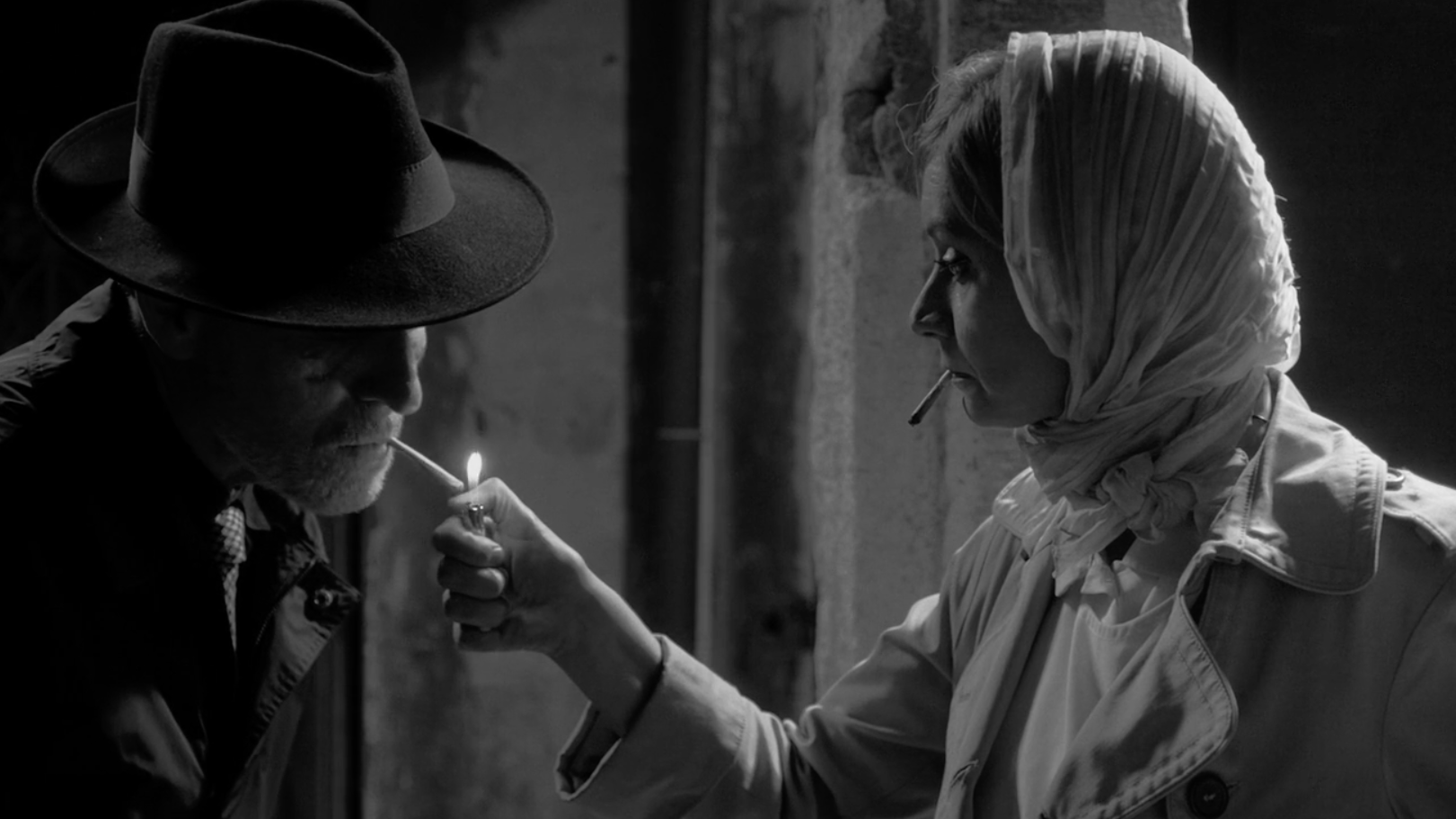
Thriller, by Serge Turgeon, Italy, 2025.
In Venice, a mysterious presence appears once every century or two, haunting the canals and hidden corners of the city. Driven by a sense of destiny, a woman decides to search for it. Following its elusive traces, she is drawn deeper and deeper into the city’s arcane secrets. Reality and myth begin to blur, and Venice itself transforms into a labyrinth of dangers.
LANGUAGE: Italian
SUBTITLES: English
Sofia, Paris, and the Grammar of Exile
You grow up inside a language that the state has already decided to own. Every sentence you learn to construct carries within it the residue of a political decision made before you were born — the decision about what can be said, what must be praised, what dissolves into silence. Todorov came of age in Sofia in the 1940s and 1950s under Todor Zhivkov’s Bulgaria, a regime that had absorbed the Soviet model with particular thoroughness, transforming even the study of literature into a branch of ideological administration. The university was not a place of inquiry. It was a place of confirmation.
What Todorov found there, almost by instinct, was a way of thinking about language that could outflank the ideological machinery precisely because it appeared to have nothing to do with ideology. Structural linguistics, the formal analysis of narrative, the grammar beneath the story — these were tools that seemed to operate at a level too abstract to threaten anyone. And yet they were profoundly subversive, because they implied that meaning was not given from above but constructed from within systems, that no authority had special access to truth, only to the mechanisms by which truth effects were produced. To study narrative structure in 1950s Bulgaria was to learn, quietly and without announcement, that the grand story the Party was telling about history could itself be analyzed as a structure, could be broken into functions and sequences and reversals, could be seen for what it was: not reality, but a particular grammar of reality imposed on everyone.
He left in 1963. The precision of that date matters. He was twenty-four years old, carrying a thesis and a permission that might not have been repeated. The Iron Curtain was not uniformly sealed — there were moments, pressures, exceptions — but departure was never neutral. It was, structurally, a kind of death for the self that had existed before. Hannah Arendt, writing in 1951 in The Origins of Totalitarianism, described statelessness not as a legal inconvenience but as an ontological condition, an erasure of the very framework within which a person is recognized as a person. She had lived it herself, stripped of German citizenship in 1937, stateless for eighteen years. Her argument was precise and devastating: the loss of a polity is not the loss of rights in the abstract, it is the loss of the right to have rights, the evaporation of the social world that makes one legible to others as a human being.
Todorov arrived in Paris and entered a world that received him as an intellectual curiosity, a carrier of foreign theoretical goods, someone whose accent would always mark the distance between origin and destination. He joined Roland Barthes‘s seminar, began publishing in Tel Quel and Communications, translated Russian Formalist texts that French structuralism urgently needed but could not read in the original. He became, in a sense, a bridge — but bridges do not belong to either shore. The biographical fact of permanent displacement, which he would explore theoretically decades later in The Morals of History and in On Human Diversity, was already being lived in his daily navigation of a city that was brilliant and welcoming and fundamentally not his.
There is a man who has been away long enough that the city of his childhood has become a foreign country, and when he returns he cannot find the grammar he grew up speaking. Not the words — the grammar underneath the words, the unspoken logic of how people relate to each other, what is assumed, what costs nothing to say. He cannot find it because it changed while he was absent, and also because he changed. Exile, Arendt understood, is not a romantic condition of the free spirit. It is a structural amputation, and the phantom limb aches in ways that no amount of Parisian intellectual success can fully address or name.

The Structuralist Seduction and Its Limits
There is a particular kind of grief that expresses itself through order. You have seen it, perhaps lived it: a man alone in a room, methodically arranging objects on a shelf, labeling boxes, constructing an elaborate taxonomy of things that no longer mean what they once did. The activity looks productive. From the outside it resembles recovery. But what is actually happening is that meaning has collapsed, and the mind, unable to bear that void, has substituted structure for significance. The system grows more intricate, more internally consistent, more impressive to any observer — and the original question, the one that cannot be categorized, recedes further into silence with each newly labeled drawer.
This is more or less what happened to literary theory in Paris during the 1960s, and Tzvetan Todorov was both its gifted practitioner and, eventually, one of its most honest critics.
When he arrived from Sofia with his Bulgarian education and his outsider’s hunger, the French intellectual scene was in the grip of something that felt like revelation. Roland Barthes was dismantling the mythology of authorial intention. Gérard Genette was constructing the cathedral of narrative grammar, its vaults and arches composed of terms like analepsis, prolepsis, focalization — a language so precise it seemed to finally capture what literature actually did beneath its surface. The journal Tel Quel, under Philippe Sollers, was treating the literary text as a machine for generating meaning, not a human cry for connection. Structuralism promised what science had promised the previous century: a method universal enough to explain everything, rigorous enough to silence doubt.
Todorov threw himself into this project with genuine brilliance. His Introduction to Poetics, published in 1968, the same year barricades were burning three kilometers from the Sorbonne, proposed a systematic science of literature grounded in the identification of universal structural properties. His analysis of the fantastic genre, elaborated two years later, remains arguably the most elegant taxonomy ever produced for that slippery category of narrative — the hesitation between natural and supernatural explanation, the precise calibration of readerly uncertainty. These were not trivial achievements. They established him as one of the most rigorous minds of his generation, someone who could make the machinery of narrative visible without destroying the pleasure of the text.
But rigor, as Wittgenstein understood when he reached the limits of his own Tractatus, eventually encounters something it cannot absorb. The ladder, once climbed, must be thrown away. What Todorov began to notice — and what took real intellectual courage to say aloud in that environment — was that the structuralist enterprise, in gaining everything as a system, was losing everything as an encounter. The text, submitted to this kind of analysis, yielded its architecture but surrendered its address. It stopped speaking to anyone in particular.
Tzvetan Todorov was thirty years old in 1969. He had already produced work that would anchor university syllabi for the next half century. And he was beginning to understand that a theory capable of describing every narrative in human history might be constitutively unable to explain why any single story had ever mattered to any single human being. This is not a small gap. This is the entire question.
What structuralism could not accommodate was what Emmanuel Levinas had been insisting upon since the 1960s in works like Totality and Infinity: that the other person is not a structure to be decoded but a face that makes a demand. Literature, Todorov was slowly realizing, participates in this demand. It is not a system of signs floating in formal relationships. It is a human being reaching across time and calling out.
The man cataloguing objects in his grief does not stop grieving by perfecting his categories. At some point he has to turn away from the shelf and face the empty room.
Columbus and the Mirror

Imagine standing at the edge of something you have never seen before and being absolutely certain you understand it. Not guessing, not hypothesizing — certain. A man watches a figure emerge from the tree line, skin painted, moving with a kind of deliberate calm that seems to belong to a different order of time, and his first instinct is not wonder. It is classification. He reaches, immediately, for the nearest available category, and in doing so he performs an act so swift and so violent that it leaves no visible wound. He has seen the other person. He has also made them disappear.
This is the architecture Todorov dissects in his 1982 work The Conquest of America: The Question of the Other, arguably the most important book he ever wrote and certainly the one that permanently altered how scholars think about encounter, representation, and the politics of perception. Todorov was not primarily interested in Columbus as a historical villain. That would have been too easy, too comfortable, too flattering to those of us reading from the present. He was interested in Columbus as a cognitive type — a structure of consciousness that proved so successful it became invisible, absorbed into the default settings of how the West processes difference.
What Todorov found in the journals and letters of Columbus was a peculiar double movement. Columbus observed the indigenous peoples of the Caribbean with remarkable attentiveness. He noticed their bodies, their gestures, their apparent generosity, their apparent gentleness. He filled pages with description. And yet, in the same breath, he concluded that they had no religion, no law, no real language — because they had none that resembled what he already knew. The attention was genuine. The erasure was equally genuine. Both happened simultaneously, and that simultaneity is the trap Todorov wants you to recognize in yourself.
He builds his argument around what he calls two fundamental axes of the relationship to the other: the first is the value judgment, whether the other is good or bad, equal or inferior. The second is the question of distance, whether one approaches the other or moves away. What makes Columbus so instructive is that he oscillates along both axes without ever actually arriving at the other as a subject. He romanticizes them into a kind of innocent nakedness — the famous noble savage — or he dehumanizes them into raw material for conversion and labor. In neither case does the indigenous person become a person in the full sense. They become a surface on which Columbus projects his own needs, fears, and theological expectations.
The philosopher Emmanuel Levinas spent much of his career articulating what it means to truly face another human being, to encounter the face of the Other as an ethical demand that cannot be reduced or instrumentalized. What Todorov shows, with meticulous historical patience, is that Columbus enacted the precise opposite of the Levinasian encounter. He looked directly at the face and saw a mirror. The reflection told him what he already believed about the world, about civilization, about God’s design. The face disappeared into the reflection.
And here is where the comfort of historical distance collapses. Because the mechanism Todorov identifies in Columbus — the simultaneous attention and erasure, the warmth that coexists with fundamental non-recognition — is not a sixteenth-century aberration. It is the standard operating procedure of liberal multiculturalism, of development discourse, of humanitarian intervention, of the well-meaning traveler who photographs poverty with a sympathetic eye and returns home unchanged. The Other is celebrated, studied, protected, documented, and throughout all of it, quietly refused the status of genuine alterity. Refused the right to be truly, uncomfortably, irreducibly different.
Todorov published this book the same year Edward Said was deepening his critique of Orientalism, and the convergence was not coincidental. Both men were circling the same wound from different directions.
The Banality of Good and the Difficulty of Evil
There is a moment in which a man hands another man a piece of bread. Not dramatically, not as an act of resistance or ideology. He simply places it on the edge of the bunk and walks away. The gesture takes three seconds. And yet everything around it — the entire architecture of a system built to make such a gesture impossible — trembles slightly, as if a beam has shifted in a wall that was supposed to be solid.
Tzvetan Todorov spent years reading testimonies from Nazi concentration camps and Soviet gulags before writing Facing the Extreme in 1991, published in French and translated into English by 1996. He was not looking for heroes. He was not constructing a typology of saints. He was trying to understand something far more disturbing: why, inside systems explicitly engineered to reduce the human being to a functional unit of suffering, some people continued to perform ordinary acts of decency. Not at great cost, not always consciously. Just — decency. The word feels almost embarrassing in that context, which is precisely his point.
Hannah Arendt, reporting on the Eichmann trial in Jerusalem in 1961, coined the phrase that would define a generation’s understanding of totalitarian violence: the banality of evil. The bureaucrat who signs the deportation orders is not a monster. He is disturbingly ordinary. He does not think. He executes. Arendt located the horror of the twentieth century’s worst crimes not in exceptional depravity but in the suspension of moral judgment by average men. It was a devastating insight, and it remains one.
Todorov accepts it. And then he turns it over.
If evil can be banal — if participation in atrocity requires no special viciousness, only the willingness to stop asking questions — then goodness performed inside the same system is anything but banal. It is, structurally, the scandal. The guard who leaves the bread does not do so because the system permits it. He does so despite the system’s total claim on his behavior, his loyalty, his perception of the prisoner as a category rather than a person. His gesture is not heroic in any conventional sense. He will not be remembered. He risks relatively little. But the gesture proves, with the clarity of a logical proof, that the system’s demand — that its participants become incapable of perceiving the other as human — was never fulfilled. That the dehumanization was never complete. That somewhere, beneath the uniform and the ideology and the bureaucratic language, the faculty for recognition survived.
This is what makes it politically unbearable. The system cannot tolerate the bread on the bunk. Not because the bread feeds the prisoner in any meaningful way, but because the act testifies to a freedom the system claimed to have extinguished. As the sociologist Zygmunt Bauman argued in Modernity and the Holocaust in 1989, the genius of industrial killing was precisely its capacity to transform moral proximity into bureaucratic distance — to make the other so abstract, so processed through categories, that individual responsibility dissolved into procedure. The guard who places the bread refuses that dissolution. He reasserts proximity. He reasserts the person.
Todorov calls the virtues he identifies in these testimonies “ordinary virtues” — care, dignity, the life of the mind — and he is insistent that their ordinariness is not a diminishment but their entire force. These are not exceptional men and women. That is the point that destabilizes everything. If they were exceptional, the system’s failure to fully colonize them could be explained away. But they are not. They are people who simply did not, at a specific moment, stop seeing.
And that is the thing the system could never account for, could never predict, could never prevent entirely. The unpredictability of the gaze that still recognizes. The bread placed without ceremony, in three seconds, on the edge of a bunk that the official record would insist contained only a number.
A vision curated by a filmmaker, not an algorithm
In this video I explain our vision
The Fragile Garden: Memory, History, and What Gets Buried
There is a name at every family table that no one says. You have been there. The plates are passed, the wine poured, the conversation distributed across safe channels — weather, work, the neighbor’s renovation — and that name sits in the center of the meal like an object everyone can see and no one will touch. The silence around it is not absence. It is a form of speech, a grammar of exclusion refined over years into perfect fluency. Everyone at the table has become expert in its conjugations.
Todorov understood this mechanism at the scale of nations. In The Abuses of Memory, published in 1995, he drew a distinction that sounds simple but cuts with surgical precision: the difference between memory recovered and memory made literal. Literal memory, he argued, is memory that refuses to become anything other than itself — that circles the wound, that insists the wound is the only real thing, that makes the past not a source of understanding but a total occupation of the present. Exemplary memory, by contrast, does not diminish the past. It uses it. It allows the singular injury to open onto a general principle, to become a lens through which comparable injustices become visible rather than a wall behind which everything else is blocked.
The family that never speaks the name has not moved into exemplary memory. It has constructed something more insidious: institutionalized forgetting disguised as decorum, as moving forward, as not dwelling. And Todorov would recognize immediately that this is not the opposite of the literalism he criticized. It is its twin. Both refuse the past its proper function. Both prevent the event from becoming something that can be thought about, learned from, transmitted honestly. The silence is not neutral. It is a decision, made collectively and renewed at every gathering, that certain truths are too dangerous to allow into circulation.
By 2003, in Hope and Memory, Todorov extended this analysis into the largest catastrophes of the twentieth century — the Gulag, the Holocaust, the totalitarian projects that consumed Europe — and asked what it meant to be a witness, what obligations the survivor carried, what a society owed to its own history. He was not interested in commemoration as spectacle. He was suspicious of memory that had been converted into identity fuel, into the energy source of a particular group’s sense of itself as perpetually victimized or perpetually heroic. Memory put to that use, he insisted, does not honor the past. It consumes it. It burns the specific, irreducible suffering of actual people in order to generate political heat in the present.
This is the trap that looks like respect. A nation builds a monument, declares an official day, prints the images in textbooks — and in doing so, transforms living memory into managed narrative. Paul Connerton, writing in How Societies Remember in 1989, traced the mechanics of this process: how commemorative ceremonies function not to keep memory alive but to stabilize it, to fix its meaning, to prevent it from asking inconvenient questions. The monument does not remember. It forecloses.
There is a scene that stays with you, of a man sitting alone after everyone else has left the table, looking at a photograph he has carried for decades, not showing it to anyone, not hiding it either — simply holding it, as if the act of holding were itself the testimony, the only one left available to him. No institution has asked for his witness. No ceremony has made room for what he knows. He is the gap between official memory and actual memory, and he is closing.
Todorov wanted ethical memory: memory that remains answerable to the person who suffered, not to the community that claims the suffering as its founding story. The difference between the two is the difference between a garden tended and a garden paved over with a plaque that reads, in large letters, We Remember.
The Liberal Illusion and the Civilizing Trap
You arrive with medicine, and you leave with a map. That is the hidden grammar of humanitarian intervention, the sentence that never appears in the mission statement but that structures every action taken on the ground. A worker distributing food aid in a collapsed region begins, months in, to notice something: the distribution points are not placed where the need is greatest. They are placed where the infrastructure already exists, where the roads connect to the ports, where the logistics serve the supply chain that begins thousands of miles away. The people who need help most are the ones who have to walk the furthest to receive it. He files a report. The report is acknowledged. Nothing changes, because nothing was ever meant to change in the way he imagined.
This is the mechanism Tzvetan Todorov dissected with surgical precision in his 2008 work, and it is perhaps the most uncomfortable thing he ever wrote, uncomfortable precisely because it refuses to offer the consolation of a villain. The Fear of Barbarians does not accuse the West of malice. It accuses it of something far more difficult to renounce: the sincere, deeply held conviction that its values are not merely its own values but universal ones, temporarily unrecognized by those who have not yet arrived at the correct historical moment. This is the civilizing trap. It does not require bad faith to operate. It requires only the absolute certainty that you are right.
Frantz Fanon had named this mechanism half a century earlier with a precision that still burns. In The Wretched of the Earth, published in 1961, Fanon described how colonialism did not simply extract resources; it restructured the colonized subject from the inside, replacing one framework of meaning with another while insisting the replacement was liberation. The colonized person was not invited to become equal; they were invited to become a European. The difference between those two offers is the difference between recognition and erasure. Todorov, writing decades later from within European liberal thought rather than against it, arrived at the same structure through a different door: the door marked democracy promotion, humanitarian intervention, cultural universalism.
The data that accumulated around Western intervention in the two decades preceding Todorov’s book was not ambiguous. The reconstruction projects in Iraq and Afghanistan, running into hundreds of billions of dollars, produced institutions designed for Western administrative legibility rather than for the actual social fabrics they were dropped into. The aid economy in sub-Saharan Africa, as economists like Dambisa Moyo documented systematically around the same period, had in many cases deepened dependency rather than dissolved it, because the structural logic of the aid relationship required the continuation of the conditions it claimed to address. None of this happened because the people designing these interventions were cynical. Most of them were not. They were operating from within a worldview that genuinely could not perceive the difference between their values and value itself.
Todorov’s argument was not that Western values are wrong. It was that the insistence on their universality is itself an act of violence, because it forecloses the question before it is asked. When you enter a room already knowing you carry the answer, you are not listening to the question. The humanitarian worker who finally understands this does not become cynical. He becomes something more unsettling: a person who can no longer pretend that the help he is offering and the harm he is participating in are two separate operations. They are the same operation. The medicine and the map arrive together. They were always packed in the same crate.
What Todorov demanded was not the abandonment of values but the abandonment of certainty about their ownership, a distinction that sounds philosophical until you realize it determines whether a person across a table from you is a recipient or an interlocutor.
A Man Between Languages, Looking for the Human
He died in Paris in February 2017, in the city that had adopted him and that he had never quite become. There is a difference between belonging to a place and being received by it, and Todorov lived that difference for more than half a century without ever fully resolving it — not because he failed to integrate, but because he understood, at some deep structural level, that resolution would have cost him the very instrument he used to think.
Born in Sofia in 1939, he arrived in France in 1963 with a suitcase and a dissertation on French literature that the Bulgarian academic establishment had no category for. He learned to write in French with the kind of precision that only foreigners achieve, because foreigners cannot afford ambiguity — they have no inherited store of idiomatic credit to draw on when meaning gets loose. Every sentence had to be built deliberately, chosen rather than inherited. And this is not a minor stylistic detail. It is the epistemological condition of his entire intellectual life.
There is a scene that stays with you long after you have stopped thinking about where you encountered it. A woman sits at a table with two sets of papers, one in a language that carries the smell of a particular country, its particular silences and its particular violence, and another in a language that has different silences and different violence. She is translating, professionally, carefully, and she arrives at a word — not a complicated word, not a philosophical term, just a word for a feeling that exists in the first language with a specific weight — and she stops. She looks at both pages. She tries three equivalents in the second language and crosses each one out. What she is crossing out is not the word. She is crossing out the experience the word contains. She writes something approximate and moves on, because translation cannot wait for the untranslatable to become translatable. But she knows, and you know watching her, that something has been left behind at that desk, something that will never cross.
Todorov spent his intellectual life at that desk. The permanent in-between-ness he inhabited was not a wound he was trying to heal. It was, as the sociologist Norbert Elias argued about his own experience of displacement in The Established and the Outsiders, a structural position that generates a specific form of perception — the outsider sees the seams in things that insiders have stopped noticing because familiarity has made them invisible. Todorov saw the seams in structuralism from inside French intellectual culture, saw the seams in European humanism from the position of someone who had grown up under a system that called itself scientific while destroying people, saw the seams in the very idea of a unified Western subject from a body that contained two languages, two landscapes, two sets of historical memory that did not translate neatly into each other.
This is why his work on the Bulgarian Jews, his examination of evil in the camps, his defense of humanism, his engagement with the literature of the Americas all feel connected not thematically but methodologically — they all proceed from the same posture, the posture of someone who has learned to stand precisely in the gap between certainties and look from there. Not synthesis. Estrangement as method. The Bulgarian and the French never merged in him. They remained two registers that generated meaning by their friction, by what they refused to yield to each other.
What Todorov left behind is not a system. Systems are what you build when you believe you have finally arrived somewhere. He left behind a practice — the practice of reading human experience with the patience of a translator who respects what refuses to cross, and the honesty to say so, because in that remainder, in that stubborn untranslatable residue, is where the human being, irreducible and particular, has always lived.
🧩 Voices That Shaped the Modern Mind
Tzvetan Todorov’s thought cannot be fully understood in isolation — it emerges from a rich constellation of thinkers who interrogated history, memory, evil, and the human condition. These related articles trace the intellectual landscape that surrounds and illuminates his life and work.
Hannah Arendt: the Philosopher Who Unmasked the Banality of Evil
Hannah Arendt, like Todorov, confronted the darkest episodes of twentieth-century history with philosophical rigor and moral courage. Her analysis of totalitarianism and the ‘banality of evil‘ resonates deeply with Todorov’s own reflections on the lessons of extreme historical experiences. Both thinkers refused to reduce human suffering to abstraction, insisting on the irreducible dignity of individual lives.
GO TO THE SELECTION: Hannah Arendt: the Philosopher Who Unmasked the Banality of Evil
Paul Ricœur: Life and Philosophy of Memory
Paul Ricœur‘s philosophy of memory, narrative, and identity offers one of the closest intellectual parallels to Todorov’s concerns about how societies remember and narrate their past. Ricœur’s conviction that memory is a moral and political act finds a direct echo in Todorov’s writings on the uses and abuses of historical memory. Together, they form a powerful dialogue on how remembering shapes who we are and who we choose to become.
GO TO THE SELECTION: Paul Ricœur: Life and Philosophy of Memory
Banal Evil and Radical Evil: Kant and Arendt
The distinction between banal evil and radical evil, as theorized by Kant and elaborated by Arendt, is central to understanding the ethical framework Todorov developed in his studies of concentration camps and totalitarian regimes. Todorov was deeply interested in how ordinary individuals could perpetrate or resist extraordinary moral failures. This article provides the philosophical groundwork for that investigation.
GO TO THE SELECTION: Banal Evil and Radical Evil: Kant and Arendt
Jan Assmann and Cultural Memory
Jan Assmann‘s theory of cultural memory examines how civilizations construct and transmit collective identity across time — a question that occupied Todorov throughout his intellectual career. His work on the tension between remembering and forgetting in cultural life complements Todorov’s literary and historical analyses of how memory functions as both witness and warning. Reading Assmann alongside Todorov enriches our understanding of what it means to inherit a traumatic past.
GO TO THE SELECTION: Jan Assmann and Cultural Memory
Discover the Cinema That Asks the Same Questions
If these ideas stir something in you, Indiecinema is where the conversation continues — through films that dare to ask the same profound questions about memory, identity, and the human condition. Explore our streaming catalog and find independent cinema that thinks as boldly as the thinkers you love.
👉 EXPLORE THE CATALOG: Watch Indie Films in Streaming
A vision curated by a filmmaker, not an algorithm
In this video I explain our vision

