
The Man in the Showroom
You walk into the showroom already defeated. You tell yourself you came to look, maybe compare, possibly leave without signing anything, but the chrome catches the fluorescent light at exactly the angle someone calculated it would, and the salesman who approaches you has been trained to pause three seconds before speaking — long enough to let you feel the silence as pressure, short enough that you cannot name it as a tactic. The car you end up buying is not the one you needed. It is the one you were guided toward by a sequence of sensory and psychological cues assembled with the precision of a stage set, and by the time you drive off the lot you have already begun constructing the story of how you chose it freely.

Vance Packard understood this moment before most Americans were willing to admit it existed. Born in 1914 in Granville Summit, Pennsylvania, the son of a farmer, he grew up at a sufficient distance from commercial culture to be able to look at it with a clarity that people raised inside it rarely develop. He studied journalism at Pennsylvania State College and later at Columbia, and he spent the better part of the 1940s writing for popular magazines — American Magazine, Collier’s — in the earnest, accessible register of mid-century American reportage. He was not, by training or temperament, a theorist. He was an observer, and what he observed in postwar America was a society undergoing a transformation so rapid and so total that it had not yet found the language to describe what was being done to it.
What was being done to it was this: the techniques of psychological manipulation developed during wartime — propaganda, behavioral conditioning, motivational research borrowed from Freudian clinical practice — were being quietly transferred into the commercial sphere. By the early 1950s, firms like Ernest Dichter’s Institute for Motivational Research were charging American corporations significant fees to conduct depth interviews, word-association tests, and focus studies designed not to understand what consumers wanted but to locate the unconscious anxieties and desires that could be exploited to make them want specific things. Dichter, an Austrian émigré trained in Vienna, had argued as early as 1939 that the key to selling a product was to discover the emotional symbolism it carried for the buyer — that a man buying a convertible was purchasing a fantasy of freedom from domestic obligation, that a woman buying a cake mix was reenacting a fertility ritual. These were not metaphors offered lightly. They were operational instructions delivered to marketing departments.
Packard spent years accumulating this material, interviewing practitioners, reading the trade literature that the industry produced for itself and never intended for general audiences. The result, published in 1957, was The Hidden Persuaders, a book that sold over a million copies in its first year and introduced the phrase “motivational research” to the American vernacular. It was not an academic text. It was a work of popular journalism written with the controlled alarm of someone who had discovered that the house had been quietly rewired while everyone was asleep. The book’s central revelation was not that advertising existed — Americans had always known that — but that a new generation of advertising operated below the threshold of conscious awareness, targeting the id rather than the judgment, and that the industry was openly proud of this.
What made Packard dangerous to the forces he was describing was precisely his accessibility. He did not write for sociologists. He wrote for the man who had just bought the car he did not need, in the voice of someone sitting across the kitchen table from him, and he was willing to say plainly that the choice had not been entirely his. That plainness was a kind of violence against the foundational American myth of the sovereign consumer — the free individual standing in the marketplace, rational, uncoerced, sovereign over his own desire.
Crazy World

Drama, thriller, by Fabio Del Greco, Italy, 2010.
Luca is poor and works, precariously, as a waiter. He lives a problematic relationship with his girlfriend, and his life is full of doubts. One day Luca meets Chiara, a friend who had studied philosophy with him at university. She has realized her dream of opening a night and is now well-off. Luca leaves everything behind and starts a relationship with Chiara. He manages the nightclub with her and, thanks to the cocaine and call girls sold to politicians, he gets out of his hard economic situation. But Chiara does not manage to obtain the contract for an old furnace, so she blackmails Saverio, a member of the Parliament. Chiara owns a video in which Saverio has sexual intercourse with a transsexual.
LANGUAGE: Italian
SUBTITLES: English, French, Spanish, German, Dutch, Portuguese.
A Pennsylvania Boyhood and the Grammar of Ambition
He is twelve years old, and he already knows the difference between the families who eat meat every night and the ones who don’t, though no one in Granville Summit, Pennsylvania, has ever said this out loud. The knowledge lives in the way certain boys hold their shoulders at the school door, in the particular silence that falls when someone’s father is mentioned and then quickly unmentioned. Rural American poverty in the early 1920s was not the dramatic, photogenic destitution of the cities — it was a quieter grammar, a system of minute social distances that everyone navigated without acknowledging the map existed.
Vance Packard was born in 1914 into a farming community perched in the Bradford County hills of north-central Pennsylvania, a landscape of thin soil and abbreviated ambitions where the distance between respectability and hardship was measured in seasons, not decades. His parents were not destitute, but they inhabited that precarious stratum that American mythology most persistently misrepresents: not poor enough to inspire solidarity, not comfortable enough to stop calculating. It is precisely this position — slightly above the floor, able to see the ceiling — that produces the sociological imagination in its rawest form. You don’t need to read Thorstein Veblen‘s 1899 Theory of the Leisure Class to understand conspicuous consumption when you’ve spent a childhood watching neighbors acquire things they cannot afford in order to be seen acquiring them.
What the rural environment gave Packard was not deprivation but distance — a structural outsiderness from the codes of status that urban children absorbed so early they could no longer see them as codes at all. The boy who grows up at the margin of a social system sees its machinery rather than its surface. He sees that the handshake is a performance, that the church pew is a position statement, that the word “community” often means “hierarchy with a friendly face.” This is the education that no curriculum provides and no university can replicate, and it was the only education Packard received before he earned the scholarship that would change the architecture of his life.
Columbia University’s journalism school in the mid-1930s was one of the few genuine meritocratic passages available to a young man without money or family connections, and Packard arrived there carrying the entire weight of the bargain American society offers its promising poor: ascend, but do not look too carefully at the ladder while you are climbing it. Columbia trained him in the craft of observed fact, in the discipline of the concrete detail over the abstract assertion, in the professional suspicion of anything that could not be verified. What it could not train out of him was the habit of noticing that the ladder itself was a social construction, that the rungs were not equally spaced, and that the people handing out scholarships were also, quietly, handing out permission to forget where you came from.
The journalistic training and the rural formation fused into something the academy had no name for yet. Packard spent the years after Columbia working in the lower registers of magazine journalism — the American Magazine, the women’s service press, the kind of writing that reaches millions of people and earns none of the literary prestige that reaches dozens. This invisibility was not incidental. It put him inside the persuasion industry at the level of production, watching editors make decisions about what ordinary Americans were supposed to want, fear, and envy. The gap between what these publications claimed to give readers and what they were actually delivering — reassurance dressed as information, aspiration dressed as advice — was something he catalogued for two decades before he turned it into an argument.
By the time he sat down to write the book that would make him famous, he had been a student of American self-deception for thirty years without ever calling it that.

The Hidden Persuaders and the Depth Boys
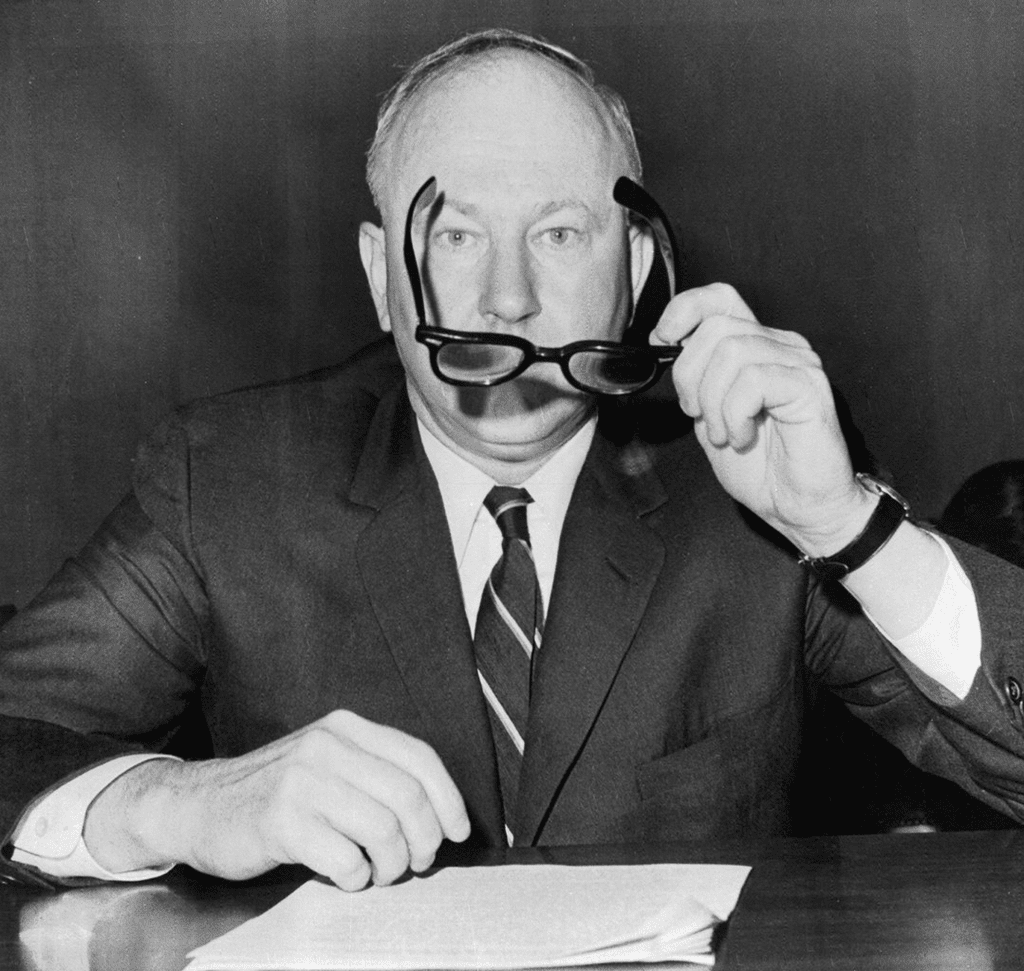
You are standing in a supermarket in 1956, reaching for a can of peas, and you believe — with the quiet certainty of a person who has never been given reason to doubt it — that you are making a choice. The weight of the can, the familiarity of the label, the faint memory of your mother’s kitchen: these feel like yours. They are not. They were designed, tested, and implanted with a precision you were never meant to notice.
When Vance Packard published The Hidden Persuaders in 1957, it sold over a million copies within a year, which tells you something not about the book’s quality but about the specific terror it produced. It named something people had dimly sensed and immediately wanted to disbelieve. The advertising industry had, since the late 1940s, quietly recruited a cadre of psychologists, psychiatrists, and social researchers — figures Packard called “the depth boys” — whose entire professional purpose was to locate the unconscious levers of desire and pull them on behalf of whoever was paying. This was not metaphor. It was a billable service.
Ernest Dichter was the most consequential of these figures, an Austrian-born psychoanalyst who emigrated to the United States in 1938 and spent the following decades translating Freudian architecture into commercial strategy. His Handbook of Consumer Motivations, published in 1964, catalogued the symbolic meanings of hundreds of products — the convertible as mistress, the house as maternal body, soap as ritual purification — with the calm authority of a man describing weather patterns. Dichter’s Institute for Motivational Research in Croton-on-Hudson charged corporations substantial fees to conduct depth interviews, projective tests, and focus sessions designed to surface what consumers actually wanted beneath what they said they wanted. The gap between those two things was where advertising learned to live.
What Packard exposed was not simply manipulation — manipulation is ancient and everyone knows it operates — but the specific colonization of the irrational by the rational interests of capital. Freud had argued in Civilization and Its Discontents, published in 1930, that civilization was built on the suppression of drives; Dichter’s achievement was to weaponize those same suppressed drives as purchase triggers. The unconscious was no longer a site of therapeutic excavation. It became a distribution channel.
The scandal was real but short-lived, which is itself the more disturbing fact. By the 1960s, motivational research had been absorbed so thoroughly into standard advertising practice that its psychoanalytic origins became merely archaeological. When contemporary brand consultants speak of “emotional resonance,” “identity alignment,” or “aspirational positioning,” they are speaking the same language Dichter spoke, with the genealogy scrubbed clean and the philosophical violence made comfortable through jargon. The radicalism did not die. It was promoted.
What makes Packard’s account still cut is that he took seriously the question of what rationality is actually worth in the marketplace. The Enlightenment premise — that informed individuals make choices in their genuine interest — was already under pressure from Thorstein Veblen‘s 1899 Theory of the Leisure Class, which demonstrated that consumption was always more about social positioning than utility. Packard pushed further: it was not even social positioning that drove the transaction. It was something older and less legible, something that lived beneath the reach of self-examination. The consumer did not choose. The consumer was chosen — selected, as a target is selected, by people with clipboards and clinical training sitting behind one-way glass.
The reason this still lands is not that the techniques have remained secret. They have been publicized, parodied, taught in undergraduate marketing courses, and confessed to by the industry itself in moments of cheerful transparency. The reason it lands is that knowing about the mechanism does not release you from it. Dichter understood this, and it was the foundation of his entire enterprise: awareness and immunity are not the same thing, and the distance between them is exactly as wide as the market needs it to be.
Status Anxiety Before the Term Existed
You are already performing. The car in the driveway, the zip code on the return address, the way you pause before answering what your father did for a living — none of this is accidental, and you have always known it, even when you swore class had nothing to do with who you were.
Packard published The Status Seekers in 1959 into a cultural atmosphere that was actively allergic to exactly what he was describing. The postwar American consensus rested on a single load-bearing myth: that the United States had dissolved the rigid class structures of the Old World and replaced them with a fluid meritocracy where effort and talent, not birth, determined position. To question this was not merely contrarian — it bordered on unpatriotic. And yet Packard questioned it with the patience and precision of a man who had spent years reading the sociological literature that official culture preferred to ignore.
W. Lloyd Warner had already done the foundational demolition work. His Yankee City studies, conducted across the 1940s and published in five volumes between 1941 and 1959, had documented with ethnographic rigor the existence of a six-tier class system operating invisibly inside a mid-sized New England town — a system governed not purely by income but by reputation, lineage, associational membership, and the thousand subtle signals by which people are placed and place others. Warner called these layers upper-upper, lower-upper, upper-middle, lower-middle, upper-lower, and lower-lower, language that felt clinical enough to be publishable but was in practice an anatomization of the wound American democracy preferred not to examine. Packard absorbed Warner’s framework and translated it from academic sociology into something that readers on commuter trains could not put down and could not entirely forgive him for.
What The Status Seekers argued, with a density of examples drawn from consumer behavior, residential patterns, corporate culture, and leisure habits, was that class aspiration had not disappeared from American life — it had simply gone underground and disguised itself as personal choice. The suburb was not merely a housing solution; it was a sorting mechanism. The brand of scotch on the kitchen shelf was not merely a preference; it was a credential. Packard documented how corporations in the 1950s had developed elaborate internal hierarchies expressed through the size of office windows, the quality of carpet, and whether an employee’s desk faced the door — distinctions invisible on an organizational chart but legible to every person who walked those corridors daily. The anxiety generated by these systems was not incidental. It was the system’s fuel.
There is something almost cruel in the timing. John Kennedy would announce his candidacy in January 1960, and the entire cultural apparatus of the early 1960s was preparing to celebrate a vision of American modernity in which the past’s constraints were dissolving, in which youth, intelligence, and dynamism would carry anyone forward. Into this preparation, Packard dropped a book arguing that the channels of mobility were narrowing, that the professional-managerial class had developed methods of closure as effective as any aristocratic entailment, and that the children of blue-collar workers faced structural obstacles their parents had been told did not exist. He cited studies showing that by the late 1950s, the correlation between father’s occupational status and son’s occupational outcome was strengthening, not weakening — a statistical refutation of the escalator mythology delivered without ceremony.
The book sold over a million copies in its first two years, which is itself a kind of evidence. Readers did not buy it because it told them something foreign. They bought it because it named something they had been living and had been forbidden to articulate — the exhausting, perpetual audit of position, the social mathematics running beneath every dinner party, every promotion, every neighbor’s new car. Packard had not invented status anxiety. He had simply refused to pretend it wasn’t there.
Waste as Ideology
You buy a washing machine in 1958 and it works. Then, sometime around 1963, it begins to fail — not because its motor has worn out, not because the drum has cracked, but because a small plastic component, one that could have been made from steel for pennies more, has been deliberately engineered to degrade. You don’t know this. You call a repairman, discover the part costs nearly as much as a new model, and walk into a showroom where a salesman tells you that the new machines are quieter, cleaner, more modern. The failure was not accidental. It was a design decision made in a boardroom years before you ever touched the dial.
Packard documented this process with the methodical anger of someone who had spent years watching a system justify itself through the language of progress. Published in 1960, The Waste Makers made the case that American industry had built its post-war prosperity not on genuine innovation but on the deliberate engineering of uselessness — what he called planned obsolescence, the systematic shortening of product lifespans to guarantee a permanent cycle of replacement. He distinguished between three overlapping mechanisms: obsolescence of function, where a product was made technically inferior from the start; obsolescence of quality, where materials were chosen to fail at a calculable point; and obsolescence of desirability, where style changes rendered functioning objects psychologically unwearable, unlivable, unownable. All three operated simultaneously, and all three were invisible to the consumer who experienced them only as personal dissatisfaction.
What makes this more than a consumer complaint is its structural logic. Thorstein Veblen had identified, in The Theory of the Leisure Class in 1899, how conspicuous consumption operated as a social signal — that people bought expensive and useless things not despite their uselessness but because of it, as a performance of status and distance from necessity. Packard understood that by 1960, something more sinister had occurred: waste had been industrialized and democratized simultaneously. It was no longer the exclusive province of the leisure class showing off idleness. It had become the engine of the entire economy. Ordinary workers were now required to waste in order for the system to function. Their dissatisfaction, their restlessness, their sense that what they owned was already slightly wrong — these were not character flaws. They were manufactured inputs.
The economists who defended this system argued, with considerable sophistication, that stimulating desire was simply how growth worked — that the alternative was stagnation. By the late 1950s, figures like Victor Lebow were writing openly in retail trade journals that American prosperity required consumers to make consumption a way of life, to seek spiritual satisfaction and ego satisfaction in things. This was not advertising copy. It was presented as macroeconomic logic. Packard’s achievement was to show that when an economy depends on the continuous manufacture of psychological inadequacy, what is being produced is not abundance but a particular kind of scarcity — the engineered scarcity of satisfaction itself.
The United States produced roughly 67 billion pounds of solid waste in 1960, a figure that had been climbing steeply through the decade as product lifespans contracted. Packard set this against the fact that American manufacturers were simultaneously marketing abroad the image of a society of plenty, of technological mastery, of rational prosperity. The gap between the two realities — the dumped, the broken, the discarded — and the exported myth was not incidental to the system. It was the system. A civilization that needed to constantly discard in order to keep moving had built its identity not around what it made but around its willingness to unmake it, and then had named that willingness freedom.
What Packard grasped, and what made The Waste Makers genuinely unsettling rather than merely polemical, was that the citizens embedded in this cycle had not been deceived about small things. They had been taught to experience their own desires as natural, spontaneous, and personal at the precise moment those desires had been most thoroughly engineered from outside.
A vision curated by a filmmaker, not an algorithm
In this video I explain our vision
The Naked Society and the Architecture of Surveillance

You are filling out a form — not an unusual one, not a government document, not a warrant. It is a job application, or a credit request, or an insurance questionnaire. The boxes are reasonable. The questions feel routine. And somewhere in the architecture of that form, you have already surrendered something you cannot name and will not get back.
Packard saw this in 1964, which is to say he saw it when the machinery was still being assembled, when the gears were visible and the blueprint had not yet been buried under decades of normalization. The Naked Society arrived that year as a direct continuation of his examination of manipulation, but the angle had shifted entirely — from how institutions seduce to how they expose, document, and retain. The book’s central provocation was not that surveillance was sinister but that it had become mundane, which is a far more devastating condition. Sinister things invite resistance. Mundane things invite compliance.
The specific mechanisms he catalogued were not speculative. Employers in the early 1960s were already administering psychological batteries to job applicants — the Minnesota Multiphasic Personality Inventory, the Rorschach test, instruments designed for clinical psychiatric evaluation — repurposed as hiring filters, with no therapeutic relationship, no confidentiality, and no accountability for interpretation. A 1960 survey Packard cited found that more than a third of major American corporations had introduced some form of personality screening into standard recruitment. The employee was not being hired; the employee was being profiled, long before the word acquired its contemporary connotation. What the employer gained was not insight into competence but a dossier, a permanent psychological record held by a party whose interests were structurally opposed to the subject’s own.
Lie detectors occupied an adjacent corridor in the same building. By the mid-1950s, polygraph examinations had migrated from criminal investigation into retail loss prevention, banking, and federal employment screening. Packard documented this migration with the precision of someone tracking a disease vector, noting that the instrument measured physiological arousal — not deception — and that its reliability had been contested by the very researchers who designed it. None of this slowed adoption. The lie detector’s social function was never primarily epistemic; it was theatrical. The machine made visible the employer’s right to the employee’s interior life, and the employee’s submission to the examination enacted that right regardless of what the readout said.
Credit reporting was the third column of the structure, and perhaps the most durable. Consumer credit bureaus — operating largely without regulatory oversight, sharing files across institutional networks, compiling records that included not only payment history but neighborhood reputation, marital stability, and personal habits reported by neighbors — had by the early 1960s constructed a parallel identity for millions of Americans, one that preceded them into every significant transaction and over which they had no editorial control. Packard described this as the emergence of a dossier society, a phrase that carried obvious Cold War charge, deliberately so. The implication was uncomfortable: the surveillance architecture Americans feared in Moscow had been quietly built at home, by private industry, without legislation or public debate.
What makes The Naked Society strange to read now is not its prescience, which is real and well-documented, but its tone of alarm — the register of a man who believed the patient could still refuse the diagnosis. He was writing into a culture that had not yet fully internalized the trade: privacy surrendered in exchange for convenience, access, trust, legibility within systems that reward legibility. The internet did not invent that trade. It industrialized a bargain that had already been normalized across two decades of bureaucratic creep, loyalty programs, credit applications, and psychological screening. Packard was not predicting the future. He was describing the present to people who had decided, collectively and without formal consent, that it was simply the way things worked.
The question he never quite asked was whether refusal was still possible — or whether the architecture had already been built around the exits.
Why the Academy Never Claimed Him
You already know what happened to him, even if you never heard his name. The moment a book sells a million copies, a particular kind of reader — tenured, peer-reviewed, institutionally credentialed — stops being able to see it clearly. The sales figures function as a contamination event. Whatever argument the book was making becomes subordinate to the sociological fact of its popularity, and popularity, in the grammar of mid-century American academic culture, was near-synonymous with simplification, with pandering, with the soft betrayal of rigor.
Vance Packard published The Hidden Persuaders in 1957, and it spent nineteen weeks on the New York Times bestseller list. That single fact sealed his fate inside the university more thoroughly than any methodological critique could have. The academic sociology establishment of the postwar decades — anchored in figures like Robert Merton, operating through journals like the American Sociological Review — had spent considerable energy constructing a professional identity built on opacity as proof of seriousness. The language of parsimony, variable operationalization, and theoretical frameworks borrowed from European structuralism was not merely a methodological preference. It was a border control system. Packard wrote sentences that a curious sixteen-year-old could follow without a glossary. That, functionally, was his crime.
What makes this more than an anecdote about academic vanity is that the marginalization was systematic rather than incidental. C. Wright Mills, whose The Power Elite appeared just a year before The Hidden Persuaders, occupied an uneasy position inside Columbia’s sociology department precisely because his prose was too alive, too readable, too threateningly close to journalism. Mills at least carried the armor of theoretical citation — he could invoke Weber, he could invoke Veblen. Packard carried no such armor. He had trained as a journalist at Columbia’s own school of journalism, and he never pretended otherwise. The absence of a doctoral apparatus around his conclusions — no footnoted literature review, no regression analysis, no claim to peer-reviewed validation — meant the academy could dismiss his findings without needing to disprove them. The distinction is critical: disproving requires engagement, dismissal requires only taxonomy.
There is something worth sitting with in the specific charge leveled against Packard most consistently: that he was anecdotal. Critics in journals and university departments argued his evidence was impressionistic, his sources journalistic, his generalizations unearned by the standards of empirical social science. But the researchers he was describing — Ernest Dichter and the motivational research industry of the 1950s — were themselves operating with sample sizes and methodological liberties that would not have survived rigorous peer review. Packard was reporting on a real industry spending real money, influencing real campaigns. The Eisenhower presidential campaign of 1952 had employed advertising consultants in ways that genuinely disturbed political observers. None of that evidentiary reality changed the verdict. The form of the argument disqualified the content of the argument, which is precisely how prestige gatekeeping functions — it relocates the question from what is being said to who is saying it and in what register.
The deeper irony is that Packard’s popular success gave him more actual influence over how Americans understood consumer culture than virtually any academic sociologist of his era. His books entered high school curricula, reshaped advertising industry self-consciousness, seeded congressional inquiry into subliminal manipulation. A generation of readers encountered for the first time the idea that their desires were being engineered rather than expressed. The university produced none of this. It produced papers read by other paper-producers, conference presentations circulated among credentialed initiates, and a body of work on consumer society that remained largely invisible to the society it claimed to study.
What the academy’s rejection of Packard ultimately reveals is not a commitment to rigor but a commitment to audience — specifically, to the kind of audience that validates institutional authority rather than bypassing it entirely.
The Uncomfortable Inheritance
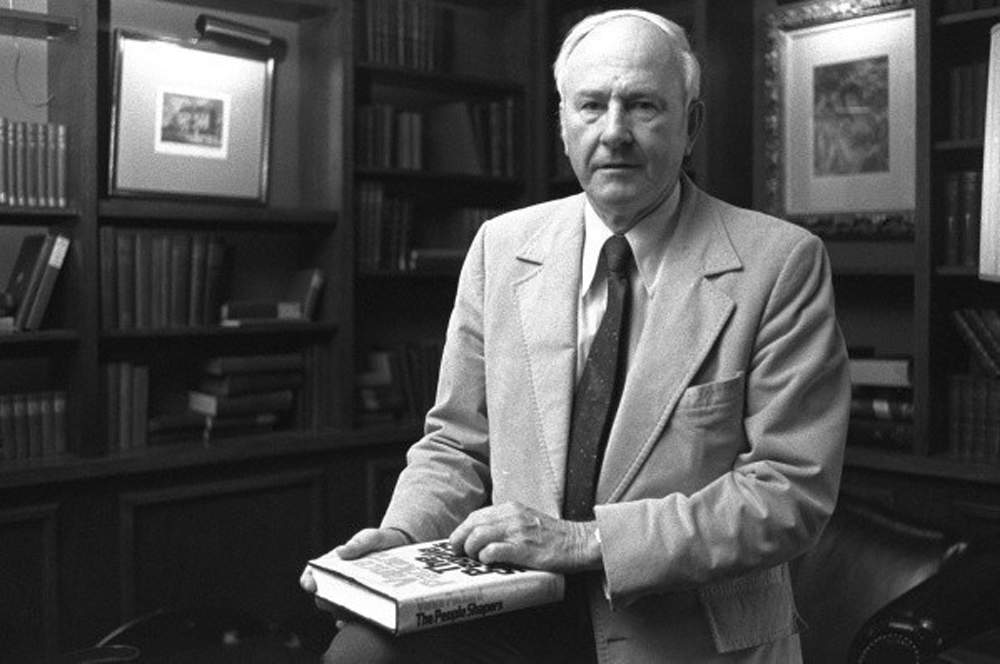
You have probably read something in the last decade that felt urgent, newly discovered, like an alarm finally going off — a book about corporate logos colonizing identity, or digital platforms harvesting the interior life of their users, or the way consumer society dissolves stable selfhood into an endless cycle of acquisition and reinvention. You felt the diagnosis was fresh because the author was credentialed, the vocabulary was academic, the footnotes were dense. What you were not told is that a journalist from rural Pennsylvania had already laid the structural argument down in 1957, in plain American prose, and that he sold millions of copies doing it.
Naomi Klein‘s No Logo, published in 1999, arrives with the energy of revelation: brands are not just selling products, they are colonizing consciousness, embedding themselves inside identity formation, converting culture into a delivery mechanism for corporate meaning. This is genuinely well-executed work. It is also, structurally, the argument of The Hidden Persuaders restated for the sweatshop era, translated into the vocabulary of globalization studies and given the institutional gravity of cultural theory. Klein does not cite Packard as a forerunner. The book’s bibliography treats him as furniture, if it places him at all. What changed between 1957 and 1999 was not the insight — it was the academy’s willingness to ratify it.
Zygmunt Bauman spent the final decades of his career building the concept of liquid modernity — a world in which identities are provisional, commitments dissolve before they solidify, and the consumer market replaces every durable social bond with a transaction that expires. His 2000 book of that name became a touchstone for European sociology. Yet Packard’s The Status Seekers, from 1959, had already mapped the mechanism by which consumer goods substitute for communal belonging, and his 1972 work A Nation of Strangers documented the social atomization that Bauman would theorize with such elegance three decades later. The difference is not empirical discovery. The difference is that Bauman wrote from a professorship and published through academic presses, which meant his readers could cite him without embarrassment in a footnote.
Shoshana Zuboff‘s The Age of Surveillance Capitalism, published in 2019, is the most technically sophisticated rearticulation of the problem Packard named in its earliest industrial form. Zuboff demonstrates with extraordinary precision how behavioral data extracted from users is processed into prediction products sold to advertisers and institutions — a market in human futures. Packard in 1957 was already describing depth researchers using psychological profiling to anticipate and redirect consumer behavior before the consumer was aware of any decision being made. The architecture is identical. The technology has metastasized. Zuboff introduces the term “behavioral surplus” to describe what is extracted; Packard would have recognized the extraction immediately, because he had watched its grandfather operate in the offices of Ernest Dichter, who charged corporations six hundred dollars an hour in 1950s money to map the unconscious desires of the American buyer.
What this genealogy exposes is a credentialing mechanism that operates independently of intellectual merit. An argument does not become legitimate when it is first made — it becomes legitimate when it is made by someone the institutional apparatus has pre-authorized to make it. Packard was a journalist. He wrote accessibly. He sold books at airport counters and grocery checkouts. These facts, in the cultural economy of ideas, are marks against him rather than evidence of reach. The academy processes popular success as a form of contamination, and so each generation of scholars inherits the core insight, strips away its origin, wraps it in new methodology, and presents it as discovery. The readers who absorb these later works are not being deceived by the authors, exactly — they are being failed by a system that has decided some voices are structurally incapable of being the first to say something true. Packard said it first. That has never quite been forgiven.
🔍 Power, Persuasion, and the Hidden Architecture of Society
Vance Packard spent his career exposing the invisible forces shaping consumer behavior, social status, and public manipulation. These articles explore kindred thinkers and works that map the same terrain of power, conformity, and the engineered consent of modern mass society.
Veblen’s The Theory of the Leisure Class: Analysis
Thorstein Veblen‘s landmark analysis of the leisure class reveals how conspicuous consumption and status display become the true engines of social distinction. Like Packard, Veblen understood that buying behavior is never merely economic — it is a performance of identity and hierarchy. Together, their works form a foundational critique of the American consumer dream.
GO TO THE SELECTION: Veblen’s The Theory of the Leisure Class: Analysis
Bourdieu’s Distinction: Taste and Social Class
Pierre Bourdieu‘s concept of distinction shows how taste functions as a mechanism of social reproduction, naturalizing class differences through cultural preferences. This sociological framework illuminates precisely the kind of status anxiety that Packard diagnosed in works like ‘The Status Seekers.’ Both thinkers revealed that what we consume is inseparable from who we are allowed to become.
GO TO THE SELECTION: Bourdieu’s Distinction: Taste and Social Class
Shoshana Zuboff: Surveillance Capitalism
Shoshana Zuboff‘s theory of surveillance capitalism traces how digital platforms harvest human experience as raw material for behavioral prediction and control. Her work can be read as a twenty-first-century extension of Packard’s warnings about hidden persuaders, now amplified by algorithmic precision. The manipulation Packard feared has grown from advertising agencies into the architecture of the internet itself.
GO TO THE SELECTION: Shoshana Zuboff: Surveillance Capitalism
Mass Social Homologation Today
Mass social homologation describes the process by which modern culture flattens individual differences into a standardized conformity engineered by media and consumerism. This phenomenon sits at the very heart of Packard’s critique of postwar American society, where hidden forces nudged populations toward predictable desires and docile identities. Understanding homologation today means revisiting Packard’s warnings with fresh and urgent eyes.
GO TO THE SELECTION: Mass Social Homologation Today
Discover Independent Cinema on Indiecinema
If these ideas about manipulation, conformity, and hidden power have stirred your thinking, Indiecinema’s streaming catalog offers a rich selection of independent films that explore exactly these themes with artistic courage and critical depth. From documentaries on consumer culture to fiction that exposes the machinery of social control, there is a film waiting to push your perspective further. Explore Indiecinema and let independent cinema challenge what you thought you knew.
👉 EXPLORE THE CATALOG: Watch Indie Films in Streaming
A vision curated by a filmmaker, not an algorithm
In this video I explain our vision

