
The Body That Cannot Lie
You are sitting in a meeting that has been running for forty minutes longer than it should. Someone at the far end of the table is still talking. You stopped listening somewhere around the twenty-minute mark, but your body never did. Your jaw has been clenching and releasing in a rhythm you weren’t aware of until just now. Your shoulders have migrated somewhere up near your ears. Your breath is shallow, hitting somewhere around the top of your chest and going no further, as if your lungs decided some time ago to operate at reduced capacity, to take up less space, to require less from a room that isn’t giving much back. And then it happens — that strange, almost vertiginous moment of noticing. Not the meeting, not the speaker, not the agenda item nobody will act on. You notice your own body, locked into a shape you didn’t choose, holding something the mind has been politely refusing to name for the better part of an hour. Maybe longer. Maybe years.

This is the moment Wilhelm Reich spent his entire intellectual life trying to explain, and for which he was rewarded with professional exile, imprisonment, and a death in a federal penitentiary in 1957. The price of the insight was, in retrospect, almost comically proportional to its depth.
Reich was a student of Freud, one of his most gifted and most troublesome, and the trouble began precisely where it usually does: at the point where a disciple starts to see something the master had chosen not to look at directly. Freud had built his architecture of the unconscious on the idea that repression was fundamentally a psychological event, a mechanism of the mind acting on itself, burying what was too dangerous to surface. Reich looked at his patients and saw something more literal, more stubbornly physical. The body wasn’t merely metaphorically involved in repression. It was the site of it. The tissue, the musculature, the chronic patterns of tension that people carried into his consulting room were not symptoms pointing toward psychological conflict — they were the conflict, solidified, made flesh, organized into what he would eventually call character armor.
The concept sounds almost too neat until you sit with it, or rather until you sit in a meeting with your jaw clenched, and realize that the neatness is the recognition. Freud’s model required a certain faith in the invisible — the unconscious was, by definition, what you couldn’t see. Reich’s model was almost embarrassingly visible once you knew how to look. The man who couldn’t say no carried it in the rigid set of his neck. The woman who had learned early that anger was dangerous held it in the chronic contraction of her diaphragm, the breath that never quite completed itself, that arrived and departed without ever fully landing. The person who had been told, in a thousand unspoken ways, to take up less space, had obliged. The body had obliged.
What Reich was proposing, and what made him intolerable to the psychiatric establishment of the 1930s and 1940s, was not merely a clinical observation but a philosophical provocation. The body doesn’t forget. It doesn’t rationalize, doesn’t construct narratives to protect itself from what it knows. While the mind busies itself with explanations — I’m just stressed, it’s a busy period, I’ve always held tension this way — the body maintains its archive with an archivist’s fidelity. Every contraction is a record. Every chronic holding pattern is a history. The musculature is not a neutral infrastructure. It is, to use a phrase that Reich never quite used but implied in everything he wrote, the autobiography you didn’t know you were writing.
The question that follows from this — the question that Reich’s work forces into the open whether you welcome it or not — is what exactly you have been writing, and whether you are ready to read it.
The Mirror and the Rascal
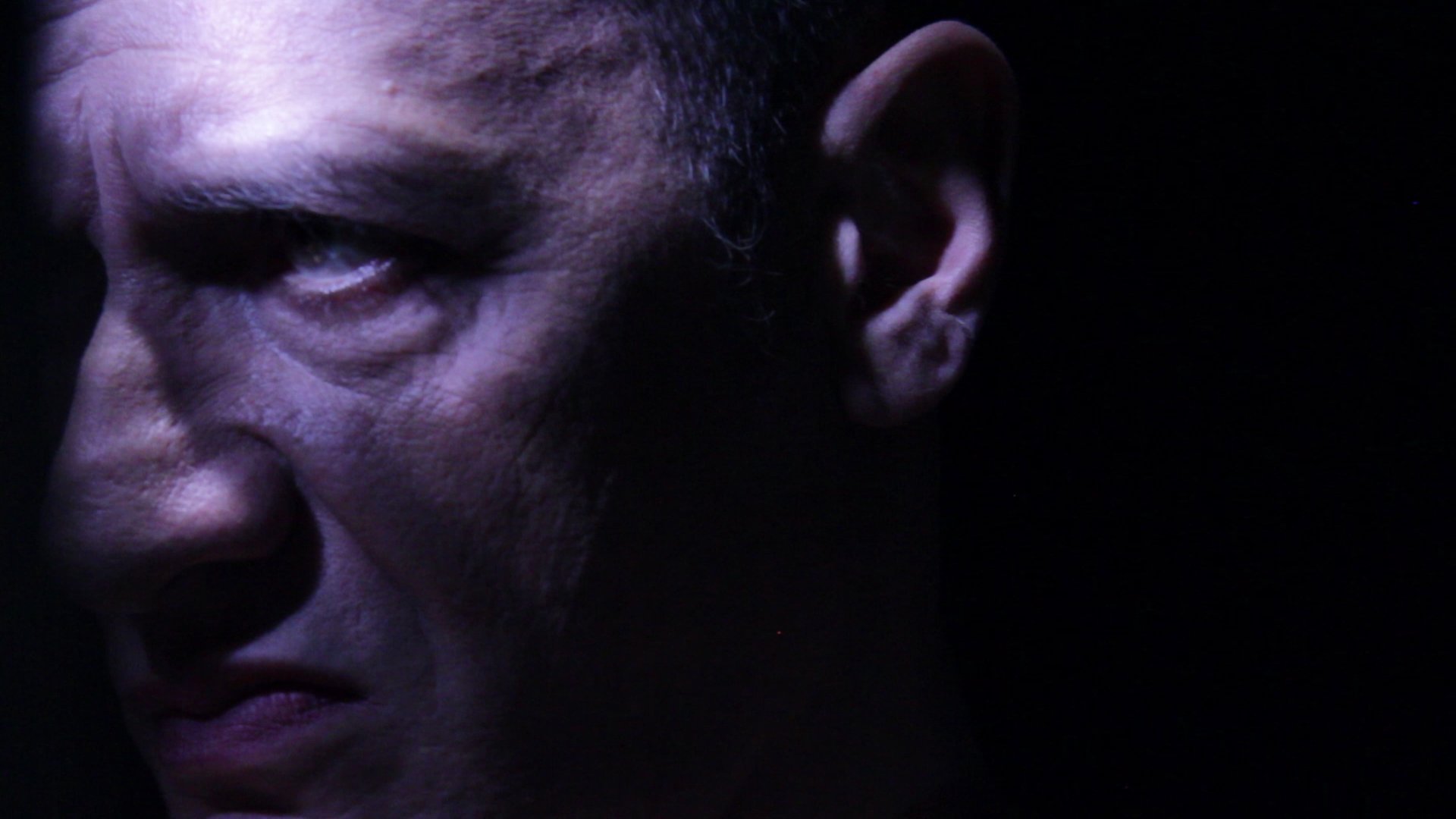
Drama film, by Valerio De Filippis, Italy, 2019.
The mirror and the rascal is an experimental film based on the tragedy "Richard III" by William Shakespeare. It tells the delirium of contemporary power in an author's reinterpretation of cinema, video art and music. The protagonist, Richard Duke of Gloucester, brother of King Edward IV, through a long series of crimes eliminates all the obstacles that stand between him and the throne of England.
Valerio de Filippis, a well-known painter who has been following his research path for a long time, investigating the relationship between light, corporeality and the psyche. The mirror and the rogue and the cinematographic equivalent of Valerio De Filippis' painting, his figurative style is in fact very recognizable looking at his paintings. But cinema is a new way where the artist can also be involved as an actor and performer, with an original mix between acting and singing. Staging the dark side of the human soul, the film is a surreal and disturbing interpretation of a great classic. The director says: "The first suggestion was musical: I was interested in transforming the text of Shakespeare's tragedy Richard III into notes. I love cinema and at a certain point I felt that the time had come to combine research on the image of painting to my love for cinema and music. When the film is finished I realize that I have remained faithful to painting: every frame of the film appears to me like a painting: the same light, the same colors, the same atmosphere ". The mirror and the rascal is a kind of psychoanalytic session that the painter does while hiding behind the mask of Richard III. Behind this ferocious and unscrupulous character we find a path of self-analysis by De Filippis, who is mainly interested in the more violent and turbid aspects. An experimental film in which, with great courage, the author gets involved completely, fragmenting the images in an unconventional montage, which is at the same time a flow of consciousness and spectacle.
LANGUAGE: English
SUBTITLES: Italian
A Man Against His Time
There is a particular kind of man whom every room eventually ejects. Not because he is wrong, but because he is too precisely right about the wrong things — the things the room needs to remain unexamined in order to stay a room at all. Wilhelm Reich was born in 1897 in the Dobrzcynica district of Galicia, then part of the Austro-Hungarian Empire, a geography that no longer exists on any map, which already tells you something about the world he came into and the world he would spend his life fighting. He arrived in Vienna after the First World War with a mind that moved like a blade and an appetite for Freud that his contemporaries would have called devotion, had it not so quickly become something more dangerous: elaboration.
Freud recognized his talent immediately. By his mid-twenties Reich was conducting seminars at the Vienna Psychoanalytic Polyclinic, developing clinical techniques that his colleagues admired from a careful distance. But Reich did something Freud’s circle had learned not to do: he took the theory seriously all the way to its conclusions. If repression was real, if the body carried what the mind refused to hold, then the social conditions producing that repression were not external noise but the actual subject of the inquiry. He opened free clinics in working-class Vienna, then Berlin, where he encountered a population whose neuroses were not mysteries but arithmetic — poverty, overcrowding, sexual shame legislated from above, children raised in conditions designed to produce exactly the kind of obedient, anxious, self-policing adult that the economy required. He began writing about sexuality not as pathology to be managed but as a social and political fact. The Communist Party seemed, for a moment, like the natural home for this thinking.
It expelled him in 1933.
The International Psychoanalytic Association followed in 1934, citing professional conduct in language so anodyne it functioned almost as its own diagnosis. By then he had already fled Germany after Hitler’s ascension, and would move through Denmark, Sweden, and Norway — each country eventually revoking his welcome under pressures that were sometimes political, sometimes psychiatric, sometimes simply the bureaucratic expression of discomfort. He arrived in the United States in 1939, where he would eventually die in a federal penitentiary in 1957, imprisoned for contempt of court after defying an FDA injunction against shipping his therapeutic devices across state lines. The arc is so complete it almost seems constructed.
This is precisely where biography becomes theory. Erving Goffman, in his 1961 work Asylums, describes what he calls the “total institution” — an organization that manages identity by stripping it down and rebuilding it in the institution’s image. Reich encountered not one total institution but the entire ensemble of them, and the pattern of his expulsions is too consistent to read as coincidence or character flaw. The Communist Party could not hold him because he insisted that sexual repression was not a bourgeois distraction but a mechanism of political control. The psychoanalytic establishment could not hold him because he insisted that neurosis had material causes that therapy alone could not dissolve. The governments could not hold him because a man who could explain in clinical detail how authority reproduces itself through the body is not a clinician but a threat.
Michel Foucault would spend the 1970s mapping precisely this territory — the way power operates through bodies, through sexuality, through the administration of what is permitted to be felt. But Reich had already lived it, which is a different kind of knowing. His biography is not the story of a brilliant man who went mad, though that narrative has been enormously convenient for everyone invested in discrediting what he found. It is the story of a man whose life became, involuntarily and completely, a demonstration of his own central argument.

What Freud Left on the Table
There is a moment that happens in beds across the world every night, in apartments in Seoul and São Paulo and Stockholm, in houses where the lights have been off for an hour: two people lying side by side, not touching, both staring at the ceiling. The sex has ended. The mechanics concluded. And yet the room is full of something. Not tension exactly, not anger, not even sadness. Something more like incompletion, like a sentence that trailed off before it reached its verb. You have been there. You know the ceiling intimately in those minutes. You know the particular quality of the silence.
This is precisely where Freud and Reich part ways, and the divergence is not merely theoretical. It runs along the spine of how you understand your own body.
Freud, in Beyond the Pleasure Principle, published in 1920, conceived of libido as a kind of hydraulic metaphor. Tension builds, tension releases, the organism returns to equilibrium. The pleasure principle operates like a pressure valve. What mattered to Freud was ultimately the psychic representation of drive, the idea of energy, its symbolic and narrative weight in the unconscious. Libido was a concept, a theoretical construct useful for explaining why human beings repeat what wounds them, why they cling to what diminishes them. It was never, for Freud, a literal biological substance moving through the flesh. He was always, at bottom, a man of metaphors dressed in the language of hydraulics.
Reich read those pages and decided Freud had stopped too soon. In The Function of the Orgasm, published in 1927 and presented to Freud himself, who received it with what witnesses described as a peculiar and telling silence, Reich argued that libido was not a metaphor at all. It was a real, measurable, biological energy. The orgasm was not simply the end of tension. It was the criterion of health, the litmus test of whether a human being was capable of full energetic discharge, whether the body could surrender completely rather than merely going through the motions. Most people, Reich argued, experience orgasm mechanically, locally, without the involuntary full-body convulsion that genuine release requires. They discharge pressure without releasing the deeper holding. They resolve the sentence without ever having meant it.
This is what is happening on that ceiling-staring night. The body knows it has not fully arrived. It cannot be argued with on this point. You can tell yourself the sex was fine, adequate, satisfying in some accountable sense. The body keeps its own ledger. The incompletion in the room is not a mood, not a psychological interpretation. It is somatic information, the nervous system reporting that the deeper layers remained armored, that something did not let go.
William James, decades before Reich, intuited something adjacent when he wrote that emotion is not the cause of bodily change but its consequence. We do not tremble because we are afraid; we are afraid because we tremble. The body is not the vessel of experience. It is experience itself. Reich radicalized this insight beyond anything James imagined, insisting that the chronic patterns in the body, the tightened jaw, the shallow breath, the held pelvis, were not symptoms of psychological conflict but were the psychological conflict, incarnated in tissue and reflex.
What Freud left on the table was the body’s autonomy as a system of truth. He had invented a magnificent tool for listening to what people said, to their slips and dreams and associations. Reich noticed that the body was speaking an entirely different language, louder, older, and far less willing to be interpreted away. The man staring at the ceiling cannot talk himself out of what his nervous system is reporting. Neither can you. The ceiling offers no answer. It simply receives the gaze of someone who has not yet learned that arriving fully is not a psychological achievement. It is a physical one.
Armor: The Architecture of Suppression
You have been to a funeral where someone stood completely still. Not stoic in the way grief sometimes makes people still, but still in a different way — rigid, performative in its very blankness, as though the face had been arranged rather than simply held. A man at the graveside of his father, dry-eyed, jaw set, shoulders pulled back with a precision that looked almost military. People around him wept openly, and he nodded at each of them with something that resembled gratitude but contained nothing warm. His chest did not move visibly when he breathed. Later, at the reception, someone whispered that he was being so strong. He was not being strong. He was being absent. The body that stood there accepting condolences had learned, over the course of perhaps forty years, to lock every room from the inside.
Reich called this armor. Not metaphorically. He meant a literal, measurable, chronic contraction of the musculature that functions as a physical encoding of every prohibition the organism ever internalized. In Character Analysis, published in 1933, he argued that the neurotic character was not simply a psychological structure but a somatic one — that the defenses Freud had described as purely mental had their precise anatomical correlates, their locations in flesh, their postures, their tensions. The repression did not live in the unconscious as an abstraction. It lived in the neck, in the diaphragm, in the jaw.
He mapped this systematically, identifying seven rings of armoring that encircle the body in horizontal segments, each capable of contracting independently and each corresponding to a cluster of emotional functions that the organism had found it necessary to suppress. The ocular segment — the eyes, the forehead, the scalp — is where the capacity to reach outward with perception gets blocked. The man at the funeral had eyes that registered everything and reflected nothing, as though a glass panel had been installed behind the pupils. Beneath that, the oral segment holds the cry that was never permitted, the rage that learned to swallow itself, the longing that found no mouth. The jaw of a man who stopped crying at seven does not simply forget how to tremble. It calcifies around that moment.
The cervical segment, the throat and neck, carries the holding of what could not be spoken — not the polished withholding of someone who chose silence, but the older, muscular withholding of someone who learned that certain sounds were dangerous. Move further down and the thoracic segment becomes the architecture of a chest that stopped expanding fully, that learned to contain rather than express, that breathed in shallow reassuring increments rather than the deep irregular waves that real emotion requires. This is not a metaphor about being closed-hearted. It is a description of intercostal muscles in chronic contraction, of a ribcage that has been narrowing, incrementally, for decades.
The diaphragm is where the sob lives, physiologically — the muscle that, when it releases, produces the convulsive heaving that accompanies real grief or real laughter or real terror. When it is chronically held, the emotional life above and below it becomes disconnected. The abdominal segment, carrying anxiety in the deep musculature around the solar plexus, and the pelvic segment, where sexuality and aggression and the most primary biological rhythms were taught to go silent — together they form a kind of sealed lower body, cut off from the upper body’s tightly managed surface life.
What Reich understood, and what makes Character Analysis still disturbing to read nearly a century later, is that this is not pathology in the exceptional sense. This is the ordinary cost of socialization in a civilization built on suppression. The man at the funeral was not broken. He had simply been completed — finished according to the specifications his family, his culture, and his history had required. The armor was not a failure of his development. It was the achievement.
The Political Body
There is a moment that keeps recurring across different lives, different decades, different continents — a man in a crowd, shoulder to shoulder with strangers, feeling something he cannot name rise in his chest. Not anger exactly. Not joy. Something older, something that bypasses language entirely and lands somewhere near the sternum. He raises his arm not because he decided to. He raises it because his body already knew.
Reich watched this happen in real time. He was not theorizing from a distance. He was in the streets of Weimar Germany in the early 1930s, watching workers who had every material reason to revolt instead march toward their own subjugation with something resembling relief. The book he wrote in response — finished and published in 1933, the same year the Reichstag burned and constitutional democracy in Germany effectively ceased to exist — cost him everything. The Communist Party expelled him for it. The psychoanalytic establishment distanced itself. The Nazis burned it. He had managed the extraordinary feat of being too radical for the left and too dangerous for the right simultaneously.
What he had done, and what made the book genuinely untouchable, was refuse the comfortable explanation. Fascism was not an aberration. It was not a virus that had infected a otherwise healthy political body from outside. It was a symptom — the logical expression of a character structure that had been cultivated across generations through the authoritarian family, the suppression of childhood sexuality, the equation of obedience with virtue and desire with sin. The mass surrender to a führer was not irrational. It was the political form taken by millions of people who had spent their entire lives learning to renounce their own will in exchange for the security of submission. The father at the dinner table, the priest at the altar, the schoolmaster with the rod — these were not separate institutions. They were a single machine producing a single product: the body that contracts, that defers, that finds in its own smallness a strange and desperate comfort.
Hannah Arendt, writing eighteen years later in the wake of the full catastrophe, located totalitarianism’s origins in the collapse of political categories, in imperialism and statelessness and the destruction of the public realm. Her analysis is indispensable. But it operates at the level of political philosophy and historical structure — it explains how totalitarianism became possible as a system. Reich was asking something prior and perhaps more disturbing: how does a human being become someone who wants it? Erich Fromm, in 1941, eight years after Reich and working in partial dialogue with him, called it the escape from freedom — the discovery that autonomy is unbearable when you have never been given the muscles to sustain it. But Fromm’s account remains largely psychological and sociological. Reich went further into the body itself, into the literal muscular and respiratory patterns that encode submission before any conscious decision is ever made.
The body politic is not a metaphor. This is the point that sounds like rhetoric until you sit with it long enough to feel its weight. It is not built from ideologies or constitutions or economic conditions alone — though those matter, enormously. It is built from actual bodies. Bodies that were taught to hold their breath when they felt desire. Bodies that learned to pull the shoulders inward when they felt rage. Bodies that internalized the posture of apology so completely that by adulthood the apology had become invisible even to themselves. When enough of those bodies fill a square and a voice tells them their smallness is actually greatness, their repression is actually purity, their surrender is actually strength — the response is not confusion. The response is recognition. Something in the musculature finally, horribly, fits.
A vision curated by a filmmaker, not an algorithm
In this video I explain our vision
When the Cure Becomes the Crime
There is a particular kind of silence that falls over a man who has stopped being listened to. Not the silence of peace, but the silence of erasure — the kind that accumulates slowly, bureaucratically, until the person inside it begins to wonder whether the erasure has already reached the bone.
He arrived in New York in 1939, one year before the Nazis sealed Europe shut. He had already been expelled from the International Psychoanalytic Association, expelled from the Communist Party, expelled from Denmark, Sweden, and Norway in succession. America must have looked, from the deck of a ship crossing the Atlantic, like the last available horizon. He settled eventually in rural Maine, on a property he called Orgonon, and there, in a landscape of pine forest and open sky, he built a laboratory and turned his attention to something he believed was neither metaphor nor speculation: a primordial biological energy, present in living tissue, visible in the atmosphere, measurable, accumulative, real.
He called it orgone. He built wooden and metal boxes in which patients could sit and absorb it. He published obsessively. He corresponded with Einstein, who met with him in January 1941 and spent five hours listening before concluding, cautiously, that the temperature anomalies Reich reported inside his accumulator boxes had a simpler explanation. Reich believed otherwise. And here the story begins to acquire its terrible ambiguity — the quality of a wound that cannot be closed because you cannot determine from which direction it was struck.
There is a scene that belongs to this period of his life, though it could belong to any man who has pressed his knowledge past the point where institutions will follow. A figure stands alone in a darkened field under a sky that seems too large, too active, watching something move through the upper air — a luminescence, a pulsation, a rhythm that the instruments half-register and the eye half-sees. He is convinced. He is also completely alone. And the two facts sit together without resolving into either heroism or madness, because the history of science is a graveyard of both, and the headstones look identical at night.
The FDA began investigating him in 1947, triggered in part by a mocking article in The New Republic that called orgone therapy a fraud. What followed was not a debate. It was a procedure. Federal injunctions. Harassment of his associates. And then, in 1956, something that should stop anyone who uses the word civilization without flinching: the United States government burned his books. Six tons of his publications were destroyed in a New York incinerator. Reich himself, who had violated an injunction by allowing an orgone accumulator to be transported across state lines, was sentenced to two years in federal prison. He died there on November 3, 1957, of heart failure, eight months before he would have been eligible for parole.
Michel Foucault, writing in Discipline and Punish in 1975, described how modern institutions do not merely punish transgression — they produce and define what transgression is. The prison, the hospital, the regulatory agency: each of these is not a neutral response to disorder but a mechanism for designating which bodies, which knowledges, which energies require containment. What the FDA destroyed in Reich was not a theory. What they destroyed was a body of work organized entirely around the claim that the body itself is a political site, that its repressions are manufactured, that its liberation is therefore a threat. The institution understood this better than most of Reich’s defenders have.
Whether orgone exists is almost beside the point. What exists, what is documented and dated and archived, is that a government agency burned scientific books on American soil within living memory, and almost no one speaks of it with the outrage it deserves. The question is not what Reich believed. The question is what we chose not to see.
What the Body Remembers That the Mind Has Forgotten
There is a moment in a therapy session — not so different from thousands happening right now in cities you know — where a woman begins to tremble. Not from cold, not from fear in any nameable sense. Her therapist has asked her to notice what she feels in her chest, just that, nothing more. And the trembling starts in her legs, moves upward through her pelvis, and suddenly she is shaking in a way that looks alarming but feels, she will say afterward, like relief. Like something that had been clenched for decades finally releasing its grip. And then she laughs. A real laugh, unannounced, without an object. She does not know why she is laughing. She has not thought of anything funny. The laugh simply arrives from somewhere below the level of language, from tissue that remembers what the mind agreed to forget.
This is not mysticism. This is what Bessel van der Kolk spent decades documenting with neuroimaging, cortisol measurements, and clinical observation before publishing his synthesis in 2014. His argument, assembled from years of work with trauma survivors, is precise and measurable: the body encodes experience at a level that conscious narrative cannot reach. The prefrontal cortex — the seat of language, of the story we tell ourselves about who we are — goes offline during overwhelming experience. What remains active is the brainstem, the limbic system, the musculature that braces for impact and then, because the impact never fully passes, stays braced. The trembling in that therapy room is not regression or theater. It is the nervous system completing an action it was never allowed to finish.
Reich said this in different language, without fMRI scanners, in Vienna in the 1930s. He said it and was dismissed, then mocked, then prosecuted. Alexander Lowen, who trained with Reich and built bioenergetics on his foundations, spent half a century watching bodies unlock under sustained attention to breathing, posture, and physical charge, writing it down in clinical detail that serious researchers still return to. Peter Levine, developing somatic experiencing from his observations of how animals in the wild discharge traumatic activation through spontaneous shaking, arrived independently at almost the same map Reich had drawn. The cartography converged from multiple directions, and yet the original cartographer had been burned.
This is the specific cruelty of what happened. Not simply that a man was imprisoned and his books destroyed by federal order in 1956 — though that is remarkable enough, a book burning on American soil that most Americans have never been taught to remember. The cruelty is that the destruction delayed the conversation by decades. The patients who could have been reached earlier were not reached. The therapeutic traditions that might have developed sooner, didn’t. Hannah Arendt, writing about the nature of totalitarian destruction in the early 1950s, observed that what power fears most is not dangerous ideas but the capacity for genuine thought, because genuine thought produces people who cannot be entirely managed. Reich’s work, whatever its excesses, was doing something thought always does: it was making the invisible legible.
What the body remembers is not stored the way files are stored. It is stored the way a posture is stored, the way a held breath becomes a held life, the way a man learns to pull his shoulders forward in childhood to make himself smaller and then spends forty years wondering why he cannot feel fully present. The question of whether Reich was correct about orgone energy, about his cloud-busting apparatus, about the cosmological dimensions he eventually attached to his clinical insights, is a legitimate question. But it is a different question from whether he was right about the body as archive, the character armor as survival strategy calcified into structure, the breath as the first thing we restrict when we need to disappear.
Those two questions have been conflated, deliberately or carelessly, for seventy years. And the cost of that conflation is not abstract.
The Unfinished Tremor

You clench your jaw again. Not now, not in this moment of reading, but in the way you always do — slightly, persistently, the way a house settles into its foundation over decades. The tension is so familiar it no longer registers as tension. It has become the baseline, the neutral, the you that you carry without noticing you are carrying anything at all.
Spinoza wrote, in the Ethics of 1677, that we do not yet know what a body can do. This was not a rhetorical provocation. It was a metaphysical claim: that the body is not an instrument of the mind, not a vehicle for a soul passing through, but a site of power in itself — what he called potentia, the capacity to affect and be affected, to expand or contract, to enter into compositions with the world or be expelled from them. Deleuze, reading Spinoza three centuries later with the precision of someone defusing an argument that had been buried alive, understood this as the central scandal of Western thought: that we have always been more interested in what the body should do than in what it actually does, more fascinated by its failures than by its intelligence. The body does not need to be corrected, Deleuze insisted. It needs to be read.
Reich spent his entire life trying to teach people to read it. Not symbolically, not metaphorically, not as a text pointing somewhere else — but literally, as information. The way the chest collapses slightly under the weight of an unexpressed grief that began at seven years old. The way the shoulders rise toward the ears in a room where authority is present. The way breathing becomes shallow in the presence of desire, as though the body knows, before the mind admits it, that wanting something costs something here, in this family, in this culture, in this particular arrangement of who is allowed to need what.
He called these patterns character armor, but the word armor is almost too heroic. Armor implies a warrior who chose protection. What Reich was describing was closer to a gradual forgetting — the body learning, correctly and rationally, that certain movements, certain openings, certain tremors of aliveness were dangerous, and then forgetting that it learned this, so that the restriction became invisible, became character, became the self. The jaw does not clench because you are neurotic. The jaw clenches because at some point, in some room, clenching it was the most intelligent thing available to you.
This is where the historical dimension becomes impossible to ignore. The tension is not only yours. It was transmitted. It lived in the body of someone who lived in a world structured around specific prohibitions — against pleasure, against dependency, against the visible expression of need, against the body’s own evidence. The philosopher Wilhelm Dilthey argued that history is not something that happens around us but something that happens through us, in the very structure of how we perceive and respond. Your nervous system is, in this sense, an archive. The tightness in your chest is not a malfunction. It is a record.
And records, unlike failures, can be read differently. Failures demand correction. Documents demand interpretation. If the body is, as Spinoza insisted and Reich demonstrated in his clinical rooms and his scattered, destroyed notebooks, a site of continuous expression — if it has never stopped speaking, has never been fully silenced even by the most determined cultural machinery — then the tremor you feel sometimes, the one that rises when you are unexpectedly moved or unexpectedly seen, is not weakness breaking through. It is the original signal, still intact beneath everything that was built over it.
What would change if you stopped treating your tension as a personal failure and started reading it as a historical document?
🧠 The Body, Mind, and the Hidden Forces Within
Wilhelm Reich’s radical vision of the body as a battlefield of repressed energies connects to some of the deepest currents in modern psychology, philosophy, and the science of the unconscious. The following articles explore adjacent territories — from the architecture of desire to the politics of the psyche — tracing the invisible threads that bind body, mind, and society.
Jacques Lacan and the Mirror Stage
Jacques Lacan‘s theory of the Mirror Stage offers a foundational account of how the ego is constructed through an alienating identification with one’s own image. Like Reich, Lacan locates the roots of psychological suffering in the earliest encounters between the body and the social world. Together, their frameworks illuminate how identity is always already a kind of armor — a theme central to Reichian body psychology.
GO TO THE SELECTION: Jacques Lacan and the Mirror Stage
The Psychology of Power: History and Theory
The psychology of power is inseparable from the mechanisms of character formation that Reich so meticulously analyzed throughout his life. Reich argued that authoritarian structures are not only political but deeply somatic, inscribed into the muscular and emotional patterns of individuals. This article traces the theoretical history of how power operates on the human psyche, offering essential context for understanding Reich’s social critique.
GO TO THE SELECTION: The Psychology of Power: History and Theory
The Unconscious and its Relationship With Cinema
Cinema has long been one of the most fertile arenas for the exploration of unconscious drives, bodily impulses, and repressed desires — precisely the forces that Reich sought to liberate through his therapeutic practice. This essay examines how the moving image becomes a mirror for the depths of the human mind, staging fantasies and fears that resist ordinary language. Reading Reich alongside the unconscious logic of cinema reveals unexpected and illuminating correspondences.
GO TO THE SELECTION: The Unconscious and its Relationship With Cinema
Viktor Frankl: Life and Logotherapy
Viktor Frankl, like Reich, worked through some of the darkest chapters of twentieth-century history to forge a psychology rooted in the lived experience of the body and spirit under extreme conditions. Where Reich sought liberation through the release of somatic tension, Frankl found meaning as the irreducible core of human resilience. Together, their legacies represent two compelling and complementary answers to the central question of what it means to be fully alive.
GO TO THE SELECTION: Viktor Frankl: Life and Logotherapy
Explore the Cinema of the Inner Life on Indiecinema
If these ideas have stirred something in you, Indiecinema is the streaming platform where thought and image meet. Discover a curated selection of independent and documentary films that dare to explore psychology, the body, consciousness, and the hidden architectures of human experience — far beyond the mainstream.
👉 EXPLORE THE CATALOG: Watch Indie Films in Streaming
A vision curated by a filmmaker, not an algorithm
In this video I explain our vision

