
Japanese cinema is among the most important cultural industries; it is the fourth largest market in terms of the number of films produced. Tokyo Story (1953) ranked third in the most important films of all time. The largest Japanese film studio is called Toho. The annual Japan Academy Film Prize hosted by the Nippon Academy is considered the Japanese equivalent of the Academy Awards.

Japanese Movies to Watch
A list of Japanese movies that have marked the history of cinema. Immortal and timeless masterpieces. From the classics of Ozu and Mizoguchi to hidden and rare pearls you have probably never heard of.
Walk Cheerfully
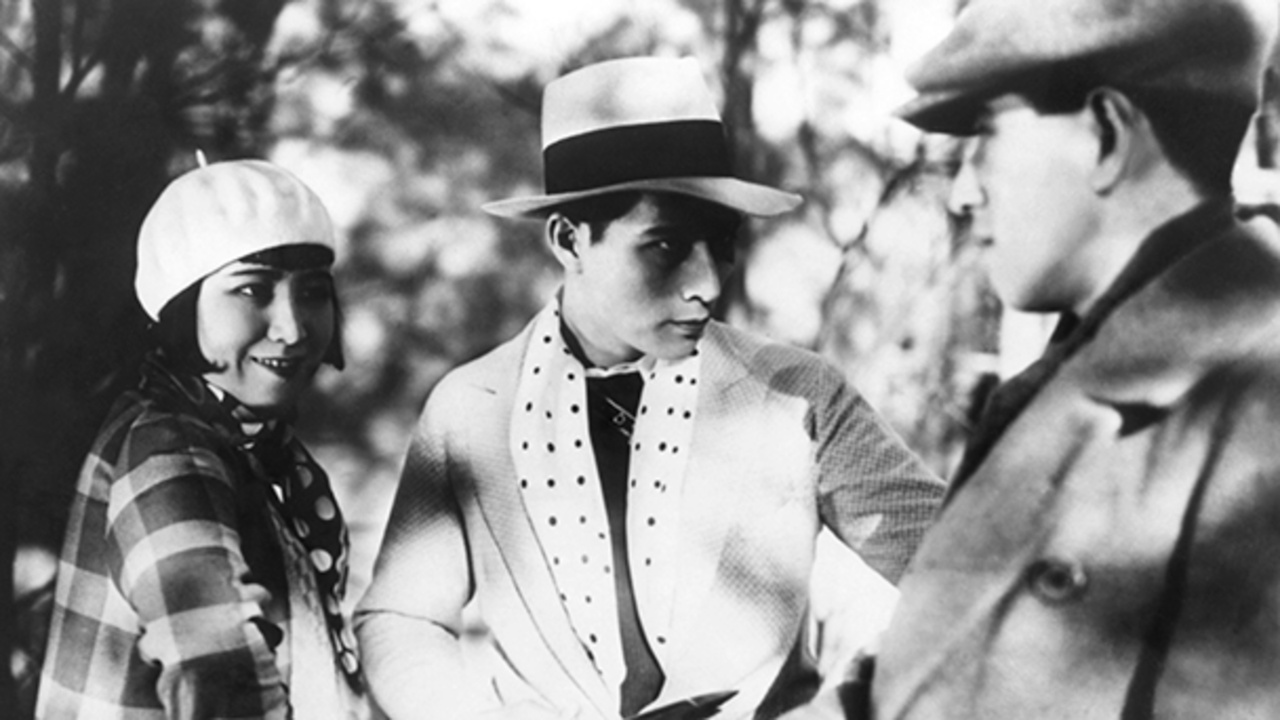
Drama, crime, by Yasujirō Ozu, Japan, 1930.
The plot of the film follows the story of Kenji, a low-ranking gangster, who decides to give up his life of crime and settle down. He falls in love with Yasue, a young car mechanic, and the two plan to get married. However, Kenji's past catches up with him when his former gang mates try to get him involved in a new criminal business. "Walk Cheerfully!" explore themes of redemption, love, and the struggle to break free from a life of crime. Like many of Ozu's works, the film delves into the complexities of human relationships and social norms.
It is a film that enchants the viewer with its emotional depth and visual elegance, through the winding roads of redemption and love, in a subtle ballet between past and future. Ozu's direction is masterful: through the skilful use of the characters' facial expressions and the dynamics of relationships, he captures the viewer's heart. Visual storytelling is a symphony of emotions and meanings that speaks directly to the viewer's soul without the need for words. "Walk Cheerfully!" it is a work that transcends time, as it explores universal themes such as the desire for redemption, the power of love and the struggle against one's past. Ozu reminds us that each of us has a chance to change and find happiness, even when it seems that fate has already written the script for us.
LANGUAGE: Japanese
SUBTITLES: English, Spanish, French, German, Portuguese
Drive My Car (2021)

Yusuke Kafuku, a renowned stage actor and director, is still grappling with the sudden death of his wife. Two years later, he accepts an invitation to direct a production of Uncle Vanya at a festival in Hiroshima. There, he is assigned a young, stoic woman named Misaki to be his chauffeur. As they spend hours together in his red Saab 900, their shared silence gradually gives way to a series of confessions, helping Yusuke confront the grief and secrets he has long suppressed.
Ryusuke Hamaguchi’s film is a meditative masterpiece on the complexities of communication and the necessity of performance in everyday life. By intertwining the plot with Chekhov’s play, the film explores how art serves as a vehicle for emotional truth. It received universal acclaim, winning the Best Screenplay award at Cannes and the Academy Award for Best International Feature, cementing Hamaguchi as a leading voice in contemporary world cinema.

Shoplifters (2018)

On the fringes of Tokyo, a makeshift family survives by committing petty crimes and shoplifting. Despite their poverty, they share a warm and loving bond, which is tested when they take in a young, neglected girl found in the cold. As the authorities close in, the true nature of their relationships is revealed, uncovering a web of secrets that challenges the conventional definition of family and legal morality.
Hirokazu Kore-eda’s Palme d’Or winner is a poignant critique of social inequality and the failures of the modern welfare state. The film excels in its naturalistic performances and its refusal to judge its characters for their survival choices. It is a heartbreaking yet beautiful exploration of “chosen family” versus biological ties, leaving the audience to ponder the meaning of true belonging in a society that often overlooks its most vulnerable members.
Your Name. (2016)

Mitsuha, a girl living in a rural mountain town, and Taki, a boy living in the bustling city of Tokyo, suddenly begin to swap bodies periodically. Initially confused, they start communicating through notes and develop a deep connection across space and time. Their journey takes a dramatic turn when they realize a looming astronomical event threatens Mitsuha’s town, leading to a desperate race to meet in person and prevent a catastrophe.
Makoto Shinkai’s animated phenomenon is a visually stunning exploration of fate, memory, and the enduring power of love. The film masterfully blends Japanese folklore with modern sci-fi elements, using hyper-detailed animation to evoke a sense of longing and wonder. It became one of the highest-grossing films in Japanese history, bridging the gap between anime fans and mainstream audiences through its universal emotional resonance.
Sazen Tange and the Pot Worth a Million Ryo
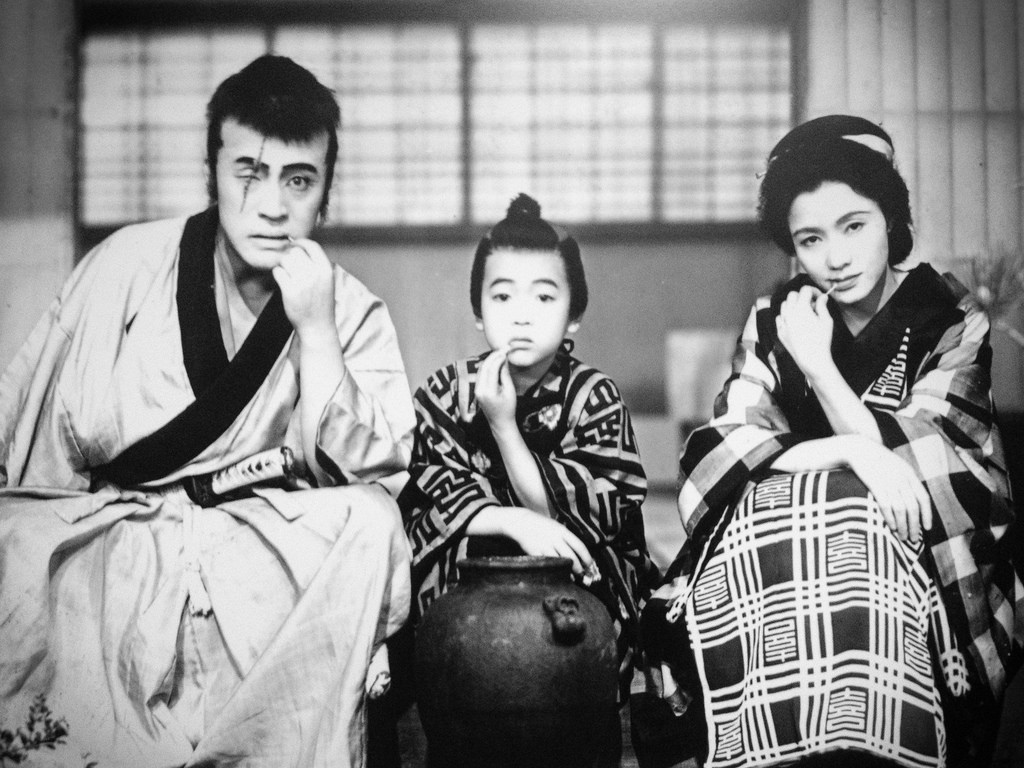
Comedy, drama, historical, by Sadao Yamanaka, Japan, 1935.
A man gives an old cooking pot to his brother, not realizing that there is a treasure map inside. His sister-in-law sells the pot to a junk dealer, who in turn sells it to a boy named Yasu. A colorful cast of characters are looking for this vase, and when the boy runs away after being scolded by Ogino, everyone chases after him.
There are only three surviving works directed in the short but very rich artistic life by Sadao Yamanaka, who died not even thirty years old in Manchuria in 1938. Among these is The Million Ryo Pot, where the young directorial talent confronts an iconic character of the jidaigeki, Tange Sazen, a one-eyed and one-armed swordsman. In taking an apparently canonical story head-on, Yamanaka opts for a completely personal look, both in the use of parody and in the staging in which long shots and the fixed camera reign in spite of the close-ups that usually crowded the films of the saga. Japanese director Akira Kurosawa cited this film as one of his 100 favorite films. Many Japanese critics and directors consider it the best Japanese film of all time.
LANGUAGE: Japanese language
SUBTITLES: English, Spanish, French, German, Portuguese
Spirited Away (2001)

Ten-year-old Chihiro is moving to a new neighborhood when her family accidentally stumbles into a mysterious spirit realm. After her parents are transformed into pigs for eating enchanted food, Chihiro must find work in a magical bathhouse run by the sorceress Yubaba. Guided by a boy named Haku, she must navigate a world of bizarre creatures and ancient gods to rescue her parents and find her way back to the human world.
Hayao Miyazaki’s Oscar-winning triumph is a pinnacle of hand-drawn animation, rich in Shinto mythology and environmental symbolism. The film is a powerful coming-of-age allegory about the loss of innocence and the resilience required to maintain one’s identity in a greedy, consumerist world. Its imaginative world-building and profound emotional depth have made it a timeless classic that continues to enchant viewers of all ages globally.
A vision curated by a filmmaker, not an algorithm
In this video I explain our vision
Princess Mononoke (1997)

Young Prince Ashitaka is cursed after defending his village from a demonized boar god and travels west to find a cure. He finds himself caught in a brutal conflict between Iron Town, led by the ambitious Lady Eboshi, and the ancient forest gods led by San, a human girl raised by wolves. As both sides escalate their violence, Ashitaka must strive to see “with eyes unclouded” and find a way for humanity and nature to coexist.
This epic from Hayao Miyazaki is a mature and complex meditation on environmentalism and the moral ambiguity of progress. Unlike many Western fantasies, it avoids simple binaries of good and evil, portraying both San and Eboshi as driven by valid, if conflicting, convictions. The film’s visceral action, stunning score by Joe Hisaishi, and philosophical depth established it as a landmark in adult animation and a precursor to the global success of Studio Ghibli.
Ran (1985)

Lord Hidetora Ichimonji, an aging warlord of the Sengoku period, decides to retire and divide his kingdom among his three sons. However, his misplaced trust leads to a brutal cycle of betrayal and fratricidal war, as his eldest sons turn against him and each other. Cast out and descending into madness, Hidetora wanders a scorched landscape, witnessing the total destruction of his legacy and the cruelty of a world without mercy.
Akira Kurosawa’s late-career masterpiece is a visually staggering reimagining of Shakespeare’s King Lear, set against the backdrop of Japanese feudal history. The film is renowned for its operatic intensity, use of color, and massive, meticulously choreographed battle sequences. It serves as a nihilistic and tragic reflection on the chaos of human ambition and the recurring nature of violence, representing the director’s final statement on the folly of war.
A Page Of Madness
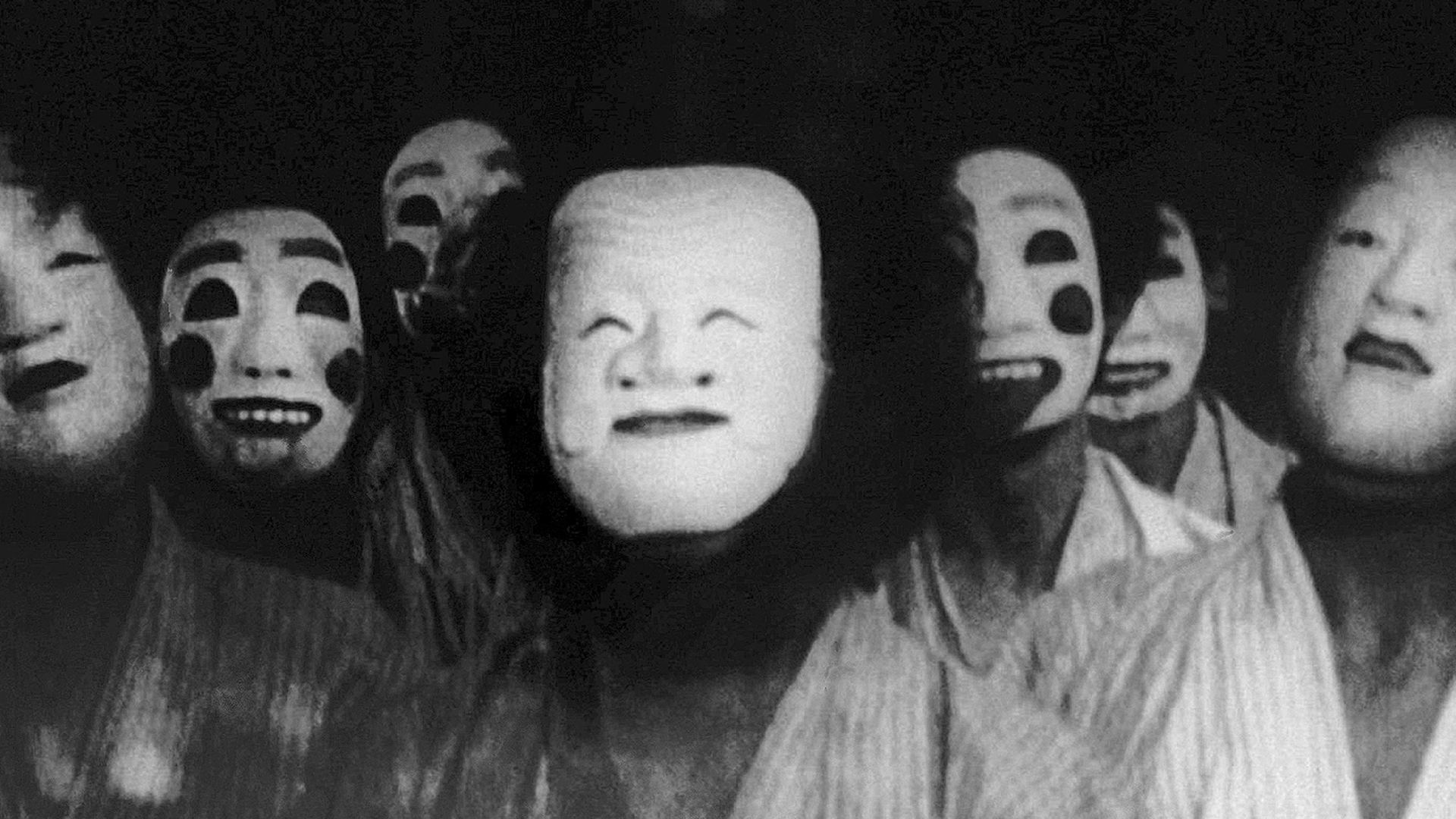
Drama, horror, by Teinosuke Kinugasa, Japan, 1926.
A page of madness is an independent film shot on a nearly non-existent budget and then lost for forty-five years. Fortunately the director rediscovered it in his archive in 1971. It is a film made by a group of Japanese avant-garde artists, the School of new perceptions. A movement that had as its objective to overcome the naturalistic representation. In a country asylum, in torrential rain, the caretaker meets patients with mental illness. The next day a young woman arrives who is surprised to find her father there who works as a caretaker. The woman's mother first went mad because of her husband when she was a sailor. The husband has decided to change jobs to stay close to his wife in the asylum and take care of her. Her daughter tells her father that she will marry soon, but the father is worried because he fears, according to popular rumors of the time, that the mother's mental illness will be inherited by her daughter. If the young husband and his family found out about his mother's madness, the marriage would fall apart. The caretaker tries to take care of his wife during her work as she gets beaten up by other inmates, but this interferes with her role and is scolded by the head of the asylum. Slowly the keeper loses contact with reality and its boundaries from the dream. He begins to daydream about winning the lottery when his daughter meets him again to tell him that his marriage is in trouble. The man thinks of taking his wife out of the asylum to hide her existence and solve every problem. Teinosuke Kinugasa is the director of some of the best Japanese films of the 1920s. A page of madness has been compared to the great German expressionist films. It is an experimental film, of extreme avant-garde, which seems to anticipate the atmospheres and themes that would have made David Lynch famous many years later. Nightmares, distortions, blurs, double exposures and photographic deformations: a film that explores the furthest boundaries of moving images. Then there are those masks set in an eternal succession of bars, locks and corridors that fuel the sense of fear and loss of the various protagonists to excess.Yasunari Kawabata, the writer of the story, won the Nobel Prize for literature in the 1968.
Without dialogue
Kagemusha (1980)
![Kagemusha (1980) ORIGINAL TRAILER [HD 1080p]](https://blog.indiecinema.co/wp-content/plugins/wp-youtube-lyte/lyteCache.php?origThumbUrl=https%3A%2F%2Fi.ytimg.com%2Fvi%2FFvn3giWYZTg%2F0.jpg)
Set in the 16th century during the Sengoku period, a petty thief is spared from execution because of his uncanny resemblance to the powerful warlord Takeda Shingen. When Shingen is mortally wounded, the thief is forced to serve as his “shadow warrior” to maintain stability and deter rival clans. The imposter must learn to navigate the complexities of power and court life, even as his own identity begins to blur with that of the dead leader.
The film is a grand historical epic that explores themes of identity, the performative nature of power, and the weight of legacy. Akira Kurosawa utilizes vibrant colors and painterly compositions to depict the transition from medieval warfare to the age of firearms, culminating in the tragic Battle of Nagashino. It won the Palme d’Or at Cannes and revitalized Kurosawa’s career, proving his enduring mastery of cinematic scale and human drama.
Zigeunerweisen (1980)

In the 1920s, two former colleagues, Aochi and Nakasago, meet on a seaside trip. Their lives become entangled in a surreal web of erotic obsession, death, and spectral visions involving Aochi’s wife and Nakasago’s various partners. The narrative drifts between reality and dream, anchored by the scratchy sound of a gramophone record featuring Pablo de Sarasate’s violin composition, which seems to summon the ghosts of their past.
Seijun Suzuki’s masterpiece of the “Taisho Roman” trilogy is a radical departure from his earlier yakuza films. It is a lush, non-linear, and atmospheric ghost story that captures the decadence and anxiety of Japan’s Taisho era. With its eccentric editing and bold visual style, the film was a major independent success, eventually being named the best Japanese film of the 1980s by critics for its innovative approach to psychological drama.
Vengeance Is Mine (1979)
![Vengeance Is Mine (1979) ORIGINAL TRAILER [HD 1080p]](https://blog.indiecinema.co/wp-content/plugins/wp-youtube-lyte/lyteCache.php?origThumbUrl=https%3A%2F%2Fi.ytimg.com%2Fvi%2F5cTE_HrQb8U%2F0.jpg)
Based on the true story of serial killer Akira Nishiguchi, the film follows Iwao Enokizu during a 78-day cross-country killing spree while evading a massive police manhunt. Through a fragmented timeline, it reveals Iwao’s dysfunctional childhood, his hatred for his pious father, and his cold, nihilistic attitude toward his victims. Despite his charming facade, he is a man driven by an inexplicable and destructive inner void.
Shohei Imamura’s film is a brutal and unflinching investigation into the dark underbelly of Japanese society and the roots of human depravity. It rejects the conventions of the typical crime thriller in favor of a clinical, sociological gaze that offers no easy redemption or moral comfort. Often compared to Dostoevsky’s Crime and Punishment, it remains one of the most powerful and unsettling portraits of psychopathy in the history of cinema.
Gate of hell
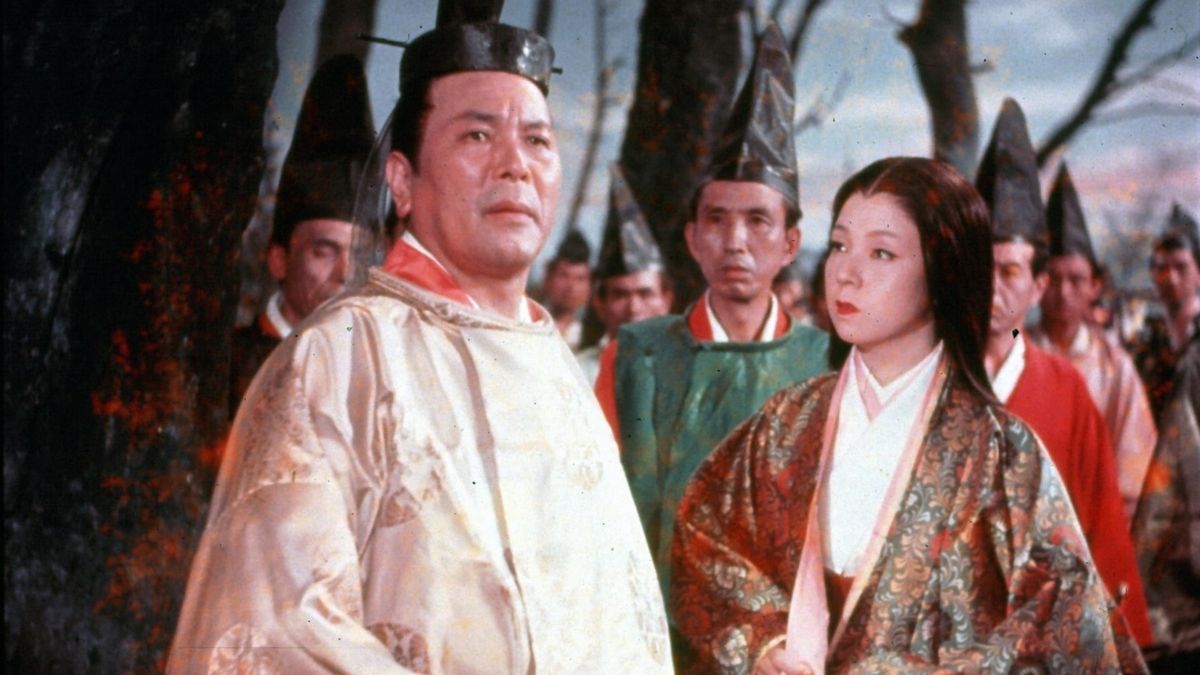
Drama, historical, by Teinosuke Kinugasa, Japan, 1953.
During the Heiji rebellion in Japan in 1159, Lord Kiyomori leaves his castle to go to fight. While he is absent, some local lords attempt a coup to take over Sanjo Castle. The samurai Endō Morito escorts the lady-in-waiting Kesa as she walks away from the palace disguised as the daimyō's sister, giving her father and royal sister time to escape without being seen. Based on a play by Kan Kikuchi set in 12th century feudal Japan, the film tells the story of a samurai whose bravery in defending his ruler must be rewarded with whatever he desires. He longs for the beautiful and aristocratic Lady Kesa, who is already married to another samurai, Wataru. Morito tries to persuade Kesa to leave her husband, but her devotion is unshakable. Winner of the Academy Award for Best Foreign Film and Best Costume Design, Grand Prix at Cannes, which later became a lost film for 50 years, The Gates of Hell is a figuratively impressive film, perhaps the most dazzling example of color photography Japanese from the 1950s.
LANGUAGE: Japanese
SUBTITLES: Italian
The Yellow Handkerchief (1977)
![The Yellow Handkerchief (1977) Original Trailer [HD]](https://blog.indiecinema.co/wp-content/plugins/wp-youtube-lyte/lyteCache.php?origThumbUrl=https%3A%2F%2Fi.ytimg.com%2Fvi%2Feccxyf4mlIA%2F0.jpg)
Kinya, a heartbroken young man, buys a new car and sets off on a road trip across Hokkaido. Along the way, he picks up Akemi, a young woman looking for a fresh start, and Yusaku, a mysterious older man recently released from prison. As they travel together, Yusaku reveals his tragic past and his hope that his ex-wife has forgiven him, signaling her feelings with a yellow handkerchief tied to a pole in front of their old home.
Yoji Yamada’s film is a gentle and touching masterpiece of the shomin-geki (common people’s drama) genre. It is a quintessential Japanese road movie that finds beauty in the ordinary struggles and quiet resilience of its characters. The film’s emotional climax and its themes of forgiveness and human connection made it a massive domestic success, winning the first-ever Japan Academy Prize for Best Picture.
In the Realm of the Senses (1976)

Nagisa Oshima’s film is one of the most debated and censored works in the history of world cinema. Based on the true story of Sada Abe and Kichizo Ishida in 1936 Tokyo, it depicts a consuming and claustrophobic love affair in which two individuals withdraw entirely from the outside world, pursuing an increasingly radical and self-destructive union. Their rejection of social conventions and external reality escalates into a series of extreme acts that culminate in a tragic and historically documented conclusion.
Beyond the controversy that has surrounded it since its release, the film is a sophisticated artistic study of the conflict between Eros and Thanatos — the drive toward life and the drive toward death. By setting the story against the backdrop of rising Japanese militarism, Oshima uses the couple’s radical hedonism as an act of political and social defiance against a death-obsessed society, transforming what could have been mere provocation into a rigorous and unsettling work of political cinema.
Sandakan No. 8 (1974)

A young female journalist, Keiko, travels to a remote town in Kyushu to interview Osaki, an elderly woman who was once a karayuki-san—a Japanese woman sold into sexual slavery in overseas brothels in the early 20th century. Through Osaki’s harrowing recollections, the film uncovers the systemic exploitation and abandonment of these women by the Japanese state, which used them as tools for economic expansion before erasing their history.
Kei Kumai’s drama is a searing indictment of national hypocrisy and a moving tribute to the forgotten victims of patriarchy and imperialism. The film utilizes a dual-timeline structure to bridge the gap between modern comfort and past trauma, anchored by Kinuyo Tanaka’s devastating performance as the elderly Osaki. It was a significant international success, earning an Academy Award nomination and sparking a renewed public debate about Japan’s wartime and colonial legacy.
Battles Without Honor and Humanity (1973)

In the power vacuum of post-war Hiroshima, Shozo Hirono, a former soldier, is drawn into the brutal world of the yakuza. The film chronicles two decades of shifting alliances, double-crosses, and street violence as rival gangs fight for control over the city’s reconstruction. Unlike the romanticized chivalry of earlier gangster films, this world is one of cold pragmatism, where loyalty is discarded for profit and lives are expendable.
Kinji Fukasaku’s film revolutionized the gangster genre by introducing the Jitsuroku eiga (actual record film) style, characterized by handheld cameras, freeze frames, and a gritty, documentary-like aesthetic. It portrays the yakuza not as noble outlaws, but as products of social chaos and moral decay. The film’s frenetic energy and cynical tone reflected the disillusionment of the 1970s and launched one of the most successful film series in Japanese history.
Crazed Fruit
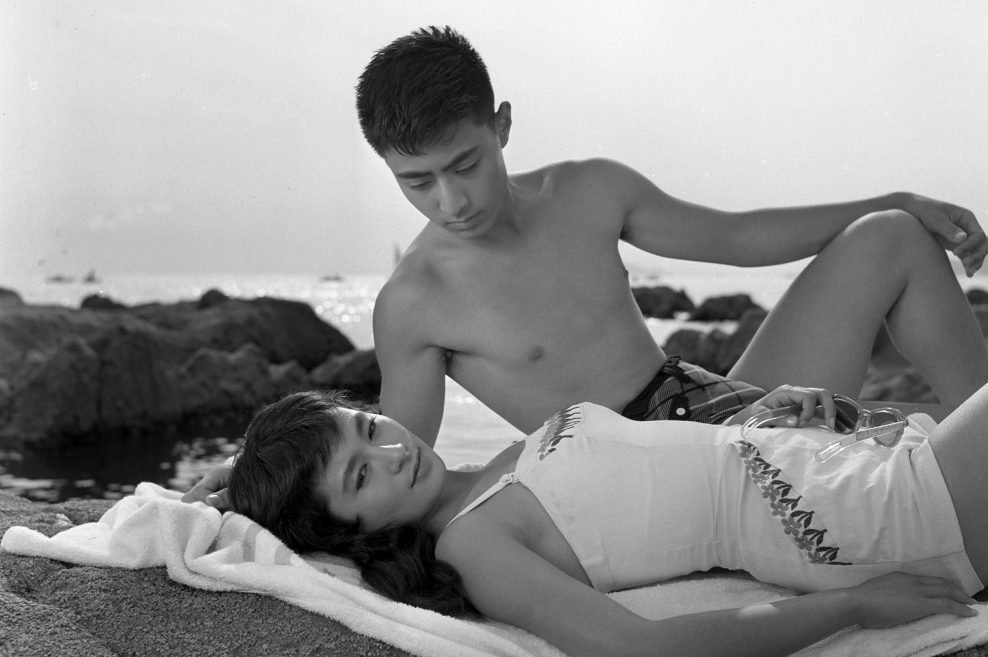
Drama, by Ko Nakahira, Japan, 1959.
The sweet life of the rich young Japanese of the Sun Tribe subculture which was inspired by the western lifestyle in the late 1950s, between lust and violence, water skiing and speedboats. A story of love, passion and betrayal. Two brothers fall in love with the same girl, but she hides her real life. The morbid passion for the girl becomes unmanageable and the conflict between the two brothers more and more dramatic. Almost unknown masterpiece in the West, it caused a scandal at the time of its release. It is the film that paves the way and inspires the Japanese New Wave. Director Ko Nakahira couldn't stand Nikkatsu's industrial production model and began abusing alcohol. Eventually, he had to expatriate China and use a pseudonym to make his later films.
Food for thought
Whenever you feel sexual attraction towards someone, jealousy can arise because you are not in love. If you are truly in love, jealousy never appears. You are afraid because sex is not actually a real relationship, you are afraid that the other person may go to someone else. This fear becomes jealousy. If there is a genuine relationship it is impossible to find that wealth somewhere else.
LANGUAGE: Japanese
SUBTITLES: English, Spanish, French, German, Portuguese
Coup d’etat (1973)
![Kaigenrei / Coup d'Etat (1973) ORIGINAL TRAILER [HD 1080p]](https://blog.indiecinema.co/wp-content/plugins/wp-youtube-lyte/lyteCache.php?origThumbUrl=https%3A%2F%2Fi.ytimg.com%2Fvi%2FbL01469Lc1g%2F0.jpg)
The film provides a biographical account of Ikki Kita, an ultranationalist intellectual and revolutionary whose ideas fueled the February 26 Incident—an attempted military coup in 1936. The narrative focuses on Kita’s final years, his psychological state, and his role as the ideological mastermind behind the young officers who sought to “restore” the Emperor and overthrow the corrupt civilian government.
Yoshishige Yoshida utilizes a highly stylized and avant-garde visual language, characterized by extreme framing and a clinical black-and-white aesthetic. The film is not a traditional biography but a dense, intellectual interrogation of the radicalization of the Japanese right and the thin line between political idealism and destructive obsession. It remains a challenging and essential work for understanding the origins of 20th-century Japanese nationalism.
Lady Snowblood (1973)

Yuki is born in a prison for the sole purpose of avenging her family, who were brutally murdered and raped by three criminals years earlier. Raised as an elite assassin by a strict priest, she travels through Meiji-era Japan, systematically hunting down her targets. As her quest nears its end, she finds herself entangled in a wider web of political unrest, forcing her to question the cost of her life-long obsession with blood.
Toshiya Fujita’s film is a masterclass in stylized violence and visual composition, based on the manga by Kazuo Koike. Meiko Kaji’s iconic, icy performance and the film’s poetic use of blood spray have influenced countless directors, most notably Quentin Tarantino for Kill Bill. It is more than just a revenge flick; it is a melancholic study of a woman who is a literal “weapon of history,” trapped in a fate decided before her birth.
Dodes’ka-den (1970)
![Dodes'ka-den (1970) ORIGINAL TRAILER [HD 1080p]](https://blog.indiecinema.co/wp-content/plugins/wp-youtube-lyte/lyteCache.php?origThumbUrl=https%3A%2F%2Fi.ytimg.com%2Fvi%2FuUgAMxdGGOM%2F0.jpg)
In a desolate garbage dump on the outskirts of Tokyo, a community of outcasts lives in makeshift shacks. Among them is Rokuchan, a mentally disabled boy who believes he is a trolley conductor, spending his days “driving” his imaginary train through the slum while chanting “Dodes’ka-den.” The film weaves together the lives of these marginalized figures, exploring their dreams, despairs, and the fragile fantasies they use to survive their grim reality.
This was Akira Kurosawa’s first film in color and his first independent production after the collapse of the studio system. He used an expressionistic color palette to visualize the characters’ internal worlds, contrasting the squalid setting with vibrant, almost hallucinatory imagery. Though it was a commercial failure that contributed to Kurosawa’s subsequent suicide attempt, it is now viewed as a profound and experimental meditation on the human spirit’s ability to find meaning in extreme poverty.
Kuroneko (1968)

During a brutal civil war in feudal Japan, two women living in a bamboo forest are raped and murdered by a group of soldiers. They return as vengeful spirits, vowing to the gods to lure and kill any samurai who crosses their path. The situation becomes tragic when a valiant samurai is sent to investigate the supernatural deaths, only to discover that the spirits are his own mother and wife.
Kaneto Shindo’s folk horror masterpiece is a visually stunning and atmospheric work, characterized by its innovative lighting and use of shadows. It functions as a powerful critique of the cruelty of the samurai class and the devastation war inflicts on the peasantry. The film’s blend of eerie supernatural elements with a deeply emotional core makes it a pinnacle of the kaidan genre, exploring the themes of duty, love, and the cyclical nature of violence.
Death by Hanging (1968)

A Korean man known as R survives his own execution but suffers from total amnesia. The prison officials and witnesses are thrown into a legal and ethical crisis, as the law forbids executing someone who cannot understand their crime. In a series of increasingly absurd and theatrical reenactments, the officials attempt to restore R’s memory and convince him of his guilt so they can finish the hanging, revealing their own deep-seated prejudices.
Nagisa Oshima utilizes a Brechtian and Godardian style to create a scathing satire of the death penalty and the systemic discrimination against ethnic Koreans in Japan. The film is an intellectual and formal tour de force that challenges the audience to question the nature of justice and the state’s monopoly on violence. By blurring the lines between reality and performance, Oshima exposes the absurdity of legal structures that value protocol over human life.
Miss Oyu
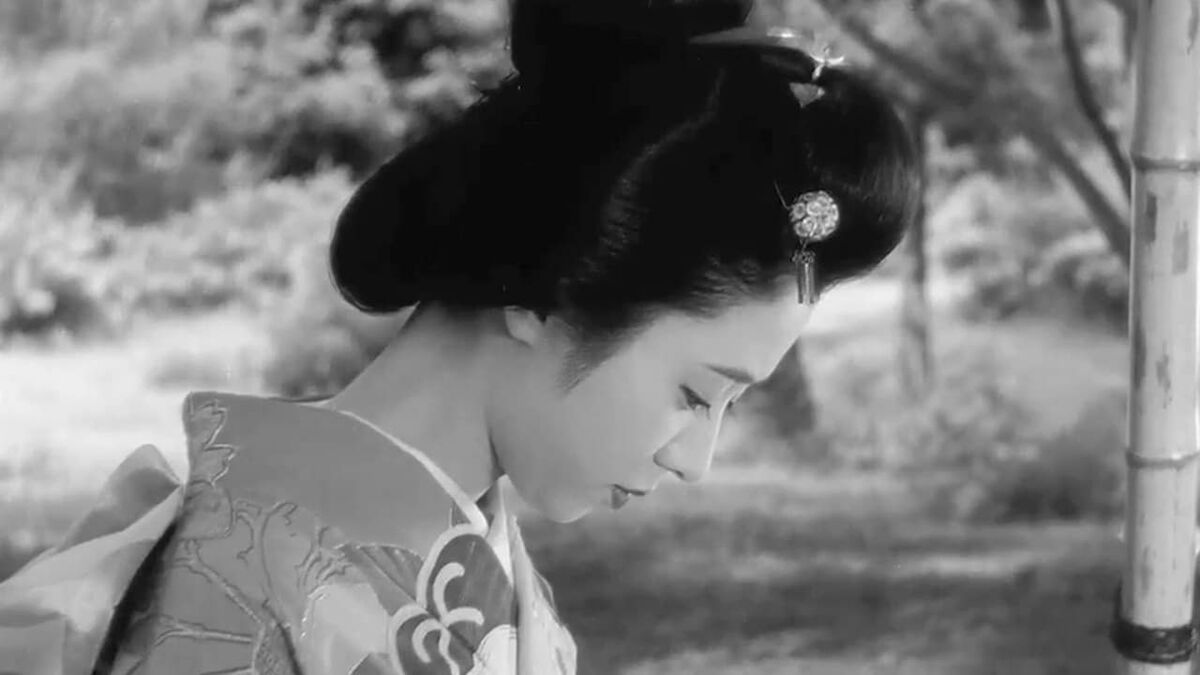
Drama, by Kenji Mizoguchi, Japan, 1951.
Bachelor Shinnosuke falls in love with Miss Oyu, the companion of his younger sister Shizu who visits him as a future bride. The family taboo prevents Shinnosuke from marrying Oyu. He marries Shizu without consummating their marriage so that Shinnosuke can remain faithful to the unconscious Oyu. However, the couple's commitment to appearances has a cost. The lack of sexuality and the malicious rumors about the ménage-a-trois lead to recrimination, separation and further pain. Miss Oyu is a radical reworking by Mizoguchi and his screenwriter Yoshikata Yoda of Junichiro Tanizaki's novel The Reed Cutter (1932). Miss Oyu moves in the aura of high art and good taste: opening credits beyond paintings of clouds, compositions of Chinese and Japanese art masterpieces, interiors decorated with refined furnishings and art objects, Japanese classical music recitals and songs derived from Japanese poetry, references to Heian costume, history and literature, historical and natural beauties; Japanese rituals such as ikebana, bonsai and tea ceremonies. A grand depiction of exotic and picturesque Japanese culture, Ms. Oyu was the first of the 1950s costume dramas that would make Mizoguchi famous outside of Japan.
LANGUAGE: Japanese language
SUBTITLES: English, Spanish, French, German, Portuguese
Portrait of Chieko (1967)

The film depicts the intense and tragic marriage of the famous Japanese poet and sculptor Kotaro Takamura and his wife, the artist Chieko. It follows their early years of creative passion and mutual support, which are eventually overshadowed by Chieko’s deteriorating mental health and eventual descent into schizophrenia. Kotaro struggles to care for her, eventually immortalizing her in his verses after her death.
Directed by Noboru Nakamura, the film is a visually elegant and emotionally devastating study of devotion and the fragility of the human mind. Shima Iwashita gives a powerhouse performance, capturing Chieko’s transition from a vibrant artist to a woman lost in her own internal world. It is a rare and sophisticated look at mental illness within the context of a high-art marriage, exploring the intersection of creativity, love, and tragedy.
Branded to Kill (1967)

Goro Hanada is the “Number 3” hitman in Japan’s criminal underworld, characterized by his fetish for the smell of boiling rice. After failing a difficult mission given to him by a mysterious woman named Misako, he becomes a target himself. Goro must engage in a surreal and deadly game of cat-and-mouse with the legendary “Number 1” killer, while his sanity begins to unravel under the pressure of constant pursuit and his own strange obsessions.
Seijun Suzuki’s anarchic and avant-garde noir was so stylized and non-linear that it led to him being fired by Nikkatsu Studios. Today, it is a cult classic, celebrated for its pop-art aesthetics, grotesque humor, and jazz-influenced pace. The film is a definitive example of “cinema of the cool,” influencing directors like Jim Jarmusch and Quentin Tarantino through its deconstruction of the hitman archetype and its rejection of narrative logic.
Tokyo Olympiad (1965)

Commissioned by the government to document the 1964 Summer Olympics, Kon Ichikawa ignored the request for a simple historical record. Instead, he utilized telephoto lenses and artistic close-ups to create a visual poem about the human body and spirit. The film focuses on the sweat, the effort, and the small, intimate gestures of athletes from all nations, as well as the reactions of the massive crowds in the stadium.
The documentary is considered one of the greatest sports films ever made, standing alongside Leni Riefenstahl’s Olympia in its artistic innovation. Ichikawa emphasized the humanity of the games over nationalistic triumph, capturing moments of both crushing defeat and joyous victory. By using high-speed photography and inventive sound design, he created a new language for sports cinema that prioritizes sensory experience and empathy over simple result-tracking.
Onibaba (1964)

In the mid-14th century, during a brutal civil war, two women—a mother and her daughter-in-law—survive in a swamp by killing wounded samurai and selling their armor for food. Their grim existence is disrupted when a neighbor returns from the war and begins a sexual relationship with the younger woman. Driven by jealousy and fear of abandonment, the older woman dons a terrifying “demon mask” stolen from a dead knight to scare the girl, leading to a horrific supernatural consequence.
Kaneto Shindo’s masterpiece is a visceral and erotic horror film that explores the primal instincts for survival and the destructive power of desire. The film’s claustrophobic atmosphere is created by the swaying reeds of the swamp and a pounding, ritualistic soundtrack. It serves as a stark allegory for the dehumanizing effects of war on the peasantry, portraying a world where humans are reduced to animalistic behaviors in order to endure.
Kwaidan (1964)

This anthology film presents four distinct ghost stories based on Japanese folk tales: a samurai who abandons his wife with tragic results, a woodcutter who encounters a snow spirit, a blind musician who performs for a ghostly court of warriors, and a writer who sees a face in his cup of tea. Each segment is a lush, atmospheric descent into the supernatural, where the spirit world and reality are separated by only the thinnest of veils.
Masaki Kobayashi utilized massive soundstages and highly stylized sets to create a visual experience that resembles moving traditional paintings. The film is celebrated for its exquisite use of color, meticulous pacing, and expressive sound design. Winner of the Special Jury Prize at Cannes, Kwaidan is the definitive cinematic representation of the Japanese ghost story, turning ancient folklore into a sophisticated and eerie work of high art.
Osaka Elegy
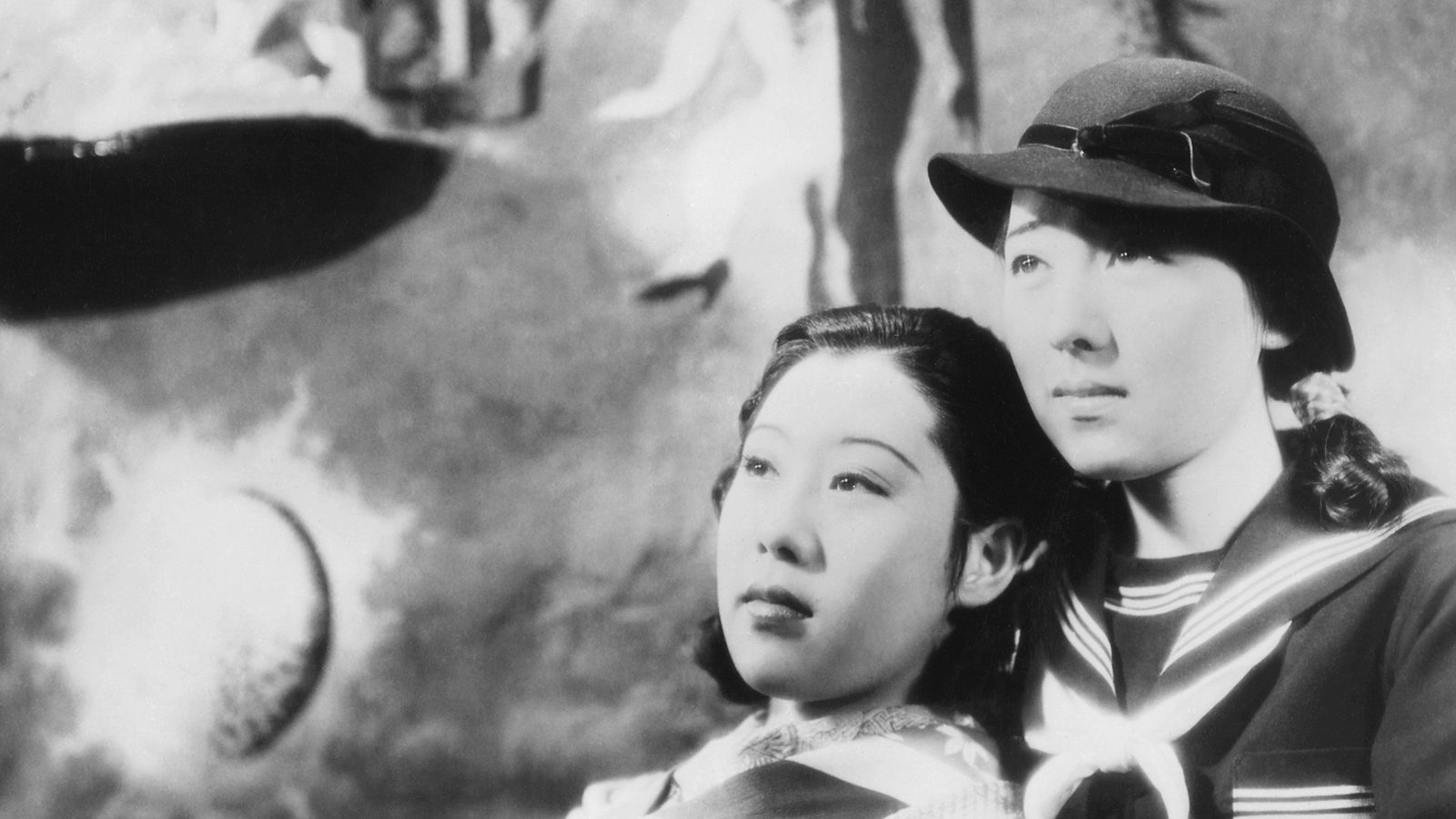
Drama, by Kenji Mizoguchi, Japan, 1936.
Ayako Murai is a telephone operator for the pharmaceutical company Asai, in the city of Osaka in 1930. To pay the debts of her father, unemployed and threatened with arrest for not repaying a loan, she agrees to become her employer's mistress. work. After paying the debts of her father, her relationship with Mr. Asai is interrupted due to the jealousy of the latter's wife, Sonosuke, who categorically forbids her husband to see her again with her lover. However Ayako, in an attempt to help pay her brother Hiroshi's college tuition, continues to make her the lover she maintained at the expense of another firm admirer, Mr. Fujino.
Film about the condition of women, as a large part of Mizoguchi's filmography. The protagonist is a victim of a patriarchal and male chauvinist society where money is the dominant value. Masterful film for the realistic description of the city of Osaka, lyrical and lucidity in its social criticism. Mizoguchi referring to this film, said: "Only when I was forty did I find my way". The simplicity of the story and of the style is exemplary in Osaka Elegy. The film was banned after 1940 by the militarists, it is an unparalleled masterpiece of cinematic realism.
LANGUAGE: Japanese
SUBTITLES: English, Spanish, French, German, Portuguese
Woman in the Dunes (1964)

An amateur entomologist on a weekend trip to a remote coastal area is tricked by villagers into spending the night in a shack at the bottom of a deep sand pit. He discovers he is being held captive with a lonely woman, forced to spend his days shoveling sand to prevent the pit from burying the village. Initially desperate to escape, his struggle against the sand and his growing intimacy with the woman lead him into a state of existential acceptance.
Hiroshi Teshigahara’s New Wave masterpiece is a haunting allegory of the human condition and the futility of modern ambition. Nathaniel Thompson’s score and the microscopic, tactile cinematography of the sand create a sense of suffocating, almost erotic tension. The film explores themes of freedom, domesticity, and identity, suggesting that true meaning may be found not in escape, but in the relentless and repetitive tasks that define our existence.
Bushido, Samurai Saga (1963)
![Samurai I: Musashi Miyamoto (1954) ORIGINAL TRAILER [HQ]](https://blog.indiecinema.co/wp-content/plugins/wp-youtube-lyte/lyteCache.php?origThumbUrl=https%3A%2F%2Fi.ytimg.com%2Fvi%2FD-VOW7E6JPE%2F0.jpg)
The film tracks seven generations of the Iiyama family, from the early 17th century to the 1960s, showing how each male successor is destroyed by his unwavering loyalty to his superiors. Whether as a samurai sacrificing his life for a cruel lord or a modern salaryman prioritizing his company over his family, the men are trapped in a cultural cycle of self-destruction. The chain is only broken when the last descendent chooses a different path after a tragedy.
Tadashi Imai’s epic won the Golden Bear at Berlin and serves as a scathing critique of the “Bushido” code and its modern corporate equivalents. It portrays the traditional values of honor and loyalty not as noble virtues, but as instruments of institutionalized cruelty and exploitation. By spanning centuries, the film illustrates the persistence of a feudal mentality in modern Japan, warning of the cost of placing national or corporate identity above human life.
The Insect Woman (1963)

Tome is born into extreme poverty in rural Japan in 1918. Her life is a relentless struggle for survival through the decades, encompassing industrial labor, wartime hardship, and eventually a career as a prostitute and madam in Tokyo. Despite being exploited by men and the state, Tome exhibits a primal, “insect-like” instinct to survive and adapt, eventually sacrificing her own daughter’s future to secure her own position.
Shohei Imamura directs a gritty and unsentimental portrait of a woman who is neither a hero nor a victim, but a biological force. The film uses an observational, almost entomological style to examine the lower strata of Japanese society. It is a masterpiece of the “New Wave,” rejecting the refined aesthetics of classic cinema in favor of a raw, vigorous look at human nature and the historical forces that shape it.
She and He (1963)

Naoko is a young middle-class wife living in a new, sanitized apartment complex in Tokyo. Her comfortable but hollow life is disrupted when she reconnects with a former acquaintance, Ikona, who now lives as a rag picker in a nearby shanty town. Naoko becomes increasingly drawn to Ikona’s world of poverty and struggle, causing a rift with her entrepreneur husband and forcing her to confront the artificiality of her own social status.
Susumu Hani’s film is a vital work of the Japanese New Wave, utilizing a semi-documentary style and non-professional actors to explore social alienation. It highlights the growing divide in post-war Japan between the burgeoning middle class and those left behind by the economic boom. The film’s empathetic portrayal of the marginalized and its critique of bourgeois complacency made it a critical success, winning several international awards.
An Autumn Afternoon (1962)

Shuhei Hirayama is an aging widower who lives with his devoted daughter, Michiko, and his youngest son. After meeting a former teacher who has ended up in a lonely, impoverished old age because he kept his daughter at home, Hirayama realizes he must arrange a marriage for Michiko for her own sake, even if it means his own total isolation. The film follows the quiet, repetitive rhythms of his daily life as he prepares for this final familial duty.
This was Yasujiro Ozu’s final film, released a year before his death, and it serves as a distilled summary of his life-long themes of family, change, and the passage of time. The film utilizes his signature low-angle shots and minimalist narrative to create a sense of profound melancholy and acceptance. It is a masterpiece of the shomin-geki genre, portraying the quiet tragedy of aging in a post-war Japan that is rapidly moving away from traditional family structures.
Early Summer
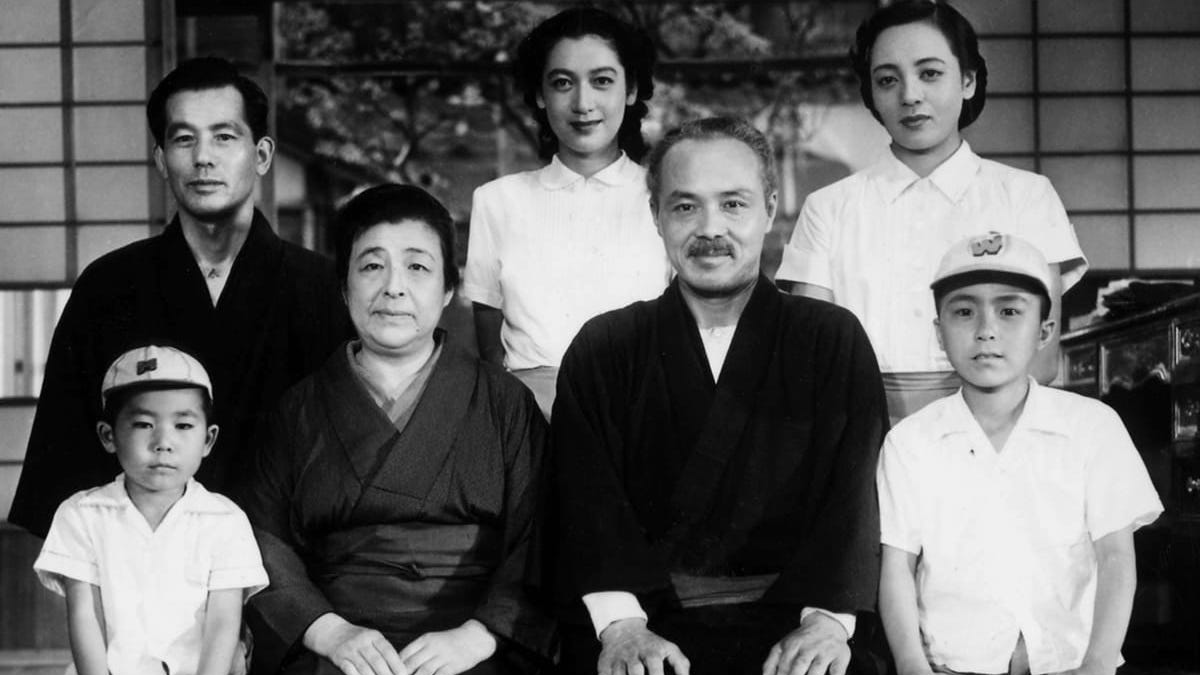
Drama, by Yasujirō Ozu, Japan, 1951.
Noriko, a secretary from Tokyo, resides in Kamakura with her family along with her parents Shūkichi and Shige, her elder brother Kōichi, a doctor, her wife Fumiko and their 2 boys Minoru and Isamu. Noriko's friends are divided into 2 groups, married and single, who constantly tease each other, with Aya Tamura being her close ally in the single group. Noriko's family pressures Noriko into accepting Satake's proposed marriage, agreeing that it's time for her to get married and thinking that marriage is perfect for someone her age. When Yabe's mother Tami impulsively asks Noriko to marry Yabe and follow them on their move north, Noriko accepts her proposal. The family accepts Noriko's decision with resignation and, before she leaves, they take a picture together. Gorgeous drama about family unity that is part of Ozu's thematic trilogy called The Noriko Trilogy: Late Spring, Time of the Wheat Harvest and Journey to Tokyo, all starring Setsuko Hara as a character named Noriko, on the theme of the family on the verge of a great change.
Food for thought
Love never suspects, it is never jealous. Love never interferes in the freedom of the other. Love never imposes anything on the other. Love gives freedom, and freedom can only exist if there is space. Love should be a gift given and taken in freedom, but there should be no claim. If you can have freedom and love at the same time, you won't need anything else. You will have obtained everything, everything you live for will have been given to you.
LANGUAGE: Japanese
SUBTITLES: English, Spanish, French, German, Portuguese
Yojimbo (1961)

In 1860, a masterless samurai (ronin) arrives in a town divided by a brutal war between two rival crime bosses. Sensing an opportunity, the cunning swordsman plays both sides against each other, hiring himself out as a bodyguard to both while secretly orchestrating their mutual destruction. With his wit and lightning-fast sword skills, he cleanses the town of corruption before wandering off into the unknown.
Akira Kurosawa’s film is a brilliant fusion of the samurai genre with the American western and film noir. Toshiro Mifune’s performance as the cynical but secretly moral anti-hero created an archetype that resonated globally, most notably in Sergio Leone’s A Fistful of Dollars. The film is celebrated for its sharp humor, dynamic action, and Kurosawa’s masterful use of wide-angle compositions, remaining one of the most entertaining and influential films in cinematic history.
Night and Fog in Japan (1960)

During the wedding of two activists in 1960, the celebrations are interrupted by the arrival of a fugitive and a series of angry confrontations. The guests, representing two generations of the Japanese left, engage in a fierce debate about the failure of their protests against the US-Japan Security Treaty. The narrative uses long, complex shots and flashbacks to reconstruct a history of betrayal, Stalinist internal purges, and the suicide of a young student.
Nagisa Oshima’s film was so politically explosive that it was pulled from theaters just days after its release following the assassination of a socialist leader. It is a foundational work of the Japanese New Wave, using the wedding as a theatrical arena to dismantle the national myths of unity and progress. The film’s radical formal structure and its unflinching critique of both the state and the internal dynamics of protest movements make it a pinnacle of political cinema.
Cruel Story of Youth (1960)

Kiyoshi and Makoto are two disaffected teenagers in Tokyo who enter into a dangerous relationship. They spend their days extorting money from middle-aged motorists by having Makoto lure them into compromising situations, only for Kiyoshi to appear and threaten them. Their lives of petty crime and sexual transgression are a desperate rebellion against the stultifying morality of their parents’ generation and the political failures of post-war society.
Nagisa Oshima’s second feature is the manifesto of the “Nuberu Bagu” (Japanese New Wave), rejecting the quiet humanism of older directors in favor of raw energy and social anger. The film utilizes a vibrant, kinetic visual style to capture the nihilism of the youth during the Anpo protests. It is a seminal work that portrays the transition of Japan into a modern, consumerist, yet deeply alienated nation, where the only form of agency for the youth is found in transgression.
When a Woman Ascends the Stairs (1960)

Keiko, a refined and aging widow, works as a “mama-san” in a high-end hostess bar in Ginza. She struggles to maintain her dignity and professional distance in a world where she is pressured by her family for money and by her clients for sexual favors. Realizing that the hostess business is changing and that her beauty is fading, Keiko attempts to find a way out—either through marriage or opening her own bar—but finds herself trapped by her own principles and the selfishness of men.
Mikio Naruse directed this sophisticated and melancholic drama, which is considered one of his finest works. The film is a masterful study of the limited options available to independent women in post-war Japanese society. Hideko Takamine gives a performance of extraordinary subtlety, portraying a woman who maintains a composed exterior while navigating a life of constant emotional and financial precariousness, making the simple act of “ascending the stairs” to her bar a recurring symbol of her daily struggle.
The Naked Island (1960)
![The Naked Island (1960) ORIGINAL TRAILER [HD 1080p]](https://blog.indiecinema.co/wp-content/plugins/wp-youtube-lyte/lyteCache.php?origThumbUrl=https%3A%2F%2Fi.ytimg.com%2Fvi%2F3GrLWObrHkA%2F0.jpg)
A husband and wife live with their two young sons on a small, rugged island in the Seto Inland Sea. Their entire lives are consumed by the back-breaking labor of carrying water by boat from a larger island to irrigate their crops on the dry hills. The film follows the repetitive, arduous cycle of their daily routine through the seasons, a life of absolute silence and grueling work that is only broken by a sudden and devastating family tragedy.
Kaneto Shindo’s film is a bold and unique experiment in visual storytelling, containing no dialogue whatsoever. It relies entirely on imagery, natural sounds, and a haunting score to communicate the profound bond between humans and the land. The film is a powerful tribute to human endurance and a critique of the harshness of rural life, winning the Grand Prize at the Moscow International Film Festival and achieving global recognition for its poetic and universal language.
Tokyo Story

Drama, by Yasujirô Ozu, Japan, 1953.
Shukichi and Tomi, now close to seventy, take a trip to Tokyo to visit their children before it's too late. When they arrive in the city, however, the welcome is not what they expected: the eldest son Koichi and his sister Shige have too many work commitments and seem to experience the visit of the elderly parents more as a nuisance than a joy. Only Noriko, widow of the second son Shoji for eight years, shows a sincere affection for the former in-laws, despite there is no blood bond to unite them. One of the most important films in the history of cinema, it opens with a departure and ends with a farewell, like many other films of Ozu's maturity. The Japanese director tells a simple story with the main themes of his filmography, managing to create a masterpiece. Generational conflict and change in society, rhythms, gestures, daily actions. A timeless moral apologue, like the cycles with which the seasons are repeated.
Food for thought
As parents age and become frail, the children devoted to work, to the ephemeral entertainment of modernity, are not interested in them, perhaps parking them permanently in some hospice and boasting of paying a fee for a high-level structure. As the joust of material life goes on, the collective memory and the achievements of the spirit of the age of wisdom are lost forever.
LANGUAGE: Japanese
SUBTITLES: English, Spanish, French, German, Portuguese
The Human Condition (1959 – 1961)

Kaji, a Japanese socialist and pacifist, attempts to survive the brutal realities of World War II. The trilogy follows his journey from a labor supervisor in occupied Manchuria to a soldier in the Imperial Army, and finally a prisoner of war in a Soviet camp. Throughout his odyssey, Kaji struggles to maintain his humanist ideals in the face of systemic cruelty, realizing that his own attempts to be “good” often make him a complicit part of a murderous machine.
Masaki Kobayashi’s nearly ten-hour epic is one of the most monumental achievements in cinema history. It is a searing, unflinching indictment of Japanese militarism and a profound exploration of individual conscience within a totalitarian system. Shot with a stark, widescreen aesthetic, the film depicts the total physical and moral exhaustion of a man trying to remain human in an inhuman world. It remains a foundational work of post-war Japanese culture and a definitive anti-war masterpiece.
Floating Weeds (1959)

Komajuro, the leader of a struggling traveling theater troupe, returns to a small seaside village where he left a former mistress and their son, Kiyoshi, years earlier. The son believes Komajuro is his uncle. When Komajuro’s current mistress, the lead actress Sumiko, discovers his secret family, she becomes consumed by jealousy and plots to sabotage the relationship by having a younger actress seduce Kiyoshi, leading to a series of emotional confrontations.
Yasujiro Ozu directed this stunning color remake of his own silent film, A Story of Floating Weeds. It is celebrated for its exquisite cinematography by Kazuo Miyagawa and its masterful use of the “red teapot” color palette. The film explores themes of regret, the passage of time, and the complexity of familial bonds with Ozu’s characteristic gentleness and acceptance. The famous argument scene across a rain-drenched street is one of the most iconic moments in Japanese cinema.
Good Morning (1959)

In a quiet Tokyo suburb, two young brothers go on a “silence strike” after their parents refuse to buy them a television set. Their refusal to speak causes a series of comical misunderstandings and social friction among the neighbors, who suspect the family of harboring various grudges. The boys’ rebellion highlights the triviality of adult small talk and the changing values of a society caught between tradition and modern consumerism.
Yasujiro Ozu’s lighthearted comedy is a delightful and insightful look at the complexities of human communication. It serves as a gentle satire of the mid-century Japanese middle class and the arrival of Western technology. Despite its humorous tone, the film retains Ozu’s trademark focus on family dynamics and the quiet beauty of the everyday, utilizing vibrant colors and precise compositions to create a world that is both specific and universal.
Fires on the Plain (1959)

During the disastrous retreat of the Japanese army in the Philippines at the end of World War II, Tamura, a soldier suffering from tuberculosis, is rejected by both his unit and the hospital due to a lack of food. Abandoned to wander a scorched and lawless landscape, he witnesses the total breakdown of humanity as his fellow soldiers descend into madness and cannibalism. Tamura must struggle to maintain a shred of his own sanity and spirit in the face of absolute despair.
Kon Ichikawa directed this harrowing and viscerally disturbing anti-war film, which remains one of the most powerful depictions of the horrors of combat. It rejects any notion of military glory, focusing instead on the biological and psychological collapse of individuals when they are stripped of their humanity. The film’s bleak, high-contrast cinematography and its unflinching look at the ultimate taboos make it a landmark of world cinema and a devastating warning about the true nature of war.
Enjo (1958)

Goichi, a stuttering and idealistic young Buddhist acolyte, is obsessed with the beauty of the Golden Pavilion in Kyoto, which his late father called the most beautiful thing in the world. However, his disillusionment grows as he witnesses the corruption of the head priest and the moral decay of post-war society. Unable to reconcile his pure vision of the pavilion with the reality of its defilement by tourism and hypocrisy, Goichi decides that the only way to “save” its beauty is to destroy it.
Based on Yukio Mishima’s The Temple of the Golden Pavilion, Kon Ichikawa’s film is a dark and sophisticated psychological study of obsession and trauma. The widescreen cinematography and the use of deep shadows create a sense of looming tragedy and mental instability. It is a profound exploration of the conflict between traditional ideals and modern reality, portraying the act of arson not as a crime, but as a desperate and aesthetic sacrifice.
Ugetsu
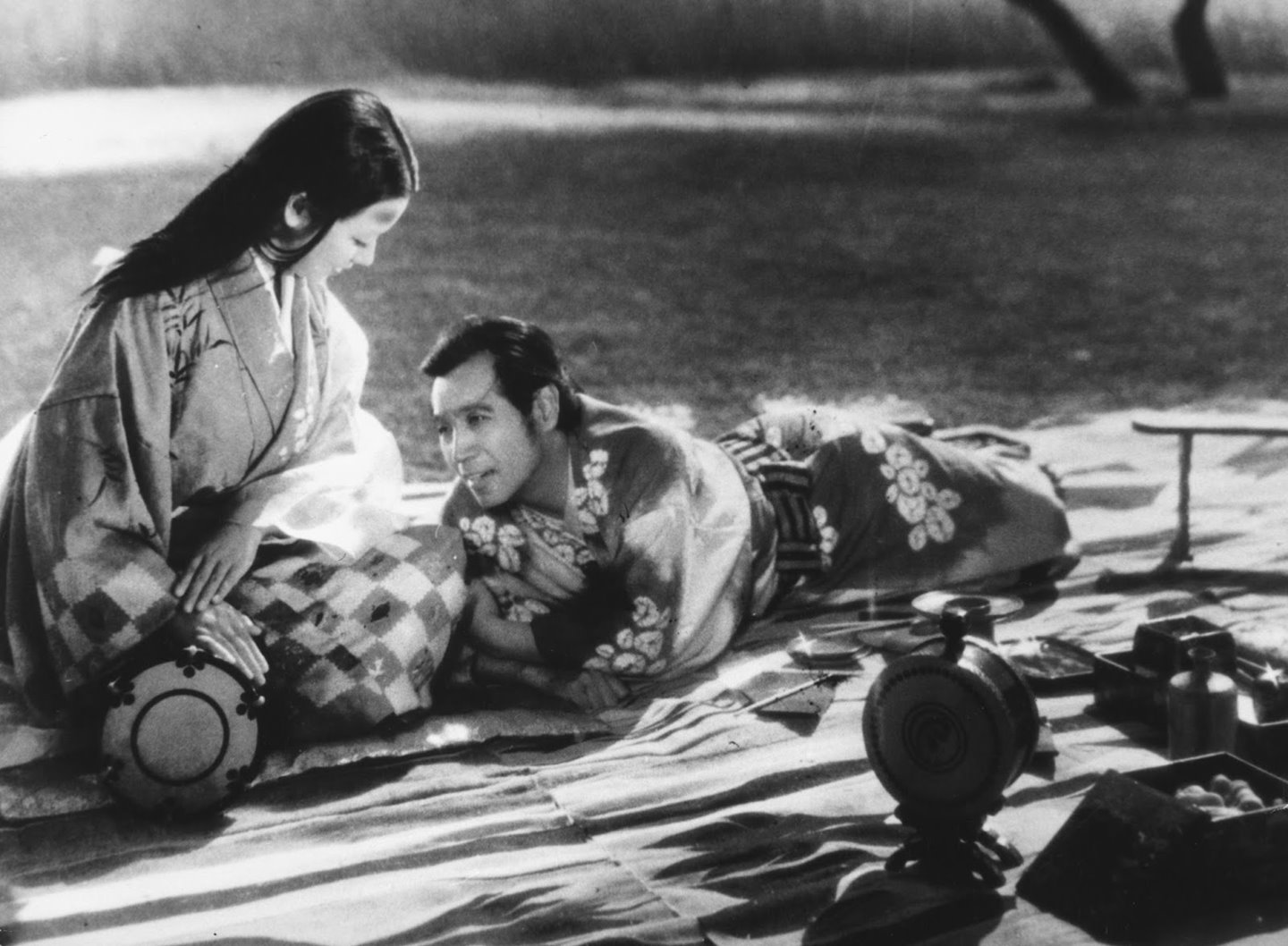
Drama, fantasy, by Kenji Mizoguchi, Japan, 1953.
Japan, late 16th century: the potter Genjurō and his brother Tobei live with their wives Miyagi and Ohama in a village in the Omi region; Genjurō, convinced that he can earn a lot of money by selling his goods in the nearby city, goes to the county of Omizo with Tobei, who joins him with the sole purpose of being able to become a samurai. Back home with a good income, the two work hard to make even more money; Tobei, increasingly obsessed with the ambition of becoming a samurai, needs the money to buy an armor and a spear while Genjurō, overcome by greed, tries to cook a batch of crockery with his brother in just one night. Legend and innovation of cinematic language, a wonderful world next to a brutal and cruel world. Mystery film that opens a discourse with the invisible planes of existence, ghosts and forays into the fantastic, made by Kenji Mizoguchi in a Japan still frozen by the two atomic bombs dropped on Hiroshima and Nagasaki. Fundamental work by Mizoguchi, recognized as one of the greatest expressions of the Seventh Art. A lofty lesson in directing that creates wonder with a dramatic tale of greed and lust for possession. A woman who is a tempting demon and a wife abandoned to a fate of war and misery, Mizoguchi uses the camera to enter "another world".
Food for thought
According to ancient Eastern traditions there are other non-physical planes beyond the physical plane. The etheric plane envelops the physical body, gives it vital energy and acts as an intermediary with the higher levels. Beyond the etheric plane there is the astral plane where entities may exist that have not been able to resign themselves to the loss of their body and wander in search of sensations. They are what are commonly referred to as "ghosts". These entities are looking for bodies that have unbalanced etheric planes to "hook up" to in order to experience sense satisfaction through them.
LANGUAGE: Japanese
SUBTITLES: English, Spanish, French, German, Portuguese
Rickshaw Man (1958)

In the early 20th century, Matsu, a boisterous and hot-tempered rickshaw man, becomes a devoted protector and father figure to the young son of a widow, Yoshiko, after her army captain husband dies. Over the years, Matsu’s secret, unspoken love for Yoshiko remains constant, even as he faces social discrimination and the realization that his lower-class status prevents him from ever truly becoming part of her world.
Hiroshi Inagaki’s color remake of his own 1943 film won the Golden Lion at Venice. Toshiro Mifune gives a legendary performance, balancing Matsu’s rough exterior with a deep, heartbreaking vulnerability. The film is a classic melodrama that explores the themes of social class, sacrifice, and the hidden nobility of the common man, using vibrant colors and a nostalgic tone to depict a Japan that was rapidly disappearing.
The Burmese Harp (1956)
![The Burmese Harp (1956) ORIGINAL TRAILER [HD 1080p]](https://blog.indiecinema.co/wp-content/plugins/wp-youtube-lyte/lyteCache.php?origThumbUrl=https%3A%2F%2Fi.ytimg.com%2Fvi%2F_bw8SgZuaO0%2F0.jpg)
At the end of World War II in Burma, a Japanese soldier named Mizushima is separated from his unit while trying to convince a group of holdouts to surrender. After witnessing the horrific sight of unburied corpses littering the landscape, he decides to stay behind, disguising himself as a Buddhist monk. He dedicates his life to wandering the country, playing his harp and burying the dead, seeking spiritual redemption for the sins of the war.
Kon Ichikawa’s profoundly humanist film was one of the first Japanese productions to address the spiritual trauma and guilt of the war. It uses music as a universal language of grief and reconciliation, creating a bridge between enemies. The film’s quiet, contemplative tone and its powerful message of peace made it an international success, earning an Academy Award nomination and becoming a cornerstone of post-war world cinema.
Sansho the Bailiff (1954)

In 11th-century Japan, a noble family is torn apart when the father is exiled for his compassion toward the peasantry. His wife and two children, Zushio and Anju, are kidnapped by human traffickers; the children are sold into slavery in the brutal camp of the cruel bailiff Sansho. Over years of hardship, the siblings struggle to survive and remember their father’s teachings on mercy, eventually leading to a tragic yet spiritually transcendent conclusion.
Kenji Mizoguchi’s historical tragedy is a masterpiece of visual choreography and human empathy. The film is renowned for its long, flowing takes and its devastating portrayal of institutionalized cruelty. It functions as a powerful meditation on the endurance of the human spirit and the high cost of maintaining one’s moral integrity in a heartless world. Today, it is regarded as one of the greatest films ever made, representing the height of Japanese cinematic high-art.
7 Samurai (1954)

In the late 16th century, a village of desperate farmers hires seven masterless samurai (ronin) to protect them from a band of outlaws who plan to steal their harvest. The samurai, led by the experienced Kambei, must train the peasants and prepare the village’s defenses for a final, climactic battle. As they bond with the villagers, the film explores the differences between social classes and the true meaning of heroism and duty.
Akira Kurosawa’s epic redefined the action genre and the “team on a mission” trope. It is a monumental work of technical mastery, featuring innovative editing and dynamic cinematography that places the viewer in the heart of the battle. Beyond the action, it is a deeply humanist drama that examines the nature of society and the tragic reality that the warriors are ultimately outsiders in the very world they protect. It remains one of the most influential and beloved films in the history of cinema.
Twenty-Four Eyes (1954)

In 1928, a young, progressive teacher named Miss Oishi arrives at a small island school, where she forms a deep bond with her twelve first-grade pupils. The film tracks their lives through the following decades as Japan descends into nationalism and war. Miss Oishi witnesses the tragic fate of her students and the crushing of her own ideals, eventually returning to the island after the war to find hope in a new generation.
Keisuke Kinoshita’s film is a landmark of Japanese anti-war cinema, celebrated for its profound emotional impact and its lyrical depiction of the beauty of the island. It captures the collective trauma of a nation through the specific, heartbreaking stories of ordinary people and their lost innocence. The film’s focus on the female experience and the enduring power of empathy made it a massive cultural phenomenon, often outranking Seven Samurai in contemporary domestic polls.
A Geisha
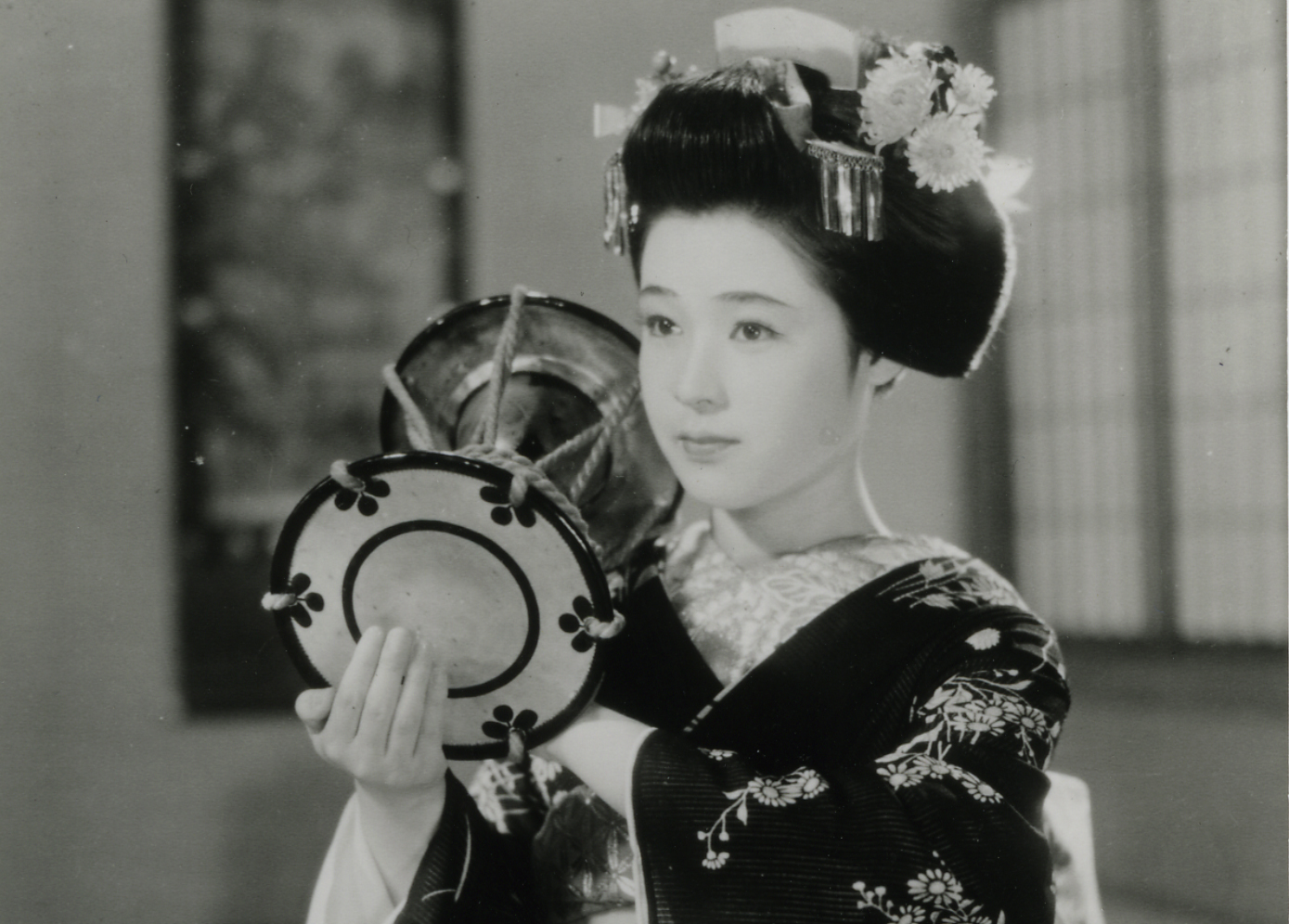
Drama, by by Kenji Mizoguchi, Japan, 1953.
The story takes place in Kyoto and follows Eiko, a young woman who wants to become a geisha and asks the older Miyoharu to teach her the trade. One of her first clients tries to rape her but Eiko violently defends herself and sends him to the hospital. After Miyoharu also refuses a customer, the two women are banished from the Gion neighborhood; however Miyoharu agrees to sacrifice himself to preserve the future of her young friend.
Remake of one of Mizoguchi's first successful films of 1936. One of Mizoguchi's last films and one of the most successful on the condition of geishas, often victims of dramatic lives. It is also a story of great female solidarity: while the young Eiko rebels, the older Miyoharu has now resigned herself to her condition. It is a dramatic story, punctuated by extended times and long sequence shots and with a camera that remains distant and detached from the characters: the result is moving, rigorous from an aesthetic point of view, performed in an extraordinary way. Probably one of the best ever made on the theme of female friendship.
LANGUAGE: Japanese
SUBTITLES: English, Spanish, French, German, Portuguese
Godzilla (1954)

A prehistoric sea monster is awakened and mutated by American hydrogen bomb testing in the Pacific. The creature, named Godzilla, begins a trail of destruction that leads it to Tokyo, which it levels with its atomic breath. As the city burns and the death toll rises, a group of scientists and officials must decide whether to use a terrifying new weapon, the Oxygen Destroyer, to kill the beast, even if it risks a new arms race.
Ishiro Honda’s original film is far more than a simple monster movie; it is a dark, somber allegory for the nuclear trauma of Hiroshima and Nagasaki. The creature represents the uncontrollable and destructive power of modern science, and the film’s imagery of a fire-ravaged Tokyo resonated deeply with a post-war audience. It launched one of the most enduring franchises in media history while remaining a serious and haunting reflection on the atomic age.
Eagle of the Pacific (1953)

The film dramatizes the military career of Admiral Isoroku Yamamoto, from his initial opposition to the alliance with Nazi Germany to his reluctant planning of the attack on Pearl Harbor. It focuses on the strategic internal conflicts within the Japanese high command and the escalation of the Pacific War, culminating in the decisive and tragic Battle of Midway, where the tide of the war turned against Japan.
Directed by Ishiro Honda with special effects by Eiji Tsuburaya, this was one of the first major post-war Japanese films to use miniature effects for naval combat. It portrays Yamamoto as a tragic, brilliant figure caught between his loyalty to his country and his rational understanding of the futility of the conflict. The film’s success paved the way for the “special effects” era at Toho Studios, eventually leading to the creation of Godzilla.
Where Chimneys Are Seen (1953)

In a working-class district of Tokyo, four people live in a small house overshadowed by four massive industrial chimneys. The lives of a middle-aged couple and their young tenants are thrown into chaos when a baby is abandoned on their doorstep, claimed to be the husband’s child from a previous marriage. As they struggle with the burden and the suspicion, the film explores their fragile hopes and the daily pressures of survival in a recovering Japan.
Heinosuke Gosho’s film is a prime example of the shomin-geki genre, noted for its “Gosho-ism”—a style that blends humor with pathos and social realism. The chimneys of the title serve as a visual metaphor for perspective; depending on where one stands, they appear as one, two, or four, reflecting the subjective nature of truth and human problems. It is a compassionate and realistic look at the dignity of ordinary people facing life’s inexplicable challenges.
Repast (1951)

Michiyo is a woman who left her comfortable life in Tokyo to marry for love and settle in Osaka. Years later, her marriage has become a dull, stagnant routine of domestic chores and her husband’s indifference. When his vibrant young niece arrives to stay, her presence exposes the cracks in their relationship and sparks a crisis. Michiyo returns to Tokyo to visit her family, contemplating whether to leave her marriage and reclaim her independence.
Mikio Naruse directed this subtle and insightful adaptation of Fumiko Hayashi’s novel, marking the beginning of his most acclaimed period. The film is a precise and melancholic study of “the wear and tear of marriage” and the limited horizons for women in post-war Japan. Setsuko Hara gives a performance of restrained power, portraying a woman’s internal journey toward self-awareness in a world that demands her submission to the mundane.
Early Summer (1951)

Noriko, a happy and independent 28-year-old secretary living in Kamakura, is under increasing pressure from her family and friends to get married. While everyone around her is busy proposing “suitable” candidates, Noriko surprises them all by impulsively deciding to marry a widowed doctor with a child, a man she has known for years. Her choice leads to the eventual dispersal of her large, multi-generational family.
Yasujiro Ozu’s second film in the “Noriko trilogy” is a masterpiece of understated drama and visual balance. It captures the subtle shifts in family dynamics and the inevitable change of seasons in human life. The film is celebrated for its warm, humanist perspective and its celebration of personal choice over social expectation, portrayed through Ozu’s signature minimalist style and the radiant performance of Setsuko Hara.
Children of Hiroshima
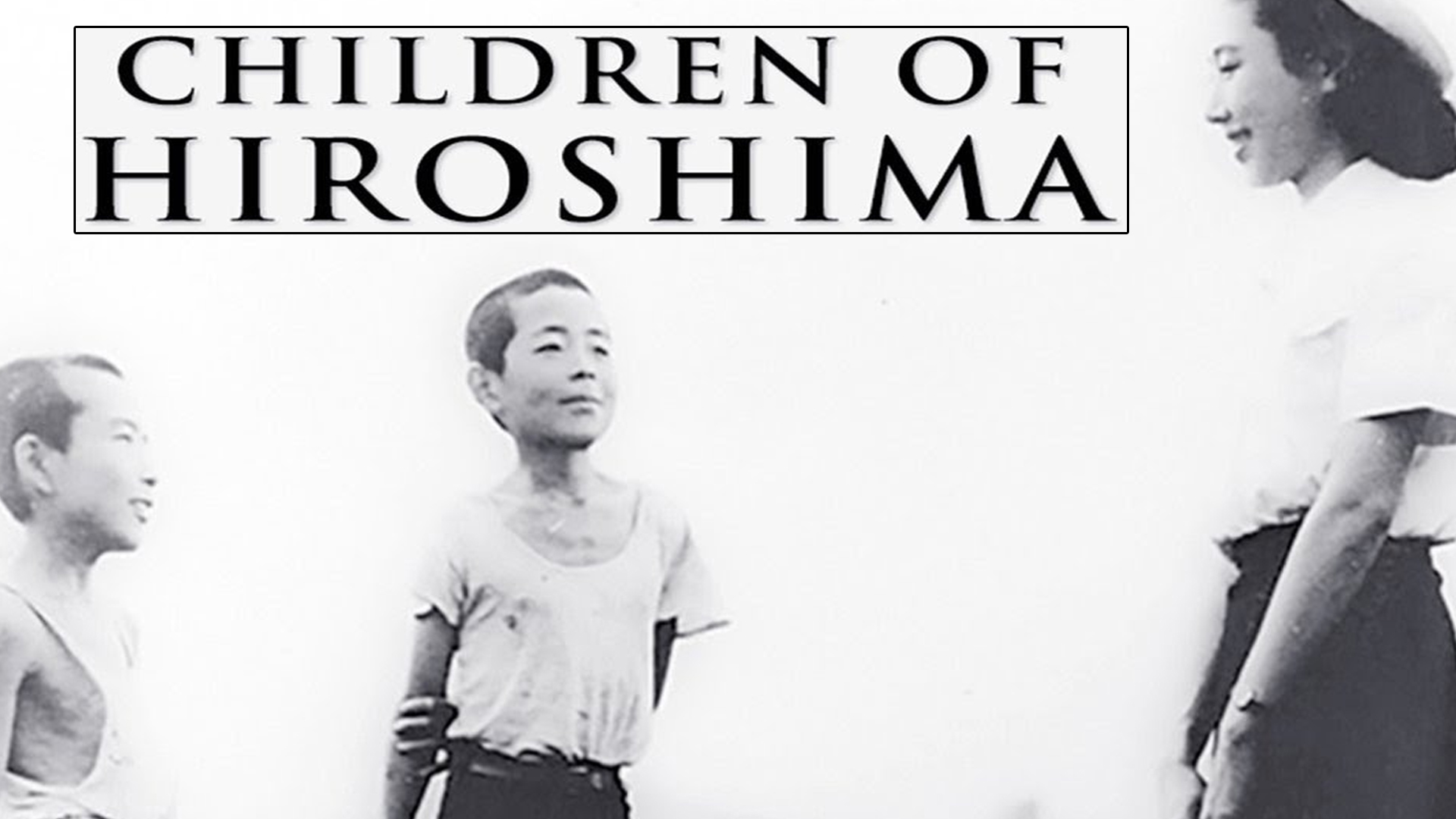
Drama, by Kaneto Shindō, Japan, 1952.
Takako Ishikawa is a teacher off the coast of Hiroshima and has not returned to his atomic bombed city in 4 years. His trip to Hiroshima becomes a journey to his destroyed homeland, in search of surviving old friends. The city has almost been rebuilt, but the tragedy is still very present: the disfigured faces, the shrunken limbs, the sterile women and the handicapped children without joy. In an old blind man accompanied by his nephew Taro Takako he recognizes the servant of his own family, destroyed with the house.
Film shot with sobriety, it shows the tragedy of the bomb only in a short flashback from the protagonist in a few seconds of hallucinating images. The short scene, however, always remains present in her mind as in the mind of the spectator. The tone of Kaneto Shindo is not that of a historical account but that of an intense and restrained lyrical emotion, which seeks its essence in the details. In the sky, finally, a plane passes: the eyes of the teacher are filled with anguish, those of the child are only pure and curious. In competition at the 1953 Cannes Film Festival, shot after the war when the pain was still fresh, full of dark and realistic atmospheres. Shindo, who died at 100 in 2012, less known in the West than Mizoguchi, Kurosawa, realizes his masterpiece with this film.
LANGUAGE: japanese
SUBTITLES: english
Carmen Comes Home (1951)

A young woman named Carmen, who ran away to Tokyo to become a stripper, returns to her rural hometown in the mountains of Nagano for a visit. Accompanied by her eccentric friend Maya, Carmen’s flashy Western clothes and modern behavior shock and fascinate the conservative villagers. Despite her “scandalous” career, Carmen is portrayed with an innocent and joyful spirit, eventually performing a grand show that challenges the village’s perceptions of art and morality.
Keisuke Kinoshita directed this film, which is historically significant as the first Japanese feature shot entirely in color. It is a satirical and lighthearted look at the clash between traditional rural life and the new, vibrant Westernized culture of the post-war cities. The film’s use of Fujicolor and its playful tone reflected the burgeoning optimism of the 1950s, making Carmen an icon of a new, liberated Japanese identity.
Until We Meet Again (1950)
In the final, desperate years of World War II, a young student named Saburo and a girl named Keiko meet during an air raid and fall deeply in love. Their relationship is a brief sanctuary from the surrounding militarism and the constant threat of death. As Saburo is eventually drafted and sent to the front, the couple is forced to say a heartbreaking goodbye, clinging to their love as an act of defiance against a world that prioritizes national sacrifice over human happiness.
Tadashi Imai’s anti-war drama is one of the most poignant and romantic films of the post-war era. Based on a French novel, it successfully translates the tragedy of “star-crossed lovers” into the Japanese context. The film is famous for its “glass kiss” scene—an act necessitated by censorship but which became a powerful symbol of the barrier between the couple—making it a landmark in the history of cinematic romance and a searing critique of the waste of war.
Escape at Dawn (1950)

Mikami, a cynical and battle-hardened Japanese soldier stationed in occupied China, falls in love with Harumi, a prostitute working in a military brothel. Disillusioned with the brutality and futility of the army, Mikami decides to desert with Harumi, hoping to find a place where they can live freely. Their attempt to escape becomes a desperate and tragic struggle across a war-torn landscape, pursued by the very institution they seek to abandon.
Senkichi Taniguchi directed this raw and gritty drama, which features a powerful early performance from Ryo Ikebe. The film is a bold critique of military discipline and the dehumanizing nature of the imperial project. By focusing on the bond between a soldier and an outcast woman, it exposes the moral rot within the Japanese military hierarchy and remains one of the most unflinching portrayals of the individual’s struggle against the machinery of war.
Listen To the Voices of the Sea (1950)
The film follows a group of student-soldiers sent to the front lines in the Philippines during the final, disastrous stages of World War II. Facing starvation, disease, and a hopeless military situation, the young men express their fears, regrets, and longing for their families through letters and journals. The narrative culminates in their tragic and senseless deaths, serving as a collective testimony for an entire generation of lost Japanese youth.
Hideo Sekigawa’s film is based on a famous collection of real letters written by student-soldiers. It was one of the first post-war films to explicitly depict the actual combat and the agonizing reality of the front lines, moving away from wartime propaganda. The film had a massive impact on the Japanese public, fueling the growing pacifist movement and establishing a new standard for realistic and emotionally honest war cinema.
Rashomon (1950)
![Rashômon (1950) ORIGINAL TRAILER [HD 1080p]](https://blog.indiecinema.co/wp-content/plugins/wp-youtube-lyte/lyteCache.php?origThumbUrl=https%3A%2F%2Fi.ytimg.com%2Fvi%2FZqoyl2p8_lw%2F0.jpg)
In 12th-century Japan, a priest, a woodcutter, and a commoner seek shelter from a torrential downpour under the ruined Rashomon gate. They discuss a sensational trial involving the murder of a samurai and the rape of his wife in a nearby forest. The story is told through four conflicting versions: those of a bandit, the wife, the ghost of the dead samurai, and the woodcutter. Each account reveals the selfishness and vanity of the teller, leaving the truth an elusive mystery.
Akira Kurosawa’s masterpiece introduced Japanese cinema to the world, winning the Golden Lion at Venice and an Honorary Oscar. It revolutionized narrative structure through the “Rashomon effect”—the use of multiple subjective perspectives to question the possibility of objective truth. With its dynamic camera work, innovative lighting, and legendary performances by Toshiro Mifune and Machiko Kyo, the film remains one of the most profound and influential works in the history of art.
Late Spring (1949)

Noriko, a young woman living with her widowed father, Shukichi, is perfectly content with her quiet domestic life. However, her relatives and her father become convinced that she must marry for her own future security. Believing that his presence is holding her back, Shukichi pretends he is planning to remarry, forcing Noriko to choose between her own happiness and her father’s perceived needs. The film ends with her marriage and her father’s poignant, solitary realization of his loss.
Yasujiro Ozu’s film is the first in his “Noriko trilogy” and a cornerstone of the shomin-geki genre. It is a masterpiece of minimalist storytelling, utilizing static camera work and “pillow shots” to capture the subtle emotions of a transitioning family. The film explores the conflict between traditional duties and modern desires in post-war Japan, anchored by the iconic and radiant performance of Setsuko Hara, who became the definitive symbol of Ozu’s cinema.
Stray Dog (1949)

During a sweltering summer in post-war Tokyo, a young and earnest rookie detective, Murakami, has his pistol stolen on a crowded bus. Devastated by the loss and the fear that his gun will be used for crime, he goes undercover in the city’s criminal underbelly. Guided by a veteran inspector, Murakami hunts for the thief, eventually realizing that his target is a desperate war veteran whose life mirrors his own, forcing a final, visceral confrontation in the mud.
Akira Kurosawa’s film is a landmark of Japanese noir, capturing the chaotic and desperate atmosphere of a nation in recovery. It is a brilliant psychological study that explores the thin line between the lawman and the criminal, suggesting that their paths are decided by circumstance rather than inherent nature. The film’s gritty realism, intense suspense, and the powerful chemistry between Toshiro Mifune and Takashi Shimura made it a classic that influenced the “buddy cop” genre worldwide.
Blue Mountain Range (1949)
![[カバー] 青い山脈(1949、藤山一郎)(Blue Mountain Range, w/ English Sub)](https://blog.indiecinema.co/wp-content/plugins/wp-youtube-lyte/lyteCache.php?origThumbUrl=https%3A%2F%2Fi.ytimg.com%2Fvi%2Ft4xADWN3NZE%2F0.jpg)
Yukiko, a young and idealistic female teacher, is transferred to a small-town school where she encounters a rigid and conservative administration. When she attempts to defend her students and introduce modern, liberal ideas about education and gender, she is met with hostility from the local establishment. However, her persistence inspires a group of students and townspeople to stand up for change, symbolizing the arrival of a new, democratic spirit in Japan.
Directed by Tadashi Imai, this film was a massive cultural phenomenon in the immediate post-war years. Based on a popular serial novel, it served as a joyous manifesto for the “new Japan,” celebrating the breakdown of feudal traditions and the empowerment of women and youth. The film’s bright, optimistic tone and its catchphrase-filled screenplay resonated deeply with a public eager for social reform and a fresh start after the darkness of the war.
The Drunken Angel (1948)

Sanada is a cynical, alcoholic doctor working in a poor district of Tokyo near a toxic sump. He treats Matsunaga, a young and arrogant yakuza, and discovers he has tuberculosis. Despite their mutual hostility, an unlikely bond forms as Sanada tries to save the gangster from both his illness and his violent lifestyle. The relationship reaches a tragic climax when Matsunaga’s old boss returns from prison, forcing the dying man into a final, futile battle for honor.
This was the first of sixteen collaborations between Akira Kurosawa and Toshiro Mifune, marking a turning point in both their careers. The film is a powerful example of Kurosawa’s early humanism, using the toxic sump as a potent metaphor for the corruption and disease of the post-war era. Mifune’s raw, animalistic energy and Takashi Shimura’s weary, compassionate performance created a dynamic screen duo that would define Japanese cinema for over a decade.
The Ball at the Anjo House (1947)

Following Japan’s defeat and the subsequent land reforms, the aristocratic Anjo family is forced to sell their ancestral mansion and give up their privileged lifestyle. The patriarch, Tadahiko, is unable to face the disgrace and contemplates suicide, while his son Masahiko responds with cynical detachment. Only the youngest daughter, Atsuko, accepts the reality of their situation, organizing one final, elegant ball to say goodbye to the past before leading her family into the uncertainty of the new Japan.
Kozaburo Yoshimura directed this sophisticated drama, which won the Kinema Junpo Award for Best Film. It is a poignant and visually elegant study of a disappearing class, often compared to Chekhov’s The Cherry Orchard. The film captures the psychological shock of the post-war transition, portraying the fall of the nobility not as a victory, but as a complex and mournful process of cultural and personal change, anchored by Setsuko Hara’s luminous performance.
No Regrets for Our Youth (1946)

Yukie, the spirited daughter of a liberal professor, is torn between two of her father’s students: the cautious Itokawa and the radical, anti-war activist Noge. After Noge is arrested and dies in prison for treason during the 1930s military crackdown, Yukie decides to honor his memory and his ideals. She travels to his rural home village, enduring harsh labor and the hostility of the villagers to support his elderly parents and prove the strength of her own conviction.
Akira Kurosawa’s first post-war film is a powerful and inspiring tribute to individual conscience and the empowerment of women. Based on a real-life incident of wartime dissent, the film is a departure from his later masculine epics, focusing instead on the spiritual growth of a female protagonist. Setsuko Hara’s performance established her as the “Eternal Virgin” of Japanese cinema, representing the resilience and moral purity of a nation seeking redemption from its past.
Sanshiro Sugata (1943)

In the late 19th century, a young and headstrong man named Sanshiro travels to the city to learn Jujutsu. He is mesmerized after witnessing a demonstration of the new art of Judo by master Shogoro Yano and becomes his disciple. Sanshiro must learn to control his ego and his temper through grueling training and spiritual discipline, eventually facing a rival master in a climactic duel on a windswept hill to prove the superiority and moral philosophy of Judo.
This was the directorial debut of Akira Kurosawa, and it already showcases many of his hallmark traits: dynamic editing, strong character arcs, and a mastery of environmental tension. Although made under wartime censorship, the film focuses on the theme of self-mastery rather than nationalistic propaganda. Its success was so great that it spawned a sequel and established Kurosawa as a rising star, marking the birth of a cinematic style that would eventually dominate the world stage.
The War at Sea from Hawaii to Malaya (1942)

The film follows a young recruit through his rigorous training in the Imperial Japanese Naval Air Service and his eventual participation in the attack on Pearl Harbor. It chronicles the meticulous planning and the technical execution of the naval assault, concluding with a spectacular recreation of the battle. The narrative serves as a celebration of the bravery of the pilots and the strategic brilliance of the Japanese military during the early successes of the Pacific War.
Directed by Kajiro Yamamoto, this was the most ambitious and popular film produced in Japan during World War II. It is historically significant for its groundbreaking special effects by Eiji Tsuburaya, who used highly detailed miniatures that were so realistic they were later mistaken by Allied forces for actual combat footage. While a piece of wartime propaganda, the film is a technical marvel that represents the peak of Japanese industrial cinema in the early 1940s.
The Story of the Last Chrysanthemums (1939)

Kikunosuke, the adopted son of a prestigious Kabuki family in late 19th-century Tokyo, is a mediocre actor who is only praised by his peers out of respect for his father. Only Otoku, the family’s wet nurse, is honest enough to criticize his skills and encourage him to improve. When their relationship is forbidden by his family, Kikunosuke leaves Tokyo to hone his craft in the provinces. Otoku sacrifices her own health and happiness to support him, leading to his eventual triumph and her tragic end.
Kenji Mizoguchi’s film is a masterpiece of visual choreography, famous for its incredibly long, fluid takes and its meticulous recreation of the Meiji-era theater world. It is a profound and melancholic exploration of the “sacrificial woman” archetype and the high cost of artistic perfection. The film’s formal elegance and its deep empathy for its female protagonist made it a landmark in Japanese cinema, portraying art not as a gift, but as a grueling and often heartless pursuit.
Humanity and Paper Balloons (1937)

In an 18th-century Edo slum, the lives of a masterless samurai (ronin) named Unno and a rebellious hairdresser named Shinza intersect. Unno desperately tries to find work by appealing to his father’s former master, only to be repeatedly humiliated, while Shinza makes a precarious living through illegal gambling. Their struggles against an rigid, uncaring social hierarchy lead to an escalation of violence and a tragic, nihilistic conclusion that offers no hope for justice.
Sadao Yamanaka’s final film before his death in the war is a revolutionary entry in the jidaigeki (period film) genre. It stripped away the romanticism of the samurai to portray the feudal era as a bleak world of social stagnation and poverty. The film is celebrated for its realistic dialogue, its focus on the “common people,” and its understated, melancholic tone. It is regarded as one of the most important pre-war films, providing a biting critique of the class system.
Osaka Elegy (1936)

Ayako, a young telephone operator in Osaka, is forced to become the mistress of her boss in order to pay off her father’s debts and her brother’s tuition. Despite her sacrifice, her family eventually turns against her when they discover her “scandalous” situation, viewing her with moral contempt while continuing to take her money. Ayako is left alone and disillusioned, realizing that her loyalty and love have been exploited by a hypocritical and patriarchal society.
Kenji Mizoguchi’s film is a landmark of Japanese realism and a searing critique of the treatment of women. It moved away from the stylized period films of the past to offer a gritty, contemporary look at urban life. Ayako’s final, defiant gaze into the camera remains one of the most powerful images in cinema, signaling the birth of a new, uncompromising type of female protagonist who refuses to be a silent victim of her circumstances.
Sisters of Gion (1936)

In the Gion district of Kyoto, two geisha sisters, Umekichi and Omocha, hold opposing views on their profession. The older Umekichi remains loyal to her bankrupt patron out of a sense of traditional duty, while the younger Omocha views men with cynical pragmatism, manipulating them for financial gain and her own survival. Their conflicting philosophies lead to a series of betrayals and tragedies, illustrating the precarious and exploitative reality of the geisha world.
Directed by Kenji Mizoguchi, this film is a companion piece to Osaka Elegy and another foundational work of Japanese social realism. It is celebrated for its sharp dialogue and its unflinching look at the economic reality behind the “exotic” geisha facade. The film’s bleak conclusion serves as a powerful indictment of the patriarchal system that traps women in roles of dependency, making it one of the most important feminist works of the 1930s.
Sazen Tange and the Pot Worth a Million Ryo (1935)

A wealthy lord leaves a seemingly worthless pot to his younger brother, unaware that it contains a map to a hidden fortune of a million ryo. The pot accidentally ends up in the hands of a young boy, who is protected by the legendary one-eyed, one-armed swordsman Sazen Tange and his mistress. A series of humorous and action-packed chases ensues as various characters try to retrieve the pot, while Sazen’s gruff exterior hides a growing affection for the child.
Sadao Yamanaka’s film is a brilliant and lighthearted subversion of the samurai genre. It transformed the traditionally dark and violent character of Sazen Tange into a comedic and human figure, placing him in a domestic and everyday setting. The film is renowned for its witty script, effortless pacing, and its focus on the charm of the characters rather than simple swordplay. It remains one of the most beloved and influential comedies of the pre-war era.
Wife! Be Like a Rose! (1935)
![Wife! Be Like a Rose! / 二人妻 妻よ薔薇のやうに (1935) [1/5]](https://blog.indiecinema.co/wp-content/plugins/wp-youtube-lyte/lyteCache.php?origThumbUrl=https%3A%2F%2Fi.ytimg.com%2Fvi%2FFRSMqDi3EiY%2F0.jpg)
Kimiko, a modern young woman in Tokyo, is frustrated by her poet mother’s inability to support the family and her father’s long-term absence. She travels to a rural village to find her father and bring him back, only to discover that he is living a happy, modest life with a new wife and family. Kimiko is forced to confront the difference between the sophisticated, hollow world of the city and the genuine warmth of her father’s new home, leading to a bittersweet reconciliation.
Mikio Naruse directed this film, which is celebrated for its “lively and modern” feeling and its innovative use of sound and editing. It was one of the first Japanese films to achieve critical recognition in the United States, praised for its avant-garde aesthetic and its realistic portrayal of family dynamics. The film captures the spirit of 1930s urban Japan, exploring the tensions between traditional values and the burgeoning modern identity of the youth.
An Inn in Tokyo (1935)

Kihachi, an unemployed worker, wanders the industrial outskirts of Tokyo with his two young sons, Akira and Hiroshi, looking for work and food. They meet Otsune, a young woman also struggling to survive, and a fragile bond of mutual support forms between them. However, the crushing reality of the Great Depression forces Kihachi into a desperate act of crime to provide for his family and help Otsune, leading to a heartbreaking and inevitable separation.
Yasujiro Ozu’s final silent film is a masterpiece of social realism and a profound study of paternal love. The film utilizes a minimalist aesthetic and a recurring visual motif of industrial chimneys to create a sense of environmental and economic entrapment. Ozu avoids melodrama, focusing instead on the small, poignant details of the characters’ daily struggle for dignity, offering a moving and unsentimental portrait of a family on the margins of society.
A Story of Floating Weeds (1934)

Kihachi, the leader of a traveling theater troupe, returns to a small village where he left his former mistress, Oyoshi, and their son years earlier. The son, now a young man, believes Kihachi is his uncle. When Kihachi’s current mistress and lead actress discovers the secret, she becomes jealous and attempts to sabotage the family bond. As the troupe’s finances collapse and secrets are revealed, Kihachi is forced to say goodbye to his son once again to protect his future.
Yasujiro Ozu directed this silent classic, which he would later remake in color as Floating Weeds. The film is a masterful exploration of regret, the passage of time, and the “floating” nature of life on the road. It showcases Ozu’s developing style, characterized by low-angle shots and a deep empathy for the flaws and yearnings of ordinary people. It is regarded as one of the finest examples of pre-war Japanese drama, blending humor with a profound sense of melancholy.
Dreams Every Night (1933)

Omitsu is a young single mother working as a hostess in a waterfront café to support her small son. Her life is complicated when her estranged husband, Mizuhara, returns after years of absence, promising to turn his life around and become a good father. However, his inability to find a job in the depressed economy leads him back into crime, resulting in a tragic accident that leaves Omitsu more isolated and burdened than ever before.
Mikio Naruse’s silent drama is a powerful and realistic portrayal of the plight of women during the Great Depression in Japan. The film is renowned for its sophisticated visual language and its sensitive exploration of the mother-child bond. Naruse avoids easy sentimentality, focusing instead on the systemic barriers and the “exhausting” cycle of poverty that traps his characters, making it a landmark work of early social realism in Japanese cinema.
Japanese Girls at the Harbor (1933)

In a coastal town, two high school friends, Sunako and Dora, find their bond tested when they both fall for a charming, motorcycle-riding young man named Henry. After a tragic incident involving a rival, Sunako flees the town and falls into a life of hostess work and moral decay. Years later, she returns to the harbor to find Dora married to Henry, leading to a poignant and melancholic confrontation between the two women and their lost youth.
Hiroshi Shimizu’s film is a classic of early Japanese cinema, celebrated for its evocative atmosphere and its realistic depiction of everyday life in the 1930s. Being a silent film, it relies on expressive acting and visual storytelling to convey the “intricacies of human emotion.” Shimizu’s lyrical direction and his focus on the transience of youth made the film a significant success, capturing the mood of a generation caught between tradition and modernity.
The Water Magician (1933)

Sumiko is a famous “water magician” who performs elaborate aquatic illusions in a traveling carnival. She falls deeply in love with a young student, Murakoshi, and decides to sacrifice her career and her own well-being to fund his education in Tokyo. However, her devotion leads her into a series of tragic circumstances, including crime and poverty, eventually resulting in a dramatic and heartbreaking reunion in a court of law.
Kenji Mizoguchi’s silent masterpiece is a stunning example of his early interest in the theme of the “sacrificial woman.” The film is renowned for its lyrical storytelling and its innovative use of imagery to express the internal states of the characters. Mizoguchi’s mastery of the camera and his ability to elevate a melodramatic plot into a profound work of art helped establish his reputation as one of the greatest directors in Japanese history.
Apart from You (1933)

Kikue is an aging geisha who struggles to support her teenage son, Yoshio, who is ashamed of his mother’s profession and has become a delinquent. Kikue’s younger colleague, Terugiku, attempts to bridge the gap between mother and son, eventually taking Yoshio to her rural fishing village to meet her own impoverished family. Through their shared struggles and the harsh reality of their social status, the characters attempt to find a sense of dignity and belonging.
Mikio Naruse directed this gentle yet devastating portrait of three individuals trapped by social expectations. The film is a landmark of early Japanese realism, celebrated for its “micro-observation” of daily life and its deep empathy for marginalized women. Naruse’s sophisticated use of editing and his ability to find poetry in suffering made the film a critical success, establishing him as a master of the psychological drama.
Passing Fancy (1933)

Kihachi, a widowed and illiterate laborer, lives in a Tokyo slum with his young son, Tomio. Their lives are disrupted when Kihachi falls for a young, destitute woman named Harue and attempts to win her affection, only to realize that his younger friend is also in love with her. When Tomio falls seriously ill, Kihachi must put aside his own desires and pride to save his son, eventually choosing a life of grueling labor on a ship to pay for the medical bills.
Yasujiro Ozu’s film is a quintessential entry in his “Youth and Family” trilogy. It blends warm humor with a sharp social critique of the working-class condition during the Depression. The film is celebrated for its authentic portrayal of the bond between father and son and its celebration of the “small joys” of everyday life. Ozu’s maturing style, focused on character psychology and realistic dynamics, made the film a benchmark for 1930s Japanese cinema.
I Was Born, But… (1932)

Two young brothers, recently moved to a Tokyo suburb, are shocked to discover that their father—whom they idolize as a great man—is actually a groveling subordinate to his wealthy boss. After witnessing their father acting like a buffoon to please his superior, the boys go on a hunger strike, rebelling against the unfairness of social hierarchy and the realization that the world of adults is not governed by merit or strength.
Yasujiro Ozu’s silent masterpiece is one of the greatest comedies in world cinema. It uses a childlike perspective to offer a biting and sophisticated critique of the class system and the conformism of the salaryman life. The film is celebrated for its perfect comic timing, its naturalistic performances from the children, and its profound underlying melancholy, capturing the moment a child first realizes the compromises inherent in adulthood.
Where Now Are the Dreams of Youth? (1932)

Four college friends spend their days in carefree leisure, dreaming of a bright future. However, their lives are upended when one of them, the son of a wealthy company president, must take over his father’s business after his sudden death. The other three friends find themselves struggling in the harsh economic reality of the Depression and are forced to ask their former peer for jobs, leading to a breakdown of their friendship and a loss of their youthful innocence.
Yasujiro Ozu directed this poignant drama, which serves as a realistic study of the transition from youth to adulthood. It captures the “essence of Japanese culture” in the early 1930s, exploring themes of class betrayal and the erosion of ideals. The film’s focus on the psychological impact of the economic downturn on the youth made it a significant work, illustrating Ozu’s ability to find universal human truths in specific social circumstances.
Tokyo Chorus (1931)

Okajima is a young, energetic office worker who is suddenly fired after he stands up for an older colleague who was dismissed unfairly. Now unemployed during the Great Depression, he must swallow his pride and struggle to support his wife and three children. His journey takes him through various humiliations, eventually forcing him to work as a “sandwich man” advertising a restaurant, until a chance encounter offers a glimmer of hope for his family’s dignity.
Yasujiro Ozu’s early masterpiece is a foundational work of the shomin-geki genre. It is a compassionate and realistic look at the “harsh realities” of the economic downturn, emphasizing the importance of family unity and perseverance. Ozu utilized his signature visual style to find beauty in the mundane details of domestic life, creating a film that was both a social critique and a moving tribute to the strength of the common man.
What Made Her Do? (1930)

Sumiko is an orphan sent to live with various relatives who exploit and mistreat her. As she grows older, her life becomes a series of tragedies as she is forced into domestic servitude and eventually prostitution. Driven to the brink by social injustice and the cruelty of the institutions meant to protect her, Sumiko finally rebels, setting fire to her orphanage in a desperate act of rage and defiance against a society that has denied her any chance of a decent life.
Shigeyoshi Suzuki’s film was a massive commercial success and a key example of the “trendy film” genre, which focused on leftist social issues. It allegedly caused riots during its screening due to its provocative message and its raw depiction of poverty and exploitation. Although most of the film was lost for decades, its remaining footage and historical reputation mark it as a significant work that “helped pave the way” for socially conscious cinema in Japan.
Walk Cheerfully! (1930)

Kenji, a smooth and charismatic small-time gangster, falls deeply in love with a virtuous young woman named Yasue. Determined to win her heart and leave his criminal past behind, he attempts to lead an honest life as a laborer. However, his old gang members refuse to let him go, and the difficulty of finding work in a prejudiced society tests his resolve, forcing him to choose between his old habits and the “better future” he dreams of with Yasue.
Yasujiro Ozu’s early silent film is a fascinating example of the Japanese “gangster film” genre, heavily influenced by American cinema of the time. It showcases Ozu’s “intimate approach” to character and his interest in the dynamics of social reform. The film’s stylish direction and its focus on the human desire for redemption made it a notable work in his early filmography, reflecting the changing social values of pre-war Japan.
The Frightful Era of Kurama Tengu (1928)

The film follows the adventures of the masked hero Kurama Tengu, a skilled swordsman and master of disguise who fights against the forces of oppression in the final days of the Tokugawa shogunate. The plot culminates in a high-stakes confrontation between the Tengu and his arch-rival, involving a series of fast-paced and exciting sword fights. The hero must use his wit and agility to protect the innocent and uphold justice during a period of intense political turmoil.
Teppei Yamaguchi directed this entry in the popular Kurama Tengu series, which became famous for its “exciting pace” and the standout performance of the young actors. It represents the height of the silent jidaigeki era, where the focus on dynamic action and heroic archetypes captivated Japanese audiences. The film’s energetic style and its celebration of justice made it a significant success, contributing to the lasting popularity of the Tengu character in Japanese pop culture.
Crossroads (1928)

Set in the Yoshiwara pleasure district, a young man becomes obsessed with a geisha, mistakenly believing he has killed a rival for her affection. His sister, desperate to save him from the law and his own guilt, enters a dangerous and self-sacrificial bargain with a corrupt official. The narrative follows their tragic descent as they are trapped by their own misunderstandings and the cruel indifference of the urban environment, leading to a dark and inevitable conclusion.
Teinosuke Kinugasa’s drama is historically significant as one of the first Japanese films to be screened and received positively in Europe. It is renowned for its “quality of authenticity” and its heavy, atmospheric pace, heavily influenced by German Expressionism. By utilizing stylized lighting and distorted sets to visualize internal psychological states, Kinugasa pushed the boundaries of Japanese cinema, creating a work that was both culturally specific and internationally innovative.
Heroism of the Faithful Dead (1928)
![忠魂義烈 実録忠臣蔵 / Chûkon giretsu - Jitsuroku Chûshingura (1928) [カラー化 映画 フル / Colorized, Full Movie]](https://blog.indiecinema.co/wp-content/plugins/wp-youtube-lyte/lyteCache.php?origThumbUrl=https%3A%2F%2Fi.ytimg.com%2Fvi%2F-fTq1eKKdmo%2F0.jpg)
The film tells the legendary story of the forty-seven ronin, who embark on a long and meticulous quest to avenge their lord, who was forced to commit ritual suicide by a corrupt official. The narrative tracks their years of planning, their sacrifices, and their eventual night-time raid on the enemy’s mansion, culminating in their own collective act of seppuku to fulfill their code of honor and loyalty.
Shozo Makino, the “father of Japanese cinema,” directed this epic to honor his 50th birthday. It is a foundational work on the “Chushingura” theme, a sacred subject in Japanese culture. Despite a production fire that damaged parts of the original film, the remaining work is celebrated for its scale and its faithful depiction of the samurai code. It represents the transition of Japanese cinema toward large-scale historical epics and the consolidation of the national heroic archetype.
A Diary of Chuji’s Travels (1927)

Chuji Kunisada is a legendary outlaw and gambler who wanders across the countryside, helping the poor while evading the authorities. The film, originally released in three parts, chronicles his adventures, his internal conflicts, and his role as a champion for the oppressed peasants during the Edo period. Chuji is portrayed as a complex, “criminal hero” whose sense of justice often places him in direct opposition to the corrupt law of the shogunate.
Daisuke Ito directed this masterpiece, which was voted the “best Japanese movie ever” in a 1959 survey. It revolutionized the jidaigeki genre by introducing a “new style” of samurai movie characterized by very fast-paced, kinetic sword fights and a focus on socially marginalized protagonists. Although believed lost for decades until its recovery in 1991, the film’s innovative editing and its portrayal of a rebel hero had a profound and lasting influence on the development of Japanese action cinema.
A Page of Madness (1926)
![A Page of Madness (1926) - Trailer [HD]](https://blog.indiecinema.co/wp-content/plugins/wp-youtube-lyte/lyteCache.php?origThumbUrl=https%3A%2F%2Fi.ytimg.com%2Fvi%2FinZy5os7Aq4%2F0.jpg)
An elderly man takes a job as a janitor in a psychiatric asylum to stay close to his wife, who is a patient there. He is haunted by the memory of a past tragedy that led to her breakdown and his own guilt. The film follows his surreal and agonizing experiences within the asylum, where his own grip on reality begins to slip as he navigates the hallucinations and the “madness” of the environment, culminating in a series of disturbing and dreamlike visions.
Teinosuke Kinugasa directed this silent avant-garde masterpiece, produced by an experimental group called the School of New Perceptions. It is one of the most visually “tough and extreme” films in history, rejecting traditional naturalism in favor of an expressive, kaleidoscopic visual language. Lost for 45 years until its rediscovery, the film is a revolutionary “journey into madness,” utilizing rapid editing and shadow-heavy cinematography to visualize the subconscious in a way that remains astonishingly modern.
Orochi (1925)

Gennosuke is a skilled but hot-tempered young samurai who is framed for a crime he didn’t commit and becomes an outcast. While fleeing through a remote village, he falls in love with a woman named Otane, but his past and the corruption of local officials eventually catch up with him. The film reaches a climax in a spectacular and prolonged sword fight where Gennosuke single-handedly takes on dozens of enemies, fighting with a desperate and visceral energy.
Buntaro Futagawa directed this classic, which is considered one of the greatest silent films ever made. Tsumasaburo Bando’s performance as the impulsive and tragic hero became a definitive model for the “rebel samurai” character. The film is celebrated for its “stunning cinematography” and its biting political subtext, critiquing the rigid and often unjust social structures of the Edo period. It remains a must-see work that elevated the samurai genre into a sophisticated political thriller and visual gem.
Souls on the Road (1921)

The film follows two parallel stories of individuals on the margins of society in early 20th-century Tokyo. One plot centers on an escaped convict trying to find redemption and reconnect with his family, while the other follows a group of destitute outcasts living in a hovel, struggling to maintain their dignity and survive the harsh conditions of urban poverty. Their lives intersect on a cold, desolate road, leading to a “poetic and moving” conclusion that emphasizes human solidarity.
Minoru Murata directed this milestone, which is regarded as “one of the most important films in the history of Japanese cinema.” It was a pioneering work that introduced naturalistic acting and Western-influenced narrative techniques to Japan, moving away from the theatrical traditions of the past. The film’s gritty realism and its focus on the “struggle for survival” influenced a generation of directors, including Akira Kurosawa, establishing the humanistic foundations of the national cinematic identity.
Insight
History of Japanese Movies
The history of Japanese movies begins with the kinethoscope, marketed by Thomas Edison in the United States in 1894. It was first brought to Japan in November 1896. Lumière’s cameramen were the very first to make films in Japan. The very first Japanese film was shot in late 1897 in Tokyo. In 1898 some ghost shorts were made. Tsunekichi Shibata made a series of films with 2 famous stars playing a scene from a popular kabuki comedy.
At the birth of cinemas in Japan, there were the benshi, writers who sat next to the screen and told in words the silent moving images. The Benshi could be accompanied by music like the mythical films in Western cinemas. In 1908, Shōzō Makino, the pioneering director of Japanese cinema, began his important profession with Honnōji gassen, produced for Yokota Shōkai.
Onoe became the first Japanese film star, appearing in over 1,000 films, mainly short films, between 1909 and 1926. The first Japanese film production studio was created in 1909 by the Yoshizawa Shōten company in Tokyo. Many early film critics had negative judgments on the work of studios like Nikkatsu and Tenkatsu, judging their films too theatrical. not to use what were thought to be more cinematic methods of telling stories, relying rather on the benshi.
Japanese Movies From the 1920s
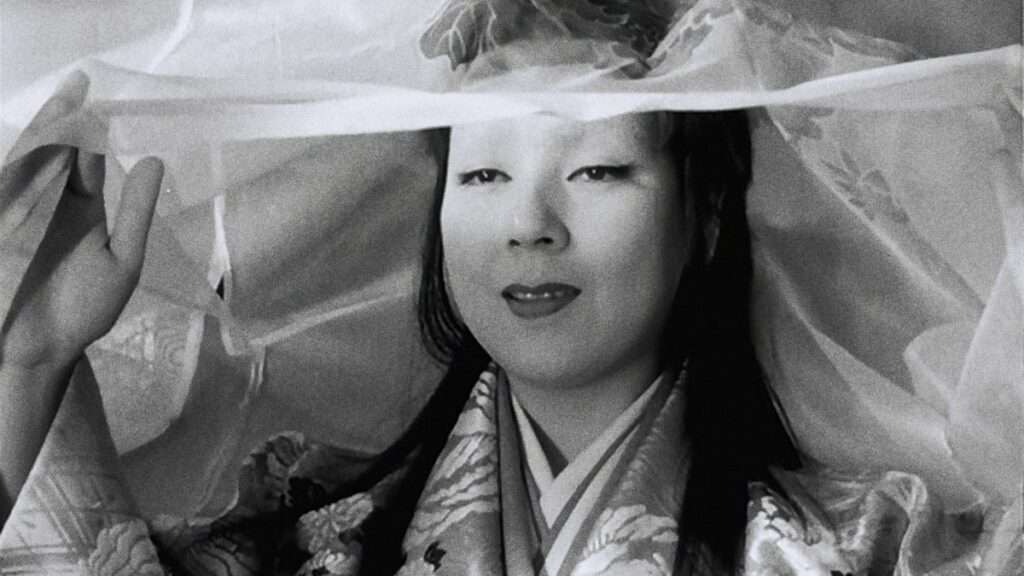
Japanese movies were more successful in Japan in the mid-1920s than foreign films, in part buoyed by the appeal of movie stars. Directors like Daisuke Itō and Masahiro Makino have made samurai films such as A Diary of Chuji’s Travels and Roningai which included provocative anti-heroes in fast-paced battle scenes that were both industrial hits and seriously notorious. Some stars, such as Tsumasaburo Bando, Kanjūrō Arashi, Chiezō Kataoka, Takako Irie and Utaemon Ichikawa, have been motivated by Makino Film Productions and have formed their own independent production in businesses of which directors such as Hiroshi Inagaki, Mansaku Itami and Sadao Yamanaka have developed their skills.
With the rise of left-wing political movements and trade unions in the late 1920s,were so-called left-wing filmsborn. In contrast to commercial products. The Marxist Proletarian Film League of Japan (Prokino) made works in smaller sizes (such as 9.5mm and 16mm), with more extreme intent. Left-wing propaganda films underwent serious censorship in the 1930s, and Prokino members were jailed and the movement crushed.
A later variation of The Captain’s Daughter was among the very first sound films. He used the Mina Talkie System. The Japanese film market split into 2 groups; one kept the Mina Talkie System, while the other used the Eastphone Talkie System used to make Tojo Masaki’s films. The 1923 earthquake, the Battle of Tokyo during World War II, and the natural results of Japan’s weather and humidity on unstable, combustible nitrate films actually led to a terrible lack of lasting films from this period.
Check out Japanese movies available in streaming
Japanese Movies from the 1930s
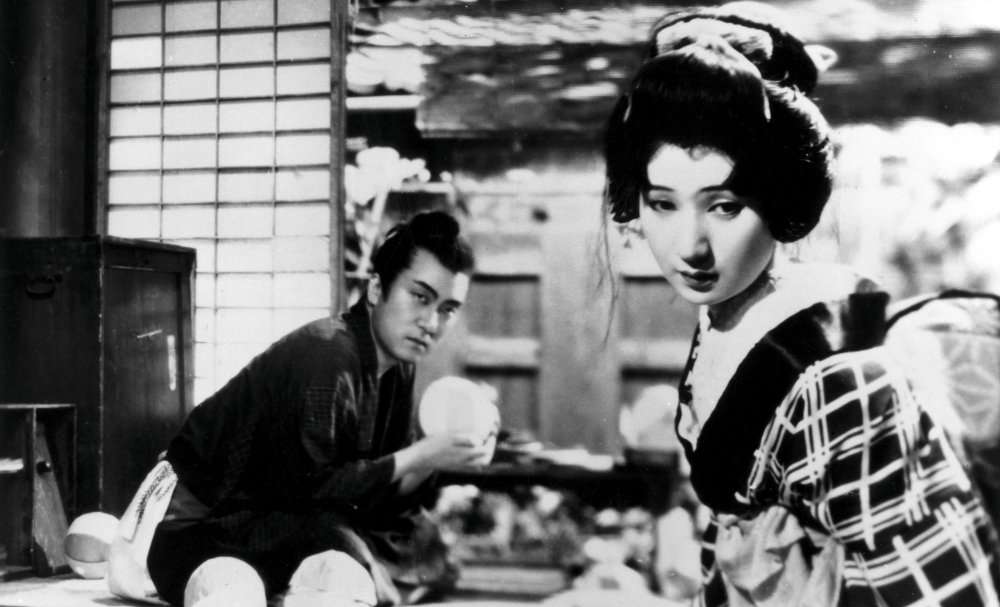
Unlike the West, silent films were still produced in Japan until the 1930s; as late as 1938, a third of Japanese movies were silent. An Inn in Tokyo by Yasujirō Ozu (1935), a precursor of neorealism, was a silent film, and was one of the very first Japanese films to hit theaters in the United States; Kenji Mizoguchi‘sThe Sisters of the Gion (Gion no shimai, 1936); Elegy of Osaka (1936); and The Story of the Last Chrysanthemums (1939); and Humanity and Paper Balloons by Sadao Yamanaka (1937).
Film critics have shared this vigor, with many film magazines such as Kinema Junpo and newspapers publishing in-depth conversations. A cultured “impressionist” critique pursued by critics like Tadashi Iijima, Fuyuhiko Kitagawa and Matsuo Kishi was dominant, yet opposed by left-wing critics like Akira Iwasaki and Genjū Sasa who sought an ideological revision of the films.
The 1930s saw a greater participation of the federal government in cinema which took greater authority on the film market, in 1939. The government motivated certain types of cinema, producing propaganda films and promoting documentaries, cultural films, made by directors like Fumio Kamei. Theorists of cinema asTaihei Imamura and Heiichi Sugiyama promoted the documentary and realistic drama, while directors such as Hiroshi Shimizu and Tomotaka Tasaka produced fiction films.
Japanese Movies from the 1940s

Since the Second World War and the economic crisis, unemployment has come to be prevalent in Japan and the film market has suffered. Throughout this period, when Japan was expanding its empire, the Japanese federal government saw cinema as a propaganda tool to reveal the splendor and invincibility of the Empire of Japan. Therefore, many films from this period portray militaristic and patriotic styles.
In 1942,Kajiro Yamamoto’s film War at Sea from Hawaii to Malaysia represented the attack on Pearl Harbor; the film used unique results directed by Eiji Tsuburaya, consisting of a miniature design of Pearl Harbor itself. Akira Kurosawa made his first action film with Sugata Sanshiro in 1943.
The first film released after the war was Yasushi Sasaki‘s Soyokaze from 1945. Onlist of production restrictions the CIE’s David Condein 1945, nationalism, massacre, patriotism and suicide, violent and merciless films, and so on, ended up being banned products, making historical dramas substantially difficult to produce. As a result, the stars who actually used historical drama have shifted to modern drama: Chiezō Kataoka’s “Bannai Tarao” (1946), Tsumasaburō Bandō’s “Torn Drum (1949), Hiroshi Inagaki’s” The Child Holding Hands and ” King) by Daisuke Itō.
The duration after the American occupation caused an increase in variety in the cinematic circulation thanks to the increased production and appeal of the film studios of Toho, Daiei, Shochiku, Nikkatsu and Toei. the 4 excellent artists of Japanese cinema: Masaki Kobayashi, Akira Kurosawa, Kenji Mizoguchi and Yasujirō Ozu. The very first collaborations between Akira Kurosawa and star Toshiro Mifune were Drunken Angel in 1948 and Stray Dog in 1949. Yasujirō Ozu directed the successful film Late Spring in 1949.
Japanese Movies from the 1950s

The 1950s began with Akira Kurosawa’s cult movie Rashomon (1950), Golden Lion at the Venice Film Festival in 1951 and Oscar for best strange film I was in 1952, and they mark the entry of Japanese cinema on the world stage. Famous star Toshiro Mifune also appears. In 1953 Entotsu no mieru basho by Heinosuke Gosho entered competition at the 3rd Berlin International Film Festival.
The 1950s are commonly thought of as the golden age of Japanese cinema. 3 Japanese films of these years (Rashomon, Seven Samurai and Tokyo Story) appeared in the top 10 polls of critics and directors of Sight & Sound for the best films of all time in 2002. They also appeared in the polls of 2012, with Tokyo Story ( 1953) which surpasses Citizen Kane at the top of the rankings.
War films then began to be produced. Listen to the Voices of the Sea” by Hideo Sekigawa (1950), “Himeyuri no Tô – Tower of the Lilies” by Tadashi Imai (1953), “Twenty-Four Eyes” by Keisuke Kinoshita (1954), ” ” The Burmese Harp “by Kon Ichikawa (1956), and other works destined for the terrible experience of war, one after another, ended up having a great social impact. Other nostalgic films such as Battleship Yamato (1953) and Eagle of the Pacific (1953) they were produced in the same way mass.
Rentaro Mikuni, a Japanese movie star has appeared in over 150 films since it launched on the big screen in 1951, and has won 3 Academy Awards for Best Actor and more than 7 nominations. The first Japanese film in color was Carmen Comes Home directed by Keisuke Kinoshita and launched in 1951. Gate of Hell, a 1953 cult film by Teinosuke Kinugasa, was the very first film to use Eastmancolor film.
In 1952, during the post-war period, when the pain of the war was still strong, Kaneto Shindō made a cult film of Japanese cinema, full of dark and realistic atmospheres. This is Children of Hiroshima. Takako Ishikawa is a teacher off the coast of Hiroshima and has not returned to his city hit by the atomic bomb in 4 years. His trip to Hiroshima becomes a journey to his destroyed homeland, in search of surviving old friends.
Teinosuke Kinugasa has made avant-garde masterpieces of Japanese silent cinema years before such as A page of madness. Gate of Hell was the first color film and the first Japanese film to be dist awarded outside Japan, earning an Academy Award in 1954 for Best Sanzo Wada Costumes and an Honorary Award for Best Foreign Language Film. And it also won the Palme d’Or at the Cannes Film Festival, the first Japanese film to win the award.
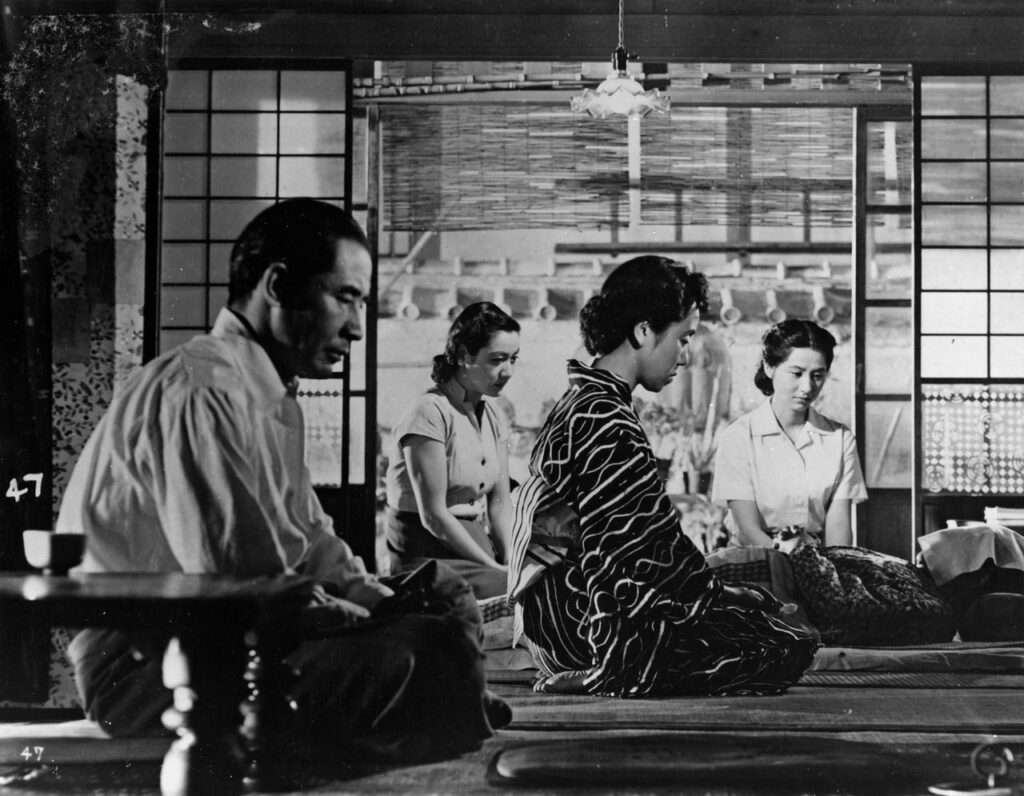
In 1954, another Kurosawa film, Ikiru, was in competition at the 4th Berlin International Film Festival. The protagonist, Watanabe (Takashi Shimura), works as an accountant in a Tokyo office. He discovers he has stomach cancer that has metastasized to the liver. After the diagnosis, Watanabe decides to abandon his life of mediocre contentment and focus on living his last days with dignity and meaning.
In 1955, Hiroshi Inagaki won an Academy Award for Best Foreign Language Film for Part I of his Samurai trilogy and in 1958 he won the Golden Lion at the Venice Film Festival for Rickshaw Man. Kon Ichikawa directed 2 dramas antiwar: The Burmese Harp (1956), which was chosen for Best Foreign Language Film at the Academy Awards, and Fires On The Plain (1959), along with Enjo (1958).
Mizoguchi won the Silver Bear at the Venice Film Festival for Ugetsu. Mizoguchi’s films mainly deal with the disasters caused to women by Japanese society. Ugetsu tells the story of a samurai who leaves his family to seek wealth and is seduced by a woman from an ancient noble family, neglects his wife and falls prey to greed and power. Ugetsu is a Japanese word meaning “illusion” or “deceptive image
Check out Japanese movies available in streaming
Godzilla

Modified for its Western release, Godzilla ended up being a worldwide icon of Japan and spawned a whole sub-genre of kaiju movies, as well as the longest-running film franchise. of history. Godzilla is a Japanese monster known for its destructive power. Godzilla’s name comes from the Japanese words “gojira” which translates to “whale” and “gorilla”. Godzilla is a giant monster that first appeared in the 1954 film that emits powerful radioactive emissions and has the ability to emit atomic breath from its mouth. The first Godzilla film was created as a scare tactic for people living near the French Communist nuclear test site in the Pacific Ocean. This giant monster became popular with Japanese audiences and was soon featured in 28 Japanese films produced between 1954 and 1975.
Japanese Movies from the 1960s

Toshiro Mifune was at the center of many of Kurosawa’s films. The number of films produced peaked in the 1960s. Yasujirō Ozu made his last film, An Autumn Afternoon, in 1962. Mikio Naruse directed When a Woman Climb the Stairs in 1960; his latest film was 1967 Scattered Clouds.
Kon Ichikawa recounted the watershed of the 1964 Olympics in his three-hour documentary Tokyo Olympiad (1965). Director Seijun Suzuki was fired from production company Nikkatsu for “makingmake films thatno sense and make no money” after his surrealist yakuza underworld film Branded to Kill (1967).
The 1960s were the peak years of the Japanese New Wave movement , which began in the 1950s and continued into the early 1970s. Cruel Story of Youth, Night and Fog in Japan and Oshima’s Death By Hanging, along with Kaneto Shindo‘s Onibaba, Hani’s Kanojo to kare and Imamura’s The Insect Woman, ended up being some of the best-known examples of Japanese New Wave cinema. .
Documentary has played an essential function in the New Wave, as directors such as Hani, Kazuo Kuroki, Toshio Matsumoto and Hiroshi Teshigahara have gone from documentary to fiction, while directors such as Oshima and Imamura have also made documentaries.
Teshigahara won the Special Jury Prize at the Cannes Film Festival for Woman in the Dunes (1964) and was chosen for the Oscar for Best Director and Best Foreign Film. Masaki Kobayashi with Kwaidan (1965) was also selected for the special jury prize at the Cannes Film Festival.
Japanese Movies from the 1970s
The film industry has made films in many ways, such as Kadokawa Pictures’ larger budget films, or made up of violent or explicitly sexual material and language that could not be programmed on TV. The result was that the pink cinema market ended up being the springboard for numerous young independent directors.
Toshiya Fujita realized the revenge film Lady Snowblood in 1973. In that year, Yoshishige Yoshida made the film Coup, a portrait of Kita Ikki, the leader of the coup Japanese state in 1936. The film had a great critical response in Japan.
Kinji Fukasaku finished the impressive yakuza series Battles Without Honor and Humanity film. Yoji Yamada presented the Tora-San commercial series, directing other films as well, including the popular The Yellow Handkerchief, which won the very first Japan Academy Prize for Best Picture in 1978.
Japanese films from the 1980s
Japan’s movie industry was successful in the 80s. The decade saw many high-budget action films that became popular with audiences around the world. Several Japanese directors have become famous for their work. One of them was Kinji Fukasaku, director of Battle Royale and Battle Royale II: Requiem, two hilarious and utterly engaging manga-style films about the battle for survival. Another was Nagisa Oshima, who directed Merry Christmas Mr. Lawrence and In the Realm of the Senses. Oshima was known for using his films to criticize society, politics and culture. He spent six years as an assistant director at Shochiku studios, working with directors including Yasujiro Ozu and Mikio Naruse.
Japanese films from the 1990s

Japanese movies of the 90s introduced new concepts to the world such as anime and manga. The anime has become popular in the West and has appeal to a broad demographic. Japanese films of the 1990s saw an increase in public spending and emerging sectors such as computer games and animation. These two movements have led to films focusing more on the sci-fi and fantasy genre than before.
During the same period, Japanese cinema also experienced a resurgence of new genres and styles. Audiences got a breath of fresh air when new movies were released that weren’t just a retelling of Hollywood movies. Audiences now had to be ready to see films that combined horror with comedy, family drama with science fiction.
Led by directors such as Takashi Miike, Hideo Nakata and Kiyoshi Kurosawa, the 1990s saw an increase in the amount of Asian horror films. The 1990s also saw an increase in the number of independent Japanese directors who took risks with their films. Kiyoshi Kurosawa: Kurosawa is known for his dark humor and his style in both directing and writing. Masayuki Suo: Suo is known for his stylistic storytelling which is often reflected in people’s memories of their childhood. Tetsuya Nakashima: Nakashima is known for its suspenseful storytelling, which often involves children.
Japanese Movies from the 2000’s
In recent years, there has been a revival of Japanese cinema led by Hayao Miyazaki, considered one of the most successful directors in history. The number of films made in Japan has increased since 2000 and this trend seems to continue even today with famous directors such as Naomi Kawase and Hirokazu Koreeda winning awards at festivals such as Cannes or the Venice Film Festival respectively.
A recent example of Hollywood’s involvement in Japan is “The Wolverine,” which was filmed in Tokyo and starred Hugh Jackman. Since the release of “The Wolverine” in 2013, Hollywood has steadily increased its investments in Japan. This includes films shot in Tokyo, which support Japanese actors or actresses and collaborate with Japanese studios.
Japanese Directors
in addition to the great masters of Japanese cinema already mentioned such as Yasujiro Ozu, Akira Kurosawa, Kenji Mizoguchi there are many Japanese directors who have contributed to making the history of cinema in their country great. Some names: Hayao Miyazaki, Takashi Miike, Nagisa Oshima, Kaneto Shindo, Kinji Fukasaku, Masaki Kobayashi, Shiro Honda, Shinya Sukamoto . Some of the most famous Japanese contemporary directors still in business are Takeshi Kitano, Hayao Miyazaki, Hirokazu Kore-eda, Takashi shimizu, Kiyoshi Kurosawa, Hideo Nakata.
A vision curated by a filmmaker, not an algorithm
In this video I explain our vision

