
The Man Who Was Never There
Imagine you are standing at a wooden counter in a municipal archive somewhere in Paris, in the kind of building that smells of dust and bureaucratic patience, the kind of place where history is supposed to be stored in folders and catalogued by year. You have a name. You slide it across the counter like a card in a game you already suspect is rigged. The clerk disappears into rows of shelving, returns after a few minutes with the particular expression of someone who has found nothing and is mildly embarrassed by it. No birth certificate. No death record. No address, no photograph, no tax filing, no membership in any guild or professional body, no signature on any document that can be independently verified. The name exists — it appears in books, in letters, in the testimonies of people who swear they knew the man — but the man himself, in the bureaucratic sense, does not.

This is where Fulcanelli begins. Not in a discovery, not in a revelation, but in an absence so complete it starts to feel intentional.
Sometime in the early decades of the twentieth century, a figure who identified himself by this single name — Fulcanelli, a pseudonym almost certainly derived from Vulcan, the Roman god of fire and the forge — produced two manuscripts that would circulate through the esoteric underground of Paris and eventually reshape how a small but intensely serious community of scholars, mystics, and obsessives thought about alchemy. The first manuscript, Le Mystère des Cathédrales, appeared in 1926. The second, Les Demeures Philosophales, followed in 1930. Both were published with a preface and editorial apparatus provided by a man named Eugène Canseliet, who described himself as Fulcanelli’s devoted student and who would spend the remainder of his long life — he died in 1982 — insisting that his master had been real, had possessed genuine knowledge, and had, in all probability, achieved something the modern world does not have a category for.
What is remarkable is not simply that no one knows who Fulcanelli was. What is remarkable is that the question of his identity has attracted some of the most rigorous and some of the most credulous minds of the last hundred years in equal measure, and neither has managed to close the case. The historian of esotericism Pierre Riffard, in his Dictionnaire de l’ésotérisme published in 1983, noted that Fulcanelli represents perhaps the most sustained and successful act of deliberate self-erasure in the history of Western occult tradition — a tradition not exactly lacking in candidates for that distinction.
But there is something beyond the historical puzzle that makes this absence feel recognizable, almost familiar. Most of us, if we are honest, can think of someone in our own lives who mattered enormously and left almost nothing behind that could be filed, catalogued, or retrieved. A grandmother who shaped three generations of a family’s interior weather and appears in no history book. A teacher whose name you cannot always remember but whose one offhand comment in 1987 or 1994 is still rearranging something inside you. The people who change us most profoundly often do so in precisely the register that archives are designed to ignore — the intimate, the spoken, the passed hand to hand.
Fulcanelli, whoever he was, understood this. Or perhaps he exploited it. The absence is too clean to be entirely accidental. A man capable of producing two works of that intellectual density — dense with medieval iconography, hermetic symbolism, Gothic architecture read as encoded alchemical instruction — was certainly capable of managing his own disappearance. The question is not whether the disappearance was engineered. The question is what it was engineered to protect.
Paris, 1926: A Book Appears From Nowhere
Imagine finding a book on a friend’s shelf — no author photo, no biographical note, no trace of the person who wrote it. You read the first page and something tightens in your chest, not because the prose is beautiful, though it is, but because whoever wrote this clearly knows something you do not. Not in the way of academic authority, that familiar performance of footnotes and institutional affiliation. Something older. Something that feels less like scholarship and more like transmission.
This is roughly what happened in Paris in 1926, when a volume appeared bearing the title Le Mystère des Cathédrales, attributed to someone named Fulcanelli, a name that meant nothing to anyone, because it belonged to no one anyone could find. The book was published by Jean Schmit, prefaced by a man named Eugène Canseliet who claimed to be the author’s disciple, and it landed in the middle of Parisian intellectual life with the quiet violence of an object dropped from an unmeasurable height. People picked it up. They could not explain where it came from. They could not, with any confidence, explain who had made it.
The central argument of the book was extraordinary in its audacity: that the great Gothic cathedrals of France, particularly Notre-Dame de Paris, were not primarily Christian monuments but encoded repositories of alchemical knowledge, their stone carvings and architectural proportions functioning as a kind of frozen hermetic library, legible only to those trained in the tradition. This was not a fringe thesis dressed up in academic clothes. The writing carried weight, displayed formidable historical range, and moved through medieval iconography and linguistic etymology with an ease that suggested not research but intimacy. Whoever wrote this had not studied these subjects from the outside. They appeared to have lived inside them.
Walter Benjamin, writing in 1935 in his essay “The Work of Art in the Age of Mechanical Reproduction,” described what he called the aura of an original work — that quality of unique, unrepeatable presence that is destroyed the moment something can be copied, distributed, and consumed without context. His diagnosis was modern: that the age of reproduction was also an age of inauthenticity, in which the original recedes behind its own proliferating copies. But Fulcanelli’s book performed a strange inversion of this crisis. Here was a text whose authority seemed to increase precisely because its origin could not be located. The absence of a verifiable author did not hollow the book out. It made it feel more dense, more charged, as if the anonymity were itself a kind of signature.
Canseliet, who would go on to become the primary public custodian of the Fulcanelli legend, wrote in his preface that his master had accomplished the Great Work — the alchemical transmutation — and had subsequently vanished. He was, Canseliet suggested, no longer entirely of this world. This is an extraordinary thing to write in a preface. It is also, from any rational standpoint, completely unverifiable. And yet the book sold. It was read. It was discussed in the salons of Montparnasse and in the private libraries of people who would not ordinarily have entertained such claims.
The sociologist Max Weber had already, by this point, written extensively on the concept of charismatic authority — that form of power which derives not from institutional position or rational argument but from the perceived possession of extraordinary, almost sacred qualities. Weber understood that charisma does not require proof. It requires only recognition. The reader of Le Mystère des Cathédrales in 1926 was not being asked to verify the author’s credentials. They were being invited to recognize something. Whether that recognition was wisdom or projection, genuine transmission or sophisticated forgery, was a question the book itself refused to answer, and still refuses, nearly a century later, to close.

Eugène Canseliet and the Weight of Devotion
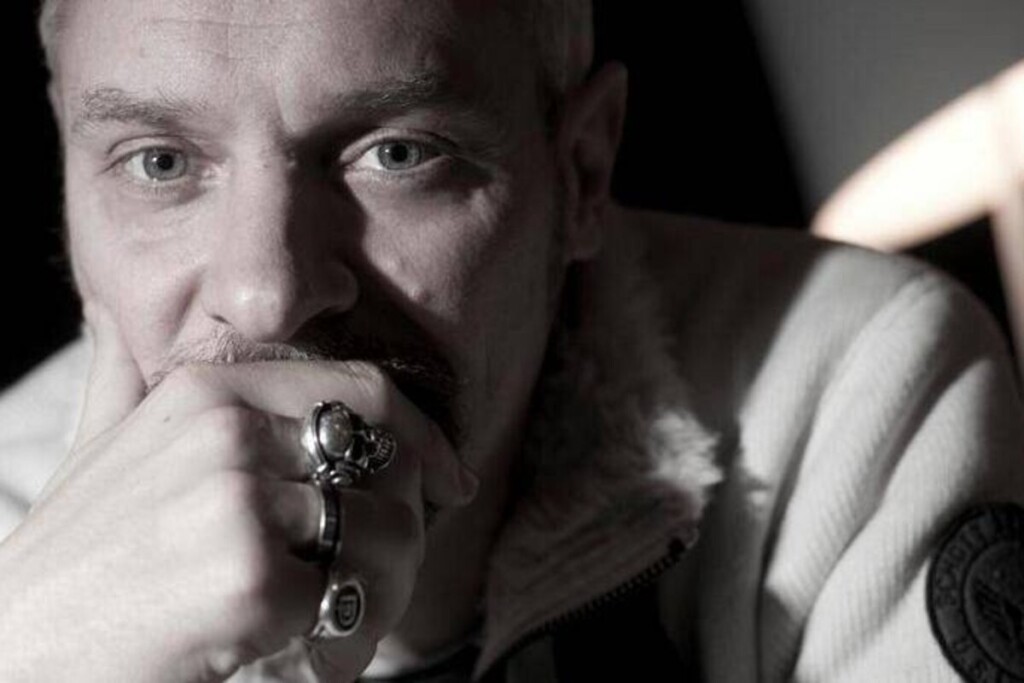
There is a particular kind of waiting that does not feel like waiting from the inside. It feels like preparation. The young man who spends his mornings copying manuscripts, who declines invitations because he needs to be available, who has organized his entire interior life around the possible return of someone who may already be gone — he does not experience himself as suspended. He experiences himself as chosen. The distinction matters enormously, because it determines whether the years consumed by this posture register as sacrifice or as vocation.
Eugène Canseliet was nineteen years old when he claims to have entered the orbit of the man he would call Fulcanelli. He was twenty-two in 1922 when, by his own account, he witnessed in a gas-fired furnace in Sarcelles the successful transmutation of a small quantity of base metal into gold — the event that alchemical tradition names the Great Work, and which no controlled scientific observation has ever confirmed. He would go on to write the preface to Le Mystère des Cathédrales in 1926, and then again to its second edition in 1957, and to spend the remaining decades of a long life — he died in 1982 — elaborating, defending, and deepening his testimony about a teacher who had, by every account including his own, vanished entirely from the world sometime in the late 1920s. What Canseliet built on this foundation was not merely a body of scholarly work. It was a self.
Erik Erikson argued, across his major contributions from Childhood and Society in 1950 through Identity: Youth and Crisis in 1968, that identity is never constructed in isolation. The adolescent and young adult psyche requires what Erikson called a moratorium — a period of structured suspension in which commitment to a mentor, a cause, or an ideological framework provides the scaffolding for an emerging self. The danger he identified was not devotion itself but the foreclosure that can occur when the scaffolding becomes permanent, when what was meant to be transitional calcifies into the entire architecture of a person’s interior life. Canseliet presents something close to a clinical illustration of this process, except that in his case the scaffolding was built around an absence.
There is a kind of man who keeps a room ready. Not literally, or not only literally, but structurally — a room in the center of his reasoning, a space that cannot be repurposed because its function is defined entirely by who might return to occupy it. You recognize him because his expertise is always in service of someone else’s mystery. He publishes, he lectures, he demonstrates his knowledge of hermeticism and metallic philosophy with genuine erudition, and yet every piece of his argument contains a load-bearing wall that is not his to touch. The wall is the teacher. Remove the teacher and the whole structure becomes a different kind of building, one that can no longer serve its original purpose.
What makes Canseliet’s case philosophically uncomfortable rather than merely pathetic is that his testimony is not obviously fraudulent. He was a genuine scholar of alchemical literature. His own writings demonstrate close reading, historical precision, and a command of symbolic systems that cannot be faked wholesale. The question is not whether he invented everything but whether the organizing center of his intellectual life — the witnessed transmutation, the vanished master, the covenant of secrecy — was itself an act of creation rather than memory. And that question cannot be resolved from the outside, which is precisely what makes it so corrosive to everyone who encounters it.
To dedicate your life to someone you cannot prove existed is not simply to love. It is to construct existence itself around an unverifiable premise, and then to live so thoroughly inside that construction that the question of its foundations begins to feel almost beside the point.
Alchemy as a Language, Not a Laboratory
You have walked past it a hundred times. The façade, the gargoyles, the tympanum carved with figures you vaguely recognize as biblical, the rose window catching the afternoon light in colors that seem almost embarrassingly beautiful. You looked. You registered. You moved on. What you did not know — what almost no one knows — is that you were standing in front of a text, a complete and internally consistent philosophical argument rendered in limestone, and you could not read a single word of it.
This is what Fulcanelli was insisting upon in a moment when almost everyone who heard him assumed he was speaking in metaphor. He was not. For him, the medieval cathedrals of France were not decorative shells for religious ceremony. They were libraries. They were the accumulated technical and philosophical knowledge of a tradition so dangerous, so subversive to every established power — ecclesiastical, monarchic, commercial — that it could only be preserved in plain sight, encoded in a visual language that the uninitiated would look at and see piety, and the initiated would look at and see everything else. The stone itself was the manuscript. The mason’s chisel was the pen.
The popular image of alchemy dies hard precisely because it is so vivid. The hunched figure over bubbling retorts, the obsessive search for gold, the proto-chemist fumbling toward Robert Boyle and modern science without knowing it. There is a whole tradition of condescension built into that image, the comfortable story that we have progressed beyond magical thinking into rational inquiry. But this story requires ignoring something inconvenient: that the greatest alchemical minds of Western history were not confused chemists. They were systematic philosophers working in a deliberately concealed idiom. Carl Jung understood this with a clarity that still unsettles historians of science. In his 1944 work Psychology and Alchemy, Jung argued that the operations alchemists described — the nigredo, the albedo, the rubedo, the conjunction of opposites, the philosopher’s stone itself — were not failed attempts to transform lead into gold. They were precise maps of interior transformation, projections of psychic processes onto matter, a way of thinking about the self so radical that it could not be spoken plainly without immediate persecution. The alchemist was not working in a laboratory. He was working on himself, and the laboratory was merely the stage on which that work became visible.
What Fulcanelli added to this — and it is an addition Jung himself never fully absorbed — was the architectural dimension. The cathedrals were not inspired by alchemy. They were alchemy, made permanent, made public, hidden in the one place no authority would think to look for heterodox knowledge: the house of God. Think about what that means structurally. A tradition that could not write its real knowledge into books — which could be burned, which could be confiscated, which could send their authors to trial — chose instead to write it into buildings that the same authority was paying for and blessing and celebrating. The inversion is almost audacious. The church funds its own subversion. The bishop consecrates the hidden text. Every pilgrim who walks through the portal and gazes upward at the carved figures is swimming through encoded philosophical argument and feeling only reverence.
This is what illiteracy in a sacred language actually feels like from the inside. It feels like nothing. It feels like beauty, like awe, like the vague spiritual warmth that tourists report after visiting Chartres or Notre-Dame de Paris. You felt something and you named it correctly. You just named only the surface of it, the way someone who cannot read might hold a love letter and feel moved by the quality of the handwriting without ever accessing the words. The emotion was real. The comprehension was absent. And the most disturbing part is that you would never have known the difference if no one had told you there was one.
The Atomic Bomb Warning That Cannot Be Explained

It was 1937, and a man arrived unannounced at a laboratory on the outskirts of Paris. He was elderly, or appeared to be, which already confounds the arithmetic of those who had known someone by that name decades earlier and expected deterioration where there was none. He asked to speak with a nuclear physicist of some standing. He was granted the meeting. What he said in that room was not recorded in any official document, not because it was dismissed, but because the person who received it did not know, at the time, what category of reality to place it in. The visitor described, with what witnesses later characterized as unnerving precision, the mechanisms by which atomic energy could be weaponized, the scale of destruction this would produce, and the moral catastrophe that would follow if such knowledge were pursued without restraint. He was not raving. He was calm. He left without leaving a name.
Jacques Bergier, who recounted this meeting years later with the weight of a man who had spent decades turning it over in his mind, was himself a chemist and intelligence operative of considerable seriousness. He was not given to mysticism for its own sake. What troubled him was not the strangeness of the visitor but the specificity. The physics described in that conversation predated by two full years the December 1938 experiments of Otto Hahn and Fritz Strassmann in Berlin, the work that first demonstrated nuclear fission to the scientific community in terms precise enough to be published, replicated, and weaponized in imagination. The Manhattan Project would not receive formal authorization until 1942. The Trinity test would not happen until July 1945. And yet the essential architecture of that catastrophe, the principle of it, the moral weight of it, was apparently spoken aloud in a Parisian laboratory in 1937 by a man whose identity no one could confirm.
The immediate temptation is to call this impossible, which is precisely the reflex that Thomas Kuhn spent the better part of The Structure of Scientific Revolutions, published in 1962, trying to anatomize. Kuhn’s central argument was not simply that science progresses through revolutions rather than accumulation. It was something more uncomfortable: that anomalies, data points which do not fit the reigning paradigm, are routinely not processed at all. They are seen, registered as noise, and filed away. Scientists working inside a paradigm do not discard the paradigm when they encounter evidence that contradicts it. They discard the evidence, or more precisely, they suspend it in a kind of institutional limbo where it waits until the paradigm itself has already shifted and can retroactively absorb what was previously invisible. Kuhn called this paradigm blindness, and it is not a failure of intelligence. It is a structural feature of how knowledge organizes itself in order to function.
Apply that framework to the Bergier account and the problem sharpens considerably. The question is not whether this man knew things he should not have known. The question is why that question feels so destabilizing. We have constructed a timeline of scientific discovery that feels inevitable, cumulative, linear. Einstein’s 1905 papers, Rutherford’s 1911 atomic model, Bohr’s 1913 quantum model, Hahn and Strassmann’s fission experiments. Each step legible from the previous one. The narrative is clean. And within a clean narrative, a figure who speaks the endpoint before the middle chapters have been written is not merely an anomaly. He is a structural impossibility, which means the mind reaches, almost automatically, for the explanation that costs the least: fabrication, exaggeration, the ordinary inflation of memory that turns a vague conversation into a prophecy only in retrospect.
But Bergier was not a man who inflated. And the specific technical vocabulary he attributed to that meeting is difficult to dismiss as retrospective coloring, because some of it describes mechanisms that even in 1960, when he published, were not part of popular scientific discourse.
A vision curated by a filmmaker, not an algorithm
In this video I explain our vision
The Candidates: A Gallery of Men Who Could Have Been Him
There is a particular kind of man who arrives at middle age and looks at his name as though it belongs to someone else. Not because he is ashamed of it, not because he has failed, but because the name has become too narrow, a corridor where his actual dimensions cannot move. He does not change it dramatically. He simply begins to use it less, then stops using it altogether, and eventually the old name sits in parish records and notary archives like a shed skin, proof of something that once was but no longer applies.
Jean-Julien Champagne was this kind of man. A painter, an illustrator, a man of considerable esoteric learning who drank too much and died of gangrene in 1932 in conditions of relative poverty, his hands still stained with the pigments he had used to illuminate manuscripts that were not his own. He illustrated the works attributed to Fulcanelli. He claimed, at various moments and to various people, to be Fulcanelli. He also, at other moments, denied it entirely, with the same casual conviction. The contradiction did not seem to trouble him. Perhaps because the question of who authored those pages was, to him, genuinely beside the point.
Pierre Dujols, a bookseller of the occult in Paris, a man who moved through the city’s esoteric circles with the quiet authority of someone who has read everything and needs to impress no one, has also been proposed. His prose style, some have argued, matches the cadence of Fulcanelli’s writing, that particular mixture of scholarly precision and mystical intimacy that makes the reader feel simultaneously instructed and initiated. Dujols died in 1926, before the second Fulcanelli volume appeared, which either rules him out or suggests that Fulcanelli was always a project larger than any single hand.
Eugène Canseliet, the devoted disciple who claimed to have actually met the master, who insisted on Fulcanelli’s physical reality with the fervency of a man protecting something sacred, is perhaps the most interesting figure in this gallery precisely because his insistence is so absolute. He described Fulcanelli in old age, then in rejuvenated old age, then as someone who had transcended ordinary biological time. The story grew. Stories do, when they are tending to something that cannot be said directly.
Erving Goffman, in his 1959 study of social performance, argued that the self is not a fixed entity but a series of presentations managed for different audiences, a theatrical production in which the actor is also the stage, also the costume, also the lighting. What he did not fully explore, because his frame was sociological rather than existential, is the possibility that some performers are not managing an audience’s impression of a real self hidden beneath. Some performers have genuinely concluded that the real self is the performance, that identity is not something you reveal but something you construct, and that the construction, done with sufficient craft and commitment, becomes more truthful than biography.
The men proposed as Fulcanelli share something more interesting than authorship. They share a temperament: the intellectual who finds the self too small a container for what he has come to understand. Jules Doinel, who founded a neo-Gnostic church, resigned from it, converted to Catholicism, then returned to Gnosticism, was a man whose identity was always in the middle of becoming something else. Rosny aîné, the novelist, moved through genres and pseudonyms with the ease of someone who understood that names are temporary housing.
What the 20th Century Did With What It Couldn’t Classify
There is a particular kind of hunger that doesn’t announce itself as hunger. It arrives dressed as curiosity, as critical thinking, as the refusal to be deceived by official narratives. You find yourself at three in the morning reading about medieval cathedral symbolism, about coded messages in stonework, about a man who may or may not have existed and who may or may not have solved the riddle that every civilization has tried and failed to solve. You tell yourself you are being rigorous. You tell yourself you are following the evidence. What you are actually doing is feeding something that no institution, no university course, no peer-reviewed journal has ever managed to feed.
This is precisely what happened to Fulcanelli after 1960. The figure didn’t fade as anomalies usually do when the century moves on. He intensified. He was absorbed into every available container — occultist publishing houses in Paris and Buenos Aires, countercultural magazines in California, New Age catalogues selling enlightenment alongside crystal pendants, conspiracy forums where his name appeared alongside Rosicrucian lodges and Templar bloodlines. Each subculture remade him in its own image, which is what subcultures do with things they cannot verify and cannot let go. By the 1970s, Le Mystère des Cathédrales had been translated, reprinted, pirated, annotated, and mythologized across at least a dozen languages. The book stopped being a text and became a totem.
Umberto Eco understood this mechanism with surgical precision. In his 1988 novel, he described a group of editors who invent an occult conspiracy as an intellectual game, only to watch reality fold itself around their invention, attracting believers who refuse to accept that the pattern was fabricated. His argument, sharpened further in his 1990 essay collection The Limits of Interpretation, was that hermetic thinking is not simply irrational — it is a cognitive style, one that treats every coincidence as signal, every gap as concealment, every absence as the most eloquent proof of all. The absence of Fulcanelli’s body, his documents, his verifiable biography: these didn’t weaken the myth. They were the myth’s skeleton.
Hannah Arendt, writing from an entirely different angle in The Origins of Totalitarianism in 1951, had already identified the structural condition that makes such myths not merely attractive but necessary. When institutional legitimacy collapses — when churches, states, and academies reveal themselves as corrupt or simply inadequate to the scale of human experience — the vacuum doesn’t stay empty. It fills. People do not simply accept meaninglessness; they find, or construct, a counter-order that explains what the official order could not or would not. The 20th century, which had produced two world wars, the Holocaust, Hiroshima, colonial disintegration, and the slow bureaucratic suffocation of spiritual life, had created a vacuum of extraordinary dimensions. Fulcanelli fit perfectly because he promised exactly what the century had failed to deliver: a knowledge older than ideology, immune to historical catastrophe, passed down through stone and fire and symbol rather than through governments or corporations or universities that had all, at some point, betrayed their mandate.
A man walks through a city and feels nothing in its architecture. Glass and steel, efficiency and anonymity. Then someone hands him a book that says the old stones were speaking all along, that those who built them knew something we have forgotten, that the forgetting itself was not accidental. He doesn’t need to verify the claim. The claim does something the city hasn’t done in years: it makes him feel that the world contains depth. That there is more below the surface than the surface admits.
This is not stupidity. It is not even gullibility in the ordinary sense. It is the entirely rational response of a consciousness that has been systematically starved of the sense that reality has layers, that some things are worth decoding, that the human hunger for meaning is not a pathology to be managed but a signal pointing at something real — or at least at something whose absence is real.
The Unfinished Transmutation
There is a kind of book that reads differently depending on whether you believe its author existed. Pick up the two volumes attributed to Fulcanelli — Le Mystère des Cathédrales, published in 1926, and Les Demeures Philosophales, following three years later — and you will find yourself doing something strange: searching the prose for a pulse, listening for the particular breath of a singular human being behind sentences that are erudite, elliptical, and eerily calm. The books are undeniably there. You can hold them. The paper has weight. The ideas inside them have influenced artists, occultists, physicists curious about the fringes of their own discipline, and an entire counter-cultural current that ran from Paris in the twenties through to the psychedelic reinventions of the late twentieth century. What remains stubbornly, almost defiantly absent is the man.
And yet absence, in this story, functions as a kind of proof. The philosopher Giorgio Agamben once observed that potentiality is more real than actuality — that the capacity to do something, including the capacity to vanish, carries its own ontological weight. Fulcanelli did not merely disappear. He disappeared at precisely the moment when disappearance became the most powerful statement available to him. Eugene Canseliet claimed his master underwent a physical transformation, that he encountered him decades later looking younger than before, charged with some inner renovation the rest of us lack the vocabulary to describe. Whether or not you accept that claim, the structure of the story it tells is ancient and exact: the master completes the work, and the completion requires that he be no longer present to explain it.
A man walks into a room where his student is working, hands over a document, and is gone before the student fully registers what has happened. That scene belongs to dozens of lives across human history, and it belongs to the Fulcanelli legend too, in its essential shape. What it produces in the person left holding the document — the letter, the manuscript, the decoded symbol — is not resolution but acceleration. The absence of the teacher becomes the engine. You stop waiting for clarification and begin, at last, to think.
Carl Jung spent the better part of four decades arguing that alchemy was never primarily about matter. His monumental Mysterium Coniunctionis, completed in 1955 and representing the culmination of his engagement with alchemical texts that had consumed him since the 1920s, positioned the entire tradition as an elaborate projection of psychological processes onto physical substances — the unconscious dreaming itself through lead and sulfur and the philosopher’s stone. But Jung was careful, and the care matters: he never said the alchemists were simply wrong about the external world. He said they were right about something deeper, something the modern separation of subject and object had made almost unthinkable. The transmutation was real. The question was only what was being transmuted.
Fulcanelli’s books insist on the Gothic cathedral as a book written in stone, a hermetic library hidden in plain sight across the public squares of medieval Europe. Notre-Dame de Paris not as devotion but as encoded knowledge, the flying buttresses and the gargoyles and the alchemical figures carved into the porches speaking a language that the uninitiated walk past every day without hearing. Whether this reading is literally true is almost beside the point. What it illuminates is the recurrent human conviction that the most important things are hidden not in remote and guarded places but in the ordinary and the overlooked, in what everyone sees and no one reads.
We keep generating Fulcanellis because we keep needing the figure of the one who knew and left before the knowing could be fully transferred, the teacher whose final lesson is the lesson of his own disappearance, and whose absence asks us, without mercy or consolation, what we intend to do with everything he left behind.
🔮 Hidden Paths of Esoteric Knowledge and Mystical Tradition
Fulcanelli remains one of the most enigmatic figures in the history of Western esotericism, a master alchemist whose true identity has never been revealed. His legacy connects to a vast underground current of hidden wisdom, secret initiations, and the relentless human search for transformation. These related articles trace the same invisible thread through other extraordinary minds who dared to seek the sacred beneath the surface of the ordinary world.
Aleister Crowley: the Great Beast and the Religion of Will
Like Fulcanelli, Aleister Crowley operated at the edge of accepted knowledge, pushing esoteric practice into territory that disturbed both the religious establishment and polite society. His creation of Thelema and his tireless exploration of ceremonial magic place him within the same tradition of initiated seekers who believed that will and symbol could reshape reality. Understanding Crowley illuminates the broader cultural landscape in which a figure like Fulcanelli could emerge and remain hidden.
GO TO THE SELECTION: Aleister Crowley: the Great Beast and the Religion of Will
Pyotr Ouspensky: the Mathematician Who Sought the Fourth Dimension of Spirit
Pyotr Ouspensky shared with Fulcanelli a passionate conviction that hidden dimensions of reality lay just beyond the reach of ordinary perception, accessible only through rigorous inner work. His mathematical and philosophical approach to the fourth dimension mirrors the alchemical method: a systematic dismantling of conventional understanding in pursuit of a higher synthesis. Reading Ouspensky alongside Fulcanelli reveals how early twentieth-century esotericism was driven by a hunger for a science of the invisible.
GO TO THE SELECTION: Pyotr Ouspensky: the Mathematician Who Sought the Fourth Dimension of Spirit
George Gurdjieff: the Master Who Broke His Disciples to Wake Them Up
George Gurdjieff, like the mysterious Fulcanelli, deliberately obscured his origins and transmitted his teachings through paradox, shock, and deliberate concealment. Both figures used the veil of mystery as a pedagogical tool, understanding that genuine transformation cannot be received passively but must be wrested from the depths of authentic inner struggle. Their parallel existence in the same historical period suggests a shared initiatory current flowing beneath the surface of twentieth-century spiritual life.
GO TO THE SELECTION: George Gurdjieff: the Master Who Broke His Disciples to Wake Them Up
Esoteric Movies to Watch
The esoteric tradition that Fulcanelli embodied has long found a resonant echo in cinema, where the language of symbol, archetype, and hidden meaning unfolds across the screen in ways that bypass rational censorship. This curated selection of esoteric films explores alchemy, initiation, and the mysteries of transformation with the same seriousness that Fulcanelli brought to the cathedral stones of Europe. It is the perfect visual companion for anyone drawn into the labyrinthine world of the great alchemist.
GO TO THE SELECTION: Esoteric Movies to Watch
Discover the Cinema of Hidden Knowledge on Indiecinema
The mystery of Fulcanelli does not end with the last page of his books — it opens into a vast, living tradition that independent cinema has always known how to honor. On Indiecinema, you will find a carefully curated streaming library of esoteric, mystical, and visionary films that carry the same transformative spark as the greatest alchemical texts. Step through the screen and let the great work continue.
👉 EXPLORE THE CATALOG: Watch Indie Films in Streaming
A vision curated by a filmmaker, not an algorithm
In this video I explain our vision

