
The Comfortable Sleep We Call a Life
The alarm goes off at the same time it always does. You silence it before it fully registers, the motion so rehearsed that your arm moves before consciousness has fully arrived. The shower runs at the same temperature. The coffee is measured without measuring. On the train, or in the car, or somewhere in that grey corridor between home and desk, your body navigates the entire journey while your mind does something else entirely — replays a conversation from three days ago, constructs an imaginary argument you will never have, drifts through a fog of half-formed concerns that never quite crystallize into thought. You arrive. You cannot remember arriving. You sit in the meeting and your mouth produces the correct sounds at the correct intervals. You nod. You signal attentiveness with your eyebrows. Somewhere inside, at a depth you rarely visit, something is watching all of this with a mild, exhausted bewilderment.

This is not a bad day. This is Tuesday.
The disturbing part is not that it happens. The disturbing part is that it happens without disturbance. The machinery of the day runs so smoothly that the absence of genuine presence never announces itself as an absence. You do not feel like you are sleepwalking. You feel like you are functioning, and functioning well, and this is precisely the problem that a certain kind of thinking has been trying to name for over a century with only partial success.
William James, writing in 1890 in The Principles of Psychology, described habit as the flywheel of society, the great force that keeps us in the grooves our predecessors have worn. He meant it partly as consolation — habit frees attention for higher things. But there is a darker reading available, one James did not fully pursue: the grooves can become a grave. The attention that is freed does not automatically rise toward higher things. More often it simply floats, unclaimed, dispersed across a surface of low-level anxiety and automated response. What looks like a functioning human being is, on closer inspection, a very sophisticated set of conditioned reflexes wearing a face.
Henri Bergson, a decade later, was circling the same territory when he wrote about the mechanicalness that comedy exposes — the human being who has become a thing, who responds to life’s surprises with the rigidity of a machine. We laugh at that figure. We do not recognize ourselves in it. This is the most elegant feature of the trap.
The behaviorist tradition that swept through psychology in the early twentieth century gave this condition a scientific wardrobe. John Watson‘s 1913 manifesto essentially proposed that the interior life was irrelevant — what mattered was stimulus and response. Pavlov’s dogs had already made the argument with saliva. The century that followed built its institutions, its schools, its workplaces, its advertising industries, on the quiet acceptance of that premise. Not because anyone decided to enslave consciousness, but because a sleeping population is so much easier to organize than a waking one. The sleep was not imposed by a conspiracy. It was optimized by a civilization.
It is somewhere in this kind of day — not in a crisis, not at a dramatic crossroads, but in the gray competence of a Tuesday that feels indistinguishable from every other Tuesday — that a name sometimes surfaces. Not from a book, not from a lecture, but from a crack in the routine. Someone mentions it in passing, or you find it written in the margin of a notebook you don’t remember keeping, or it arrives in a dream with the specific weight of something that has been waiting. Gurdjieff. The name lands strangely, like a word in a language you studied once and almost forgot. It does not comfort. It does not explain. It simply makes the sleep a little harder to return to.
Mystery of an Employee

Drama, thriller, by Fabio Del Greco, Italy, 2019.
Someone wants to control the life of the employee Giuseppe Russo: the products he buys, his political and religious faith, his private life, even his dreams. But he will do anything to escape control and find his true self. Giuseppe is a man of around 45, married, with a stable job and a home of his own. His life flows seemingly peacefully when he meets a mysterious tramp who gives him some old VHS video cassettes. Giuseppe begins to see video tapes in which he is filmed in some moments of his life since he was a child, then as a teenager and as a young man. Who shot those videos that he remembers nothing about? Giuseppe has the strange sensation of being constantly observed and begins to investigate what is happening. Through his investigation of him, he begins to rediscover his true identity and become aware of who he truly is.
Employee's Mystery is a film that highlights the danger of social control and shows a society where everyone is constantly monitored and conditioned in their deepest selves. The film is also an analysis of human nature and identity. Fabio Del Greco, who plays Giuseppe, gives an engaging performance. Equally good is Chiara Pavoni, in the role of Giada Rubin and Roberto Pensa in the role of the tramp. Employee's Mystery is a film that addresses important themes in an original way, a psychological thriller that keeps the viewer glued to the screen until the end: a metaphor for contemporary society, in which people are increasingly monitored and conditioned by the media and technologies . It is a courageous and provocative work, which addresses important themes in an original way.
LANGUAGE: Italian
SUBTITLES: English, Spanish, French, German, Portuguese
The Man Who Refused to Be a Teacher
There is a particular kind of person who refuses every title you try to hand them. You call them teacher and they look at you as if you have said something faintly ridiculous. You call them guide and they walk away. You call them master and they laugh, not warmly. Gurdjieff was this kind of person, which is precisely why so many people spent decades trying to give him exactly those titles, as if the act of naming him would somehow explain what was happening to them in his presence.
He was born around 1866 in Alexandropol, a city that existed on the nervous border between the Russian Empire and the Ottoman world, a place where Greek, Armenian, Azerbaijani, and Russian voices overlapped without resolution. This origin was not incidental. To grow up there was to learn early that identity is a construction, that the self you are told you have is largely a story told by geography and accident. By the time he was a young man he had already begun moving — through Central Asia, through Persia, through territories that the maps of his era still described with uncertainty. He claimed to have reached Tibet. Whether he did or not matters less than what the journey meant: he was assembling a mind that refused to be assembled by any single tradition.
He arrived in Moscow and Saint Petersburg in the years just before the First World War, and the people who encountered him there — intellectuals, artists, seekers of every variety — described the same sensation: the feeling of being seen through rather than seen. P.D. Ouspensky, who would later systematize Gurdjieff’s ideas into the book In Search of the Miraculous published in 1949, wrote that meeting him was like encountering someone who was awake in a room full of sleepers. But Gurdjieff himself never used the word awakening as a comfort. He used it as a diagnosis, and a brutal one.
His central claim was simple and devastating: human beings are not conscious. They believe they are, which is the precise nature of the problem. We move through our lives in a state he called sleep, executing the same mechanical responses, the same habitual emotions, the same borrowed thoughts, while experiencing this repetition as freedom and personality. In Beelzebub’s Tales to His Grandson, the vast and deliberately difficult book he published in 1950, he constructed an entire cosmology around this idea — that humanity has something he called the organ Kundabuffer, a fictional organ implanted to prevent self-awareness, and though the device is mythological the argument is clinical. We are machines. We do not do. Things happen through us.
When he founded the Institute for the Harmonious Development of Man at the Prieuré in Fontainebleau in 1922, he did not build a school in any recognizable sense. He built a laboratory of discomfort. Students were given physically exhausting work with no explanation of its purpose. Sleep was rationed. Emotional reactions were provoked and then observed. A man might spend three days digging a ditch and then be told to fill it back in, and the instruction was not cruelty — or not only cruelty — it was a precise intervention into the mechanism of the ego, which requires meaning the way a body requires oxygen.
There is a scene that several of his students described in nearly identical terms, though the details always differ slightly. A man sits across from Gurdjieff, believing they are having a conversation about philosophy, and then something is said — a single sentence, sometimes not even that, sometimes just a look — and the man realizes with a sensation close to vertigo that everything he has said for the past hour has been a performance. Not a lie exactly. A machine speaking. And the machine has just been shown its own gears.

Breaking as a Pedagogical Act
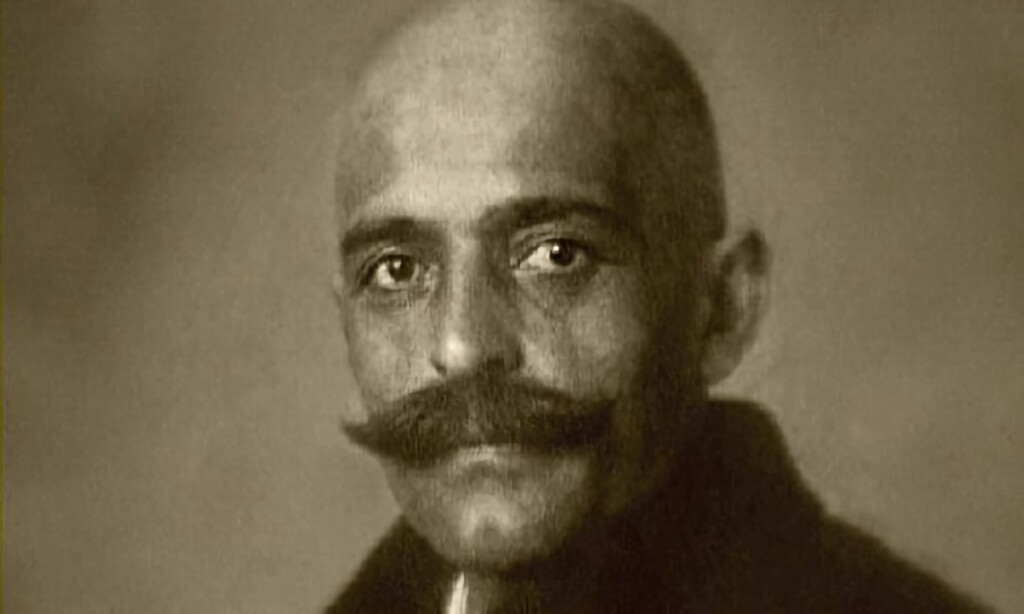
There is a man standing in a garden at three in the morning, digging a hole. He has been told to dig it by dawn. He does not know why. Yesterday he was told to fill in a hole — a different hole, or perhaps the same one, it is impossible to be certain — and he obeyed that too. His hands blister. His mind, deprived of sleep for the second consecutive night, begins to loosen at its seams. And somewhere nearby, he knows, someone is watching. Not to help. To see what happens when a human being runs out of reasons.
This was not punishment. This was the curriculum.
Gurdjieff’s methods were designed to exhaust the very mechanisms through which a person normally navigates reality. Sleep deprivation was not incidental to the work at the Prieuré — it was structural. Students were kept awake through nights of sacred dance rehearsals, only to be expected at morning exercises with full presence and zero complaint. The dances themselves, what Gurdjieff called the Movements, were choreographically impossible by ordinary standards: rhythms counted in one pattern by the feet, another by the hands, another spoken aloud by the mouth, while the face maintained a specific and unnatural expression of alert calm. The conscious mind, that great falsifier, could not hold all of this simultaneously. It collapsed. And in the collapse, Gurdjieff claimed, something else briefly appeared.
The stopping exercises worked by a different mechanism but toward the same rupture. A word was called, and everyone froze. Mid-step, mid-sentence, mid-breath. The body arrested in whatever posture it had accidentally assumed. Students reported strange experiences in those pauses — a sudden alienation from the body, a brief terrifying clarity, as though the usual narrator of one’s inner life had been interrupted mid-sentence and forgotten to return. Whether this constitutes awakening or dissociation is a question that deserves more discomfort than it usually receives.
Erich Fromm, writing in Escape from Freedom in 1941, drew a distinction that cuts directly into this territory. He separated what he called rational authority — the authority of a teacher whose power derives from competence and whose aim is the student’s eventual independence — from irrational authority, which feeds on the student’s submission and requires their continued dependence for its own sustenance. The distinction is clear in theory. In practice, standing in a garden at three in the morning with bleeding hands, it becomes almost philosophically inert.
Gurdjieff’s own written work offers little comfort on this question. Beelzebub’s Tales to His Grandson, published in 1950, is itself a pedagogical act of aggressive difficulty — a book deliberately written to resist easy comprehension, layered with invented terminology, recursive allegory, and sentences that seem to swallow their own meaning. Gurdjieff said openly that he had written it in three distinct layers, so that different readers would extract different things, and that the first obligation of the reader was to read it three times before forming any opinion. The book does not meet you. You must go to it, repeatedly, and leave each time with the uncomfortable sense that it understood you better than you understood it.
And this is where the line becomes dangerous to draw. A method that produces genuine transformation and a method that produces traumatized compliance can look identical from the outside — and sometimes from the inside too, at least for years afterward. The student assigned the impossible task, who fails, who is watched in failure, who is given the same task again without explanation, may be learning something that cannot be transmitted any other way. Or they may simply be being broken. The question of which is happening is not rhetorical. It is the question on which everything depends, and it has no stable answer.
The Disciples Who Stayed and the Ones Who Ran

There is a particular kind of paralysis that has nothing to do with chains. A woman sits in a room she could leave at any moment — the door is unlocked, her coat is on the hook, her shoes are by the entrance — and yet she does not move. She has not been threatened. She has been persuaded. Persuaded that everything outside this room is noise, distraction, sleep. That only here, in this specific atmosphere, with this specific person, is something real happening to her. The terror is not that she is trapped. The terror is that she agrees with the trap.
This is what the people who passed through Gurdjieff’s orbit described, years later, in language that consistently failed them. P.D. Ouspensky, the man who did more than anyone to systematize and disseminate Gurdjieff’s ideas — whose 1949 book “In Search of the Miraculous” remains the clearest written account of the Work — eventually broke with the master completely, spent years teaching his own version of the system, and died in 1947 still unable to fully account for the years he had given. He told students near the end that he was abandoning the System, that they should start again from nothing. Whether this was liberation or collapse, he himself could not say.
Katherine Mansfield arrived at the Prieuré at Fontainebleau in October 1922, already dying of tuberculosis. She was thirty-four years old and among the most gifted writers in the English language. Gurdjieff installed her in a mezzanine above the cowshed, claiming the vapors from the animals would help her lungs. She wrote letters describing a strange peace, a feeling of finally being in the right place. She died there in January 1923, four months after arriving. Those who loved her called it exploitation. Those who followed Gurdjieff called it her greatest transformation. The distance between those two readings is not a matter of interpretation. It is a matter of what you believe a human life is for.
A.R. Orage, the brilliant editor of “The New Age” who had introduced London’s intellectual class to everything from Nietzsche to guild socialism, surrendered his magazine, his career, and his reputation to spend years as Gurdjieff’s primary fundraiser in America, selling the ideas door to door among New York’s literary elite. He eventually left, married, had children, resumed writing — and spent the rest of his life in a state his friends described as permanently divided, as though part of him had never come back from somewhere he could not name. Frank Lloyd Wright sent his apprentices to study with Gurdjieff, absorbed certain architectural ideas about movement and attention through space, and maintained an admiring distance — close enough to be influenced, far enough to keep his own mythology intact.
What Stanley Milgram demonstrated in his Yale experiments of 1963 was not that people are cruel. It was that people are situational. That the architecture of an encounter — who holds the clipboard, who wears the coat, who speaks with calm authority about a higher purpose — can override individual moral judgment with a reliability that is almost mechanical. Philip Zimbardo extended this in “The Lucifer Effect” in 2007, arguing that evil is less a property of persons than of systems, that the question is never who the bad actor is but what structure has been constructed around ordinary people to make them behave in extraordinary ways.
Gurdjieff was a supreme architect of such structures. The question that remains is whether the building he constructed was a prison or a laboratory. And the uncomfortable answer, the one that explains why some people were destroyed and others genuinely awakened, is that it may have been both at once — and that the determining factor was never Gurdjieff. It was what the person entering the room already believed about themselves before they sat down.
What the Waking Costs
There is a particular kind of person you sometimes meet at parties — not often, but enough that you recognize the type — who has gone through something they cannot quite name and come out the other side not happier, not wiser in any reassuring sense, but permanently altered in a way that makes ordinary conversation feel like watching television through a window from outside in the rain. They are present but not quite reachable. They laugh at the right moments. And yet something behind the eyes has been rearranged, and it does not rearrange back.
This is what the literature never adequately prepares you for. The promise, when it comes, always sounds like awakening in the sunrise sense — clarifying, expansive, the self enlarged and finally free. What Gurdjieff understood, and what made him so dangerous to the sentimental, is that the self which wakes up is not the self that was sleeping. There is no continuity of personality across that threshold. What you carry through is not you. Or rather, it is something that wears the same face, speaks with the same accent, remembers the same childhood — but the interior architecture has been demolished and rebuilt by a hand that does not share your aesthetic preferences.
Nietzsche knew this before any of them. His will to power was never about domination in the crude sense that a century of misreading has insisted upon. It was about self-overcoming — the terrifying idea that what you must defeat is not your enemies or your circumstances but the version of yourself that finds comfort in its own limitations. The self, in this reading, is not a sanctuary. It is the first obstacle. And the overcoming is not a triumph. It is a kind of dying that requires you to keep walking.
William James, in 1902, described what he called the divided self — that internal fracture between the person you perform and the person who watches the performance with a cold and unimpressed eye. He documented case after case of individuals who had reached the edge of that division, who had stood at the precipice of what he called conversion, not in any narrowly religious sense, but in the broader sense of a fundamental reorganization of the self’s center of gravity. What struck him, again and again, was that the reorganization was not chosen. It happened to people. The most they could do was not run from it.
Hannah Arendt, writing fifty-six years later in a world that had seen what happens when entire populations choose not to think, argued that thinking — genuine thinking, not information processing, not problem solving — is precisely what most people spend their lives constructing elaborate systems to avoid. Not because they are lazy or stupid, but because thinking, in her sense, leads inevitably to the dissolution of certainties, and certainties are the architecture of the comfortable self. To think is to begin dismantling the house you are living in. Most people, she observed, prefer the house.
Gurdjieff offered no house. He offered the experience of standing in the rubble of what you thought you were, in the cold, without a plan, with the particular clarity that comes only after everything that was obscuring the view has been removed by force. His disciples did not graduate. They did not achieve. They survived — some of them — and what survived was not necessarily what had enrolled.
A vision curated by a filmmaker, not an algorithm
In this video I explain our vision
🌀 Masters, Seekers & the Path Within
George Gurdjieff stands at the crossroads of esoteric tradition, psychological shock, and spiritual awakening — a figure who defies simple categorization. To understand him more fully, it helps to explore the broader world of unconventional teachers, mystical movements, and the restless human search for consciousness beyond the ordinary.
Jiddu Krishnamurti: the Man Who Refused to Be God
Like Gurdjieff, Jiddu Krishnamurti was groomed by a spiritual institution only to shatter its expectations entirely — refusing the role of World Teacher and dismantling the very notion of guru-hood. His insistence that truth is a pathless land echoes Gurdjieff’s own demand that disciples abandon comfortable certainties. Both men used their presence as a kind of living disruption designed to awaken the mind from its inherited sleep.
GO TO THE SELECTION: Jiddu Krishnamurti: the Man Who Refused to Be God
Helena Blavatsky and Theosophy: the Woman Who Revolutionized Esoteric Thought
Helena Blavatsky laid much of the groundwork for the Western esoteric revival that Gurdjieff would later inhabit and challenge in equal measure. Her synthesis of Eastern metaphysics and occult philosophy created a cultural atmosphere hungry for teachers who could transmit hidden knowledge through direct experience. Understanding Blavatsky is essential to grasping the world Gurdjieff both emerged from and deliberately stood apart from.
GO TO THE SELECTION: Helena Blavatsky and Theosophy: the Woman Who Revolutionized Esoteric Thought
Universal Consciousness
The concept of Universal Consciousness sits at the very heart of Gurdjieff’s Fourth Way — the idea that ordinary human beings live in a state of mechanical sleep, cut off from a deeper cosmic reality. Exploring the philosophical and spiritual dimensions of universal consciousness helps illuminate why Gurdjieff’s methods, however harsh, were aimed at something far greater than personal growth. This broader inquiry into oneness and awakening gives essential context to his radical pedagogy.
GO TO THE SELECTION: Universal Consciousness
Rudolf Steiner and Anthroposophy: A Guide to Modern Esoteric Thought
Rudolf Steiner and Gurdjieff were near-contemporaries who both sought to bring esoteric knowledge into practical, transformative systems — yet their temperaments and methods could hardly have been more different. While Steiner built institutions, schools, and a rich theoretical framework, Gurdjieff preferred disruption, paradox, and the unpredictable shock of direct encounter. Comparing these two giants of modern esotericism reveals the vast terrain of possible paths toward human self-development.
GO TO THE SELECTION: Rudolf Steiner and Anthroposophy: A Guide to Modern Esoteric Thought
Discover the Cinema of Inner Awakening on Indiecinema
The journey inward that Gurdjieff demanded of his disciples finds a powerful cinematic echo in the films gathered on Indiecinema. Explore our streaming platform for independent and visionary films that challenge perception, disturb comfortable habits of mind, and open unexpected doors — just as the great masters always intended.
👉 EXPLORE THE CATALOG: Watch Indie Films in Streaming
A vision curated by a filmmaker, not an algorithm
In this video I explain our vision

