
The Man Who Lost His Hand and Found His Pen
He comes back from the sea with one hand and no money, and nobody is waiting. The port smells of fish and salt and the particular indifference of cities that have already moved on to other things. He walks through streets where men argue about prices and women hang laundry from windows, and not one of them knows or cares that he was at Lepanto, that he held a arquebus with these same hands — one of them now a ruin of scar tissue and dead nerve — while the largest naval engagement in the history of the Mediterranean was being decided around him. October 7th, 1571. More than four hundred ships. Perhaps a hundred thousand men. The kind of event that reshapes the known world and then, for the individual who survived it, simply becomes the thing that happened before everything got worse.

Miguel de Cervantes Saavedra was twenty-three years old at Lepanto, already wounded twice in the chest and fighting through it, when a third arquebus shot shattered his left hand beyond repair. He would later call that day the greatest occasion that past or future ages could ever hope to see, which is either the most sincere thing a man ever said about war or the most heartbreaking. Possibly both. The hand never recovered its function, and Cervantes spent the rest of his life being introduced, when he was introduced at all, as the one-handed man from Lepanto, a biographical detail that would come to feel less like a mark of honor and more like the universe’s most sustained joke at his expense.
Because what followed Lepanto was not recognition or reward or even the ordinary consolation of returning home. In 1575, sailing back to Spain with letters of commendation from Don John of Austria himself, his ship was seized by Algerian corsairs. He was taken to North Africa as a slave. Those letters, meant to open doors in Madrid, instead convinced his captors that he was a man of importance worth a substantial ransom, which meant he was worth keeping. He remained in captivity in Algiers for five years, from 1575 to 1580, during which he attempted to escape four times. Four times. Each failure resulted in punishment. Each punishment was absorbed, somehow, and followed by another attempt. There is something in that repetition that exceeds ordinary courage and enters a different category entirely — something closer to what Viktor Frankl, writing about a different kind of captivity in a different century, called the last of human freedoms, the freedom to choose one’s attitude in any given set of circumstances.
When his ransom was finally paid, raised by his family and by Trinitarian friars at enormous personal cost, Cervantes was thirty-three years old. He returned to a Spain that had no particular use for him. The literary career he attempted produced modest results. His first novel, La Galatea, appeared in 1585 and sold decently enough without making anyone’s fortune. He spent years working as a commissary officer for the Armada, requisitioning grain and oil from Andalusian towns that hated him for it, and was twice excommunicated and at least once imprisoned for accounting irregularities that may or may not have been his fault. He was poor in the grinding, undignified way that leaves marks not just on the body but on a man’s relationship to time itself, to the future, to the very idea that effort produces result.
And then, somewhere in this accumulation of defeat, something cracked open. The wound that does not kill, observed Nietzsche, makes one stronger — but Nietzsche never specified how long the interval between wound and strength is permitted to last, or what a man is supposed to do with himself in the meantime. Cervantes, it turns out, spent that interval learning to see the world with the particular clarity of someone who has been given no reason to flatter it.
Don Barry: A Quixotic Exploration
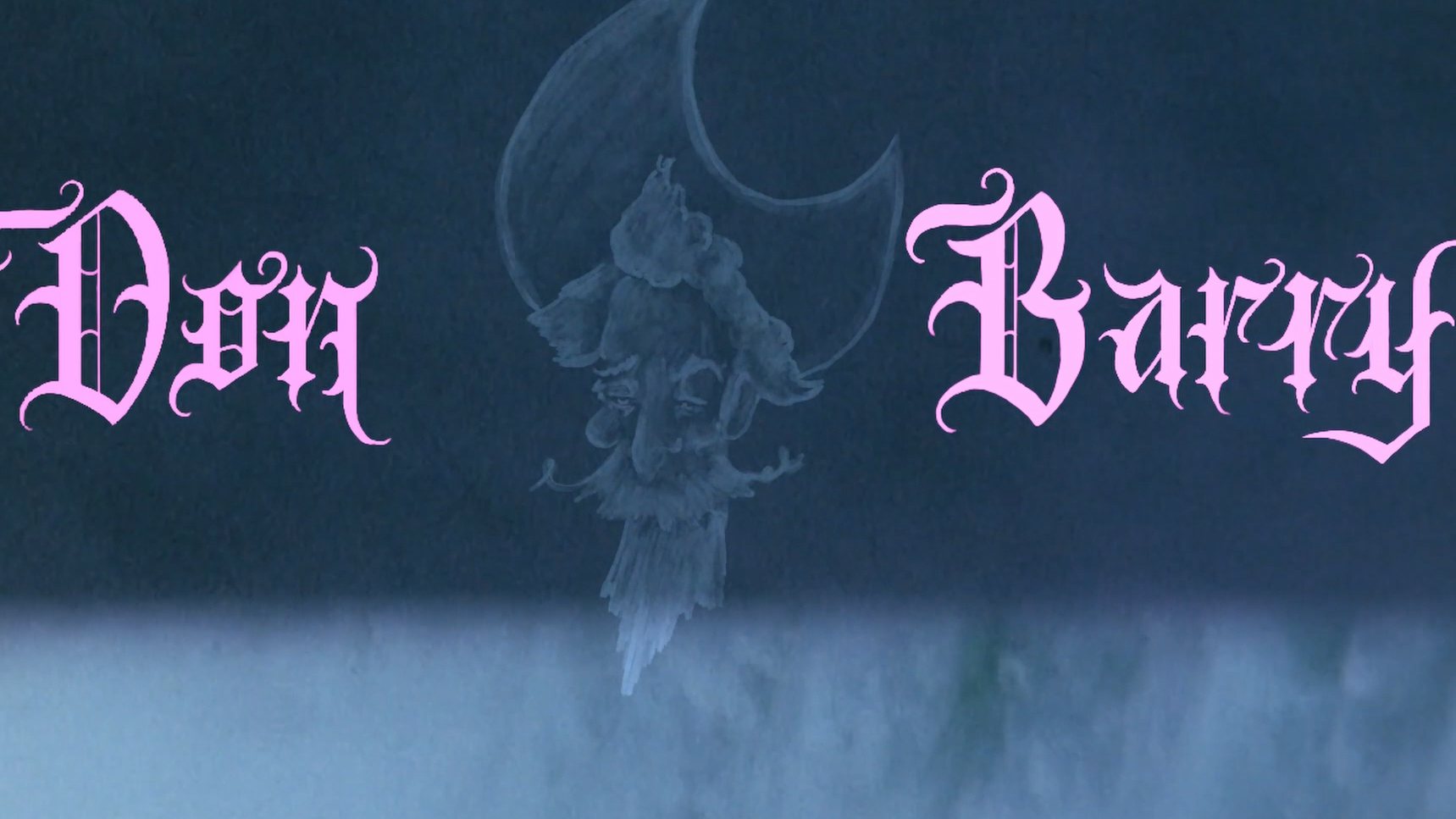
Docufiction, Experimental, by Paul Smart, Mexico, 2026.
Don Barry: A Quixotic Exploration is a debut feature that places the biography of an eighty-year-old experimental filmmaker and artist, Barry Gerson, within the metanarrative of Miguel de Cervantes’ Don Quixote. Don Barry was filmed in the city of Guanajuato during the 51st edition of the Cervantino Festival, as well as during the vibrant Day of the Dead celebrations held in the city’s UNESCO-listed tunnels. The film honors the director’s long friendship with artist Barry Gerson, drawing inspiration from Cervantes’ Don Quixote. Paul Smart’s directorial choices create something new that celebrates life and goes beyond conventional storytelling. A search for magic in our real lives. A moving film about the meaning of life, art, and death. Not to be missed.
Paul Smart is a proud outsider filmmaker with a long history of film screenings. In the 1980s, he emerged in New York’s vibrant youth art scene, working in theater production and later filmmaking, before retreating to rural upstate New York, in the Catskill Mountains, where he made a living writing and screening independent films in old parish halls for rural audiences, many of whom had never seen a film.
LANGUAGE: English
SUBTITLES: Spanish, French, German, Portuguese
A Spain That Ate Its Own Heroes
There is a particular kind of humiliation that only bureaucratic states have perfected: the humiliation of the man who served faithfully and is then prosecuted for the irregularities that service inevitably produced. Cervantes knew this not as an abstraction but as a physical fact. He spent time in prison not once but twice — in 1592 and again in 1597 — accused of financial irregularities while working as a requisitioner of supplies for the Armada, a job that required him to confiscate grain and oil from Andalusian landowners who then denounced him to the very crown he was serving. The empire needed its logistics men until it needed a scapegoat more.
This is what Habsburg Spain actually was beneath the gold leaf of its self-presentation. The largest empire in the world — controlling at its peak in the 1580s the Iberian Peninsula, the Low Countries, large portions of Italy, the Americas, and the Philippines — was simultaneously a fiscal catastrophe. Philip II declared bankruptcy three times: in 1557, 1575, and 1596. The treasure fleets arriving from the New World poured silver into a system so structurally indebted to Genoese and Flemish bankers that the metal barely touched Spanish soil before flowing outward again. Inflation ravaged the domestic economy while the mythology of imperial grandeur demanded that every citizen perform pride. To admit poverty was almost seditious. To live it was unavoidable.
Into this gap between performance and reality fell men like Cervantes, and millions who left no name. The rigid hierarchy of limpieza de sangre — purity of blood — meant that advancement, access to guilds, military commissions, ecclesiastical positions, and university admission all required documented proof of Old Christian ancestry untainted by Jewish or Moorish lineage. The genealogical obsession was not merely social snobbery. It was a legal architecture. The Inquisition, formally established in 1478 under Ferdinand and Isabella, had by Cervantes’ lifetime become not primarily a theological institution but a social sorting mechanism, a means of adjudicating status claims and destroying competitors through accusation. A rival could ruin a family in a generation simply by casting doubt on a grandfather’s bloodline.
Cervantes’ own family almost certainly carried converso connections, a fact that shadowed his entire life without ever being stated. His father Rodrigo was a wandering surgeon — a profession associated at the time with New Christian practitioners — who moved the family repeatedly across Castile, Andalusia, and eventually to Madrid, always seeming to outrun some unnamed pressure. Michel Foucault, writing in Discipline and Punish in 1975, described how the great institutional apparatuses of early modernity did not simply punish transgression but produced a particular kind of subject: surveilled, categorized, perpetually aware of being potentially legible to power. Cervantes was this subject before the theory existed to describe him. He wrote, collected taxes, requisitioned supplies, petitioned for colonial appointments, applied for positions he never received, and was watched, tallied, and twice imprisoned by the machinery he spent his life attempting to serve.
There was a man in Seville around that time — Cervantes would have passed men like him daily — who had spent eleven years in the Italian campaigns, lost the use of two fingers to a harquebus shot, returned to find his village occupied by creditors and his military pension delayed indefinitely. He sat at the door of an inn near the river with the posture of someone who had simply stopped pretending that the story made sense. The empire had celebrated the battle that maimed him, erected monuments to the admiral who commanded the fleet, and minted commemorative coins. It had not paid his back wages. These were not exceptional cases. They were the texture of ordinary life in a society whose self-image depended entirely on not looking too directly at what it had done to the people who made that image possible.

Don Quixote as the First Modern Wound
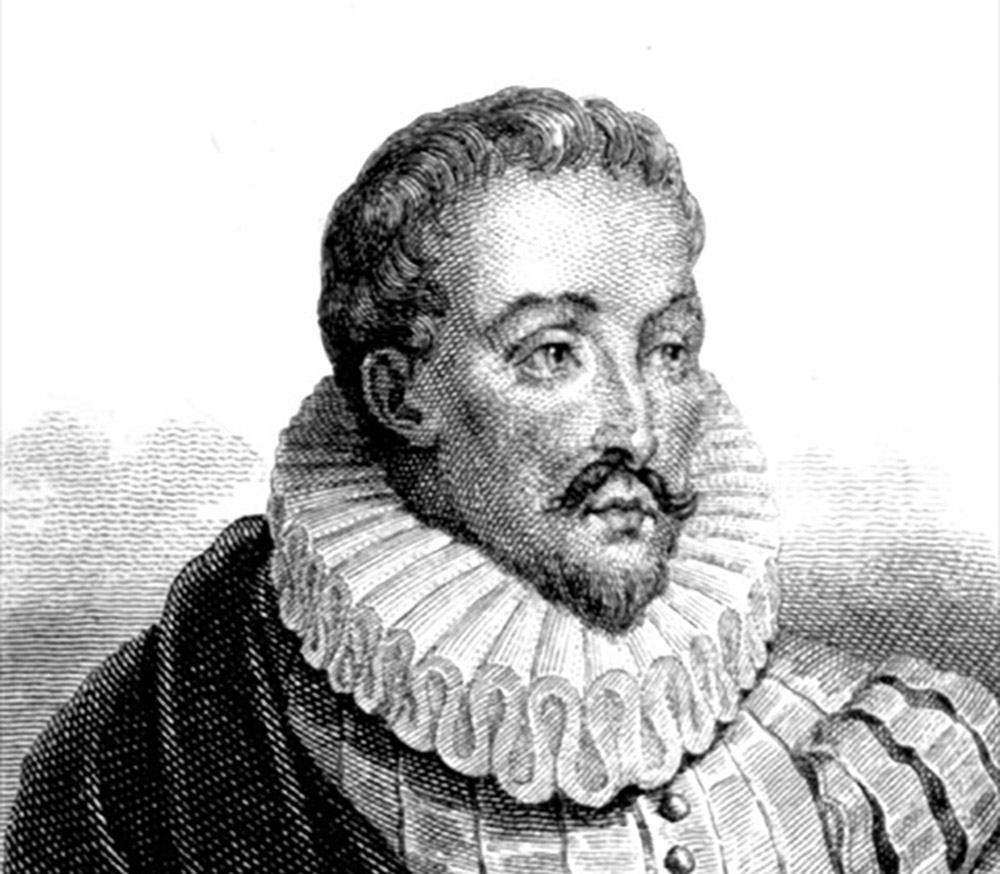
There is a particular kind of man you have seen at family gatherings or in the corner of a bar — someone past fifty, quieter than he used to be, who speaks about the world with a precision that younger people mistake for bitterness but is actually something more unsettling: the knowledge of exactly how much he got wrong. He does not regret having believed. He regrets how completely he believed, how the believing left no room for anything else, how the stories he told himself about honor and purpose and the meaning of struggle consumed every fact that contradicted them before those facts could land.
Cervantes was fifty-seven years old when Part I of Don Quixote appeared in Madrid in 1605. He had been imprisoned twice, had survived Lepanto with a permanently damaged left hand, had spent five years as a slave in Algiers, had failed as a playwright, had been excommunicated twice over fiscal disputes, had watched the Spanish empire spend its borrowed glory like a man lighting candles with banknotes. He was, by any conventional measure, marginal. And from that marginality he wrote the most widely translated secular book in human history — but the achievement obscures what the book actually is, which is a diagnosis, not a celebration.
Alonso Quixano reads so many chivalric romances that the boundary between the page and the world dissolves. He becomes Don Quixote. He rides out to right wrongs that do not exist in the form he perceives them. He sees windmills and understands them, with absolute sincerity, as giants. The comedy of this has been the vehicle for centuries of affectionate misreading, the quixotic hero celebrated as a dreamer in a world too small for his vision. But Cervantes was not writing a tribute to noble delusion. He was writing about what happens when the stories we consume outpace our capacity to question them — when the narrative architecture installed in the mind by repetitive reading becomes more real than the road beneath the horse’s hooves.
The philosopher Paul Ricoeur spent much of his later career, particularly in the three volumes of Time and Narrative published between 1983 and 1985, arguing that human identity is fundamentally narrative in structure — that we understand ourselves through the stories we inhabit. But Ricoeur was describing a condition, not endorsing it. What Cervantes understood, two centuries before the psychological vocabulary existed to say it clearly, was that narrative identity carries a violence inside it. The self built from stories is a self that will defend those stories against reality with every weapon available, including the willful misperception of everything it sees.
Quixote does not lie. That is the crucial detail that makes the novel a wound rather than a farce. He genuinely perceives the giants. The hallucination is structural, not chosen. And when Sancho Panza — earthy, skeptical, practical, the body to Quixote’s disembodied idealism — points at the windmills and says what they are, Quixote does not process the correction. He processes it as further evidence of the enchantment that his enemies have cast upon the world to confuse him. Contradiction becomes proof of the very thing being contradicted. The closed loop of idealist logic was never drawn more precisely, and it was drawn by a man who had lived inside versions of it for decades, who had believed in imperial honor, in literary glory, in the redemptive meaning of suffering, and had slowly, at enormous personal cost, begun to see the mechanisms.
This is why the book unsettles rather than comforts, despite its comic surface. It does not ask whether idealism is beautiful. It asks what idealism costs the people in the way of the man on the horse, and what it costs the man himself when the giants refuse, finally, to be anything other than what they are.
The Reader Who Becomes the Madman
You have read something so many times that you begin to live inside it. Not metaphorically. Literally. The phrases start appearing in your own speech, the logic of the fictional world starts corroding the logic of the one outside your window, and one morning you catch yourself measuring a real person against a character who never existed. You are not alarmed. You tell yourself this is what reading is for.
Cervantes understood this before anyone had the language to describe it, and he decided to make it the subject of his second book rather than merely the occasion for a joke. When Part II of Don Quixote appeared in 1615, ten years after Part I had already become a European phenomenon, something unprecedented happened in the history of narrative. Characters inside the new volume had read the old one. They knew Quixote. They had opinions about him, theories about his madness, expectations about how he would behave. A duke and duchess construct elaborate theatrical deceptions specifically because they have studied the text of his first adventures and understand exactly which theatrical buttons to press. They are readers manipulating a character who is himself a reader. Cervantes had built a mirror inside a mirror, and the image that stares back is not comfortable.
Foucault argued in his 1961 work that madness in the classical age was not simply a medical failure but a kind of social designation, a border drawn by the sane around anyone whose relationship to reality deviated from consensus. What is destabilizing about Quixote is that his relationship to reality does not deviate from consensus randomly — it deviates in the specific direction of literature. He has read too deeply, believed too completely, and the resulting displacement looks from the outside like insanity but feels from the inside like clarity. Foucault’s point was that the line between reason and unreason is maintained by institutions, by language, by the power of naming. Cervantes drew that line in ink and then handed the pen to the reader.
Borges spent decades insisting that the reader is always a co-author, that a text does not exist in itself but only in the act of being read, and that Cervantes understood this so completely that he embedded it structurally into the novel’s architecture. There is a moment in Part II when Quixote encounters a man who has read a false continuation of his story — a pirated sequel published in 1614 by someone using the name Avellaneda — and Quixote reacts with a wounded dignity that belongs less to a fictional character than to a real person discovering that others have been telling stories about him without his permission. He is offended not because the events are false but because the portrait is unrecognizable. He knows himself differently than the text knows him. In that moment the boundary between author, character, and reader collapses entirely, and what is left is a vertigo that has no name.
The visceral discomfort of reading Don Quixote, the thing that persists across four centuries and every translation, is not sympathy for a foolish old man. It is recognition. The reader who has organized their entire emotional life around a set of stories — about love, about justice, about their own inevitable significance — sits with this book and sees the mechanism exposed. Not told that they are deluded. Shown the architecture of the delusion in real time, from the inside, with the lights on. Cervantes does not mock Quixote. He does something far more unsettling: he takes the man completely seriously, follows the logic of enchantment wherever it leads, and leaves the reader to decide at which precise point the difference between faith and madness becomes visible. The reader keeps looking for that point.
The Reader Who Becomes the Madman

You pick up a book someone else has already read. There are pencil marks in the margins — underlines, small exclamation points, a question mark next to a passage you yourself find unremarkable. For a moment you feel disoriented, as if the text you are reading is not quite the same text the previous reader encountered. The words are identical. Something else has shifted.
This is precisely the trap Cervantes spent two volumes constructing with the patience of a man who had nothing left to lose and everything left to say. By the time the second part of Don Quixote appeared in 1615, ten years after the first, something unprecedented had happened in the history of fiction: the characters inside the novel had read the novel about themselves. Sancho and his master travel through a Spain where innkeepers and dukes already know who they are, have already formed opinions, already laugh before the comedy begins. Don Quixote is not encountering the world. He is encountering his own reputation moving through the world ahead of him, and the gap between the man and the legend turns out to be the most vertiginous space in European literature.
Michel Foucault, writing in 1961 in Madness and Civilization, argued that madness in the early modern period was not simply a medical condition but a social designation — a boundary drawn by the sane to define themselves against an outside they feared. What disturbed Foucault was not the madman’s unreason but the confidence with which reason claimed to recognize it. The sane man looks at Don Quixote and sees delusion. He sees a hidalgo tilting at windmills, mistaking barbers’ basins for helmets, loving a peasant woman he has inflated into a noblewoman he has never met. What he does not ask is what machinery produced his own certainties, his own unexamined loves, his own windmills. Cervantes asks this question on every page, and he asks it by the most devious method available: he makes the reader complicit in both the diagnosis and the disease.
Because to read Don Quixote is to be caught in the act of doing exactly what Alonso Quijano did before the story begins. He read too much. He took the stories seriously. He let the narrative reshape his perception of the real until the real became merely the friction between him and the story he preferred. And the reader sitting with the book in their hands is, at the moment of reading, doing precisely this. The difference is only one of degree and social permission.
Jorge Luis Borges spent decades circling this problem, arriving at the formulation that the reader is not a passive recipient but a co-author — that every act of reading is an act of creation, and that Pierre Menard, who rewrote Don Quixote word for word centuries later and produced an entirely different book, was not performing an absurdist joke but demonstrating a literal truth about how meaning lives in time. The text does not contain the meaning. The encounter between a specific consciousness and the text at a specific moment produces the meaning, which is why the same novel has been a satire of chivalric romance, a tragedy of idealism, a political allegory, and a meditation on the nature of fiction itself, often simultaneously, depending on who was holding it and when.
What Cervantes understood, and what neither consolation nor interpretation fully neutralizes, is that the moment you laugh at Don Quixote you have already become him. You have already decided what is real and what is delusion. You have already drawn the line. You are already inside a story you did not choose and cannot see from the outside, moving through a landscape you have named and therefore, in some irrevocable way, invented — and the windmills are turning, and the distance to them is exactly as far as you believe it to be.
A vision curated by a filmmaker, not an algorithm
In this video I explain our vision
Sancho Panza and the Weight of the Actual
There is a man who packs his saddlebags with bread and cheese before every departure, who counts his coins in the dark, who asks about wages before asking about destinations. He is not a fool. He knows the difference between a windmill and a giant better than anyone riding beside him. He has a wife, a daughter, a small plot of land that produces things you can eat, and a body that aches when it rains. He has, in every measurable sense, more contact with reality than the man he follows. And yet he follows him. He keeps following him. Across plains that offer no shade, into situations that end in bruises and humiliation, toward a governorship that everyone around him knows will never materialize, he rides on. Not because he is stupid. Because something in the vision has already gotten under his skin, and he cannot entirely remove it without removing part of himself.
This is what Cervantes understood about ordinary human beings that most writers before him had not yet named: that earthiness is not a protection against enchantment. That the man who checks the price of bread can simultaneously believe, in some half-lit chamber of his interior, that he might one day rule an island. Zygmunt Bauman spent the last decades of his intellectual life describing what he called liquid modernity, a condition in which identities no longer solidify, in which the self flows between containers without fully filling any of them, and in which the most apparently stable persons are often those most secretly adrift. He was writing about the twenty-first century, but the portrait he assembled had already been drawn in the early seventeenth, in a character who cannot decide whether he is a peasant squire or a governor-in-waiting, who laughs at his master and then repeats his master’s phrases, who negotiates his own compensation and then forgets to collect it.
Sancho arrives in the novel as ballast. He is meant to keep Don Quixote tethered to the ground. But weight, it turns out, does not anchor what it travels beside. It absorbs it instead. The longer he rides, the more his language changes. He begins to speak in proverbs, which is his native mode, but the proverbs start accumulating a new gravity, as if borrowed from a different altitude. He begins to want things he cannot name clearly. Not wealth exactly. Not power in any form he could explain to his wife. Something closer to consequence, to the feeling that his movements through the world are producing a shape that others can see. This is not an ignoble desire. It is, in fact, nearly universal. But the tragedy Cervantes constructs around it is quiet and precise: Sancho’s desire for consequence can only be satisfied within a framework he did not build and does not fully believe in, which means he is always slightly displaced from his own wanting.
The philosopher Charles Taylor, writing in Sources of the Self in 1989, argued that human identity is fundamentally oriented toward what he called hypergoods, dominant values that organize and give weight to all other values. Taylor’s point was that we do not choose these frameworks casually. We inherit them, absorb them, find ourselves already inside them before we have the vocabulary to describe what is happening. Sancho did not choose Quixote’s framework. He was recruited into it by proximity, by affection, by a particular kind of boredom that only the genuinely intelligent can feel. And once inside, the framework began to reshape what he could perceive as real. The island stops being a joke and starts being a possibility. The possibility stops being a fantasy and starts being a right. By the time Sancho actually governs Barataria, ruling it with a rough practical wisdom that astonishes everyone, it is already being taken from him, and he is already preparing to explain to himself why he never really wanted it.
The Novelas Ejemplares and the Art of Saying Two Things at Once
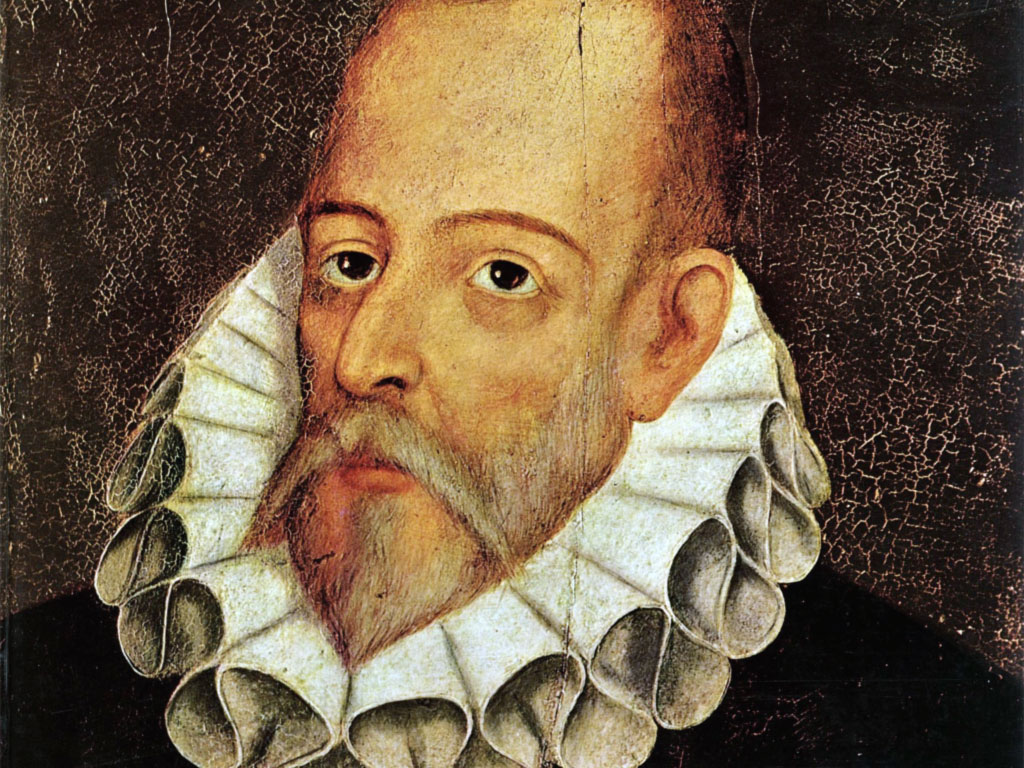
There is a particular kind of institutional smile that everyone who has ever worked inside a bureaucracy recognizes immediately — the smile that says one thing while the paperwork says another, the official language that frames exploitation as opportunity, the document that protects the organization precisely by appearing to protect you. Cervantes wore that smile directed at him for decades, and by 1613, when he published his collection of twelve stories under the transparently virtuous title Novelas Ejemplares, he had learned to smile back in exactly the same way.
The title itself is the first deception. Ejemplares means exemplary, instructive, morally edifying — and Cervantes knew that title would function as a kind of passport, allowing material that might otherwise draw scrutiny to pass through the customs of Counter-Reformation censorship with its papers apparently in order. In his prologue, he goes so far as to claim that every story contains a hidden moral lesson that the attentive reader may extract, like a physician isolating the curative element from a plant. It is one of the most elegant lies in the history of Spanish literature, and it worked.
Take La Gitanilla, the opening story of the collection, in which a young nobleman disguises himself as a gypsy to pursue a beautiful girl named Preciosa, eventually proving his virtue through suffering and patient love. On its surface, this is a story about nobility recognizing itself across social barriers, about the aristocratic soul shining through any costume. Read it slowly, and something else becomes visible. Preciosa is already a fully formed moral intelligence before the nobleman arrives. She recites poetry, navigates treacherous social situations with a precision her suitor never achieves, and makes judgments about character that are almost invariably correct. The noble is effectively decorative. The lesson the story appears to offer — that blue blood will out — is quietly dismantled by the actual architecture of the narrative, in which a young woman classified as a social inferior demonstrates consistently superior judgment. Cervantes never says this. He simply shows it, and then moves on.
El coloquio de los perros, perhaps the most formally audacious piece in the collection, operates through a structure so layered it resembles those Russian dolls where the smallest figure contains the real secret. Two dogs, Cipión and Berganza, spend a night conversing about the human world they have observed, their speech attributed to a fever dream of a soldier named Campuzano, whose account is then framed by a dialogue between that soldier and a friend who may or may not believe him. By the time any actual social criticism arrives — and it arrives with considerable force, targeting hypocritical clergy, abusive masters, and self-congratulating intellectuals — it has been insulated by so many narrative membranes that no single author can be held responsible for any single statement. Mikhail Bakhtin, writing three centuries later in his 1929 work on discourse and the novel, described precisely this technique when he identified the capacity of prose fiction to ventriloquize voices without endorsing them, to let carnivalesque speech emerge from a structure that formally contains and apparently controls it. Cervantes had mastered this without a theoretical framework for it. He had simply lived in conditions where saying two things at once was a survival skill.
This is the biographical thread that runs under all twelve stories like a buried current. A man who had petitioned a king and been ignored, who had sat in a prison cell while the empire he had bled for processed his case with serene indifference, who had watched official language perform virtue while performing its opposite — that man did not need Bakhtin to explain irony to him. He had apprenticed under Spain itself.
Cervantes and the Unfinished Business of Reality
There is a kind of writing that happens when a person knows, with the quiet certainty that comes not from diagnosis but from the body’s own arithmetic, that the pages are running out. Not metaphorically. Literally. The hand moves across the paper with a different quality of attention, something between urgency and surrender, and the sentences carry a weight that has nothing to do with rhetoric and everything to do with proximity to the final silence.
Cervantes finished the dedication to his last novel just four days before he died in April 1616. He had been working on it for years, a sprawling Byzantine romance of pilgrimage and transformation called Los trabajos de Persiles y Sigismunda, and he completed the prefatory letter while suffering from what his physicians described as dropsy, his body retaining water, his legs swollen, his breath shortened. He wrote the dedication anyway. He addressed it to his patron, the Count of Lemos, and in it he quoted a fragment of an old student song — “with my foot already in the stirrup” — as a way of acknowledging that departure was imminent. Then he kept writing. He mentioned the road to Toledo, a pilgrim he had encountered who apparently recognized him, a conversation full of warmth and simple human recognition. And then he said, almost as an aside, that he wished he could live long enough to show his gratitude more fully. He did not live long enough.
What the dedication letter does, in its four hundred or so words, is something that Paul Ricoeur spent considerable portions of his philosophical career trying to articulate. In his monumental work Temps et récit, published between 1983 and 1985, and more directly in Soi-même comme un autre from 1990, Ricoeur argued that the self is not a fixed substance but a narrative achievement. What he called narrative identity is the ongoing act of interpreting one’s own life as a story with coherence, even — especially — when the lived experience is fragmentary, discontinuous, contradictory. The human being, for Ricoeur, is not the one who exists but the one who tells, and retells, and revises the telling. Identity is not given. It is composed, the way a novel is composed, through the act of emplotment, the selection and arrangement of events into something that holds together long enough to be recognized as a life.
Cervantes composed himself right up to the edge. The dedication is not a farewell in the sentimental sense. It is an act of identity construction under the most extreme of conditions, a man assembling himself one last time through the machinery of prose, insisting on the coherence of a self that had been shipwrecked and ransomed, imprisoned for five years in Algiers, jailed twice in Spain over financial disputes, denied military pension despite losing the use of his left hand at Lepanto in 1571, overlooked for most of his literary career until a book written in his late fifties made him, briefly, the most famous writer in the Spanish-speaking world.
A man walks through a corridor he has walked a thousand times, and this time he knows, without being told, that he is walking it differently. Not because the corridor has changed. Because he has changed his relationship to corridors, to walking, to the accumulated gesture of moving forward. There is a gravity to ordinary things when ordinary time is running short that no amount of philosophical preparation fully neutralizes. Persiles and Sigismunda journey across the northern world toward Rome, toward a destination that promises transformation, and Cervantes wrote their journey to the end while his own journey was narrowing to a single room, a few days, a dedication addressed to a count who would outlive him by many years, and a question about story that he never stopped believing was worth asking.
What We Inherit When We Inherit Cervantes
There is a moment most readers experience somewhere around the middle of their lives — not a dramatic rupture, but a quiet, unsettling recognition — when they realize that the stories they told themselves to keep going were not entirely true. Not lies, exactly. Something more subtle: necessary fictions dressed as convictions, windmills that had to be giants because the alternative was too flat to survive.
This is the inheritance Cervantes left. Not a cautionary tale about delusion, not a comedy of errors dressed in rusty armor, but something far more corrosive and far more generous: a foundational text that installs, at the very center of Western literary consciousness, the proposition that the person who cannot distinguish fiction from reality might be the most lucid person in the room. That the one who tilts at windmills has at least chosen to tilt at something.
Dostoyevsky called Don Quixote the most melancholy book ever written, and meant it as the highest possible praise. He understood, with the particular precision of someone who had stood before a firing squad and been reprieved at the last second, that the novel’s sorrow was not about failure but about the cost of remaining human inside a world that has decided to be practical. When he sat down to write Prince Myshkin — a man too honest, too open, too radically present for the society around him — he was working directly inside Cervantes’s shadow, asking the same question four centuries had not managed to answer: what happens to goodness when goodness is structurally incompatible with survival?
Flaubert asked it differently, and with more cruelty. Emma Bovary is Quixote in a corset, undone not by chivalric romances but by sentimental novels, by the same gap between the life that language promised and the life that actually arrived on a Tuesday morning in a provincial French town. Flaubert spent five years writing Madame Bovary, published in 1857, and understood that he was not satirizing Emma — he was anatomizing himself. “Madame Bovary, c’est moi” is not a confession of vanity. It is a confession of Quixotism, an admission that the imagination is always slightly more real than the world, and that this is both the catastrophe and the only thing worth protecting.
Kafka, who rarely spoke about influences but kept a copy of Don Quixote close, built an entire architecture of narrative around the same structural problem: a protagonist who insists on pursuing meaning through systems that have no interest in providing it. The castle that cannot be reached, the trial that cannot be understood, the burrow that cannot be made safe — these are all windmills, every one of them, and the men who throw themselves against them are not mad. They are simply refusing to accept that the world is indifferent, which is the one refusal that every bureaucracy, every social norm, every well-meaning friend will eventually try to cure you of.
And here is where the inheritance becomes personal, becomes uncomfortable, becomes yours. Because the question Cervantes embedded in 1605 and never extracted is not historical. It is not about a Spanish hidalgo and his borrowed horse. It is about the thing you have been insisting on in the face of evidence, the conviction you have carried longer than reason strictly supports, the version of the world you cannot quite surrender even when the people who love you have quietly, gently, repeatedly suggested that you should. The foundational novel of Western literature is not a story about a madman. It is a story about what it costs to want something larger than what is on offer — and what it costs to stop.
The question Cervantes left open was never whether Quixote was wrong. It was whether being right was ever the point.
What We Inherit When We Inherit Cervantes
There is a moment most readers experience somewhere around the middle of the book — not at the famous windmill scene, which comes early and feels almost too clean in its symbolic neatness — but later, when the knight has been humiliated again, when Sancho has tried once more to anchor his master to the visible world, and when you realize with a quiet dread that you are not entirely sure which of them you trust more. That discomfort is not accidental. It is the inheritance.
Cervantes published the first part of Don Quixote in 1605, when he was fifty-seven years old, having spent decades as a failed soldier, a captive in Algiers for five years, a tax collector who was excommunicated twice and imprisoned at least once, possibly three times. He was a man who had watched the world refuse to organize itself according to the stories he had been given. What he wrote was not, despite four centuries of comfortable misreading, a comedy about delusion. It was a philosophical interrogation of what happens to a human being when the gap between the world as it is and the world as it ought to be becomes unlivable.
Dostoevsky called Quixote the saddest book ever written, and when he sat down to create Prince Myshkin in The Idiot in 1869, he was explicit that he wanted to portray a truly good man in the modern world and that he expected the result to be tragic. Myshkin, like Quixote, is destroyed not by his madness but by his sincerity. The world does not punish the deluded. It punishes those who act as though the good is real. Flaubert understood this differently but no less precisely: Emma Bovary, published in 1857, is a Quixote who has read the wrong books, and what kills her is not romance but the catastrophic mismatch between the self the novel promised her and the self the village permitted. Cervantes had already mapped that territory. Flaubert was annotating the same wound.
Kafka read Cervantes. The man who wakes to find himself transformed, who stands before a court whose charges he cannot learn, who approaches a castle he can never enter — that figure is Quixote without the armor, stripped of the one defense the Spanish knight had: the ability to reinterpret defeat as a temporary enchantment. Kafka’s protagonists cannot even manage that. They know the castle is simply closed to them, and they go on anyway, which is perhaps the twentieth century’s revision of the sixteenth century’s problem.
What the foundational novel of the Western tradition chose as its center is a man whose instrument of perception is broken — or, more precisely, a man whose instrument of perception was calibrated by books to a world that does not exist. Miguel de Unamuno, writing his own meditation on the knight in 1905, the three hundredth anniversary of the first publication, argued that Quixote was more real than Cervantes himself, that the creature had outlived and outgrown the creator, that what Cervantes had released into the world was no longer his to control. There is something vertiginous in that claim. The author who spent his life failing to fit his experience into the shapes offered by literature ended by creating the template through which every subsequent writer would understand the danger of doing exactly that.
The long shadow falls in both directions. It falls forward through Sterne and Melville and Borges, through every novel that has doubted its own authority to describe the real. And it falls backward onto the reader, who borrowed this book in good faith, who followed a madman across a plain, and who arrives at the last page carrying the unresolved question of which parts of their own life have been the windmill and which have been the giant, and whether the difference was ever, finally, theirs to determine.
🌀 Wanderers of the Mind and Spirit
Miguel de Cervantes gave the world Don Quixote, a knight errant lost between reality and imagination, whose journey echoes through centuries of thought and art. His work touches the deepest questions of human existence — illusion, truth, madness, and the search for meaning. These related articles trace parallel labyrinths of great thinkers and literary traditions that share Cervantes’ restless spirit.
Alchemy in Literature: From Dante to Goethe
Just as Cervantes embedded layers of hidden meaning within his chivalric tales, alchemical literature from Dante to Goethe wove transformative symbolism into its verses and narratives. This article explores how great literary minds used the language of alchemy as a mirror for the soul’s inner journey. Reading it alongside Cervantes reveals a shared European tradition of encoding spiritual quest within seemingly worldly adventures.
GO TO THE SELECTION: Alchemy in Literature: From Dante to Goethe
Giordano Bruno and the Hermetic Tradition
Giordano Bruno, a contemporary of Cervantes, wandered the courts of Europe much like Don Quixote wandered the plains of La Mancha — armed with ideas too vast for his age to contain. This article explores Bruno’s fusion of Hermetic philosophy, memory, and cosmological vision in an era of intellectual upheaval. The parallels between these two Renaissance figures illuminate a world teetering between medieval certainty and modern doubt.
GO TO THE SELECTION: Giordano Bruno and the Hermetic Tradition
Hannah Arendt: the Philosopher Who Unmasked the Banality of Evil
Hannah Arendt’s meditation on the banality of evil resonates with Cervantes’ ironic portrait of a world where delusion and cruelty masquerade as nobility and virtue. Both thinkers confronted the gap between ideals and the brutal machinery of human reality. This article offers a philosophical lens through which the tragicomedy of Don Quixote can be read as a profound moral inquiry.
GO TO THE SELECTION: Hannah Arendt: the Philosopher Who Unmasked the Banality of Evil
Must-See Movies About the Meaning of Life
Cervantes’ masterpiece is, at its heart, an extended meditation on the meaning of life — on whether it is nobler to dream impossible dreams or to accept the world as it is. This curated collection of films grapples with the same timeless question across different cultures and cinematic languages. Exploring these movies alongside Cervantes deepens the conversation about purpose, illusion, and what it means to be human.
GO TO THE SELECTION: Must-See Movies About the Meaning of Life
Discover Independent Cinema on Indiecinema
If the wandering spirit of Cervantes has stirred something in you, Indiecinema is the streaming platform where that journey continues. Our curated selection of independent and art-house films explores the same labyrinthine questions of identity, madness, truth, and meaning that have haunted great minds for centuries. Join us and let cinema become your own impossible quest.
👉 EXPLORE THE CATALOG: Watch Indie Films in Streaming
A vision curated by a filmmaker, not an algorithm
In this video I explain our vision

