
The Funeral You Attended Without Feeling Anything
You stood at the edge of a room full of people who were crying, and you felt nothing. Not numbness exactly — something more unsettling than that. A kind of clarity, almost cold, watching the faces contort and the shoulders shake, watching the performance of grief that everyone around you seemed to inhabit so naturally, so completely, while you stood there wondering if something fundamental was missing from your wiring. You thought about the sandwiches you wanted to eat afterward. You noticed the bad lighting. You were present in every technical sense and absent in the only sense that mattered to the people watching you.

This is not a confession of sociopathy. It is, if anything, the most honest account of how grief actually arrives — or refuses to. The psychologist George Bonanno spent decades studying bereavement at Columbia University, and his research culminated in a finding that upended the entire therapeutic consensus: roughly sixty percent of people who lose a close family member show remarkable resilience, sometimes including an absence of acute distress, and this is not pathological. It is simply one of the many shapes that the human response to death takes. Yet the social architecture around mourning — the vigil, the ceremony, the obligatory weeping — assumes a single correct emotional response, and anyone who fails to perform it becomes, at minimum, suspicious.
There is a man who is called to identify his mother’s body in a home where she had lived for the last years of her life. He travels by bus. He drinks coffee. He smokes cigarettes with the caretaker. He watches the other residents of the home shuffle past the coffin with what seems like a kind of professional mourning. At a certain point someone offers him a coffee and he accepts it, and later he will be asked — in the sharpest possible context — whether he felt grief, whether he cried, whether he experienced the appropriate tremors of loss. And what happens to him, in the days and years that follow, will turn entirely on the answer he could not give, because the answer was simply: not in the way you mean.
Albert Camus published L’Étranger in 1942, and the opening sentence remains perhaps the most discussed single line in twentieth-century literature precisely because it performs, rather than describes, the scandal it announces. Maman died today. Or maybe yesterday, I don’t know. The uncertainty is not grief-deflection. It is not irony. It is the most scrupulous form of honesty available to a man who refuses to impose emotional meaning where he cannot locate it. The French existentialist tradition, within which Camus moved and against which he eventually defined himself, understood this kind of honesty as both philosophical necessity and social crime.
Because that is exactly what it is. The crime is not coldness — it is refusal. Refusal to perform the emotion that the community requires in order to maintain its shared story about what death means, what loss means, what it means to be human and mortal and connected to other humans. Émile Durkheim argued in 1912, in The Elementary Forms of Religious Life, that collective rituals function not merely to honor the dead but to reinforce the living community’s sense of itself. The mourner who weeps is not only expressing personal grief; they are reaffirming solidarity, demonstrating that the social bond is real and costly. The mourner who does not weep is, structurally, a threat.
You felt this at the edge of that room. The sideways looks. The slight recalibration in someone’s eyes when they noticed your dry face. The moment you understood that your genuine response — whatever it was, wherever it lived — was socially illegible, and that illegibility would cost you something, though you could not yet name the price.
Meursault could not name it either. He paid it anyway.
Don Barry: A Quixotic Exploration
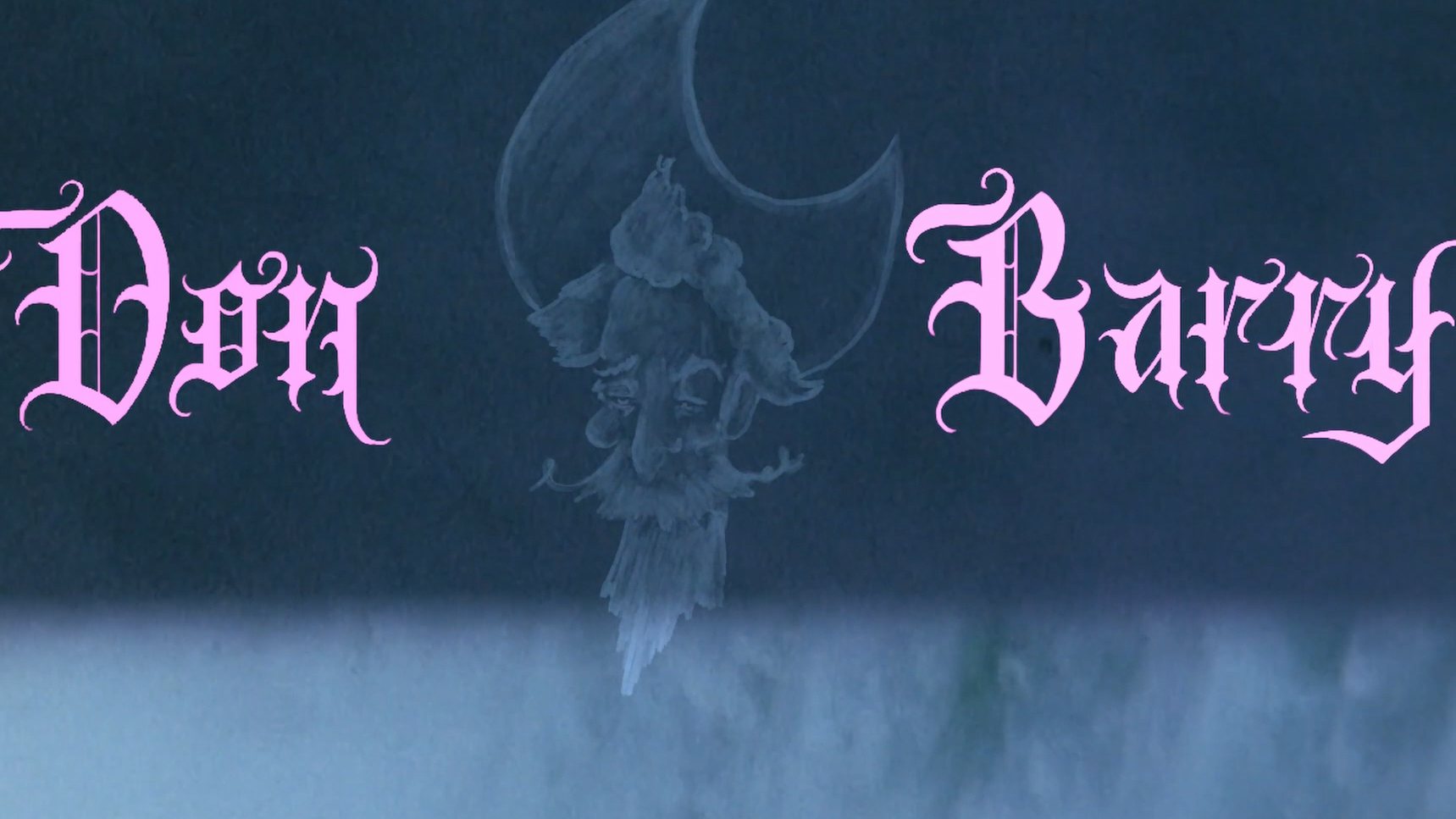
Docufiction, Experimental, by Paul Smart, Mexico, 2026.
Don Barry: A Quixotic Exploration is a debut feature that places the biography of an eighty-year-old experimental filmmaker and artist, Barry Gerson, within the metanarrative of Miguel de Cervantes’ Don Quixote. Don Barry was filmed in the city of Guanajuato during the 51st edition of the Cervantino Festival, as well as during the vibrant Day of the Dead celebrations held in the city’s UNESCO-listed tunnels. The film honors the director’s long friendship with artist Barry Gerson, drawing inspiration from Cervantes’ Don Quixote. Paul Smart’s directorial choices create something new that celebrates life and goes beyond conventional storytelling. A search for magic in our real lives. A moving film about the meaning of life, art, and death. Not to be missed.
Paul Smart is a proud outsider filmmaker with a long history of film screenings. In the 1980s, he emerged in New York’s vibrant youth art scene, working in theater production and later filmmaking, before retreating to rural upstate New York, in the Catskill Mountains, where he made a living writing and screening independent films in old parish halls for rural audiences, many of whom had never seen a film.
LANGUAGE: English
SUBTITLES: Spanish, French, German, Portuguese
Camus Wrote The Stranger in 1942 and Nobody Was Ready
Paris, 1942. The city is under occupation. People walk with their eyes slightly downward, not from shame exactly, but from the practiced art of not being noticed. In that specific atmosphere of enforced normalcy over an abyss, a twenty-eight-year-old Algerian journalist named Albert Camus published a slim novel that most of the literary establishment received with polite bewilderment before slowly realizing it had changed something fundamental about how a sentence could think.
The Stranger appeared in June of that year through Gallimard, and its timing was not incidental. Camus had finished the manuscript in 1940, in the same months that France was collapsing into armistice and humiliation. He was not yet the figure he would become — not the Nobel laureate of 1957, not the moral conscience of postwar Europe, not the man who would publicly break with Sartre over the question of whether political violence could be justified by historical necessity. He was a young man with tuberculosis, born in Belcourt, a working-class neighborhood of Algiers, to a mother who was nearly deaf and illiterate and a father he never knew because the man died at the Marne in 1914. He had grown up genuinely poor, not romantically poor, and this is not a biographical footnote. It matters for understanding what kind of silence fills his sentences.
The novel sold modestly at first. It was wartime, paper was rationed, and people had more pressing questions than whether a character’s relationship to his mother’s death constituted a new literary form. But the philosophical world was already circling something. Sartre reviewed The Stranger in 1943, in an essay titled “An Explanation of The Stranger,” and though his reading was brilliant, it was also already slightly proprietary — he was installing Camus into an existentialist framework that Camus would spend the rest of his career quietly resisting. The misclassification began immediately and has never fully ended.
What Camus was actually building, as he himself articulated in The Myth of Sisyphus — published in the same year as the novel, as a kind of philosophical companion — was not existentialism but absurdism, a distinction that sounds academic until you understand its stakes. Existentialism, in Sartre’s formulation, eventually produces a commitment: you confront the void and you choose, you create meaning through action, you exist before you possess an essence. Absurdism does something more destabilizing. It insists that the confrontation with meaninglessness must not be resolved. The tension must be held. You do not leap toward God, you do not leap toward ideology, you do not perform the philosophical equivalent of looking away. You stay in the unbearable clarity of it.
This was not what a continent emerging from catastrophe particularly wanted to hear. Post-occupation Europe was hungry for frameworks of reconstruction — moral, political, existential. Camus offered instead a kind of rigorous exposure. His philosophical essays draw directly on Kierkegaard’s concept of the leap of faith only to reject it, arguing that the leap, however sincere, is a form of philosophical evasion. The absurd hero does not leap. He remains. This was a genuinely radical position in 1942, and it remains one, because every cultural structure we have built since is designed to make the leap feel not only natural but mandatory.
By the time the war ended and Europe began its exhausted reconstruction, The Stranger had become something that circulated less like a literary discovery and more like a rumor about something true that no one wanted to confirm too directly. Its sentences were too clean for tragedy, too cold for sentiment, too honest about the weight of a single ordinary afternoon to be safely filed under literature-about-big-things. It was literature about the texture of being alive when being alive doesn’t resolve into anything, and in 1942, in an occupied city where people had learned to walk with their eyes downward, that was not a comfort.

The Absurd Is Not a Philosophy, It Is a Tuesday Morning

You wake up on a Tuesday and something is missing, but you cannot name it. The coffee is the same temperature it always is. The light through the window arrives at the same angle it arrived yesterday. You have slept, you will eat, you will move through the hours until the hours end. Nothing has gone wrong. That is precisely the problem.
This is where the absurd actually lives — not in crisis, not in catastrophe, not in the dramatic confrontations philosophers love to stage for their arguments. It lives in the undisturbed surface of a functional day, in the strange nausea that arrives when routine performs itself so perfectly that the human being inside it becomes briefly visible as an unnecessary addition to the machinery. Camus knew this. He did not need a lecture hall to find it.
In The Myth of Sisyphus, published in 1942, Camus describes the absurd not as a property of the world alone, nor as a defect of the human mind alone, but as the collision between them — the clash between the human cry for clarity and the world’s unreasonable silence. The precision of that formulation matters enormously because it refuses to blame either side. The universe is not malicious. You are not broken. The gap between you is simply structural, and it opens every morning whether you invite it or not.
A man sits in a small apartment and watches his neighbor’s dog limp across the courtyard on three legs. He watches for a long time. He is not moved to tears. He is not indifferent either. He is suspended in something that has no name in ordinary language — a kind of witnessing that expects resolution and receives none, that waits for the scene to mean something and discovers that the scene will not cooperate. He eventually stops watching. He eats dinner. The feeling does not leave.
Søren Kierkegaard, writing a century before Camus, had already located something structurally similar in what he called despair — the condition he anatomized in The Sickness Unto Death in 1849 as the failure of the self to be itself, the chronic misalignment between what we are and what we understand ourselves to be. Kierkegaard’s despair was theological in its solution: the leap of faith bridges the gap. Camus borrowed the diagnosis and rejected the cure. He called the leap philosophical suicide, the decision to exit the problem by inventing a meaning the evidence does not support. The absurd, for Camus, demands that you remain inside the gap, awake, without anesthesia.
This is what makes Meursault so uncomfortable to inhabit as a reader. He is not depressed in any clinical sense. He moves, he speaks, he responds to physical sensation with something close to pleasure. But the scaffolding that normally organizes human experience — the assumption that events accumulate into significance, that time is building toward something, that feeling ought to follow the correct cues — is simply absent in him. He does not mourn it. He never had it. And watching him live without it forces you to ask, with genuine unease, whether you have it or merely perform having it.
There is a woman at a kitchen table, holding a letter she has already read three times. The letter contains good news. She knows it is good news. She can identify every element that should be producing happiness and trace each one back to its proper cause. The happiness does not arrive. She makes tea. She reads the letter again. Outside, the city continues its mechanical breathing, indifferent not with hostility but with the complete absence of any interest in her situation whatsoever. The absurd is not in the letter. It is not in her. It is in the space between the two, in the expectation of a conversation the world never agreed to have.
What Meursault Actually Refuses and Why It Terrifies Us
You have stood at a funeral and felt, beneath the grief, something else — a faint, almost shameful detachment, a part of you registering the light through the window, the smell of coffee someone left on a burner nearby, the absurd smallness of the folding chairs. You performed what was required. You arranged your face. You said the right things in the right order, and in doing so you were not being dishonest exactly — you were being social, which is a different thing entirely, and which we have agreed, without ever signing anything, is the same as being human.
Meursault does not perform. That is the entirety of his transgression, and it is enormous.
When his mother dies, he does not cry. He drinks café au lait at the vigil. He notes the heat, the brightness of the light, the physical discomfort of the wooden benches. When a magistrate leans across a desk and waves a crucifix at him, demanding some acknowledgment of guilt, some crack in the surface through which remorse might pour, Meursault finds himself simply bored. Not defiant. Not nihilistic in any theatrical sense. Bored, the way you are bored when someone explains at length a game you have no interest in playing.
Erving Goffman, writing in 1959, dismantled any remaining illusion that social life is something other than performance. In The Presentation of Self in Everyday Life, he argued with meticulous sociological patience that every encounter between human beings is a staged production — we manage impressions, we play roles calibrated to our audience, we use props and costumes and scripted lines to sustain a shared fiction about who we are. The theater metaphor was not decorative for Goffman. It was structural. What keeps social order intact is not law or force but the mutual agreement to keep the performance going, to feed each other’s lines, to never break the fourth wall.
Meursault breaks the fourth wall constantly, not through rebellion but through indifference. He is the actor who forgets to emote, and what is terrifying is not that he ruins the play — it is that his silence reveals there was always a play. The prosecutor at his trial is not prosecuting a murderer. He is prosecuting a man who failed to grieve publicly, who went to a comedy film the day after the funeral, who told a woman he probably loved her when she asked but that it didn’t matter much. These are the actual charges. The Arab on the beach is almost incidental, a legal mechanism for punishing what the law cannot name: the refusal of narrative coherence.
We need the people around us to provide coherent stories about their inner lives. Not because we are cruel, but because without those stories the whole architecture becomes visible — the way a single unlit window in a row of lit ones suddenly makes you aware of the street, the bricks, the scaffolding that was there all along. Meursault is that window. His silence does not accuse anyone directly. It simply fails to participate in the collective project of mutual reassurance, and that failure, for the people around him and for us as readers, produces something closer to vertigo than to moral outrage.
There is a man who faces a firing squad and feels, the night before his death, something opening in him — not peace exactly, but a vast indifference that is almost tender, a laying down of the performance for the last time. He looks up at the night sky and finds it strangely gentle. He has stopped needing it to mean anything. What the crowd wants from him, what they have always wanted, is the spectacle of a man broken by the weight of significance — a man who confesses, weeps, reaches for the crucifix. What he offers instead is the sky.
That is the unforgivable thing. Not the crime. The refusal to need forgiveness to mean what it is supposed to mean.
The Lost Poet
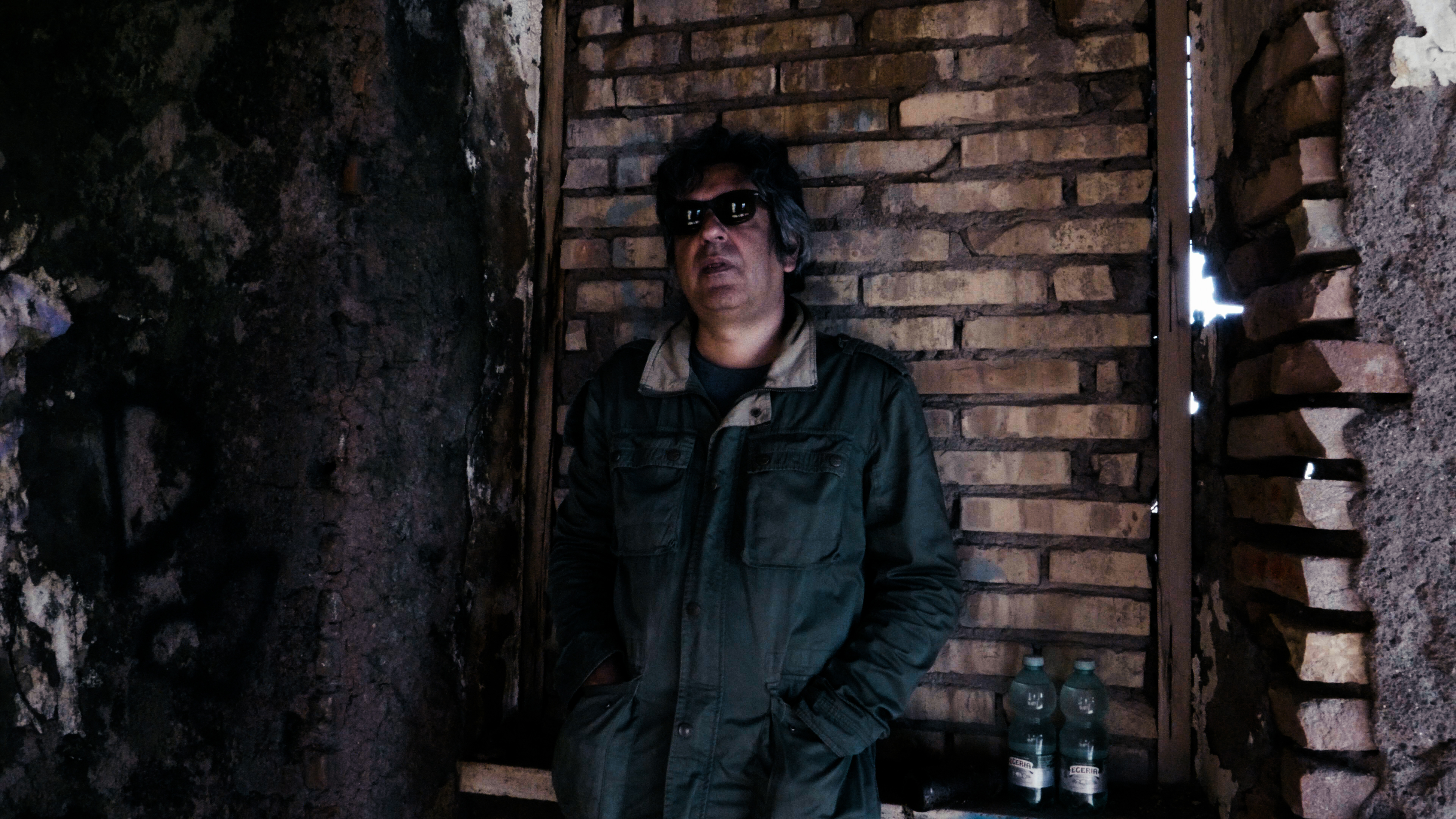
Drama, by Fabio Del Greco, Italy, 2024.
Dante Mezzadri wants to see an old friend, nicknamed the Iguana, whom he has lost sight of for many years, and who has managed to turn their shared youthful passion for poetry into a job, becoming a famous writer and poet. The man escapes from his bourgeois life and his wife to live homeless on the Roman coast, printing and trying to sell his poetry collections. At night he sleeps in a park of old carnival floats, inside a papier-mâché tank, and waits for the opportunity to meet his old friend, who however never shows up for appointments in the places they frequented when they were young, now in ruins. Dante's poetry books do not interest anyone and to support himself he is forced to "change product": he starts selling the infamous "cannibal pill" on behalf of young drug dealers, a new drug that sells like hot cakes and causes sensory and consumerist ecstasy. However, he realizes that this powerful drug is very dangerous for those who take it, he comes into conflict with his ethical conscience and throws all the pills into the sea. However, the dealers want to collect their money.
Shot over a period of 2 years, the film is a reflection on the cultural and artistic rubble of the society in which the protagonist lives, in an increasingly mechanized, consumerist and arid world. Dante Mezzadri is yet another human being who has renounced his inspiration and his creativity, but unlike many he is not willing to give his life to a system that distances him from his true identity. The physical world around him, however, seems constructed in such a way that it seems impossible to escape from this "invisible cage". The enthusiasm of the people he meets is ignited only by sensory gratification, by unreal visions of personal affirmation and success, by "metaverses" that offer an escape into an illusory and destructive reality. The poet's house on the coast, where he met with his friends as a young man, is just a pile of abandoned rubble. What happened to all those who wanted to become poets and ended up becoming something else? Are there internal forces with which that house can be "rebuilt"?
LANGUAGE: Italian
SUBTITLES: English, Spanish, French, German, Portuguese
The Arab on the Beach Has a Name We Were Never Given

There is a body on the beach and you have never asked his name. That omission, which felt like aesthetic minimalism for decades, is something else entirely. It is a political act dressed as literary style. The man Meursault kills is referred to throughout simply as “the Arab” — not once individualized, not once granted the interior life that Camus lavishes on his French protagonist with such philosophical generosity. He exists in the novel as obstacle, as heat, as provocation, as the thing that gets shot. And then he is buried by the plot as efficiently as the Algerian sun buries everything it touches.
This is not an accident of craft. Edward Said, in Culture and Imperialism published in 1993, argued that the great works of Western literature do not merely reflect empire — they actively participate in its logic, structuring who gets to be a subject and who remains an object in the background of someone else’s story. Said was not interested in condemning authors as individuals. He was mapping something more insidious: the way an entire civilization’s assumptions about hierarchy, visibility, and human value embed themselves in narrative form so naturally that readers absorb them without friction. The Arab on the beach is not a character because, within the cultural grammar Camus inherited and never fully interrogated, Algerians were not characters. They were landscape.
Think of what it means to watch someone move through a city that belongs to them in name but not in architecture, not in law, not in the gaze of the camera following the white protagonist down streets lined with faces that never resolve into people. That erasure is not invisible once you know how to see it. It has weight. It has temperature. The unnamed figures in the background of those colonial streets — serving, watching, sometimes dying — are carrying a narrative debt that the story refuses to acknowledge it owes.
Kamel Daoud understood this debt with ferocious clarity. His novel The Meursault Investigation, published in 2013, is one of the most precise acts of literary justice in recent memory. Daoud gives the dead Arab a name — Musa — and gives him a brother, Harun, who has spent a lifetime trying to mourn someone the French literary tradition decided did not need mourning. The novel does not simply respond to Camus. It autopsies him. It shows what a story looks like from the side of the body, from the side of the family, from the side of the people who were always present but systematically rendered invisible by the perspective through which history was narrated.
The violence here is not only the bullet on the beach. It is the subsequent erasure — the trial that never mentions the victim’s humanity, the philosophical meditation that uses his death as a springboard for questions about meaning that never circle back to ask what his life meant. Meursault’s existential crisis consumes the entire moral oxygen of the novel, leaving nothing for the man whose chest stopped the bullet.
Algeria in 1942, when Camus was writing, was a country of approximately eight million people, the vast majority of them Arab and Berber, living under a French colonial system that had been in place since 1830 and that systematically denied them citizenship, land rights, and legal personhood. The novel’s French Algerian characters inhabit the coast and the cafés and the courts as if this political architecture does not exist. Meursault’s alienation is rendered as universal condition. The Arab’s death is rendered as weather.
A vision curated by a filmmaker, not an algorithm
In this video I explain our vision
The Sun, the Heat, and the Lie of Circumstance
You have stood in a parking lot in August, the asphalt radiating heat back into your face, and you have said something cruel to someone who did not deserve it. And when they looked at you, wounded, you heard yourself say: I’m sorry, I’m exhausted, this heat is unbearable. You believed it. That is the disturbing part — you genuinely believed the heat had something to do with it.
Meursault pulls the trigger and tells us, eventually, that the sun was in his eyes. The light off the blade of the Arab’s knife was blinding. The heat pressed down like a physical weight. He had already fired once, and then four more times, and the explanation he offers is atmospheric. Not rage, not fear, not hatred — the sun. Literary criticism has spent decades calling this a deflection, an absurdist joke, an authorial provocation. But perhaps it is none of those things. Perhaps it is the most honest description of how ordinary moral collapse actually feels from the inside.
Sartre argued in Being and Nothingness, published in 1943, the same year Camus’s novel appeared in French, that bad faith is not simply lying to others — it is the specific human talent for lying to oneself about one’s own freedom. The waiter who performs being a waiter so completely that he forgets he chose to come to work that morning. The soldier who follows orders because he has convinced himself that the role eliminates the person. Bad faith is the strategy of transforming a choice into a condition, making what you did into something that happened to you. Meursault, sweating and half-blinded on that beach, is not being absurd. He is being entirely human in the most uncomfortable sense: he is refusing to locate the decision inside himself.
Hannah Arendt watched Adolf Eichmann in a Jerusalem courtroom in 1961 and reported something that disturbed her readers more than she expected. She found not a monster but a bureaucrat, a man of staggering mediocrity who explained the deportation of millions with the language of procedure, hierarchy, paperwork. He had been tired. He had been following orders. The machinery had been in motion. Arendt called it the banality of evil, and what she meant, at its core, was precisely what Meursault enacts on a beach with a revolver — the disappearance of the agent behind the circumstance. Eichmann’s train schedules. Meursault’s sun.
A man leaves his family not because he stopped loving them but because the distance grew, the silences multiplied, the apartment felt smaller every year. A woman signs off on a decision at work that ruins a colleague’s career and explains it as institutional necessity, budget constraints, forces beyond any individual’s control. These are not exceptional people. They are everyone, navigating the intolerable weight of their own freedom by distributing it outward — into weather, into structure, into the relentless forward motion of circumstance that seems to carry us rather than the reverse.
What Camus understood, and what makes Meursault’s sun so philosophically precise rather than evasive, is that consciousness itself conspires in this distribution. The heat was real. The light was blinding. The body does register its environment, does respond to exhaustion and disorientation. The lie is not that the sun existed — the lie is the causal chain constructed afterward, the narrative that moves from sensation to action and quietly removes the moment of choice from the sequence. That removal is not unique to murderers or war criminals. It is the standard operating procedure of a consciousness that cannot bear to stand fully inside what it has done.
Camus does not let Meursault off the hook for any of this. But he does not let the reader off it either.
Condemned Not for Murder but for the Wrong Kind of Soul

The prosecutor does not spend much time on the bullet. He spends his time on the coffee.
This is the detail that should unsettle you, if you are paying attention. A man is on trial for killing another man, and the mechanism by which his guilt is established has almost nothing to do with the act itself. The witnesses called to speak are not ballistics experts or eyewitnesses reconstructing trajectories. They are people who watched Meursault at his mother’s funeral — watched him accept a cup of coffee, smoke a cigarette, show no visible distress. That is the evidence. That is what seals him.
Michel Foucault, in Discipline and Punish published in 1975, made an observation so precise it feels like a scalpel: modern legal proceedings do not simply judge acts, they judge souls. The courtroom, he argued, had gradually transformed from a site of punishment into a site of examination — a ritual apparatus for producing a knowable, classifiable subject. What the trial extracts is not a verdict on what happened but a verdict on what kind of person could have let it happen. The crime becomes a symptom. The defendant becomes a case.
What Meursault’s trial performs with almost surgical clarity is exactly this mechanism. The prosecutor constructs a narrative that moves from the funeral to Marie to the murder as though they form a single continuous proof of moral pathology. He did not weep. The next morning he began a romantic relationship. He saw a comedy film. He went swimming. Each of these facts, individually trivial, accumulates into a portrait of deviance so thorough that by the time the actual shooting is addressed, it almost feels like a footnote. The crime is retroactively explained by the soul, and the soul is retroactively revealed by the crime. The logic is circular and airtight.
The sociologist Stanley Cohen, writing in Folk Devils and Moral Panics in 1972, described how societies periodically identify a figure — a type, a category of person — who comes to concentrate and represent a threat to shared values. The response is never proportionate to the actual danger. It is proportionate to the anxiety the figure provokes. Meursault does not threaten anyone in the courtroom. He sits quietly. He fails to perform remorse on cue. And that failure, that specific withholding of the expected emotional performance, is experienced as an act of aggression more disturbing than the killing itself. Because a man who kills in passion is still legible. A man who kills and then drinks coffee without trembling is something the social order cannot file away and forget.
There is a moment when someone who knew Meursault professionally is asked whether he had seemed troubled in the days following his mother’s death. The answer is no. The courtroom registers this as revelation. But what has actually been revealed? Only that Meursault did not externalize grief in the manner that would have been legible to others. Whether he felt anything, whether something moved or shifted inside him, is not asked. The question is never about the interior. It is about the surface, about whether the correct signals were transmitted to the correct audience at the correct time.
This is normative violence. Not violence in the obvious sense, not the violence of the blow or the bullet, but the violence Foucault meant when he described the normalizing gaze — the ceaseless measurement of individuals against an invisible standard that is never declared explicitly but is enforced absolutely. The standard is: you must make your interiority legible to us. You must translate your inner states into the agreed-upon signs. You must grieve on schedule, love demonstrably, fear visibly. Failure to do so is not privacy. It is not difference. It is evidence of something broken, something dangerous, something that must be removed.
The jury is not deciding whether Meursault fired the gun. Everyone agrees he fired the gun. They are deciding whether he is the kind of person the world can afford to leave walking around in it.
The Moment Before the Guillotine When Everything Opens
There is a moment, in the hours before an irreversible thing, when the mind stops performing. Not because it has given up, but because the performance finally costs more than it returns. Meursault reaches this moment on the floor of his cell, having hurled a chaplain out of his presence with a fury that surprises even him, and then lying there, watching the stars open above him through the narrow window, feeling something that the novel refuses to call peace but that functions, devastatingly, like its structural equivalent.
What he feels is not reconciliation. Camus was precise about this, and the precision matters. In his 1942 notebooks, written almost simultaneously with the novel, he distinguished between acceptance and surrender, between the man who says yes to life because he has understood its terms and the man who says yes because he lacks the courage to say anything else. Meursault, in that cell, is doing something far more violent than making peace. He is stripping away every layer of meaning that was never his to begin with — the mourning he was supposed to perform, the remorse he was supposed to feel, the narrative of guilt and redemption that society had been trying to impose on him since the first page — and finding that underneath all of it, there is nothing. And then, in that nothing, something shifts.
Think of a man sitting in a room, having been told he will die in the morning, suddenly laughing. Not from madness, not from denial, but from the recognition that the threat of death, which was supposed to be the ultimate coercion, has somehow lost its grip. The world outside the window continues — voices, a bicycle bell, the smell of something frying — and the fact that it continues, indifferent, is no longer an insult. It is simply the truth of things. He has been trying to make the world care for the entire length of his life, and now, in the final hours, he stops. And the stopping feels, against all logic, like breathing.
This is what Camus called the gentle indifference of the world, la douce indifférence du monde, and the adjective is doing enormous philosophical work. Not cruel indifference, not cold indifference — gentle. As if the universe’s refusal to assign meaning to your suffering is, once fully accepted, the closest thing to tenderness that existence offers. Albert Camus, who had read Nietzsche’s insistence that meaning must be created rather than discovered, and who had argued with Sartre throughout the 1940s about whether rebellion required hope, landed somewhere that neither fully claimed: the absurd as a form of radical honesty, which costs everything and offers nothing except clarity.
There is a man, in another story, who has carried a lie so long that when the moment of exposure arrives, his face does something unexpected — it relaxes. The lie was the weight, and he had forgotten he was carrying it. What remains after the lie falls is not freedom in any heroic sense, but simply the unmediated texture of being alive, which is both less and more than what he was told to want. Meursault’s awakening in the cell has this quality. He was not living falsely in the way of the self-deceiver. He was living in the way of someone who had never quite agreed to the social contract of meaning-making, and had paid for that refusal with his life.
The question that the novel leaves open, deliberately, without the mercy of an answer, is whether what Meursault finds in that cell — that openness, that terrible clarity, that gentle indifference received and finally returned — is the deepest form of freedom a human being can reach, or simply the last thing that remains when everything else, every comfort and illusion and borrowed meaning, has been taken away and there is nothing left to lose.
🌿 The Absurd, Existence, and the Weight of Meaning
Camus’s The Stranger plunges us into the heart of absurdist thought, where human consciousness collides with a silent, indifferent universe. The questions it raises — about freedom, identity, and the search for meaning — echo across philosophy, literature, and art. These related readings deepen the existential conversation that Meursault’s story begins.
Must-See Movies About the Meaning of Life
Few questions haunt literature and philosophy more persistently than the one Camus placed at the center of The Stranger: what, if anything, does life mean? This curated selection of films confronts the same abyss with courage and artistry, asking whether meaning is discovered, invented, or simply endured. Watching them alongside Camus creates a powerful dialogue between the page and the screen.
GO TO THE SELECTION: Must-See Movies About the Meaning of Life
Hannah Arendt: the Philosopher Who Unmasked the Banality of Evil
Hannah Arendt’s concept of the ‘banality of evil’ resonates strikingly with the cold, mechanical world Meursault inhabits in The Stranger, where violence and indifference coexist without dramatic justification. Arendt, like Camus, forced her readers to confront the unsettling ordinariness of moral failure and the absence of transcendent purpose. Together, their works form one of the twentieth century’s most urgent philosophical dialogues.
GO TO THE SELECTION: Hannah Arendt: the Philosopher Who Unmasked the Banality of Evil
Deep Movies that Make You Think
The Stranger belongs to a tradition of works that refuse easy consolation and demand genuine intellectual engagement from their readers. This collection of films shares that same uncompromising depth, offering cinematic experiences that linger in the mind long after the credits roll. If Meursault’s silence disturbed you, these films will continue the disturbance in the best possible way.
GO TO THE SELECTION: Deep Movies that Make You Think
Jiddu Krishnamurti: the Man Who Refused to Be God
Jiddu Krishnamurti’s radical rejection of all authority — religious, social, and philosophical — mirrors the existential solitude of Camus’s Meursault, who strips away every illusion to stand bare before the universe. Both figures, one a mystic and one a fictional anti-hero, arrive at a kind of terrifying freedom by refusing the comforting fictions society offers. Exploring Krishnamurti’s thought enriches our understanding of what it truly means to live without the crutch of inherited meaning.
GO TO THE SELECTION: Jiddu Krishnamurti: the Man Who Refused to Be God
Discover the Cinema That Asks the Real Questions
If Camus’s The Stranger has left you hungry for stories that dare to stare into the void, Indiecinema is your next destination. Our streaming platform gathers the most courageous works of independent and world cinema — films that, like Meursault, refuse to look away. Come explore a catalog built for those who believe that the most important journeys begin in the dark of a theater.
👉 EXPLORE THE CATALOG: Watch Indie Films in Streaming
A vision curated by a filmmaker, not an algorithm
In this video I explain our vision

