
The Weight of Waking Up
There is a specific hour — somewhere between three and four in the morning — when the mind surfaces from sleep into something that is not quite wakefulness and not quite rest. You lie there. The room is dark. No alarm has sounded, no noise has broken through. And yet something has pulled you up from the depths, something that feels less like waking and more like being caught. The chest is slightly tight. The thoughts that come are not organized enough to be called worries — they are more like weather, a pressure front moving through without a name attached to it. You are not afraid of anything in particular. You are afraid of everything in general. You are afraid, perhaps, of the fact that you exist at all, and that existing means this: the endless forward motion of a life that did not ask your permission before beginning.

Most people will spend the rest of that sleepless hour trying to dissolve this feeling. They reach for the phone. They rehearse tomorrow’s tasks. They construct small mental architectures of plans and purposes, anything to fill the hollow that has opened up in the dark. By morning, the sensation has passed. Coffee arrives. The day begins its machinery. And the question that hung over you at three in the morning — not a question you could have articulated, but a question nonetheless — gets buried again beneath the sediment of routine.
Arthur Schopenhauer believed that this was not a malfunction. He believed this was the truth breaking through.
Born in Danzig in 1788 into a prosperous merchant family, Schopenhauer grew up surrounded by the material conditions for a comfortable life and spent the entirety of that life insisting that comfort was a lie — not because he was miserable by temperament, though he was often described as combative and difficult, but because he had looked, with extraordinary clarity, at what actually drives human beings beneath the surface of their intentions. What he found was not reason. It was not purpose. It was not the rational soul that Kant had tried to preserve at the center of his moral philosophy. What he found was something he would eventually call the Will — though the name came later, after the experience of it, the way names always come after the thing they attempt to describe.
The Will, in Schopenhauer’s understanding, is not your will. It is not the will to succeed at your career or to love someone well or to build something lasting. Those are its disguises. The Will is the blind, impersonal force that pulses through everything that lives — through the tree pushing its roots into concrete, through the body insisting on hunger even when hunger is inconvenient, through the drive that wakes you at three in the morning with no reason and no object. It is the grinding engine beneath consciousness, indifferent to happiness, indifferent to meaning, serving no purpose beyond its own perpetuation. It wants nothing and everything simultaneously. It cannot be satisfied because satisfaction would mean its extinction, and it will not permit its own extinction.
This was Schopenhauer’s central and devastating insight, the one he would spend decades elaborating in his masterwork The World as Will and Representation, first published in 1818 when he was thirty years old and largely ignored. Suffering, he argued, is not something that happens to a life when that life goes wrong. Suffering is the structure of life itself. The wanting that underlies all human activity is not a problem to be solved but the very texture of being alive. You do not suffer because you have failed. You suffer because you are driven by a force that can never arrive anywhere, that moves only because movement is what it is.
That hour before dawn, when existence presses down on you without explanation — Schopenhauer would have recognized it immediately. He would have said: yes, precisely that. That is what I mean.
Don Barry: A Quixotic Exploration

Docufiction, Experimental, by Paul Smart, Mexico, 2026.
Don Barry: A Quixotic Exploration is a debut feature that places the biography of an eighty-year-old experimental filmmaker and artist, Barry Gerson, within the metanarrative of Miguel de Cervantes’ Don Quixote. Don Barry was filmed in the city of Guanajuato during the 51st edition of the Cervantino Festival, as well as during the vibrant Day of the Dead celebrations held in the city’s UNESCO-listed tunnels. The film honors the director’s long friendship with artist Barry Gerson, drawing inspiration from Cervantes’ Don Quixote. Paul Smart’s directorial choices create something new that celebrates life and goes beyond conventional storytelling. A search for magic in our real lives. A moving film about the meaning of life, art, and death. Not to be missed.
Paul Smart is a proud outsider filmmaker with a long history of film screenings. In the 1980s, he emerged in New York’s vibrant youth art scene, working in theater production and later filmmaking, before retreating to rural upstate New York, in the Catskill Mountains, where he made a living writing and screening independent films in old parish halls for rural audiences, many of whom had never seen a film.
LANGUAGE: English
SUBTITLES: Spanish, French, German, Portuguese
A Miserable Childhood as Philosophical Raw Material
You are seven years old and your father takes you on a tour of his merchant warehouses in Danzig, showing you ledgers and trade routes as if teaching you to read a map of the world. He is a practical man, Heinrich Floris Schopenhauer, a man who believes that reality is made of what you can count and exchange, and he wants his son to inherit not just wealth but the particular posture of someone who has learned to navigate life without illusions. What he does not know, or perhaps does know and cannot stop, is that he is also teaching his son something else entirely — that the world is a place of obligation without tenderness, of proximity without warmth, of being near someone and feeling, with the precision of a child’s nervous system, that you are fundamentally unwanted there.
Arthur Schopenhauer was born in Danzig on February 22, 1788, into a family of considerable material comfort and considerable emotional scarcity. Heinrich was a man of commerce and ambition, cold in the way that certain men of his era confused coldness with dignity. Johanna, his mother, was vivacious, social, and hungry for a kind of life that a merchant’s household in a provincial city could not fully satisfy. She wanted salons. She wanted wit and recognition. She wanted the company of interesting minds, and she would eventually get all of it — moving to Weimar after Heinrich’s death in 1805, establishing herself at the center of literary and intellectual society, befriending Goethe, writing novels that were read across Europe, becoming, in the language of her time, a celebrated woman. Her son, by contrast, she found tedious, excessive, morbid, and difficult. She said as much, in letters, in conversation, and finally in the silence of progressive estrangement.
Heinrich’s death — likely a suicide, a fall from a warehouse attic in Hamburg that was almost certainly not accidental — was the pivot around which Arthur’s inner world reorganized itself permanently. He was seventeen. He had already been forced to abandon his desire for an education and spend time apprenticed to a merchant, a concession to his father’s plans that he resented with the intensity of someone who understood, even then, that the life being handed to him was the wrong life. After Heinrich died, Johanna took her freedom and her daughter and left for Weimar. Arthur was left to finish the apprenticeship, alone, in Hamburg, writing letters to his mother that she answered with diminishing warmth until the warmth disappeared almost entirely. By 1814 they had a final rupture, over something trivial and over everything that had accumulated before it, and they never spoke again.
What does a mind do with that? What does an intelligence do with the knowledge that the person who brought you into the world experienced you as an inconvenience, that the figure of maternal love — which every culture presents as the most unconditional force in human experience — looked at you and found you wanting? Schopenhauer did not sublimate this into sentimentality or drown it in resentment. He metabolized it into metaphysics. He turned the experience of being unwanted into a systematic inquiry into why wanting itself is the root of all suffering. He built, from that wound, an entire architecture of thought in which desire is not the path to fulfillment but the mechanism of torment, in which the will that drives all living things is fundamentally blind, insatiable, and indifferent to the beings through whom it expresses itself.
The philosopher who would write in The World as Will and Representation — published in 1818 when he was thirty — that life oscillates between pain and boredom like a pendulum had learned that rhythm not in libraries but in the specific quality of silence that fills a house where love was always conditional and eventually withdrew.

The Will: Not a Metaphor but a Diagnosis
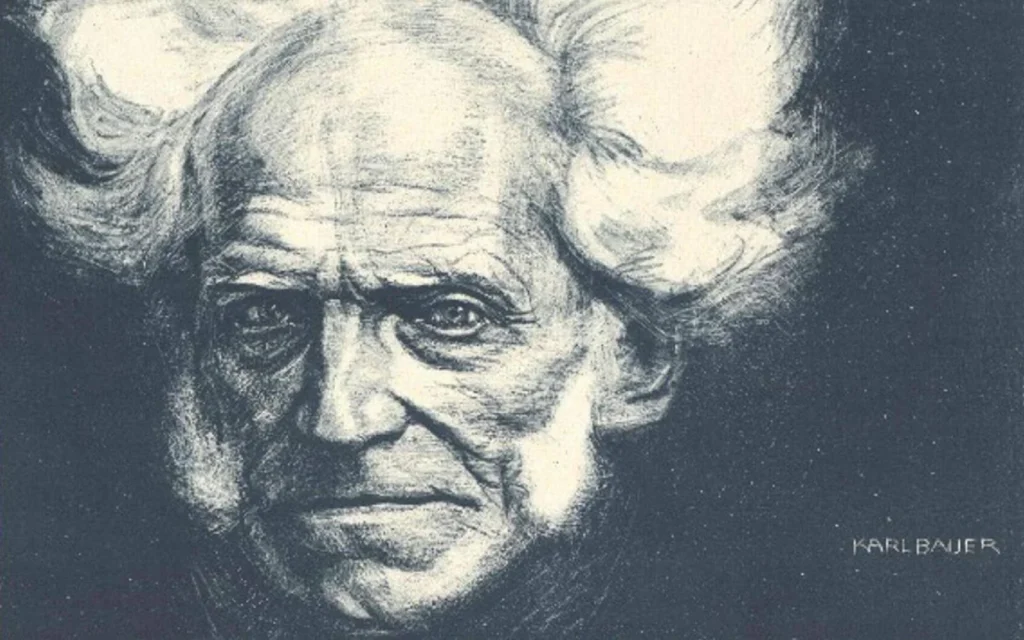
There is a moment you have probably lived without naming it. You worked toward something for months, maybe years — a position, a relationship, a finished project, a number in an account — and when it arrived, when the door finally opened and you walked through it, there was a silence on the other side that no one had warned you about. Not peace. Not satisfaction. A specific kind of quiet that feels more like subtraction than arrival. You stood there holding the thing you wanted and felt, with a precision that was almost insulting, that the wanting had been more real than the having.
Schopenhauer published The World as Will and Representation in 1818, when he was thirty years old, and what he wrote there was not a system of philosophy in the conventional sense. It was a dissection. He was not building a cathedral of ideas — he was performing an autopsy on the engine that runs human life, and his diagnosis was merciless: beneath every thought, every plan, every love, every ambition, there is something that has no reason, no goal, no destination. He called it the Will. And he was not using the word loosely.
For Kant, the thing-in-itself — the reality behind appearances — remained forever unknowable, sealed off from human cognition. Schopenhauer made his most audacious move precisely here. We do have access to the thing-in-itself, he argued, but not through reason. We feel it from the inside, in the blind urgency of hunger, in the pull of sexual desire, in the restlessness that visits you at three in the morning for no articulable reason. The Will is not a metaphor for ambition or a poetic way of describing motivation. It is the fundamental substance of existence itself, striving without purpose, moving without destination, a grinding wheel that turns for the sake of turning.
The implications are devastating once you follow them honestly. If the Will is purposeless, then every goal you pursue is a local fiction it generates to keep itself in motion. You want the promotion not because the promotion will make you whole, but because the Will needs a horizon to move toward. Reach it, and another horizon appears. Hegel saw history as Spirit realizing itself toward freedom. Schopenhauer saw history as a wheel of suffering spinning in place, dressed in different costumes across centuries. His philosophical break with the optimism of German Idealism was not temperamental — it was structural. The Will is not progressing toward anything. It is simply insatiable by definition.
There is a man who spent a decade building a company, who ate every meal over a laptop, who measured his hours against a goal he could almost touch. And when the moment of completion arrived — the sale, the recognition, the public confirmation that he had done the thing — he sat in a chair that evening and felt nothing he had been promised. Not happiness deferred, not happiness to be savored later. Just the machinery already searching for the next thing to want. He had not failed. That was the horror of it. He had succeeded perfectly, and the success had revealed the mechanism underneath: that the pursuit was the point, and the point was never him.
Schopenhauer would recognize this not as a personal failure or a psychological disorder but as the most honest encounter a human being can have with their own nature. This is what you are made of, he was saying. Not a soul ascending toward light. Not a rational agent choosing freely. A knot of blind will temporarily organized into a body, generating desires in order to experience the tension of chasing them, the brief flicker of relief upon catching them, and the immediate resumption of the drive toward the next one. The treadmill does not malfunction. The treadmill is working exactly as designed.
Desire as the Architecture of Misery
You get what you wanted. Finally. The promotion, the relationship, the apartment with the light you always imagined filling your mornings. You stand inside the achieved thing and feel, almost immediately, the strange hollowness that no one warned you about — not because the thing was wrong, but because the wanting has stopped, and without the wanting, something essential in you has gone quiet in a way that feels uncomfortably close to death.
Schopenhauer built his entire metaphysics around this moment. Not around tragedy or catastrophe, but around that particular silence after arrival. In “The World as Will and Representation,” published in 1818 when he was thirty, he described existence as structured by a force he called the Will — blind, purposeless, ceaselessly striving — that expresses itself through every human desire without ever finding genuine satisfaction. Desire fulfilled is desire dissolved, and dissolved desire reveals not peace but vacancy, which the Will immediately rushes to fill with new desire. The pendulum swings: suffering on one end, boredom on the other, and what we call happiness is merely the arc between them, always passing through, never stopping.
A man pursues a woman across years. You have seen this — perhaps you have been this. The letters, the calculations, the entire architecture of daily life secretly organized around her proximity. When she finally turns toward him, something shifts almost before the embrace is complete. The pursuit was the substance. The arrival is already a kind of ending. He will not admit this, not even to himself. He will call it love deepening, settling, maturing. But somewhere beneath the language, the pendulum has already begun its return swing.
Philip Brickman understood this mechanism with clinical precision, though he arrived at it through data rather than metaphysics. In 1978, Brickman and his colleagues published findings from a study comparing lottery winners, ordinary controls, and individuals who had suffered severe spinal injuries. The results disturbed the researchers’ assumptions entirely. Lottery winners, after an initial period of heightened happiness, reported life satisfaction levels nearly indistinguishable from the control group. Accident victims who had become paraplegic or quadriplegic showed a remarkable capacity to return to baseline emotional functioning. What Brickman identified was hedonic adaptation: the nervous system recalibrates to any new circumstance, treating it as the new neutral, and restores roughly the same emotional set point regardless of external conditions. Schopenhauer had described this psychological mechanism a century and a half earlier without a single data point, using only the unbearable honesty of introspection.
There is a scene of a man sitting in the house he has built over decades. The children are grown. The wife is asleep. He is surrounded by every material evidence of a successful life, and he sits in the dark not in grief but in a neutrality so complete it has no bottom. He is not unhappy. He is something worse: finished with wanting, and therefore finished with the only engine that gave his days direction. This is Schopenhauer’s boredom — not the mild restlessness of an idle afternoon, but the existential exposure that occurs when the Will, temporarily out of objects to pursue, turns back on itself and reveals its own emptiness.
The philosopher’s precision here is almost cruel. He never suggests the solution is better desires or more enlightened goals. The pendulum does not discriminate. It swings for the saint and the hedonist with identical indifference. The structure of misery is not a content problem but an architectural one: consciousness built on wanting cannot rest without collapsing, and so it does not rest. It finds the next object, constructs the next narrative of necessity, and sends you forward again, not because the goal matters, but because motion is the only form of life the Will knows how to sustain.
The Lost Poet
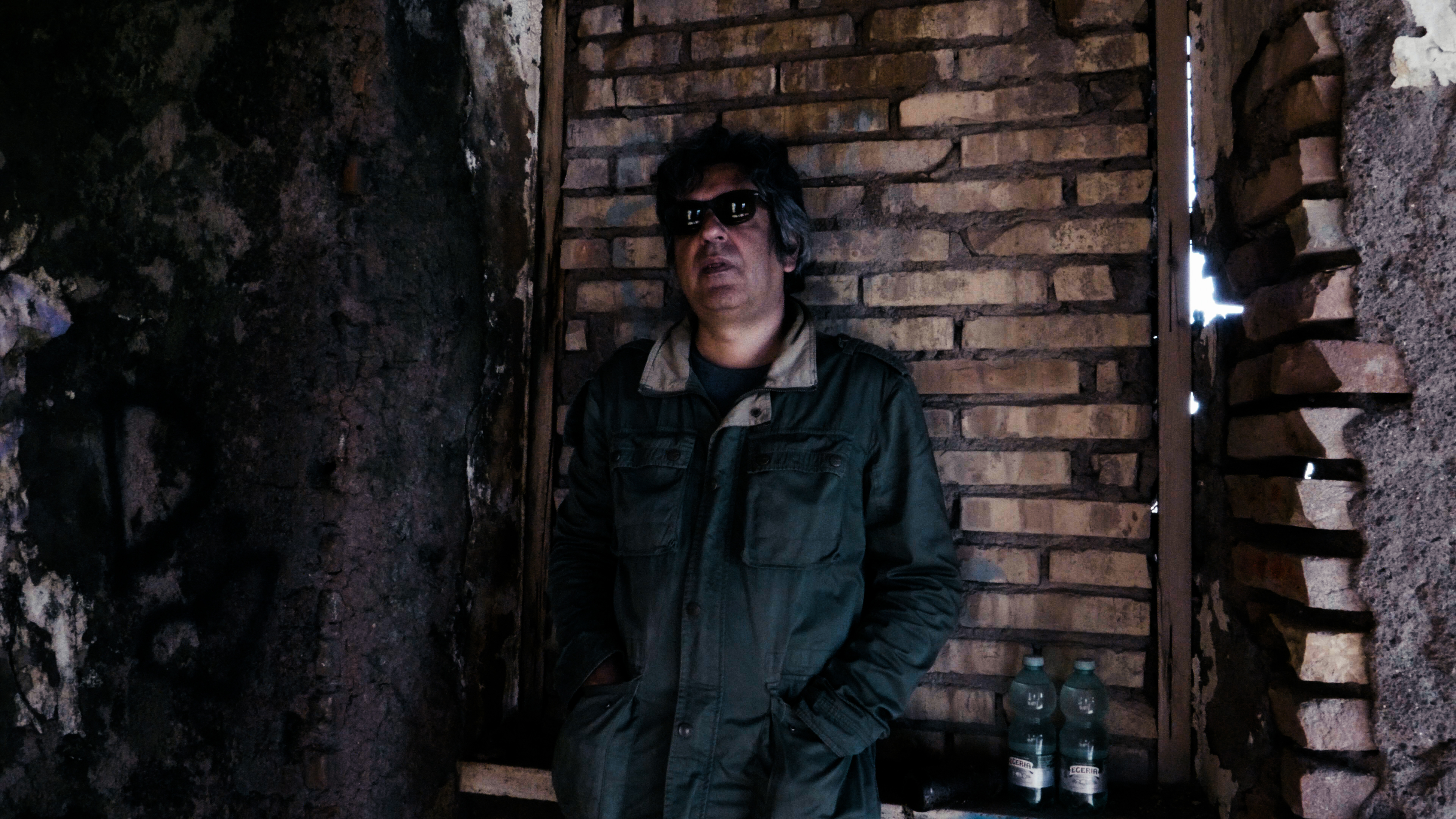
Drama, by Fabio Del Greco, Italy, 2024.
Dante Mezzadri wants to see an old friend, nicknamed the Iguana, whom he has lost sight of for many years, and who has managed to turn their shared youthful passion for poetry into a job, becoming a famous writer and poet. The man escapes from his bourgeois life and his wife to live homeless on the Roman coast, printing and trying to sell his poetry collections. At night he sleeps in a park of old carnival floats, inside a papier-mâché tank, and waits for the opportunity to meet his old friend, who however never shows up for appointments in the places they frequented when they were young, now in ruins. Dante's poetry books do not interest anyone and to support himself he is forced to "change product": he starts selling the infamous "cannibal pill" on behalf of young drug dealers, a new drug that sells like hot cakes and causes sensory and consumerist ecstasy. However, he realizes that this powerful drug is very dangerous for those who take it, he comes into conflict with his ethical conscience and throws all the pills into the sea. However, the dealers want to collect their money.
Shot over a period of 2 years, the film is a reflection on the cultural and artistic rubble of the society in which the protagonist lives, in an increasingly mechanized, consumerist and arid world. Dante Mezzadri is yet another human being who has renounced his inspiration and his creativity, but unlike many he is not willing to give his life to a system that distances him from his true identity. The physical world around him, however, seems constructed in such a way that it seems impossible to escape from this "invisible cage". The enthusiasm of the people he meets is ignited only by sensory gratification, by unreal visions of personal affirmation and success, by "metaverses" that offer an escape into an illusory and destructive reality. The poet's house on the coast, where he met with his friends as a young man, is just a pile of abandoned rubble. What happened to all those who wanted to become poets and ended up becoming something else? Are there internal forces with which that house can be "rebuilt"?
LANGUAGE: Italian
SUBTITLES: English, Spanish, French, German, Portuguese
The Exits Schopenhauer Actually Believed In
There is a moment you have probably experienced without having a name for it. You are sitting somewhere ordinary — a train, a darkened room, a park bench — and music begins, or you find yourself before a painting you were not expecting, and something in you goes quiet. Not the forced quiet of meditation or the exhausted quiet of sleep, but a sudden suspension, as if the machinery inside you briefly stopped turning. You are not wanting anything. You are not planning anything. You are not even quite yourself in the usual sense. For a few seconds, or minutes, the hunger that drives your days simply vanishes. Schopenhauer recognized this not as a pleasant accident but as one of the few genuine exits from the tyranny he had spent his life mapping.
He called it aesthetic contemplation, and he understood it with a precision that most aesthetic theory has never matched. In The World as Will and Representation, first published in 1818, he argued that in genuine aesthetic experience the subject ceases to be a willing subject. The ego that wants, fears, calculates, and competes dissolves temporarily into what he called the pure subject of knowing. You are no longer someone with needs looking at an object. You become, for a moment, nothing but the seeing itself. The object expands to fill consciousness entirely, and the Will — that blind, relentless engine of desire — falls silent. Music held a special place in this architecture because it did not represent anything in the world. It was, for Schopenhauer, a direct copy of the Will itself, which is why it bypasses the intellect and hits you somewhere below thought, somewhere that philosophy usually cannot reach.
A man sits in an empty concert hall after everyone has left. The musicians have packed their instruments, the chairs are being stacked, and he remains motionless, not because he is sad but because something has opened in him that he does not want to close by moving. He has forgotten what he was angry about that morning. He has forgotten the letter he has not yet answered. He is, for this stretch of time, free — and he knows, without being able to say it, that this freedom is not his achievement. It happened to him. That is precisely Schopenhauer’s point. The ego cannot manufacture this state; it can only be ambushed by it.
But aesthetic contemplation is temporary, and Schopenhauer was honest about that. The Will returns, always. The second exit, deeper and more demanding, is moral compassion — and here the argument becomes genuinely radical. The recognition that grounds ethics, for Schopenhauer, is not rational principle in the Kantian sense but a direct, almost physical perception: that the boundary between yourself and the other is an illusion. The suffering you see in another’s face is not analogous to your own suffering. It is, at the level of the Will, identical to it. The Sanskrit formula he quoted obsessively — tat tvam asi, that art thou — was not mystical decoration but the precise description of what a truly compassionate person perceives. When the barriers of individuation collapse, cruelty becomes metaphysically incoherent. You cannot genuinely harm what you recognize as yourself.
The third exit is the most extreme, and Schopenhauer proposed it without softening. Ascetic renunciation is the systematic withdrawal of the Will-to-live from its own projects. Not suicide, which he rejected as contradictory — suicide is an act of the Will, an expression of desire frustrated, not desire extinguished. The saint, the genuine ascetic, does not destroy the body. He starves the Will of its fuel by denying desire at its root. The self does not explode; it dims, like a flame slowly deprived of oxygen, until what remains is something Schopenhauer struggled to name — something closer to the Buddhist concept of nirvana than to anything in the Western tradition he had inherited.
A vision curated by a filmmaker, not an algorithm
In this video I explain our vision
Against Hegel, Against Progress, Against You

There is a kind of defiance so pure it becomes almost indistinguishable from madness. In 1820, Arthur Schopenhauer walked into a lecture hall at the University of Berlin and scheduled his course at exactly the same hour as Georg Wilhelm Friedrich Hegel, who was at that moment the undisputed emperor of European philosophy, the man whose system had colonized every serious mind on the continent, whose students filled corridors and spilled into stairwells to hear him speak. Schopenhauer’s room was empty. Or nearly so. A handful of students, perhaps curious about the eccentric challenger, perhaps simply lost. He lectured anyway. He continued doing so for several semesters, to rooms that never filled, until the institution itself quietly made the problem disappear by making him irrelevant enough to ignore.
What does a man do with that? What do you do with the knowledge that the world has organized itself around an idea you believe to be not merely wrong but catastrophically wrong, a beautiful lie dressed in the language of rigor, and that the world does not care? Most people make adjustments. They soften a position here, acknowledge a merit there, find a synthesis that preserves dignity while restoring social legibility. Schopenhauer did none of this. He went home and waited, with a patience that looked from the outside like bitterness but was, more precisely, the stillness of someone who has already seen the ending.
His quarrel with Hegel was not academic. It was not a dispute about methodology or the finer points of dialectical logic. It was a war over what reality fundamentally is. Hegel had constructed a system in which history moves, in which the contradictions of existence resolve themselves through time into something higher, in which suffering has a purpose because it is the friction that drives the engine of Spirit toward its own self-realization. The Prussian state, for Hegel, was not an accident of power but something close to the culmination of reason’s journey through time. Progress was not a hope. It was an ontological fact. Suffering, therefore, was productive. It meant something. It was going somewhere.
Schopenhauer found this not just philosophically incoherent but morally obscene. The Will, his blind and insatiable metaphysical substrate, goes nowhere. It has no destination. History does not resolve into wisdom; it repeats the same hungers in different costumes. The man who watches his child die in the fourteenth century and the man who watches his child die in the nineteenth century are not separated by moral progress. They are separated only by the style of their grief. To tell the first man that his suffering was a necessary rung on the ladder toward a better future is not consolation. It is an insult dressed as philosophy.
This is precisely the trap you live inside today, even if you have never read a word of Hegel. The architecture of meaning-through-progress is so deeply embedded in contemporary culture that it functions less like a belief and more like a grammatical rule, invisible because it structures every sentence. You are encouraged to understand your suffering as tuition. Your failures are investments. Your losses are data. The rhetoric of self-optimization, of resilience, of turning wounds into wisdom, is Hegelianism in wellness clothing. It tells you that your pain is justified by where it is taking you, which means that pain without a destination is shameful, wasted, evidence of your failure to extract the lesson.
Schopenhauer’s empty lecture hall was his argument made concrete. He sat inside a fact that his philosophy had already predicted: that most people, given the choice between a comfortable story and an accurate one, will fill the room where the comfortable story is being told. He did not blame them. The Will does not blame itself for wanting. But he did not join them either, and that refusal, that willingness to speak into near-silence rather than adjust his diagnosis to suit the audience, carries a philosophical weight that no crowded auditorium could replicate.
Women, Pessimism, and the Limits of a Wounded Man
There is a moment when a system of thought reveals its seams. Not in its most abstract claims, not in its metaphysics or its epistemology, but in the place where the thinker’s unprocessed life bleeds through the argument. For Schopenhauer, that place is precise, datable, and unflinching in its ugliness: the 1851 essay collected in Parerga and Paralipomena, titled “On Women,” which opens with the assertion that women are deficient in justice, that they live by dissimulation as their natural instrument, that they are suited only for the role of nurse or educator of early childhood precisely because they themselves remain childlike throughout life.
You read it and something contracts. Not surprise exactly, but recognition of a particular kind — the recognition of a wound that has been systematically promoted to the rank of philosophical truth.
Johanna Schopenhauer was a celebrated novelist, a woman who ran one of Weimar’s most fashionable literary salons after her husband’s death, who flourished socially and intellectually in the very years her son expected her to subordinate herself to his grief. She did not. She told him, at one point, that his company was disagreeable to her. He left Weimar and they exchanged almost exclusively letters after that, increasingly bitter ones, until her death in 1838. He outlived her by twenty-two years and never, by any account, stopped arguing with her in his mind.
Think of what it means to carry a mother who chose the world over you. Not because she was monstrous, but because she was alive in ways that had nothing to do with your needs. The philosopher who argued that the Will is indifferent to the individual had the most intimate proof of this in his own nursery, and he never metabolized it. He theorized it instead. He universalized the particular woman who had wounded him and called the result an analysis of feminine nature.
The psychoanalytic reading is almost too easy here, and Freud would have recognized it immediately — the movement from relational injury to categorical claim is a classic defense, the kind that armors a man against having to feel the specific unbearable thing by converting it into a general and therefore impersonal truth. But the ease of that diagnosis should not lead us to dismiss the danger of what was built from it. “On Women” is not a private letter. It is a published philosophical text that circulated through nineteenth-century European culture at precisely the moment when questions of women’s rights, education, and civil status were being contested in the streets and in the courts. Otto Weininger cited it. Nietzsche, for all his later contempt for Schopenhauer, absorbed elements of it. The ugliness had consequences.
And yet — and this is where intellectual honesty becomes genuinely uncomfortable — the same man who wrote those sentences also produced the most serious philosophical argument of his century against the will to possess, to dominate, to instrumentalize others. The same system that reduces women to a category also insists that all categorical thinking about persons is a function of the principium individuationis, the illusion that blinds us to our shared suffering. He saw the trap. He could not see that he was in it.
This is not a paradox to be resolved neatly. The misogyny is not incidental, a minor blemish on an otherwise sound edifice. It is structurally revealing — it shows exactly where the philosopher failed to apply his own most rigorous insight to his own most intimate material. What remains true does not become false because of what sits beside it. But the fact that a man could see so clearly into the suffering of the world while remaining opaque to the suffering he caused, or the humanity he denied, is itself a datum about the nature of philosophical vision. It illuminates, precisely, only what the eye can bear to look at.
The Late Fame and What It Proves
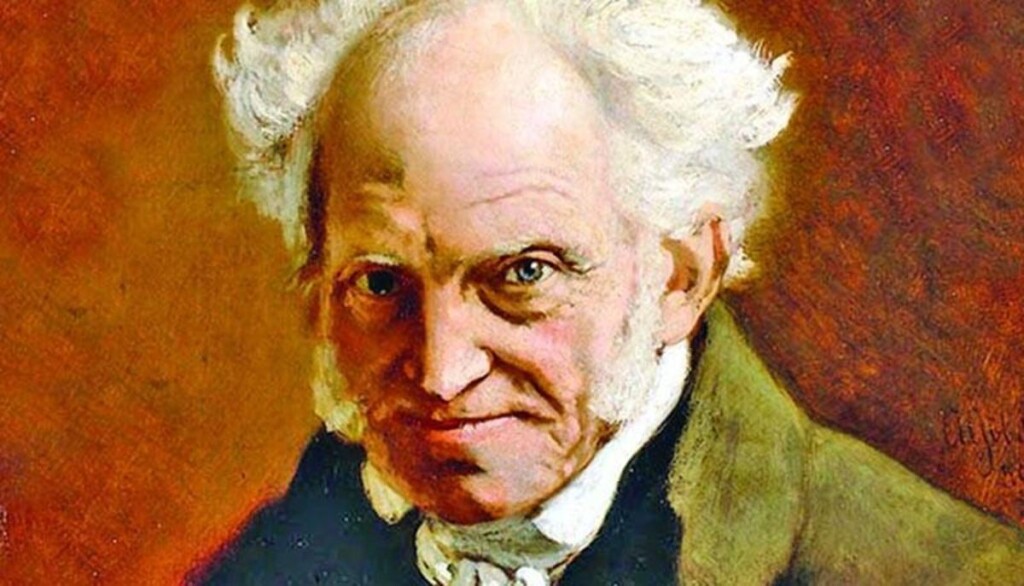
He did not change. The world simply caught up to what he had already written down in 1818 — and by the time it arrived at his door, he was an old man feeding his poodle by the window in Frankfurt, having outlasted his own reputation’s absence long enough to watch it return like a tide he had stopped expecting.
The recognition that came to Schopenhauer in the 1850s was not the recognition of a man vindicated. It was the recognition of a diagnostician whose patients had finally grown sick enough to admit the symptoms. Europe had lived through 1848, through the collapse of revolutionary hope, through the particular exhaustion that follows not defeat but the discovery that victory changes nothing essential. The liberal dream had cracked open and inside it was the same striving, the same hunger, the same machinery of desire producing more desire. People read The World as Will and Representation and felt, perhaps for the first time in a philosophical text, that someone had described the actual texture of being alive — not as it ought to be, not as reason promises it will become, but as it is at three in the morning when the wanting does not stop.
Nietzsche read him at twenty-one and called the encounter the most decisive of his life. He would later turn against the pessimism, insist that the Will must be affirmed rather than denied, but the entire architecture of his thought — the suspicion of morality as disguised power, the body as the real site of truth, the impossibility of the detached rational subject — is Schopenhauerian at its root even where it fights hardest against him. You cannot understand the genealogy of morals without first understanding that Schopenhauer had already dissolved the pious fiction of disinterested virtue. Freud, who kept a bust of him in his study, arrived decades later at the same terrain through a different route: the unconscious as the true engine of human life, the ego as a late and fragile construction built over a churning substrate that does not consult it. When Freud wrote in 1920 that beyond the pleasure principle there operates something like a death drive, a compulsion to repeat that the organism cannot master or explain, he was describing, in a different vocabulary, exactly what Schopenhauer had named the Will.
Thomas Hardy built entire novels out of Schopenhauer’s universe without ever needing to cite him — characters who want sincerely and are destroyed not by villains or by fate but by the simple operation of wanting itself, by the indifference of the world to the precision of human longing. Wagner set it to music, which may have been the most honest possible medium, because music does not argue the point — it simply puts you inside the Will’s movement and lets you feel it working.
And in those stories woven throughout this piece — the man refusing connection, the woman rehearsing performances of happiness for an invisible audience, the families where silence has calcified into architecture — what is being depicted is not tragedy in the classical sense. There is no hamartia, no fatal flaw, no lesson. There is only the Will, expressing itself through people who believe they are choosing.
Which returns, finally, to the only question that matters: does knowing this change anything? Schopenhauer believed that art and asceticism offered genuine, if temporary, release — that the Will could be quieted, the self dissolved, the striving suspended. But one cannot help noticing that the recognition of the Will’s dominion, that very moment of philosophical clarity that feels like liberation, might itself be another move the Will makes — using the mind’s hunger for understanding to continue its own restless, purposeless, magnificent work.
🌑 The Abyss of Existence: Philosophy’s Darkest Mirrors
Schopenhauer’s vision of a world driven by blind, insatiable will resonates across centuries of philosophical and existential thought. These related explorations trace the threads of suffering, meaning, and absurdity that define the human condition — from Camus’s Mediterranean sun to Frankl’s concentration camp wisdom.
Albert Camus: Life and Philosophical Thought
Albert Camus, like Schopenhauer, confronted a universe indifferent to human longing, though he refused the path of resignation or mystical escape. His philosophy of the absurd — the collision between our hunger for meaning and the world’s silence — echoes Schopenhauer’s pessimism while insisting on revolt rather than renunciation. Exploring Camus’s life reveals how two centuries of European philosophy circle the same wound.
GO TO THE SELECTION: Albert Camus: Life and Philosophical Thought
Camus’s Myth of Sisyphus: The Absurd Explained
In the myth of Sisyphus, Camus found a parable for the human condition that strikingly parallels Schopenhauer’s vision of existence as endless striving without ultimate satisfaction. Where Schopenhauer counseled aesthetic contemplation and ascetic denial, Camus imagined Sisyphus happy — a defiant contrast that illuminates the fault line between pessimism and absurdism. This analysis unpacks one of the twentieth century’s most consequential philosophical images.
GO TO THE SELECTION: Camus’s Myth of Sisyphus: The Absurd Explained
Frankl’s Man’s Search for Meaning: Analysis
Viktor Frankl‘s search for meaning in the Nazi death camps represents one of the most powerful responses to Schopenhauer’s pessimistic worldview, arguing that suffering itself can become a vessel for purpose. While Schopenhauer saw the will-to-live as a source of endless torment, Frankl transformed that same suffering into the raw material of human dignity. Reading Frankl alongside Schopenhauer reveals the full spectrum of philosophical responses to pain and existence.
GO TO THE SELECTION: Frankl’s Man’s Search for Meaning: Analysis
Hannah Arendt: the Philosopher Who Unmasked the Banality of Evil
Hannah Arendt’s unflinching examination of evil, suffering, and the human capacity for moral collapse resonates deeply with Schopenhauer’s dark anthropology of will, egoism, and compassion. Both thinkers refused comfortable illusions about human nature, arriving at their conclusions through radically different paths — one through metaphysics, the other through political catastrophe. Arendt’s work offers a vital complement to Schopenhauer’s ethical vision in a world still haunted by the banality of cruelty.
GO TO THE SELECTION: Hannah Arendt: the Philosopher Who Unmasked the Banality of Evil
Discover the Cinema of Ideas on Indiecinema
Philosophy does not live only on the page — it breathes in images, silences, and stories. On Indiecinema streaming you will find a carefully curated selection of independent films that explore existence, suffering, meaning, and the deepest questions these thinkers dared to ask. Let cinema be your next philosophical companion.
👉 EXPLORE THE CATALOG: Watch Indie Films in Streaming
A vision curated by a filmmaker, not an algorithm
In this video I explain our vision

