
The Invisible Grammar of Looking
You are standing in front of a painting. It might be in a museum you entered half by accident, or a reproduction on a wall you’ve walked past a hundred times without stopping. Something makes you stop today. There is a figure — a man, perhaps, or something that was once a man — seated in a posture you cannot name but somehow recognize. His hand rests on something. There are objects arranged around him with a precision that feels deliberate, almost aggressive in its intention. You feel a pull you cannot locate in your body, somewhere between your sternum and your throat. You don’t know if what you’re experiencing is beauty or unease or the particular vertigo of almost remembering something you were never told.

You look longer. The feeling does not resolve. It deepens.
This is the moment Erwin Panofsky spent his entire intellectual life trying to account for. Not the feeling itself — he was not a therapist and had no interest in your interior weather — but the architecture beneath it. The invisible grammar that produced the sensation before you had a single conscious thought about what you were looking at. The fact that you felt something is not accidental. The fact that you cannot explain it is not a personal failure. It is evidence of a structure so deeply embedded in Western visual culture that most people carry it in their nervous systems without ever knowing it was put there.
Seeing, Panofsky understood, is never innocent. The eye is not a neutral instrument. It arrives at every image already crowded with history, with inherited symbols, with theological residue and philosophical sediment that accumulated over centuries before you were born. When you stand before that seated figure and feel the unnamed pull, you are not having a spontaneous aesthetic experience. You are the latest receiver in a chain of transmission that runs backward through the Renaissance, through medieval Christendom, through classical antiquity, through layers of meaning that were encoded, forgotten, encoded again, distorted, preserved, and finally deposited in the image you are looking at right now, in this room, in this body.
Most people never suspect this. They believe they are simply looking. This belief is the central illusion that Panofsky dedicated his life to dismantling — not with contempt for ordinary viewers, but with the patient insistence of someone who knows that a hidden thing, once revealed, cannot be unseen.
The gap between looking and understanding is not an academic problem. It is a lived one. It operates every time a symbol is used to manipulate without appearing to manipulate, every time a visual convention passes itself off as nature, every time you respond to an image with a certainty you cannot justify. The history of propaganda knows this gap intimately. So does advertising. So does every political system that has ever needed its citizens to feel something before they think it. The invisible grammar of images is not a matter of art historical curiosity. It is a technology of power so old that it has become invisible, which is precisely what makes it effective.
Panofsky was born in Hanover in 1892, into a Germany that was still assembling its modern identity, still deciding what its culture meant and who had the authority to say so. He would spend the first half of his life inside European intellectual structures that seemed permanent and the second half in exile from them, in an America that received his ideas with an openness his original country would eventually deny him. This biographical fact is not incidental to his thinking. It gave him the particular vantage point of someone who had been inside a cultural grammar and then forced outside it, and who therefore knew, with the certainty of lived experience, that no way of seeing is natural.
That knowledge is where everything begins.
A Man Made by Displacement
He was born in Hanover in 1892, into a Germany that still believed in itself — a Germany of universities that functioned as cathedrals of method, where the rigorous application of mind to historical material felt like a moral act. His formation happened inside one of the most intellectually pressurized environments in modern European history: the Kulturwissenschaftliche Bibliothek Warburg in Hamburg, that extraordinary library assembled by Aby Warburg around the obsessive conviction that images carry memory across centuries, that the ancient world never fully died but continued to pulse, distorted and transformed, inside Renaissance frescoes and Baroque allegories. To think inside that library was to think inside a living argument. Panofsky absorbed it completely. By the time he was in his thirties, he had produced essays of such synthetic power that his colleagues recognized in him something rare: a mind that could see structure where others saw accumulation.
Then 1933 arrived, and Germany decided he no longer belonged to it.
The Nazi racial laws did not exile him metaphorically. They expelled him from his professorship at Hamburg with bureaucratic efficiency, the way a system eliminates an anomaly it has finally named. He was forty-one years old. He had spent two decades building a body of thought that was inseparable from the language, the institutions, the cultural soil of Germany. And now that soil declared itself hostile to his existence. What happens to a man in that moment — not the political horror of it, which is obvious and documented, but the cognitive rupture? You have constructed an entire way of seeing inside a tradition, and that tradition then informs you that you were never truly part of it. The ground that held your thinking becomes the evidence of your exclusion.
He arrived at Princeton’s Institute for Advanced Study, where he would remain and work for the rest of his career, producing in 1939 the Studies in Iconology that would define a generation’s method for reading images. There is a peculiar detail worth sitting with: he taught himself to lecture in English, and in doing so, discovered that the forced translation did something unexpected. It slowed his thinking just enough that he could see its own assumptions. When you carry a concept from German — from the dense, load-bearing philosophical vocabulary of Kant and Hegel and Wölfflin — into English, you cannot simply transfer it. You have to dismantle it and rebuild it, and in the dismantling, you see what it was actually made of. Exile performed on his method what no seminar could have arranged: it forced him to become a stranger to his own instruments.
The sociologist Norbert Elias, himself expelled from the same Germany in the same years, wrote in The Society of Individuals that the capacity to see a social structure clearly depends on a certain distance from it — not the distance of indifference, but the distance of someone who has been inside and then forcibly removed. Edward Said, writing half a century later in Reflections on Exile, would call this the “contrapuntal awareness” of the displaced person, the ability to hold two cultural frameworks simultaneously, seeing each through the lens of the other. Panofsky embodied this before it had a name. Princeton gave him an institution; displacement gave him a method of seeing that his Hamburg years, for all their brilliance, could not have produced.
There is something almost violent in the clarity that exile generates. You watch your own world become foreign, and in that foreignness it becomes, for the first time, fully visible. The rituals you performed unconsciously, the assumptions you never questioned because everyone around you shared them — they become suddenly legible, the way a grammar becomes legible only when you try to explain it to someone who does not speak the language.

Iconology as Archaeology of the Invisible
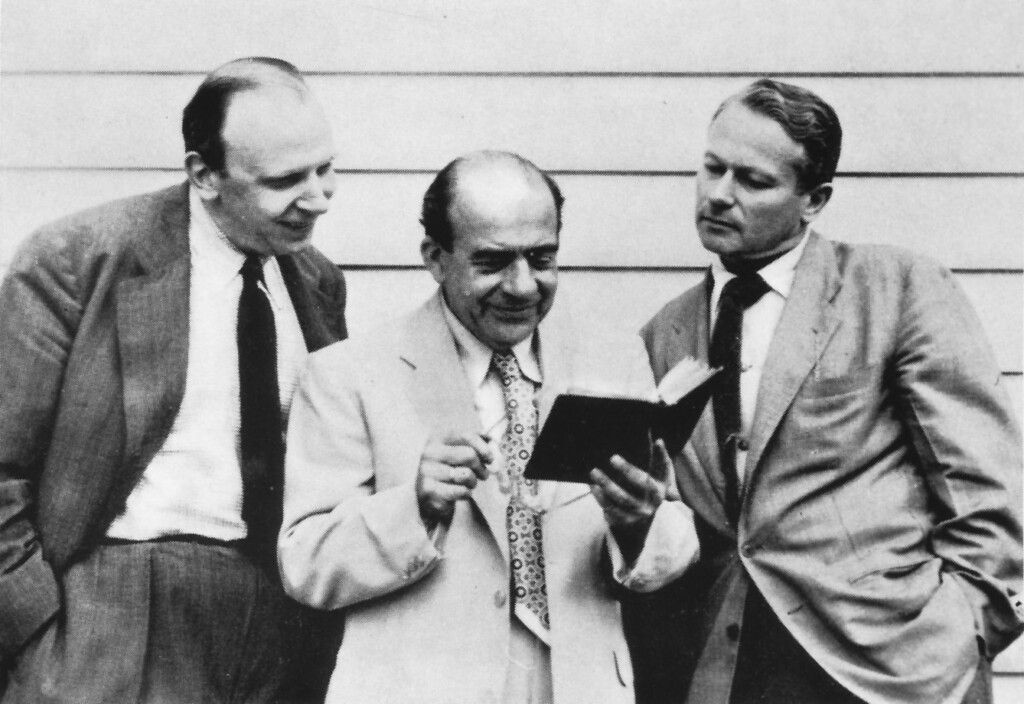
There is a moment, familiar to anyone who has stood long enough before a painting, when the image begins to give way beneath you. What you thought you were looking at — a man seated at a table, a woman holding a lamp, a garden in the distance — starts to reveal itself as a surface stretched over something older, denser, more deliberate than your eye first registered. The sensation is not quite vertigo, but it rhymes with it.
Panofsky understood this experience not as aesthetic pleasure but as epistemological fact. His three-layer method, elaborated most systematically in the 1939 Studies in Iconology, was never intended as a classification scheme or a pedagogical ladder. It was a philosophical argument about the nature of meaning itself — about how intention sediments into form over centuries until it becomes indistinguishable from nature, from the obvious, from the way things simply are.
The first layer, the pre-iconographic, is what your eye does before thought. You recognize a hunched figure, a darkened room, an outstretched hand. You bring to this recognition what Panofsky called “practical experience” — the accumulated bodily knowledge of how humans move, how light falls, what grief looks like in a shoulder. But already, at this most apparently innocent level, you are not seeing the world. You are seeing the world as your culture has trained you to see it. The pre-iconographic is not neutral. It is where the deepest assumptions hide, precisely because they masquerade as perception.
The second layer, iconographic, is where scholarship traditionally felt most at home. Here you identify the figures: this is Saturn devouring his child, this is the Annunciation, this is Melancholia holding her compasses. You bring a knowledge of texts, of conventions, of the visual lexicon that circulated through workshops and theological libraries. This is archaeology of a recognizable kind — you dig through sources, trace lineages, match images to words.
But Panofsky was after something the iconographic method could not reach. The third layer, iconological, is where his real argument lives. This is the level of “intrinsic meaning” — the symbolic values that an era embeds in images without fully knowing it is doing so. The artist does not consciously encode these values. The patron does not commission them. They are the sediment of a civilization’s assumptions about time, the body, fate, reason, divinity — assumptions so total that they have stopped being beliefs and have become, simply, the shape of the visible world.
It was Ernst Cassirer who gave Panofsky the philosophical scaffolding for this claim. The two men overlapped at Hamburg in the 1920s, and the influence was not incidental. In Cassirer’s Philosophy of Symbolic Forms, published between 1923 and 1929, the argument runs that human beings do not encounter reality directly. They encounter it always already mediated through symbolic systems — language, myth, art, science — each of which organizes experience according to its own internal logic. There is no outside to symbolization. What looks like nature is always culture in disguise.
Panofsky absorbed this and turned it toward the history of images. If symbolic forms are the medium through which a civilization inhabits the world, then images are not representations of that civilization — they are constitutive of it. A painting does not illustrate a worldview; it is the worldview, made visible, made habitable, made apparently self-evident. The iconologist’s task is to undo this apparent self-evidence — to make visible the calcification process itself, to show how centuries of repetition have transformed contested choices into transparent facts.
This is what makes iconology genuinely archaeological. Not because it digs through historical strata in any metaphorical sense, but because it forces you to recognize that what you are looking at has a prehistory it is actively concealing, and that its power over you depends entirely on that concealment remaining intact.
What the Renaissance Was Hiding
There is a moment when a man stands in a ruined library, turning over fragments of burned text, trying to reconstruct from the ash and the partial sentence what the whole argument once was. He does not know what he is looking for. He knows only what he needs, and so he finds it. Every piece he lifts confirms something he already half-believed. This is not archaeology. This is self-portraiture with antique props.
Panofsky understood this with a precision that was almost merciless. When he published Studies in Iconology in 1939, he was not simply offering a method for reading Renaissance paintings. He was performing an autopsy on an entire civilization’s relationship to its own fantasies. The Renaissance, that word we carry like an inheritance, like proof of something — it was not a rebirth. It was a séance. The humanists of the fifteenth and sixteenth centuries did not recover antiquity. They summoned a version of it that could absorb their anxieties, validate their politics, and give Christian guilt a toga to wear.
Titian’s paintings of Venus, those bodies arranged in lush horizontal repose that seem to radiate an uncomplicated sensuality, are in Panofsky’s reading something far more turbulent. The figure is simultaneously the pagan goddess of physical desire and the Neoplatonic symbol of divine beauty, and that ambiguity is not accidental. It is the whole point. The Renaissance mind could not accept pleasure without immediately translating it into allegory, could not look at a naked body without constructing a philosophical architecture around it to make the looking permissible. Marsilio Ficino had given them the tools by 1469, in his commentaries on Plato’s Symposium, to speak of love as a ladder ascending from the sensory to the transcendent. What this actually permitted was the continued enjoyment of the sensory under the cover of transcendence. The doctrine did not eliminate desire. It laundered it.
Dürer is where Panofsky’s analysis becomes almost uncomfortable. The Melencolia I engraving of 1514, with its winged figure seated in despair among scattered instruments of geometry and construction, a sphere, a polyhedron, an hourglass, a sleeping dog — Panofsky reads this not as a simple allegory of artistic frustration but as a portrait of a new kind of consciousness. The melancholic temperament, long associated with Saturn and with failure, is here elevated into something close to genius, but it is a genius paralyzed by the gap between vision and execution, between the ideal form grasped in the mind and the stubborn resistance of material reality. This is not a medieval image of sin or limitation. It is a modern image of ambition, and its tragedy is the tragedy of a civilization that has decided to worship what it cannot fully possess.
What Panofsky reveals, and what Meaning in the Visual Arts pushes further in 1955, is that iconology is not just a reading method. It is a theory of cultural self-deception. Every image is a negotiation between what a society believes about itself and what it cannot admit. The Renaissance selected from antiquity the way a politician selects from history: strategically, tendentiously, with an eye toward the present need. The Venus they resurrected was not Greek. She was Florentine anxiety in a Greek mask. The Hercules they celebrated was not Roman. He was the projection of a mercantile class that needed mythological justification for power and violence.
In that ruined library, turning over the fragments, the man eventually stops pretending to discover and begins to admit: he is writing. The civilization he claims to be recovering is the one he is inventing, sentence by sentence, brushstroke by brushstroke. What looks like an act of memory is an act of desire. The past is not found. It is forged, with extraordinary skill and with complete sincerity, which is perhaps the most convincing kind of forgery there is.
Perspective as a Cultural Lie
There is a moment, standing in front of a painted room — a tiled floor receding toward a vanishing point, columns framing a distant archway, figures diminishing in precise mathematical ratio — when the whole thing suddenly stops looking like reality and starts looking like an argument. Not a description of the world but a claim about it. A claim so thoroughly absorbed into Western visual culture that for centuries nobody thought to ask who made it, when, or why.
Panofsky asked. In 1927, in a dense and philosophically ferocious essay, he proposed something that should have caused a scandal and instead was largely filed away as an art-historical curiosity: linear perspective, the technique codified in fifteenth-century Florence by Brunelleschi and theorized by Alberti, is not a discovery. It is a convention. It does not reveal how space actually is. It reveals how one particular culture, at one particular historical moment, decided to organize its relationship to the visible world.
The argument cuts deep because perspective feels like truth. That is precisely the problem. When you look at a Renaissance painting and the space recedes correctly, when the tiles diminish, when the figures obey the geometry of distance, something in you says: yes, that is how it is. But Panofsky, drawing on the neo-Kantian philosopher Ernst Cassirer and his concept of symbolic forms — developed across three volumes between 1923 and 1929 — argued that this feeling of recognition is not contact with reality. It is the successful internalization of a code. Perspective is a symbolic form in Cassirer’s precise sense: a mode through which a culture constitutes its experience of the world, not merely represents it. Change the form and you change the world that appears within it.
The historical evidence is ruthless in its implications. Byzantine icon painters did not make errors when they ignored the vanishing point. Egyptian artists were not primitives when they arranged figures by symbolic rather than optical scale. Japanese scroll painters were not failing when depth moved laterally rather than receding. Each was operating within a different symbolic system, encoding a different set of assumptions about what vision means, what space means, what the relationship between a seeing subject and a visible world is supposed to be. Linear perspective encodes something very specific: a singular, motionless eye located at a fixed point in space, sovereign over a world that radiates outward from it and diminishes into a horizon it controls. It is, Panofsky suggests, a philosophical position disguised as a technical achievement.
Think of the moment when a man sits in a surveillance room, watching a grid of screens, each one feeding him a different angle on the same building, the whole arrangement organized so that nothing can move without his knowledge. He does not think of himself as enacting a philosophy. He thinks he is simply watching. But the architecture of his watching — the grid, the vanishing points, the sovereign eye at the center of a space organized for its comfort — is precisely what Panofsky described. Michel Foucault, writing in Discipline and Punish in 1975, arrived at the same structure from a different direction: the panopticon as the spatial embodiment of modern power, a geometry in which visibility is control and the seen subject is always already subordinated to the unseen gaze. Foucault did not cite Panofsky. He did not need to. The logic was the same: what looks like neutral vision is always already a politics of space.
This is what makes perspective a cultural lie in Panofsky’s specific sense — not a falsehood told deliberately, but a convention that has successfully disguised itself as nature. The most effective ideological operations are the ones that no longer need to argue their case because everyone has already conceded it without knowing they were asked. You do not notice you are inside a geometric system until the geometry briefly fails, until something appears that refuses to diminish correctly, and the whole constructed architecture of the visible shivers for a moment into view.
A vision curated by a filmmaker, not an algorithm
In this video I explain our vision
Princeton and the Americanization of European Darkness

There is a particular kind of misunderstanding that feels, from the outside, indistinguishable from success. Someone receives a standing ovation for saying something that, if properly understood, would have emptied the room.
This is what Princeton did to Panofsky, and what Panofsky, with his magnificent, self-defeating charm, allowed Princeton to do.
When he arrived at the Institute for Advanced Study in 1934 — expelled from Hamburg by laws that did not yet dare to speak their full intention — he brought with him a methodology forged in the conviction that images lie, that culture systematically disguises its own violence, that the pleasant surface of any artwork is a negotiation between power and the need to appear innocent. Iconology, as he had developed it through the 1920s and early 1930s, was not an invitation to deeper appreciation. It was a hermeneutics of suspicion, closer in spirit to what Paul Ricoeur would later name as such than to anything resembling connoisseurship. The third level of meaning — the intrinsic, the symptomatic — was specifically designed to catch culture in the act of not knowing what it was doing. That is a destabilizing instrument, not a decorative one.
American academia received it as decoration.
The transformation was not violent. It was warm, which is worse. Panofsky was brilliant company. He told jokes in four languages. He wore his erudition like a party trick and his seriousness like something he kept in a drawer for private moments. His 1939 Studies in Iconology and the 1953 Early Netherlandish Painting were received with the kind of enthusiasm that signals not comprehension but relief — here was European depth made navigable, made usable, made safe for syllabi. The methodology was extracted from its genealogy. What remained was the procedure: identify the motif, identify the type, identify the cultural document behind it. A checklist. A method. A way of seeming rigorous while staying, always, within the frame of celebration.
Theodor Adorno, who navigated his own American exile with considerably less social grace, saw this mechanism with clinical precision. Writing with Max Horkheimer in 1944, he described how the culture industry does not suppress critical thought so much as absorb it, neutralize it, redistribute it as content. The European intellectual arrives with a diagnosis and finds it treated as a contribution to the symposium. The critique becomes a panel. The unmasking becomes a methodology course. Adorno himself, in his 1951 Minima Moralia, noted with bitter economy that in America, the émigré’s suffering is converted into cultural capital — the accent becomes charming, the trauma becomes perspective, the darkness becomes depth without teeth.
Panofsky’s own warmth made him a perfect candidate for this conversion. He wanted, genuinely, to belong. He found in Princeton a version of the collegial life that Hamburg had destroyed, and he was not going to refuse it. The lectures were brilliant. The audiences were large. The standing ovations were real. And somewhere in the transaction, the tool designed to reveal what culture hides about itself became a tool for enriching culture’s self-understanding — which is precisely the opposite operation, dressed in identical clothing.
You have seen this happen to someone you admired. The most corrosive thing they ever said was quoted back to them as praise. Their analysis of a system’s bad faith was adopted by that system as evidence of its openness to critique. They smiled, because what else do you do, and in smiling they closed a door they had spent years trying to force open.
The irony Panofsky could not fully escape was structural, not personal. A method built to show that the Renaissance masked anxiety as harmony was itself remasked — turned into a tool for producing the very harmonious, professionally respectable, culturally enriching discourse it was originally designed to interrogate.
The Symbol That Eats Itself
There is a moment — you have probably lived it — when you realize that the tool you have been using to measure the world is made of the same material as the world. Not a dramatic revelation. Something quieter. A man sits at a table covered in documents he has spent years organizing into a system, and he notices, almost by accident, that the categories he invented to sort the documents are themselves visible in the documents, that he has been reading his own handwriting and calling it history.
This is the abyss that opens beneath Panofsky’s iconology when you press on it long enough. The method assumes that images are sediments of cultural assumptions layered across time, and that the trained interpreter can peel those layers back toward something like meaning. But the interpreter is not standing outside the sediment. The interpreter is inside it, constituted by it, seeing through lenses ground by the very historical forces they are trying to examine. There is no neutral altitude from which to descend into an image. The descent begins already inside.
Hans-Georg Gadamer named this structure with precision in Truth and Method, published in 1960, seven years before Panofsky’s death. The hermeneutic circle, as Gadamer developed it from its earlier formulations in Schleiermacher and Dilthey, is not a problem to be solved but a condition to be inhabited. Understanding moves from the part to the whole and back again, endlessly, and the interpreter’s own pre-understandings — what Gadamer calls the Vorurteil, the prejudice, the pre-judgment — are not obstacles to meaning but the very medium through which meaning becomes possible at all. You cannot step outside your historical situatedness to get a clean view. You can only move within it, expanding and correcting as you go, never arriving at a position that is not itself a position. Panofsky’s three levels of interpretation do not escape this circle. They deepen it.
Ernst Gombrich saw this clearly and said so, with a characteristic sharpness that academic courtesy barely contained. In studies spanning from Art and Illusion in 1960 through his specific engagements with Panofsky, Gombrich argued that iconology risked becoming a machine for projecting meaning rather than discovering it. The interpreter arrives with a framework — Neo-Platonic, Aristotelian, astrological, whatever the Warburgian archive supplies — and then finds that framework confirmed in the images, because the images are sufficiently complex and ambiguous to accommodate almost any coherent schema imposed upon them. The method, Gombrich suggested, proved too much. It could generate a plausible iconological reading of nearly anything, which meant its falsifiability was close to zero. A method that cannot be wrong is not a method. It is a theology.
There is something vertiginous in watching a character try to decode a message and gradually understand that the cipher they are using was planted by whoever sent the message, that the act of decoding is itself part of the encoded instruction. The system doesn’t break. It deepens. Every layer of meaning revealed adds another layer requiring revelation. The interpreter does not get closer to a bottom. They discover that the bottom is also a surface.
This is not a failure of Panofsky’s intelligence. It is a structural feature of any hermeneutic enterprise ambitious enough to reach for the historical unconscious of an image. The Weltanschauung that iconological analysis seeks to uncover is the same Weltanschauung that shapes the analyst’s categories of recognition. You are trying to see the water. You are the water. The symbol, followed far enough, eats the methodology that pursued it, and then, still hungry, turns toward the interpreter’s own assumptions, the ones they brought to the first image on the first morning, before they even knew they were already reading.
Looking at What You Cannot See
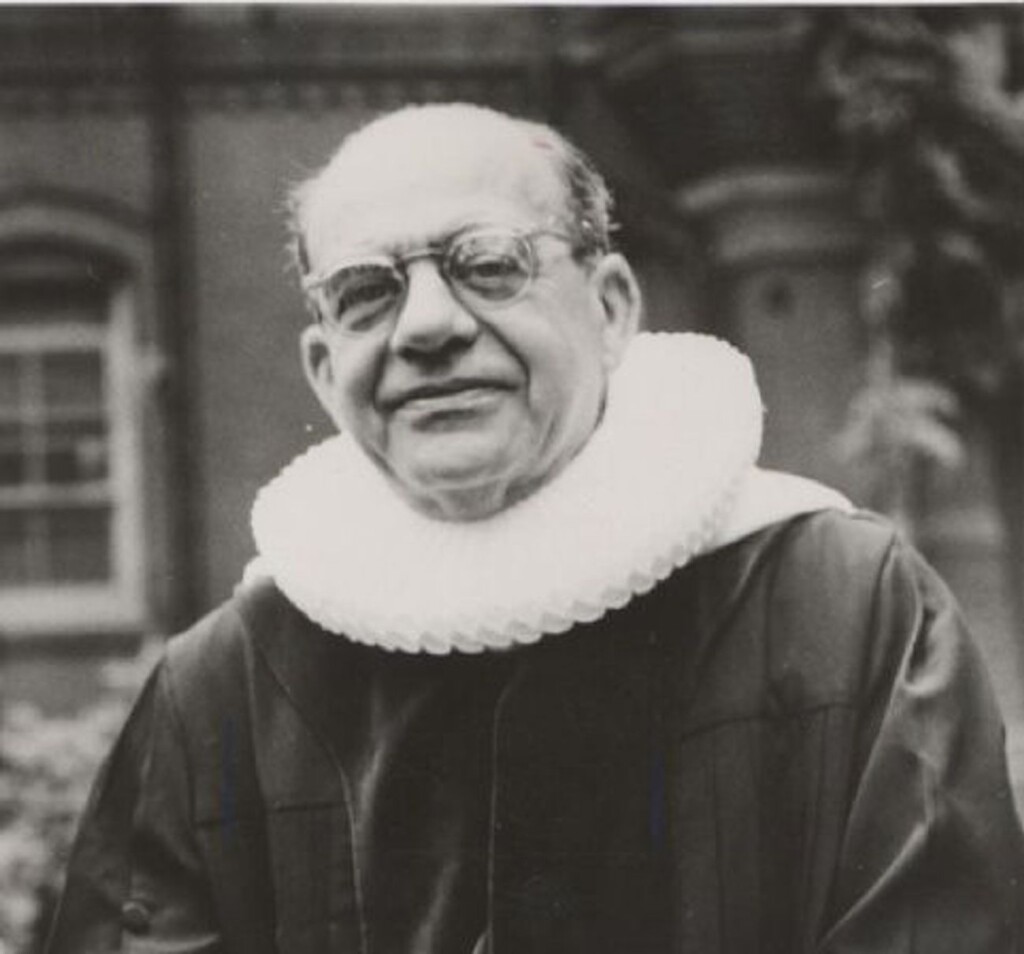
You are standing before the same image again. Nothing about it has changed. The brushwork is identical, the pigments have not shifted, the compositional geometry remains exactly what it was before you knew anything. And yet something has gone wrong with the act of looking itself, because now you cannot stop seeing. You cannot return to whatever it was you were doing before — that comfortable, unexamined gliding over surfaces that felt like perception but was actually a kind of managed blindness.
There is a man who walks into a room one ordinary afternoon and overhears something not meant for him — a single sentence, half-finished, about someone he loves. He understands it immediately and completely. And from that moment, every subsequent conversation in that room, every gesture, every carefully neutral expression, is saturated with what he now knows. He cannot un-hear it. He cannot reconstruct the innocence that preceded those words. Vision works the same way, once Panofsky has finished with you. The image does not change. You do.
This is precisely what Panofsky was driving toward in his late work, the great study of Gothic architecture and scholastic thought he published in 1951, where he introduced the concept of habitus as the invisible infrastructure of perception itself. He borrowed the term from the scholastics — from the medieval schoolmen who described it as a firmly established disposition, a mental habit so deeply internalized that it no longer presents itself as a habit at all but simply as the way the mind works. Panofsky’s argument was radical in its quietness: the Gothic cathedral and the scholastic summa were not merely parallel expressions of the same worldview. They were products of the same cognitive organ, shaped by the same institutional force — the cathedral school, the university, the liturgical rhythm of the medieval day — until the masons and the theologians were quite literally thinking in the same structural forms without knowing it. The pointed arch was not a symbol of theological argument. It was theological argument, transposed into stone by minds that had been trained, at the level of reflex, to proceed by distinction, subdivision, and hierarchical resolution.
Pierre Bourdieu read this and recognized something enormous in it. He took the habitus and made it the cornerstone of his sociology, understanding that what Panofsky had identified in the medieval craftsman was not a historical curiosity but a permanent condition of human cognition. The habitus, as Bourdieu elaborated it across decades of fieldwork and theoretical construction, is not a set of rules you follow. It is the shape of the instrument with which you perceive rules, recognize situations, generate responses. Culture does not influence thought from the outside. It constitutes the very organ with which you think. There is no pre-cultural eye. There is no innocent gaze waiting behind the learned one, preserved in some anterior chamber of the self.
A woman stands in a gallery before a medieval altarpiece. She has spent thirty years studying iconography. She knows every attribute, every gesture, every doctrinal layer compressed into the gold ground. And what she will tell you, if you ask her honestly, is not that she sees more than other people. She will tell you that she can no longer see what other people see. The image has become permanently estranged from its own surface. Every passage of paint opens into a depth she cannot close. She is not liberated by knowledge. She is inhabited by it.
This is what Panofsky left behind — not a method you can apply and then set down, but a transformation of the seeing subject that cannot be reversed. You look, and beneath the looking there is interpretation. Beneath the interpretation there is a cultural formation you did not choose. Beneath the formation there is the question that his entire life’s work was quietly, relentlessly asking: what else are you looking at right now, in perfect confidence, without seeing it at all.
🖼️ The Eye That Reads: Art, Symbol, and Meaning
Erwin Panofsky transformed the way we look at images, teaching us that every visual form carries layers of hidden meaning waiting to be decoded. His method of iconological analysis finds its deepest resonance in the art and architecture of the Middle Ages and the Renaissance, where symbol and narrative intertwine. These related articles trace the intellectual landscape that shaped and surrounded Panofsky’s iconic vision.
Medieval Art: History and Meaning
Medieval art is the primary terrain on which Panofsky developed his iconological method, reading devotional images as complex systems of theological and cultural meaning. This article explores the rich visual language of the Middle Ages, from manuscript illumination to panel painting, revealing how form and symbol merged into a unified spiritual vision. Understanding medieval art is essential to grasping why Panofsky believed that no image can be fully understood without its historical and conceptual context.
GO TO THE SELECTION: Medieval Art: History and Meaning
Medieval Sculpture: History and Iconography
Medieval sculpture offered Panofsky some of his most compelling case studies, particularly in the way figural programs on church facades encoded layers of doctrinal meaning accessible only through careful iconographic reading. This article examines the history and symbolic grammar of sculptural decoration across the medieval period, from Romanesque capitals to Gothic portal tympana. It is a natural companion to Panofsky’s thought, illustrating how stone itself became a vehicle for complex theological narratives.
GO TO THE SELECTION: Medieval Sculpture: History and Iconography
Gothic Cathedrals: History and Symbolism
Gothic cathedrals represented for Panofsky a supreme synthesis of scholastic thought and visual form, a thesis he famously argued in his essay Gothic Architecture and Scholasticism. This article delves into the history and symbolism of these towering structures, exploring how light, proportion, and iconographic programs expressed the intellectual ambitions of the medieval Church. Reading it alongside Panofsky’s work illuminates how architecture itself can function as a form of visual theology.
GO TO THE SELECTION: Gothic Cathedrals: History and Symbolism
Titian: Life and Works
Titian’s paintings stand among the canonical works that Panofsky subjected to his most refined iconological analysis, most notably in his studies of mythological paintings and the concept of sacred and profane love. This article traces Titian’s life and artistic evolution, highlighting the dense symbolic content embedded in his compositions and his mastery of the Venetian Renaissance visual tradition. For anyone engaging with Panofsky’s interpretive method, Titian’s work offers a vivid and endlessly rewarding field of application.
GO TO THE SELECTION: Titian: Life and Works
Discover the Art of Independent Cinema on Indiecinema
If reading images and uncovering hidden meanings is a passion you share with Panofsky, Indiecinema streaming is the ideal next destination. Our curated selection of independent and auteur films offers a visual experience as layered and thought-provoking as any Renaissance masterpiece. Join us and keep training your eye — because every great film, like every great painting, has more to reveal.
👉 EXPLORE THE CATALOG: Watch Indie Films in Streaming
A vision curated by a filmmaker, not an algorithm
In this video I explain our vision

