
The Mirror in the Room
You are mid-sentence when you feel it — the almost imperceptible shift, the slight recalibration of tone as you read the room and adjust the story accordingly. The anecdote you were telling has quietly changed shape. The version of events you are now delivering is not false, exactly, but it has been edited in real time, trimmed here, emphasised there, the unflattering moment smoothed over before it could land. The person across from you nods. They believe you. More than that — they like you for it. And somewhere beneath the performance, you register a small, cold satisfaction that has nothing to do with being understood and everything to do with having successfully managed how you appear.

This is not villainy. This is Tuesday.
The discomfort you feel recognising it is precisely the discomfort that Richard III was written to provoke. Not the theatrical shudder at a monster safely contained within a history play, but the closer, more uncomfortable recognition of a mechanism you know intimately — the gap between the self that exists and the self that is strategically projected, the distance between what you want and the performance you mount to obtain it. Shakespeare did not write a cautionary tale about exceptional evil. He wrote a precise anatomy of something far more ordinary: the theatre of self-presentation that every socially functioning human being conducts daily, elevated to its most extreme and transparent logical conclusion.
The play opens, famously, in winter — not the season but the political and psychological condition of a man who has decided, with remarkable clarity of purpose, that since he cannot be loved, he will be feared, and since he cannot be admired, he will be obeyed. What is extraordinary is not the decision itself but the lucidity with which he announces it, to us, before anyone else enters the room. He is deformed, he tells us. He is not made for love’s games. And therefore — and here is the pivot that everything depends on — he is determined to prove a villain. The causality is stated as though it were logic. As though being excluded from one register of human recognition automatically licenses entry into another. As though the self that cannot be received honestly has no option but to become the self that operates through concealment.
The psychoanalytic tradition has spent considerable energy on exactly this structure. Donald Winnicott, writing in the mid-twentieth century, described what he called the false self — the personality organised around compliance and performance rather than genuine spontaneous expression, constructed originally as a defence against an environment that could not safely receive the true self. The false self is not simply lying. It is a coherent adaptive strategy, sometimes so successful that the person wearing it loses track of where the performance ends and the person begins. Richard does not lose track. That is what makes him singular. He narrates his own construction with something very close to pleasure.
And that narration — the direct address to the audience, the constant aside, the running metacommentary on his own manipulation as it unfolds — is not a theatrical convention to be looked past. It is the philosophical centre of the entire work. You are not watching a man commit crimes. You are being recruited into complicity with a consciousness that has decided the social world is a theatre, that everyone in it is performing, and that the only honest move available is to perform with full awareness while everyone else pretends they are not performing at all. He does not pretend to be sincere. He performs sincerity, names it as performance, and invites you to find this, if not admirable, at least coherent.
That invitation should unsettle you. Because somewhere in the part of you that shifted register mid-sentence and felt the cold satisfaction of having managed the room — it already does.
The Mirror and the Rascal
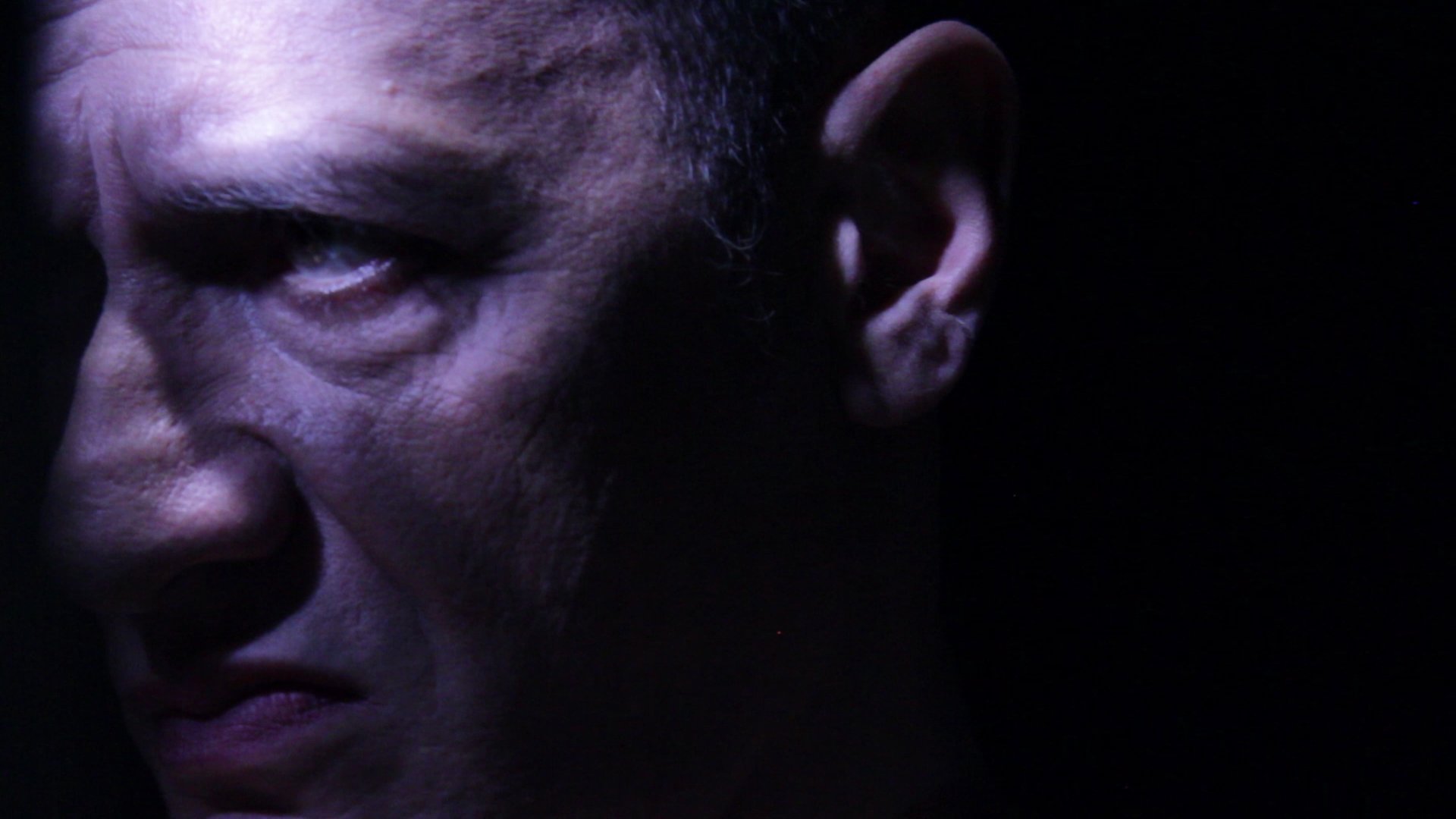
Drama film, by Valerio De Filippis, Italy, 2019.
The mirror and the rascal is an experimental film based on the tragedy "Richard III" by William Shakespeare. It tells the delirium of contemporary power in an author's reinterpretation of cinema, video art and music. The protagonist, Richard Duke of Gloucester, brother of King Edward IV, through a long series of crimes eliminates all the obstacles that stand between him and the throne of England.
Valerio de Filippis, a well-known painter who has been following his research path for a long time, investigating the relationship between light, corporeality and the psyche. The mirror and the rogue and the cinematographic equivalent of Valerio De Filippis' painting, his figurative style is in fact very recognizable looking at his paintings. But cinema is a new way where the artist can also be involved as an actor and performer, with an original mix between acting and singing. Staging the dark side of the human soul, the film is a surreal and disturbing interpretation of a great classic. The director says: "The first suggestion was musical: I was interested in transforming the text of Shakespeare's tragedy Richard III into notes. I love cinema and at a certain point I felt that the time had come to combine research on the image of painting to my love for cinema and music. When the film is finished I realize that I have remained faithful to painting: every frame of the film appears to me like a painting: the same light, the same colors, the same atmosphere ". The mirror and the rascal is a kind of psychoanalytic session that the painter does while hiding behind the mask of Richard III. Behind this ferocious and unscrupulous character we find a path of self-analysis by De Filippis, who is mainly interested in the more violent and turbid aspects. An experimental film in which, with great courage, the author gets involved completely, fragmenting the images in an unconventional montage, which is at the same time a flow of consciousness and spectacle.
LANGUAGE: English
SUBTITLES: Italian
A Body That Became a Manifesto
There is a man who walks into every room already knowing what the room thinks of him. He has practiced this knowledge until it became a kind of armor, and then, with extraordinary patience, he learned to sharpen the armor into a blade. He does not wait for the whisper behind the hand, the averted glance, the smile that collapses into pity. He arrives before all of it, he names it first, he turns it outward. Watch him closely, because what he is doing is not compensation. It is strategy of the highest order.
Shakespeare’s Richard announces his own deformity in the play’s opening breath, before a single other character has spoken a word about it. He calls himself “rudely stamped,” “curtailed of fair proportion,” “cheated of feature by dissembling nature.” The inventory is almost clinical, and it is entirely deliberate. By cataloguing his own body before anyone else can, Richard seizes interpretive authority over it. He does not ask for your sympathy or your revision. He simply establishes that he has already thought about his body longer and harder than you ever will, and that this thinking has led him somewhere you have not yet arrived.
Erving Goffman, writing in 1963 in Stigma: Notes on the Management of Spoiled Identity, described how individuals with visible difference develop what he called “passing” strategies — elaborate performances of normalcy designed to deflect the social penalties attached to a marked body. The stigmatized person learns to manage information about themselves, to control the angle at which they are seen, to preempt the discomfort of the observer. What Goffman was mapping, with his sociologist’s precision, was an enormous expenditure of psychic labor that the unmarked world never has to perform and almost never acknowledges. The stigmatized person works constantly, invisibly, to smooth a surface that was never smooth to begin with.
Richard does something Goffman’s framework did not fully anticipate, which is perhaps why the play retains its capacity to disturb even readers who would never name it in those terms. He does not pass. He refuses the labor of normalcy entirely. Instead, he takes the social script that would cast his body as evidence of inner corruption — a script with roots going back through medieval physiognomy and further still, into the ancient conflation of physical irregularity with moral disorder — and he does not argue against it. He fulfills it, deliberately, with a kind of ferocious ownership. If the world has decided that a crooked spine signals a crooked soul, then Richard will be the most magnificently crooked soul the world has ever witnessed, and he will do it on his own terms and nobody else’s.
This is not, as it is sometimes read, a simple story of resentment driving villainy. That reading is too comfortable, too clean. What Shakespeare constructed is something far more unsettling: a figure who converts the wound of social contempt into the very fuel of his political genius. The deformity is not his limitation. It is his education. Every room he has ever entered that shifted its weight away from him, every court that performed its discomfort before he could perform his dignity, every mirror that told him the story the world had already decided upon — all of it became data, and he used the data with terrifying efficiency.
The hunchback, then, is not a costume worn over the villain. It is the first chapter of an argument that Richard has been making since before the play began, an argument about who gets to name what a body means, who gets to decide what a man is permitted to want, and what happens when a man decides, with full and cold lucidity, that the answer to those questions is: no longer you.

The Seduction of the Lucid Monster
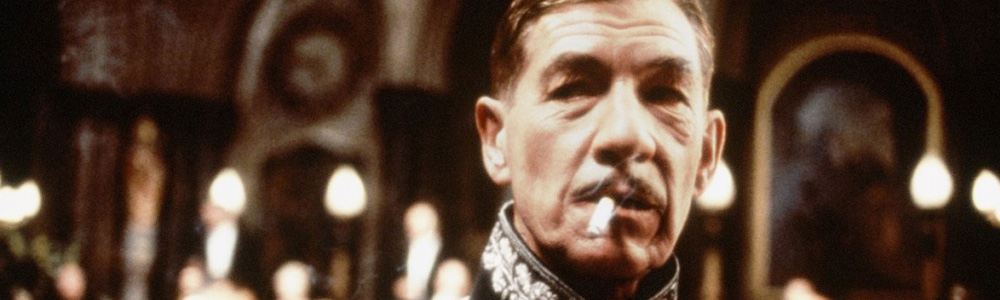
You are watching a politician on television — it is late, the room is barely lit, and he is saying, with a kind of brutal casualness, that politics has always been about power and that anyone who tells you otherwise is selling you something. And you feel, to your own horror, a loosening in your chest. Something like relief. You have been lied to so elegantly for so long that this naked confession feels like fresh air, like a window thrown open in a room that has been sealed for years. You do not agree with him. You may even despise him. But you trust him more in this moment than you have trusted anyone in months.
This is the precise mechanism Richard sets in motion before the play has properly begun. He walks to the front of the stage and tells you everything. He is not made for love or peace or the ordinary satisfactions of men. He is “determined to prove a villain.” He will plot, dissemble, manipulate, destroy. He names the instruments he will use. He maps the casualties in advance. And then he winks, almost, and steps back into the world of the play, and you follow him — not despite what he has told you, but because of it.
Hannah Arendt, writing in 1951 about the internal logic of totalitarian movements, noticed something that political theory had consistently refused to confront: that frankly stated malevolence can generate a form of trust that disguised virtue never achieves. In “The Origins of Totalitarianism” she traced how movements built on transparent cynicism — openly contemptuous of democratic norms, openly hostile to liberal pieties — attracted followers not through deception but through a perverse authenticity. The lie that wears the mask of idealism repels something in us, some animal instinct that senses the performance. The naked declaration of predatory intent, paradoxically, satisfies that instinct. At least this one is not pretending.
Richard is not pretending. He is, in the most unsettling sense, the most honest figure in his own play. Every other character performs their virtue, their loyalty, their grief — and most of them are lying or self-deceived or both. Richard alone says: here is the mechanism. Here is what I am. He offers you the blueprint of your own manipulation, and you cannot look away, because there is something almost aesthetically satisfying about watching a man so completely without illusions about himself. The clarity is seductive. It mimics integrity.
This is what makes him dangerous in a way that goes beyond the merely theatrical. Leon Festinger, in his landmark 1957 work on cognitive dissonance, described the enormous psychological energy human beings expend to avoid recognizing contradictions in people they need to trust. Richard short-circuits that expenditure entirely. He hands you the contradiction upfront, already resolved: I am monstrous, I know I am monstrous, now watch me work. The dissonance is dissolved before it can form. And in the dissolution, something in you relaxes, and in that relaxation, he has you.
The man in the darkened room turns off the television and sits for a moment in the silence. He does not vote for the politician he just watched. But he does not forget him either. There is something lodged in him now — a small, uncomfortable splinter of recognition — the memory of feeling seen more clearly by someone who admitted to lying than by someone who swore they never would. This is not naivety. It is something more structural, more embarrassing: the discovery that transparency about corruption can function as its own form of seduction, that the confession of the crime can serve as its alibi.
Richard understood this five centuries before anyone gave it a name. He steps into the light, tells you exactly who he is, and in telling you, makes himself unforgettable.
Charm as Infrastructure
You have accepted an apology you knew was hollow. You felt it in the pause before the words came, in the slight recalibration of their eyes just before the sentence started. You knew. And yet something in you reached toward the offered hand anyway, not because you believed the gesture but because the alternative — remaining alone in your correct reading of events — was a kind of exile too cold to sustain. This is not weakness. This is the architecture of how persuasion actually functions at its most sophisticated level, and Richard III understood it four centuries before Robert Cialdini mapped it in laboratory conditions.
The scene is almost unbearable to watch clearly. A widow, still raw with grief, accompanying the corpse of her father-in-law through the streets, and a man steps into her path — the man who killed him, who killed her husband too — and begins to speak. Not to explain. Not to justify. To magnetize. What Richard does in that corridor is not seduction in any romantic sense. It is the clinical construction of a gravitational field, a distortion of the space around Anne’s reality so complete that her grief, which should repel him, becomes the very material he builds with.
Cialdini’s work on compliance, formalized in 1984 and drawn from years of embedded observation inside sales floors, recruitment centers, and negotiation rooms, identified the six principles through which human beings are moved to say yes against their own interests: reciprocity, commitment, social proof, authority, liking, and scarcity. Richard deploys most of them simultaneously, almost instinctively, but the deepest mechanism at work is something Cialdini’s framework only partially captures. It is what René Girard named mimetic desire — the principle that we do not desire objects or people autonomously, but through the triangulation of a mediator, that desire is fundamentally imitative, borrowed from the desire of another or from the image of ourselves that another holds up. Richard does not simply tell Anne she is desirable. He performs his own devastation before her grief. He positions himself as someone so undone by her that he has committed atrocities in the deranged orbit of his wanting. He makes himself the mediator of her own value.
This is the trap that has no clean exit. Because if Anne accepts that Richard killed for love of her, she becomes, retroactively, someone worth loving. Someone powerful enough to drive a man to murder. And if she rejects this — if she holds to the truth that he is a killer and a liar — she remains the widow in the street, righteous and alone, with a dead husband and a dead king and nothing ahead but the long fidelity to her own correct perception. Girard understood that mimetic desire is not a deficiency of character but a structural feature of how selves are constituted through others. We need to be seen to know that we exist at all. Richard offers Anne the most dangerous gift: he sees her.
What Cialdini calls the liking principle operates here not through warmth but through mirroring. Richard reflects Anne’s reality back to her in a frame that includes him as its center. The reciprocity principle operates through the almost obscene gesture of handing her his sword, inviting her to kill him, staging his own vulnerability so completely that refusing the performance requires a coldness most people simply do not possess. The commitment principle locks in the moment she hesitates, because hesitation is already a form of participation.
None of this required Richard to be lovable. It required only that he understand something most people spend their lives refusing to examine: that the self is not a fortress but a frequency, and with the right signal, almost any lock opens.
The Court as Theatre of Complicity
You know the meeting. You have sat in that room. A colleague is being dismantled in real time, his record reframed, his competence quietly buried under a landslide of implication and euphemism, and around the table there are six people who know exactly what is happening and not one of them opens their mouth. Not because they are cruel. Because each one is waiting for someone else to go first. Because the calculus of self-preservation runs faster than conscience in rooms like that, and by the time conscience catches up, the decision has already been made in the silence.
This is not a failure of individual character. This is the architecture of every court that has ever existed.
Buckingham knows. That is the thing that must be held clearly in mind when reading Richard’s inner circle, because the temptation is always to treat the nobles who serve him as dupes, as men who have been deceived or overwhelmed. But Buckingham is not deceived. He is present at the fabrications, he helps construct them, he stands before the crowd at Baynard’s Castle and performs the theatre of reluctant petition with the fluency of a man who has rehearsed it inwardly for years. Hastings knows too, which is precisely why his death arrives so quickly — he hesitates a fraction too long, retains a fraction too much of his own judgment, and that small remainder of selfhood is what destroys him. Catesby moves between these men like a current, carrying information in both directions, serving the structure rather than any person within it. He is the purest form of the institutional animal: loyal not to a man but to proximity to power, which is a different and more durable loyalty altogether.
Stanley Milgram’s 1963 obedience experiments at Yale demonstrated something that the political imagination has never fully absorbed. Ordinary people, when placed inside an institutional framework that distributes moral responsibility upward through a chain of command, will administer what they believe to be lethal electric shocks to strangers — not because they are monsters, but because the structure has given them permission to not be the one who decides. The diffusion of responsibility is not a psychological accident. It is an institutional technology. Courts, boardrooms, bureaucracies — they are all, at some level, machines for producing this diffusion, for ensuring that no single person ever has to be the one who chose.
Hannah Arendt watched Adolf Eichmann in a Jerusalem courtroom in 1961 and reported something that scandalized her contemporaries: that the man responsible for organizing the transportation of millions to death camps was not a fanatic, not a sadist, not a figure of demonic intensity. He was a bureaucrat. He was, as she wrote in Eichmann in Jerusalem in 1963, terrifyingly normal — a man who had ceased to think, who had replaced judgment with procedure, who had made of institutional compliance a complete moral universe. The banality of evil is not a consoling concept. It is the most disturbing one available, because it removes the comfort of the monster. If evil requires monsters, we are safe. If it requires only people who have decided that their position within the structure is more important than what the structure is doing, then no room is safe, and no table is clean.
Richard does not corrupt his court. He reveals it. He is the condition that makes visible what the court has always been: a space in which the performance of loyalty to power is the only currency, in which the man who speaks first absorbs all the risk while those who wait inherit the reward of survival. Buckingham will eventually miscalculate his own position within this logic, will discover that the structure has no loyalty to return, that the court was never a relationship between persons but a temporary alignment of interests wearing the costume of one.
A vision curated by a filmmaker, not an algorithm
In this video I explain our vision
History Written by the Conquerors of the Conquerors

There is something almost too neat about the way history arranges its villains. The hunchback, the withered arm, the face contorted by some inner malevolence made visible in flesh — these are not the observations of witnesses. They are the requirements of a story that had already decided its ending before it began writing its beginning. Richard III died at Bosworth Field on the 22nd of August, 1485, and within hours the machinery of his replacement was already composing the official version of who he had been.
The Tudor project needed a monster, and so a monster was manufactured with remarkable institutional thoroughness. Thomas More, whose reputation for moral integrity we have inherited with almost no friction, wrote his History of King Richard III around 1513, nearly three decades after Bosworth, drawing on sources that were themselves products of the new regime. More was twelve years old when Richard died. His principal informant was John Morton, the Bishop of Ely who had actively conspired against Richard and thrived spectacularly under the Tudors. This is not a footnote. This is the architecture. The portrait of Richard as a schemer who emerged from his mother’s womb feet first, already plotting, already crooked in body and soul — this image flows directly from men whose careers depended on the vileness of the man they replaced.
Raphael Holinshed then assembled this portrait into his Chronicles of 1577, the great collective memory machine of Elizabethan England, the text from which Shakespeare drew almost everything. Holinshed was not a propagandist in the crude sense. He was something more dangerous: a compiler who treated inherited distortion as established record. By the time Shakespeare opened those pages, the slander had aged into fact. The hunchback walked through those Chronicles as though he had always walked that way, as though no one had ever seen him upright.
Paul Murray Kendall’s biography of Richard III, published in 1955, was one of the first serious scholarly attempts to excavate the man beneath the monument of abuse. Kendall examined the actual administrative record of Richard’s reign — a reign of less than two years, from 1483 to 1485 — and found a ruler who had introduced significant legal reforms, who had extended the use of English in legal proceedings to make the law more accessible, who was regarded in the north of England with genuine loyalty rather than terror. The physical deformity itself, for centuries presented as medical fact, turned out to be a literary construction. The skeleton discovered beneath a Leicester car park in 2012 confirmed scoliosis of the spine, a real condition, but nothing remotely approaching the grotesque theater that More and Holinshed and then Shakespeare made of it.
And yet Shakespeare’s Richard is not simply a lie repeated. This is what makes the political ventriloquism so elegant and so complete. By giving Richard the most brilliant, self-aware, seductive voice in the play — by making him complicit in his own distortion, announcing his villainy with wit and pleasure — Shakespeare performed something that pure propaganda could never accomplish. He made the audience desire the monster’s company even as they condemned him. The Tudors needed Richard to be hated. Shakespeare made him loved in the hating. The coup was not just completed; it was aestheticized.
Literature became the final instrument of a political settlement that had begun on a battlefield. The man who died at Bosworth, who reportedly fought with genuine courage in the close combat that ended his life, who shouted for his horse as the ground swallowed his cause — that man never had a chance at the version of himself that would survive. What survived was the version that Elizabeth I’s grandfather required, dressed in the language that Elizabeth I’s greatest playwright made immortal. The conquerors wrote the history. Then the conquerors of the conquerors made that history into art, which is the most durable form of winning there is.
The Abyss Recognizes Itself
There is a specific kind of silence that falls when you finally get what you spent years destroying yourself to obtain. You stand in the middle of it — the apartment, the promotion, the relationship you maneuvered everyone around you to secure — and the silence is not peaceful. It is diagnostic. It tells you something about the structure of your wanting that you were not prepared to hear.
Richard reaches this silence on the night before Bosworth Field. He has cleared the board entirely. Every figure who once defined him through their response to him — who feared him, loved him against their better judgment, hated him with the clarifying fury of the genuinely wronged — is gone. He has murdered or discarded or broken each of them. And now, in the dark of his tent, they return. Not as enemies. As mirrors. The ghosts do not come to threaten him with what they suffered. They come to tell him what he has made of himself by making nothing of them. Each face is a surface from which he once borrowed a fragment of identity — through their horror, their submission, their grief — and now those surfaces are blank. They give him nothing. They take everything.
Jacques Lacan argued, with the precision that only genuinely unsettling ideas require, that the ego does not originate from within. It is assembled from the outside. In the 1949 paper that introduced the mirror stage as formative for the function of the I, Lacan described how the infant constructs its first coherent self-image not from inner experience but from the reflected figure it encounters in the mirror — an image that is always slightly ahead of its actual bodily coordination, always more unified than the fragmentary experience from within. The self is, from its first moment, borrowed. It is a story told by an external surface. This means, with a consequence that takes years to fully understand, that destroying the people who reflect you is not liberation. It is self-annihilation by another name.
Richard named this mechanism himself, earlier and more nakedly than he perhaps intended. The declaration that he is himself alone has the rhythm of a manifesto but the content of a confession. He is announcing not independence but the absence of the relational architecture through which any self becomes legible — to others, and therefore to itself. Lacan’s concept of the Other is not sentimental. It is structural. You do not need people to be kind to you for them to constitute you. You need them to be there, to look back, to register your existence with some form of response. Richard chose response through dread, through manipulation, through the perverse intimacy of being someone’s destroyer. But it was still response. It was still the mirror functioning.
By the night before the battle, the mirror has gone dark. What Richard encounters when he startles awake is not guilt in any morally coherent sense. It is something older and more vertiginous: the experience of reaching for one’s own reflection and finding the surface empty. His famous cry — “Richard loves Richard; that is, I am I” — is not the statement of a man who has found himself. It is the statement of a man who has discovered that the self, turned entirely inward, finds no content there. The tautology is the horror. I am I explains nothing, confirms nothing, holds nothing. It is the sound of an echo chamber that has run out of echo.
The man standing alone in the apartment he spent years acquiring knows this feeling, even if he has no language for it yet. The rooms are exactly as he imagined them. The view is the one he described to people who stopped listening. And standing in it, he cannot locate the feeling that was supposed to arrive. He walks from room to room as though the sensation might be hiding in one of them.
What Richard Knows That We Pretend Not To
There is a moment, somewhere in the middle of a standing ovation, when your hands are moving on their own. The speech was adequate. The leader was competent, perhaps. The product was acceptable. And yet you are on your feet, palms striking together with a force that surprises you, your face arranged into the expression of someone who has witnessed something extraordinary. You are not lying, exactly. You are participating. And participation, you understand in some buried, inarticulate way, is not the same thing as belief — but it requires you to perform belief so thoroughly that the distinction eventually dissolves.
Richard knows this. He has always known this. What makes him unbearable to watch and impossible to dismiss is not that he is a monster operating outside the logic of civilization, but that he is civilization’s logic made audible. He says, with that crooked grin and that rolling, weaponized self-deprecation, the thing that every structure of power depends on no one saying. He narrates the mechanism while the mechanism runs. And the audience — on stage, in the theatre, across five centuries — cannot look away, because somewhere in the chest, behind the sternum, there is a recognition that is almost physical.
Michel Foucault, writing in 1975 in Discipline and Punish, described the theatre of power as a system that requires its own fictions to function. Power does not simply impose itself through brute force; it creates spectacles, ceremonies, arrangements of bodies and symbols that make its authority appear natural, inevitable, divinely ordered. The scaffold, the coronation, the courtroom — these are performances in which everyone present understands their role and plays it, not because they are deceived, but because the performance itself produces the reality it claims only to describe. The king is not legitimate because God chose him. The king is legitimate because enough people act as though God chose him, with sufficient consistency and sufficient violence toward those who break the act.
Richard breaks the act by performing it too openly. He does not pretend that love earns loyalty. He manufactures loyalty and then speaks the manufacturing aloud, to you, directly, in the space between the play and your watching of it. He seduces a woman over her husband’s corpse and then turns to the audience to marvel at himself. He is not confessing. He is demonstrating. Look, he says, at what the hunger for position actually looks like when you strip the ceremony from it. Look at what you already know.
The unbearable part is that he is not wrong about any of it. The court does perform virtue while practicing calculation. Grief is weaponized. Loyalty is purchased and dressed as devotion. Clarence is disposable, Hastings is disposable, the princes are disposable — not because Richard is uniquely evil, but because disposability is the grammar of power, and Richard is simply the one who conjugates it without euphemism. Foucault would recognize the structure immediately. What Richard stages is the truth that the theatre of power cannot afford to stage — the fiction behind the fiction, the calculation beneath the ceremony.
And this is where the standing ovation returns, because the question it opens is not comfortable. If you can see the mechanism — if you can watch Richard and feel the click of recognition, the cold understanding that yes, this is how it works, this is what the applause actually means — does that seeing liberate you from it? Or does clear-eyed participation simply become the most sophisticated form of captivity, the one in which you clap harder precisely because you know you are clapping, and the knowing has become its own performance, its own way of belonging to the very system you believe you have seen through?
🎭 Power, Deception, and the Human Soul
Shakespeare’s Richard III plunges us into the darkest corridors of ambition and political manipulation, raising questions that echo far beyond the Tudor court. These related articles explore the philosophical, literary, and artistic dimensions that illuminate the world of the play and its enduring significance.
Goethe’s Faust: Meaning and Analysis
Goethe's Faust is, like Richard III, a profound meditation on the human hunger for power and the moral compromises it demands. Both works stage a protagonist who bargains with darkness in pursuit of an absolute desire, raising timeless questions about guilt, freedom, and damnation. Reading Faust alongside Shakespeare’s tyrant reveals how Western literature has continuously wrestled with the figure of the overreacher.
GO TO THE SELECTION: Goethe’s Faust: Meaning and Analysis
Camus’s The Stranger: Meaning and Analysis
Camus’s The Stranger confronts us with a protagonist who, like Richard III, stands radically outside the moral conventions of his society, acting with unsettling detachment. The theme of alienation and the refusal of accepted human norms links these two works across centuries and literary traditions. Exploring Camus’s novel deepens our understanding of how literature constructs the figure of the outsider who disrupts the social order.
GO TO THE SELECTION: Camus’s The Stranger: Meaning and Analysis
Montaigne: Life and Essays
Montaigne's Essays represent one of the great Renaissance investigations into the complexity and contradictions of human nature, a project deeply resonant with Shakespeare’s own dramatic explorations. Like Richard III, Montaigne is fascinated by the performance of the self, by the masks we wear and the instability of identity. His reflections on ambition, hypocrisy, and self-knowledge offer an indispensable philosophical companion to Shakespeare’s darkest history play.
GO TO THE SELECTION: Montaigne: Life and Essays
Albert Camus: Life and Philosophical Thought
Albert Camus‘s philosophical thought, centered on the absurd and the rebellion against meaninglessness, provides a compelling modern lens through which to reread Richard III’s existential defiance. Richard’s famous opening soliloquy can be read as a declaration of absurd revolt against a world that has denied him a place. Understanding Camus’s philosophy enriches our reading of Shakespeare’s villain as a figure of radical, if monstrous, self-assertion.
GO TO THE SELECTION: Albert Camus: Life and Philosophical Thought
Discover the Cinema That Dares to Think
If these explorations of power, identity, and moral complexity have stirred something in you, Indiecinema streaming is the natural next step. Our curated catalog of independent and auteur films carries the same spirit of depth and creative courage you find in the greatest works of literature. Come and discover cinema that challenges, provokes, and transforms.
👉 EXPLORE THE CATALOG: Watch Indie Films in Streaming
A vision curated by a filmmaker, not an algorithm
In this video I explain our vision

