
The Costume You Wore Before You Knew You Were Wearing It
Before you understood what a story was, someone was already telling you one about yourself. Not directly, not with your name in it, but close enough that the shape of it fit you like skin. Maybe it was a grandfather described in tones of reverence at the dinner table, a man who had built something or survived something, whose suffering or triumph was offered to you not as history but as inheritance. Maybe it was a founding myth of the place you were born into, a nation or a religion or a neighborhood, some tale of origin in which ordinary people became extraordinary through ordeal, and you sat there in your small body absorbing it, feeling its gravity settle into your chest the way cold water settles into the lungs. You did not choose to receive it. No one asked you whether you wanted it. It arrived the way all the most important things arrive in childhood: before you had the vocabulary to question them.

This is how it works. Long before you are old enough to construct a self-concept, long before adolescence hands you the first crude tools of introspection, the culture surrounding you has already sketched in the outline. The hero’s journey, in its thousand local variations, is not primarily a story you are told for entertainment. It is a mold. It is a specification. It is the answer to a question you haven’t yet thought to ask, which is: what does a life that matters look like? And because you receive it before the question even forms, you don’t experience it as an answer imposed from outside. You experience it as something you already knew. As something natural. As something true.
Otto Rank understood this with a precision that was almost uncomfortable. In his 1909 work “The Myth of the Birth of the Hero,” Rank laid out what no one before him had stated so baldly: that the mythological hero across cultures, from Sargon of Akkad to Moses to Oedipus to Romulus, follows a pattern so consistent it cannot be coincidental. The hero is born of noble or divine parents. He is threatened in infancy. He is exposed or abandoned. He is rescued by people of lower station. He grows up ignorant of his true origin. He returns, discovers who he really is, and overcomes those who once threatened him. Rank catalogued this structure not as a curiosity of comparative mythology but as a document of psychic necessity. These stories exist because they serve a function in the inner life, and that function begins operating long before any individual decides to engage with it consciously.
The psychoanalyst who trained under Freud but eventually moved beyond him recognized something Freud’s framework was ill-equipped to name directly: that the family is not simply a site of conflict between drives and prohibitions, but a theater in which a script is handed to the child before the curtain rises. The child does not merely develop within the family. The child is narratively constructed by it. Erik Erikson, writing decades later, would map this process across developmental stages, arguing in “Childhood and Society” in 1950 that identity formation is always a negotiation between the individual psyche and the ideological environment. But Rank arrived at the psychic dimension of myth earlier and more radically, insisting that the hero story is something the child internalizes as a template for becoming, not a tale they passively receive.
You were already wearing the costume when someone handed you the mirror. The fitting had happened elsewhere, in stories told before you could talk back, in the admiring or cautionary voices that described great men and failed ones, in the particular way your culture lit up around certain kinds of suffering and certain kinds of triumph. The story was never just a story. It was the first account of what you were supposed to be.
Vienna, 1909: A Young Man Rewrites the Blueprint
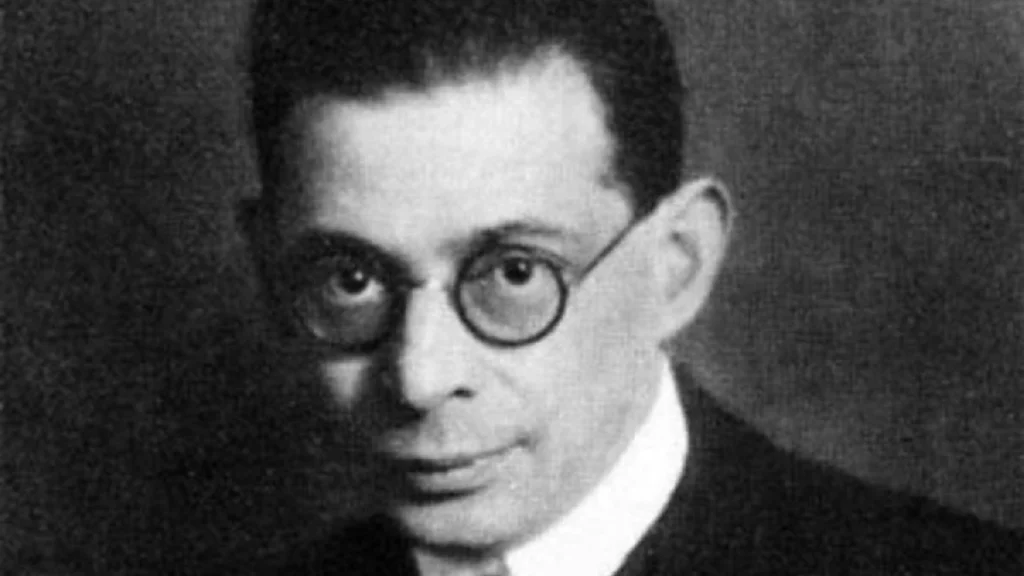
There is something almost unbearable about the image of a twenty-year-old sitting in a rented room in Vienna, writing by hand a manuscript that reorganizes the entire mythological inheritance of Western civilization. No university affiliation. No mentor guiding the argument. No institutional permission to think at this scale. Just a young man named Otto Rosenfeld, born in 1884 in a lower-middle-class Jewish household, who had educated himself so ferociously and so precisely that when Sigmund Freud received his unsolicited pages in 1905, he did not set them aside. He read them. Then he invited the young man into his home.
This is not the story of a prodigy recognized by a generous patriarch, though it is tempting to read it that way. It is the story of a displacement so complete that it produced a kind of visionary clarity impossible to acquire through normal channels. Rank had no formal degree. He worked as a machinist’s apprentice before his intellectual hunger consumed everything else around it. He changed his surname — from Rosenfeld to Rank — and in that small act of self-renaming performed something he would later theorize extensively: the deliberate construction of an identity that superseded the one assigned at birth. He was, before he had written a single word about heroes, already enacting the mythological pattern he would spend his life tracing.
By 1909, when The Myth of the Birth of the Hero appeared in print, Rank had become the secretary of the Vienna Psychoanalytic Society, the inner sanctum of the most disruptive intellectual movement of the early twentieth century. He was twenty-five years old. The book proposed something that sounds simple in retrospect but was genuinely radical in its moment: that the hero narratives of dozens of unrelated cultures — Sargon of Akkad, Moses, Oedipus, Romulus, Heracles, Perseus, among many others — all follow an identical structural sequence. The hero is born of noble or divine parents. Circumstances of birth are unusual. He is immediately threatened, abandoned, cast out, exposed to death. He is rescued by humble figures or animals. He grows, returns, and conquers. Rank identified this not as cultural borrowing or coincidence but as a universal projection of the infantile psyche, specifically of the child’s fantasy of replacing the real, imperfect family with a grander imagined origin. The myth is not about the hero. The myth is about the child who needs to believe the hero is possible.
This was published four years after Freud’s Three Essays on the Theory of Sexuality had already shattered respectable Viennese assumptions about childhood and desire. The psychoanalytic circle was operating in a specific atmosphere of intellectual intoxication — the conviction that everything taken for granted was a surface concealing something true and finally approachable. Ernest Jones, Karl Abraham, Sándor Ferenczi were already orbiting Freud. But Rank was different in the texture of his precariousness. The others were physicians. They carried degrees, clinical titles, institutional positioning. Rank carried only the force of his thinking and the structural vulnerability of someone who had never been permitted to belong to the rooms he was now entering.
The irony is dense enough to press against. Here was a man without legitimate origin — no academic pedigree, working-class, Jewish in a Vienna already rehearsing its worst tendencies — writing the definitive account of what it means to be born outside the protected circle and to remake yourself anyway. He was not observing the displaced hero from the outside. He was living the pattern from inside its most exposed position, at the exact moment he was theorizing it. The manuscript did not describe something he had studied. It described something he was.

The Monomyth Before Campbell Stole the Stage
There is a moment, sitting in a folding chair in a school gymnasium, watching your child step onto a makeshift stage under fluorescent lights, when something in you goes very still. Not from pride, though pride is there too. From recognition of a different kind. The boy on the stage is playing a prince who doesn’t know he’s a prince. He was raised by ordinary people, kind but somehow insufficient, and now a stranger has arrived to tell him the truth of his blood. You watch him deliver the lines with the earnestness only children can sustain, and somewhere in your chest a door opens onto a corridor you didn’t know was there. Because you remember being that boy. Not on a stage. In your actual life. The feeling that your real parents were somewhere else. That this house, this table, this modest daily life was a temporary arrangement before the truth arrived to collect you.
Otto Rank, writing in 1909, called this the family romance of the neurotic, borrowing Freud’s phrase but doing something structurally more ambitious with it. What he discovered, or rather what he excavated with the patience of an archaeologist who refuses to stop digging, was that this feeling was not a private pathology. It was a myth. More precisely, it was the myth, repeated with such consistency across cultures separated by centuries and oceans that its persistence demanded an explanation that psychology alone could not fully provide.
He examined the birth narratives of Sargon of Akkad, whose origin text dates to roughly 2300 BCE and is among the oldest biographical records in human civilization. The child born of a hidden mother, placed in a reed basket, cast onto a river, found by a man of lower station who raises him as his own, and who eventually rises to become king of the known world. Then Moses, the Levite child floated on the Nile, adopted into Egyptian royalty, who discovers his true lineage and returns to lead his people. Then Oedipus, abandoned on a hillside with pierced ankles, raised by the king and queen of Corinth as their son, who kills his real father without recognizing him. Then Romulus, suckled by a wolf, raised by a shepherd, who founds an empire. Then Perseus, whose grandfather locked his mother in a bronze chamber to prevent the prophecy, who was nonetheless conceived, set adrift in a chest on the sea, and returned to fulfill exactly what had been feared. Rank catalogued more than seventy of these narratives in The Myth of the Birth of the Hero and found that the structural skeleton beneath all of them was functionally identical. Noble birth. Threat to the father. Abandonment. Humble surrogates. Return. Overthrow.
This is not a coincidence that can be explained by cultural diffusion, by one story travelling along trade routes and changing costumes. The distances are too great, the dates too scattered, the details too independently arrived at. What Rank proposed was that this pattern emerges because it maps something universal in the psychological architecture of the human child, the inevitable drama of separating from parental authority, the need to mythologize that separation into a story of destiny rather than mere growth.
Forty years later, Joseph Campbell published The Hero with a Thousand Faces and became, for most of the twentieth century, the name attached to this discovery. The monomyth, Campbell called it. The call to adventure, the threshold, the return. His book sold widely, influenced screenwriters and filmmakers and cultural critics and presidents, and its bibliography acknowledged Rank in passing, as one source among many. The engine had been built and was running. Someone else had been credited with the invention of flight.
The boy on the stage finishes his speech. The gymnasium applauds. You are still inside the corridor that opened in your chest, feeling the cold draft of something you once believed was uniquely yours.
The Two Families and the Lie We Need to Live
There is a photograph on the mantelpiece that has been there your entire life. A man in a dark suit, serious expression, the kind of posture that suggests dignity earned rather than inherited. Your grandmother calls him a businessman, a pioneer, someone who built something from nothing. You are thirty-four before you learn, almost by accident, that he spent two years in prison for fraud, that the business collapsed taking other people’s savings with it, that the word “pioneer” was a retroactive kindness applied by a family that needed a different story to live inside. And the strangest thing is not the revelation. The strangest thing is how unsurprised some part of you already was.
Rank’s central psychological argument cuts here, into exactly this tissue. In “The Myth of the Birth of the Hero,” published in 1909, the same year Freud released his shorter meditation “Family Romances,” Rank identifies something that operates at the foundation of human psychological development: the child constructs, inevitably and necessarily, a fantasy in which the parents currently presiding over its life are not the real parents. The true origins are elsewhere, nobler, more worthy of the self the child senses itself to be. The father who comes home exhausted and diminished cannot be the source of whatever greatness the child dimly feels stirring in itself. So the mind performs an act of mythological substitution.
Freud had noticed this too, describing in “Family Romances” how children fantasize being of higher birth, how the degradation of the real parents in imagination is actually a form of longing for the earlier, idealized version of those same parents from early childhood, before disillusionment set in. For Freud, this was a developmental episode, something the psyche passes through on its way to accepting reality. For Rank, it is something categorically different and far more consequential. It is not a phase. It is the prototype.
What Rank understood, with a precision that his contemporaries were not fully prepared to receive, is that this family romance is not pathology. It is the first act of culture. The child who rewrites its origins is doing exactly what Homer did, what the compilers of the Hebrew Bible did, what every founding myth of every civilization has done: it is taking the unbearable contingency of birth, the sheer randomness of appearing in this family rather than that one, and submitting it to the organizing pressure of meaning. The hero who discovers he is of noble blood is the child’s fantasy scaled to cosmic proportions and ratified by collective agreement.
This is where Rank’s divergence from Freud becomes structural rather than merely technical. The family romance, for Rank, is not a distortion of reality that maturity should correct. It is the mechanism by which human beings become capable of living at all. Identity requires a narrative, and every narrative requires a selection, which is always also an erasure. The criminal grandfather on the mantelpiece gets rewritten not because the family is dishonest but because identity cannot be constructed from shame. The failed father becomes a visionary not through malice but through the same psychological compulsion that turned defeated tribal leaders into gods and wandering goatherds into chosen peoples.
The photograph stays on the mantelpiece. You understand now why it was always there, and why the story around it was always slightly too smooth, the edges too carefully filed down. What you are looking at is not a lie exactly. You are looking at an act of mythological necessity, the family performing on a domestic scale what cultures perform on a historical one. The man in the dark suit is both the fraudster he was and the pioneer he needed to become. The two coexist. The fiction is not a cover for the truth. In some sense that Rank would have recognized immediately, the fiction is the truth, or at least the only form of truth the living can afford to carry.
The Birth Trauma and the Terror of Separation
You are standing at the threshold of something irreversible. Maybe it is a resignation letter already written, sitting in your drafts folder for three weeks. Maybe it is the conversation you have been rehearsing for months but never begin. The body knows before the mind admits it: there is a pull backward, physical and almost gravitational, toward the state before the decision existed, before you were someone who had to choose. You want to return to the moment before the question was asked. This is not weakness. Rank would say it is the oldest memory the organism carries.
In 1924, he published Das Trauma der Geburt, and with it effectively ended his closest intellectual friendship. The Trauma of Birth proposed something Freud could not absorb without the entire edifice of psychoanalysis shifting dangerously: that the foundational wound of human existence is not the Oedipus complex, not castration anxiety, not the father’s prohibition. It is the first separation. The severance from the womb is the prototype of every loss that follows, the template onto which all subsequent experiences of abandonment, exile, and death are unconsciously mapped. Birth is not a beginning. It is the first catastrophe.
What Rank described was not merely a physiological event but a psychological rupture so total that the organism spends the rest of its life oscillating between two impossible demands: the urge to dissolve back into undifferentiated unity, to return to the oceanic merger before individuation, and the equally powerful drive to assert itself as a separate, willing creature. Every neurosis, in his framework, is a variation on this oscillation. The person who cannot leave, the person who cannot stay, the person who stands frozen at the threshold of their own life — they are all enacting the same ancient negotiation between merger and selfhood.
Freud dismissed the book, privately and then publicly. The disagreement was not merely theoretical. It was existential, because Rank was relocating the origin of human suffering from the father to the mother, from prohibition to loss, from desire to dread. He was saying that what we most fear is not punishment. What we most fear is being alone in the world.
Ernest Becker understood this with a clarity that Freud’s own inheritors often lacked. In The Denial of Death, published in 1973, the year before Becker died of cancer at forty-nine, he built an entire anthropology of human culture on the architecture Rank had sketched. Becker argued that heroism — the need to be significant, to matter, to leave a mark — is fundamentally a response to the unbearable awareness of being a separate, mortal creature. We create myths, religions, ideologies, love affairs, careers, nations, and legacies because we cannot tolerate the raw fact of our own contingency. The hero myth is not a celebration of life. It is a monument erected against death.
And Rank had seen this earlier, more quietly. The hero born of no earthly mother, the hero who descends and returns, the hero who passes through annihilation and emerges transformed — this figure is not a model for emulation. He is a wish. He is the fantasy of a self so sovereign that even the original catastrophe of birth, the tearing away from wholeness, could somehow be reversed or redeemed.
You feel it most precisely at thresholds. The decision that would make you undeniably yourself, separate from every context that has held you, is also the decision most likely to produce in you a sudden and irrational desire to disappear back into something larger. The womb you are longing for does not exist anymore. It may never have been what you remember. But the longing itself is real, and it is old, and it has been shaping your choices long before you had the language to call it anything at all.
A vision curated by a filmmaker, not an algorithm
In this video I explain our vision
The Hero as Cultural Weapon

You are watching a man speak from a stage, and something in your chest does the thing it does when you recognize a pattern you cannot yet name. The lighting is deliberate. The pauses are deliberate. And the story he is telling — about where he came from, about the forces that tried to extinguish him before he could rise, about the return he has made to claim what history destined him to claim — that story is older than any nation he represents. You have heard it before. Not from him. From somewhere much further back, somewhere so far back it feels like blood memory rather than politics.
This is not accidental. The birth-of-the-hero template that Rank identified across seventy myths from Moses to Romulus to Siegfried did not retire when modernity arrived. It migrated. It found new hosts. Augustus Caesar understood this with the cold precision of a man who had watched Julius Caesar be deified and decided divinity was a political instrument. The manufactured lineage, the miraculous conception through divine intervention, the prophecies attached retroactively to his birth — these were not personal vanities. They were governance technology. The Roman imperial cult did not ask citizens to believe in the literal truth of Augustus’s divine origins. It asked them to organize their loyalty around a story whose structure felt true, whose cadences activated something older than reason.
Roland Barthes, writing in 1957 in Mythologies, named the mechanism with surgical precision. Myth, he argued, is not a lie but something more insidious: it is depoliticized speech. It takes what is historical, contingent, manufactured — a man who rose through violence and patronage networks — and transforms it into nature, into something that simply is, that was always going to be. The mythologized leader does not win power. He fulfills his destiny. The difference between those two sentences is the difference between a political claim you could contest and a cosmic fact you can only witness. Barthes saw this operating in advertising, in the Tour de France, in the face of Einstein on magazine covers. He would have had no difficulty recognizing it on political stages from the twentieth century onward, performing in real time the exact structure Rank had spent years excavating from ancient manuscripts.
Georges Sorel, a decade and a half before Rank published his landmark study, had already understood something complementary and darker. In Reflections on Violence in 1908, Sorel argued that the driving force of collective action is not rational interest but myth — not myth in the sense of falsehood, but myth as a mobilizing image, a picture of the future that organizes the present. The general strike, for Sorel, was not a plan. It was a myth. It did not need to be likely to be powerful. It needed to feel inevitable, cosmically ordained. The founding father with miraculous origins serves exactly this function. He is the myth that makes the nation feel not like a recent administrative arrangement but like a destiny that was always there, waiting to be recognized.
The nineteenth-century nationalist movements knew this instinctively. Every newly forming nation required a founding figure whose birth carried the signs of exceptionalism: the humble origins that disguise extraordinary inheritance, the early persecution, the survival against impossible odds, the return. The pattern was not borrowed consciously from Rank — Rank was still decades away from systematizing it — but it was borrowed from the same deep archive of human narrative that Rank would later map. What Rank described as a psychological structure, these movements deployed as a political one, and the fact that they could do so without explicit instruction tells you something about how deeply the template is wired into the way collective imagination processes legitimacy.
The man on the stage finishes speaking. The crowd responds with something that is not quite thought and not quite feeling but lives in the space between them, in the body, in the chest, exactly where myth has always lived.
Will, Creativity, and the Artist as Counter-Hero
There is a moment when someone sits in a dark room watching something they made years ago — a film, a painting reproduced in a catalogue, a piece of music playing through someone else’s speakers — and feels a cold recognition that has nothing to do with pride. What they are seeing is not their work. It is their wound, given shape. Every compositional choice, every cut, every image that felt at the time like pure aesthetic intuition, now reads as confession. The horror is not that they made something personal. The horror is that they had no idea how personal, and that the form itself, the work’s very skeleton, was built from the blueprint of a damage they had never consciously mapped.
Rank would say: yes. Exactly that. That is precisely what creating means.
By the time he published Art and Artist in 1932, Rank had moved far beyond the clinical frameworks he inherited and then dismantled. The book is not a psychology of creativity in any reductive sense. It is an ontology of making — an argument that the creative act is the only domain in which a human being does not merely inherit a myth but consciously forges one. Where Freud had seen the artist as someone who sublimates frustrated drives into socially acceptable forms, Rank saw something structurally different: a person who uses the trauma of existence itself as raw material, who does not flee the terror of individuation but transmutes it into something that can outlast them. The will, for Rank, was not a philosophical abstraction. It was the force by which a self authors its own necessity, transforms what was merely suffered into what is actively shaped.
He made a distinction that has never quite been absorbed as deeply as it deserves. Not a hierarchy — he was careful about that — but three different orientations toward the same unbearable fact of being separate, mortal, and free. The average person manages the anxiety of existence through conformity: by collapsing into collective structures, social roles, inherited narratives, they achieve a kind of peace through self-erasure. The neurotic type, which Rank analyzed with far more compassion than Freud ever could, is someone who perceives the gap between individual will and collective expectation with full force but cannot resolve it. They feel the freedom and cannot act. They are paralyzed by the very consciousness that could liberate them, because they lack — or have not yet found — the capacity to transform that consciousness into form. The artist, in Rank’s framework, is not more gifted or more evolved. They are someone who has found, or invented, or stumbled into, a particular relationship with their own trauma: they make it external. They give it edges.
This is why the filmmaker watching their old work feels horror rather than satisfaction. The work is good, perhaps. It functions. But in its functioning, it has revealed something its maker buried in the making — the particular shape of a separation that was never processed, only composed. Alfred Adler had written, years earlier, about the “style of life” as the individual’s characteristic attempt to overcome an original feeling of inferiority. Rank goes somewhere more precise and more disquieting: the style is not a compensation for the wound. The style is the wound, made habitable.
Ernest Becker, who built much of The Denial of Death on Rank’s later work, understood this as the central human dilemma: the self both needs to stand out and needs to merge back, needs to be a hero and needs to disappear. The artist does not resolve this tension. They metabolize it. Each work is a temporary solution to an insoluble problem, which is why each work, once finished, immediately generates the need for the next one. The dark room empties. The screen goes white.
The Price of Refusing the Script
There is a specific kind of morning that follows the dismantling. You wake up and the script is gone — not stolen, not lost, but voluntarily surrendered — and the silence where it used to be is not peaceful. It is the silence of a stage after the actors have left, ropes still swaying, dust settling on props no one will use again.
Rank knew this silence from the inside. After nearly two decades as Freud’s closest intellectual companion, after being called the most gifted of all the disciples, after editing the journal, shaping the movement, sitting at the right hand of the father-myth made flesh, he published “The Trauma of Birth” in 1924 and watched the warmth drain from the room. By 1926 the break was complete. He was expelled — not violently, but with that particular coldness that institutions reserve for those who question the founding story rather than merely elaborating it. He moved to Paris. Then to New York. He built something new, worked with Anaïs Nin, influenced what would later become humanistic psychology, wrote with a desperate fertility that suggested a man outrunning his own grief. He died in 1939, in Manhattan, just weeks after Freud died in London. Two men, one myth, ending almost simultaneously — as if the hero and his shadow could not survive apart from each other even in death.
For decades his work was buried. Not burned, not refuted — buried, which is worse, because burial requires no argument. It simply requires that no one assigns the reading.
Ernest Becker, writing in 1973 in “The Denial of Death,” retrieved Rank from that burial and recognized in him something that the psychoanalytic establishment had needed to forget: the idea that neurosis is not a malfunction but a failed heroism, an inability to bear the full weight of one’s own symbolic life. Rank had understood that the hero myth is not something we read — it is something we live under, like atmospheric pressure, unnoticed until it changes. And the person who notices it, who peels back the family romance and sees the mechanism clearly, does not step into freedom. They step into a different kind of trap.
You know what this feels like if you have ever consciously dismantled the story your family handed you — the role, the expectation, the narrative arc that placed you as protagonist of their specific drama. The dismantling feels like clarity at first. Then it feels like vertigo. Then it feels like a loneliness so precise it has edges, because it is not the loneliness of someone who has never been understood, but of someone who has seen the understanding-machine clearly enough to know that most human connection runs on a script, and they no longer speak that language fluently, and there is no other language yet.
Philip Rieff, in “The Triumph of the Therapeutic” published in 1966, described this figure — the person who has refused inherited faith without finding a replacement — not as liberated but as permanently convalescent, living in a state of managed disorientation. The heroic myth, Rank argued, exists precisely because the alternative — unmediated confrontation with contingency, with the body’s fragility, with the fact that you were not chosen but merely born — is something the psyche cannot sustain indefinitely without some narrative architecture, however fictional.
And so the person who has dismantled the architecture stands in the open and finds that the openness is not a gift. They see others moving through their inherited stories with an ease that looks, from the outside, like happiness, and they cannot tell anymore whether that ease is wisdom or sleep. Rank spent the last years of his life writing about will, about the creative act as the only honest response to the terror of existence, building a new scaffold even as he understood, with perfect clarity, that every scaffold is temporary and every hero’s journey ends not in the stars but in the ground.
🌀 The Hero, the Myth, and the Depths of the Psyche
Otto Rank’s exploration of the hero myth reaches far beyond psychoanalysis, touching the deepest structures of storytelling, identity, and the human need for transcendence. These related articles trace the threads that connect myth, memory, the unconscious, and the symbolic imagination across cultures and centuries.
Jungian Individuation and the Great Work
Carl Jung‘s concept of individuation mirrors Rank’s heroic journey in striking ways: both describe a descent into darkness and a hard-won return to wholeness. The alchemical Great Work becomes a metaphor for psychological transformation, where the prima materia of the unconscious is refined into the gold of the integrated self. Reading Jung alongside Rank reveals how deeply myth and psychology are intertwined in Western thought.
GO TO THE SELECTION: Jungian Individuation and the Great Work
Claude Lévi-Strauss: Life and Thought
Claude Lévi-Strauss revolutionized the study of myth by treating it as a structured language through which cultures resolve their deepest contradictions. His structural approach offers a powerful counterpoint to Rank’s psychoanalytic reading of the hero narrative, revealing how the same mythological patterns recur across radically different societies. Together, Rank and Lévi-Strauss illuminate the universal grammar hidden beneath the surface of heroic stories.
GO TO THE SELECTION: Claude Lévi-Strauss: Life and Thought
Mircea Eliade and the Myth of the Eternal Return
Mircea Eliade‘s work on the eternal return explores how mythological time operates as a sacred cycle of death and regeneration, a theme central to Rank’s birth myth as well. For Eliade, the hero’s journey is not merely a psychological event but a cosmological re-enactment of the world’s origins. His perspective enriches Rank’s theory by situating the hero’s birth within a vast sacred architecture of time and meaning.
GO TO THE SELECTION: Mircea Eliade and the Myth of the Eternal Return
The Unconscious and its Relationship With Cinema
Cinema has always been one of the most fertile grounds for the mythic hero narrative that Rank described, drawing on unconscious drives and archetypal patterns to create stories that resonate universally. The relationship between the unconscious and the film image reveals how directors intuitively reconstruct the heroic birth myth in the language of light and shadow. Understanding this connection transforms how we watch films and how we understand their deepest emotional power.
GO TO THE SELECTION: The Unconscious and its Relationship With Cinema
Discover the Cinema of Myth and the Unconscious on Indiecinema
If these themes of myth, heroism, and psychic depth have stirred something in you, Indiecinema is the streaming platform where independent cinema explores precisely these territories — films that dare to descend into the unconscious and return transformed. Discover a curated world of visionary, independent, and boundary-pushing cinema waiting for you.
👉 EXPLORE THE CATALOG: Watch Indie Films in Streaming
A vision curated by a filmmaker, not an algorithm
In this video I explain our vision

