
The Man Who Cannot Sleep in His Own Skin
You are standing in a hallway that is not yours, although you have lived here for months. The wallpaper is clean. Someone has placed a small potted fern near the staircase, and it is thriving, which strikes you as faintly obscene. Upstairs, a bed waits with pressed sheets. Downstairs, the street runs wet and dark toward somewhere that has no name yet. You have been standing here for eleven minutes. You know this because the clock in the sitting room has struck twice since you came in from the cold, and each time it did, you felt the sound not as time passing but as a verdict being read aloud in a language you almost understand. You are not drunk. You are not mad. You are simply unable to move in either direction without something in you registering the movement as a defeat.

Hermann Hesse published Der Steppenwolf in 1927, at the age of fifty, after a nervous collapse, a divorce, the death of his father, and three years of Jungian psychoanalysis with Josef Lang, a student of Carl Jung himself. The novel was not, as it is sometimes lazily framed, a counterculture manifesto waiting to be discovered by the 1960s American paperback market. It was a clinical document dressed in fiction — a man’s attempt to chart what happens when the internal geography of a human being refuses to match the external territory everyone around him treats as obvious and shared. Harry Haller, the protagonist whose initials mirror Hesse’s own with deliberate and almost aggressive transparency, does not suffer from depression in any pharmaceutical sense. He suffers from an excess of perception that has curdled into a kind of paralysis. He sees too clearly what the people around him do not see at all: that the arrangements they call civilization are held together largely by the decision not to look at them directly.
What Hesse diagnosed in Haller is something that sociologist Erving Goffman would not find clinical language for until 1959, in The Presentation of Self in Everyday Life — the exhausting and continuous performance required simply to exist among other people without triggering their alarm. Goffman described social life as theater, but he was describing something most people find manageable, even pleasurable. Haller finds it unbearable not because he is antisocial but because he is hyperaware of the machinery. He sees the props. He sees the stagehands. He sees the audience pretending not to be an audience. And unlike those around him who have metabolized this awareness into comfortable cynicism or simply never developed it at all, he cannot unknow what he knows. Every bourgeois dinner party he attends is simultaneously a dinner party and an autopsy of a dinner party.
The wolf in the novel’s title is not a metaphor for savagery. This is the misreading that has followed the book for nearly a century. The wolf is not the opposite of civilization — it is the part of Haller that civilization has no use for and therefore cannot name, cannot domesticate, cannot even see clearly enough to reject properly. It is the self that exists prior to the social contract, before the moment a child learns to perform contentment for the approval of adults. Nietzsche had already mapped this territory in Beyond Good and Evil in 1886, arguing that the most dangerous thing about moral systems is not their cruelty but their completeness — the way they leave no conceptual room for what they exclude. Haller is what gets excluded. Not the murderer, not the revolutionary, not the deviant in any legible category. Simply the man who cannot perform his own life convincingly enough to stop noticing that he is performing it.
The fern in the hallway continues to thrive. This detail should bother you more than it does.
I Am Nothing

Drama, thriller, by Fabio Del Greco, Italy, 2015.
The story revolves around Vasco, a Roman builder who, at the age of 74, enjoys a life of absolute comfort. His human parable takes a dramatic turn when a mysterious encounter leads him to an ambush. Having survived, but marked by a long coma, Vasco wakes up with a new sensitivity, developing an intimate and poetic bond with nature. This new relationship with the world around him leads him to deeply explore himself, in an internal and external journey. through Italy, the United States and India, in search of a higher meaning and a cure. In parallel, the threat of a planetary cataclysm adds an epic dimension to the story.
I Am Nothing explores universal themes such as time, memory, oblivion and the connection with nature. Fabio Del Greco creates an existential drama full of food for thought. The director skillfully combines different visual materials, mixing archive images with nature photographs and dreamlike visions. This visual experimentation translates into an editing that captures the viewer's attention, guiding him through a cycle of creation and destruction. The sequences that alternate the buildings, Vasco's pride, with Indian landfills and natural landscapes create a hypnotic rhythm, underlining the beauty and fragility of life. Vasco's existential journey is a hymn to transformation and rebirth. The evolution of the protagonist, from unbridled luxury to the rediscovery of purity, represents a powerful metaphor on the meaning of life and the need to reconnect with authentic values. Io sono nulla stands out for its ability to combine introspection and visual experimentation, offering a suggestive and engaging narration. It is a film that invites us to reflect on the human condition, on our relationship with power and nature, and on the possibility of finding ourselves through change. A work that leaves its mark and lends itself to multiple readings.
LANGUAGE: Italian
SUBTITLES: English, Spanish, French, German, Portuguese
The Bourgeois Trap as Existential Architecture
You have arranged your life so that almost nothing can happen to you. The furniture is where it has always been. The rent is paid. The meals arrive at roughly the same hour. And somewhere beneath this architecture of predictability, something in you is dying — not dramatically, not with a wound you could show anyone, but slowly, the way a fire dies when you stop feeding it and start merely watching it.
Hermann Hesse understood this not as metaphor but as clinical fact. Between 1916 and 1917, shattered by his father’s death, a son’s serious illness, and a marriage collapsing under the weight of mutual incomprehension, he underwent more than seventy psychoanalytic sessions with Josef Lang, a disciple of Carl Jung working in Lucerne. These were not tidying conversations. Lang pushed Hesse directly into the basement of his own interior life, into what Jung had named the shadow — that repository of everything a person refuses to acknowledge about themselves. The encounter was volcanic. Hesse emerged from it not healed but cracked open, and for the next decade he poured what had escaped through those cracks directly onto the page. By the time Steppenwolf appeared in 1927, it carried the fingerprints of that clinical violence on every chapter.
What Hesse constructed in the figure of Harry Haller is not a rebel or a romantic outcast in the nineteenth-century tradition. He is something more unsettling: a man who knows exactly what is wrong with his life and cannot stop living it anyway. Haller despises bourgeois existence with the precision of someone who has memorized every detail of it from the inside. He notices the potted plants on the staircase landing. He is moved, involuntarily, by their neatness. This is the trap’s actual mechanism — not that bourgeois comfort seduces through pleasure, but that it operates through the nervous system’s hunger for order, for the small daily confirmation that reality is manageable. Consciousness does not escape this hunger by being aware of it. Awareness, in Hesse’s architecture, is not an exit. It is another room in the same building.
Weimar Germany in 1927 was a civilization attempting to insulate itself from its own instability through the performance of normalcy. The hyperinflation of 1923 had destroyed middle-class savings across the country, and what followed was not radicalization but a ferocious reconstruction of bourgeois appearance — the same furniture, the same meals, the same civic rituals, rebuilt over an economic crater. The German middle class during those years was not comfortable; it was performing comfort as a survival strategy, as though the appearance of stability could retroactively produce it. Hesse wrote Steppenwolf inside this cultural moment, and he understood that the bourgeoisie he was anatomizing was not smug or complacent but terrified — that its conservatism was not laziness but a form of psychic triage.
This is what makes the novel’s critique so difficult to dismiss by placing yourself outside it. Haller is not surrounded by villains or fools. The bourgeois world he inhabits is populated by people who have simply made the same quiet bargain that most conscious people eventually make: they have chosen the bearable over the true. Erich Fromm, writing in Escape from Freedom in 1941, would later describe this as the fundamental modern pathology — not oppression from outside but the voluntary surrender of freedom because freedom, encountered directly, produces a terror that comfort is specifically designed to suppress. Hesse had located this mechanism fourteen years earlier, in a character who has not surrendered, who refuses the anesthetic, and who consequently suffers in a way that his neighbors, with their potted plants and their warm staircases, simply do not.
The suffering is not evidence of his superiority. That is the reading the novel refuses to authorize.

Nietzsche’s Shadow on the Staircase
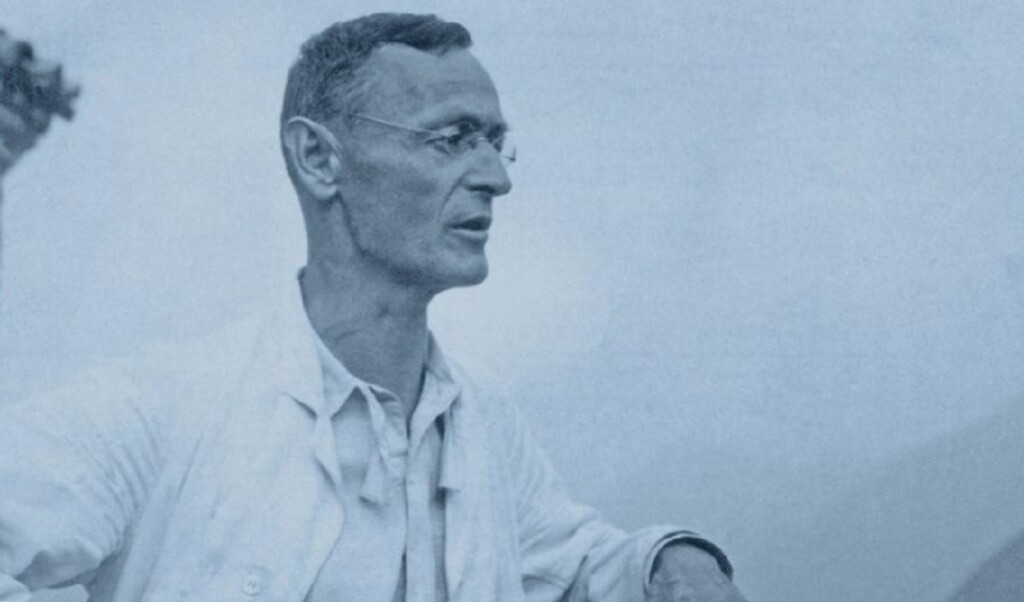
You have read the diagnosis before you lived it. Someone hands you a document about yourself — clinical, precise, somehow already knowing the exact shape of your shame — and instead of recoiling you feel a grotesque relief, because being named, even brutally, is better than remaining invisible to language. That is what the Treatise does to Harry Haller, and what Harry Haller does not realize is that the Treatise is not liberating him. It is flattering him into a new cage.
Hermann Hesse published Steppenwolf in 1927, the same decade in which Nietzsche’s reputation had been thoroughly hijacked by his sister Elisabeth Förster-Nietzsche, who edited and distorted his unpublished manuscripts to produce a mythology of the heroic solitary will. Hesse had read the real Nietzsche — the one who wrote in The Gay Science about the necessity of laughing at oneself, the one who called self-overcoming a practice of becoming lighter, not more tormented. But Hesse also understood how a generation had consumed a counterfeit version of that philosophy and built an entire aesthetic around noble suffering, around the idea that to feel more acutely than others is to stand above them. The Treatise embedded inside the novel is Hesse’s surgical intervention into that misreading.
The Treatise presents Harry as a man of the bourgeois and a man of the wolf, two selves in permanent war, and it offers this binary with such apparent intellectual authority that the reader — and Harry — initially accepts it as diagnosis. But the Treatise is not authored by wisdom. It is authored by something more unsettling: a text that knows exactly what a certain kind of romantic intellectual wants to hear about himself. The wolf is primal, sovereign, beyond the compromises of social life. The man is weak, domesticated, enslaved to comfort. Anyone who has ever felt alienated from their own dinner party has already rehearsed this story privately, and the Treatise simply gives it footnotes.
What Nietzsche actually argued in Thus Spoke Zarathustra — published in four parts between 1883 and 1885 — was that the self requiring constant validation of its own depth is the self most thoroughly captured by resentment. The Übermensch was not a wolf. The transformation Zarathustra describes moves from camel to lion to child, and the child is not feral; the child creates values out of innocent play, not out of contempt for the herd. Harry Haller does not want to become a child. He wants to remain tragic. There is immense narcissistic pleasure in the tragic posture, and Hesse knew this from his own life — his three psychiatric breakdowns, his crumbling marriages, his periods of creative paralysis — all of which he metabolized not into resolution but into the very question of whether suffering has been mistaken for profundity.
The romantic lie the Treatise exposes, without ever naming it as a lie, is that the beast within possesses a kind of metaphysical honesty that social behavior destroys. Harry pays his rent. He eats his soup. He feels contempt for these acts while performing them, and that contempt is supposed to mark him as exceptional. But contempt for the ordinary is itself one of the most ordinary emotions available to a man in crisis, and Hesse knew that the wolf-self Harry fetishizes is not a force of nature breaking through civilized pretense — it is a performance of interiority constructed to protect Harry from the far more terrifying possibility that he is not special. That the soup is just soup. That the rent is just rent. That the distance he feels from other people is not evidence of a higher sensitivity but a habit of avoidance dressed in philosophical costume.
The Treatise ends by telling Harry he contains not two selves but hundreds, and this is where the real destabilization begins — not as liberation but as the sudden removal of the very drama on which his identity depends.
The Kempinsky Method

Drama, by Federico Salsano, Italy 2020.
The introspective imaginary road movie of a man in the maze of his own mind, his memories of his youth, his never dormant passions and contradictory truths. The road is made of water, the destination is falsely unknown. His traveling companions are three mysterious men, projections of his imagination and of different aspects of his personality: the perennial melancholy, the crazy creative, the introverted child. He is also followed by a female presence that tells the umpteenth human story. At a certain point of the crossing he decides to abandon the boat and his ghosts of him diving into the sea and arrives swimming on a deserted beach, naked, with a small Pinocchio puppet closed by a padlock.
In this splendid film life is like a long sea voyage and the human being is a small creature confronting immensity. Sometimes the ocean is calm, other times there are terrible storms. Sometimes we are captains of a boat with a well-defined route, other times we are shipwrecked in search of a land in which to save ourselves. But despite the long journey and the movement in physical space, there are other questions that resonate in the mind: who are these men I travel with? What is the mystery of this immense mass of water that seems to be made of my memories? You can circumnavigate the whole world but the main question always remains the same: who am I really?
LANGUAGE: italian
SUBTITLES: english, spanish, portuguese, german, french
The Two-Soul Myth and Its Violence
You are reading a book about yourself, or so you believe. That is the first seduction and the most dangerous one. Harry Haller holds his own misery up to the light and finds in it a kind of architecture — two souls, two natures, the cultivated man and the savage beast locked in perpetual civil war — and the very elegance of that structure is what should make you suspicious. Suffering that comes pre-organized is suffering that has already been converted into something else. It has become a portrait, and portraits do not change.
The template was already old when Hesse reached for it. In Goethe's Faust, published in 1808, the protagonist declares with magnificent anguish that two souls dwell within his breast, each straining to tear itself away from the other. The line has since been quarried so many times that it no longer reads as a dramatic confession but as a cultural credential. To invoke the divided self is to align oneself with a tradition of serious, tormented, deep people. It signals that you are too complex for simple happiness, too aware for ordinary life, too genuinely human to settle. What it does not do, and what neither Faust nor Haller ever quite confronts, is ask whether the division itself is the evasion rather than the condition.
The binary of wolf and man flatters both sides simultaneously. The wolf licenses transgression — the coldness, the contempt, the refusal of warmth — because it can always be attributed to a nature one did not choose. The man licenses superiority — the Mozart, the Goethe, the delicate aesthetic sensitivity — because culture is worn like evidence of an inner life. Together they construct a self that is neither responsible for its cruelty nor required to surrender its pride. The duality is not a diagnosis of inner conflict. It is a load-bearing alibi.
The psychoanalyst D.W. Winnicott, writing in the 1960s on what he called the false self, identified a structure in which the individual builds a convincing social and intellectual persona precisely to protect a core that never develops, never risks exposure, never actually lives. The false self is not dishonesty in the ordinary sense. It is a philosophical posture so complete that the person inside it mistakes the posture for depth. Haller’s two-soul mythology functions this way. The very sophistication of his self-analysis becomes the wall between him and any actual movement. He understands himself so thoroughly, in his own terms, that no outside reality can get through. Every experience confirms the framework. Every failure is further evidence of the wolf. Every moment of beauty is attributed to the man. The loop is closed.
What the framework forecloses is more interesting than what it contains. Transformation, in any meaningful sense, requires that the self be temporarily unrecognizable to itself — that the categories dissolve before new ones form. This is not mystical language. The sociologist Erving Goffman demonstrated in The Presentation of Self in Everyday Life, published in 1959, that identity is performed rather than possessed, negotiated in real time against real others in real contexts. The implication is not that the self is fake but that it is far more fluid and socially constituted than any private mythology can accommodate. To insist on a fixed inner nature, whether dual or singular, is to refuse that fluidity — to prefer the coherence of a story to the disorder of actual contact with other human beings.
Haller aestheticizes his suffering not because he is weak but because he is, in one precise sense, gifted. He has the verbal and intellectual equipment to make his pain beautiful, and beautiful pain is pain you can keep. It becomes a possession, a proof of distinction, a reason the ordinary world cannot reach you. The wolf and the man are not enemies. They are collaborators in the project of remaining untouched.
Hermine as the Unacknowledged Architect
You are standing at the edge of a dance floor you have never once considered entering, and a woman you met an hour ago is already telling you exactly who you are about to become. She does not ask permission. She does not offer a theory. She simply begins building.
Hermine is the character in Hesse’s novel most readers have consistently misread as a function rather than a force. Critics have catalogued her as Harry Haller’s anima, his Jungian feminine counterpart, the projection of his buried self given flesh and conversation. This reading is not wrong so much as it is radically insufficient. It mistakes the scaffolding for the architect. Hermine does not emerge from Harry’s unconscious — she operates on it, surgically, with a precision that Harry himself never achieves and never acknowledges. She is the most lucid intelligence in the entire novel, and the text rewards her with death at the hands of the man she rebuilt.
What she actually performs on Harry has a clinical name, though Hesse would not have used it. Erik Erikson, writing in Identity: Youth and Crisis in 1968, developed the concept of identity moratorium to describe a period of deliberate suspension — a psychosocial pause in which a person steps outside their fixed identity long enough to experiment with alternative selves before any permanent commitment is made. Erikson observed this most clearly in adolescence, but he never claimed it was exclusive to youth. The moratorium is a mercy granted to those who have calcified too early, locked themselves into a self that no longer fits the life they are actually living. Harry Haller, at forty-seven, is a man so thoroughly calcified that he has confused his rigidity with depth. He believes his suffering is evidence of seriousness. Hermine recognizes it as evidence of arrest.
She does not offer him philosophy. She offers him dancing. This is not a concession to the trivial — it is the most sophisticated intervention available to her, because dancing is precisely what Harry cannot intellectualize before he does it. The body moves before the mind can object. Maria arrives and Harry learns desire without the burden of meaning. Pablo arrives and Harry is handed pleasure stripped of justification. Each encounter is a controlled experiment in the construction of a provisional self — a self that can inhabit the present tense without immediately evacuating it for abstraction. Hermine engineers all of this without announcing it as engineering, which is the only reason it works.
What makes her role structurally remarkable is that she sets her own terms from the very beginning, including the terminal one. She tells Harry he will eventually kill her. She states this not as prophecy of doom but as diagnosis of inevitability — the man she is reconstructing will, at the moment of his greatest expansion, destroy the person who made expansion possible. This is not resignation. It is a precise reading of how threatened selves behave when they brush against the conditions of their own transformation. Transformation, accepted, would require Harry to keep existing differently. Murder returns him to the familiar grammar of control.
The novel rewards her lucidity with silence. After her death, the narrative does not pause to account for what has been lost in her specifically — it pivots immediately to Harry’s psychology, his hallucination, his trial in the Magic Theater. The text performs the very erasure Hermine had predicted. Her intelligence becomes backdrop for his crisis, her construction becomes raw material for his mythology about himself, and the most architecturally capable figure in the novel disappears into the function she was never supposed to be reduced to. What she built survives in Harry. The builder does not.
There is something deeply familiar about this arrangement, something the reader may feel before they can name it — the sensation of recognizing a social contract that was never signed but has already been enforced.
A vision curated by a filmmaker, not an algorithm
In this video I explain our vision
The Magic Theatre as Cognitive Dissolution

You are handed a ticket at the door. Not chosen, not earned — handed, the way a cloakroom attendant returns your coat without looking at you. The ticket reads: FOR MADMEN ONLY. And the first thing Harry Haller does upon entering is search for the exit.
What follows inside that theatre is not a liberation. It is an audit. Every door Harry opens does not reveal a new self waiting to be inhabited — it reveals a version of the self that was always running, always constructing, always insisting on the coherence of the man who called himself a Steppenwolf. The Magic Theatre does not free Harry from his mythology. It shows him the exact machinery he used to build it, still warm, still clicking, and asks him to watch it operate without the mercy of not knowing.
William James, writing in 1902 in The Varieties of Religious Experience, identified what he called the divided self — a consciousness fractured between what he termed the sick soul and the healthy-minded, unable to reconcile the competing demands of its own inner life. James was careful to note that genuine mystical experience carries a noetic quality: it feels like knowledge, not merely feeling. But he was equally careful to note that this apparent knowledge arrives with what he called a sense of authority that the ordinary waking mind cannot verify or sustain once the experience ends. Harry’s theatre is full of this authority. Every vision feels final. Every dissolution feels like arrival. And yet Hesse is not writing mysticism — he is writing the anatomy of a mind that has finally been forced to watch itself operate at full speed with no buffer, no narrative courtesy, no self-serving delay between impulse and recognition. The cost of this is not transcendence. It is exposure.
There is a specific cruelty in the scene where Harry encounters Pablo’s realm of shattered identity — where he is told that the self is not a unity but a colony, a parliament, a population of selves that never agreed on anything and never will. This is not news to the reader who has followed Harry through his notebooks. What is new, and what the Theatre makes unbearable, is the removal of the cognitive distance that had allowed him to hold this knowledge intellectually while continuing to live as though he were one coherent person. The Theatre collapses that distance. It performs what contemporary neuroscientist Anil Seth, in his 2021 work Being You, would later describe as the brain’s fundamental act: constructing a controlled hallucination of selfhood that feels more real than reality because it was designed to. When that construction becomes visible as a construction, the response is not wonder. It is vertigo.
The laughter of the Immortals at the close of Harry’s ordeal is the moment most consistently misread as warmth — as cosmic reassurance that the universe receives him, that his suffering was witnessed and found meaningful. It is nothing of the kind. The Immortals laugh the way a mountain laughs: without noticing you. Their laughter is the sound of a scale of values so far removed from human suffering that Harry’s particular anguish — his specific, expensive, carefully maintained anguish — registers as nothing more than a minor note in an incomprehensibly long piece of music. Goethe is there, or a version of him, and he is not kind. He is simply no longer interested in the size of the tragedy Harry required to understand what Goethe had apparently already understood without needing to destroy anyone.
This is what makes the Theatre a phenomenological event rather than a symbolic one. It does not represent dissolution. It produces it, in real time, in the reader’s chest, which is where Hesse intended it to land. The question it leaves is not whether Harry survives it. The question is what survival even means once the self that needed saving has been shown to have been partly invented.
Jazz, Modernity, and the Politics of Pleasure
You are at a party you did not want to attend, standing at the edge of a room where everyone else has already surrendered to the music, and you feel, with absolute certainty, that your inability to join them is evidence of your superior sensitivity. This is not a private failure. This is a historically manufactured posture handed to you by a century of European anxiety about what happens when the body begins to move without asking the mind’s permission.
When Hermann Hesse published the novel in 1927, jazz was not merely a musical style circulating through Weimar Berlin’s cabarets and dance halls — it was a political emergency. German conservative critics had been producing a sustained, hysterical literature about the corrupting influence of what they explicitly called “Negro music,” a phrase that appeared without apology in mainstream cultural journals. The musicologist Hans Pfitzner, writing in 1917, had already framed rhythmic excess as a symptom of cultural decline; by the mid-1920s, this rhetoric had metastasized into something close to a moral crusade. The concern was never really about aesthetics. The concern was about what rhythm does to the hierarchy between intellect and sensation, between the man who thinks and the body that moves without thinking. Jazz threatened to make that hierarchy look arbitrary, even ridiculous.
Harry Haller experiences dancing and jazz as a kind of assault on his self-concept, and readers have almost universally interpreted this as evidence of his tragic depth — proof that he is too finely calibrated for vulgar pleasure. But Hesse’s novel is more precise and more cruel than that reading allows. What the text actually shows is a man who has so thoroughly internalized the equation between physical joy and intellectual surrender that he cannot distinguish between his own preferences and his conditioning. His disdain is not the disdain of someone who has tried pleasure and found it wanting. It is the disdain of someone who has been taught, at a level below conscious thought, that the capacity to resist pleasure is itself a form of status. The philosopher Georges Bataille, writing in the 1930s in his work on eroticism and transgression, argued that Western bourgeois culture constructs its identity precisely through the performance of restraint — that the refusal of pleasure is not an absence of desire but its most socially acceptable theater. Harry performs this theater with devastating conviction, mistaking the performance for autobiography.
What makes this historically precise rather than merely psychological is the specific object of Harry’s eventual capitulation: he learns to dance the foxtrot, a form that had arrived in Europe from America, carrying with it everything the conservative European intellectual class had decided to fear. The foxtrot’s origins were already being racially coded in German cultural discourse by the early 1920s, understood as a transmission vector for a kind of pleasurable irrationality that was explicitly racialized as non-European. When Harry finally lets his body move to this music, Hesse is not writing a scene of private liberation — he is writing a scene of ideological defeat in the most clarifying sense, where a man discovers that the fortress he believed he had built from philosophical principle was actually built from social terror.
The Magic Theater, which arrives later in the novel as the site of Harry’s disintegration and potential reconstruction, has its psychological preconditions established here, on the dance floor. Before the mind can be shattered and reorganized, the body must be allowed to act without requiring justification. The German conservative critics who raged against jazz in 1927 understood this mechanism better than they admitted. They knew that once you let the body move without asking for permission, the entire architecture of rational self-governance begins to look like what it always was — a set of agreements, not a set of facts, and agreements, unlike facts,
What the Reader Refuses to Finish
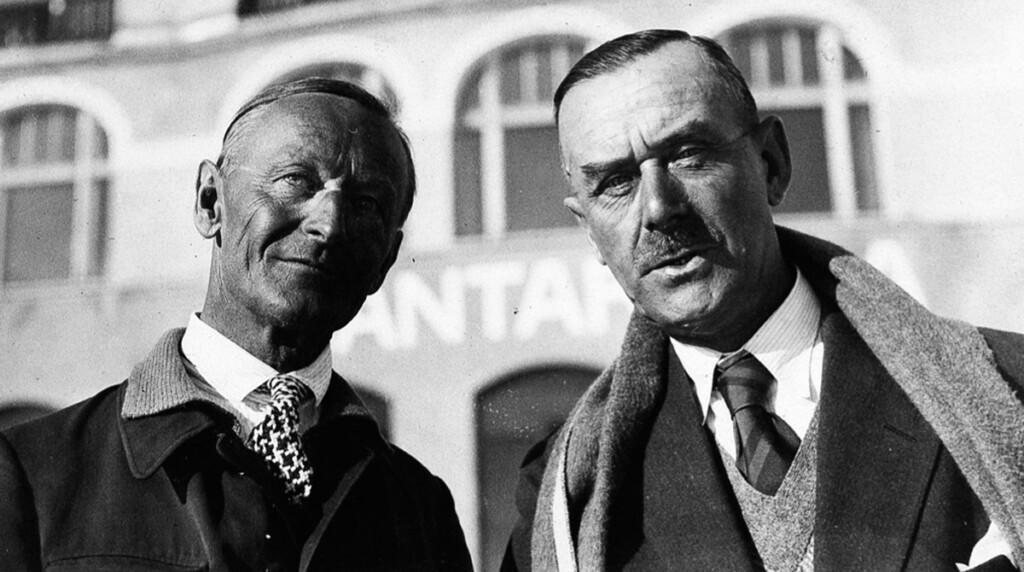
You set the book down somewhere around the Magic Theatre. Not because you were bored — boredom would have been easier to name. You set it down because something in those final pages stopped feeling like fiction and started feeling like evidence, and evidence of a particular kind is harder to hold than any argument.
This is not an accident of craft. Hermann Hesse spent much of 1926 writing in a condition he described in letters as a sustained crisis of selfhood, not metaphorical but clinical, the kind that lands a man in analysis and strips the room of its familiarity. The novel that came out of that period, published in 1927, was read by early reviewers as a symptom before it was read as a work. Thomas Mann called it a document of the times while quietly keeping his distance from its conclusions. What both responses share is the instinct to frame the book as an object to be observed rather than a experience to be undergone, which is precisely the defense the book was designed to dismantle.
Most readers who abandon Steppenwolf do so believing they have failed a literary test. The prose became difficult, the structure dissolved, the mirror-hall sequence refused the satisfactions of narrative. What they are less willing to say — what is harder to admit while standing in a bookshop or scrolling through reviews — is that the dissolution felt personal. Not confusing in the way that experimental fiction confuses, but confusing in the way that a particular kind of self-knowledge confuses: you understand what you are seeing and you do not want to keep looking. Hesse was a serious student of Carl Jung‘s analytical psychology and underwent analysis himself in 1916 with Josef Lang, a direct pupil of Jung’s. The individuation process Jung described in The Relations Between the Ego and the Unconscious, published in its revised form in 1928 — one year after Steppenwolf — requires the ego to encounter and integrate what it most wants to exile. Hesse built that encounter into his narrative architecture. The reader who abandons the book in the second half is not failing to follow the story. They are enacting it.
The ending that remains for those who do finish resists every form of resolution the novel has seemed to promise. Harry Haller is told he has lost the game, that he played poorly, that he will have to try again. There is no transformation confirmed, no self achieved, no wound closed. What Hesse delivers instead is something rarer and more honest: the awareness that the work of becoming is not completed by surviving a single night of psychic rupture. The reader who wanted catharsis receives instead a kind of assignment, undated, unsigned, with no instructions attached.
Western literary culture has trained its readers to expect that difficulty serves resolution — that the hard passages earn the earned ending, that suffering in a text is redeemed by the wisdom it deposits. This expectation is not innocent. It is the same structure that makes people treat therapy as a project with a finish line, grief as a process with stages, identity as a renovation with a completion date. Hesse refused this contract not as an aesthetic position but as a moral one. A book that resolves Harry Haller would lie about what it means to be Harry Haller, which is to say it would lie about the specific variety of incompleteness that most readers carried into the first page.
What the novel actually transmits is the recognition that the self is not a problem awaiting solution but a tension requiring endless negotiation, and that the honest response to that recognition is neither despair nor transcendence but the continued willingness to sit with what cannot be finished — which is why the book that mirrors this most faithfully is also the one most people leave quietly on a shelf, spine uncracked in the final third, as though incompletion were something that happened to them rather than something they chose.
🌀 Into the Fractured Self: Labyrinths of Soul
Hesse’s Steppenwolf plunges into the divided psyche of modern man, where identity fractures into a thousand mirrors and the self becomes both labyrinth and wanderer. These related articles explore the same terrain — mysticism, disintegration, the search for wholeness — from literature, philosophy, and the depths of the unconscious.
Meyrink’s The Golem: Meaning and Analysis
Meyrink’s The Golem is, like Steppenwolf, a novel of the uncanny double and the labyrinthine self, set in the claustrophobic alleys of Prague’s ghetto. The Golem emerges as a projection of the collective unconscious, a figure that returns cyclically to haunt those who have not yet confronted their inner darkness. Reading Meyrink alongside Hesse reveals how German-language expressionist fiction used the city and the doppelgänger as metaphors for spiritual crisis.
GO TO THE SELECTION: Meyrink’s The Golem: Meaning and Analysis
The Double in Literature: From Dostoevsky to Stevenson
The motif of the double — the shadow-self that mirrors and menaces the conscious ego — is one of the central obsessions of Western literature, and Hesse’s Harry Haller is among its most complex incarnations. This article traces the double from Dostoevsky’s tormented bureaucrats to Stevenson’s Hyde, mapping the literary genealogy of the split self. Understanding this tradition illuminates why Steppenwolf resonates as both a personal confession and a universal myth of inner division.
GO TO THE SELECTION: The Double in Literature: From Dostoevsky to Stevenson
Jungian Individuation and the Great Work
Jung’s concept of individuation — the lifelong process of integrating the shadow, the anima, and the deeper layers of the psyche — provides the most illuminating psychological framework for reading Steppenwolf. Hesse was personally analyzed by one of Jung’s colleagues and deeply absorbed Jungian ideas into his fiction, making Harry Haller’s descent into the Magic Theatre a symbolic enactment of the Great Work of inner transformation. This article explores how alchemical imagery and Jungian psychology converge in a vision of psychic wholeness.
GO TO THE SELECTION: Jungian Individuation and the Great Work
Kafka and Bureaucracy: The Trial and The Castle
Like Hesse, Kafka built literary worlds where the individual is crushed by forces he cannot name, navigate, or escape — bureaucratic, existential, and metaphysical labyrinths that mirror the architecture of the divided modern soul. This article examines how The Trial and The Castle dramatize the alienation of a self that cannot find its ground in a world stripped of spiritual meaning. Placed beside Steppenwolf, Kafka’s work reveals the full spectrum of early twentieth-century German-language literature’s confrontation with inner and outer chaos.
GO TO THE SELECTION: Kafka and Bureaucracy: The Trial and The Castle
Cinema That Dares to Explore the Inner Labyrinth
If these visions of fractured identity, spiritual search, and the labyrinth of the self speak to you, Indiecinema streaming is the place to continue your journey. Our curated catalog brings together the most daring independent and art-house films that explore the same depths Hesse mapped in prose — films that question, disturb, and ultimately illuminate. Step inside and discover cinema that refuses to look away from the complexity of being human.
👉 EXPLORE THE CATALOG: Watch Indie Films in Streaming
A vision curated by a filmmaker, not an algorithm
In this video I explain our vision

