
The Train That Arrives Without Warning
You are standing at a window that faces the street, and the man who has always been the fixed point of your small world is walking away between two other men whose faces you cannot quite see. He does not turn. The door of the cab closes with a sound that is perfectly ordinary, and that ordinariness is the worst part — no shouting, no visible wound, no ceremony of rupture. Just the street resuming its indifference, the gas lamps beginning to matter in the early dark, and a silence in the house that will take weeks to name.

E. Nesbit published The Railway Children in 1906, serialized first in The London Magazine before its appearance as a single volume, and the novel opens with precisely this disappearance — a father removed from his family by agents of the state on charges the text refuses to fully articulate for most of its length. What makes this opening formally strange is that Nesbit renders it not as tragedy but as the starting pistol for adventure. The children — Bobbie, Phyllis, and Peter — are relocated from their comfortable London home to a cottage in Yorkshire, and the novel proceeds to treat this displacement as liberation, as though the railway line running through the valley below were a kind of compensation the universe was offering in exchange for the father’s absence. A reader in 1906 might have accepted this substitution without much friction. A reader now should feel the sleight of hand.
The English middle class of the Edwardian period was structurally dependent on a fiction of stability that required enormous daily maintenance. Leonore Davidoff and Catherine Hall, in their 1987 study Family Fortunes, traced how the domestic ideal — the home as sealed sanctuary against market volatility — was not a natural formation but a laboriously constructed ideology, one that required women and children to perform contentment as a kind of economic signal. When the performance broke down, when the father lost his position or was taken by the law, the rupture was socially catastrophic in ways that had nothing to do with actual poverty and everything to do with the withdrawal of legibility. You could survive on less money. You could not survive the loss of the story you told about yourself.
Nesbit knew this from inside. Her own father died when she was three, and her adult life was characterized by chronic financial instability, an unfaithful husband, a complicated domestic arrangement she managed with a kind of furious pragmatism, and a socialist politics — she was a founding member of the Fabian Society in 1884 — that should have made her more suspicious of the class mythology she kept writing into her children’s books. The contradiction is not incidental. It is the engine. She wrote middle-class children having adventures because she understood that the adventure was the ideological mechanism by which middle-class families survived their own precarity without having to look at it directly.
The railway in the novel functions as more than a setting. It is a system of appearances and disappearances — trains arrive bearing strangers who become benefactors, carrying letters that restore or destroy hope, moving through the landscape on a schedule that implies that the world is still ordered even when the household is not. The children wave at a regular train each morning and eventually receive a wave back from an old gentleman who will later intervene in their father’s case. The railway promises that repetition equals safety, that if something happens at the same time each day it constitutes a kind of covenant. This is the fantasy that the novel is selling, and it is a fantasy with a very specific class address — it belongs to people who have recently lost the infrastructure of stability and are auditioning replacements.
What the novel cannot quite suppress is the question of what the father actually did.
Edwardian England’s Comfortable Lie
You are sitting in a house that will not always be yours, reading a book that tells you everything will be fine if you are simply good enough. This is the central promise of Edwardian England, delivered not through legislation or sermon but through the texture of ordinary domestic life — the coal fire, the nursery shelf, the assumption that the railway runs on time because the right kind of people are running it.
E. Nesbit published The Railway Children in 1906, which places it at a peculiarly loaded crossroads. The Boer War had just concluded its embarrassing length, costing Britain approximately twenty-two thousand military deaths and exposing the physical deterioration of the urban working class so thoroughly that the Interdepartmental Committee on Physical Deterioration released its damning report in 1904. The same decade produced the Liberal landslide of 1906, the beginnings of Lloyd George’s social reforms, and the first tremors of suffragette militancy. These were not background noise. They were the structural groan of a society whose floor was beginning to separate from its foundations. Nesbit, a Fabian socialist who co-founded the Fabian Society alongside Sidney and Beatrice Webb in 1884, knew this with a precision that her fiction both expresses and, more interestingly, refuses to fully honor.
The middle-class family in the novel falls into poverty not because markets are predatory, not because social insurance does not exist, not because the father’s salary was always contingent on political favor — but because of a mistake, a misunderstanding, a false accusation that will eventually be corrected by a benevolent old gentleman with a newspaper. The mechanism of restoration is personal, not structural. The children do not organize. They appeal. And their appeal works precisely because they are recognizably the right kind of children — articulate, polite, imaginative, instinctively deferential to their social superiors while maintaining a charming self-possession that confirms their class identity even in reduced circumstances. Poverty, the novel quietly insists, is a temporary condition for people like this, a dramatic interlude rather than a permanent address.
This is the Edwardian comfortable lie in its most seductive form: the belief that character is destiny, and that structural vulnerability is really a moral temporary. Max Weber had published The Protestant Ethic and the Spirit of Capitalism in 1904 and 1905, mapping the theological scaffolding beneath exactly this conviction — the idea that material circumstance reflects inner worth, that the deserving will be restored, that providence and personal virtue rhyme. Nesbit would have rejected the theology, but her novel enacts the emotional logic anyway. The family’s goodness is their collateral. The reader is never invited to consider what happens to equally good families who have no Old Gentleman, no influential acquaintance, no letter-writing skills, no language that sounds like the language of power even when spoken in distress.
The railway itself participates in this mythology. In 1906, Britain operated approximately twenty-three thousand miles of track, and the railway was simultaneously the engine of industrial modernity and the guarantor of a certain idea of orderly national life — timetabled, hierarchical, connecting the rural retreat to the city without contaminating one with the other. For the Edwardian middle class, the railway represented progress that had already been tamed, energy that had been domesticated into schedule. That Nesbit places her displaced family beside the railway rather than inside a city tenement is not incidental. The pastoral setting filters out the consequences of industrial capitalism even as it frames the machinery of that capitalism as picturesque. The smoke from the green hill is beautiful. What produces it remains off-screen.
And the children wave at the train every morning, and the train whistles back, and this exchange is coded as friendship rather than what it actually is — a class performance rehearsed across an unbridgeable distance, mistaken for intimacy because both parties enjoy the gesture.

Nesbit’s Double Life as Political Camouflage
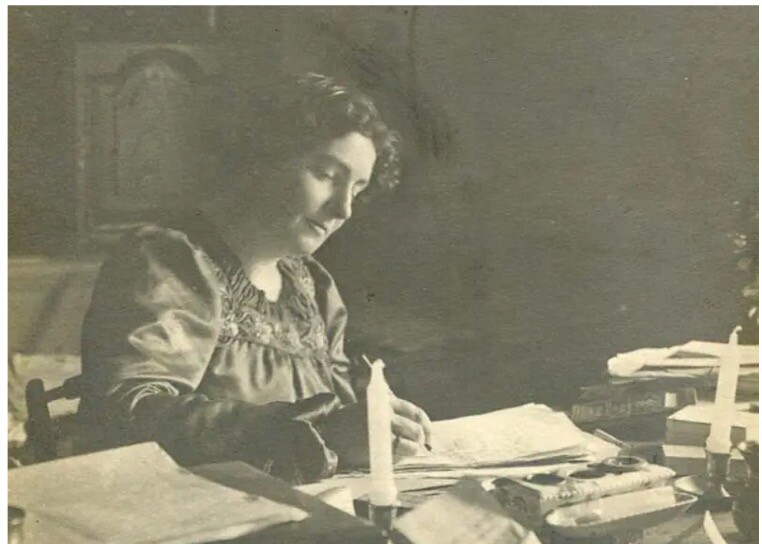
You are reading a children’s book about a family that loses its father and moves to the countryside, and somewhere in the third chapter you feel a warmth you cannot quite locate — a sense that poverty, when it comes to good people, is merely temporary scenery, that the middle classes stripped of their income remain, essentially, middle class. That feeling is not accidental. It was engineered.
Edith Nesbit signed the Fabian Society’s founding manifesto in 1884 alongside George Bernard Shaw and Sidney Webb, committing herself publicly to the proposition that land and industrial capital must be transferred to the community, that the existing order of private wealth was not an inevitability but a choice, and a violent one. She hosted socialist meetings in her drawing room in Lewisham while wearing artistic dress and burning through money she did not have. She believed, or performed believing, that the economic structures of Victorian England were a form of organized theft. Then she went to her desk and wrote The Railway Children, in which a family temporarily impoverished by a father’s false imprisonment retains every psychological privilege of its class, is saved by the benevolent intervention of a wealthy gentleman, and is ultimately restored to its original station — and called this a happy ending.
The mechanics of this transformation deserve precision. What Nesbit performed in her fiction was not a betrayal of politics so much as its cosmetic inversion: she took the Fabian critique of class dependency and rendered it as a story in which dependency itself becomes noble, even beautiful, provided the dependent parties have good manners and a mother who reads poetry. The children of Brambleby House do not organize, do not demand, do not question the structure that made the Old Gentleman’s generosity both possible and necessary. They are grateful. Their gratitude is presented as moral evidence of their worth. The machinery of class rescue is never examined — it is celebrated.
Raymond Williams, writing in The Country and the City in 1973, identified how English literature repeatedly relocated social crisis into rural space in order to neutralize it — the countryside functioning as a site where class tensions could be aestheticized rather than confronted. Nesbit performs exactly this operation: the family’s exile from London to Three Chimneys converts economic distress into pastoral idyll, transforming the structural violence of a man imprisoned by the state and a family bankrupted overnight into something that reads, by the final pages, like a gift. The reader is invited to experience dispossession as education.
This is not hypocrisy in the ordinary sense. It is something more architecturally interesting: a writer whose politics demanded systemic change and whose narrative instincts demanded resolution producing fiction that could only resolve by restoring the system it nominally critiqued. The Railway Children cannot imagine a world without the Old Gentleman, because imagining that world would require the children — and the reader — to confront the question of why his wealth exists in the first place, and what it costs others. That question is the Fabian question. Nesbit never let her characters ask it.
What the book offered the Edwardian middle-class reader was something rarer and more coveted than political theory: permission. Permission to feel sympathy for the poor without feeling implicated in poverty, to admire resilience without examining its causes, to experience a brush with economic catastrophe as a narrative arc that bends, reliably, back toward comfort. The sentimentality Nesbit deployed was not a failure of intelligence. It was a precision instrument for making radical content safe — not safe from censorship, but safe from consequence, safe from the moment when a reader might set the book down and look at the world differently than they had before picking it up.
Childhood as Ideological Work
You are eleven years old and your father has disappeared, the house has been sold from under you, and the new life your mother calls “an adventure” smells like damp coal and someone else’s furniture. You do not cry at the station. You wave.
That wave is not innocence. It is labor.
Philippe Ariès argued in his 1960 work Centuries of Childhood that the very concept of childhood as a protected, emotionally separate phase of life was a historical invention, assembled gradually through the 17th and 18th centuries by bourgeois European families who needed a new social unit in which to deposit their anxieties about inheritance, moral formation, and class reproduction. Before this construction solidified, children were simply small adults, embedded in the economic and social life of the household without the sentimental quarantine modern culture insists upon. What Ariès exposed, and what most readers of his work have been too comfortable to follow to its logical end, is that the moment childhood became idealized, it also became useful. Innocence is never free. It is always performing something on behalf of the adults who require it.
Nesbit’s three Waterbury children — Bobbie, Phyllis, and Peter — are not simply characters experiencing hardship with grace. They are, structurally, a technology. Their capacity to reframe poverty as adventure, displacement as discovery, and social humiliation as an opportunity for cleverness serves a precise ideological function within the novel’s world: it renders the mechanics of class shame invisible by converting them into evidence of character. When the family cannot afford coal and the children steal it from the railway yard, the text does not linger on what theft means for people who once had servants. It pivots immediately to the children’s ingenuity, their teamwork, their laughter at their own awkwardness. The theft is not a symptom of structural dispossession; it becomes a proof of resilience. The reader feels admiration where they might otherwise feel discomfort.
This is not a failure of Nesbit’s craft. It is the very mechanism her craft is deploying. The children’s emotional register — their consistent refusal to fully understand what has happened to their father, their mother, their social position — creates a narrative buffer between the reader and the actual violence of downward mobility in Edwardian England. And that buffer is ideologically necessary, because the novel is not ultimately interested in exposing the class system. It is interested in surviving it without naming it. The children’s resilience does not challenge the world that broke their family; it metabolizes the damage quietly enough that the world can continue unchanged.
What makes this mechanism particularly durable is how it has been misread as subversion. Because the children are active, resourceful, and occasionally irreverent toward adult authority, some critical readings have positioned them as proto-feminist or class-conscious figures. But agency within a system is not a critique of the system. A child who begs eloquently enough to extract coal from a sympathetic railway worker has not disrupted the hierarchy that made her need to beg; she has simply navigated it successfully, and in doing so, made it appear navigable, even charming. The social order is not threatened by children who cope well. It is, in fact, confirmed by them — their coping becomes evidence that the order works, that grace and good breeding and a cheerful disposition are sufficient tools for surviving what is, in structural terms, catastrophic loss.
Ariès also noted something that rarely makes it into the literary applications of his work: the invention of childhood required the simultaneous invention of childhood’s end. The protected child must eventually be delivered back into the adult world as a properly formed subject. Bobbie’s famous final cry — “Daddy, my Daddy” — is not the rupture of innocence. It is its graduation.
The Father-Shaped Hole in the Liberal Imaginary
You are sitting at a breakfast table that has always been full, and then one morning it is not. No letter, no argument overheard through a floor, no visible rupture — only the chair, and the space the chair makes possible, and your mother’s face doing something you have no word for yet. Nesbit gives us this moment with surgical restraint in 1906, and what she is actually describing is not grief but epistemological collapse: the child’s first encounter with the possibility that the world does not owe coherence to those who have behaved correctly within it.
The father in The Railway Children is absent precisely because he was respectable. This is the wound the novel cannot stop pressing. Robert is not a drunk, not a gambler, not a man who wandered into moral failure through weakness of character. He is a civil servant, educated, employed, embedded in the exact institutional fabric that Victorian and Edwardian liberalism promised would protect a man in proportion to his virtue. The liberal contract — work honestly, serve loyally, maintain your household in decency, and the state will recognize your legitimacy — is not broken by a villain in the story. It is broken by the state itself, quietly, bureaucratically, without face or appeal.
John Stuart Mill‘s harm principle, articulated in On Liberty in 1859, rested on a foundational optimism: that the individual, left to act within his rightful sphere, would be met by institutions capable of distinguishing innocence from guilt. What Nesbit dramatizes forty-seven years later is the practical failure of that distinction. The machinery of accusation — the charge of passing secrets to a foreign power, the trial conducted in the closed register of Official Secrets legislation — does not care about virtue. It cares about the appearance of a case. The father vanishes not because he is guilty but because the institution requires a body to fill the outline of the crime.
This is not an abstract political concern in 1906. The Dreyfus Affair had concluded its second act only six years earlier, demonstrating to an entire continent of readers that a decorated officer could be stripped, exiled, and nearly destroyed by the very army whose honor he embodied. Nesbit’s novel does not need to name Dreyfus to be saturated with him. The anxiety she channels is European in scope: the sudden legibility of the state as an entity that can consume its own faithful servants and experience no internal contradiction in doing so.
What makes the novel structurally strange — and emotionally more honest than its pastoral surface suggests — is that the father’s restoration at the end is achieved not through institutional correction but through personal intervention. A powerful editor, a man with access, writes letters and applies pressure and the machinery reverses. The law does not vindicate Robert; a patron does. The children’s innocence and Bobbie’s famous platform cry of “My Daddy!” are not arguments that persuade a justice system — they are theatrical performances that move a man with enough social capital to override the system sideways. Justice, in this novel, is not a feature of institutions. It is a gift from those positioned above them.
The domestic space the novel establishes at Three Chimneys — the reduced household, the learning to manage without — is typically read as a lesson in resilience, in the pastoral virtue of simplicity over comfort. But it functions equally as an extended demonstration of what liberal families actually do when the liberal promise fails: they contract, they conceal the father’s name, they teach the children to perform normalcy for the neighbors, and they wait for a man with connections to save them. The hole at the table is shaped like a father, but what it actually outlines is the exact dimensions of the state’s indifference to the contracts it implied.
A vision curated by a filmmaker, not an algorithm
In this video I explain our vision
The Railway as Modernity’s Promise and Its Lie

You stand on a platform in 1905 and watch the 9:15 from London arrive, and everyone waiting sees the same black engine, breathes the same coal smoke, feels the same vibration travel up through the soles of their boots. The railway feels democratic in that precise moment — indifferent, mechanical, universal. It is the great Victorian and Edwardian lie, and Edith Nesbit builds her novel directly on top of it, not to expose the lie didactically but to let the children live inside it with complete sincerity, which is far more devastating.
The locomotive in The Railway Children functions as what the sociologist Émile Durkheim might have recognized as a collective effervescence machine — a site where social boundaries dissolve temporarily into shared sensation, producing the illusion of common belonging. Bobbie, Phyllis, and Peter wave their red flag to stop the train that would otherwise plow into a landslide, and the passengers pour out grateful and uniform in their relief. Nobody’s class saves them on a derailing train. The physics of mass and momentum do not negotiate. But Nesbit is too honest a writer to let that moment stand as the novel’s argument, because the moment passes, and what replaces it is the restoration of the exact social order the train temporarily suspended.
The Old Gentleman arrives and departs by first-class carriage. This is not incidental detail. His access to the machinery of justice — the connections, the editors, the officials who can review a case and free an imprisoned man — flows directly from the compartment in which he travels. E.P. Thompson, in The Making of the English Working Class published in 1963, documented how reformist benevolence in industrial England consistently operated as a vertical transaction: the powerful reaching downward to correct a specific injustice without disturbing the architecture that produced it. The father is returned to his family. The system that imprisoned him on fabricated evidence is not interrogated. Bobbie does not ask why a man needs a wealthy stranger’s intervention to prove his innocence. The novel does not ask either, and that silence is where its deepest ideology lives.
Against this restored domestic warmth, the novel places a figure it cannot absorb: the Russian writer Dobrynin, penniless and stranded, whose suffering the children encounter not as a structural problem but as a temporary humanitarian emergency they can solve through personal kindness and their mother’s literary connections. He is rescued the way one rescues a wounded animal — with warmth, with food, with the energy of good people acting within their means. That he represents an entire class of displaced, stateless, economically precarious people circulating through Edwardian England is a fact the novel registers at the level of sensation and immediately converts into individual narrative. The children feel his suffering. They do not and cannot feel the system producing it.
This is the precise limit of liberal benevolence that the railway encodes spatially. The track runs the same distance for every passenger, but the destinations it connects are not equivalent, and who can afford to reach which destination is decided long before anyone boards. Charles Booth’s monumental survey Life and Labour of the People in London, conducted across seventeen volumes between 1889 and 1903, had already mapped this with statistical brutality: thirty percent of London’s population living in poverty so structural that no individual act of charity could reach its root. Nesbit almost certainly knew this data. Her socialist politics, her membership in the Fabian Society alongside Sidney and Beatrice Webb, meant she had read the arguments and attended the meetings. And yet the novel she wrote in 1906 channels that political knowledge into a story where personal goodness, proximity to the right train carriage, and the grace of powerful strangers make broken things whole again.
What the children never learn, and what the narrative never teaches them, is that the railway’s democratic promise is a timetable fiction — everyone departs, but arrival is always a function of which ticket you were handed before you were old enough to choose the platform.
Rescue Narratives and the Violence of Gratitude
You are standing on the platform, waving a red petticoat at a train that cannot stop in time, and in that moment you believe you are simply saving lives. What the novel never quite admits, and what Edith Nesbit herself may not have fully seen, is that the red petticoat is also a flag of ownership — a declaration that the person doing the saving now holds something over the person saved, something that will need to be repaid in the currency of deference, gratitude, and the quiet acceptance of one’s place.
Marcel Mauss, writing in 1925 in his foundational study “Essai sur le don,” argued that the gift is never free. Across Polynesian, Melanesian, and archaic Roman societies, he demonstrated that every act of giving initiates a tripartite obligation: to give, to receive, and to reciprocate. The violence of the gift lies precisely in its apparent voluntariness. No one compels the recipient to feel indebted. The social structure does it automatically, invisibly, through the grammar of generosity itself. When the Old Gentleman rescues the children’s father from wrongful imprisonment, the novel frames this as pure benevolence — an aristocratic figure deploying his connections in the service of justice. But Mauss would recognize the transaction immediately. The family, already reduced from comfortable bourgeois security to genteel rural poverty, is now doubly repositioned: grateful not only to survive, but grateful to a man whose class authority is the very engine that makes such rescues possible in the first place.
The novel’s rescue economy is not incidental. It is structural. Peter is rescued from the accusation of theft by the Station Master’s eventual leniency. Bobbie secures help for the injured Dobrynski by appealing to adult authority figures who respond precisely because a well-spoken child from a recognizable social register is making the request. The Russian writer himself, displaced and destitute, becomes a figure whose rescue is made possible only through the children’s intercession with people who would never have heard him otherwise. He exits the novel having written Bobbie a poem — a cultural artifact, a symbolic return on the gift, a way of not leaving the debt entirely open. Mauss noted that among the Kwakiutl, a gift unreciprocated was a form of social annihilation. Nesbit’s characters intuitively understand this. They always find a way to give something back, however small, because to remain purely in the position of the saved is to cease to exist as a social subject.
What makes this particularly insidious is the emotional texture Nesbit wraps around it. The rescues feel warm. They feel earned. The children are not passive recipients — they are resourceful, brave, morally earnest — and this activity on their part seems to convert the gift economy into something more like merit. But merit is itself a retroactive justification for hierarchy. The children’s virtues are legible as virtues precisely because they belong to a class whose emotional vocabulary, physical bearing, and modes of appeal are already recognized by the people with power to help. A different child, from a different background, waving the same red petticoat, might have been doubted, questioned, perhaps not believed at all. The rescue validates not just the action but the actor, and the actor was always already pre-validated by the structure.
Nesbit published “The Railway Children” in 1906, two years after the founding of the Labour Representation Committee became the Labour Party — a moment when the language of structural reform was actively competing with the language of charitable intervention. The novel sits precisely on that fault line without knowing it. It imagines that what the vulnerable need is a good-hearted person with connections, when the question hanging over the Edwardian moment was whether good-hearted people with connections were themselves the mechanism producing vulnerability in the first place.
What the Children Cannot See
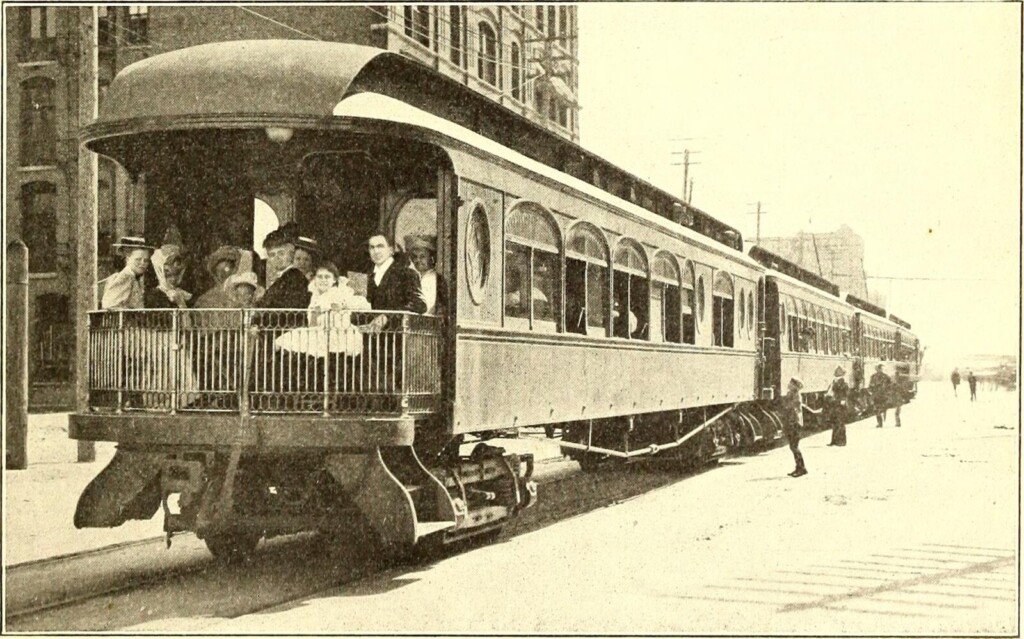
You are standing on the platform when the train arrives, and through the steam a man emerges whom everyone has been waiting for, and the word that rises in your throat is not a question but a name, and the name is enough, and the relief is total, and you do not notice — because you are not meant to notice — that nothing about the world has changed except that one man has been returned to his correct position within it.
E. Nesbit published The Railway Children in 1906, two years after completing the manuscript that would define her legacy, and she did so in a Britain where the prison system was not an aberration but an instrument — where the state’s capacity to destroy a man’s life on fabricated evidence was not a malfunction of justice but one of its available tools. The Dreyfus Affair had concluded only in 1906 after twelve years of institutional lying; Oscar Wilde had died in 1900, six years after his imprisonment under laws that the state had no intention of repealing. Nesbit herself was a Fabian socialist who co-founded the society alongside George Bernard Shaw and Sidney Webb in 1884, a woman who understood class, law, and power with a precision that makes her novel’s silence about them all the more deliberate and all the more haunting.
What the children never ask — what Roberta, Phyllis, and Peter are structurally prevented from asking throughout the entire narrative — is not whether their father is innocent. His innocence is given, fixed, beyond doubt. The question they do not ask is the one that would unravel the comfort of the ending: why does the system that imprisoned an innocent man deserve to be trusted as the system that releases him? The father is freed not because justice is structural but because a sympathetic Russian writer makes the right acquaintance at the right moment, because proximity to the right kind of literary gentleman opens the right kind of door. The mechanism of rescue is entirely personal, entirely reliant on the fortunate accident of who knows whom, and the novel presents this as cause for unqualified celebration.
Michel Foucault argued in Discipline and Punish, published in 1975, that the prison does not fail when it imprisons the innocent — it succeeds, because what it disciplines is not crime but the possibility of resistance to power. The father’s imprisonment in Nesbit’s novel is never explained to the reader with full legal transparency; we are told he was framed, that documents were forged, that a spy passed secrets using his name, but the machinery that accepted those forgeries as truth, that processed an innocent man through its chambers without rupture or scandal, is never interrogated. It is treated as a neutral vessel that happened to be poisoned, rather than as a vessel designed to hold exactly this kind of poison.
The children’s joy at the ending is the reader’s unexamined complicity made visible. To weep at the platform reunion is to endorse, without knowing you are endorsing, the idea that the proper resolution to injustice is the restoration of the individual rather than the transformation of the structure. Roberta’s cry — Daddy, my Daddy — is one of the most emotionally devastating moments in English children’s literature precisely because it asks nothing more of you than to feel it. It offers catharsis as a substitute for scrutiny. The railway itself, running on its fixed tracks between stations that never move, between a world of domestic suffering and a world of official power, becomes the novel’s truest symbol: a machine that goes exactly where it was always going, and calls the return home a happy ending.
What Nesbit gave her readers in 1906 was not a story about the cruelty of false imprisonment but a story about the sweetness of recovery — and the distance between those two things is exactly the distance between a literature that disturbs power and a literature that, however tenderly, teaches children to trust it.
🚂 Childhood, England, and the Journey of Growing Up
E. Nesbit’s The Railway Children is far more than a nostalgic adventure story — it is a layered exploration of childhood resilience, social class, and the emotional geography of late Victorian England. To fully understand its meaning, one must look beyond the narrative and into the cultural, psychological, and literary forces that shaped it. These related articles offer essential context for readers and viewers drawn to Nesbit’s world.
Regression in Psychology: When the Mind Returns to Childhood
Nesbit’s novel is deeply concerned with the psychological experience of childhood disruption, and regression theory offers a compelling lens through which to read it. When Bobbie and her siblings lose their comfortable London life, their retreat into rural simplicity mirrors patterns psychologists describe as regressive coping strategies. This article explores how the mind seeks refuge in earlier, safer modes of being — a dynamic central to The Railway Children’s emotional core.
GO TO THE SELECTION: Regression in Psychology: When the Mind Returns to Childhood
Woolf’s A Room of One’s Own: Feminism and Writing
Virginia Woolf‘s foundational feminist essay resonates powerfully with Nesbit’s own position as a woman writer navigating the constraints of Edwardian England. Nesbit wrote prolifically to support her family financially, occupying a complex space between domestic expectation and creative independence. Understanding Woolf’s argument about women, space, and authorship enriches our reading of the gendered subtexts woven through The Railway Children.
GO TO THE SELECTION: Woolf’s A Room of One’s Own: Feminism and Writing
The Journey as Metaphor in Literature
The railway in Nesbit’s novel functions not merely as a setting but as a symbol of transition, longing, and the passage between worlds — making it a quintessential example of the journey as metaphor. This article traces how literature has used travel and movement to express inner transformation, exile, and the hope of return. Reading it alongside The Railway Children reveals how Nesbit participates in one of storytelling’s most enduring traditions.
GO TO THE SELECTION: The Journey as Metaphor in Literature
Homer and the Odyssey: Nostos and the Archetype of Return
The theme of nostos — the aching desire to return home — lies at the very heart of The Railway Children, connecting Nesbit’s work to one of Western literature’s oldest archetypes. Homer’s Odyssey established the homecoming as a narrative of identity, loss, and perseverance, and Nesbit’s children embody this same mythic longing in miniature. This article illuminates how the archetype of return gives The Railway Children its timeless emotional resonance.
GO TO THE SELECTION: Homer and the Odyssey: Nostos and the Archetype of Return
Discover Independent Cinema on Indiecinema
If stories like The Railway Children move you — tales rooted in memory, innocence, and the quiet power of human connection — then independent cinema has much more to offer. On Indiecinema streaming you will find a carefully curated selection of films that dare to explore the depths of childhood, identity, and the journey home with the same courage and sensitivity that made Nesbit’s work unforgettable. Come and discover a world of cinema that the mainstream rarely shows you.
👉 EXPLORE THE CATALOG: Watch Indie Films in Streaming
A vision curated by a filmmaker, not an algorithm
In this video I explain our vision

