
The Mythology of the Open Floor Plan
You are sitting in a room full of strangers who are all pretending, with great concentration, not to notice each other. The laptops are open, the headphones are on, the coffee is artisanal, and the wifi password is written on a chalkboard in a font that costs more than your rent. Everyone is working, or performing work, or performing the performance of work, and the ambient sound of collective productivity is itself a kind of narcotic. You feel, improbably, less alone. This is what was sold to you as liberation.

The first formalized coworking space opened in San Francisco in August 2005, when a software engineer named Brad Neuberg rented a room at a feminist collective on Spiral Muse and invited strangers to share it with him two days a week. He called it coworking. The gesture was genuinely idealistic — Neuberg wanted the structure of an office without its hierarchy, the freedom of freelancing without its isolation. What he could not have anticipated, or perhaps could not have admitted, was that his small experiment in shared space was less a rupture with existing economic logic than a symptom of it. The dot-com collapse of 2000 to 2002 had atomized an entire generation of tech workers, stripping them of institutional belonging while keeping them tethered to project-based, contract-driven labor. The coworking space did not liberate these people from precarity. It gave precarity an aesthetic.
Richard Sennett, writing in The Craftsman in 2008, argued that the conditions under which people work are never neutral — that the physical and social organization of labor shapes the kind of self a person becomes over time. His concern was with what happens to human skill and identity when work is fragmented, when the relationship between effort and outcome is severed by short-term contracts and flexible arrangements. Sennett traced this fragmentation back to the flexible capitalism that emerged in the 1970s and accelerated through the 1990s, and what he identified was not simply an economic shift but a cultural one: a new ideal of the worker as perpetually mobile, perpetually adaptable, belonging nowhere and therefore available everywhere. The coworking space, arriving in the middle of this trajectory, did not challenge that ideal. It furnished it with exposed brick and standing desks.
The mythology that accumulated around these spaces insisted that proximity to other creative workers was itself generative — that sitting near a graphic designer or a startup founder would produce some osmotic transfer of energy, ambition, maybe even meaning. WeWork, which by 2019 had reached a valuation of forty-seven billion dollars before its spectacular collapse, built an entire empire on this premise, dressing it in the language of community while charging premium rates for desks in rooms designed to feel spontaneous. The language was always relational — members, not tenants; community, not customers — but the underlying grammar was extraction. You were not being offered belonging. You were being sold the feeling of it, at monthly rates that increased with demand.
What Sennett understood, and what the coworking industry never wanted to confront, is that genuine community is not a product of physical co-presence but of shared stakes over time. The medieval workshop he wrote about with such precision — where a journeyman learned from a master not through instruction alone but through sustained mutual dependency — required duration, repetition, and genuine consequence. The craftsman’s bench was not a hot desk. The knowledge that passed between bodies in that space was inseparable from the commitment that made the space possible in the first place. Strip away the commitment, price the desk by the hour, and what remains is not community but its ghost, warm enough to touch, present enough to photograph, and entirely incapable of mattering to anyone.
Studio 2091
Documentary, by Naù Germoglio, Italy, 2020
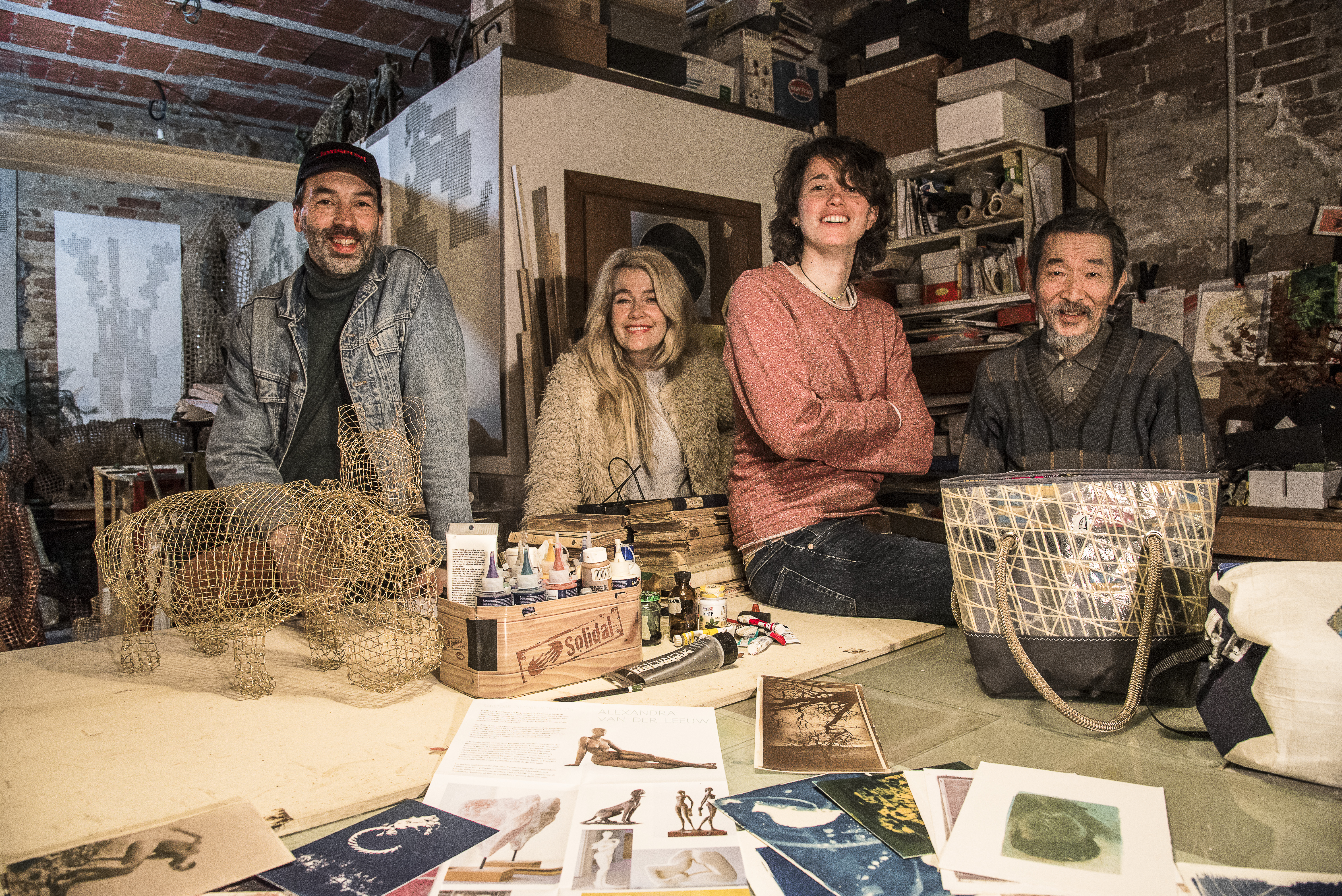
In a former warehouse on the ground floor of the civic number "2091", in the district of “Santa Croce” in Venice, two sculptors, a craftswoman and an alchemist-photographer work together. It is a 65 square meters space with two windows overlooking a small canal. It is called "STUDIO2091" and it is a unique example of creative co-working space where there is no wifi connection, the cellphones work very bad, there are no tables for meetings, nor computers.
His "tenants" carry out only manual activities related to art and crafts. Each of them has a different reason to live in Venice, a beautiful and unique city, yet expensive, problematic, overrun by mass tourism and high tide. The photographer-alchemist Andrea Buffolo, who was born in Switzerland,is the only one who has spent almost all his life in the historical center of Venice. Japanese sculptor Masaru Kashiwagi chose to live in Venice 35 years ago, because he considers it the only city in the world perfect for an artist; the craftswoman Camilla Morelli was born and raised in Valtellina ( a valley in the Lombardy region of northern Italy), and although she grew up in the mountains, she chose to live in Venice to enjoy the proximity to the sea; the Dutch painter and sculptor Alexandra Van der Leeuw lives on the island half of the year carrying on a family tradition. The four protagonists of the documentary film chose to live in Venice because here,and only here, they succeed in being themselves, realizing themselves and feeling free.
SUBTITLES: English, Spanish, French, German, Portuguese
Bohemia as a Business Model
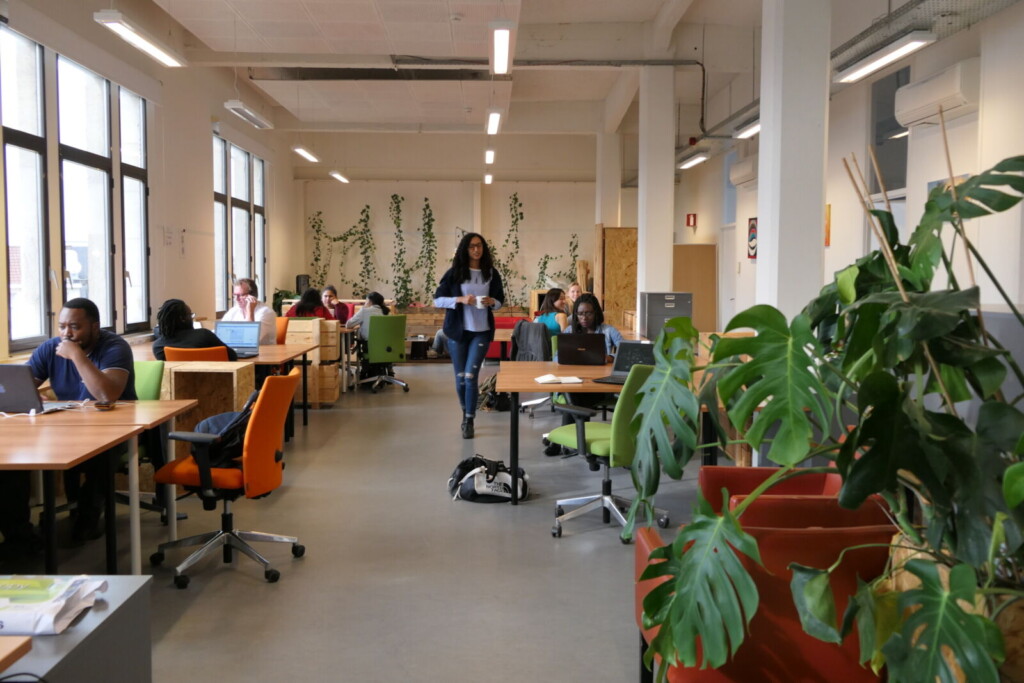
You have probably walked into one of these spaces and felt, before you could name it, something that resembled permission. The exposed brick, the salvaged wood, the mismatched chairs arranged with the precise carelessness of a stage set — all of it communicates a single message dressed as atmosphere: here, work is not what it was. Here, work is something closer to calling.
The Parisian café of the 1920s performed the same function with cheaper coffee and more cigarette smoke. When Hemingway wrote at the Closerie des Lilas, or when the Surrealists colonized the Café Cyrano on the Place Blanche, the physical space was doing cultural labor that no one was paid to perform. It blurred the line between leisure and production, between the individual who works because he must and the artist who creates because he cannot help it. That blurring was never accidental. It was the entire point. The café converted economic marginality — most of those writers were genuinely broke, often dependent on American expatriate money or the generosity of publishers advancing against manuscripts not yet written — into a posture of radical freedom. The poverty was real. The romance was manufactured, and it traveled much farther than the poverty ever did.
Pierre Bourdieu spent much of his career dissecting precisely this mechanism. In The Field of Cultural Production, published in 1993, he described how artistic fields generate a specific form of symbolic capital that operates inversely to economic capital: the less you appear to need money, the more cultural authority you accumulate. The artist who starves is more legitimate than the artist who earns. The writer who works in a café rather than an office signals, through the mere choice of location, a refusal of the administered life — even when that refusal is itself a performance, and even when the café owner is making a perfectly rational profit from the performance. What Bourdieu identified as a structural feature of artistic production in mid-twentieth-century France has become, in the hands of the coworking industry, a franchised aesthetic sold back to the very precarious workers it was supposed to describe.
The Greenwich Village lofts of the 1960s added another layer to this sediment. Artists moved into industrial spaces in lower Manhattan not because raw square footage was romantic but because it was cheap, and because the zoning laws had not yet caught up with the possibility that humans might want to live where machines used to run. Robert Rauschenberg, Jasper Johns, and dozens of others occupied these spaces as a practical solution to an economic problem. By the 1980s, those same spaces had become aspirational real estate, their former inhabitants priced out by the very cultural cachet their presence had generated. The loft became a brand before branding was a profession.
What the contemporary coworking space has perfected is the compression of this historical cycle. It no longer takes decades for precarity to become premium. The aesthetic of necessity — the unfinished ceiling, the visible ductwork, the sense that something urgent and unresolved is happening here — is now installed on day one, before a single freelancer has opened a laptop. The symbolic residue of actual artistic struggle is simulated in advance, packaged, and leased by the desk or by the month. Workers who cannot afford permanent offices, who exist in the contractual grey zones that economists since Guy Standing‘s 2011 work on the precariat have been trying to name without alarming anyone, are invited to experience their own structural vulnerability as a lifestyle upgrade.
The genius of this arrangement is that it requires the worker’s full collaboration. You must believe, at least partially, that the brick wall behind you means something about the kind of person you are, and the kind of work you are doing, for the transaction to complete itself emotionally.

The Freelancer and the Enclosure
You show up at the café at eight in the morning with your laptop, your charger, your portable hard drive, and the vague understanding that this is now your office. You buy a coffee you cannot quite afford because the coffee is the rent. The barista does not know she is your facilities manager. You do not know you are subsidizing a corporation that shed your position eighteen months ago and reinvested the savings in a share buyback.
The economic rupture that made this scene ordinary did not arrive as catastrophe. It arrived as a rebranding. When the financial crisis of 2008 accelerated what had been building through the nineties — the hollowing of permanent contracts, the outsourcing of entire departments, the reclassification of employees as independent contractors — the institutions responsible did not announce dispossession. They announced freedom. The timing was precise: between 2008 and 2012, the number of freelance workers in the United States grew by approximately 700,000, and the coworking industry, which had fewer than 200 spaces globally in 2008, crossed 2,500 by 2013. These two curves are not parallel by coincidence. They are the same curve.
Guy Standing named the structural subject of this transformation in 2011, in The Precariat: The New Dangerous Class. What Standing identified was not simply unemployment or underemployment, but a novel condition in which workers bear all the risk of economic life — irregular income, no sick leave, no pension, no institutional identity — while corporations retain all the productivity extracted from their labor. The precariat is not the old proletariat with worse conditions; it is a category in which the traditional buffers between labor and destitution have been removed one by one, systematically, and then sold back to the worker as personal enterprise. The coworking desk is precisely such a buffer — one that the employer once provided as an unremarkable operational cost, now repackaged as a lifestyle amenity and invoiced monthly.
This transfer of cost is worth holding steady for a moment, because it is less visible than it is consequential. A corporation that eliminates a salaried position does not eliminate the need for that position’s output. It contracts the work to an individual who must now personally absorb every expense that the organizational structure once absorbed invisibly: workspace, equipment maintenance, health insurance, professional development, the electricity required to run a monitor for eight hours. WeWork understood before almost anyone else that the freelancer’s spatial homelessness — the condition of having no desk, no address, no institutional envelope — was a market. By 2019, the company was valued at 47 billion dollars. That valuation was built almost entirely on the monetization of precarity, not its resolution.
What made this machinery so durable was the aesthetic register in which it operated. The language of coworking — community, collaboration, flexibility, creative ecosystem — borrowed its vocabulary from the countercultural critiques of exactly the corporate structures that had produced the precariat in the first place. The open floor plan, which first entered office design as a tool of surveillance and cost reduction, was reinscribed as democratic horizontality. The hot desk, which exists precisely because no individual worker has a reliable enough schedule to justify a fixed one, was marketed as dynamic mobility. Luc Boltanski and Eve Chiapello, in The New Spirit of Capitalism published in 1999, had already traced how capitalism metabolizes its own critique — absorbing the artistic objections to rigidity, hierarchy, and routine, and deploying those objections as new instruments of extraction. The coworking boom is one of the cleanest empirical demonstrations of that thesis the last quarter-century has produced.
What no one in those early pitch decks mentioned was what the freelancer actually lost when the permanent contract dissolved — not just income security or benefits, but the slower, less quantifiable erosion of professional identity that comes from having no institution to belong to, no colleagues whose careers entangle with yours over years, no slow accumulation of organizational memory that makes a person feel, however partially, that their work is building toward something.
WeWork and the Theology of We

You sign a membership agreement and receive, in return, a sense of purpose. Not a desk. Not a lease. A mission. The document you just initialed contains language about changing the world, about community, about elevating global consciousness — and you did not laugh when you read it, because by the time you reached the signature line, you had already drunk the cold brew, absorbed the exposed brick, and felt, genuinely felt, that something different was happening here.
Adam Neumann understood before almost anyone that the loneliness produced by the gig economy was not a problem to be solved but a market to be entered. Between 2010 and 2019, WeWork grew from a single converted warehouse in SoHo to a company valued at 47 billion dollars, not by inventing anything new but by wrapping the oldest real estate transaction in existence — subletting — in the vocabulary of secular religion. Neumann spoke of a “physical social network,” described WeWork’s purpose as the “elevation of the world’s consciousness,” and told investors with apparent sincerity that the company’s true value could not be captured by conventional financial instruments. He was not simply lying. He had constructed a theology, and theology has never required empirical verification to produce genuine devotion.
Michel Foucault, writing in his 1978-1979 lectures at the Collège de France later published as The Birth of Biopolitics, described governmentality as the art of arranging environments so that subjects regulate themselves, making external coercion unnecessary because the architecture of the space has already done the work. The coworking office is perhaps the most refined expression of this principle ever built at commercial scale. There are no supervisors watching you. There are only other people working very hard, visibly, in your peripheral vision, at all hours. The mechanism is not surveillance — it is contagion. You do not need a manager when you have a room full of peers whose hustle is already internalized as a standard you must meet, and whose presence converts your own rest into a form of social failure.
What makes this more insidious than the open-plan offices that corporations were already deploying by the 1990s is precisely the voluntariness of the arrangement. The WeWork member chose this. Paid a premium for it. Identified with it. And because the space was coded as anti-corporate — the beanbags, the beer taps, the rotating art, the events promising “collaboration” and “serendipitous encounters” — the productivity discipline it imposed arrived without the psychological resistance that a traditional office would have triggered. Sociologist Luc Boltanski and economist Eve Chiapello argued in The New Spirit of Capitalism, published in 1999, that contemporary management systematically absorbs the aesthetic and moral vocabulary of its critics, disarming opposition by wearing its language. WeWork did not merely absorb that vocabulary. It became its most profitable building.
The collapse, when it came in 2019, was read almost universally as a story about one man’s ego, one company’s fraudulent accounting, one IPO that went wrong. This reading is comfortable because it quarantines the pathology inside a single actor. But the 47 billion dollar valuation was not produced by Neumann alone — it was ratified by SoftBank, by JP Morgan, by thousands of members who renewed their subscriptions every month and posted photographs of their standing desks with motivational captions. The theology worked because the congregation needed it to work, because the alternative — acknowledging that what you were paying fifteen hundred dollars a month for was a desk in a subletting scheme dressed in the language of transcendence — would have required confronting something much harder than a bad investment.
Belonging Without Roots
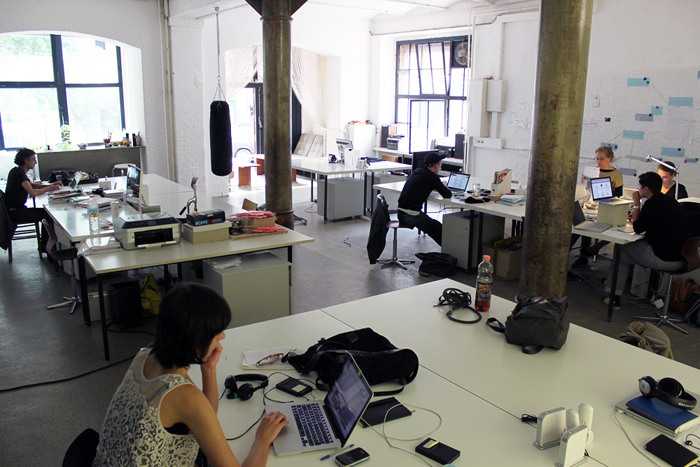
You walk into the space at nine in the morning, badge in hand, and for a moment something that resembles ease moves through you — the hum of other people working, the smell of decent coffee, the particular warmth of a room that has been designed to feel like it was never designed at all.
Erich Fromm drew the line precisely in 1976, in “To Have or To Be,” between two modes of existence that are not simply philosophical categories but lived orientations toward everything a person touches. To have is to possess, to secure, to stabilize identity through accumulation. To be is to remain in relation, in process, in genuine contact with others that is not mediated by transaction. What coworking sells, packaged in the language of belonging and tribe and community, is an experience of being — but delivered through the structure of having. You do not belong to the space. You subscribe to it. The moment your payment lapses, the warm light and the communal table and the curated sense of kinship evaporate with administrative precision.
This is not an accident of execution but a feature of the model itself. The sociologist Richard Sennett argued in “The Corrosion of Character” in 1998 that flexible labor — the gig economy, the project-based contract, the portfolio career — systematically destroys the conditions under which durable social bonds can form. Long-term commitment, shared narrative, mutual obligation across time: these are the raw materials of community, and they require exactly the stability that flexible work rhetoric frames as imprisonment. Coworking spaces emerge from that same flexibility and then attempt to compensate for its damage, offering a designed environment as a substitute for the structural conditions that genuine solidarity would need.
The exposed brick is doing a great deal of work. So are the Edison bulbs, the reclaimed wood, the hand-lettered signs about hustle and passion, the standing desks positioned near windows as if labor and contemplation were the same gesture. This is not aesthetic accident but what the design theorist Beatriz Colomina has called architecture as media — the space transmitting a message about who you are by virtue of occupying it. Inside that message is a specific emotional proposition: that you are creative, autonomous, connected, that you have chosen this life freely and that the people around you have chosen it too, which makes the proximity feel like solidarity rather than coincidence. But solidarity that requires a monthly fee to sustain is not solidarity in any sense that the word was built to carry.
What makes this worth examining beyond cynicism is the genuine longing it exploits. The American Psychological Association’s 2023 Work in America survey found that loneliness at work had become a measurable crisis, with younger workers in particular reporting that they lacked anyone at work they would call a real friend. This is the wound that coworking dresses without treating. It identifies the correct pain — the social depletion that comes from atomized, screen-mediated, project-to-project professional life — and responds with an environment engineered to feel like its cure. The barista who knows your order, the neighbor at the next desk who nods when you arrive, the Slack channel for building members: these are not community. They are its stage set, functional enough to create the sensation briefly, insufficient to bear the weight you eventually place on them.
What we have built, then, are spaces designed to make the loss bearable rather than reversible, monuments to a social contract that has already been dissolved, where people pay to feel, for a few hours each morning, that belonging is still something the world makes room for.
A vision curated by a filmmaker, not an algorithm
In this video I explain our vision
🏢 New Ways of Working: Space, Culture & Society
Coworking spaces are not just shared desks — they are social laboratories where ideas of community, labor, and urban life intersect. To fully understand the culture of new work environments, it helps to explore the deeper intellectual roots of how humans relate to space, collectivity, and the transformation of labor itself.
Hannah Arendt and The Human Condition: Public and Private Space
Hannah Arendt‘s analysis of public and private space offers a foundational framework for understanding why shared work environments carry such deep cultural weight. In ‘The Human Condition’, she distinguishes between labor, work, and action — categories that resonate powerfully in the context of coworking culture. Her thought invites us to ask what truly happens when people choose to work together in a common space.
GO TO THE SELECTION: Hannah Arendt and The Human Condition: Public and Private Space
Georg Simmel and the Metropolis: The Metropolis and Mental Life
Georg Simmel‘s landmark essay ‘The Metropolis and Mental Life‘ explored how modern urban environments shape individual psychology and social behavior. His reflections on the overstimulation of city life and the search for personal identity within collective spaces are strikingly relevant to the rise of coworking hubs. Simmel helps us understand why proximity and difference coexist so productively in new work cultures.
GO TO THE SELECTION: Georg Simmel and the Metropolis: The Metropolis and Mental Life
Guy Standing’s The Precariat: Analysis
Guy Standing‘s concept of the Precariat — the new class of workers living in chronic economic insecurity — provides essential context for understanding who populates coworking spaces and why. The rise of freelancers, digital nomads, and independent professionals is directly tied to the fragmentation of traditional employment structures. Standing’s analysis forces us to look beyond the aesthetic appeal of open offices and ask harder questions about labor and belonging.
GO TO THE SELECTION: Guy Standing’s The Precariat: Analysis
Gaston Bachelard and the Poetics of Inhabited Spaces
Gaston Bachelard‘s ‘Poetics of Space’ is a meditation on how inhabited spaces shape imagination, identity, and inner life. His ideas about corners, rooms, and thresholds offer a surprisingly rich lens through which to examine the architecture and atmosphere of coworking environments. Understanding how people feel ‘at home’ in shared spaces is essential to grasping the deeper appeal of the new work culture.
GO TO THE SELECTION: Gaston Bachelard and the Poetics of Inhabited Spaces
Discover the Cinema of Work, Space and Human Connection
If these ideas about space, labor, and community inspire you, Indiecinema’s streaming catalog offers a world of independent films that explore exactly these themes — from urban alienation to collective reinvention. Dive into stories that challenge how we live, work, and share space with others, told by filmmakers who refuse easy answers.
👉 EXPLORE THE CATALOG: Watch Indie Films in Streaming
A vision curated by a filmmaker, not an algorithm
In this video I explain our vision

