
The Bureaucratic Architecture of Evil
You are sitting across from a bureaucrat. He has filed the correct forms. He has obtained the necessary signatures. He has cited the appropriate precedents. He is not raging, not foaming, not visibly broken — he is organized, procedurally fluent, and operating entirely within the sanctioned architecture of his institution. What he is building, methodically and with genuine conviction, is a machine for burning women.

Heinrich Kramer was not a grand inquisitor of legend. He was a mid-tier Dominican functionary operating in the German-speaking territories of the Holy Roman Empire in the 1480s, a man whose career had been marked more by institutional friction than ecclesiastical glory. Church authorities in Innsbruck had effectively expelled him in 1485 after local bishop Georg Golser concluded that Kramer was mentally unstable, sexually fixated, and procedurally incompetent — a man who had staged a witch trial so clumsily, so visibly contaminated by personal obsession, that it collapsed under its own contradictions. Golser’s letters describe Kramer as a senile old man whose preoccupations with female sexuality had rendered him unfit for serious theological work. By any institutional metric, this was a career-ending humiliation.
What happened next is the part that requires you to sit with real discomfort. Kramer did not retreat. He wrote. In 1486, he completed the Malleus Maleficarum — The Hammer of Witches — a document that would go through at least fourteen editions before 1520 and remain in continuous circulation through the late seventeenth century, consulted by civil and ecclesiastical courts across Europe during a period in which somewhere between forty thousand and sixty thousand people were executed for witchcraft, the overwhelming majority of them women. The book did not succeed despite Kramer’s discreditation. It succeeded in part because he had learned, from his failures, precisely how to armor personal pathology inside procedural legitimacy.
The architecture of the Malleus is the key to understanding its power. It is divided into three parts: a theological argument establishing that witchcraft is real and that skepticism about it constitutes heresy, a descriptive catalog of the forms witchcraft takes with particular emphasis on female sexuality and its demonic dimensions, and a procedural manual for detection, prosecution, and sentencing. This three-part structure mimics the form of serious canonical legal scholarship. Kramer borrowed heavily from Thomas Aquinas, from canon law, from prior inquisitorial manuals. He cited sources the way a man cites sources who knows his readers will check credentials before content. The book felt, to its contemporaries, like jurisprudence — and that feeling was not accidental.
What Kramer needed, and what he obtained, was a single document that would transform his private fixations into institutional mandate. He got it from Pope Innocent VIII, whose papal bull Summis desiderantes affectibus, issued in December 1484, explicitly authorized Kramer and his co-named collaborator Johann Sprenger to prosecute witchcraft in the German territories and commanded local authorities not to obstruct them. Kramer placed this bull at the front of the Malleus as a prefatory endorsement, allowing readers to encounter the papal imprimatur before they encountered the argument. Later scholarship, including work by historians Hans Peter Broedel and Walter Stephens, has demonstrated that Sprenger likely had minimal involvement in the actual composition — that the Malleus is, intellectually and obsessionally, Kramer’s document — but the appearance of dual authorship and papal blessing created something Kramer’s career had never given him: unimpeachable institutional cover.
The Church had not invented the content of his pathology. But it had, through its own procedural grammar, provided the format in which that pathology could become policy. The signature at the front of a document can make the abyss inside it look like administration.
The Witches of Mount Sciliar

Docufiction, by Andrea Dalfino, 2022, Italy.
The Witches of Scillar is a documentary that delves deeply into the trials that took place in Alto Adige, in Castel Presule and surrounding areas at the beginning of the 16th century, following which more than 10 were condemned to the stake on charges of witchcraft, becoming the real and precursors of the infamous Witch Hunt. Starting from the analysis of the historical context and intertwining local legends with actual events and analyzing the locations of the events with the help and guidance of experts, this film offers a new historical perspective on what happened, culminating with the exposition of what remains of the witches in South Tyrol today and how the crimes of the inquisition are judged in retrospect today.
Alto Adige is a land full of mystery, where history and legend are intertwined, with its magical and fascinating scenarios that push the mind and imagination to wander, investigate, discover. Here is the Sciliar, a suggestive mountain massif located in the natural park of the same name against the backdrop of the Dolomites, and no other mountain is so full of myths and legends as this one, on which it is said that fairy creatures and spirits of all sorts live , and in the Middle Ages it was held up as a meeting place for witches and devils. Here, during the time of the Inquisition, 10 women accused of witchcraft were tried and killed. Director Andrea Dalfino made the documentary The Witches of the Sciliar, enriching the film with fictional scenes that retrace the intricate events of the Fiè trial.
LANGUAGE: Italian
SUBTITLES: English, Spanish, French, German, Portuguese
What the Text Actually Does to a Reader
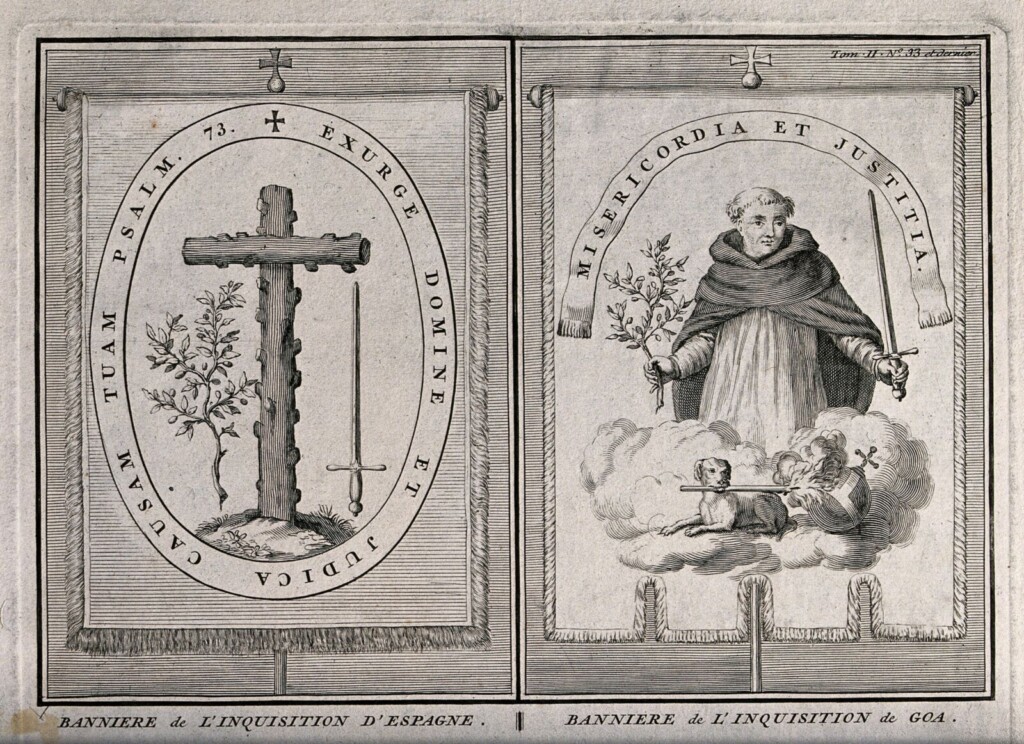
You sit with the Malleus Maleficarum open in your hands — not in a medieval scriptorium but in a university archive, under fluorescent light, in a climate-controlled room — and the first thing that strikes you is not the cruelty. It is the confidence. The text does not argue that witches exist. It assumes it, structurally, the way a legal deposition assumes a crime has occurred before it names a suspect.
Heinrich Kramer organized his 1486 manual into three parts: the first establishes the theological necessity of witchcraft’s existence, the second catalogues its operations in clinical detail, and the third provides procedural instruction for prosecution. This sequencing is not accidental and not merely rhetorical. It is epistemological architecture. By the time a reader reaches Part Three — the part about torture thresholds, about how many times a confession can be retracted before it is deemed invalid — the category of the witch has already been installed in the mind as something pre-evidential. The procedures do not follow from proof. They generate it.
The philosopher Ian Hacking, in his 1999 work The Social Construction of What?, described what he called “looping effects” — the way that naming a human type causes people to inhabit the category, which in turn reshapes the category itself. The Malleus operates as a looping machine of exceptional efficiency. Once a magistrate had read Kramer’s taxonomy of witches’ behaviors — their impotence-causing, their hailstorm-summoning, their pacts signed in substances that do not need to be named here — any woman who behaved outside expectation could be mapped onto that taxonomy. Deviation from social norm became legible only through Kramer’s vocabulary. And that vocabulary had, embedded in it, its own verification protocol: the witch denies because the Devil gives her strength to deny, which is itself a sign.
This is not primitive thinking. It is a closed epistemic system, and closed epistemic systems are not the exclusive property of the fifteenth century. The Diagnostic and Statistical Manual of Mental Disorders, in its earlier editions, classified homosexuality as a disorder. The criteria for that classification included distress — and distress, in a society structured to persecute homosexuals, was reliably produced by the classification itself. The DSM, like the Malleus, was not describing a pre-existing pathology; it was manufacturing the conditions under which the pathology became self-evident to the clinician trained to see it. Michel Foucault‘s 1975 Discipline and Punish traced exactly this mechanism across the modern prison system, where recidivism rates confirm the delinquent identity that incarceration was designed to address — making the institution appear diagnostic rather than productive of what it measures.
What makes Kramer’s text specifically dangerous, beyond its particular historical victims, is what it teaches about institutional language as such. When an institution produces the category, the investigative tool, and the verification procedure simultaneously, the accused enters a space where every move confirms the original charge. Silence is guilt withheld. Confession is guilt admitted. Contradiction is the Devil speaking. The geometry of this trap has no exits that are visible from inside it, because the trap is also the epistemological frame through which the accused is seen. Scholars like Brian Levack, whose 1987 survey The Witch-Hunt in Early Modern Europe estimated between 40,000 and 60,000 executions across roughly two centuries, have noted that acquittal rates varied dramatically not according to evidence but according to which procedural manual a given court was using. The manual did not reflect reality. It produced verdicts.
The reader who finishes Part One of the Malleus and moves into Part Two has already been recruited into a way of seeing that will make Part Three feel not like instructions but like common sense — which is precisely how the most effective ideological technologies always feel from the inside.

The Sociology of the Scapegoat as Political Infrastructure
You are standing in a village that has buried a third of itself. The grain failed two seasons running, the priest drinks, and three children died before August. Someone must be the reason. Not fate, not microbes, not the slow violence of feudal extraction — someone, with a face and a name and a door you can find in the dark.
René Girard spent decades arguing, most precisely in his 1972 La Violence et le Sacré, that human communities do not dissolve under pressure so much as they redirect it. The mechanism is surgical: collective anxiety requires a singular object, a body onto which multiplying grievances can be projected without fragmenting the group further. What looks like madness from the outside is, from the inside, a kind of social suturing. The community that burns someone together does not burn itself. Girard called this the founding murder, and he meant it structurally, not metaphorically — the victim’s selection is arbitrary, but the function is load-bearing.
Norman Cohn spent years in the archives demonstrating that this structure had a specific and traceable history in Europe. His 1975 Europe’s Inner Demons reconstructed how the idea of a secret society of devil-worshippers — meeting at night, killing infants, reversing the liturgy — migrated from anti-Jewish and anti-Christian slanders of late antiquity into the legal machinery of medieval prosecution. The fantasy was not spontaneous. It was assembled from fragments, borrowed across centuries, and finally consolidated into a prosecutable template. What Kramer achieved with the Malleus Maleficarum in 1486 was not the invention of fear but its bureaucratization — he gave the fantasy a procedural body, a set of questions, a reproducible legal sequence. Local magistrates who had never met him could open the book and know exactly what evidence to extract and how to interpret silence as confession.
The Black Death had removed between a third and half of Europe’s population between 1347 and 1351, and the demographic and economic aftershocks ran well into the fifteenth century. Land tenure shifted, labor markets destabilized, and communities that had survived the plague reorganized themselves under the pressure of uncertainty about who belonged and who threatened the fragile new equilibrium. The witch trial emerged precisely in this gap — not as superstition surviving modernization but as a technology for managing social stress that was in many ways more legible and more controllable than the actual causes of that stress. You cannot prosecute a cold summer or a collapsing grain price. You can prosecute Margarethe from the edge of the village, who has been argued with before and who fits the profile Kramer’s text described with such methodical precision.
Between roughly 1450 and 1750, an estimated 40,000 to 60,000 people were executed across Europe following witch proceedings — a figure established through the collaborative historical research of Brian Levack and others in the late twentieth century. The distribution was not random. Executions clustered in regions under specific stress: political fragmentation, confessional conflict, crop failure, epidemic. The Malleus provided not only a legal template but a kind of franchise model — authorities in the Holy Roman Empire, in Scotland, in the Swiss confederacy could apply it to their own local grievances without coordination, each outbreak seeding the credibility of the next, each execution confirming the reality of the threat that required it. The book went through at least fourteen editions by 1520 and continued circulating for another century. Its longevity was not a function of credulity but of usefulness — it solved a recurring administrative problem with a replicable answer.
What makes this particularly difficult to absorb is that the people deploying this template were not, by the standards available to them, behaving irrationally. The framework was coherent, internally consistent, and legally grounded in both canon and civil tradition.
Gender as the Load-Bearing Wall of the System

You already know what you were told about Eve. You absorbed it before you could read — in the architecture of churches, in the way adult voices dropped half a register when women spoke too long, in the particular silence that followed a woman’s anger. The Malleus Maleficarum did not invent the suspicion of female nature; it codified it into procedure, gave it Latin, gave it teeth. But the question worth pressing is not why Kramer hated women — that is almost too easy to answer — but why that hatred was load-bearing, why the entire prosecutorial apparatus would have collapsed without it.
The text’s second part opens with an etymology that was fabricated. Kramer derives femina from fe and minus, meaning “lesser in faith,” a philological invention so brazen it tells you something essential: the argument needed the biology, needed the deficit to be intrinsic rather than acquired. A woman who was weak by accident could be strengthened. A woman who was weak by nature could only be managed, suspected, or destroyed. That distinction is not theological decoration. It is the hinge on which the whole system turns, because the populations being targeted — midwives, herbalists, widows who held customary rights over common land, women whose knowledge of reproduction made them sovereign over at least one domain of life — could not be prosecuted as criminals without first being prosecuted as a category.
Silvia Federici, writing in Caliban and the Witch in 2004, made an argument that took decades to be absorbed properly: the witch trials were not a medieval hangover but a feature of the emerging capitalist order, concentrated precisely in the century between 1550 and 1650 when enclosure was dismantling communal land tenure across Europe and when the control of female reproductive labor became an economic imperative. The numbers are not incidental here. Federici estimates between 50,000 and 200,000 executions across two centuries, with the peak intensity coinciding exactly with the moment when the peasant commons were being legally extinguished and when population growth was being identified by nascent state theory as the engine of national wealth. A woman who controlled her own fertility — through the knowledge of herbs, through timing, through the dense informal networks of female community that had no institutional form the state could recognize — was a woman who stood outside the new productive calculus entirely.
What the Malleus provided was not just a theology of female evil but a criminalizing grammar for female autonomy. The specific crimes it catalogued — the stealing of male generative power, the causing of impotence, the pact with a force that operated outside sanctioned ecclesiastical channels — were, stripped of their supernatural register, crimes of refusing to be legible to male institutional authority. The midwife who could end a pregnancy was not primarily a threat to souls. She was a threat to the new demographic politics that treated bodies as productive assets belonging to something larger than themselves.
This is why Kramer’s misogyny cannot be filed under personal pathology. The man was strange, obsessive, rejected by his own order for erratic conduct during the Innsbruck trials of 1485 — Bishop Georg Golser called him senile and had him expelled from the diocese. But the Malleus survived him precisely because its misogyny was not his alone. It was the misogyny of a social transformation that needed women’s autonomous knowledge destroyed and replaced with male-supervised medical and religious authority, that needed the figure of the dangerous woman to justify the enclosure not just of land but of the body itself as a resource to be administered rather than inhabited.
The feminization of witchcraft, then, was never incidental to the charge — it was the charge, rewritten in theological language to make a structural violence feel like a cosmic necessity.
The Persistence of the Template Beyond Its Context
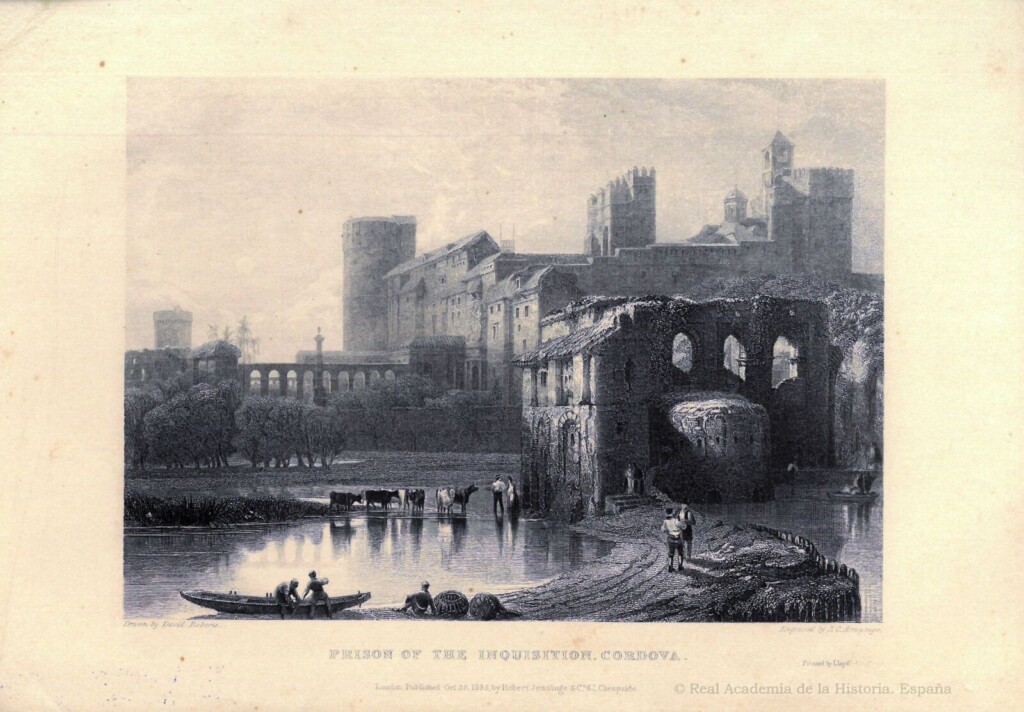
You have nodded along to every denunciation you have ever witnessed, and you know it. Not because you believed every charge without reservation, but because the machinery of collective accusation produces a social gravity so dense that skepticism feels like complicity. This is not a modern weakness. It is a structural feature of a template so durable that it has outlasted the theology that first gave it permission to exist.
What Heinrich Kramer engineered in 1486 was not merely a prosecution manual. It was an epistemological trap: a system in which accusation functions as partial proof, denial functions as confirmation of guilt, and community consensus functions as the closing mechanism that converts suspicion into verdict. The Malleus Maleficarum operated on the principle that the accused existed in a logical cage with no exit. Confess, and you were guilty. Refuse to confess under torture until the body broke, and your resistance was reinterpreted as diabolical stubbornness, which was itself evidence of guilt. The circle was sealed from the inside.
The Salem trials of 1692 are the most studied American iteration of this template, but they are instructive less for their Puritan theology than for what they reveal about the mechanism running beneath it. When Ann Putnam and her circle of accusers named their neighbors, the community did not pause to evaluate evidence in any recognizable forensic sense. Instead, the social pressure to believe the accusers became indistinguishable from the evidence itself. Nineteen people were executed not because the proof was overwhelming but because the architecture of the accusation made doubt feel like a moral failure. The template required no inquisitor with a copy of Kramer’s text in hand. It had become ambient.
By the early 1950s, Senator Joseph McCarthy had reconstructed the same logical structure inside a secular and bureaucratic frame. The Senate subcommittee hearings operated on unfalsifiable suspicion, where the inability to name names was treated as concealment, and concealment was treated as confirmation of the very disloyalty being investigated. The historian Richard Fried, in his 1990 study Nightmare in Red, documented how the mere act of being subpoenaed damaged careers, since the summons itself signaled taint to employers, neighbors, and institutions long before any finding was rendered. Confession and naming others became the only available currency for partial redemption, which meant the machinery generated its own expanding population of accused simply by demanding more names as the price of partial absolution.
What the digital environment has done is not invent a new pathology but strip the template down to its fastest possible execution speed. A contemporary public pile-on achieves in hours what a seventeenth-century inquisition required months to accomplish: the unfalsifiable accusation circulated at scale, the demand for immediate confession and public self-flagellation, and the community ratification delivered through the metric of shared outrage rather than the verdict of a tribunal. The philosopher Miranda Fricker, writing in Epistemic Injustice in 2007, identified what she called testimonial injustice, the deflation of a speaker’s credibility based on identity rather than evidence, but the inverse problem is equally devastating: the inflation of an accuser’s credibility based on the social cost of disbelieving them. The two distortions are mirror structures, and together they produce an environment where the template runs itself.
What this persistence exposes is not that human beings are uniquely cruel but that they have a recurring need for mechanisms that transform diffuse social anxiety into a named and punishable cause. Kramer gave that need a manual. Every subsequent iteration has given it a new vocabulary. The hunger the template satisfies is far older than the book that first codified it, and it remains recognizable in every room where a crowd turns, in unison, toward someone who has just been named.
A vision curated by a filmmaker, not an algorithm
In this video I explain our vision
🔥 When Fear Becomes a Weapon: Witch Hunts and Power
Heinrich Kramer’s Malleus Maleficarum did not emerge from a vacuum — it crystallized centuries of misogyny, theological anxiety, and institutional violence into a manual for persecution. The articles below explore the deeper roots of this machinery: the psychology of exclusion, the manufacture of the monstrous feminine, the mechanisms of social scapegoating, and the occult traditions that formed the backdrop against which Kramer wrote. Together they map the dark terrain between fear, doctrine, and the destruction of the Other.
The roots of social prejudice and the mechanisms of exclusion
Social prejudice rarely appears from nowhere — it is constructed through language, authority, and repeated ritual humiliation. The witch trial is perhaps the most extreme historical example of how exclusion mechanisms can be codified into law and theology, transforming marginal women into existential threats. Understanding these roots exposes the structural logic that allowed Kramer’s handbook to function as jurisprudence rather than fantasy.
GO TO THE SELECTION: The roots of social prejudice and the mechanisms of exclusion
Matthew Lewis and The Monk
Matthew Lewis‘s The Monk is a Gothic fever dream saturated with the same anxieties that animated Kramer’s inquisitorial imagination: corrupt clergy, demonic seduction, and the terrifying agency of women’s desire. Lewis wrote his novel in 1796, yet the psychic landscape he excavates had been prepared by centuries of demonological literature in which the Malleus Maleficarum played a founding role. Reading Lewis alongside Kramer reveals how deeply the witch-hunt mythology had colonized European literary and moral consciousness.
GO TO THE SELECTION: Matthew Lewis and The Monk
The Psychology of Evil: Why People Commit Violent Acts
The psychology of evil asks why ordinary people — bureaucrats, priests, judges — become architects of atrocity, and Heinrich Kramer stands as a chilling case study. His obsessive, sexually charged descriptions of witches’ alleged acts suggest a mind projecting its own shadows onto the bodies of vulnerable women. This article’s exploration of the mechanisms behind violent acts illuminates how ideology can transform personal pathology into institutional genocide.
GO TO THE SELECTION: The Psychology of Evil: Why People Commit Violent Acts
Counter-Reformation: History and Cultural Consequences
The Counter-Reformation reshaped the Catholic Church’s relationship to knowledge, the body, and deviance in ways that continued the logic Kramer had helped inaugurate decades earlier. The burning zeal to purify Christendom from within created cultural and legal infrastructures in which witch-hunting could persist and even intensify across the sixteenth and seventeenth centuries. Tracing this history reveals that the Malleus Maleficarum was not an aberration but a founding document of a much longer campaign of theological violence.
GO TO THE SELECTION: Counter-Reformation: History and Cultural Consequences
Discover the Films That Dare to Ask the Hardest Questions
If these histories of power, persecution, and the invention of evil have stirred something in you, Indiecinema is the streaming platform where cinema continues that conversation. Independent and auteur films from around the world explore exactly these territories — where dogma meets the human body, and where history’s darkest chapters find their most honest mirror. Come and watch.
👉 EXPLORE THE CATALOG: Watch Indie Films in Streaming
A vision curated by a filmmaker, not an algorithm
In this video I explain our vision

