
The Boy Who Wrote the Forbidden
You are nineteen years old, stationed in a foreign city on your government’s business, surrounded by the diplomatic machinery of adult life, and in the hours between official correspondence you sit down and write a novel in which a holy man rapes a woman he has drugged, murders his own mother, makes a pact with the devil, and is finally torn apart by demons on a Spanish mountainside. You finish it in ten weeks. You are not disturbed by what you have written. You send it to a publisher.

Matthew Gregory Lewis completed The Monk in 1794 while serving as an attaché at the British Embassy in The Hague, and the biographical detail that tends to be footnoted quickly, treated as colorful but marginal, is actually the most philosophically disorienting thing about the book’s existence. We have a cultural apparatus, centuries in the making, that insists the young are innocent, that innocence is a condition requiring protection, and that exposure to extreme material — sexual violence, blasphemy, moral catastrophe — constitutes a kind of damage. Lewis dismantles this apparatus simply by having existed. He did not encounter the content of The Monk as a victim or a survivor. He invented it. At an age when the culture surrounding him had barely granted him full legal personhood, he had sufficient imaginative access to cruelty, desire, and spiritual corruption to render all three with a technical precision that made his contemporaries genuinely uncomfortable.
The novel was published in 1796, and the response was not politely critical — it was close to hysterical. The Monthly Review called it a work that “tends to inflame the fleshly appetites.” Samuel Taylor Coleridge, reviewing it in the Critical Review in 1797, acknowledged the book’s raw power while arguing that it was precisely that power which made it dangerous, suggesting that a work capable of producing such effects on the reader had forfeited any claim to literary legitimacy. The prosecution that followed — a formal charge of obscene and blasphemous libel — forced Lewis to expurgate subsequent editions, softening the violence, muting the sexuality, removing a poem embedded in the text that had directly parodied scripture. What the establishment was attempting to excise was not simply content but a kind of knowledge: the demonstrated proof that a young man of good family, educated at Westminster School and Christ Church Oxford, had walked through the darkest rooms of human psychology without leaving any traceable mark of the journey on his own biography.
This is where the history of innocence becomes intellectually dishonest. Philippe Ariès argued in Centuries of Childhood, published in 1960, that childhood as a protected psychological category is a modern invention, assembled gradually through the sixteenth and seventeenth centuries and consolidated in the bourgeois family structures of the eighteenth. Before this invention, children were not shielded from the full register of adult experience — death, sexuality, economic precarity, spiritual terror — because no one had yet decided that exposure itself constituted harm. Lewis was born in 1775, precisely at the historical moment when the new architecture of childhood innocence was being moralized into law and literature, and The Monk reads, among other things, like a document that refuses that architecture from the inside.
What his critics could not process was not the novel’s darkness but its author’s composure. A traumatized writer produces a traumatized text, and readers know how to handle that: they feel pity, they understand the catharsis, they locate the wound. Lewis gave them no wound to locate. The Monk is not a confession. It is a construction — cold, deliberate, technically sophisticated, written by someone who understood that the machinery of transgression could be operated without being destroyed by it, and who found, at nineteen, that this understanding was both publishable and dangerous.
Cathnafola - A Paranormal Investigation
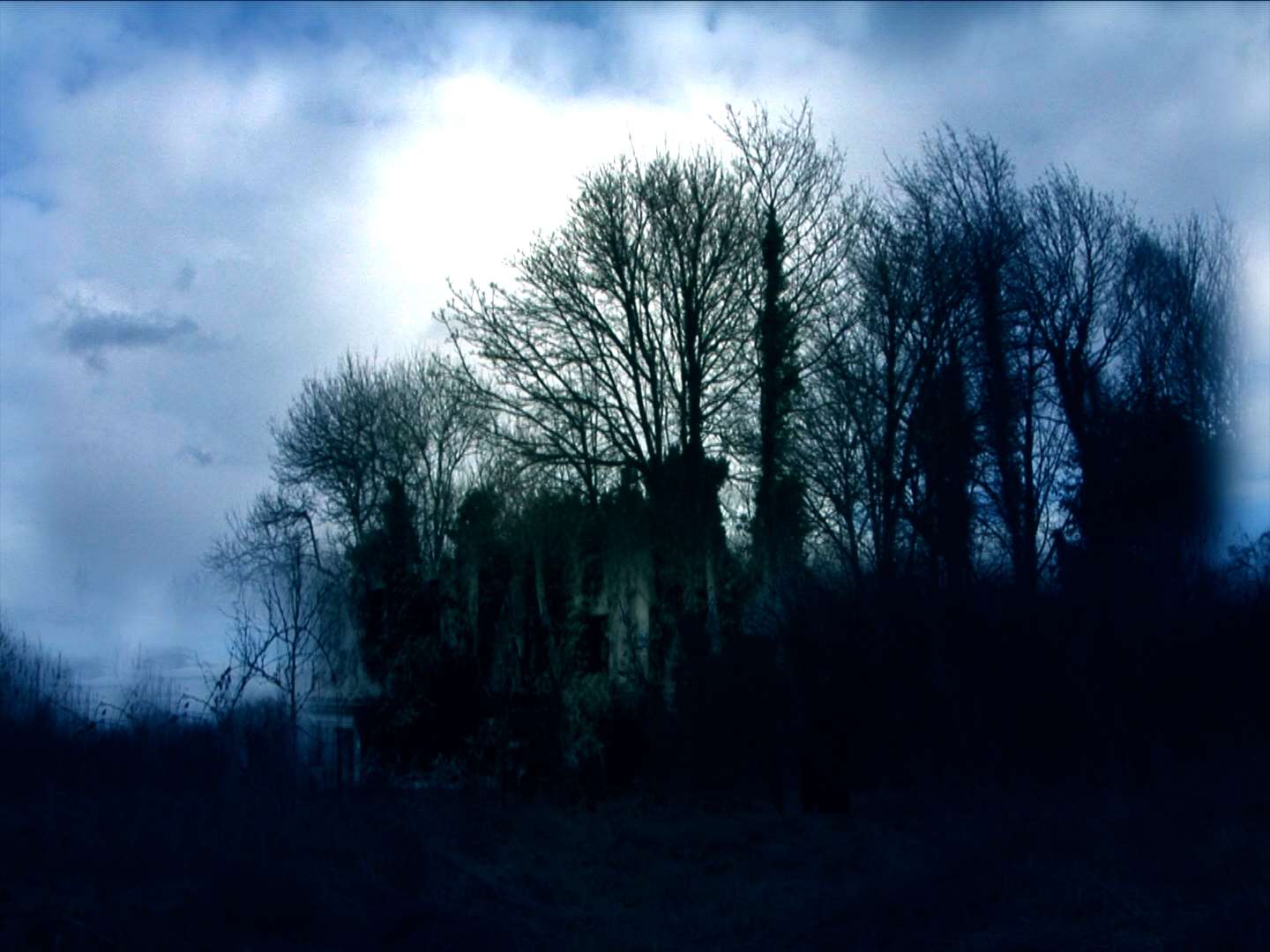
Documentary, horror, by Jason Figgis, USA, 2014.
In "Cathnafola", everything begins when renowned paranormal investigator Chris Halton of Haunted Earth UK receives footage filmed by three teenagers at the ruins of Cathnafola House in Ireland. Determined to unearth the truth behind the location’s bloody past, Halton embarks on a nighttime exploration of the infamous ruins—and soon uncovers terrifying and disturbing revelations.
LANGUAGE: English
SUBTITLES: Spanish, French, German, Portuguese
Gothic as Philosophical Weapon
You are standing in a cathedral after midnight, not praying, not lost — just standing there while the architecture does something to your chest that no argument ever could. The vaulted ceiling pulls your gaze upward past the point where your eyes can resolve detail, and your body registers something that your language does not have a clean word for: not fear exactly, not awe exactly, but the sensation of being physically overmatched by something that does not care whether you survive the encounter. Edmund Burke named this feeling in 1757 and called it the sublime, distinguishing it from the beautiful with a precision that still cuts — the beautiful flatters, invites, reassures; the sublime threatens, overwhelms, and produces a kind of terror that is pleasurable only because you are, for the moment, safe enough to feel it without dying from it.
Burke's Philosophical Enquiry into the Origin of Our Ideas of the Sublime and Beautiful was not written as a manual for novelists, but Matthew Lewis read its logic correctly. Gothic fiction had been circling this territory since Horace Walpole built Otranto in 1764 out of ancestral guilt and collapsing architecture, since Ann Radcliffe spent the 1790s terrifying her readers with atmospheric dread and then, novel after novel, carefully explained every supernatural event away as coincidence or trickery, restoring the rational order before the last page. Radcliffe’s technique is revealing precisely because of what it refuses to abandon: the Enlightenment promise that the world, properly examined, yields to reason. Her horrors are always ultimately houseable inside cause and effect. The monster turns out to be a man in a sheet. The ghost is a projection of grief. The reader is frightened, then consoled, then returned to a universe that functions according to sensible rules.
Lewis, who was eighteen when he began writing The Monk and twenty when it was published in 1796, did not offer that consolation. Ambrosio is not redeemable, his damnation not metaphorical, his final moments not pedagogical. The Devil appears not as symbol or psychological projection but as an operating force in the world, and the novel’s closing pages do not restore moral order so much as demonstrate that moral order was always a human fantasy applied to a universe indifferent to human virtue. This is not Gothic as entertainment wearing the clothes of transgression — it is Gothic deployed as a philosophical argument about what rationalism chooses not to see. Where Radcliffe used the sublime to produce a controlled shudder that rationalism eventually absorbs, Lewis used it to show the thing rationalism cannot absorb and survive intact.
The distinction matters because the 1790s were not a neutral historical moment. The French Revolution had just demonstrated that Enlightenment political philosophy, applied at scale, could produce the Terror as naturally as it produced the Declaration of the Rights of Man. David Hume had already spent decades systematically dismantling the certainties that grounded moral and metaphysical confidence, and Kant was in the process of reconstructing them — at enormous philosophical cost — precisely because their absence felt unbearable. The culture that received The Monk was a culture experiencing, in real political time, the consequences of believing that reason alone was sufficient architecture for human civilization. Lewis arrived with a novel in which the most educated, most disciplined, most morally admired man in a city is also the most catastrophically corruptible, and the corruption operates not through stupidity or ignorance but through the very mechanisms of intellectual pride that the Enlightenment had celebrated as virtues.
The sublime, in Burke’s original formulation, required distance — you could appreciate the terror of the ocean only from the shore. Lewis collapsed that distance by making the reader inhabit Ambrosio’s interiority, tracking the precise sequence of self-deception by which a man dismantles his own conscience, one rationale at a time, believing at every step that he remains in control of what has already consumed him.

Ambrosio and the Architecture of Repression
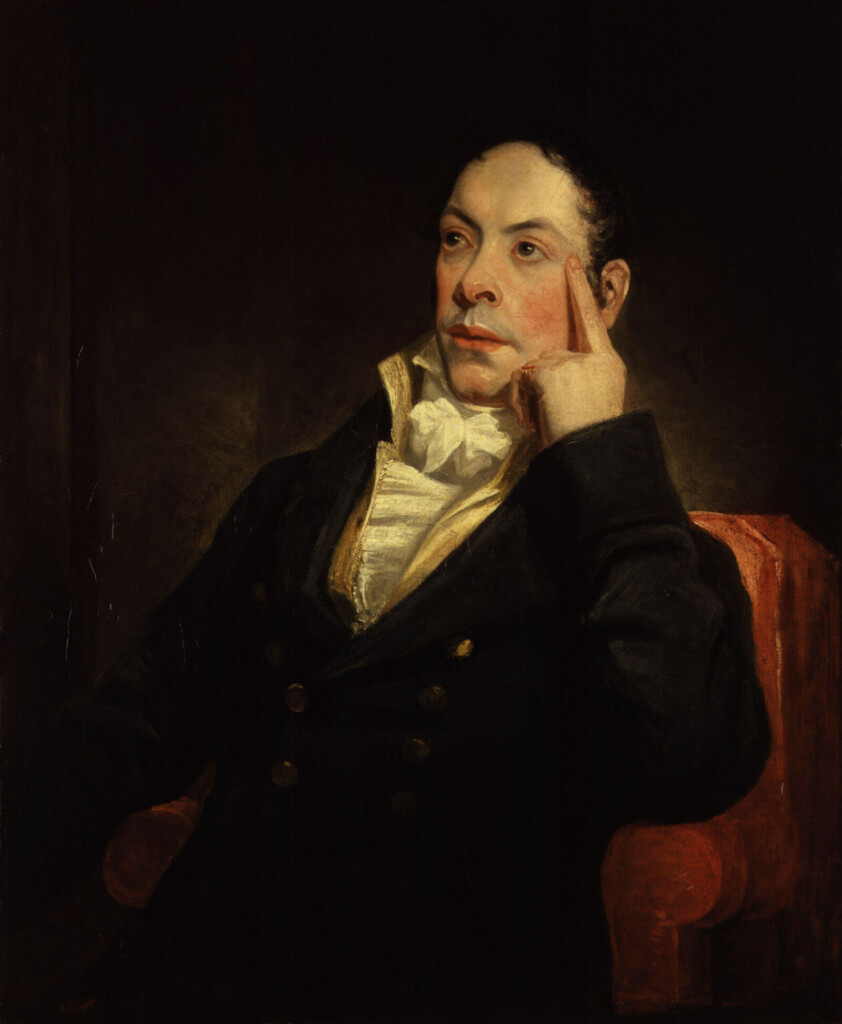
You have probably never met anyone as certain of their own goodness as Ambrosio is certain of his. That certainty is the first thing Lewis gives you, and it is the first thing he destroys. At the opening of the novel, published in 1796 when Lewis was barely twenty years old, the monk stands before a congregation in Madrid as the most admired preacher in Spain, a man who entered the Capuchin monastery as an infant and has never left its walls, never been touched by a woman, never felt the pressure of a coin in his palm. The crowd below him does not merely respect him — they compete for proximity to his shadow. Lewis describes this adulation with a precision that should disturb: the congregation is not moved by what Ambrosio says but by what he represents, which is the fantasy that a human being can be architecturally sealed against desire itself.
The architecture is the point. Ambrosio did not suppress his appetites through struggle and choice, the way an ascetic tradition from John of the Cross onward would at least dignify with the language of combat. He was simply never given the materials with which desire constructs itself. No women, no money, no contact with the world’s textures and provocations. What Lewis understands, and what Sigmund Freud would not articulate systematically until his 1915 paper “Repression,” is that the psyche does not neutralize what it refuses to acknowledge — it stores it under pressure. The repressed does not dissolve. It accumulates interest. Every prohibition the monastery placed around Ambrosio did not erase the drives it was meant to contain; it gave those drives a precise address, a shape defined exactly by the walls built to exclude them. His holiness is not the absence of desire. It is desire’s most detailed self-portrait, rendered in negative space.
This is why his fall is not a descent but a detonation. When Matilda first reveals herself beneath her novice’s habit, Ambrosio does not hesitate in the way a man with any real experience of temptation would hesitate. He collapses with the velocity of something that has been held at maximum compression for decades. Lewis does not present this as hypocrisy in the conventional moral sense — as a gap between public performance and private vice. He presents it as a structural inevitability, the way a dam does not fail because it is dishonest but because the pressure differential becomes irreconcilable. The novel’s horror is not that a holy man turns out to be secretly sinful. The horror is that the holiness produced the sinfulness with the logic of cause and effect.
What accelerates everything is Ambrosio’s complete inexperience with the grammar of transgression. A man who has navigated temptation before knows its proportions, can measure the distance between wanting and acting, has developed the internal friction that slows things down. Ambrosio has none of this. Once the first boundary falls, he has no internal architecture left — the entire edifice was organized around that single wall. This is what Lewis captures that the Gothic tradition before him, with its cardboard villains and its comfortably externalized evil, largely missed: that the monster is not a deviation from the social order but its most faithful product, the figure in whom institutional power has concentrated and compressed exactly what it claimed to eliminate.
The monastery manufactured him. The congregation completed him by turning him into an image rather than a person, which is the final seal on repression’s work — when the social world agrees to see only the surface, it collaborates in making the depth ungovernable. Ambrosio never had a confessor who knew him. He was the confessor. He had never been witnessed, only worshipped, and worship is the one form of attention that makes genuine self-knowledge structurally impossible.
The Inquisition as Social Mirror
You are already inside the building before you realize there are no windows. The halls are clean, the officials polite, the paperwork precise — and somewhere below you, in a sub-basement you will never be shown, the logic of the institution is completing itself in the only way institutional logic ever can.
Lewis chose Catholic Spain not because it was foreign enough to be safely exotic but because it was foreign enough to be plausibly deniable. His London readers in 1796 could sit with The Monk and feel the comfortable distance of geography while absorbing something that had no distance in it at all. The Spanish Inquisition, formally established in 1478 under Ferdinand and Isabella with papal authorization from Sixtus IV, had by Lewis’s time become the West’s favorite symbol of religious brutality — not because it was categorically different from other European institutions of coercive orthodoxy, but because it had been the most administratively efficient. It kept records. Henry Charles Lea, whose three-volume History of the Inquisition of the Middle Ages appeared in 1888, documented the bureaucratic precision of the enterprise: the graduated categories of suspicion, the standardized confession protocols, the careful distinction between material heresy and formal heresy. What Lea revealed, and what Lewis intuited a century earlier through fiction, is that the horror was not in the sadism of individual inquisitors but in the structural coherence of the system. The torture was authorized. The authorization was reviewed. The review was filed.
When an institution acquires the exclusive right to define what counts as moral error, it does not become more moral. It becomes more powerful, and power has its own gravitational logic that pulls every subsequent decision toward self-perpetuation. Ambrosio’s destruction in The Monk does not happen because the Church is corrupt in the vulgar sense of being populated by bad men. It happens because the Church as Lewis constructs it has made the confession booth, the monastery wall, and the Inquisition’s tribunal into a single continuous architecture — a structure inside which private guilt can always be converted into institutional leverage. The monk who cannot confess his sin to God confesses it eventually to his jailers, and the jailers already knew.
The English readership processing Lewis’s novel was simultaneously processing the news from France, where the Committee of Public Safety had between September 1793 and July 1794 executed approximately 17,000 people through official sentence and caused the deaths of perhaps 40,000 more through imprisonment and summary killing. What the Terror demonstrated, with a clarity that religious persecution had somewhat obscured by its theological vocabulary, is that the machinery of ideological purity does not require God. It requires only the conviction that purity is measurable, that impurity is communicable, and that an institution exists which can make the determination. Robespierre’s speeches during this period invoke virtue with the same structural intensity that a grand inquisitor invokes faith — the content differs, the architecture is identical. Edmund Burke had already noticed this in his Reflections on the Revolution in France published in 1790, six years before The Monk, arguing that abstract principles uncoupled from inherited social tissue produce not liberation but compulsion. Lewis was not illustrating Burke’s thesis. He was arriving at the same terrain from a different direction, through the body rather than through political philosophy, through Ambrosio’s sweating guilt rather than through parliamentary argument.
What the Spanish setting allowed Lewis to do was put the logical endpoint on the page without yet making it legible as a prophecy about London. The Inquisition in The Monk is the place where the novel’s accumulated moral pressure finds its institutional form — where the private catastrophe of a man who has confused self-suppression with virtue becomes the public catastrophe of a society that has built self-suppression into its governing architecture.
What the Female Body Is Made to Carry
You are handed a body the moment you enter this novel, and it is never your own. It belongs to the plot, to the men who move through it, to the theological machinery that requires a vessel for its worst ideas about what sin looks like when it walks on two legs. Lewis published The Monk in 1796, when he was nineteen years old, and the youth of the author does not excuse the architecture of the book so much as it makes that architecture visible — the cruelty is too efficient, too structurally load-bearing, to be accidental, and too naively deployed to be entirely conscious.
Matilda arrives as a disguise, becomes a seducer, and ends as something close to demonic instrument, which means the novel requires her to be everything that Ambrosio cannot be held accountable for. She hands him the enchanted portrait of the Madonna that first inflames his desire; she is the one who introduces the supernatural into his cell; she is retrospectively recast as an agent of hell so that his fall can be distributed across her shoulders rather than seated entirely in his character. William Godwin, writing in Enquiry Concerning Political Justice just three years before Lewis’s novel appeared, described moral responsibility as a function of circumstance rather than innate depravity — and The Monk does something structurally opposite, manufacturing a woman whose existence is the circumstance, whose body is the occasion, so that male interiority remains philosophically protected even as it catastrophically fails.
Antonia’s fate is of a different texture but an identical logic. She is constructed as pure — shielded from corrupting literature by her mother, kept ignorant of the body and its dangers as though ignorance were armor — and then violated precisely because of that purity, in a crypt, after being drugged into a death-like state. The violation requires her innocence as its condition; her ignorance is not a failure of her education but a formal requirement of the novel’s moral economy. She cannot survive what happens to her, not because Lewis lacks imagination, but because her survival would redistribute the weight. A living Antonia asking for justice would be a different kind of novel entirely, one the late eighteenth century had not yet built the narrative language to contain.
Agnes is buried alive while pregnant — imprisoned beneath a convent, forced to carry and then lose an infant in total darkness. The legal context surrounding this is not incidental. Under English common law in 1796, a married woman existed in a condition Blackstone’s Commentaries on the Laws of England, published between 1765 and 1769, named with clinical serenity as “coverture”: her legal identity was suspended into her husband’s, her body and property absorbed into his person. An unmarried woman who produced a child outside the church’s sanction occupied an even more exposed position — she had transgressed the only institution that gave her body a sanctioned meaning. Agnes’s suffering in the dungeon is extravagant, Gothic, melodramatic, and also a precise symbolic rendering of what the law already did quietly, in documents and inheritance courts and parish records, without requiring a torch or a locked door.
What makes this distribution of suffering so difficult to look at directly is that it presents itself as tragedy rather than design. The women of The Monk suffer because the genre demands intensity, because Gothic convention requires the spectacular, because Lewis was nineteen and drunk on Ann Radcliffe and Horace Walpole‘s The Castle of Otranto. All of that is true and none of it is the whole truth. Genre is not a force of nature — it is a set of inherited decisions about who pays for the story’s emotional power, and those decisions rarely fall randomly across gender when the culture producing them has already determined, in law and in theology, that certain bodies exist to absorb consequence so that other bodies do not have to.
A vision curated by a filmmaker, not an algorithm
In this video I explain our vision
The Scandal That Revealed the Reader

You are sitting in a drawing room in 1797, the novel open in your lap, and you feel something shift in your chest — not quite guilt, not quite pleasure, something that lives uncomfortably between them. You close the book slightly when someone enters the room. That small, involuntary motion is the confession.
When Samuel Taylor Coleridge reviewed The Monk in The Critical Review that same year, he did not close the book. He opened his mouth. The review runs to considerable length and achieves a particular kind of eloquence that belongs only to men who are simultaneously attracted to and horrified by what they are reading — the eloquence of the deeply disturbed. Coleridge was twenty-four years old, already capable of extraordinary precision in aesthetic judgment, the same mind that would within two years begin drafting the Biographia Literaria’s foundational arguments about imagination. And yet what animated his response to Lewis was not a literary argument. It was something older and more animal: the sensation of having been violated by proximity to a thing he recognized.
What is remarkable, and what no account of the novel’s reception history quite confronts directly enough, is the specific shape of Coleridge’s outrage. The Monk contains two rapes. It contains matricide. It contains the prolonged torture of a woman in a dungeon, her body decomposing around an infant she has given birth to in darkness, the physical description of her decay rendered in detail that would be clinical if it were not so clearly purposeful. Coleridge registered these moments and moved past them. What stopped him, what produced the real architecture of his disgust, was Ambrosio — not the criminal acts he commits, but the fact that he was a monk when he committed them. The violation of a sacred office outweighed, in the moral accounting of The Critical Review, the violation of human bodies. The institutional sin consumed the personal ones.
This is not hypocrisy in the simple sense. It is something more structurally interesting: a revelation of the hierarchy of the sacred in a culture that would not have admitted it openly. Georgian England organized its moral universe around particular untouchabilities, and the clergy occupied a position within that structure that had less to do with genuine theological conviction — church attendance was already in long decline among the educated classes by the 1790s — than with the symbolic labor the clergy performed. They represented continuity, legitimacy, the fiction that social order had divine authorization. To show a monk as a rapist was not simply to depict a crime. It was to remove a load-bearing column from a building that many people lived inside without knowing it was architecture.
The social theorist Erving Goffman, writing in The Presentation of Self in Everyday Life in 1959, described the way individuals maintain collective performances that allow social reality to cohere, and how the exposure of the backstage — the gap between the role and the person — produces not just embarrassment but something closer to ontological panic. What Lewis did to Ambrosio was precisely this: he dragged the backstage into full light. And the reader who had never consciously worshipped at the altar of clerical authority discovered, through the force of his own revulsion, that he had been doing so without knowing it.
The reader who is most offended is always announcing what he most worships. Not what he consciously values, not what he would declare in argument or write into law, but what he has incorporated so deeply into his sense of reality that its desecration registers as physical — as something that happens to the body before the mind can frame a response. Coleridge’s disgust was a form of involuntary autobiography. He wrote it into a public review, which means he published the autobiography while believing he was writing criticism, which raises the question of how often those two acts are actually distinct.
Byron, Lewis, and the Aristocracy of Transgression
You are standing in a room where everyone present has read the same dangerous book and agreed, without saying so aloud, that reading it proves their sophistication rather than their complicity. The wine is excellent. The conversation is brilliant. No one mentions that the author is shorter than expected, or that his hands shake slightly when he speaks too fast, or that the laughter he generates has a quality of relief in it — the relief of people who have looked into something disturbing and found that it did not disturb them enough to require action.
Byron visited Lewis at Oatlands in 1807 and wrote about him in his letters with that particular mixture of warmth and condescension that the powerful reserve for the useful. He found Lewis amusing, even admirable, but the admiration had the texture of a collector’s appreciation — here was a man who had gone somewhere Byron himself had not yet gone publicly, and returned with something Byron could use. The Gothic, by 1807, had already begun its transformation from provocation into cultural currency, and Lewis was its most visible minter. Byron would eventually spend years at the Villa Diodati, generating his own mythology of transgression, but the framework he inhabited had been built partly from the wreckage of Lewis’s reputation, which Byron got to observe from a comfortable distance.
What the Gothic novel accomplished, between Horace Walpole‘s Castle of Otranto in 1764 and the decade following The Monk’s 1796 publication, was not the assault on aristocratic and ecclesiastical power it superficially resembled. It aestheticized transgression so completely that transgression became a form of taste. The monk Ambrosio’s crimes — rape, matricide, Satanic pact — are rendered with a prose so deliberately sensational that the reader’s moral horror is continuously converted into aesthetic pleasure. Ann Radcliffe understood this mechanism well enough to refuse it: her 1794 Mysteries of Udolpho explained away every supernatural element, keeping the reader safely rational. Lewis refused explanation entirely, and in doing so created something more insidious than Radcliffe’s careful Gothic — he created a text that trained its readers to consume the representation of violation as a refined experience.
The sociologist Pierre Bourdieu spent much of Distinction, published in 1979, demonstrating how cultural consumption functions as class reproduction disguised as personal taste. The readers of The Monk in 1796 were not the illiterate poor whose morals the Anti-Jacobin Review claimed to be protecting. They were educated, literate, and largely affluent — the same demographic that produced the novel’s author, a Member of Parliament at twenty-one, the son of a Deputy Secretary at War. The scandal surrounding the book performed a service for this readership: it marked the text as dangerous, which elevated its consumption into an act of sophisticated daring. To have read The Monk was to have proven oneself capable of withstanding what lesser minds supposedly could not. The transgression was real enough on the page; it cost the reader nothing in the world.
Byron intuited this economy without needing to theorize it. His own later self-construction as the aristocrat-demon, the noble outcast whose sins were proof of his exceptional nature, drew on exactly the cultural grammar that Lewis had helped establish — the idea that the capacity to transgress, or to represent transgression, or even merely to appreciate its representation, was itself a mark of superiority. The Byronic hero is unthinkable without Ambrosio as a preceding draft, a rougher version subsequently polished by better breeding and more strategic deployment. What Lewis did in desperation and comparative obscurity, Byron would do with calculation and fame, understanding that the aristocracy of transgression required not the abolition of class but its reinscription as a hierarchy of daring — which left the actual hierarchy entirely intact.
The Unresolved Inheritance of The Monk
You close the book and the sensation is not catharsis. It is something closer to the feeling of having signed something without reading it.
Ambrosio does not fall because virtue reasserts itself. He does not fall because society intervenes, or because the church discovers its own corruption and moves to excise it. He falls because the demon who seduced him reveals, at the moment of maximum destruction, that the contract was fraudulent from the beginning — that the soul Ambrosio bargained away was already forfeit, already claimed, the ink dry before the pen was lifted. Lewis published The Monk in 1796, and the novel sold so aggressively that a second edition appeared within months, which tells you something precise about what the reading public of Georgian England wanted: not reassurance, but the vertigo of a system exposed. The gothic novel, in Ambrosio’s final moments on the mountainside, does not deliver a moral. It delivers a legal technicality from hell, and the distinction matters enormously.
What makes this philosophically unbearable — in the specific sense that it cannot be metabolized by the frameworks available to absorb it — is that the demonic contract is not a deviation from the logic of institutional power. It is its purest expression. Michel Foucault, writing in Discipline and Punish in 1975, observed that the spectacle of punishment was never primarily about the condemned; it was a performance of sovereign power for the watching crowd, a theatrical assertion that the system persisted and that its terms were non-negotiable. Ambrosio’s destruction by Lucifer operates on exactly this structure, except that it strips away the fiction of justice entirely. There is no crowd. There is no assertion of legitimate authority. There is only the revelation that the terms were set before the game began, and that the player was informed only at the moment when information became useless.
This is where Lewis escapes the genre he appears to be writing within. The eighteenth-century Gothic, as defined by Horace Walpole‘s The Castle of Otranto in 1764, was fundamentally conservative in its architecture — supernatural transgression existed to be resolved, the castle to be inherited correctly, the bloodline to be restored. Even Ann Radcliffe, whose Mysteries of Udolpho appeared in 1794 and whose influence on Lewis was explicit and acknowledged, consistently demystified her terrors by the final chapter, returning her heroines to rational daylight and proper domesticity. Lewis refuses this. The supernatural in The Monk is not resolved or explained. It simply collects what it was always owed, and walks away.
The reader who entered the novel expecting the architecture of a cautionary tale — transgression, consequence, restoration of order — has been handed instead a document that implicates the very desire for that architecture. To want Ambrosio punished is to want the system to mean something. To want the system to mean something is to want to believe that one’s own participation in its logic is, at some level, voluntary and revocable. Lewis wrote a novel that makes this want visible as a trap. The desire for moral resolution is itself the mechanism by which the contract gets signed.
This is the inheritance The Monk leaves behind, not as a historical artifact but as a living pressure on every narrative that comes after it. Every story that promises transgression will be punished is, somewhere in its structure, making a deal with the same counterparty Ambrosio consulted in his cell, and the terms are never fully disclosed until the moment they can no longer be refused. Matthew Lewis was twenty years old when he wrote it, finishing the manuscript in ten weeks in 1794, and what he produced was not a young man’s excess but a document precise enough to outlast every moral framework his century offered to contain it.
🕯️ Shadows of Gothic Desire and Sacred Transgression
Matthew Lewis’s The Monk is a foundational text of Gothic literature, weaving together religious corruption, forbidden desire, and the terrifying collapse of moral identity. To fully grasp its disturbing power, one must explore the broader cultural and psychological territories it inhabits — from the aesthetics of the sublime to the dark undercurrents of the double and the demonic pact.
The Pact with the Devil in Literature: History and Symbolism
The pact with the Devil is one of literature’s most enduring archetypes, and The Monk stands as one of its most visceral expressions. From Marlowe’s Faustus to Mann's Doctor Faustus, this motif maps the terrifying cost of surrendering the soul to desire and ambition. Lewis takes this tradition to its extreme, making the fall of Ambrosio one of the most shocking dramatizations of moral annihilation in literary history.
GO TO THE SELECTION: The Pact with the Devil in Literature: History and Symbolism
Psychopathy: History and Diagnosis in Contemporary Psychology
The figure of Ambrosio in The Monk reads almost as a proto-clinical study in psychopathy — a character capable of feigning virtue while harboring monstrous impulses beneath the surface. The history of psychopathy as a diagnostic concept illuminates how literature has long intuited what psychology would later attempt to codify. Understanding this dark personality structure adds a chilling analytical layer to Lewis’s portrait of the fallen monk.
GO TO THE SELECTION: Psychopathy: History and Diagnosis in Contemporary Psychology
The Aesthetics of the Sublime: When Beauty Is Frightening
The Monk is saturated with the aesthetics of the sublime — crumbling dungeons, religious ecstasy turned to horror, and the overwhelming force of transgression pushing characters beyond rational limits. Edmund Burke’s foundational theory of the sublime as terror-made-beautiful finds perfect literary embodiment in Lewis’s world of sacred spaces defiled and souls consumed. The sublime here is not merely an aesthetic category but a moral abyss.
GO TO THE SELECTION: The Aesthetics of the Sublime: When Beauty Is Frightening
Bram Stoker and Dracula: Terror as a Mirror of Victorian Society
Bram Stoker‘s Dracula and Lewis’s The Monk share a deep cultural root: both use Gothic horror to expose the repressed anxieties of their respective societies, be they Victorian or Georgian. Stoker, like Lewis, understood that the monster is always a mirror of the civilization that fears it. Exploring Dracula’s relationship with Victorian society opens a broader conversation about how Gothic fiction channels collective guilt, religious dread, and sexual hysteria.
GO TO THE SELECTION: Bram Stoker and Dracula: Terror as a Mirror of Victorian Society
Discover the Darkness on Indiecinema
If The Monk and its world of Gothic transgression, forbidden desire, and spiritual corruption fascinate you, Indiecinema is the streaming platform where these themes come alive on screen. Explore our curated selection of independent and avant-garde films that dare to descend into the shadows — because the most meaningful cinema, like the greatest literature, is never afraid of the dark.
👉 EXPLORE THE CATALOG: Watch Indie Films in Streaming
A vision curated by a filmmaker, not an algorithm
In this video I explain our vision

