
The Architecture of Repetition
You wake at 3:14 in the morning with the specific taste of failure in your mouth — not metaphorical, not symbolic, an actual metallic coating on the tongue — and you know before your eyes fully open that you have been there again. The same corridor. The same door that will not open no matter how you grip the handle. The same sourceless sound behind you that is not quite footsteps but carries every implication of pursuit. You lie in the dark reconstructing it, and the reconstruction itself feels like a second visitation, a carbon copy pressed hard enough to leave marks on the original.

The most immediate and wrong instinct is to treat this as a system error. The sleeping mind, in popular imagination, is supposed to process and release — to metabolize the emotional residue of waking life and discharge it cleanly, the way a healthy body clears metabolic waste. When it fails to do so, when it returns instead to the same coordinates night after night, the assumption is that something has broken down. A loop in the code. A record skipping. But this metaphor, seductive as it is, imports a mechanical logic that the brain does not actually operate by, and it obscures something more structurally interesting about why repetition happens at all.
Sigmund Freud noticed the problem with his own theoretical framework in 1920, in “Beyond the Pleasure Principle,” when he confronted the dreams of soldiers returning from the First World War. These men were not dreaming of wish fulfillment — they were returning, compulsively and involuntarily, to the moment of the shell blast, the trench collapse, the friend’s face at the instant of death. Freud had built an entire architecture on the premise that dreams serve desire, that they are the disguised expression of what we want but cannot consciously allow ourselves to want. The war dreams shattered this, and he knew it. He called what he observed the “repetition compulsion,” and he was honest enough to admit that it exceeded his existing explanations — that the psyche seemed driven, under certain conditions, not toward pleasure but toward something that functioned more like an obligation.
What he intuited, and what neuroscience has since mapped with considerably more precision, is that the dreaming brain is not primarily a theater of desire but an organ of integration. Matthew Walker‘s 2017 research synthesis, “Why We Sleep,” draws on decades of sleep-stage data to argue that REM sleep functions as a kind of overnight emotional recalibration — a state in which the amygdala, the brain’s primary threat-detection structure, replays emotionally significant material while the neurochemical environment suppresses the acute stress response, allowing the emotional charge to be processed without the full physiological activation it would provoke while awake. The recurring nightmare is what happens when this process encounters material it cannot complete. The dream returns not because the mind is broken but because the unfinished integration exerts a kind of gravitational pull — the same way an unresolved chord in music creates a tension that demands, at a level below conscious preference, resolution.
This is where the architecture of repetition becomes philosophically uncomfortable, because it implies that the obsessive dream is not noise but signal, not failure but persistence. The mind is not malfunctioning when it returns to the same burning house or the same examination room where the questions are in a language you have never studied. It is applying what is, from its own operational perspective, a completely rational strategy: keep returning to the unprocessed site until the processing succeeds. The tragedy — and it is a genuine one — is that the strategy often fails not because the mind lacks persistence but because the material requiring integration is precisely the kind that waking life has made structurally unavailable for conscious examination.
Beyond Our Lives
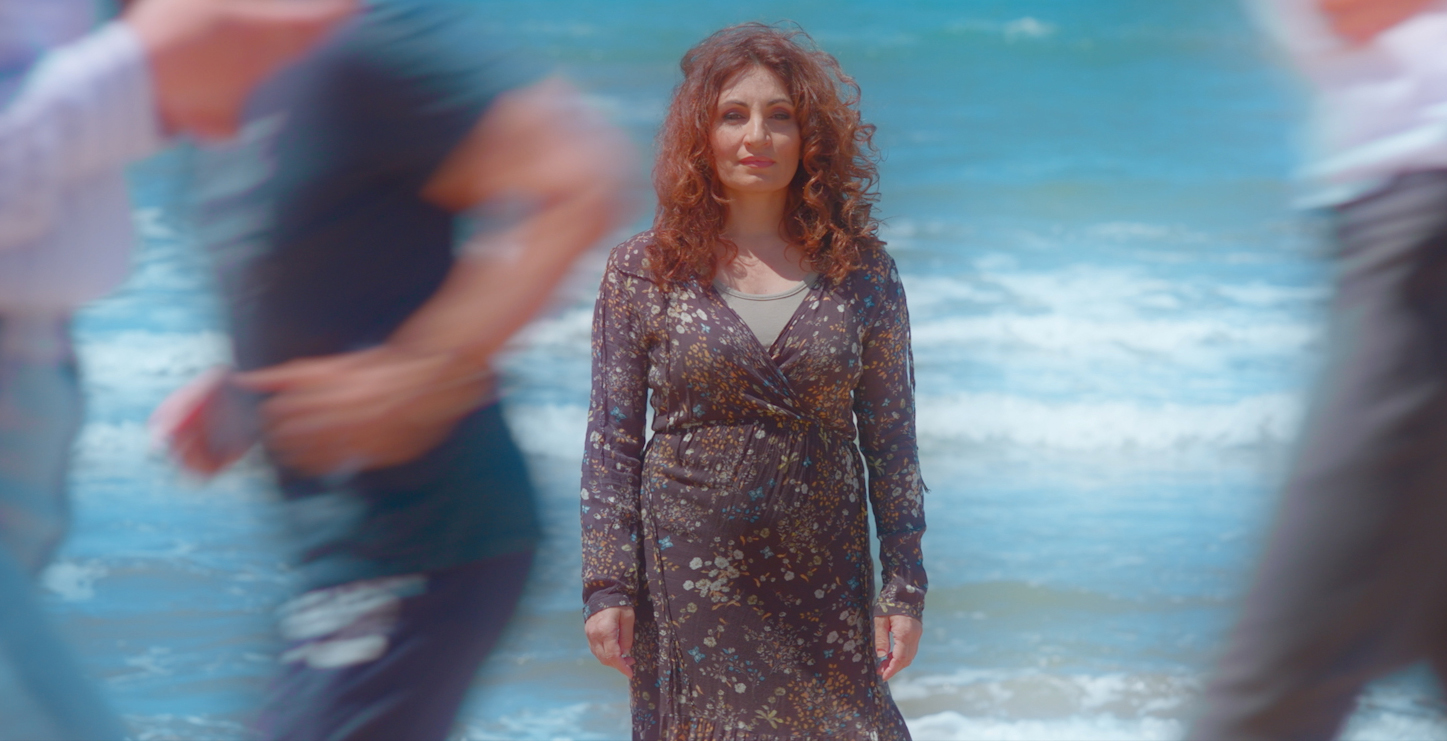
Drama, noir, by Fabio Martorana, Italy, 2021.
Alex and Claire have something in common, between recurring nightmares and restless memories; only time will allow them to understand what is happening. Where is the truth hidden? Perhaps in a time that the two protagonists don't even imagine. A sweet and complicated, painful and troubled love story, between a psychoanalyst and a woman who must fight a tough battle against herself and her introspective fears. Two soul mates that fate brought together after reliving distant experiences over time.
Dedicated to the world of noir, where lighting rich in chiaroscuro, the contrast between light and shadow symbolically represents the conflict between good and evil, the feature film tells of a sweet and complicated, painful and troubled love story. The film was shot between the provinces of Rome and Latina in the splendid settings of Circeo and Doganella di Ninfa.
LANGUAGE: Italian
SUBTITLES: English, Spanish, French, German, Portuguese
Freud's Unfinished Map and Its Blind Spots
You have had the same dream again. Not a variation, not a cousin of the previous one — the same architecture, the same corridor that narrows, the same figure at the end of it that you cannot quite reach or cannot quite escape, and you wake at the same threshold of unbearable, heart hammering, the room suddenly too real. You tell yourself it means nothing. You tell yourself this with the urgency of someone who suspects the opposite.
For most of the twentieth century, the official answer to what a nightmare meant was almost aggressively optimistic. Sigmund Freud‘s foundational argument in The Interpretation of Dreams, published in 1899 but dated 1900 as if to inaugurate the century with a manifesto, rested on a single structural claim: every dream, without exception, is a disguised fulfillment of a repressed wish. The nightmare, on this reading, was not an exception but a deeper confirmation — the distortion was simply more elaborate, the wish more socially unacceptable, the censorship more violent. Anxiety in sleep was the price the unconscious paid for smuggling something forbidden past the gatekeepers of the waking mind. The system was elegant, closed, and totalizing in the way that only systems built before their evidence has been fully gathered tend to be.
Then the soldiers came home. After 1918, European psychiatry was flooded with cases that Freud’s architecture could not absorb without cracking. Men who had survived the trenches returned not to relief but to a relentless mechanical repetition: the same explosion, the same burial under earth, the same face of a dying man replayed with the fidelity of a recording device, night after night, for years. There was no wish in these dreams that anyone could locate. There was no disguise, no symbolic substitution, no compromise formation — there was only the event itself, looping. Freud, who was not a man who revised his positions carelessly, was forced to confront what he called in Beyond the Pleasure Principle, written in 1920, a compulsion to repeat that operated entirely outside the logic of pleasure-seeking. He named the force behind traumatic repetition dreams something the psyche did not want but could not stop producing, and in doing so he quietly dismantled the theoretical floor beneath twenty years of his own work.
What makes this moment philosophically startling is not just the revision but what the revision admitted about the nature of the unconscious itself. If the mind could generate experiences that served no wish, fulfilled no desire, moved the organism toward nothing resembling satisfaction or even disguised gratification, then the unconscious was not the purposive, libidinal engine Freud had always described. It was something stranger — something that could become stuck, that could loop not because it wanted to but because it had lost the capacity to move forward. The dream was no longer a message with a sender. It was a symptom of a system that had broken its own navigation.
This fracture inside classical psychoanalysis was never fully repaired, and the repairs that were attempted revealed the fracture more clearly than concealing it. Jacques Lacan would later read the traumatic real as the thing that resists symbolization entirely, the kernel around which meaning orbits without ever touching. But even this reframing left the central practical question unanswered for anyone sitting in the dark at three in the morning: why does the dream return to precisely this scene, with this insistence, on this schedule that no act of will can interrupt? The architecture of the recurring nightmare does not behave like a message waiting to be decoded. It behaves like a wound that the body keeps touching not because it expects relief but because the touching has become the only language the wound knows.

The Trauma Loop as Cultural Inheritance
You wake up in the same burning house you have never actually lived in, running down a hallway that belongs to no floor plan you have ever walked, and the terror is completely, devastatingly specific. That precision is the first clue that something older than your own biography is at work.
Bessel van der Kolk spent decades mapping what happens to the nervous system when experience cannot be processed into ordinary narrative memory. In The Body Keeps the Score, published in 2014, he demonstrated that trauma does not archive itself the way a lived story does — chronologically, with a beginning and an end. It encodes sensorially, fragments itself across the body’s alarm systems, and re-emerges not as recollection but as re-experience. The dreaming brain, operating without the prefrontal cortex’s moderating influence, becomes the perfect theater for this re-emergence: uncensored, chronologically collapsed, physically convincing. What van der Kolk’s clinical work revealed, however, was that this mechanism extends far beyond the individual patient lying on his examination table. The body that keeps the score is not always the body that first played the game.
Epigenetic research has begun to document what Indigenous communities and oral traditions have asserted for centuries: that biological stress responses can be transmitted across generations. Rachel Yehuda’s studies at the Icahn School of Medicine at Mount Sinai showed measurable hormonal and genetic differences in the children and grandchildren of Holocaust survivors — lower cortisol levels, heightened stress reactivity, altered glucocorticoid receptor profiles — even when those descendants had never themselves experienced persecution. The nightmare is not a metaphor here. It is a chemical inheritance, a threat-preparation protocol that the body downloads before the mind has any say in the matter.
Antti Revonsuo’s threat-simulation theory, developed in the early 2000s, proposed that dreaming evolved precisely as a survival rehearsal system — that the nightmare is not a malfunction but a feature, an ancient training ground in which the organism practices responses to danger in a safe-enough environment. What neither Revonsuo’s evolutionary framework nor most clinical approaches fully reckon with is the question of whose danger gets rehearsed. If the threat-simulation system is biological and transmissible, then a child born into a lineage of displaced people, enslaved people, or famine-surviving people is running threat simulations calibrated to environments they have never inhabited, for enemies they have never personally encountered. They wake shaking from floods that belong to a great-grandmother’s delta. Their nervous system has been handed a script it did not choose.
This reframes the social function of the recurring nightmare in ways that should make comfortable people genuinely uncomfortable. Western psychology has invested heavily in locating pathology inside the individual, treating the dreamer as the unit of analysis and the dream as a symptom of their particular failure to integrate their particular experience. An entire pharmaceutical and therapeutic industry is organized around this premise. But if the nightmare is also a form of cultural inheritance — a biological letter written by the dead to the living — then pathologizing it is a way of individualizing what is structurally produced. It redirects attention from the historical conditions that generated the original trauma toward the supposedly insufficient coping mechanisms of the person currently screaming in their sleep.
There is something politically convenient about that redirection. Societies that have administered large-scale violence — colonial dispossession, forced migration, industrialized poverty — have a structural interest in locating the damage inside the descendants rather than inside the historical record. The recurring nightmare becomes, in this reading, evidence not of a broken individual but of a broken contract between the living and the conditions that were handed to them. The body carries forward what the official narrative quietly buries, and in sleep, when the official narrative loses its grip, what was buried insists on being seen.
What Evolutionary Biology Cannot Explain
You are standing in a hallway that keeps extending. The door at the end does not get closer no matter how fast you walk, and somewhere behind you there is a sound you cannot identify but recognize completely. You have been here before. Not in any building that exists, but in this exact configuration of dread — the corridor, the receding exit, the unnamed thing gaining. You wake and call it a nightmare. What you do not do, because no one has handed you the language for it, is ask why your sleeping mind rehearses a scenario with zero tactical application to anything you will face before breakfast.
In 2000, the Finnish neuroscientist Antti Revonsuo published a paper in Behavioral and Brain Sciences that offered an elegant answer to that very question. Dreams, and threatening dreams in particular, are a simulation engine. The sleeping brain runs rehearsals of dangerous scenarios so that the waking organism responds faster and more effectively when genuine threats appear. The hypothesis is clean, it is falsifiable in principle, and it carries the satisfying hum of evolutionary logic. It also collapses the moment you actually catalog what people dream about repeatedly.
The empirical record is merciless on this point. Study after study — including a 2014 meta-analysis by researchers at the University of Montreal examining thousands of nightmare reports — finds that the dominant categories of recurring nightmare content are not predator encounters, not physical injury, not anything the ancestral environment would have selected against. They are: arriving unprepared to an examination, being unable to speak in front of a crowd, losing teeth, watching one’s body dissolve or transform without consent, being trapped in bureaucratic systems that apply rules no one can explain. None of these scenarios sharpen a survival reflex. A faster response time to a recurring dream about submitting the wrong form to an indifferent clerk does not improve reproductive fitness by any calculable margin.
The evasion built into evolutionary frameworks is their capacity to retrospectively assign adaptive value to almost anything. If enough people dream about social humiliation, the theorist can argue that social status was a genuine survival variable in band-level societies — and this is true, but the argument has consumed its own tail. You cannot simultaneously claim that the nightmare system is a precise simulator calibrated to ancestral threats and then explain every anomalous content category by expanding the definition of threat until it includes the sensation of being ignored at a party. Ernest Hartmann, whose 1995 work on nightmare function proposed that dreams process emotional intensity rather than simulate scenarios, saw exactly this problem — the threat simulation model mistakes the envelope for the letter.
What the evolutionary frame refuses to name is that a significant portion of recurring nightmare content is not about danger at all. It is about meaning, or rather its absence. Bodily dissolution dreams — the teeth falling, the skin changing, the face unrecognizable in a mirror — appear with striking consistency across cultures and centuries, documented in sources as distant from each other as the Talmudic dream interpretations compiled between the third and fifth centuries CE and the clinical intake reports of twentieth-century trauma wards. The persistence of this content across radically different material conditions suggests that what is being processed is not a threat to the body but something the body is being used to represent: the instability of identity under pressure, the fear that the self one has constructed is not load-bearing.
That is not a survival problem in any sense evolutionary biology has the vocabulary to address. Natural selection has no opinion on whether your sense of continuous selfhood is coherent. It does not care that you wake at three in the morning convinced, for a half-second, that you do not know who you are. The genome is indifferent to existential vertigo, which means the nightmare that delivers it is pointing somewhere the genome cannot follow.
The Social Script Encoded in Fear
You are standing at the front of a room and something is wrong with your clothes. Not dramatically wrong — the zipper is broken, or the collar is turned, or you realize with a slow, nauseating certainty that you forgot to put on shoes, and now everyone in the room has noticed before you did. The dream is almost never violent. No one attacks you. The terror comes entirely from being seen in the wrong state, and the room does not even have to react — the simple fact of their capacity to see is already the punishment.
What the dreaming mind rehearses here has almost nothing to do with the body’s survival. Erving Goffman spent the better part of his career, and most precisely in The Presentation of Self in Everyday Life published in 1959, demonstrating that human beings live inside a permanent performance, managing their appearance, their gestures, their information, with the exhausting discipline of actors who cannot leave the stage. The recurring dream of exposure is not a symptom of personal fragility. It is the nocturnal audit of a performance you have been running every waking hour without being consciously aware of the cost.
The anthropological record suggests this cost has been consistent across cultures for as long as we have evidence of it. Cultures organized around shame rather than guilt — a distinction Ruth Benedict drew in The Chrysanthemum and the Sword in 1946 — operate on the premise that the worst thing that can happen to a person is not an internal moral failure but a public one. The nightmare of exposure belongs to both types of culture, because even in guilt-based societies the social contract carries an unspoken clause: your standing in the group is always provisional, always subject to revision, always one revelation away from collapse.
There is a young man, a teaching assistant at a university, who has had the same dream every few weeks for three years. He is in a seminar he was supposed to lead, and he has not prepared. Not forgot to prepare — never prepared, never intended to, and somehow this is now obvious to everyone in the room. The students are not hostile. They are simply waiting, with an attention that feels like a blade. He wakes before he says anything. The dream contains no content except the moment before the failure becomes undeniable, held in suspension, stretched until the alarm releases him.
What that suspension encodes is not a fear of incompetence in the abstract. It is a fear of the specific social machinery that processes incompetence — the withdrawal of legitimacy, the reclassification of the self from member to fraud. John Bowlby’s attachment research, developed across three volumes between 1969 and 1980, showed that the fear of expulsion from the group is not metaphorical in the human nervous system. It registers as a threat to survival with neurological signatures almost indistinguishable from physical danger, because for most of human evolutionary history, expulsion from the group was a death sentence, timed on a longer clock but no less certain.
The recurring nightmare of exposure does not dramatize an irrational anxiety. It dramatizes the absolute rationality of an animal that has always depended on collective belonging for its continued existence, now living inside social systems so complex and so unstable that the performance Goffman described never fully ends. The dream keeps running the scenario because the waking life never resolves it — you cannot prove your legitimacy once and be done. Every room is a new audition, every seminar a new stage, and the organism that learned to survive by reading group dynamics for signs of exclusion has not stopped reading them, even in sleep, even when the room is empty and the audience is assembled entirely from your own remembered faces of judgment, which may be the most accurate description of what a social self actually is.
A vision curated by a filmmaker, not an algorithm
In this video I explain our vision
Power Structures Dreaming Through Us

You are sitting an exam for a subject you never studied, in a building whose corridors keep rearranging themselves, and the proctor watches you with the calm, unhurried certainty of someone who already knows you will fail. You have had this dream before. Most people have. What is worth noting is not the anxiety it produces but the precision of its architecture — the surveillance, the measurable performance, the anonymous institutional gaze that requires no individual face to exert its full force.
Michel Foucault spent a significant portion of Discipline and Punish, published in 1975, demonstrating that modern power does not primarily operate through violence or explicit prohibition. It operates through visibility. The panopticon, Bentham’s prison design in which a single unseen guard can potentially observe every inmate, interested Foucault not as a historical curiosity but as a diagram — a schema that Western institutions reproduced across schools, hospitals, factories, and barracks throughout the nineteenth and twentieth centuries. The crucial mechanism is internalization: once subjects believe they may be observed at any moment, they begin to observe themselves. The warden migrates inward. And when the warden is inside you, it does not clock out at night.
What Foucault mapped onto stone walls and timetables, Byung-Chul Han has extended into the luminous architecture of digital life. In The Transparency Society, published in German in 2012, Han argues that contemporary culture does not discipline through opacity and the threat of the hidden observer — it compels through radical exposure. The subject is no longer surveilled from outside; the subject volunteers their own visibility, performs themselves continuously across platforms that reward disclosure and punish silence. The tyranny is no longer the warden you cannot see. It is the metrics you refresh compulsively, the engagement figures that tell you whether your existence, that morning, justified itself.
The recurring nightmare of the examination does not belong to an earlier century. It has only changed costume. The student who dreams of an exam they cannot pass is not processing a memory of school. They are processing the permanent condition of being evaluated — a condition that now has no institutional boundary, no graduation date, no final bell that releases you into an unevaluated life. Performance review culture, quantified self-tracking, follower counts, productivity metrics, the LinkedIn profile that must project forward momentum at all times: these are not metaphors for the panopticon. They are its current operating system.
There is a specific quality to institutional nightmares that distinguishes them from ordinary anxiety dreams: the dreamer is never accused of a specific act. They are simply found inadequate against a standard that is never fully stated. This is not incidental. Foucault noted that disciplinary power produces what he called the norm — not a law you can challenge in court, but an ambient standard whose violation leaves you not guilty but deficient. To be deficient is worse. Guilt at least implies a self substantial enough to have committed something. Deficiency implies a self that has simply failed to measure up to what a proper self should be.
Han’s contribution is to show that in transparency culture, this deficiency becomes spectacular. The failure is not whispered in a school corridor or noted in a personnel file. It is potentially visible to everyone, all the time, which means the psyche cannot locate the moment of judgment and brace for it — the judgment is continuous, ambient, structureless. The recurring nightmare may then be the mind’s attempt to give that ambient pressure a legible form: a room, a clock, a proctor, a paper with questions on it. The dream imposes spatial and temporal boundaries on something that, in waking life, has neither. It makes the diffuse into a scene, not to resolve the terror but because the psyche, unlike the platform, requires events to have edges.
What the dream cannot manufacture, and what the institution deliberately withholds, is the criteria by which you would know you had finally been enough.
The Historical Manufacture of the Anxious Self
You already know the dream. You are standing at the front of a room — a classroom, a boardroom, a stage — and you realize, with a certainty that drops through you like cold water, that you have prepared nothing. Or you are falling, not from anything in particular, just falling through a space that should not exist. Or you are in public and your body is suddenly, incomprehensibly, exposed. These are not personal neuroses. They are the shared inheritance of a particular historical moment that most people living inside it have never been asked to examine.
The historian Roger Ekirch, in his 2005 work At Day’s Close: Night in Times Past, documented something that should unsettle anyone who assumes the human relationship to sleep has always looked the way it does now. Before industrialization, European populations slept in two distinct phases separated by an hour or two of wakefulness, during which people prayed, talked, made love, or simply lay still in the dark. The consolidation of sleep into a single uninterrupted block was not a biological discovery — it was a productivity mandate. Factory schedules, artificial lighting, the synchronization of labor forces across cities: these external pressures collapsed the architecture of the night and, with it, the texture of dreaming itself. What the body did in the dark was reorganized to serve what it was required to do in the light.
The standardization of labor in the nineteenth century introduced something genuinely new into the psychological life of ordinary people: the performance review. Before Frederick Winslow Taylor published The Principles of Scientific Management in 1911, most workers were not systematically measured against external benchmarks of output and efficiency. Taylor changed that. He introduced the stopwatch, the quota, the supervisor’s gaze as permanent condition. The sociologist Richard Sennett, writing in The Corrosion of Character in 1998, traced how this shift produced a new species of anxiety — not the fear of physical danger, but the fear of inadequate performance, of being seen and found wanting by an authority whose criteria are never fully transparent. That fear did not stay in the factory. It migrated inward, and then downward, into sleep.
The unpreparedness dream and the exposure dream share the same skeletal structure: an audience that judges, a self that cannot meet the standard, and an absence of any escape route that does not require waking. It is not coincidental that these typologies surged in documented frequency precisely as Western societies were building the infrastructure of social evaluation — public examinations, university entrance tests, professional certifications, the emergence of the psychological concept of the career as a narrative of cumulative achievement. The historian Thomas Haskell, writing on the moral consequences of market society, argued that capitalism did not merely organize labor; it reorganized the self’s relationship to its own adequacy. Failure became personal. Success became proof of character. And the sleeping mind, unbothered by the defenses that daylight allows, played this logic out to its raw conclusion every night.
The falling dream occupies a different register, though it belongs to the same historical pressure system. Sleep researchers including Ernest Hartmann, whose 1995 work Dreams and Nightmares mapped the relationship between emotional intensity and dream imagery, found that hypnic jerks and falling sensations correlate with moments of physiological transition — the body releasing muscular tension as consciousness recedes. But the frequency and terror of falling dreams increased among populations undergoing rapid social mobility, both upward and downward. A society that had recently invented the concept of the career ladder had also, structurally, invented the concept of the fall. The body at rest dreamed the grammar of the economy it inhabited during the day.
What is most difficult to absorb is that none of this was designed. There was no committee that decided to manufacture an anxious dreaming subject. The nightmare is not a conspiracy — it is a residue, the psychic sediment left behind by systems built for entirely different purposes, systems that never once considered what they were teaching the unconscious to fear in the dark.
Obsession as Refusal, Not Disorder
You wake up in the same burning corridor again. The door at the end is always slightly different — sometimes locked, sometimes open onto nothing — but the heat behind you is identical, and so is the specific quality of your dread, that sensation of having already made the wrong choice before the dream even began. You have had this dream eleven times in three months. The clinical literature would call this a repetitive nightmare and suggest exposure therapy, image rehearsal, or, in more pharmaceutical moods, prazosin. What it would not easily entertain is the possibility that your sleeping mind is simply more honest than your waking one.
The pathologizing of repetition is one of the quieter violences of modern psychology. When a nightmare returns, the dominant framework — inherited largely from trauma-processing models developed in the 1980s and refined through PTSD research in veterans — treats recurrence as evidence of a stuck mechanism, a processing failure, a loop that treatment must break. This is not wrong, exactly, but it is catastrophically incomplete. It mistakes the persistence of the signal for a malfunction in the receiver, when the more uncomfortable possibility is that the receiver is working precisely as intended and the signal has simply not been answered.
Something in human cognitive architecture refuses to file away what has not been metabolized. Antonio Damasio’s work on somatic markers, particularly the arguments he built across Descartes’ Error published in 1994, demonstrated that the body holds stakes in decisions the conscious mind believes it has already settled. When emotional consequences are stripped from reasoning — as happens with damage to the ventromedial prefrontal cortex — human beings become catastrophically bad at navigating their actual lives, not better at it. The implication that most neuroscience refuses to follow to its conclusion is that irrational feeling might sometimes be a form of intelligence the organism cannot afford to abandon.
A recurring nightmare is the somatic marker with nowhere else to go. It is what happens when the waking architecture of your life has become so thoroughly defended, so institutionally reinforced, so socially legible, that the only remaining gap through which an unprocessed truth can enter is the one that opens every night when executive function goes offline. The culture has already answered the question — you made the right career choice, the relationship is fine, the silence was the mature response — and so the question has no legitimate address during daylight. It can only knock when the concierge is asleep.
What is strange, historically, is how recent this dismissal is. For most of recorded human civilization, the return of a dream was not a symptom but a summons. In the Mesopotamian tradition codified in texts like the Assyrian Dream Book from around 650 BCE, a repeated dream was understood as the gods becoming impatient with a message that had been ignored. Greek incubation practices at the sanctuary of Asclepius were built entirely around the premise that healing required sleeping in a sacred space until the right dream arrived and was properly received. The idea that a dream might need to be outrun rather than understood would have been not just foreign but theologically catastrophic to most pre-modern minds.
What the obsessive nightmare insists on is not suffering. It insists on a question. And questions, unlike symptoms, require engagement rather than elimination. The mind that returns to the same burning corridor every third night is not broken; it is stubborn in the way that integrity is stubborn — refusing to release a contradiction the waking self has agreed, for the sake of social legibility and daily function, to pretend does not exist. To treat that insistence as disorder is to mistake loyalty for malfunction, and in doing so, to finish the work of suppression that the dreaming mind refused to complete.
🌀 When the Mind Loops: Dreams, Obsession & the Unconscious
Recurring nightmares are not random noise from a sleeping brain — they are insistent signals from the unconscious, returning again and again until we listen. To understand obsessive dreams means entering a territory where psychology, philosophy, and the irrational converge. The articles below trace the hidden architecture of compulsion, fear, and the psyche’s darkest corridors.
Dissociation in Psychology: When the Mind Divides
Dissociation in psychology describes the mind’s capacity to fragment itself under unbearable pressure, creating inner worlds that operate in parallel to waking reality. This mechanism is deeply connected to the logic of recurring nightmares, where a split-off part of the psyche speaks through symbolic repetition. Understanding dissociation illuminates why certain dream scenarios return with obsessive insistence, refusing to be silenced.
GO TO THE SELECTION: Dissociation in Psychology: When the Mind Divides
Paranoia: how it develops, and distorts the perception of reality
Paranoia distorts the perception of reality by superimposing a narrative of threat onto ordinary experience — a process that mirrors exactly what obsessive nightmares do during sleep. The dreaming mind, like the paranoid mind, constructs a closed loop of danger and pursuit from which escape seems impossible. Exploring how paranoia develops offers a crucial key to decoding the persecutory grammar of recurring bad dreams.
GO TO THE SELECTION: Paranoia: how it develops, and distorts the perception of reality
Carl Gustav Jung and the Shadow: The Dark Side We Don’t Want to See
Carl Gustav Jung conceived of the Shadow as the repository of everything the conscious ego refuses to acknowledge — fears, desires, and traumas buried beneath the threshold of awareness. Recurring nightmares are among the Shadow’s most persistent and dramatic methods of communication, staging symbolic confrontations the dreamer cannot ignore. Jung’s framework remains indispensable for anyone seeking to transform obsessive dream imagery into a path toward integration.
GO TO THE SELECTION: Carl Gustav Jung and the Shadow: The Dark Side We Don’t Want to See
Forgotten Memory: When the Past Resurfaces
Forgotten memory and the phenomenon of the past resurfacing explore the uncanny way in which suppressed experiences do not disappear but instead go underground, waiting for the defenses of waking life to lower. Sleep is precisely the condition in which those defenses weaken, allowing buried material to flood back in the form of repetitive, anxiety-laden dreams. This article provides essential psychological context for understanding why the dreaming mind so often rehearses what the waking mind has tried hardest to forget.
GO TO THE SELECTION: Forgotten Memory: When the Past Resurfaces
Explore the Cinema of the Unconscious on Indiecinema
If these themes resonate with you, Indiecinema’s streaming platform is home to a carefully curated selection of independent films that dare to explore the inner life — dreams, obsession, memory, and the shadow side of the human psyche. Discover directors who treat cinema as a form of depth psychology, crafting images that linger long after the credits roll. Join Indiecinema and let the films that matter find you.
👉 EXPLORE THE CATALOG: Watch Indie Films in Streaming
A vision curated by a filmmaker, not an algorithm
In this video I explain our vision

