
The Body Before the Story
You are sitting on the edge of a bathtub at two in the morning, and the tile is cold through your jeans, and your hands have stopped shaking. That is the entire fact of the moment. Not the years before it, not the face of anyone who loves you, not the concept of waste or ruin — just the specific temperature of ceramic against denim and the sudden, absolute stillness of a nervous system that has been given what it was screaming for. The body has been answered. Everything else is commentary.

This is the part that recovery narratives almost universally skip, because it does not fit the arc they need to tell. The dominant grammar of addiction stories — and they are stories, shaped by cultural demand as much as lived experience — requires that the moment of use be populated with shame, with the ghost of the person you used to be, with some ambient awareness of descent. But the body at two in the morning is not thinking in those terms. The body is doing something far more precise: it is registering relief. And relief, neurochemically, is indistinguishable from the sensation we call homecoming.
In 1954, James Olds and Peter Milner implanted electrodes into the septal region of rat brains and discovered that given the option to stimulate that region themselves, the rats would do so up to seven hundred times per hour, ignoring food, water, and sleep until they died. What Olds initially called the “pleasure center” was later understood to be the nucleus accumbens and its dopaminergic pathways — not a pleasure center at all, but a wanting center, a system designed to encode salience, to flag certain stimuli as necessary for survival. The brain does not distinguish, at the level of mechanism, between the salience of water when you are dehydrated and the salience of opioids after three weeks of daily use. It has been trained. It is doing its job with terrifying efficiency.
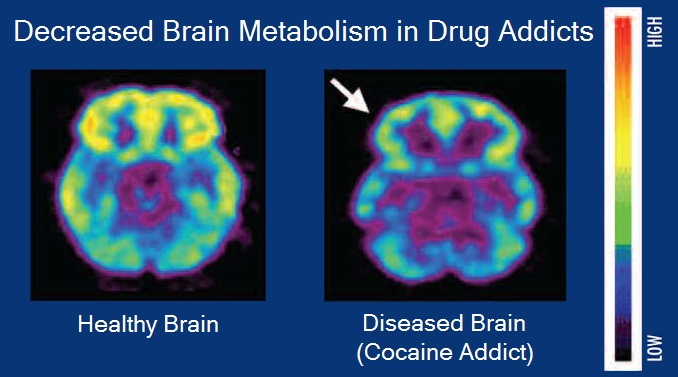
This is what gets lost when addiction is framed primarily as a moral failure or a collapse of will. Nora Volkow, director of the National Institute on Drug Abuse, spent decades documenting through PET imaging how the prefrontal cortex — the region governing executive function, long-term planning, and inhibitory control — undergoes measurable structural change in people with severe substance use disorder. The very faculty we invoke when we say someone should “just stop” is precisely the faculty most compromised by the condition we are demanding they use it against. The circularity is not poetic. It is anatomical.
And yet the body knows something that even this neuroscience does not quite capture. It knows before the person does. The research of Antonio Damasio, particularly his somatic marker hypothesis developed in “Descartes’ Error” published in 1994, suggests that the body generates anticipatory signals — physical states that function as rapid, below-conscious evaluations of past outcomes — long before rational deliberation catches up. People in the grip of addiction often describe knowing, somewhere in their chest or gut, that something is ending, that a threshold has been crossed, before they have any conceptual framework for what that knowledge means. The body is already writing the story. The mind is still several chapters behind, still negotiating with the version of events it finds most bearable.
What this means is that the standard recovery narrative — the one that begins with rock bottom and ends with restoration, that moves in a clean line from damage to redemption — is not wrong so much as it is late. It arrives after the body has already been doing the most significant, least visible work. The shaking hands, the flooded dopamine receptors, the cortisol spikes at three in the afternoon when the last dose is wearing thin: these are not the backdrop to the real story.
The Passenger

Documentary, by Tommaso Valente, Christian Poli, Italy, 2022.
The territory of Ravenna, suspended between its centuries-old history and recent industrial development, is a land of conflicts and rarefied landscapes. It is here that the action of "Housing First" develops, an association that focuses on social housing as a way to reintegrate people in situations of extreme hardship, whether it be psychological, economic, or due to different addictions. The Passengers tells the stories of these "wayfarers without a destination", who find in the homes in which they live a starting point for their journeys. Each house therefore lives on multiple narrative levels and multiple stories, from that of the apartment itself, in which the daily conflicts of coexistence explode and are resolved, to those of each participant in the project. Often painful stories of defeats, losses, falls into the abyss of alcohol and drugs; but also stories of redemption, in the paths that each protagonist undertakes to find their way in work and relationships.
There are people still looking for a place in the world, wayfarers marked by painful stories who are looking for a starting point: home. The Passengers tells their stories and that of "Housing first", a philosophy that puts social housing at the center of its action. In the stories of often conflicting coexistences, and in the evocation of tortuous life paths, the sense of a possible way to seize an opportunity for redemption emerges. Contrasting this "present-day narrative" of the various characters, all told with a dry documentary gaze, is the past of each of them, the traumatic starting points that have brought them here. Illustrated by evocative animations, the voices of the protagonists tell of failed marriages, corporate crises in which they lost everything, abuse suffered in the family and migrations from third world countries.
LANGUAGE: Italian
SUBTITLES: English, Spanish, French, German, Portuguese
How Redemption Became a Product
You have probably seen the testimonial before you realized you were watching one. A person sits in soft light, hands folded, voice measured, narrating the exact sequence of their collapse and their return. The language is specific but strangely uniform: rock bottom, surrender, one day at a time, the gift of desperation. It sounds like confession because it is confession, and confession has never been free.
The American rehabilitation industry generates approximately forty-two billion dollars in annual revenue, a figure that has more than doubled since 2006, when the National Survey on Drug Use and Health began tracking treatment utilization at scale. That money does not flow primarily toward pharmacological innovation or longitudinal psychiatric care. It flows toward a particular architecture of narrative — toward programs that require the patient to speak themselves into recovery, to produce a story of ruin and redemption legible enough to be witnessed, certified, and discharged. The story is the product. The person telling it is both the raw material and the finished good.
Michel Foucault, writing in Discipline and Punish in 1975, argued that confession had migrated out of the church and into the clinic, the courtroom, and the school without losing its essential function: the production of a subject who internalizes surveillance by learning to report on themselves. The confessor no longer needed a priest. The patient, the prisoner, the student — each learned to narrate their interiority in forms that made them legible to institutional power. What Foucault identified in the asylum and the examination hall, the rehabilitation complex has perfected in the group circle, where the addict who refuses to share is understood as resistant, and resistance is understood as relapse.
Alcoholics Anonymous was founded in Akron, Ohio in 1935 by Bill Wilson and Bob Smith, two men steeped in the Oxford Group’s evangelical Protestant framework. The twelve steps they codified borrowed directly from that tradition: moral inventory, admission of wrongdoing, spiritual awakening, service to others. The language was secularized just enough to pass through hospital doors, but its theological skeleton remained intact. By the 1980s, what had begun as a voluntary fellowship of mutual aid had been absorbed into a treatment infrastructure that courts could mandate, insurers could reimburse, and corporations could franchise. The spiritual became procedural. The fellowship became a referral network.
What makes this machinery so difficult to critique is that it occasionally works, and when it works, the person inside it experiences something that feels like salvation. The phenomenology of recovery is real. The problem is not that people find meaning in structured communities of shared suffering — they always have, and meaning is not nothing. The problem is that the structure has learned to monetize the feeling of meaning while systematically excluding the conditions that would produce it more reliably: stable housing, economic security, treatment of underlying trauma, and the basic dignity of not being defined by your worst years. A 2020 study published in the New England Journal of Medicine found that medication-assisted treatment with buprenorphine reduced opioid-related mortality by approximately fifty percent, yet fewer than thirty-five percent of treatment facilities in the United States offered it as a primary intervention. The narrative model and the medical model are not equally funded because they are not equally profitable in the same way.
There is a man in a facility somewhere right now who has told his story so many times it no longer belongs to him. He has learned which details produce recognition in the group, which pauses earn the slow nod of the counselor, which formulations of his own destruction demonstrate sufficient humility. He is not lying. He is performing a truth that has been shaped by the room’s expectations until it fits perfectly — which is precisely when you should start asking who designed the room, and why the fit feels so exact.

The Addict as Moral Fiction

You have probably never questioned the word itself. Not the drug, not the behavior, not even the craving — but the noun. “Addict.” You carry it like a diagnosis handed down from science, neutral and precise, when in fact it arrived through a courthouse door, stamped by legislators who were thinking about race, about labor, about which bodies in American society were permitted to be legible as suffering and which were required to be legible as criminal.
Before 1914, the morphine-dependent Civil War veteran and the opium-smoking Chinese railroad worker occupied the same pharmacological reality but different social worlds. The physician who supplied the veteran with laudanum was practicing medicine. The man in the Chinatown den was a threat to civilization. What the Harrison Narcotics Tax Act accomplished was not the regulation of dangerous substances — it was the bureaucratic formalization of that distinction. Scholars of American legal history note that the Act itself was technically a revenue measure, not a prohibition statute, yet within a decade the Treasury Department’s Narcotics Division had used it to prosecute physicians who prescribed opiates to dependent patients, effectively criminalizing maintenance treatment. The category of the addict did not emerge from pharmacology. It emerged from enforcement.
Johann Hari spent three years traveling across nine countries tracing the political genealogy of drug prohibition, and what Chasing the Scream recovered in 2015 was the figure of Harry Anslinger, the first commissioner of the Federal Bureau of Narcotics, whose thirty-two-year tenure over American drug policy was inseparable from his documented contempt for Black jazz musicians and Mexican immigrants. Anslinger did not construct prohibition on pharmacological evidence because the evidence available to him pointed in the opposite direction — toward dependency as a medical condition requiring clinical management. He constructed it on the grammar of contamination, the idea that certain substances belonged to certain populations and that those populations were a danger to white domestic order. The science was retrofitted afterward.
What this history produces is a category of person who is epistemologically impossible: someone whose suffering is simultaneously real enough to be punished and not real enough to be treated. The addict in this construction is not sick — sickness generates sympathy, generates resources, generates the social apparatus of care. The addict is morally defective, which generates a completely different apparatus: courts, prisons, mandatory minimums, the 1986 Anti-Drug Abuse Act that assigned crack cocaine sentences one hundred times longer than those for powder cocaine, a disparity the United States Sentencing Commission itself acknowledged in 1995 had no basis in differential pharmacological harm.
The philosopher Ian Hacking wrote in his 1999 work The Social Construction of What? about what he called “looping effects” — the way that classifications of people change the people classified, who in turn change the classification itself. The addict who internalizes the moral fiction of the addict becomes someone whose relationship to their own experience is mediated by shame, which is precisely the psychological condition that most aggressively disrupts the social connection that addiction research has consistently identified as central to recovery. Bruce Alexander‘s famous “Rat Park” experiments at Simon Fraser University in the late 1970s demonstrated that isolated rats consumed morphine solution compulsively while rats in enriched social environments largely ignored it — a finding that the dominant criminalization framework had no conceptual room to absorb, because it implied that the problem was not the substance and not the person but the architecture of the life surrounding both.
What the moral category of the addict actually protects is not public health. It protects a social order’s right to remain incurious about what it does to people — to treat the wreckage of isolation, poverty, and structural violence as evidence of individual pathology rather than as a mirror held up to the conditions that produced it.
What Rat Park Actually Measured
You are sitting in a room that was built before you arrived, and the room is making you sick, and everyone around you keeps asking why you can’t stop scratching at the walls.
Bruce Alexander built a different kind of room in 1981. Working out of Simon Fraser University, he and his colleagues constructed what they called Rat Park — a large, enriched enclosure with running wheels, nesting materials, other rats, space to move — and they gave its inhabitants the same morphine-laced water that had been driving isolated rats in standard laboratory cages to compulsive self-destruction. The rats in Rat Park mostly declined it. They tried it, some of them, but they didn’t organize their entire existence around accessing it. The isolated rats, alone in small boxes with nothing but the lever and the drug, consumed it at rates that would kill them. Alexander published his findings in Psychopharmacology, and the research world largely ignored him for two decades, because the finding was structurally inconvenient — not for science, but for the story that science had agreed to tell on behalf of a particular social order.
What makes the Rat Park data genuinely dangerous, beyond the version that circulates in popular lectures and wellness journalism, is the implication it carries about what a cage actually is. We tend to visualize a cage as iron bars, physical constraint, obvious deprivation. But a cage can be a labor market that extracts sixty hours a week from a body while returning wages insufficient for dignified rest. A cage can be a housing situation shared with people who don’t speak to each other. A cage can be the specific texture of a Sunday afternoon in a post-industrial town where the library closed in 2009 and the last social club dissolved when the factory did. Johann Hari pointed toward some of this in Chasing the Scream, published in 2015, but the structural critique kept softening into a call for human connection as though connection were a personal decision one could simply make rather than something that requires material conditions no one individual controls.
The harder truth that Alexander’s work implies — and that its popularization consistently fails to sustain — is that the recovery industry as it has been assembled since the mid-twentieth century is itself a product of the cage. The Twelve Step model, which Bill Wilson and Bob Smith formalized through Alcoholics Anonymous beginning in 1935, placed the mechanism of compulsion inside the individual: a character defect, a spiritual malady, a failure of surrender. This framing was not arbitrary. It emerged from a Protestant moral tradition in which suffering is personal, in which redemption requires individual confession rather than collective reorganization. When you locate the problem inside the person, you preserve everything outside the person from scrutiny. The neighborhood stays the same. The work conditions stay the same. The loneliness stays architecturally intact, and the recovering person is handed a set of tools for navigating it better, which is a generous gift so long as you never ask why the navigation is so punishing in the first place.
Willpower-based recovery narratives do not just fail to see the cage. They require not seeing it in order to function. The entire redemption arc — the rock bottom, the surrender, the slow climb, the anniversary chips, the amends — is premised on a self that could have chosen differently and is now choosing better. This self must be sovereign, must be the unit of both pathology and cure, because if the unit of pathology is a social arrangement, then cure requires changing that arrangement, and changing that arrangement threatens interests that are not pharmaceutical companies or street dealers but landlords, employers, urban planners, and the fiscal priorities of municipal governments that defunded public space while expanding incarceration. Vincent Felitti’s Adverse Childhood Experiences study, which tracked seventeen thousand Kaiser Permanente patients beginning in 1995, found dose-response relationships between childhood trauma categories and adult substance use so consistent and so steep that the individual-willpower frame doesn’t just become implausible — it becomes a kind of deliberate arithmetic error performed in public, repeatedly, with great sincerity.
The Grammar of the Confession
You are sitting in a folding chair inside a church basement that smells of burnt coffee and damp concrete, and the man at the front of the room is telling you exactly how low he went — the stolen money, the pawned wedding ring, the morning he woke up in a stranger’s car with no memory of the previous thirty-six hours. He is not confessing because he needs to. He is confessing because the room requires it. Without the degradation, there is no story. Without the story, there is no belonging. The chair beneath you is the first clue that something structural is happening here, something that has very little to do with healing.
Every recovery narrative obeys the same grammatical rules regardless of the substance, the decade, or the country in which it unfolds. There is a fall, which must be rendered in enough visceral detail to certify the speaker’s credentials as someone who genuinely lost everything. There is a rupture — a moment of bottom, of revelation, of a particular Tuesday that changed everything. There is transformation, which must be framed as total and ongoing, never completed, always precarious. And there is testimony, which closes the loop by returning the speaker to the community as a living proof of concept. Deviation from this sequence is almost always read as insincerity or incomplete recovery. The man who skips the degradation portion and speaks instead about structural poverty or pharmaceutical marketing will be quietly regarded as someone who has not yet done the real work.
Émile Durkheim, writing in “The Elementary Forms of Religious Life” in 1912, described ritual not primarily as communication between the individual and the divine but as a mechanism by which a community restates its own boundaries and renews its collective identity. The ritual does not exist for the participant at the center; it exists for those watching from the periphery. The collective effervescence Durkheim identified — that charged atmosphere of shared emotion during ceremonial enactment — functions to reinforce the distinction between the sacred and the profane, between those who belong fully and those whose belonging is conditional. The recovery meeting, the televised redemption interview, the memoir published in the year of the author’s tenth anniversary of sobriety: these are not primarily documents of individual transformation. They are boundary-maintenance ceremonies for people who have never had a problem, reassuring them that the line between themselves and the person in the folding chair is real, visible, and crossable only in one direction.
What the grammar demands above all is that the speaker fully internalize the moral framework of the audience. The addict must not merely have stopped using; they must demonstrate that they now see their former self exactly as the audience sees that former self — as someone who had surrendered to weakness, who had made bad choices, who had betrayed the people who loved them. Any narrative that introduces complexity at this point — that asks why the substance worked so well for so long, that locates the function of the high within a specific and recognizable human need — is structurally incompatible with the ceremony. The sociologist Erving Goffman, in “Stigma” published in 1963, described how the stigmatized individual is required to perform a particular kind of social labor to remain legible to the dominant group: not just behaving differently, but actively endorsing the dominant group’s interpretation of what their stigmatized behavior meant. The recovery story is this performance executed in its most elaborate and publicly celebrated form.
The uncomfortable mathematics of the form reveal themselves when you consider who is never asked to perform it. The executive whose productivity was sustained for a decade by prescribed amphetamines, the entire postwar American officer corps that returned from Vietnam having consumed heroic quantities of alcohol in the service of their own sanity — these figures do not sit in folding chairs and narrate their degradation, because the narrative template only activates when the community has already decided that a boundary has been crossed, and boundary decisions are never made by the person standing at the line.
A vision curated by a filmmaker, not an algorithm
In this video I explain our vision
Trauma Before the Substance

You are nine years old and your nervous system has already made its calculations. Not consciously, not in language, but in the older grammar of cortisol and adrenaline and the body’s relentless arithmetic of threat and safety. By the time any substance enters the picture, the architecture is already built — the wiring already laid, the thresholds already calibrated to a world that was not safe, not consistent, not kind.
Bessel van der Kolk spent decades watching this architecture from the inside out. His 2014 synthesis of neurobiological and clinical research demonstrated something that clinicians had long suspected but rarely said plainly: trauma does not live in memory as a story. It lives in the body as a state. The muscles hold it. The brainstem encodes it. The prefrontal cortex — the seat of reasoning, planning, the capacity to weigh consequences — gets functionally overridden whenever the body detects a pattern that resembles the original wound. This is not metaphor. The neuroimaging data shows the same threat-response activation in a traumatized adult encountering a benign trigger as in a child encountering actual danger. The body does not know the war is over.
The ACE Study — the Adverse Childhood Experiences research conducted across more than 17,000 participants by the CDC and Kaiser Permanente between 1995 and 1997 — produced numbers that should have rewritten addiction policy entirely. Individuals who reported four or more categories of adverse childhood experience, including abuse, neglect, and household dysfunction, were 700 percent more likely to develop substance use disorders than those who reported none. Not 70 percent. Not twice as likely. Seven hundred percent. And yet the dominant cultural narrative continued to locate the problem in the moment of first use, in the moral weakness of repetition, in the failure of will at the point of the needle or the bottle or the pipe — as though the body arrives at that moment without a history, without a logic, without a decade of prior rehearsal in chemical self-regulation.
Here is what that logic actually looks like from the inside: a nervous system that grew up without reliable external regulation — without the co-regulation that comes from a stable, attuned caregiver — learns to regulate itself through whatever produces the fastest shift in internal state. Dissociation works for a while. Hypervigilance works for a while. And then, at some point, a substance works. It works precisely because it does what no person ever reliably did: it changes the internal weather on demand. The body, trained to survive, recognizes this as useful. This is not weakness. This is adaptation operating exactly as designed.
The language of choice collapses here not because people lack agency, but because agency is not a fixed quantity distributed equally across nervous systems with different histories. Choice, in any meaningful sense, requires access to the prefrontal cortex — requires the capacity to pause, to project forward, to tolerate the discomfort of not acting. Chronic early trauma compromises all three. The research of Bruce Perry, particularly his work on the sequential development of the brain and how early neglect disrupts that sequence, maps the same territory from developmental neuroscience: the brain builds itself in order, and when early stages are built in fear, the higher functions that govern deliberate choice rest on an unstable foundation.
What the redemption narrative almost never accounts for is the cost of asking someone to make different choices with a brain that was shaped, before conscious memory, to treat regulation as survival. Recovery then becomes not merely a behavioral change but a neurological renegotiation — a process of slowly building, often for the first time in a person’s life, the internal infrastructure that was supposed to come from being held, seen, and kept safe by another human being before any of this began.
The Relapse as Heresy
You already know the moment before it happens — the particular quality of the silence in the room when someone at a meeting confesses they used again. It is not quite disgust and not quite pity, but it contains both, arranged into something that looks, from the outside, like concern.
That silence is a verdict. And the moral grammar underneath it has been so thoroughly naturalized that most people inside the room cannot hear it anymore. Relapse, within the architecture of dominant recovery culture, does not register as a medical event. It registers as a betrayal — of the group, of the self, of the story everyone in that room is collectively trying to maintain. The person who relapses has not stumbled; they have defected.
What makes this culturally durable is that it serves a narrative function. Redemption stories require clean trajectories. The fall must lead to the rise, and the rise must hold. When a person’s timeline refuses that shape — when the fall leads to a rise that leads to another fall — they become a problem the story cannot metabolize. They are not a protagonist anymore. They are a cautionary figure, recycled at the edges of other people’s testimonies as a warning about what insufficient willpower produces.
Alan Marlatt, a psychologist at the University of Washington, spent much of the 1980s systematically dismantling this framework from within clinical science. His relapse prevention research, developed throughout that decade and formalized with Judith Gordon in their 1985 volume on the subject, demonstrated that relapse was not the exception in addiction recovery but the statistical center of it. Studies he drew from showed that relapse rates across substance dependencies — alcohol, heroin, tobacco, opioids — clustered between 50 and 90 percent within the first year of abstinence. He was not describing failure. He was describing the natural course of a chronic condition. The proper clinical analogy was not moral collapse but the recurrence of symptoms in someone managing hypertension or asthma. No one tells a diabetic that their blood sugar spike means they didn’t want wellness badly enough.
Marlatt also identified what he called the abstinence violation effect — the psychological mechanism by which a single lapse catastrophizes into full relapse. A person who has internalized the binary logic of clean versus fallen has no cognitive scaffolding to interpret a single use as a partial event. Because the moral framework allows only total success or total failure, the first drink after six months does not feel like a slip. It feels like proof of an identity. And that feeling, not the substance itself, is what drives the return to heavy use. The story the person has been handed — the story that says recovery is linear and relapse is shame — actively produces the outcome it condemns.
The demand for linear recovery stories does something else that rarely gets named: it systematically expels the people who need the most support. Someone whose timeline cooperates — who achieves abstinence, holds it publicly, builds a legible narrative of before and after — becomes a community asset. Their story gets told at events, used in fundraising materials, offered to newcomers as a map. Someone whose timeline refuses cooperation becomes invisible to that same infrastructure. They stop showing up because the room has made clear, through a thousand small calibrations of tone and silence, that their presence is a disruption rather than a participation. And so the recovery community loses precisely the members whose complex trajectories contain the most clinical information about what chronic addiction actually looks like.
There is a real human being somewhere right now who has tried to get sober eleven times, who is exhausted not by their addiction but by the labor of pretending each attempt is the first, because they have learned that revealing the full count reads as evidence of unworthiness rather than as evidence of persistence against a condition that is, by every credible metric, brutally difficult to survive.
Whose Redemption, Whose Witness
You have heard the story a hundred times, told in the first person, sold in hardcover: the spiral into addiction, the bottom, the turning point, the slow climb back into light. What you have not been asked to notice is the texture of the room where that story gets told — the TED stage, the podcast studio, the publishing house acquisitions meeting — and the specific kind of body standing in it.
The recovery memoir as a cultural form carries a hidden means test. It requires not only survival but the preservation of enough social capital to be legible as a subject worth redeeming. You need the network that kept your name off a permanent record while you were using. You need the family that absorbed the chaos without calling the police, or the lawyer who intervened before the charge became a conviction, or simply the skin color that made a responding officer decide this was a medical situation rather than a criminal one. None of this appears in the acknowledgments section.
Michelle Alexander documented in The New Jim Crow, published in 2010, the mechanism by which the American drug war operates as a system of racialized social control — not as a side effect, but as a structural function. The statistics she assembled were not aberrations. By 2023, the United States held approximately 2.3 million people in prisons and jails, with Black Americans incarcerated at roughly five times the rate of white Americans, and drug charges serving as the fulcrum of that disparity at every stage from arrest through sentencing. The architecture Alexander described is not a pipeline that occasionally catches the wrong person. It is a sorting machine, and what it sorts is whose crisis becomes a story and whose becomes a file.
A felony drug conviction removes a person from the narrative economy of redemption almost surgically. It restricts access to federal housing assistance, blocks eligibility for student loans under provisions that remained partially in force for decades, disqualifies individuals from many professional licenses, and in several states suspends or permanently revokes voting rights. The machinery of consequence does not pause to ask whether recovery happened. Recovery, in the legal and civic sense, is simply not on offer. What remains is supervised, conditional, perpetually revocable existence — a condition that does not produce memoir material because it does not produce a legible arc of return.
The redemption story, in its dominant cultural form, depends on the premise that there was somewhere to return to. It depends on a prior self — employed, housed, connected, credentialed — that waits patiently on the other side of the addiction like a coat left at the door. For the man arrested at nineteen on a possession charge in a state where mandatory minimums applied, who served four years, who emerged into a labor market that runs background checks on every application, the prior self was not preserved. It was confiscated. What recovery looks like from inside that situation is not a narrative. It is a daily negotiation with a permanent subtraction.
The visibility of certain recovery stories and the invisibility of others is not a media oversight that better journalism could correct. It reflects something more intractable: the cultural demand that redemption be demonstrable, that it produce evidence of reinsertion into productive citizenship, and that this evidence be legible in terms the mainstream can reward. When the structural conditions for that reinsertion have been deliberately dismantled — when the law itself is the obstacle — the story cannot be told in those terms, because the terms do not apply. What circulates instead is the story of the person the system was willing to give back, offered as proof that the system works, while the people the system kept are simply absent from the account, their silence mistaken for a lack of story rather than recognized as the story itself.
🔥 The Long Road Back: Struggle, Darkness & Redemption
Addiction is rarely a story of weakness alone — it is a labyrinth of psychological pain, social fracture, and the desperate search for meaning. The articles below explore the deepest forces that drive human beings to the edge and, sometimes, back again. Each one sheds light on a different corridor of the same endless maze.
Social Exclusion: Causes, Dynamics and Ways Out
Social exclusion is one of the most powerful and underexplored engines of addiction, pushing vulnerable individuals toward substances as a substitute for belonging and dignity. This article examines the structural causes of marginalization and the psychological dynamics that keep people trapped in cycles of dependency and invisibility. Understanding exclusion is essential to understanding why recovery is never simply a personal act of willpower.
GO TO THE SELECTION: Social Exclusion: Causes, Dynamics and Ways Out
Drugs in Rave Culture: History and Psychology
The intertwining of rave culture and drug use has shaped entire generations, where altered states became both a form of liberation and a dangerous trap. This article traces the historical and psychological relationship between club environments and substance consumption, revealing how the pursuit of ecstasy can quietly become compulsion. It offers crucial context for understanding addiction not as individual failure but as a cultural and social phenomenon.
GO TO THE SELECTION: Drugs in Rave Culture: History and Psychology
Overcoming trauma to live the present
Recovering from addiction is inseparable from confronting trauma — the unhealed wounds that often lie at the origin of self-destructive behavior. This article explores the psychology of trauma processing and the painful but transformative work of learning to inhabit the present without being consumed by the past. It speaks directly to the inner journey that every story of redemption requires.
GO TO THE SELECTION: Overcoming trauma to live the present
The Man Who Wants Out: Impossible Redemption in Noir
Noir fiction and film have long been obsessed with the figure of the person who wants out — out of crime, out of addiction, out of a life that has become a prison. This article explores how the theme of impossible redemption functions in noir storytelling, questioning whether society ever truly allows the fallen to rise. It resonates deeply with the moral and emotional stakes of any genuine recovery narrative.
GO TO THE SELECTION: The Man Who Wants Out: Impossible Redemption in Noir
Discover the Cinema That Tells the Truth
Stories of addiction and redemption find their most honest expression in independent cinema — films that refuse easy answers and sit with the full weight of human fragility. On Indiecinema, you can explore a curated world of films that dare to go where mainstream cinema cannot, illuminating the darkest corridors of the human experience with courage and compassion. Join us and let independent cinema be your guide through the maze.
👉 EXPLORE THE CATALOG: Watch Indie Films in Streaming
A vision curated by a filmmaker, not an algorithm
In this video I explain our vision

