Psychology, as practiced in most public discourse, has become a service industry for the management of discomfort. You feel anxious: here is a breathing technique. You feel lost: here is a five-step framework. You feel the weight of something unnameable pressing against the interior of your chest at three in the morning: here is a podcast episode about self-compassion. The vocabulary of the discipline has been stripped of its density, laundered through wellness culture, and returned to circulation as a series of actionable insights. What was once a rigorous, often disturbing attempt to understand the architecture of human interiority has been converted into productivity software for the self.

This hub refuses that conversion.
What we mean by psychology here is something considerably more uncomfortable and considerably more ambitious than the management of symptoms. We mean the full catastrophe: the unconscious as a genuine territory with its own laws and resistances, not a metaphor to be invoked casually in think-pieces. We mean the body as a site of historical inscription, carrying traumas and inheritances it cannot articulate verbally. We mean the family as a structure that transmits damage across generations with the same fidelity it transmits love, and often through the same channels. We mean desire as a force that does not negotiate with the ego’s preferences. We mean death, grief, addiction, and the particular vertigo of adolescence not as problems to be solved but as conditions to be understood with the full weight of philosophical and clinical attention they deserve.
The question that organizes this entire editorial project is deceptively simple: what actually happens inside a human being, and between human beings, and what does that have to do with the world we collectively inhabit? The deceptiveness of the question lies in the fact that answering it honestly requires refusing the boundaries that have been erected between disciplines. Psychology without philosophy becomes a technology of adjustment. Philosophy without psychology becomes a performance of ideas untested by actual human suffering. Sociology without psychology cannot explain why individuals participate in systems that damage them. Literature without psychology produces characters rather than human beings. This hub operates at all those intersections simultaneously.
Take the unconscious. The Freudian concept, battered by decades of neuroscientific skepticism and cultural dismissal, remains one of the most productive intellectual instruments ever devised for understanding why human beings do not behave according to their stated intentions. You can update the terminology, run it through Lacan’s linguistic reformulation or through contemporary neuropsychoanalytic research, contest the details, argue about the clinical evidence, but the core observation holds: a significant portion of what drives human behavior operates outside deliberate awareness, and that portion is not random noise. It is organized. It has a history. It protects itself from exposure with considerable ingenuity. The repressed does not disappear; it finds alternate routes. Understanding those routes is not a clinical specialty. It is a basic requirement for any serious engagement with human culture, politics, art, or relationships.
Lacan extends this further into territory that most psychology communication refuses to enter. Language is not a neutral medium through which pre-existing thoughts are transmitted. Language constitutes the subject. The child enters the symbolic order and is forever split from itself, forever pursuing an object that does not exist, forever mistaking the map for the territory. This is not obscurantism; it is a precise account of why desire is structurally insatiable and why the gap between what we say we want and what we pursue is not a correctable error but a feature of human subjectivity. You cannot wellness-app your way out of a structural condition. What you can do is understand it, work with it, resist the most catastrophic of its manifestations, and occasionally produce something interesting from the friction.
The body carries all of this and more. Body psychology, in the tradition running from Wilhelm Reich through Alexander Lowen to contemporary somatic approaches, insists that the organism registers experience before the mind formulates narrative. Trauma is not first a story; it is a pattern of muscular tension, autonomic dysregulation, a held breath, a braced shoulder. The body keeps the score not as a metaphor but as a literal description of how the nervous system archives experience that the verbal mind cannot yet access. This has implications that extend well beyond clinical contexts. It means that culture operates on bodies, not just on minds. It means that political power is exercised partly through the management of embodied states: who is allowed to move freely, who is trained to make themselves small, who carries the somatic signature of chronic threat. The intersection of body psychology with questions of gender, race, class, and institutional power is not a stretch. It is an unavoidable consequence of taking the body seriously as a psychological surface.
Family trauma and intergenerational transmission belong in the same conversation. The mechanisms by which damage travels across generations are multiple and still not fully mapped: epigenetic modification, attachment patterns, the repetition compulsion, the silent transmission of unprocessed grief, the way a parent’s dissociated experience becomes a child’s inexplicable symptom. The grandchildren of people who survived starvation demonstrate metabolic changes. The children of the traumatized often enact scenarios they have never consciously witnessed. Families are systems, and systems have memories that exceed the memories of their individual members. Understanding this does not excuse anything. It does not dissolve responsibility. But it maps the actual terrain of inheritance with greater accuracy than any moralistic framework that treats individuals as self-originating.
Adolescence deserves sustained attention precisely because it is so rarely treated with any. The reduction of adolescence to a hormonal disruption to be managed, or worse, to a demographic to be marketed to, obscures the fact that it is an existential crisis of genuine magnitude. The adolescent is engaged in something philosophically serious: the attempt to construct a self in the face of competing social demands, biological transformation, the first full confrontation with mortality and desire and social hierarchy, and the discovery that the adults around them are frequently operating on the basis of fictions they have not examined. The intensity of adolescent experience is not disproportionate to its causes. The causes are real and the stakes are high. The emotional register of adolescence maps directly onto the psychological terrain of the hero’s journey, which is itself a distillation of the universal experience of threshold, dissolution, and reconstruction.
The hero’s journey, which we approach through its mythological and psychological dimensions rather than through the debased version that has colonized screenwriting seminars, is not a narrative formula. It is a description of what actually happens when a human being is forced to move from one stage of being to another. The call, the refusal, the threshold, the ordeal, the transformation, the return: these are not story beats invented by Joseph Campbell. They are observations about the shape of genuine psychological change, supported by the mythological record of virtually every human culture. Ancient myth is not prescientific psychology. It is a different mode of psychological knowledge, operating through image and narrative rather than through conceptual analysis, and it has access to truths about human interiority that clinical language has not yet managed to articulate with equal precision. The doppelgänger, the shadow twin, the double who embodies what the self has refused to acknowledge, appears in literature from German Romanticism through Dostoevsky and Stevenson to contemporary fiction not because it is a good plot device but because it is a precise image of a real psychological structure. Jung’s shadow is not a metaphor. It is a map.
Logotherapy enters here as a discipline that refused to reduce human suffering to pathology. Viktor Frankl’s insistence that the will to meaning is a primary human drive, and that the absence of meaning produces a specific form of suffering distinct from neurosis, has never been more relevant than in a cultural moment characterized by the proliferation of stimulation alongside the collapse of orienting frameworks. This is not positive thinking. Frankl developed his ideas in a concentration camp. The claim is not that meaning makes suffering bearable in a comfortable way. The claim is that without it, human beings disintegrate in a specific and characteristic manner that can be understood and, sometimes, addressed.
Power psychology is not a discrete specialty. It is an analytic lens that belongs on every topic in this hub. The way power organizes psychological experience, who gets to define normal, whose suffering is legible, which forms of distress receive clinical attention and institutional resources, how conformity is produced and maintained, how persuasion operates at levels below conscious deliberation, how surveillance modifies behavior and self-perception: all of this is psychological in the deepest sense. Social conformity is not a failure of individual courage. It is a structural condition produced by mechanisms that Milgram and Asch and Zimbardo documented with disturbing precision, mechanisms that social media platforms have since industrialized at scale. Understanding persuasion as it actually operates, not as rational argument but as the exploitation of cognitive shortcuts, social proof, authority, scarcity, and reciprocity, is not cynicism. It is literacy.
Toxic relationships, psychopathy, and the psychology of manipulation belong in a serious intellectual context rather than being left to the therapeutic vernacular of YouTube content and Reddit threads. The literature on dark triad personality traits, narcissistic object relations, coercive control, and the specific dynamics through which certain relational configurations produce lasting psychological damage is substantial and clinically precise. It deserves to be communicated with the same rigor it was produced with, not flattened into a checklist for identifying bad partners.
Love philosophy is the counterweight. The philosophical tradition from Plato’s Symposium through Stendhal’s crystallization theory, Fromm’s distinction between being and having in love, Alain Badiou’s conception of love as a truth procedure, and the entire psychoanalytic literature on object relations and transference, constitutes one of the most serious attempts human thought has made to understand what is simultaneously the most common and the least understood of human experiences. Repressed desire sits at the heart of this territory: not as a clinical concept to be treated, but as a condition to be examined, because what human beings cannot consciously acknowledge about what they want shapes their lives with greater force than what they can.
Grief writing and addiction are here because they are the edges of what human beings can survive, and the ways they survive them, or do not, tell us everything about the structure of the self and its limits. Grief is not a disorder with stages. It is an encounter with the reality of loss in a culture that has largely abolished the rituals and communal frameworks within which loss was historically processed. Addiction is not a failure of willpower. It is a complex intersection of neurobiological vulnerability, psychological pain, social context, and the specific pharmacological properties of substances or behavioral patterns that hijack the reward system. Both subjects demand the full complexity of the available evidence rather than the comforting simplifications that public discourse prefers.
The sociological dimensions cannot be extracted. Marginalization is a psychological condition produced by social structures, and the psychological damage it causes cannot be addressed without addressing the structures. Healthcare sociology maps the ways in which the healthcare system itself, including mental healthcare, distributes care according to logics of power, class, and racial hierarchy that have nothing to do with clinical need. The surveillance society produces specific psychological effects: the internalization of the observer’s gaze, the modification of behavior in the absence of any actual oversight, the erosion of the private self that serves as a necessary condition for psychological development. Community and the loss of it, the deep ecology of human embeddedness in natural systems and the psychological consequences of its severance, slow living as a deliberate resistance to the temporality imposed by productivity culture: these are not lifestyle topics. They are diagnoses of a civilization in a specific kind of trouble.
Female awakening, female empowerment, and the distinctive psychological terrain of women’s experience under patriarchal structures are not a subgenre within this hub. They are a central thread. The psychology of women, both as it has been distorted by a discipline that defined male experience as the norm and as it has been reclaimed and rebuilt by feminist clinical and theoretical work, belongs at the center of any serious engagement with psychology as a discipline. The same is true for the way art therapy, cinema history, and noir fiction function as psychological instruments, modes of processing and externalizing inner experience that operate by different rules than verbal analysis and therefore access different material.
Memory philosophy closes the circle. What we remember, how memory is constructed and reconstructed, how trauma disrupts normal mnemonic processes, how collective memory and personal memory interact, how forgetting is sometimes as active a process as remembering: these are questions that sit at the junction of philosophy, neuroscience, psychoanalysis, and literary theory. The philosophy of memory is the philosophy of the self, because the self that persists across time is largely a narrative construction built from selected, edited, and often unconscious processes of remembering and forgetting.
The contents gathered under this hub do not form a curriculum. They form something more like an ongoing argument about what it means to be a human being in possession of an interior life, a body, a history, a family, a set of desires you did not choose, and a finite amount of time in which to figure out what to do with all of it. The argument is not resolved. It is not meant to be resolved. What it is meant to be is rigorous, honest, and dense enough to be worth the time it takes to engage with it seriously.
Family Trauma and Its Generational Weight

The family is not a shelter. It is the first site of power, the original laboratory where the subject learns — before language fully consolidates — what love costs, what silence means, and how much of the self must be amputated to survive proximity. Trauma that originates within familial structures carries a particular viciousness: it arrives from the same source that was supposed to guarantee protection, collapsing the distinction between wound and healer. Bowlby mapped the architecture of attachment; van der Kolk documented what the body retains when the mind cannot process; Bowen traced how dysfunction replicates itself across generations with the cold precision of genetic inheritance. But the philosophical weight of the matter exceeds any clinical taxonomy. Family trauma is a problem of ontology before it is a problem of symptomology. It shapes the subject's fundamental sense of what reality is reliable, what other people fundamentally are, and whether existence itself can be trusted. The intergenerational transmission of trauma — now partially corroborated by epigenetic research — suggests that the damage does not stop at the individual: it enters time, rewrites the behavioral and neurological inheritance passed forward. Healing, in this context, is not recovery of a prior wholeness. It is the construction of something that never existed.
Dysfunctional families: the psychology of family chaos
Every family has its mythology, its silences, its unspoken rules. In dysfunctional ones, the chaos becomes the norm and the norm becomes invisible. Understanding the psychology of family disorder is the first step to breaking the cycle.
Family secrets: toxic dynamics and hidden truths
Every family has its unspoken truths. This article pulls back the curtain on the toxic dynamics that thrive in silence, and the lasting toll that hidden secrets take on those who carry them.
Maternal deprivation and its consequences
The absence of a mother's care leaves marks that last a lifetime. This article traces the profound psychological consequences of maternal deprivation and how early wounds shape who we become.
Overcoming trauma to live the present
Living in the present sounds simple — until the past won't let you. A reflection on what it really takes to move through trauma and reclaim the only moment that truly belongs to us.
The weight of the psychological past and the process of trauma liberation
The past doesn't stay past — it lives in the body, in reactions, in relationships. A thoughtful exploration of how we carry psychological wounds and what the long road to liberation actually looks like.
Alzheimer’s and the Family: When Care Becomes Daily Life
When a loved one has Alzheimer's, the family becomes the invisible patient. A lucid and compassionate look at what it means when care stops being exceptional and becomes simply everyday life.
The Family Caregiver: Psychology and Culture of Care
Being a caregiver is not just a role — it's an identity that reshapes the self. This piece explores the psychological and cultural forces that define those who dedicate their lives to caring for others.
The Father-Son Relationship
Few relationships shape us as profoundly — and as silently — as the one between father and son. This article examines the complex emotional architecture of that bond: the expectations, the silences, the pride, and the wounds that so rarely find words.
The Absent Father: Wounds That Remain
A father does not have to leave to be absent. This powerful piece explores the psychological legacy of emotional unavailability — the kind of paternal absence that leaves no obvious scar, yet shapes identity, attachment and self-worth for a lifetime.
Brotherhood and Family Conflicts
Brothers share blood, childhood and memory — and sometimes that is precisely what makes conflict between them so enduring and so fierce. This article looks at the psychology of sibling rivalry and family tension, from ancient myth to the modern living room.
Sport as Emotional Language Between Fathers and Sons
For many fathers and sons, a shared game or a Sunday match becomes the only available language for saying what cannot otherwise be said. This piece explores the emotional depth hidden inside sport as a ritual of connection between men across generations.
Unresolved Conflicts: When Resentment Becomes a Prison
Resentment is a prison with no visible bars — and we are both the captive and the jailer. This article explores the psychology of unresolved conflict and the paradox of grievances we hold onto so tightly that letting them go feels more threatening than staying trapped.
Unconscious: Depth Psychology and the Hidden Architecture of Mind
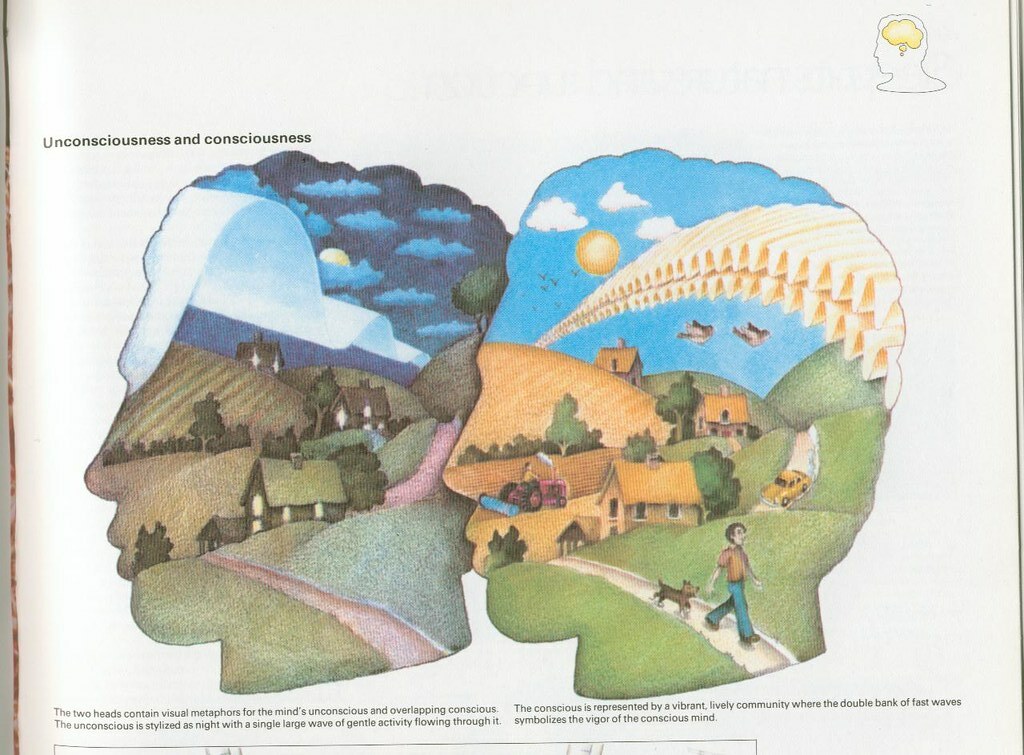
The unconscious is not a metaphor. It is a structural claim about the architecture of mind — the assertion that the overwhelming majority of cognitive, affective, and motivational processes operate beneath the threshold of awareness, shaping behavior with a precision that conscious deliberation rarely achieves and never fully supervises. Freud gave it a dramatic cartography: repression, censorship, the return of what cannot be faced. But the concept survives and exceeds psychoanalysis. Cognitive science has reframed it without the theatrical vocabulary, documenting implicit memory, automatic processing, priming effects, and the systematic distortions that subjects confabulate into coherent narratives after the fact. What emerges from both traditions, despite their mutual contempt, is a shared scandal: the subject who believes itself to be the author of its own life is largely a retrospective fiction. The conscious self arrives late, narrates post-hoc, and mistakes commentary for causation. This is not a comfortable finding. It dismantles naive notions of agency, responsibility, and rational self-determination with a clinical efficiency that neither moralizing nor optimism can repair. Engaging seriously with the unconscious means tolerating a chronic uncertainty about the origins of one's own thoughts, desires, and decisions.
Redemption and atonement: psychology of inner change
Redemption is not absolution handed down from outside — it is a grueling inner transformation. This piece explores the psychology of atonement and what it truly takes to change from within.
Synchronicity and meaningful coincidences: Jung and chance
Jung called them synchronicities — those uncanny moments when coincidence feels like meaning. This piece revisits his groundbreaking idea and asks: is the universe speaking, or are we just listening harder?
Recurring nightmares: meaning of obsessive dreams
When the same nightmare keeps returning, your unconscious is trying to tell you something. An exploration of the meaning behind obsessive dreams and the hidden anxieties they refuse to bury.
The instinct for self-preservation: the psychology of survivalism
Survivalism is more than bunkers and emergency kits — it's a psychological posture toward a world perceived as threatening. This piece explores the instinct for self-preservation and what it tells us about fear, control, and identity.
The Uncanny in Freud: The Unheimliche
That eerie feeling when the familiar turns strange — Freud called it Unheimliche, and it haunts literature, dreams, and human psychology. A deep dive into one of psychoanalysis's most fascinating concepts.
Music as an Awakening of the Unconscious
Before language, before thought, there was rhythm and sound. This article explores how music bypasses the rational mind and speaks directly to the unconscious — and why that conversation can be so profoundly unsettling, and so profoundly healing.
Carl Gustav Jung and the Shadow: The Dark Side We Don’t Want to See
Jung called it the Shadow: everything we refuse to acknowledge about ourselves, projected outward onto the world. This article is an unflinching look at the dark side of the psyche — and why learning to face it might be the most courageous act of all.
Jung and the Persona: The Mask That Becomes a Face
The persona is the mask we wear to face the world — but what happens when the mask fuses with the face beneath it? Exploring Jung's groundbreaking concept, this piece asks how much of who we are is authentic self, and how much is a role we've forgotten we were playing.
The Secret and the Rite: Initiation, Transformation and Jungian Psychology
From ancient mystery cults to modern psychotherapy, the rite of initiation has always demanded that something in us must die before something new can be born. A fascinating journey into the transformative power of ritual through the lens of Jungian psychology.
Regression in Psychology: When the Mind Returns to Childhood
When the present becomes unbearable, the mind sometimes retreats to earlier, simpler times. This exploration of psychological regression asks what it means when adults think, feel, and act like children — and what they are really seeking.
Jung’s Red Book: Analysis
Jung's Red Book is one of the strangest and most extraordinary documents in the history of psychology — a visionary descent into the unconscious rendered in illuminated manuscript form. This analysis begins to decode what it means.
The Unconscious and its Relationship With Cinema
What does cinema reveal about the hidden depths of the mind? This piece explores the intimate and unsettling relationship between the unconscious and the moving image, where dreams, desires, and repression find their most powerful visual language.

Adolescence: Identity, Crisis, and the Psychological Architecture of Becoming

Adolescence is not a transitional phase. That framing, inherited from developmental psychology's obsession with teleology, reduces a structurally complex condition to mere incompleteness. The adolescent is not a deficient adult waiting to solidify. She is a subject caught between two incommensurable symbolic orders: the infantile economy of need and the adult economy of desire, neither of which she fully inhabits. This liminality is not pathological. It is philosophically generative. Kierkegaard's stages of existence, Lacan's account of the mirror stage's aftershocks, Winnicott's transitional space — these frameworks converge on a single uncomfortable truth: identity is never more violently exposed as a fiction than during adolescence. The self is being assembled under social pressure, hormonal disruption, and cognitive reorganization simultaneously, without any guarantee of coherence. Contemporary neuroscience compounds this picture by demonstrating that prefrontal inhibition is genuinely incomplete, not metaphorically so. The adolescent brain is a different instrument, not a broken adult one. What culture tends to pathologize — risk-taking, ideological intensity, erotic turbulence, existential vertigo — may in fact constitute the necessary conditions for genuine subjectivation. The problem is not adolescence. The problem is the adult world's intolerance of it.
Peter Pan syndrome and the fear of growing up
Peter Pan didn't want to grow up — and increasingly, neither do we. Behind the refusal to commit, settle or take responsibility lies a complex psychological portrait of a generation redefining what adulthood is allowed to mean.
Procrastination: the psychology of postponing and avoiding adult life
Procrastination is not laziness — it is anxiety wearing a very convincing disguise. Beneath every postponed task and avoided deadline lies a deeper story about fear, identity and the weight of becoming who you're supposed to be.
The quarter-life crisis: anxiety, doubts and fear of the future
At 25, the map runs out. The quarter-life crisis is real, it's uncomfortable, and it's asking a question most of us weren't prepared to answer: now that you're here, what exactly are you going to do with your life?
Coming of age: the time that changes your life.
Coming of age is not a single moment but a fault line — the point where life divides into before and after. A reflection on the passages that quietly, irreversibly change us.
Self-Esteem and Adolescence: Building a Healthy Relationship with Yourself
Self-esteem in adolescence is fragile, contested, and crucial. This article explores the psychological work of building a healthy relationship with yourself during the years when everything — including who you are — is still in flux.
Adolescence and Loneliness: Psychology of Youth Isolation
Adolescent loneliness is not just a phase — it's a formative psychological experience. This piece examines what isolation means during youth, and why it deserves far more serious attention than it receives.
First Love and Transformation: Psychology of Adolescent Bonds
First love is never just romance — it's transformation. This article explores the profound psychological shifts adolescent bonds trigger, shaping identity in ways that echo long into adulthood.
Teenage Depression and Rebirth: Stories of Female Resilience
Depression in teenage girls is often invisible, dismissed, or misread. These stories of resilience cut through the silence and reveal the fierce, quiet strength of young women who chose to return to themselves.
Erik Erikson and the Stages of Life: The Age of Wisdom
Erik Erikson believed that old age, faced with courage and honesty, could become the richest chapter of a human life. This piece revisits his landmark theory of psychosocial development and asks what it truly means to arrive at the stage he called wisdom.
The Vampire as Metaphor for Adolescence
Immortal, seductive, caught between two worlds and hungry for something they cannot name — the vampire has always been a teenager at heart. A sharp and surprising analysis of why the undead remain the perfect metaphor for the adolescent condition.
Problematic Adolescence is Not a Developmental Disorder
Not every storm of adolescence signals a disorder — sometimes it signals life. A compelling rethinking of teenage turmoil that challenges the medicalization of youth and asks what we lose when we pathologize growing up.
Workplace Psychology: Power, Dysfunction, and the Hidden Rules of Professional Life
The modern workplace is one of the most revealing laboratories of human psychology precisely because it strips motivation down to its transactional skeleton and then demands that people pretend otherwise. What happens when institutional structures are designed to extract performance while simultaneously requiring the worker to experience meaning, loyalty, and even gratitude? The tension between alienation and engagement is not a management problem to be solved with better onboarding rituals or motivational posters. It is a philosophical condition rooted in the collision between autonomous selfhood and bureaucratic necessity. Thinkers from Weber to Sennett have traced how organizational life corrodes character, fragments identity, and replaces long-term narrative coherence with short-term deliverables. Workplace psychology, taken seriously, is not about optimizing human capital. It is about understanding how power operates through soft coercion, how conformity gets repackaged as culture, and how the language of wellbeing is routinely weaponized to suppress legitimate dissent. The psyche does not check itself at the door when a person enters a professional environment. It metabolizes hierarchy, injustice, and boredom in ways that surface only decades later, often in forms the individual cannot trace back to their origin.
The impostor syndrome: when success always seems out of reach
You've earned every achievement, yet a quiet voice insists it was luck, a mistake, a matter of time before everyone finds out. Impostor syndrome isn't just self-doubt — it's a psychological trap worth examining closely.
Business failure: psychology and paths to rebirth
Failure in business is also a failure of identity — and that's where the real work begins. This article explores the psychological aftermath of collapse and the inner resources required to rebuild.
The rejection of the future and the dynamics behind the fear of change
Why do we resist what hasn't happened yet? This piece explores the deep psychological roots of our fear of change — and what it really means to reject a future we haven't tried.
Psychological Resilience: How to Turn Hardship into Strength
Resilience is not about bouncing back — it's about transforming. This article deconstructs the psychology behind turning hardship into a foundation for a more conscious, grounded life.
Professional Burnout: When Work Becomes a Trap
Burnout is not laziness, and it is not weakness — it is what happens when dedication is systematically exploited until nothing remains. This article dissects the anatomy of professional exhaustion and asks why we keep mistaking self-destruction for commitment.
Mobbing: Psychology and the Culture of Toxic Work
Mobbing is not just bullying — it is a systemic, cultural phenomenon that destroys people while organizations look away. This article exposes the psychology behind toxic workplaces and the silence that enables them.
Love Philosophy and the Architecture of Desire

Love resists every attempt at clean categorization, which is precisely why philosophy keeps returning to it with something resembling desperation. Plato's Symposium stages a competition of definitions that ends not in consensus but in the arrival of Socrates drunk and barefoot, dismantling everything that came before. That scene is methodologically honest: love is the concept that undoes its own analysis mid-sentence. The phenomenological tradition, from Husserl's notion of intentionality to Sartre's brutal account of the Other as threat, treats love as a fundamental mode of being-toward rather than an emotion layered on top of neutral consciousness. Levinas pushes further, making love the site where ethics actually originates, where the face of another demands a response before any rational deliberation begins. Contemporary analytic philosophy, meanwhile, has tried to reduce love to a cluster of attitudes, preferences, and neurochemical correlates, producing technically rigorous papers that describe something recognizable only from a very great distance. The psychological dimension cannot be separated from this philosophical architecture. Questions about attachment, dependency, and idealization are not separate from metaphysics — they are embedded within it. Understanding love as a subject demands holding the clinical and the speculative in permanent, uncomfortable tension.
Long distance relationships: how they survive and when they fall apart
Distance is the ultimate stress test for love: it strips away comfort, routine and proximity, leaving only what's real. The question is not whether long-distance relationships can work, but what they reveal when they don't.
The betrayal and couple secrets
Secrets between partners are rarely neutral — they carry weight, create distance, and rewrite the rules of intimacy. This piece examines what betrayal and concealment do to the architecture of a relationship.
Feeling lonely in a relationship and the loneliness of couples
You can share a bed and still feel utterly alone. This honest exploration of loneliness within relationships asks why so many couples feel disconnected — and whether that silence can ever be broken.
The Conjugal Deception: Where Love Ends and the Performance Begins
At some point in many marriages, love quietly exits and performance takes its place. This piece traces that invisible threshold — and asks what we're really doing when we stay for the show.
Fromm’s The Art of Loving: Analysis
Fromm argued that love is not a feeling but an art — one that requires knowledge, effort, and courage. This analysis of 'The Art of Loving' asks why we are so bad at it, and what it would take to truly learn.
A vision curated by a filmmaker, not an algorithm
In this video I explain our vision
Body Psychology: How the Body Holds the Mind
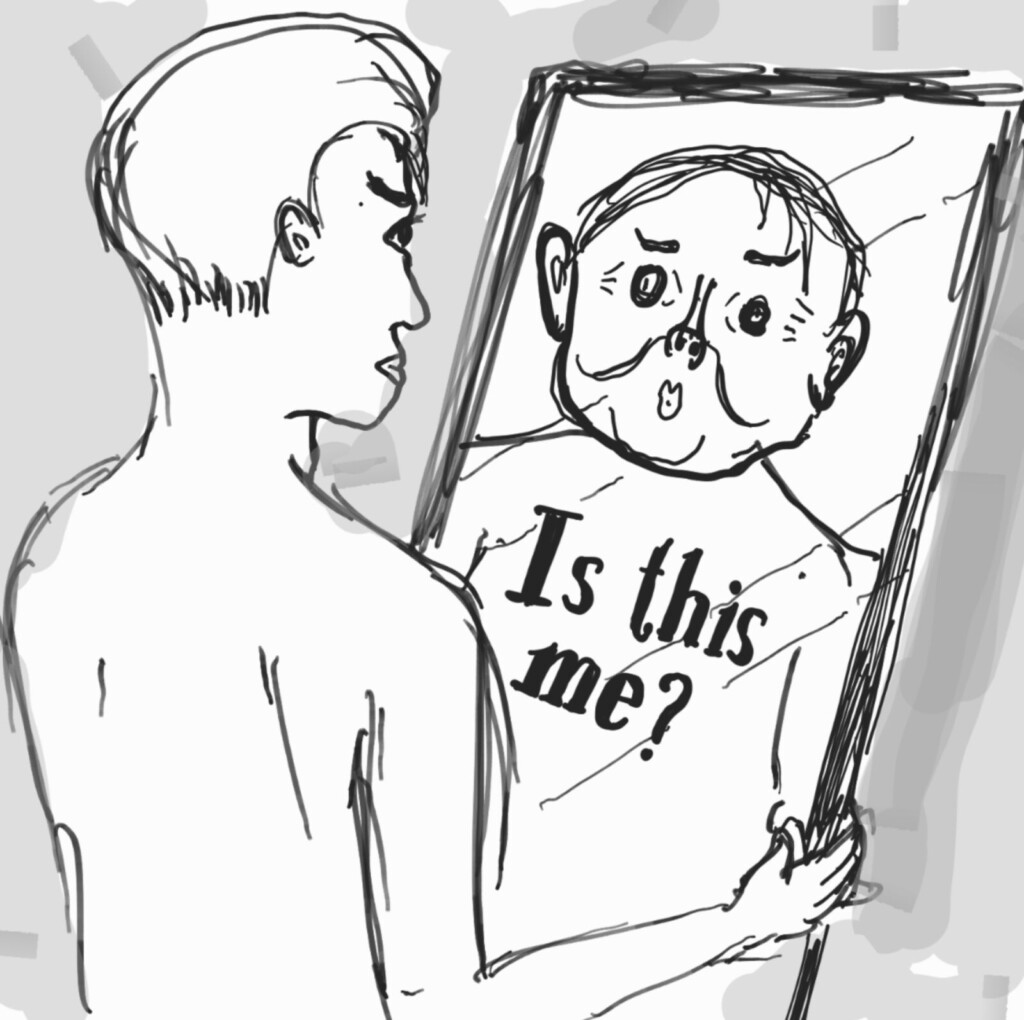
The body is not a vehicle for the mind. This is the foundational error Western thought spent centuries reinforcing, from Cartesian dualism to the clinical detachment of early psychiatry, which treated psychological suffering as something occurring exclusively above the neck. Body psychology dismantles this error not through metaphor but through evidence: trauma encodes itself in muscular tension, postural collapse, autonomic dysregulation. Wilhelm Reich was the first to systematize what clinical intuition had always suspected — that character is literally structured in flesh, that a person's psychological defenses are readable in how they hold their shoulders, restrict their breath, armor their chest against feeling. What followed Reich, from Lowen's bioenergetics to Levine's somatic experiencing to van der Kolk's neurobiological work on traumatic memory, constitutes a coherent intellectual tradition that refuses the mind-body split as a working hypothesis. The nervous system is not a metaphor for anxiety; it is where anxiety lives, circulates, and learns to perpetuate itself. Any psychology that ignores the body's role as a primary site of experience, memory, and meaning is operating on an incomplete map. The territory is always larger than the abstraction imposed upon it.
Guilt: the psychological anatomy of an inner torment
Guilt is more than a feeling — it's a psychological architecture. This piece dissects the inner mechanics of guilt, exploring how it forms, festers, and quietly governs our lives.
Physiotherapy and the Body in Advanced Age
The aging body is not a problem to be solved, but a story to be heard. This piece examines how physiotherapy in advanced age becomes an act of listening, dignity, and reconnection.
Illness as Awakening: When the Body Says Enough
Sometimes the body speaks when the mind refuses to. This article explores the compelling and often overlooked idea that illness can be a turning point — a radical invitation, delivered through physical crisis, to finally live a more authentic life.
Alexander Lowen’s Bioenergetic Analysis
Alexander Lowen believed the body never lies. This piece introduces bioenergetic analysis — the practice of reading emotional history through posture, breath, and tension — and why it remains one of psychology's most embodied approaches.
Wilhelm Reich: Life and Psychology of the Body
Wilhelm Reich was a genius, a dissident, and a tragedy. This portrait explores how his radical theories about the body, sexuality, and repression put him at odds with Freud, fascism, and eventually reality itself.
Power Psychology: Dominance, Influence, and the Architecture of Control
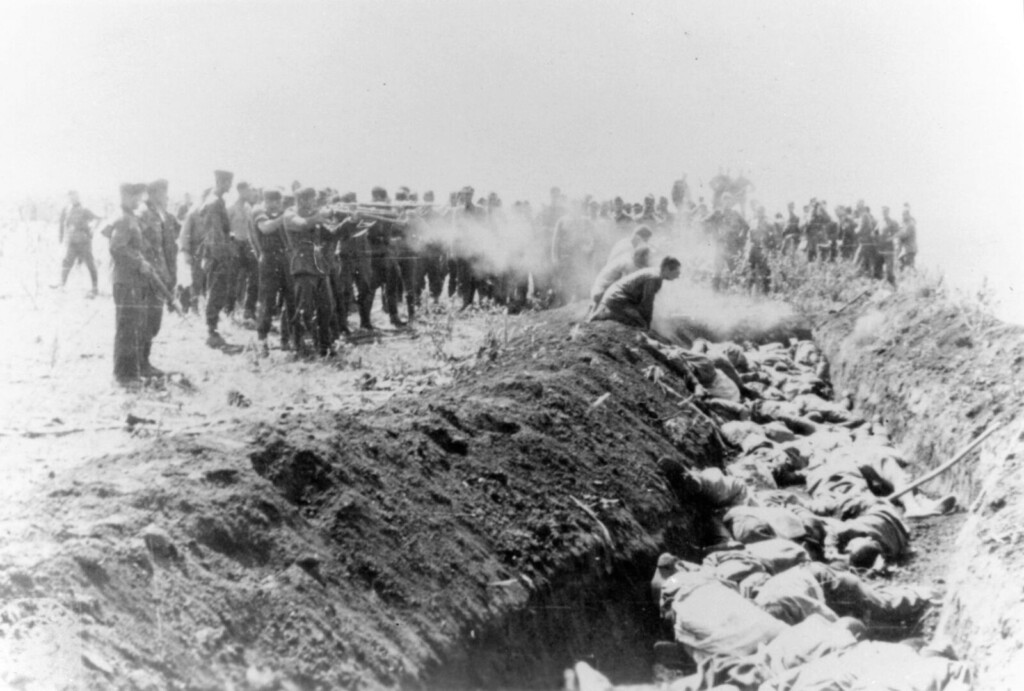
Power is not an external force that acts upon the psyche — it is constitutive of it. From Nietzsche's will to power as the fundamental drive underlying all human striving, to Foucault's meticulous dissection of how disciplinary regimes inscribe themselves into bodies and subjectivities, the relationship between power and psychological life has never been a secondary question. It sits at the very center of what it means to be a subject. Adler saw the drive for superiority as the master motive behind neurosis and compensation. Fromm diagnosed the authoritarian character as a psychological structure built around the simultaneous craving to dominate and to submit. What these thinkers share — despite their radical differences — is the refusal to treat power as merely political or sociological. Power operates inside the individual: in the dynamics of self-esteem, in the structures of obedience, in the seductions of charisma, in the psychological wages of hierarchy. Understanding power psychology means tracking how social arrangements become internal arrangements, how domination gets metabolized into identity, and how resistance — when it occurs — emerges not from nowhere but from specific psychological conditions that must be understood, not romanticized.
Vengeance as distorted justice: anatomy of a killer
Revenge feels like justice, but it operates by entirely different rules. This article dissects the psychological anatomy of vengeance — and asks what it reveals about the human need for a moral order.
The executioner’s mask: why revenge seduces
Revenge seduces because it promises what grief cannot give — control, resolution, closure. This essay lifts the executioner's mask and examines why the fantasy of retribution runs so deep in the human psyche.
The psychology of the scapegoat and mass hysteria
When communities need someone to blame, the scapegoat is never chosen at random. This piece unpacks the dark psychology behind collective hysteria and the social mechanisms that produce it.
The Psychology of Evil: Why People Commit Violent Acts
What drives a person to commit acts of extreme violence? This article ventures into the uncomfortable territory of the psychology of evil, examining the social, neurological and psychological forces that can push ordinary human beings toward the unthinkable.
The Psychology of Power: History and Theory
Power is never just political — it lives in the psyche, in relationships, in institutions. This piece traces the history and theory of power through a psychological lens, revealing how domination and submission shape the self.
Persuasion and the Architecture of Consent
Persuasion is not a neutral act. Every argument, every framing choice, every carefully selected metaphor carries within it a vector of power — an attempt to reshape another mind without resorting to coercion. The philosophical tradition has long treated this ambiguity with suspicion: Plato expelled the rhetoricians from his ideal city precisely because they trafficked in appearance rather than truth, in emotional manipulation rather than rational demonstration. Yet Aristotle rehabilitated the discipline, recognizing that logos alone is insufficient to move human beings, that pathos and ethos are not corruptions of reason but its necessary complements in a world populated by finite, embodied minds. The tension between these two positions has never been resolved, and it runs through every contemporary debate on nudging, propaganda, advertising, and political communication. What separates legitimate persuasion from manipulation? The answer depends entirely on what theory of rationality and autonomy one is willing to defend. Cognitive science has further complicated the picture by demonstrating that most of our judgments are post-hoc rationalizations of processes we never consciously control. If the rational agent is largely a fiction, then the ethical distinction between persuading and manipulating becomes simultaneously more urgent and more difficult to draw.
Affective Manipulation in Psychology
Affective manipulation hides in plain sight — in relationships, in rhetoric, in kindness weaponized. This piece maps the psychological mechanisms behind emotional exploitation and why even the most aware among us can fall prey.
Gaslighting: Psychology and Culture
Gaslighting has moved from clinical terminology to cultural flashpoint — but what does it actually mean, and what does it reveal about power, reality, and the fragility of self-trust? A rigorous and unsettling exploration.
Psychological Manipulation: History and Theory
Manipulation is as old as human society, but its psychological architecture is surprisingly precise. This historical and theoretical overview traces how the science of influence became both a tool of power and a field of resistance.
Cialdini’s The Psychology of Persuasion: Analysis
Six principles. Infinite applications. This analysis of Cialdini's landmark book goes beyond the surface to examine how 'The Psychology of Persuasion' reshaped marketing, politics, and our understanding of human vulnerability.
Robert Cialdini: Life and Works
Robert Cialdini turned the science of influence into a cultural phenomenon. This profile traces the life and work of the man who mapped the architecture of persuasion — and changed how we think about being convinced.
Toxic Relationships and the Psychology of Harm

The compulsion to remain inside a relationship that demonstrably causes harm is not a failure of intelligence. It is a systemic collapse of the self-regulatory mechanisms that ordinarily govern attachment. Object relations theory, from Melanie Klein through to Fairbairn, establishes that early relational templates are not merely memories but active organizers of present experience. When the primary caregiving environment was itself a source of both threat and comfort, the nervous system learns a paradox: danger is intimacy. The abuser or the chronically unavailable partner does not feel wrong. They feel familiar, which the undiscriminating body reads as safe. Bessel van der Kolk's neurobiological research makes this disturbingly concrete — the prefrontal cortex, responsible for rational evaluation, goes partially offline under conditions of relational stress, handing control to subcortical systems optimized for survival rather than deliberation. What appears from the outside as inexplicable loyalty is, internally, a coherent response to an early environment that demanded appeasement as a condition of survival. The moral vocabulary of weakness or stupidity applied to people trapped in toxic dynamics is therefore not only imprecise. It actively prevents understanding by substituting judgment for analysis.
Jealousy in love: psychology of a destructive emotion
Jealousy promises to protect love but more often corrodes it from within. Part instinct, part learned behavior, part self-portrait — understanding this destructive emotion might be the most honest thing you ever do for a relationship.
Toxic relationships: the mechanisms behind the destruction of a bond
What makes a relationship turn destructive? This article examines the hidden mechanisms that erode bonds from within, tracing the slow unraveling that toxic dynamics leave in their wake.
Possessive obsession and pathological jealousy: the destruction of the bond
Jealousy and possessiveness can masquerade as love — until they consume it entirely. A sharp look at how pathological obsession dismantles the very bond it claims to protect.
The silent signs of an unhappy marriage
An unhappy marriage rarely announces itself. It whispers through small absences, careful silences, and gestures that stopped meaning anything. Learn to read the signs before they become a verdict.
Consciousness: The Architecture of Inner Experience
Consciousness remains the hardest problem philosophy has ever inherited from science, and the reason is structurally embarrassing: we cannot step outside experience to examine it. Every tool we use to investigate consciousness is itself a conscious act. This recursion is not a methodological inconvenience — it is the defining condition of the entire inquiry. From Descartes' cogito to Nagel's famous question of what it is like to be a bat, the persistent scandal is that subjective experience resists reduction without remainder. Functionalism attempts to dissolve the problem by identifying mental states with causal roles, but it quietly abandons the very thing it was supposed to explain — the qualitative character of experience, what philosophers call qualia. Physicalism promises completeness yet cannot account for why any physical process should feel like anything at all. Panpsychism, once dismissed as romantic fantasy, has re-entered serious academic discourse precisely because the alternatives keep failing at the same threshold. What psychology contributes to this debate is not resolution but empirical pressure: neuroscience maps correlates, attention research reveals the narrow bandwidth of awareness, and disorders of consciousness expose how fragile the unified self actually is. The hard problem remains hard. That is its intellectual value.
Solitude as transformation: psychology of withdrawal from society
What happens when you deliberately step away from the noise of people and society? Far from loneliness, voluntary withdrawal can become a radical act of self-reconstruction — if you know how to listen to the silence.
Shyness and Introversion: Psychology of the Reserved Character
Shyness and introversion are often mistaken for the same thing — but the difference matters. A nuanced psychological portrait of those who live richly inward, in a world that keeps asking them to speak up.
Dissociation in Psychology: When the Mind Divides
Dissociation is not a dramatic split-screen moment from a thriller — it is a quiet, everyday survival strategy the mind deploys when reality becomes too much to hold. A clear and compelling guide to one of psychology's most misunderstood phenomena.
William James and Consciousness: The Stream of Thought
Before neuroscience had the tools to map the brain, William James had the audacity to describe the mind from the inside — and what he found was not a sequence of thoughts, but a river, restless and never the same twice.
Addiction and the Neuroscience of Compulsive Behavior

Addiction dismantles the liberal fantasy of the sovereign self. The compulsive return to a substance, a behavior, a screen, exposes the degree to which agency is a retrospective narrative we construct over processes that precede conscious intention. Freud glimpsed something of this in the repetition compulsion — the drive to re-encounter not pleasure but the conditions of an originary wound. What neuroscience later confirmed through dopaminergic pathways and allostatic dysregulation, philosophy had already suspected: desire does not aim at satisfaction, it perpetuates itself through the simulation of lack. This is why moralistic frameworks — willpower, weakness of character, the evangelical vocabulary of recovery — consistently fail. They misidentify the phenomenology. The addicted subject is not failing to choose; they are revealing how thin the membrane between choice and compulsion always was, for everyone. Burroughs understood this viscerally. Foucault understood it structurally. What remains theoretically productive is the question addiction forces onto the table: if the self is partly constituted through its attachments and dependencies, where exactly does pathological attachment begin, and who benefits from drawing that line where they do.
Drug addiction: when the body becomes a prison
Addiction doesn't just alter the mind — it colonizes the body, making freedom feel like a foreign country. A raw, unflinching look at the psychology of drug dependency and the long road toward reclaiming oneself.
Alcohol and addiction: psychology and recovery paths
Alcohol rarely announces itself as a problem. This piece traces the psychological journey from first drink to dependency, and maps the difficult, non-linear paths that lead back toward freedom.
Gambling: When Risk Becomes Obsession
Gambling is never just about money — it is about risk, control, identity, and the intoxicating edge between everything and nothing. This piece examines when the thrill becomes a trap, and why it is so hard to step back.
Psychopathy and the Architecture of the Predatory Mind
Psychopathy sits at one of the most uncomfortable intersections philosophy has ever been forced to inhabit: the boundary between moral responsibility and neurological determinism. If a person is constitutionally incapable of empathy, of guilt, of genuine remorse, the Kantian framework collapses almost immediately. You cannot hold someone to the categorical imperative when the cognitive architecture required to even process its logic is structurally absent. This is not an excuse — it is an ontological problem. The psychopath does not violate moral law by choosing evil; he operates outside the conceptual grammar in which moral law makes sense at all. Hare's clinical construct and Cleckley's original mask of sanity both point toward the same philosophical abyss: a mind that simulates the surface of personhood without inhabiting its interior. This forces a reckoning not just with punishment theory and legal culpability, but with what we mean by selfhood itself. If consciousness can produce a functional human being who nonetheless lacks the interior life we silently assume in every ethical relationship, then our entire moral ontology rests on empirical conditions we never bothered to verify. Psychopathy does not merely describe a disorder. It stress-tests civilization's foundational assumptions about what a person is.
Paranoia: how it develops, and distorts the perception of reality
Paranoia doesn't arrive all at once — it seeps in, quietly reshaping reality until trust becomes impossible. A deep dive into how the paranoid mind builds its own inescapable prison.
Psychopathy: History and Diagnosis in Contemporary Psychology
The word 'psychopath' is everywhere — and almost always misused. This rigorous yet accessible piece traces the clinical history of the concept from its earliest formulations to its contested place in contemporary diagnosis, separating myth from uncomfortable reality.
Robert Hare and Psychopathy: The Hare Test
Robert Hare spent decades in prisons studying the minds of people who felt nothing for their victims — and then built the tool that changed forensic psychology forever. This article examines the PCL-R, its power, its limitations, and the man behind it.
Emotional Communication and the Architecture of Human Bonds

Emotion is not a private event that language subsequently describes. It is, from the outset, a communicative act — shaped by the presence of others, calibrated to social context, and readable precisely because it follows recognizable grammars of expression. The philosophical tradition has long struggled with this, oscillating between treating emotion as raw inner data and treating its outward form as mere symptom. Both moves are inadequate. What actually occurs in emotional communication is something closer to what Wittgenstein meant by a form of life: a set of learned, embodied practices through which meaning is produced and recognized collectively, not transmitted from one sealed interiority to another.
This has consequences. If emotional expression is a practice rather than a discharge, then its failures are not merely technical — they are failures of shared grammar, of cultural legibility, of power. Who gets to express what, to whom, under which conditions, is never neutral. Arlie Hochschild's concept of emotional labor exposed how the management of expressive life is distributed unequally across class and gender lines. More recently, affect theory has pushed further, questioning whether discrete named emotions are even the right units of analysis, or whether what moves between bodies is something more diffuse, more pre-individual, and considerably harder to contain.
Emotional detachment and the death of domestic intimacy
Emotional detachment doesn't happen overnight — it's a slow erosion of the intimacy that once made home feel safe. A candid look at how distance grows between two people who are still technically together.
Masculinity and the Inability to Express Emotions
The pressure to be strong, stoic and self-sufficient has left generations of men emotionally stranded. This article examines the cultural and psychological roots of masculine emotional suppression — and the very real cost of a life lived without vulnerability.
Emotional Communication Between Men
Men do communicate emotionally — just rarely in the ways we are taught to recognise. This perceptive piece decodes the indirect languages of male emotional expression and asks what we lose, collectively, when we insist those languages do not count.
Social Conformity and the Erosion of Individual Judgment
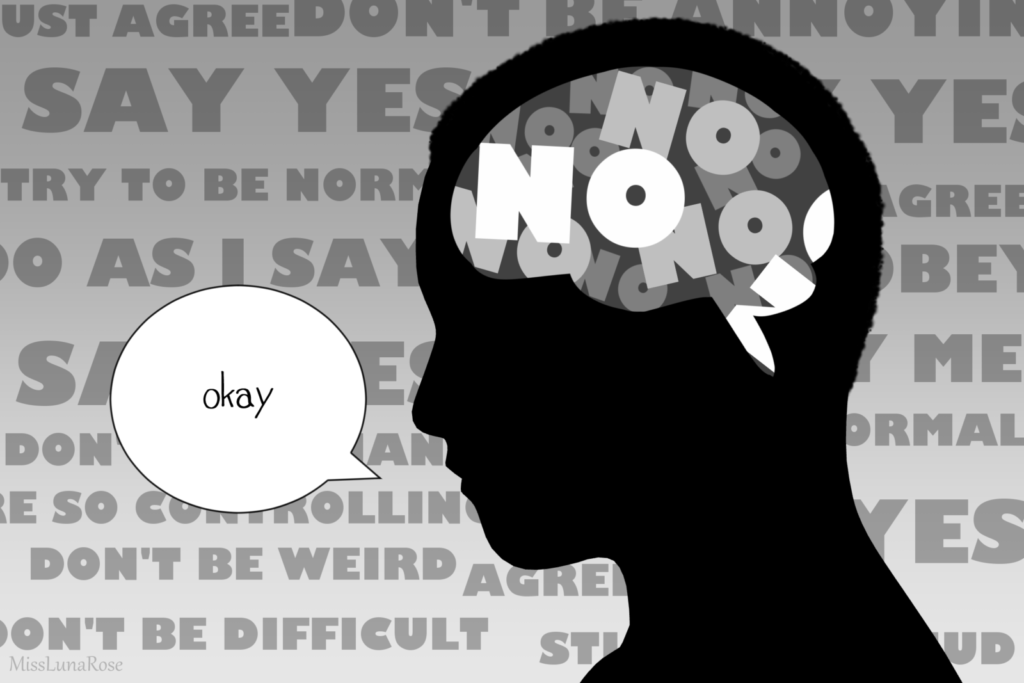
Social conformity is not a weakness of character — it is a structural feature of human cognition shaped by millions of years of interdependence. The philosophical problem begins when we stop treating conformity as a neutral adaptive mechanism and start examining what it does to the epistemic sovereignty of the individual. Solomon Asch's line experiments did not reveal that people are stupid or cowardly; they revealed that the boundaries between self and group are far more porous than liberal individualism is willing to admit. Herd behavior, preference falsification, pluralistic ignorance — these are not aberrations. They are the default architecture of social cognition, operating beneath the threshold of conscious deliberation. Tocqueville saw it clearly long before the behavioral scientists arrived: democratic societies do not suppress dissent through violence but through the soft tyranny of unanimous opinion, which makes deviation feel not forbidden but simply unthinkable. The deeper philosophical question is whether authentic autonomy — the kind Kant or Sartre would recognize — is structurally possible within social systems that reward legibility and punish ambiguity. Conformity does not merely shape behavior; it colonizes the imagination, narrowing the range of thoughts a person considers worth having in the first place.
The power of individual authenticity against cultural conformity
Conformity is comfortable. Authenticity is dangerous. This essay makes a compelling case for why choosing to be genuinely yourself remains one of the most radical acts available to us.
The Masks We Wear: Identity and Fiction in Everyday Life
We are all, in some sense, performing ourselves. This essay explores the masks we wear in everyday life — the personas we construct, the roles we inhabit, and the unsettling question of who remains when the performance ends.
Erich Fromm and the Sane Society
Erich Fromm believed modern society was making us ill — not just unhappy, but fundamentally insane. His vision of a 'sane society' remains a bold and necessary challenge to everything we take for granted about normality.
Memory Philosophy and the Architecture of Recollection
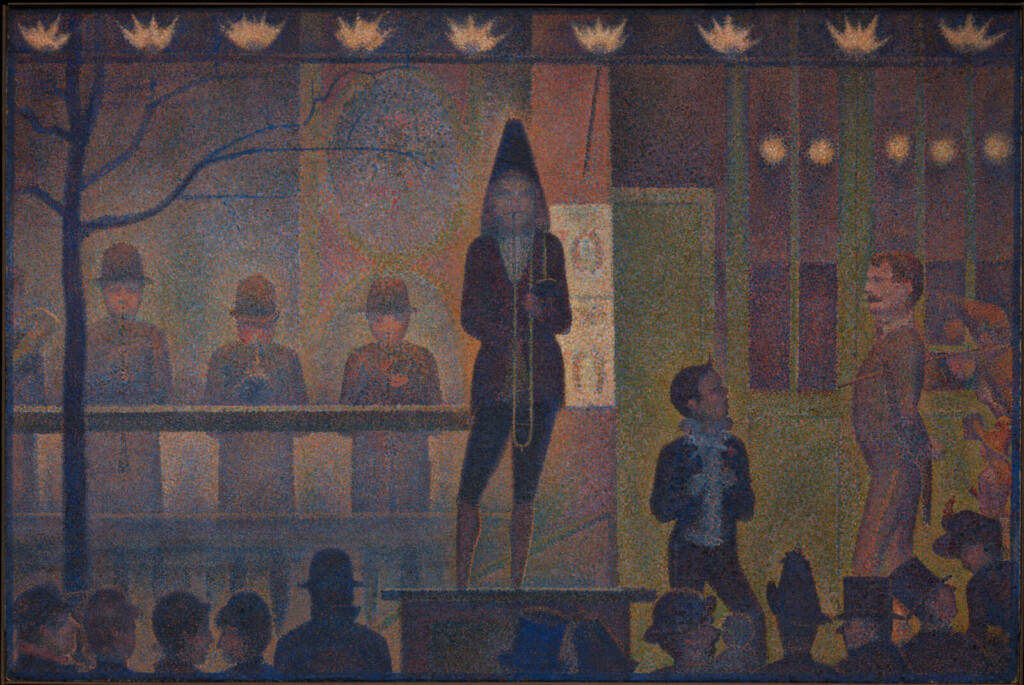
Memory is not a recording device. This misconception, inherited from a naïve empiricist tradition and reinforced by computational metaphors, has distorted both philosophical inquiry and popular understanding for decades. What we call memory is better understood as an act of reconstruction — a present-tense fabrication that borrows fragments from the past and assembles them according to current needs, fears, and narratives. Bergson saw in memory the very substance of duration, the living tissue that separates genuine temporality from the dead abstraction of clock time. Husserl, approaching the problem from a different angle, insisted that retention and recollection are phenomenologically distinct operations, each with its own intentional structure. More recently, philosophers of mind working alongside cognitive scientists have forced a confrontation with the discomforting truth that personal identity — the story we tell about who we are — rests on a foundation that is constitutively unreliable. Misremembering is not an exception. It is the rule. The ethical implications are serious: testimony, guilt, self-knowledge, even moral responsibility are entangled with the fragility of a faculty we were taught to trust. Philosophy of memory is therefore not a peripheral specialty. It cuts directly into epistemology, ethics, and the question of what it means to persist through time.
Senile Dementia: the Lost Memory
Memory is the thread that holds a self together — and dementia cuts that thread, slowly and without mercy. This article approaches senile dementia not only as a medical condition but as a profound human experience, for those who live it and those who love them.
Autobiographical Memory in Psychology: History and Meaning
Memory is never just storage — it's a living narrative we build about ourselves. Discover how autobiographical memory shapes identity, meaning, and the stories we dare to tell.
Forgotten Memory: When the Past Resurfaces
A scent, a photograph, a voice — and suddenly the past floods back with unexpected force. This piece investigates the psychology of involuntary memory, and why what we believe we have buried has a way of returning, always at the worst possible moment.
Grief Writing and the Architecture of Loss
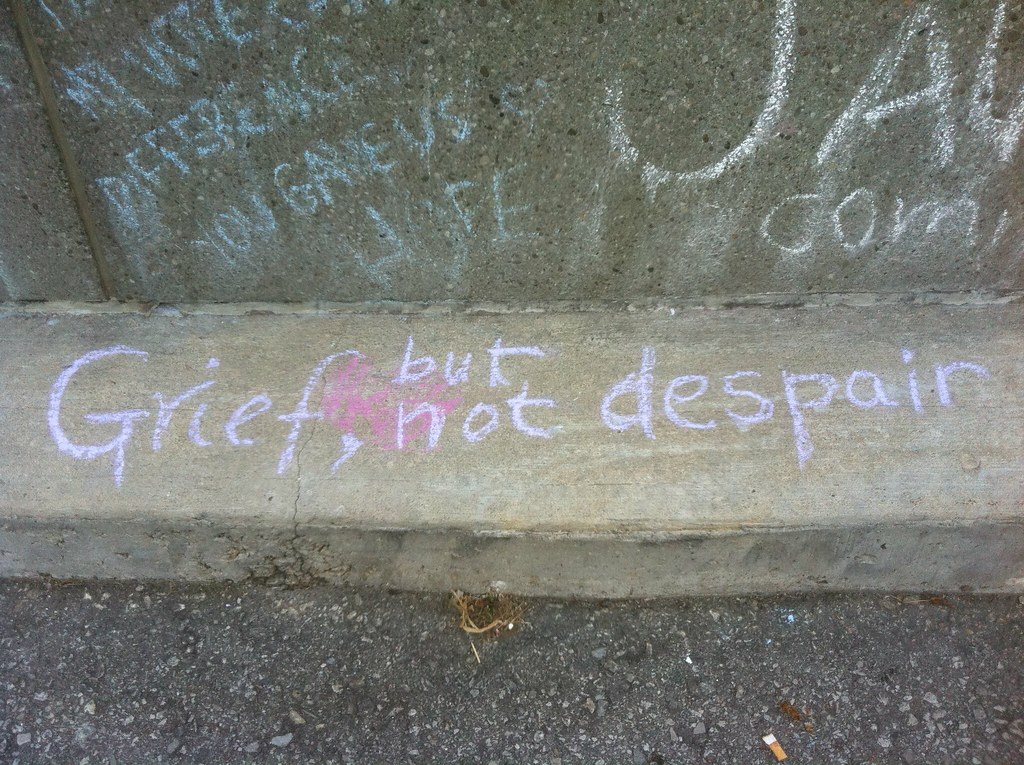
Grief resists domestication. Every cultural apparatus deployed to manage it — ritual, medication, therapeutic protocol — eventually collides with the brute fact that loss does not follow narrative logic. Writing about grief is not therapy, or not merely therapy: it is an epistemological act, an attempt to impose syntax on an experience that fundamentally dissolves the self doing the experiencing. Roland Barthes, in his mourning diary, did not write to heal. He wrote to document the impossibility of healing, to register the precise texture of an absence that kept refusing to become past tense. This is what separates serious grief writing from the confessional economy of contemporary trauma discourse, which tends to convert suffering into legible product, into the arc of recovery that readers can consume and then set aside. Real grief writing stays broken. It operates in the gap between what language promises — coherence, continuity, meaning — and what loss actually delivers. Philosophically, it belongs to the tradition of negative knowledge: what you learn is what cannot be said, what cannot be resolved. The writing exists not as record of survival but as evidence of contact with something that has no proper name and no clean edge.
A vision curated by a filmmaker, not an algorithm
In this video I explain our vision
Anticipatory Grief: When We Lose Someone Still Alive
Grief doesn't always begin with death. When someone we love is slowly lost to illness or distance, mourning starts long before the end — and that pain deserves to be named.
Grief and the Processing of Loss
Grief does not follow a timetable, and it does not resolve itself neatly. This thoughtful piece moves through the psychology of loss with honesty and care, exploring why mourning is not something to be overcome but something to be genuinely lived through.
Grief in Childhood: When Children Lose Their Parents
Children grieve differently — and too often, in silence. This sensitive and unflinching piece explores what happens to children who lose a parent, and what adults must understand to truly accompany them through loss.
Other Articles
Living with a roommate: the psychology of cohabitation between strangers
Living with a stranger is one of the most underrated psychological experiments of adult life. Boundaries, habits, unspoken tensions and unexpected bonds — cohabitation reveals more about ourselves than we're usually prepared to admit.
Cohabitation and conflict: psychology of communal living
Sharing a space means negotiating invisible rules, unspoken needs, and clashing realities. A candid psychological look at why cohabitation is one of the most revealing — and demanding — tests of human relationships.
Women travelling alone: courage, freedom and self-discovery
Solo female travel is still political, still radical, still misunderstood. Here's what women who have done it know: the road doesn't just take you somewhere — it shows you exactly who you already are.
Self-discovery: finding yourself through nature and solitude
Neither a retreat nor an escape, the journey into nature and solitude is perhaps the oldest form of self-knowledge. Who do you become when there are no mirrors, no audience, no one to perform for?
Nature as therapy: the healing power of forests
Beyond mere relaxation, forests offer something science is only beginning to understand: a profound biological reset. Discover how immersion in nature rewires the stressed mind and why the trees might know something therapists don't.
Online hate and haters: Psychology of digital resentment
Hatred online follows its own dark logic. This article examines the psychology behind digital aggression — who hates, why they hate, and what the internet does to amplify the worst of what we carry inside.
Mental health and psychological distress: history and treatments
Mental health has a history shaped by fear, stigma, and slow-won understanding. This article traces the long arc from confinement to care, examining how we've treated psychological suffering — and how far we've come.
Psychoanalysis and cinema: when the couch becomes the screen
Film has always been fascinated by the unconscious — and psychoanalysis by images. This article explores the rich, strange dialogue between the couch and the screen, where Freud meets cinema.
Art as Therapy: How Creativity Heals Inner Distress
Creativity has long been understood as expression — but it is also repair. This piece examines how art becomes a path through inner distress, offering what words alone often cannot reach.
Healing Through Art: History and Theory
Long before art therapy had a clinical name, human beings were drawing on cave walls to make sense of their inner lives. This piece traces the rich history and theoretical foundations of healing through creative expression — and why it still works.
The inner battle: narratives of the fight against oneself
Literature, myth, and psychology have long wrestled with the self at war with itself. A compelling journey through the narratives that give shape to our most intimate and exhausting inner conflicts.
The identity crisis of modern man between uprooting and the search for self
Modern man wanders between a past that no longer holds and a future that offers no certainty. A sharp reflection on the identity crisis of our times — and the courage it takes to search for self.
The necessity of a meditative life in a hyperactive world
In a world that rewards busyness and punishes stillness, the case for a meditative life has never been more urgent — or more radical. A reflection on slowing down to truly exist.
Investigative psychology: when the investigator becomes the prey
In the pursuit of a criminal mind, the investigator risks losing their own. A gripping exploration of investigative psychology — where empathy becomes a tool and the line between hunter and hunted blurs.
The dilemma of motherhood between choice and destiny
Motherhood is still framed as destiny more often than choice. This article sits with the tension, the ambivalence, and the complexity of a decision that society rarely allows women to make freely.
The psychological effects of social isolation in peripheral contexts
In peripheral communities, isolation is not a metaphor — it's geography, policy, and daily reality. This piece investigates the profound psychological toll of living on the margins of connection.
Intergenerational Transmission: What We Leave to Our Children
Beyond genes and surnames, we pass down fears, silences, and unresolved wounds. An essential read on what intergenerational transmission really means — and what we can choose to change.
The Emotional Legacy of Parents: How the Past Shapes Us
Our parents give us more than genes and memories — they pass on emotional patterns, unspoken rules and unresolved wounds that we carry forward without knowing it. A reflective exploration of how the past lives on in us, long after the people who shaped it are gone.
The Double Life in Psychology: When the Past Returns to Claim You
Some people live two parallel lives — one visible, one hidden — until the weight of the secret becomes unbearable. Drawing on psychological theory, this piece explores why the past we try to outrun has a tendency to show up exactly where we least want it.
Repressed Desire: When Society Stifles Feelings
What happens to desire when society refuses to acknowledge it? This piece examines the psychology and culture of repression — the cost of feelings pushed underground, and the unexpected ways they resurface.
The Hero’s Journey as Inner Transformation
The hero's journey is not only a narrative structure — it is a map of inner transformation. This piece explores how the mythic arc of departure, trial, and return mirrors the deepest movements of psychological growth.
Otto Rank: Life and The Myth of the Birth of the Hero
Long before Joseph Campbell, Otto Rank traced the hero myth to its psychological roots — and to the trauma of birth itself. A fascinating journey into the origins of heroism, identity, and the human need for narrative.
Jacques Lacan and the Mirror Stage
The moment a child recognizes itself in a mirror is, for Lacan, the founding moment of identity — and of alienation. A sharp introduction to one of the most provocative and misunderstood concepts in psychoanalytic theory.
Viktor Frankl: Life and Logotherapy
A man who survived the Nazi death camps and built a philosophy of meaning from the ruins: Viktor Frankl's life and logotherapy offer one of the most radical and human answers to the question of why we live.
Frankl’s Man’s Search for Meaning: Analysis
Few books have endured like Frankl's masterpiece. This analysis unpacks the layers of 'Man's Search for Meaning' — its existential core, its psychological daring, and why it still speaks to anyone confronting suffering.