
The Arithmetic of Survival
You wake before the sun because the market stalls with the cheapest vegetables are already thinning by seven, and the two coins in your pocket represent not a purchase but a negotiation with probability — if you buy the cassava today, there is no oil tomorrow, and if you wait for the oil, the cassava price climbs by afternoon. This is not poverty as a shortage. This is poverty as an architecture of forced choices that arrives before you are fully conscious, that precedes coffee, that precedes thought itself.

What Esther Duflo and Abhijit Banerjee documented across eighteen countries in their 2011 work Poor Economics is precisely this: that people living on less than $1.90 a day — the threshold the World Bank has used since 2015 to define extreme poverty, a figure that today fails to account for purchasing parity in dozens of contexts — do not make irrational decisions. They make extraordinarily rational decisions inside extraordinarily irrational constraints. The confusion between the two has cost decades of policy and hundreds of millions of lives. When observers from outside the system see a poor household spending on a celebration or a small luxury, they read failure of discipline. What they cannot read, because they have never inhabited the calculus, is that the celebration is social insurance — the only insurance available, the kind that gets your neighbor to lend you money when the child falls sick in February.
The cognitive dimension of this is not metaphorical. Sendhil Mullainathan and Eldar Shafir published Scarcity in 2013, drawing on experimental psychology to demonstrate that the mental burden of managing extreme resource deficits consumes what they called bandwidth — the same finite attentional resource that humans use for everything else. The effect they measured is equivalent to a functional loss of thirteen IQ points when a person is preoccupied with financial shortfall. This is not a character defect. It is the neurological consequence of a system that demands constant triage. A brain that must calculate whether tomorrow exists cannot simultaneously plan next year.
The historical record makes this structural quality impossible to ignore. In 1820, roughly 90 percent of the global population lived in conditions that modern metrics would classify as extreme poverty. By 2019, that figure had fallen to approximately 8.2 percent — a transformation driven not by moral awakening but by specific material changes: agricultural yield revolutions, public health infrastructure, wage labor markets, and state redistribution mechanisms. Where those mechanisms were withheld, extracted, or deliberately dismantled, poverty persisted with an almost geological stubbornness. Sub-Saharan Africa’s poverty rates, hovering around 40 percent through the 2010s, are inseparable from the particular violence of colonial land dispossession, the debt conditionalities imposed by the IMF’s structural adjustment programs between the 1980s and early 2000s, and the continued extraction of commodity value through trade agreements that mandate open markets without offering reciprocal access. Poverty does not simply exist where wealth has not yet arrived. It exists where wealth has been systematically redirected elsewhere.
What makes this arrangement so durable is the way it reproduces not just material conditions but perceptual ones. The sociologist Pierre Bourdieu spent much of his career documenting the mechanism by which class position becomes internalized as a sense of one’s own limits — what he called the habitus, the embodied set of dispositions that make a person feel entitled to certain futures and foreclosed from others. Children raised inside extreme deprivation do not merely lack resources. They inherit a practiced relationship to impossibility, a fluency in not-asking, a reflex of preemptive withdrawal from spaces and ambitions coded as belonging to someone else. By the time a researcher or a policymaker encounters them, the poverty has already migrated inward, become a grammar of self, which is why cash transfers that ignore this dimension so frequently produce less than their architects project.
The arithmetic of survival is never only arithmetic.
Structural Roots Over Individual Failure
You are sitting in a job interview, the kind where the lighting is too bright and the chair is slightly too low, and the person across from you asks, with genuine curiosity in their voice, how you ended up in your current situation. The question lands like a verdict dressed as concern. The entire architecture of that room — the form you filled out, the gap on your resume, the address you hesitated before writing — has already decided that your poverty is a story about your choices.
This is one of the most successful myths in the history of governance: that destitution is the residue of personal failure, the sediment left behind when discipline, ambition, or intelligence runs out. It is a myth so thoroughly internalized that the people it crushes often carry it themselves, turning structural violence into private shame. But poverty, in its modern and systematic form, was not stumbled into by weak individuals. It was constructed, deliberately and at scale, by specific legal and economic mechanisms that stripped entire populations of the means to survive independently.
Karl Polanyi, writing in “The Great Transformation” in 1944, made the argument that would unsettle every libertarian fantasy about free markets emerging naturally from human behavior: markets of the kind that came to dominate the nineteenth century were not discovered, they were engineered. Land, labor, and money were violently converted into commodities — things to be bought and sold — through legislative force and institutional design. The English enclosure movement, accelerating through the eighteenth century and largely completed by the 1840s, displaced millions of rural people from common lands they had worked for generations. Between 1760 and 1820 alone, over 21 million acres were enclosed by private Act of Parliament, a legal mechanism that transferred collective subsistence into private profit and left entire rural communities with no ground to stand on, literally.
What the enclosures created was not a labor market. They created a population with no alternative to the labor market — a structurally produced desperation that employers could then call the natural price of work. The people who flooded into Manchester and Leeds and Birmingham in the early nineteenth century were not pursuing opportunity. They were fleeing engineered scarcity. Friedrich Engels documented in “The Condition of the Working Class in England” in 1845 what this looked like in practice: children working fourteen-hour shifts, families sharing single rooms in cellar dwellings, life expectancy in industrial Manchester falling below thirty years for the laboring class. This was not the tragic but inevitable cost of progress. It was the predictable result of a system designed to maximize extraction from people who had been legally stripped of every exit.
The colonial dimension runs parallel and deeper. When the British East India Company systematically dismantled Indian textile production through the late eighteenth century — using punitive tariffs, forced cultivation of raw materials, and the destruction of the artisan economy that had made Bengal one of the wealthiest regions on earth — it did not create poverty accidentally. It manufactured it as a byproduct of accumulation. Mike Davis, in “Late Victorian Holocausts” published in 2001, documented how between 12 and 29 million Indians died in famines between 1876 and 1902, during a period when India was exporting record quantities of grain to Britain. The market was functioning perfectly. The dying was the mechanism, not its malfunction.
What persists from that architecture is not merely historical injury but a set of inherited conditions: land ownership patterns, debt structures, trade agreements, and labor regulations that still organize who is poor and who is not. The World Bank estimated in 2022 that approximately 700 million people live below the extreme poverty threshold of $2.15 per day — a number that has proven stubbornly resistant to growth in GDP precisely because growth, as currently structured, does not reach those who were excluded from ownership before the counting began.

The Cognitive Tax of Scarcity
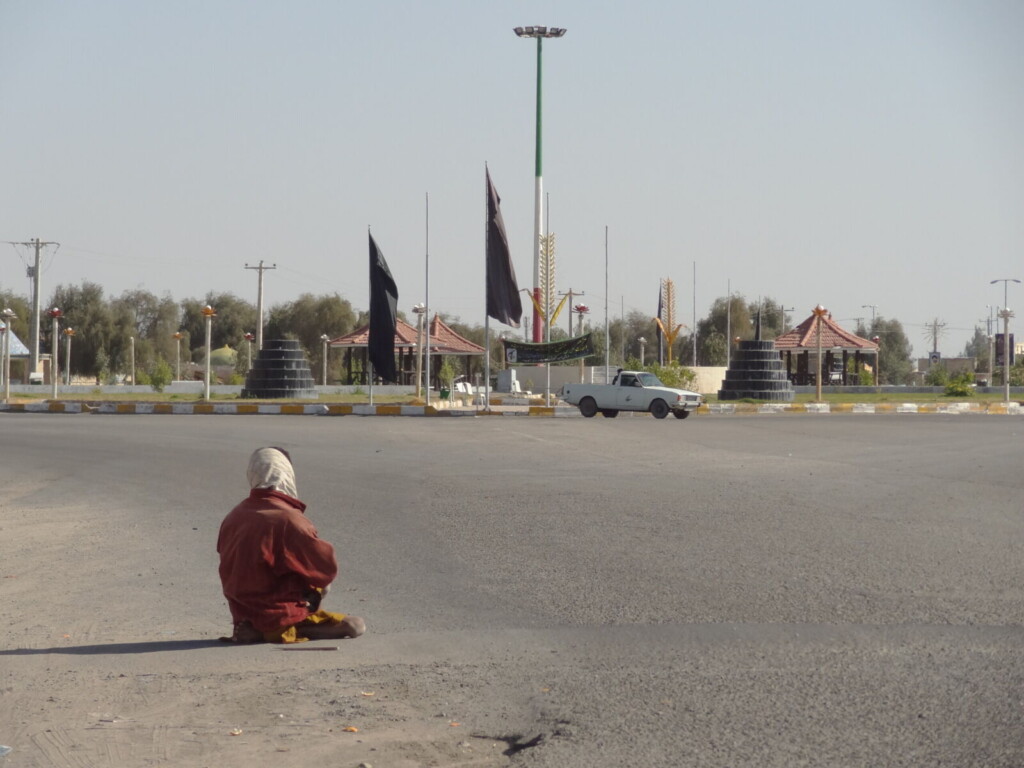
You are standing in a checkout line with fourteen dollars in your pocket and a cart that costs twenty-two. You do not run the numbers once — you run them continuously, involuntarily, reshuffling items against each other while simultaneously trying to remember whether the gas bill has already cleared, whether the school asked for a permission slip, whether the chicken in the freezer is still good. This is not stress in the colloquial sense. This is your prefrontal cortex being systematically colonized by arithmetic that has no clean solution.
Sendhil Mullainathan and Eldar Shafir gave this experience a clinical architecture in their 2013 book Scarcity: Why Having Too Little Means So Much. What they documented was not a personality type or a cultural deficit but a measurable, reproducible cognitive tax. When the mind is preoccupied by urgent material shortfalls, it draws from the same finite pool of mental bandwidth that governs impulse control, forward planning, and the capacity to weigh consequences across time. The research showed that the cognitive drain induced by financial scarcity was equivalent, in measurable IQ point reduction, to losing a full night of sleep — not occasionally, but as a chronic baseline condition. Poverty does not merely limit what people can buy. It limits what people can think, at the neurological level, on any given day.
The implications of this finding are structurally devastating to nearly every mainstream narrative about economic mobility. The entire architecture of self-improvement discourse — budgeting workshops, financial literacy programs, motivational frameworks urging the poor to plan further ahead and delay gratification — rests on the assumption that the cognitive tools required for those behaviors are equally available to all. They are not. Mullainathan and Shafir’s field experiments with farmers in Tamil Nadu showed that the same individuals performed significantly worse on standard cognitive tests during the pre-harvest lean season, when money was scarce, than after the harvest, when it was not. The people had not changed. Only their material circumstances had shifted, and with them, their measurable cognitive capacity.
This is where the generational dimension becomes particularly brutal. A parent operating under chronic scarcity is not simply tired or distracted in the ordinary sense. They are running a neurological deficit that affects the quality of every interaction — the attention they can offer to a child’s question, the consistency they can maintain in routines, the emotional regulation they can model under pressure. Developmental psychology has accumulated substantial evidence, including work by Jack Shonkoff at Harvard’s Center on the Developing Child, that the quality of early caregiving environments shapes the architecture of a child’s own stress-response and executive-function systems. When scarcity degrades parental bandwidth, it does not stay contained to that generation. It writes itself into the neural development of the next one, before that child is old enough to understand the concept of money.
The cruelty embedded in this dynamic is that it produces the very behaviors it is then used to condemn. A child raised in an environment of cognitive and material scarcity develops a nervous system calibrated for immediate threat rather than long-term planning — not because of inherited disposition, but because that is what the environment trained the brain to do. And when that child grows into an adult who struggles to sustain savings or resist short-term temptations, the cultural and political response is almost universally to treat this as evidence of individual failure, a character flaw requiring moral correction. The science points somewhere else entirely: to a feedback loop in which deprivation produces the cognitive profile that makes escape from deprivation harder, which is then interpreted as justification for withholding the resources that would interrupt the loop.
What Mullainathan and Shafir uncovered was not a metaphor for how poverty feels. It was a mechanism — precise, measurable, and indifferent to the moral frameworks people layer over it after the fact.
Inherited Geography and the Illusion of Mobility
You did not choose the street you were born on, but that street has already made most of your choices for you.
The school assigned to your address taught to lower standards, hired teachers in their first years of practice, and replaced art and music with test preparation designed to satisfy state minimums. The grocery store closest to your home stocked processed food at inflated prices because the supermarket chains had run their demographic models and decided the neighborhood was not worth the infrastructure. The air quality index in your zip code was measurably worse than in the district two miles east, where the houses had lawns and the children had pediatricians who asked about stress at home. None of this was your parents’ fault in any clean sense, and yet all of it was inherited.
Raj Chetty and his collaborators at Opportunity Insights published findings in 2014, using anonymized tax records covering forty million Americans born between 1980 and 1982, that should have permanently altered how policy makers spoke about social mobility. They did not. What the data showed was that the probability of a child born in the bottom income quintile reaching the top quintile varied so dramatically by county of birth that national averages became almost meaningless as a policy instrument. A child born in the lowest income households in San Jose, California had roughly a one-in-twelve chance of reaching the top quintile. The same child, born under identical household financial conditions in Charlotte, North Carolina, had roughly a one-in-twenty-five chance. The variable was not individual behavior, not parental effort measured in hours of reading aloud, not even school quality in isolation. The variable was the specific geography of daily exposure — the density of mixed-income contact, the commuting distance to employment centers, the rate at which neighbors cycled in and out of stable work.
What American zoning law accomplished, across the mid-twentieth century, was the physical encoding of class into land. Euclidean zoning, named after the 1926 Supreme Court case Village of Euclid v. Ambler Realty Co., gave municipalities the legal authority to separate residential from commercial uses and, crucially, to mandate minimum lot sizes and prohibit multi-family housing across enormous swaths of metropolitan land. The practical consequence was that low-income families were legally excluded from the geography of opportunity. This was not an accident of urban growth but a designed topology, maintained through planning boards and property tax structures that tied school funding directly to local real estate values, guaranteeing that spatial segregation and educational inequality would reproduce each other across generations with almost mechanical regularity.
The sociologist Douglas Massey, writing with Nancy Denton in American Apartheid in 1993, documented how residential segregation by race and class in American cities was not a residue of natural preference but the compounded result of federal mortgage policy, real estate steering, restrictive covenants, and urban renewal projects that destroyed dense working-class neighborhoods under the declared purpose of slum clearance. The geography of poverty that Chetty’s data measures in 2014 is substantially the geography that Massey and Denton mapped as deliberately constructed between 1930 and 1970. What looks to the contemporary eye like the natural distribution of disadvantage is actually a historical artifact that has simply aged past the point where its architects can be held individually accountable.
There is something precise in the way mobility discourse absorbs this evidence without changing its fundamental assumptions. The data confirming that birthplace predicts income more reliably than almost any other single variable gets folded into calls for better schools, more job training, improved transit — all of which address symptoms at the level of the individual while leaving the spatial architecture intact. The zip code remains. The property tax formula remains. The minimum lot size ordinance remains. And the child born on the wrong street wakes up inside a geometry that was finished before she arrived and that will outlast every intervention designed to help her without touching its foundations.
The Humanitarian Industrial Complex
You have given money to a cause before. You have felt the particular satisfaction of it — the slight warmth that accompanies the act, the sense that the distance between your comfort and someone else’s suffering has been briefly, meaningfully, bridged. That feeling is not nothing. But it is also not the same thing as having helped.
The architecture of international aid is one of the most successfully self-concealing systems in modern economic history. Between 1970 and 2000, sub-Saharan Africa received more than one trillion dollars in development assistance. Over the same period, real per capita income across much of the continent declined. The Zambian economist Dambisa Moyo documented this arithmetic with cold precision in Dead Aid, published in 2009, arguing that systematic aid flows did not merely fail to reduce poverty but actively generated the conditions for its persistence — crowding out domestic industries, inflating local currencies, rewarding governments for maintaining relationships with donor institutions rather than with their own populations. The uncomfortable implication, which neither journalists nor development conference panels have fully absorbed, is that the humanitarian apparatus and the poverty it claims to address have become mutually sustaining organisms.
The International Monetary Fund’s structural adjustment programs of the 1980s and 1990s offer the starkest historical case. Designed explicitly to stabilize debt-burdened economies, these programs prescribed austerity, privatization, and trade liberalization as conditions for continued lending — terms that consistently dismantled public health systems, defunded education infrastructure, and exposed fragile agricultural economies to subsidized foreign competition they could not survive. Tanzania, Ghana, and Mozambique each underwent variants of this process. The debt that justified the intervention was often itself a product of earlier Cold War lending cycles, which had funneled capital to regimes selected for geopolitical alignment rather than administrative competence. The crisis that demanded a rescue was, in structural terms, a consequence of the rescue that preceded it.
What makes this pattern durable is not conspiracy but institutional logic. Organizations require funding, and funding requires demonstrable need. A development NGO that eliminates the conditions producing its mandate has also eliminated the justification for its existence. This is not a cynical observation but a structural one, identical to the dynamic that economist William Easterly analyzed in The White Man’s Burden in 2006, where he distinguished between “planners” — top-down institutions issuing prescriptions from distance — and “searchers” — actors embedded in specific conditions who are accountable for actual outcomes. The planner model dominates international aid because it is legible to donors, photographable for reports, and disconnected from the slow, invisible work of institutional capacity-building that actually moves societies.
Debt dependency replicates the dynamic at the sovereign level. When a government services external debt using a significant portion of its export revenues — a position that describes much of francophone West Africa’s relationship with the CFA franc system and the French Treasury well into the twenty-first century — its fiscal policy is functionally authored elsewhere. The governments in question are not weak states that happened to borrow unwisely; they are states whose borrowing was structured, from the initial terms, to produce this condition. Democratic accountability inside such a state becomes partially theatrical, because the decisions that most determine citizens’ material lives are made in creditor capitals.
What gets called poverty in these contexts is often the visible face of a transfer mechanism — an extraction process that moves value from populations with little political leverage toward institutions with considerable geopolitical weight, and then funds conferences at which experts discuss why development is so difficult. The populations at the receiving end of this process are not passive objects of their own suffering. They have informal economies, adaptive institutions, and political movements that external observers consistently misread or simply fail to see, because the apparatus designed to help them has a categorical interest in rendering them legible only as recipients.
A vision curated by a filmmaker, not an algorithm
In this video I explain our vision
Poverty as Political Technology

You have probably never voted for a politician who promised to keep you poor, and yet that is precisely what certain electoral architectures require to survive. In parts of northeastern Brazil during the late twentieth century, municipal bosses distributed food baskets, medicine, and corrugated roofing sheets in the weeks before elections — not as charity, but as a calculated exchange that only functioned if the recipient remained too precarious to refuse. The anthropologist James Scott would call this a performance of patronage, but the mechanism runs deeper than theater: it requires the permanent reproduction of the condition it appears to alleviate. A person with stable income, secure housing, and institutional access to healthcare has no reason to trade a vote for a bag of rice. The system does not fail to eliminate poverty; it succeeds at maintaining it.
Michel Foucault, in his lectures at the Collège de France between 1975 and 1979 — particularly those compiled as “Society Must Be Defended” and “The Birth of Biopolitics” — described how modern states govern not merely by prohibiting but by producing particular kinds of life. Biopolitical management does not simply react to populations; it shapes them into forms useful to specific economic and political interests. A surplus population of the desperately poor is not a failure of governance in this framework — it is a product of it, a managed reserve whose existence disciplines the employed by reminding them what lies just beneath their feet. Friedrich Engels observed something structurally similar in 1845 in “The Condition of the Working Class in England,” documenting how Manchester’s mill owners required a floating mass of unemployed workers to suppress wage demands among those who held jobs. The geography has changed. The logic has not.
In India’s Bihar state, political scientists including Francine Frankel and later Christophe Jaffrelot documented through the 1990s and 2000s how caste-based patronage networks actively resisted land reform precisely because redistributed land would convert dependent laborers into economically autonomous smallholders — citizens who could afford to vote their conscience rather than their survival. Upper-caste landlords and the political parties that served them did not oppose reform because they misunderstood its consequences; they opposed it because they understood perfectly. Poverty here was not an oversight in the policy architecture. It was the load-bearing wall.
What makes this machinery so durable is that it wears the costume of concern. International development budgets, conditional cash transfer programs, and microfinance schemes all operate within a vocabulary of uplift while frequently leaving intact the structural conditions — land tenure arrangements, labor law enforcement gaps, tax treatment of capital — that generate destitution in the first place. A 2019 study published in “World Development” examining Mexico’s Prospera program found measurable short-term improvements in school attendance and nutritional indicators while the program simultaneously left rural wage structures and agricultural monopolies untouched, ensuring that beneficiaries remained in a permanent condition of assisted precarity rather than structural independence. The program made poverty more survivable. That is not the same thing as dismantling it.
The labor pool function is perhaps the most globally consistent. Economists since Arthur Lewis‘s 1954 model of “Economic Development with Unlimited Supplies of Labour” have noted that industrial expansion in developing economies depends on an agricultural sector unable to absorb its own workforce, producing cheap migration into urban manufacturing. What that clinical model obscures is that this “unlimited supply” is a political construction sustained by deliberate underinvestment in rural infrastructure, education, and legal land rights — choices made by governments, often at the encouragement of foreign investors and multilateral lenders who understood that higher rural wages would translate immediately into narrower profit margins in the export sectors they were financing.
The question poverty policy almost never asks is who benefits from its failure, because that question leads somewhere the architecture of governance is not designed to go.
The Measurement Problem and What It Conceals
You are handed a number and told it represents the boundary between a human life and its negation. Two dollars and fifteen cents. The figure arrives with the authority of science — decimal precision, institutional weight, the World Bank’s imprimatur — and because it arrives that way, most people receive it as a measurement rather than a choice. But every measurement encodes a politics, and this one encodes a particularly consequential one: the decision to set the threshold low enough that progress becomes almost mathematically inevitable.
Sanjay Reddy and Thomas Pogge spent the better part of the 2000s dismantling the architecture behind this figure, beginning with their 2002 working paper “How Not to Count the Poor,” which circulated for years before the academy fully absorbed its implications. Their core argument was not merely technical. It was that the International Comparison Program’s purchasing power parity conversions — the mechanism used to translate the poverty line across currencies and economies — rested on a basket of goods that had no stable relationship to what poor people actually need to survive. When you convert dollars into rupees or naira using a general consumption basket weighted toward goods that poor people rarely buy, you systematically overestimate what the poor can actually afford. The line, translated, does not buy the same life in Lagos that it notionally represents in Washington. It buys less. Often far less. And the people who fall just above it are counted as having escaped poverty when they have escaped only the measurement.
What makes this more than an academic dispute is the institutional machinery it lubricates. The Millennium Development Goals declared victory on extreme poverty partly because the World Bank’s metrics showed the headcount falling — from roughly 1.9 billion people below the line in 1990 to around 700 million by 2015. These numbers were cited in speeches, embedded in reports, used to justify the continuation of existing aid architectures and the deprioritization of structural reform. But if the line is drawn at a point that excludes hundreds of millions of people living in conditions that any honest observer would call destitution, then the victory is not a fact about the world. It is a fact about the ruler.
The philosopher Elizabeth Anderson, writing in a different context about the difference between relational and distributive equality, offers a frame that cuts through this: poverty is not primarily an arithmetic condition but a social one. To be poor is to be excluded from the forms of participation that give a life its dignity and its legibility to others. A threshold set at $2.15 captures caloric survival as its implicit reference point, which means it is measuring something closer to biological persistence than human existence. The Indian economist Jean Drèze, working alongside Amartya Sen on “India: Development and Participation” in 2002, documented cases where people technically above global poverty lines nonetheless lacked access to clean water, basic healthcare, and schooling — deprivations invisible to income-only metrics but utterly decisive for the texture of a life.
The perverse elegance of a too-low threshold is that it transforms institutional failure into institutional success. When the bar is set at bare survival, incremental wage increases in export manufacturing zones move millions across the line without touching the structural conditions — land tenure, labor rights, healthcare access — that determine whether those people have any real security. The institutions that set and defend the metric are also the institutions that report on global progress, which creates a closed epistemic loop: the judge administers the exam, marks the papers, and announces the results. There is no external auditor with sufficient authority to contest the grade, because the grade has already been laundered through decades of repetition into something that feels like fact.
What gets concealed is not only the scale of poverty but its specific human texture — the ways in which lives lived just above an arbitrary line can be as constrained, as precarious, as entirely without margin as lives lived just below it.
Counter-Policies at the Edge of Orthodoxy
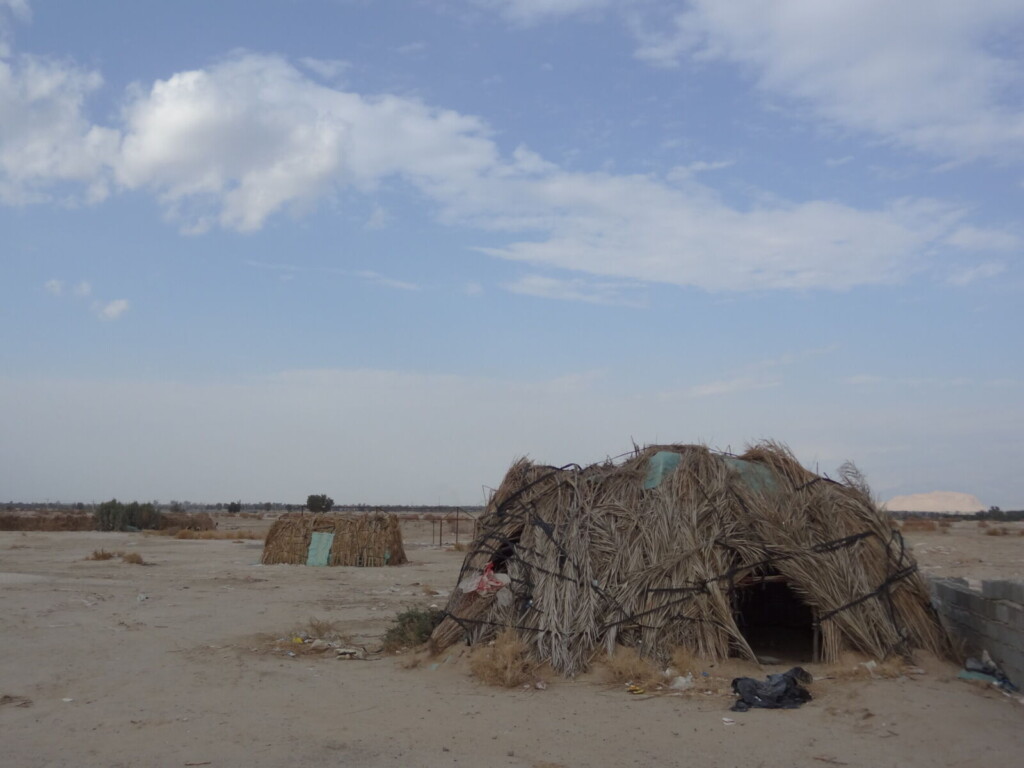
You are handed a small sum of money every month, unconditionally, and told that it belongs to you — not because you earned it, not because you qualified for it, not because a caseworker approved your circumstances. The GiveDirectly transfers running across western Kenya since 2016, studied longitudinally by economists including those affiliated with MIT’s Poverty Action Lab, did something the orthodoxy of development economics had long resisted believing: they showed that poor people, given direct and unrestricted cash, do not dissipate it on alcohol or idleness but invest it in livestock, in school fees, in small business inventory, in corrugated iron roofing that replaces thatch. The paternalism baked into conditional aid programs — you receive support only if you attend the clinic, only if your children are enrolled, only if you can prove your behavior meets the criteria of the administrator — was revealed not as a neutral policy design but as a moral judgment disguised as an efficiency mechanism.
Finland’s basic income experiment between 2017 and 2018, limited to two thousand unemployed citizens receiving 560 euros monthly without conditions, produced results that disturbed ideologues on both sides: recipients did not, as conservatives predicted, withdraw from the labor market, and they did not, as some progressives hoped, immediately liberate themselves into artistic or civic flourishing. What they reported, in statistically significant numbers, was reduced anxiety, improved mental health, and a greater sense of agency over their own futures. The experiment was too small and too short to be conclusive, but its greatest contribution was not empirical — it was philosophical. It forced a confrontation with the question of what income is actually for, whether it exists to discipline behavior through the threat of its withdrawal or to provide the material floor from which autonomous human decision-making becomes possible at all.
The more structurally radical evidence comes from land. Taiwan’s land reform between 1949 and 1953, implemented under the Land-to-the-Tiller Act, forcibly transferred ownership from landlords to tenant farmers at regulated prices, compressing rural inequality and generating a smallholder agricultural base that economists like Alice Amsden, in her 1979 analysis of East Asian development, identified as foundational to the export-led industrialization that followed. South Korea’s parallel reforms under American occupation pressure produced comparable redistributive effects. In both cases, the mechanism was not market-generated — it was coercive, political, and deeply unpopular among propertied classes. The lesson that development economists have spent decades quietly burying is that the initial distribution of assets is not a background condition of growth but its most decisive determinant, and that every market outcome thereafter is shaped by who owned what before the first transaction occurred.
Community wealth-building models — the worker cooperative networks in Mondragón, the municipal ownership structures pioneered in Preston, England after the 2008 financial crisis stripped its high street of national retail chains — operate from the same empirical intuition: that the geography of ownership is also the geography of whose interests the economy serves. Preston redirected public procurement contracts worth hundreds of millions of pounds toward local institutions, anchoring spending within a circulation that stayed in the city rather than extracting upward to distant shareholders. The result was not utopia but a measurable stabilization of local employment during a period when comparable post-industrial towns continued to hemorrhage economic activity.
What each of these interventions has in common is not an ideology but a provocation: they produce evidence that the current arrangement of property, income, and risk is not the sediment of natural processes but the outcome of prior political decisions, each of which was contested, contingent, and reversible, and each of which could, under different pressures, have produced a different world than the one in which extreme poverty still functions as a permanent address for nearly seven hundred million people.
🌍 Poverty, Exclusion and the Fight for Dignity
Extreme poverty does not exist in isolation — it is entangled with social exclusion, precarious labor, political manipulation and the erosion of human dignity. These articles explore the structural forces that trap communities in cycles of deprivation, and the philosophical, sociological and political frameworks that help us understand and challenge them.
Social Exclusion: Causes, Dynamics and Ways Out
Social exclusion and extreme poverty are deeply intertwined phenomena, each reinforcing the other through mechanisms of marginalization, stigma and institutional neglect. This article examines the root causes of exclusion, the dynamics that perpetuate it across generations, and the social policies that have attempted — with varying success — to open pathways out. Understanding exclusion is a prerequisite for understanding poverty in its full structural depth.
GO TO THE SELECTION: Social Exclusion: Causes, Dynamics and Ways Out
Protecting human dignity against the processes of social marginalization
Human dignity is not merely a philosophical abstraction; it is a concrete social achievement that can be systematically dismantled by the processes of marginalization accompanying poverty. This article explores how social forces strip individuals of their sense of worth and belonging, and why protecting dignity must be central to any counter-policy agenda. The fight against poverty is ultimately a fight for the recognition of every person’s irreducible value.
GO TO THE SELECTION: Protecting human dignity against the processes of social marginalization
Guy Standing’s The Precariat: Analysis
Guy Standing’s landmark concept of the precariat — a new social class defined by precarious employment, insecurity and the absence of a stable identity — offers a crucial lens for understanding contemporary poverty. This article analyzes Standing’s thesis and its implications for labor policy, social protection and political mobilization in an era of economic fragmentation. The precariat is not merely economically poor; it is existentially dispossessed.
GO TO THE SELECTION: Guy Standing’s The Precariat: Analysis
Polanyi’s The Great Transformation: Analysis
Karl Polanyi’s ‘The Great Transformation’ remains one of the most powerful analyses of how unregulated market economies generate social devastation and mass poverty. This article examines Polanyi’s argument that the commodification of land, labor and money tears apart the social fabric, making counter-movements of protection both inevitable and necessary. His insights resonate deeply with contemporary debates about poverty, austerity and the limits of neoliberalism.
GO TO THE SELECTION: Polanyi’s The Great Transformation: Analysis
Discover Independent Cinema on Indiecinema
The stories behind poverty, resistance and social transformation have always inspired some of the most powerful works of independent cinema. On Indiecinema, you can explore a curated streaming catalog of films that dare to look unflinchingly at the world’s deepest inequalities — and at the human spirit that endures within them.
👉 EXPLORE THE CATALOG: Watch Indie Films in Streaming
A vision curated by a filmmaker, not an algorithm
In this video I explain our vision

