
The Price Tag on Everything
You get the email on a Tuesday, which somehow makes it worse than a Monday would have. The language is careful, almost tender — “role elimination,” “structural realignment,” “we value your contributions” — and you sit with it for a moment before opening another tab to look at retraining programs. There are dozens. Cybersecurity bootcamps. Data analytics certifications. A course in prompt engineering that costs four hundred dollars and promises to make you “future-ready.” You notice, somewhere beneath the practical thinking, that you are being asked to rebuild yourself. Not your skills. Yourself. The category of person you are in the labor market must be revised, updated, made legible again to the system that just discarded you. You feel, with a clarity that no amount of professional language can quite obscure, that you are a price. You always have been. You had simply forgotten.

Karl Polanyi published The Great Transformation in 1944, while the world was still burning, and what he argued was not that capitalism was cruel — plenty of people had said that — but that it was historically unprecedented in a way most people, including its critics, had failed to understand. The market economy, he insisted, was not the natural emergence of human tendencies toward trade and exchange. It was a violent political construction, assembled through specific acts of legislation, enclosure, and institutional force across roughly a century of English history. The thing that feels like gravity, like the inevitable backdrop of human life, was built. Deliberately. Against enormous resistance. And the building of it required dismantling something that had existed for all of prior recorded history: the principle that economic activity is embedded within social relations, rather than social relations being embedded within economic activity.
What Polanyi identified as “the double movement” is one of the more precise diagnostic tools produced by twentieth-century social thought. Markets, as they expand, generate a counter-movement of protection — not because people are irrational or sentimental, but because the commodification of land, labor, and money threatens the very fabric of human existence. Land is nature. Labor is human life. Money is the organizational capacity of society. To treat any of these as commodities produced for sale is, in his formulation, a fiction — what he called a “commodity fiction” — and sustaining that fiction requires continuous institutional violence. The English Poor Law Amendment Act of 1834, which abolished outdoor relief and forced the rural poor into workhouses, was not a correction of market distortions. It was the market’s founding document.
The enclosures that preceded it had already spent two centuries converting common land into private property, displacing hundreds of thousands of English peasants whose relationship to the land had been one of use, custom, and communal obligation. E.P. Thompson’s later work in The Making of the English Working Class, published in 1963, documented the human texture of that destruction with a granularity Polanyi’s structural analysis couldn’t hold — the specific riots, the burning of mills, the Luddite uprisings that were not technophobia but a coherent political response to the annihilation of a way of life. What both writers circle, from different angles, is the same unbearable recognition: the working class did not emerge naturally from economic development. It was manufactured. People were made into workers the way iron is made into rails — through the application of tremendous, sustained force.
And yet the mythology that surrounds this history insists on naturalness. The market is described in the language of physics. Supply and demand. Equilibrium. Invisible hands. The metaphors are borrowed from systems that exist without human intention, and this borrowing is not accidental. If the market is natural, then its casualties are not political problems requiring political solutions — they are weather. You did not lose your job. The economy shifted. The distinction matters enormously, because one implies agency and the other implies atmosphere, and the ideological work of the past two centuries has been largely devoted to making the first feel like the second.
Crazy World

Drama, thriller, by Fabio Del Greco, Italy, 2010.
Luca is poor and works, precariously, as a waiter. He lives a problematic relationship with his girlfriend, and his life is full of doubts. One day Luca meets Chiara, a friend who had studied philosophy with him at university. She has realized her dream of opening a night and is now well-off. Luca leaves everything behind and starts a relationship with Chiara. He manages the nightclub with her and, thanks to the cocaine and call girls sold to politicians, he gets out of his hard economic situation. But Chiara does not manage to obtain the contract for an old furnace, so she blackmails Saverio, a member of the Parliament. Chiara owns a video in which Saverio has sexual intercourse with a transsexual.
LANGUAGE: Italian
SUBTITLES: English, French, Spanish, German, Dutch, Portuguese.
The Fiction That Ate the World
You are standing in a field that your grandfather worked, that his grandfather worked, that no one in your family’s memory ever owned but everyone in your family’s memory belonged to — and then one morning there is a fence, and a document, and a man with a title who is not from here, and the field is no longer a field in any sense that matters to your life. It is now property. It is now, in the precise sense that will come to organize the next two centuries, a commodity.
Karl Polanyi‘s great intellectual provocation, buried inside The Great Transformation published in 1944, is that this moment — that fence, that document — was not the natural extension of human commerce but the founding act of a civilizational fiction. He identified three elements that the self-regulating market required in order to function: land, labor, and money. And he noted, with the kind of calm that only barely contains outrage, that none of these three things were ever produced for the purpose of being sold. Land is nature. Labor is human life itself, the activity of breathing and moving and surviving. Money is a social token, a symbol of purchasing power issued by political authorities. To treat them as commodities — as things manufactured for exchange — is not an economic description. It is a story told with enough force and institutional repetition that it eventually becomes the only story anyone remembers.
What made England the laboratory for this experiment was not some unique English cruelty but the specific velocity of its enclosure movement. Between roughly 1760 and 1830, more than six million acres of common land were converted to private property through parliamentary enclosure acts — over four thousand separate pieces of legislation that transformed a system of shared, customary access into a landscape of walls, titles, and dispossession. The commons had never been a romantic ideal; they were a practical architecture of survival, a way that communities without capital could remain communities. Enclosure did not simply redistribute land. It demolished an entire metabolism of social life and replaced it with something that had no precedent: a population that owned nothing except the capacity to work, and which therefore had no choice but to sell that capacity to whoever would buy it.
The Poor Law Amendment Act of 1834 was the mechanism designed to complete this transformation at the level of human behavior. Before 1834, the Speenhamland system — established in 1795 — had provided wage supplements to the rural poor, effectively buffering the labor market against its own violence. Polanyi read Speenhamland not as charity but as the last reflex of a society that still instinctively protected social fabric from pure market logic. The 1834 reform abolished it deliberately and brutally, replacing outdoor relief with the workhouse and the principle of “less eligibility” — the legal doctrine that conditions for the pauper must always be worse than conditions for the lowest independent laborer. This was not a failure of imagination. It was a policy designed to make destitution so unbearable that people would accept any wage, any condition, any humiliation the labor market offered. The commodity of labor required, as a precondition, that there be no dignified alternative to selling it.
What Polanyi grasped that his contemporaries mostly refused to is that this was a political construction masquerading as a natural order. The market for labor did not emerge because human beings are naturally inclined to trade their time for wages. It was engineered through enclosure, vagrancy laws, poor law reform, and the systematic destruction of every social institution that might have made wage dependence optional. The fiction is not merely that land and labor are commodities. The deeper fiction is that the system requiring them to be commodities arrived without authors, without decisions, without the specific fingerprints of men who benefited enormously from the redefinition.

The Speenhamland Trap
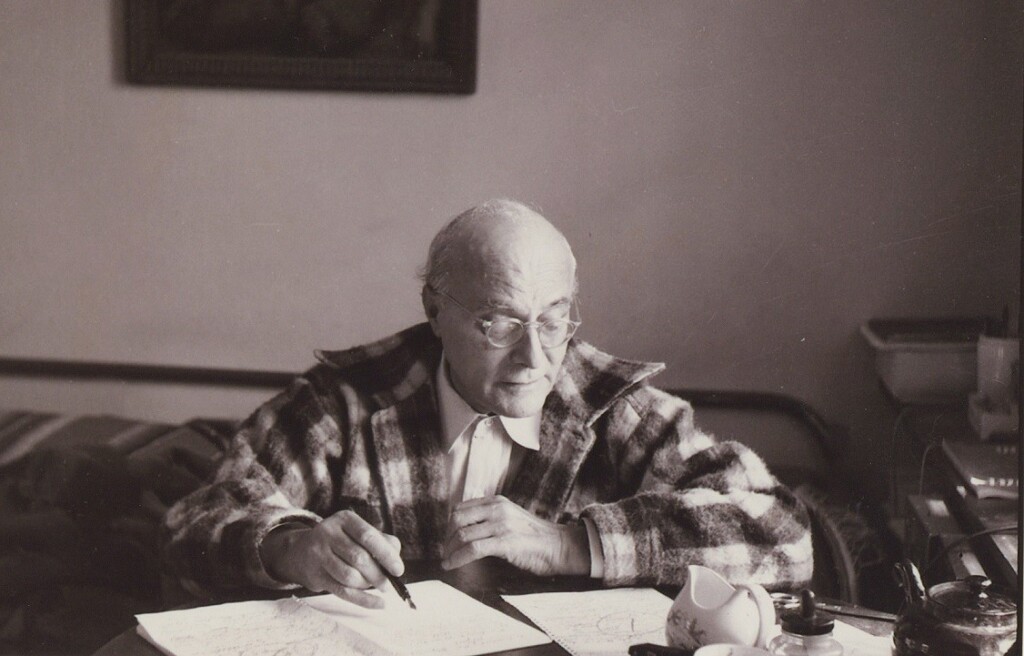
You are given a small parish in Berkshire in 1795, a cold spring, bread prices beyond what any laborer can reach, and a group of magistrates who decide, without consulting Parliament, to supplement wages from the poor rates. The amount varies by the price of bread and the size of a man’s family. It seems, at first, almost humane.
The Speenhamland system spread across southern England within years, not because it was mandated but because it answered a crisis that the emerging market could not absorb without social rupture. What Polanyi recognized in this episode was not a failed experiment in generosity but a structural contradiction made visible: the attempt to protect human beings from the price mechanism while simultaneously preserving the fiction that labor was a commodity like any other. The magistrates of Berkshire were not proto-socialists. They were men of property trying to hold a social order together with a subsidy that, in effect, acknowledged wages could not be trusted to reflect human need.
What happened next is the part that gets suppressed in conventional economic history. Because wages were now supplemented regardless of their level, employers had every incentive to drive them as low as possible. The subsidy became a transfer from the parish — meaning from small ratepayers — directly to the pockets of large farmers and landowners who could now underpay without consequence. Workers were not liberated by the protection; they were made permanently dependent, their wages permanently depressed, their mobility constrained by settlement laws that tied them to the parish where relief was available. The system did not soften the labor market. It deformed it in ways that accumulated silently for nearly four decades.
By 1834, the story had been rewritten. The Poor Law Amendment Act, drafted partly on the basis of the 1832 Royal Commission report, declared Speenhamland the cause of pauperism, moral degradation, and the destruction of the laboring classes’ independence. Nassau Senior and Edwin Chadwick, the architects of the new regime, argued that relief had corrupted the poor, eroded their will to work, and undermined the natural operation of wages finding their proper level. The workhouse replaced the supplement. Conditions inside were deliberately set below the lowest independent wage, a principle called “less eligibility,” designed to make destitution so repellent that any wage, however miserable, would seem preferable. This was not reform. It was the construction of desperation as labor market infrastructure.
Polanyi’s reading cuts through the Victorian moral language entirely. In “The Great Transformation,” published in 1944, he argues that the creation of a free labor market was not the removal of interference but the installation of a different and more total form of coercion. The poor law of 1834 did not liberate workers into a natural condition; it manufactured the conditions under which human beings would accept factory discipline, urban crowding, and wage levels that kept them at subsistence. The market did not discover the price of labor. The state engineered the desperation that made that price acceptable.
This is where the episode becomes philosophically devastating rather than merely historically interesting. The standard narrative of economic liberalism holds that markets reveal preferences and that labor, left free, finds its equilibrium through voluntary exchange. Speenhamland is used, even today, as evidence that intervention distorts this process. What Polanyi shows is that the intervention preceded, caused, and then was blamed for the distortion, after which its brutal removal was celebrated as the restoration of natural order. The sequence was not nature, interference, correction. It was enclosure, dispossession, temporary subsidy, engineered crisis, and then the declaration that the resulting desperation was simply human nature expressing itself freely in a market.
The ground never existed. It was built, flooded, drained, and called a landscape.
Laissez-Faire Was Never Spontaneous
You are standing in a British textile mill in 1833, and the floor manager is explaining to you, with complete sincerity, that any interference with the labor contract between an employer and a nine-year-old child would constitute a violation of natural liberty. The argument is not cynical. He believes it. The entire intellectual architecture of his era has been constructed to make this belief feel like gravity — self-evident, pre-political, simply the way things are when human beings are left alone to exchange freely.
Karl Polanyi‘s most disorienting contribution to economic history is his demonstration that this feeling of naturalness was itself a manufactured product, and an extraordinarily expensive one. The free market did not emerge when governments stepped back. It emerged when governments stepped forward with an unprecedented legislative agenda, dismantling older forms of social protection, reorganizing land tenure, criminalizing customary rights, and building the institutional scaffolding without which price signals would have had nothing to travel through. The paradox Polanyi identifies is not merely ironic — it is structurally revealing. The ideology that most loudly condemned state intervention was the ideology that most depended on it.
The repeal of the Corn Laws in 1846 is typically narrated as a triumph of liberal economics over protectionist landed interest, free trade asserting itself against mercantilist tradition. What this narration omits is that the repeal required a sustained, organized, enormously funded political campaign — the Anti-Corn Law League, founded in 1838 — that mobilized manufacturers, newspapers, public meetings, and Parliamentary pressure over nearly a decade. The market did not simply win. It was fought for, lobbied for, legislated into existence through exactly the mechanisms that market ideology claimed to transcend. And the men who fought for it did not see themselves as building a new institutional order. They saw themselves as removing obstacles to nature.
This is the cognitive trap Polanyi traces across the entire period: the confusion between dismantling one set of regulations and achieving deregulation. When Parliament abolished the Elizabethan Statute of Artificers in 1813 and 1814, stripping away centuries of wage assessments and apprenticeship requirements, it did not create an unregulated labor market — it created a differently regulated one, organized now around contract rather than custom, around cash wages rather than embedded social obligation. The legislation required to make labor into a commodity was voluminous. Between 1802 and 1833, Parliament passed a series of Factory Acts that were, in Polanyi’s reading, not contradictions of market logic but expressions of the social resistance that market logic generated. The market was always already provoking the counter-movement, even before it had fully consolidated itself.
The historian E.P. Thompson, working decades after Polanyi, documented in The Making of the English Working Class how the enclosure movement — spanning roughly 1760 to 1830 and affecting millions of acres through more than four thousand separate Parliamentary acts — forcibly converted common land into private property and common people into wage laborers. This was not spontaneous. It was legislative, deliberate, and coercive. Each enclosure act was a piece of state intervention that the resulting rural proletariat would later be told was simply the natural outcome of economic freedom. The ground beneath their feet had been legally reorganized before they were born.
What makes this analysis genuinely unsettling is not the revelation of hypocrisy among nineteenth-century elites — hypocrisy is ordinary and expected — but the recognition that the ideological structure they built was coherent enough to survive exposure. You can tell someone that the free market was constructed by the state, that wages were disciplined by vagrancy laws, that enclosure was an act of Parliamentary force, and they will nod and then return to speaking about market interference as though it were a violation of something prior and pure. The construction is not merely historical. It is ongoing, and it works precisely because it disguises its own labor.
The Double Movement as Historical Law
You are standing in a textile mill in Manchester sometime around 1844, and the noise is so total it has become a kind of silence. The looms do not stop. The children operating them do not stop. The market, which no one in this room has ever seen or touched, does not stop. What is happening here is not exploitation in the moral sense that reformers will later assign to it — it is something more structural and therefore more difficult to name: a society reorganizing itself around a single mechanism that was never designed to absorb the full weight of human life.
Karl Polanyi‘s central analytical contribution in The Great Transformation, published in 1944, is not the critique of markets as such. It is the observation that when land, labor, and money are treated as commodities — as things produced for sale — the social fabric that was never made of those things begins to tear. Labor cannot actually be separated from the human beings performing it. Land cannot be abstracted from the communities living on it. And yet the self-regulating market required precisely this fiction to function. The moment that fiction was institutionalized, through the Poor Law Amendment Act of 1834 in England, which deliberately dismantled local welfare systems to force workers into the labor market, something irreversible was set in motion — not progress, not collapse, but a permanent and structural tension.
What Polanyi calls the double movement is the name for that tension operating at civilizational scale. The first half is the expansion of the market principle — the relentless drive to commodify more territory, more bodies, more time. The second half is not its opposite in any clean ideological sense. It is the spontaneous, often contradictory, frequently illiberal reaction of society attempting to protect itself from its own economic arrangements. These two movements do not cancel each other out. They run simultaneously, and the friction between them is the actual texture of nineteenth-century European history.
Trade unions did not emerge from socialist theory. They emerged from the lived experience of men and women whose bodies were being consumed at a rate incompatible with reproduction. The first Factory Acts in Britain, beginning in 1833, limiting child labor in textile mills, were not the product of enlightened capitalism reforming itself from above. They were the legislative residue of a social pressure that had been building for decades and that the political system could no longer entirely ignore. By 1883, when Bismarck introduced the first compulsory health insurance scheme in Germany — not out of humanitarian conviction but as a calculated maneuver to neutralize the socialist left — the counter-movement had found state infrastructure. Protection was being institutionalized, but not as liberation.
This is the detail that tends to disappear in retrospective accounts that organize history as a march toward rights and welfare: the counter-movement was never ideologically coherent, never inherently progressive. Nationalist protectionism, which exploded across Europe in the 1870s and 1880s as country after country abandoned free trade orthodoxy, was also a form of social self-protection — of agricultural communities, of threatened industries, of populations that experienced globalization not as opportunity but as erasure. The Corn Laws debate in Britain, which consumed political life for decades before their repeal in 1846, was not simply a conflict between landowners and manufacturers. It was a proxy war between two visions of what society owed its members and what the market was permitted to consume.
Polanyi saw in this recurring pattern not a law in the scientific sense but something closer to a structural pressure — the way a living body generates fever not as disease but as response. The fever is not the cure. It may itself become dangerous. But its presence is the evidence that something underneath has already broken down, and that the organism has not yet decided, or been permitted to decide, what it is willing to lose.
A vision curated by a filmmaker, not an algorithm
In this video I explain our vision
When the Counter-Movement Turned Monstrous

You have voted, and the vote felt like protection. That sensation — of choosing a strongman, of ratifying violence as shelter — is not a pathology imported from elsewhere. It grows from the same soil as every other attempt to stop the bleeding.
Karl Polanyi‘s most uncomfortable argument in The Great Transformation, published in 1944 while the ruins were still warm, is not that fascism was evil. That part required no courage to say. The argument that required courage — and that most of his readers have quietly buried ever since — is that fascism worked as a counter-movement. It answered a real wound. The market society of the 1920s had dissolved the social tissue of Germany and Italy with the same indifference it had shown to English villages a century earlier. Unemployment, hyperinflation, the humiliation of communities that had once organized themselves around stable labor and recognizable place — these were not grievances manufactured by demagogues. They were the material consequence of a system that had treated land, labor, and money as commodities subject to no obligation beyond price.
What Polanyi forces you to confront is the mechanics of that response. Fascism, in both its Italian iteration after 1922 and its German acceleration after 1933, did not present itself as cruelty for its own sake. It presented itself as reembedding. It promised to subordinate the economy to the nation, to restore the primacy of collective belonging over the cold arithmetic of the market. When Mussolini spoke of the corporatist state, he was — in the surface grammar of the claim — speaking Polanyi’s language. When the Nazi regime dissolved unemployment and rebuilt infrastructure through coordinated state direction of the economy, it produced results that liberal market governments had failed to produce for a decade. This is the sentence that sticks in the throat, and Polanyi knew it would.
The philosopher Hannah Arendt, writing in The Origins of Totalitarianism in 1951, observed that the masses who flooded into fascist movements were not the poorest of the poor but the atomized — people severed from class solidarity, from party affiliation, from any structure that had once given their lives social legibility. Market dissolution had not merely impoverished them; it had unmade their coherence as social beings. What fascism offered was not primarily bread but belonging, not merely work but a story in which their suffering had a cause and their sacrifice had a recipient. Polanyi would recognize this immediately: when disembedding goes far enough, people will accept any reembedding, including murderous ones.
This is where the left-right map becomes useless. The counter-movement is not inherently progressive. It has no ideological loyalty. It is a pressure — the pressure of human societies refusing to be fully organized as markets — and that pressure will find whatever vessel is available. In Weimar Germany, the vessels available included a communist party and a fascist movement, and the fascist movement won not because it was more extreme but because it was more convincing as a form of social protection. It nationalized belonging rather than property. It gave people a community defined by exclusion, which is still a community, still a form of the social that market logic had stolen from them.
The horror, then, is not that fascism was irrational. It is that it was responsive. It read the injury correctly and prescribed a cure that required a victim — the Jew, the communist, the outsider — to serve as the proof that the community existed at all. The protection was real for those inside the boundary and annihilating for those outside it. The double movement had not failed; it had succeeded in the most catastrophic register imaginable.
And if the wound that produced it has never fully healed, if the market’s capacity to dissolve social tissue remains intact and in some decades has only accelerated, then the question of which vessels stand ready to receive the next pressure is not a historical question.
The Economist’s God and Its Theology
You have been taught, without anyone telling you directly, that scarcity is not a political condition but a fact of nature — something like gravity, operating beneath argument, immune to appeal.
This is the deepest pedagogical achievement of the nineteenth century, and it was accomplished not through force but through the slow conversion of historical choices into biological constants. When Thomas Robert Malthus published his Essay on the Principle of Population in 1798, he did something philosophically violent that passed itself off as merely observational: he took the misery of the English poor — a misery produced by enclosures, by the destruction of commons, by the deliberate dismantling of parish relief — and reframed it as the inevitable arithmetic of human reproduction outpacing food supply. Poverty ceased to be a wound and became a theorem. And once poverty is a theorem, compassion becomes not only useless but dangerous, because it interferes with the corrective mechanism of nature itself.
David Ricardo extended the architecture. In his Principles of Political Economy and Taxation, published in 1817, the iron law of wages described how labor compensation would always tend toward subsistence level — not because of any particular cruelty among employers, but because the market, left to its own logic, simply found its equilibrium there. What Polanyi grasps with unusual clarity is that this framing performs an inversion so complete it becomes nearly invisible: the market’s outcomes are not described as the results of specific institutional arrangements that could be organized otherwise. They are described as discoveries — as the uncovering of laws that were always already there, waiting beneath the noise of history. The economist is cast not as an engineer of social arrangements but as a kind of physicist, reading the deep structure of reality.
This is precisely where economic liberalism becomes something closer to a creed than an analysis. The distinguishing mark of religious conviction is not irrationality — many theological systems are internally coherent and sophisticated — but rather the transformation of contingency into necessity, the foreclosure of the question of whether things could have been otherwise. When Herbert Spencer argued in the 1850s and 1860s that social intervention disrupted the natural selection of the fittest and therefore constituted a moral offense against progress itself, he was not making an eccentric argument at the fringes of public life. He was articulating the metaphysical grammar that organized the common sense of his era. The poor were poor because the universe had assessed them. Interference was heresy.
What Polanyi exposes is that this theology had sacraments — actual institutional rituals that reproduced the faith. The gold standard was not merely a monetary mechanism. It functioned as a commitment device, a public vow of submission to forces beyond political negotiation. Nations that abandoned the gold standard were spoken of with the same register of shame and pollution reserved for apostates. The Bank of England was not a bureaucracy managing financial flows; it was something closer to a priesthood, its decisions clothed in an authority that derived not from democratic mandate but from proximity to the laws of economic nature. When Walter Bagehot described in Lombard Street how the City of London operated on confidence — on a nearly theological faith in the stability of the system — he was, without realizing it, describing a religion that had successfully disguised itself as engineering.
The most devastating consequence of this disguise is not that it produced suffering, though it produced enormous suffering. It is that it produced a particular kind of subject — someone who experiences the constraints of market society not as political impositions but as facts about themselves, facts about their own inadequacy relative to the demands of an indifferent world. The self-blame of the unemployed worker in 1931, standing outside a closed factory, is not a natural psychological response.
Disembedded and Drowning
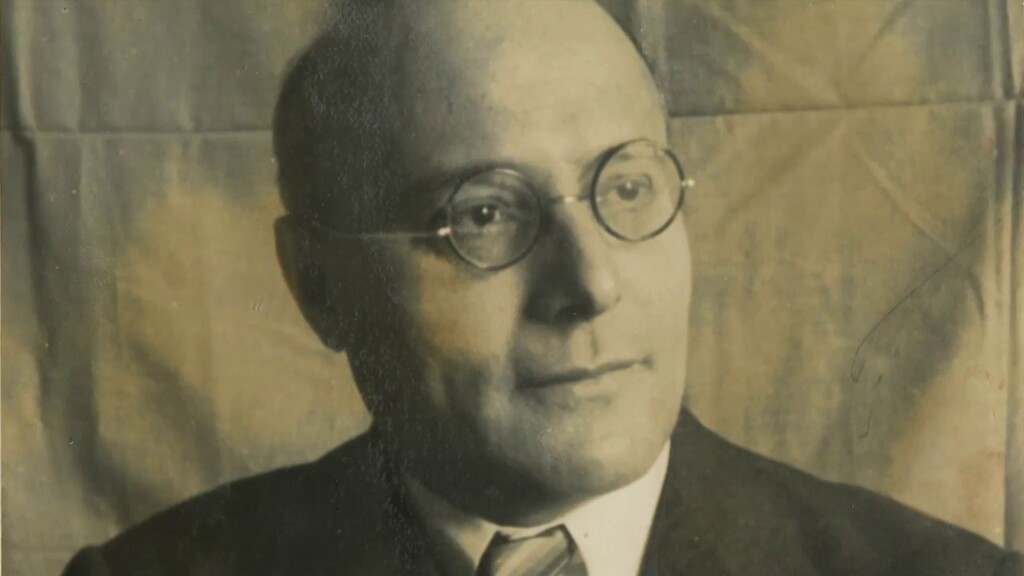
You are standing in a supermarket at seven in the evening, exhausted, choosing between two brands of olive oil, and somewhere in the fluorescent hum of that ordinary moment is the entire architecture of a civilization that dismantled something it could not name.
Every society that preceded the nineteenth century’s rupture organized its economy the way a river organizes itself around the land — the water moves, but the land determines where. Aristotle called the pursuit of unlimited wealth chrematistike and separated it sharply from oikonomia, the management of the household for genuine need. Medieval guilds set prices not by supply and demand but by notions of a just return. The Kwakwaka’wakw peoples of the Pacific Northwest distributed surplus through the potlatch, transforming accumulation into obligation. These were not primitive failures to discover capitalism. They were mature, deliberate decisions to keep the economic impulse answerable to something larger than itself — kinship, sacred duty, communal survival. The economy was embedded in society the way a bone is embedded in flesh: structurally inseparable, functionally subordinate to the organism as a whole.
What the nineteenth century accomplished was the surgical extraction of that bone and the insistence that the flesh should now organize itself around its absence. The legal and institutional machinery built between roughly 1820 and 1870 across Britain and then Europe was not simply a new way of doing commerce. It was an ontological claim: that land, labor, and money were commodities like any other, produced for sale, valued by the market’s verdict alone. Thomas Malthus and David Ricardo provided the intellectual scaffolding, arguing that interference with wages or grain prices constituted a violation of natural law. The English Poor Law reforms of 1834, which demolished the Speenhamland system of outdoor relief and forced the rural poor into the labor market under threat of the workhouse, were explicitly designed to make human beings respond to price signals the way iron filings respond to a magnet. Suffering was not a policy failure. It was the mechanism.
The countermovement that followed — trade unions, factory legislation, public health boards, eventually the welfare states of the mid-twentieth century — was not ideological opposition. It was biological. Societies re-embedded fragments of economic life into social protection because the alternative was literal physical destruction of the population. The Factory Acts of the 1840s, the legalization of collective bargaining, the German social insurance legislation Bismarck introduced in the 1880s precisely to contain socialist agitation — these were not gifts. They were tourniquets applied to a wound the market had opened and then described as natural.
What persists, and what makes the structure so difficult to see clearly, is that the disembedded economy does not present itself as an ideology. It presents itself as reality. The price of your labor feels like a fact of nature in the same way that the weather feels like a fact of nature, not like the outcome of a two-century legal and political project to remove customary protections, enclose common land, criminalize combination, and discipline bodies into compliance with the wage relation. When you feel the anxiety of being replaceable — not as a political condition but as a personal inadequacy — you are experiencing the successful internalization of a fiction that was imposed by force and then allowed to age into common sense.
The genuine scandal is not that the market causes suffering. It is that it has persuaded the people it causes suffering to understand that suffering as a private matter, a failure of individual fitness, a gap between who they are and who they should have been. An economy embedded in social relations makes collective meaning from shared fate. An economy that has swallowed society whole produces isolated subjects who stand under fluorescent light, choosing between oils, carrying the full weight of a structural disembedding in the form of a personal feeling they cannot quite name but recognize, every single day, as the texture of modern life.
🏛️ Markets, Society, and the Transformation of Power
Karl Polanyi‘s The Great Transformation argues that the self-regulating market is not a natural order but a historically constructed and deeply disruptive force. To fully grasp his vision, it helps to explore the parallel thinkers who mapped the tensions between capital, community, and human dignity.
Max Weber: Life and Works
Max Weber‘s analysis of capitalism and bureaucracy forms an essential companion to Polanyi’s work, tracing the cultural and religious roots of the modern economic order. Weber’s concept of rationalization illuminates how market logic gradually colonizes every domain of social life. Together, Weber and Polanyi offer a sweeping diagnosis of modernity’s hidden costs.
GO TO THE SELECTION: Max Weber: Life and Works
Tönnies’s Community and Society: Analysis
Ferdinand Tönnies‘s distinction between Gemeinschaft and Gesellschaft — community and society — anticipates Polanyi’s concern for the social fabric torn apart by market expansion. Tönnies argued that the rise of impersonal contractual relations erodes the organic bonds that sustain human belonging. This tension between solidarity and abstraction lies at the very heart of The Great Transformation.
GO TO THE SELECTION: Tönnies’s Community and Society: Analysis
Karl Marx and Alienation: Economic and Philosophical Manuscripts
Marx’s concept of alienation, developed in the Economic and Philosophical Manuscripts, offers a powerful lens through which to read Polanyi’s critique of the commodification of labor. For both thinkers, treating human work as a mere market input severs people from their authentic social existence. The dialogue between Marx and Polanyi remains one of the most fertile in critical social theory.
GO TO THE SELECTION: Karl Marx and Alienation: Economic and Philosophical Manuscripts
Ferdinand Tönnies: Life and Works
Ferdinand Tönnies‘s biography and intellectual trajectory reveal how deeply nineteenth-century social thought wrestled with the dislocations brought by industrial capitalism. Understanding Tönnies as a thinker allows readers to situate Polanyi within a broader German-speaking tradition of sociological critique. His life and works provide crucial context for the questions Polanyi would later radicalize.
GO TO THE SELECTION: Ferdinand Tönnies: Life and Works
Discover the Cinema of Ideas on Indiecinema
If Polanyi’s vision of a world shaped by invisible economic forces resonates with you, Indiecinema’s streaming catalog offers a rich selection of independent and documentary films that explore power, markets, and social transformation with the same unflinching depth. Step beyond the mainstream and let independent cinema challenge the world you thought you understood.
👉 EXPLORE THE CATALOG: Watch Indie Films in Streaming
A vision curated by a filmmaker, not an algorithm
In this video I explain our vision

