
The Screen as a Moral Frontier
You are sitting in a theater in 1931, and the woman on the screen is doing something you were not prepared for. She is not being punished for it. The film does not cut away to signal your discomfort or offer you the moral cushion of consequence. She simply exists in her desire, lit by arc lamps and silver nitrate, magnified to a scale that makes the private grotesquely public, and the audience around you shifts in their seats not because they are offended but because they recognize something they have spent considerable energy pretending does not exist in themselves. That recognition is the thing nobody in the industry had fully anticipated when the movies went from novelty to mass ritual — the screen does not merely entertain, it reflects, and what it reflected in the years before full censorship enforcement was an America that bore almost no resemblance to the America it claimed to be in its churches, its courtrooms, and its political speeches.

The motion picture industry had been commercially dominant since roughly 1915, when D.W. Griffith demonstrated with brutal clarity that film could move millions of people simultaneously and in the same direction. What Griffith also demonstrated, though this received considerably less celebration, was that moving people emotionally at scale is indistinguishable from moving them ideologically. By the late 1920s, Hollywood was producing over five hundred feature films annually, and a significant portion of the adult American population was attending the cinema at least once a week. This was not passive consumption. Sociologist Herbert Blumer, in his 1933 study Movies and Conduct, documented through first-person testimonials how young viewers absorbed postures, desires, romantic scripts, and social ambitions directly from the screen — not as imitation but as instruction, as a kind of secular catechism for a society that had never been as unified by religion or geography as it pretended.
What the Pre-Code era — roughly 1929 to 1934 — placed on screen was the friction between the country’s mythological self-image and its actual social texture. Films from those years depicted addiction, interracial attraction, female sexual agency, political corruption, and economic desperation with a directness that would disappear for nearly three decades afterward. Barbara Stanwyck in 1931 played women whose survival depended on strategies that polite society refused to name. James Cagney‘s criminals were not cautionary figures — they were comprehensible, even logical, products of environments the audience knew because they lived in versions of them. The screen was not inventing transgression. It was refusing to edit it out.
The pressure to impose that editing came from multiple directions simultaneously, and its convergence was not accidental. The Catholic Legion of Decency, formally organized in 1933, claimed within a year to have pledged over eleven million Americans to boycott films deemed morally objectionable — a number that, regardless of its precision, represented a coordinated economic threat no studio could dismiss. Protestant reform organizations had been filing complaints with local censor boards since the early 1920s, producing a patchwork of regional restrictions that made national distribution an administrative nightmare. What the industry feared was not moral collapse but federal intervention, the prospect of government censorship that would strip studios of the editorial control they had spent two decades consolidating.
The Motion Picture Production Code had technically existed since 1930, drafted by a Jesuit priest named Daniel Lord and a Catholic publisher named Martin Quigley, with the tacit endorsement of Will Hays, the Presbyterian elder and former Postmaster General who had been installed as the industry’s public relations shield in 1922. But for four years the Code was observed with the enthusiasm of a suggestion. What changed in 1934 was not the document itself but the enforcement mechanism — and with it, something shifted in the grammar of American storytelling that would take a generation to fully excavate.
The Architecture of Manufactured Virtue
You are in 1922, and the film industry has just decided to save itself by inventing its own executioner.
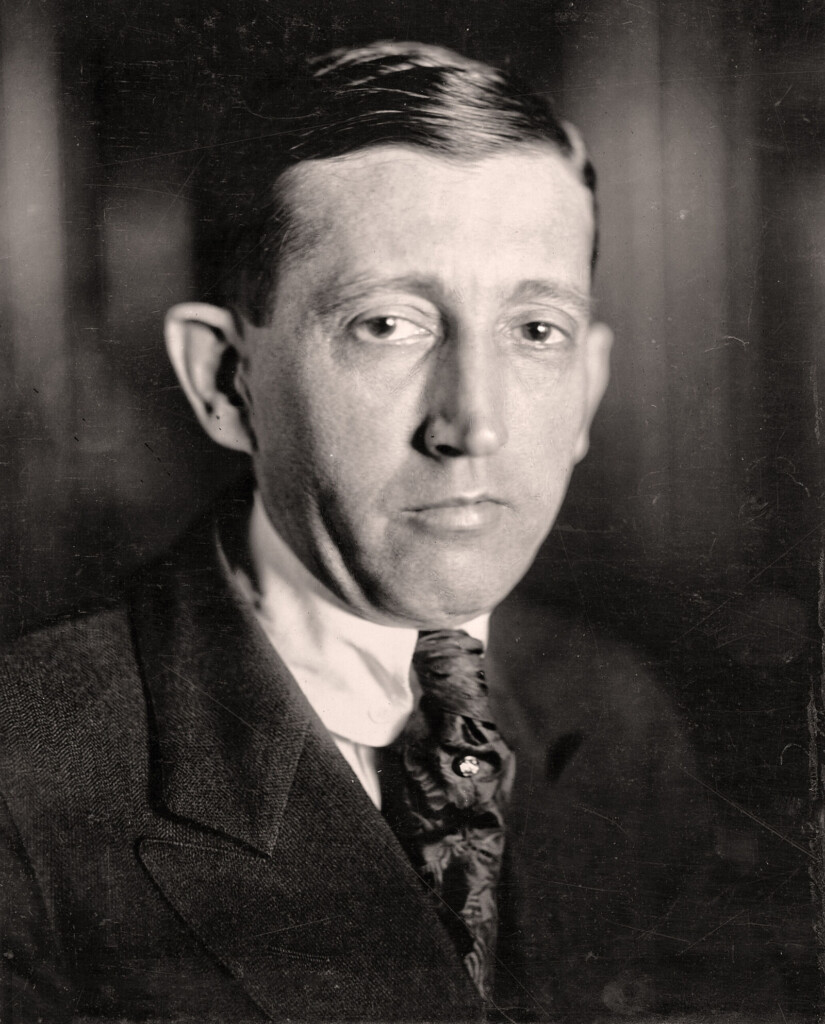
The men who ran the major studios in that year were not naive about what they were doing. Will H. Hays, the Postmaster General under Warren G. Harding and chairman of the Republican National Committee, was recruited by a consortium of producers at a salary of one hundred thousand dollars annually — a figure that exceeded the pay of almost every public official in the country at the time. His function was not administrative. It was liturgical. The Motion Picture Producers and Distributors of America needed a face that projected civic rectitude, and Hays provided exactly that: a Midwestern Presbyterian elder whose presence implied that the industry had submitted itself to something larger than profit. It had not. The MPPDA was a trade organization protecting market interests, and the moral architecture it would erect over the following decade was, at its structural core, a competitive shield against federal intervention.
What the studios feared was not sin. They feared fragmentation. By the early 1920s, over thirty individual states had either passed or were actively considering local censorship boards, and the threat of a patchwork of incompatible content regulations threatened the national distribution model on which the studio system depended. A single film traveling from New York to Kansas City to Atlanta could not survive if each jurisdiction demanded different cuts. Centralized self-regulation was not a moral solution — it was a logistics problem solved in the language of virtue.
The 1927 “Don’ts and Be Carefuls” list, an early document produced under Hays, illustrated this perfectly. Eleven subjects were prohibited outright, including any depiction of drug trafficking, white slavery, and “pointed profanity.” Twenty-five additional elements required “special care.” The document reads less like a moral treatise than like an insurance actuary’s risk table — a probability calculation of which content categories were most likely to trigger external regulatory retaliation. The language of decency was borrowed wholesale from the cultural vocabulary of Protestant reform movements, but the underlying logic was purely managerial.
The decisive rupture came in 1934, and it requires a name that film history has treated with insufficient brutality: Joseph Ignatius Breen. A Catholic publicist and journalist with a documented history of antisemitic correspondence — letters in which he described Hollywood’s Jewish executives as people “saturated with smut” — Breen was appointed head of the newly formed Production Code Administration and given the power that Hays had always withheld from the code itself: enforcement authority. Without Breen’s office, no film could receive a seal of approval, and without that seal, no film could be exhibited in the theaters controlled by MPPDA member companies, which constituted the dominant distribution network in the United States. The code had existed since 1930, largely ignored during a period when pre-Code films like Baby Face and I Am a Fugitive from a Chain Gang tested every possible boundary. Breen turned a decorative document into a binding instrument.
This is the mechanism that deserves examination: a private corporate agreement, never voted on by any citizenry, never reviewed by any court, enforced through market control rather than legal sanction, operating for over two decades as the effective law of American public imagination. It was neither censorship in the constitutional sense — no government agency compelled compliance — nor voluntary self-expression, since any filmmaker outside the studio system who rejected its terms faced economic annihilation. It occupied an institutional space that liberal democracies rarely acknowledge: the private enforcement of public norms, answerable to no electorate, reviewed by no judiciary, sustained entirely by the convergence of commercial interest and cultural anxiety into a machinery that called itself conscience.
The genius of the Code was never its content. It was the conviction it manufactured in its own legitimacy.

Pre-Code Hollywood as a Suppressed Memory
You are watching a woman negotiate her own survival on screen — not metaphorically, not through the softened language of romantic sacrifice, but with the cold arithmetic of someone who knows exactly what her body is worth in a city that has already decided everything else about her life is worthless. She is not punished at the end. The credits roll and she is still standing, still calculating, still alive. This was normal cinema in America between 1930 and 1934, and the fact that it feels radical today is itself the evidence of what was destroyed.
The Pre-Code era was not an accident of permissiveness. It was the direct product of an industry responding honestly to a society in freefall. By 1932, American unemployment had reached roughly 24 percent. Studios understood, with the precision of any business dependent on mass emotional response, that audiences arriving at movie palaces were not looking for reassurance — they were looking for acknowledgment. What appeared on screen in those four years was cinema doing what literature had been doing for centuries: describing the actual texture of existence under capitalism, under patriarchy, under racial stratification, without flinching into allegory.
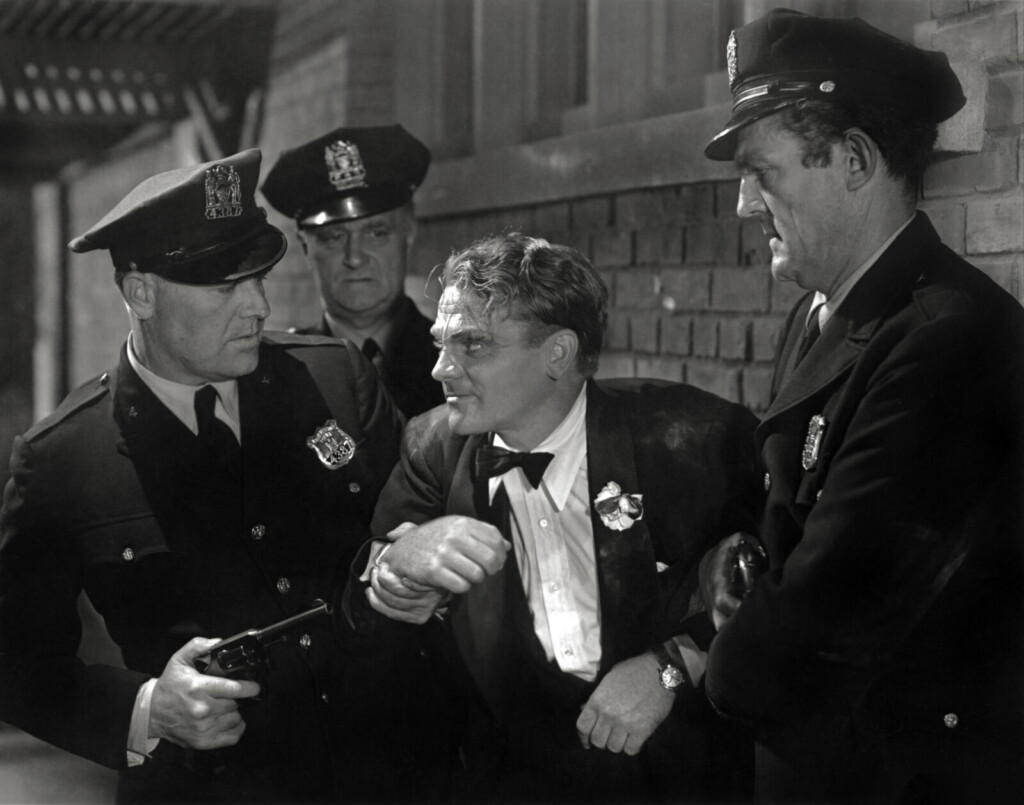
James Cagney’s Tom Powers in a 1931 gangster film does not become a criminal because of a moral defect — he becomes one because the legitimate economy has nothing to offer someone born where and how he was born. The film presents this not as tragedy requiring a corrective sermon but as structural fact. Audiences in Depression-era Chicago and Detroit recognized it as such. What is remarkable is how completely this class-conscious clarity was excised from American popular cinema once systematic enforcement began, replaced by a mythology in which criminality is always personal failure, never systemic inheritance.
Barbara Stanwyck appeared in a 1931 film as a young woman who uses seduction as economic strategy with the same matter-of-fact pragmatism that a clerk might use shorthand. The film does not frame her intelligence as dangerous or her sexuality as corrupting — it frames them as tools available to her in a market that has foreclosed every other option. Molly Haskell, writing in From Reverence to Rape in 1974, documented with precise attention how thoroughly the post-Code decades reversed this: female sexuality on screen became something that happened to women rather than something women deployed, something requiring management, containment, narrative punishment.
What makes the racial dimension of Pre-Code cinema particularly difficult to process is that it does not represent equality — it represents a different and more honest form of contradiction. Films from this period show Black performers in roles that, while still constrained by commercial racism, allowed for dignity, complexity, and desire that the Code would subsequently render cinematically illegal. The 1933 film featuring Nina Mae McKinney presented a Black woman as the erotic center of her narrative, not its margin. The enforcement apparatus that arrived shortly after did not simply restrict content — it reconfigured whose inner life was legible on screen at all.
What the Hays enforcement of 1934 accomplished was not the elimination of these themes but their forced migration into subtext, symbol, and indirection — a migration that generations of critics have since celebrated as sophistication. The compression became aestheticized. The censorship became craft. There is something genuinely vertiginous about the cultural consensus that learned to read the constraints as elegance, that trained itself to find the wall beautiful because looking at the wall was all it was permitted to do. Michel Foucault spent the better part of The History of Sexuality, Volume One, published in 1976, dismantling the idea that repression produces silence — his argument being that it produces instead an enormous proliferation of displaced, coded, anxious speech. American cinema after 1934 is perhaps the most elaborate demonstration of that thesis ever assembled at industrial scale.
The Sociology of Fear Behind the Enforcement
You are sitting in a movie theater in 1933, and the woman on screen is negotiating her own desire with a fluency that makes the man beside you shift in his seat. She is not punished. She does not apologize. The film ends and you walk out into a city where one in four workers has no job, where the banker and the dockworker are equally humiliated by the same arithmetic of collapse, and where the screen has just shown you that the rules governing bodies and ambitions are, in fact, negotiable.
That specific combination — economic vertigo plus moral permissiveness on screen — is what produced the enforcement machinery of 1934, not some timeless American prudishness. The Production Code Administration under Joseph Breen did not emerge from a vacuum of decency; it emerged from a calculation. When the Great Depression dissolved the material markers separating a clerk from a millionaire, when men who had owned things suddenly owned nothing, the symbolic hierarchies encoded in cinema became load-bearing walls. Stories in which a woman could sleep outside of marriage without consequence, in which a gangster could be glamorous and unkilled, in which class was something you could simply refuse — these stories were not merely offensive. They were structurally dangerous to a social order that had already lost its economic justification.
The Catholic Legion of Decency, formally organized in 1933 and mobilizing an estimated ten million pledged members within its first year, understood this with remarkable tactical clarity. Its founders were not simply moralists; they were institutional architects who recognized that the parish network constituted a distribution system more granular than any federal regulatory body. Martin Quigley, the Catholic publisher who co-drafted the original Code text with the Jesuit Daniel Lord in 1930, explicitly argued that cinema operated below the threshold of rational consent — that images reached audiences in a state of lowered critical defense. What he was describing, without the vocabulary, was something close to what psychologist Robert Zajonc would formalize decades later in his 1980 paper on affective primacy: that emotional response precedes and shapes cognitive processing. The Legion was not afraid of ideas the audience would consciously adopt. It was afraid of feelings the audience would absorb before thinking.
Michel Foucault’s account of discipline in Discipline and Punish, published in 1975, offers a surgical lens here — not because the Hays Office resembles a prison, but because Foucault isolates the moment when power stops needing to punish and starts needing to produce. The PCA did not ban films after release; it shaped them before a single frame was shot. Studios submitted scripts, received notes, revised, resubmitted. The censor was internalized by the writer at the typewriter, by the director blocking a scene, by the actress deciding how long a kiss could last before someone off-camera would object. Discipline had migrated entirely inside the productive apparatus itself, which is precisely why it was so much more effective than any external law could have been. The Comstock Act of 1873 had tried to regulate obscenity through criminal prosecution and produced mostly martyrs and loopholes. The PCA produced compliance that felt, to those inside the system, like craft.
What the sociology of that moment reveals is a particular alliance between institutional Catholicism, a shaken middle class, and an industry terrified of federal legislation — three anxieties that found a single outlet. The studios accepted aesthetic regulation as the price of avoiding antitrust scrutiny and government takeover, a bargain that transformed a moral panic into a bureaucratic infrastructure. Geoffrey Shurlock, who administered the Code for decades, later described his office’s work as essentially architectural: you didn’t remove desire from a story, you redirected it into forms the culture could contain without fracturing.
And what gets contained in that redirection is never neutral — it is always the desire of someone specific, the body of someone with less leverage than the person writing the regulation.
What the Code Permitted by Forbidding
You are watching a man and a woman argue in a hotel corridor. The camera lingers on her face, then cuts to a closing door, then to a window where rain runs down the glass in long diagonal lines. Nothing has been shown. Everything has been understood. The cut did not hide the act — it enlarged it, stretched it across the entire nervous system of the viewer, made it occupy more psychological space than any explicit image could have claimed.
This is what censorship accidentally engineered: a grammar. The Production Code, enforced with bureaucratic thoroughness from 1934 onward by Joseph Breen and his staff at the Production Code Administration, did not silence Hollywood’s erotic and violent imagination. It displaced it into form. And form, as the semiotician Roland Barthes argued across decades of work — from Mythologies in 1957 to the later essay collections on the rhetoric of images — is never neutral. Form carries meaning with a density that direct statement cannot achieve, precisely because the reader or viewer must complete the circuit themselves. What the audience supplies from their own interior becomes indistinguishable from what the film has said. The message colonizes the imagination because it was never fully delivered.
The ellipsis became the primary instrument of this colonization. In classical rhetoric, an ellipsis omits what is grammatically present but contextually understood. Hollywood under the Code learned to omit what is narratively present but morally forbidden, and the result was identical: the gap creates pressure. When a door closes between two characters and the next shot shows morning light on rumpled sheets, the viewer’s mind has not been spared anything. It has been made to perform the forbidden scene in private, without witnesses, which is precisely the condition under which desire operates most intensely. The Code, in trying to suppress that intensity, became its primary manufacturing mechanism.
Film theorists working from the 1970s onward began to map this systematically. Laura Mulvey’s 1975 essay “Visual Pleasure and Narrative Cinema” exposed how the camera’s gaze had been structured around prohibition and partial vision — the withheld body, the interrupted look, the fragment that implies the whole. Her argument was grounded in Lacanian psychoanalytic theory, where desire is definitionally organized around absence rather than presence. The object one cannot see fully exerts gravitational force that the fully visible object immediately exhausts. Hollywood’s censors, in their Victorian anxiety about the visible, had accidentally built their industry on the engine of the Lacanian lack — on the productive power of the thing not shown.
Shadow is the visual syntax of this dynamic. The chiaroscuro that defines so much of the noir aesthetic of the 1940s was not purely an artistic choice drawn from German Expressionism, though that lineage is real. It was also a technical solution to a regulatory problem. Violence that could not be depicted directly could be depicted as shadow on a wall — a figure raised, a figure falling, the outline of consequence without its substance. The shadow does not diminish the murder. It elevates it into something closer to myth, where the act exists outside the specific bodies involved and becomes a general statement about what human beings do to each other in the dark.
What the Code’s enforcers could not anticipate was that every prohibition generates its own hieroglyphics. By 1950, sophisticated American audiences had become fluent in a visual language built entirely from indirection, and that fluency was not passive. It was an active, pleasurable interpretive labor — a collaboration between viewer and screen that no explicit image could have demanded, because explicit images require nothing. They deliver and are consumed. The shadow on the wall asked the viewer to become, briefly, an accomplice.
A vision curated by a filmmaker, not an algorithm
In this video I explain our vision
Race, Sexuality, and the Invisible Hierarchies Encoded in the Rules

You are watching a couple on screen — their hands nearly touching, the camera cutting away before contact becomes undeniable. You assume the director is being tasteful. What you do not see is the bureaucrat who read the script three months earlier and drew a line through a word that would have told you exactly who these two people were to each other.
The Production Code, formally adopted by the Motion Picture Producers and Distributors of America in 1930 and enforced with teeth from 1934 onward under Joseph Breen’s Production Code Administration, did not merely regulate obscenity. It encoded a specific vision of American humanity — who counted as a person capable of legitimate desire, and who existed only as a problem to be managed. The explicit prohibition on depicting “sex relationships between the white and black races” appeared not in a footnote but in the section governing “Particular Applications,” sitting alongside rules about nudity and profanity as though the mixing of bodies across racial lines were a category of indecency equivalent to exposed flesh. This was not accidental adjacency. It was a moral taxonomy.
What that taxonomy produced was a cinema in which Black Americans appeared primarily as servants, comedic figures, or background texture — never as subjects of romantic longing directed toward white characters, because the Code treated such longing as a form of contamination. The historian Thomas Cripps, writing in Slow Fade to Black in 1977, documented how studios internalized this logic so thoroughly that self-censorship preceded any formal review. Scripts were scrubbed before they arrived at Breen’s desk. The prohibition did not need to be invoked because the industry had already performed it invisibly, folding racial hierarchy into the grammar of storytelling itself, making it feel like the natural shape of narrative rather than a political imposition.
Homosexuality operated under a different but structurally related mechanism. The Code never used the word. It did not need to. The 1934 provisions forbade “sex perversion or any inference to it,” a phrase whose deliberate vagueness gave Breen and his staff unlimited interpretive authority. A glance held too long, a wrist bent at a particular angle, a friendship that seemed to lack the correct amount of competitive hostility between men — all of it could be flagged, revised, excised. What the Code was engineering was not merely the absence of gay characters but the active erasure of legibility. Gay audiences learned to read the surviving traces — the coded performance, the undeniable subtext — precisely because those traces were the only thing that survived the machinery of deletion. The critic Alexander Doty argued in Making Things Perfectly Queer in 1993 that this enforced illegibility paradoxically produced some of the most sophisticated acts of spectatorship in American film history, as viewers trained themselves to see what the text was designed to conceal.
The deeper violence of these prohibitions was epistemological. When the only cinema a culture produces systematically excises certain bodies from the category of desiring subject, it does not simply reflect existing prejudice — it manufactures consent to that prejudice in people who might never have consciously held it. A white American who sat in a theater every week from 1934 to 1966 absorbed, through sheer repetition, a world in which interracial intimacy did not exist and same-sex desire was either comic or monstrous. The Code did not require anyone to believe in white supremacy or heterosexual normativity as explicit doctrine. It made those hierarchies feel like the neutral texture of reality, the unmarked ground against which deviation stood out as aberration.
This is how ideological work gets done at its most efficient: not through argument, not through stated belief, but through the quiet architecture of what is never shown, what is never named, what is framed as so obviously impossible that imagining it differently requires a kind of effort most audiences were never invited to make.
The Economic Machinery of Moral Compliance
You are sitting in a theater in 1937, watching a film that has already been cut twice before it reached you — once by the producer’s legal team, once by the Breen Office, and once more by a regional distributor who decided that a particular closeup was too suggestive for his territory. What you experience as a coherent story is actually the residue of three separate acts of excision, each one commercially motivated, each one dressed in the language of public virtue.
The Production Code Administration did not function as a moral authority in any philosophical sense. It functioned as a tollbooth. Joseph Breen, who ran the PCA from 1934 to 1954, issued certificates of approval that were, in practical terms, commercial licenses. Without that certificate, a film could not be screened in any of the major theater chains — Loew’s, Paramount, RKO, Fox — because those chains were vertically integrated subsidiaries of the same studios that had agreed to the Code’s enforcement provisions in 1934. The architecture was elegant in its circularity: the studios financed the enforcement body, the enforcement body protected the studios’ distribution networks, and the distribution networks locked out any product that hadn’t passed through the enforcement body. Independent producers who refused compliance didn’t face a moral judgment. They faced a market closure.
Walter Benjamin, writing in 1935 in his essay on the work of art in the age of mechanical reproduction, identified something that the studio executives already understood intuitively: that mass cultural reproduction is never politically neutral, because the conditions of production determine the conditions of perception. What he could not have anticipated — writing from Paris, watching fascist aesthetics colonize German cinema — was that the American system would achieve ideological control not through state apparatus but through contractual obligation between private corporations. The Hays Code was not censorship in the classical sense. It was a licensing regime disguised as ethics, and the distinction matters enormously, because licensing regimes are invisible to the people they constrain.
The numbers give the mechanism a body. In 1934, the year the Code began rigorous enforcement under Breen, the major studios collectively controlled approximately 70 percent of first-run theater seats in the United States. By 1940, that figure had risen closer to 75 percent, according to the Federal Trade Commission’s subsequent investigations that would eventually produce the Paramount Decree of 1948. Any film excluded from those first-run houses was commercially dead before it opened, because second-run and regional exhibition depended entirely on the cultural momentum generated by metropolitan premieres. The Code’s power was therefore not moral but topographical — it controlled the geography of distribution, and distribution is where money is made or lost.
This is why the studios lobbied for stricter enforcement rather than resisting it. A rigorous Code was a barrier to entry. It raised the compliance cost for independent producers, who lacked the in-house legal and editing infrastructure to navigate Breen’s requirements efficiently. MGM could absorb the cost of reshooting a scene; a small independent producer frequently could not. Morality, in this configuration, was industrial policy — a regulatory burden distributed asymmetrically so that its weight fell hardest on those least able to carry it. The rhetoric of protecting audiences from obscenity performed exactly the same function that professional licensing requirements perform in any regulated industry: it protected incumbents from competition by raising the cost of entry.
What made this system durable for nearly three decades was not its ideological coherence but its alignment of incentives across every node in the production chain. Writers self-censored during drafting because they knew the Breen Office would flag the material anyway. Directors avoided shooting compromising footage because producers would cut it in post-production. Producers pre-cleared scripts because reshoots were expensive. The Code didn’t need enforcement officers on every set; it had colonized the anticipatory imagination of everyone involved in making films, turning moral compliance into a form of professional competence indistinguishable from craft.
The Code's Collapse and What It Left Intact
You are watching a filmmaker in 1966 edit his own film before anyone has asked him to, cutting a scene he knows is true, knows is necessary, because somewhere in the back of his skull a voice has already calculated the cost of leaving it in.
The formal machinery of the Production Code did not collapse all at once. It eroded the way authority always erodes — through a series of exceptions that were each granted as special cases until the rule they violated could no longer pretend to be universal. The 1952 Supreme Court decision in Burstyn v. Wilson had already done irreparable structural damage by extending First Amendment protections to motion pictures, a category the Court had explicitly excluded in 1915 when it ruled film a business, not an art form. By the mid-1950s, foreign films arriving without Code seals were drawing audiences that American studios watched with unconcealed envy. Otto Preminger released The Man with the Golden Arm in 1955 without approval, depicting heroin addiction with a directness the Code explicitly forbade, and United Artists distributed it anyway, absorbing the institutional penalty and discovering the penalty meant almost nothing. Billy Wilder‘s Some Like It Hot arrived in 1959 with no seal and became one of the most commercially successful comedies in Hollywood history. The arithmetic was now impossible to ignore.
What replaced the Code in 1968 was the MPAA ratings system — G, M, R, and X in its original configuration — which repositioned the regulating function from prohibition to classification. Jack Valenti, who engineered the transition, was explicit about his reasoning: the new system acknowledged that adults existed, that they could be trusted to choose, and that the industry’s survival depended on releasing that pressure valve before it blew the entire structure apart. This was pragmatism dressed as liberalism. The ratings system did not dismantle the idea that certain content required management; it privatized the management, distributed it across the market, and replaced the moral language of Joseph Breen with the commercial language of audience segmentation.
What the historical record consistently underweights is what the Code had accomplished in the three decades of its enforcement that could not be undone by revoking it. Pierre Bourdieu‘s concept of habitus, developed most rigorously in The Logic of Practice published in 1980, describes exactly this phenomenon: the way institutional structures deposit themselves into individual bodies and perceptions until the external rule becomes unnecessary because the internal reflex has already replaced it. An entire generation of American filmmakers had learned to think inside the Code’s architecture. They had developed aesthetic strategies — the cut before the consequence, the implication rather than the statement, the frame that stops precisely where the meaning becomes undeniable — that were not abandoned when the seal ceased to matter, because by then these strategies had become indistinguishable from craft itself.
The deeper distortion was not what the Code prohibited but what it trained audiences to accept as the natural shape of a story. Narrative resolution, moral legibility, the punishment of transgression — these were not simply rules imposed on Hollywood product between 1934 and 1968. They were the grammar audiences internalized so thoroughly that deviation felt like error rather than choice. When filmmakers in the early 1970s began breaking those conventions, the discomfort audiences expressed was described as aesthetic, even when it was entirely ideological. They were not confused by the form; they were destabilized by encountering a story that refused to confirm what they had been trained, for thirty years, to expect reality to look like.
The institution dissolved, the seal disappeared, the enforcement office closed — and the editor remained, resident and unnamed, inside every room where someone decides what a mass audience is ready to see.
🎬 Power, Morality & the Censored Screen
The Hays Code reshaped American cinema by imposing strict moral boundaries on what could be shown and said on screen, turning Hollywood into a battlefield between creative freedom and institutional control. Understanding this censorship requires exploring the broader cultural, psychological, and cinematic forces that surrounded it — from the actors who embodied its constraints to the directors who pushed against them.
Edward G. Robinson and classic American cinema
Edward G. Robinson became one of the defining faces of pre-Code and Code-era Hollywood, embodying the moral ambiguity that censors sought to erase. His career arc reflects the very tensions the Hays Code tried to suppress — crime, complexity, and the blurred line between hero and villain. Studying Robinson means studying the compromise between artistic truth and institutional morality.
GO TO THE SELECTION: Edward G. Robinson and classic American cinema
Delmer Daves and the cinema of American guilt
Delmer Daves crafted films saturated with guilt, redemption, and moral consequence — themes that both navigated and quietly subverted the Hays Code’s rigid ethical framework. His work reveals how filmmakers internalized censorship, transforming restriction into a subtle narrative language of inner torment. The cinema of American guilt is, in many ways, the cinema the Code accidentally created.
GO TO THE SELECTION: Delmer Daves and the cinema of American guilt
John Huston and the art of irregular cinema
John Huston was a filmmaker of instinct and irreverence, whose irregular style constantly tested the limits of what Hollywood’s moral gatekeepers would permit. His films found ways to portray human darkness, failure, and moral ambiguity even within the censored landscape of mid-century American cinema. Huston’s career is a masterclass in creative resistance under institutional pressure.
GO TO THE SELECTION: John Huston and the art of irregular cinema
Humphrey Bogart and the face of American cinema
Humphrey Bogart became the iconic face of a morally ambiguous America precisely during the years when the Hays Code was at its most powerful. His screen persona — cynical, world-weary, yet quietly principled — embodied the contradictions that the Code tried to resolve but never could. Bogart’s enduring appeal lies in the tension between the censored surface and the darkness underneath.
GO TO THE SELECTION: Humphrey Bogart and the face of American cinema
Discover the Cinema That Refused to Be Silent
The films that challenged censorship, defied moral codes, and told the truths that power tried to suppress are the films that still matter most. On Indiecinema, you can explore independent and world cinema that carries that same spirit of uncompromising storytelling — films that ask difficult questions and refuse easy answers. Join us and discover the screen without limits.
👉 EXPLORE THE CATALOG: Watch Indie Films in Streaming
A vision curated by a filmmaker, not an algorithm
In this video I explain our vision

