
The Imprint That Precedes Understanding
You are fourteen, maybe fifteen, and there is a person across the room who has not yet looked at you, and already something in your chest is reorganizing itself without your permission. Not excitement, exactly — something older than that, something that feels borrowed from a part of you that did not exist last week. You will spend the next several years misidentifying this feeling as love, then as obsession, then as the embarrassing evidence of your own immaturity. You will be wrong each time. What happened in that room was not emotion. It was architecture. The self you had been building since birth, brick by unexamined brick, suddenly found a foreign material inserted into its load-bearing walls — and held.

Neuroscience has spent considerable time trying to translate this moment into legible data. Research published across the last two decades on adolescent brain development, much of it building on the foundational work of Sarah-Jayne Blakemore, whose 2018 book Inventing Ourselves synthesized decades of neuroimaging studies, confirms that the teenage brain is not a defective adult brain but a distinct organ in a distinct phase — one characterized by heightened sensitivity to social reward, by an amygdala that fires before the prefrontal cortex can intervene, and by a dopaminergic system so primed for novelty that first encounters are not merely felt but chemically scored into memory with an urgency that later experiences rarely replicate. The first romantic attachment does not arrive in a brain that is ready for it. It arrives in a brain that is, structurally, the most available it will ever be to being permanently altered by it.
This is not metaphor. Psychologists working within the attachment tradition — a tradition that traces its intellectual lineage through John Bowlby’s three-volume Attachment and Loss, published between 1969 and 1980, and through Mary Ainsworth’s landmark Strange Situation studies — have long argued that early relational patterns establish what they call internal working models: cognitive and emotional templates through which all subsequent relationships are filtered. What Bowlby and Ainsworth examined in infancy, researchers like Mario Mikulincer and Phillip Shaver extended into adult romantic life, demonstrating in their 2007 volume Attachment in Adulthood that the patterns activated in first romantic experiences function as corrections or reinforcements of whatever attachment style the child had already internalized. First love does not write on a blank page. It rewrites a page that already had invisible ink on it.
The cultural story about first love — the one absorbed through every romantic comedy, every coming-of-age novel, every well-meaning adult who smiles and says you will understand when you are older — insists that it is primarily about innocence. That its defining feature is its naivety, its transience, its tender incompleteness. This story is extraordinarily useful to people who have already survived it and need to believe they have moved beyond it. It allows them to package the experience as something anterior to real life, something that does not count. But the body does not share this taxonomy. The body remembers first love the way it remembers a fracture — not as something that happened before the bone hardened, but as evidence of the exact conditions under which the bone was formed.
Erik Erikson, mapping what he called the psychosocial stages of development in his 1950 work Childhood and Society, placed adolescence at the critical juncture of identity versus role confusion — the phase in which the self is actively constructing a coherent narrative about who it is. What Erikson could not fully account for, because the neuroimaging technology did not yet exist, is that a romantic attachment during this window does not merely coincide with identity formation. It becomes one of its primary instruments.
The Girl from the Back Desk

Drama, by Matteo Piacenti, Corrado Bonicelli, Italy, 2020.
Viola is a lonely teenager who feels out of place in the world around her, inadequate and imperfect. The comfort and support of her parents and friends are of no use. Art is the only way she has to express herself: like a colorful mosaic, Viola represents her own world and her way of seeing reality, one drawing at a time. Then she meets Giacomo, her new deskmate. From the relationship between the two, something opens up in the shell that imprisons Viola in loneliness and social isolation. A new path opens up for her in this difficult adolescent phase, which leads her to realize something more about herself and the reality around her.
This is a film made by very young boys and girls who share a passion for films, theater, and art. The film explores the sensitivity of young people, encourages them to reflect on their own self-perception in relation to society, with a positive message and attitude towards themselves and the community. "The Girl from the Back Desk" highlights the values that adolescents believe are essential for a healthy society: respect, generosity, kindness, trust in others, courage in defending their ideals, and participation.
LANGUAGE: Italian
SUBTITLES: English, Spanish, French, German, Portuguese
Romantic Love as Cultural Manufacture
You are sixteen and you are certain, with a certainty that feels geological, that what you are feeling has never been felt before by anyone in quite this way. The specificity of it — the particular slant of afternoon light, the exact weight of waiting for a message that does not come — seems to you the proof of its authenticity. Nothing could feel this original and also be borrowed.
Philippe Ariès demonstrated in his 1960 work L’Enfant et la vie familiale sous l’Ancien Régime that childhood, as a psychological and social category distinct from adulthood, was essentially a European invention of the early modern period. Before the seventeenth century, children were absorbed into adult life the moment they could function within it — working, socializing, and partnering without any cultural scaffolding suggesting their inner world required special protection or cultivation. What Ariès revealed was not that people once failed to love their children, but that the entire architecture of developmental feeling — the idea that there are stages of emotional experience tied to age — was constructed, not discovered. Adolescence as a formal category arrives even later, produced industrially by the compulsory schooling movements of the mid-nineteenth century, which for the first time gathered young people into age-segregated institutions and gave them the enforced proximity, the shared boredom, the common horizon, out of which a very specific emotional culture could crystallize.
By the time G. Stanley Hall published his two-volume Adolescence in 1904, he was not merely describing a developmental phase — he was legislating one. Hall’s theory of Sturm und Drang, borrowed from German Romanticism and applied to the teenage years, declared that turbulence, idealism, and intense feeling were the biological birthright of youth. The timing is not incidental. Hall was writing precisely when mass secondary education was creating millions of young people who needed a narrative to explain what they were experiencing, and Romanticism — which had already spent a century producing art, poetry, and opera about the devastating singularity of young love — was available as a template. The feeling did not produce the literature. The literature preceded the feeling, or at least preceded the social conditions that allowed the feeling to be recognized, amplified, and named.
What the nineteenth century manufactured was not emotion but the container in which emotion was poured and given its particular shape. Consider how completely the grammar of first love depends on cultural props that feel invisible precisely because they are total: the assumption that attraction should be concealed before being declared, that declaration transforms everything, that rejection is a wound to identity rather than merely preference, that the beloved’s indifference says something damning about the lover’s worth. None of these are natural responses. They are learned postures, absorbed so early and so thoroughly that they precede conscious awareness. The sociologist Eva Illouz, in her 2012 study Why Love Hurts, traced how consumer capitalism actively monetized romantic suffering from the early twentieth century onward — selling the experience of longing through cinema, popular music, and advertising in ways that made certain emotional scripts not just available but compulsory. To feel adolescent love without also performing it according to these scripts became increasingly difficult to imagine.
The cruelty embedded in this process is subtle enough to escape most scrutiny. Young people are handed a vocabulary of feeling that belongs to someone else’s story — the Romantic poet’s story, the Hollywood narrative’s story, the pop song’s story — and then evaluated, including by themselves, on how authentically they inhabit it. The private experience of first love is real; the form it takes, the meaning assigned to it, the catastrophe or ecstasy it is expected to produce, these are inherited furniture arranged in a room you were told was yours alone to decorate.

Neurological Bonding and the Adolescent Brain
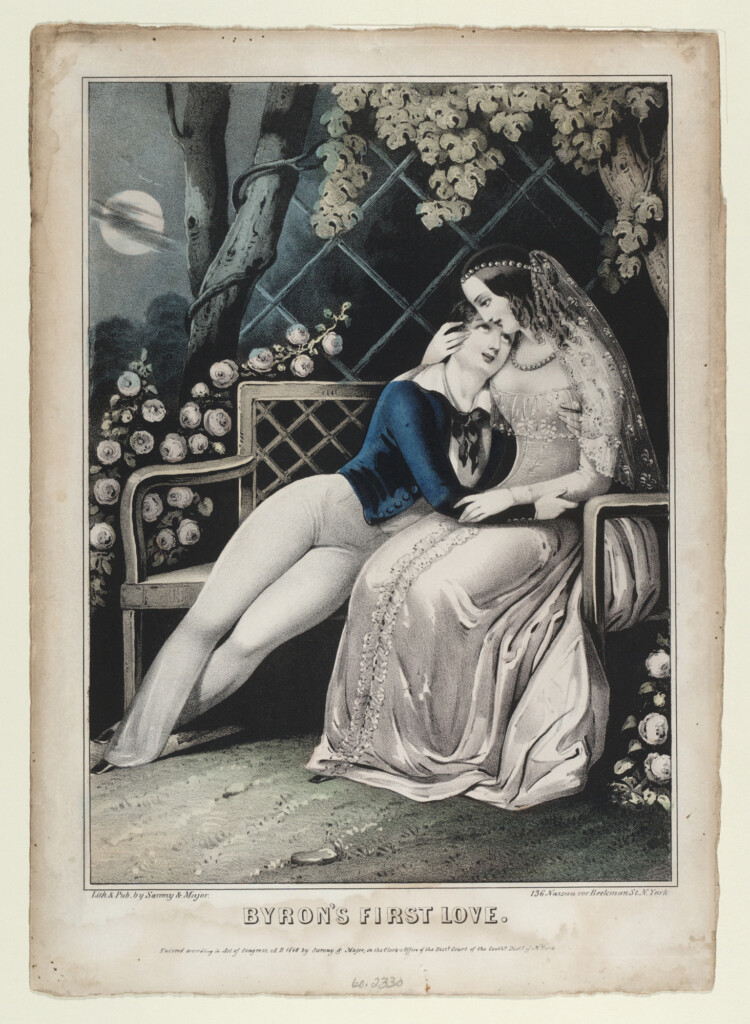
You are fifteen and someone says your name in a particular way — not loudly, not with any special intention you could identify later — and something in your chest rearranges itself permanently. You will spend the next thirty years trying to understand what happened in that single second, and neuroscience has a partial answer that is more unsettling than romantic.
The adolescent brain between the ages of twelve and twenty-two is not a smaller or less experienced version of the adult brain. It is a structurally different organ operating under a different hierarchy of command. The prefrontal cortex, responsible for consequence evaluation, impulse modulation, and the long-range calibration of emotional response, is not fully myelinated until the mid-twenties — a finding consolidated across decades of neuroimaging research, including Sarah-Jayne Blakemore’s landmark 2012 synthesis in Nature Reviews Neuroscience. What this means in practice is that the adolescent experiences emotional input without the dampening architecture that the adult takes for granted. Every signal arrives louder, faster, and with less filtration. First love does not feel more intense because adolescents are naive. It feels more intense because the organ processing it is literally wired to amplify rather than regulate.
Into this unregulated circuitry, attachment introduces dopamine release patterns that mirror, in their neurochemical structure, patterns observed in early-stage addiction. Helen Fisher‘s research at Rutgers University, published across a series of fMRI studies beginning in the early 2000s, demonstrated that romantic love activates the ventral tegmental area and the nucleus accumbens — the same reward-prediction structures activated by cocaine. The adolescent brain, still undergoing heavy synaptic pruning, does not merely respond to this dopamine flood. It organizes itself around it. Neural pathways that fire together during peak emotional arousal are selectively preserved during pruning and those that remain dormant are eliminated. The person you loved at sixteen may have literally shaped which neural architecture survived into your adulthood.
Oxytocin complicates this further in ways that are still being excavated. Commonly described as the bonding hormone, oxytocin is released during physical proximity, eye contact, and sustained emotional attunement — all activities that characterize adolescent romantic relationships in their early, obsessive phases. What oxytocin actually does is lower the threshold for trust and heighten the salience of social cues associated with a specific individual. In the adolescent brain, where salience networks are already operating in overdrive and where the social world carries an almost unbearable existential weight, oxytocin does not simply facilitate bonding. It encodes the other person as a category of reality, a perceptual anchor around which subsequent experience is interpreted. This is why breakups at sixteen can feel categorically different from breakups at thirty-five — not because the feelings are proportionally larger, but because the cognitive scaffolding being dismantled is structural rather than incidental.
Memory encoding during this period operates under what researchers call the reminiscence bump, a well-documented phenomenon in autobiographical memory research showing that adults consistently recall a disproportionate number of vivid, emotionally charged memories from the period between ages fifteen and twenty-five. The bump exists precisely because novelty and emotional intensity accelerate hippocampal consolidation, and adolescence is structurally saturated with both. First love sits at the epicenter of this neurological window. The memories it generates are not simply well-preserved — they are encoded with a richness and a sensory specificity that memories formed at thirty-eight rarely achieve, regardless of how significant the later events might appear in a retrospective account of a life.
What this produces is a strange temporal architecture inside any adult who was once fifteen and in love with someone who said their name a certain way. The past does not recede. It was written in a different kind of ink, under different chemical conditions, by a brain that no longer exists — and it keeps informing a present that the adult believes they are navigating freely.
Bowlby’s Shadow and the Repetition Nobody Names
You are seventeen, sitting across from someone whose attention feels like oxygen, and you have no idea that what is happening in your chest has a forty-year history that predates you entirely.
John Bowlby spent the better part of three decades building a framework that most people encounter only as a vague cultural reference to “attachment issues,” which is a phrase so thoroughly domesticated it has lost nearly all its danger. What Bowlby actually argued, across the three volumes of his Attachment and Loss series completed between 1969 and 1980, was that the human nervous system constructs internal working models of relationship during infancy — cognitive and emotional blueprints derived from the responsiveness or failure of caregivers — and that these models operate largely outside conscious awareness, filtering every subsequent relational experience through their architecture. He was not describing personality traits. He was describing something closer to a perceptual apparatus, a lens ground in the first years of life that determines what the eye can and cannot resolve.
Mary Main extended this with a precision that should have been more alarming to the culture than it was. Her Adult Attachment Interview, developed at Berkeley in the early 1980s, revealed something genuinely unsettling: that the way adults narrate their own childhood attachment experiences predicts, with remarkable accuracy, how their infants will attach to them — not what happened to them, but how coherently or incoherently they can tell the story of what happened. The secure adult produces a narrative with flow and reflection. The dismissing adult minimizes or cannot access. The preoccupied adult gets lost inside the telling, swamped by unresolved affect. Main was not measuring memory. She was measuring the degree to which the past had been metabolized, and the degree to which it was still running as live code beneath the surface of an adult life.
Adolescent first love arrives inside this architecture like a sudden increase in electrical current through existing wiring. The circuits were already there. The bond does not create the pattern — it stress-tests it to the point of visibility. The teenager who becomes catastrophically anxious when a partner is slow to reply is not reacting to that partner. They are replaying a learned equation between emotional need and unpredictable availability that was written long before language. The one who seems unnervingly self-contained, who insists the relationship matters less than it visibly does, is not emotionally mature — they are executing an avoidant strategy formed in an environment where expressing need produced withdrawal or discomfort in the caregiver. First love does not build these responses. It illuminates them under conditions intense enough to make them undeniable.
What makes this genuinely difficult to sit with is that the adolescent has no reference point for this recognition. The emotional intensity of a first romantic bond is so total, so unprecedented in their experience, that it feels entirely caused by the other person. The beloved seems to have created the feelings rather than activated a pre-existing system. This misattribution is not a cognitive error that better education could correct — it is structural, because the internal working model operates below the threshold of introspective access. You cannot examine the lens you are seeing through by looking harder through it.
Research by Phillip Shaver and Cindy Hazan, published in 1987 in the Journal of Personality and Social Psychology, mapped attachment styles directly onto adult romantic behavior and found continuities precise enough to be uncomfortable — the secure infant who becomes the adolescent who can tolerate both intimacy and independence without fusing or fleeing, the anxious infant who becomes the lover who experiences desire as a form of emergency. These are not destiny. But they are not accidents, and they are not primarily produced by the relationship in which they first become legible. The first love is the mirror, not the painter, and what it reflects was already there, waiting for sufficient light.
The Social Function of Heartbreak
You are sitting in a classroom three days after it ended, and you already know that the walls have rearranged themselves. Not because of grief, exactly, but because everyone in that room has repositioned themselves around the fact of your loss — some leaning closer, some pulling back, some watching you with a particular hunger that has nothing to do with sympathy.
What gets called heartbreak in adolescence is rarely processed alone. This is not a psychological accident. Émile Durkheim, writing in 1897 in his landmark study of suicide, identified grief and social rupture as mechanisms through which collective belonging reasserts itself — the community tightens around individual suffering not to dissolve it but to absorb it, to make it legible within a shared grammar of meaning. When a thirteen-year-old’s first relationship ends, the peer group does something structurally identical: it rushes in, not always gently, and begins translating the private wound into a social event. The pain is real, but its interpretation belongs to the group almost before it belongs to the person experiencing it.
This interpretive seizure is not benign. Research published in the Journal of Adolescent Health in 2017, drawing on longitudinal data from over four thousand teenagers across six countries, found that the intensity of peer involvement following romantic dissolution between ages thirteen and eighteen correlated more strongly with the individual’s subsequent relational behavior than the quality or duration of the relationship itself. In other words, how your friends narrated your breakup shaped your next relationship more than the relationship that ended. The wound was real; the scar tissue was social.
Durkheim’s framework assumes that social suffering is always secretly collective suffering — that what appears as individual crisis is in fact the exposed nerve of a community negotiating its own coherence. Adolescent peer groups demonstrate this with brutal clarity. The hierarchy of who comforts you, who gossips about you, who quietly aligns with the person who left — these are not secondary dramas around the central emotional event. They are the event. The romantic rupture becomes the occasion through which the group re-sorts itself, tests its loyalties, and rehearses the social calculus it will spend the rest of its members’ lives performing.
There is a particularly violent form this takes when gender norms enter the machinery. Boys who show distress after romantic loss are often rapidly reclassified within peer hierarchies — not consoled but repositioned. Girls who appear too visibly devastated risk being coded as unstable, while those who recover too quickly are read as cold, suspect, proof that the relationship meant nothing. Neither response belongs to the person. Both responses are demanded by an audience that needs the rupture to mean something specific in order to confirm what it already believes about love, loss, and who deserves to be wanted. The socialization function is not incidental to the heartbreak — it is using the heartbreak as raw material.
What emerges from this process, by the end of adolescence, is not simply someone who has experienced loss. It is someone who has been taught, with considerable pressure and almost no transparency, what loss is supposed to look like, how long it is supposed to last, and what it reveals about your value as a person in relation to others. Sociologist Lisa Wade, in her 2017 ethnographic study of American sexual culture, documented how shame functions not as a response to specific acts but as a regulatory mechanism distributed by peer consensus — and the logic she traced in hookup culture on college campuses was already fully operational in the middle school hallway where someone first had to walk past the person who stopped loving them.
The body that learns to carry loss publicly, under observation, under the pressure of collective interpretation, is being trained in something far older than romantic disappointment.
A vision curated by a filmmaker, not an algorithm
In this video I explain our vision
Identity Foreclosure and the Love That Fixes You in Place

You are seventeen and someone finally sees you — not the performance of you, not the version your parents need, but something raw and unfinished that you barely know how to name yourself. The relief is so enormous it feels like identity.
James Marcia, writing in 1966 in his landmark paper “Development and Validation of Ego-Identity Status,” identified a particular psychic maneuver that Erikson had implied but never fully anatomized: the moment a young person, overwhelmed by the open question of who they are, borrows the answer from someone else. Marcia called it foreclosure — not crisis resolved but crisis bypassed, identity locked into place not through exploration but through adoption. The adolescent doesn’t become themselves. They become the person this other person loves.
What makes this clinically distinct from ordinary influence is the mechanism of premature crystallization. In healthy identity development, the self remains provisional, tested against different contexts, different people, different failures. Foreclosure collapses that provisional space entirely. The person in love at sixteen decides, with the absolute conviction that only that age can produce, that they have already arrived. They know what they value. They know who they are. They know because another person has reflected something back to them, and the reflection felt so much better than the blankness that preceded it. The problem isn’t that they loved. The problem is that they stopped.
What gets locked in isn’t merely preference or taste. Neuroscientific research on adolescent brain development — particularly studies on prefrontal cortical maturation conducted through longitudinal imaging across the 1990s and early 2000s — demonstrates that the relational templates formed before full cortical development are encoded differently from those formed in adulthood. They are less symbolic, more somatic, more automatic. The person who experienced their first significant bond before the age of twenty doesn’t simply remember that relationship intellectually. They carry it in their nervous system as a baseline expectation of what intimacy feels like, what safety requires, what love demands in order to feel real.
This is why adults who foreclosed in adolescence often describe an uncanny sensation when they enter new relationships: the sense that something is structurally wrong even when nothing is demonstrably wrong, that the new person isn’t quite landing in the place where a person should land. They are not broken. They are haunted by a calibration set so early, and so intensely, that ordinary connection registers as insufficient. Esther Perel’s clinical observations, scattered throughout her 2006 book “Mating in Captivity,” circle this phenomenon without naming it directly: the person who mistakes flatness for security and intensity for home, who cannot separate the feeling of belonging from the feeling of danger.
What foreclosure produces, then, is not a damaged adult but a loyal one — loyal to a self that solidified at the wrong moment, loyal to a relational grammar written before enough life had been lived to write it well. They carry the adolescent bond not as a memory but as a standard, unconsciously auditing every subsequent intimacy against a template they cannot fully see. The new partner is evaluated not on their own terms but against a ghost who is still, somewhere in the nervous system, holding the original lease on what love is supposed to feel like.
Marcia’s framework gives this a clinical shape, but the lived experience is closer to something else: the strange way a hometown accent reasserts itself under stress, bypassing every learned sophistication. The foreclosed identity doesn’t announce itself. It returns at threshold moments — commitment, conflict, the first time someone loves you in a way that requires you to change — and in those moments the seventeen-year-old is suddenly present again, insisting on being consulted, refusing to be overruled by everything the adult has since become.
The Mythology of Transformation Through Another
You are standing in front of a mirror the morning after something that felt like an earthquake, and the face looking back is supposed to be different now. Everyone has told you it would be — films, songs, the confidences whispered by older siblings — and so you search the reflection for evidence of the promised metamorphosis, scanning your own features for proof that being loved has rewritten something fundamental in the architecture of who you are.
The language available to adolescents describing first love is not neutral. Roland Barthes, in A Lover’s Discourse published in 1977, mapped the vocabulary of romantic attachment with the precision of an anthropologist studying a foreign tribe, and what he found was not the grammar of freedom but the grammar of capture. The lover does not grow through the beloved — the lover is colonized by them. The self does not expand; it evacuates, making room for an obsessive centrality that Barthes called the “ravishment,” that initial seizure in which the subject is not awakened but abducted. What culture sells as transformation is, structurally, a form of dispossession — the subject surrenders their interior life to a narrative that requires the other person to function as both origin and destination of all meaning.
This matters enormously for adolescents because the developmental period itself already involves a genuine restructuring of identity, which psychoanalytic literature since Erik Erikson‘s 1968 work Identity: Youth and Crisis has described as a crisis of coherence, a moment when the self is genuinely porous and in search of definition. Into that porosity, first love arrives not as a supplement to identity formation but as a hijack of it. The teenager does not discover who they are through loving — they temporarily become whoever the beloved seems to require. The transformation is real, but it runs in the wrong direction: inward toward mimicry, not outward toward selfhood.
What makes this particularly difficult to see is that the mimicry produces genuine sensation. The nervous system responds to romantic attachment with measurable neurochemical intensity — dopamine circuits that neuroscientist Helen Fisher documented across her research with fMRI imaging throughout the early 2000s activate in patterns almost indistinguishable from those produced by stimulant drugs. The adolescent is not imagining the magnitude of what they feel. But magnitude of feeling is not the same as depth of becoming. A fever is also intense, and it also passes, and the body afterward is not wiser for having burned.
The cultural insistence on transformation through another person performs a specific social function: it makes solitude pathological. If the self is only completed, only genuinely inhabited, through romantic love, then the person who is alone is by definition incomplete. Adolescence is already a period when solitude feels dangerous rather than generative, when being without a group or a person to anchor identity carries a social penalty. The mythology of romantic transformation intensifies this by converting aloneness from a temporary and potentially useful condition into an existential failure. The teenager who cannot name someone who has changed them is made to feel they have not yet truly lived.
What gets quietly destroyed in this arrangement is the capacity for what the British psychoanalyst Donald Winnicott described in 1958 as “the capacity to be alone” — a skill he considered among the highest achievements of emotional maturity, built not through solitude forced by rejection but through solitude chosen in the presence of a secure internal world. First love, narrated as transformation, actively dismantles that internal world by outsourcing its architecture to another person. The subject does not learn to inhabit themselves more fully; they learn to require habitation by someone else, and they call this growth because the culture has given them no other word for what it actually is: the earliest rehearsal of a dependency that may last a lifetime, dressed in the borrowed clothes of becoming.
What Gets Carried and What Gets Mistaken for the Self
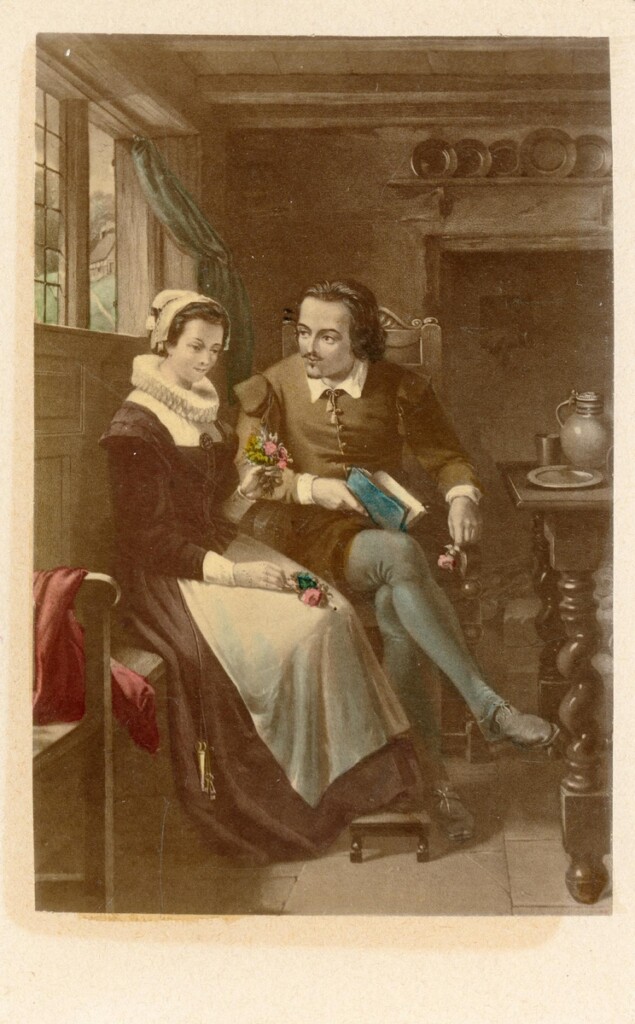
You are thirty-four years old and you have just ended another relationship, and you tell your closest friend, with a kind of weary certainty, that you are simply not someone who can tolerate emotional ambiguity — that you have always been this way, that it is just who you are.
This confession sounds like self-knowledge. It is, in almost every measurable sense, a misattribution.
Wyndol Furman’s longitudinal research, developed across decades and consolidated in work examining the Furman and Wehner behavioral systems framework, demonstrated something that most adults are not prepared to hear: the relational templates formed during adolescent romantic relationships do not simply influence how we love — they become the invisible architecture through which we interpret what loving even means. Furman found that adolescents who experienced anxious or dismissive attachment dynamics in early romantic bonds carried those dynamics forward with surprising structural consistency, and what made his data particularly disquieting was not the continuity itself but the mechanism: these patterns were not consciously recognized as learned behaviors but experienced as intrinsic personality traits. The person does not feel conditioned. They feel defined.
There is a profound conceptual error buried inside the language of temperament. When adults invoke phrases like “I have always been this way” or “this is just how I am in relationships,” they are borrowing the grammar of biology to describe what is, at its core, a historical event — a specific emotional education that took place between the ages of fourteen and twenty-two, in bedrooms and hallways and the passenger seats of cars, conducted by people who were themselves barely assembled. The philosopher Ian Hacking wrote in Rewriting the Soul about the way personal narratives colonize memory retroactively, making contingent experiences feel like essential truths. The first person we loved in a way that reorganized us does not leave a memory so much as a grammar — a set of syntactical rules we then apply to every subsequent sentence we try to speak with another human being.
What longitudinal studies have repeatedly exposed is that the residue of first love is not romantic nostalgia but cognitive structure. A 2002 study published in the Journal of Adolescence tracking relational patterns across a twelve-year span found that individuals who reported high conflict and low support in early romantic relationships were significantly more likely to describe intimacy itself as threatening in adulthood — not as a learned association but as a felt truth about their own nature. They did not say “that relationship taught me to fear closeness.” They said “I am someone who needs a lot of space.” The self absorbs the wound and then presents it as a feature.
This is not a pathology. It is an extraordinarily efficient cognitive operation. The psyche cannot sustain indefinite awareness of its own contingency — the knowledge that you might have become someone entirely different had you been loved differently at sixteen would be an unlivable thought carried into every morning. So it seals the scar and calls it skin. The tragedy is not that we are shaped by early love; it is that we mistake the shape for the shapelessness — for the unformed original thing we were before anyone taught us what to expect from another person’s hands.
Adults in therapy spend enormous amounts of time and money excavating what adolescents were never given language to process in real time. The sixteen-year-old who learned that love arrives with withdrawal, or that affection is something you perform rather than receive, had no interpretive framework capacious enough to quarantine that lesson as external. It went straight to the center and got labeled as self. Decades later, a therapist asks about the first serious relationship, and the patient pauses, surprised by how much weight still lives in that pause, surprised to discover that what they thought was their character is, in fact, someone else’s story they have been telling in the first person all along.
💫 When First Love Changes Everything
Adolescent bonds are among the most intense and transformative experiences a human being can live. The first encounter with love reshapes identity, awakens the unconscious, and leaves marks that last a lifetime. These articles explore the psychological, philosophical, and emotional terrain that first love navigates.
Problematic Adolescence is Not a Developmental Disorder
Adolescence is not a disorder to be corrected but a seismic reshaping of the self, and understanding this distinction is crucial when examining the bonds that form during these years. The intensity of teenage relationships often mirrors the internal turbulence of identity formation, making every emotional attachment feel absolute and defining. This article offers a grounding perspective on what is truly at stake when young people bond, break, and begin to understand who they are.
GO TO THE SELECTION: Problematic Adolescence is Not a Developmental Disorder
Toxic relationships: the mechanisms behind the destruction of a bond
Not all bonds that begin with tenderness remain tender, and the mechanisms of destruction within a relationship often take root in the very soil of early attachment. This article dissects how toxic relational patterns emerge, frequently tracing their origins back to the unprocessed emotional templates established during adolescence. Understanding these dynamics illuminates why first love, with all its rawness and lack of experience, can sometimes become the blueprint for harmful patterns in adult life.
GO TO THE SELECTION: Toxic relationships: the mechanisms behind the destruction of a bond
Affective Manipulation in Psychology
Affective manipulation is a dimension of relational psychology that often surfaces precisely in the vulnerability of first loves, where one partner may unconsciously exploit the other’s inexperience and emotional openness. This article examines the subtle mechanisms through which manipulation operates within intimate bonds, revealing how power imbalances are constructed through language, attention, and emotional dependency. Recognizing these patterns early is essential for understanding the psychological consequences that adolescent relationships can carry into adulthood.
GO TO THE SELECTION: Affective Manipulation in Psychology
Overcoming trauma to live the present
First love, when it ends or wounds, does not simply pass like a season — it can leave a scar that shapes every subsequent relationship if never properly processed. This article explores the psychological journey of overcoming trauma and returning to the present, addressing how early relational wounds can be metabolized rather than suppressed. The path described here is one of conscious healing, a fundamental tool for anyone who carries the unresolved weight of a formative emotional bond.
GO TO THE SELECTION: Overcoming trauma to live the present
Discover the Films That Understand the Heart
If these themes resonate with you, Indiecinema is the streaming platform where independent cinema speaks the language of genuine human experience. Discover films that dare to explore adolescent bonds, first love, and emotional transformation with the depth and honesty they deserve.
👉 EXPLORE THE CATALOG: Watch Indie Films in Streaming
A vision curated by a filmmaker, not an algorithm
In this video I explain our vision

