
The Boy Who Would Not Sit Still
He is standing in the hallway outside the classroom, facing the wall, because he asked a question the teacher could not answer. Not an insolent question, not a provocation wrapped in teenage contempt — an honest one, the kind that arrives before a child has learned to be strategic about his curiosity. The kind that exposes something. The teacher felt it land, felt the room shift, and did what institutions always do when they encounter an inconvenient lucidity: they removed it from the room.

This is not a dramatic scene. It happens every day, in thousands of schools, with thousands of boys and girls who have not yet learned to make themselves smaller. What we call discipline is often just the management of discomfort — not the child’s discomfort, but ours. The adult world’s collective flinching when someone young and still uncorrupted by self-censorship points at the emperor’s bare skin.
A boy runs away. Not from school exactly, not from a single teacher, but from the accumulating weight of being processed. He sleeps in a boat on the Seine, eats what he can find, watches the city from a distance that feels, for the first time, like freedom. His mother has lied. His father has looked away. The school has written him off in the language of behavioral reports. What the reports do not say, cannot say, is that he understood something — that the contract he was being asked to sign was fraudulent from the beginning. So he ran. And we call this delinquency.
Erik Erikson, in his examination of identity formation, described adolescence as a period of moratorium — a socially sanctioned pause during which the young person experiments with possible selves before committing to one. But Erikson was describing a benign process, a negotiation conducted in good faith on both sides. What he underestimated was the degree to which the institution is not actually offering a moratorium. It is offering a corridor, with walls. The experimentation is permitted only insofar as it leads, eventually, to the correct door.
What happens to the boy who refuses the corridor? He gets a diagnosis. Since the 1980s, the vocabulary of pathology has expanded to fill every gap left by the retreat of moral and political language. The child who cannot sit still has a disorder. The adolescent who challenges authority has oppositional defiance. The one who refuses to perform enthusiasm for a curriculum designed to produce compliant workers is a problem to be managed, medicated, referred. Michel Foucault saw this coming with a clarity that still cuts: in Discipline and Punish, he traced the way modern institutions do not repress deviance so much as produce the category of deviance itself, so that everything outside the norm becomes legible only as pathology or failure.
In a dormitory somewhere, at night, while the supervisors sleep, boys gather in the dark and perform a small ceremony of collective refusal. They have built something together — absurd, fragile, sacred in the way that only things built in secret can be. It will be discovered. It will be destroyed. The punishment will be swift and disproportionate, because the institution understands instinctively that what is being threatened is not a rule but a principle. Order does not fear noise. It fears meaning that it did not authorize.
This is the texture of troubled adolescence that the clinical file never captures. Not the acting out, not the grades, not the incident reports — but the specific quality of consciousness that produces them. A consciousness that is still capable of noticing contradictions without flinching, that has not yet built the internal bureaucracy of rationalization that adults call maturity. When R.D. Laing wrote that insanity is a perfectly rational response to an insane world, he was speaking about something that adolescents already know in their bodies before they have the language for it.
The boy in the hallway is not a problem to be solved. He is evidence. The question is: evidence of what?
The Ecstasy of Isabel Mann

Horror, thriller, by Jason Figgis, United States, 2016.
Set in Ireland, the film tells the story of Isabel Mann, an introverted and lonely teenager who is drawn into a dark and seductive world of blood, violence, and vampirism. As the story unfolds, Isabel undergoes a disturbing transformation—from a vulnerable young girl to a ruthless creature—guided by a group of vampires who pull her into a spiral of murder and ritual. At the same time, a team of detectives attempts to shed light on a series of brutal killings that seem to be connected. However, their investigation leads them toward a truth far more unsettling than they could have anticipated.
The film stands out for its cold, disturbing atmosphere and a slow, reflective narrative that favors psychological depth over action. Vampirism here is not just a genre element, but takes on a symbolic meaning tied to adolescent alienation, the search for identity, and the longing to belong. *The Ecstasy of Isabel Mann* embraces an auteur style and carries the emotional intensity of Ellen Mullen’s lead performance. It’s a different kind of horror film—intimate and melancholic—capable of blending teenage tragedy with the vampire myth in a modern, introspective way.
LANGUAGE: English
SUBTITLES: Spanish, French, German, Portuguese
What the Adults Agreed Never to Say
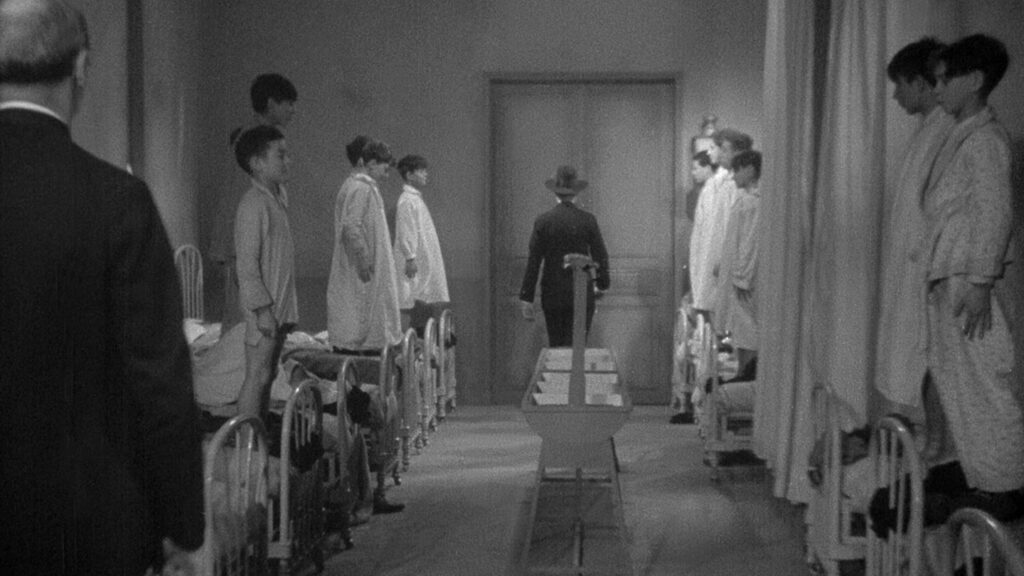
There is a boy standing in a school corridor while a teacher reads aloud from a file. The file contains descriptions of his behavior — insubordination, chronic distraction, refusal to comply — and as the words are spoken in front of the other students, the boy’s face does something strange. It does not collapse into shame. It hardens. Which is precisely the moment that will later be recorded in the file as evidence of his condition.
This is how the machinery works. It does not suppress the rebellion openly, because open suppression would require acknowledging that there is something to rebel against. Instead, it reclassifies the rebellion as symptom. Michel Foucault spent years documenting this operation across prisons, clinics, and schools, demonstrating in Discipline and Punish that the modern institution does not primarily punish the body — it classifies the soul. The delinquent is not simply someone who broke a rule. The delinquent is someone whose entire personhood has been reorganized around the infraction, so that the infraction appears to have sprung from within rather than to have been provoked from without. The cause is relocated. The system disappears. What remains is a defective individual requiring correction.
Erving Goffman called this the mortification of the self. In the total institution — and the boarding school, the reform school, the psychiatric ward are all variations of the total institution — the arriving individual is systematically stripped of the markers that constituted their identity outside the walls. Clothes are exchanged for uniforms. Names become numbers or surnames barked without prefix. The small dignities through which a person recognizes themselves as a person are methodically removed, and in their place is installed an institutional self, one that exists only in relation to the rules governing its containment. What reads as behavioral disorder in these settings is frequently nothing more than the residue of the original self, refusing to be fully mortified.
A boy is caught reading at night with a flashlight under his dormitory sheets. He is punished not for any damage caused but for the autonomous use of his own attention. Another, slightly older, is brought before a disciplinary committee and asked to explain a letter he wrote that was intercepted before it left the building. He explains it. The explanation is recorded as further evidence of his instability. Both of these moments share the same hidden logic: the institution is not protecting the boy. It is protecting itself from him, and calling that protection care.
Pierre Bourdieu‘s concept of symbolic violence illuminates exactly why this sleight of hand is so durable. Symbolic violence does not announce itself as violence. It operates through categories that feel neutral, even scientific — disorder, maladjustment, conduct problems — categories that the dominated frequently come to apply to themselves, internalizing the judgment of the institution as if it were self-knowledge. The adolescent who begins to believe he is the problem is not simply mistaken. He has been educated into that belief by the very system administering his education. The genius of the operation is that it recruits the victim as its most reliable witness.
Psychiatry enters this picture not as villain but as willing collaborator in a project that predates it. The proliferation of diagnostic categories applied to adolescent behavior — oppositional defiant disorder, conduct disorder, adjustment disorder — follows a consistent pattern that historians of medicine have noted with increasing unease: each category captures precisely the behaviors that most inconvenience authority. Prolonged eye contact that refuses to drop. Questions that expose contradictions in rules. Laughter at the wrong moment. Refusal to perform remorse on cue. These are not the symptoms of a broken mind. They are the signatures of a mind that has not yet learned to pretend.
The adults in that corridor, around that disciplinary table, behind that clinical desk, did not conspire in any formal sense. They simply shared, without ever having to discuss it, a foundational agreement: that the order of things is not a choice someone made. That it simply is. And that anyone who treats it as a choice — especially a child — must be, in some essential way, disordered.
There is a boy standing in a school corridor while a teacher reads aloud from a file. The file contains descriptions of his behavior — insubordination, chronic distraction, refusal to comply — and as the words are spoken in front of the other students, the boy’s face does something strange. It does not collapse into shame. It hardens. Which is precisely the moment that will later be recorded in the file as evidence of his condition.
This is how the machinery works. It does not suppress the rebellion openly, because open suppression would require acknowledging that there is something to rebel against. Instead, it reclassifies the rebellion as symptom. Michel Foucault spent years documenting this operation across prisons, clinics, and schools, demonstrating in Discipline and Punish that the modern institution does not primarily punish the body — it classifies the soul. The delinquent is not simply someone who broke a rule. The delinquent is someone whose entire personhood has been reorganized around the infraction, so that the infraction appears to have sprung from within rather than to have been provoked from without. The cause is relocated. The system disappears. What remains is a defective individual requiring correction.
Erving Goffman called this the mortification of the self. In the total institution — and the boarding school, the reform school, the psychiatric ward are all variations of the total institution — the arriving individual is systematically stripped of the markers that constituted their identity outside the walls. Clothes are exchanged for uniforms. Names become numbers or surnames barked without prefix. The small dignities through which a person recognizes themselves as a person are methodically removed, and in their place is installed an institutional self, one that exists only in relation to the rules governing its containment. What reads as behavioral disorder in these settings is frequently nothing more than the residue of the original self, refusing to be fully mortified.
A boy is caught reading at night with a flashlight under his dormitory sheets. He is punished not for any damage caused but for the autonomous use of his own attention. Another, slightly older, is brought before a disciplinary committee and asked to explain a letter he wrote that was intercepted before it left the building. He explains it. The explanation is recorded as further evidence of his instability. Both of these moments share the same hidden logic: the institution is not protecting the boy. It is protecting itself from him, and calling that protection care.
Pierre Bourdieu‘s concept of symbolic violence illuminates exactly why this sleight of hand is so durable. Symbolic violence does not announce itself as violence. It operates through categories that feel neutral, even scientific — disorder, maladjustment, conduct problems — categories that the dominated frequently come to apply to themselves, internalizing the judgment of the institution as if it were self-knowledge. The adolescent who begins to believe he is the problem is not simply mistaken. He has been educated into that belief by the very system administering his education. The genius of the operation is that it recruits the victim as its most reliable witness.
Psychiatry enters this picture not as villain but as willing collaborator in a project that predates it. The proliferation of diagnostic categories applied to adolescent behavior — oppositional defiant disorder, conduct disorder, adjustment disorder — follows a consistent pattern that historians of medicine have noted with increasing unease: each category captures precisely the behaviors that most inconvenience authority. Prolonged eye contact that refuses to drop. Questions that expose contradictions in rules. Laughter at the wrong moment. Refusal to perform remorse on cue. These are not the symptoms of a broken mind. They are the signatures of a mind that has not yet learned to pretend.
The adults in that corridor, around that disciplinary table, behind that clinical desk, did not conspire in any formal sense. They simply shared, without ever having to discuss it, a foundational agreement: that the order of things is not a choice someone made. That it simply is. And that anyone who treats it as a choice — especially a child — must be, in some essential way, disordered.

The Lucidity They Could Not Afford to Leave Intact
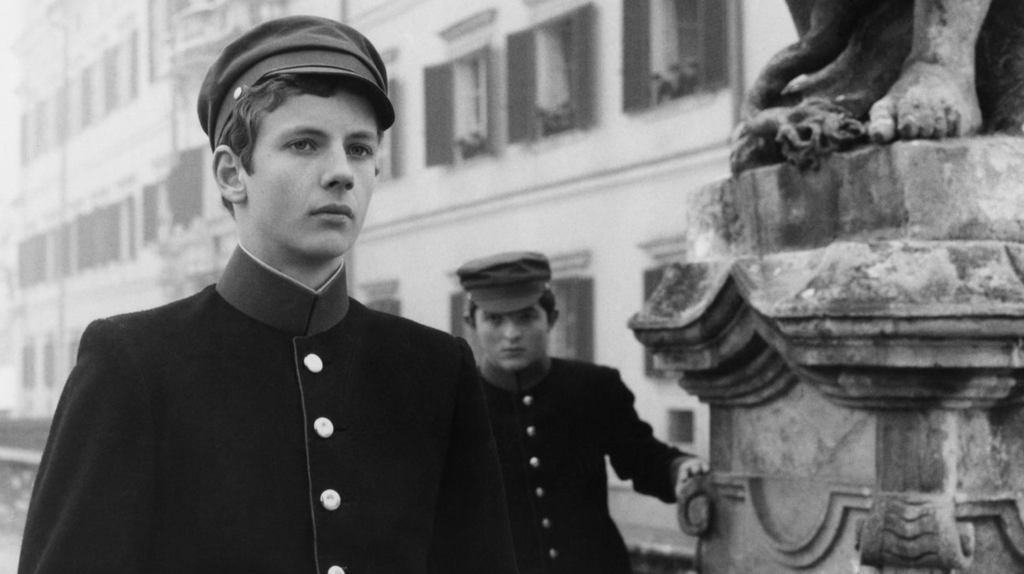
There is a moment, recognizable to almost anyone who survived adolescence with some honesty intact, when you understood something that the adults around you were working very hard not to understand. Not because they lacked intelligence. Because understanding it would have cost them too much. The mortgage, the marriage, the career, the carefully maintained sense that the life they had assembled was the life they had chosen. You saw the machinery. You named it, badly, furiously, in ways that made you look unhinged. And the response was not engagement. The response was diagnosis.
Michel Foucault spent a significant portion of his intellectual life documenting how modern institutions — the clinic, the school, the prison — share a common architecture of normalization. In “Discipline and Punish,” he describes how power does not primarily operate through force but through the production of the normal: a category that defines itself against what it excludes. The adolescent who refuses the school’s rituals of submission, who cannot perform deference to authority that has not earned it, who names the hypocrisy in the room — this figure does not threaten the institution’s security. He threatens its legitimacy. That is why the response is always disproportionate, always personal, always aimed at the person rather than the observation.
A boy is told to write an essay about what his mother means to him. He writes honestly. He is accused of lying. The punishment is not for the essay’s content but for the implication that honesty and the assignment were incompatible. Another boy watches his classmates form alliances with those who have power, watches the cruelty that moves beneath the surface of every social hierarchy, and decides he will not participate. They call it maladjustment. They mean he has refused the terms of a transaction they cannot afford to examine. What looks like defiance from inside the institution looks, from outside it, like the most elementary act of moral coherence.
Erik Erikson framed adolescence as an identity crisis, a psychosocial moratorium during which the individual negotiates between the self and social roles. The framework has enormous value, but it carries a buried assumption: that the social roles on offer are, in the end, negotiable rather than coercive. What Erikson could not quite say, perhaps because it would have collapsed his therapeutic framework, is that the negotiation is rigged. The roles are not options. They are ultimatums wearing the costume of options. The adolescent who sees this is not failing the developmental task. He is completing it with a precision that the task was never designed to survive.
The window does not stay open forever. That is the part nobody says aloud but everyone knows. At some point — quietly, without ceremony, usually during the years when you are too exhausted or too frightened or too economically precarious to resist — the perception narrows. You stop seeing the machinery because you have become one of its moving parts. You call this growing up. You call it perspective. You say, with a kind of practiced wisdom, that things are more complicated than they seem. And they are. But the complication you have accepted is not intellectual complexity. It is the complexity of a person who has agreed to maintain two simultaneous beliefs: that the world is largely unjust and that your participation in it is largely justified.
The adolescent you were did not have that agreement yet. He was still holding the original perception, unedited, uncomfortable, accurate. The question that follows from this — and it is a question this text refuses to answer on your behalf — is not what we should do about adolescents. It is what it cost you to stop being one. Not the cost in social terms, the friendships, the career, the belonging. The cost in perceptual terms. What you agreed to stop seeing, and when, and whether whatever replaced that vision deserves the name of wisdom or merely the name of peace.
There is a moment, recognizable to almost anyone who survived adolescence with some honesty intact, when you understood something that the adults around you were working very hard not to understand. Not because they lacked intelligence. Because understanding it would have cost them too much. The mortgage, the marriage, the career, the carefully maintained sense that the life they had assembled was the life they had chosen. You saw the machinery. You named it, badly, furiously, in ways that made you look unhinged. And the response was not engagement. The response was diagnosis.
Michel Foucault spent a significant portion of his intellectual life documenting how modern institutions — the clinic, the school, the prison — share a common architecture of normalization. In “Discipline and Punish,” he describes how power does not primarily operate through force but through the production of the normal: a category that defines itself against what it excludes. The adolescent who refuses the school’s rituals of submission, who cannot perform deference to authority that has not earned it, who names the hypocrisy in the room — this figure does not threaten the institution’s security. He threatens its legitimacy. That is why the response is always disproportionate, always personal, always aimed at the person rather than the observation.
A boy is told to write an essay about what his mother means to him. He writes honestly. He is accused of lying. The punishment is not for the essay’s content but for the implication that honesty and the assignment were incompatible. Another boy watches his classmates form alliances with those who have power, watches the cruelty that moves beneath the surface of every social hierarchy, and decides he will not participate. They call it maladjustment. They mean he has refused the terms of a transaction they cannot afford to examine. What looks like defiance from inside the institution looks, from outside it, like the most elementary act of moral coherence.
Erik Erikson framed adolescence as an identity crisis, a psychosocial moratorium during which the individual negotiates between the self and social roles. The framework has enormous value, but it carries a buried assumption: that the social roles on offer are, in the end, negotiable rather than coercive. What Erikson could not quite say, perhaps because it would have collapsed his therapeutic framework, is that the negotiation is rigged. The roles are not options. They are ultimatums wearing the costume of options. The adolescent who sees this is not failing the developmental task. He is completing it with a precision that the task was never designed to survive.
The window does not stay open forever. That is the part nobody says aloud but everyone knows. At some point — quietly, without ceremony, usually during the years when you are too exhausted or too frightened or too economically precarious to resist — the perception narrows. You stop seeing the machinery because you have become one of its moving parts. You call this growing up. You call it perspective. You say, with a kind of practiced wisdom, that things are more complicated than they seem. And they are. But the complication you have accepted is not intellectual complexity. It is the complexity of a person who has agreed to maintain two simultaneous beliefs: that the world is largely unjust and that your participation in it is largely justified.
The adolescent you were did not have that agreement yet. He was still holding the original perception, unedited, uncomfortable, accurate. The question that follows from this — and it is a question this text refuses to answer on your behalf — is not what we should do about adolescents. It is what it cost you to stop being one. Not the cost in social terms, the friendships, the career, the belonging. The cost in perceptual terms. What you agreed to stop seeing, and when, and whether whatever replaced that vision deserves the name of wisdom or merely the name of peace.
Zero for Conduct
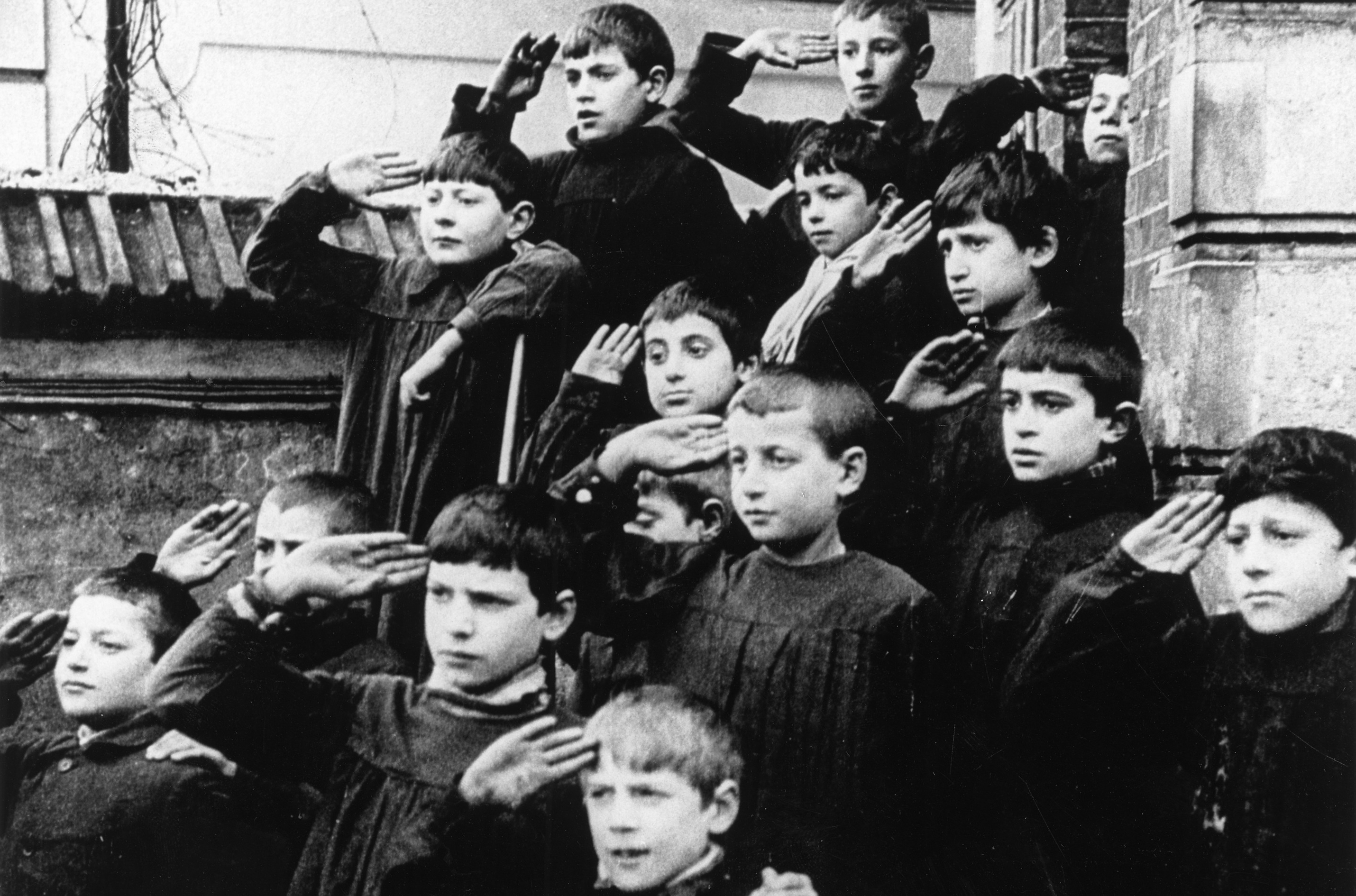
Comedy, by Jean Vigo, France, 1933.
The holidays are over and it's time for the kids to return to the terrible boarding school, run by obtuse and conformist tutors, unable to encourage the growth of any spirit of freedom and creativity. The only thing these austere professors are capable of is assigning a "zero" for conduct. But the boys decide to rebel with the complicity of the new supervisor, Huguet, different from all the others. Thus a real revolution is unleashed. Jean Vigo describes the children's yearning for freedom with audacity and a subversive spirit, with a ruthless critique of the scholastic institution, which closely resembles certain memorable sequences from Fellini's cinema. Perhaps the Italian filmmaker had seen the Vigo film? It seems very, very likely. The film was banned by French censorship and did not have a public screening until 1945.
Food for thought
The conditioning of the family, the school and the mass media are probably the main causes of the existential failure of millions of people. They are unidentified enemies, from which it is difficult to defend oneself, which cause the loss of self-esteem and the creativity necessary to achieve ambitious goals. Social, cultural and religious conditioning are a fundamental theme in the life of every human being, and one of the main topics of the filmographies of masters of cinema such as Fellini, Truffaut, and many others.
LANGUAGE: French
SUBTITLES: English, Spanish, German, Portuguese
🌱 Cinema That Dares to Understand Youth
Adolescence is one of cinema’s most fertile and misunderstood territories — a space where identity fractures, rebellion erupts, and society’s failures become visible on the faces of the young. The films and articles below explore the themes that run deepest through the subject of troubled youth: coming-of-age, dysfunctional families, psychological complexity, and the raw courage of those who defy easy labels.
The Definitive Guide to the 30 Best Coming-of-Age Films
Coming-of-age cinema is perhaps the genre that most honestly confronts the turbulence of adolescence — not as a disorder to be diagnosed, but as a passage to be lived. This definitive guide gathers 40 essential films that portray youth in all its contradiction, desire, and fragile beauty. A necessary companion to any reflection on what it truly means to grow up.
👉 GO TO THE SELECTION: The Definitive Guide to the 30 Best Coming-of-Age Films
The 30 Best Films About Dysfunctional Families
Behind many so-called ‘problem adolescents’ lies a dysfunctional family system that has never been named as such. This curated selection of 30 films explores the dynamics of broken, suffocating, or simply misaligned family structures and how they shape — or damage — the young people within them. Essential viewing for anyone who looks beyond the surface of adolescent behavior.
👉 GO TO THE SELECTION: The 30 Best Films About Dysfunctional Families
The Best Psychology Films That Investigate the Mind
Cinema has long been one of the most powerful tools for exploring the human psyche, and nowhere is that more urgent than in stories of young people navigating a world that pathologizes their pain. This guide to the best psychology films traces the fine line between inner turmoil and clinical label, between suffering and strength. A profound resource for those who believe in cinema as a form of empathy.
👉 GO TO THE SELECTION: The Best Psychology Films That Investigate the Mind
Teen Movies to Watch
Teen movies have a long and complex history — sometimes celebrating youth, sometimes reducing it to stereotype, and occasionally capturing something raw and irreducible about the adolescent experience. This selection cuts through the noise to highlight the titles that treat young people with genuine intelligence and depth. A perfect map for navigating the cinema of adolescence beyond the mainstream.
👉 GO TO THE SELECTION: Teen Movies to Watch
True cinema about youth — the kind that refuses easy answers and refuses to reduce a young person to a symptom — lives almost exclusively in independent and arthouse filmmaking. These are the films that mainstream platforms bury or ignore, the hidden masterpieces that speak directly to the complexity of being human. Explore the full Indiecinema streaming catalog and discover a world of cinema that dares to see what others look away from.
👉 EXPLORE THE CATALOG: Watch Indie Films in Streaming
Conclusion
There is a boy sitting in a chair at the back of a classroom, staring at a wall he has already memorized. He is not distracted. He is not troubled. He is, in fact, the only person in that room who has noticed that the lesson being taught bears no relation to the life being lived outside those walls, and that the man delivering it knows this too, and has made his peace with it in a way the boy refuses to do. The punishment for this refusal will arrive before the day is over. It will be called insubordination. It will be written in a file. That file will follow him.
What we have always called the problem of adolescence is, at its core, a problem of perception. The adolescent sees clearly before they learn to see conveniently. Erik Erikson described this period as one of identity crisis, but the clinical language already smuggles in a verdict: something is in crisis, something requires resolution, the turbulence is a symptom to be treated. What if the turbulence is not a symptom but a signal? What if the adolescent is not malfunctioning but receiving, with devastating accuracy, the frequencies that adults have trained themselves to no longer hear?
Émile Durkheim wrote about anomie as the condition of individuals who find themselves without adequate norms to orient their behavior, unmoored from the social fabric. It is a diagnosis aimed at society, not the individual, and yet it has been consistently reversed in its application, redirected toward those who fail to integrate rather than toward the structures that make integration a form of self-erasure. The adolescent who refuses the school, the family order, the scripted future, is not anomic. They are, in Durkheim’s original sense, the clearest possible evidence that the social contract is not functioning, that the norms on offer are not norms at all but a set of inherited performances that stopped meaning anything long before this particular boy or girl was born.
A group of boys once occupied the upper floors of their school, moved through the corridors with rifles seized from a trophy case, and turned the institution briefly inside out. The moment lasted less than a day. What lasted longer, what in fact has never ended, is the question of what they were responding to. Not the school itself, perhaps, but everything the school was standing in for: the certainty of a future that had already been decided, the cheerful violence of being told who you are before you have had a single unobserved moment in which to find out. The rifles were not the point. The refusal was the point. And the refusal predated the rifles by years of small humiliations so perfectly administered that they left no mark anyone would later recognize as a wound.
Michel Foucault, in his analysis of disciplinary institutions, showed how the school, the barracks, the hospital, and the prison all share an underlying grammar: the organization of bodies in space, the regulation of time, the production of docility through surveillance. What he described abstractly, every adolescent knows in their bones before they have words for it. They know it in the way a timetable feels like a sentence. They know it in the way being watched changes the texture of their own thinking. They know it in the way that the moment they begin to comply, something in them goes quiet that had been, until then, embarrassingly, inconveniently loud. Foucault called that quieting normalization. The school counselor calls it maturity.
There was a boy who lied about his mother’s death to get a day off school, and when the lie was discovered, the lie became the story, became the proof of something essentially corrupt in him, and no one ever asked why a child needed to invoke death to justify a single unauthorized day of being alive on his own terms. The lie was not the problem. The lie was the solution to a problem no adult in the room was willing to name. He needed a day that belonged to him. He took it the only way available. The institution recorded the theft and said nothing about what had been stolen from him first.
Simone Weil, writing on oppression and liberty, made a distinction that education has never forgiven her for: she separated obedience that preserves dignity from obedience that destroys it, and she insisted that only the former deserved the name. She understood that the capacity to submit to genuine authority, to something larger and truer than oneself, was a form of freedom, but that submission to arbitrary power, to power that justifies itself merely by existing, was a form of spiritual death that no amount of social reward could compensate for. The adolescent who kicks against arbitrary authority is not rejecting authority as such. They are, often with frightening precision, distinguishing between the two kinds. They are doing, in other words, exactly what philosophy would ask of them, and being diagnosed for it.
What happens in a dormitory at night, in the hours the institution does not officially count, is not a footnote to adolescence. It is its central text. Two older boys and one younger one, a ritual that begins as initiation and becomes something colder, more systematic, the transformation of cruelty into a private language of power. The younger boy learns something that no curriculum would dare to formalize but that every institution quietly transmits: that the structure of domination you experience at the bottom will be available to you at the top, and that this is called growing up. He will spend years deciding whether to refuse that inheritance or to collect it. Most people, by the time they are old enough to be asked, have already made their choice without noticing they were choosing.
Hannah Arendt wrote about the banality of evil in a context that seems distant from a school corridor, but her central insight applies with uncomfortable precision: the greatest cruelties are not committed by monsters but by ordinary people who have stopped thinking. The adolescent who has not yet stopped thinking is therefore the most dangerous person in any institution built on the suspension of thought. They have not yet learned to follow an order without briefly imagining its consequences. They have not yet mastered the small daily practice of looking away. This is not innocence. Innocence is ignorance with good lighting. What the adolescent has is something rarer and more threatening: awareness without the scar tissue that makes awareness bearable.
The word delinquent comes from the Latin delinquere, to fail, to be at fault, to fall short. What it has always meant, in practice, is: to refuse to disappear into the role prepared for you. Every boy who ran, every boy who fought back, every boy who stood at the window of an institution and looked out at a city that was indifferent to his existence but was at least not actively organizing it, was committing the same delinquency. Not a failure of character. A failure to comply with the erasure of character. The distinction is everything, and every institution that has ever processed a troubled adolescent has depended, for its survival, on that distinction never being made clearly.
There is a moment that recurs across lives and across decades, a moment that those who experienced it rarely speak of directly because the language for it does not quite exist, and because the adults who witnessed it reclassified it immediately as something manageable. A child in a room full of people who are all performing normality, and the child suddenly sees the performance for what it is, and the seeing is irreversible, and no one tells them this is the beginning of thought, because it is also, and more inconveniently, the beginning of resistance. The room contracts. The child is too visible now, or not visible enough, depending on which way the institution needs them to disappear. Something is written down. A referral is made. The file begins.
What we have never been willing to say plainly is that the systems designed to help troubled adolescents are, structurally, the same systems that troubled them in the first place. The therapeutic gaze, however gentle, however genuinely well-meaning, still carries within it the fundamental assumption that the adolescent is the site of the problem, the location where the disorder lives. It does not, because it cannot without dismantling itself, ask what the adolescent was responding to. It does not sit with the possibility that the diagnosis is a social technology for converting legitimate refusal into individual pathology, for taking what is essentially a political act and reclassifying it as a medical one. This is not a conspiracy. It is something more durable and more difficult: a consensus so thoroughly internalized that the people enforcing it believe, in complete good faith, that they are helping.
The question that remains, the one that a century of cinema and two centuries of developmental psychology have both circled without landing on, is not how we fix the troubled adolescent. It is what we become when we are fixed.
A vision curated by a filmmaker, not an algorithm
In this video I explain our vision

