
The Geometry of the Diamond
You are seven years old and the grass is so green it hurts. Not metaphorically — your eyes actually water, adjusting to that saturated expanse after the dim tunnel that smelled of concrete and spilled beer and something older, something institutional, the smell of a place that has been full of people for a hundred years. Your father’s hand is on your shoulder and you don’t know yet what you’re looking at, only that it is enormous and precise and that the dirt of the infield has been raked into patterns that seem almost ceremonial, the way a temple floor might be swept before something sacred happens on it. The players are warming up below you, and they are large men made tiny by distance, tossing a white ball back and forth with a casualness that somehow makes the whole thing more serious, not less.

What the child does not know — and what the adult standing in that same memory usually forgets to notice — is that the geometry of a baseball field is the only major American sport venue that has no fixed dimensions. The outfield fence can be placed anywhere. Fenway Park’s left-field wall rises 37 feet, four inches from the ground and sits 310 feet from home plate; Yankee Stadium’s right field runs 314 feet along the foul line. These are not standardized measurements. They are historical accidents, municipal compromises, the residue of land deals made in 1911 or 1923 when cities were still being improvised. Every other major sport plays on a court or field of identical dimensions wherever the game is contested. Baseball plays on a negotiated landscape, which means every game is also a negotiation between what the rules demand and what the physical world permits.
This is not a trivial distinction. The philosopher of sport Hans Ulrich Gumbrecht argued in his 2006 work “In Praise of Athletic Beauty” that the pleasure of sport is inseparable from what he called “graceful moments” — flashes of movement so perfectly fitted to their environment that they produce something close to aesthetic arrest. What Gumbrecht could not quite account for is the way baseball multiplies this principle geometrically, because the environment itself is never stable. A ball hit to the same angle and height produces completely different outcomes depending on the park, the wind, the altitude. The ballpark in Denver sits 5,280 feet above sea level, and balls fly measurably farther in thin air — a fact that forced Major League Baseball in 2002 to introduce humidor-stored baseballs specifically to dampen the mile-high advantage. The game is perpetually renegotiating its relationship with physics.
This matters culturally because Americans have a conflicted and largely unexamined relationship with standardization. The country was built on interchangeable parts — Eli Whitney’s 1798 musket contract with the federal government introduced the concept of manufactured uniformity that would eventually produce the assembly line — and yet its most beloved sport preserves a kind of artisanal irregularity at the level of infrastructure. You cannot mass-produce the experience of playing at Wrigley Field, which opened in 1914 and still has no lights for night games in its original outfield configuration, ivy growing on its brick walls like a reminder that organic processes outlast administrative ones.
The child in the green stadium does not know any of this. What the child knows is that the diamond shape drawn in dirt below seems to have been placed there by someone who understood that certain configurations produce a particular tension in the human body — the ninety feet between bases, which baseball historians have noted since at least the 1950s is close to the precise distance at which a well-hit ball and a running man arrive at first base in near-simultaneous uncertainty, creating suspense that is almost biological in its grip.
Along For The Ride
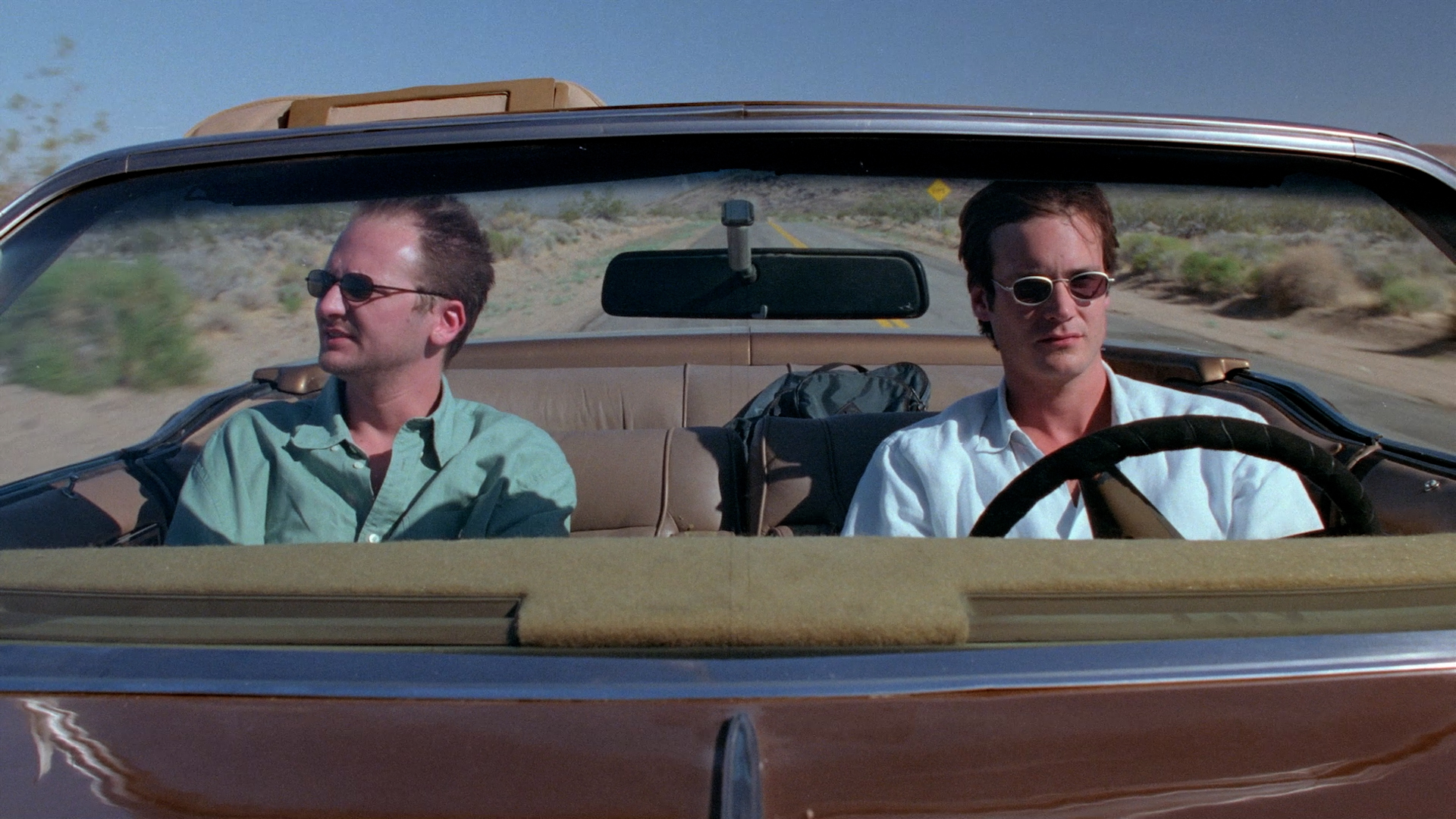
Drama, Comedy, by Bryan Simon, USA, 2001.
Two brothers, Terry (Randy Batinkoff) and Vance (Dylan Haggerty), embark on a journey into the desert with the body of their recently deceased father. Their goal is to find a burial site for him, but along the way unresolved family conflicts resurface. Terry, a successful former baseball player, has always exerted a dominant influence on the younger Vance, a humble mailman. Both carry within themselves the burden of a complicated relationship with their father, Jake (J.E. Freeman), a former professional player obsessed with sports. Even after his death, Jake appears to his children in dream sequences, but instead of offering wise advice, he continues to be distant and authoritarian. The journey thus becomes not only a physical but an emotional journey, in which the two brothers confront their mutual grudges and the emotional legacy of their father.
The film, directed by Bryan Simon with a budget of 150,000 dollars, was shot in extreme weather conditions, with a screenplay adapted by Jim Moores from a work by Randall Wheatley. The film also explores the role of sport as a vehicle for communication between father and son. For many men, expressing feelings is difficult, while talking about sport is a natural and shared language. "Along for the Ride" addresses these issues with sensitivity and realism, resulting in a touching work for those who have experienced similar family dynamics. An indie not to be missed for lovers of quality independent cinema.
LANGUAGE: English
SUBTITLES: Spanish, French, German, Portuguese
Myth Dressed in Wool and Leather
You have probably never questioned why you know, without being told, that baseball is old. Not old like a statute or a treaty — old like dirt, like a field, like something that predates argument. That feeling is not accidental. It was manufactured with extraordinary precision by a committee of men who, in 1905, sat down to decide where baseball came from and concluded, against all available evidence, that it came from Cooperstown, New York, in 1839, invented fully formed by a young man named Abner Doubleday. The Mills Commission, chaired by Abraham Mills, the fourth president of the National League, produced an origin story so convenient it could only have been desired rather than discovered. Doubleday was a Civil War hero. Cooperstown was a small, green, quintessentially American town. The year 1839 predated the industrial convulsions that would make American cities unrecognizable by the century’s end. Every detail was chosen not for its accuracy but for its emotional utility.
The actual history is stubbornly inconvenient. Baseball evolved, messily and gradually, from English games — rounders and cricket — adapted through the 1830s and 1840s by working-class players in New York and Boston. Alexander Cartwright and the Knickerbocker Base Ball Club codified the first formal rules in 1845, in a city, among men whose hands were not clean from farming but ink-stained from commerce. There was no pastoral origin. There was no single inventor. The game emerged from negotiation and accident, the way most things do. But negotiation and accident do not build national identity. They do not give a country something to point to when it needs to feel innocent.
What the Doubleday myth actually accomplished was the retroactive purification of a nation already implicated in its own contradictions. By 1905, the United States had survived a civil war, executed the near-total dispossession of its indigenous populations, and was mid-stride in an imperial expansion that would carry its military into Cuba, the Philippines, and beyond. The myth needed a clean room, a time before all of that, a green field with a war hero and no complications. Roland Barthes argued in Mythologies, published in 1957, that myth does not deny reality — it naturalizes it, empties it of history, and presents it as self-evident. Doubleday’s Cooperstown is Barthes rendered in wool and leather: history scrubbed until it looks like nature.
The pastoral dimension of the mythology was not incidental. It was the entire architecture. Leo Marx, in The Machine in the Garden published in 1964, traced the peculiarly American fantasy of a middle landscape — neither wilderness nor city — where the virtues of agrarian life could be preserved against the encroachments of industrialization. Baseball’s diamond geometry imposed on an open outfield is that fantasy made physical. The game is played on grass. It has no clock. Its dimensions are not standardized — every outfield wall is different — which means the game always retains something irreducibly local, something that resists the uniform logic of industrial production. These were not features of the game so much as arguments made by the game’s body against the age it was born into.
What is stranger is how thoroughly ordinary people absorbed this argument without hearing it spoken. Men who worked twelve-hour shifts in steel mills attended Sunday games and felt, genuinely felt, something pastoral in the air. The myth was not imposed from above like propaganda — it was metabolized from below, because people needed it as much as the commissioners did. A nation built on erasure develops a powerful hunger for the image of something that was never erased, something that simply was, and always has been, and does not need to be explained or defended.

The Stillness That Hides the Violence
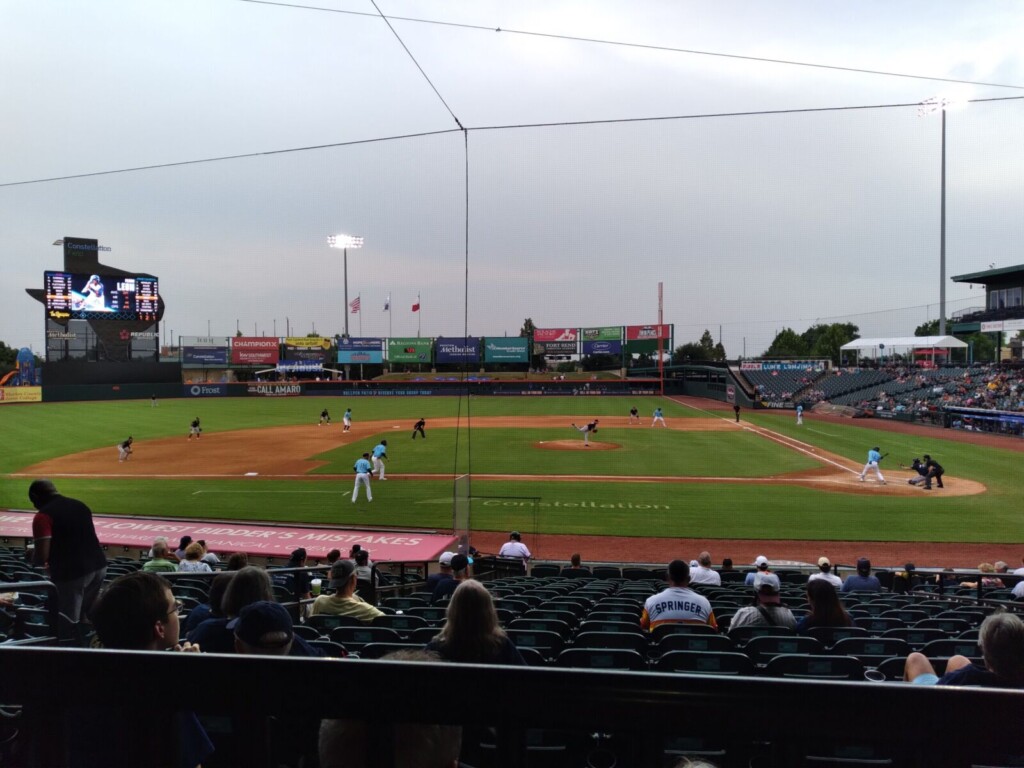
You are standing in right field, and nothing is happening. The grass is cut so precisely it looks artificial. The crowd has settled into a low murmur that resembles breathing more than speech. A man near the dugout spits. The pitcher rolls his shoulders. Three seconds pass. Five. The batter adjusts his grip, steps out of the box, adjusts again. You begin to wonder if anything will ever move with real intention in this place, and then the pitch arrives at ninety-four miles per hour and the world detonates in a single compressed second before returning, almost immediately, to its previous stillness.
What American culture has always understood intuitively — and rarely admitted directly — is that this rhythm is not incidental to the sport. It is the sport’s central argument. The anthropologist Clifford Geertz, writing in 1973 about the Balinese cockfight in “The Interpretation of Cultures,” described ritual sport as a story a society tells about itself. Baseball tells a story about waiting as virtue, about the suspension of desire as a form of discipline, and about the explosion of reward as something that must be earned through duration rather than seized through immediacy. This is not neutral mythology. It is a very specific economic theology dressed in grass and chalk.
The labor historian Herbert Gutman documented in “Work, Culture, and Society in Industrializing America,” published in 1977, how the American industrial class spent the last decades of the nineteenth century actively reshaping the psychological relationship workers had with time. The pre-industrial laborer worked in bursts, rested, socialized, returned to work when necessity demanded. The factory required a different human being — one who could tolerate hours of monotonous inactivity punctuated by brief moments of intense demand, without protest, without the expectation that every moment must be productive. Baseball formalized this structure as entertainment at almost exactly the same historical moment. The sport’s first professional league was organized in 1871. The timing was not coincidence; it was cultural coherence.
What makes this structural alignment so durable is that the violence, when it comes, feels deserved. A ball hit at one hundred and twelve miles per hour off a bat — a number measurable today through the sport’s own Statcast tracking system, deployed league-wide by 2015 — carries within it all the compressed pressure of the silence that preceded it. The crowd does not merely react to the event. It releases something it has been quietly accumulating. The catharsis is physiological, and it arrives on a schedule that mimics the rhythms of deferred compensation, of the Friday paycheck, of the annual review. You endure, and eventually something happens that makes the endurance feel retrospectively meaningful.
Roland Barthes, dissecting professional wrestling in “Mythologies” in 1957, argued that spectacle sport communicates moral clarity through exaggerated gesture — that the audience reads virtue and transgression through bodies performing legibility. Baseball performs something subtler and therefore more dangerous: it communicates that patience is not merely a tool but an identity. The player who works a long count, fouling off pitch after pitch, refusing to swing at anything outside the zone, is celebrated not for what he does but for what he refuses to do. Restraint becomes heroism. Waiting becomes character.
This is where the metaphor stops being decorative and starts being structural. A culture that aestheticizes waiting — that builds its national pastime around the drama of deferred action — will also aestheticize other forms of deferral. The retirement account. The mortgage. The promise that if you simply remain in position long enough, the pitch you need will eventually arrive. The ideology does not need to be spoken. It has been rehearsed three hours at a time, across one hundred and sixty-two games a season, since before most of the institutions that now enforce it were fully formed.
Jackie Robinson and the Cost of Being a Symbol
You are handed a role before you are handed a choice, and the role comes with a contract no one shows you until you have already signed it with your silence.
Branch Rickey sat across from Jackie Robinson in August 1945 and did not ask him whether he wanted to integrate baseball. He asked him whether he had the guts not to fight back. The distinction is not subtle — it is the entire architecture of what followed. Arnold Rampersad, in his 1997 biography Jackie Robinson, reconstructs that meeting with the kind of precision that makes comfortable mythology collapse: Rickey performed the abuse Robinson would face, shouting slurs, miming the gestures of a racist opponent, a racist hotel clerk, a racist teammate, demanding Robinson demonstrate, in real time, that he could receive all of it without retaliation. The audition for dignity required the rehearsal of submission.
What gets called the great experiment in American sporting history was, structurally, a wager made by a white executive on the controlled behavior of a Black man. Robinson’s entry into the Brooklyn Dodgers in 1947 was conditional — conditional on his restraint, his composure, his willingness to metabolize public violence and return nothing but performance. Rampersad documents how Robinson understood this explicitly and accepted it explicitly, not because he lacked rage but because he calculated that acceptance was the only door available. That calculation is worth sitting with rather than celebrating. A man was asked to purchase his own partial freedom with the currency of his own humiliation, and the transaction was then repackaged as American progress.
The cost was physiological. Robinson suffered from insomnia, hypertension, and what his physicians eventually connected to the chronic stress of sustained suppression. He died in 1972 at fifty-three, and his doctor attributed the deterioration of his health in part to the years of internalized pressure. The body does not archive violence neutrally — it stores it in tissue and blood pressure and the slow erosion of arterial walls. What the box scores recorded as a .311 career batting average and six consecutive All-Star selections, the body recorded differently.
What the broader culture performed in response was a particular kind of erasure. Robinson became symbolic at the precise moment that symbol-making allowed his actual experience to become secondary. The symbol required triumph; the human required acknowledgment of what triumph had cost and on whose terms it had been granted. By the mid-1950s, Robinson himself began to push back, publicly criticizing the Yankees for their slow integration, refusing the polite silence that had been his initial contract. He was called divisive. The structure of the original bargain had always included a clause against renegotiation — his permission to exist in white institutional space was implicitly tied to his continued gratitude for being permitted.
Sociologist Elijah Anderson’s concept of the white space, developed in his 2015 work, illuminates something retroactively true about Robinson’s position: Black individuals navigating predominantly white institutional environments are subjected to a permanent audition, a continuous performance of non-threat, of exceptional merit, of patience with conditions that would be considered intolerable if reversed. Robinson did not merely break a color barrier. He demonstrated, at enormous personal expense, that the barrier would only move when a Black man agreed to carry the weight of everyone else’s comfort while crossing it.
The 1997 retirement of Robinson’s number 42 across all of Major League Baseball arrived fifty years after his debut, and it arrived as ceremony. Ceremony is how institutions convert the unresolved into the commemorated. Every April 15th, when players wear 42 in his honor, the gesture is real and the forgetting it enables is equally real — because the question Rickey never asked Robinson, the question of whether a man should have to audition for his own humanity, remains precisely as open as it was in that office in 1945, and no retired number has ever been able to close it.
Statistics as a Religion of Control
You are at the plate with a .247 batting average, and somewhere in a front office three states away, a man you have never met is deciding whether you are worth keeping based on a number that reduces four months of sweat, injury, and impossible reads on a curveball into a fraction slightly below a quarter.
Theodore Porter argued in Trust in Numbers, published in 1995, that quantification is not primarily a tool of discovery but a technology of trust — a way of making decisions that bypasses the discomfort of human judgment and the social friction of accountability. When you can point to a number, you can stop defending a choice. The number defends itself. Baseball did not invent this logic, but it perfected it with a devotion that would make a medieval scholastic feel personally outmatched.
The batting average has existed since Henry Chadwick standardized it in the 1860s, and its persistence for over 150 years is not a sign of its accuracy but of its emotional utility. It tells almost nothing useful about a player’s contribution to winning — it ignores walks, it ignores power, it ignores the stadium dimensions and the pitching quality of the opponents faced. Analysts have known this for decades. And yet it endures, not because it measures well, but because it measures simply, and simple measurement produces the illusion of certainty in a sport defined structurally by failure. A .300 hitter fails seven times out of ten. The average does not report failure — it reports the ratio that makes the failure bearable to name.
The arrival of sabermetrics and the proliferation of metrics like Wins Above Replacement — WAR, a composite statistic attempting to compress a player’s entire seasonal value into a single number — did not disrupt this anxiety about uncertainty. It intensified it, but aimed it at a more sophisticated target. WAR requires accepting multiple layers of estimation, defensive modeling, positional adjustments, and park factors. It is, in other words, an honest metric about how much it does not know. And yet it is spoken in sports media with the same flat confidence as a temperature reading. The complexity of the uncertainty got hidden inside the precision of the decimal point.
Frank Knight distinguished in 1921 between risk, which can be calculated, and genuine uncertainty, which cannot — a distinction that American institutional culture has spent the better part of a century trying to abolish by treating the second category as a subtype of the first. Baseball is a live demonstration of this refusal. The sport generates more data per event than almost any other team activity — pitch velocity, spin rate, launch angle, exit velocity, defensive range measured in feet per second — and the accumulation of this data does not reduce uncertainty so much as it creates a bureaucratic infrastructure around it that makes uncertainty feel managed even when it is not. A pitcher can have a 95th percentile spin rate and still give up a grand slam to a hitter who swings at pitches outside the strike zone at a rate his own metrics should make impossible.
What this quantification encodes culturally is something closer to moral philosophy than mathematics. The belief that a human performance can be made fully legible as data carries within it an older American assumption: that value is objective, that effort can be fairly measured, that the market — or in this case the front office — will eventually see and correctly reward what is real. It is the Protestant ethic rewritten in spreadsheet columns, the idea that righteousness eventually shows up in the numbers if you look at enough of them. When a player insists he is more than his WAR, he is not making a statistical argument. He is making a claim about the limits of legibility itself, about whether a human being performing at the edge of physical possibility can ever be honestly captured by the instruments used to price him.
A vision curated by a filmmaker, not an algorithm
In this video I explain our vision
The Stadium as Civic Cathedral

You sit in the upper deck and the city spreads below you like an argument you have lived inside your whole life without knowing it had a shape.
The geometry of a ballpark is never neutral. When Ebbets Field opened in Brooklyn in 1913, its intimate brick facade and rotunda entrance were not merely aesthetic choices — they were civic declarations, telling the surrounding neighborhood of Flatbush that this structure belonged to it, that the crowd inside was an extension of the street outside. Seating capacity, sightlines, the angle of afternoon shadow across the infield: these were decisions made by men who understood, consciously or not, that architecture is always an argument about who deserves to be present. The urban theorist Lewis Mumford spent decades insisting that buildings express the social logic of the civilization that produces them, and the ballpark proved his case more honestly than most civic structures because it never pretended to be anything other than a container for collective desire.
That container was also always a container for collective exclusion. The Negro Leagues operated in rented stadiums and borrowed fields precisely because the physical infrastructure of baseball was organized around the same racial geography that governed American housing policy. When the Federal Housing Administration was systematically redlining Black neighborhoods between 1934 and 1968, the stadiums rising in those same cities were producing their own spatial hierarchies — bleacher sections priced for working-class white men, reserved boxes for business relationships conducted behind the plate, and Black fans directed, in many parks, toward specific sections by custom if not by posted sign. The architecture encoded the social order so efficiently that most people inside it experienced it as atmosphere rather than policy.
What happened to that architecture when it became inconvenient is the more brutal lesson. The demolition of Ebbets Field in 1960, just three years after Walter O’Malley relocated the Dodgers to Los Angeles in 1957, converted a civic institution into a negotiating instrument. The historian Michael Shapiro documented in his 2003 account of that departure how city officials, team ownership, and real estate interests used the threat of relocation as leverage over communities that had organized significant portions of their social identity around the franchise. What looked like a business decision was actually a rezoning project conducted through emotional blackmail, and the working-class Brooklyn neighborhoods that lost their team did not receive a new stadium — they received apartment towers that displaced the residents whose loyalty had subsidized the team for generations.
This mechanism was refined, not invented, by what followed. The public financing of stadiums across the 1980s and 1990s transferred billions in municipal bonds from city governments to team owners who retained full revenue from the facilities. Economists have documented repeatedly — Dennis Coates and Brad Humphreys published foundational work on this in 1999 — that publicly financed stadiums produce no measurable increase in local economic activity and frequently accelerate the displacement of small businesses in surrounding corridors. Camden Yards in Baltimore, which opened in 1992 and was celebrated as an architectural masterpiece of urban integration, cost Maryland taxpayers more than two hundred million dollars in public subsidy and was built in a neighborhood that had been cleared of its previous residential population years earlier. The warmth of its exposed steel and brick, the nostalgic sightlines evoking older parks, functioned aesthetically as community while operating economically as enclosure.
The stadium becomes a cathedral in the original sense: a structure whose grandeur is inseparable from the authority it confers on those who build it. Medieval cathedrals were also publicly financed, also required the demolition of existing communities, also promised transcendence to the people whose labor made them possible, and also remained controlled by an institution that owed those people nothing once the last stone was placed.
Fathers, Sons, and the Inheritance Nobody Chose
You are standing in a backyard somewhere in Ohio or Pennsylvania or anywhere that has backyards, and your father is throwing a baseball at you. He is not saying much. He never says much. The ball travels between you like a sentence neither of you knows how to finish, and you catch it, and you throw it back, and this goes on until the light fails or dinner is called, and afterward you will both describe this as a good afternoon.
The catch is the most sentimentalized ritual in American sports culture precisely because it substitutes motion for language. What sociologist Arlie Hochschild identified in 1983 in The Managed Heart as “emotional labor” — the work of producing feeling states that social contexts demand — gets inverted in this particular choreography. The backyard throw is not about producing emotion. It is about suppressing it while appearing to express something. The body moves, the arm extends, the leather pops, and all the things a man cannot say to his son travel in the opposite direction of the ball, which is to say nowhere at all.
Inherited team loyalty functions by a similar mechanism, though it operates across decades rather than afternoons. When a son becomes a Yankees fan because his father was, and his father before him, what is actually transmitted has nothing to do with Derek Jeter or the 1927 roster. Psychoanalyst Nicolas Abraham, writing in 1975 on what he called the “transgenerational phantom,” described how unprocessed grief and unspoken family secrets do not disappear — they migrate into descendants, lodging in behaviors and attachments the inheritor cannot explain and usually does not examine. A man who cannot tell you why he loves a particular franchise, who feels the wins and losses with a physical intensity that surprises even him, is often carrying devotion that was never originally his to carry.
The specific genius of baseball as a vehicle for this transmission is its statistical permanence. No sport in American life has so thoroughly archived itself. The numbers from 1941 — Ted Williams hitting .406, the last time anyone cleared that threshold — sit in the record books with the same cold factuality as a death certificate. A father can hand his son a history of loss and failure framed entirely as knowledge, as inheritance of data, and the emotional content rides underneath, invisible, perfectly disguised as enthusiasm. This is grief wearing the costume of fandom.
What never gets examined is whether the son wanted any of it. The cultural script insists that transmission is love, that the passing of allegiance from one generation to the next constitutes a form of care so obvious it requires no interrogation. Erik Erikson, in his 1950 work Childhood and Society, described how cultural rituals create “ego identity” partly by binding individuals to communities that pre-exist them — but he was careful to note that identity borrowed without processing produces rigidity, not belonging. The son who cheers for his father’s team, attends his father’s games, catches his father’s throws, may be constructing not an identity but a memorial to a man who never fully showed up.
There is a particular cruelty embedded in the ritual’s beauty. Because the catch looks like tenderness, because the shared season looks like intimacy, the emotional debt it generates goes unnamed. The son cannot say he was handed something heavy because what he was handed also genuinely gave him joy. He cannot reject the team without rejecting the man. He cannot mourn the distance because the distance was always wrapped in the reassuring smell of leather and grass, in the communal noise of a stadium, in the illusion that two people watching the same thing are necessarily watching it together.
The cultural script has no stage direction for the moment when the son realizes the afternoon in the backyard was not connection but its counterfeit — near enough to the real thing that distinguishing between them requires a kind of courage most families never develop.
The Slow Decline and What It Refuses to Mean
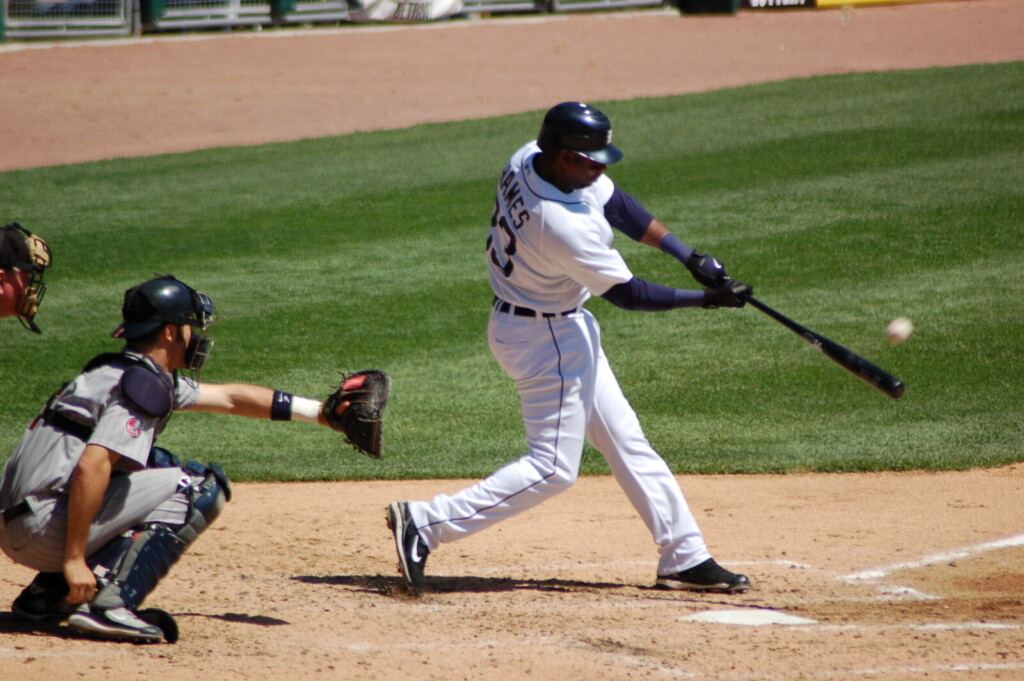
You are watching a sport that knows it is dying but has decided, collectively, to call it something else. The average age of a baseball television viewer crossed fifty in the early 2010s and has continued climbing since, a demographic curve that no sports executive discusses in public without immediately pivoting to youth initiatives and urban outreach programs that have existed, in various rebranded forms, since the 1990s. Major League Baseball’s World Series drew roughly 40 million viewers in 1980; by 2020 it had collapsed to under ten million, a decline too steep and too consistent to be explained by cord-cutting alone. Something else is happening, and the refusal to name it clearly is itself the most revealing fact on the table.
Roland Barthes argued in Mythologies, published in 1957, that modern myth functions precisely by transforming history into nature — by making contingent cultural arrangements appear eternal and inevitable. American baseball mythology has been performing this operation for over a century, and the machinery does not simply stop because the audience has thinned. If anything, it accelerates. The fewer people who actually watch the sport, the more furiously its cultural guardians insist on its indispensability, as if volume of assertion could substitute for lived engagement. The Hall of Fame induction ceremonies grow more elaborate. The Ken Burns documentary gets re-screened in classrooms. The pastoral metaphors multiply even as the stadiums outside mid-sized American cities sit thirty percent empty on Tuesday nights in June.
What this refusal exposes is not nostalgia in any simple sense but something more structurally interesting: America’s particular difficulty in allowing its self-definitions to evolve without experiencing the evolution as catastrophe. Sociologist Robert Bellah, in Habits of the Heart from 1985, identified what he called America’s “communities of memory” — groups that sustain identity not through present practice but through inherited narrative. Baseball has become almost entirely such a community, a sport kept alive in cultural significance by people who no longer watch it but who retain a strong opinion about what it means. The actual game has become secondary to the idea of the game, and the idea requires constant maintenance precisely because the game no longer does the maintenance on its own.
This produces a specific and somewhat strange cultural figure: the defender of baseball who cannot name a single active player but can speak at length about the sport’s relationship to American democracy, to fathers and sons, to the rhythm of summer. George Carlin‘s 1975 routine comparing baseball and football identified the pastoral romanticism already embedded in baseball’s self-presentation, the way the sport described itself in terms of “going home” while football described itself in terms of territory and invasion. What Carlin treated as comedy has since calcified into sincerity, and the sincerity has become load-bearing, structurally necessary to an American identity that has fewer and fewer other myths capable of doing the same work without immediate political contestation.
There is something almost poignant in watching a nation cling to a sport not because the sport thrills it but because the sport once told it something it needed to hear about itself. The poet Donald Hall wrote in Fathers Playing Catch with Sons in 1985 that baseball is continuous, unlike other things in America, and that continuity is what Americans love about it. But continuity, maintained artificially past the point of organic life, is not continuity anymore — it is taxidermy, and the difference matters even when nobody in the room is willing to say so. What a culture chooses to preserve after it has stopped believing in it tells you more about that culture’s fears than its values, more about what it cannot bear to lose than what it actually loves, and baseball, mounted carefully on the wall of the American imagination, stares back at the room with glass eyes that have not registered anything new in a very long time.
⚾ Culture, Identity, and the American Soul
Baseball is far more than a sport — it is a mirror of American identity, a ritual space where community, myth, and memory converge. To understand baseball in American culture is to trace the deeper currents of how the United States has imagined itself across generations. The following articles illuminate the broader cultural, philosophical, and sociological forces that give the game its enduring meaning.
Johan Huizinga and Homo Ludens: When Playing Is Serious Business
Johan Huizinga‘s landmark concept of Homo Ludens argues that play is not peripheral to human civilization but constitutive of it. Baseball, with its pastoral rhythms and ritualized rules, is a perfect embodiment of Huizinga’s thesis that culture itself emerges from the seriousness of play. This article explores how the act of playing shapes societies, moral codes, and collective identities across time.
GO TO THE SELECTION: Johan Huizinga and Homo Ludens: When Playing Is Serious Business
Putnam’s Bowling Alone: Analysis
Robert Putnam‘s Bowling Alone diagnosed the collapse of civic participation and social capital in American life — a decline that baseball’s communal ballparks and neighborhood leagues once helped resist. The stadium, like the bowling alley, was a space where strangers became neighbors and local identity was forged. This article unpacks Putnam’s argument and its implications for understanding why communal sports rituals matter so deeply.
GO TO THE SELECTION: Putnam’s Bowling Alone: Analysis
American Transcendentalism: History and Thought
American Transcendentalism shaped the moral and spiritual imagination of the United States in ways that reverberate through its cultural institutions, including sport. The pastoral ideal — central to Thoreau, Emerson, and Whitman — finds a curious echo in baseball’s green fields and meditative pace. This article traces the philosophical roots of a uniquely American way of relating to nature, community, and self.
GO TO THE SELECTION: American Transcendentalism: History and Thought
Mass Social Homologation Today
The homogenization of American popular culture has gradually transformed baseball from a living community ritual into a packaged media spectacle. Mass social conformity erodes the local, the eccentric, and the mythic dimensions that once made the game a vessel for genuine collective meaning. This article examines the sociological pressures that flatten cultural experience and what is lost when sport becomes pure entertainment product.
GO TO THE SELECTION: Mass Social Homologation Today
Discover the Films That Play by Their Own Rules
If these reflections on culture, identity, and ritual have stirred something in you, Indiecinema is the streaming space where cinema answers back. Explore independent and auteur films that take American myth, community, and the human need for play as seriously as the greatest literature does — stream them now on Indiecinema.
👉 EXPLORE THE CATALOG: Watch Indie Films in Streaming
A vision curated by a filmmaker, not an algorithm
In this video I explain our vision

