
The Child Who Breaks the Rules of the Game
You are nine years old and you have just been caught. Not caught lying to an adult, not caught stealing from a drawer — caught cheating at a game, which is an entirely different order of crime. The other children do not look at you with the disappointment reserved for moral failures. They look at you with something colder and more precise: the expression of people who have witnessed a small annihilation. The game stops. Not because someone decided to stop it, but because it has already stopped, retroactively, from the moment your hand moved where it should not have moved. They do not argue with you about the rules. They simply leave. And the particular silence they leave behind is not the silence of anger — it is the silence of a room from which something invisible has been removed.

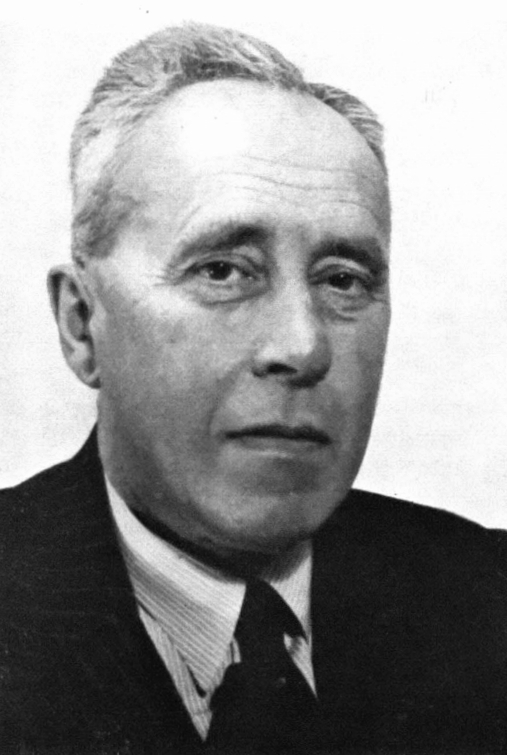
Johan Huizinga noticed this in 1938, writing in Dutch from a country that would soon be occupied by forces that understood nothing of what he was describing. His book, Homo Ludens, published that year by H.D. Tjeenk Willink, was not a work about childhood or leisure. It was a sustained argument that play precedes culture — not historically in the sense that one came before the other, but structurally, in the sense that culture is only possible because humans first learned to inhabit a space where ordinary rules are suspended and different rules, temporarily sovereign, take their place. Huizinga called this space the magic circle, a term borrowed from the phenomenology of ritual but applied with devastating precision to everything from courtroom procedure to poetry to war. The magic circle is not a metaphor. It is a real boundary, crossed consciously, inside which different ontological conditions apply. Time moves differently. Stakes transform. A ball matters. A word can end a friendship. Inside the circle, nothing is trivial, because everything has been voluntarily elevated to significance by the collective agreement to play.
What the cheating child destroys is not fairness. Fairness is a principle, and principles can survive violations — they are, in fact, designed to survive violations, which is why we have courts and apologies and second chances. What the cheating child destroys is the shared fiction that made the game real. And here is the vertigo at the center of Huizinga’s argument: the fiction was not less real than ordinary reality. It was, in a specific and measurable sense, more real — more intensely inhabited, more emotionally present, more constitutive of identity in that moment than anything happening outside the schoolyard. The cheater has not simply broken a rule. They have punctured the membrane of a world. The other children’s reaction — that cold, ontological expulsion — is not disproportionate. It is exactly proportionate to what has actually happened.
This distinction between the spoilsport and the cheat was one Huizinga drew with uncommon clarity. The cheat, he wrote, still pretends to play the game; they operate within the circle’s language while violating its conditions from the inside. The spoilsport, by contrast, refuses the circle entirely — they declare the whole enterprise absurd, they will not enter, they name the fiction a fiction and thereby expose what everyone was silently agreeing not to name. Paradoxically, Huizinga found the spoilsport more threatening to social order than the cheat, because the cheat at least grants the game its authority by bothering to subvert it secretly. The spoilsport commits the deeper offense of indifference, which is to say, they commit the offense of honesty at precisely the moment when honesty is the one thing the circle cannot survive.
This is not a minor observation about playgrounds. Huizinga was describing the architecture of every institution human beings have ever built — law, religion, diplomacy, theater, competitive sport, and the elaborate theatrical fictions we call national identity — all of them magic circles, all of them dependent on participants who agree, without quite saying so, to treat the fiction as binding.
Arte

Drama, thriller, by Stefano Scala, Simone Arcidiacono, Italy, 2023.
In a secret and fascinating world, four people meet every week at the mysterious "The Circle" for a gripping game, knowing nothing about each other. However, fate has a different plan for them. As the game progresses, their lives begin to intertwine in unpredictable ways. The boundaries between the game and reality start to blur, revealing buried secrets and creating unthinkable connections. In the heart of "The Circle," the masks fall, and the players' lives will be forever changed.
LANGUAGE: Italian
SUBTITLES: English, Spanish, French, German Portuguese
Huizinga's Radical Wager: Culture as Play
You already know the feeling — standing at the edge of something that seems trivial, a game, a ritual, a competition, and sensing that something genuinely consequential is at stake. You cannot name it precisely, but the lightness and the gravity coexist in the same moment, and neither cancels the other out. Johan Huizinga knew this feeling well enough to build an entire theory of human civilization around it.
In 1938, a Dutch historian at the University of Leiden published a book that academic culture promptly filed under “interesting but eccentric” and proceeded to underestimate for decades. Homo Ludens — Man the Player — arrived the year before Europe collapsed into its second catastrophic war in a generation, which gives the timing a particular kind of savage irony. Huizinga was arguing that humanity’s highest achievements, its laws, its sacred rituals, its art, its philosophy, its very capacity for collective meaning-making, were not the products of rational necessity or biological pressure, but had grown from something much older and much stranger: the impulse to play. The war that followed, with its spectacle, its pageantry, its uniforms and rallies, would have confirmed for him both the power and the danger latent in that argument.
The conventional story that Huizinga dismantled runs roughly like this: human beings first organized themselves into communities, developed language, built economic systems, created religious structures, and then, once they had the leisure and the security, invented play as a kind of reward, a release valve for social pressure. This narrative places play at the end of the productive chain, as surplus, as entertainment, as childhood indulgence that serious adults eventually set aside. Huizinga inverted this entirely. He insisted that play is not a product of culture. Culture is a product of play. The sacred grove where a ritual is enacted, the courtroom where lawyers argue within formal rules, the philosophical dialogue where two thinkers duel with propositions — none of these are places where play sneaks in through the back door. They are, structurally and historically, extensions of play’s original logic into new domains.
What Huizinga meant by play was precise, not romantic. He identified five formal characteristics that define genuine play across all known societies and historical periods: it is free, meaning participation cannot be coerced without destroying the play itself; it is distinct from ordinary life, set apart in time and space; it is limited, with a definite beginning and end; it is ordered, governed by rules that are absolutely binding within the magic circle; and it is make-believe, existing in a fictional or consecrated space removed from the merely pragmatic. These five qualities do not describe leisure. They describe the structural logic of the courtroom as readily as the playground, of the cathedral as readily as the carnival. When a judge puts on a wig in a British court of law, the gesture is not decorative nostalgia. It is the maintenance of the magic circle, the signal that inside this space different rules apply, that the ordinary world has been suspended in favor of a consecrated fiction with binding consequences.
What makes this genuinely radical rather than merely counterintuitive is that Huizinga was not making a metaphor. He was making a claim about historical causality. The agonistic contests of ancient Greece — the athletic games at Olympia, the dramatic competitions at the festival of Dionysus, the verbal dueling of the Sophists — were not cultural expressions that happened to take playful forms. They were the mechanism by which Greek culture generated its most durable ideas about justice, beauty, and excellence. Remove the contest structure, and you do not have Greek philosophy with its competitive edge filed off. You have something that would not have been Greek philosophy at all. Huizinga was arguing that the form was not incidental to the content. The form was generative.

The Sacred Boundary and the Magic Circle
You walk into a courtroom and something shifts in your body before a single word is spoken. The ceilings are higher than they need to be. The wood is darker than any wood you encounter in ordinary life. Everyone speaks in a register that no human being uses at the dinner table, invoking procedures and formulas that seem designed less to communicate meaning than to signal that ordinary meaning has been suspended. You are inside something, and that something has edges.
Johan Huizinga identified this sensation with forensic precision in Homo Ludens, published in 1938, arguing that the space of play is never simply a location but a consecration. He called it the magic circle — a bounded territory, physically or symbolically demarcated, within which the rules of everyday life are not merely bent but categorically replaced. The term sounds whimsical only to those who have not sat long enough with what it actually describes. A chessboard, an altar, a courtroom, an ancient Greek temenos, a Roman circus — these are not metaphors for each other. They are instances of the same structural phenomenon: a human community agreeing, with extraordinary seriousness, that inside this line, different forces are at work.
What makes Huizinga’s analysis genuinely unsettling is that it refuses the comfortable hierarchy between sacred and ludic. The modern instinct is to protect religion from contamination by play, to insist that ritual is something graver, something categorically different from a game. But the historical record will not cooperate. The Olympic Games, which began in 776 BCE and persisted for over a millennium, were not a secular entertainment with religious decoration. They were a sacred truce — the ekecheiria — during which warfare across Greece was suspended so that athletes could compete. The competition was the offering. The winner was not celebrated merely for physical superiority but for proximity to the divine, crowned with olive branches cut from a single sacred tree near the temple of Zeus. The agon and the altar were structurally identical: bounded time, bounded space, heightened stakes, and a verdict that meant something outside the circle precisely because it was produced inside it.
Huizinga draws the same ligature through the history of law. Archaic legal proceedings were not rational deliberations in the modern administrative sense. They were performances conducted according to rigid formal rules, staged in designated spaces, governed by ordeals and oaths and combat — processes that looked, and were, indistinguishable from ritualized games. The medieval trial by ordeal, in which a defendant’s guilt was determined by whether their hand healed after being burned, was not a primitive failure of reason. It was a fully coherent game played with divine judgment as referee, operating on the shared premise that inside this procedure, a force other than human opinion was making the call. The moment that premise dissolved — and it began dissolving in the twelfth century when Pope Innocent III banned clerical participation in ordeals at the Fourth Lateran Council in 1215 — the circle lost its magic, and the procedure became absurd overnight.
This is the mechanism that rarely gets named directly: the magic circle does not derive its power from the content of its rules but from the collective agreement to treat those rules as categorically binding within its borders. The moment that agreement fractures, the entire structure collapses into arbitrariness — not bad rules, but no rules at all. This is why a chess player who knocks the pieces off the board does not simply lose the game; they destroy the space in which losing and winning were possible. The same act of refusal, when performed inside a legal proceeding or a religious ritual, is called sacrilege, contempt of court, desecration — different vocabularies for the same rupture, the same violation of the boundary that made meaning possible in the first place. What the law calls order, what religion calls holiness, and what children call the rules of the game are, at their structural root, the same human gesture: drawing a line and agreeing, with everything at stake, to believe in it.
When Seriousness Became a Virtue and Play Became a Vice
You are nine years old and it is Tuesday afternoon in July, and someone — an aunt, a neighbor, your father’s voice carrying from another room — tells you to stop wasting time. You are not doing nothing. You are building something elaborate and private out of sticks and mud and a logic only you understand. But the adult world has already decided what this moment is worth, and its verdict is zero.
That verdict did not arrive from nowhere. It was manufactured, slowly and with extraordinary ideological precision, across roughly two centuries of European economic transformation. Max Weber traced the architecture of this shift in 1905 with The Protestant Ethic and the Spirit of Capitalism, identifying how Calvinist theology quietly rewired the moral nervous system of Western civilization. If God’s grace was visible in worldly success, then idleness was not merely inefficient — it was theologically dangerous, a sign of damnation made flesh in an empty afternoon. The Puritan divine Richard Baxter wrote in 1673 that wasting time was the first and greatest of sins, because time was the medium in which salvation was either won or forfeited. Play, by definition, was time spent on nothing that counted.
What Weber diagnosed at the level of theology, E.P. Thompson analyzed at the level of the body and the clock. In his 1967 essay Time, Work-Discipline, and Industrial Capitalism, Thompson documented how pre-industrial laborers worked in rhythms that followed task and season, not the abstract tyranny of measured hours. A fisherman waited for tides. A farmer followed harvests. There was irregular intensity and genuine rest, and neither carried a moral charge. The factory erased this entirely. By 1850, the clock had become the primary moral instrument in industrial England, and punctuality had been elevated into a near-religious virtue. Leisure was no longer rest between necessary exertions — it was the enemy of productivity, a failure of character that employers, clergy, and eventually the state conspired to regulate, reform, and minimize.
The consequences ran deeper than work schedules. Once productivity became the unit of human value, every hour had to justify itself in the currency of output. This is the mechanism by which play lost its ancient dignity and was demoted into something children did before they knew better, something adults indulged only as recovery — recovery, crucially, in service of returning to work refreshed. The word leisure itself shifted its semantic weight. In ancient Greek, skholé — the root of the modern school — meant precisely the freedom from necessity that made higher thought possible. By the nineteenth century, its descendants had been so thoroughly colonized by the logic of recuperation that leisure was acceptable only insofar as it made the worker more productive on Monday morning.
Huizinga was writing Homo Ludens in 1938 against this specific cultural current, and he knew it. His insistence that play was older than culture, that it was the condition of culture rather than its leftover, was not a nostalgic gesture — it was a philosophical act of resistance against an industrial anthropology that had reduced the human being to an economic function. He named this reductive creature Homo Faber, man the maker, man the tool-user, and argued that this designation was catastrophically incomplete. The modern world had taken one strand of human possibility and declared it the whole cloth.
What is difficult to see from inside that world — which is still, structurally, our world — is that the moralization of productivity did not simply change how people spent their time. It changed what people believed they deserved. The child told to stop wasting time does not only learn to put down the sticks. She learns that the impulse to arrange them was a problem in herself, a weakness to be overcome rather than a capacity to be honored. The interiority of play — its resistance to justification, its refusal to produce anything beyond its own happening — becomes evidence of moral deficiency in an economy that can only recognize value when it accumulates into something transferable.
The Paradox of Professional Sport and Institutionalized Fun
You watch a professional athlete cross the finish line and collapse — not from exhaustion, but from the weight of what just happened. The number on the scoreboard will determine sponsorship contracts, national headlines, the next four years of their life. Something in you recognizes the performance as extraordinary, and something else, quieter, wonders whether what you just witnessed was play at all.
Johan Huizinga argued in Homo Ludens, published in 1938, that play is distinguished above all by its voluntary character and its separation from ordinary life — what he called the “magic circle,” a bounded space where different rules apply and where the outcome, crucially, does not reach beyond its own borders. The magic circle is not a metaphor. It is a structural condition. Once you remove the possibility that the game could simply stop, that the player could walk away without consequence, you have not changed play — you have ended it and replaced it with something else wearing its clothes.
Modern professional sport is perhaps the most sophisticated machine ever built for extracting the emotional residue of play while systematically eliminating its defining properties. The athlete is a worker governed by contract law, performance clauses, and injury liability. FIFA generated revenues exceeding 7.5 billion dollars in the 2018-2022 cycle. The NFL’s television rights alone, renegotiated in 2021, locked in approximately 113 billion dollars over eleven years. These are not figures that describe a game. They describe an industry that has reverse-engineered the pleasure audiences associate with childhood freedom and turned it into a financialized commodity — the appearance of spontaneity manufactured at industrial scale.
What makes this particularly insidious is not the money itself but the language that persists around it. Athletes are still said to “play” their sport. Broadcasters speak of “fun,” of “heart,” of moments that remind us why we love the game. This vocabulary does real ideological work: it preserves the emotional legitimacy of play — its association with freedom, authenticity, and intrinsic motivation — while concealing the labor relations underneath. The French sociologist Pierre Bourdieu identified this mechanism in his 1984 work Distinction, describing how dominant cultures naturalize their own arbitrary conventions by making them feel spontaneous and chosen. Professional sport performs exactly this naturalization: it presents coerced output as free expression.
The esports industry has simply accelerated the same process without the historical patina to disguise it. Global esports revenues reached approximately 1.38 billion dollars in 2022, built almost entirely on games that began as objects of genuine, unregulated play. The teenager who spent three thousand hours mastering a fighting game in their bedroom — motivated by nothing except the pleasure of mastery itself — is precisely the raw material the industry recruits, contracts, monetizes, and discards. What was intrinsic becomes extrinsic almost overnight. Psychologists Edward Deci and Richard Ryan demonstrated in their self-determination theory, developed across decades from the 1970s onward, that introducing external rewards for an activity a person already finds intrinsically motivating reliably reduces their subsequent motivation to engage with it freely. The industry understands this dynamic and does not care, because the goal was never to protect the player’s relationship to play — it was to extract value before that relationship collapses.
The gamified workplace is perhaps the most revealing mutation of all, because it dispenses with even the pretense of sport. When a logistics company assigns point totals and leaderboards to warehouse picking rates, or when a call center displays real-time performance rankings visible to every employee, the mask slips entirely. The game is not being offered as relief from work. The aesthetics of play are being weaponized to dissolve resistance to surveillance and competitive pressure — to make the worker feel that submission to metrics is actually participation in something exciting. Huizinga’s magic circle requires that the player enters freely and that the stakes remain internal to the game itself. The gamified workplace inverts both conditions simultaneously, and then asks you to smile about it.
A vision curated by a filmmaker, not an algorithm
In this video I explain our vision
War, Politics, and the Collapse of the Play Boundary

You are watching a rally — not on a screen, not in a photograph, but as someone who has wandered in from the street and cannot immediately find the exit. The torches move in geometric patterns that feel designed, rehearsed, pleasurable to watch even as something in your throat closes. The crowd sways in synchronized response to cadences that rise and fall like music. There is a conductor somewhere, and everyone present knows their part, and the whole spectacle produces in the body a sensation disturbingly close to joy.
Huizinga saw this and named it with a precision that cost him something. In the final chapter of Homo Ludens, published in 1938 as Europe was already rehearsing its own catastrophe, he described what happens when political power borrows the grammar of play — the costumes, the rituals, the competitive theater, the bounded arenas of speech and gesture — while quietly removing the one element that makes play civilizing rather than catastrophic: the voluntary acceptance that the game ends, that the loser walks away, that tomorrow is not determined by today’s score. He called the result puerilism, a word that sounds almost gentle until you understand what he meant by it: not childishness in the sense of innocence, but the regression into the worst features of adolescent group psychology — the need to belong to a pack, the intolerance of the outsider, the hunger for sensation dressed as ideology, the cruelty that feels like play because it wears play’s costume.
What made twentieth-century warfare so philosophically disturbing to Huizinga was not its scale, though the numbers were incomprehensible — the First World War produced roughly seventeen million dead in four years, a figure that industrial efficiency was about to make seem modest. What disturbed him was the aesthetic packaging. Modern states had learned to drape mobilization in the language of games: tournaments between nations, contests of strength and will, sporting rivalries elevated to existential stakes. The vocabulary of sport migrated into military communiqués. Generals spoke of plays, opponents, home soil. Propagandists framed invasion as competition. This linguistic contamination was not accidental — it was structural, because mass political movements had discovered that the emotional architecture of play, its capacity to generate intense collective loyalty within clearly marked us-versus-them boundaries, was an extraordinarily effective mechanism for manufacturing consent to violence.
The distinction Huizinga was trying to preserve was between the agon — the formal contest governed by agreed rules, bounded in time and space, conducted between parties who recognize each other’s legitimacy — and what he saw collapsing around him: a counterfeit version that kept the drama and abolished the ethics. Genuine play, in his account, required that both sides accept the frame, which means accepting that the other side has a right to exist within the game and continue to exist after it. Totalitarian politics violated this condition at its root. The opponent was not a competitor but an enemy in the theological sense — something whose elimination was the point, not whose defeat within agreed rules. When play loses its willingness to recognize the other player, it does not become war. It becomes something worse: it becomes war wearing play’s face, which removes the last psychological resistance most people have to participating in atrocity.
What Huizinga could not fully account for — and here the text strains against its own historical moment — is the degree to which this collapse was not a deviation from modernity but one of its available destinations. The same rationalization of social life that produced universal education and public health infrastructure also produced the apparatus for organizing mass death with bureaucratic efficiency. Max Weber had already described this in 1905 in The Protestant Ethic and the Spirit of Capitalism: the iron cage was not a failure of the system but its logical fulfillment, and the aestheticization of politics that Walter Benjamin identified in 1935 as fascism’s defining move was legible precisely because the aesthetic infrastructure already existed, waiting for someone ruthless enough to operate it without the ethics that had been its original constraint.
The Neuroscience of Freedom: What Happens Inside the Magic Circle
You are sitting in a meeting that has been rebranded as a “brainstorming session,” and someone has placed a bowl of colorful stress balls in the center of the table. Nobody touches them. The room performs creativity while suppressing every neural impulse that would actually produce it, and everyone in that room has been trained since childhood to do exactly this — to simulate the conditions of play while evacuating its substance entirely.
Jaak Panksepp, the neuroscientist whose affective neuroscience work culminated in his 1998 landmark Affective Neuroscience: The Foundations of Human and Animal Emotions, spent decades mapping what he called primary emotional systems in mammals, and what he found complicated every assumption the productivity culture had made about motivation. The SEEKING system — his term, always capitalized, always distinct — is not activated by reward. It is activated by the anticipation of exploration, by open-ended engagement with an environment that has not yet been mastered. Dopamine does not flood the brain when you get what you want. It floods the brain when you are genuinely uncertain what you might find. Play, in this neurological architecture, is not a break from serious cognition. It is the condition under which the most sophisticated cognition becomes biologically possible.
What Panksepp’s animal studies revealed — and he documented this with particular force in research on rat play behavior, showing that rats deprived of rough-and-tumble play failed to develop normal social and cognitive flexibility — was that the suppression of play states does not leave a neutral absence. It produces a specific damage. The organism becomes rigid, hypervigilant, prone to threat-detection where none exists. Stuart Brown, the psychiatrist and play researcher who founded the National Institute for Play and whose 2009 book Play: How It Shapes the Brain, Opens the Imagination, and Invigorates the Soul drew on decades of clinical interviews with everyone from convicted murderers to Nobel laureates, found the same pattern in human biographical data. The people who had been most systematically deprived of unstructured play in childhood — not necessarily through poverty or trauma, but sometimes through the particular cruelty of hyper-optimized suburban achievement culture — were disproportionately represented among those who later struggled with rigidity, compulsive control behaviors, and an inability to tolerate ambiguity. Brown interviewed Charles Whitman, the Texas Tower shooter of 1966, and noted in his clinical assessment the almost total absence of genuine play in Whitman’s developmental history. He was careful not to reduce causality to a single variable. But the absence was there, documentable, structural.
What this neurological framing illuminates is something that cultural criticism alone cannot reach: the stakes are not philosophical but physiological. When a society systematically colonizes the spaces where exploration without predetermined outcome once lived — when childhood schedules are optimized, when adolescence becomes a credential-building exercise, when adult leisure is converted into self-improvement content consumption — it is not merely failing to honor some abstract human need for fun. It is degrading a biological system whose function is to keep perception flexible, social behavior adaptive, and cognition capable of genuine novelty. The brain that never enters genuine play states becomes, at a measurable neurological level, a brain that can only recognize what it has already been told to recognize.
There is a particular cruelty in the fact that the environments most aggressively marketed as creative — the innovation labs, the design-thinking workshops, the corporate offsites with their deliberately casual furniture — replicate the external grammar of play while activating none of its underlying systems. The SEEKING circuit does not fire because the outcome has been predetermined, the evaluation is present, and the boundary of acceptable exploration has been drawn before anyone entered the room. The stress balls sit untouched because every person at that table has learned, through years of precise social training, that reaching for them would mark them as someone who is not taking this seriously enough.
The Unproductive Hours You Cannot Justify
You are sitting somewhere you did not plan to be, doing something that produces nothing. Maybe it is a Tuesday afternoon and you have followed a trail of small decisions — a wrong turn, a curiosity, a stubborn refusal to check your phone — into two hours of watching light move across a wall, or sketching something ugly in the margins of a notebook, or playing the same four-chord progression until your fingers remember it without you. No one commissioned this. No algorithm will optimize it. When someone asks what you did today, you will probably not mention it, because the honest answer sounds like failure dressed up as leisure.
The economist’s vocabulary has no term for what happened in those two hours except “opportunity cost,” which is a polite way of saying you wasted something. Gary Becker, in his 1965 paper “A Theory of the Allocation of Time,” argued with elegant consistency that time is a productive resource subject to rational optimization — that even rest, even pleasure, is meaningful only insofar as it generates future utility. The framework spread well beyond economics into the general grammar of how educated people in wealthy societies describe their own lives. You optimize your mornings, you invest in relationships, you leverage your weekends. The metaphor of capital has colonized experience so thoroughly that the inability to account for an afternoon feels like a small moral failure.
But the memory keeps those Tuesday afternoons with a fidelity it refuses to apply to productive ones. This is not nostalgia distorting the record. There is substantial evidence from autobiographical memory research — Jerome Bruner’s work on narrative and self-construction in “Actual Minds, Possible Worlds” from 1986 being one of the more rigorous accounts — that the mind disproportionately retains experiences that interrupted the efficient forward motion of a life. The moments that could not be filed under any category of progress are precisely the ones that seem, years later, to have been load-bearing. Something happened in them that the productive hours were too busy to allow.
What happened is that the self briefly exceeded its functional role. The adult who plays — genuinely, without a fitness goal or a networking subtext or a skill-building rationale — is not performing a version of themselves approved by the economy they live inside. Winnicott understood this in clinical terms when he wrote in 1971 in “Playing and Reality” that play is the one domain where the individual can be creative in the sense of discovering what actually exists in them, rather than performing what is expected of them. The therapeutic implication was radical: the inability to play was not a symptom but a diagnosis in itself — evidence that a person had become entirely the sum of their obligations.
A life assembled entirely from justifiable hours is not a life that contains a self in any interesting sense. It is a sequence of performances calibrated for an audience that includes the person performing. The economist’s rational agent and the psychoanalyst’s false self are, underneath their technical vocabularies, describing the same creature — someone for whom useless time has become genuinely threatening because it offers no script and no evaluation. Facing two free hours with no structure is, for that person, not rest but exposure.
Huizinga saw play as the condition that preceded civilization, not as its reward. The game was not what you earned after the work was done — it was the original act of meaning-making, the space inside which rules, rituals, and eventually cultures crystallized into existence. To treat unproductive time as a deficit is not simply a personal pathology; it is a civilizational one, the slow administrative erasure of the very ground from which anything genuinely human has ever grown. What cannot be justified may be exactly what cannot be replaced.
🎲 When Play, Masks, and Rules Shape Human Existence
Johan Huizinga’s Homo Ludens revealed that play is not a trivial escape but the very foundation of culture, law, art, and ritual. To explore this idea fully, one must journey through the masks we wear, the games we lose ourselves in, and the philosophical prisons we build from rules and obsession. These related articles deepen the maze of meaning that surrounds the serious business of play.
Gambling: When Risk Becomes Obsession
Gambling stands at the extreme edge of Huizinga’s play-world, where the freedom of the game collapses into compulsion and the rules become a cage. This article examines how risk, when stripped of its playful lightness, transforms into a psychological obsession that devours the player whole. The boundary between voluntary game and destructive addiction reveals something essential about what play truly requires to remain human.
GO TO THE SELECTION: Gambling: When Risk Becomes Obsession
The Masks We Wear: Identity and Fiction in Everyday Life
Huizinga understood that play requires the adoption of a role, a temporary identity separated from ordinary life — which is precisely what the mask accomplishes in both ritual and everyday behavior. This article explores how identity and fiction intertwine, revealing that the self we present to others is always, to some degree, a performance within a game we did not choose. The mask is not a lie but a structural element of the social play-world Huizinga described.
GO TO THE SELECTION: The Masks We Wear: Identity and Fiction in Everyday Life
Stefan Zweig and Chess: The Mind as Prison
Stefan Zweig‘s Chess Story offers one of literature’s most harrowing portraits of a mind that turns a game into a total universe, ultimately losing itself inside its own rules. This article analyzes how chess — the purest of intellectual games — becomes a prison when the magic circle of play seals itself off from the outside world permanently. Zweig’s novella is an involuntary commentary on Huizinga’s thesis: play liberates only when it retains the freedom to stop.
GO TO THE SELECTION: Stefan Zweig and Chess: The Mind as Prison
Jorge Luis Borges and the Labyrinth of Identity
Borges spent a lifetime constructing literary labyrinths that function exactly as Huizinga’s play-spaces do — separate, rule-governed, infinite in their internal logic, yet radically disconnected from ordinary reality. This article examines how Borges used the labyrinth as a metaphor for identity itself, a game with no exit in which the player and the maze become indistinguishable. Reading Borges through Huizinga illuminates why the most serious philosophical questions have always been posed in the form of a game.
GO TO THE SELECTION: Jorge Luis Borges and the Labyrinth of Identity
Discover Cinema That Plays With Your Mind on Indiecinema
If Huizinga was right that play is the root of all culture, then independent cinema is perhaps its purest living expression — a space where filmmakers break rules, invent new ones, and invite you into a magic circle unlike any other. On Indiecinema streaming you will find films that take play seriously, from philosophical puzzles to games of identity and obsession. Step inside the maze and let the screen become your play-world.
👉 EXPLORE THE CATALOG: Watch Indie Films in Streaming
A vision curated by a filmmaker, not an algorithm
In this video I explain our vision

