The Smell of Soil Before the Rain
You are standing at the edge of a field in late afternoon, and something stops you. Not a sound, not a sight — something older than either. The air carries a particular weight, a mineral warmth rising from the ground as the light flattens and the shadows of the wheat stretch eastward like slow rivers. You have not yet named what you are feeling. Your body registered it first, the way it always does with things that matter: a slight opening in the chest, a slowing of the breath, the particular quality of attention that arrives before thought. The soil beneath your feet is giving something off. You could call it petrichor — that word scientists coined in 1964, from the Greek petra and ichor, the fluid said to run through the veins of gods — but the word is too neat, too contained for what is actually happening. What is happening is older than naming.

This moment, unremarkable on its surface, is in fact the precise threshold where the story of biodynamic agriculture begins. Not in a laboratory. Not in a policy document. Not in the accumulating catastrophe of topsoil depletion that saw the United States lose approximately half its agricultural topsoil in the twentieth century alone. It begins here, in the body’s inarticulate recognition that the land is alive in a way that defies the categories we have built to manage it.
The industrial model of agriculture that dominated the twentieth century was, at its core, a philosophy of extraction. It asked of the soil what Frederick Winslow Taylor had asked of the factory worker in his 1911 Principles of Scientific Management: maximum output, standardized process, efficiency measured in units per hour. The soil became a substrate. A medium. A thing to be loaded with inputs and made to yield. Nitrogen-phosphorus-potassium, the holy trinity of synthetic fertilization, arrived in earnest after the Haber-Bosch process was industrialized in the early 1910s, and the transformation was stunning in its productivity and devastating in its narrowness. By the second half of the century, agronomists were beginning to measure what had been quietly lost: microbial diversity, earthworm populations, water retention capacity, the vast subterranean fungal networks that mycologist Paul Stamets would later describe as the earth’s natural internet — organisms exchanging nutrients and chemical signals across distances and timescales that make human communication look like shouting across a room.
What the body knows at the edge of that field is precisely what industrial logic has no language for. It knows that the soil is not a dead medium but a living system of almost incomprehensible complexity, that a single teaspoon of healthy agricultural soil contains more microorganisms than there are human beings on earth, that what happens below the surface is not less real for being invisible. The sociologist Bruno Latour, in his 1991 work We Have Never Been Modern, argued that the great division of modernity — separating nature from culture, the human from the nonhuman, the scientific from the social — was always a fiction, a useful fiction that allowed industry and progress to proceed without accounting for what was being severed. That severance is what you are standing at the edge of, in that field, at dusk, with the soil giving off its old complex breath.
Biodynamic agriculture is, among other things, an attempt to take that body-knowledge seriously. To build a system of farming from the recognition that the farm is not a factory, that the soil is not a substrate, that the relationship between the human being and the land is not one of dominance and extraction but something more reciprocal, more entangled, more honest about what depends on what. The history of how that attempt came into being — and the principles that shaped it — is stranger and more rigorous than most people expect.
Eve of the Irises
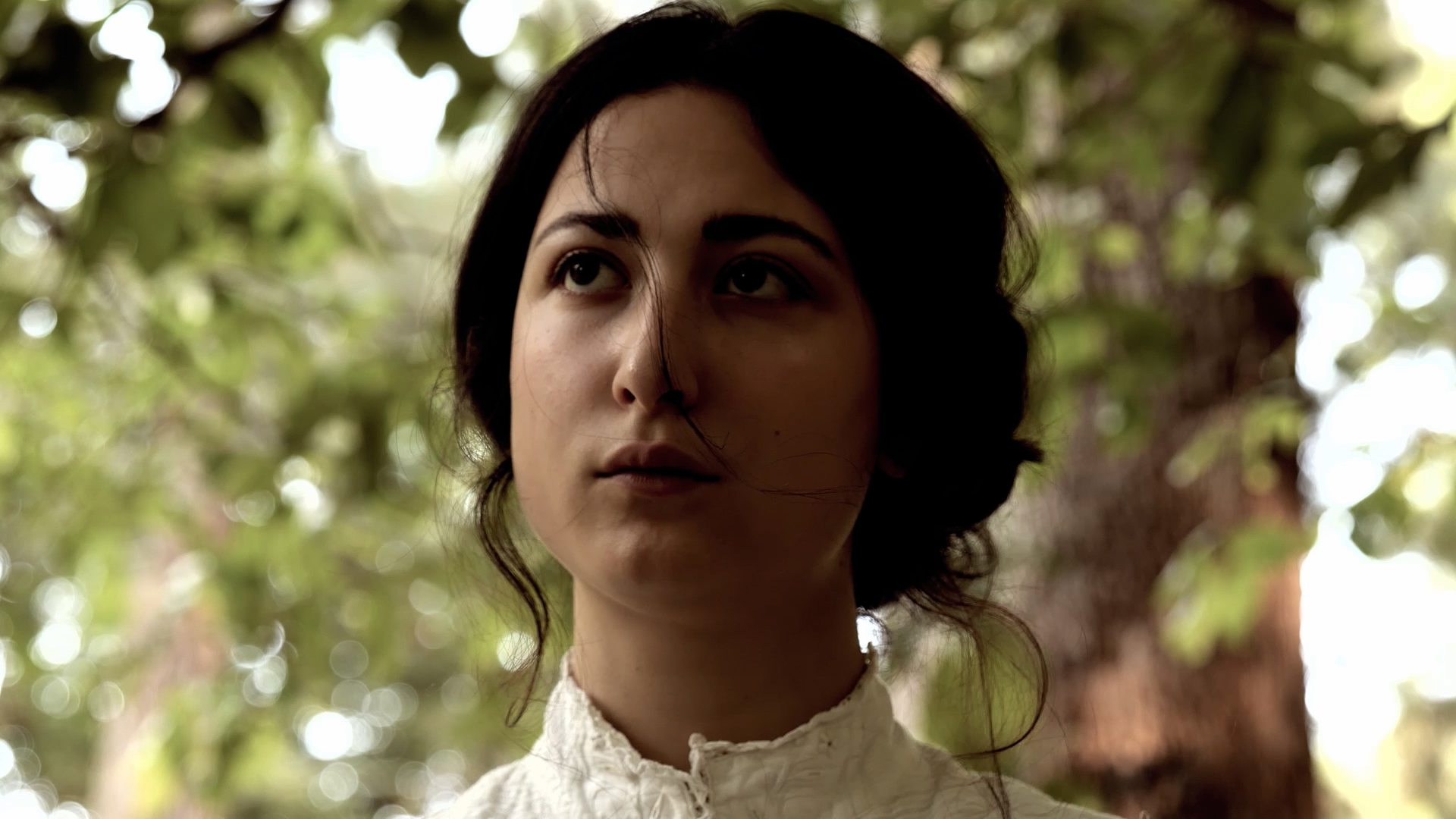
Documentary, by Isabel Russinova, Rodolfo Martinelli Carraresi, Italy, 2026
Eva of the Irises is a historical biographical docu-film about the scientist Eva Mameli Calvino, a botanist and pioneer of environmentalism in Italy, mother of the writer Italo, born in Sassari in 1886. The film, based on a multidisciplinary approach that combines several genres—such as theatre, documentary, cinema, and research—moves between memories, reflections on life, as well as the goals and missions the scholar still wished to achieve.
The multifaceted artistic sensibility of Isabel Russinova is expressed across many fields, from writing to acting, from directing to civic engagement, and finds one of its highest expressions in the docu-film Eva of the Irises, created with Rodolfo Martinelli Carraresi. The film blends scientific rigor and poetic refinement to portray the extraordinary figure of the botanist Eva Mameli Calvino, mother of Italo Calvino but above all an independent protagonist of 20th-century scientific culture. It is told through a combination of archival materials, interviews, and evocative staging capable of elegantly and profoundly conveying her intense human and professional story.
LANGUAGE: Italian
SUBTITLES: English, Spanish, French, Portuguese
Rudolf Steiner and the Audacity of the Obvious
There is something almost comically audacious about what Rudolf Steiner did in June 1924. He stood before a group of farmers at the Koberwitz estate in Silesia — men and women with soil under their fingernails, people who had watched their harvests thin and their livestock weaken over a generation — and told them, in essence, that they already knew the answer. Not in spite of their ignorance of laboratory science, but partly because of it. The knowledge they had lost was not primitive. It was precise in ways that chemistry had not yet learned to measure.
Weimar Germany was living through one of history’s great intellectual hangovers. The mechanistic project of the nineteenth century — the reduction of all living phenomena to material processes, the translation of nature into equations and inputs and yields — had produced genuine miracles and was still celebrating them. Fritz Haber’s synthesis of ammonia from atmospheric nitrogen, formalized between 1909 and 1913, had made artificial fertilizer possible at industrial scale, and the world had largely concluded that the ancient conversation between farmer and soil was simply ignorance dressed in tradition. Justus von Liebig had already declared, decades earlier, that plants needed only minerals, water, and carbon dioxide — a vision that was technically not wrong and humanly catastrophic, because it was the kind of truth that forgets what it has excluded.
Steiner was not anti-science. This distinction matters enormously, because the caricature of him as a mystic retreating from reason is precisely the dismissal that prevents serious engagement with what he was actually doing. He had edited Goethe’s scientific writings. He had spent years immersed in German idealist philosophy, in Schelling and Fichte and the young Hegel, before developing what he called Anthroposophy — a systematic attempt to extend the methods of scientific inquiry beyond the limits that materialist epistemology had drawn around itself. The Agriculture Course, delivered across eight lectures to roughly one hundred thirty farmers and scientists, was not a departure from this project. It was its most concrete application.
What Steiner proposed was a farm as an organism. Not metaphorically — not as a useful way of thinking about farm management — but ontologically. The farm had, in his view, an individuality, a living coherence that was violated by the habit of treating soil as a passive substrate for chemical inputs. He spoke of cosmic rhythms, of the relationship between lunar cycles and root growth, of preparations made from cow manure and yarrow and valerian that were intended not to add substances to the soil but to enliven processes already latent within it. To the scientific mind of 1924, this sounded like astrology in muddy boots.
But Steiner was operating within a philosophical tradition that had a genuine argument to make. William Blake‘s fury at “single vision and Newton’s sleep” was not anti-rational — it was a protest against the contraction of rationality to one of its modes. Henri Bergson, whose Creative Evolution of 1907 was still rippling through European intellectual life, had argued that mechanistic science, in its very success, had systematically eliminated duration, vitality, and becoming from its picture of the world. What remained was a world of dead matter arranged in space, and no quantity of such matter, however cleverly rearranged, could generate the fact of life. Steiner was attempting something Bergson had not: a practical methodology for working with life as life, not as chemistry that had not yet been fully explained.
The farmers at Koberwitz were asking him something urgent. Their soils were degrading faster than their fathers had seen. Their animals were sickening in new ways. The green revolution’s promises were still being made, but the costs were already arriving. Steiner did not offer them a return to the past. He offered them a different direction of travel, one that began not with what could be measured but with what could be observed over time, with patience, in relationship.

The Farm as a Living Organism

There is a moment, somewhere in the third or fourth generation of a family that has worked the same land, when a farmer stops thinking about the soil and starts thinking with it. The distinction is subtle enough to dismiss and profound enough to reorganize everything. You are no longer managing a resource. You are participating in a conversation so old that the language it uses has no human alphabet.
This is precisely what Rudolf Steiner meant when he described the farm as an individuality — his word, chosen deliberately — a self-enclosed living unit that generates its own fertility, regulates its own cycles, and carries something analogous to a character. Not a metaphor. A structural claim. The farm that imports its nutrition from outside, that requires perpetual chemical subsidy to produce what it cannot internally regenerate, is not, in Steiner’s framework, a farm at all. It is an extraction site wearing agricultural clothing.
The radicalism of this position becomes visible only when you place it against what replaced it. Industrial agriculture, consolidated through the twentieth century and chemically accelerated after the synthetic nitrogen breakthroughs of Haber and Bosch, operates on an essentially mechanical premise: inputs produce outputs, and the ratio between them is the whole story. Fertility is a quantity to be purchased. Pest pressure is a problem to be eliminated. The farm is a factory whose raw materials happen to be biological. Gregory Bateson, writing in Steps to an Ecology of Mind in 1972, identified this kind of thinking as the epistemological root of ecological catastrophe. Not greed, not ignorance, but the specific and deeply cultural habit of treating a system as a collection of parts rather than as a pattern of relationships. When you optimize a part, Bateson argued, you almost always damage the pattern. And the pattern is the thing that is alive.
Biodynamic agriculture, articulated by Steiner in his 1924 Agriculture Course at Koberwitz, anticipated Bateson’s systems logic by five decades, without the academic scaffolding and without the irony that Bateson brought to the same diagnosis. For Steiner, a farm achieves its individuality through the circulation of matter within itself: the animals feed the soil, the soil feeds the plants, the plants feed the animals, and the human beings who tend the whole are not managers standing outside the loop but participants inside it, their attention and their judgment part of what keeps the system coherent. Livestock are not optional additions to this picture. They are organs. A farm without animals, in biodynamic thinking, is like a body without a digestive tract — structurally incomplete, dependent on what it cannot produce.
This is where the contradiction with industrial logic becomes not just philosophical but almost violent in its clarity. Modern agronomy broke the loop deliberately and called the breaking progress. Monoculture, by its nature, removes the internal variety that a self-regulating system requires. Confined animal operations sever the geographical connection between digestion and soil. Synthetic inputs replace relationships with transactions. What is lost is not efficiency in the narrow sense — yields per acre often increase, at least initially — but resilience, depth, and the capacity for self-repair. The soil that knows only fertilizer is, in Bateson’s terms, a system that has had its feedback circuits cut. It can grow, but it cannot learn.
What biodynamics asks instead is genuinely difficult to absorb within a productivity framework, because it asks you to hold the whole as the primary unit of value. Not the yield. Not the hectare. Not the quarterly return. The farm as an entity, with its history, its microbial communities, its particular relationship to water and slope and wind, its own slow intelligence. James Lovelock arrived at a version of this intuition at planetary scale with the Gaia hypothesis in the early 1970s. Steiner had mapped the same logic onto a single field half a century earlier, and the farmers who listened built something that modern soil science is only now finding the instruments to measure.
Preparations, Rhythms, and What Gets Dismissed as Mysticism
There is a farmer stirring a bucket of water for an hour before dawn, moving the liquid in slow, deliberate spirals, first one direction, then reversing, creating a vortex that collapses and reforms. He is not performing a ritual in any ceremonial sense. He is doing what his grandfather did, what a chain of practitioners has done since the 1920s, and what he believes, based on his own soil tests and yield records, genuinely works. A neighbor driving past slows the truck, watches, and uses the word that ends conversations: mystical.
That word does the work of a locked door. It takes an entire knowledge system, compresses it into a category, and files it away somewhere between astrology and faith healing, where serious people do not need to go. What gets obscured in that gesture is not whether the practice is correct, but why we so quickly reach for the dismissal, and whose interests that dismissal happens to serve.
The biodynamic preparations number nine in their core form, each assigned a number between 500 and 508 by Steiner’s original agricultural course in 1924. The most discussed are the first two. Preparation 500 involves packing cow manure into a cow horn and burying it over winter, then digging it up and stirring the resulting material into water before field application, using those spiraling motions that look, to the uninitiated, like ceremony. Preparation 501 reverses the logic: ground quartz crystal is packed into a horn, buried over summer, and the result is stirred and sprayed onto plants in fine dilution to influence light absorption and silica processes. The remaining preparations, 502 through 508, involve yarrow, chamomile, stinging nettle, oak bark, dandelion, valerian, and horsetail, each prepared through specific processes involving animal organs or burial periods, each intended to activate particular elemental forces in the compost pile or soil. Then there is the planting calendar, developed extensively by Maria Thun across decades of empirical trial beginning in the 1950s, which correlates sowing, cultivating, and harvesting activities with lunar positions and the zodiacal constellations the moon passes through, dividing days into root, flower, leaf, and fruit categories according to the associated elemental quality of each constellation.
The word mysticism arrives here with the speed of a reflex. But consider what the category actually does. Paul Feyerabend, in Against Method published in 1975, argued that science’s self-image as the only valid path to knowledge was itself an ideological construction, that scientific orthodoxy had a persistent history of excluding productive anomalies not because they failed empirical testing but because they failed institutional belonging. More pointed still, Bruno Latour’s work in the sociology of science showed how laboratories produce not neutral facts but facts enrolled into networks of power, funding, and institutional legitimacy. A preparation that cannot be patented, that depends on timing the farmer controls entirely, that requires no purchased input beyond a cow horn and a handful of herbs, is not just scientifically inconvenient. It is economically useless to anyone trying to sell something.
There is a man who has spent years unable to explain to his colleagues why the wine from his estate tastes different in certain years, why the vines respond to treatments that no agrochemical protocol can account for. He does not use the word mysticism. He uses the word observation. He has notebooks going back twenty years. He has changed nothing except following the calendar and the preparations, and the soil biology results, measured by university labs that do not ask how the compost was made, consistently show microbial activity that surprises the researchers. What those researchers call surprising, the neighbor with the truck would call impossible, without ever examining the data.
What we call mysticism is often knowledge that refuses to arrive through approved channels. The question is not whether the spiral in the bucket does something. The question is why we are so certain it cannot.
A Man Burying a Horn, a Woman Reading a Balance Sheet
There is a man in a field at dawn, and he is burying a cow horn. He has packed it with manure — specific manure, from a specific animal, prepared in a specific way — and now he is placing it in the earth at a particular depth, oriented in a particular direction, because the season requires it and because something older than his own understanding seems to require it too. He is not performing this act for an audience. There is no irony in his hands. And yet if you watch him from the road, from the comfortable distance of a car window, what you see looks indistinguishable from superstition.
Somewhere else entirely, in a fluorescent-lit office that smells of coffee and toner, a woman is reading a balance sheet. She has columns. She has yield-per-hectare ratios, input-output coefficients, certification compliance reports. She is not hostile to the farmer. She may even believe in sustainable agriculture in the way educated professionals believe in things they have never touched. But the horn in the ground does not appear anywhere in her columns, and what does not appear in the columns does not exist in the calculus that determines funding, accreditation, and survival. The epistemological war between these two people is not a war of bad faith. It is a war of incommensurable grammars.
Bruno Latour spent much of his intellectual life trying to describe exactly this kind of collision. In his actor-network theory, developed across works like Laboratory Life in 1979 and We Have Never Been Modern in 1991, Latour argued that what we call knowledge is not a passive reflection of reality but an active construction maintained by networks of human and non-human actors — instruments, institutions, texts, materials, and bodies all working in concert to stabilize what counts as true. The woman’s balance sheet is not more real than the man’s horn. It is more networked. It has more allies: statistical agencies, agricultural ministries, university departments, peer-reviewed journals. The horn has allies too — soil microorganisms, lunar cycles, centuries of accumulated practice — but those allies do not speak the language that grants access to institutional power.
Ivan Illich saw this dynamic as something more sinister than mere bureaucratic preference. In Tools for Conviviality, published in 1973, and more pointedly in his critique of institutionalized expertise across nearly every domain, Illich described how modern institutions reach a threshold beyond which they begin to produce the opposite of their stated purpose. Schools that destroy curiosity. Hospitals that generate illness. Agricultural systems that, in maximizing measurable yield, deplete the very conditions that make yield possible over time. The counterproductive institution does not know it is counterproductive because its metrics are designed to measure only what it already values. The soil’s biological complexity, the mycorrhizal networks that connect root systems across hundreds of square meters, the slow regeneration of humus that takes decades to build and seasons to destroy — none of this appears as a number until it disappears.
The man burying the horn knows this, or rather his practice knows it, even if he cannot articulate it in the language the woman across town would recognize. He is working with a knowledge that is relational rather than extractive, temporal rather than instantaneous, embedded in the specific rather than abstracted into the general. This is not romanticism. The soil biologist Elaine Ingham, whose research on the soil food web from the 1990s onward has documented with rigorous precision what practitioners like him were doing intuitively, would confirm that his horn preparation creates measurable changes in microbial populations. But confirmation in the colonizer’s language does not mean the practice was waiting for that language to become legitimate. It was already working in the field, in the dark, while the balance sheet remained blank.
A vision curated by a filmmaker, not an algorithm
In this video I explain our vision
The Demeter Standard and the Politics of Certification

There is a moment, familiar to anyone who has ever watched a bureaucracy absorb a living idea, when the paperwork begins to weigh more than the philosophy it was designed to protect. You have seen it happen in schools, in hospitals, in religious institutions — the original fire carefully documented until the documentation replaces the fire entirely. The history of Demeter International, established in 1928 and standing today as the oldest ecological certification body on earth, is precisely this story, and it would be dishonest to tell it without acknowledging both what was saved and what was quietly suffocated in the saving.
The founding impulse was defensible, even necessary. By the late 1920s, biodynamics had spread across central Europe with enough momentum that imitators, opportunists, and well-meaning incompetents were all farming under its name. Rudolf Steiner had died in 1925, leaving behind a set of lectures dense enough to support a hundred contradictory interpretations. Certification was a way of drawing a line around something that would otherwise dissolve into vague pastoral sentiment. The Demeter trademark — named for the Greek goddess of grain and harvest — was intended not as a bureaucratic instrument but as a guarantee of coherence, a way of saying that what carried this name had been held to something real.
And for decades, that function was genuine. The standards Demeter developed required farms to maintain a minimum of ten percent of their total area as biodiversity habitat, to manage livestock as integral participants in the farm organism rather than industrial inputs, to use the eight core biodynamic preparations, and to treat the farm as a self-sustaining system rather than a production unit dependent on external chemistry. These were not trivial requirements. They were, in fact, radical ones, and they kept the certification meaningful in a way that much of the organic movement, which expanded explosively after the American National Organic Program formalized its own standards in 2002, never managed to be.
But certification is a political act as much as a philosophical one, and institutionalization carries its own gravitational logic. Max Weber understood this almost a century ago, describing in his sociology of domination how charismatic authority — the kind that lives in a person, in a vision, in a direct encounter with something transformative — inevitably gives way to what he called the routinization of charisma, the translation of lived intensity into administrable form. The biodynamic preparations that Steiner described as bringing cosmic forces into intimate relationship with the soil became, in the Demeter compliance framework, items on an inspection checklist. Preparation 500 is applied. Box ticked. The relationship between the farmer and the horn buried in autumn, the attentiveness, the timing, the sense of participating in something larger — none of that survives the audit.
What certification also did, more insidiously, was transform the farmer’s relationship to knowledge. Steiner’s original premise was that the farmer must become a genuinely observant, spiritually and scientifically literate participant in the life of their land — not a follower of instructions but a reader of phenomena. The certification process reverses this epistemological direction. It asks whether you have done the correct things, not whether you understand why they matter or whether your land is actually responding. A farm can be Demeter-certified and still be managed with the same detachment, the same fundamentally extractive orientation, that biodynamics was invented to overcome. The label protects the practice without necessarily transmitting the understanding beneath it.
This is not an argument against Demeter’s existence. Without it, biodynamics would likely have dispersed into irrelevance or been colonized entirely by the same marketing logic that hollowed out organic certification in a single generation. The protection was real. But there is something worth sitting with in the recognition that the most living ideas tend to survive institutionalization only in their most skeletal form, stripped of precisely the parts that made them dangerous and strange.
What Industrial Agriculture Actually Costs (And Who Pays)
You have probably stood in a supermarket aisle and felt, without being able to name it, that something about the abundance surrounding you was slightly wrong. Not the prices, not the packaging — something deeper, structural, like a building that looks solid from the street but whose foundations have been quietly dissolving for decades. That feeling is not irrational sentiment. It is your nervous system registering what the numbers have been confirming since at least the middle of the twentieth century, if anyone had chosen to look.
The Haber-Bosch process, developed in 1913, allowed humanity to synthesize atmospheric nitrogen into ammonia at industrial scale, effectively decoupling food production from the biological constraints of soil fertility. Fritz Haber won the Nobel Prize in Chemistry in 1918. The process is often credited with feeding half the world’s current population, and that credit is not entirely false. But what is almost never said in the same breath is what it cost — not in money, not in energy, though it consumes roughly one to two percent of global energy output annually, but in the living architecture of the soil itself. When you flood a field with synthetic nitrogen year after year, you do not supplement a biological system. You replace it. The microbial communities that evolved over millennia to fix nitrogen, cycle phosphorus, build organic matter and regulate water retention begin to atrophy. They are no longer necessary. And what is no longer necessary, in an industrial logic, disappears.
Vandana Shiva, whose work in the 1990s began systematically naming what others were treating as acceptable collateral, described this as a form of monoculture of the mind — the idea that industrial agriculture did not simply choose one method among many, but actively dismantled the epistemological infrastructure that made other methods thinkable. Her 1993 book “Monocultures of the Mind” argued that the very categories through which productivity and yield are measured were constructed to make certain knowledge invisible: the knowledge of soil, of seasonality, of biological interdependence, of what a living field actually is. When you measure only what can be extracted, you become constitutionally blind to what is being destroyed.
The destruction is measurable, even by the metrics that industrial agriculture accepts. The IPBES Global Assessment Report on Biodiversity and Ecosystem Services, published in 2019 and representing the work of more than 450 scientists across fifty countries, estimated that around seventy-five percent of the Earth’s land surface has been significantly altered by human activity, with agriculture as the dominant driver. Soil degradation affects roughly three billion hectares globally. Topsoil, which takes approximately five hundred years to form one inch of viable depth, is being lost at rates between ten and forty times faster than it is being replenished in conventionally farmed regions. The microbial biodiversity within that soil — a single teaspoon of healthy earth contains more microorganisms than there are humans on the planet — has collapsed in industrial monocultures to a fraction of its former complexity.
A man watches his father sell the family farm in the late 1980s, not because the harvests failed, but because the costs of maintaining yield — the fertilizers, the pesticides, the machinery, the debt — had outpaced what the land could return. The farm had been productive by every measurable standard. It had also been dying by every standard that was not being measured. This is not a metaphor. It is the forensic record of a worldview that chose legibility over life, that decided the only things worth counting were the things that could be counted quickly, cheaply, and extracted without remainder.
What remains is a question that the data alone cannot answer but cannot avoid asking: when the topsoil is gone, when the microbiome is gone, when the biological intelligence of the land has been replaced by a chemical dependency that must be renewed each season from outside — what exactly is it that we have been sustaining?
The Thing You Already Knew Before They Taught You Otherwise
There is a moment, standing in a supermarket aisle under fluorescent light, when something in you flinches. Not intellectually. Not because you have read the right books or attended the right lectures. Something older than that, something that lives below the ribcage, registers a wrongness before the mind has time to frame it. You pick up a tomato and it is perfect. Perfectly red, perfectly round, perfectly weightless in your hand, and yet it tells you nothing. It smells of refrigeration. It has the texture of a decision made in a boardroom. You put it in your basket anyway, because what else would you do, because the world has arranged itself so that this is the most normal thing imaginable, and the flinch passes, and you move on.
But it does not disappear entirely. It accumulates.
Rudolf Steiner, long before he formalized any of what would become biodynamic agriculture in those eight lectures delivered in Koberwitz in June 1924, spoke insistently about what he called living thinking, the capacity to perceive processes rather than merely objects, to feel the wholeness of something before you dissect it into parts. He was not describing a mystical faculty reserved for initiates. He was describing something every farmer who has ever watched a field through seasons, every grandmother who has ever known without instruments when bread was ready, every child who has ever pressed their face into soil and understood something enormous and wordless, has always possessed.
Somewhere a man stands at the edge of his father’s land, land that was sold thirty years ago and is now planted in a single crop stretching to the horizon, and he feels inside his chest something that he does not have language for. His father would have called it grief. An economist would call it misallocation of resources. Aldo Leopold, writing in A Sand County Almanac in 1949, called it the absence of a land ethic, the civilizational failure to think of soil and water and plants and animals as a community to which human beings belong rather than a commodity they own. But the man at the field’s edge is not thinking in any of these registers. He is simply standing there, feeling that something has been taken from the world that cannot be easily returned.
The philosopher Maurice Merleau-Ponty argued throughout his work, particularly in the Phenomenology of Perception published in 1945, that the body knows before consciousness articulates. Perception is not a passive reception of data but an active, skilled engagement with a world that is already meaningful before we name it. Which means that the flinch in the supermarket aisle is not naivety or sentimentality. It is perception functioning correctly. It is the body doing its job.
Biodynamic agriculture, with all its complexity and its debated cosmological dimensions, its preparations and its calendar and its insistence on the farm as a self-contained organism, began from exactly this pre-intellectual recognition. Not from data, though the data followed. Not from ideology, though ideology inevitably accreted around it. It began from the acknowledgment that something in the dominant relationship between human beings and land had gone profoundly wrong, and that the wrongness could be felt in the quality of food, in the silence of soils that had once teemed, in the fatigue of farmers who could no longer read their own fields.
You already knew this. Not in the form of an argument you could make at a dinner table, not in numbers you could cite, but in the way your body responds to food grown in living soil versus food manufactured for shelf life, in the weight of a handful of earth that has been tended over decades versus one that has been exhausted and left behind. The knowledge was always there, waiting underneath everything they taught you to put in its place.
🌱 Roots of the Living Earth: Nature, Spirit and Science
Biodynamic agriculture draws from a rich confluence of philosophical, scientific, and spiritual traditions that have long sought to understand the deep relationship between humanity and the natural world. These related articles trace the intellectual lineage behind its founding principles, from Goethean science to ecological philosophy and the anthroposophical roots that shaped Rudolf Steiner‘s vision of the farm as a living organism.
Rudolf Steiner and Anthroposophy: A Guide to Modern Esoteric Thought
Rudolf Steiner is the direct intellectual father of biodynamic agriculture, having introduced its foundational principles in his 1924 Agriculture Course. This article offers a comprehensive guide to his anthroposophical worldview, which understood nature, spirit, and cosmos as inseparably intertwined forces shaping all living processes.
GO TO THE SELECTION: Rudolf Steiner and Anthroposophy: A Guide to Modern Esoteric Thought
Johann Wolfgang von Goethe: Life and Works
Johann Wolfgang von Goethe profoundly influenced biodynamic thinking through his holistic approach to natural science, particularly his morphology and his concept of living form as dynamic and purposeful. Steiner considered Goethe a forerunner of spiritual science, and Goethean observation of plants remains a cornerstone of the biodynamic farmer’s relationship with the land.
GO TO THE SELECTION: Johann Wolfgang von Goethe: Life and Works
Deep Ecology: History and Philosophy
Deep ecology provides a philosophical framework that resonates strongly with biodynamic agriculture’s refusal to treat soil and life as mere resources to be exploited. This article traces the history of a movement that, like biodynamics, insists on the intrinsic value of all living beings and the interconnectedness of ecosystems.
GO TO THE SELECTION: Deep Ecology: History and Philosophy
Rachel Carson: Life and Works
Rachel Carson‘s groundbreaking work on the destructive effects of industrial pesticides brought global attention to the fragility of ecological systems, echoing concerns that biodynamic farmers had voiced for decades. Understanding Carson’s life and legacy illuminates the broader cultural and scientific context in which alternative agricultural philosophies gained urgency and credibility.
GO TO THE SELECTION: Rachel Carson: Life and Works
Explore the Depths on Indiecinema
If these ideas about the living earth, holistic science, and humanity’s place in nature have stirred something in you, Indiecinema is where the journey continues. Discover independent and art-house films that dare to ask the same profound questions — stream them now on Indiecinema.
👉 EXPLORE THE CATALOG: Watch Indie Films in Streaming
A vision curated by a filmmaker, not an algorithm
In this video I explain our vision